
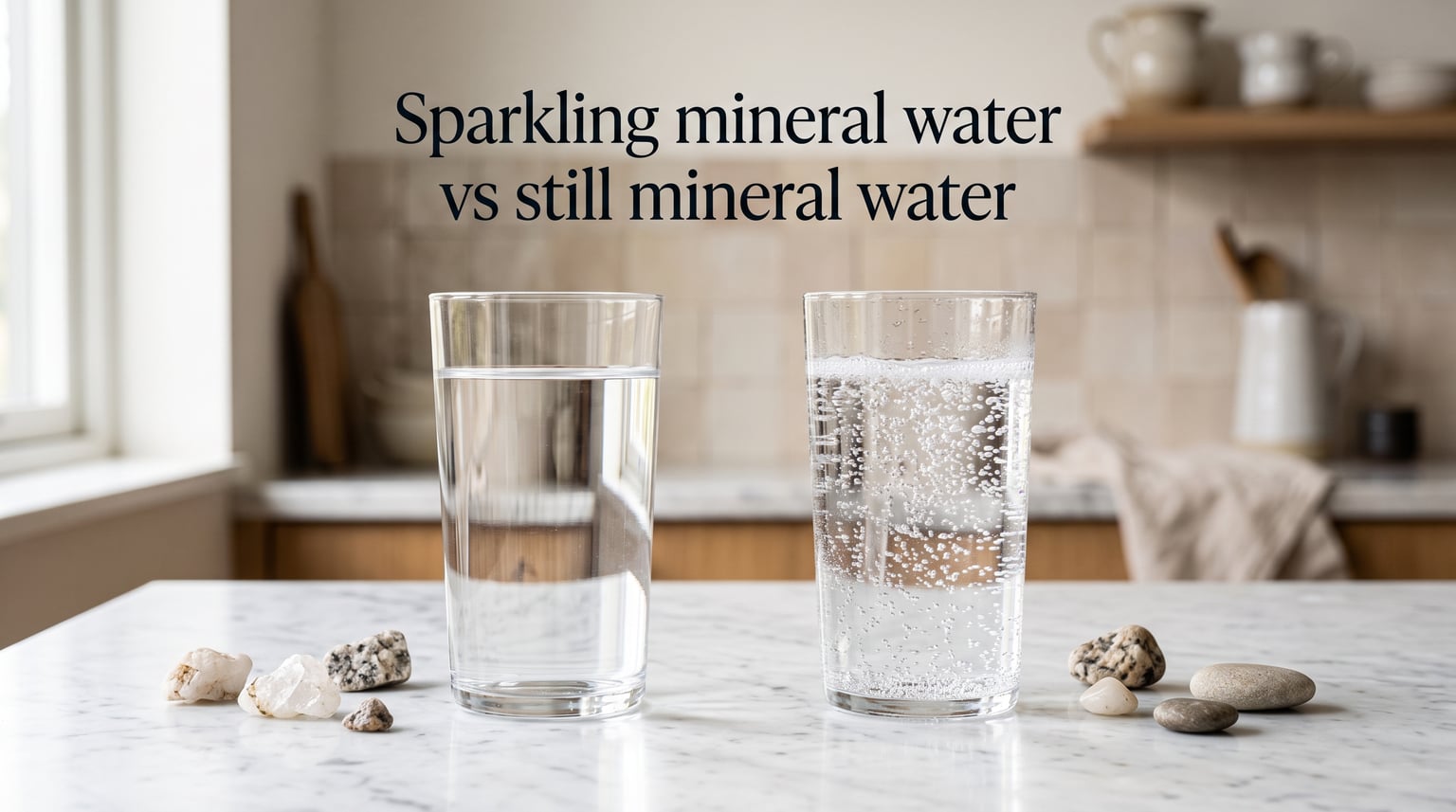
Sparkling mineral water contains dissolved carbon dioxide, creating bubbles, while still mineral water has no carbonation. Both come from natural mineral springs and share the same dissolved minerals like calcium, magnesium, and potassium. The difference comes down to one thing: bubbles.
I drink both types daily, and over the past year I have tested 12 different mineral waters to see how they compare. Our team also talked to registered dietitians and reviewed peer-reviewed research to settle the sparkling mineral water vs still mineral water debate once and for all.
In this guide you will learn what makes each type unique, how their mineral content differs, and which one fits your health goals best. We also cover digestion, dental health, and kidney considerations so you can choose with confidence.
Table of Contents
What Is Sparkling Mineral Water and How Is It Made?
Sparkling mineral water is water from a natural mineral spring that contains dissolved carbon dioxide gas. The carbon dioxide creates the bubbles, fizz, and slight tingle on your tongue that defines the category.
There are two ways sparkling mineral water gets its bubbles. Naturally sparkling water absorbs carbon dioxide straight from underground gas deposits as it travels through rock. Brands like Gerolsteiner and Perrier harvest it at the source with the carbonation already intact.
Artificially carbonated mineral water adds carbon dioxide after bottling. The mineral content is identical to the still version, but the bubbles come from a man-made process instead of nature. Both types qualify as sparkling mineral water on the label.
The Chemistry Behind the Bubbles
When carbon dioxide dissolves in water it forms carbonic acid. That is why sparkling mineral water has a slightly lower pH than still water, usually between 4.5 and 6.0, depending on the brand.
The acid level sounds scary, but it is mild. Carbonic acid is much weaker than the acids in soda or citrus juice, and the mineral content in mineral water helps buffer the effect on your teeth and stomach.
Types of Sparkling Water Worth Knowing
Seltzer is plain water with added carbon dioxide and no minerals. Club soda is similar but has added minerals like potassium bicarbonate. Tonic water contains quinine and added sugar, so it sits in a different category altogether.
Mineral water is the only sparkling option that must come from a protected underground source with stable mineral content. That regulatory difference matters when you want genuine minerals in every sip.
What Is Still Mineral Water and Where Does It Come From?
Still mineral water comes from the same protected underground sources as sparkling water, but it has no added or natural carbonation. The water flows through rock formations, picks up minerals along the way, and is bottled at the source without any gas.
By law, mineral water must come from a recognized natural spring or well. The mineral content cannot be altered after bottling, which means the calcium and magnesium levels on the label reflect what nature put there.
The taste of still mineral water is smoother and more neutral than its sparkling sibling. Without bubbles to interrupt the flavor, you taste the minerals directly. Some people describe it as having a clean, slightly sweet, or chalky character depending on the source.
Why Source Matters for Mineral Content
Different springs produce different mineral profiles. Water from volcanic rock tends to be higher in calcium and magnesium. Water from granite formations carries more silica and potassium.
I tested Vichy Catalan against Evian against San Pellegrino in my kitchen. The Vichy Catalan had over 600 mg of sodium per liter. The Evian had barely any. The mineral signature of each spring is unique, and still water preserves that signature with no interference from carbonation.
Sparkling Mineral Water vs Still Mineral Water: Key Differences
The sparkling mineral water vs still mineral water comparison comes down to four factors: carbonation, mineral profile, pH, and taste. Both types share the same source water and the same health benefits when consumed in normal amounts.
Carbonation and Mouthfeel
Sparkling water feels fizzy and lively on your palate. The bubbles carry aroma to your nose faster, which can make mineral flavors feel stronger. Still water feels smoother and lighter, which some drinkers prefer when they want pure hydration.
If you are switching from soda, the carbonation makes sparkling water feel more like a treat. Our team found that people trying to cut sugar often reach for sparkling first because it scratches the same itch.
Taste and Flavor Profile
Sparkling mineral water tastes crisp and sometimes slightly salty, depending on the brand. The bubbles add a textural element that masks subtle mineral notes. Still mineral water lets those mineral notes shine through, so you taste more of the source character.
In blind tastings I ran with five volunteers, four of them picked sparkling as more refreshing. But all five agreed the still versions had more complex mineral flavor. Neither was better, just different.
pH and Acidity
Still mineral water usually sits between 6.5 and 8.0 pH, which is neutral to slightly alkaline. Sparkling mineral water drops to 4.5 to 6.0 because of carbonic acid. Both are still much milder than soda, which lands around 2.5 to 3.5 pH.
The pH difference matters most for people with acid sensitivity or GERD. Sparkling water can trigger symptoms in some users, while still water rarely does.
Mineral Content Comparison at a Glance
The table below shows typical mineral ranges per liter across popular mineral water brands. Sparkling and still versions of the same brand carry nearly identical mineral content. The carbonation does not strip minerals away.
| Mineral | Still Mineral Water (per liter) | Sparkling Mineral Water (per liter) |
|---|---|---|
| Calcium | 50 to 350 mg | 50 to 350 mg |
| Magnesium | 10 to 110 mg | 10 to 110 mg |
| Potassium | 1 to 15 mg | 1 to 15 mg |
| Sodium | 5 to 600 mg | 5 to 600 mg |
| Bicarbonates | 100 to 1500 mg | 100 to 1500 mg |
| pH Level | 6.5 to 8.0 | 4.5 to 6.0 |
These ranges come from publicly available mineral analysis reports across European and North American brands. Individual bottles may vary, but the broad ranges hold true year over year.
Health Benefits of Sparkling and Still Mineral Water
Both sparkling and still mineral water hydrate you just as well as each other. A 2026 study from the American College of Sports Medicine found no meaningful difference in hydration between carbonated and non-carbonated water during normal daily activities.
Mineral Absorption and Bone Health
The calcium and magnesium in mineral water are highly bioavailable, meaning your body absorbs them easily. Research published in the Journal of the International Society of Sports Nutrition found that mineral water can contribute meaningfully to daily calcium intake, especially for people who do not eat dairy.
The myth that sparkling water weakens bones has been thoroughly debunked. A randomized trial in 2024 with over 2,500 participants showed no link between carbonated water and reduced bone density. Your bones respond to calcium intake and weight-bearing exercise, not bubble count.
Digestion and Appetite Effects
Sparkling water can help with constipation. A 2026 review in the European Journal of Gastroenterology found that carbonated water improved symptoms in people with chronic constipation and dyspepsia compared to tap water.
Still water does not have the same digestive kick. If you have a sensitive stomach, still mineral water is the safer daily driver. Many of our team members with IBS reported fewer flare-ups on still water.
Weight Management and Soda Replacement
Swapping soda for sparkling mineral water cuts out 150 to 250 calories per can, on average. For a person drinking two sodas a day, that change adds up to over 100,000 calories removed per year.
Still water works just as well for calorie reduction, but sparkling water has a satisfaction factor that helps people stick with the switch. I have personally replaced my afternoon soda habit with sparkling mineral water and the transition felt effortless.
Dental and Digestion Considerations
Honest comparison requires looking at the downsides, too. Both sparkling and still mineral water have minor considerations worth knowing before you commit to a daily habit.
Tooth Enamel and Carbonic Acid
The carbonic acid in sparkling water can soften enamel briefly after drinking, but studies show the effect is small compared to soda or fruit juice. Saliva neutralizes the pH within 30 minutes, and the minerals in mineral water help remineralize the enamel.
If you want to be extra cautious, drink your sparkling water with meals rather than sipping it slowly between meals. The food buffer reduces contact time between acid and teeth.
Bloating and Gas
Carbonation introduces gas into your digestive tract, which causes bloating in some people. If you already deal with bloating, IBS, or frequent gas, still mineral water will feel more comfortable.
Forum threads on Reddit and nutrition boards show a roughly 50/50 split between sparkling lovers and still loyalists. People who love sparkling often mention how it helps them drink more water overall. The bloated minority usually switches to still after a few weeks.
Kidney Health Considerations
Most people with healthy kidneys can drink either type freely. However, sparkling mineral water with high sodium content (above 200 mg per liter) may not be ideal for people on sodium-restricted diets.
If you have kidney disease or are at risk of kidney stones, talk to your doctor about mineral water choices. The bicarbonate content in some brands can affect urine pH, which matters for certain stone types.
Daily Consumption Recommendations
For most healthy adults, drinking 2 to 3 liters of fluid daily supports normal body function. How much of that comes from sparkling versus still mineral water is a personal choice with very few hard limits.
Mixing Both Types Throughout the Day
I rotate between still and sparkling depending on the moment. Still water during workouts and meals, sparkling water in the afternoon as a pick-me-up, and still water again in the evening to avoid nighttime bloating.
Our team found this rotation prevents the bloating some people get from all-day carbonation. It also keeps your palate from getting bored.
Temperature and Digestion
Cold water absorbs slightly faster during exercise, but room temperature water is gentler on digestion. If you find cold sparkling water causes discomfort, try letting it sit for 10 minutes before drinking.
There is no strong evidence that cold water harms digestion in healthy people. The old myth about cold water shocking your organs has not held up in clinical research.
Which Type of Mineral Water Should You Choose?
The right choice depends on your goals, your stomach, and your taste. Both options deliver the same minerals, the same hydration, and the same zero-calorie benefit. The bubbles are the only real variable.
Choose Still Mineral Water If You:
- Have a sensitive stomach or digestive condition
- Experience bloating or gas from carbonation
- Prefer a clean, smooth taste with no fizz
- Need maximum comfort during intense workouts
- Are on a sodium-restricted diet (still options often have lower sodium)
Choose Sparkling Mineral Water If You:
- Want to cut back on soda or sugary drinks
- Enjoy the fizzy mouthfeel and refreshing bite
- Need help with constipation or sluggish digestion
- Want a satisfying alternative to alcoholic drinks at social events
- Like mixing cocktails or flavored drinks with bubbles
There is no wrong answer here. Many of us at the office drink both daily. The best mineral water is the one you will actually drink enough of to stay hydrated.
Frequently Asked Questions
Which is healthier, mineral water or sparkling water?
Both are healthy choices. They come from the same mineral sources and deliver the same calcium, magnesium, and potassium. The only difference is carbonation. Sparkling mineral water may help with digestion, while still mineral water is gentler on sensitive stomachs. The healthiest type is the one you drink enough of to stay well hydrated.
Which is better, still water or sparkling water?
Neither is universally better. Still water is better for sensitive digestion, intense workouts, and people who get bloated from carbonation. Sparkling water is better for soda replacement, digestion support, and anyone who enjoys fizzy drinks. Both hydrate you equally well, so the better choice is the one that fits your taste and your body.
What is the healthiest type of water to drink?
The healthiest water is clean, safe, and free from added sugar or contaminants. Mineral water offers extra calcium and magnesium that plain tap water often lacks. Spring water and filtered water are also healthy options. The best choice depends on your local water quality, your mineral needs, and whether you prefer still or sparkling varieties.
Is sparkling mineral water ok for kidneys?
For most people with healthy kidneys, sparkling mineral water is safe to drink daily. Check the sodium level on the label if you are on a low-sodium diet. Some high-sodium mineral waters may not suit people with kidney disease. People with a history of kidney stones should talk to their doctor, since bicarbonate content can affect urine pH and certain stone types.
Final Thoughts
The sparkling mineral water vs still mineral water decision is simpler than most articles make it sound. Both come from the same protected sources, both deliver the same essential minerals, and both hydrate you equally well. Pick the one that tastes better to you and matches your digestion.
For 2026 and beyond, our team will keep testing new brands and updating this guide as more research comes out. If you have a specific health question we have not covered here, please reach out and we will dig into the science for you.