
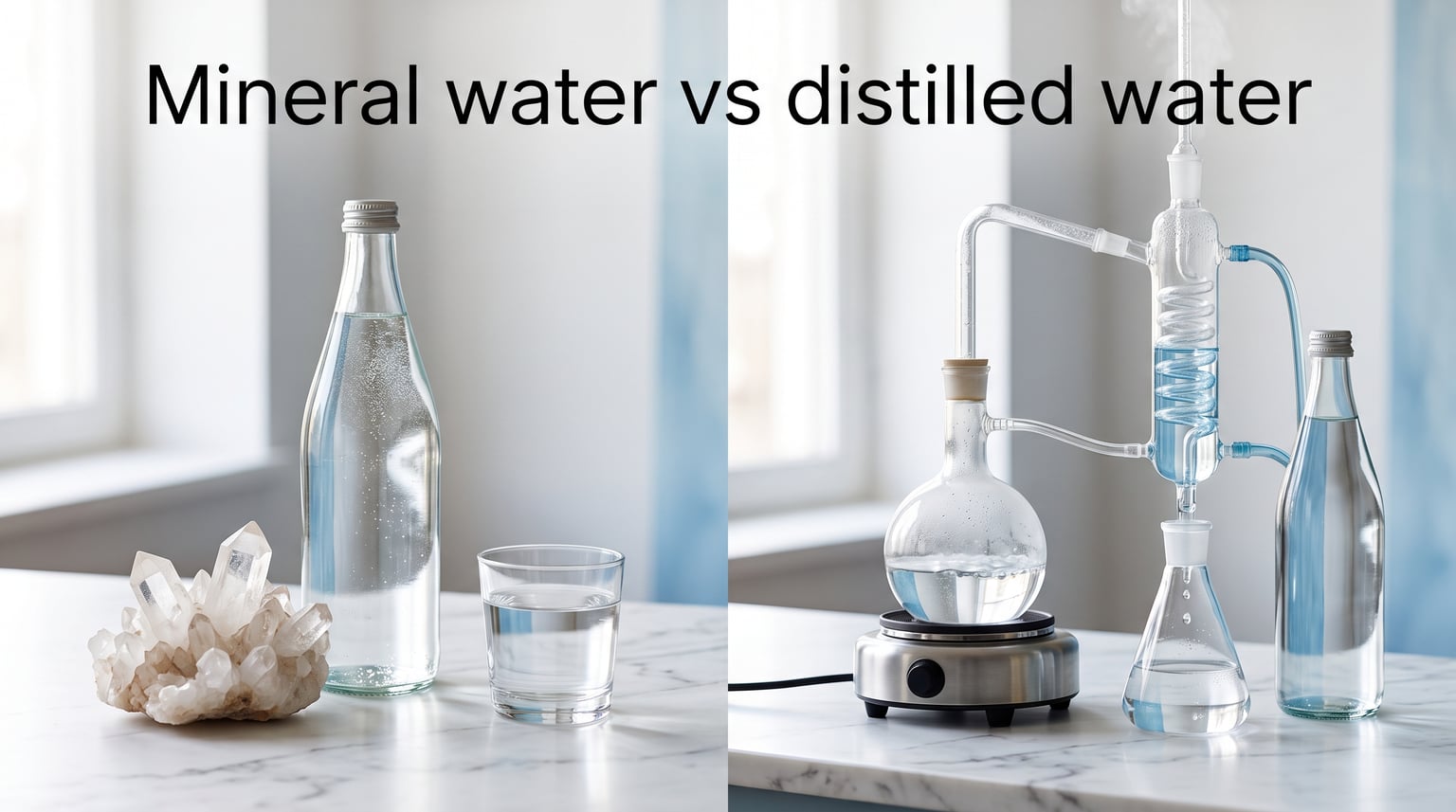
You’re standing in the water aisle, staring at two bottles that look identical from the outside. One says “mineral water,” the other says “distilled water,” and neither label tells you much about what’s actually inside. Understanding the difference between mineral water vs distilled water is more useful than it sounds — it affects how you hydrate, how your appliances perform, and even what you taste in your morning coffee.
This guide covers everything you need to know: how each type is made, what’s actually in it, and which one belongs in your glass versus your humidifier. I’ve pulled from peer-reviewed health research, regulatory definitions, and real community discussions so the answer here goes beyond marketing copy.
The short answer is that mineral water is generally the better choice for everyday drinking, while distilled water is the right call for appliances and situations where pure, mineral-free water is required. The longer answer depends on your specific situation — and that’s what the rest of this article is for.
Table of Contents
What Is Distilled Water?
Distilled water is water that has been purified through distillation — a process of heating water to its boiling point, collecting the resulting steam, and then condensing that steam back into liquid form. Everything that cannot evaporate with the water stays behind, which means minerals, bacteria, heavy metals, pesticides, and most other dissolved substances are effectively removed.
The result is water with near-zero total dissolved solids (TDS). Typical tap water measures between 100 and 400 parts per million (ppm) of dissolved solids depending on your local source. Distilled water registers 0 to 1 ppm — one of the lowest TDS readings of any water you can buy or make at home.
Freshly distilled water has a pH of approximately 7.0, which is chemically neutral. Once the bottle is opened and the water is exposed to air, it absorbs carbon dioxide and forms weak carbonic acid, dropping the pH to roughly 5.5 to 6.5.
That slight acidity does not make distilled water unsafe to drink, but it does mean distilled water is technically no longer neutral once it has been open for a while. In practice, this detail mostly matters for laboratory or industrial applications where pH precision is required.
Taste is the thing that surprises most people the first time they try distilled water. It tastes flat — genuinely, noticeably flat. The minerals that give water its characteristic crispness and flavor have all been removed.
People in communities like Reddit’s r/HydroHomies describe distilled water as “lifeless” or “hollow,” and that description is accurate. There is simply nothing in it to create flavor. If you find yourself drinking less water after switching to distilled, the taste difference is probably the reason.
What Is Mineral Water?
Mineral water is water that contains naturally occurring minerals at concentrations significant enough to be nutritionally meaningful. True natural mineral water originates from underground aquifers or protected springs, where water filters through mineral-rich rock formations over years — sometimes decades — picking up dissolved minerals along the way.
In 2026, both the European Union and the U.S. FDA maintain clear regulatory definitions for mineral water. The EU requires that natural mineral water originate from a certified geological underground source and be protected from surface contamination.
The U.S. FDA defines bottled mineral water as containing at least 250 parts per million of total dissolved solids from a natural underground source. These regulations separate genuine mineral water from ordinary bottled tap water with a nature-themed label.
The specific mineral profile varies significantly between sources, which is why different mineral water brands taste noticeably different from one another. The minerals most commonly found in mineral water include:
Calcium — supports bone density and muscle contraction
Magnesium — essential for nerve function, blood pressure regulation, and over 300 enzymatic reactions
Sodium — helps maintain fluid balance and supports hydration
Potassium — critical for heart rhythm and kidney function
Bicarbonates — buffer stomach acid and contribute to water’s crisp, lively taste
Sulfates — found in many European mineral waters, associated with digestive support
Some products labeled as “mineral water” are actually purified water with minerals added after processing. These differ from “natural mineral water” at the source level, but both deliver similar mineral content in the bottle. If the origin matters to you for taste or environmental reasons, check the label for a named spring or aquifer location.
Mineral Water vs Distilled Water: Quick Comparison
Here is a side-by-side look at the core differences between distilled and mineral water across the variables that matter most for everyday decisions.
| Feature | Distilled Water | Mineral Water |
|---|---|---|
| Source | Any water source, processed through distillation | Natural underground springs or mineral-enriched purified water |
| Mineral Content | None (0-1 ppm TDS) | High (250+ ppm TDS by U.S. regulation) |
| Taste | Flat and neutral — no mineral flavor | Crisp, slightly complex — varies by source |
| pH Level | ~7.0 fresh; drops to 5.5–6.5 after air exposure | Typically 6.0–8.5 depending on mineral content |
| Contaminant Removal | Near-complete (bacteria, heavy metals, pesticides) | Partial — relies on natural geological filtration |
| Best For | CPAP machines, humidifiers, lab work, appliances | Daily drinking, cooking, coffee brewing, hydration |
| Nutritional Value | None | Provides calcium, magnesium, potassium, and more |
Key Differences Between Mineral Water and Distilled Water
The differences go deeper than what a table can capture. Here are the three areas where mineral water and distilled water diverge most significantly.
Mineral Content and Purity
Mineral content is the single most defining difference between the two water types. Distilled water has a TDS of essentially zero because the distillation process removes everything dissolved in the original water source. Mineral water, by contrast, contains anywhere from 250 to 1,500 ppm of dissolved minerals depending on where it came from and how long the water spent filtering through rock.
This difference matters differently depending on how you use the water. For drinking, those minerals add up — a liter of quality mineral water can deliver 100 to 200 milligrams of calcium and 20 to 50 milligrams of magnesium. For appliances or laboratory use, those same minerals become unwanted deposits that clog equipment and introduce variables where you want none.
Taste
Taste is usually the first thing people notice when switching between the two. Mineral water has a distinct, slightly crisp character that comes from its dissolved minerals. Calcium adds body and weight to the flavor, bicarbonates contribute a subtle effervescence that makes water feel lively in the mouth, and magnesium adds a faint bitterness that many people enjoy without being able to name it.
Distilled water has no taste because there is nothing in it to contribute flavor. Coffee enthusiasts in communities like Reddit’s r/pourover have documented side-by-side brewing tests, and mineral water consistently produces better extraction and more complex flavor in the cup. The minerals in water are not just incidental — they interact with coffee’s chemistry in ways that measurably shape the final taste.
If you find yourself gravitating toward flavored drinks after switching to distilled, the absence of taste is a practical hydration problem worth taking seriously. Palatability matters for how much water you actually drink.
pH Levels
The pH of mineral water typically ranges from 6.0 to 8.5, depending on the mineral composition of the source. Waters high in bicarbonates tend toward the alkaline end of that range, while waters with more sulfates or dissolved carbon dioxide sit lower. This variability is part of what makes different mineral water brands taste distinct from one another.
Distilled water starts at a neutral pH of 7.0 but becomes slightly acidic after air exposure. In practical terms for most drinkers, this pH difference rarely matters — your body maintains its own blood pH within a tight range regardless of what water you consume. pH becomes relevant mainly in laboratory work, aquariums, or hydroponics where water chemistry needs to be controlled precisely.
Health Benefits and Considerations
Health is where this comparison gets the most questions — and the most misinformation. Here is the evidence-based breakdown for both water types.
Health Benefits of Mineral Water
Mineral water delivers genuine nutritional value. Research has shown that calcium from mineral water is bioavailable — the body absorbs it comparably to calcium from dairy products. For people who consume little dairy or leafy greens, mineral water can meaningfully contribute to daily calcium intake and support long-term bone health.
Magnesium is the other standout mineral. Many adults don’t get enough magnesium through diet alone, and mineral water provides a consistent supplemental source. Adequate magnesium supports healthy blood pressure, proper nerve transmission, and muscle recovery.
Some population studies have found associations between drinking naturally hard water — high in calcium and magnesium — and lower rates of cardiovascular disease. This area of research is still developing, but the finding suggests that the minerals in water may offer benefits beyond simple hydration.
The electrolyte content in mineral water also supports hydration efficiency. Sodium and potassium help your cells retain and use the water you drink. For athletes or people who sweat heavily, this makes mineral water a more effective recovery drink than distilled water.
Health Benefits of Distilled Water
Distilled water’s primary health advantage is what it does not contain. For people with compromised immune systems, infants drinking formula in areas with uncertain tap water quality, or individuals living in regions with high levels of contaminants in the supply, the near-complete removal of bacteria, heavy metals, and chemical pollutants is a genuine safety benefit.
For people managing conditions like calcium oxalate kidney stones, reducing the calcium load from water can be medically appropriate. In those cases, a physician may specifically recommend distilled water over mineral water. The type of kidney stone matters, and this decision belongs with a doctor — not a label comparison at the store.
Addressing Common Myths
The most persistent myth about distilled water is that it “leaches minerals” from your body — the idea being that mineral-free water draws minerals out of your tissues after you drink it. This claim circulates widely on forums, but clinical evidence does not support it as a meaningful concern for the average healthy adult.
Your body absorbs the overwhelming majority of its minerals through food, not water. The quantity of minerals lost through interaction with drinking water is negligible compared to what you take in at every meal. Drinking distilled water will not deplete your calcium or magnesium stores if you eat a reasonably varied diet.
That said, the concern is not entirely without basis in extreme circumstances. Someone drinking exclusively distilled water over a very long period while also eating a poor diet would be missing one more small source of minerals in an already deficient picture. But this describes a very specific scenario — not the typical person who simply chooses distilled water for a specific use.
Best Use Cases for Each Water Type
Once you understand what each water type actually contains, the right choice for different situations becomes clear. Here is a practical breakdown based on how people actually use these two types of water.
When to Choose Mineral Water
Mineral water is the better option whenever taste and nutritional value matter. Healthy adults who want drinking water that delivers real minerals and actually tastes good should reach for mineral water. Specific situations where mineral water wins:
Daily drinking — better taste and mineral contribution for healthy adults
Coffee and tea — minerals improve extraction and flavor complexity; well-documented in the specialty coffee community
Cooking — preserves or enhances flavors in dishes using significant amounts of water
Sports and post-workout recovery — electrolytes support hydration efficiency
Supplementing calcium or magnesium intake — a consistent, easy daily source
When to Choose Distilled Water
Distilled water is clearly the right call any time mineral deposits or chemical purity are a concern. The CPAP user community has reached this consensus through experience — always use distilled, never mineral water in these machines. The minerals in mineral water leave white scale deposits inside CPAP humidifier chambers that are difficult to remove and can shorten the machine’s lifespan. Situations where distilled water is the correct choice:
CPAP and BiPAP machines — mineral buildup in humidifier chambers damages equipment over time; this is the most commonly cited real-world use case
Steam irons and garment steamers — same mineral deposit problem applies
Humidifiers — mineral deposits create white dust and damage the unit internals
Car batteries and cooling systems — minerals interfere with electrochemical processes
Aquariums — allows precise control over water chemistry without introducing unplanned minerals
Laboratory and scientific applications — experiments require a controlled, contamination-free baseline
Infant formula — in areas with questionable tap water quality, distilled water eliminates contamination risk
Sensitive houseplants — some plants react to fluoride and chlorine; distilled removes both
Cost and Availability
Distilled water is generally slightly more affordable than mineral water at most grocery stores. The gap widens at the premium end of the mineral water market, where naturally sourced imports from European springs cost considerably more than domestic brands.
If you rely on distilled water regularly for appliances, a countertop home distiller is worth factoring into the math. The upfront purchase pays for itself over time if you are buying distilled water weekly for a CPAP machine — and you get consistent quality regardless of what’s on the store shelf.
For everyday drinking, filtered tap water sits between the two options on accessibility and running cost. A quality filter retains beneficial minerals while removing chlorine, sediment, and some contaminants — a practical middle ground for most households. If you want to understand exactly what different filtration approaches remove and keep, our piece on water filtration methods breaks down the specifics in detail.
Which Should You Choose?
For most healthy adults, mineral water is the better everyday drinking water. The taste is better, the mineral content provides real nutritional value, and there is no credible health concern about drinking it regularly. The calcium and magnesium in a liter of mineral water represent a meaningful contribution to your daily intake, especially if your diet is not already rich in these nutrients.
Distilled water is the correct choice whenever you need water that will not leave mineral deposits or introduce variables into a chemical or mechanical process. CPAP machines, steam irons, humidifiers, car batteries, and laboratory equipment all fit this category. Using mineral water in these applications is a common, preventable mistake.
If budget or convenience makes bottled mineral water impractical for daily drinking, high-quality filtered tap water is a sensible alternative. It maintains most of the naturally occurring minerals while removing unwanted additives.
Anyone managing a specific health condition — including kidney stones, hypertension with sodium sensitivity, or any condition requiring careful mineral monitoring — should rely on medical guidance rather than general recommendations when choosing a water type. The right answer for your situation may differ from what works for the average healthy adult.
Frequently Asked Questions
What is better, distilled or mineral water?
For daily drinking, mineral water is generally the better choice. It tastes better than distilled water and provides beneficial minerals like calcium and magnesium that support bone health, muscle function, and hydration. Distilled water is better for appliances like CPAP machines, humidifiers, and steam irons, where its lack of minerals prevents scale buildup and equipment damage.
Is distilled water good for your kidneys?
Distilled water can be appropriate for people who form certain types of kidney stones — particularly calcium oxalate stones — because it contains no calcium or other minerals that contribute to stone formation. For most healthy people, drinking distilled water has no significant impact on kidney function either way. Anyone with kidney disease or a history of kidney stones should follow their doctor’s specific guidance on water choice rather than relying on general recommendations.
Which is the healthiest water to drink?
For most healthy adults, natural mineral water is among the healthiest options for daily drinking because it provides calcium, magnesium, potassium, and other minerals the body uses. High-quality filtered tap water is also a healthy and practical choice. Distilled water is safe to drink but lacks the nutritional benefits that mineral water delivers, making it less ideal as a primary drinking water unless there is a specific medical reason.
Can I use mineral water as distilled water?
No — mineral water should not be used as a substitute for distilled water in appliances like CPAP machines, humidifiers, steam irons, or car batteries. The dissolved minerals in mineral water leave scale deposits inside these devices over time, which can block components, reduce efficiency, and shorten the appliance lifespan. Always use distilled water in any application where mineral buildup is a concern.
Conclusion
The mineral water vs distilled water comparison comes down to one straightforward question: what do you need the water for? For drinking and cooking, mineral water delivers better taste and genuine nutritional value in the form of calcium, magnesium, and other electrolytes your body actually uses. For appliances, laboratory work, and any situation where mineral deposits are a concern, distilled water’s near-zero TDS makes it the clear choice.
Both water types are safe, widely available, and serve their intended purposes well. The mistake most people make is using the wrong one in the wrong application. Know your use case, and the choice becomes straightforward.