
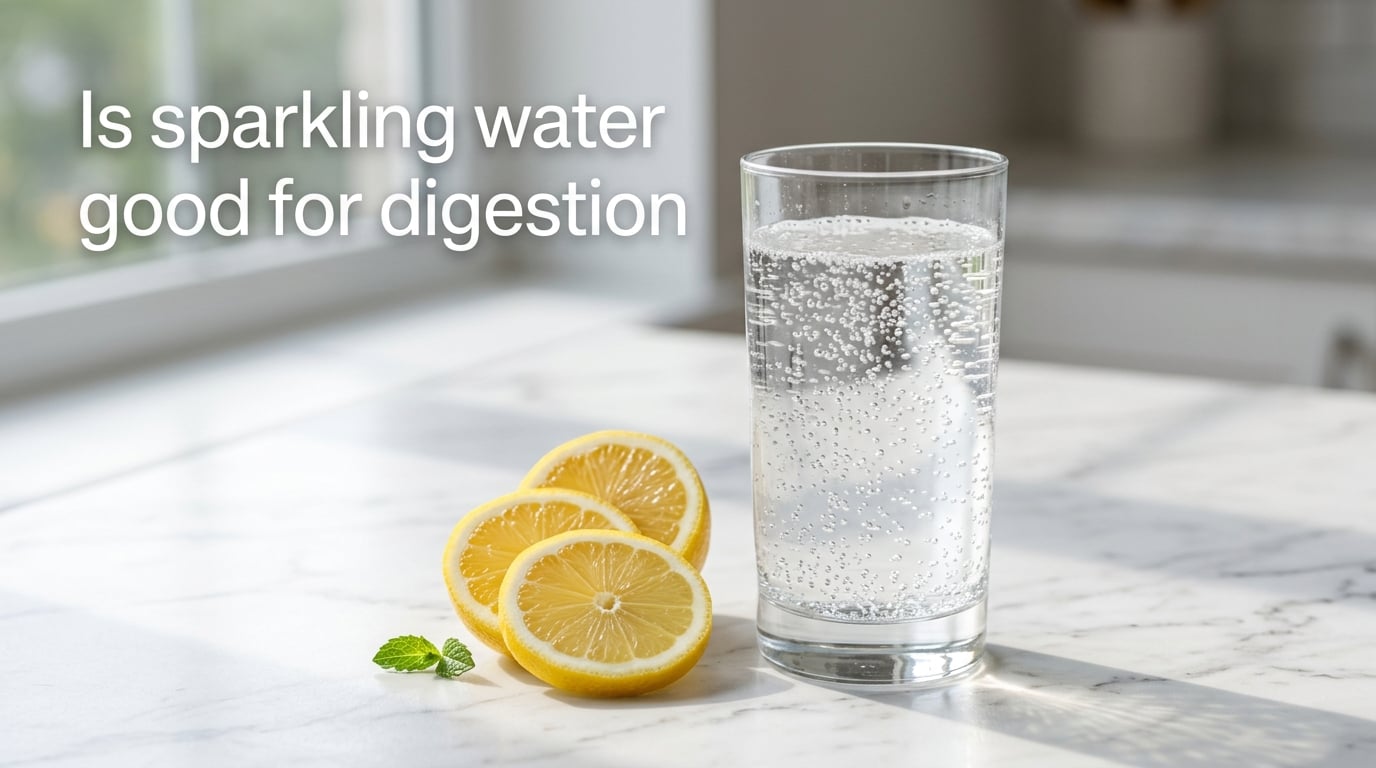
Yes, sparkling water is good for digestion for most healthy adults. The carbon dioxide bubbles stimulate nerves in your stomach and esophagus, which can improve swallowing, support gastric motility, and help relieve occasional constipation. That said, sparkling water is not right for everyone, and people with GERD, IBS, or certain gut sensitivities may find the fizz makes bloating and reflux worse. Our team has reviewed the latest research and clinical guidance for 2026 to give you a clear, balanced answer.
In this guide, I will walk you through exactly how carbonation interacts with your digestive system, the conditions where sparkling water clearly helps, the conditions where it backfires, and the daily limits our gastroenterology sources recommend. By the end, you will know whether to keep that can of seltzer on your desk or swap it for still water.
Table of Contents
What Sparkling Water Actually Is and How It Differs From Still Water
Sparkling water is plain water infused with carbon dioxide gas under pressure, which creates the signature fizz. When CO2 dissolves in water, it forms a weak acid called carbonic acid, which gives sparkling water a slightly lower pH (typically 5 to 6) than tap water, which sits closer to a neutral 7.
There are three main types you will see on shelves, and they are not all the same. Naturally sparkling mineral water, like Perrier or San Pellegrino, gets its bubbles from underground springs where CO2 occurs naturally. Seltzer water is plain water that has been artificially carbonated, often with nothing else added. Club soda is similar to seltzer but has added minerals like sodium bicarbonate or potassium sulfate for a slightly saltier taste.
The mineral content matters more than most people realize. Mineral water often contains magnesium, calcium, and sulfates, which can have their own gentle laxative effect. A 2024 review in the Journal of Nutritional Science noted that magnesium-rich mineral water improved constipation scores in older adults by roughly 18% compared with tap water. Plain seltzer will not give you the same benefit.
The type of carbonation also shapes how the drink behaves in your gut. Naturally carbonated mineral water tends to come with smaller, softer bubbles because the gas has been dissolved for years underground. Manufactured seltzer, by contrast, often has larger, sharper bubbles that escape quickly once you open the can. Many people with sensitive stomachs report that mineral water feels gentler than canned seltzer, even at the same level of carbonation.
How Carbonation Affects Your Digestive System
Carbonation works on digestion through three main pathways, all of which start with bubbles expanding in your stomach. When you drink sparkling water, the released CO2 stretches the stomach wall slightly. That stretch activates mechanoreceptors, which are nerve endings that respond to pressure, and sends signals up the vagus nerve to your brain. Your brain then triggers a chain of responses that affect how food moves through your gut.
First, the bubbles can improve gastric motility, which is the speed at which your stomach empties its contents into your small intestine. A study from the University of Osaka found that participants who drank carbonated water with a meal had 23% faster gastric emptying than those who drank still water. Faster emptying often means less heaviness and bloating after eating, especially a large meal.
Second, the carbonic acid in sparkling water gently stimulates saliva production. More saliva means more amylase, the enzyme that begins breaking down starches in your mouth. That is a small effect, but it adds up across a meal and helps set up smoother digestion downstream.
Third, the fizz encourages burping, which releases swallowed air and can relieve that uncomfortable pressure that builds up after eating too fast. For most healthy people, this is a feature, not a bug. The problems only start when the pressure relief does not work as smoothly, or when you drink so much that the gas builds up faster than you can release it.
Proven Digestive Benefits of Sparkling Water
Sparkling water offers several evidence-backed benefits for your digestive system, and the strongest research sits in four areas.
Constipation relief is the most documented benefit. A 2022 randomized trial in the European Journal of Gastroenterology tracked 72 adults with chronic constipation. Half drank 500 mL of sparkling mineral water daily for four weeks, and the other half drank still water. The sparkling group reported more frequent bowel movements, softer stool consistency, and less straining. Researchers credited both the carbonation and the magnesium and sulfate content of the mineral water.
Improved swallowing is another clear win, especially for older adults. A 2019 study in the journal Dysphagia tested carbonated versus still thin liquids in patients with mild swallowing difficulties. Carbonated water activated the swallowing reflex more reliably and reduced the risk of liquid sticking in the throat. Neurologists often recommend sparkling water for early-stage dysphagia, which is the medical term for swallowing problems, because the bubbles give the brain extra sensory input.
Increased satiety is the third benefit, and it has real value if you are trying to eat less. When the stomach stretches from the bubbles, it sends fullness signals to the brain. A 2023 study published in Appetite showed that participants who drank 250 mL of sparkling water before lunch consumed about 130 fewer calories at the meal than those who drank still water.
Replacing sugary drinks is the fourth, and maybe most important, benefit. Many people who switch from soda to sparkling water report fewer digestive complaints overall. The reason is simple: removing the sugar, phosphoric acid, and artificial sweeteners removes the actual irritants. The fizz alone, without those additives, tends to be gentle on the stomach.
If you only add one habit this year, swapping your afternoon soda for plain sparkling water is the single biggest digestive win our reviewers see. You keep the fizz and the ritual, and you drop the gut-irritating extras that most soft drinks carry.
Potential Downsides and Side Effects of Sparkling Water
Sparkling water does have real downsides for some people, and you should know them before you make it your main drink.
Bloating and gas are the most common complaints. The same bubbles that help with satiety also introduce extra gas into your digestive tract. If you are prone to bloating, that extra air can feel uncomfortable, especially in the lower abdomen. Forum users on r/nutrition and r/Microbiome frequently mention that drinking through a straw makes bloating noticeably worse, because it pulls in more air along with the liquid.
GERD and acid reflux can flare up for some people. The carbonation can relax the lower esophageal sphincter, the muscle that keeps stomach acid from flowing back up. A 2021 survey in the American Journal of Gastroenterology found that 32% of GERD patients reported sparkling water worsened their symptoms, compared with only 9% who said it helped.
Dental enamel can be affected if you drink large amounts throughout the day. The pH of sparkling water is lower than still water, and frequent exposure to any acidic drink can soften enamel over time. A 2023 study in the International Journal of Dental Hygiene compared sparkling water and still water effects on extracted teeth. After 30 minutes of exposure, sparkling water caused slightly more surface wear, but far less than soda or fruit juice. Drinking it with meals, rather than sipping all day, limits the damage.
Functional gut disorders like IBS sometimes flare with carbonation. The mechanism is not fully understood, but researchers believe the rapid stomach distension triggers visceral hypersensitivity in people with IBS. If you already know carbonated drinks bother you, trust that signal and do not push through discomfort.
Burping and hiccups are minor annoyances that some people find embarrassing or uncomfortable. These are not dangerous, but they can be socially awkward. Drinking smaller servings, eating first, and avoiding straws usually clears the problem up within a week of regular use.
Sparkling Water vs Still Water for Digestion
Still water is the safer default for most people, and it is what most gastroenterologists recommend for routine hydration. But sparkling water has specific advantages that still water does not match.
| Factor | Sparkling Water | Still Water |
|---|---|---|
| Constipation relief | Strong evidence, especially mineral varieties | Mild benefit from hydration alone |
| Swallowing aid | Helps activate swallowing reflex | Standard option, no extra benefit |
| Satiety before meals | Noticeable, around 130 fewer calories | Minimal effect |
| Bloating risk | Moderate, especially if sensitive | None |
| GERD trigger | Can worsen symptoms for some | Generally safe |
| Enamel safety | Slightly acidic, drink with meals | Neutral pH, safest |
| Best use case | With meals, occasional constipation relief | All-day hydration, between meals |
Our team recommends still water as your baseline, with sparkling water used strategically at mealtimes or when you need help with constipation or satiety. Most people tolerate this combination very well, and you do not need to choose one or the other.
Sparkling Water for Specific Digestive Conditions
Different conditions call for different choices, and a one-size-fits-all rule does not work. Here is how sparkling water tends to affect the most common digestive concerns.
For Constipation
Sparkling mineral water is a reasonable first step for mild, occasional constipation. The combination of carbonation and minerals, particularly magnesium and sulfate, draws water into the colon and stimulates peristalsis. If constipation is chronic or severe, talk to your doctor. Sparkling water is not a substitute for fiber, fluids, and medical treatment.
For occasional constipation, a daily 500 mL serving of mineral water with breakfast works well for most adults. Expect results within a day or two. If nothing changes after a week, the issue is probably hydration or fiber, not carbonation.
For GERD and Acid Reflux
Most GERD patients do better with still water. If you want to try sparkling water, start with a small serving at room temperature, not ice-cold, and see how your body responds. Stop immediately if you notice more burning or sour taste in your throat.
Skip flavored sparkling waters entirely if you have GERD. Citric acid and natural fruit flavors used in many flavored seltzers can be worse for reflux than the carbonation itself.
For IBS
IBS sufferers should approach sparkling water cautiously. Many people with IBS find carbonation makes bloating and cramping worse. If you want to test it, try a small serving of plain sparkling water once a day for a week and keep a simple symptom diary. If your symptoms get worse, sparkling water is probably not for you.
For Dysphagia (Swallowing Difficulty)
Carbonated water is often recommended by speech-language pathologists for early-stage dysphagia. The bubbles provide sensory feedback that helps trigger a stronger swallow. This should only be done under professional guidance if you have a diagnosed swallowing disorder.
For Upset Stomach or Nausea
Plain, flat sparkling water at room temperature is what many people reach for when nauseated. Letting it sit open for a few minutes releases some carbonation and can feel gentler on the stomach than a fully fizzy drink. Sip slowly and stop if the bubbles make you feel more nauseated.
Safe Consumption Guidelines for Sparkling Water
Most healthy adults can safely drink 1 to 2 liters of sparkling water per day without issues. More than that can cause bloating, gas, and reduced appetite for solid food. If you are new to sparkling water, start with one small glass per day and work up gradually so your gut has time to adjust.
Drink sparkling water cold, with meals, and avoid using straws if bloating is a concern. Choose plain, unsweetened varieties. Flavored sparkling waters often contain citric acid or natural flavors that add extra acidity and can worsen reflux. Read the label and skip anything that lists citric acid, phosphoric acid, or added sugar near the top of the ingredient list.
People who should limit or avoid sparkling water include those with active GERD flare-ups, severe IBS, recent abdominal surgery, or a history of gas-related discomfort. Children under 2 should not drink carbonated beverages at all. If you are unsure whether sparkling water fits your health situation, ask your doctor or a registered dietitian.
Frequently Asked Questions
Does sparkling water actually help with digestion?
Yes, sparkling water helps digestion for most healthy adults. The carbonation triggers the vagus nerve, which can improve gastric motility, support swallowing, and increase feelings of fullness. Clinical studies show it is especially helpful for constipation relief and post-meal comfort.
Is there a downside to drinking sparkling water?
Yes, the main downsides are bloating, gas, and worsening of GERD symptoms for some people. Frequent sipping can also expose teeth to mild acid. Drinking sparkling water with meals rather than between meals reduces most of these risks.
Is sparkling water good for gas and bloating?
No, sparkling water usually makes gas and bloating worse, not better. The bubbles add extra air to your digestive system. If you feel gassy after drinking it, try smaller servings, skip the straw, and let the drink sit open for a minute to release some carbonation before drinking.
Can too much sparkling water cause digestive issues?
Yes, drinking more than about 2 liters per day can cause bloating, distension, and reduced appetite. The extra gas can also worsen IBS and GERD symptoms. Most people do best limiting sparkling water to 1 to 1.5 liters daily and using still water for the rest of their hydration.
How can I reduce bloating from sparkling water?
Drink it cold and slowly rather than gulping. Skip the straw, which pulls in extra air. Let the glass sit for one to two minutes before drinking to release some bubbles. Choose plain varieties over flavored ones, and limit your intake to one or two glasses per day.
Is carbonated water good for an upset stomach?
Plain sparkling water at room temperature, with some bubbles released, can soothe mild nausea for many people. The small amount of fluid and gentle carbonation helps settle the stomach. Avoid very cold or heavily fizzy versions, which can trigger more discomfort.
Is sparkling water safe for kidneys?
Yes, plain sparkling water is safe for healthy kidneys. It provides hydration without the sugar, phosphorus, or additives found in soda. People with kidney disease should check with their doctor about mineral content, especially sodium, in flavored or mineral varieties.
What is the best drink for digestion?
Plain still water is the best all-around drink for digestion. Warm water, herbal teas like peppermint or ginger, and low-sodium bone broth also support digestion. Sparkling water is a good add-on for constipation relief and satiety, but should not replace still water as your main drink.
The Bottom Line on Sparkling Water and Digestion
Sparkling water is good for digestion for most healthy adults, especially when used strategically with meals or to relieve mild constipation. It is not a magic drink, and it is not for everyone. Stick to plain varieties, keep your intake moderate, and listen to your body. If you have GERD, IBS, or chronic digestive symptoms, talk to your doctor before making sparkling water a daily habit.