
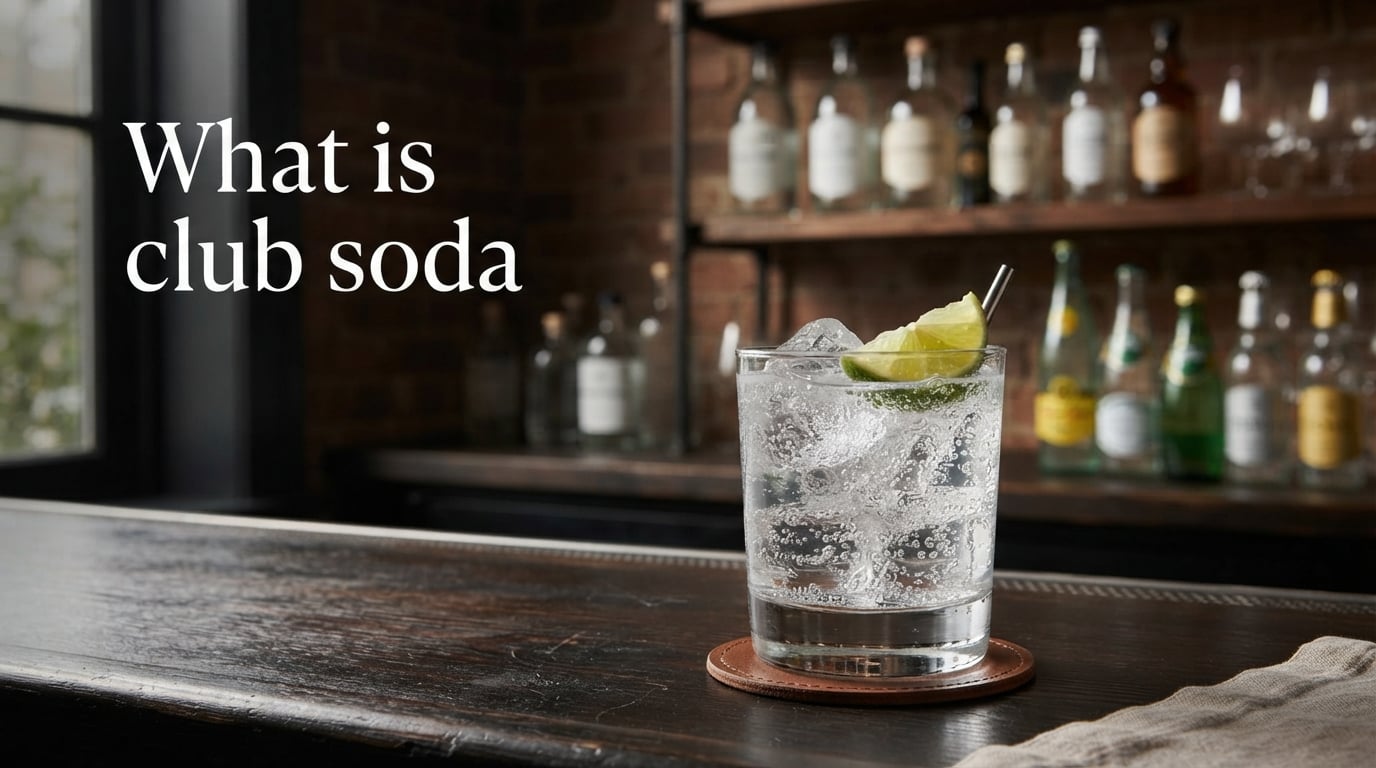
If you’ve ever stared at the mixers section of a bar menu or stood confused in the soda aisle, you’ve probably asked: what is club soda exactly? Here’s the short answer: club soda is artificially carbonated water infused with added minerals, most commonly sodium bicarbonate, potassium sulfate, and sodium chloride. Those added minerals give it a distinctively crisp, slightly salty taste that separates it from plain carbonated water.
Club soda sits in the same broad family as seltzer, sparkling water, and tonic water, but it earns its own category because of those added minerals. On our site we cover the wider mineral content in water, and club soda is essentially the bartender-friendly cousin of natural mineral water. It mimics some of the mineral profile of spring water using a controlled, factory process.
In this guide I’ll walk through the exact definition, the carbonation process, the minerals that matter, how club soda differs from seltzer, sparkling, and tonic, what people use it for, and whether it’s actually good for you. Updated for 2026, this is the complete breakdown our team wished we’d had years ago.
Table of Contents
What Is Club Soda?
Club soda is carbonated water that has been infused with a small amount of mineral salts. The base water is plain filtered water, then carbon dioxide is forced into it under pressure, and finally a blend of mineral compounds is added to replicate the taste of natural mineral water.
The mineral blend usually includes:
Sodium bicarbonate (the same family as baking soda)
Potassium sulfate
Sodium chloride (table salt)
Those three minerals do the heavy lifting. Without them, club soda would just taste like seltzer, because plain carbonated water on its own is essentially flavorless with just a sharp bite from the dissolved carbonic acid.
The term “club” goes back to the 1800s, when private social clubs would serve carbonated mineral waters mixed with their house spirits. Joseph Priestley, the English chemist who figured out how to infuse water with carbon dioxide in 1772, helped popularize the science behind the modern club soda you’ll find in any bar or grocery store.
Today, club soda is treated as a separate product because regulators and bottlers define it as plain water plus added carbonation plus added mineral salts. If a bottle just says “sparkling water” without an “added minerals” note, it’s a different product.
What Does Club Soda Taste Like?
Club soda tastes crisp, clean, and slightly salty with a clear mineral edge. The saltiness is mild, more like a faint brine than table salt in water. The mineral edge comes from the sodium bicarbonate and potassium sulfate, which add a faint chalky or stony note that you don’t get with seltzer.
When I drink club soda on its own over ice with a wedge of lime, I taste three layers in order: the bright fizz on the front of the tongue, the clean mineral body in the middle, and a soft salty finish. Seltzer tastes flatter by comparison, almost hollow, because there’s nothing giving the water body after the bubbles fade.
The flavor isn’t strong. It’s more about absence than presence. Where sugary sodas shout, club soda whispers. That whisper is exactly why bartenders reach for it. It lifts other flavors rather than covering them up.
Some brands taste saltier than others. Schweppes, for example, tends to read as more mineral-heavy, while store brands often taste closer to seltzer because they use less of the mineral blend. Temperature also changes the perception, cold club soda reads as crisper, while room-temperature club soda shows more of the salt and mineral.
How Is Club Soda Made?
Club soda starts as plain filtered water, often passed through carbon filters or reverse osmosis to strip out anything that might compete with the added minerals. From there the process happens in three stages.
Carbonation: CO2 gas is chilled and forced into the water under high pressure, typically around 40 to 50 psi. The cold water absorbs the gas, forming carbonic acid in solution.
Mineral addition: Measured amounts of sodium bicarbonate, potassium sulfate, and sodium chloride are blended in. Some makers add potassium bicarbonate or sodium citrate for a rounder flavor.
Bottling: The finished water is sealed under pressure so the carbonation stays locked in until you crack the cap.
The mineral addition step is what separates club soda from seltzer. Seltzer skips step 2 entirely, which is why the two are not the same product even though they’re often lumped together on grocery shelves.
There’s also a question of water quality. The cleaner and more neutral the starting water, the more honestly the mineral blend will read on the finish. If the base water already carries a strong mineral profile or chlorine taste, that competes with the added minerals and can throw off the balance. This is one reason the same brand of club soda can taste subtly different from one city to the next, because the source water varies.
Key Minerals in Club Soda
The mineral profile is the entire reason club soda exists as a separate product. Here’s what each mineral brings to the bottle.
Sodium bicarbonate: This is the main contributor. It raises the pH slightly (counteracting the carbonic acid), adds a faint chalky body, and gives the soda its signature soft bite.
Potassium sulfate: Adds a sharp mineral note and contributes a tiny amount of potassium. We cover potassium content in water more deeply elsewhere, but for context, a typical liter of club soda contributes a small fraction of your daily potassium needs.
Sodium chloride: A pinch of table salt. This is what gives club soda the subtle salty finish people notice when they taste it alongside seltzer.
Potassium bicarbonate or sodium citrate (optional): Some brands use these to round out the flavor or fine-tune the pH. They show up most often in premium or imported club sodas.
Together, these minerals usually add up to less than 100 milligrams of sodium per serving. That’s a trace amount compared to a slice of bread, but it’s enough to change the taste noticeably.
Club Soda vs Seltzer Water
Club soda and seltzer are the easiest pair to confuse, and they’re the closest substitutes in a cocktail glass. Here’s the difference.
Ingredients: Club soda is water plus added minerals. Seltzer is just water and carbonation.
Taste: Club soda has a faintly salty, mineral edge. Seltzer tastes neutral with just the fizz.
Label: Most bottles literally say “club soda” or “seltzer water” right on the front.
Use: Seltzer is preferred when you want pure fizz with no competing flavor (think flavored water or a delicate gin and tonic variation). Club soda is preferred when a recipe calls for body, like a Tom Collins or paloma.
You can swap one for the other in most drinks and no one at the table will notice. But if you taste them side by side, the difference is real. Seltzer tastes emptier after the bubbles leave. Club soda leaves a faint mineral finish that holds the drink together.
Club Soda vs Sparkling Water
Sparkling water is the term that causes the most confusion because it covers two different products under one label.
Natural sparkling water: Comes from a spring or well where the water is naturally carbonated underground. The fizz is geological. Brands like Perrier and San Pellegrino fall here.
Manufactured sparkling water: Plain filtered water that has been artificially carbonated, like LaCroix or generic store-brand sparkling water.
Club soda is its own thing. It’s not natural carbonation. It’s not just plain carbonated water. It’s plain carbonated water plus added mineral salts.
If you’ve ever wondered whether you can substitute sparkling water for club soda in a recipe, the answer is yes for cocktails that don’t depend on the salty finish (like a mojito). For recipes that lean on the mineral body (like a paloma with grapefruit), you’ll taste the difference. If you’re curious how carbonation affects hydration before exercise, our piece on sparkling water before a workout covers that angle.
Club Soda vs Tonic Water
Tonic water is the odd one out. It looks like club soda in the glass, but it isn’t a member of the same family.
Quinine: Tonic contains quinine, originally added as an antimalarial compound in British colonial India. Quinine gives tonic a bitter, slightly medicinal taste.
Sugar or sweetener: Most tonics contain sugar or high-fructose corn syrup. A standard tonic has around 30 calories per serving, mostly from sugar. Club soda has zero.
Calories: Club soda is calorie-free. Tonic is not.
Use: Tonic is the defining mixer for a gin and tonic. Club soda is the defining mixer for a Tom Collins, paloma, highball, and most other carbonated cocktails.
If you swap tonic for club soda in a gin and tonic, you’ll lose the bitter backbone that defines the drink. If you swap club soda for tonic in a Tom Collins, you’ll lose the bite that defines that drink. They’re built for different purposes.
Quick Comparison: Club Soda vs Seltzer vs Sparkling vs Tonic
Here’s the side-by-side view for the AI Overview snippet and quick reference.
Club soda: plain water + CO2 + added mineral salts (sodium bicarbonate, potassium sulfate, sodium chloride). Faintly salty. Zero calories.
Seltzer: plain water + CO2. No minerals. Neutral taste. Zero calories.
Sparkling water: spring water + natural CO2, OR plain water + CO2. Mineral content varies by source. Zero calories.
Tonic water: plain water + CO2 + quinine + sugar or sweetener. Bitter taste. Around 30 calories per serving.
What Is Club Soda Used For?
Club soda shows up in more places than people realize. Here are the main uses, ranked by how often you’ll actually encounter them.
Cocktails: This is the headline use. Club soda is the base of a Tom Collins, paloma, whiskey highball, gin rickey, and Italian soda. The mineral body holds the drink together as the ice melts.
Standalone refresher: Poured over ice with a wedge of lime or lemon, club soda is a calorie-free alternative to soft drinks. I drink this most afternoons.
Cooking: Club soda makes surprisingly fluffy pancakes. The carbonation creates steam in the batter, lifting it. It also works in tempura batter for the same reason.
Baking: A splash of club soda in biscuit dough or waffle batter produces a lighter texture than still water or milk alone.
Stain removal: Club soda is a well-known household trick for fresh red wine or coffee stains. The bubbles lift the stain out of the fabric, and the minerals prevent the stain from setting.
Digestive aid: Some people sip club soda after a heavy meal. The carbonation can encourage burping, which relieves pressure. The minerals also help settle the stomach for some.
If a cocktail recipe calls for “soda water,” most of the time the bartender means club soda, not seltzer or sparkling. That’s a small thing, but it explains why the drink tastes the way it does at the bar versus at home.
Substitutes for Club Soda
If you don’t have club soda on hand, here are the substitutes that actually work.
Seltzer water: Best 1:1 substitute for most cocktails. You’ll lose the salty finish but keep the fizz.
Sparkling water (manufactured): Works for cocktails and standalone drinking. Mineral content varies, so the finish will taste different.
Natural sparkling mineral water: Works fine for cocktails. Tends to be more expensive and more mineral-forward than club soda.
Dry sparkling wine or prosecco: For savory applications like deglazing a pan or light sauces, sparkling wine is a workable substitute, but obviously not for standalone drinking or kid-friendly drinks.
Tonic water: Use only if you want the bitter quinine note. It is not a neutral substitute, and most recipes will taste wrong if you swap tonic for club soda.
For a Tom Collins or paloma, seltzer is the closest thing. For a whiskey highball, seltzer works just as well as club soda. For a gin and tonic, nothing substitutes for tonic. That’s the one recipe where the substitution breaks down completely.
Is Club Soda Good or Bad for You?
Club soda is generally a healthy choice. It has zero calories, zero sugar, zero fat, and no artificial sweeteners. The carbonation comes from natural CO2. The minerals are present in trace amounts that don’t meaningfully affect daily nutrition in either direction.
The main consideration is sodium. A typical 12-ounce can of club soda has around 50 to 75 milligrams of sodium. That’s a small amount, but if you’re on a low-sodium diet, it adds up. Drink five cans a day and you’re looking at 250 to 375 milligrams of sodium from club soda alone.
For most people, club soda is a clean, calorie-free way to stay hydrated, especially for people who don’t love plain still water. It’s also a useful tool for people cutting back on sugary sodas. The bubbles give you a sensory experience similar to soda without the sugar.
A few small caveats. Carbonation can trigger reflux in people with GERD or sensitive stomachs. For some, very cold carbonated drinks cause bloating. The sodium content matters if you have high blood pressure or kidney issues. Otherwise, club soda is one of the most neutral beverages you can reach for, and on a mineral content scale, it sits closer to natural mineral water than to sugary sodas.
Frequently Asked Questions
Is club soda basically just sparkling water?
Not quite. Club soda is plain water that has been artificially carbonated and then infused with added mineral salts like sodium bicarbonate, potassium sulfate, and sodium chloride. Sparkling water is either naturally carbonated spring water or plain water that has been artificially carbonated without added minerals. The mineral blend gives club soda a faintly salty, crisp edge that plain sparkling water does not have.
Is club soda good or bad for you?
For most people, club soda is a healthy, calorie-free, sugar-free beverage. It contains trace minerals and a small amount of sodium, usually 50 to 75 milligrams per can. That sodium adds up if you drink several cans a day, so people on low-sodium diets should track it. Carbonation can also trigger reflux in some people. Otherwise, club soda is a neutral choice that helps people stay hydrated and cut back on sugary sodas.
What is a good substitute for club soda?
The closest 1:1 substitute is seltzer water. Sparkling water works too, though the mineral finish will taste different depending on the source. Natural sparkling mineral water also works for cocktails and standalone drinking. Tonic water is not a neutral substitute because it contains quinine and sugar, which change the flavor and add calories.
Why do people drink club soda?
People drink club soda for several reasons. As a cocktail mixer, the added minerals give drinks like Tom Collins, palomas, and whiskey highballs a softer body than seltzer. As a standalone drink, club soda is a calorie-free alternative to sugary sodas. In the kitchen, club soda is used to make fluffy pancakes and tempura batter. Around the house, it doubles as a stain remover for fresh red wine and coffee spills. Some people also drink it as a digestive aid after heavy meals.
The Bottom Line on What Is Club Soda
So, what is club soda in plain English? It’s carbonated water with added mineral salts that give it a faintly salty, crisp taste. It is not the same as seltzer, sparkling water, or tonic water, even though those bottles often sit side by side on the shelf. The mineral blend is the entire reason club soda exists as its own product.
If you’re building a home bar, keep a bottle of club soda for cocktails like Tom Collins and palomas, plus a bottle of seltzer for situations where you want pure fizz. If you’re looking for a calorie-free everyday drinker, club soda over ice with a wedge of lime is one of the cleanest choices you can make. Updated for 2026, this guide covers everything our team has learned comparing club soda to its carbonated cousins, and we hope it saves you some guesswork next time you’re staring at the soda aisle.