
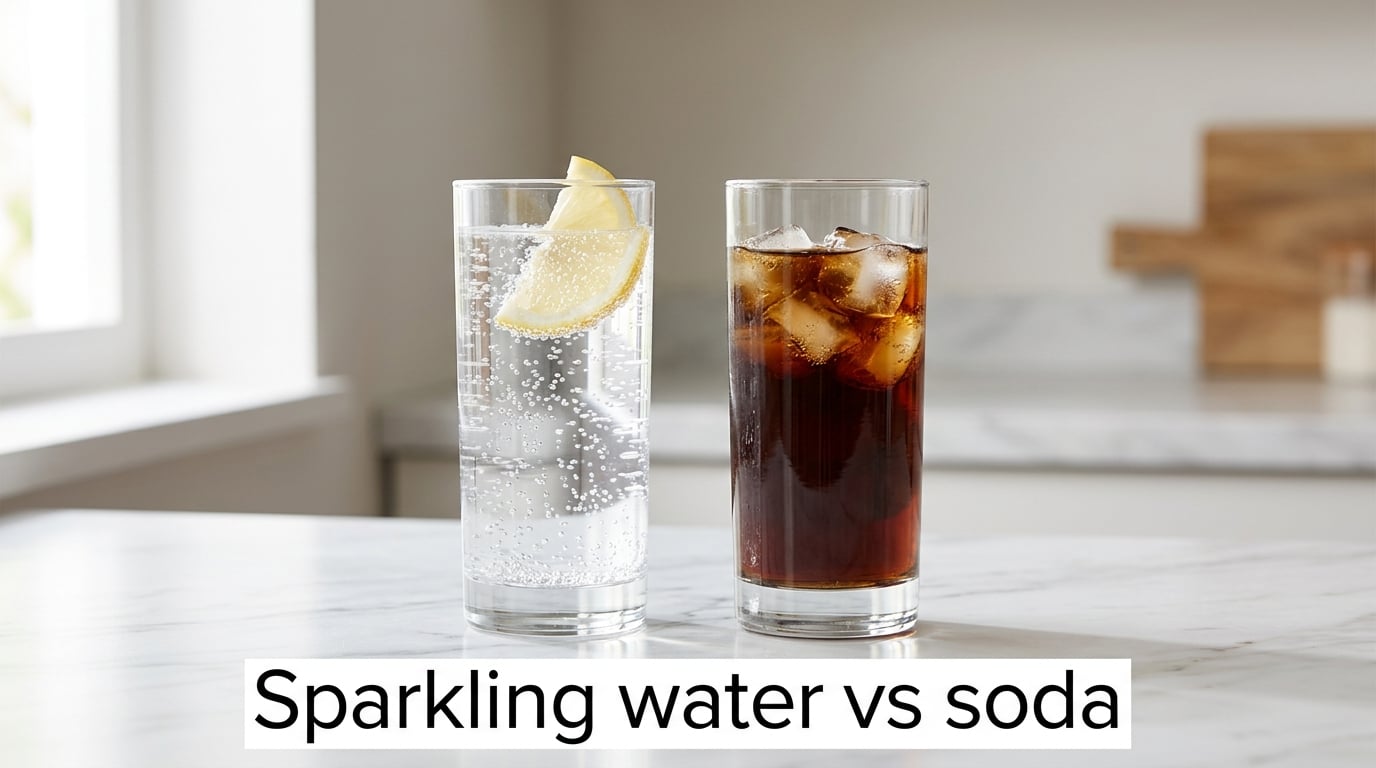
I switched from drinking two cans of soda a day to sparkling water about 18 months ago. The change saved me roughly 29 grams of sugar per can and roughly 140 empty calories daily. That personal experience is what pushed me to dig deeper into the sparkling water vs soda debate and write this guide for 2026.
If you have ever stared at a fridge full of fizzy drinks wondering which one your body actually wants, this article is for you. We are going to break down the real differences between sparkling water and soda, from carbonation chemistry to dental health, so you can make a confident choice.
Table of Contents
What Is Sparkling Water and How Does It Differ From Soda?
Sparkling water is simply water that has been infused with carbon dioxide gas under pressure, creating bubbles and that signature fizz. It contains zero sugar, zero calories, and no artificial additives unless a flavor has been added.
Soda (also called pop or soft drink) is a sweetened, flavored carbonated beverage. A typical soda contains added sugar or high-fructose corn syrup, artificial flavorings, colorings, caffeine, and often phosphoric acid or citric acid.
Here is where terminology gets confusing. The phrase “soda water” technically refers to carbonated water that has sodium bicarbonate or other minerals added, giving it a slightly salty taste. Seltzer is plain carbonated water with no additives. Club soda is carbonated water with added minerals like potassium sulfate. Sparkling mineral water comes from a natural spring and naturally contains minerals plus carbonation.
For the purpose of this comparison, we are using “sparkling water” as the catch-all term for plain carbonated water with no sugar, and “soda” as the catch-all for sweetened, flavored carbonated drinks like cola, lemon-lime, and orange soda.
How Carbonation Works in Both Beverages
Both sparkling water and soda get their bubbles from the same process: CO2 infusion under pressure. When carbon dioxide gas dissolves in water, it forms carbonic acid, which is what creates that tangy, slightly sharp taste on your tongue.
The carbonation process itself is identical. Beverage manufacturers chill water, then pump CO2 into it under high pressure (around 40 to 60 PSI). When you open the container or release the pressure by pouring, the dissolved gas escapes as bubbles.
Natural sparkling mineral water gets its carbonation either from natural geological processes (volcanic activity deposits CO2 into underground springs) or through the same factory carbonation method. The fizz you feel is chemically the same regardless of source.
Here is what changes between the two drinks: everything else. Soda adds sugar, flavor, color, caffeine, and acidulants on top of the carbonation base. Sparkling water stays close to its pure form.
Sugar and Calorie Content Compared
The single biggest difference between sparkling water and soda is sugar. A 12-ounce can of regular cola contains roughly 39 grams of added sugar, which equals about 9 teaspoons. The same size serving of plain sparkling water contains zero grams of sugar.
Let me put specific numbers on this comparison. A standard 12 oz cola delivers around 140 calories, all from sugar. Diet sodas swap sugar for artificial sweeteners like aspartame or sucralose, dropping calories to near zero but introducing other concerns. Plain sparkling water sits at exactly zero calories with no sweeteners of any kind.
For someone drinking two sodas a day, switching to sparkling water removes about 78 grams of sugar and 280 calories per day. Over a year, that adds up to roughly 28 pounds of sugar you would have otherwise consumed.
Key differences at a glance:
Regular soda: 35 to 42 grams of sugar per 12 oz serving, 140 to 180 calories
Diet soda: zero sugar, zero to 5 calories, but contains artificial sweeteners
Plain sparkling water: zero sugar, zero calories, no additives
Flavored sparkling water (unsweetened): zero sugar, zero calories, natural flavor essence
Health Impact: Sparkling Water vs Soda
Choosing sparkling water over soda reduces your exposure to phosphoric acid, caffeine, artificial sweeteners, and the blood sugar spikes tied to liquid sugar consumption. Each of these factors matters for long-term health.
Phosphoric acid and bone health. Many dark sodas contain phosphoric acid, which has been linked in observational studies to lower bone density when consumed in excess. The mechanism is partly about phosphoric acid displacing calcium and partly about soda drinkers often consuming less milk. Plain sparkling water contains no phosphoric acid. Citrus-flavored sparkling waters may contain citric acid, which is milder.
Caffeine content. A 12 oz cola contains about 29 to 34 mg of caffeine. Energy sodas can contain 80 mg or more. Sparkling water contains zero caffeine, which makes it a better choice if you are sensitive to caffeine, pregnant, or trying to improve your sleep. If you want more on this, our article on sparkling water before exercise covers how timing affects hydration and performance.
Artificial sweeteners debate. Diet sodas and some flavored sparkling waters use artificial sweeteners like aspartame, sucralose, or stevia. Current research from major health agencies considers them safe at typical consumption levels, but some people prefer to avoid them. Plain unflavored sparkling water sidesteps this debate entirely.
Weight management. Studies show that people who regularly drink sugary sodas gain more weight over time than those who do not, even when calorie intake is similar elsewhere. Swapping soda for sparkling water removes a major source of empty calories and often reduces overall sweet cravings.
Dental Health: Which Is Safer for Your Teeth?
Both sparkling water and soda are more acidic than still water, but soda is significantly worse for your teeth. The combination of sugar and acid in soda creates a double hit: sugar feeds bacteria that produce enamel-eroding acid, while added acids like phosphoric and citric acid attack enamel directly.
Sparkling water is mildly acidic because of the dissolved carbonic acid, with a pH typically between 3 and 4. Still water has a pH near 7 (neutral). However, plain sparkling water does not contain the sugar that fuels cavity-causing bacteria, and it does not contain phosphoric acid.
A 2024 study in the Journal of the American Dental Association found that while plain sparkling water showed some enamel-softening effect during direct contact, the effect was far smaller than soda and could be minimized by drinking it with meals rather than sipping slowly throughout the day. Flavored sparkling waters with added citric acid can be slightly more aggressive, but still much safer than soda.
Tip: if you are concerned about dental health, drink sparkling water with meals, rinse with plain water afterward, and avoid brushing your teeth for at least 30 minutes after acidic drinks.
Taste, Fizz, and Mouthfeel Differences
Soda has a more intense, complex flavor because of added sugar, caramel color, citrus or spice flavorings, and acidulants. The sweetness hits the front of your tongue, the carbonation creates tingle, and the finish lingers.
Sparkling water offers a cleaner, more neutral taste. Some people describe it as “watery” or “boring” at first, especially if they are used to soda. Others appreciate the crisp, mineral taste and the fact that sparkling water does not leave a sticky-sweet aftertaste.
Fizziness varies between brands. LaCroix and Perrier have lighter, finer bubbles. Club soda tends to have more aggressive fizz from added minerals. Soda sits in the middle because carbonation must balance against the heavy sweetness.
If you are transitioning from soda to sparkling water, my honest suggestion is to start with flavored unsweetened sparkling waters. Citrus, berry, or cucumber-mint flavors give you some of the sensory variety you enjoyed in soda without the sugar.
Hydration Effectiveness of Sparkling Water vs Soda
Both sparkling water and soda hydrate you, but sparkling water hydrates you more effectively per ounce because it does not contain sugar, caffeine, or sodium that can trigger fluid loss. Soda’s caffeine content is mild but has a slight diuretic effect at high intakes, and its high sodium from sodium benzoate preservative can increase thirst.
Sparkling water hydrates at nearly the same rate as still water for most people. A small 2023 study found no meaningful difference in hydration markers between flat and sparkling water among casual exercisers. The carbonation may make you feel fuller, which can slow drinking pace, but overall hydration stays strong.
For athletes or anyone working out in heat, sparkling water is a fine hydration choice during daily activity, though many people prefer still water during intense exercise because carbonation can cause bloating. Check out our guide on sparkling water before exercise for the full breakdown.
Frequently Asked Questions
Is sparkling water better for you than soda?
Yes. Sparkling water is significantly better for you than soda. It contains zero sugar, zero calories, and no artificial additives, while regular soda delivers 35 to 42 grams of sugar per 12 oz serving plus caffeine, phosphoric acid, and artificial colorings. Plain sparkling water gives you the fizz and mouthfeel of soda without the metabolic cost.
Is it OK to drink sparkling water every day?
Yes, drinking sparkling water every day is safe for most people. Studies show no negative effects on bone density, hydration, or digestion from moderate daily intake (around 1 to 3 cans per day). If you have acid reflux or IBS, you may want to limit intake since carbonation can worsen symptoms in some individuals.
Why do Europeans drink sparkling water?
Europeans drink sparkling water largely because of cultural habit and natural geology. Many European regions, including parts of France, Germany, Italy, and Spain, have natural springs with naturally carbonated mineral water, and Europeans have been drinking it for centuries. It is often served as the default table water at restaurants, sometimes more commonly than still water.
Is LaCroix healthier than soda?
Yes, LaCroix is healthier than soda. LaCroix contains zero calories, zero sugar, zero artificial sweeteners, and no additives beyond natural flavor essences and carbonated water. Regular soda contains 35 to 42 grams of sugar, caffeine, and artificial colorings per 12 oz serving. Switching from soda to LaCroix removes all of those problematic ingredients.
Can sparkling water damage your teeth?
Plain sparkling water is mildly acidic due to dissolved carbonic acid, but it is far less damaging to teeth than soda. The bigger risk comes from sipping sparkling water slowly over long periods or choosing flavored varieties with added citric acid. Drinking sparkling water with meals and rinsing with plain water afterward protects your enamel.
The Bottom Line on Sparkling Water vs Soda
The sparkling water vs soda comparison comes down to what you want from a fizzy drink. If you want hydration with bubbles and nothing else, sparkling water wins by every measure: zero sugar, zero calories, no caffeine, no phosphoric acid, no artificial additives, and far less risk to your teeth and bones.
For anyone trying to cut sugar, manage weight, reduce caffeine, or simply make a healthier everyday choice, sparkling water is a clear upgrade over soda. The transition is easier than you think, especially if you start with flavored unsweetened varieties.
I have personally been drinking sparkling water daily for over a year now, and I do not miss soda at all. If you give it a fair try for 30 days, I think you will feel the same way.