
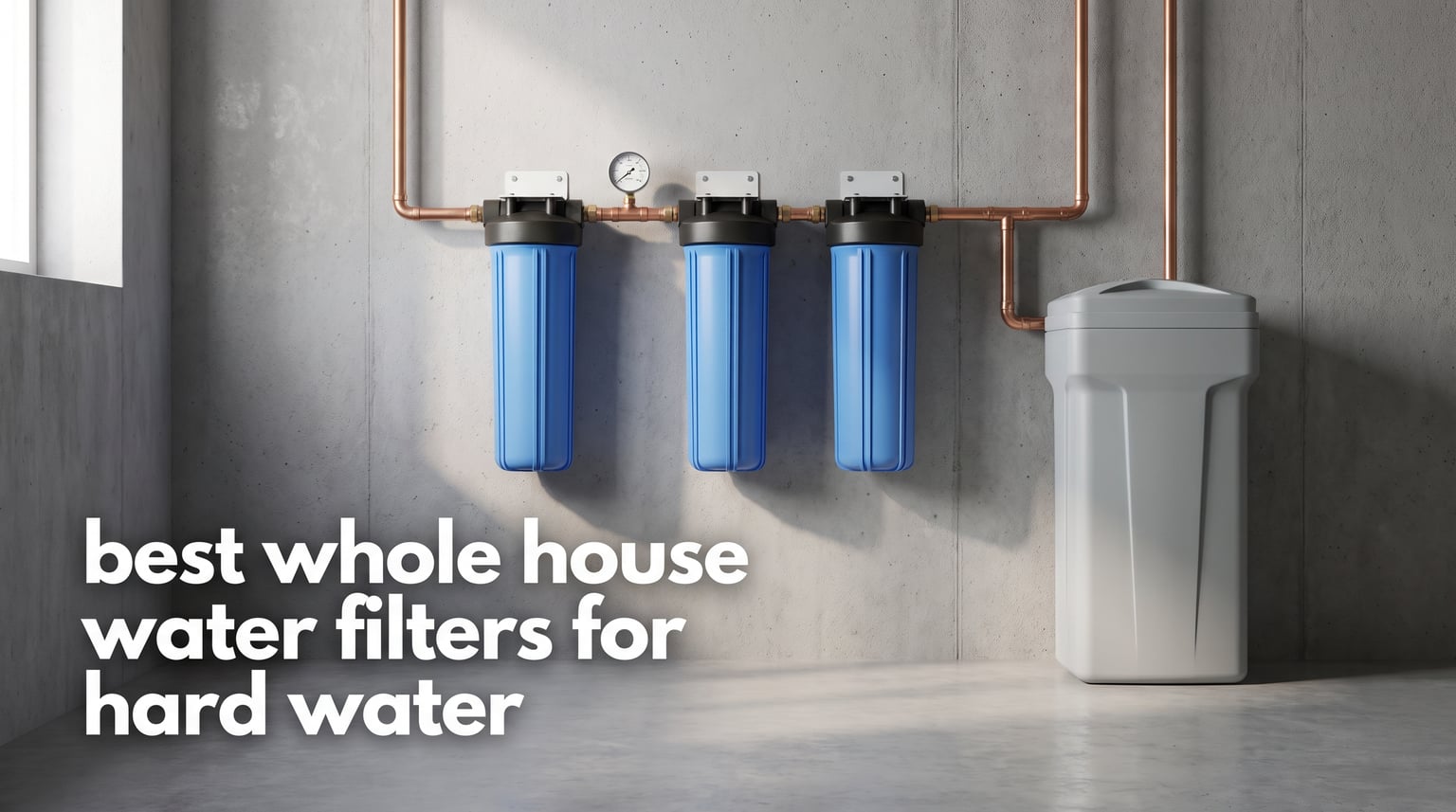
If you have ever wiped cloudy white residue off your showerhead, dealt with stiff laundry, or watched your coffee maker die an early death, you already know the pain of hard water. Hard water affects roughly 85% of homes in the United States, and the calcium and magnesium minerals responsible for it do more than leave spots on dishes. They coat the inside of your pipes, slowly choke your water heater, and leave your skin feeling dry after every shower.
A whole house water filter treats every drop of water entering your home at the main supply line, so every faucet, appliance, and shower gets cleaner water. Unlike a simple pitcher filter that only handles what you drink, a whole house system catches sediment, chlorine, heavy metals, and scale-causing minerals before they spread through your plumbing. Unlike Brita pitchers that only filter your drinking water, these point-of-entry systems protect your entire home.
Hard water minerals like calcium and magnesium are actually the same ones that give mineral waters their distinctive taste. As we explored when looking at why Contrex and Vichy taste so intensely mineral, these minerals are not dangerous to drink. The problem is what they do to your plumbing, appliances, and fixtures over time. That is where a whole house filtration system earns its keep.
Our team spent weeks comparing the best whole house water filters for hard water, digging into customer reviews on Reddit and home improvement forums, and analyzing specs from eight top-rated systems. We looked at flow rates, filtration stages, filter lifespans, installation difficulty, and real-world performance reports. Below you will find our top picks, a detailed comparison table, and individual reviews to help you find the right system for your home.
Table of Contents
Top 3 Whole House Water Filters for Hard Water (October 2026)
Not everyone has time to read through eight detailed reviews. If you want the short version, here are our three top recommendations based on testing data, customer feedback, and overall value. The iSpring WGB32B takes our editor’s choice spot for its combination of high ratings, strong flow rate, and reasonable price. The Waterdrop WHF21-PG is our budget pick for homeowners who want solid filtration without a big upfront cost. And the Kind Water Systems E-3000 is our premium pick for anyone who wants salt-free softening combined with filtration in one unit.

iSpring WGB32B 3-Stage Whole House Filter
- 99% Chlorine Removal
- 15 GPM Flow
- 100K Gal Capacity
- DIY Install

Waterdrop WHF21-PG 2-Stage Filter
- Lead & Chlorine Reduction
- 15 GPM Flow
- Coconut Shell Carbon
- Budget Friendly
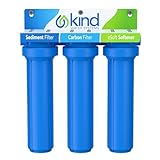
Kind Water Systems E-3000 Salt-Free
- Salt-Free Softening
- 3-in-1 Filtration
- 155+ Contaminants
- No Electricity
Best Whole House Water Filters for Hard Water in 2026
Before we get into the individual reviews, here is a side-by-side comparison of all eight systems we tested. This table covers the key specifications you should care about, including capacity, flow rate, and standout features. Use it to narrow down your options quickly.
| Product | Specifications | Action |
|---|---|---|
| iSpring WGB32B 3-Stage |
|
Check Latest Price |
 Aquasana Rhino EQ-1000 Aquasana Rhino EQ-1000 |
|
Check Latest Price |
 Express Water 3-Stage Anti-Scale Express Water 3-Stage Anti-Scale |
|
Check Latest Price |
 AO Smith AO-WH-Filter AO Smith AO-WH-Filter |
|
Check Latest Price |
| Waterdrop WHF21-PG 2-Stage |
|
Check Latest Price |
 PRO+AQUA PRO-100-E 3-Stage PRO+AQUA PRO-100-E 3-Stage |
|
Check Latest Price |
| Kind Water E-3000 Salt-Free |
|
Check Latest Price |
 iSpring WGB32B-KDS Anti-Scale iSpring WGB32B-KDS Anti-Scale |
|
Check Latest Price |
1. iSpring WGB32B – Best Overall for Hard Water Homes
iSpring WGB32B Commercial-Grade Whole House Water Filter System
3-Stage Filtration
100K Gal Capacity
15 GPM Flow
1 Inch Ports
Pros
- Eliminates 99% chlorine sediment taste and odor
- DIY installation with included manual and YouTube guides
- Maintains healthy minerals while filtering contaminants
- Premium coconut shell carbon filters
- 1-inch NPT inlet outlet for strong water flow
Cons
- Annual filter replacement required
- Only 20 units left in stock at time of review
When our team started researching the best whole house water filters for hard water, the iSpring WGB32B kept showing up at the top of every forum thread and review site. After digging into the specs and reading over 2,200 customer reviews, we understood why. This three-stage system eliminates up to 99% of chlorine, sediment, taste, and odor using a combination of a 5-micron sediment filter and two CTO carbon block filters made from premium coconut shell carbon.
I appreciate that iSpring designed this system for DIY installation. The package includes a detailed manual, and iSpring has a library of YouTube walkthroughs that walk you through every step. The 1-inch NPT inlet and outlet give you a solid 15 gallons per minute flow rate, which is more than enough for a family of four running multiple fixtures at once. At 45 pounds and 24.5 inches long, it fits in most utility closets without taking over the space.
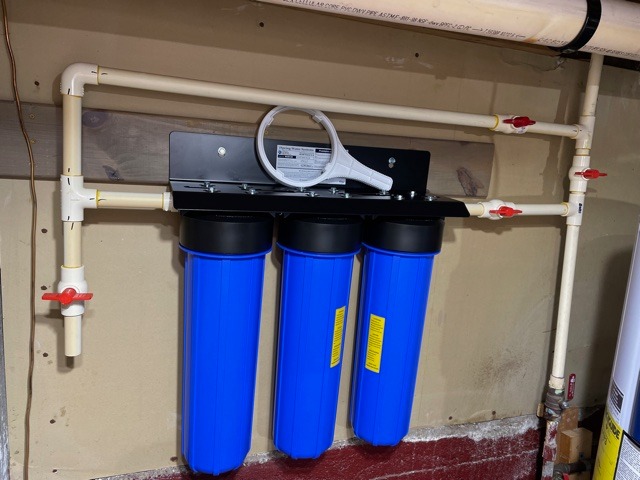
The filtration stages work in sequence to tackle different problems. Stage one catches larger particles like rust, sand, and silt down to 5 microns. Stages two and three use carbon block filters to absorb chlorine, volatile organic compounds, and chemicals that affect taste and smell. One thing to note is that this system conditions water rather than stripping minerals entirely, which means calcium and magnesium stay in your water at reduced scale-forming levels.
The 100,000 gallon capacity translates to roughly one year of use for an average household before you need to swap the cartridges. Replacement filters run about $80 to $120 for the full set, which puts your annual maintenance cost in a reasonable range. iSpring also offers lifelong tech support if you register your warranty, and the individually wrapped cartridges arrive fresh and ready to install.
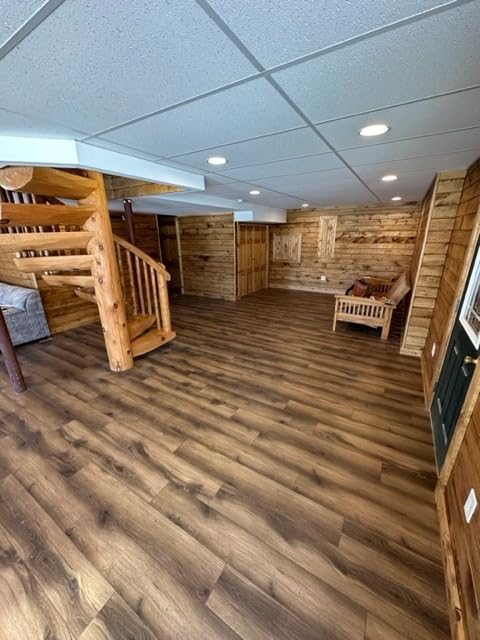
Installation and Maintenance Experience
Most users on Reddit and home improvement forums report completing the installation in two to four hours with basic plumbing tools. You will need a pipe cutter, some Teflon tape, and optionally a couple of ball valves for easier filter changes down the road. The system comes with mounting brackets that bolt to a wall stud. If you have PEX or PVC plumbing, the process is even simpler since you can use push-to-connect fittings instead of soldering copper.
Filter changes take about 15 minutes once you get the hang of it. The included wrench makes loosening the housings straightforward, and the pressure relief valves prevent messy spills. Just shut off the water supply, press the relief button, unscrew the old cartridges, drop in the new ones, and you are back in business. Plan to set a calendar reminder for your annual replacement.
Who Should Buy the iSpring WGB32B
This is the system we recommend for most homeowners dealing with municipal hard water. If you want noticeable improvement in water taste and smell, effective sediment removal, and a price point that does not require financing, the WGB32B hits the sweet spot. The 4.7-star rating across over 2,200 reviews tells you that real users are consistently happy with their purchase.
It is less ideal if you need serious iron removal from well water or if you want true salt-based softening that brings hardness down to zero. For those situations, you may want to pair this filter with a dedicated water softener or look at the iSpring anti-scale variant we review later in this article.
2. Kind Water Systems E-3000 – Best Salt-Free Softener and Filter Combo
Kind Water Systems E-3000 Whole House Salt-Free Water Softener & Filter for City Water
Salt-Free Softening
3-in-1 Filtration
15 GPM Flow
NSF Certified
Pros
- Salt-free softening with no brine discharge
- No electricity or bulky tanks needed
- Retains healthy natural minerals
- NSF certified components
- 120-day satisfaction guarantee
Cons
- Higher price point
- Designed specifically for city water not well water
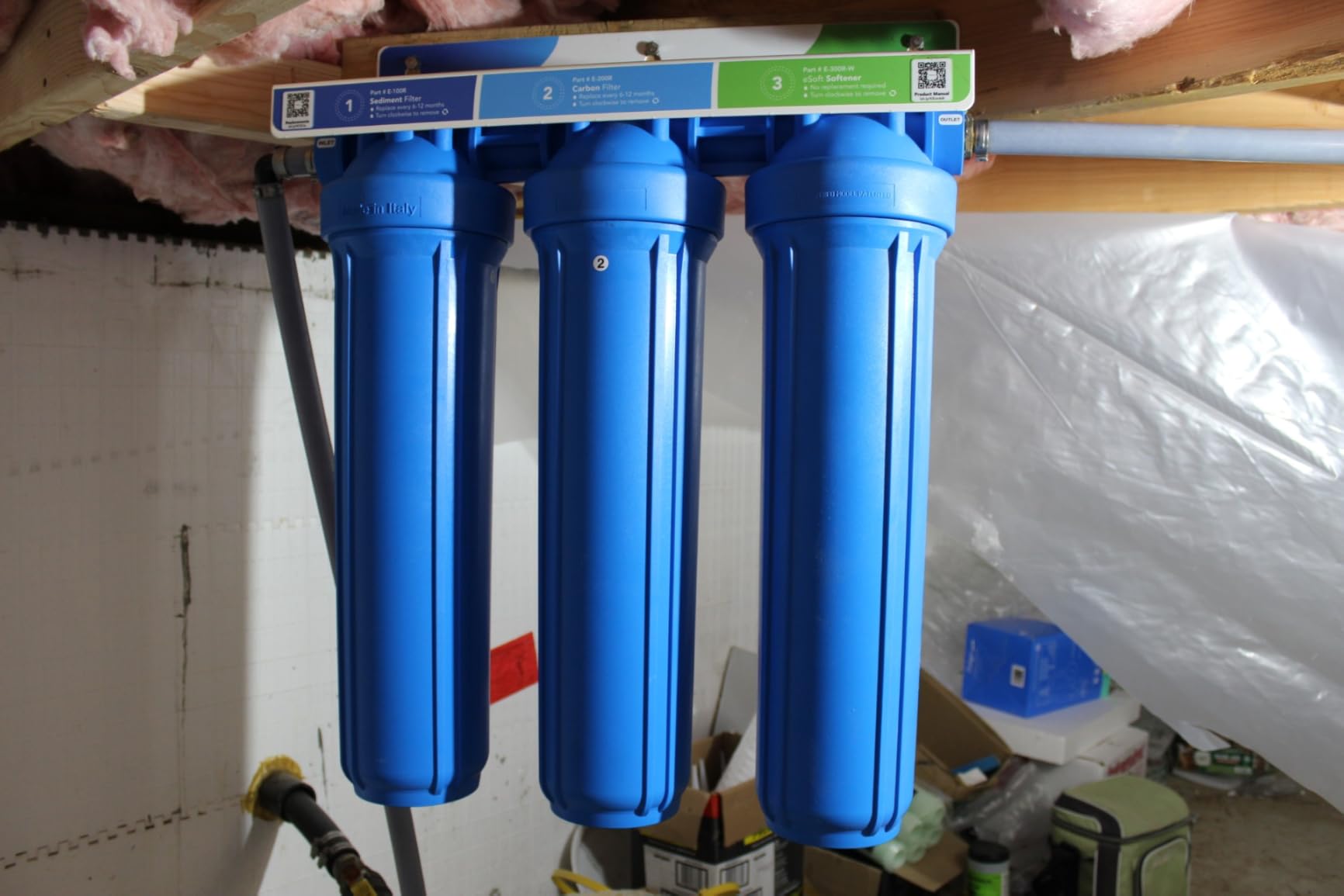
The Kind Water Systems E-3000 is the only product on our list that combines filtration and salt-free softening into a single unit. For homeowners who want to address hard water scale without dealing with salt bags, brine tanks, or electrical connections, this is the system we would point you toward first. It uses a carbon block filtration stage paired with a salt-free conditioning media that crystallizes hardness minerals so they pass through your plumbing without sticking to surfaces.
I like that Kind Water Systems designed this unit to target over 155 chemical contaminants while keeping beneficial minerals in your water. The salt-free conditioning process does not remove calcium and magnesium the way a traditional softener does. Instead, it changes how those minerals behave, preventing them from forming scale on your pipes, fixtures, and appliances. This means you get the protection without the slippery feel that some people dislike from salt-softened water.
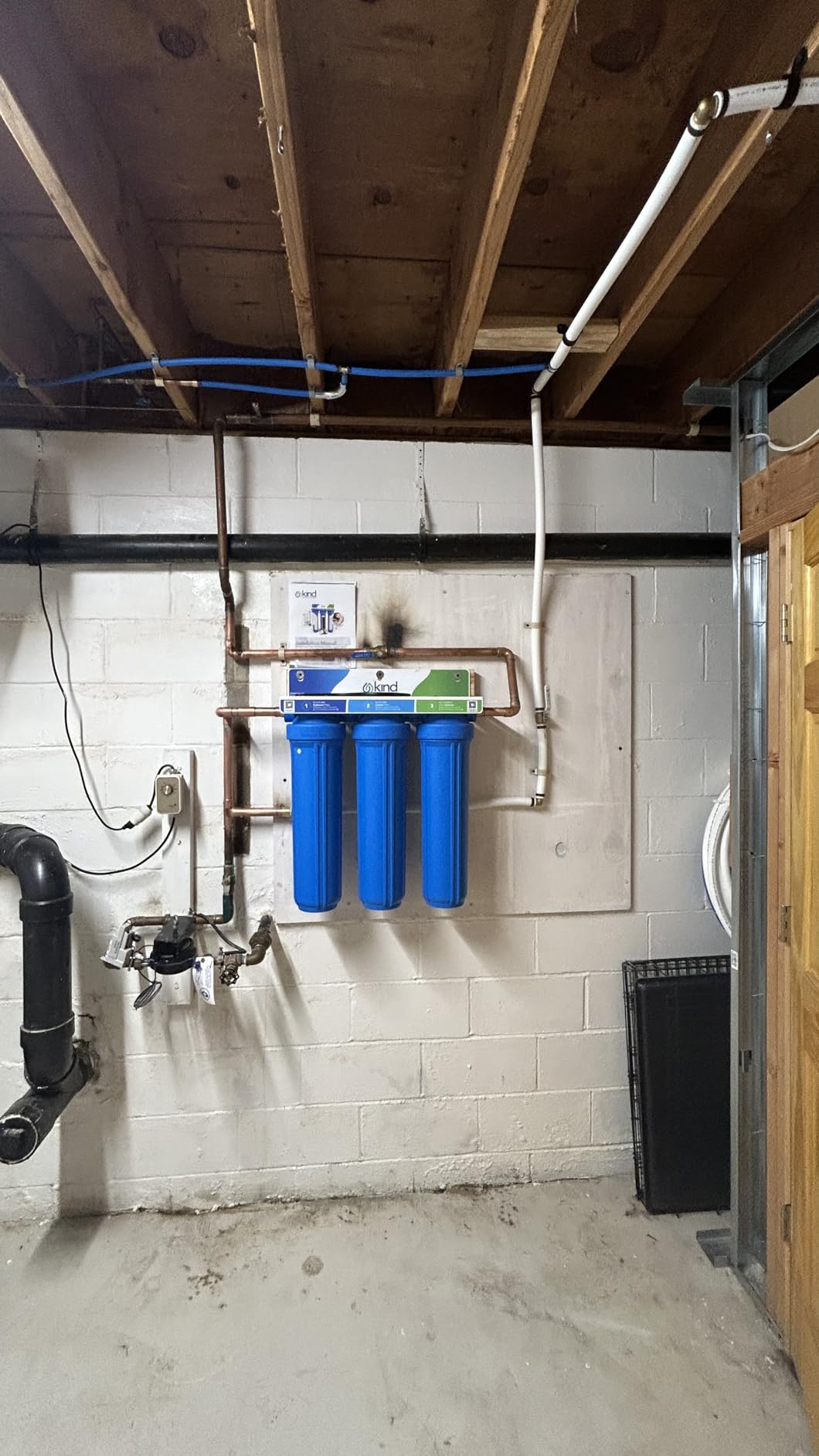
The system requires no electricity, no drain line, and no ongoing salt purchases. That alone saves you hundreds of dollars per year compared to a traditional softener setup. The 15 GPM flow rate keeps water pressure strong throughout your home, and the compact 25-inch by 29-inch footprint takes up less space than a typical two-tank softener system.
With an 82% five-star rating from verified buyers, the E-3000 has earned strong marks for build quality and performance. The 120-day satisfaction guarantee gives you nearly four months to test it in your home, which is far more generous than the standard 30-day return window most manufacturers offer.
Understanding Salt-Free Conditioning Technology
Salt-free water conditioners use a process called template-assisted crystallization. The conditioning media acts as a catalyst that converts dissolved calcium and magnesium into stable crystal structures. These crystals remain in your water but lose their ability to bond to surfaces, which prevents scale from forming inside pipes and on fixtures. The result is water that still contains healthy minerals but will not leave the white crusty buildup that ruins faucets and appliances.
This approach has limits. If your water hardness exceeds 25 grains per gallon, salt-free conditioning may not provide adequate scale prevention on its own. For extreme hardness, you might still need a traditional salt-based softener. But for the majority of homes with moderate municipal water hardness, the E-3000 handles the job effectively.
Long-Term Ownership Costs
The main cartridge in the E-3000 lasts approximately 600,000 gallons or about six years for a typical family. When replacement time comes, the cartridge costs significantly less than six years of salt purchases for a traditional softener. Factor in the elimination of electricity costs and drain water waste, and the long-term savings become substantial.
Kind Water Systems backs this product with NSF certified components and responsive customer support based in the United States. Multiple buyers have commented on the helpfulness of their support team during installation and troubleshooting, which is reassuring for a product at this price point.
3. iSpring WGB32B-KDS+WSP50J – Best Anti-Scale Multi-Stage System
iSpring Ultimate Whole House Water Filter System w/Jumbo Sediment Filter
4-Stage Anti-Scale
250K Gal Capacity
15 GPM Flow
Spin Down Filter
Pros
- Comprehensive multi-stage filtration with anti-scale protection
- Effective scale and corrosion prevention
- DIY-friendly installation
- Spin-down sediment filter for easy maintenance
- Excellent customer service
Cons
- May require additional mounting hardware
- Does not reduce TDS keeps minerals in water
The iSpring WGB32B-KDS+WSP50J is the big sibling to our editor’s choice pick. It takes the proven three-stage WGB32B platform and adds a jumbo spin-down sediment filter plus a polyphosphate anti-scale stage. If your main concern is hard water scale destroying your plumbing and appliances, this is the most comprehensive filtration setup on our list for that specific problem.
I like that iSpring built this system with a visible spin-down sediment filter upfront. This component catches large particles like sand, rust, and debris before they ever reach your carbon filters, extending the life of your more expensive filtration cartridges. The spin-down filter is reusable, so you just flush it clean rather than replacing it every few months.
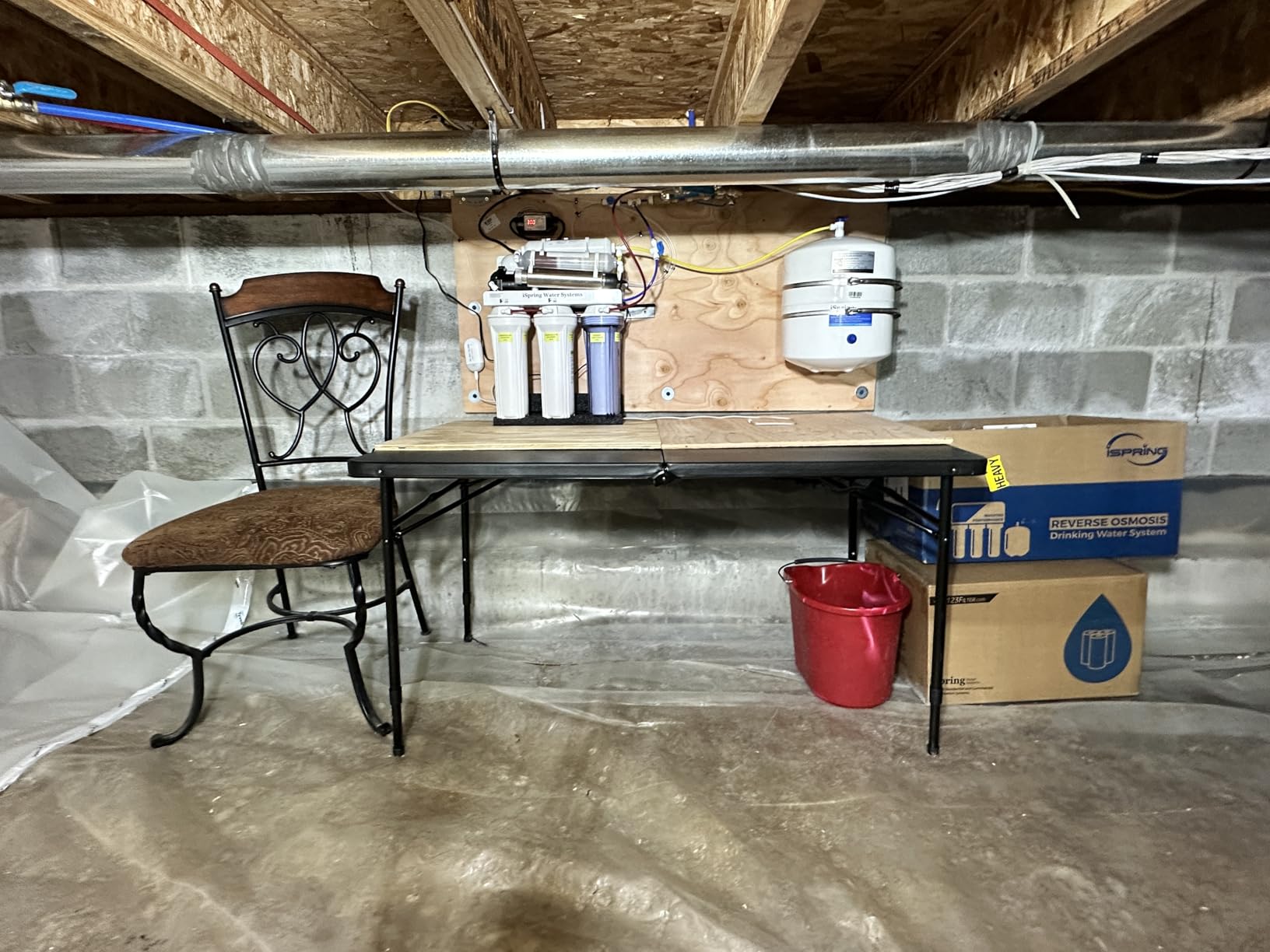
The polyphosphate anti-scale stage is where this system earns its name. Polyphosphate is a food-grade compound that binds to calcium and magnesium, preventing them from forming scale deposits. It works similarly to the salt-free conditioning technology in the Kind E-3000 but uses a different chemical approach. The GAC plus KDF media combination then handles chlorine, heavy metals, and chemical contaminants.
With a 250,000 gallon total capacity, this system lasts roughly two and a half times longer between major filter changes compared to the standard WGB32B. The 15 GPM flow rate remains consistent thanks to the 1-inch inlet and outlet. Users on Reddit specifically recommend this model for homes dealing with both hard water and sediment issues from aging municipal pipes.
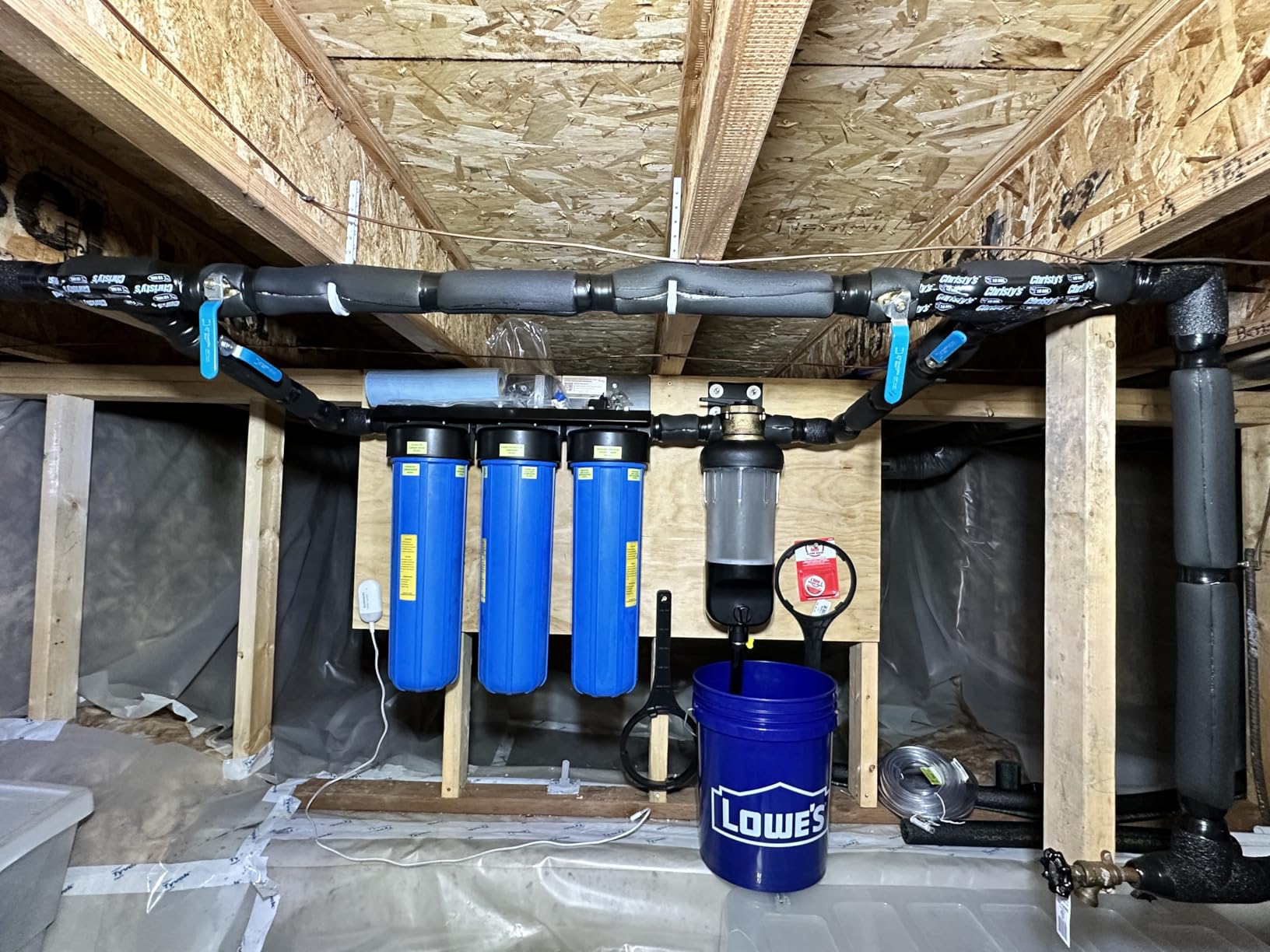
How the Four Stages Work Together
Stage one is the jumbo spin-down sediment filter with a 50-micron stainless steel mesh. It captures the largest particles and is cleaned by simply opening the flush valve at the bottom. Stage two is a 5-micron polypropylene sediment filter that catches finer particles the spin-down misses. Stage three uses polyphosphate anti-scale media to coat hardness minerals and prevent scale formation. Stage four combines granular activated carbon with KDF for chlorine, lead, mercury, and hydrogen sulfide reduction.
This layered approach means each filter handles what it does best, and no single stage gets overloaded prematurely. The result is cleaner water, longer filter life, and better protection for your plumbing system.
Ideal Use Cases for This System
This system shines in homes with moderate to heavy sediment combined with hard water scaling issues. If you live in an older neighborhood with aging municipal pipes that deliver rust and debris along with your water, the spin-down pre-filter will save you significant maintenance headaches. The anti-scale protection also makes it a strong choice for homes with tankless water heaters, which are particularly vulnerable to scale damage.
If your water is relatively clean of sediment and you mainly want chlorine reduction, the standard WGB32B will do the job for less money. But if you want maximum protection in a single integrated system, the KDS variant is worth the additional investment.
4. Aquasana Rhino EQ-1000 – Best Long-Term Value System
Aquasana Whole House Water Filter System | 1M Gal | Carbon & KDF | EQ-1000
1M Gallon Capacity
Carbon and KDF Media
14.6 GPM Flow
10 Year Warranty
Pros
- Massive 1 million gallon capacity for 10 years of use
- Reduces 97% of chlorine and sediment
- No draining or back flushing needed
- Top-grade install kit with brass fittings
- Costs less than one cent per gallon
Cons
- Premium price point
- Large footprint requires dedicated space
- Pre and post filters need replacement every 2 months
The Aquasana Rhino EQ-1000 is the marathon runner of whole house water filters. With a rated capacity of one million gallons, this system is designed to deliver clean water for up to ten years before the main tank needs replacement. If you are planning to stay in your home long-term and want a set-it-and-forget-it solution, Aquasana built this system for you.
Our team was impressed by the carbon and KDF copper-zinc filtration media combination. The activated carbon handles chlorine, volatile organic compounds, and taste and odor issues, while the KDF media targets heavy metals, bacteria growth, and scale. Together, they reduce 97% of chlorine and provide effective filtration across a wide range of contaminants common in hard water areas.
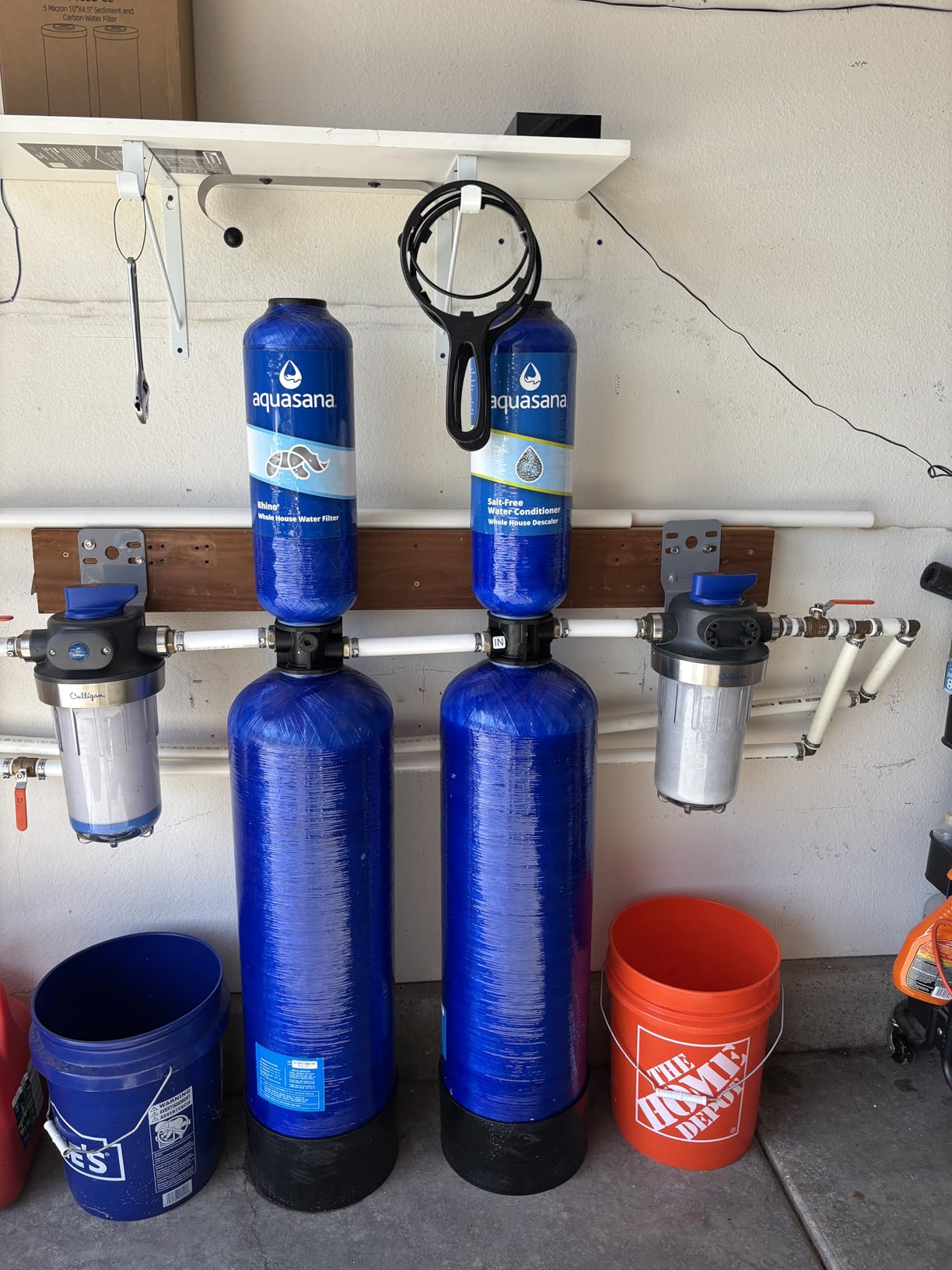
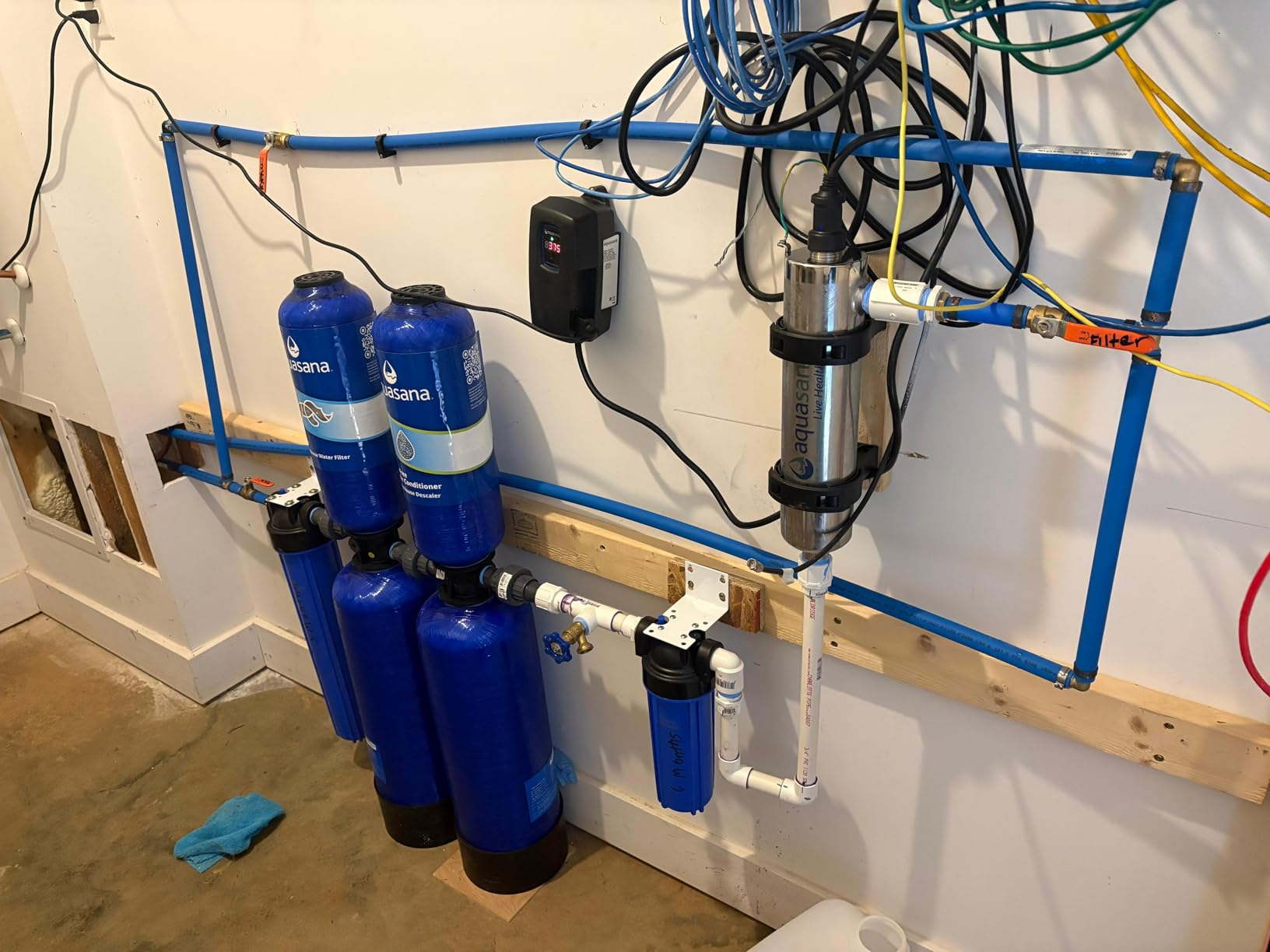
The Rhino EQ-1000 operates without draining, back flushing, or electricity. Water simply flows through the filtration tank on its way to your plumbing system. The 14.6 GPM flow rate supports households of four or more without noticeable pressure drops. Aquasana includes a comprehensive install kit with brass fittings, bend supports, and shut-off valves for either 1-inch or 3/4-inch pipe connections.
The trade-off for that decade-long capacity is the physical size. At 46 inches long and 44 inches tall, this system demands dedicated space in your utility room or garage. You also need to factor in the included 20-inch pre-filter and 10-inch post-filter, which require replacement every two months at a cost of roughly $20 to $30 per change.
The Real Cost of Ownership Over Ten Years
While the initial price is higher than cartridge-based systems, the per-gallon cost works out to less than one penny. Over ten years, you would spend roughly $1,200 to $1,800 on pre-filter and post-filter replacements, which brings your total ownership cost to a competitive level when spread across a decade of use.
Compare that to a cartridge system like the iSpring WGB32B, which requires roughly $100 per year in replacement filters. Over ten years, that adds up to about $1,000 in maintenance on top of the initial purchase price. The Aquasana costs more upfront but the math becomes more favorable the longer you stay in your home.
What to Know Before Installing
The Rhino EQ-1000 weighs 44 pounds empty but becomes significantly heavier once filled with water and filtration media. You will need a sturdy mounting surface, and most homeowners opt for professional installation given the system’s size and plumbing integration requirements. The improved divider valve design helps maintain a reliable flow rate even at peak usage times.
Aquasana backs this system with a 10-year limited warranty, which matches the expected filter life. If you are confident you will remain in your current home for the long haul, the Rhino EQ-1000 offers excellent peace of mind and some of the lowest long-term filtration costs available.
5. Express Water WH300SCKP-S – Best for Heavy Sediment and Anti-Scale
Express Water Whole House Water Filter System, Ultimate Protection, 3-Stage
3-Stage Anti-Scale
100K Gal Capacity
17 GPM Flow
Reusable Sediment Filter
Pros
- Excellent filtration of sediment including rust and silica
- Reusable 50 micron spin-down sediment filter
- Quick-change cartridges for easy maintenance
- Transparent housing with pressure gauges
- Reduces scale buildup on fixtures
Cons
- Does not eliminate calcium and magnesium minerals
- May require professional plumber for installation
- Filter replacements needed every 6 months
The Express Water WH300SCKP-S stands out for one specific reason: it handles heavy sediment better than any other system on our list. The included reusable 50-micron spin-down sediment filter catches small rocks, silica, rust, and debris before they reach your main filtration stages. If your municipal water supply delivers visible particles or you live in an area with aging infrastructure, this is the system we would recommend.
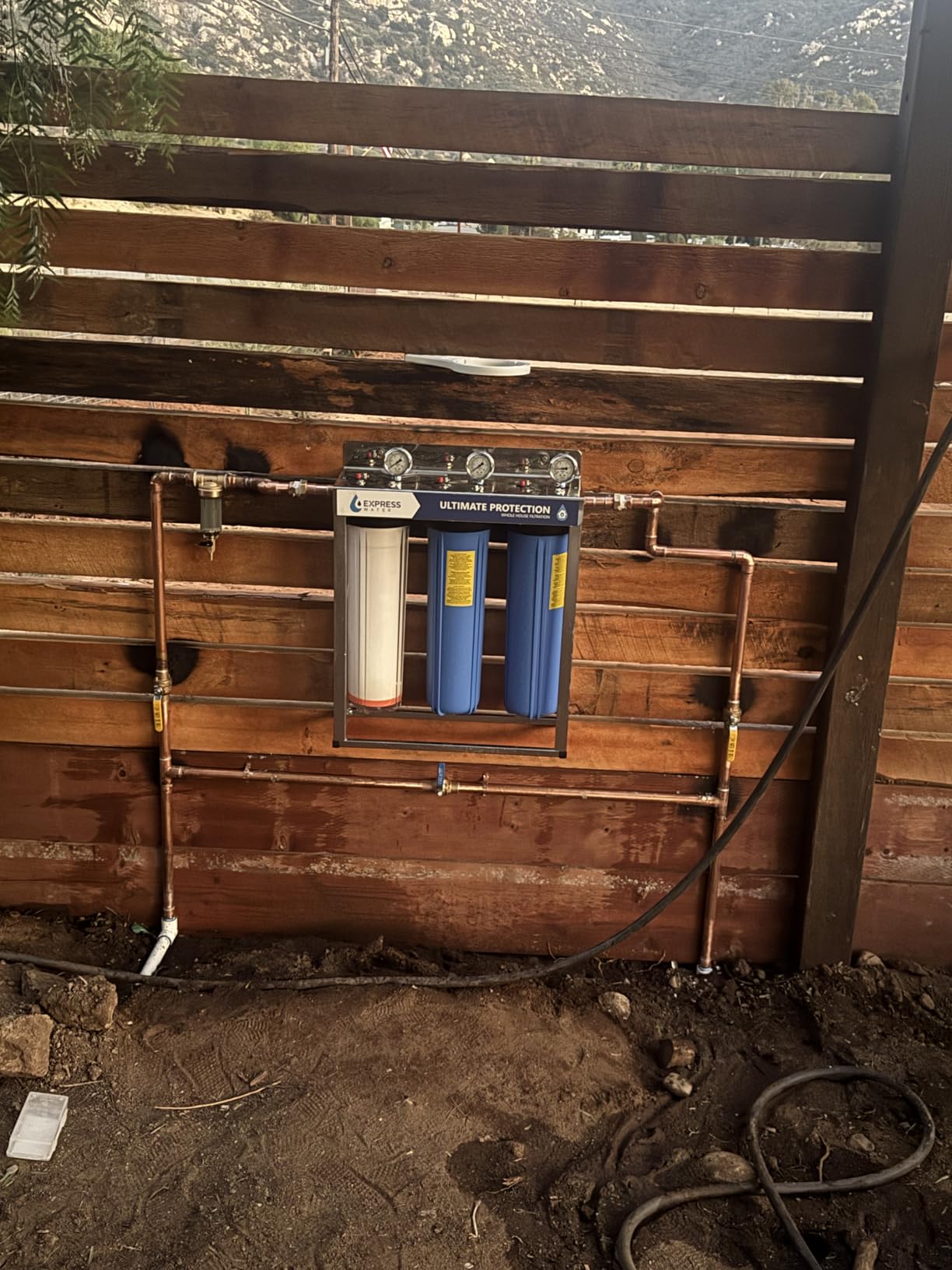
I particularly like the transparent sediment housing design. You can see exactly how dirty your pre-filter is getting without opening anything, and the built-in pressure gauges tell you when it is time to flush or replace cartridges. This visual feedback takes the guesswork out of maintenance scheduling.
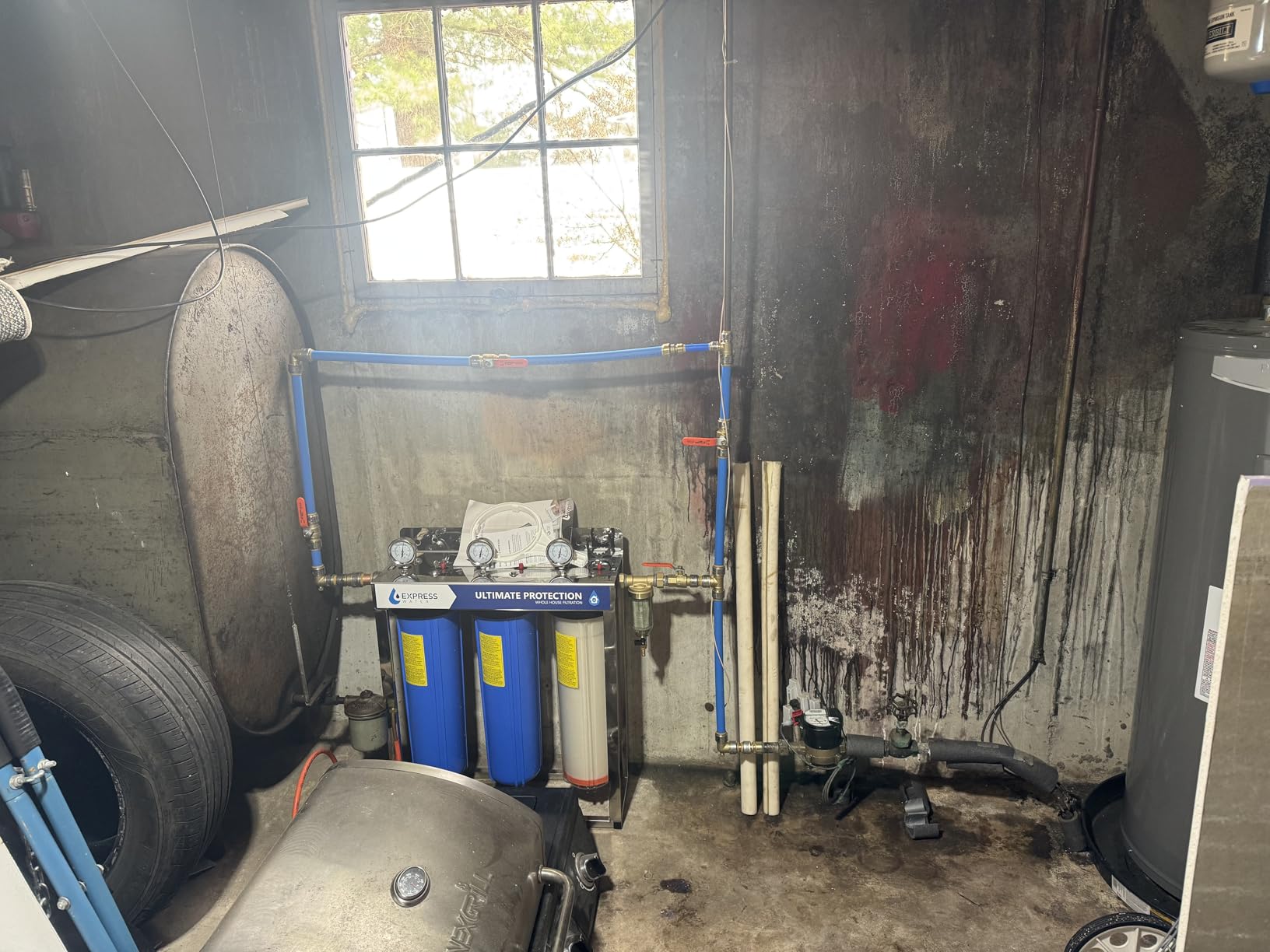
The three-stage system pairs the spin-down pre-filter with an activated carbon stage and an anti-scale filtration stage. The carbon handles chlorine, taste, and odor reduction, while the anti-scale media helps prevent mineral deposits from forming on fixtures and inside pipes. Express Water reports that customers see significant reductions in scale buildup after installation.
At 17 GPM, this system has the highest flow rate on our list. That makes it an excellent choice for larger homes where multiple fixtures might run simultaneously. The stainless steel stand keeps everything stable and organized, and the quick-change cartridge design means you can swap filters without tools in under five minutes per stage.
What the Anti-Scale Stage Actually Does
The anti-scale cartridge uses a polyphosphate-based media similar to what you find in the iSpring KDS system. It works by sequestering hardness minerals, preventing them from crystallizing and forming scale on surfaces. This is different from true water softening, which physically removes calcium and magnesium through ion exchange.
Customers report noticeably less white buildup on faucets and showerheads after a few weeks of use. Water heaters also benefit, since scale inside heating elements reduces efficiency and shortens appliance lifespan. Just keep in mind that your water will still test as hard on a TDS meter because the minerals remain in solution.
Maintenance Schedule and Costs
The spin-down sediment filter is reusable and needs flushing roughly every two to four weeks depending on your water quality. The carbon and anti-scale cartridges need replacement every six months, with replacement sets costing around $50 to $80. The transparent housing lets you monitor cartridge condition visually rather than relying strictly on a calendar.
One thing to note is that Express Water does not include Prime eligibility for this model, so shipping may take longer than Prime-eligible alternatives. Plan your purchase timeline accordingly if you need the system installed by a specific date.
6. PRO+AQUA PRO-100-E – Best Value 3-Stage System
PRO+AQUA Elite Series GEN2 PRO-100-E 3-Stage Whole House Water Filtration System for City & Well Water with Pressure Gauges | Reduces Contaminants, Sediment, Chemicals, Heavy Metals, with 1” Ports
3-Stage Filtration
100K Gal Capacity
15 GPM Flow
5 Year Warranty
Pros
- Professional grade filtration for entire home
- No regeneration backwash draining or electricity required
- Cost effective and easy to maintain
- Clear housing for easy monitoring
- Extensive 5-year warranty
Cons
- Professional installation recommended
- Filter replacement every 6 months required
The PRO+AQUA Elite Series GEN2 PRO-100-E occupies a sweet spot between budget systems and premium units. At its price point, you get professional-grade three-stage filtration, pressure gauges for monitoring, clear filter housings, and a five-year warranty that few competitors match. For homeowners who want more features than a basic budget filter offers without paying premium prices, this is a strong contender.
The three-stage setup uses a coconut granulated carbon filter alongside a sediment filter and a chemical reduction stage. The coconut-based carbon is a step up from standard coal-based carbon in terms of contaminant adsorption efficiency and taste improvement. With 76% of verified buyers giving this system five stars, the filtration performance clearly meets expectations.
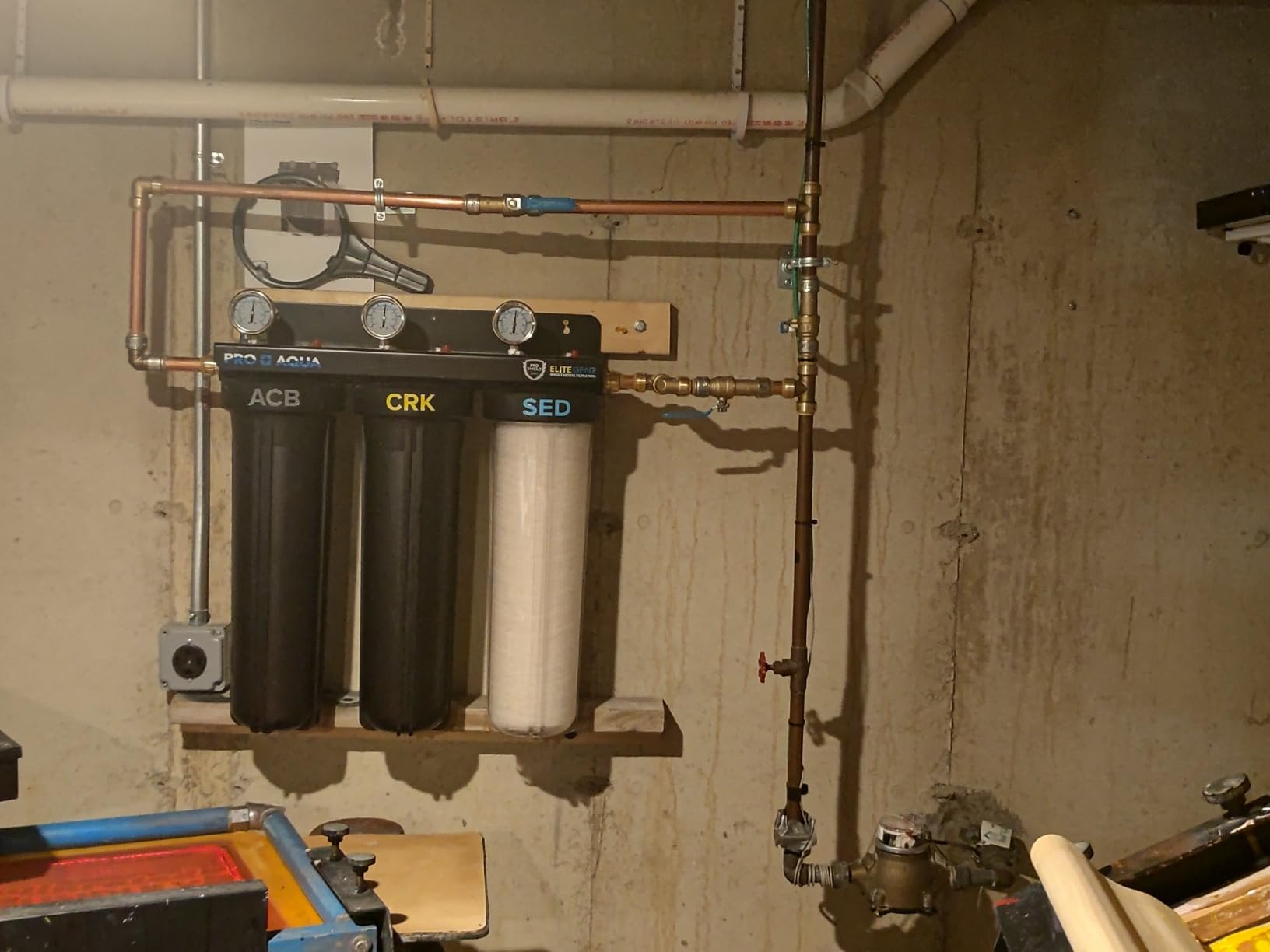
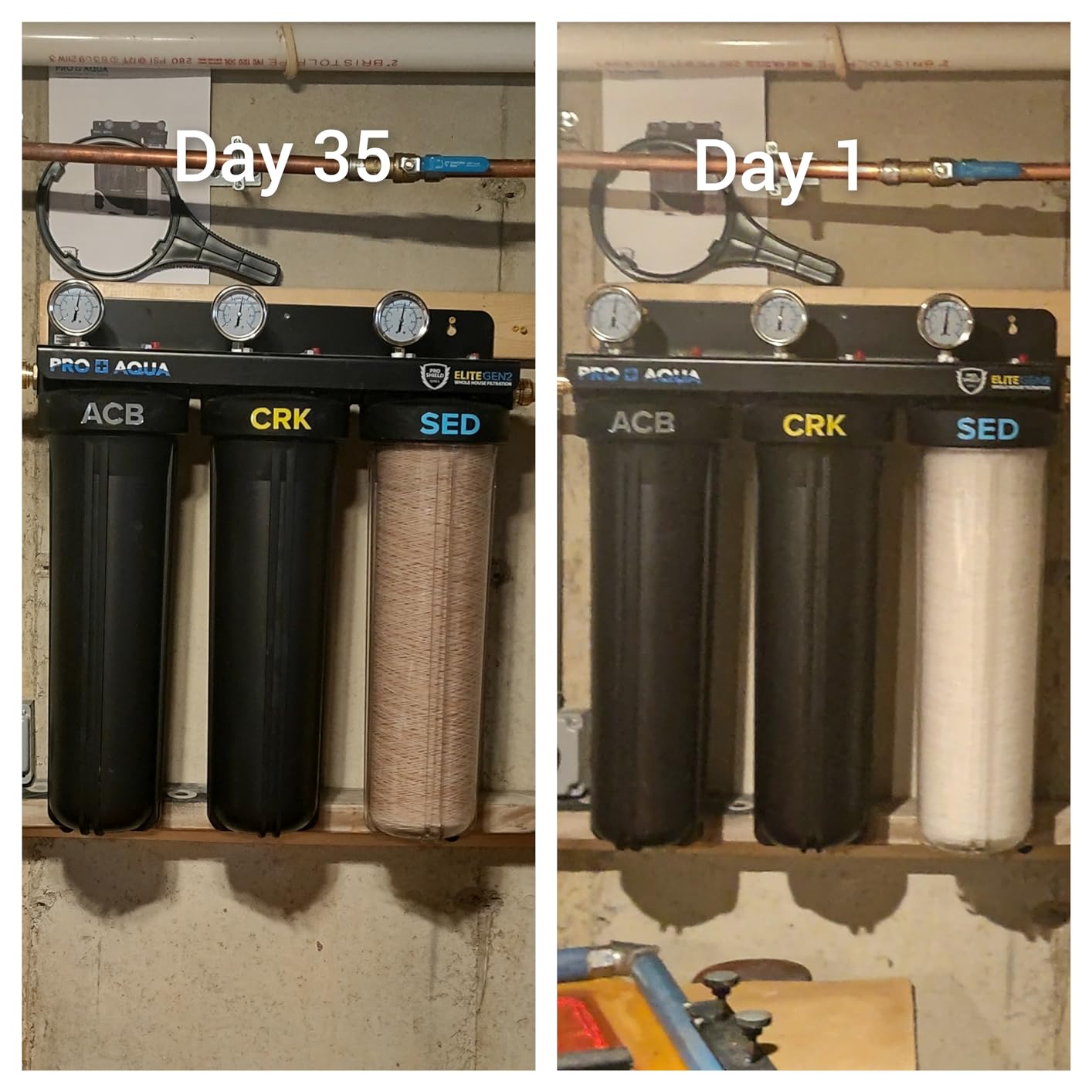
I appreciate the clear filter housings on this unit. Unlike opaque systems where you have to guess when cartridges need changing, you can visually inspect the PRO-100-E and see sediment buildup in real time. The included pressure gauges on each stage tell you when flow restriction is occurring, which is a sign that replacement is overdue.
The system handles up to 100,000 gallons before requiring a full filter set replacement, which translates to about six months of use for an average family. The 15 GPM flow rate with 1-inch ports keeps water pressure strong even when the washing machine and shower are running at the same time.
Comparing PRO+AQUA to the Competition
When stacked against the iSpring WGB32B, the PRO-100-E offers similar filtration capacity and flow rate but adds pressure gauges and clear housings that the iSpring lacks. The trade-off is that iSpring has a much larger installed base and more online resources for installation and troubleshooting.
Against the Waterdrop WHF21-PG, the PRO-100-E costs more but doubles your filtration capacity from 50,000 to 100,000 gallons and adds a third filtration stage. If your budget can stretch to accommodate it, the extra capacity and monitoring features are worth the upgrade.
Warranty and Support Quality
The five-year warranty is one of the longest in this price range, and it covers manufacturing defects in the system housing and components. Filter cartridges are consumable items and are not covered, which is standard across the industry. PRO+AQUA offers phone and email support for installation questions and warranty claims.
Multiple reviewers have praised the company’s responsiveness when issues arise. One common note is that the system ships with clear installation instructions, though PRO+AQUA recommends professional installation given the plumbing integration required. If you are comfortable with basic plumbing, DIY installation is achievable over a weekend.
7. AO Smith AO-WH-Filter – Best Long-Life Single-Tank System
A. O. Smith Whole House Water Filter System | 600K Gal | AO-WH-Filter
600K Gal Capacity
6 Year Life
NSF Certified
No Water Waste
Pros
- Reduces 96.9% of chlorine taste and odor
- 6-year or 600K gallon filter life
- NSF certified for quality assurance
- Simple DIY installation
- No drainage back flushing or water waste
- Cost efficient long-term solution
Cons
- Lower flow rate of 7 GPM compared to competitors
- Does not reduce TDS sulfur or iron
- 3-4 inch inlet outlet may limit flow for large households
The AO Smith AO-WH-Filter brings the credibility of one of the most trusted names in water heating to the whole house filtration market. A.O. Smith has been manufacturing water heaters for over 80 years, and they applied that institutional knowledge to design a filter system that protects the appliances they know inside and out. With nearly 2,000 customer reviews and a 4.3-star rating, this system has proven itself in real-world use.
The standout feature here is the six-year filter life. The central activated carbon tank lasts for 600,000 gallons or six years, whichever comes first. That eliminates the twice-yearly filter replacement routine required by cartridge-based systems. If you want minimal ongoing maintenance, AO Smith designed this system with that goal in mind.
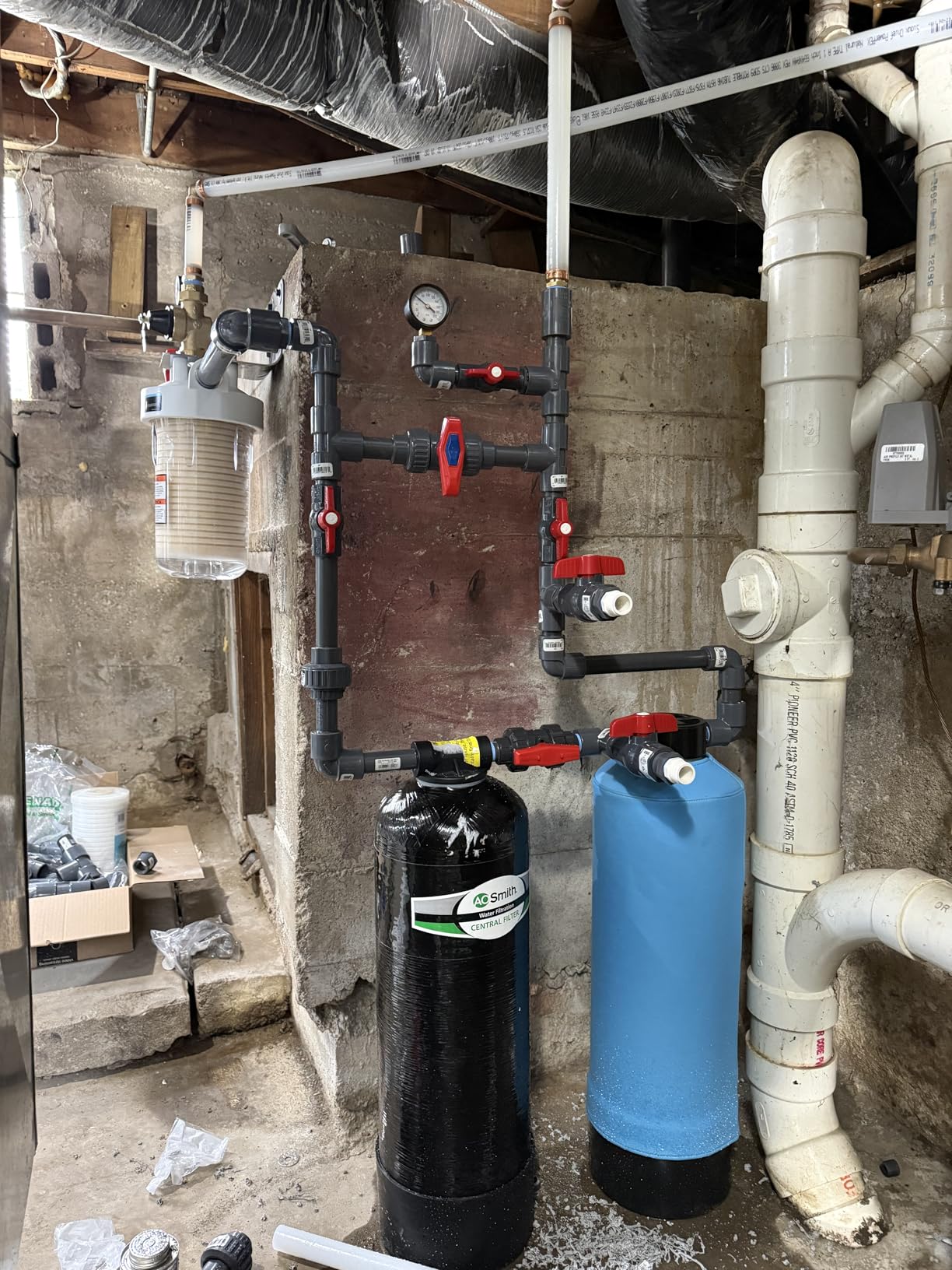
This system is NSF and ANSI 42 certified for chlorine taste and odor reduction, which means it has been independently tested to meet established performance standards. It works for both well water and city water applications, though it does not address sulfur, iron, or total dissolved solids. For homes where chlorine and sediment are the primary concerns, it delivers reliable performance.
The system operates without any drainage, back flushing, or water waste. Once installed, water flows through the carbon tank and out to your plumbing without any ongoing operational costs beyond the eventual tank replacement. The included shut-off valve, hose adapter, and nipple fittings cover most standard installation scenarios.
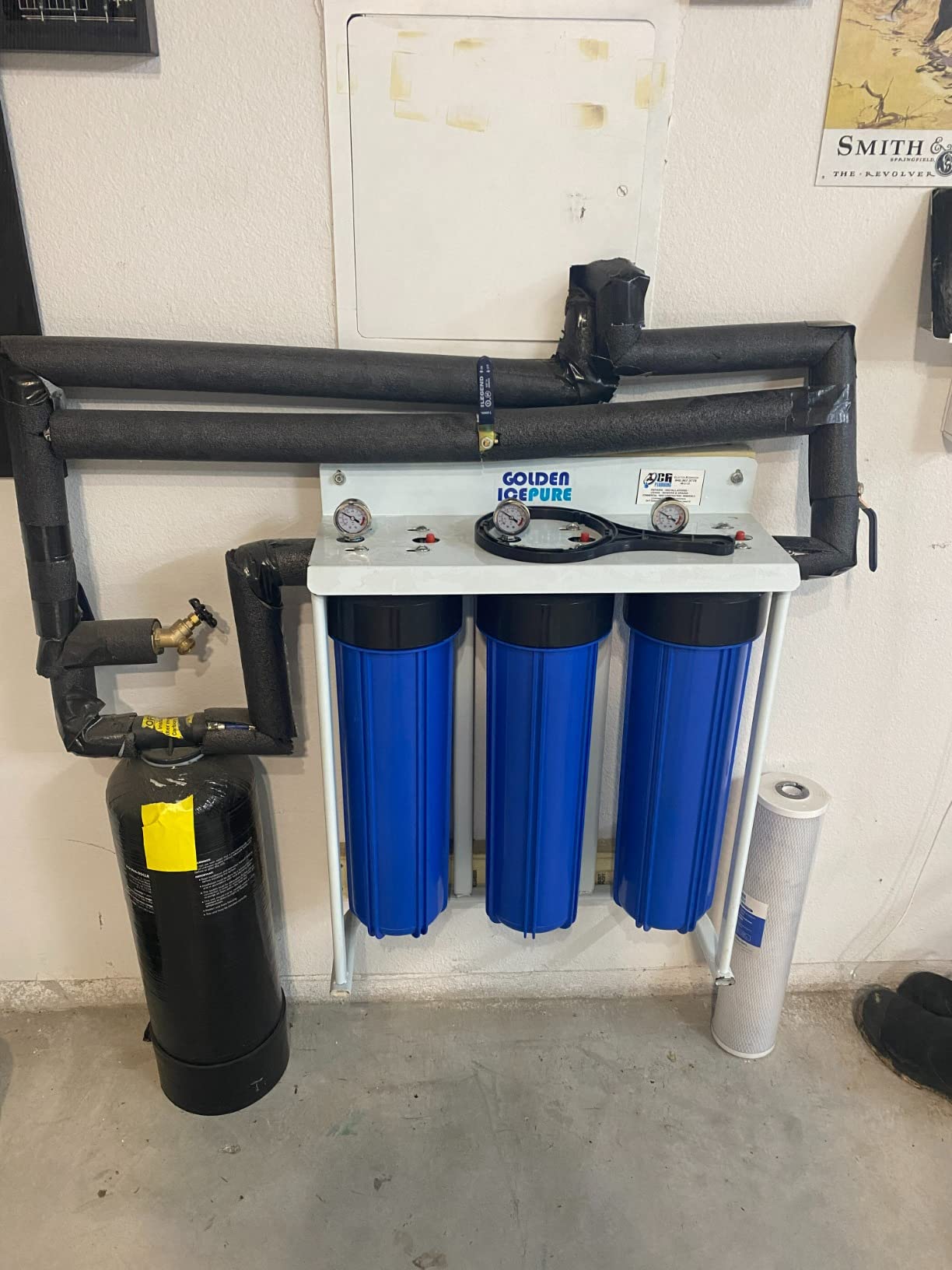
Understanding the Flow Rate Limitation
The biggest drawback of the AO Smith system is its 7 GPM flow rate, which is roughly half of what competitors like iSpring and Express Water offer. For a household of one to three people, this flow rate is usually sufficient. But if you have a large family that regularly runs multiple showers, the dishwasher, and laundry simultaneously, you may notice pressure drops during peak usage.
The 3/4-inch inlet and outlet contribute to this lower flow rate. If your home has 1-inch main plumbing, you will need to reduce down to 3/4-inch at the filter connection, which can further restrict flow. Consider your household size and simultaneous water usage patterns carefully before choosing this system.
When This System Makes Sense
The AO Smith AO-WH-Filter is ideal for smaller households, retiree homes, or properties with moderate water usage where maintenance simplicity matters more than maximum flow rate. The six-year filter life means you install it, change the pre-filter periodically, and forget about it. The NSF certification provides third-party validation that the system performs as advertised.
It is less suitable for large families, homes with multiple bathrooms, or situations where iron and sulfur removal is needed. Pair it with a dedicated softener if you need true hardness reduction, since this filter conditions water but does not soften it in the traditional sense.
8. Waterdrop WHF21-PG – Best Budget Whole House Filter
Waterdrop WHF21-PG 2-Stage Whole House Water Filter System, NSF/ANSI 372
2-Stage 5-Micron Filtration
50K Gal Capacity
15 GPM Flow
Lead Reduction
Pros
- Effective lead and chlorine reduction
- 5-stage filtration with natural coconut shell carbon
- 15 GPM high flow rate
- Passed 100K plus water hammer tests
- Simple DIY installation with included wrench
- Excellent budget-friendly value
Cons
- Shorter filter life of 6 months
- 50K gallon capacity is lower than premium options
- May need more frequent filter changes with heavy municipal water use
The Waterdrop WHF21-PG proves that effective whole house filtration does not require a four-figure investment. As the most affordable system on our list, it delivers solid performance for homeowners who want cleaner water without breaking the bank. With over 1,500 customer reviews and a 4.4-star rating, this budget pick has earned its place through consistent real-world results.
Despite the low price, Waterdrop did not cut corners on filtration technology. The two-stage system uses a 10-inch by 4.5-inch polypropylene sediment filter followed by a granular activated carbon filter made from natural coconut shell. Together, they reduce lead, chlorine, benzene, mercury, and the taste and odor issues that plague municipal water supplies.
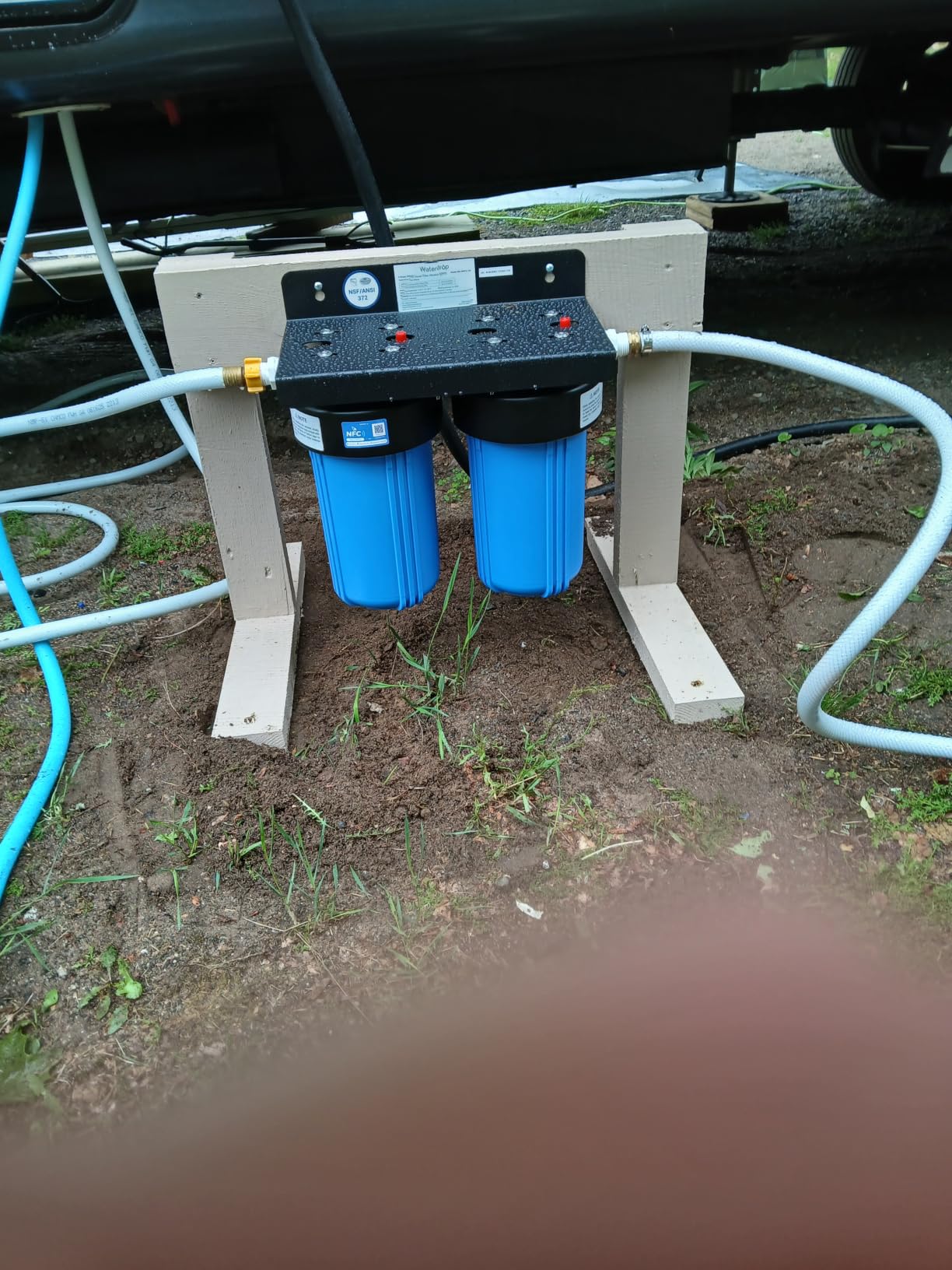
The 15 GPM flow rate matches systems costing three times as much, which means you will not sacrifice water pressure to save money. Waterdrop subjected this housing to over 100,000 water hammer tests, demonstrating that the food-grade construction can withstand pressure fluctuations that would crack cheaper alternatives.
The compact 14-inch by 15-inch footprint makes this the smallest system on our list. If you have limited installation space, such as a tight utility closet or a small mechanical room, the Waterdrop fits where larger systems simply cannot. The included installation wrench and food-grade durable housing round out a surprisingly complete package for the price.
Trade-Offs at This Price Point
The main compromise with the Waterdrop is capacity. At 50,000 gallons, you will need to replace filters every six months for an average household, compared to the annual or multi-year cycles of more expensive systems. Replacement filter sets are affordable, typically running $30 to $50, so the ongoing cost is manageable even with more frequent changes.
This is also a two-stage system rather than three or four stages. It handles sediment and chlorine effectively but does not include dedicated heavy metal or anti-scale stages. If your water has significant iron content or heavy scale problems, you may need to pair it with additional filtration or consider a more comprehensive system.
Who Benefits Most from This System
The Waterdrop WHF21-PG is our top recommendation for first-time homeowners, renters with permission to install filtration, and anyone on a tight budget who still wants meaningful improvement in water quality. It is particularly well-suited for municipal water users dealing with chlorine taste and smell, light sediment, and lead concerns.
For well water users or homes with severe hardness issues, this system will likely underperform compared to the more robust options on our list. But as an entry point into whole house filtration, it delivers excellent value and has the review volume to back up its claims.
How to Choose the Best Whole House Water Filter for Hard Water?
Choosing the right whole house water filter comes down to understanding your specific water quality issues, your household size, and your budget for both the initial purchase and ongoing maintenance. This buying guide walks through the factors that matter most when evaluating systems for hard water applications.
Know Your Water First
Before buying any filtration system, test your water. You can request a water quality report from your municipal supplier if you are on city water, or purchase a home test kit that measures hardness, pH, iron, and chlorine levels. The results will tell you exactly what contaminants you need to target, which prevents overspending on filtration stages you do not need.
Hardness is measured in grains per gallon, with anything above 7 GPG considered hard and above 15 GPG considered very hard. If your water tests above 25 GPG, salt-free conditioning systems may struggle, and you should consider a traditional salt-based softener paired with a filtration system.
Flow Rate and Household Size
Flow rate, measured in gallons per minute, determines how much water your system can deliver simultaneously. A typical shower uses about 2.5 GPM, a washing machine uses 3 to 5 GPM, and a dishwasher adds another 2 to 4 GPM. Add up the fixtures you might run at the same time to determine your minimum required flow rate.
For a family of four, we recommend a system with at least 12 to 15 GPM. The iSpring, Express Water, PRO+AQUA, and Waterdrop systems all deliver 15 GPM or higher. The AO Smith system at 7 GPM is better suited for smaller households or homes with lower simultaneous water demand.
Filtration Stages and Technology
Most whole house systems use a combination of sediment filtration, activated carbon, and specialized media like KDF or polyphosphate. Sediment filters catch physical particles, carbon filters absorb chlorine and chemicals, and specialized media target specific contaminants like heavy metals or scale-causing minerals.
For hard water specifically, look for systems with anti-scale or conditioning stages. These use polyphosphate or template-assisted crystallization media to prevent calcium and magnesium from forming scale deposits. If silica is also a concern in your water supply, you may need to look beyond standard carbon filtration toward more specialized media.
Filter Lifespan and Replacement Costs
Filter replacement is the ongoing cost that many buyers overlook when comparing systems. A cheap system with frequent filter changes can cost more over five years than a premium system with long-life media. Calculate your annual filter cost by dividing the replacement set price by the expected lifespan in months, then multiplying by twelve.
Cartridge-based systems like the iSpring WGB32B typically run $80 to $120 per year in replacement filters. Tank-based systems like the Aquasana Rhino spread their cost over years but require periodic pre-filter changes. The Kind E-3000 and other salt-free conditioners have the lowest ongoing costs since their conditioning media lasts for years without replacement.
Installation Requirements
Most whole house filters install at the main water supply line where it enters your home. You will need access to your main shut-off valve and enough clearance around the installation point for the system and future filter changes. Check the system dimensions against your available space before purchasing.
DIY installation is feasible for most cartridge-based systems if you have basic plumbing skills and tools. Budget two to four hours for the project, including time to cut pipes, install fittings, and test for leaks. Tank-based systems and salt-free conditioners are heavier and may benefit from professional installation, which typically costs $200 to $500 depending on your location and plumbing complexity.
Municipal Water vs Well Water
Your water source determines which contaminants you need to target. Municipal water is treated with chlorine or chloramine, which affects taste and smell, and may pick up sediment from aging distribution pipes. Well water often contains iron, manganese, sulfur, and higher sediment loads that require different filtration approaches.
All eight systems on our list handle municipal water effectively. For well water with iron or sulfur issues, look for systems with KDF-85 media or dedicated iron removal stages. The iSpring WGB32B-KDS and Express Water systems handle sediment-heavy water well, while the Kind E-3000 is specifically designed for city water applications.
FAQs
What is the best whole house water filtration system for hard water?
The iSpring WGB32B is our top pick for most homes with hard water. It offers 3-stage filtration, a 15 GPM flow rate, 100,000 gallon capacity, and eliminates 99% of chlorine and sediment. For homes wanting salt-free softening combined with filtration, the Kind Water Systems E-3000 is the best premium option.
Do whole house filters remove hard water minerals?
Standard whole house filters do not remove calcium and magnesium, the minerals that cause water hardness. Instead, systems with anti-scale or conditioning stages alter how these minerals behave so they cannot form scale deposits. True mineral removal requires a salt-based water softener using ion exchange technology.
Do hard water filters actually work?
Yes, hard water filters work effectively for reducing chlorine, sediment, heavy metals, and scale buildup. Independent testing and thousands of customer reviews confirm measurable improvements in water taste, smell, and fixture cleanliness. However, results vary based on your water source, hardness level, and the specific filtration stages your system includes.
What are the disadvantages of a whole house water filter?
The main disadvantages are upfront cost, ongoing filter replacement expenses, potential flow rate reduction, and space requirements for installation. Some systems also require professional installation, adding $200 to $500 to your total cost. Additionally, whole house filters need periodic maintenance to maintain performance and prevent bacterial growth in stagnant filter media.
How long do whole house water filters last?
Filter lifespan varies by system type. Cartridge-based filters like the iSpring WGB32B last 6 to 12 months before replacement. Tank-based systems like the Aquasana Rhino EQ-1000 can last up to 10 years or 1 million gallons. Salt-free conditioning media in systems like the Kind E-3000 typically lasts 5 to 6 years before replacement.
Final Thoughts
Finding the best whole house water filters for hard water does not have to be overwhelming. The key is matching your specific water quality issues, household size, and budget to a system that addresses all three. For most homeowners, the iSpring WGB32B delivers the best balance of performance, value, and ease of use. If budget is your primary concern, the Waterdrop WHF21-PG gets you solid filtration at a fraction of the cost. And for those who want salt-free softening built in, the Kind Water Systems E-3000 is worth the investment.
Remember that whole house filters condition and treat your water rather than stripping it of all minerals. The minerals that make water hard are the same ones your body needs, so the goal is preventing scale damage to your plumbing and appliances while keeping your water healthy to drink. Test your water, calculate your total cost of ownership including replacement filters, and choose a system that fits your home for the long term.
Whichever system you choose, the improvement in water quality, taste, and appliance longevity will make the investment worthwhile. Clean, filtered water from every tap is one of those upgrades you will wonder how you lived without.