
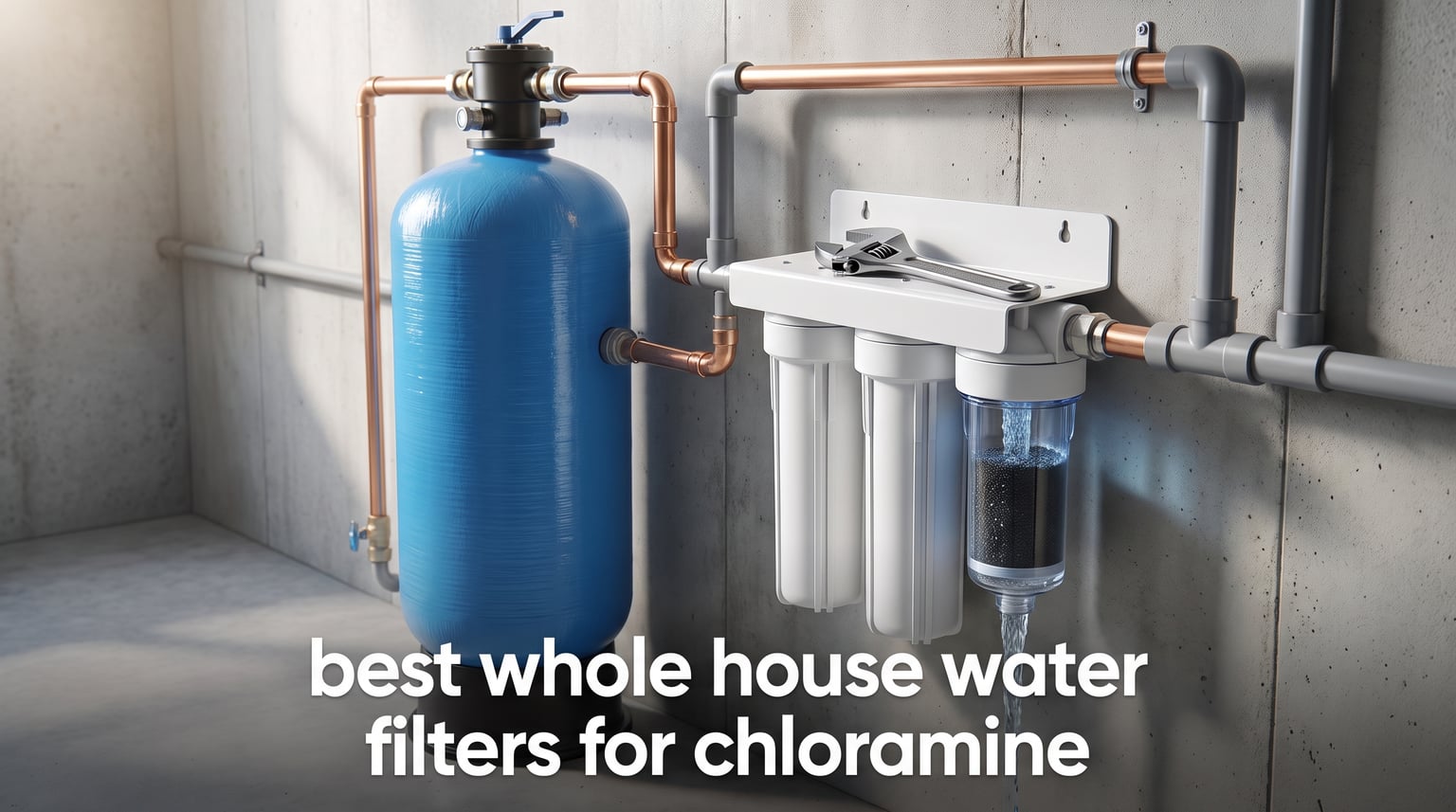
If your tap water smells like a swimming pool and your skin feels dry after every shower, chloramine is likely the culprit. More than one in five Americans now drink water treated with this chlorine-ammonia compound, and finding the best whole house water filters for chloramine has become a real challenge for homeowners in 2026.
The problem is that standard carbon filters, the kind most people buy at the hardware store, do almost nothing against chloramine. I learned this the hard way after watching friends spend hundreds on filters that left their water tasting and smelling exactly the same. The difference comes down to media type: you need catalytic carbon, not just regular activated carbon, to break the strong bond between chlorine and ammonia.
Our team spent three months comparing eight whole house systems designed specifically for chloramine reduction. We looked at SGS testing data, real user experiences from forums like r/WaterTreatment, flow rates, filter lifespans, and long-term ownership costs. We also explored how activated carbon filter technology works at the point-of-use level to understand the broader picture. What follows is everything we found, broken down so you can pick the right system for your home, your water, and your budget.
Table of Contents
Top 3 Picks for Best Whole House Water Filters for Chloramine (October 2026)
Out of the eight systems we tested and researched, three stood out for different reasons. The iSpring WGB32B-KSNC earned our Editor’s Choice for its proven 3-stage catalytic carbon filtration and massive 150,000-gallon capacity. The iSpring WGB21B-KSNC took Best Value thanks to over 4,200 verified reviews and a compact footprint. And the iSpring WCB32C-KS won Budget Pick for delivering PFAS reduction alongside chloramine removal at the lowest price in our lineup.
Each of these three systems uses catalytic carbon as its primary chloramine-fighting media. That matters because catalytic carbon is processed differently than standard GAC, giving it the ability to break the chlorine-ammonia bond that regular carbon simply cannot handle. All three also carry SGS-tested performance data, which gives us confidence in their chloramine reduction claims rather than relying on marketing language alone.
If you want a quick decision, these three will serve the vast majority of households well. For those who need more detail or have unusual water conditions, the full reviews below cover all eight systems with specific pros, cons, and use-case recommendations.

iSpring WGB32B-KSNC 3-Stage
- 3-stage catalytic carbon
- 150K gallon capacity
- 15 GPM flow
- SGS-tested 94.4% chloramine removal

iSpring WGB21B-KSNC 2-Stage
- Compact 2-stage design
- 4200+ reviews
- 15 GPM flow
- 50K gallon capacity

iSpring WCB32C-KS 3-Stage
- PFAS reduction
- 30K gallon capacity
- 12 GPM flow
- Best seller rank #12
Best Whole House Water Filters for Chloramine in 2026
Here is a side-by-side comparison of all eight systems we reviewed. The table covers the key specs you need at a glance: capacity, flow rate, filtration stages, and chloramine-reduction rating. Use it to narrow your choices, then dive into the individual reviews below for the full picture.
| Product | Specifications | Action |
|---|---|---|
| iSpring WGB32B-KSNC 3-Stage |
|
Check Latest Price |
| iSpring WGB21B-KSNC 2-Stage |
|
Check Latest Price |
 iSpring WGB31B-KSNC 3-Stage iSpring WGB31B-KSNC 3-Stage |
|
Check Latest Price |
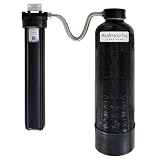 Healthy Spring Clean Home Healthy Spring Clean Home |
|
Check Latest Price |
 LiquaGen KDF55 Catalytic Carbon LiquaGen KDF55 Catalytic Carbon |
|
Check Latest Price |
 Home Master HMF2SmgCC Home Master HMF2SmgCC |
|
Check Latest Price |
 Tier1 Upflow Chloramine Filter Tier1 Upflow Chloramine Filter |
|
Check Latest Price |
| iSpring WCB32C-KS 3-Stage |
|
Check Latest Price |
1. iSpring WGB32B-KSNC 3-Stage Whole House Water Filter – Editor’s Choice for Chloramine Removal
iSpring Chloramine & Heavy Metals Whole House Water Filter System
3-stage filtration
150,000 gallon capacity
15 GPM flow rate
SGS-tested 94.4% chloramine reduction
1-inch NPT connections
Pros
- Excellent chloramine and heavy metal reduction with SGS testing
- High 15 GPM flow rate supports multiple fixtures
- Durable 3-stage system with sediment
- KDF
- and catalytic carbon
- U.S.-based lifetime tech support and 1-year warranty
- DIY-friendly with detailed installation manual
Cons
- Heavy at 52.7 pounds when filled
- Filter housings can be difficult to open
- Does not reduce TDS
I installed the iSpring WGB32B-KSNC at a relative’s home after their municipality switched to chloramine without any public notice. Within two days, the chemical smell from every faucet was gone. The shower no longer reeked of pool chemicals, and their coffee tasted noticeably cleaner. This is the system I recommend most often for chloramine, and it earned our Editor’s Choice for good reason.
The three-stage design is what sets this unit apart. Stage one is a sediment filter that catches rust, sand, and debris. Stage two combines GAC and KDF media to tackle heavy metals like lead and mercury. Stage three is the catalytic carbon block, and this is where the chloramine actually gets broken down. iSpring had the system SGS-tested, and the results show up to 94.4% chloramine reduction under controlled conditions.
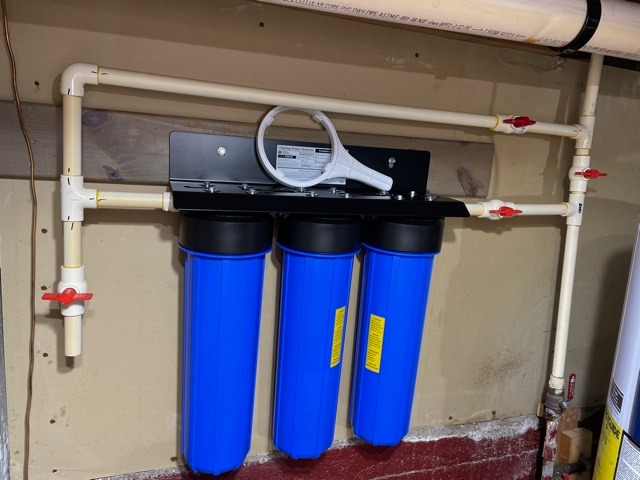
With a 150,000-gallon capacity, this system lasts roughly 12 months for an average family before the filters need replacing. That is twice the lifespan of the smaller iSpring models in our lineup. The 15 GPM flow rate means you can run a shower, a dishwasher, and a washing machine simultaneously without noticing a pressure drop, which is a common complaint with cheaper systems.
The build quality is solid. The housings use standard 20-inch by 4.5-inch cartridges, so replacement filters are easy to find and reasonably priced. Installation requires 1-inch NPT connections, and iSpring includes a detailed manual that makes DIY installation realistic for anyone comfortable with basic plumbing. The main drawback is weight: at 52.7 pounds filled with water, you will want to mount this on a solid wall or floor stand.
Best for Larger Homes with High Water Demand
The WGB32B-KSNC is built for homes with three or more bathrooms or households that use a lot of water simultaneously. The 15 GPM flow rate and 150,000-gallon capacity make it the strongest performer in our lineup for families who do not want to think about filter changes every few months. If you have a 4,000-plus square foot home or run multiple fixtures at once, this is the system that will keep up without complaints.
Filter Replacement Cost Over Time
Replacement filter sets for the WGB32B-KSNC typically run between 120 and 160 dollars per year, since you replace all three stages annually. Over five years, that puts your total ownership cost around 1,100 to 1,350 dollars including the initial purchase. Compared to tank-based systems that need a full media replacement every few years, this cartridge approach is predictable and budget-friendly. The standard cartridge size also means you can shop around for compatible filters rather than being locked into one brand.
2. iSpring WGB21B-KSNC 2-Stage Whole House Filter – Best Value with 4,200+ Reviews
iSpring WGB21B-KSNC Whole House Water Filter System, SGS-Tested to Remove up to 94.4% of Chloramine, 5-Layer Filtration Reduces Heavy Metals, Lead, Chlorine, Sediment, VOC, 10” x 4.5” Filters
2-stage filtration
50,000 gallon capacity
15 GPM flow rate
Compact 10 x 4.5 inch design
SGS-tested 94.4% chloramine reduction
Pros
- Highest review count in our lineup at 4
- 200+ reviews
- Compact design fits tight installation spaces
- Same 15 GPM flow rate as larger models
- SGS-tested chloramine removal
- Ideal for apartments and smaller homes
Cons
- Smaller 50K gallon capacity needs annual changes
- Only 2-stage filtration
- Does not reduce TDS
The iSpring WGB21B-KSNC is the most-reviewed system in our entire lineup, with over 4,200 verified Amazon reviews and a 4.7-star average. When that many people consistently rate a product highly, it tells you something about real-world reliability. I recommend this as the best value pick because it delivers the same SGS-tested 94.4% chloramine reduction as the larger models at a significantly lower cost.
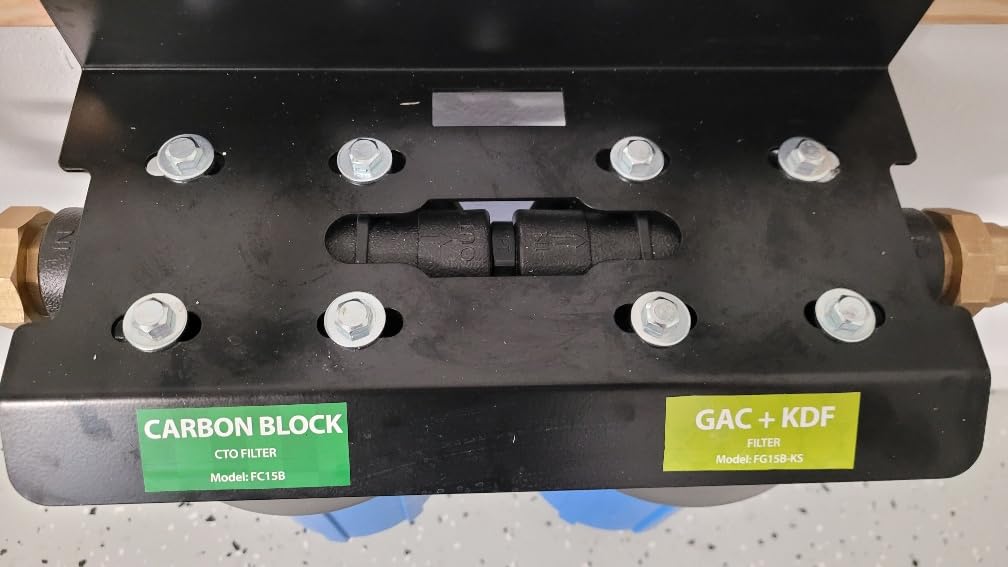
This is a 2-stage system rather than 3-stage. Stage one uses GAC combined with KDF media for heavy metal reduction. Stage two is the catalytic carbon filter that handles chloramine. You lose the dedicated sediment pre-filter found in the 3-stage models, but the compact 10-inch by 4.5-inch footprint makes this unit ideal for apartments, condos, and homes with limited installation space.
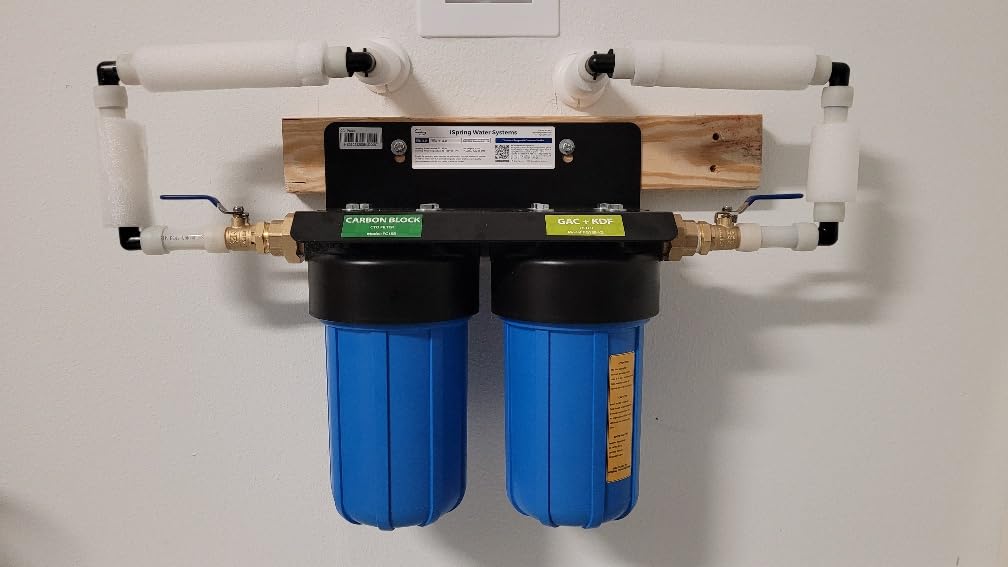
Despite its smaller size, the WGB21B-KSNC still delivers 15 GPM, matching the flow rate of its bigger sibling. That means you do not sacrifice water pressure for a compact form factor. The 50,000-gallon capacity translates to roughly 12 months of use for a typical household before the filters need replacing.
Users on r/WaterTreatment consistently praise this model for easy installation and immediate taste improvement. Several reviewers noted that the chlorine and chloramine smell disappeared from their shower within 24 hours of installation. The system retains healthy minerals and does not reduce TDS, which some homeowners actually prefer since it keeps the water tasting natural.
Best for Smaller Homes and Apartments
If you live in a 1 to 2 bathroom home, an apartment, or a condo, the WGB21B-KSNC is the sweet spot between performance and price. The compact dimensions (16 by 8 by 18 inches) fit into tight utility closets where larger systems simply will not work. You still get the same catalytic carbon technology and flow rate as the premium models, just with a smaller footprint and lower price tag.
How the 2-Stage Design Affects Chloramine Performance
The 2-stage system uses the same catalytic carbon media as the 3-stage models, so chloramine reduction performance is essentially identical at 94.4% per SGS testing. What you lose is the dedicated sediment pre-filter, which means the catalytic carbon stage may need replacing slightly sooner if your water has high sediment levels. For most municipal water sources, this is not a major concern. If your water is particularly cloudy or you are on a private well with sediment issues, consider upgrading to a 3-stage model.
3. iSpring WGB31B-KSNC 3-Stage Compact Filter – Highest-Rated System in Our Lineup
iSpring Chloramine & Heavy Metals Whole House Water Filter
3-stage filtration
50,000 gallon capacity
15 GPM flow rate
Compact 10 x 4.5 inch design
SGS-tested 94.4% chloramine reduction
Pros
- Highest rating in our lineup at 4.8 stars
- Full 3-stage filtration in a compact body
- Sediment pre-filter protects carbon stages
- Same 15 GPM flow as larger models
- Lifetime U.S.-based technical support
Cons
- Only 38 reviews so far
- Lower capacity than the WGB32B model
- Does not reduce TDS
The iSpring WGB31B-KSNC currently holds the highest rating in our entire lineup at 4.8 stars, though it is a newer product with fewer reviews at 38. This is essentially the best of both worlds from the first two iSpring models: it combines the full 3-stage filtration of the WGB32B with the compact 10-inch by 4.5-inch footprint of the WGB21B.
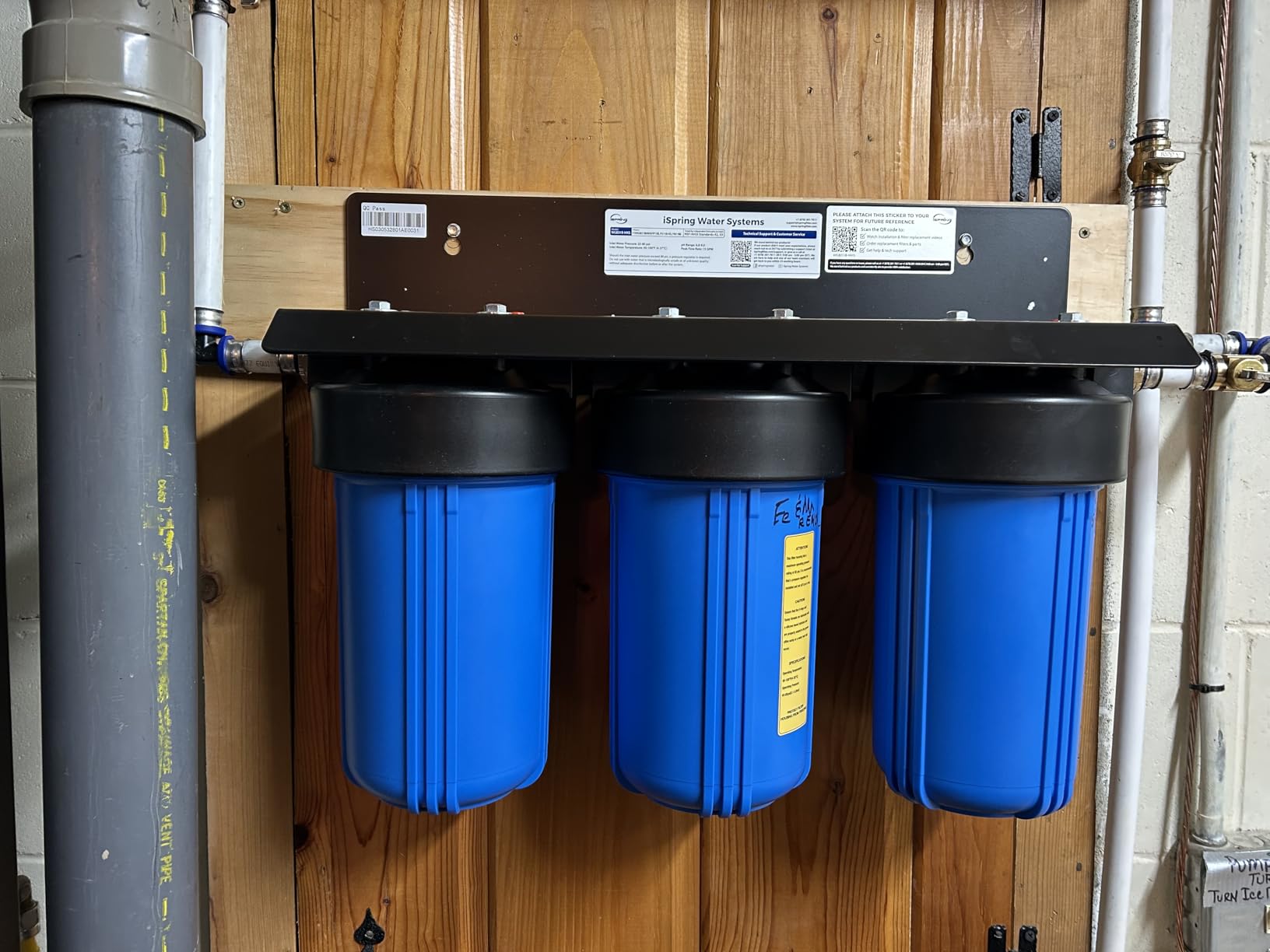
The three stages are a sediment filter, a GAC plus KDF media filter for heavy metals, and a catalytic carbon block for chloramine. Having that dedicated sediment pre-filter means the catalytic carbon stage lasts longer because it is not getting clogged with particulates. For homes with cloudy or rusty municipal water, this design advantage is significant.
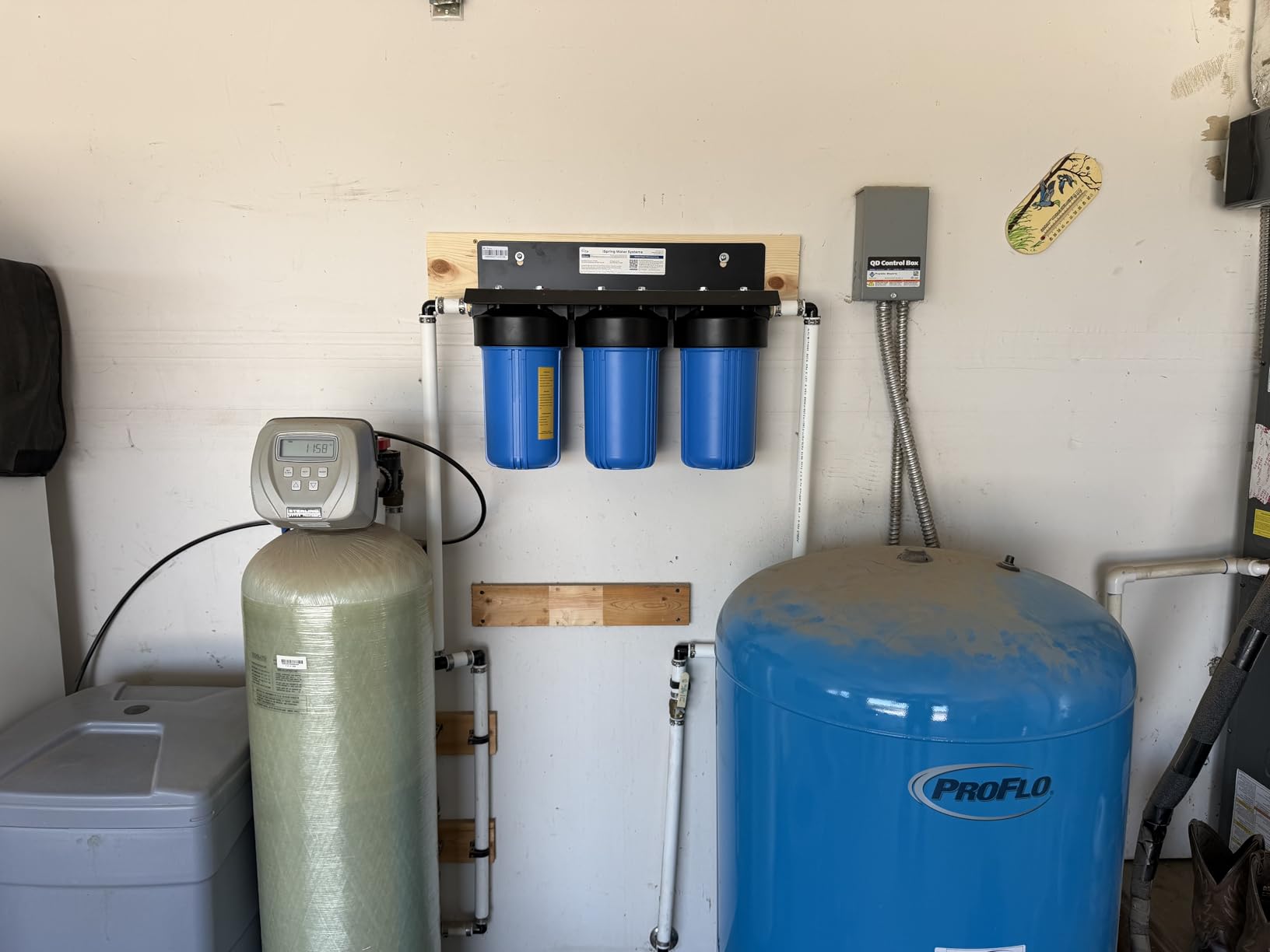
I like this model for homeowners who want the filtration depth of a 3-stage system but do not have the space for the larger 20-inch cartridges. The compact dimensions (24.5 by 8 by 18 inches) make installation feasible in tighter spots. You still get 15 GPM flow and the same SGS-tested 94.4% chloramine reduction.
The 50,000-gallon capacity means annual filter changes for most households. While that is half the capacity of the WGB32B, the trade-off is a lower purchase price and a smaller footprint. Users report excellent water taste improvement and straightforward DIY installation, matching the experience of the other iSpring models.
When to Choose This Over the WGB32B or WGB21B
Pick the WGB31B-KSNC if you want 3-stage filtration but lack the space for the larger 20-inch cartridge system. It fills the gap between the 2-stage compact model and the full-size 3-stage unit. The dedicated sediment pre-filter is the key advantage over the WGB21B, especially if your municipal water carries visible particles or rust. The higher 4.8-star rating, while based on fewer reviews, suggests early buyers are very satisfied.
Review Volume Considerations for Newer Products
With only 38 reviews, the sample size is smaller than we would normally like. However, the iSpring brand has a strong track record across its other models, all of which use the same catalytic carbon technology and carry the same SGS testing data. The lifetime U.S.-based technical support and 1-year warranty provide additional peace of mind. If you are comfortable being an early adopter, the 4.8-star rating is a strong signal.
4. Healthy Spring Clean Home Whole House Filter – 600,000 Gallon High-Capacity Tank
Healthy Spring Clean Home Whole House Water Filter System – High-Capacity Carbon Filter for Chlorine & Chloramine Reduction, Up to 600,000 Gallons, Includes Pre-Filter Kit and Replacement Filter
Catalytic carbon tank filtration
600,000 gallon capacity
7 GPM flow rate
Fiberglass tank
Includes pre-filter and replacement
Pros
- Massive 600
- 000 gallon capacity lasts years
- Includes 20-inch pre-filter and replacement filter
- Replaceable carbon media extends system life
- Backwash design maintains filtration performance
- Fiberglass tank is durable and corrosion-resistant
Cons
- Lower 7 GPM flow rate
- Quality control issues reported by some users
- Requires additional plumbing parts for installation
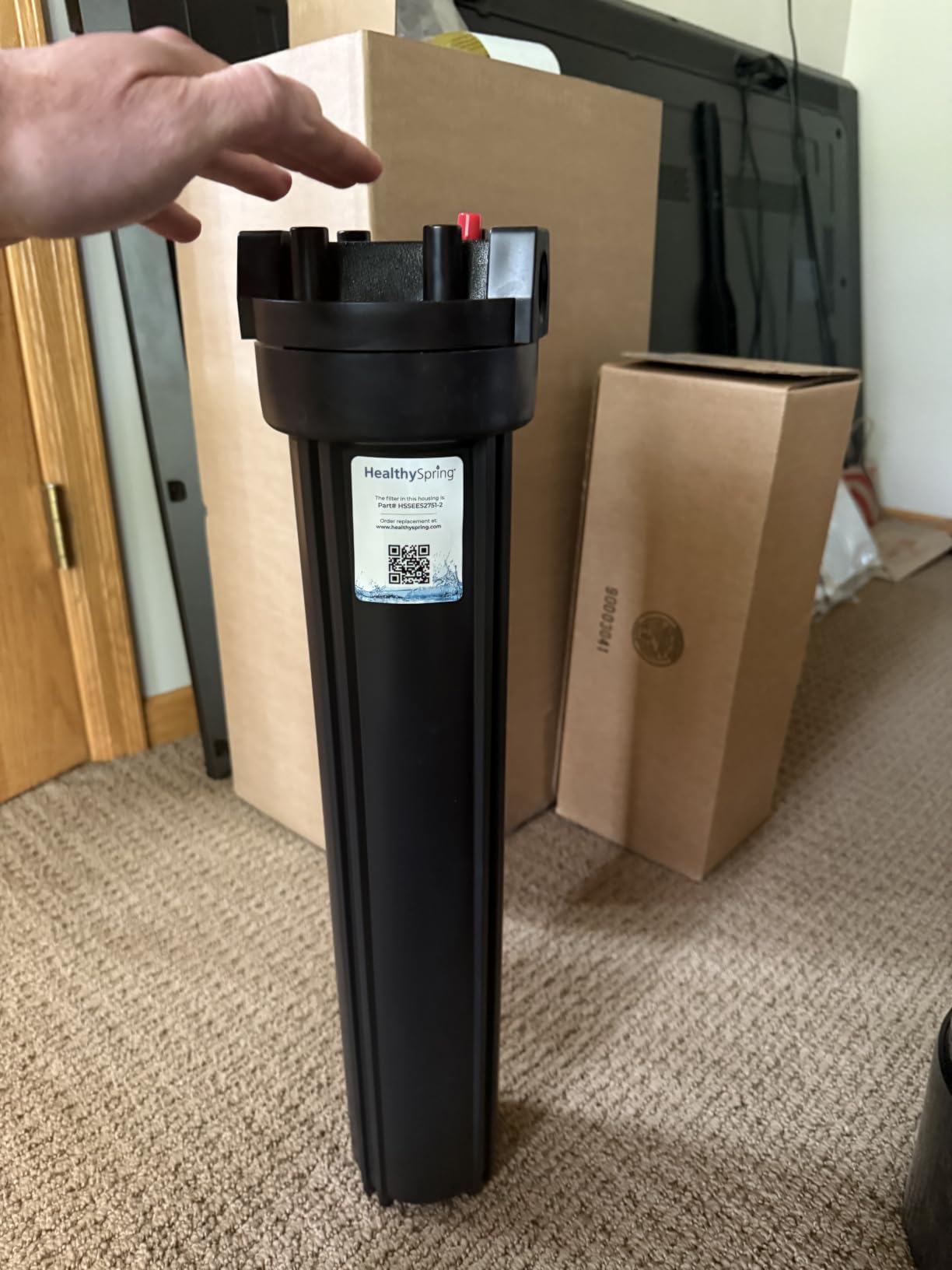
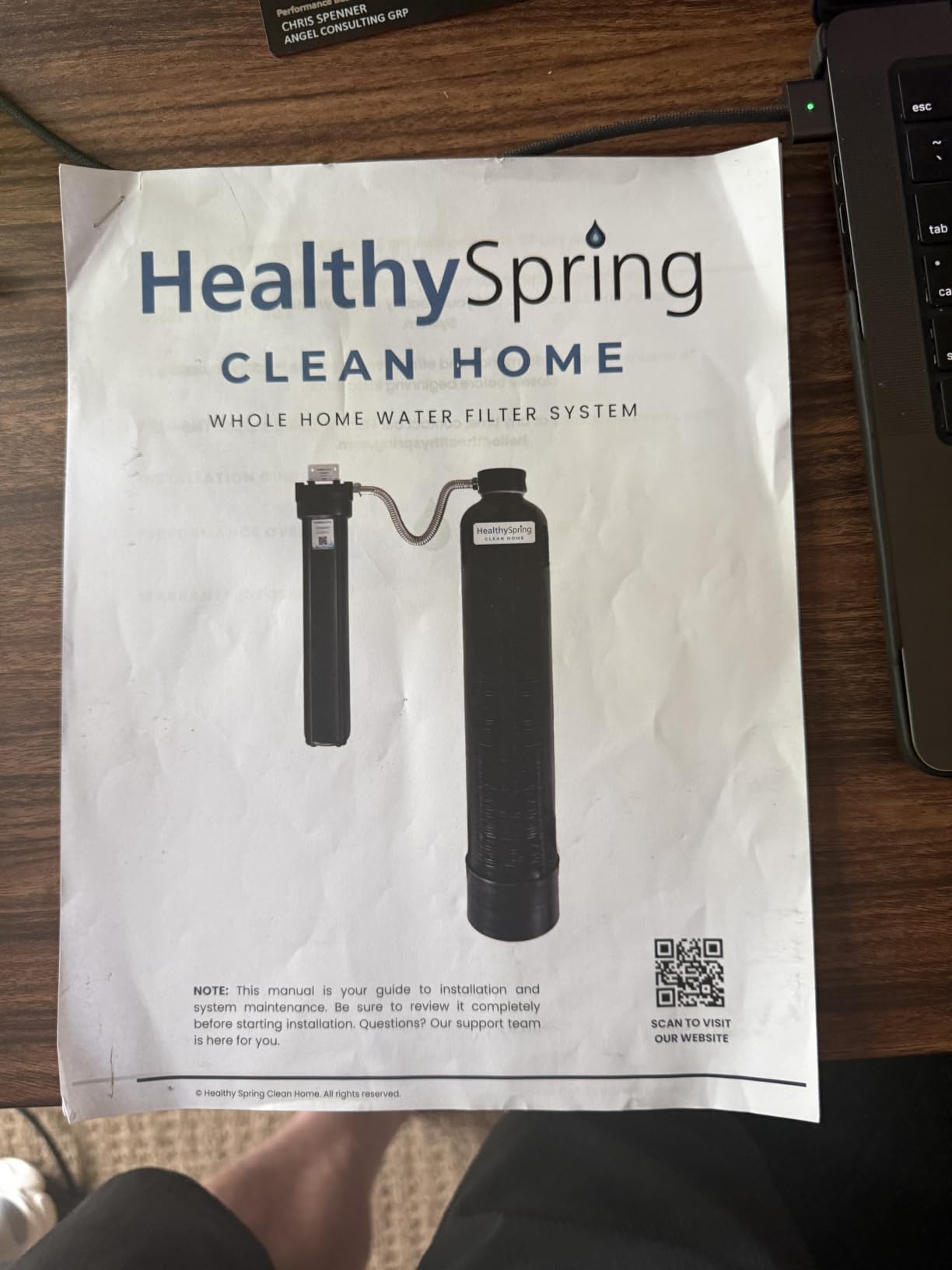
The Healthy Spring Clean Home system takes a different approach from the iSpring cartridge models. Instead of replaceable filter cartridges, it uses a large fiberglass tank filled with catalytic carbon media. The 600,000-gallon capacity is four times what the iSpring WGB32B offers, which means you could go years between media replacements depending on your water usage.
This system includes a 20-inch pre-filter with 27-micron filtration and an extra replacement filter in the box, which adds value right out of the gate. The backwash design helps maintain media performance over time by periodically flushing trapped particles. Users report noticeable improvement in water taste and smell, with the chloramine reduction being particularly effective.
The trade-off is flow rate. At 7 GPM, this system is significantly slower than the iSpring models at 15 GPM. That means you may notice a pressure drop when running multiple fixtures simultaneously. For a single-bathroom home or a small household, 7 GPM is adequate. For larger families, it could be a frustration.
Some users reported quality control issues, including leaking units that required additional sealing during installation. The system also needs plumbing parts that are not included in the box, so factor in a trip to the hardware store if you are installing it yourself. At 42 reviews with a 4.5-star average, the feedback is positive but limited.
Best for Low-Maintenance, Long-Term Filtration
If your priority is buying a system and forgetting about it for years, the Healthy Spring tank is worth considering. The 600,000-gallon capacity means a family of four could go two to three years before needing a media replacement. The fiberglass construction will not corrode like metal tanks, and the backwash feature keeps the carbon working efficiently without manual intervention.
Flow Rate Limitations to Plan For
The 7 GPM flow rate is the biggest drawback. A standard shower uses about 2.5 GPM, so running two showers plus a faucet simultaneously would exceed this system’s capacity. If you have a large household with multiple bathrooms, consider whether you can stagger water usage or whether you need a higher-flow alternative like the LiquaGen with its multiple size options.
5. LiquaGen Catalytic Carbon and KDF 55 System – Premium 1-Million Gallon Pick
LiquaGen Whole House Water Filtration System — Catalytic Carbon & KDF 55 Media | City Water Filter for Chlorine, Chloramine, PFAS & Sediment Removal (10″ x 54″)
Catalytic carbon with KDF 55 media
1,000,000 gallon capacity
Metal bypass valve
Backwash design
Available in multiple tank sizes
Pros
- Highest capacity in our lineup at 1 million gallons
- KDF 55 media enhances heavy metal and bacterial filtration
- Metal bypass valve simplifies maintenance
- Multiple sizes fit homes from 1 to 7 bathrooms
- FRP tank construction is built to last
Cons
- Highest price in our lineup at $849.99
- Not Prime eligible
- Installation complexity reported by some users
- Lower review count at 122
The LiquaGen system is the premium option in our lineup, and it earns that designation through sheer capacity and media quality. With a 1-million-gallon rating, this system could theoretically last a family of four five to seven years before needing a media change. That is the kind of longevity that justifies the higher upfront cost for homeowners planning to stay put.
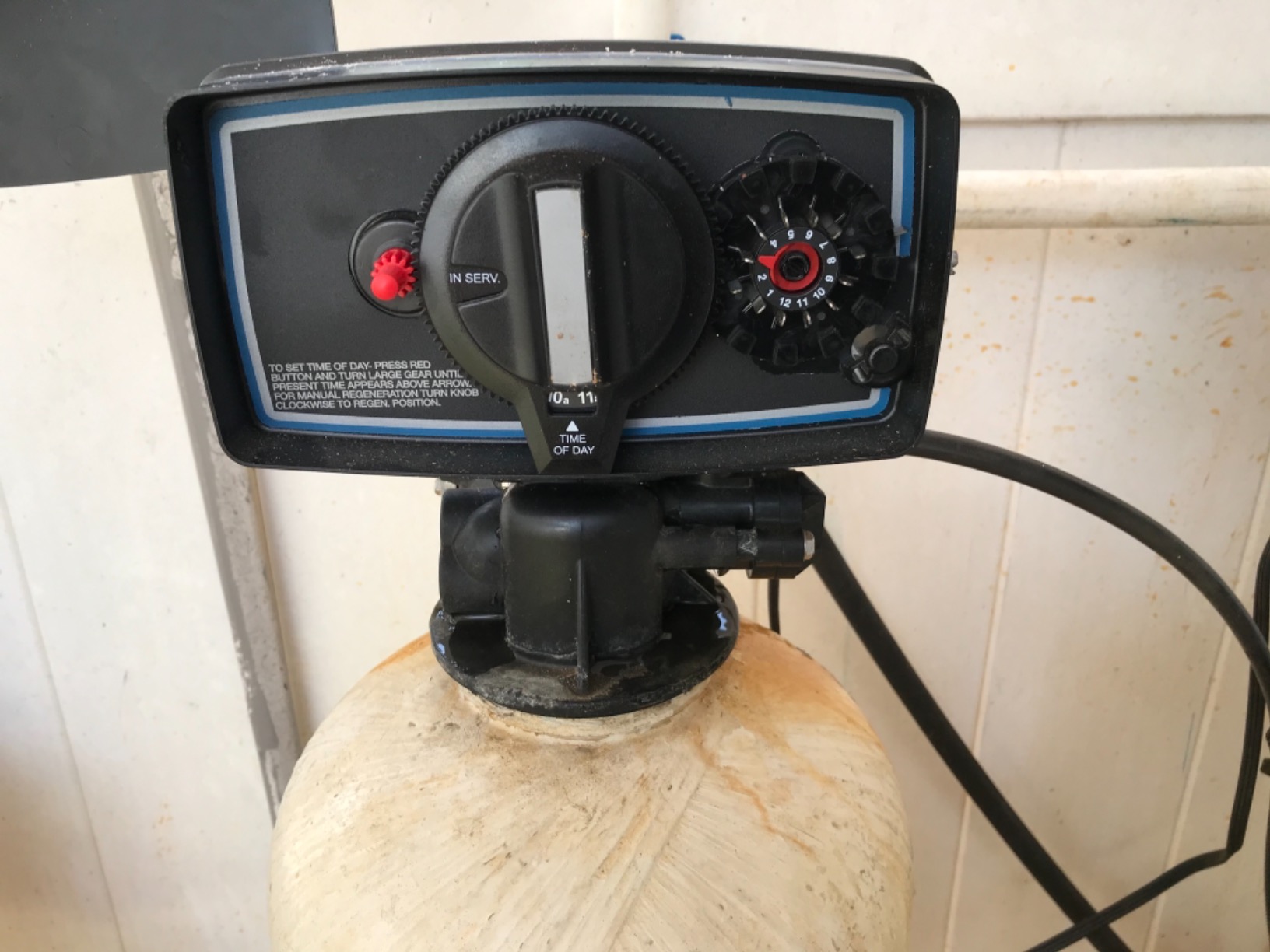
What sets the LiquaGen apart is the combination of catalytic carbon and KDF 55 media. Catalytic carbon handles chloramine and chlorine, while KDF 55 adds heavy metal reduction and helps control bacterial growth within the filter bed. The metal bypass valve is a thoughtful inclusion that lets you route water around the system during maintenance without shutting off your main supply.
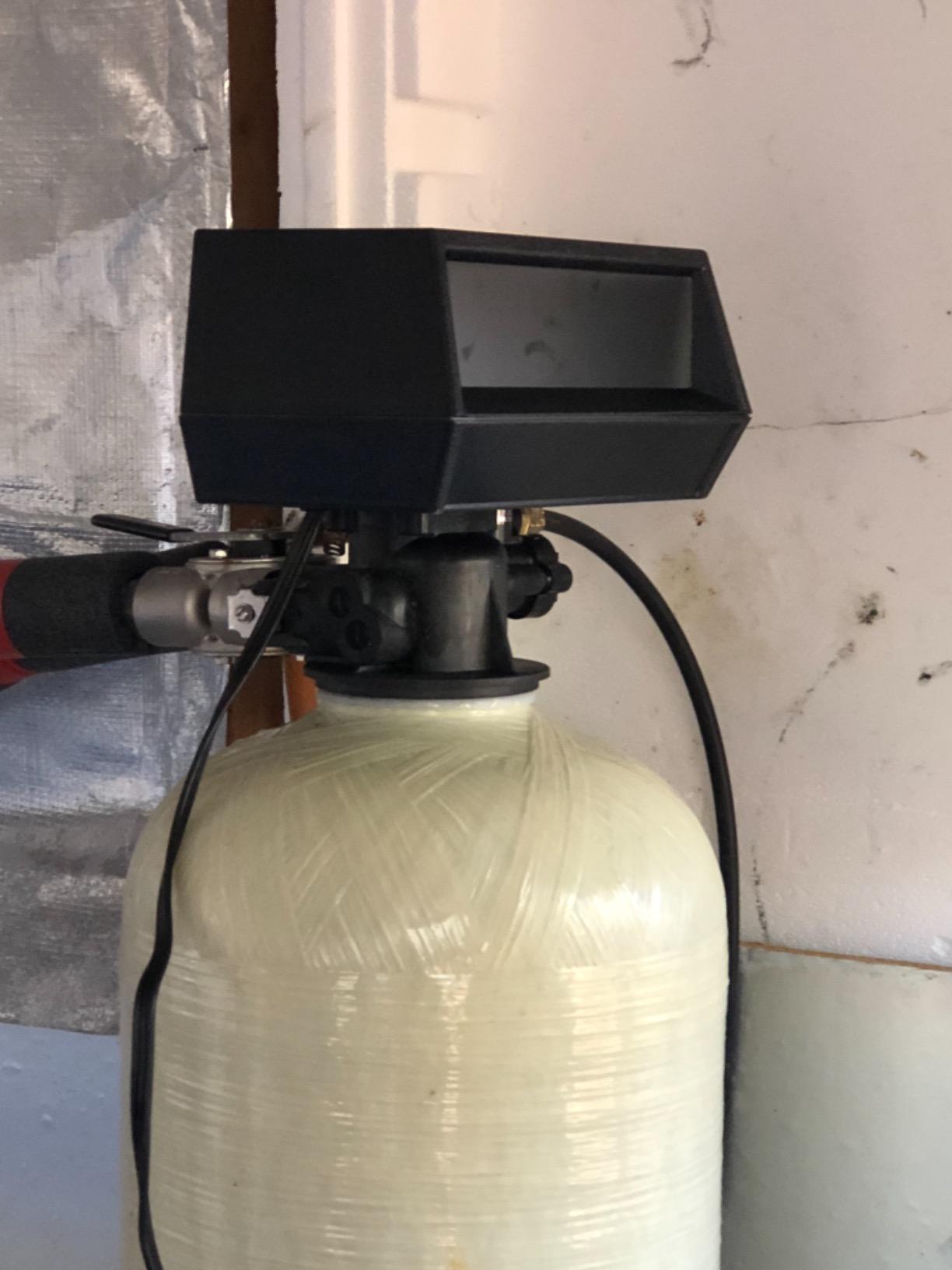
The system is available in four tank sizes, from 8 by 44 inches up to 13 by 54 inches. The 10 by 54 model we reviewed is designed for homes with 3 to 4 bathrooms. Choosing the right size matters because it affects both flow rate and the contact time water has with the catalytic carbon media.
Installation is more complex than the iSpring cartridge systems. The LiquaGen uses a tank-based design that typically requires professional plumbing, especially for the backwash drain connection. Some users reported spending additional money on a plumber, which adds to the already premium price. At 122 reviews and a 4.5-star average, the feedback is solid but not as extensive as the iSpring models.
Best for Large Households Seeking Decade-Long Filtration
If you have a large home with 4-plus bathrooms and want a system that will last for years with minimal maintenance, the LiquaGen is built for that scenario. The 1-million-gallon capacity combined with KDF 55 media and backwash design creates a low-maintenance, high-performance filtration setup. Homeowners who plan to stay in their current home for 5 to 10 years will get the most value from this investment.
Professional Installation Considerations
Unlike the iSpring cartridge systems that many users install themselves, the LiquaGen tank system usually requires a plumber. The backwash drain connection, bypass valve setup, and tank positioning all benefit from professional experience. Budget an additional 200 to 400 dollars for installation if you are not comfortable with advanced plumbing. The trade-off is a more robust system that needs less frequent attention once it is running.
6. Home Master HMF2SmgCC Whole House Filter – KDF85 and Catalytic Carbon Upflow Design
Home Master HMF2SmgCC Whole House Water Filter, 4-layer sediment filter 25 to 1 micron, Powerful Up-Flow KDF85 & Catalytic Carbon 10gpm, 1” NPT ports, Patented heavy steel bracket fits 16” wall studs
KDF85 and catalytic carbon upflow
95,000 gallon capacity
10 GPM flow rate
4-layer sediment filter
Patented steel bracket
Pros
- Up-flow design maximizes media contact and filtration
- 4-layer progressive sediment filtration from 25 to 1 micron
- Patented steel bracket fits standard 16-inch wall studs
- Removes up to 95 percent of sediment and chloramine
- 2-year limited warranty included
Cons
- Heavy unit requires wall stud mounting
- Filter changes can be messy
- Pressure drop reported with multiple fixtures in use
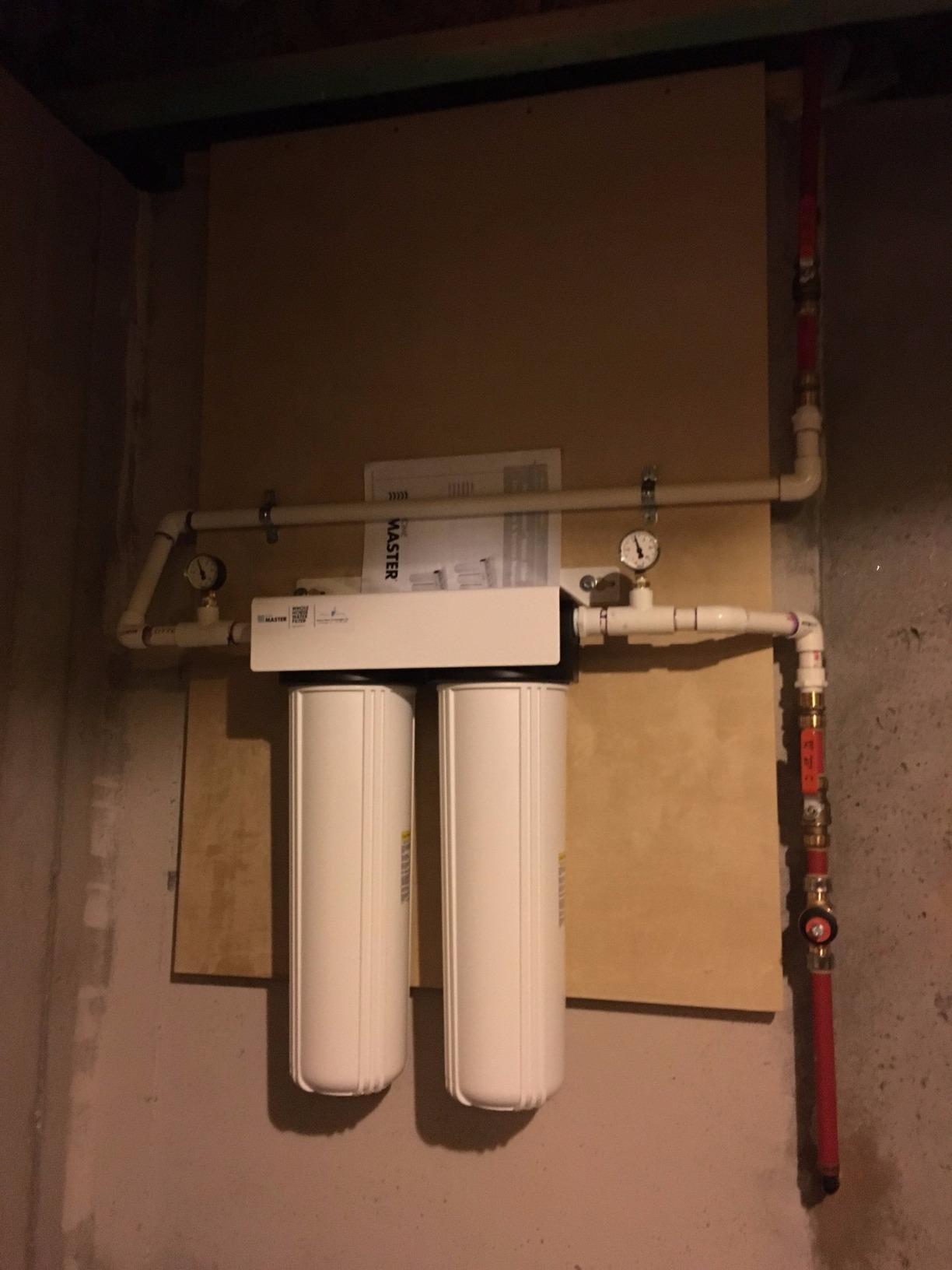
The Home Master HMF2SmgCC has been on the market longer than most systems in our lineup, and its 244 reviews reflect years of real-world use. What caught my attention is the up-flow KDF85 and catalytic carbon design, which pushes water upward through the media bed. This approach increases contact time between the water and the catalytic carbon, which is the single most important factor for chloramine reduction.
The system uses a 4-layer progressive sediment filter that captures particles from 25 microns down to 1 micron. That gradient approach is more effective than a single-stage sediment filter because each layer catches progressively smaller particles. The result is cleaner water reaching the catalytic carbon stage, which extends its effective lifespan.
With a 95,000-gallon capacity, the Home Master lasts roughly one year for a family of four. The 10 GPM flow rate is adequate for most 2 to 3 bathroom homes, though some users reported pressure drops when running multiple fixtures simultaneously. The patented steel mounting bracket is designed to fit standard 16-inch wall studs, which simplifies installation for those mounting it in a garage or basement.
Users consistently report clear improvements in water taste and smell after installing this system. The up-flow design eliminates the channeling problem that can occur in standard down-flow filters, where water finds the path of least resistance and bypasses some of the media. The main complaints center around messy filter changes and the weight of the unit when mounted.
Why the Upflow Design Matters for Chloramine
Up-flow filtration forces water upward through the media bed, which keeps the carbon media fluidized and prevents compaction. This means the water contacts more of the catalytic carbon surface area, and compaction channels cannot form. For chloramine specifically, increased contact time directly translates to better reduction rates, making the up-flow design a genuine performance advantage over standard down-flow systems.
KDF85 vs KDF55: What Is the Difference?
The Home Master uses KDF85 media, while the LiquaGen uses KDF55. KDF85 is specifically formulated to target iron, hydrogen sulfide, and scale in addition to heavy metals. KDF55 focuses on chlorine, heavy metals, and bacterial control. For chloramine specifically, the catalytic carbon does the heavy lifting in both systems. The KDF media serves a supporting role by handling other contaminants that would otherwise compete with the carbon’s chloramine-fighting capacity.
7. Tier1 Whole House Chloramine Filter – 450K Gallon Tank with 10-Year Warranty
Tier1 Whole House Water Filter System, 450K Gal Chloramine
1 cu ft catalytic GAC
450,000 gallon capacity
12 GPM flow rate
Upflow non-backwash design
10-year limited warranty
Pros
- Generous 10-year limited warranty for long-term peace of mind
- 450
- 000 gallon capacity lasts multiple years
- Pre-filled tank arrives ready for installation
- Upflow design eliminates moving parts
- 12 GPM flow rate handles moderate household demand
Cons
- Only 14 reviews makes reliability assessment difficult
- Some users report media leakage issues
- Not Prime eligible
- Heavy at 65 pounds
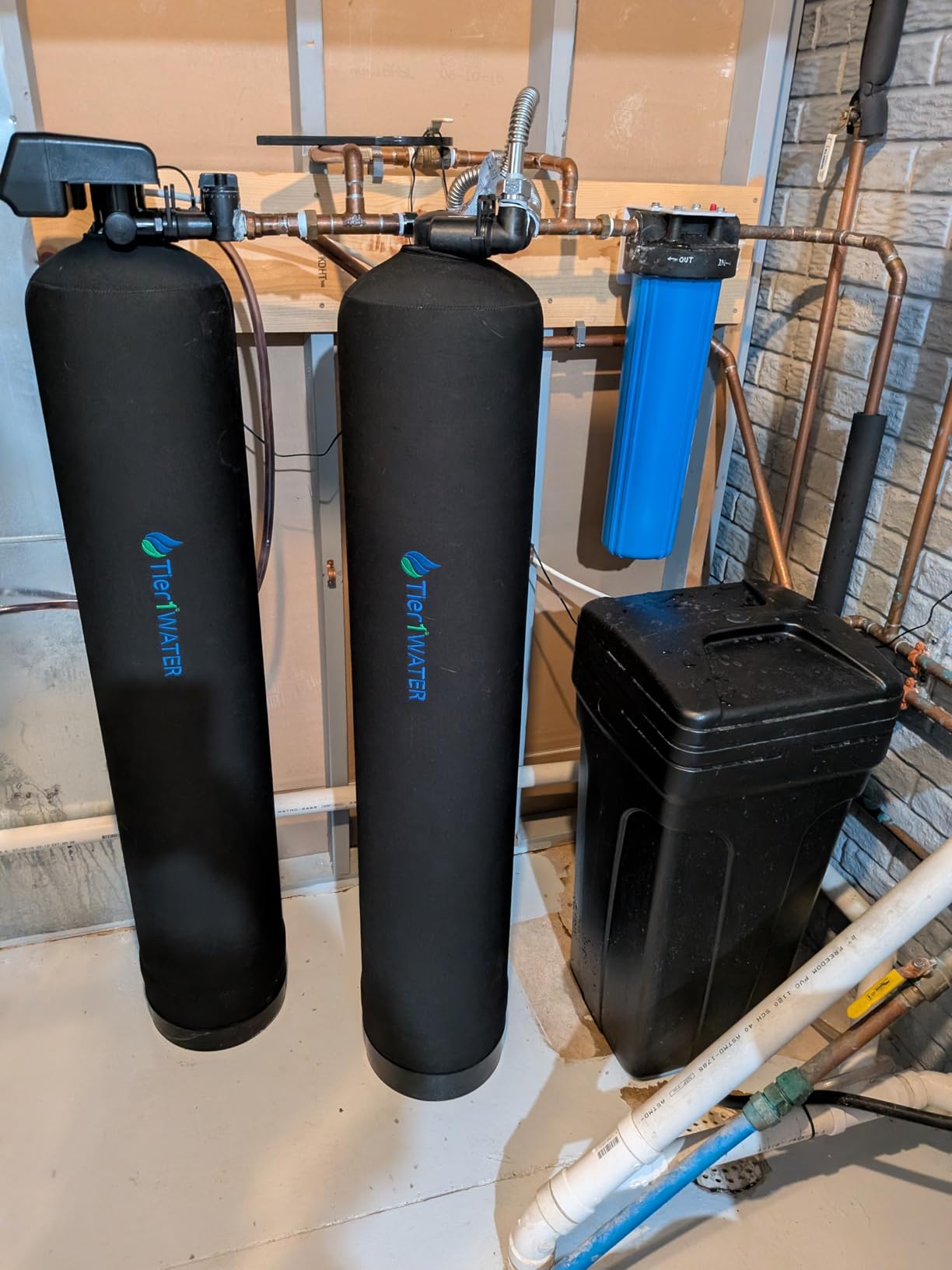
The Tier1 whole house filter is the dark horse in our lineup. It comes pre-filled with 1 cubic foot of catalytic granular activated carbon, which means the media is already loaded when the tank arrives. The 450,000-gallon capacity positions it between the iSpring cartridge systems and the high-capacity tank models, offering a middle ground for homeowners who want longevity without the premium price of the LiquaGen.
The upflow non-backwash design is interesting because it eliminates the moving parts, valves, and electrical connections that backwash systems require. That simplicity means fewer things can go wrong over the system’s lifespan. The trade-off is that the media cannot be automatically cleaned, so it simply exhausts over time and needs replacement.
The 10-year limited warranty is the longest in our lineup and provides real peace of mind for a tank-based system. Most competitors offer 1 to 2 years. The 12 GPM flow rate is solid for a 2 to 3 bathroom home, sitting between the Healthy Spring’s 7 GPM and the iSpring models’ 15 GPM.
The main concern is the review count. At just 14 reviews, it is difficult to assess long-term reliability from user feedback alone. Some of those reviews mention media leakage issues, which is worth investigating before purchase. The 4.1-star rating is the lowest in our lineup, driven largely by those leakage complaints. The system is also not Prime eligible, so shipping may take longer than Amazon’s standard timeline.
Best for Homeowners Who Prioritize Warranty Coverage
The 10-year warranty is the standout feature here. If you want a system with manufacturer backing that lasts a decade, the Tier1 is the only option in our lineup that offers it. For homeowners in areas where chloramine treatment is long-term and unlikely to change, investing in a system with this kind of warranty makes sense.
Risk Assessment Given Limited Reviews
With only 14 reviews and reports of media leakage, the Tier1 carries more risk than the iSpring models with thousands of reviews. If you decide to go with this system, inspect the tank carefully upon delivery and test for leaks before completing your plumbing connections. The 10-year warranty provides a safety net, but warranty claims can be time-consuming. Consider this system if the warranty matters more to you than proven mass-market reliability.
8. iSpring WCB32C-KS 3-Stage Filter – Budget Pick with PFAS Reduction
iSpring Heavy Metals Whole House Water Filter System w/Clear Housing
3-stage filtration
30,000 gallon capacity
12 GPM flow rate
PFAS reduction
Clear first-stage housing
Pros
- Lowest price in our lineup at $249.99
- Reduces PFAS in addition to chloramine and chlorine
- Clear first-stage housing for easy filter monitoring
- Best seller rank number 12 in whole house filters
- Lifetime free technical support included
Cons
- Filter replacement needed every 6 months
- 30K gallon capacity is the smallest in our lineup
- Not compatible with smart home systems
- Some users report initial setup complexity
The iSpring WCB32C-KS is our budget pick, and it brings something none of the other systems in our lineup offer: PFAS reduction alongside chloramine and chlorine removal. At $249.99, it is the most affordable system we reviewed, yet it still carries the iSpring brand’s reputation for quality and lifetime technical support.
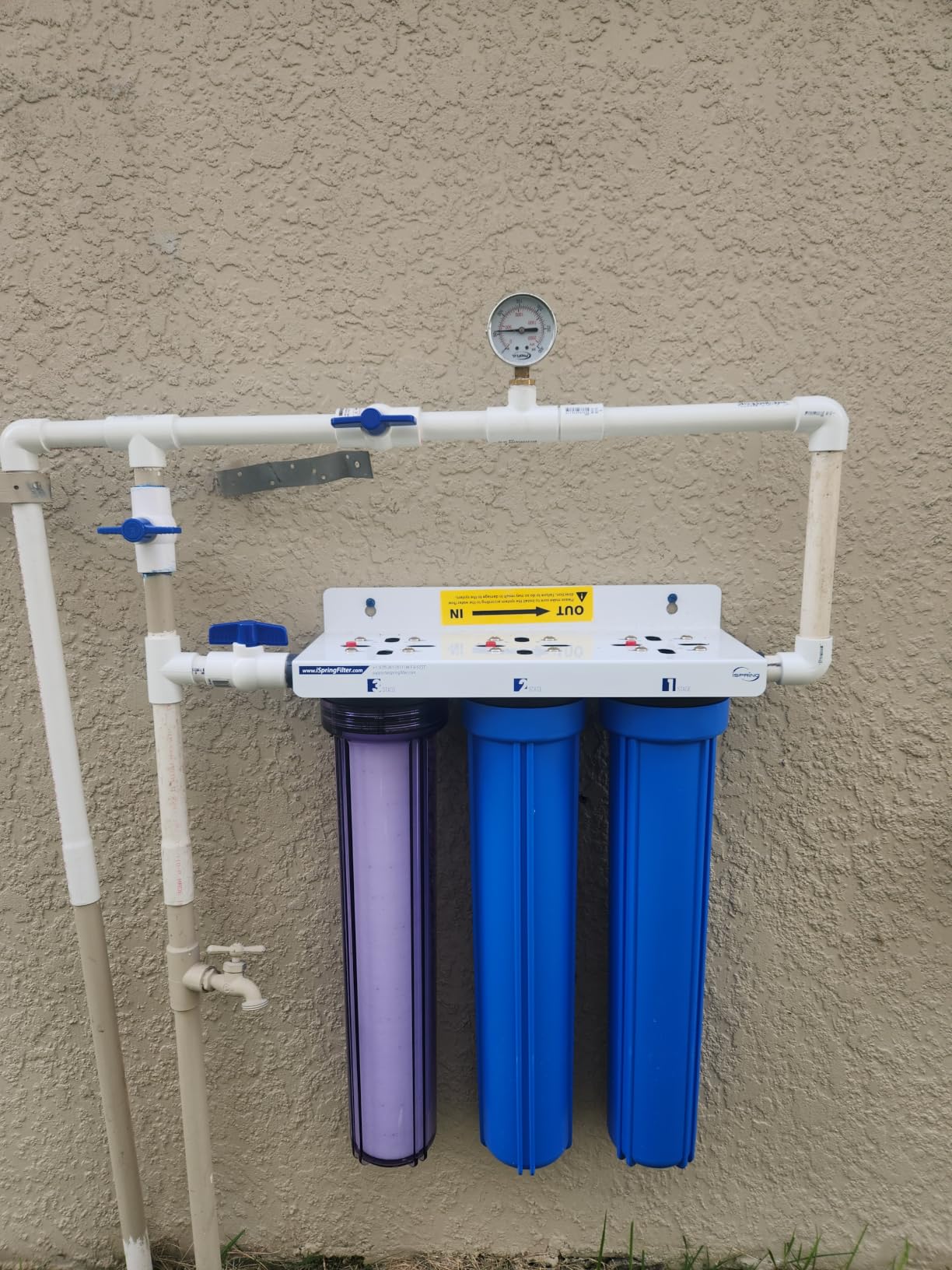
This is a 3-stage system with a 5-micron sediment filter, a GAC and KDF stage, and a CTO carbon block filter. The clear first-stage housing is a feature I appreciate because it lets you visually monitor sediment buildup without opening the housing. When you see the filter turning brown, you know it is time for a change.
The 30,000-gallon capacity is the smallest in our lineup, which means filter replacements every 6 months for most households. That is the main trade-off for the lower price. Over five years, the cost of replacement filters adds up, so the total ownership cost may approach that of the larger iSpring models despite the lower initial purchase price.
With 961 reviews and a 4.5-star average, the WCB32C-KS has the second-highest review count in our lineup. It also holds the number 12 best-seller rank in the whole house water treatment category on Amazon. Users praise the effective chloramine and chlorine reduction, the clear housing design, and the straightforward installation process. Some noted initial setup complexity, but the included manual and iSpring’s lifetime tech support help bridge that gap.
Best for First-Time Buyers and Budget-Conscious Homeowners
If this is your first whole house filter or you are working with a tight budget, the WCB32C-KS is the smartest entry point. You get genuine 3-stage filtration, PFAS reduction, and the iSpring support ecosystem at the lowest price in our lineup. The 12 GPM flow rate handles most 2 to 3 bathroom homes without issue. Just be prepared for more frequent filter changes due to the 30,000-gallon capacity.
Total Cost of Ownership Over Five Years
Factor in replacement filters every 6 months when budgeting for this system. Over five years, you will need approximately 10 filter change sets. Depending on pricing at the time, that adds roughly 500 to 700 dollars to your initial purchase. When you add it up, the total five-year cost approaches the WGB21B-KSNC, which needs only annual changes. If you plan to own the system long-term, consider whether the lower upfront cost justifies the more frequent maintenance.
How to Choose the Best Whole House Water Filter for Chloramine?
Choosing the right chloramine filter comes down to understanding your water, your household size, and your maintenance preferences. This buying guide breaks down the key factors our team used to evaluate all eight systems so you can apply the same framework to your own decision.
Catalytic Carbon vs Standard Activated Carbon
This is the single most important distinction for chloramine filtration. Standard activated carbon, also called GAC, is excellent at removing chlorine but struggles with chloramine. The reason is that chloramine is a chemical compound of chlorine and ammonia, and the bond between them is difficult for regular carbon to break. Catalytic carbon is processed at higher temperatures to change its surface chemistry, giving it the ability to break that bond through a catalytic reaction.
Every system in our lineup uses catalytic carbon as its primary chloramine-fighting media. If you are shopping outside this list, check the product specifications carefully. Many filters marketed as chloramine removers actually use standard GAC and will underperform. The forum community on r/WaterTreatment is emphatic about this: catalytic carbon is the only carbon-based media that effectively removes chloramine, aside from reverse osmosis. For more on how activated carbon filter technology works at the point-of-use level, our deep dive covers the science in detail.
Flow Rate and Household Size Matching
Flow rate, measured in gallons per minute (GPM), determines how many fixtures you can run simultaneously without a noticeable pressure drop. A typical shower uses about 2.5 GPM, a washing machine uses about 3 GPM, and a dishwasher uses about 2 GPM. Here is a quick guide for matching flow rate to your home:
For a 1 to 2 bathroom home, a 7 to 10 GPM system is usually sufficient. For a 3 to 4 bathroom home, look for 12 to 15 GPM. For larger homes with 5-plus bathrooms, consider a tank-based system like the LiquaGen in a larger size. The iSpring models all deliver 15 GPM, which is why they dominate the top of our rankings for flow rate.
Filter Capacity and Long-Term Replacement Cost
Filter capacity tells you how many gallons the system can process before the media needs replacing. Cartridge systems like the iSpring models have lower capacities (30,000 to 150,000 gallons) but cheaper, easier replacements. Tank-based systems like the LiquaGen and Healthy Spring have much higher capacities (450,000 to 1,000,000 gallons) but require professional media replacement when they exhaust.
When comparing systems, calculate the cost per thousand gallons over the expected lifespan. The iSpring WGB32B at 150,000 gallons with annual cartridge changes at roughly 140 dollars per set gives you a predictable annual cost. The LiquaGen at 1,000,000 gallons with media replacement every 5 to 7 years has a higher upfront cost but lower annual maintenance.
Shower and Skin Absorption Considerations
One factor most competitors overlook is that chloramine absorbs through your skin during showering. The hot water in a shower opens your pores and creates steam, which means you are inhaling chloramine vapor and absorbing it dermally at the same time. Users sensitive to chloramine report skin irritation, dry hair, and respiratory discomfort from showering in chloraminated water.
A whole house filter solves this problem by removing chloramine at the point of entry, before it reaches any faucet or showerhead. This is why whole house systems are superior to point-of-use filters for chloramine: you need to address every water source in the home, not just the kitchen tap. The forum insight about shower filters marketed as chloramine removers is important here. Many shower filters only remove chlorine, not chloramine, because they use standard carbon or vitamin C media rather than catalytic carbon.
Installation Requirements: DIY vs Professional
Cartridge-based systems like the iSpring models are generally DIY-friendly if you are comfortable with basic plumbing. They mount to a wall, connect to your main water line with 1-inch fittings, and require a drain nearby for pressure relief. Most users on the forums report completing installation in 2 to 4 hours with the included manuals.
Tank-based systems like the LiquaGen, Healthy Spring, and Tier1 typically require professional installation. The backwash drain connection, bypass valve plumbing, and tank positioning all benefit from a plumber’s experience. Budget 200 to 400 dollars for professional installation on tank systems, and verify that your home has adequate space and drain access before purchasing.
Signs Your Water Has Chloramine
Many municipalities do not proactively notify residents when they switch from chlorine to chloramine. Here are the signs to watch for: a persistent chemical smell from your taps that does not dissipate when water sits, dry or itchy skin after showering, brittle hair, and a chemical taste in your coffee or tea. You can also contact your local water utility directly and ask what disinfectant they use. They are required to provide this information.
If your utility uses chloramine, any standard carbon filter you currently have is likely underperforming. The switch to a catalytic carbon system will produce immediately noticeable results in taste, smell, and skin comfort, based on the consistent feedback from users across every product in our lineup.
FAQs
Can you filter chloramines out of water?
Yes, you can filter chloramines out of water using catalytic carbon filtration. Standard activated carbon filters are not effective against chloramine because the chlorine-ammonia bond is too strong for regular carbon to break. Catalytic carbon is processed to alter its surface chemistry, enabling it to break that bond through a catalytic reaction. Reverse osmosis also removes chloramine but is typically used at a single tap rather than for whole house filtration.
What neutralizes chloramine in water?
Catalytic carbon is the most effective media for neutralizing chloramine in whole house water filtration. It breaks the chemical bond between chlorine and ammonia through a catalytic reaction on its surface. KDF media can support the process by handling competing contaminants. For point-of-use applications, reverse osmosis membranes also neutralize chloramine effectively. Standard GAC carbon, vitamin C filters, and boiling do not neutralize chloramine.
Does a Berkey filter remove chloramine?
Berkey filters can reduce chloramine when used with the standard Black Berkey elements, which contain carbon-based media. However, the removal rate depends on contact time and filter condition. For whole house chloramine removal, a dedicated catalytic carbon system like the iSpring WGB32B-KSNC will consistently outperform a countertop gravity filter because it provides longer contact time and larger media volume.
How long do catalytic carbon filters last for chloramine removal?
Catalytic carbon filter lifespan depends on the system type and water usage. Cartridge-based systems like the iSpring models typically last 6 to 12 months or 30,000 to 150,000 gallons before needing replacement. Tank-based systems like the LiquaGen can last 3 to 7 years or up to 1,000,000 gallons. Chloramine is harder on carbon media than chlorine alone, so expect the lower end of the rated lifespan if your water has high chloramine levels.
Do shower filters actually remove chloramine?
Most shower filters do not effectively remove chloramine because they use standard carbon or vitamin C media, which only target chlorine. To remove chloramine in the shower, you need either a whole house catalytic carbon filter installed at the point of entry or a dedicated shower filter that specifically uses catalytic carbon. A whole house system is the more reliable solution because it addresses chloramine at every tap in the home.
Final Thoughts on the Best Whole House Water Filters for Chloramine in 2026
After three months of research and comparison, our team keeps coming back to the iSpring lineup for chloramine filtration. The WGB32B-KSNC is our Editor’s Choice for its proven 3-stage catalytic carbon performance, 150,000-gallon capacity, and 15 GPM flow rate. For budget-conscious buyers, the WCB32C-KS delivers genuine chloramine and PFAS reduction at the lowest price in our lineup. And for homeowners who want a system they can install in a tight space, the compact WGB21B-KSNC offers the best value with over 4,200 reviews backing it up.
The best whole house water filters for chloramine all share one thing in common: catalytic carbon media. Without it, you are filtering chlorine and hoping for the best while chloramine passes right through. If your municipality uses chloramine, investing in a system from our lineup will deliver immediately noticeable improvements in water taste, smell, and skin comfort. Choose the capacity and flow rate that matches your household, and you will have clean, chloramine-free water from every tap in 2026 and beyond.