
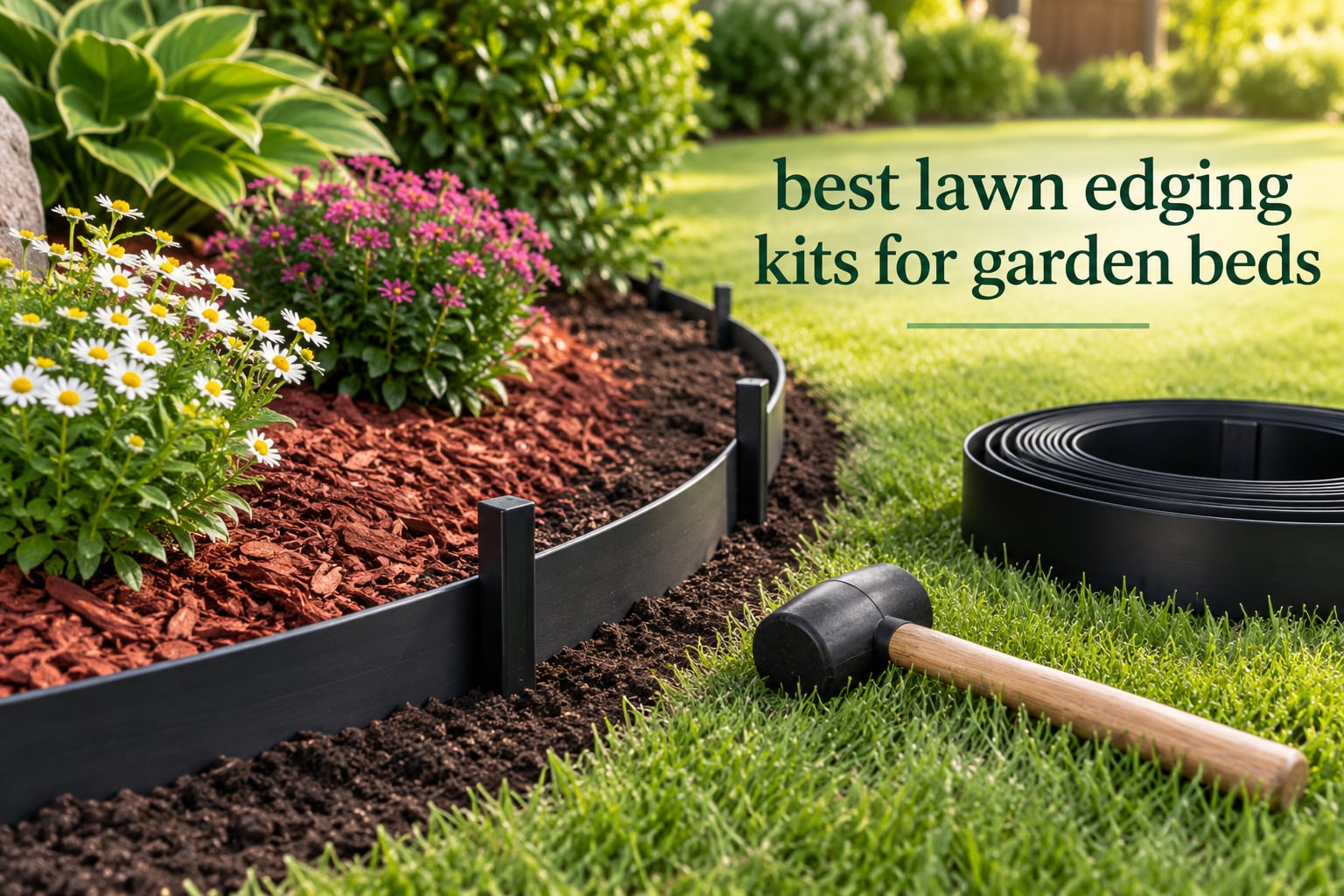
One thing first, because it trips up half the people who search this: everything below is a border. A lawn edging kit is a strip of plastic or metal plus the spikes that hold it in the soil, and its job is to hold mulch in, keep grass out and give your mower a straight reference line. It is not a powered edger. If you are after a machine with a spinning blade or a string head, you want a powered lawn edger instead, and no kit on this page will cut a clean turf seam the way one of those does.
With that sorted, this is the kit list I would actually buy from. We compared twelve no-dig and stake-in edging kits, read the customer feedback on each, and checked what physically arrives in the box rather than trusting the marketing. The single most useful thing we found: included stake counts are short by design on most kits, and the gap between what you get and what a real bed needs is the thing that decides whether a border holds a curve or waves at you by August.
Below you get all twelve kits with their real length, height above grade and stake count, plus the honest reason to skip each one. If your bed is a raised bed rather than an in-ground border, start with our raised garden bed picks first, because a tall panel kit like the Vashly behaves very differently from a bed frame.
Table of Contents
Top 3 Best Lawn Edging Kits for Garden Beds (October 2026)
If you want the short answer: the EasyFlex No-Dig 100 ft kit is the one we would put in most gardens, the EasyFlex Heavy Duty version is the one for beds with real mulch volume, and the Amazon Basics 5 inch coil is the one to buy when mulch keeps ending up on your path.

EasyFlex No-Dig 100 ft Kit
- 100 ft coil at 1.5 in tall
- 32 spiral spikes included
- Invisible and mower-safe profile
- Forms curves and straight runs

EasyFlex Heavy Duty 100 ft
- 100 ft at 1.7 in tall
- 40 anchoring spikes
- Commercial-grade recycled plastic
- Holds bark and rock mulch

Amazon Basics 5 in x 40 ft Coil
- 40 ft at 5 in tall
- 10 stakes included
- Faux woodgrain brown finish
- Tall profile stops washout
The 12 Best Lawn Edging Kits at a Glance
Every kit below is judged on the same four things: how much border it covers, how high it stands above grade, how it gets anchored, and whether the supplied hardware is enough for a real project. The stake column is the one most roundups skip, and it is the one that matters most.
| Product | Specifications | Action |
|---|---|---|
| EasyFlex No-Dig 100 ft Kit |
|
Check Latest Price |
| EasyFlex Heavy Duty 100 ft |
|
Check Latest Price |
| Amazon Basics 5 in x 40 ft Coil |
|
Check Latest Price |
 EasyFlex Adirondack 15 ft Kit EasyFlex Adirondack 15 ft Kit |
|
Check Latest Price |
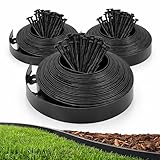 Gardzen 1.5 in x 100 ft Kit Gardzen 1.5 in x 100 ft Kit |
|
Check Latest Price |
 FunFanso 2 in x 33 ft Kit FunFanso 2 in x 33 ft Kit |
|
Check Latest Price |
 Land Guard 6 in x 50 ft Metal Border Land Guard 6 in x 50 ft Metal Border |
|
Check Latest Price |
 shsyue 4 in x 33 ft Kit shsyue 4 in x 33 ft Kit |
|
Check Latest Price |
 AGTEK 3 in x 49 ft Kit AGTEK 3 in x 49 ft Kit |
|
Check Latest Price |
 JERIA 2 in x 100 ft Kit JERIA 2 in x 100 ft Kit |
|
Check Latest Price |
 MIXC 2 in x 100 ft Kit MIXC 2 in x 100 ft Kit |
|
Check Latest Price |
 Vashly No-Dig 6 in 20 ft Kit Vashly No-Dig 6 in 20 ft Kit |
|
Check Latest Price |
Read across that table and one pattern jumps out. The kits with the longest coverage are not the kits with the most hardware, and the tall profiles are almost never the ones with generous stake counts. You are choosing which gap you are willing to fill yourself.
1. EasyFlex No-Dig 100 ft Kit – the safest general-purpose pick
EasyFlex No-Dig Landscape Edging Kit – 100 ft., Black
100 ft of 1.5 in black plastic edging
32 spiral anchoring spikes
5 connectors
14.5 lb roll
Pros
- No digging and no back strain
- Low 1.5 in profile is virtually invisible and safe to mow over
- Forms clean curves as well as straight runs
- Holds mulch
- rock and grass beds in place
- Ships as a single 100 ft coil
Cons
- Included spike count is low for long runs and tight curves
- Coil arrives tightly wound and springs back
- Hard to cut without sheet metal snips
- Too shallow to stop determined grass runners underneath
I keep coming back to this one because it does the least and does it properly. The coil is 100 ft of 1.5 inch tall black plastic with a 1200 inch by 1.5 inch footprint and the whole roll weighs 14.5 pounds, so one person can unroll, shape and stake it without a second pair of hands.
That low profile is the whole design argument. At 1.5 inches the edging sits below most mower deck heights and below the reach of a string trimmer head, which is why reviewers who mow weekly say the line still looks cut rather than ragged a season later. Compare that to the taller kits further down, where the mower or trimmer becomes an argument you lose every few weeks.
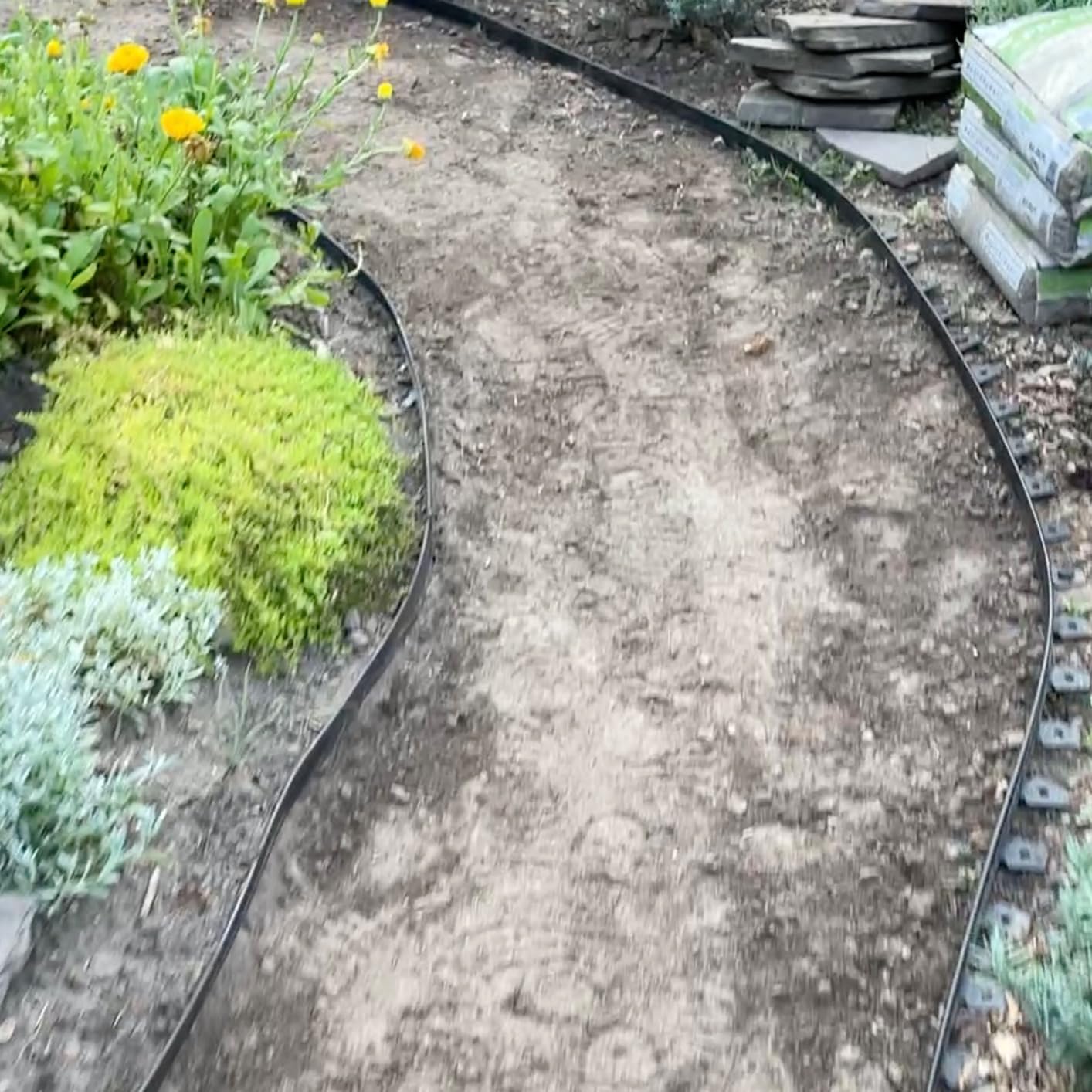
The tradeoff is containment. A 1.5 inch lip will hold bark and light mulch, but it will not stop a determined runner going underneath in an established lawn. If your problem is bermudagrass or quackgrass crossing into a bed, this is the wrong tool and I would not try to talk you into it.
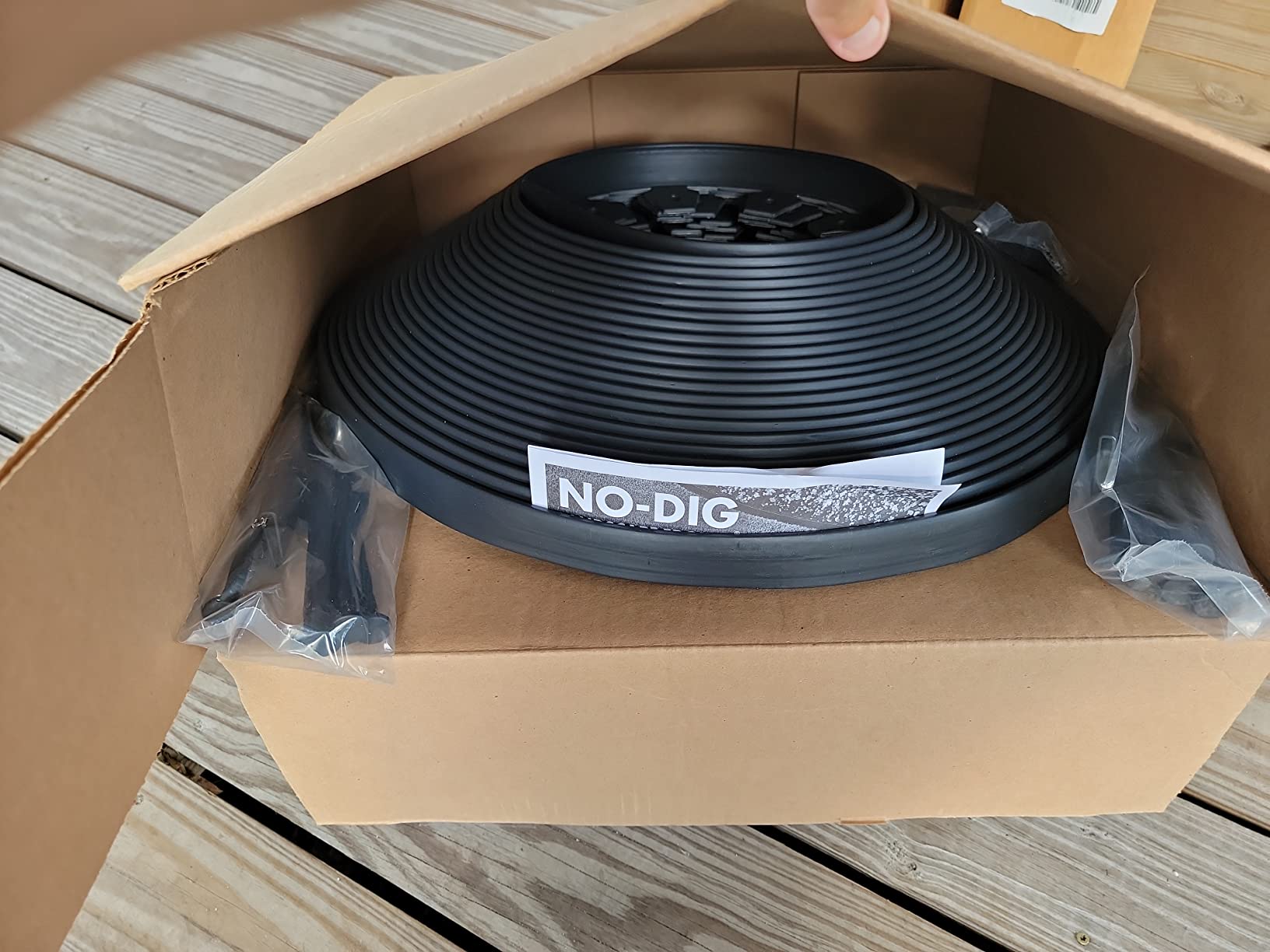
Two practical notes from the customer photos and write-ups. The coil arrives wound tight and will curl back on itself, so leave it in the sun for a while before you shape it. And you cannot cut it with household scissors or shears; sheet metal cutters or tin snips are the tool that works.
Why it earns the top spot
It has the deepest well of real installed feedback of any kit here, with a 4.5 rating across more than 11k reviews. That number matters practically, because it means somebody has already tried your soil, your curve radius and your mower height and written down what happened.
It is also the least pretentious. Nothing about it claims to be decorative or premium, and that is exactly why it disappears into a bed and does its job season after season.
When to skip it
Skip it if you need a visible border, if you are holding back 3 or more inches of mulch or rock, or if grass invasion is the reason you are edging in the first place. Buy a taller profile for those jobs.
Skip it too if you have hard, rocky ground and expect the supplied plastic spikes to survive. They will not, and the fix is a pack of 8 inch galvanized tie nails rather than a different brand of spike.
2. EasyFlex Heavy Duty 100 ft Kit – the thickest plastic in the group
EasyFlex Heavy Duty No-Dig Edging Kit – 100ft., Black
100 ft of 1.7 in tall edging
40 eight-inch anchoring spikes
5 connectors
20.5 lb coil
Pros
- Thick commercial-grade recycled plastic
- Installed 100 ft solo in under two hours
- Holds 2 in of bark mulch
- Blocks weeds better than a bare dug edge
- Stands up to weekly mowing and trimming
Cons
- Heavy roll may need two people to move
- Included spikes snap on hard ground or rock
- Extra stakes are not included
- Ends can curl inward from the roll
This is the same idea as our top pick with more meat in the material and 40 spikes instead of 32. The coil is 1.7 inches tall, 1200 inches long and weighs 20.5 pounds, and the difference in weight is exactly the difference in plastic gauge you can feel when you try to bend a section.
Reviewers with trade backgrounds single it out as the easiest edging they have worked with, and the reason they give is the balance: rigid enough to hold a line, flexible enough to follow a dug bed edge. One installed 100 ft solo in under two hours, which is faster than we would have expected from something that thick.
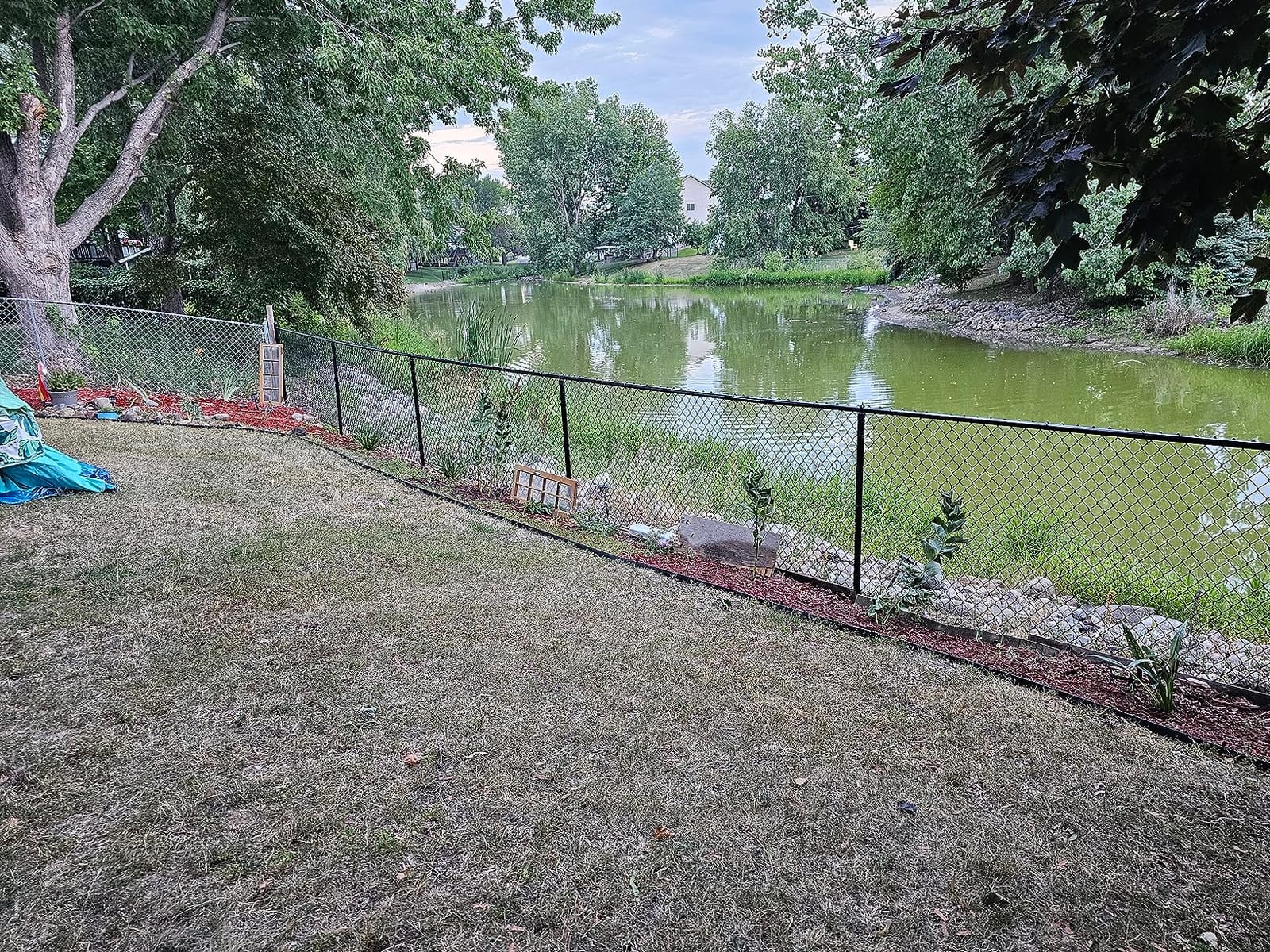
The heavy-gauge profile is what makes it a genuine mulch retainer. At 1.7 inches it holds 2 inches of bark or gravel on the bed side, and it blocks noticeably more weed growth than a hand-cut spade trench on its own.
Be honest about two things. The roll is heavy enough that a warning label ships with it and you may need a second person or to cut it into workable lengths first. And the supplied spikes are plastic, so they break when they meet a root, a stone or baked ground. Reviewers with rocky sites supplement with 8 inch galvanized tie nails and report near-zero waste after that switch.
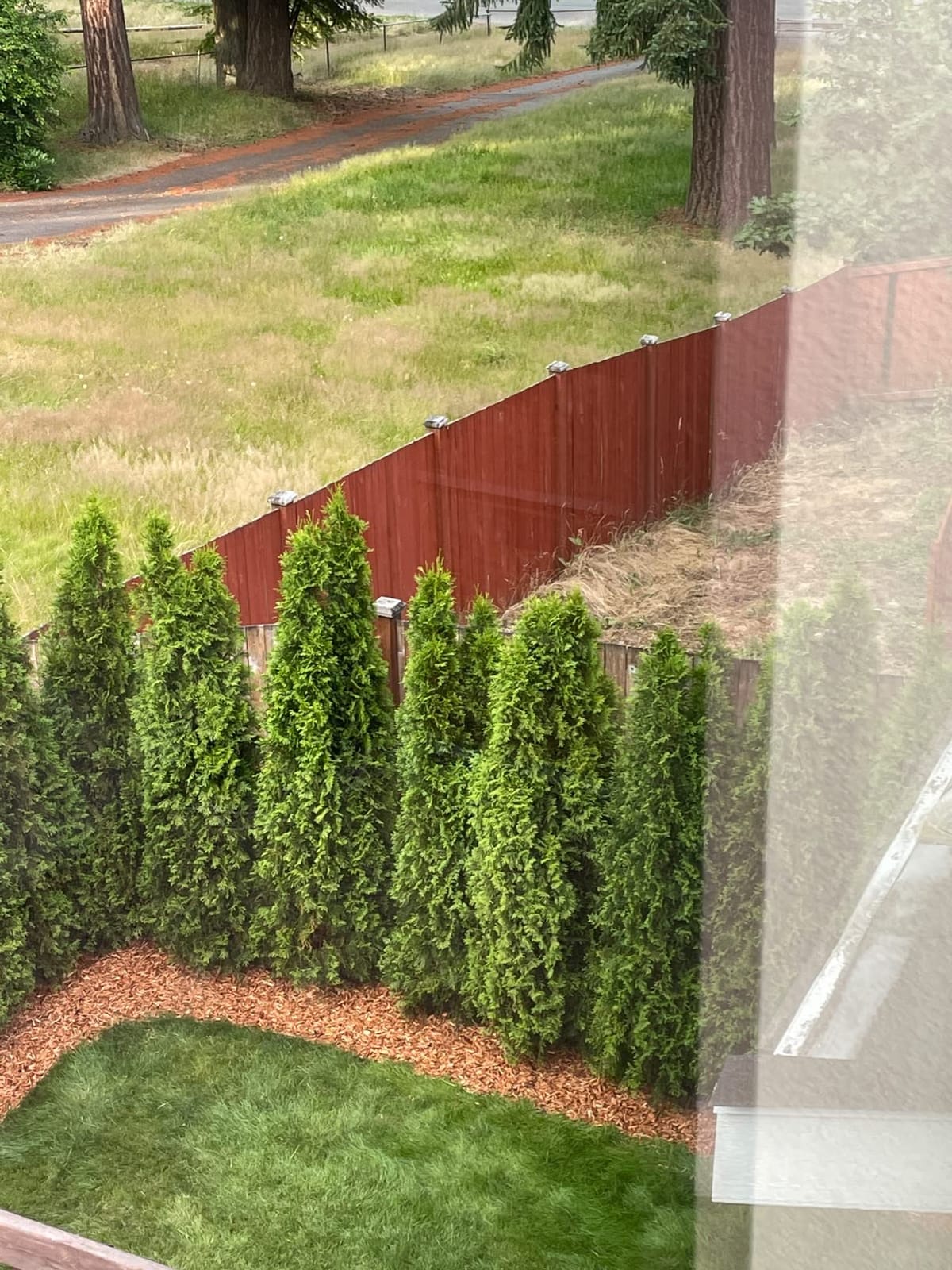
When the extra thickness earns its place
It earns its place when the bed is full. A bed with real mulch volume, a rock garden or a border that gets walked on needs a stiffer strip, and this is the stiffest plastic option we tested without moving to metal.
It is also the safer pick for steep or uneven ground than a lighter coil, because the vertical rigidity stops it folding in on itself where a thin profile would buckle.
When it is the wrong buy
It is the wrong buy if you plan a purely decorative run you can see, or if a single person has to carry a full 100 ft coil from the shop with no help and no vehicle length to spare.
It is also wrong for very tight, small-radius curves where a heavier section will not take the bend without kinking. Work it in the sun and reverse the bend at any ends that curl inward.
3. Amazon Basics 5 in x 40 ft Coil – the strongest mulch containment
Amazon Basics Flexible Landscape Edging Coil for Garden Border, Flower Beds, Lawn and Pathways, 5 inch x 40ft, Brown, 10 Stakes
40 ft of 5 in tall brown coil
10 matching stakes
483 in by 5 in
8.9 lb
Pros
- Tall 5 in profile visibly defines beds and stops washout
- Faux woodgrain brown blends with stone and bark
- Stakes survive compacted roadbase
- Cuts easily with a handsaw
Cons
- Only 10 stakes for 40 ft
- Extra stakes usually needed
- 5 in height needs a shallow trench rather than pure no-dig
- Second half of the coil can be stubborn about lying flat
Height is the reason to buy this one, and height is the thing most kits in this roundup skimp on. At 5 inches this coil will hold back a proper mulch bed or a spread of decorative rock and keep it off your path, where a 2 or 3 inch strip simply lets the wash happen.
The faux woodgrain brown finish is the quiet success. Against bark, stone and a brown mulch scheme it reads as a timber-ish border rather than a black industrial strip, and it is one of the few tall kits here that does not look like a construction product once it is in the ground.
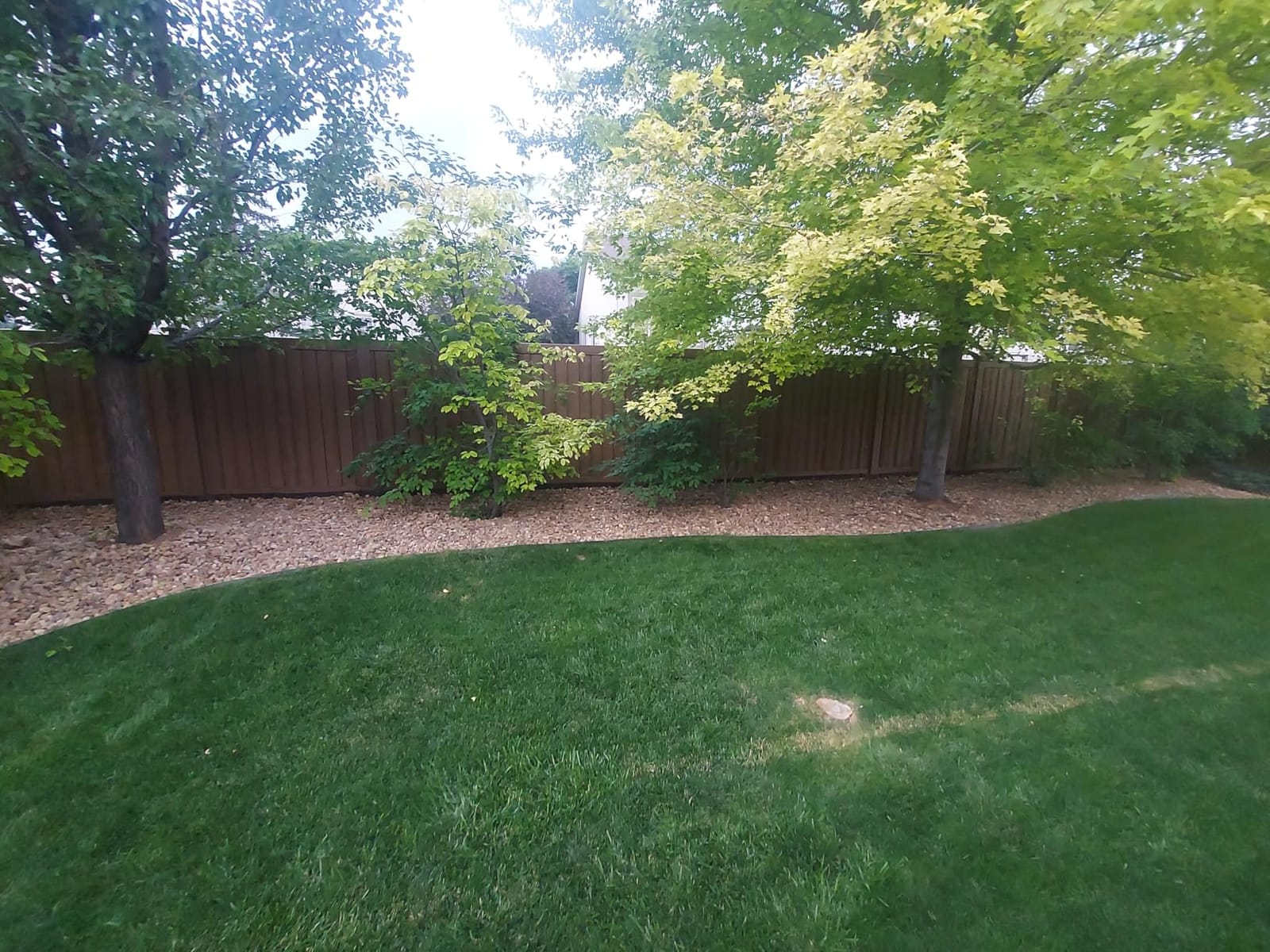
Buyers frame this as the kit that beats the big-box version of the same product type on both performance and what you pay for it. The stakes, such as they are, are sturdy enough to hammer through compacted roadbase without snapping, which tells you they are a different and tougher polymer than the light nylon spikes on some kits here.
Two cautions. Ten stakes for 40 ft is well under what a project needs, so plan on a separate pack. And at 5 inches tall this is not a pure no-dig product; almost everyone ends up cutting a shallow trench so the strip sits where you put it rather than leaning at an angle.
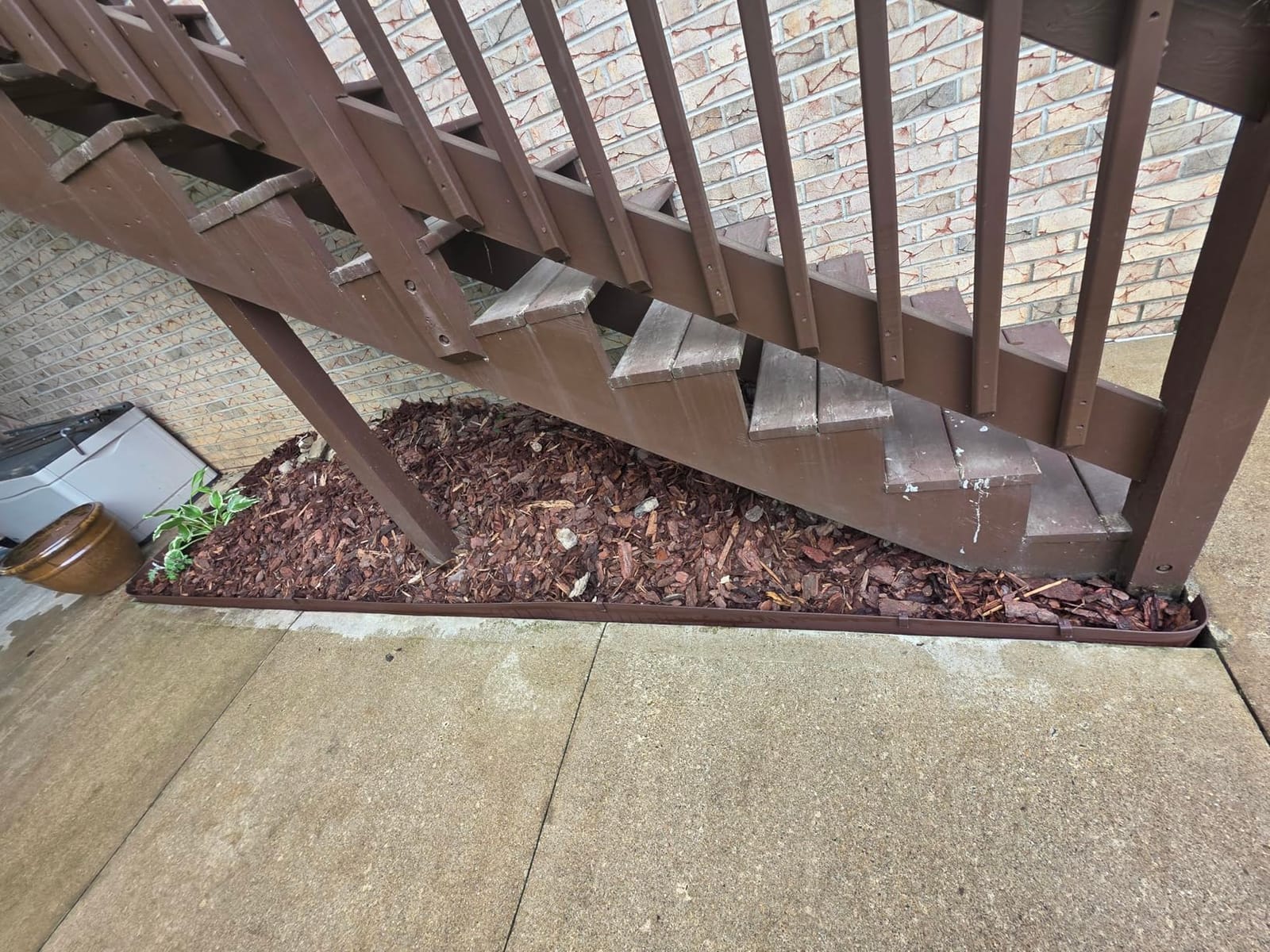
What it does that the low-profile kits cannot
It stops mulch migration. If you have ever looked out after a heavy storm and found bark across your paving, the fix is height, not a heavier stake, and this is the shortest path to it in the group.
It also gives you a real edge to trim against. With a 5 inch wall you can run a trimmer along the top and get a crisp vertical face that a flat 1.5 inch lip cannot produce.
Where it falls short
Forty feet covers a modest bed only. Most gardens need two of these or one of the 100 ft coils, so check your perimeter before you commit to the tall option.
A minority of owners report the plastic degrading after a year of direct sun and losing its line. If your bed gets no shade at all, that is a real risk worth weighing against a steel profile.
4. EasyFlex Adirondack 15 ft Kit – the decorative picket border
EasyFlex Decorative No-Dig Landscape Edging Kit – 15 ft., Brown Adirondack
12 edging pieces covering 15 ft
Arched Adirondack picket profile
13 anchoring spikes
2.6 lb
Pros
- Arched picket profile gives a craftsman or farmhouse look
- Interlocking tabs and overlapping posts need no separate connectors
- Flexible spines follow curved designs
- No digging
- made in the USA
Cons
- 15 ft run suits small beds and tree rings
- Heavier 2.6 lb unit slows long runs
- Not suited to wanting an invisible or modern edge
This is the only kit here that is chosen for how it looks. The arched Adirondack picket profile reads as a designed garden element rather than a plastic strip, and if your bed is a cottage garden or a small front planter, that is worth more than another inch of containment.
Mechanically it is neat. The pieces have interlocking anchoring tabs and an overlapping post system, so joints are reinforced without you buying a single connector, and the flexible spines let you follow a curve rather than fighting a rigid panel.
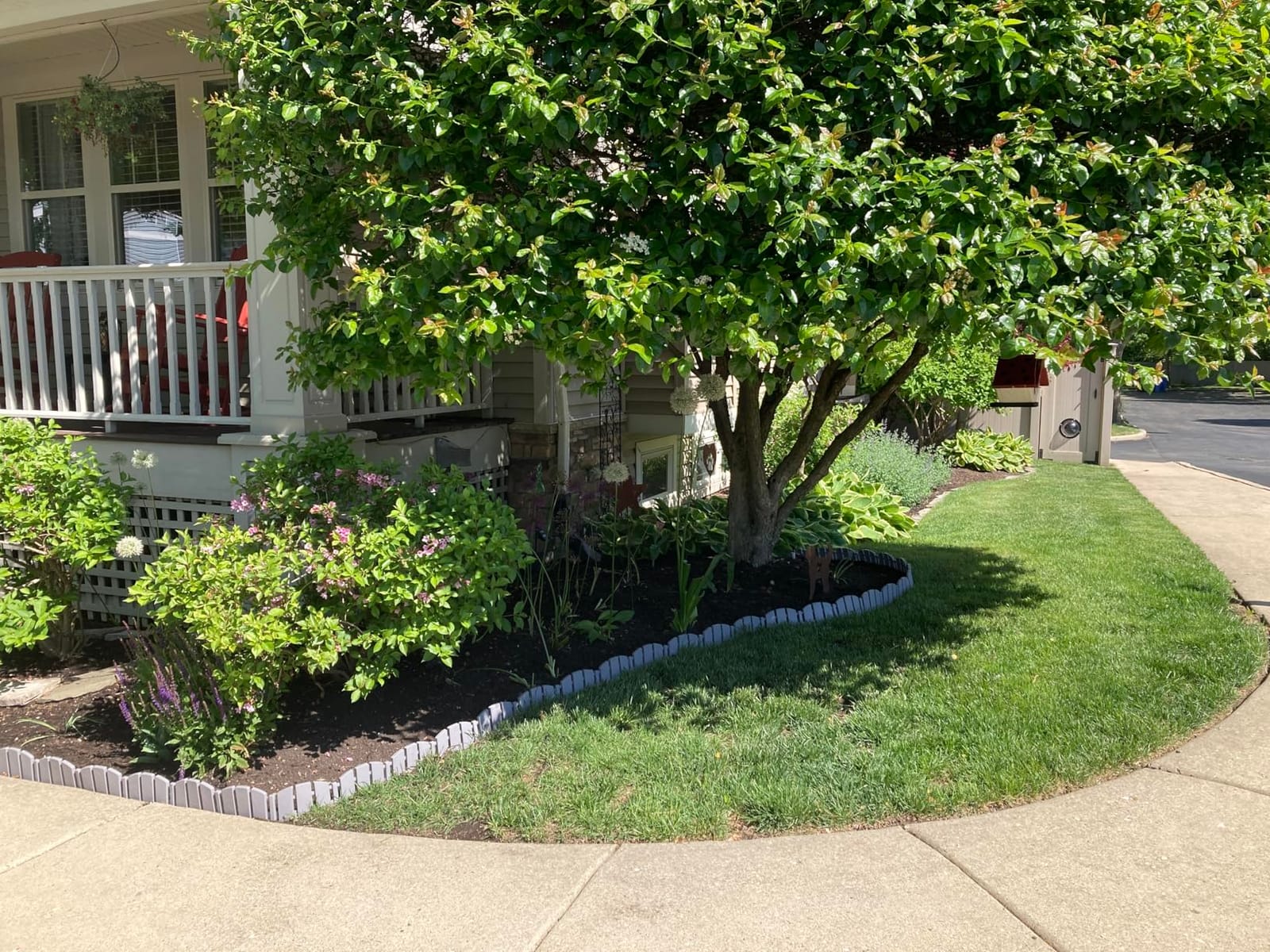
What buyers consistently praise is the no-dig install across all soil types and the made-in-USA construction, which comes with a one-year manufacturer warranty. You tap it into place and the border is done; there is no trench and no backfill stage.
The scale is the limitation, and nobody is pretending otherwise. Fifteen feet is a decorative accent kit, not a full-perimeter solution, and at 2.6 pounds for the unit it is heavier per foot than a lightweight coil, so a long run takes longer to place.
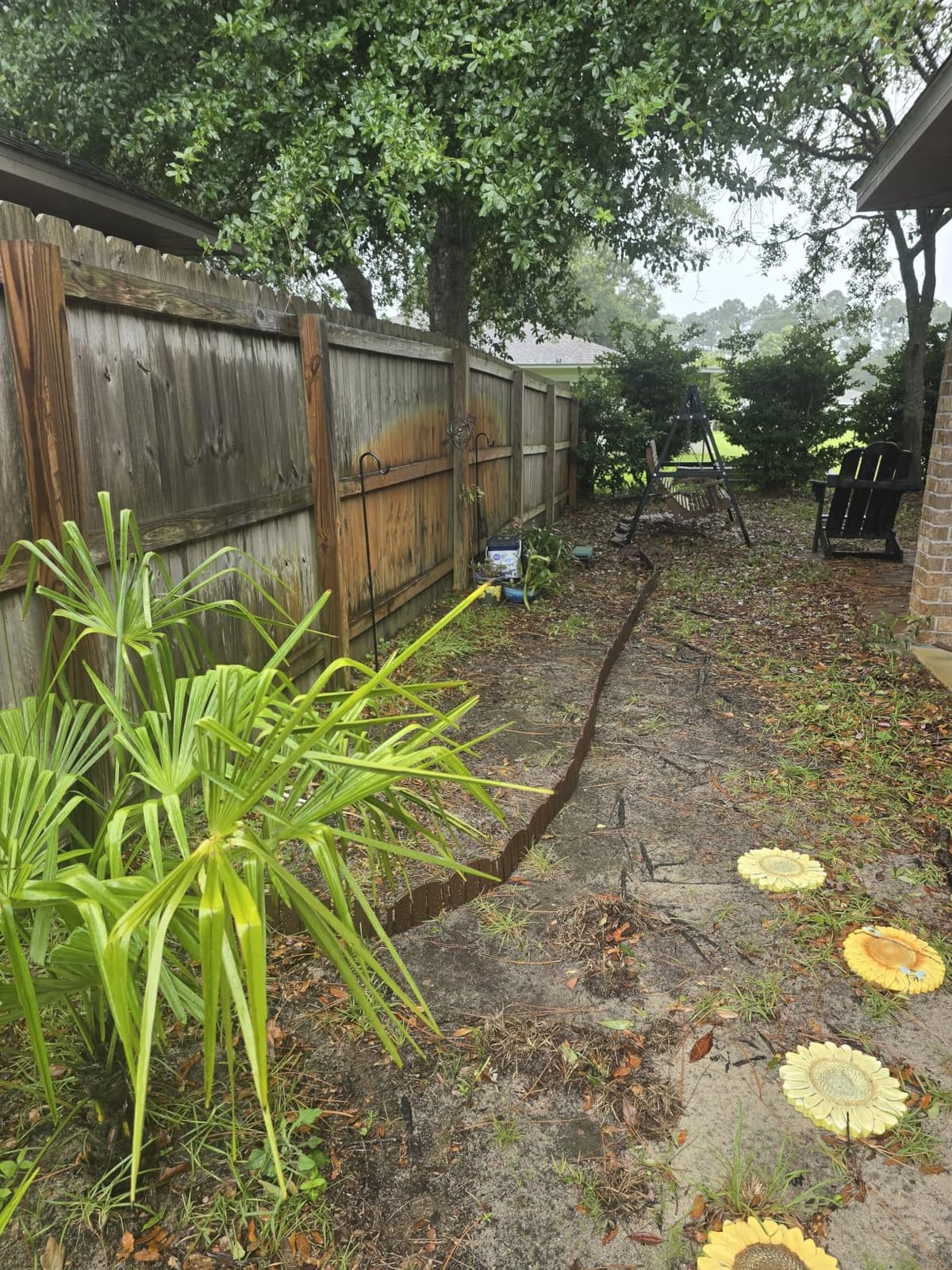
Why appearance is the deciding factor here
A black coil tells you the lawn stops and the bed starts. A picket profile tells you a gardener made a decision. If your bed sits at the front of the house and is seen from the street, the visual difference is the whole point of the purchase.
It also pairs well with a raised bed frame, where the small decorative run around the base fills the gap between a timber edge and the surrounding soil.
Where it does not fit
It is the wrong pick if you want an invisible or modern edge, or if you have a long frontage to cover and only want to buy one kit.
It is also decorative, not structural. It will define a border and stop light mulch from creeping, but it will not retain 3 inches of rock the way the 5 and 6 inch profiles do.
5. Gardzen 1.5 in x 100 ft Kit – the best stake allowance on curves
Gardzen 1.5″ x100′ Landscape Edging Kit with 120 Spikes
3 sections of 1.5 in x 33 ft
120 six-inch spiral spikes
1200 in by 1.5 in
5.46 kg
Pros
- 120 spikes included
- far more than competitors at this length
- Spikes fit in every hole so tight curves hold
- No-dig stake every 2-3 holes
- Trims and nails to length easily
Cons
- Only 1.5 in tall
- so a separator not a containment border
- Will not stop determined grass runners underneath
- Thin profile disappoints buyers wanting a taller wall
This kit exists to solve one problem that afflicts almost every other no-dig kit here: not enough stakes to hold a curve. At 120 spikes for 100 feet it is the best-supplied kit in the group by a wide margin, and reviewers say that density is exactly what lets the coil hold a tight radius without shifting or flattening.
The three 33 ft sections are pre-punched with holes at regular intervals, and the spikes fit in every one of them. That is a small design detail that turns out to matter enormously, because it means you can add an anchor wherever the line starts to wander instead of being limited to a fixed post spacing.
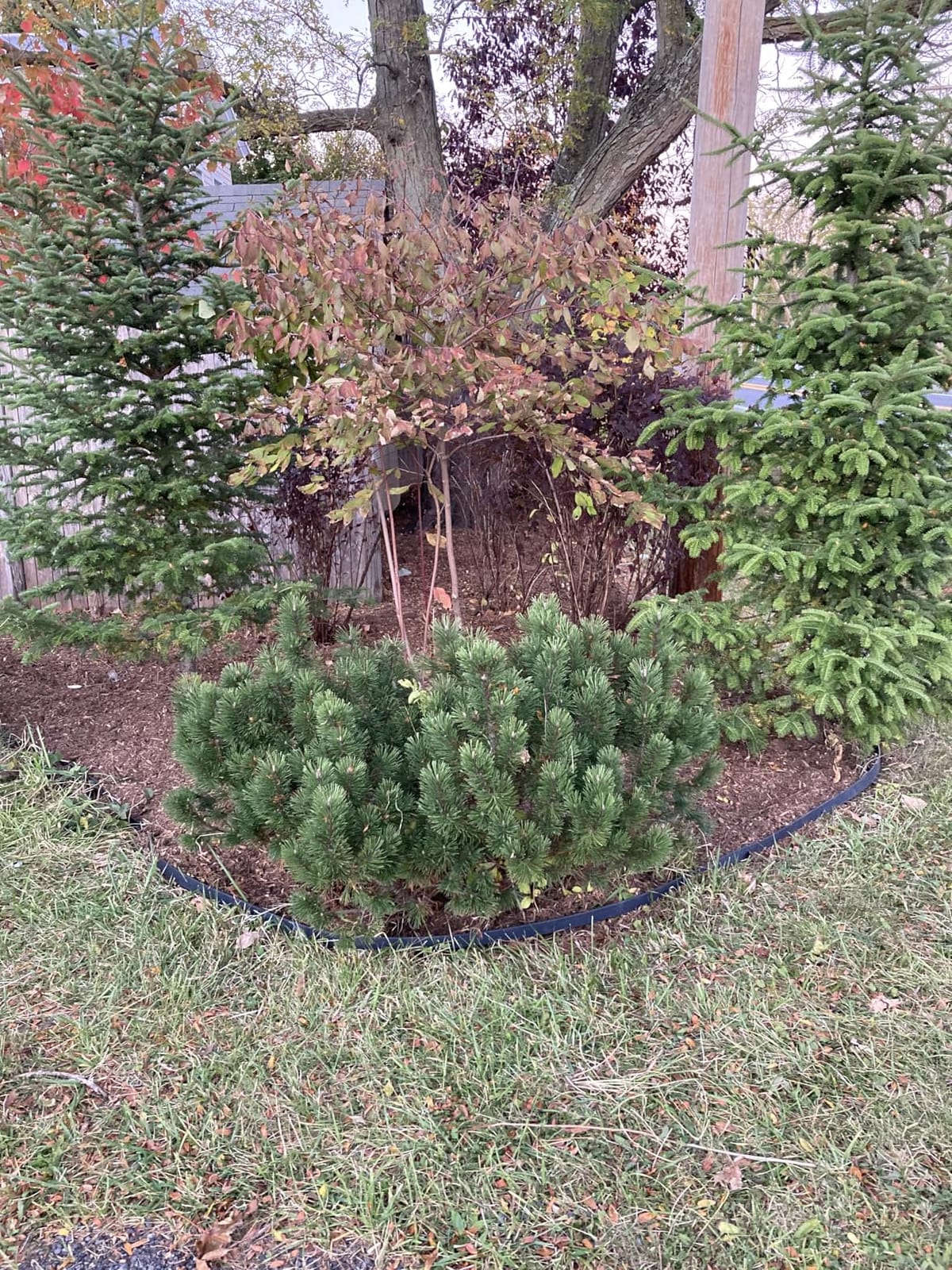
Installation is stake and shape, no trenching. The recommended technique is staking every 2 to 3 holes as you follow the contour, which is denser than most people would do on a straight run but is what keeps a curve honest through a wet autumn and a dry spring.
Be clear about the trade. At 1.5 inches it is a separation strip. It works for edging a lawn away from a bed and for tree rings, and it is genuinely the best of these twelve for holding shape on a difficult curve, but it is not a wall and it will not contain rock.
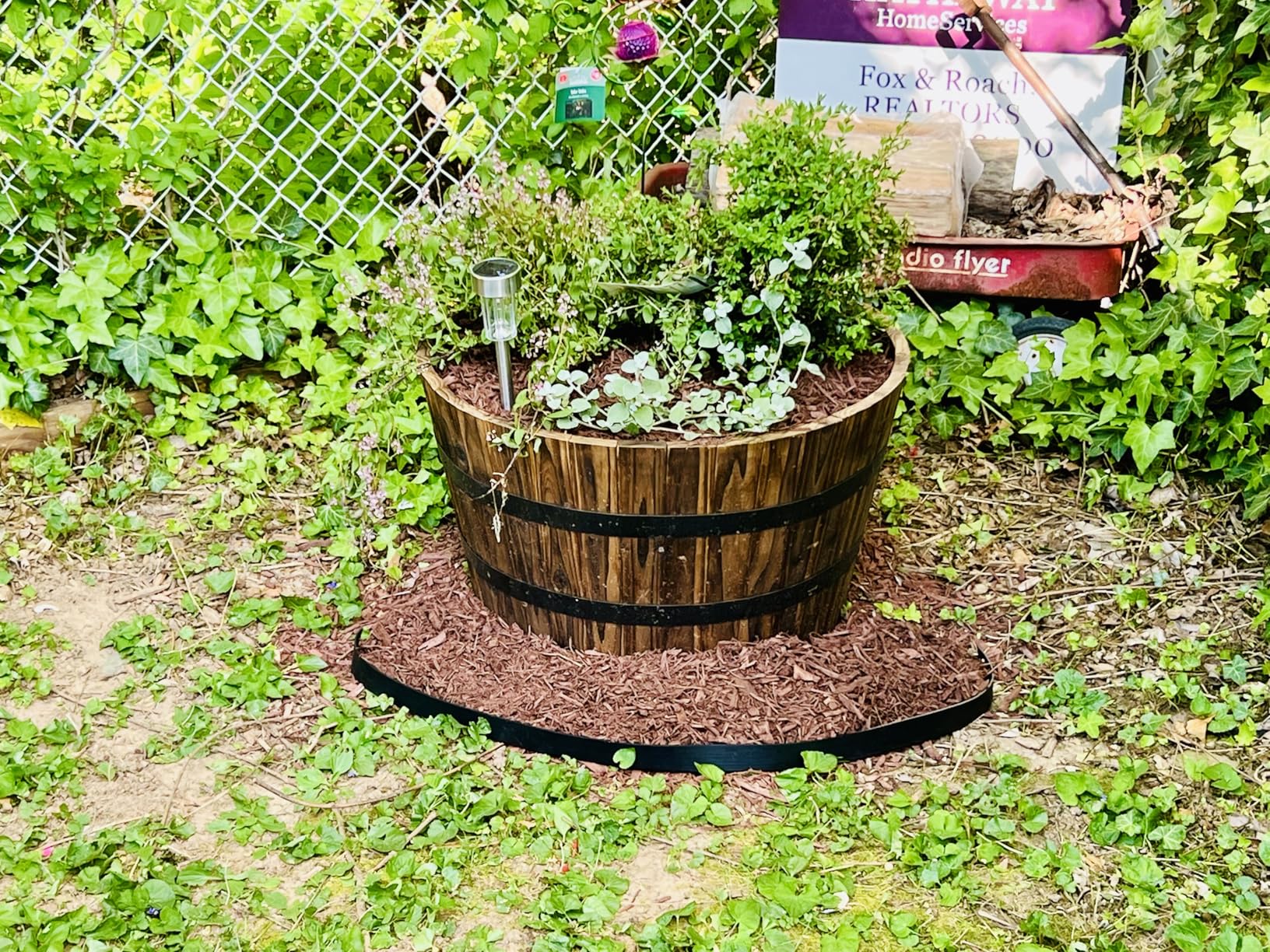
Why the stake count changes the outcome
Curves fail because the outer side of the bend pulls the strip out of the ground. Anchor density is the only thing resisting that pull, and 120 anchors for 100 feet means you can double up on every bend without a second purchase.
That also removes the most common complaint in this whole category. Owners of kits with 10 or 30 spikes almost universally end up buying a second bag; on this one they do not.
Where the thin profile bites
If your real problem is grass coming into the bed, the 1.5 inch height will not solve it. A low-profile strip slows runners rather than stopping them, and the disappointment shows up in the reviews as people expecting more separation than 1.5 inches can give.
It is also a separator rather than a retainer, so mulch at more than an inch or two deep will find its way over the top.
6. FunFanso 2 in x 33 ft Kit – the budget starter kit
2-Inch x 33 FT Landscape Edging Border with 50 Spikes, No Dig Garden Edging Lawn Edging Border Kit, Plastic Edging Border Flexible for Garden Flower Beds Lawn Yard Pathway (Brown)
33 ft of 2 in tall brown edging
50 landscape spikes included
400 in by 1.8 in
Flexible polyethylene
Pros
- Lowest cost per foot in the group with a full kit
- Polyethylene will not rust and trims to any length
- Bends into curves without cracking
- Carry straps included for transport
- 20 more spikes than other 33 ft sets
Cons
- Best suited to loose ground
- 33 ft covers a short run only
- 2 in profile gives modest visual separation
This is the kit to buy if your edging budget is small and your soil is already turned over from planting. At 33 ft of 2 inch brown plastic with 50 spikes, it is the least expensive complete kit here per foot, and the spike allowance is generous for the size.
Polyethylene does the simple things well. It will not rust, it trims to any length with an ordinary cutting tool, and it flexes into a curve without cracking or going white along a stress line. The carry straps that come bundled are a small thing that matters if you are walking it out of a store.
Reviews are consistent about where it works and where it does not. It is a loose-ground product. In firm or rocky soil the spikes will not seat properly and the strip will not sit where you put it, which is the honest limitation to plan around before you start.
At 33 ft it also covers the least border of any kit in this roundup, so a single roll handles a small bed, a tree ring or one short path run rather than a whole frontage.
Best first edging project
If you have never installed border edging, this is a low-risk way to learn the technique on a 20 ft section before committing to 100 ft of anything. The stakes do not snap, the material trims easily, and the whole kit is light to carry.
It is also the sensible pick for a rental property or a bed you expect to redo in a few years, where a permanent steel profile would be more commitment than the job needs.
Where it runs out of road
It is not a long-run solution. You will be buying more than one, and at 33 ft each, more than two, to surround a normal rectangular bed.
It is also not a visual or structural edge. Two inches is enough to separate grass from a bed, not enough to keep gravel in or to make a border look deliberate from across a lawn.
7. Land Guard 6 in x 50 ft Metal Border – the real barrier option
Land Guard Corrugated Garden Edging Border, 6″×50′ Landscape Paver Edging, Tall Landscape Edging, Fence for Garden, Flower Bed, Lawn and Landscape Edging (Black)
50 ft of 6 in corrugated galvanized steel
3D ripple profile
600 in by 6 in
10.5 lb
CNC-machined
Pros
- 6 in steel creates a genuine barrier that keeps animals out
- Galvanized and anti-corrosion coated against rust
- Light enough to bend around curves by hand
- Works as a fence base a trimmer can run along
Cons
- Needs a trench in firm soil because it has no bottom hook
- Thin sheet metal can spring back and shift without stakes
- Industrial corrugated look is utilitarian
- Some find the gauge softer than the height implies
This is the only genuine metal entry in the group and the only one that does something plastic cannot: it stops things with legs and teeth. At 6 inches tall, corrugated galvanized steel, a chicken will not walk over it and neither will most small animals, which is the situation owners actually buy metal for.
The CNC-machined 3D ripple profile is not just decoration. It adds structural stiffness to a thin sheet, gives the border a clean modern line against mulch and stone, and it is the reason a light gauge steel edge can stand 6 inches high without a rigid stake every 2 feet.
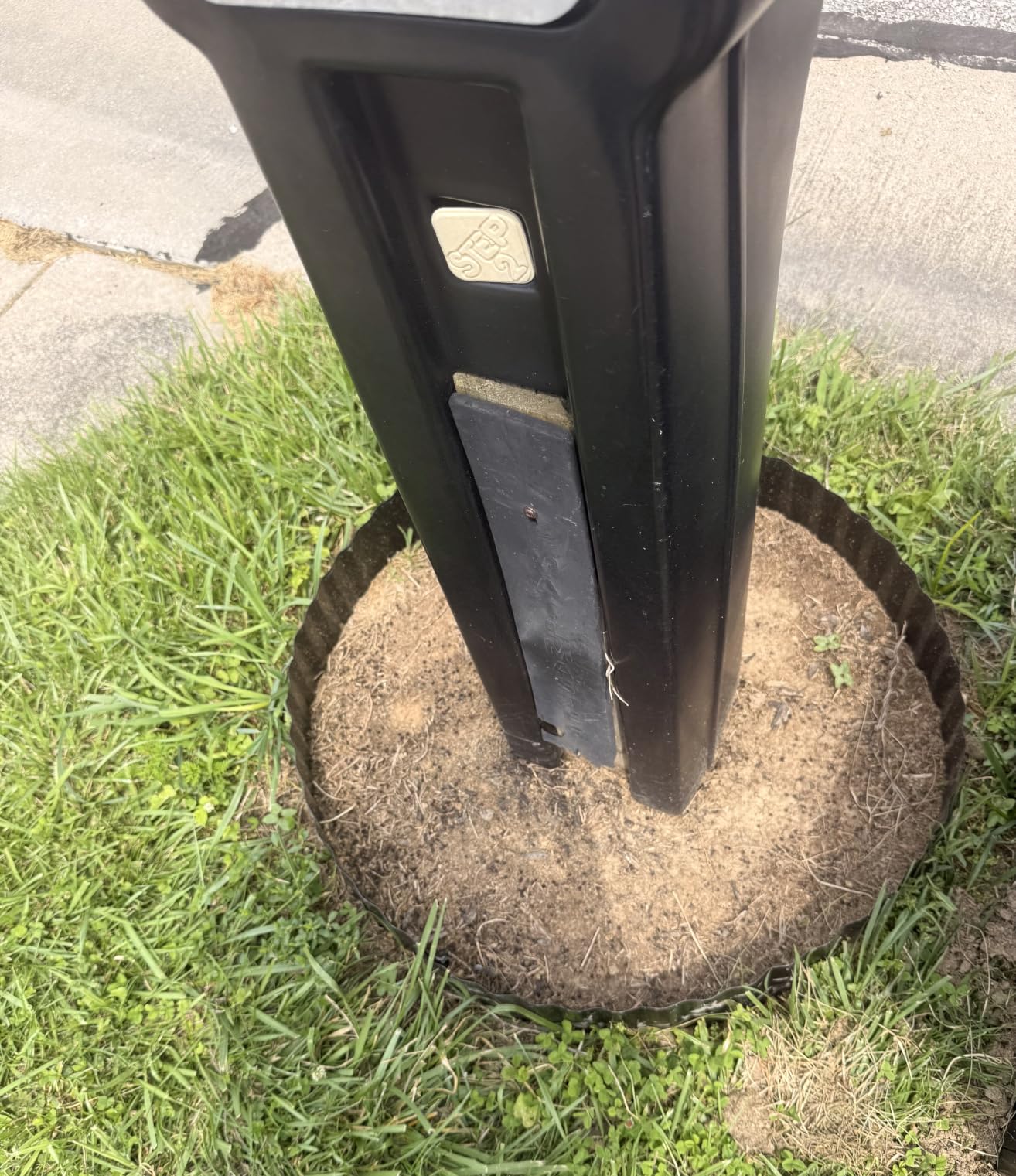
Installation is the trade-off, and it is a real one. The bottom edge has no hook to grip soil, so in firm ground you cut a trench and backfill, and in soft ground you soak the area first and push it in by hand with a half-circle edger. It is the least no-dig product on this page.
Because it cannot self-anchor, thin sheet metal will spring back, ripple and wander along a long run if you leave it unstaked. Treat it as a trench product with a bonus option for soft soil, not as a stake-in kit.
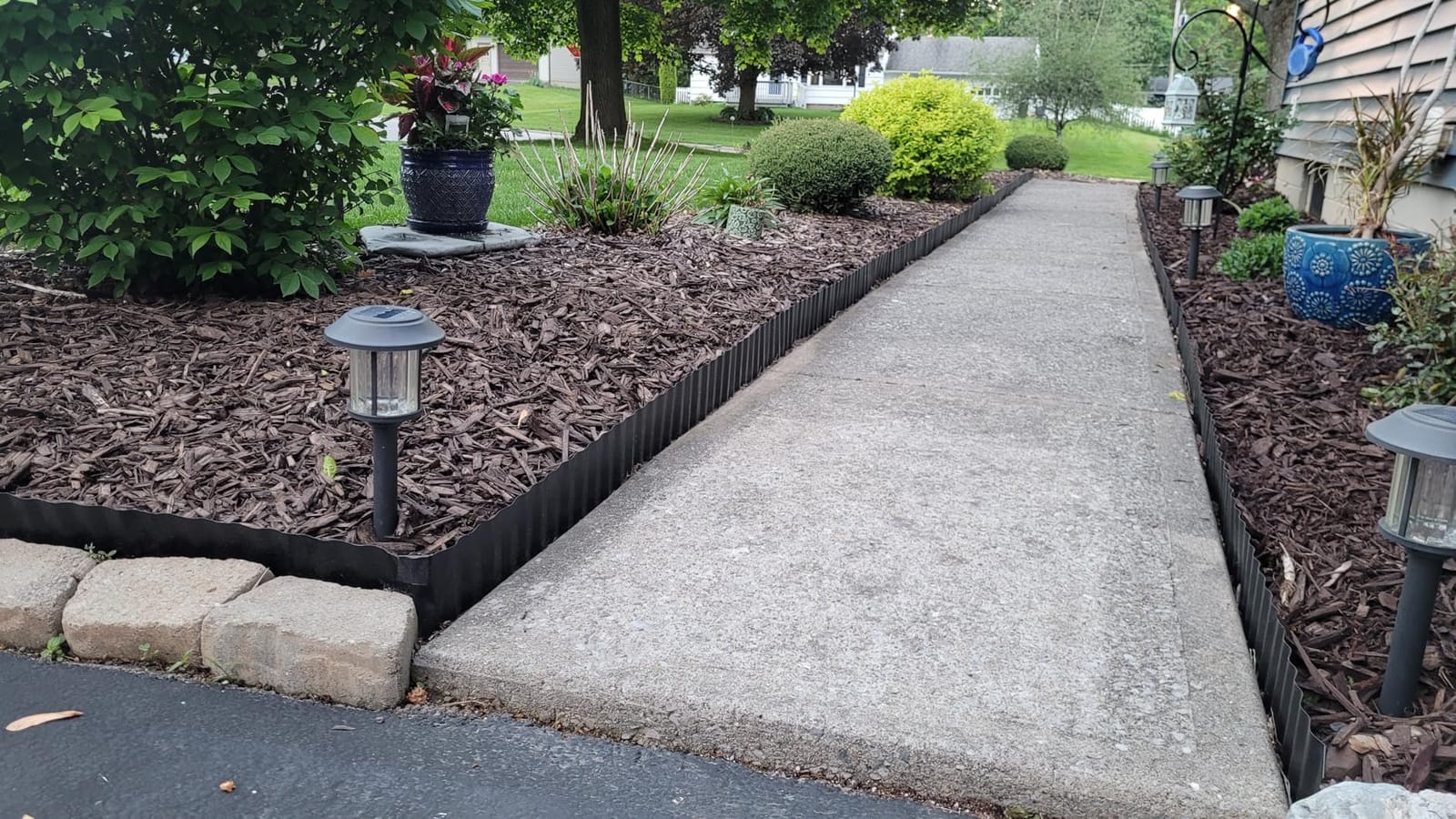
What metal actually buys you
Containment that survives being stood on. A plastic strip at this height is a suggestion; a corrugated steel edge is a fence. Chicken pens, tortoise enclosures and a bed the dog crosses are exactly the jobs where this pays for itself.
It also doubles as a fence base, which means a string trimmer can run right along it and still have a vertical face to define the cut.
Where the cost of metal shows
You give up the pure no-dig install. In firm soil this is a digging job, and the effort difference between this kit and a stake-in plastic coil is a whole afternoon.
It is also the lowest-rated product in this roundup, and the reason is gauge and colour expectation rather than failure. A few owners found the material softer and the finish lighter than the listing suggested, so if the 6 inch height is the reason you are here, check the actual steel thickness in the listing you buy.
8. shsyue 4 in x 33 ft Kit – the tall plastic edge for sloping ground
Landscape Edging 33FT,Garden Edging Borders [Extra Tall 4IN High] Flexible Lawn Edging Kit with Total 50pcs Stakes,Plastic Fence Edge DIY for Yard,Tree,Flowerbeds,Landscaping,Grass -Black
33 ft of 4 in tall black edging
50 eight-inch spiral spikes
393.7 in by 4 in
3.26 kg
HDPE body
Pros
- Extra tall 4 in profile gives a clearly visible border
- No-dig install by bending to shape then hammering stakes
- Durable PE body and nylon spikes that will not rust
- Works on uneven and sloping ground
- 50 spikes absorb the breakages that happen
Cons
- Plastic spikes bend and break in anything but loose soil
- Edging is very flexible and needs frequent staking
- Around one spike per linear foot is needed
- Hard ground can need three spikes per foot
Four inches of flexible HDPE is the sweet spot between a visible border and something you can still work around, and this kit is built for the awkward site: uneven ground and gentle slopes where a rigid profile would either float or dig in.
Reviewers confirm the 4 inch height produces a crisp, visible separation and keeps mulch and gravel off the lawn. The material will not rust, and the nylon spiral spikes are reusable rather than single-use, which is more than can be said for the light plastic spikes on several cheaper kits here.
![Landscape Edging 33FT,Garden Edging Borders [Extra Tall 4IN High] Flexible Lawn Edging Kit with Total 50pcs Stakes,Plastic Fence Edge DIY for Yard,Tree,Flowerbeds,Landscaping,Grass -Black customer photo 1](https://www.mineralwaters.org/wp-content/uploads/2026/10/B0CR2Y76RQ_customer_1.jpg)
The honest weakness is the spikes, and it is the same weakness that runs through this whole category. They snap or shed their heads in anything but loose soil, and the practical fix owners land on is to pilot with a slightly smaller metal stake first or to buy metal pins outright.
Expect to use more anchoring than the box suggests. The rule of thumb from the reviews is roughly one spike per linear foot, and on hard ground that can become three per foot, so the 50 supplied spikes cover a fraction of what the job may need.
![Landscape Edging 33FT,Garden Edging Borders [Extra Tall 4IN High] Flexible Lawn Edging Kit with Total 50pcs Stakes,Plastic Fence Edge DIY for Yard,Tree,Flowerbeds,Landscaping,Grass -Black customer photo 2](https://www.mineralwaters.org/wp-content/uploads/2026/10/B0CR2Y76RQ_customer_2.jpg)
Why this one handles a slope
Flexible plastic follows grade. A 4 inch strip driven into a run that drops a foot over 20 ft will keep contact with the soil line instead of leaving a wedge of daylight underneath the uphill end.
That also makes it forgiving on a bed edge that was dug by hand and is not perfectly straight, which is the most common real-world shape a new border has to follow.
When to skip it
Skip it if your ground is hard, dry or stony. That is exactly the condition that breaks the supplied spikes, and you will spend the money on anchoring instead of on edging.
Skip it if you want a 100 ft run in one purchase, because 33 ft means four kits for a serious border and the join lines need to be planned rather than discovered.
9. AGTEK 3 in x 49 ft Kit – the mower-friendly compromise
AGTEK Garden Edging 49FT Landscape Edging Kit 3 Inch Height with 30 Stakes
49 ft of 3 in tall black edging
30 stakes included
3 in profile
30 piece set
Pros
- 3 in height is visible enough to define a bed but low enough to mow past
- Flexible plastic holds straight and curved shapes
- Tapers neatly into soil for a clean line
- Works for lawns
- trees
- paths and patios
- Installs with a rubber mallet
Cons
- Only 30 stakes for 49 ft
- Curves need more anchoring than the box allows
- Manufacturer is an overseas OEM with no US support listed
Three inches is the compromise height, and this kit is built around it. Tall enough that the border reads as a deliberate line from across the garden, low enough that a mower deck clears it and you are not nudging every pass.
That balance is exactly what reviewers respond to. They describe the job rather than the specification: a tidy, professional-looking division between lawn, beds, trees and walkways, achieved by tapping the strip into soil gradually with a rubber mallet until it tapers in cleanly.
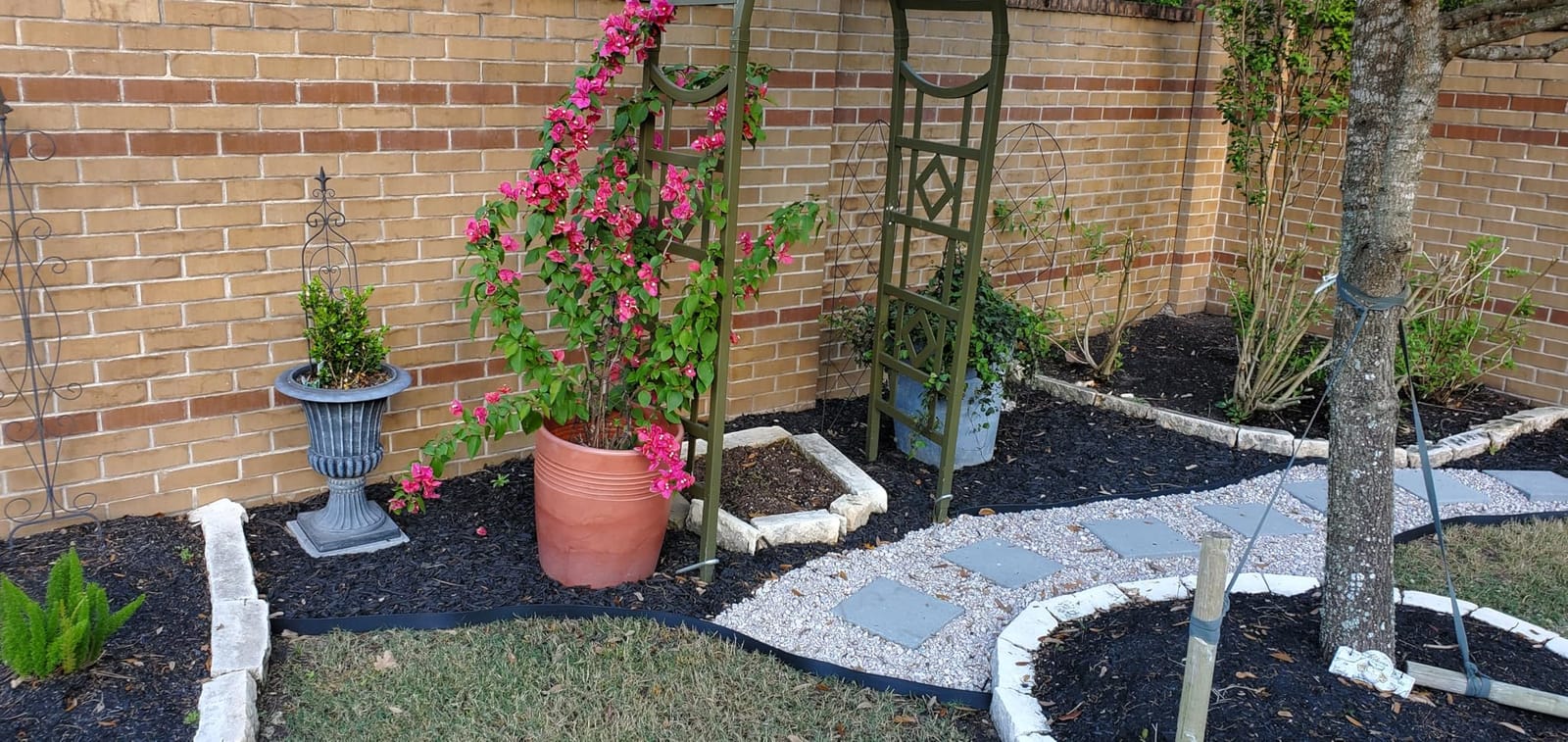
It is versatile in a way that matters for a first project. The same coil works around a bed edge, along a path, at the base of a tree or around a patio, so you can cover several small jobs with one purchase instead of a different product for each.
The gap is stake count. Thirty stakes across 49 ft is a light allowance, and the heavier curves on your layout will need more than the box gives you. Plan a supplementary pack before you start rather than discovering it halfway round a bend.
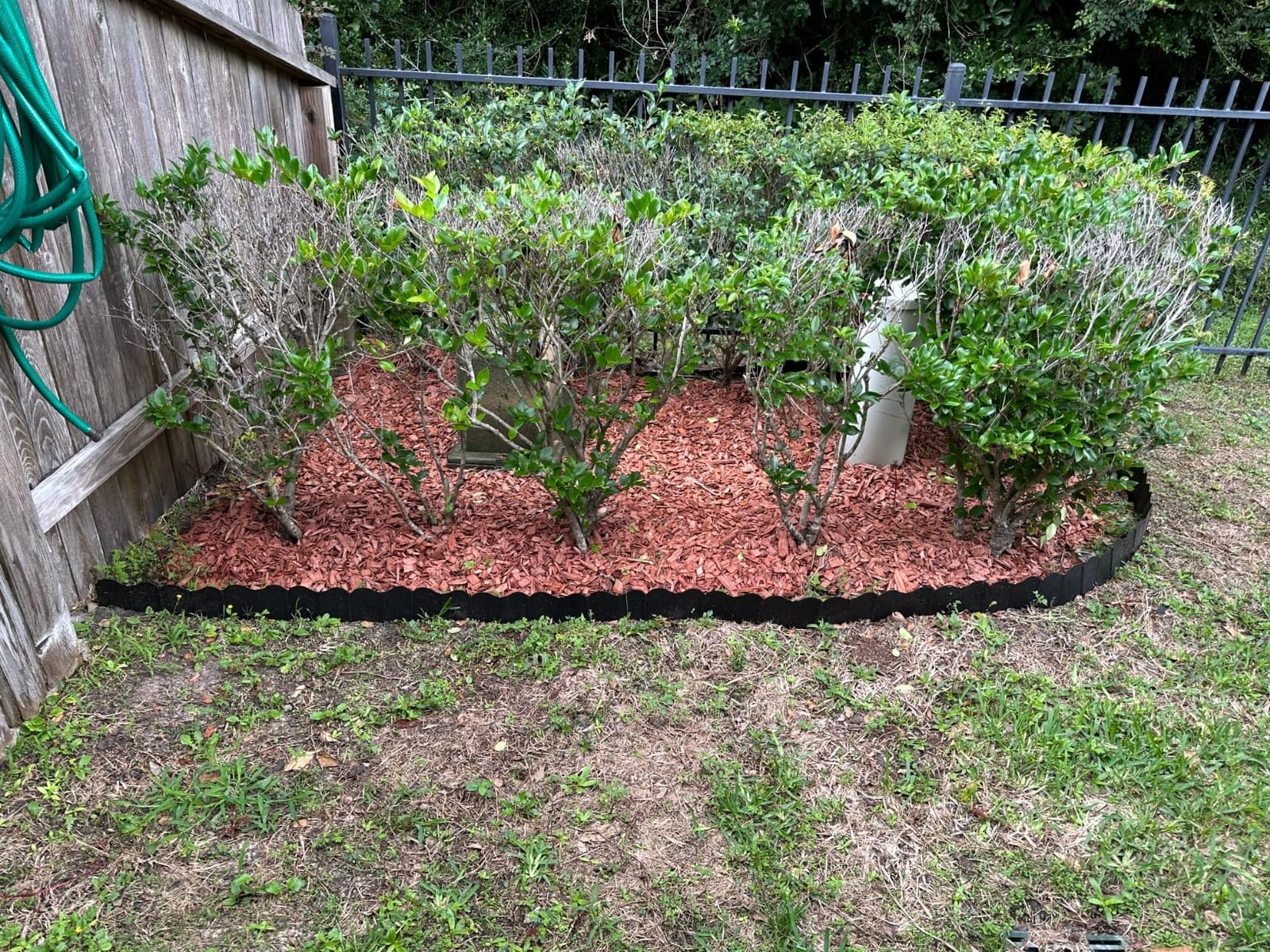
When 3 inches is the right number
It is right when you mow the whole lawn including right up to the bed, which is most lawns. Below 2 inches the border disappears; above 4 inches the mower and trimmer start fighting it every week.
It is also right when you want the edging to do a visible job without looking like a retaining wall, which is a narrow band that most buyers in this roundup are aiming at.
Where it falls down
If your soil is hard or your design is curve-heavy, 30 stakes will not carry it and the strip will flex. Either add anchors in advance or choose a kit with 120 or more.
Support is thinner than the big-name kits here. The manufacturer is an overseas OEM with no US support presence listed, so if a section arrives damaged or short, replacement is on you.
10. JERIA 2 in x 100 ft Kit – the kit for custom-shaped borders
JERIA 2 Inch Tall 100 FT Garden Edging Kit with 120pcs Spikes, Plastic Edging for Landscaping
100 ft of 2 in tall black edging
120 spikes included
1200 in by 2 in
100 ft unit
Pros
- 2 in height survives weekly mowing and string trimming
- Thick and flexible material bends without ridging
- Trims to rounds
- squares
- hearts and arcs
- 120 spikes gives far more anchors per foot
- Clean finish once installed
Cons
- Included plastic spikes are weak and break in hard or dry ground
- Hammer not included
- Some buyers broke roughly half the spikes on hard ground
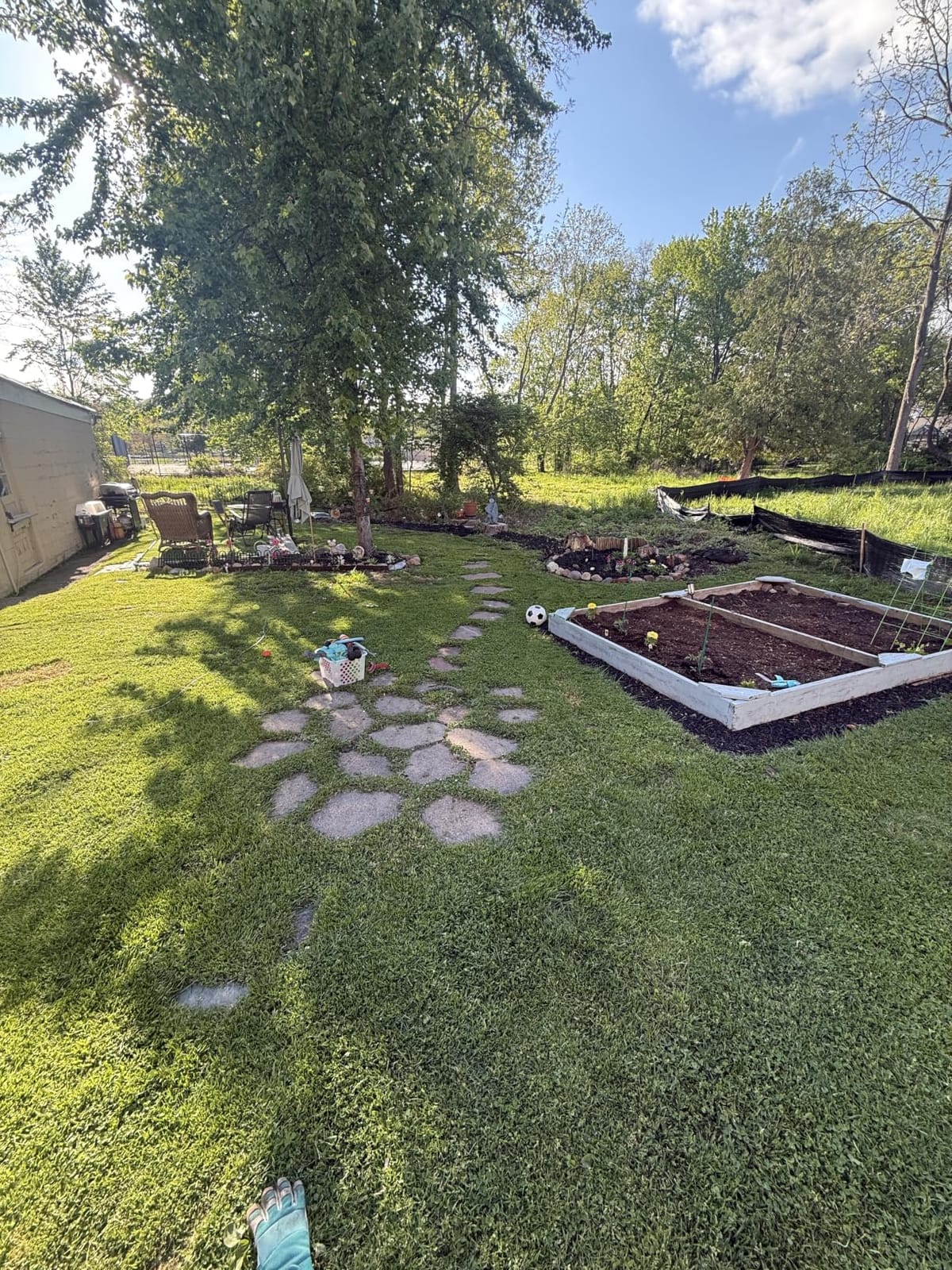
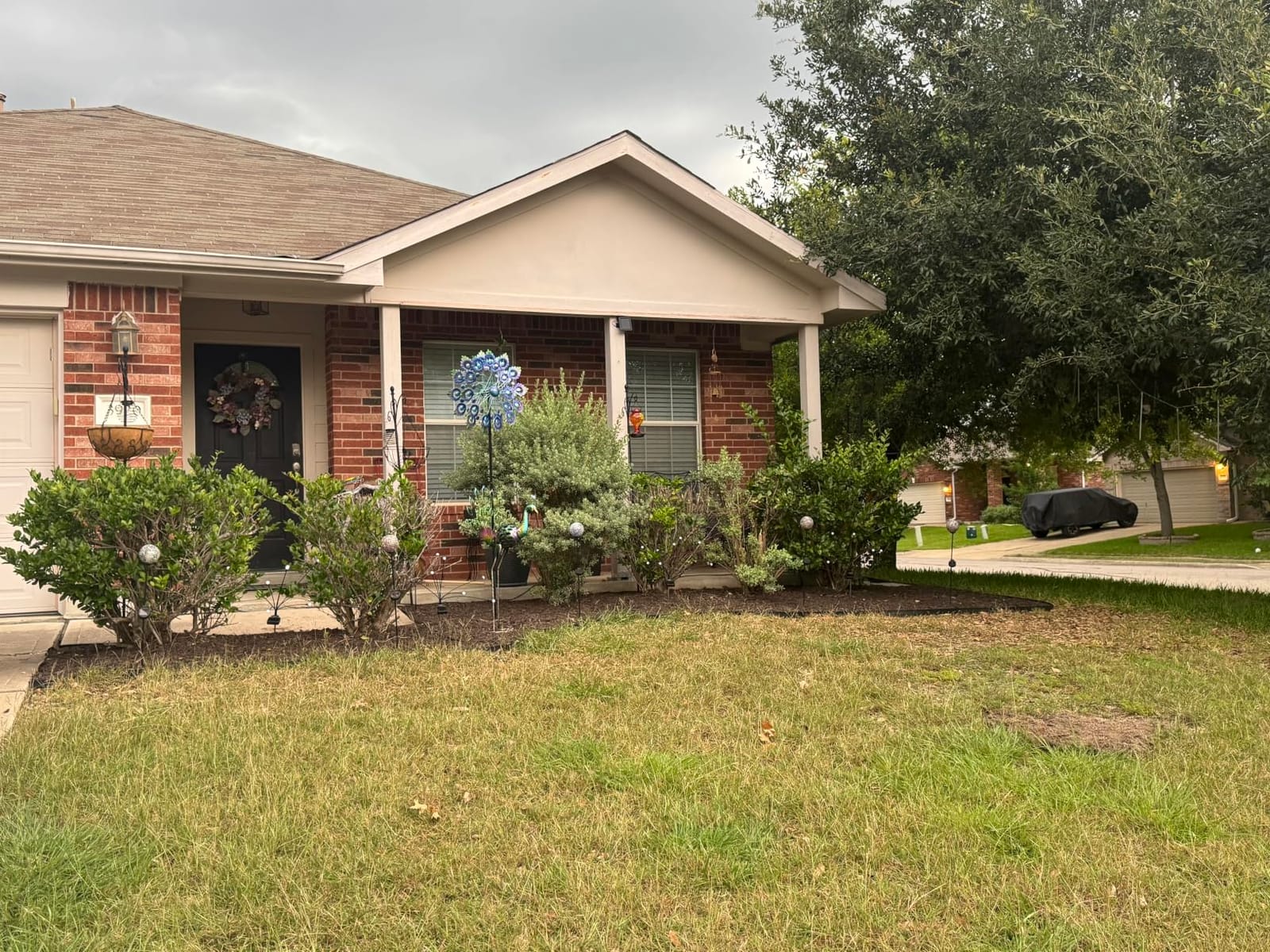
If you want a heart, a rounded square or a scalloped arc cut from a single roll, this is the one to buy. Reviewers are enthusiastic about how the material trims to custom shapes and how it bends without going ridged or stiff, which is the usual failure mode of a thicker plastic strip.
Two inches is the height most of us actually want, and the owners here credit it specifically for surviving routine mowing and trimming without shifting. The 100 ft roll covers essentially any single bed perimeter in one purchase, and 120 spikes means anchoring is not the bottleneck.
The spike problem is the one consistent caveat across the reviews. They are plastic, and on hard or dry ground buyers break a significant number, with one reporting roughly half. The fix that comes up repeatedly is to install after rain or pre-water the ground.
Also note the hammer is not included. It is a small thing, but it is the one piece of equipment you cannot improvise around, and it is the most common reason a weekend install stalls in the first ten minutes.
Why shaping ability is the differentiator
A long coil that takes a clean cut and holds a curve lets you design a bed rather than trace one. Round corners, cut-out notches and shaped motifs all come from the same roll, and none of that is possible with a rigid panel kit.
For a vegetable garden with angled corners or a front bed with a curved sweep, that flexibility removes a whole category of compromise from the layout.
Where it is the wrong tool
It will not retain anything heavy. Two inches and a flexible profile means mulch at depth pushes over the top, and it is not a barrier for animals or for grass runners.
It is also only as good as your ground condition. On hard or dry soil the supplied spikes are the weak link, so water the ground first or plan to switch to metal pins.
11. MIXC 2 in x 100 ft Kit – the heaviest anchoring package
MIXC Garden Edging Border, 100FT 2 Inch Tall Plastic Landscape Edging with 150 Stakes, Flexible Tool-Free Lawn Border for Yard, Flower Bed & Landscaping
100 ft of 2 in tall border in two 50 ft rolls
150 six-inch stakes
5.5 kg
151 piece set
Pros
- Highest stake count in the group at 150 for 100 ft
- Weather-resistant and rust-proof through rain
- snow and sun
- Holds position against mowers
- wind and animals
- About 30 minutes to set a 100 ft rock bed border
- Works on flat and uneven terrain
Cons
- Coil has strong memory and rolls back like a tape measure
- A rubber mallet alone dents the profile so use a 2x4
- Difficult to cut without a right-angle Dremel attachment
- Ships as two 50 ft rolls with no joiners
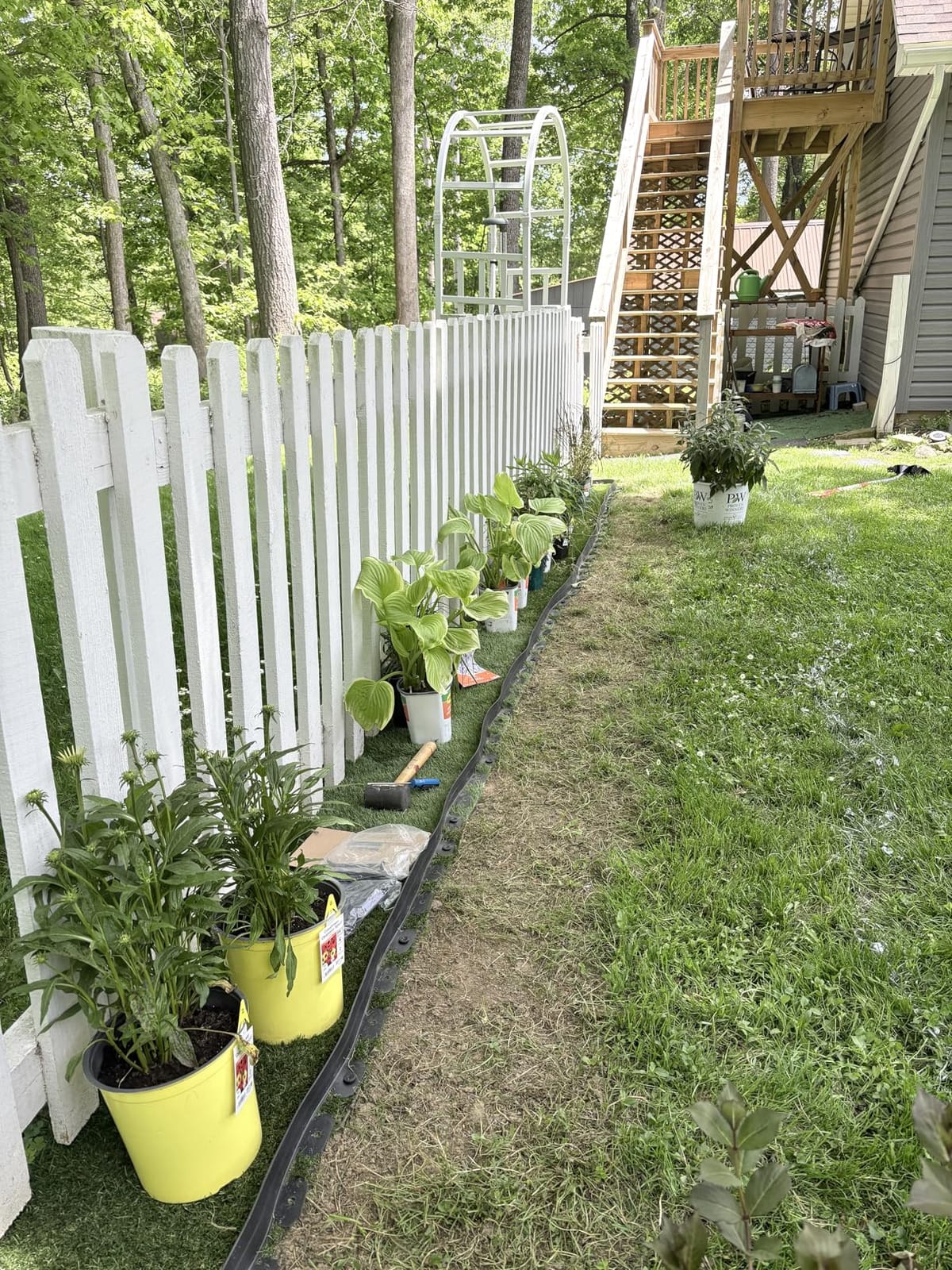
This is one of the best-rated kits in the group and the reason is unglamorous: 150 six-inch stakes for 100 feet. That anchor density is what lets a border hold around a rock bed or along a slight downhill run without any follow-up purchase, and it is the single most repeated thing owners credit.
One owner set a 100 ft rock bed border in about 30 minutes. The material is described as weather-resistant and rust-proof, holding position against lawn mowers, wind and small animals once installed, on both flat and uneven terrain.

Installation advice here is unusually practical and worth repeating. Warm the coil in the sun before working it, install on moist soil, and when you hammer the stakes in, put a 2×4 over the section rather than striking the profile directly, because a rubber mallet alone dents it.
Two configuration notes. It ships as two 50 ft rolls with no joiners included, so a run longer than 50 ft needs a joining solution you arrange yourself. And the coil has real memory and will roll back up like a tape measure if you leave it part-worked, so work it in sections.
When extra anchoring is the whole point
Rock gardens, decorative stone beds and any border on a slope need an edge that will not creep. At 150 stakes you can anchor densely enough that the strip behaves more like a fixed boundary than a spring-loaded one.
It is also the kit to buy if you know you will be installing in awkward soil and you would rather not make a second trip for hardware.
Where it is less convenient
It is the hardest kit here to cut. Owners used a right-angle Dremel attachment, which is a tool most people do not own, so budget for that before starting a project with several straight-join requirements.
At two inches it is a separator rather than a retainer, and the two-roll configuration without joiners means very long runs need planning rather than improvising.
12. Vashly No-Dig 6 in 20 ft Kit – the tall panel border for small beds
Vashly No-Dig 20ft Landscape Edging, 6 inch Tall Garden Edging Border with 20 Pcs Stakes 7.8 Inch, 20 Pcs Garden Edging Flexible for Garden Flower Beds Lawn Yard Pathway
20 interlocking panels covering 20.5 ft
6 in tall
20 seven-inch stakes
12.2 in per piece
4 lb
Pros
- Tallest profile in the group for a genuinely visible border
- Interlocking pieces bend into arcs
- ovals
- circles and hearts
- Weather-resistant material resists outdoor breakdown
- 20 stakes for 20 pieces so every joint can be pinned
Cons
- Short 20.5 ft total coverage suits small beds and planters
- Needs a trench and rubber mallet in hard ground
- Lowest sales rank here
- so fewer installed examples
At 6 inches this is the tallest border in the roundup, and it behaves more like a planter wall than a lawn edge. Each piece is 12.2 inches long and 6 inches high, they interlock, and twenty of them plus twenty stakes cover 20.5 feet.
Reviewers like the freedom of the panel format. The pieces bend into arcs, ovals, circles, hearts and other named shapes, which is more expressive than anything else in the group and genuinely useful for a tree ring or a curved front bed.
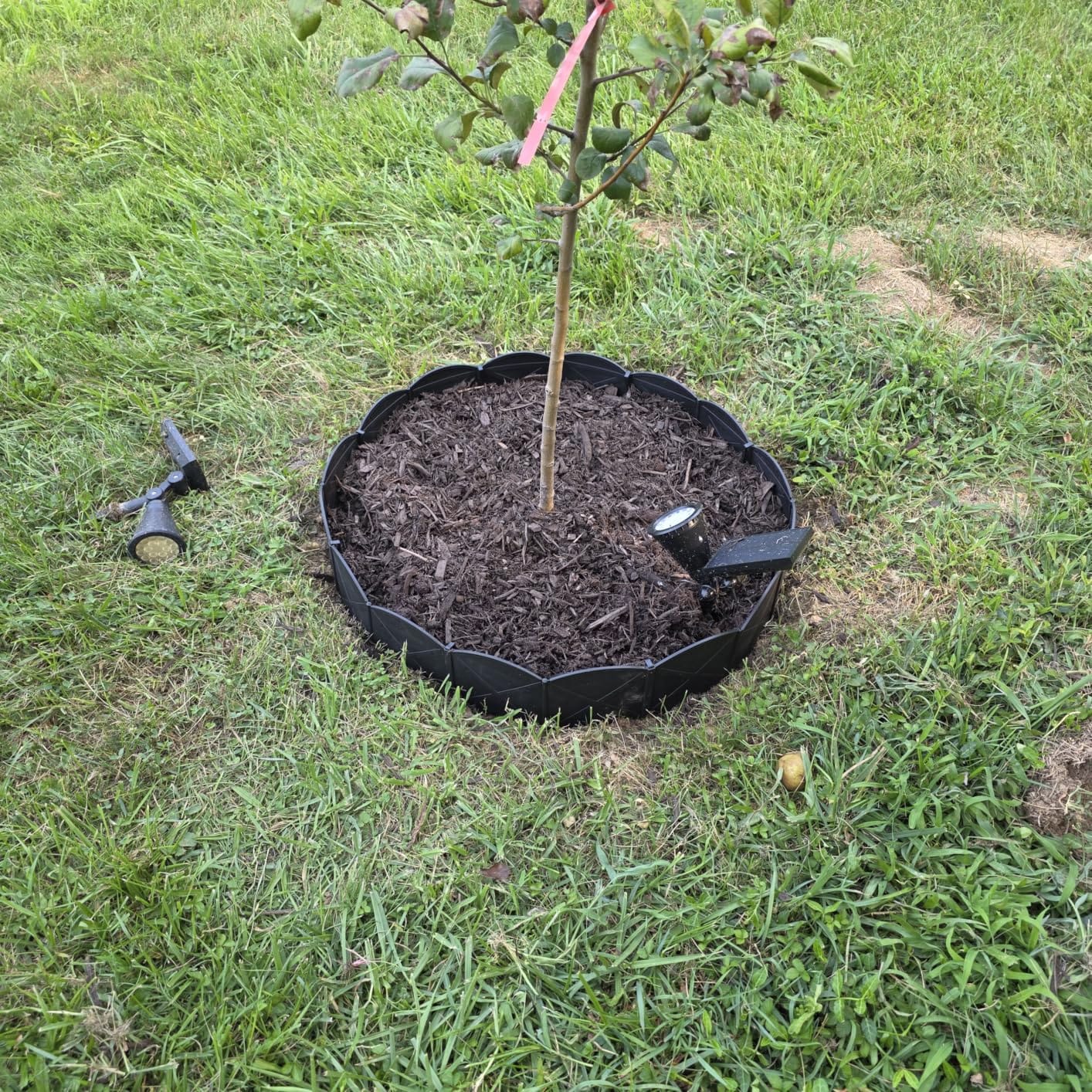
The installation method splits cleanly by ground condition. In soft ground it is a mallet and spike job with no digging at all, and 20 stakes for 20 pieces means you can pin every joint rather than every third panel.
In hard ground you will be cutting a trench and backfilling, and you will want a rubber mallet. The tall profile is what makes it worth that effort: this is the kit that actually stops bark, stone and washing ending up where they should not.
When a tall panel is the right answer
It is right when the bed is small and the border is meant to be seen. A tree ring, a front planter or a compact vegetable bed gets a real structure from 6 inches of interlocking panel where a 2 inch strip would look like nothing.
It is also the natural companion to a raised bed frame, filling the transition between the timber edge and the surrounding ground.
Where it falls short
Twenty and a half feet is the hard limit. Cover a normal frontage and you are buying several kits and dealing with joints, which defeats the interlocking simplicity that makes this kit pleasant to use.
It also has the smallest installed base in this roundup, so there is less long-term feedback on how the panels age through several winters of freeze-thaw than the 100 ft coils have.
How to Work Out How Much Edging Your Bed Needs
Most people buy too little edging and then discover it halfway round a corner. Work out the perimeter before you buy, and add 10 percent for curves, joins and the fact that you will miscut something.
For a rectangular bed, the perimeter is 2 x (length + width). A 4 x 8 ft raised bed needs 2 x (4 + 8) = 24 ft of edging. For a circular tree ring, it is pi x diameter, so a 6 ft diameter ring needs about 18.8 ft.
Convert that into kits by dividing by the coil length. A 24 ft perimeter is one 40 ft coil or a quarter of a 100 ft coil, which is why the 100 ft kits dominate owner recommendations: most real projects need more edging than the first number suggests.
Now do the stake maths, because this is where the kits fall short. A workable rule is one stake every 2 to 3 ft on a curve and every 4 ft on a straight run. A 24 ft bed with two curved ends might need 15 to 20 stakes, so a kit with 10 in the box is genuinely under-equipped for the job.
If you like the mechanical side of this, our guides on lawn aerators and lawn sweepers cover the preparation work that makes a border sit better, because compacted ground is the reason a lot of stake-in edging pulls out in its first winter.
Match the Edging Height to Your Mulch, Soil and Mowing Routine
Height should match the volume you are holding back, not how tall you want the border to look. A 1.5 to 2 inch strip separates lawn from a bed and keeps thin mulch in. A 3 inch profile defines a bed and holds a normal mulch layer. A 5 to 6 inch wall is for decorative rock, steep-sided borders and anything that must physically block spread.
The next variable is your mower. If you mow right up to the bed edge, keep the profile at 2 inches or below, because a taller strip becomes an obstacle the deck and the trimmer hit every pass. If you trim along a taller wall, run the string on top of it and the 5 and 6 inch profiles actually give you a better cut.
Soil matters more than most people expect. In loose sandy ground almost any stake holds, and in clay or rocky soil plastic spikes snap and the strip lifts over winter freeze-thaw cycles. If your soil is heavy, plan on metal tie nails rather than the supplied plastic ones.
Finally, match the border to the problem you are solving. A low profile is right for tidying a bed edge. A tall profile is right for mulch washout. Nothing in this roundup is a root barrier, so if grass runners are crossing into the bed, expect a physical barrier like landscape fabric rather than a higher lip.
How to Install a No-Dig Edging Kit
Tools: a rubber mallet or dead-blow hammer, sheet metal snips or a right-angle Dremel for cutting, a tape measure, a shovel for backfill, and a straightedge or hose to lay the line. Work on moist ground if you possibly can, because a baked clay surface is the fastest way to waste a box of plastic spikes.
Mark your line first. Lay a hose or a straightedge along the intended border and step back to look at it. Edging installed in a hurry is the reason people end up with a border that does not look straight, and no amount of staking fixes a bad line.
Then let the coil relax. Set the roll in direct sun for a while before you shape it. Coiled edging with memory will fight you, and the fix is heat and time rather than force.
Lay it at the height you want above grade. A small lip is invisible and mower-safe; a tall lip looks like a wall. Set the depth once, along the whole run, rather than adjusting it section by section.
Stake as you go, from the inside edge. Drive the spike through the pre-punched holes, working the shape as you go rather than staking after the fact. On curves, use the holes densely; the outer side of a bend is what pulls a strip out of the ground.
Backfill and tamp the soil against the bed side of the strip. This is the step people skip and it is the one that stops the edging flexing under a mower deck or a wheelbarrow.
Finish with a mow test. Run the mower or trimmer along the line the way you normally would. If the deck catches, the profile is too tall or too loose, and it is a two-minute fix now rather than a season of ragged edges.
Common Mistakes That Undo a Good Edging Job
Sparse staking on curves. This is the most common failure and it is also the most avoidable. A straight run holds at 4 ft spacing; a tight curve needs an anchor every 2 to 3 ft or the bend will flatten by August.
Installing in dry, baked soil. Edging laid into hard dry ground pulls loose or fails to seat at all, and the spikes are the part that fails first. Install after rain or water the ground the day before.
Buying height for looks instead of volume. A short lip looks tidy and then mulch spills over it all season. Decide how deep your mulch or rock actually is, then pick a height to match.
Ignoring the mower path. A vertical plastic border catches mower decks and string trimmer heads, and the result is a ragged lawn edge that gets blamed on the edging rather than on the height choice.
Trusting the included stake count. Included counts are consistently short of what a project needs. Assume you are buying extra anchors and plan for it in your budget.
Forgetting expansion. Plastic edging moves with temperature and frost heave lifts a shallow strip out of the ground over winter. Firm backfill reduces movement, but leave room for the line to shift rather than pinning it rigidly.
Frequently Asked Questions
What type of edging is best for a garden bed?
For most garden beds, a 2 to 3 inch tall no-dig plastic coil with enough anchoring spikes is the best balance of price, install speed and appearance. A 1.5 inch profile disappears into the lawn and is safest for mowing, while a 5 to 6 inch profile is the right choice when you need to hold back mulch or decorative rock or contain animals. The material matters less than the height matching the volume you are containing and the stake density along your curves.
What is the best garden edging to keep grass out?
No edging above ground fully stops grass runners, because most species creep underneath a shallow strip. What height does buy you is a barrier the roots have to grow around and a visible line you can cut against. For an established lawn with aggressive spreaders such as bermudagrass or quackgrass, the more effective approach is a taller profile plus landscape fabric under the mulch, because the fabric is what the roots cannot cross.
Is plastic lawn edging any good?
Yes, for the majority of residential jobs plastic edging is the practical choice. It will not rust, it flexes enough to follow curves and tree rings, it installs in an afternoon without a trench, and the low-profile versions sit below mower deck height. The honest limitations are spike strength on hard ground and the short height, which means it separates and defines rather than contains. A 100 ft coil with 120 stakes addresses both concerns better than a short coil with ten.
What do professionals use for landscape edging?
Professionals working on larger jobs usually specify steel edging, either galvanized or weathering steel, driven into the ground with a mallet and a wood block because the serrated bottom edge grips the soil on its own. For small residential beds where speed matters, stake-in plastic or rubber coil is the norm, on the basis that a defined edge the homeowner installed themselves beats a steel one they never got around to. Many landscapers in forums also rate a hand-cut spade trench as the cheapest and hardest-wearing option where the soil is workable.
Do you need to dig a trench to install garden edging?
Not for the no-dig kits in this roundup. The strip is shaped on the surface and held by the supplied spikes or stakes, so no excavation is needed in soft or moist soil. The exceptions are worth knowing: any profile above about 4 inches is far more stable in a shallow trench, the corrugated metal option has no bottom hook so it needs one in firm ground, and hard or dry soil generally needs a trench or pre-soaking rather than raw staking.
Should I get an edger for my lawn?
That depends on which job you mean. A powered edger is a tool for cutting a clean seam where turf meets a path or driveway, and it needs its own separate guide. An edging kit is a border, not a machine: it holds mulch in, keeps grass out and gives your mower a straight reference line. Most lawns benefit from both at different times, but if you are installing a garden bed border this weekend, a kit is what you need and a powered edger will not do that job.
Our Verdict: Which Edging Kit Fits Your Bed
The EasyFlex No-Dig 100 ft kit is the best lawn edging kit for most garden beds, and it is our pick because it disappears, installs without a trench and has the deepest install history of anything here. Pick the Heavy Duty version instead when your bed actually holds mulch, and pick the Amazon Basics 5 inch coil when mulch keeps washing onto your paths.
Choose on two variables and everything else follows: how much mulch or rock you are holding back, which sets the height, and how much anchoring you are realistically going to do, which sets the kit. Add 10 percent to your perimeter, count a stake every 2 to 3 ft on your curves, and buy more anchors than the box gives you. The dethatcher guide is worth a read first if the ground under your border is compacted, because loose soil is what makes a stake hold through winter.