
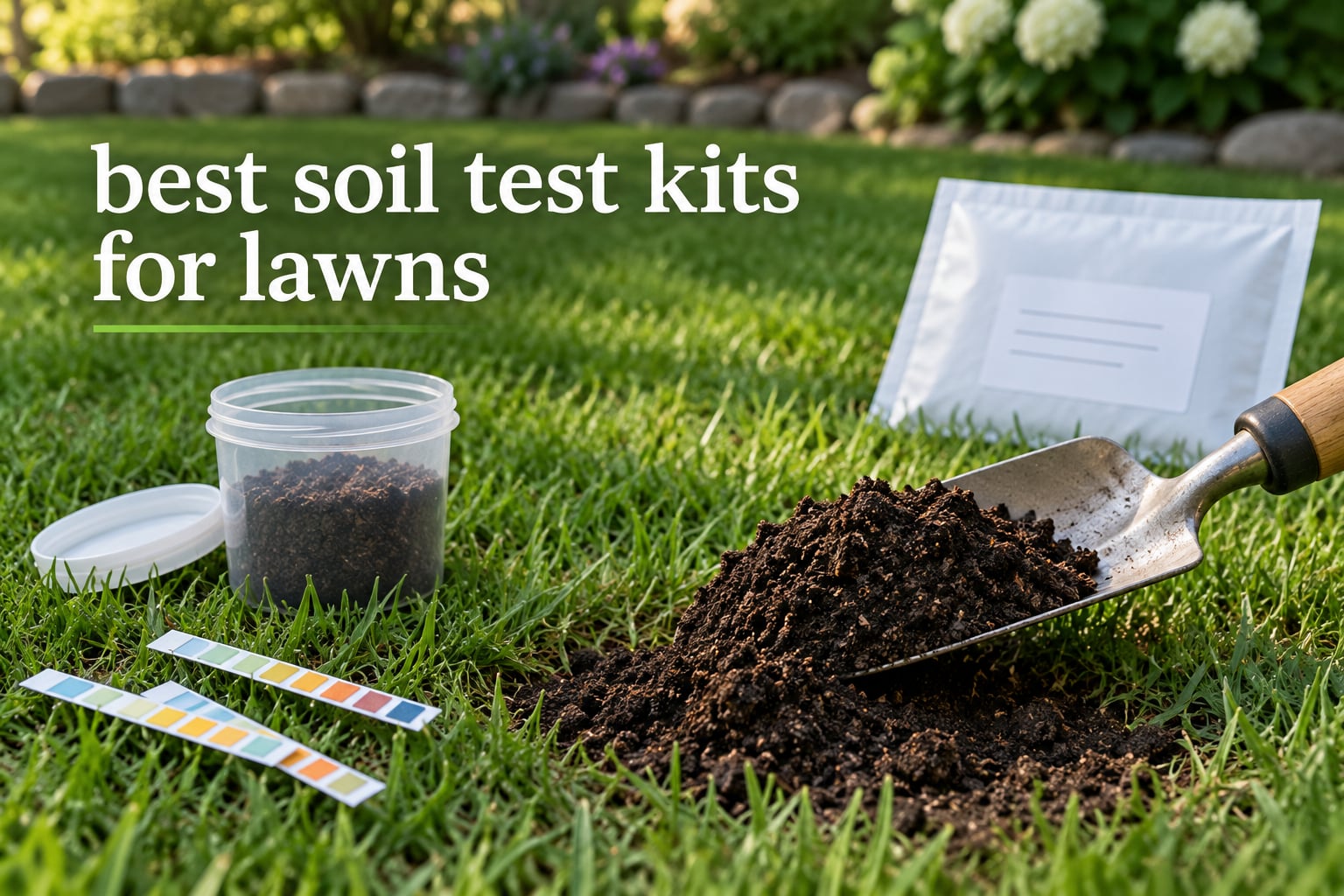
The best soil test kit for lawns is the MySoil Test Kit, a mail-in lab service that reports 13 plant-available nutrients plus pH and returns results in 6-8 days with a fertilizer prescription attached. It is the only option here that answers the question most lawn owners actually have: what should I buy, and how much of it do I spread?
That matters because a lawn almost never fails for lack of fertilizer. It fails because the pH is wrong and the nutrients you are buying never get into the grass, or because you applied four products in one season and burned the roots. A soil test is the only way to know which of those two problems you have.
We compared eight kits for this roundup, split across the three categories you will actually find on the market: mail-in lab services, do-it-yourself color kits, and pH strips. Our team worked through the sampling instructions on each one, compared what each report actually tells you, and cross-checked the nutrient coverage against what a university soil lab would run. We did not run a control sample through a state lab for this piece, so treat our accuracy read as a documentation comparison rather than a lab-verified one.
Over the years we have kept coming back to the same pattern that r/lawncare users describe constantly: a state extension lab result is treated as the gold standard, and consumer mail-in kits are treated as a convenience. We agree with that framing, with one caveat. Extension labs are unbeatable on cost and depth, but they are regional, seasonal, and slow in peak season, so for a homeowner who wants a readable answer about their own lawn this week, a mail-in kit earns its fee. Our 10 Best Drinking Water Test Kits guide follows the same house rules: name the category, say what it measures, be honest about what it cannot do.
Table of Contents
Quick Picks: 3 Best Soil Test Kits for Lawns (October 2026)

MySoil Soil Test Kit
- Mail-in lab analysis
- 13 nutrients plus pH
- Results returned in 6-8 days
- Fertilizer prescription included

Luster Leaf Rapitest 1601
- Capsule system with color comparators
- 40 tests: 10 each for pH
- N
- P and K
- No lab mailing required

Garden Tutor pH Kit
- 100 pH strips from 3.5 to 9
- AI web reader
- no app needed
- About 60 seconds per test
All 8 Kits Compared Side by Side
Everything below is organized the way the kits themselves work. The first four send your soil to a lab and get numbers back. The next two are DIY color systems you run in your kitchen. The last two are pH-only strips meant for a quick screening pass before you decide whether a fuller test is worth buying.
| Product | Specifications | Action |
|---|---|---|
| MySoil Soil Test Kit |
|
Check Latest Price |
| Luster Leaf Rapitest 1601 |
|
Check Latest Price |
 Soil Savvy Soil Test Kit Soil Savvy Soil Test Kit |
|
Check Latest Price |
 SoilKit Powered Analysis SoilKit Powered Analysis |
|
Check Latest Price |
 LaMotte Model EL Turf and Garden Kit LaMotte Model EL Turf and Garden Kit |
|
Check Latest Price |
| Garden Tutor Soil pH Test Kit |
|
Check Latest Price |
 Dewilde 140-Test Liquid Kit Dewilde 140-Test Liquid Kit |
|
Check Latest Price |
 Dewilde 100 pH Test Strips Dewilde 100 pH Test Strips |
|
Check Latest Price |
1. MySoil Test Kit: the Best Soil Test Kit for Lawns Overall
MySoil Soil Test Kit, Unlock Your Lawn & Garden Potential, Complete & Accurate Nutrient and pH Analysis with Recommendations Tailored to Your Soil and Plant Needs
13 plant-available nutrients plus pH
Results in 6-8 days
4.6 oz sample kit
Pros
- Lab analysis covering 13 plant-available nutrients plus pH
- Results back in 6-8 days
- Prescription names what to apply and how much
- Works for lawn
- garden
- compost and indoor media
Cons
- Single-use
- one sample per kit
- Mapping multiple lawn zones means buying several kits
This is the kit we keep coming back to, and the reason is not the star rating, it is the report. You mail a composite sample, and about a week later you get pH, nitrogen, phosphorus, potassium, plus ten more plant-available nutrient readings and a written set of fertilizer instructions. The recommendation covers both organic and non-organic options, which is unusual for a consumer kit.
The 4.6 average across 3,821 reviews is the highest combined rating-and-volume pairing in this group, and the review data shows a heavy five-star skew at 77%. Buyers describe the same thing over and over: the prescription let them stop buying products their soil did not need. That is the entire point of testing, and it is the feature no DIY kit in this list can match.
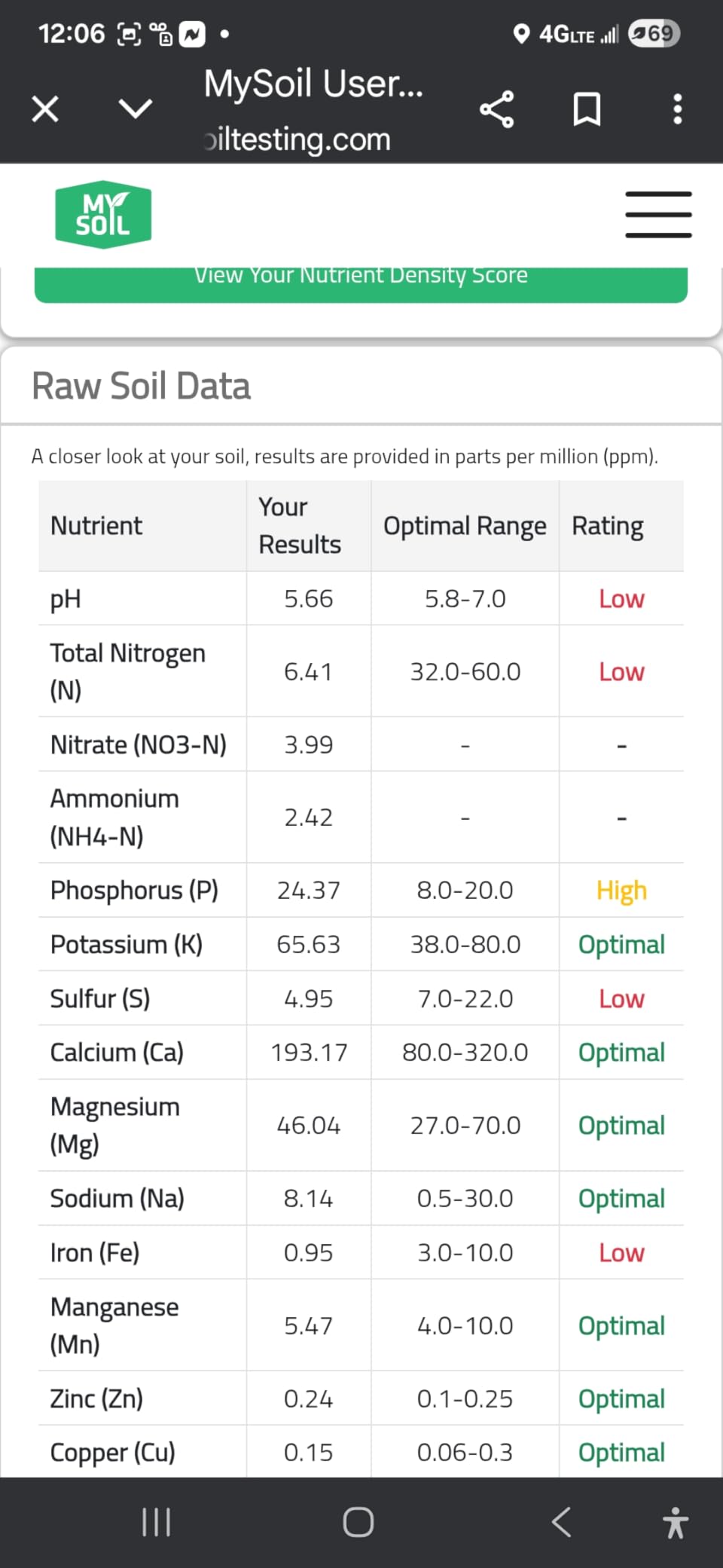
What you give up for that prescription is granularity on the chemistry. The report tells you nutrient levels and what to apply, but it does not include a buffer pH, which is the number that tells you how much lime to put down. On a lawn with mildly acidic soil, the standard 6.0 to 7.5 target is enough guidance. On a lawn that has never been limed and sits at pH 5.5, you are guessing at the rate.
Participants in a long-running TheLawnForum thread on this kit make exactly that point, listing the missing buffer test as their first reason for passing on it. They also question the absence of published studies behind the method. Whether or not you agree with that critique, it is a real limitation of the report format rather than a defect in the analysis.
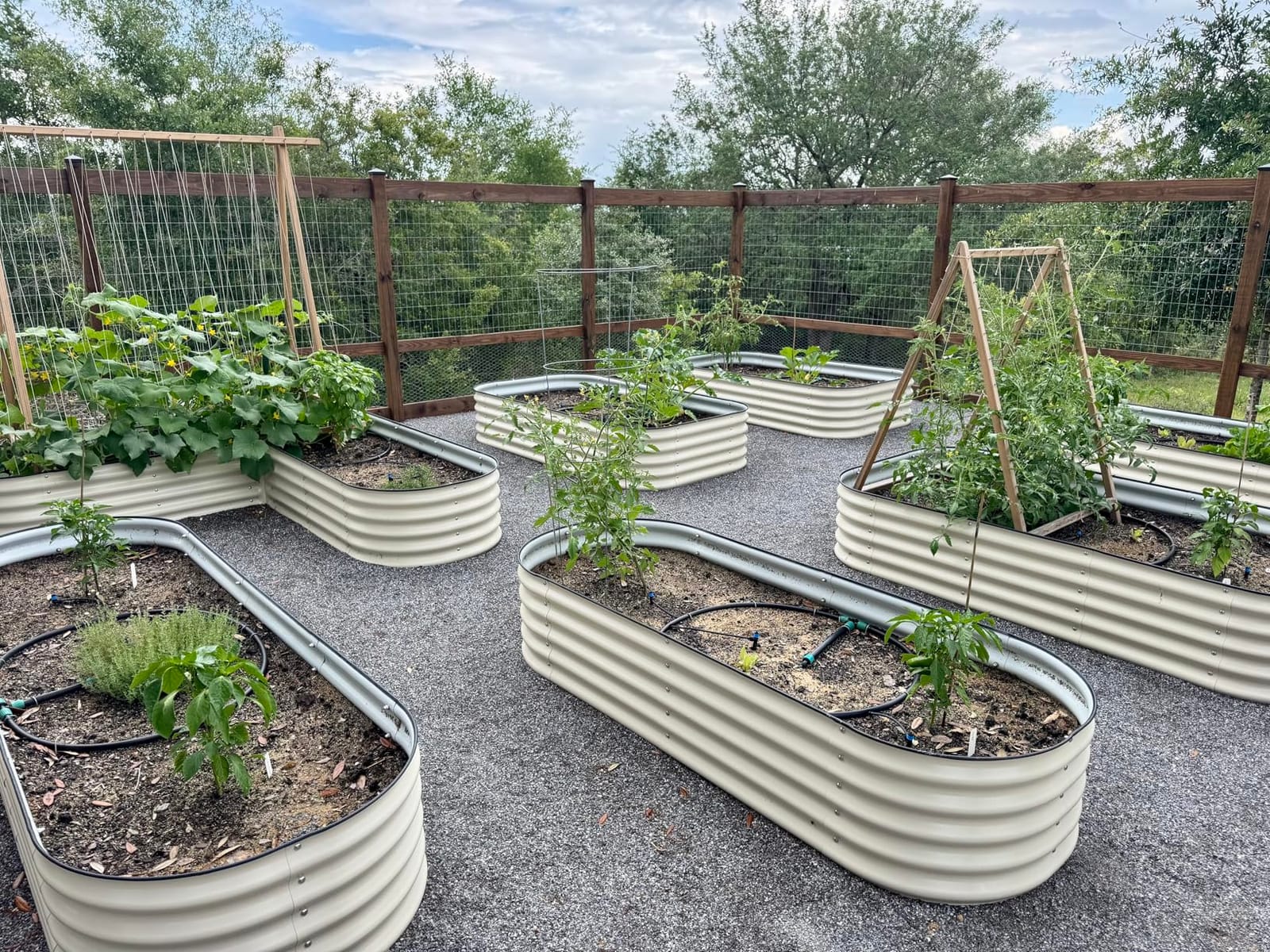
What MySoil is good for
It is the right pick when you want a single number-driven answer to a whole-yard question. Fertilizer amounts, lime versus sulfur decisions, and a plan for overseeding all come out of one report. For a lawn you maintain on a normal schedule, this is the least thinking required per unit of information delivered.
The 6-8 day turnaround is also the fastest of any mail-in option in this roundup. Users on r/lawncare describe the cycle as mail Monday, read the report the following week, and act in the same weekend, which keeps the result tied to the season you sampled in.
Where MySoil falls short
One sample per kit is the biggest practical limit. If you suspect different conditions in the front and back lawn, or across an irrigated and a non-irrigated zone, you are buying multiple kits to map it. That cost scales fast, and it is where the DIY kits with 40 to 140 tests pull ahead.
It is also a subscription in everything but name. Tracking year-over-year change means buying again, and unlike our 8 Best Water Test Kits Reviewed & Ranked picks, nothing here gives you a free second look. Budget for a repeat test every few years rather than assuming one covers the lawn’s history.
2. Luster Leaf Rapitest 1601: Best Value DIY Kit
Rapitest Soil Test Kit for Gardens, Vegetables, Flowers and Lawns. USA designed and assembled soil tester completely, quickly and accurately measures/analyzes soil pH acidity and garden nutrients
40 tests: 10 each for pH, N, P and K
Patented color comparators
4 oz, made in USA
Pros
- Covers pH
- nitrogen
- phosphorus and potash in one kit
- 40 tests included with no lab mailing
- Color comparator system is easy to learn
- Includes pH preference list for 450+ plants
Cons
- Color matching by eye is subjective
- No micronutrients or organic matter
- Only 40 tests total
The Rapitest 1601 has been around long enough to hold 6,715 reviews, the largest review base in this group, and it is the kit most people mean when they say DIY soil test. You break a capsule of reagent powder into a soil-and-water slurry, wait, then hold a color comparator tube up to the window and match the shade. Ten tests each for pH, nitrogen, phosphorus and potash, forty total.
What makes it good value is scope per purchase. Forty tests is enough to sample four separate lawn zones ten times over, or to check the same bed every month for a year without thinking about replacement. Nothing else in the DIY category gives you that much headroom at this tier.
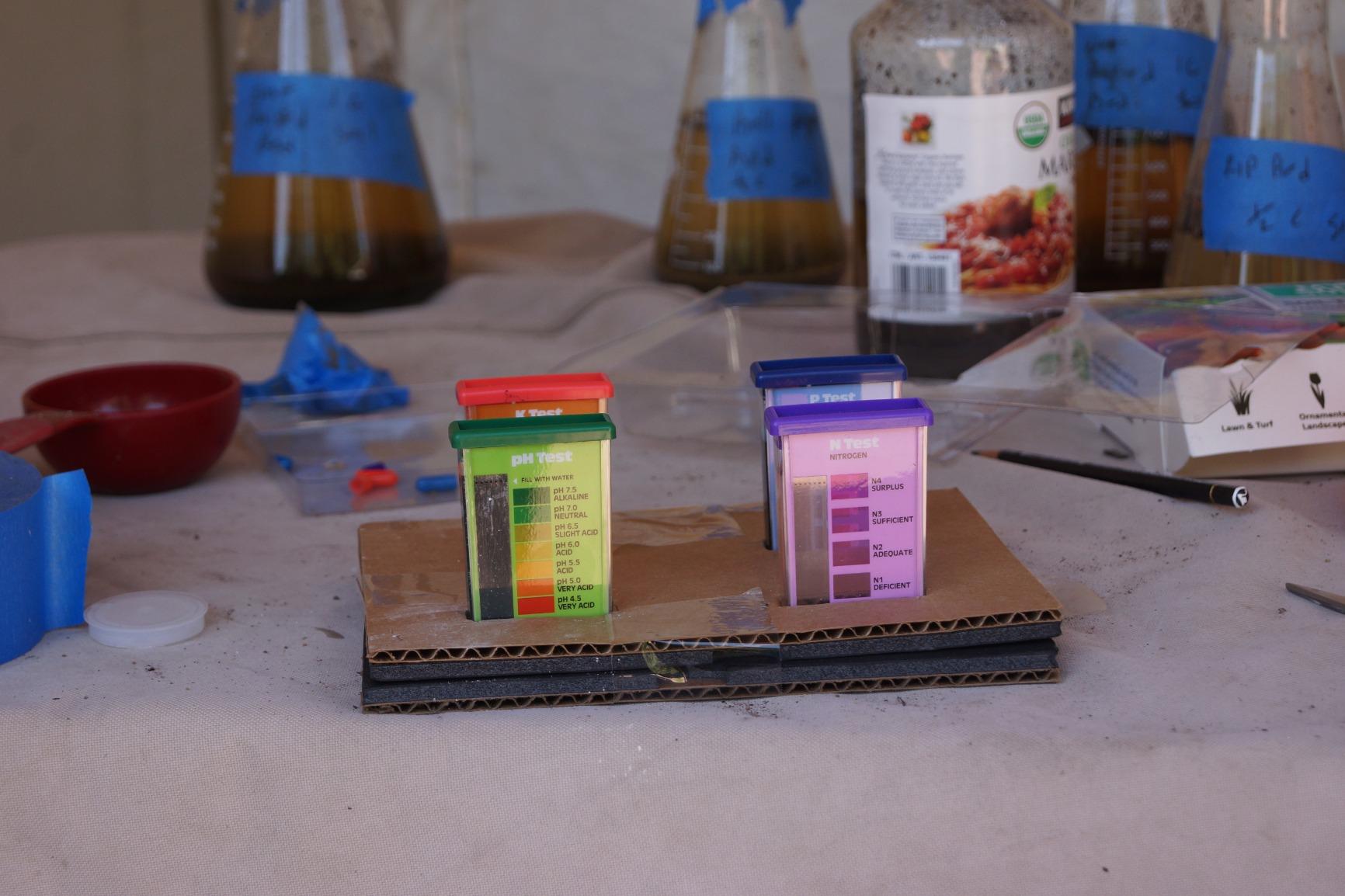
The reviews describe it accurately: a good screening tool, not a measuring instrument. At 4.2 stars with a 59% five-star share, buyers accept the approximate read and move on. The color match depends on lighting and on your eyes, which is the specific complaint that shows up again and again in lawn forums whenever someone posts raw results asking the crowd to interpret them.
One practical note from the instructions and from forum consensus: use distilled water, not tap. Tap water shifts the pH reading enough to make a borderline result land on the wrong side of 6.5, and the number of cores you combine matters as much as the chemistry.
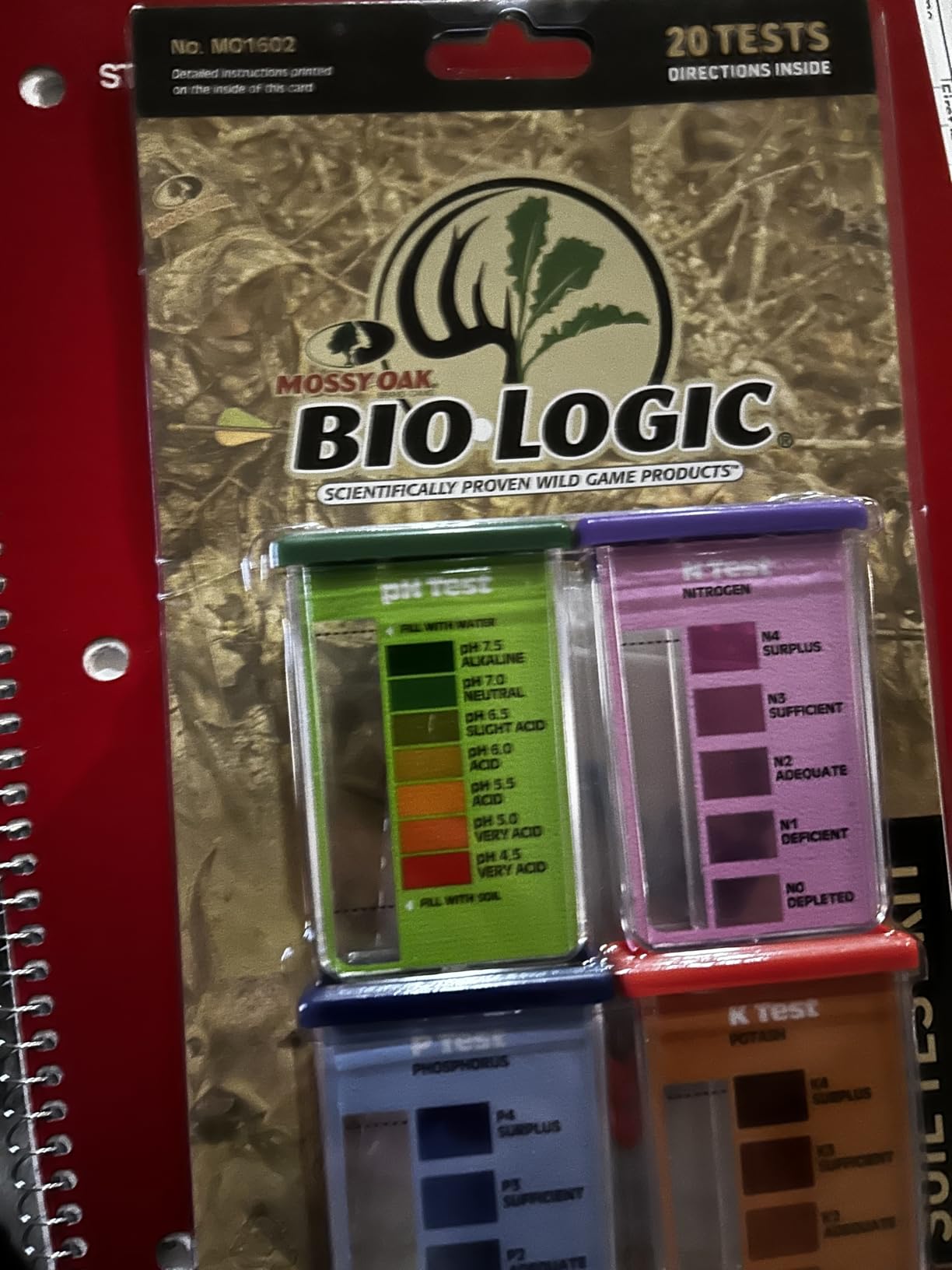
What the Rapitest 1601 is good for
Use it as a screening pass. Take ten cores from a few spots, run pH, and if the reading sits comfortably in range, you have answered the question most lawn kits are bought to answer without paying for a lab. If it comes back near 6.0 or above 7.0, that is your cue to buy a real lab test before you spend on amendments.
The included preference list covering more than 450 plants is a quiet bonus for anyone managing a mixed landscape rather than turf alone. It tells you the preferred pH band for each species without a web search.
Where the Rapitest 1601 falls short
It does not measure organic matter, cation exchange capacity, or any micronutrients, so it cannot tell you whether a lawn is holding nutrients or simply starved. On sandy soil, where leaching is fast, that distinction is the whole ballgame and this kit stays silent on it.
Forty tests is a real ceiling for repeat work. If your plan is to track a lawn through a full season of amendments, you will use it up faster than you expect.
3. Soil Savvy Soil Test Kit: Best for Plain-Language Fertilizer Advice
Soil Savvy – Soil Test Kit | Understand What Your Lawn or Garden Soil Needs, Not Sure What Fertilizer to Apply | Analysis Provides Complete Nutrient Analysis & Fertilizer Recommendation On Report
pH plus 14 nutrients by mail
Homeowner-level fertilizer advice
8 oz sample kit
Pros
- Broadest single-sample nutrient count at 14 plus pH
- Fertilizer advice written for homeowners
- Helps prevent over-application of nutrients
- Built on commercial turf and agriculture methods
Cons
- Mail-in turnaround delay
- One sample per kit
- Smaller review base than the leaders
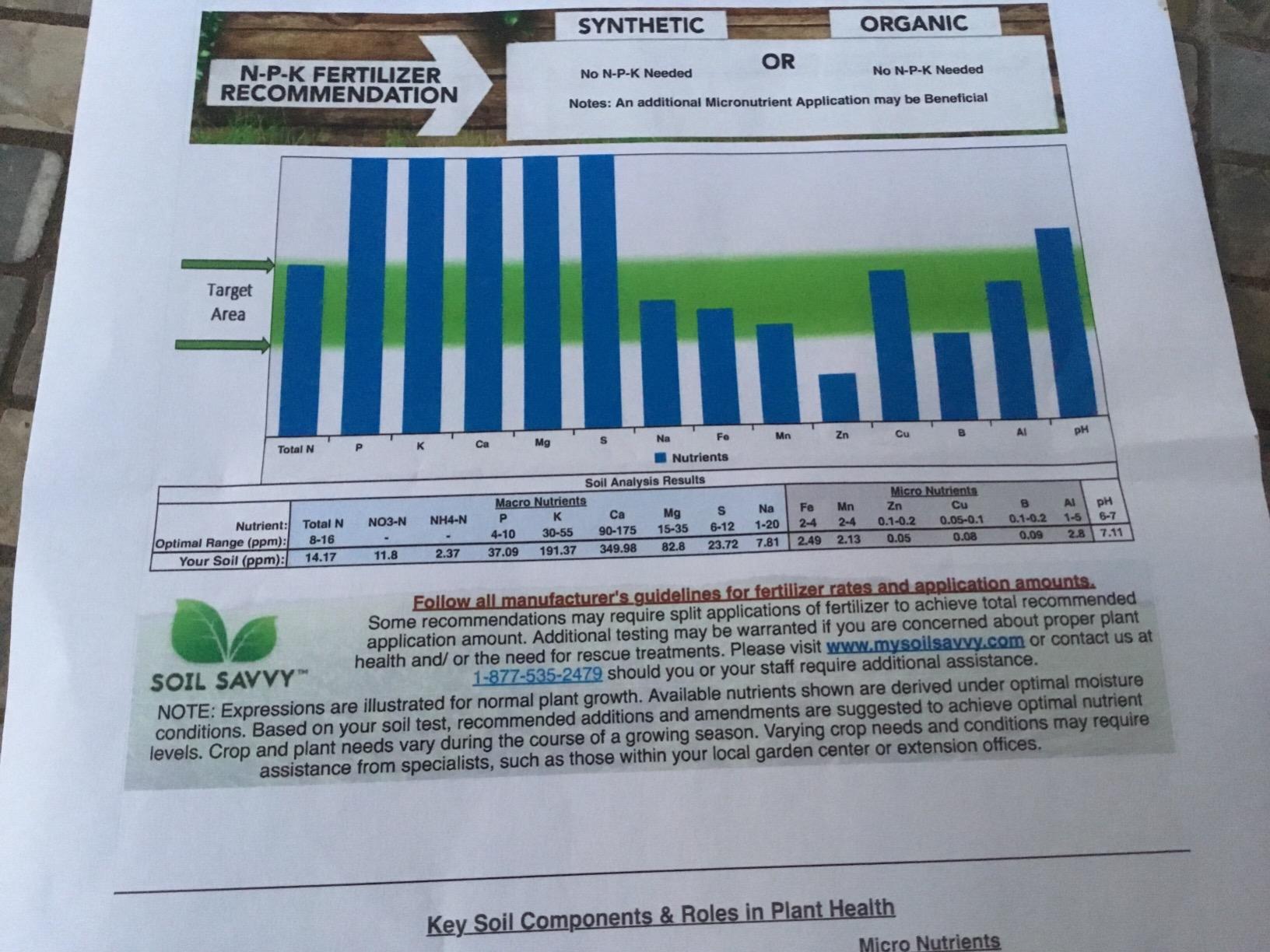
Soil Savvy takes the mail-in route and reports pH along with 14 nutrients, one of the broadest single-sample reports available in a consumer kit. That is one more reading than the MySoil report and it includes the micronutrients that DIY kits skip entirely.
Where it separates from the field is the wording. Reviewers repeatedly single out the fertilizer recommendation as being written for homeowners rather than for agronomists, which sounds like a small thing until you have tried to decode a report full of ppm values and base saturation ratios. At 4.2 stars across 890 reviews with a 64% five-star share, the report readability is the thing people come back for.
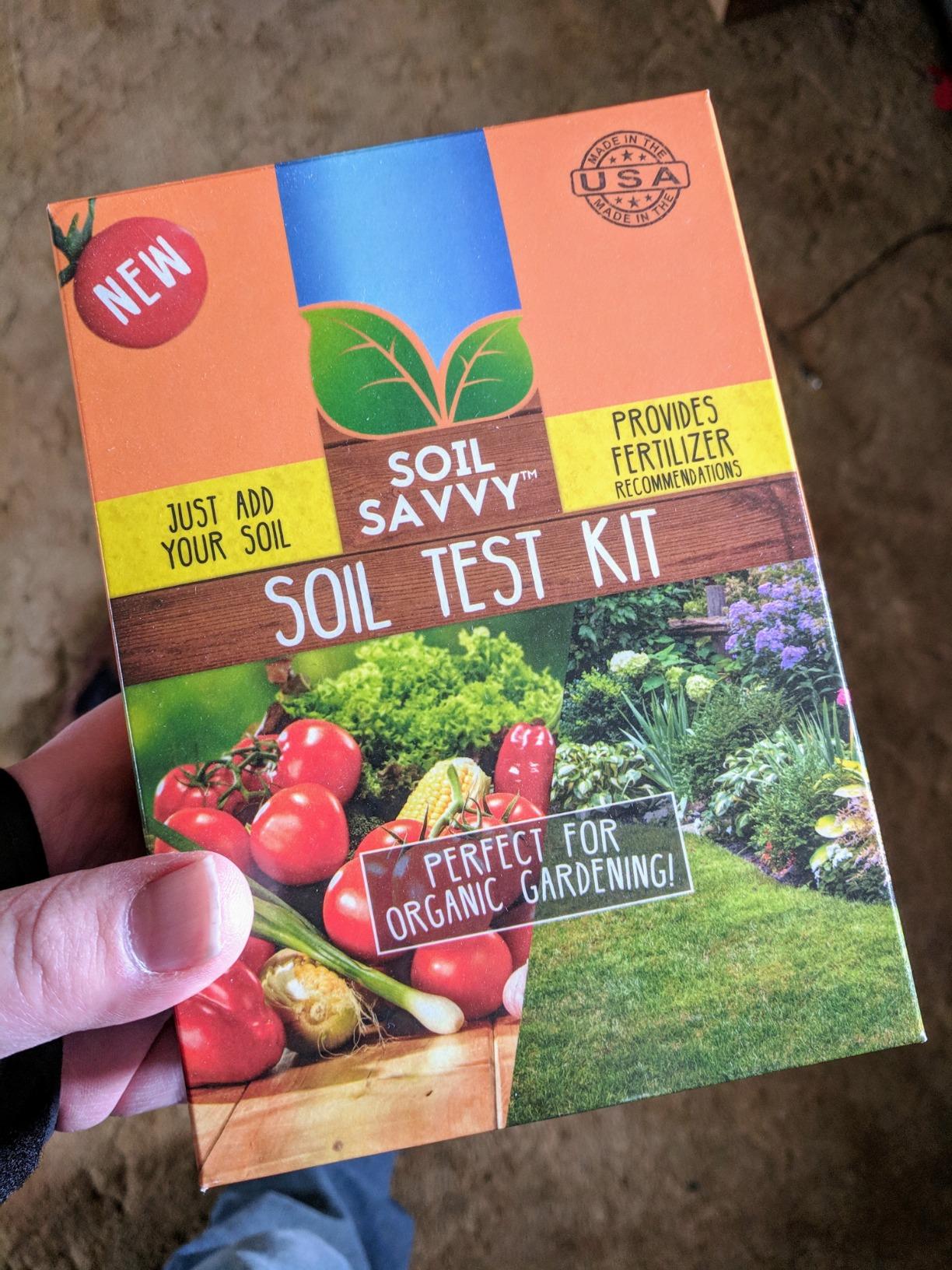
The manufacturer states the analysis uses the same technology employed by agricultural producers, turf managers and landscapers, which is a reasonable claim for a home soil report. The kit itself is a resin capsule system with a 1 count unit, weighing 8 ounces including the sample container.
As with any mail-in service, the weakness is timing and scale. You wait for the lab, and one sample means one zone. If your lawn has both a sunny front slope and a shaded back corner with different grass, that is two kits and two waits.
What Soil Savvy is good for
It is the pick for anyone whose real problem is decision paralysis, not chemistry. If you have read lab reports before and found them dense and unhelpful, this is the one written to be acted on. The fertilizer recommendation attached to the analysis is the deliverable.
The 14-nutrient coverage also makes it a reasonable choice for a whole-property test, covering the landscape beds and the turf in a single report rather than splitting the analysis.
Where Soil Savvy falls short
Like the other mail-in kits here, it does not publish a buffer pH reading, so lime rate still comes down to the target pH on the report rather than a measured lime requirement. For mildly acidic lawns that is fine; for a lawn that has never been tested and sits strongly acidic, you are still estimating.
The 890-review count is modest next to the leaders in this group, which means fewer owners have put the report in front of a co-op or a professional and asked whether the numbers hold up.
4. SoilKit Powered Analysis: Best for Buffer pH and Lime Rate
Soil Test Kit – Discover Your Lawn and Garden Fertility with pH, Nutrient and Mineral Analysis. Professional Results Provide Custom Fertilizer Prescription for Your Yard.
Mehlich III lab method
Reports buffer pH, OM, CEC and ENR
QR registration and dashboard
Pros
- Only kit here reporting buffer pH
- organic matter and CEC
- Mehlich III matches professional lab methods
- Custom fertilizer prescription by square footage
- Customers report about a five day turnaround
Cons
- Results document formatting is rough
- Some users unsure which scale value applies
- Not for potting soil or soilless media
This is the most technically complete report in the roundup, and it is the one that fills the gap every other consumer kit leaves open. SoilKit reports pH, buffer pH, organic matter, cation exchange capacity, and estimated nitrogen release, then adds phosphorus, potassium, magnesium, calcium, boron, zinc, manganese and iron.
Buffer pH is the number that converts a pH reading into a lime quantity. Without it you aim for a target; with it you know how many pounds per 1,000 square feet the soil’s reserve acidity requires. If your lawn is acidic and you intend to lime, this is the report that actually answers the question. The Mehlich III extraction method it uses is the same approach many soil labs run, which is why several buyers report that the numbers lined up with a later extension test.
At 4.3 stars across 223 reviews with a 65% five-star share, this is a smaller review base than the leaders, so treat the accuracy claims as promising rather than settled. What the data does show is that owners were frequently surprised by the results, most often by a higher pH than they expected, and that support staff followed up by phone after the report arrived.
One workflow detail worth copying: buyers report taking the printable analysis to a local co-op and having a fertilizer blend mixed from it. A report that names quantities by lawn square footage makes that possible. The kit includes the sample bag, the pre-addressed postage-paid mailer, and QR registration that pulls in address geolocation and a square footage calculator for the SoilKit365 dashboard.
What SoilKit is good for
It is the correct choice when you have never tested your soil and you are standing at a hardware counter deciding between dolomitic lime and elemental sulfur. Buffer pH turns that into a number instead of a guess.
It is also the best fit for anyone with clay soil. With organic matter and CEC reported together, you can see whether a thin lawn is a nutrient problem or a water-holding and compaction problem, and those two call for entirely different fixes.
Where SoilKit falls short
The report layout is the most common complaint. Buyers report difficulty reading the document and being unsure which value on a scale represented their actual result. Clean data delivered in a confusing format costs you the same effort as a muddled report.
It is explicitly not intended for potting soil or soilless media, so the same kit cannot cover a houseplant collection and an outdoor lawn. Optional add-on weed, disease and pest advice costs extra, and the base kit does not include it.
5. LaMotte Model EL Turf and Garden Kit: Best Reusable Reference Set
Lamotte Model El – Turf and Garden Soil Test Kit – 5679-01
15 tests each for N, P and K plus 30 pH tests
Laminated color charts
Two manuals included
Pros
- Built for turf rather than generic container plants
- Highest test count per parameter among DIY kits
- Laminated charts resist soil contact and wear
- Includes a Garden Guide and the LaMotte Soil Handbook
Cons
- Highest cost in the group
- Still a visual colorimetric comparison
- No micronutrients
- organic matter or CEC
The LaMotte 5679-01 is the only kit in this roundup designed for turf first rather than adapted from a general garden tester. It runs 15 tests each for nitrogen, phosphorus and potassium plus 30 soil pH tests, with diagrammed procedures and laminated color charts. At 4.6 stars across 341 reviews with a 74% five-star share, it matches the best average rating in the group.
The reason it holds that rating is durability and reference material. Laminated charts do not degrade when you handle them with dirty soil the way paper ones do, and the kit ships with both a Garden Guide and the LaMotte Soil Handbook for interpreting what comes back. Reviews treat it as a durable purchase rather than a throwaway screen.
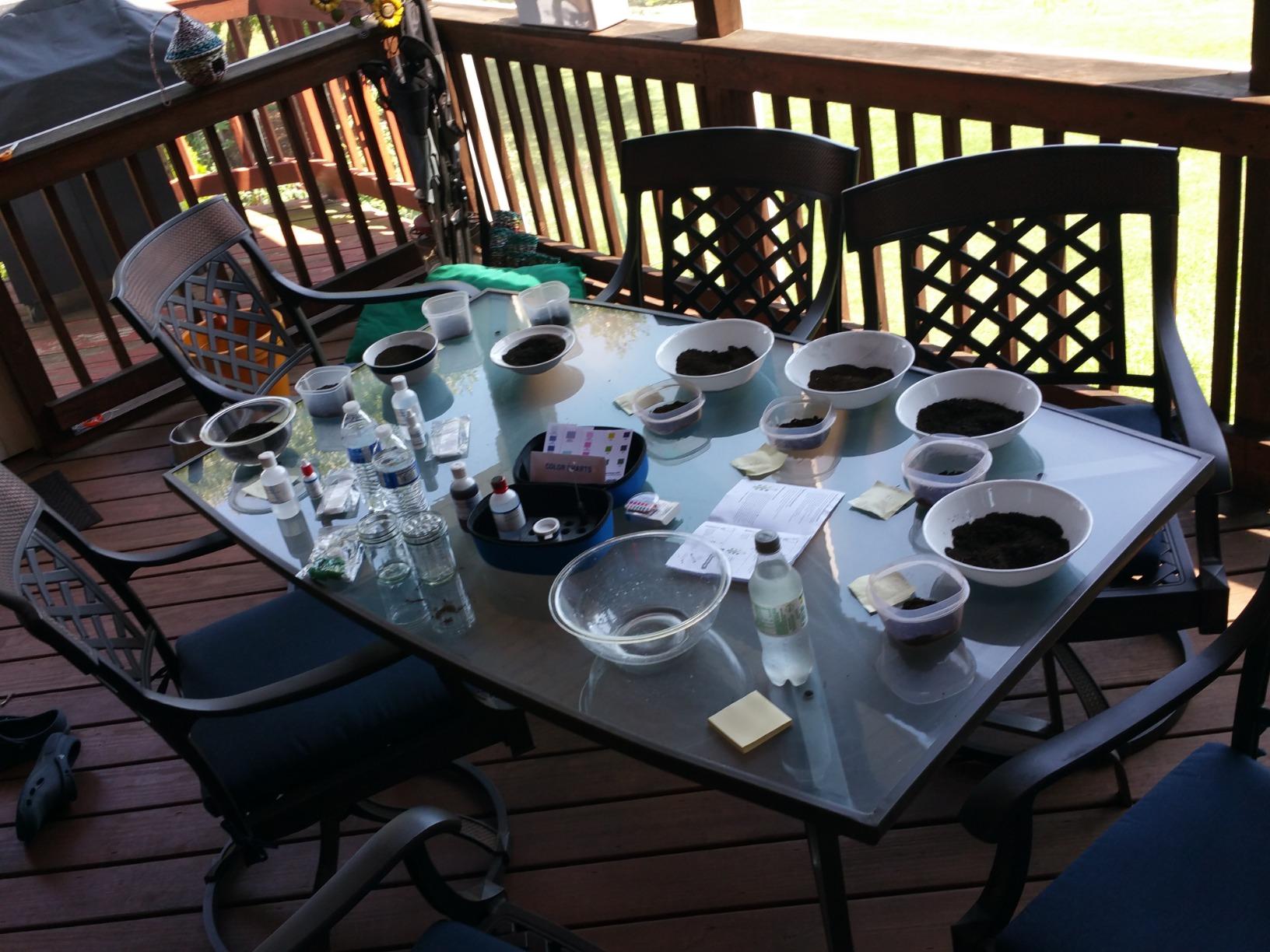
Physically it is the largest item here at 2.9 pounds and 9.5 by 6.5 by 6.5 inches, which is the trade for the manuals and the chart board. It is also the most expensive kit in the group by a wide margin, roughly five times what the DIY kits cost, and that is the reason it is not higher on this list.
The manufacturer frames it with an educational objective around soil science, and that shows. If you are the person in your household who wants to understand what cation exchange capacity means rather than just buy the right bag, the reference material carries real weight. It does not report micronutrients, organic matter or CEC despite the manual discussing them, so it is a macronutrient kit with better documentation than most.
What LaMotte is good for
It suits a lawn you intend to manage for years, especially if you test more than one bed and want a consistent method across all of them. Fifteen tests per nutrient parameter is the highest per-parameter count among the DIY kits here, and 30 pH tests is more screening than most people will use.
It is also the right kit for a soil science classroom or for teaching kids what a lawn fertilizer ratio means, given the STEM framing the manufacturer uses.
Where LaMotte falls short
Cost is the obvious objection, and it is steep enough that a mail-in lab report may be the better purchase for a single lawn. If you test once, you are paying for infrastructure you will not use.
It remains a visual comparison, so the subjectivity problem applies here too, and the reading range is narrower than a lab’s. Colorimetric read plus manual interpretation is still interpretation by eye.
6. Garden Tutor Soil pH Test Kit: Best Budget pH Screening
Garden Tutor Soil pH Test Kit – 100 Strips with AI-Powered Web Reader – Accurate Testing for Lawn, Garden & Compost – pH 3.5–9
100 pH strips covering 3.5 to 9
AI web reader, about 60 seconds
No app download or signup
Pros
- Camera reader removes subjective color matching
- 100 strips allow multi-zone sampling
- Reading takes about 60 seconds
- Online lime and sulfur estimator included
Cons
- Measures pH only
- no N
- P or K
- Accuracy depends on photographing the strip correctly
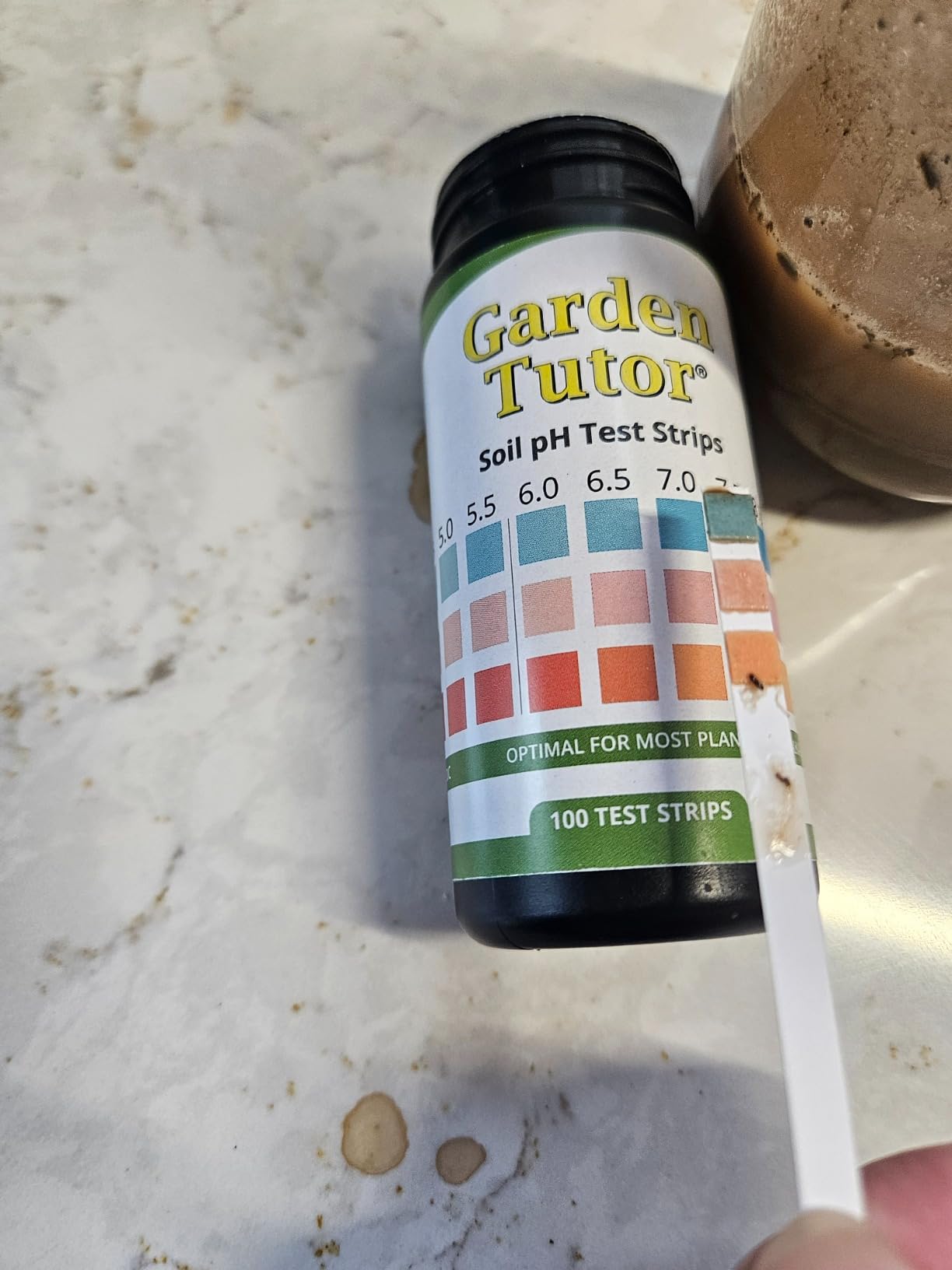
The Garden Tutor strip kit solves the most common complaint about DIY testing, which is that reading a color chart by eye is subjective and depends on the room you are standing in. You photograph the strip against a template, upload it to a web reader, and get a digital pH back. No app download, no account, about 60 seconds per read.
With 100 strips and a 3.5 to 9 range, this is the kit to buy if your lawn has several distinct zones: a sunny slope, a shaded border, an area near a downspout, a patch that stays wet. The 4.2 average across 3,848 reviews makes it one of the two most-reviewed products in this roundup, with a 59% five-star share.
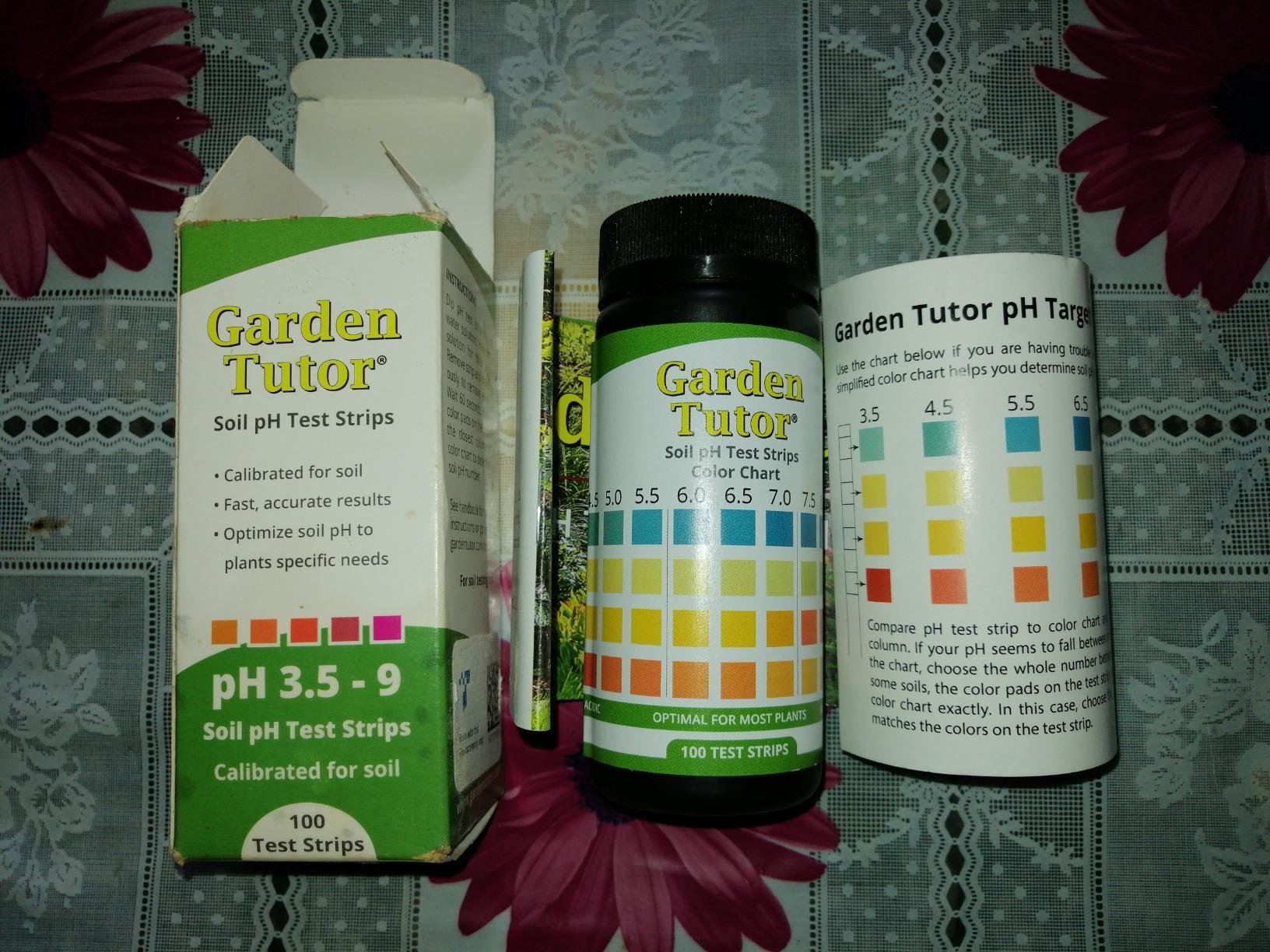
The three-pad strip design is described as a third-generation format, which matters more than it sounds. Single-pad strips give you one color to judge against a whole chart; three pads give you three independent color references, which makes a borderline read considerably more repeatable. Reviewers consistently point to more consistent results than earlier single-pad strips they had used.
The included lime and sulfur application estimator turns a number into a shopping quantity, which is more than most pH-only products attempt. It is still worth treating as a starting estimate rather than a prescription.
What Garden Tutor is good for
It is the right first purchase for most people, because pH is the single variable that explains the most lawn problems. Moss, patchy bare areas, yellowing that does not respond to nitrogen, and fertilizer that seems to do nothing all trace back to pH more often than not.
The strip count also makes it useful for diagnosis rather than prevention. Pull a few cores from each problem area, and you can often localize the cause to a patch of soil rather than to the whole lawn.
Where Garden Tutor falls short
It answers exactly one question. There is no nitrogen, phosphorus or potassium reading, so it cannot tell you whether to fertilize at all, which for a lawn that is already nutrient-rich is the more valuable answer.
Accuracy still depends on how you photograph the strip. If the pad is partly obscured, backlit, or read against a mismatched background, the digital answer inherits that error. Our broader approach to strip reading is covered in 10 Best Chlorine Test Kits Expert Reviews, where the same photo technique applies.
7. Dewilde 140-Test Liquid Soil Test Kit: Best for Whole-Property Mapping
Soil Test Kit 140 Tests (2026 Updated Instructions) – pH, Nitrogen, Phosphorus, Potassium & Ammonia – Garden, Lawn & Plant Soil Tester Kit for Accurate Fertility Analysis
pH, ammonia, N, P and K by liquid test
About 140 tests total
3.52 oz, 3 by 1 by 4 inches
Pros
- Highest test count of any DIY kit in this group
- Adds ammonia measurement to the usual five parameters
- Rapid at-home results with no lab involved
- Recently updated instructions included
Cons
- Lowest average rating here at 4.0
- with 10% one-star
- Liquid mixing adds steps
- No micronutrients or organic matter
Where the Rapitest gives you 40 tests, this Dewilde kit gives you about 140, roughly 40 per parameter plus extra nitrogen tests. That is the largest test inventory in the roundup and it changes what you can do with a DIY kit, because you can map an entire property, retest quarterly, and still have strips left over.
It measures pH, ammonia, nitrogen, phosphorus and potassium in a liquid format, which is a different chemistry from the capsule kits. The ammonia reading is a bonus nobody else in this list offers, and it tells you something about recent nitrogen availability rather than reserve supply.
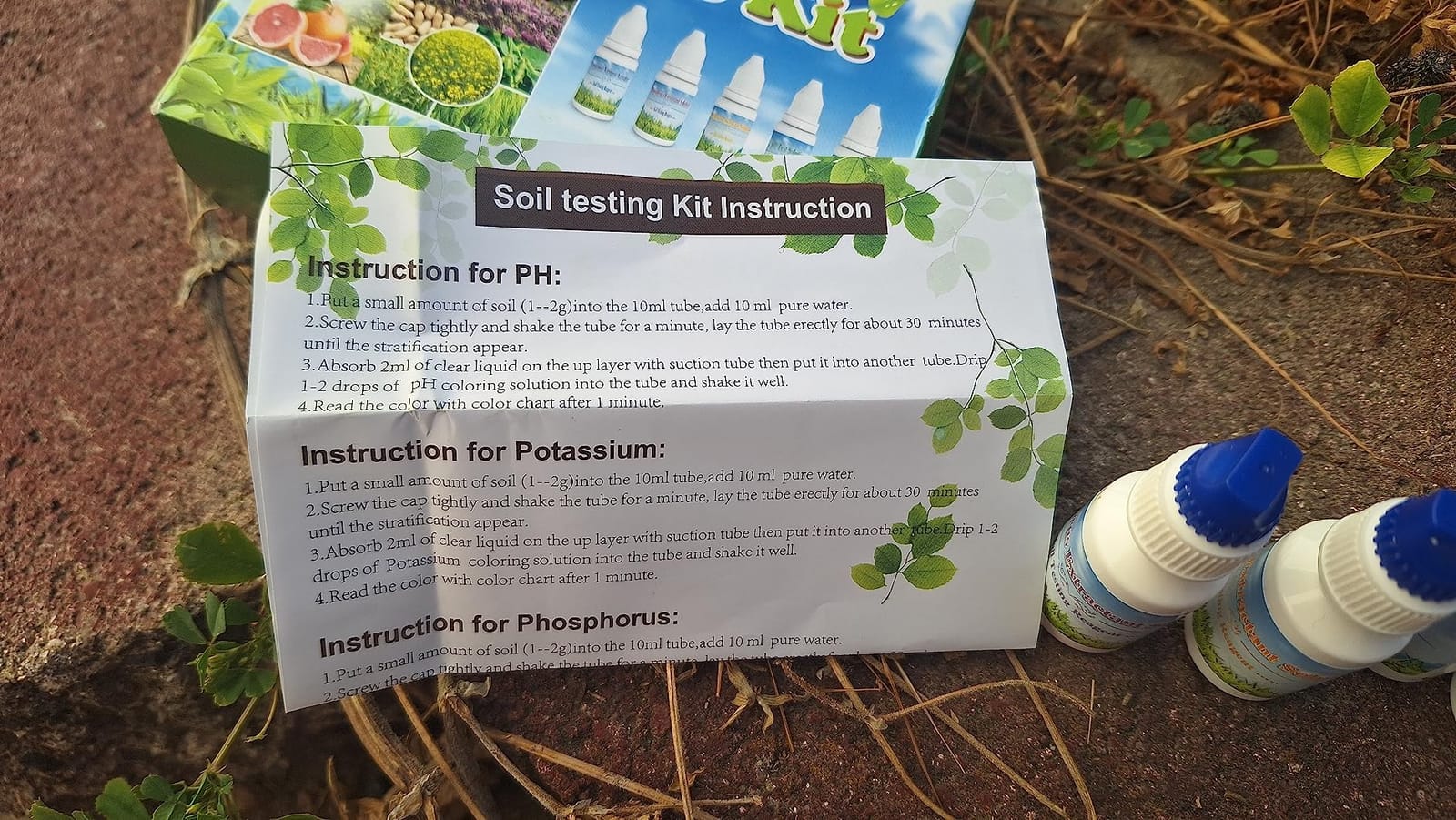
Be aware of the tradeoff before you buy. At 4.0 stars with 551 reviews, this is the lowest-rated product in the roundup, and 10% of its reviews are one-star. The 55% five-star share is the smallest here. The value proposition still holds up, but buyers report more run-to-run inconsistency than they do with the higher-rated kits.
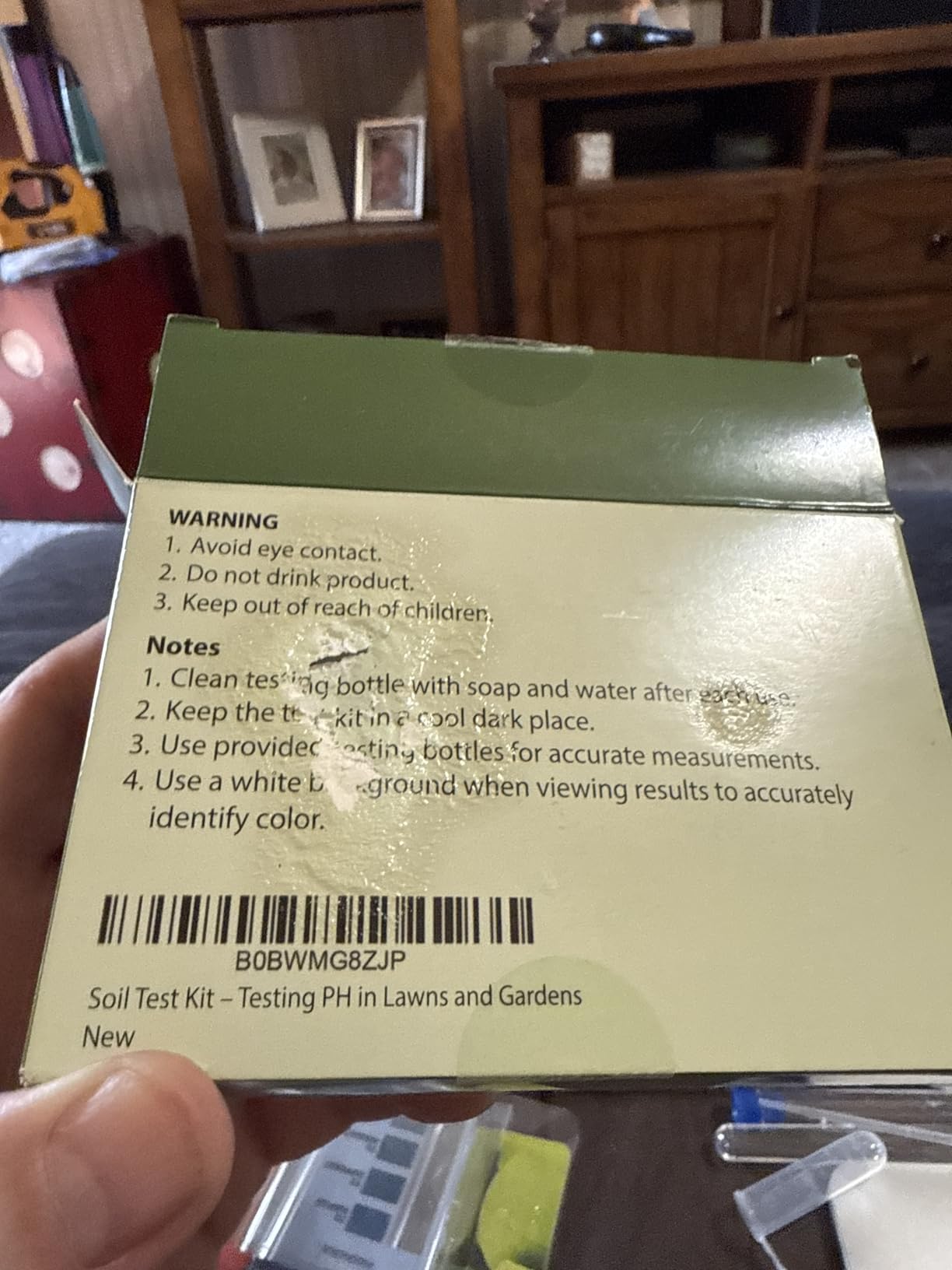
Mixing a liquid test is more involved than breaking a capsule and reading a comparator. Additional steps mean more chances for the kind of error that makes a lawn look worse than it is, so the extra volume only pays off if you are genuinely going to use it.
What the Dewilde 140-test kit is good for
Large properties and repeated testing. If you maintain several lawns, a food plot and a large bed, this is the only DIY kit here with the volume to cover that without multiple purchases, and the per-test cost works out in your favor immediately.
It is also useful as a second opinion. If a capsule kit and a strip kit disagree about pH, a liquid test gives you a third reading in a different method, which is a cheap way to find out which result to trust.
Where the Dewilde 140-test kit falls short
Consistency is the recurring theme in the reviews, and it matters because color and liquid comparisons both depend on technique. If you are not going to follow the mixing procedure exactly, the volume advantage does not translate into accuracy.
Five parameters is still five parameters. No micronutrients, no organic matter, no CEC, so a lawn that is failing for structural reasons will read normal and send you down the wrong path.
8. Dewilde 100 pH Test Strips: Best for Quick Zone Checks
Soil Test Kit – 100 Soil pH Test Strips (3.5–9 Range) for Garden, Lawn & Indoor Plants – Easy At-Home Soil Testing
100 pH strips, 3.5 to 9 range
30 minute mixing step
Bottle color chart included
Pros
- Lowest cost per strip in the roundup
- Portable enough to test several zones
- Clear and simple mixing procedure
- Full 3.5-9 range covers acidic to alkaline
Cons
- pH only
- no nutrient readings
- Color chart comparison varies between users
- Not a substitute for a nutrient test
This is the simplest pH product in the roundup and the easiest to carry. Mix soil with water, let it sit 30 minutes, dip a strip for 3 seconds, hold it horizontally for 60 seconds, and compare against the chart printed on the bottle. One hundred strips, a 3.5 to 9 range, no batteries and no app.
At 4.2 stars across 569 reviews with a 62% five-star share, the reviews describe a consistent use pattern: buyers use it as a cheap pre-screen across multiple areas before deciding whether a fuller test is worth buying. That is exactly the right role for it, and at this price the cost of a misread is low.
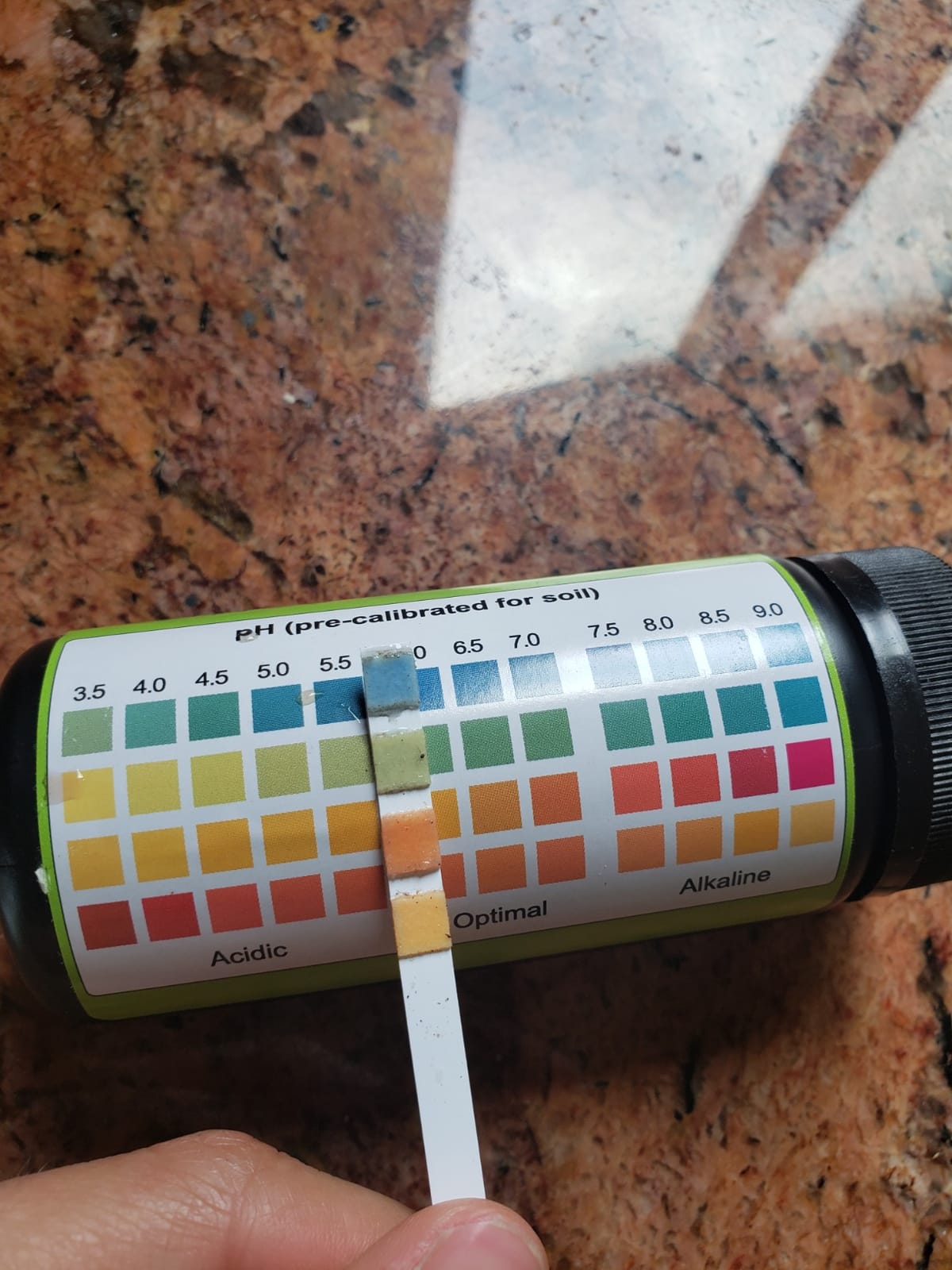
Compared with the Garden Tutor strips, the difference is the camera reader. Here the judgment stays with you, and lighting and monitor variation both play a part in the final number. The procedure is well documented, which helps, but documented is not the same as calibrated.
Same limitation as its sibling above: it measures pH and nothing else. It will not tell you whether your lawn needs nitrogen, and on a lawn that has been fertilized regularly for years, pH alone is an incomplete picture.
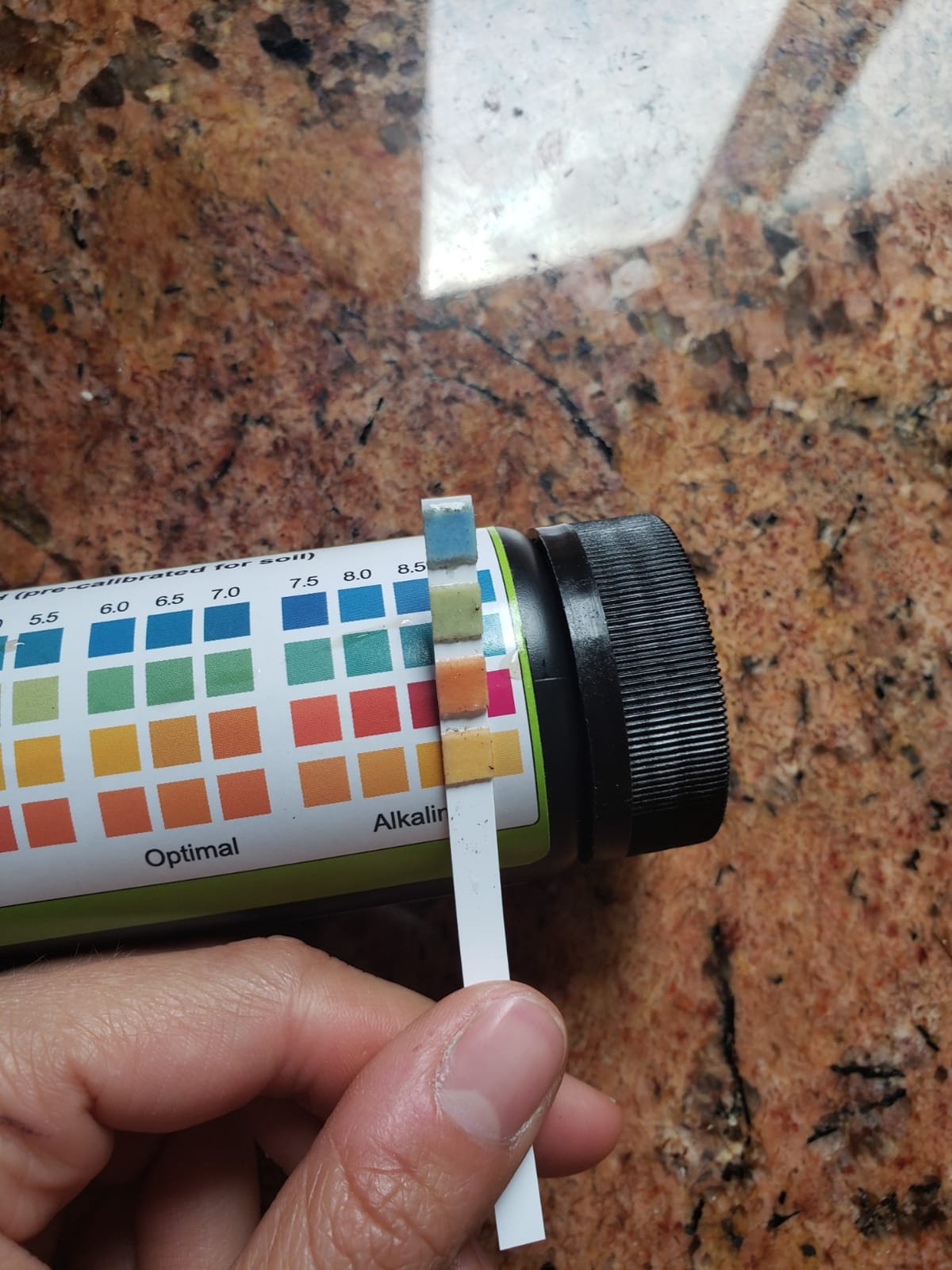
What the Dewilde strip bottle is good for
Walk-around diagnosis. If a section of your lawn is failing and you do not know why, testing pH in five or six spots takes minutes and tells you whether the problem is soil chemistry or something physical like compaction, shade, or drainage.
One hundred strips is enough to sample a large property several times over, so you can compare a shaded north edge against a full-sun south slope and know whether you are dealing with two different soils.
Where the Dewilde strip bottle falls short
It cannot support a fertilizer plan. If your goal is pounds of nitrogen per 1,000 square feet, this product does not get you there and you will need a second purchase.
Color comparison varies between users, which is the flaw forum users flag when they post results asking for a second opinion. Two people reading the same strip in different rooms can land a full point apart, and a full point is the difference between applying lime and stopping.
Mail-In Lab Kits vs DIY Kits vs Strips: What Each One Is Actually Good For
Strip kits answer one question. DIY chemical kits answer four or five. Mail-in lab kits answer everything, including the ones you did not know to ask. That is the whole difference, and choosing wrong means paying for a report you cannot use or buying a kit that leaves the real problem unexamined.
Extension and university soil labs sit alongside all of these and deserve a straight comparison, because r/lawncare consensus is that their result is the one to trust. They typically cost a fraction of a consumer mail-in kit, run accredited methods, and will interpret the sample in the context of your grass species. The disadvantages are distance, a wait measured in weeks, and a lab that closes for part of the year.
Our decision rule: if you have never tested the soil and your lawn is failing in a way you cannot explain, start with the extension lab. If you want an answer this week with a fertilizer prescription already written, use a mail-in kit. If you want to know only whether the pH is sane before you buy anything, a strip kit is enough.
One more consideration that roundups usually skip: cost per usable test. A 140-test liquid kit and a single-sample mail-in service are not comparable purchases, they are different tools. Before you commit, divide by the number of tests you will realistically run, not the number on the box.
How to Take a Composite Lawn Soil Sample
One scoop from a corner is worthless, and forum consensus on this point is unanimous. A composite sample is the only sample that represents a lawn, and taking one correctly takes about fifteen minutes.
Choose ten to fifteen spots spread across the lawn, avoiding edges, flower beds, and any area that has received fertilizer, lime, or compost recently.
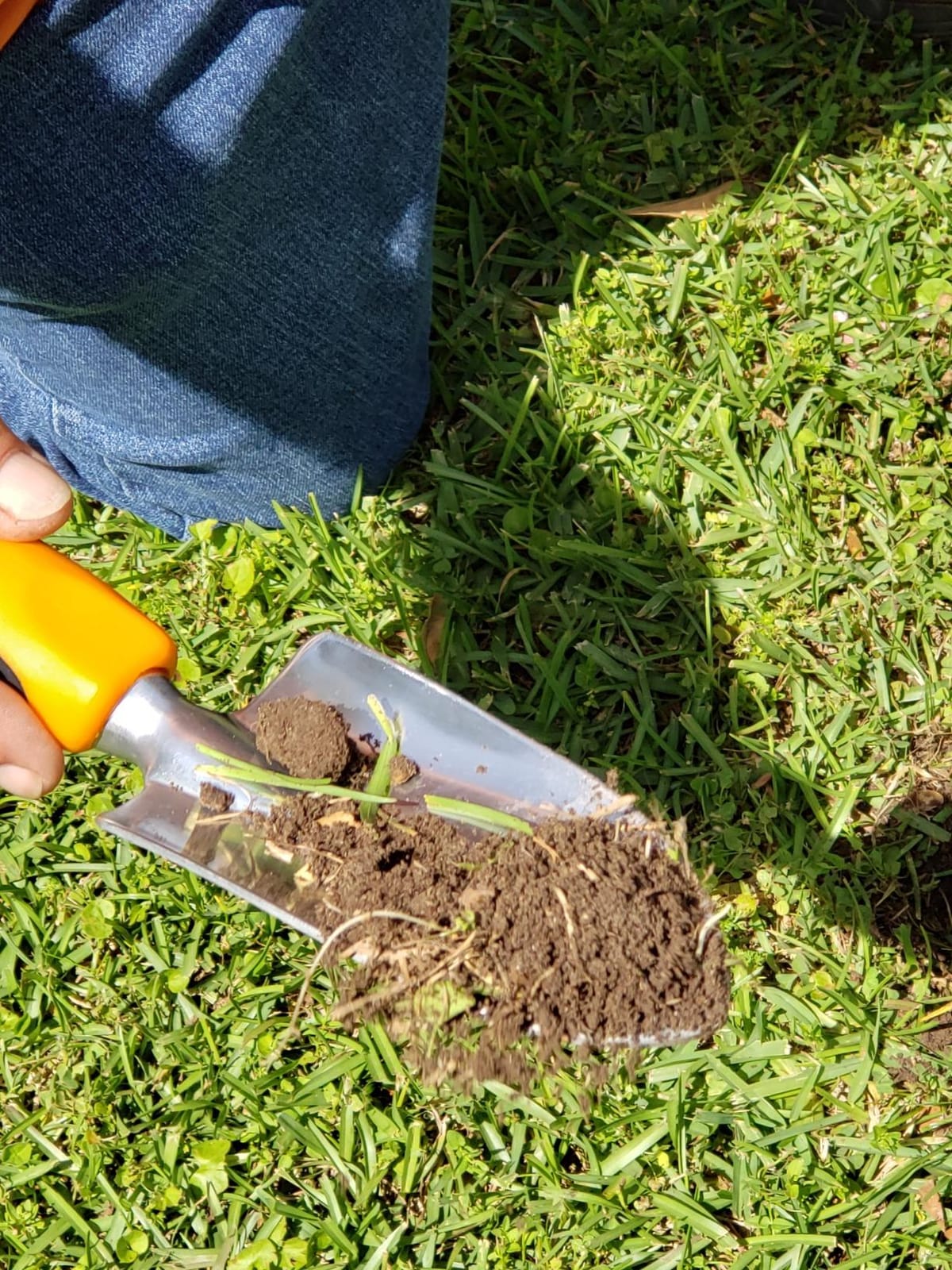
Use a soil probe or a garden trowel to take a core three inches deep. Extension guidance commonly recommends that depth because it covers the active root zone of turfgrass.
Cut away grass roots and surface thatch, and break up any clods in the core before moving on.
Place every core in a clean bucket and mix them together thoroughly. This blended material is your composite sample.
Fill the kit’s sample container or bag with the mixture, avoiding the sides, and mail it following the instructions provided.
For lawns split by conditions, take separate composites. A shaded north strip and a full-sun south slope are different soils, and averaging them hides exactly the information you were trying to find.
How to Read the Report and What to Buy
Reports arrive as numbers, and the temptation is to look up every one of them. Resist it. Four values drive almost every amendment decision on a lawn.
pH is first. Below 6.0, nutrients like nitrogen and potassium become harder for grass roots to take up no matter how much you apply, which is why adding fertilizer to an acidic lawn produces nothing. Between 6.0 and 7.5, most turf species are comfortable. Above 7.5, iron and manganese availability drops and grass yellows between the veins, which is the classic symptom people misdiagnose as a nitrogen shortage.
Buffer pH determines how much lime that correction takes. Without it, you are aiming at a target rather than calculating a quantity, which is the single biggest reason to prefer a report that includes it when you are working on acidic soil.
Nitrogen drives growth and color, and soil tests are notoriously weak at predicting available nitrogen. Most extension programs estimate it from organic matter and soil texture instead, which is why a lab report’s nitrogen figure is best treated as a starting point rather than a prescription.
Phosphorus and potassium are where lab analysis is trustworthy. High phosphorus in an established lawn is common and rarely worth correcting; low potassium is a genuine cause of thin, weak turf and drought stress. Organic matter and cation exchange capacity, when reported, tell you whether the soil can hold what you apply. Sandy soil with low CEC will need smaller, more frequent feedings no matter what the nutrient numbers say.
Target pH and Nutrient Ranges by Grass Type
Most roundups stop at a universal 6.0 to 7.5 range, which is too blunt for a lawn audience. Different turf species tolerate, and some prefer, different conditions. Check your species before you correct anything.
Cool-season grasses such as Kentucky bluegrass, perennial ryegrass and tall fescue do best with soil in the 6.0 to 7.0 band. Tall fescue tolerates the lower edge better than bluegrass does, which is why fescue lawns often survive on soil that would stunt bluegrass.
Warm-season grasses run slightly more acidic. Bermuda and St. Augustine generally perform between 5.5 and 6.5, and centipedegrass prefers the acidic end of the lawn spectrum, closer to 5.0 to 6.0. Zoysia sits between the warm-season group and the middle of the range.
Nitrogen targets follow growth rate. A tall fescue lawn on a slow soil needs less per application than a Bermuda lawn in full sun, and the test tells you the soil’s reserve while your knowledge of the species tells you the demand.
How Often to Test Lawn Soil
Test lawn soil every two to three years, and test before any major amendment project. Penn State guidance commonly cited in roundups puts routine testing on a two to five year interval, with sandy soils on the shorter end because nutrients leach out faster.
Seasonally, fall is the better window. Soil is warm enough for biological activity, moisture levels are usually reliable, and a fall result sets up your spring program instead of arriving too late to act on. An early spring test works too, just earlier.
Retest after any change you cannot explain: a new lawn from seed, a renovation, a major compost or manure application, or a season of heavy irrigation. The 10 Best Water Hardness Test Kits Reviewed approach to tracking change year over year applies equally here, and it is the only way to know whether last year’s treatment actually moved the numbers.
What to Skip
Skip moisture-only meters marketed as nutrient testers. They read water, not chemistry, and buyers regularly post threads asking why their moisture meter has no nitrogen or pH reading. There is no reason to be surprised, but buyers are, every year.
Skip single-probe sticks sold as full soil tests. One probe cannot measure a lawn’s pH, and a single reading tells you nothing about variability across the property.
Skip expired strips, which is the one buying mistake we can tell you how to avoid. Check the bottle for a date, and store strips away from light and humidity. A strip that has absorbed moisture reads wrong every time.
Frequently Asked Questions
What is the best soil test kit for lawns?
The MySoil Test Kit is the best overall pick for lawns. It is a mail-in lab service that reports 13 plant-available nutrient levels plus pH, returns results in 6 to 8 days, and includes a written fertilizer prescription telling you what to apply and how much. For a lawn you want to maintain on a schedule, that prescription is worth the wait. If you only need a pH screening first, the Garden Tutor strip kit covers that question in about 60 seconds per reading.
Are DIY soil test kits accurate?
DIY kits are accurate enough to screen, not accurate enough to prescribe. Color comparators and liquid tests give you a usable range for pH, nitrogen, phosphorus and potassium, and for a lawn already inside the target range that is enough. They are weak on micronutrients, organic matter, and cation exchange capacity, and repeated readings by different people can disagree because color matching is subjective. University and state extension laboratories remain the reference standard, and extension research at Iowa State and South Dakota State has noted the inconsistency of DIY kits, particularly for phosphorus and potassium. Use a DIY kit to decide whether you need more than a screening.
How can I test the soil quality in my lawn?
Take a composite sample. Collect ten to fifteen cores three inches deep from spots spread across the lawn, avoiding edges, beds, and anywhere fertilizer or compost was recently applied. Break up clods, drop grass roots and thatch, mix the cores together in a clean bucket, and fill the kit’s container from the middle of that blend. Then either run the test in your kitchen or mail the sample to the lab. One scoop from a single corner does not represent a lawn and will mislead you.
How often should I test lawn soil?
Test every two to three years as a routine, and test immediately before any major project such as overseeding, renovation, or a large lime or compost application. Penn State guidance puts routine intervals at two to five years, with sandy soils needing the shorter end because nutrients leach faster. Fall is the better window because soil is warm, moisture is reliable, and the result informs your spring program. Retest after heavy irrigation seasons or a new installation as well.
Do I need a soil test before overseeding?
Yes, and it is one of the strongest reasons to test. Overseeding fails when seed lands on soil with the wrong pH, when phosphorus is locked out at low pH, or when the existing turf is so nutrient-poor that new seedlings cannot establish. A test tells you whether to correct pH and apply a starter fertilizer before you spend money on seed, and it is far cheaper to fix soil chemistry beforehand than to re-seed twice.
Is a soil test worth it for a lawn?
It is worth it for any lawn where you plan to spend money on fertilizer or lime, and it is essential if your turf is thin, yellowing, patchy, or covered in moss. Without a test you are guessing, and guessing tends to mean applying more product than the lawn needs, which wastes money and can burn roots. Testing also stops a repeated mistake, since you can compare this year’s numbers against last year’s and see whether a treatment actually worked.
Conclusion
Eight soil test kits, and the honest answer is that most lawns need two of them, not one. Start with a pH screen to rule out the cheapest explanation, then send a proper composite sample to a lab if anything reads out of range.
For a single all-round purchase, the MySoil Test Kit is the best soil test kit for lawns in 2026 because it returns nutrient levels and a fertilizer prescription faster than any other mail-in option here. If your soil is acidic and you plan to lime, pick SoilKit instead for the buffer pH reading. If you maintain a large property, the Dewilde 140-test liquid kit gives you the volume to map it. And whatever you choose, take the composite sample properly, because no kit can rescue a handful of cores from one corner.