
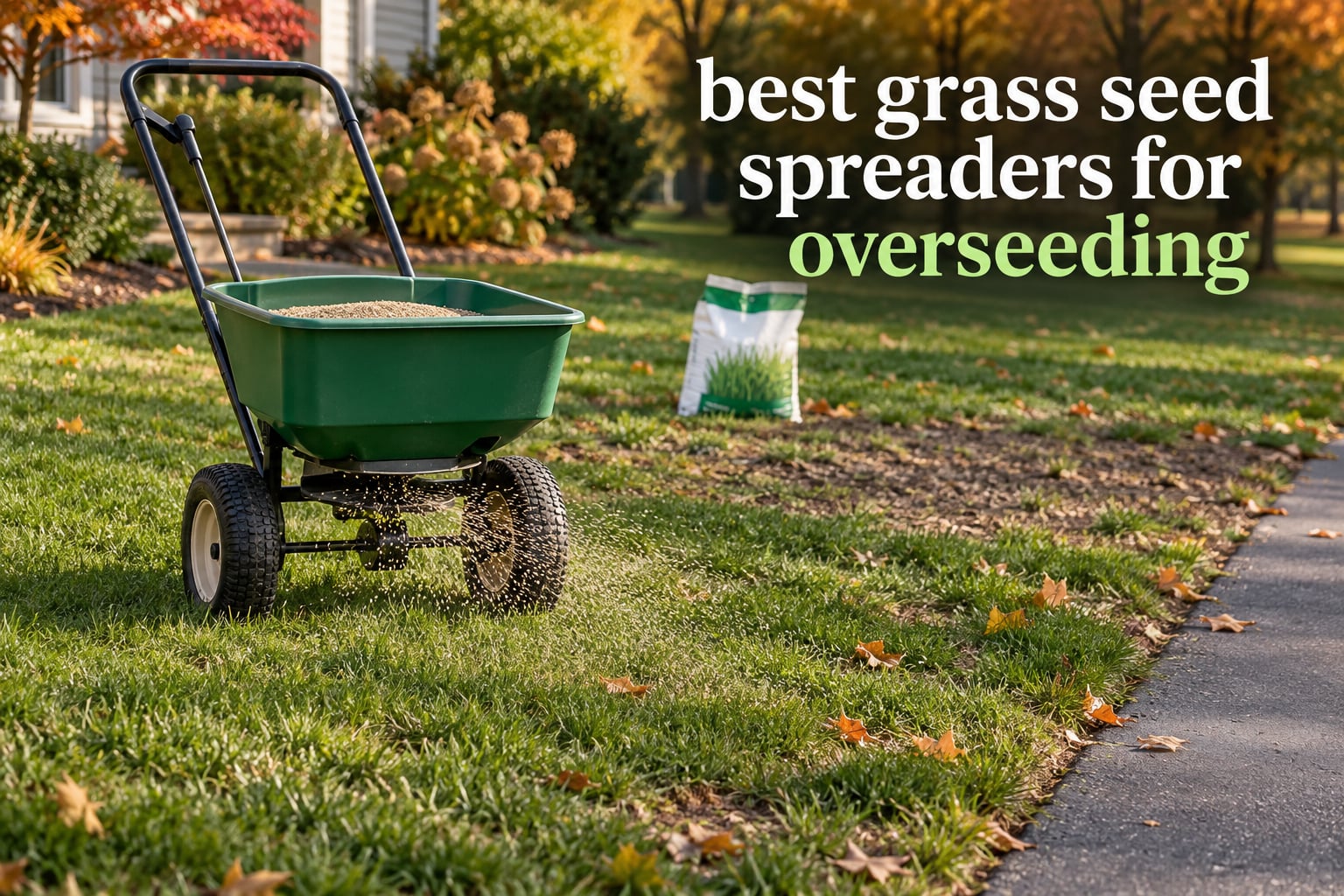
Overseeding fails in a way that is easy to miss. The seed goes down, the lawn looks better in a few weeks, and then you notice pale stripes running the length of the yard where the seed never took. Almost always, the cause is the tool, not the seed or the timing. A grass seed spreader meters material at a controlled rate, and picking the right one for your lawn size and edge conditions is the difference between an even application and a zebra pattern.
I spent several weeks working through spreaders for this roundup, from a compact walk-behind unit to chest-mounted and hand-held options, focusing on the four things that decide whether a job goes well: hopper capacity against lawn size, spread width, how the flow shuts off at the edges, and how the machine behaves at a slow walking pace. The ten picks below cover the range of real overseeding jobs, from a small patch shaded by a fence to a half-acre of thin cool-season turf.
Throughout 2026 we have leaned on what owners report after actual use, including the recurring complaints about striping and hopper clogging, rather than just star ratings. If you also use these tools for fertilizer, our picks for the best fertilizer spreaders overlap heavily with this list.
Table of Contents
Drop vs Broadcast Spreaders: Which One Overseeds Better?
A broadcast spreader throws seed from a spinning disc in a wide arc, so it covers ground fast. A drop spreader releases seed straight down at hopper width, which keeps material off driveways and beds but takes roughly three times as long. For an open lawn, broadcast wins on speed. Near edges, drop wins on control.
Broadcast (rotary) spreader — fastest coverage, wide swath, needs an edge discipline habit because material lands beyond the wheel line. Best for open, rectangular lawns.
Drop spreader — precise, slower, minimal overspray onto hardscapes. Best for lawns bordered by walks, drives and planting beds.
Hand-held crank or shaker — best for spot seeding bare patches and shaded corners, not for a full-lawn pass. Walking pace is inconsistent, so stripes are common on bigger areas.
Chest-mount spreader — a broadcast pattern carried on your body, useful on rough ground, slopes and food plots where a wheeled unit is awkward.
On hand spreading versus a spreader, the honest answer is that a spreader wins on anything past a few hundred square feet. A shaker is genuinely better for a 10 by 10 foot bare patch, where you would otherwise top up a walk-behind unit for one tray of seed.
Top 3 Best Grass Seed Spreaders for Overseeding (October 2026)
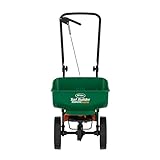
Scotts EdgeGuard Mini Spreader
- Holds 5
- 000 sq. ft.
- EdgeGuard side shield
- Pre-calibrated
- no assembly

VEVOR 60 lb Walk-Behind Spreader
- 60 lb hopper
- 0-9.8 ft spread width
- 18 settings
- Pneumatic tires

SOLO 421S Chest-Mount Spreader
- 20 lb capacity
- Chest-mount strap
- Spreads up to 30 ft
- Directional fan
The shortlist below covers the three genuinely different approaches: a pre-calibrated walk-behind unit for typical suburban lawns, a high-capacity walk-behind for large properties, and a chest-mounted broadcast spreader for rough ground. The remaining seven picks cover hand-held, cordless, shaker and budget options.
Quick Overview: Best Grass Seed Spreaders for Overseeding in 2026
| Product | Specifications | Action |
|---|---|---|
| Scotts EdgeGuard Mini Spreader |
|
Check Latest Price |
| VEVOR 60 lb Walk-Behind Spreader |
|
Check Latest Price |
| SOLO 421S Chest-Mount Spreader |
|
Check Latest Price |
 Scotts Whirl Handheld Spreader Scotts Whirl Handheld Spreader |
|
Check Latest Price |
 Amazon Basics Fertilizer Spreader Amazon Basics Fertilizer Spreader |
|
Check Latest Price |
 EarthWay 2750 Bag Seeder EarthWay 2750 Bag Seeder |
|
Check Latest Price |
 Brinly 5 lb Handheld Spreader Brinly 5 lb Handheld Spreader |
|
Check Latest Price |
 Uniqwamo Cordless Handheld Spreader Uniqwamo Cordless Handheld Spreader |
|
Check Latest Price |
 Spot Spreader 80 oz Hand Shaker Spot Spreader 80 oz Hand Shaker |
|
Check Latest Price |
 CHAPIN 8740A Hand Shaker CHAPIN 8740A Hand Shaker |
|
Check Latest Price |
1. Scotts EdgeGuard Mini Spreader: Best All-Round Pick for Typical Lawns
Scotts Turf Builder EdgeGuard Mini Broadcast Spreader
Covers 5,000 sq. ft.
EdgeGuard side shield
Pre-calibrated, no assembly
Folds for storage
Pros
- Pre-calibrated out of the box
- EdgeGuard blocks product on one side
- 5000 sq. ft. capacity covers a mid-size lawn in one load
- Folds down for garage storage
Cons
- Small hopper means refilling on larger lawns
- Hand cranking demands a consistent pace for even coverage
With over 23,000 reviews behind it, this is the spreader most people end up owning, and the reason is simple: nothing to assemble. It arrives calibrated, so your first pass is not a calibration exercise, which removes the single biggest cause of a bad first job.
The EdgeGuard side shield is the feature that matters most for overseeding. It blocks material on the right side of the spread, so seed stops at the driveway edge instead of washing into the gutter line.
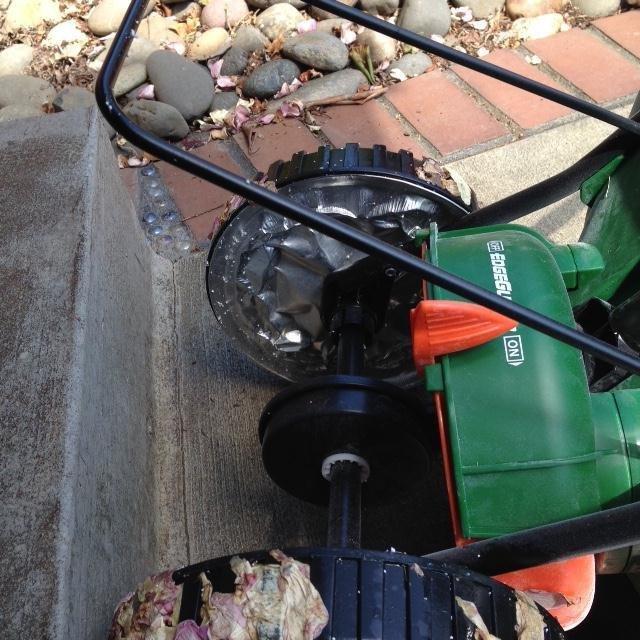
Capacity covers a lawn up to about 5,000 square feet in a single load. Past that, you are stopping to refill mid-pattern, and refills are where overlap mistakes happen.
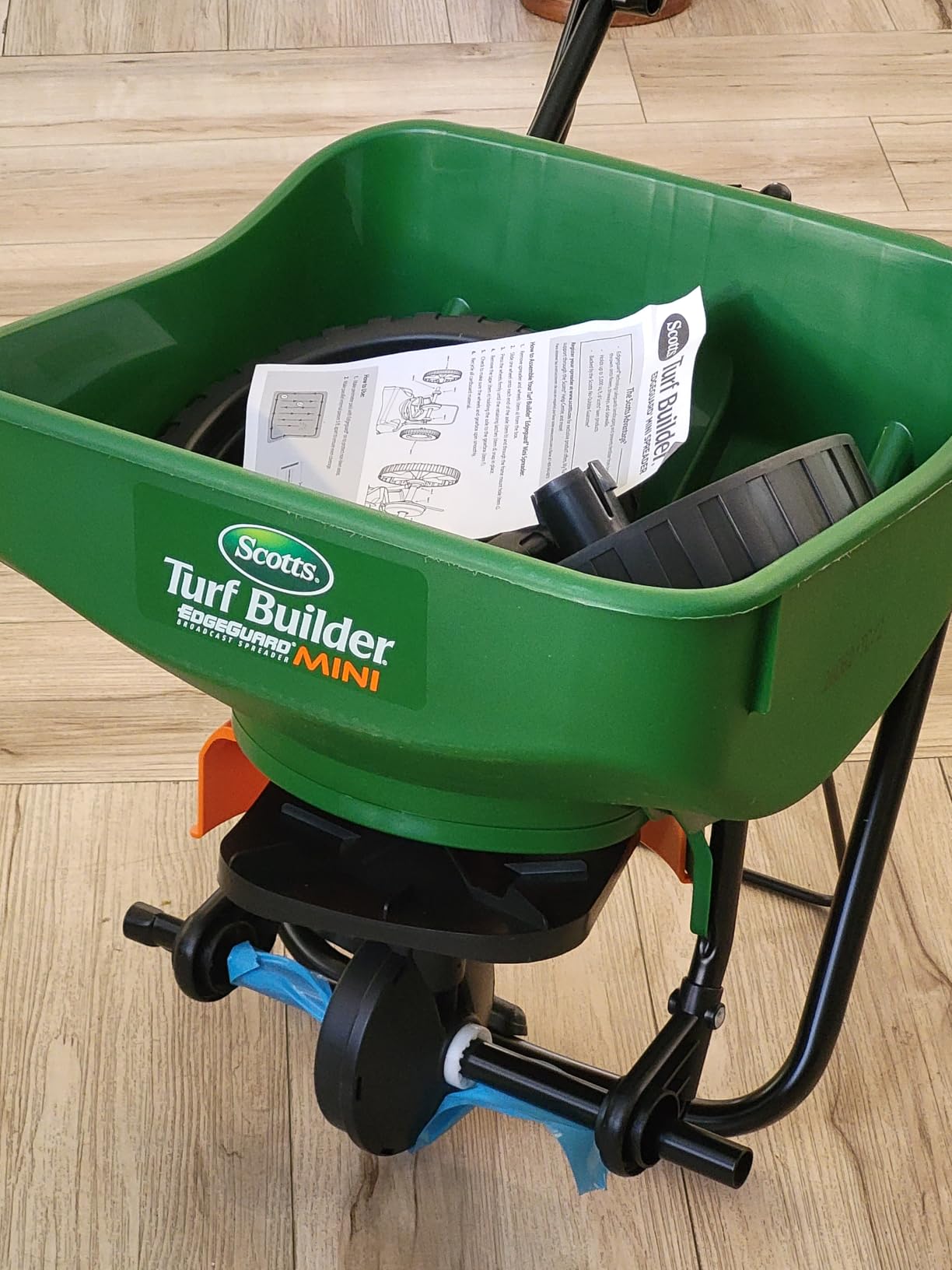
What to check before you buy
Measure your lawn first. If it is larger than 5,000 square feet, the repeated stops will cost you more time than a larger hopper would, and the best tow-behind spreaders are worth a look for that size.
Where it falls short
The hopper is small by modern standards, and the hand-crank pattern is sensitive to walking speed. Rush the pass and you get bands; slow down and it throws clean.
2. VEVOR 60 lb Walk-Behind Spreader: Best for Large Lawns
VEVOR Walk Behind Spreader 60 lbs Capacity Push Broadcast Spreader Black | for Lawn & Garden, 0-9.8 ft Spreading Width & 18 Adjustable Settings, 8 in All Terrain Pneumatic Tires for Seed, Fertilizer
60 lb hopper
0-9.8 ft spread width
18 adjustable settings
8 in pneumatic tires
Pros
- 60 lb hopper cuts refills on big lawns
- Adjustable width and 18 settings for even distribution
- Pneumatic all-terrain tires handle uneven ground
- Powder-coated steel frame
- Tool-free assembly
Cons
- Some units arrive needing control rod adjustment
- Push bar can arrive crooked
- Instructions unclear for assembly
If your overseeding job is measured in acres rather than square feet, hopper capacity becomes the deciding spec. At 60 pounds, this carries a full bag of seed in most cases, so you can lay a large lawn in one continuous pass.
Spread width adjusts from 0 to 9.8 feet, which lets you narrow the pattern at the edges and open it up across open turf. That single control does more for even coverage than any other feature here.
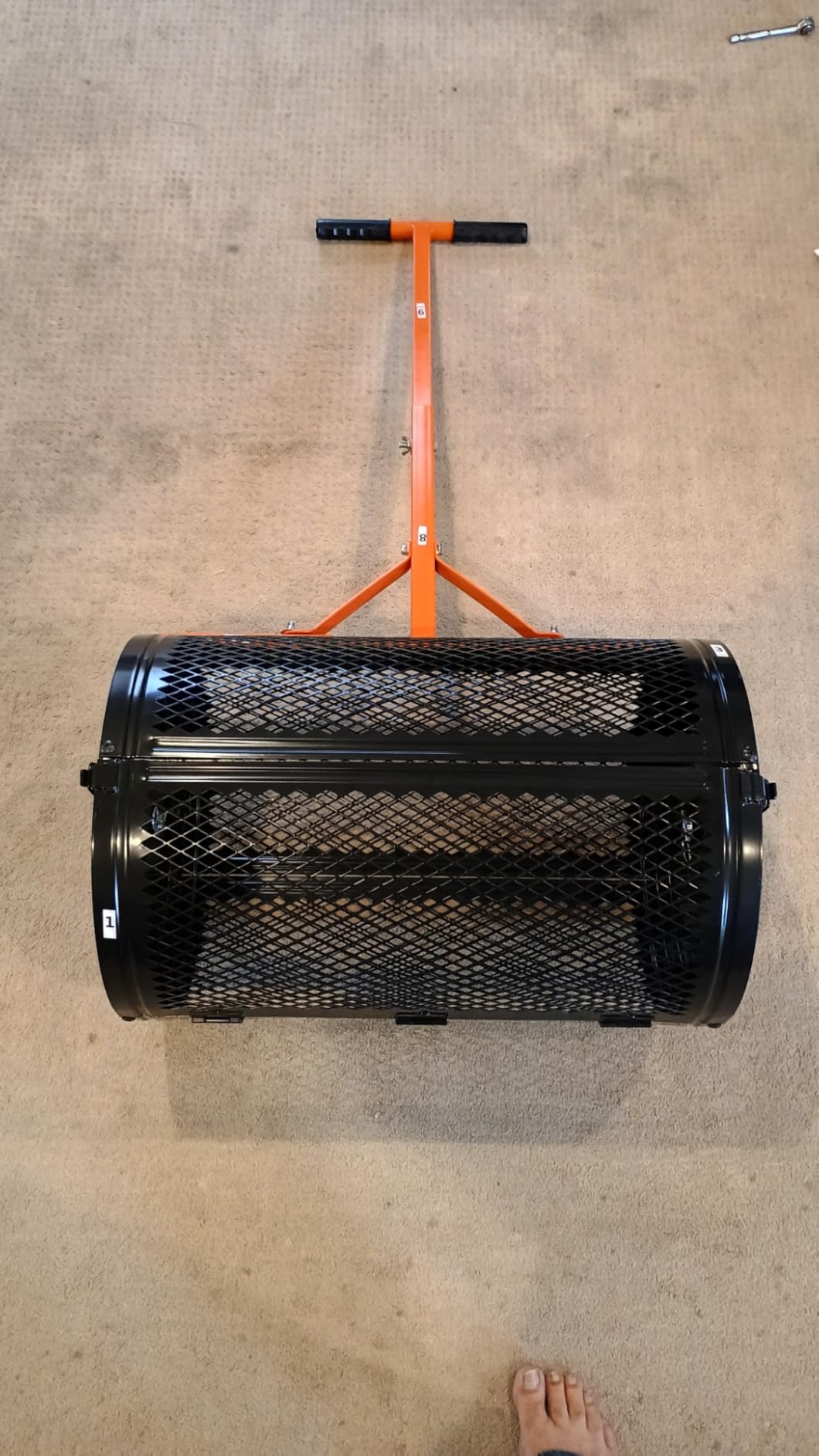
Eight-inch pneumatic tires roll over uneven ground and gravel without the skipping you get from small hard wheels, and skipping is a direct cause of striping.
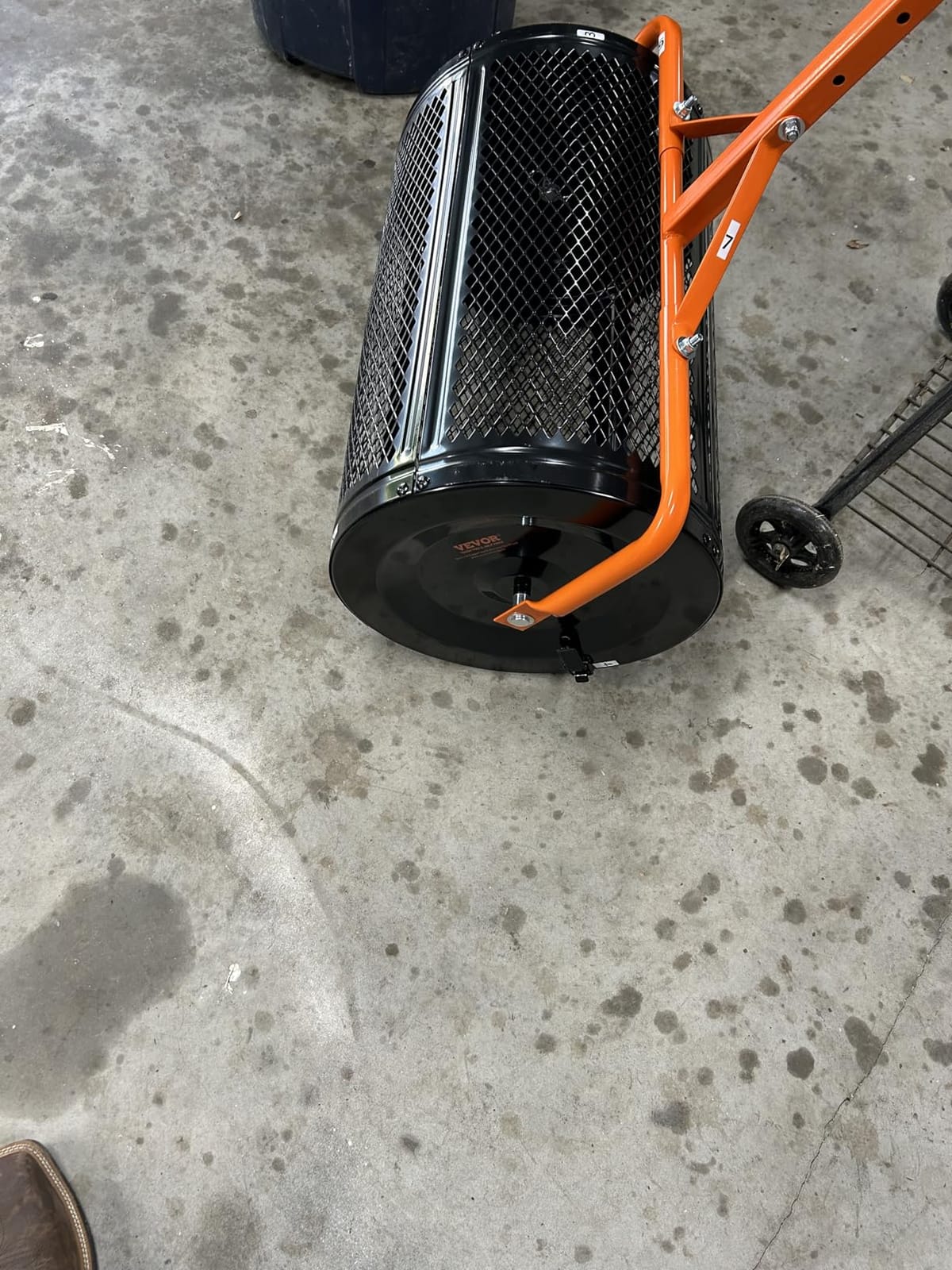
The frame is powder-coated steel, so it tolerates the fertilizer salt that destroys bare plastic frames over a season or two.
Who this suits
Homeowners with a large lawn, a small farm, or a commercial turf contract. Owners who have used it report smooth, even distribution and an easy tool-free build.
What to watch
The recurring complaints are quality-control issues on arrival rather than spreading failures: loose bolts, a crooked push bar, a control rod that needs adjusting. Budget ten minutes for setup checks before you seed.
3. SOLO 421S Chest-Mount Spreader: Most Compact for Rough Ground
SOLO Inc 421 20-Pound Capacity Portable Chest-Mount Spreader with Comfortable Cross-Shoulder Strap – 421S, White, 20lb
20 lb hopper
Chest-mount cross-strap
Spreads up to 30 ft
Adjustable flow and directional fan
Pros
- Chest-mount design keeps the load close to the body
- 20 lb hopper means far fewer refills
- Flow lever plus directional fan control spread width
- Handles fine seed such as clover without clogging
- Serviceable high-quality components
Cons
- Flow lever sits against the chest and is found by feel
- Shoulder strap gets uncomfortable when fully loaded
- Cranking is set up for right-handed use
This is the one to consider when a wheeled spreader stops making sense: rough ground, slopes, gravel drives, food plots and woodland edges. Mounted on your chest with a cross-shoulder strap, it follows your body instead of a wheel line.
At 20 pounds, the hopper is roughly four to five gallons of seed mix, and owners use it to seed areas a push spreader cannot reach at all.
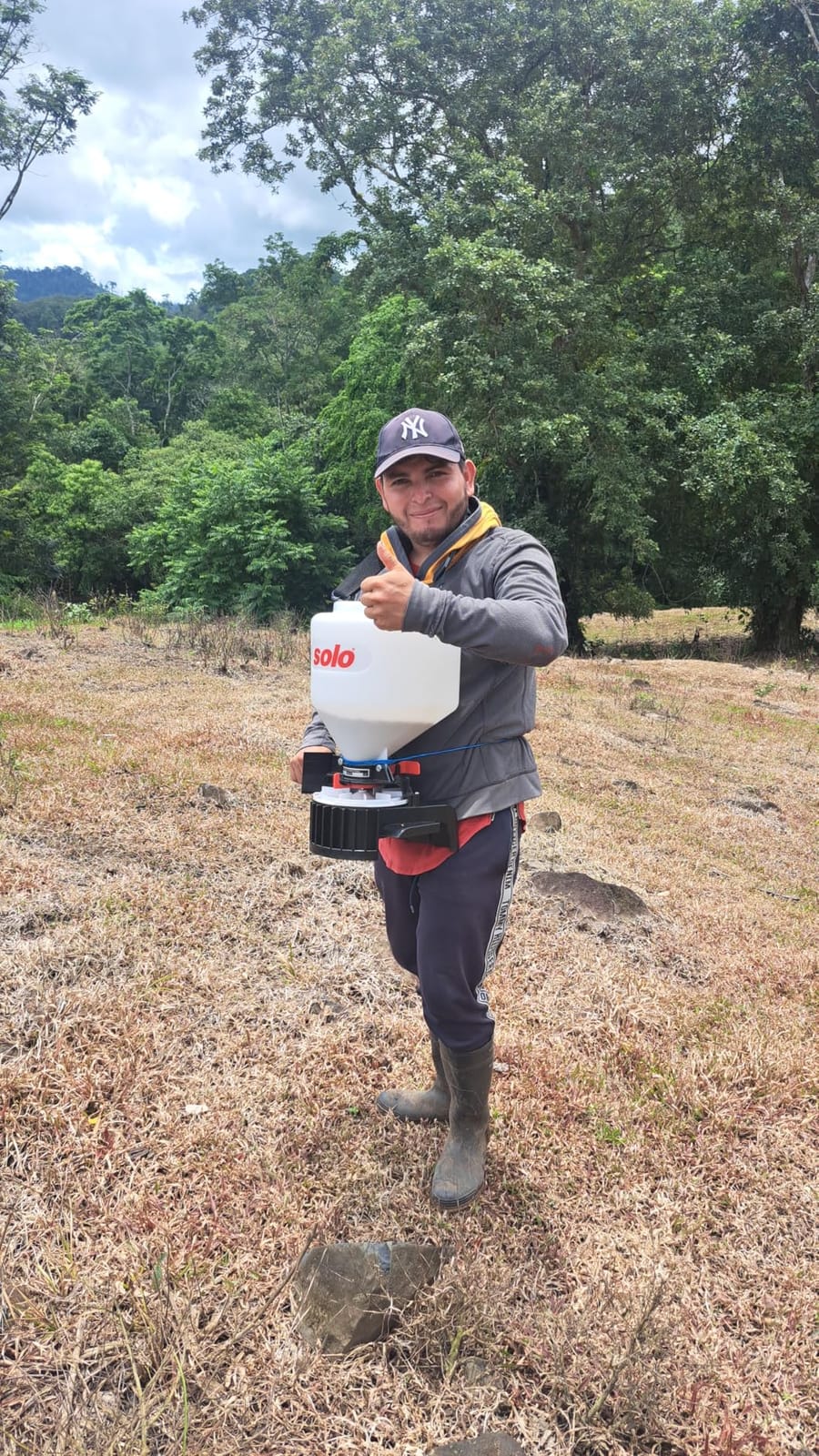
The directional fan and adjustable flow lever give genuine control over spread width, which is up to about 30 feet. That is the widest pattern in this roundup.
Reviewers call it the best-engineered portable seeder they have owned, and point out that it moves fine seed such as clover without bridging in the throat.
Where it earns its price
Anyone seeding more than a lawn, or working where a walk-behind unit is impractical. The sealed, serviceable design also suits people who want one tool that survives years of seasons.
Where it gets awkward
The flow lever rests against your chest, so you find it by feel rather than sight. Loaded heavy, the strap presses over a long session, and the crank is arranged for right-handed use.
4. Scotts Whirl Handheld Spreader: Best Hand-Held for Small Yards
Scotts Whirl Hand-Powered Spreader
Holds 1,500 sq. ft.
Adjustable arm support brace
Smooth hand crank
Setting dial
Pros
- Lightweight and easy to carry
- Arm brace cuts wrist fatigue when full
- Smooth crank controls speed and pattern
- Handles seed fertilizer weed control and ice melt
- Simple flow dial
Cons
- 1500 sq. ft. capacity is too small for full lawns
- Coverage width is modest versus walk-behind units
At 4.7 stars from more than 1,700 reviews, this is the highest-rated spreader in our lineup, and for a specific job it is very good: spot seeding and back yard patches up to about 1,500 square feet.
The adjustable arm support brace is the detail that sets it apart. When the hopper is full, it moves the load off your wrist onto your forearm, which is the difference between a five-minute job and an uncomfortable one.
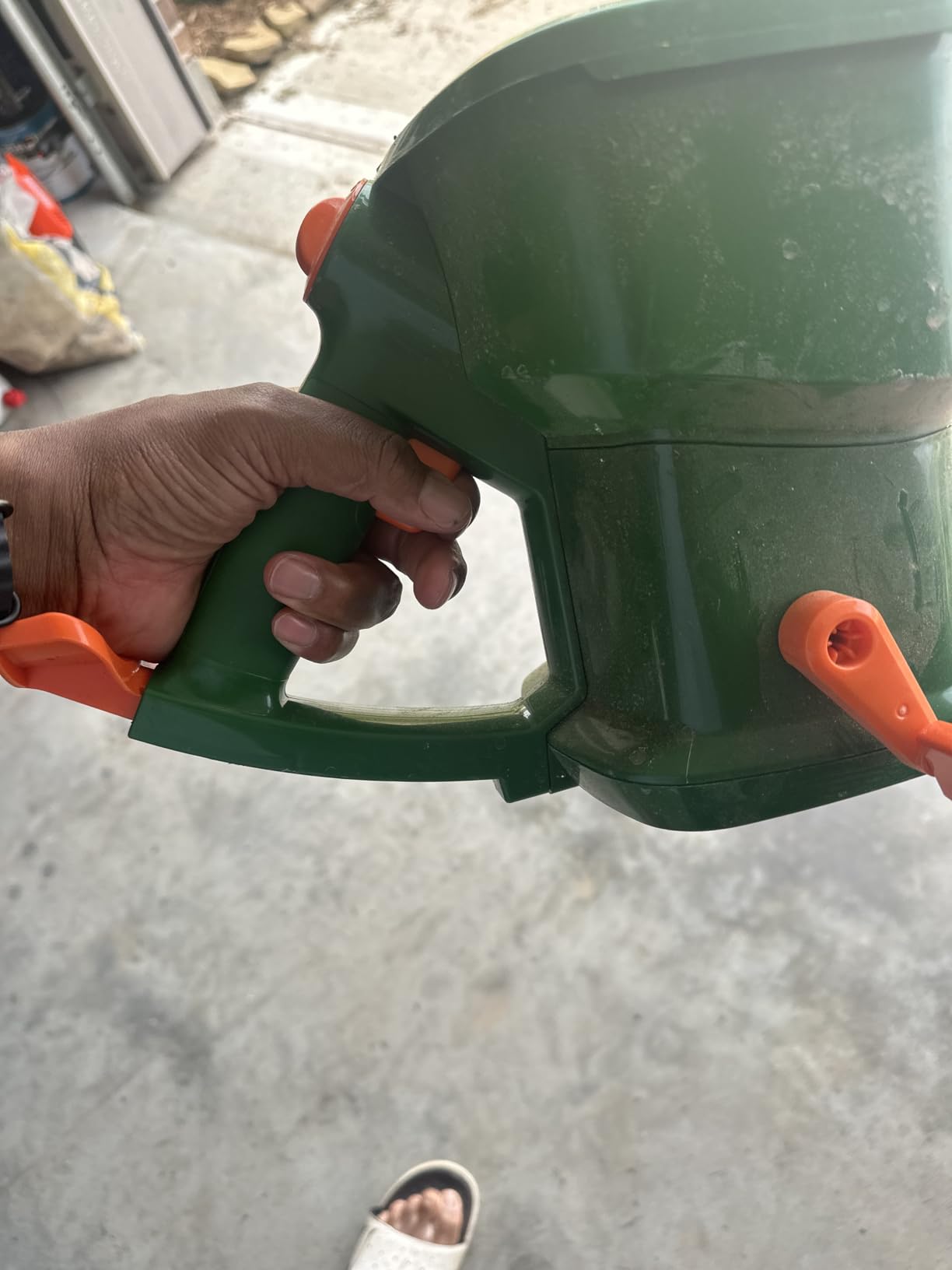
Owners consistently describe distribution as even and note that it is faster and more consistent than scattering seed by hand. The setting dial handles seed, fertilizer, weed control and ice melt on the same tool.
Best used as a second spreader
Most owners keep it alongside a walk-behind unit, using the walk-behind for the lawn and this for edges, corners and repair patches. Trying to cover a full lawn with it means many refills.
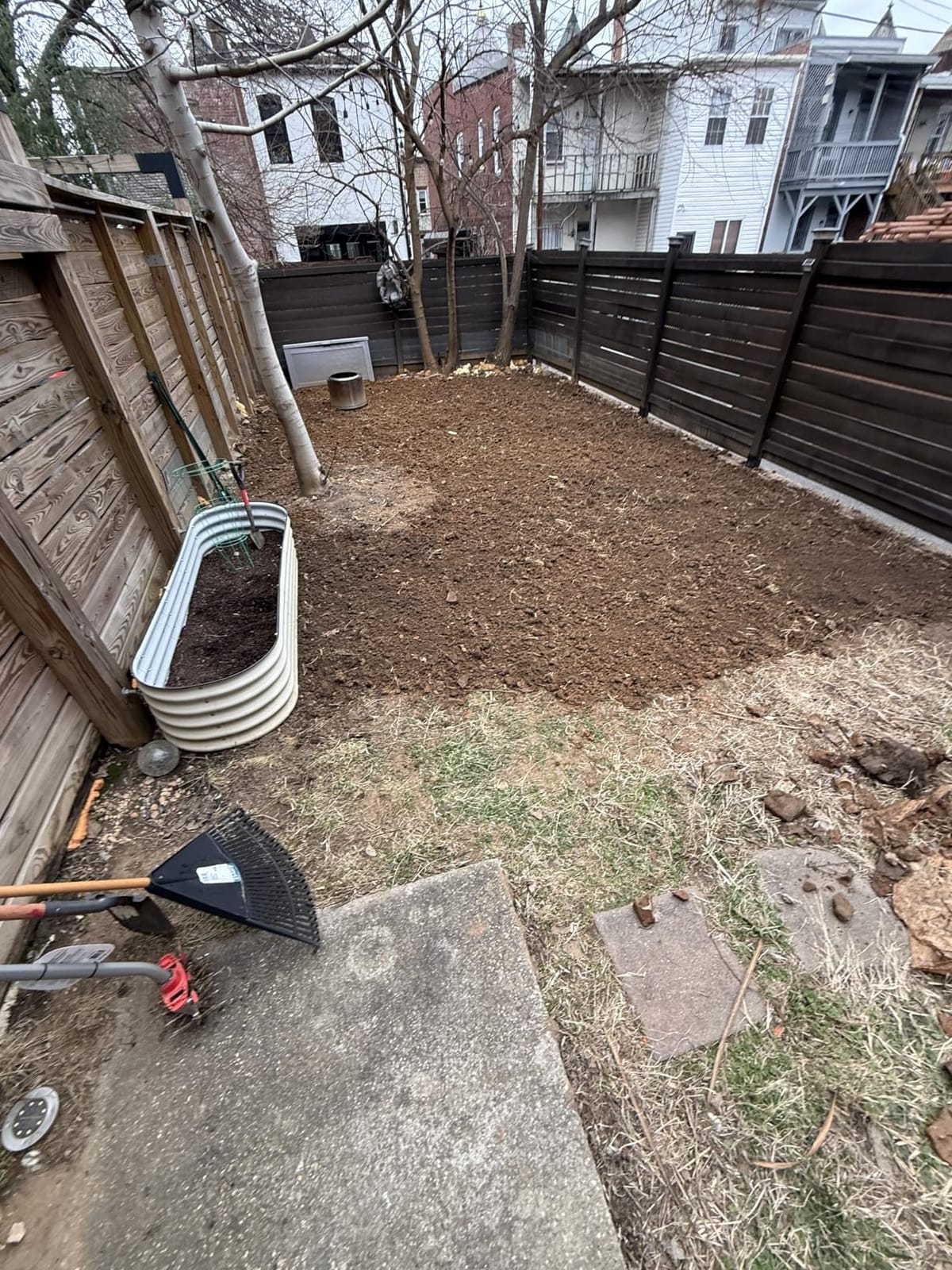
What to watch
Coverage width is modest next to any walk-behind unit, and hand cranking puts the rate of application directly on your crank speed. Keep it slow and even.
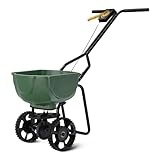
5. Amazon Basics Fertilizer Spreader: Best Budget Walk-Behind
Amazon Basics Fertilizer Spreader for Lawn, Evenly Spreading, Multi-Gear System, Covers 5000 Square Feet per Load, 33 Pounds, 0.53 Cubic Feet, All Season, 1-Pack
5,000 sq. ft. per load
33 lb capacity
Multi-gear flow control
Steel frame
Pros
- Covers 5000 sq. ft. in roughly ten minutes per load
- Assembles in under five minutes without tools
- Adjustable flow dial is simple and accurate
- Wide wheels roll smoothly over sloped lawns
- Hopper holds far more than comparable budget units
Cons
- Build quality feels light in some parts
- Hopper opening makes it hard to see when flow stops
- Control handle can jam or not open consistently
This is the value walk-behind in the group, and the pitch is capacity per load. Thirty-three pounds and 5,000 square feet of stated coverage put it ahead of most entry-level spreaders.
Note the load limits: 12 pounds for uncoated seed and 33 pounds for coated seed. Seed coatings are heavier, so check what you are carrying before a full pass.
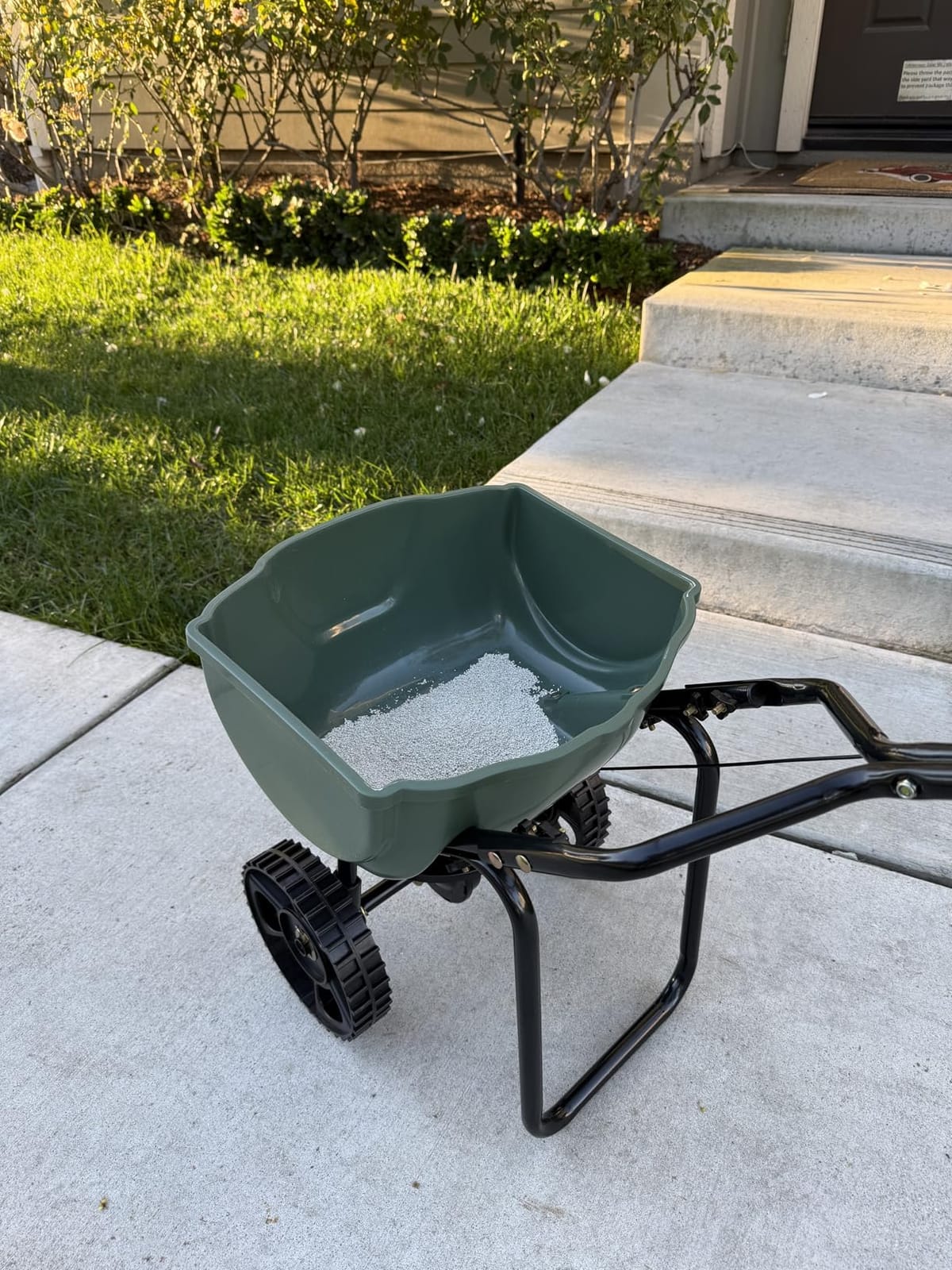
Owners often compare it favourably to costlier name-brand units, citing fast assembly, smooth rolling and a hopper large enough for a 5,000 square foot lawn in one load.
Good fit for most suburban lawns
If your lawn is around 5,000 square feet and you want to spend as little as possible on a walk-behind, this covers the job without a refill stop.
What gives way over time
Reviews point to light-feeling materials, an occasional jammed control handle, and units arriving with missing hardware. It is not built for coarse materials such as gravel or road salt.
6. EarthWay 2750 Bag Seeder: Best for Food Plots and Large Open Areas
EarthWay Products 2750 25lb Nylon Bag Seeder Spreader – Red, Durable, Water Resistant, Food Plot Equipment, Seed Spreader, Grass Seeder Made for Hunters, Farmers, Gardeners, Lawn Maintenance
25 lb capacity
Water-resistant nylon bag
Sealed gearbox
Spring-loaded shutoff
Pros
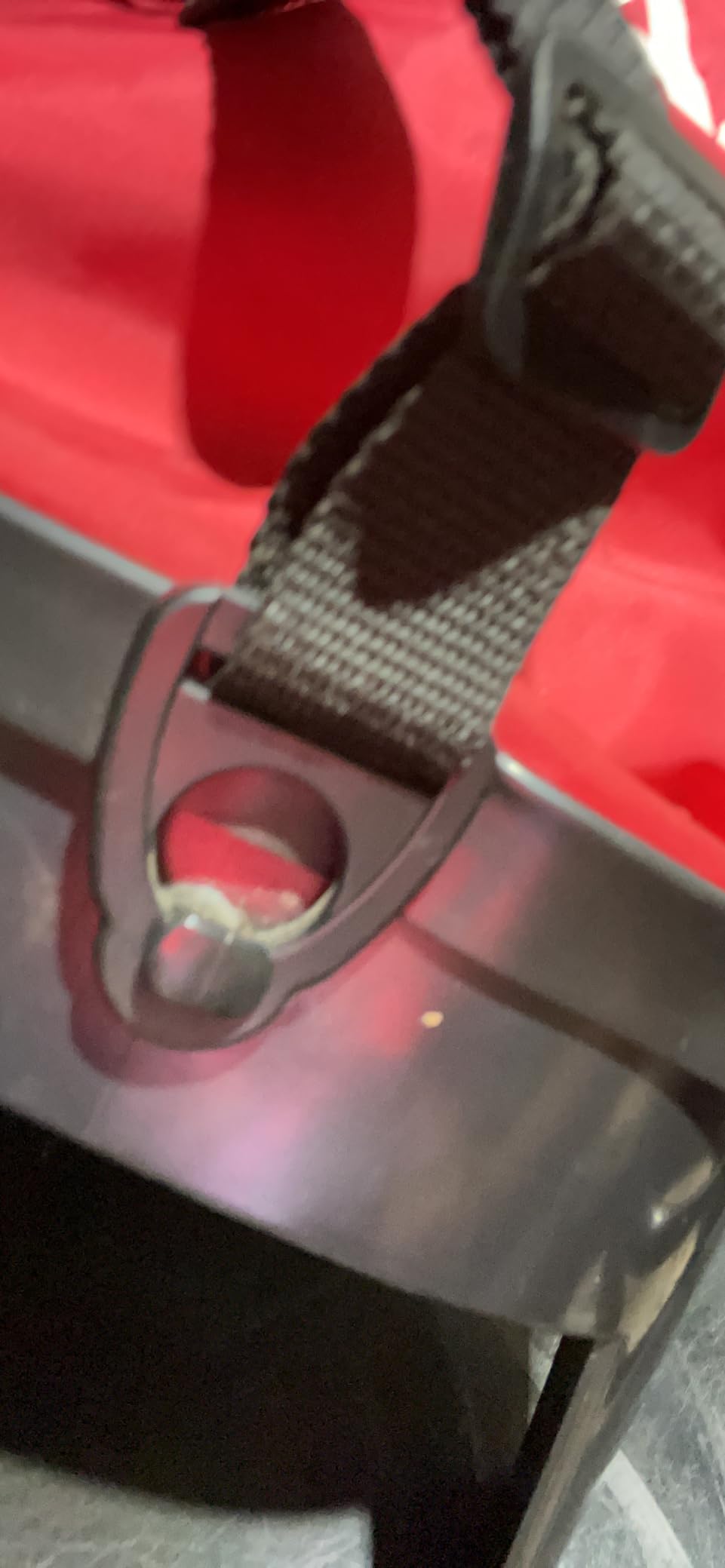
- Rugged water-resistant nylon bag for outdoor work
- Integrated agitator and spring shutoff for controlled flow
- Sealed gearbox designed for long service life
- Side spread control keeps material off unwanted areas
- Cross-shoulder strap for extended carry
Cons
- Nylon bag is less durable than a rigid hopper over the long term
- Narrower spread pattern than larger rotary spreaders
- Calibration takes practice for a consistent pattern
This bag-style broadcast spreader is aimed at hunters, farmers and gardeners rather than purely at lawn work, and it is at home on rough ground and large open areas.
The integrated agitator and spring-loaded shutoff are the mechanical heart of it. A spring shutoff closes the flow the moment you release the lever, which keeps seed from dribbling out while you turn.
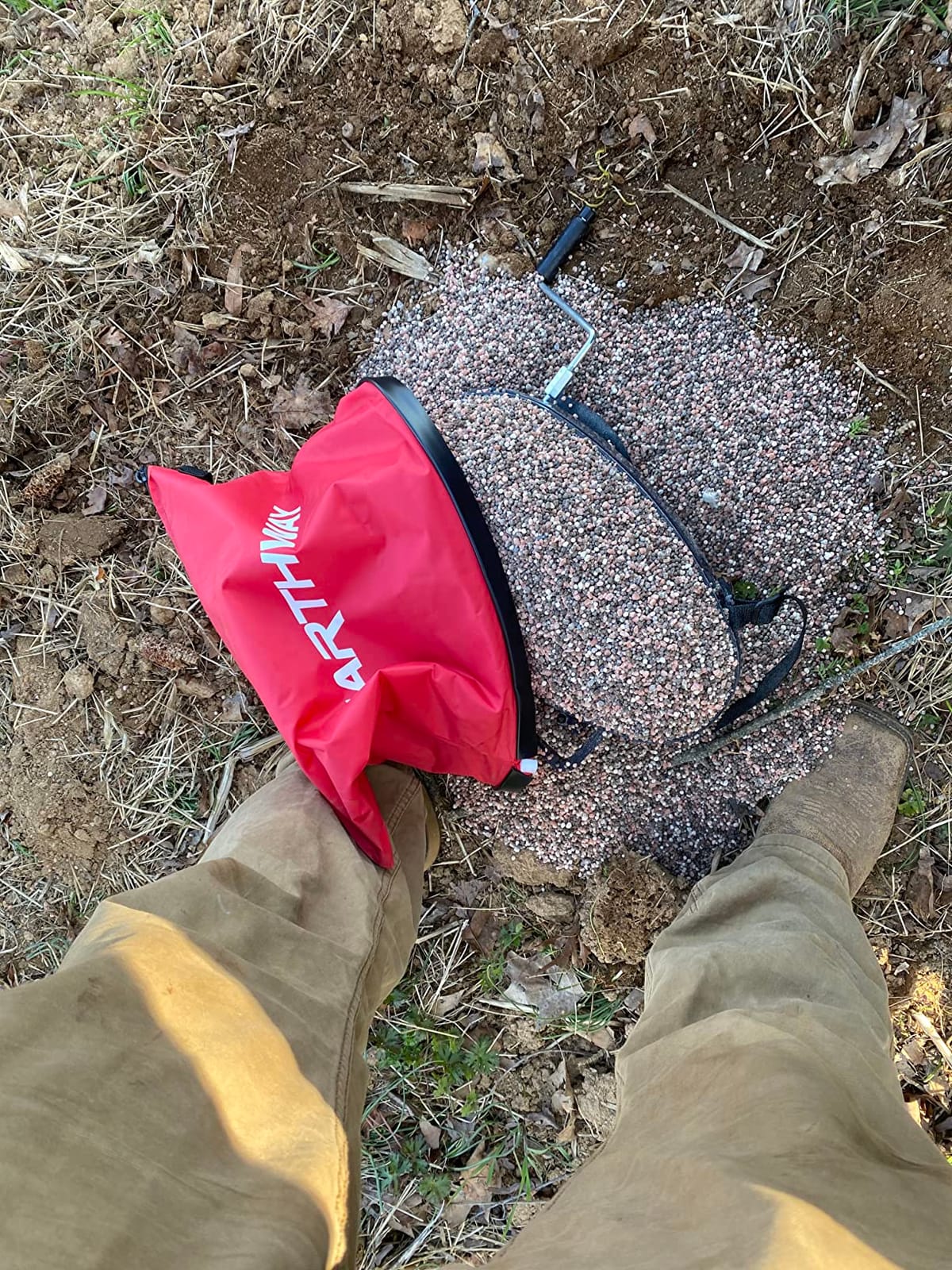
Side spread control lets you aim the pattern away from areas you do not want to seed, and the sealed gearbox is designed to keep grease in and grit out.
Where it fits
Anyone broadcasting larger quantities than a lawn requires, or working in conditions where a fabric bag beats a rigid hopper because it will not crack in cold weather.
What reviewers flag
At 4.1 stars, the comments concentrate on two things: the nylon bag wears faster than a hard hopper, and the pattern needs adjusting before it comes out even. Expect a calibration session.
7. Brinly 5 lb Handheld Spreader: Best for Tight Spaces
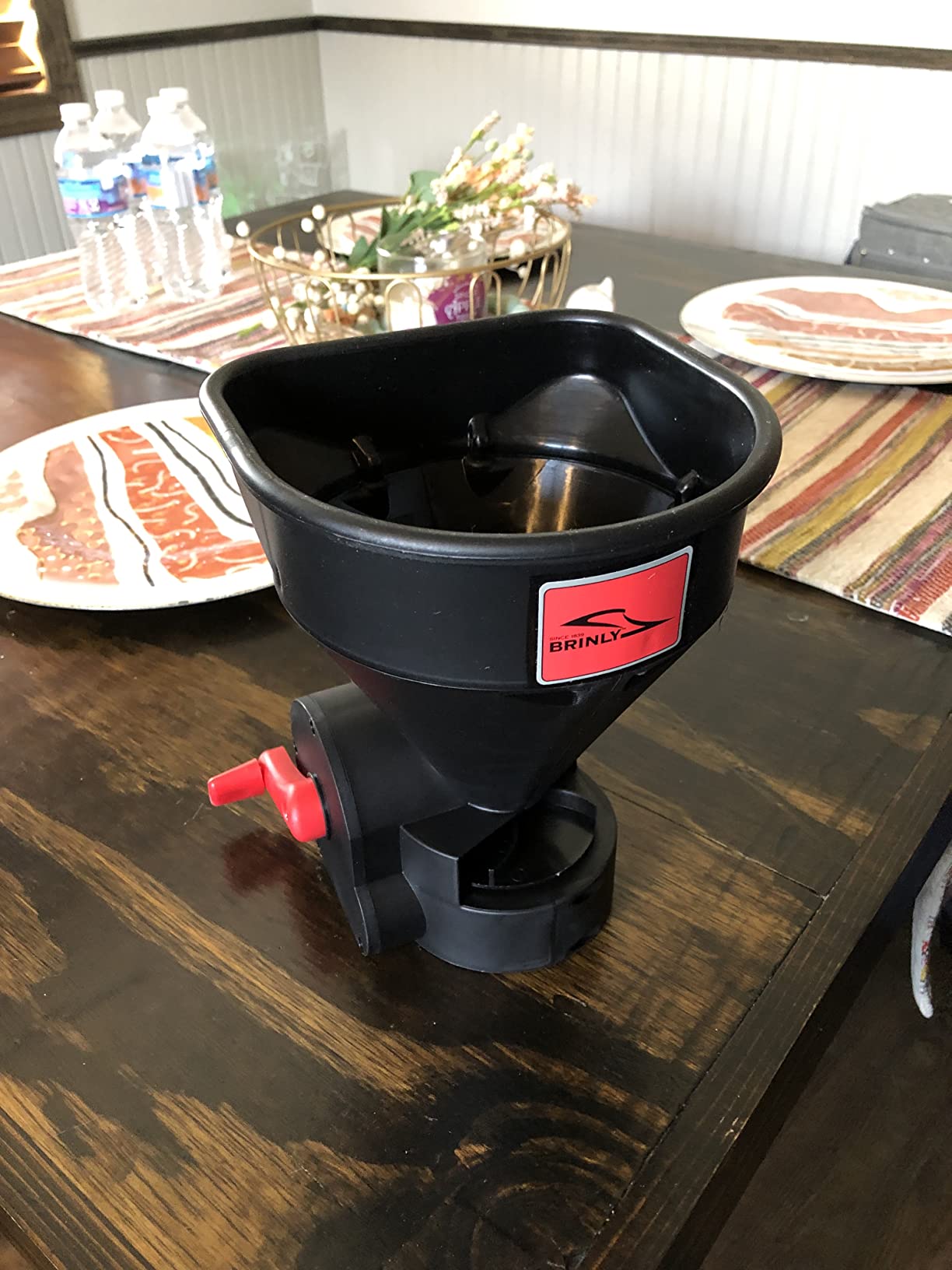
Brinly 5lb. All-Season Handheld Spreader with Easy-Fill Design for Seed, Ice Melt, & Fertilizer
5 lb capacity, about 0.5 gallon
Spreads up to 5 ft
Variable flow gate
Enclosed gears
Pros
- No assembly required
- Reinforced contoured lip makes filling quick
- Variable flow gate plus long crank spreads fast
- Handles seed fertilizer and ice melt
- Compact enough for side yards and flower beds
Cons
- Impeller and chute can jam on coarse granules or ice melt
- Material can be thrown onto shoes while cranking
- About 5 ft of spread width per pass
- Trigger plus crank can be awkward for small hands
Side yards, narrow strips between a fence and a house, and the shaded corner behind a shrub are where this earns its place. The compact footprint fits where a walk-behind unit simply will not turn.
Five pounds works out to roughly half a gallon, and the reinforced contoured lip is shaped so you can scoop and pour without spilling seed across the rim.
Owners like the enclosed gearing and steel-plated hardware, and it is often bought to replace a bulkier handheld unit that was awkward to store.
What it is good for
Spot seeding bare patches, seeding along a bed edge, and reaching under shrubs. The long crank and trigger handle make short applications quick.
What it struggles with
The consistent complaint is jamming: the impeller and chute can bind with coarse granules or ice melt. Keep it on dry seed and fertilizer, where reviewers say it performs well.
8. Uniqwamo Cordless Handheld Spreader: Best Cordless Seeding Option
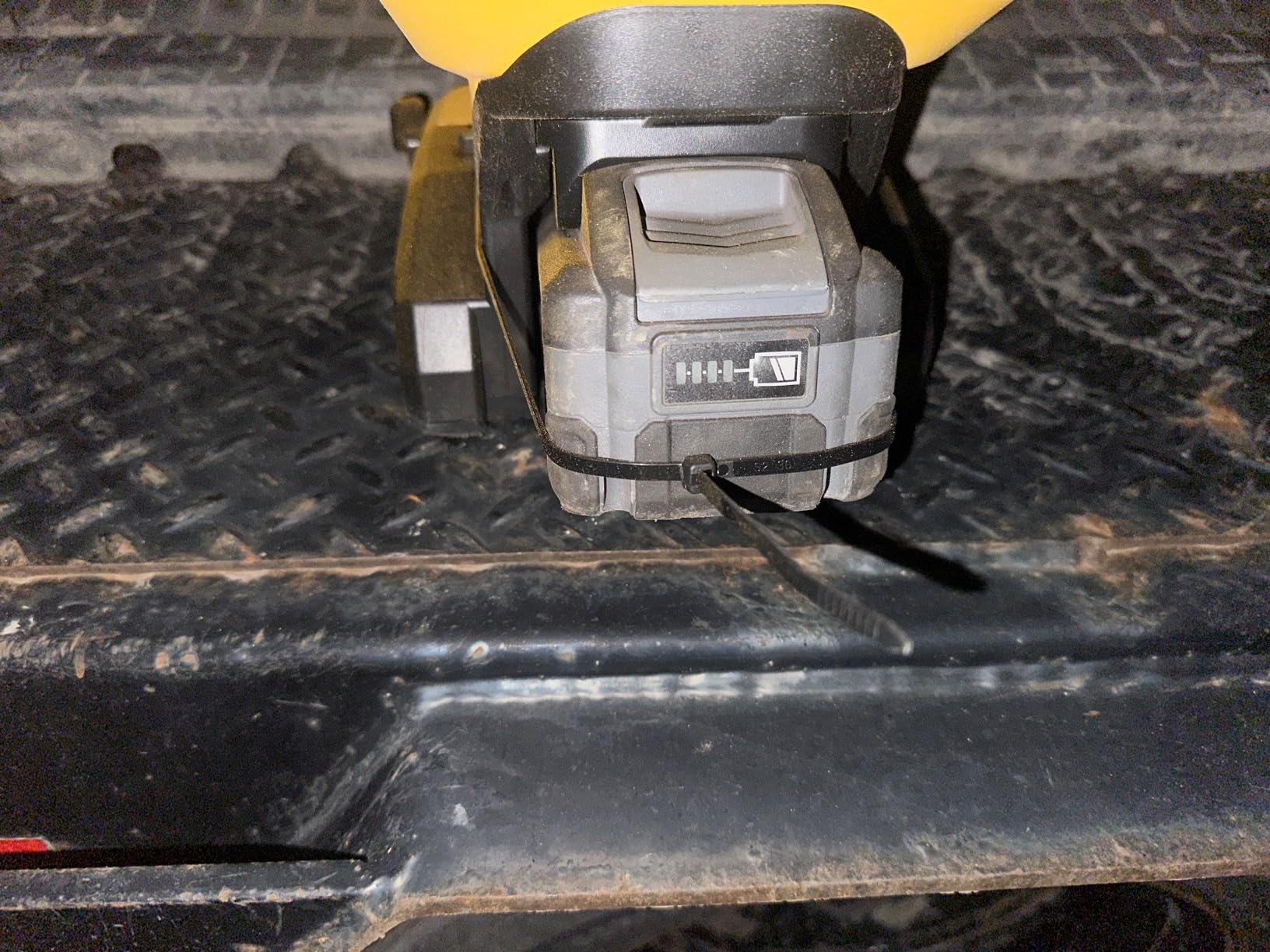
Uniqwamo Handheld Power Spreader Compatible for Dewalt 20V/60V Battery
Fits Dewalt 20V and 60V batteries
3L hopper, 700 m2 coverage
6 speeds, 8 volume settings
125 degree disc
Pros
- Powered spreading removes hand cranking
- 3L hopper covers up to 700 square meters
- Speed and volume settings give fine rate control
- Adjustable disc angle directs the pattern
- Uses batteries you may already own
Cons
- Battery and charger not included
- Costs more than comparable manual shakers
- Some buyers question long-term plastic durability
There is no crank to turn here. If you already run Dewalt 20V or 60V lithium-ion packs, this is the only cordless option in our roundup and the fastest way to seed without a push spreader.
The hopper is 3 litres with a stated maximum coverage of 700 square meters, and the 125-degree adjustable sowing disc lets you aim the throw.
Six speed settings and eight sowing volume settings give more rate control than most hand cranks offer, and the balanced centre of gravity keeps it steady on smaller areas.
Who should buy it
Households with existing Dewalt batteries who want to avoid cranking on large seeding days. It also reaches garden areas and corners a large push spreader cannot access.
What to factor in
The battery and charger are sold separately, which pushes the real cost above comparable manual shakers. Some buyers also question how long the plastic housing and gearing will last.
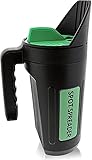
9. Spot Spreader 80 oz Hand Shaker: Best Budget Hand Unit
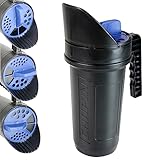
Hand Spreader Shaker for Seed, Salt, De-Icer, Ice Melt, Earth Food and Fertilizer – Multiple Opening Sizes for Any Need – Up to 80 Oz
Up to 80 oz capacity
Three opening sizes plus closed setting
Sealed screw top
Stands upright
Pros
- Larger capacity than most hand shakers
- Multiple openings handle seed salt and fertilizer
- Thick plastic resists cracking
- Lightweight and easy one-handed
- Closed setting stops spillage when stored
Cons
- Smallest opening can be slow with fine granules
- Salt crystals can wedge into the sliding cover
- Shaking gives less precise control than a crank spreader
At 2,510 reviews and 4.5 stars, this hand shaker is the most-reviewed non-Scotts unit here, and the 80 ounce capacity is generous for the format.
Three adjustable opening sizes plus a closed setting handle grass seed, fertilizer, salt and ice melt from the same container, and the screw top means you can pour straight from a large bag.
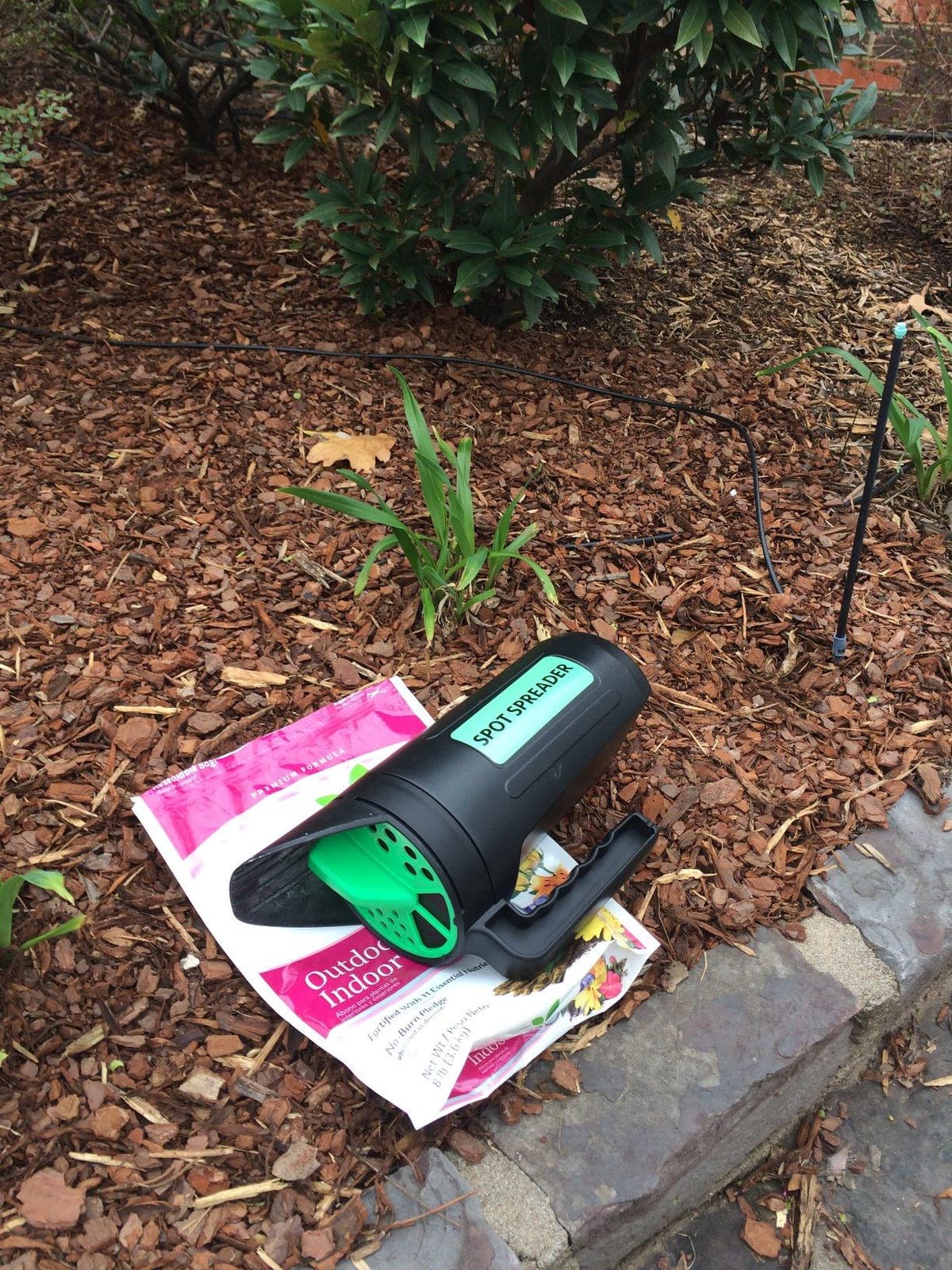
It stands upright when set down and stores sealed with product inside, so you are not scooping loose seed out of a bag every time you patch the lawn.
What it handles well
Steps, small bare patches, garden beds and thin areas along a fence. Reviewers use it for ice melt as often as for seed and rate the plastic as genuinely sturdy.
What to watch
The smallest opening is slow with fine ice melt granules, and salt crystals can wedge into the sliding cover. Hand shaking also asks more of you physically than a crank spreader does.
10. CHAPIN 8740A Hand Shaker: Best for Steps and Small Patches
CHAPIN 8740A 64 oz All-Season Hand Shaker Spreader, Seed, Fertilizer & Salt
64 oz poly bottle
Three lid openings
Large contoured handle
Stores with product inside
Pros
- 64 oz capacity in a compact inexpensive shaker
- Three opening sizes suit different particle sizes
- Plastic has held up through freezing winters
- Handle is easy to grip with gloves on
- Stores in a closet or vehicle with product inside
Cons
- Lid must be screwed down until it clicks or it loosens
- No mid-size opening between the largest holes and open
- Solid rock salt gets tiring to shake by hand
Buy this for the small, awkward work: seeding a shaded corner, filling a low patch, or putting ice melt on steps and walkways. A 64 ounce poly bottle is compact enough to live in a closet and still holds a useful amount.
The twist lid selects small, large and wide discharge openings, which covers the range from fine grass seed through to coarse ice melt.
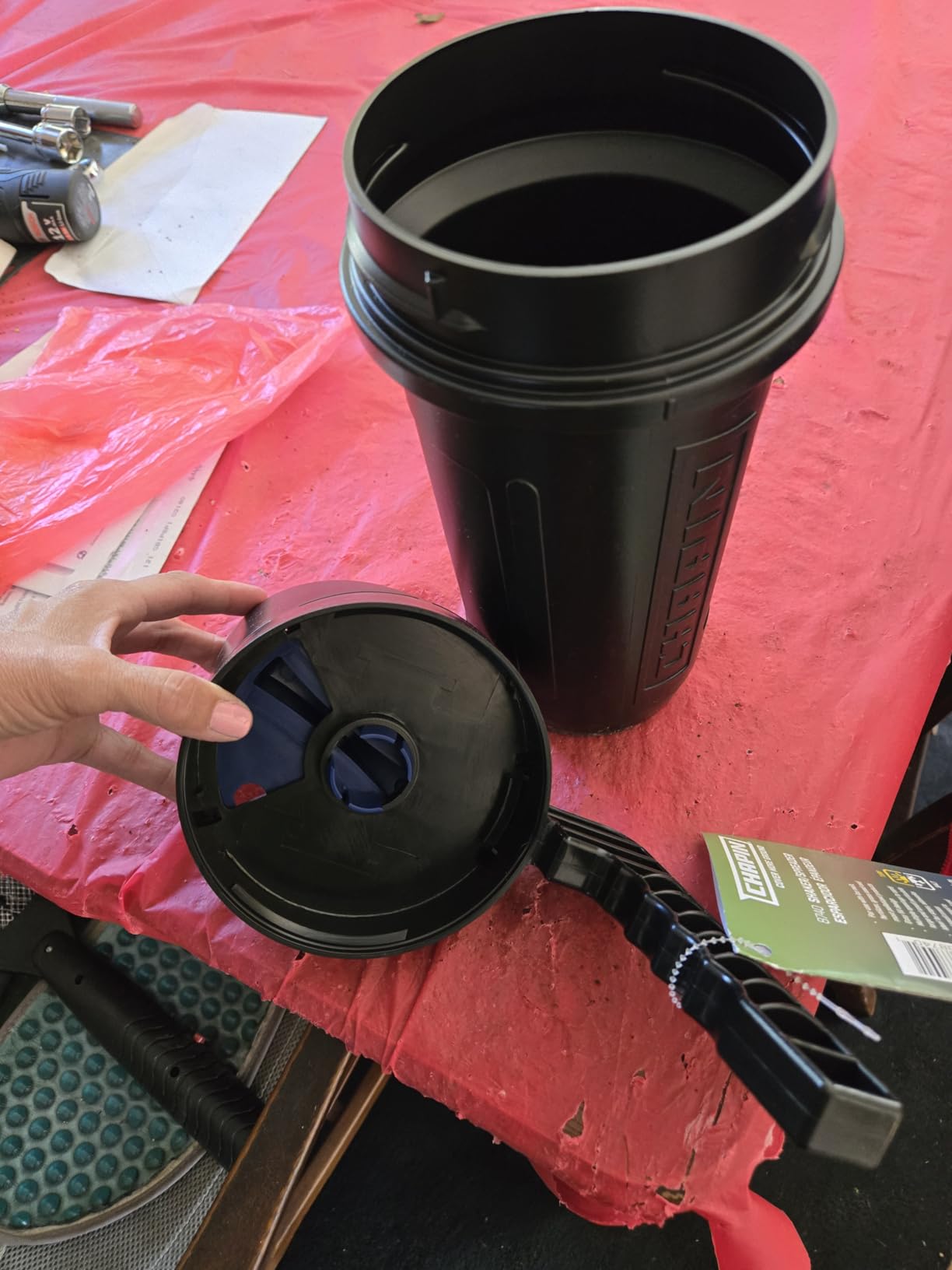
Owners highlight the durable plastic, which has held up through freezing winters, and the contoured handle sized for gloved or bare hands.
Best use
Treat it as a permanent tool rather than a lawn spreader. Because it stores with product inside, it is always there when a patch needs attention in a hurry.
Two honest notes
Several reviewers point out there is no opening size between the largest holes and fully open, so mid-size flow is not available. And the lid must be tightened until it clicks or it works loose in the bag.
How to Choose a Grass Seed Spreader for Overseeding
Start with lawn size and capacity, because that single match decides whether you finish in one pass. A spreader that holds 5,000 square feet is right at the limit for a lawn of that size; anything much larger and you will refill mid-pattern.
Under 2,000 sq. ft. — a hand-held crank or shaker is enough. A walk-behind unit would be dead weight.
2,000 to 6,000 sq. ft. — a walk-behind with a 5,000 sq. ft. hopper covers it in one or two clean passes.
6,000 sq. ft. and up — a 20 to 60 pound hopper, or a tow-behind unit, saves a lot of stopping.
Rough ground, slopes or plots — a chest-mount spreader beats a wheeled unit.
Next, look at spread width. Wider is faster, and adjustable width is better still because it lets you narrow the pattern at the edges and open up across open turf. Then check edge control: a side shield like EdgeGuard saves seed on driveways and walks.
Finally, consider build materials and parts. A powder-coated steel frame tolerates fertilizer salt far better than bare plastic, and a sealed gearbox means fewer adjustments over time. If you plan to buy once and keep the spreader for many seasons, parts availability is worth checking before you order.
For the units that carry material rather than meter it by hand, our tow-behind spreader comparison covers the larger end of the market in more detail.
How to Use a Spreader for Overseeding Without Striping
Striping is a technique problem far more often than a spreader problem. The technique that fixes it is straightforward.
Run a calibration pan test first. Catch the output over a known area, weigh it, and adjust the setting until the rate matches the seeding rate on your seed bag.
Walk the perimeter first with the spreader shut off as you turn, so the edges of the lawn are covered before the open middle.
Set the dial to half the labelled rate and make two passes at right angles. Two half-rate passes overlap enough to average out unevenness.
Keep a steady walking pace. On hand cranks, crank speed has to match walking speed or the rate changes under you.
Overlap broadcast passes by roughly 10 to 15 percent, and for a drop spreader match the previous wheel line exactly.
Close the flow whenever you stop or turn. A spring shutoff handles this automatically.
If the lawn already looks striped, the fix is usually to re-seed the light bands at half rate rather than replace the spreader. Empty bands mean the material never reached them, so no adjustment to the machine will correct what already happened.
Spreader Settings and Calibration for Grass Seed
Seed bags frequently print a fertilizer setting, because most bags are designed for feeding as well as seeding. Treating that number as a grass seed setting is one of the more common overseeding mistakes, along with skipping calibration entirely and reapplying over already-covered ground.
Because seed density varies by species, the reliable approach is a pan test rather than a dial chart. Set the spreader on the lowest setting, catch the output in a pan or on a known patch of cardboard, weigh what comes out, and divide by the area covered. Compare that figure to the seeding rate on the bag and step the setting up or down until they match.
Run that test with the seed you are actually using. Perennial ryegrass, tall fescue and Kentucky bluegrass all behave differently through a hopper, and coated seed flows differently from raw seed. Our guide to choosing turf covers seed and surface options before you calibrate.
Finally, rinse the hopper after every use. Leftover fertilizer salt is the main reason spreader frames and gearboxes fail early, and a dry hopper stores better through winter too.
Frequently Asked Questions
What spreader setting should I use for overseeding?
There is no universal number, because seed density varies by species and coating. Seed bags often print a fertilizer setting rather than a seeding rate. Use a pan test: catch the output over a known area, weigh it, and step the dial up or down until the rate matches the seeding rate on your bag. Making two passes at half the labelled rate is more reliable than one heavy pass.
Which spreader is best for grass seed?
For most suburban lawns, a walk-behind broadcast spreader with a 5,000 square foot hopper is the best balance of speed and control, and a pre-calibrated model removes setup guesswork. Near driveways and beds, a side shield keeps seed off hardscapes. For spot work on small patches, a hand-held crank or shaker is the right size.
Is it better to spread grass seed by hand or with a spreader?
Past a few hundred square feet, a spreader is clearly better. Hand scattering produces clumps and bare patches because seed falls in the same spot repeatedly. A hand-held shaker or crank spreader is worth it for a single 10 by 10 foot bare patch, where a walk-behind unit would be awkward to fill and clean for one tray of seed.
Which is better, a broadcast or drop spreader?
Broadcast is faster and covers open lawns in less time, but material lands beyond the wheel line and needs control near edges. Drop is slower but releases seed straight down at hopper width, keeping it off walkways and planting beds. For an open rectangular lawn, choose broadcast. For a lawn hemmed in by hardscape, choose drop.
How do I stop my lawn from looking striped after seeding?
Overlap broadcast passes by roughly 10 to 15 percent, walk the perimeter first with the flow shut off, and make two passes at half the labelled rate in perpendicular directions. Keep a steady pace, since on hand cranks a change in crank speed changes the application rate. If bands already exist, re-seed the light areas at half rate, since no spreader adjustment corrects ground that was skipped.
Which Grass Seed Spreader Should You Buy?
For most people, the best grass seed spreaders for overseeding come down to one of three machines. The Scotts EdgeGuard Mini is the pick for a typical suburban lawn up to about 5,000 square feet, because it needs no assembly, needs no calibration guesswork, and keeps seed off the driveway. On a larger property, the VEVOR 60 lb walk-behind carries a full bag and adjusts spread width from 0 to 9.8 feet. On rough ground or a plot, the SOLO 421S chest-mount spreader reaches places a wheeled unit cannot.
Whatever you choose, the technique matters more than the badge. Calibrate with the seed you are using, run the perimeter first, and make two half-rate passes. Our picks in 2026 cover everything from a two-minute patch repair to a full-acre reseed, and the fertilizer spreader guide covers the feeding side of the same machines.