
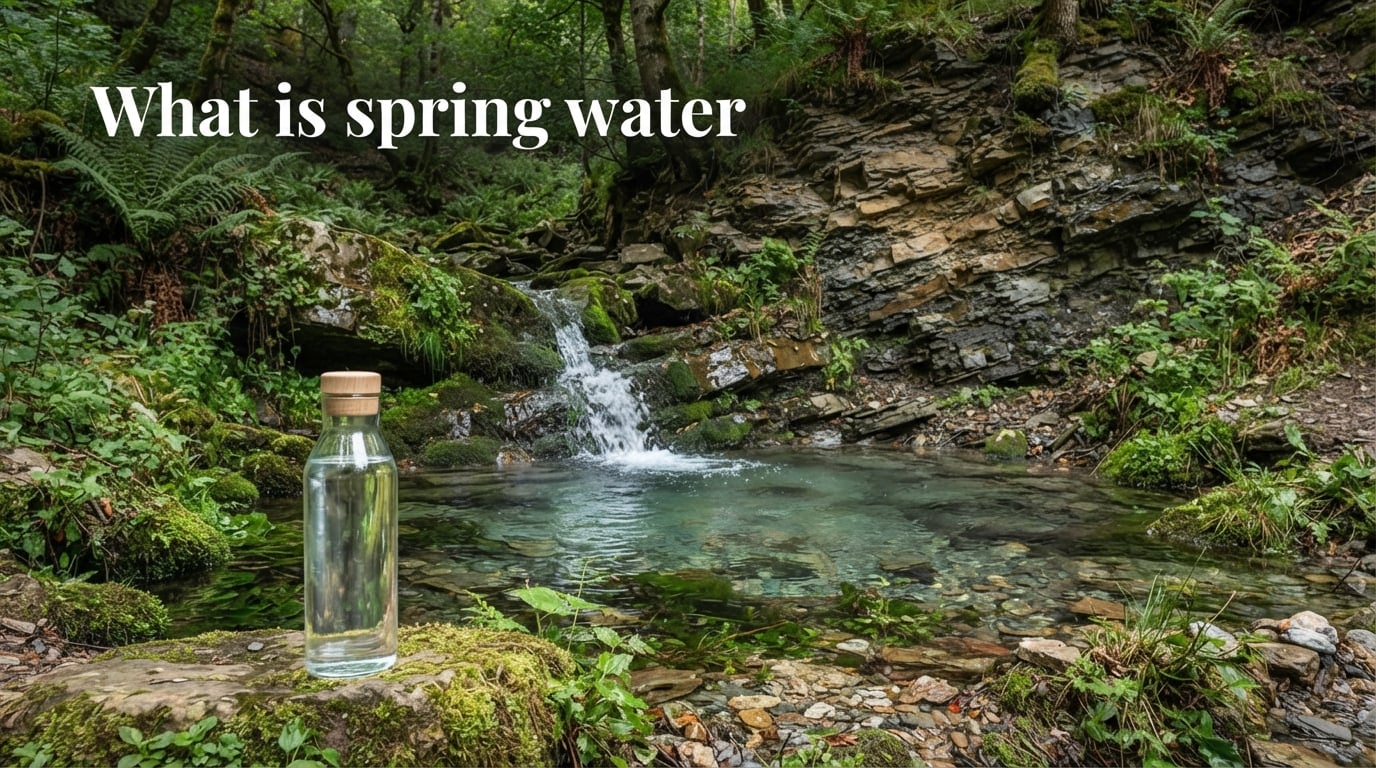
Spring water is groundwater that naturally flows to the Earth’s surface from an underground aquifer, collected either at the spring’s emergence point or through a borehole tapping the same underground formation. This single definition carries a lot of meaning, so let me break it down in plain terms. When rain soaks into the ground and travels through layers of rock and sediment, it pools in underground reservoirs. When pressure builds, that water finds its way back to the surface, and that outflow is what we call a spring.
What makes spring water distinct is the path the water takes underground, not just where it ends up. The water is naturally filtered as it moves through porous stone, picking up trace minerals along the way. That natural process is why spring water often has a clean, crisp taste and a unique mineral signature tied to its specific source.
In this guide, I will walk you through exactly what spring water is, how it forms, how it is collected, and how it stacks up against purified, mineral, distilled, and tap water.
Table of Contents
What Is Spring Water, Exactly?
Spring water is water that originates from an underground aquifer and reaches the surface through natural geological pressure or a borehole drilled into that same source. Under the U.S. Food and Drug Administration’s (FDA) bottled water standard of identity, the label “spring water” can only appear on water that comes from a natural spring or a borehole tapping the same underground formation that feeds the spring.
That regulatory detail matters more than most people realize. It means a bottler cannot simply pump groundwater from any well and call it spring water. The water must come from a known, named source, and it must flow naturally or be drawn from the exact aquifer connected to that spring.
If you want to understand the mineral content in spring water, the key is the geology of that specific source. A spring flowing through limestone will carry calcium and magnesium, while one passing through volcanic rock may be richer in silica. The source defines the water.
How Spring Water Forms
Spring water forms through a natural cycle that begins with rainfall seeping into porous ground and ends with water surfacing through geological pressure. Understanding this process helps explain why spring water is considered naturally filtered and why its mineral content is so consistent.
Step 1: Rainfall Soaks Into the Ground
The cycle starts when rain or snowmelt trickles down through soil, sand, and cracks in surface rock. This water does not just sit on top of the ground; it migrates downward, moving through layers of porous material that act as a natural sieve. Large debris, sediments, and many surface contaminants get trapped along the way.
Step 2: Water Collects in an Aquifer
Once the water reaches a depth where the rock is saturated, it pools into an aquifer, which is essentially an underground storage layer of water-bearing permeable rock, gravel, or sand. Aquifers hold enormous volumes of water and can take years, decades, or even centuries to refill. This long residence time underground is part of what gives spring water its purity.
Step 3: Hydrostatic Pressure Pushes Water Up
When an aquifer becomes full or sits below a confining layer of less permeable rock, hydrostatic pressure builds. That pressure forces water upward through fractures, faults, or natural channels until it finds an exit point at the surface. That exit point is the spring.
Some springs flow continuously, while others are seasonal, depending on rainfall and pressure levels. The strength and consistency of a spring is directly tied to the size and recharge rate of its aquifer.
Step 4: Natural Filtration Removes Impurities
Throughout this underground passage, the water moves through layers of porous rock, sand, and sediment that physically trap particles and microbes. This natural filtration is different from mechanical treatment at a treatment plant. The water also dissolves trace minerals from the surrounding rock, which contributes to its taste and mineral profile.
Some mineral-rich spring waters are prized specifically for this dissolved mineral content. The longer the water spends underground in contact with mineral-bearing rock, the higher its total dissolved solids tend to be.
How Spring Water Is Collected
Spring water can be collected two ways under FDA rules: at the natural spring emergence point or through a borehole that taps the same underground source feeding the spring. Both methods are legally recognized, but they are not identical in how people perceive them.
The first method captures water as it flows out of the ground naturally. This is the image most people picture when they think of a spring, water bubbling up and being caught before it spreads across the surface. The second method uses a borehole, which is a drilled well that reaches into the aquifer directly.
To qualify as spring water under FDA standards, a borehole must tap the exact same underground formation that feeds the natural spring, and the water must retain the physical properties of the spring water before any processing. This requirement prevents bottlers from drilling unrelated wells and labeling the water as spring water.
Some consumers feel borehole collection is less authentic, but from a regulatory and geological standpoint, the water is the same. What matters is whether the bottler is transparent about the source and whether the water meets safety standards before bottling. A protected source, regular testing, and proper handling are what keep spring water safe to drink.
Spring Water vs Other Water Types
The biggest source of confusion around spring water is how it differs from other bottled water categories. People ask me about this constantly, and the differences come down to source, processing, and mineral content, not branding. Here is a clear breakdown of how spring water compares to the most common alternatives.
Spring Water vs Purified Water
Purified water is water that has been mechanically treated to remove chemicals, minerals, and impurities, often through reverse osmosis, distillation, or deionization. The source can be tap water, groundwater, or even spring water, but the defining feature is the treatment process. Spring water, by contrast, is defined by its source and natural state rather than heavy processing.
This is the core difference: purified water is stripped down, while spring water retains the minerals it picked up underground. If you prefer water with mineral character and a recognizable taste, spring water tends to win. If you want a neutral base with no mineral notes, purified water is the choice.
Spring Water vs Mineral Water
Mineral water is spring water’s closest cousin, and the line between them comes down to total dissolved solids (TDS). In the United States, mineral water must contain at least 250 parts per million of TDS, which means a minimum threshold of naturally occurring minerals. All mineral water comes from an underground source, but not all spring water qualifies as mineral water.
Many European bottlers, in particular, market waters with very high mineral content as mineral water specifically. Spring water may have lower or moderate mineral content, depending on the geology of its source.
Spring Water vs Distilled Water
Distilled water goes through a process where water is boiled into steam and then condensed back into liquid, leaving nearly all minerals and contaminants behind. It is essentially mineral-free water used for appliances, laboratories, and some medical applications. Distilled water is not the same as spring water, since spring water retains its natural dissolved minerals and is not subjected to this stripping process.
Spring Water vs Tap Water
Tap water comes from municipal sources, which can include rivers, lakes, reservoirs, and sometimes groundwater. It is treated with disinfectants such as chlorine or chloramine and filtered at a public facility before reaching your faucet. Spring water skips the municipal treatment plant, but it is still tested and held to safety standards before bottling.
The taste difference between spring water and tap water often comes down to the absence of chlorine and the presence of natural minerals. Tap water is generally safe and highly regulated, but its flavor can vary widely by region and treatment method.
Mineral Content and Health Considerations
The minerals in spring water come directly from the rock layers the water passes through, and they are the main reason people notice a taste difference. Common minerals include calcium, magnesium, potassium, and sometimes silica, each tied to the geology of the specific source. Calcium and magnesium contribute to water hardness, while trace amounts of other minerals can affect mouthfeel and flavor.
From a health standpoint, spring water provides small amounts of dietary minerals, though usually not enough to significantly change your daily intake on its own. The bigger value for most people is taste and the absence of added chemicals. Spring water is naturally pH balanced, typically landing between 6.5 and 8.5 on the pH scale, depending on its mineral content and source rock.
If you are choosing water for daily hydration, spring water offers a middle ground. It has more character than purified water, lower mineral intensity than full mineral water, and no chlorine taste like tap water. The best choice always comes down to your taste preference and what is available from a reliable source.
FDA and EPA Safety Standards
Spring water sold as bottled water in the United States falls under FDA regulation, while the source water itself is protected under Environmental Protection Agency (EPA) rules governing underground water. The FDA sets limits on contaminants, requires source protection, and mandates that bottlers test their water regularly for bacteria, chemicals, and other safety indicators.
Bottlers must also meet labeling requirements, which is why the term “spring water” carries legal weight. Water cannot be labeled spring water unless it meets the FDA standard of identity I described earlier. For consumers, this means the label is meaningful, not just a marketing term, as long as the bottler follows the rules.
Third-party testing and source transparency are the trust signals to look for when evaluating a brand. Bottlers that publish their test results or carry certifications from independent labs give consumers an extra layer of confidence.
Environmental Considerations
Spring water is a natural resource, and responsible bottlers take steps to protect the aquifer and surrounding ecosystem. Over-extraction can deplete an aquifer faster than it refills, which harms local water tables and ecosystems. Brands that publish sustainability reports, monitor withdrawal rates, and invest in source protection are worth supporting.
If environmental impact matters to you, look for bottlers that use recycled materials, manage their withdrawal sustainably, and disclose their source location. The water itself is renewable, but only if it is managed carefully.
Frequently Asked Questions
Is it good to drink spring water?
Yes, spring water is generally safe to drink and is regulated by the FDA for bottled water safety. It is naturally filtered underground and often contains trace minerals like calcium and magnesium. As long as the source is protected and the bottler follows testing requirements, spring water is a clean and refreshing drinking option.
What is the difference between spring water and normal water?
Spring water comes from an underground aquifer and reaches the surface naturally or through a borehole tapping the same source. Normal water, or tap water, comes from municipal supplies that can include rivers, lakes, and reservoirs, and it is treated with disinfectants like chlorine at a public facility. Spring water skips that municipal treatment and retains natural minerals from the rock it passes through.
Which water is called spring water?
Only water that originates from an underground aquifer and flows naturally to the surface, or is collected through a borehole tapping that same formation, can be called spring water under FDA regulations. The water must come from a known, named source and cannot be drawn from just any well or groundwater supply.
Is distilled water the same as spring water?
No, distilled water and spring water are not the same. Distilled water is boiled into steam and condensed back into liquid, removing nearly all minerals and impurities. Spring water is naturally filtered underground and retains the dissolved minerals it picks up from rock layers, giving it a distinct taste and mineral profile.
Final Thoughts
Spring water is defined by its source, an underground aquifer that pushes water naturally to the surface or through a borehole tapping that same formation. Its character comes from the rock it travels through, the minerals it picks up along the way, and the natural filtration that sets it apart from purified, distilled, and tap water.
Once you understand what spring water is and how it forms, choosing the right water for your needs becomes a lot easier. Whether you prefer the mineral character of a high-TDS source or the clean neutrality of a lighter spring, the label “spring water” now means something concrete to you.