
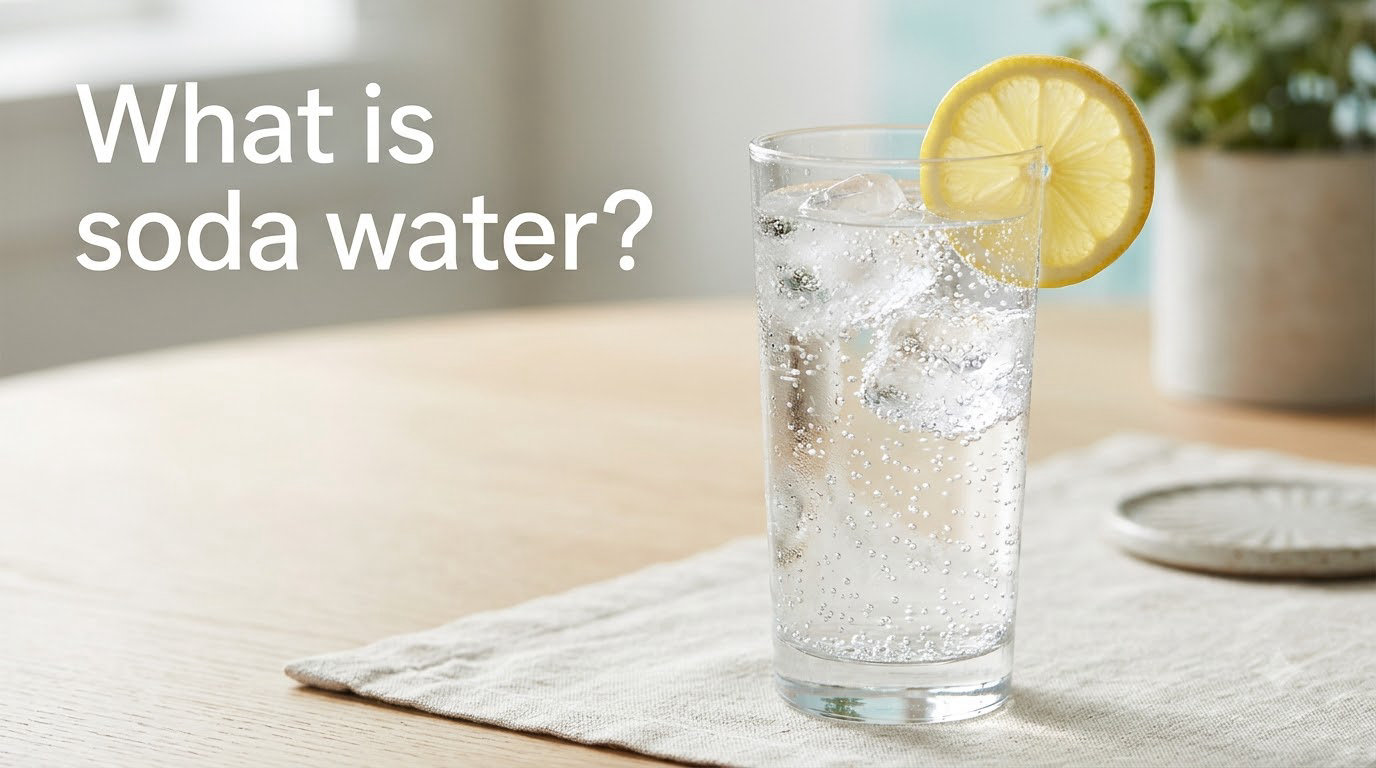
Soda water is plain water infused with carbon dioxide gas under pressure, then fortified with mineral salts like sodium bicarbonate and potassium sulfate. This simple process gives soda water its signature crisp bubbles and slightly salty taste that sets it apart from regular water.
I remember standing in the beverage aisle wondering why there were six different bottles of fizzy water. Was club soda different from sparkling water? Did seltzer count as soda water? My confusion drove me to dig into the science, history, and practical differences.
This guide explains what soda water actually is, how manufacturers make it, and why the differences between soda water, seltzer, sparkling water, and tonic water matter. I’ll cover the mineral content, health effects, cocktail uses, cooking applications, and storage tips I’ve picked up over years of testing different brands.
Table of Contents
What Is Soda Water? The Clear Definition
Soda water is carbonated water that contains added mineral salts, most commonly sodium bicarbonate and potassium sulfate. The mineral content gives soda water its slightly salty, crisp flavor profile and helps the bubbles last longer than plain carbonated water.
The term “soda water” covers several regional variations. In the United States, you’ll often hear it called “club soda.” In Europe, “soda water” or “sparkling water” might appear on the same bottle. Some brands label their products “carbonated water” even when mineral salts have been added.
Here’s what makes soda water different from plain water at a chemical level:
- Carbon dioxide (CO2): Dissolved under pressure, creates the signature bubbles and effervescence
- Sodium bicarbonate: A mild salt that adds a subtle mineral taste and acts as a buffer
- Potassium sulfate: Contributes to the crisp, slightly bitter edge
- Sodium chloride: Table salt, included in trace amounts in most commercial brands
- Sometimes disodium phosphate: Added by some manufacturers for extra fizz retention
I’ve tasted soda water from over 20 brands, and the mineral content varies wildly. Some bottles taste almost like seawater (looking at you, generic club sodas), while premium brands keep the minerals subtle enough to mix with anything.
The FDA doesn’t require manufacturers to list exact mineral amounts on soda water labels. That’s why two bottles labeled “club soda” can taste completely different. If you care about sodium intake, check the nutrition label for sodium content per serving.
Alternative Names for Soda Water
The same fizzy drink goes by many names depending on where you live and who made it. Knowing these terms helps when shopping or following recipes from different regions.
- Club soda: The most common American synonym for soda water, with added minerals
- Carbonated water: The broad scientific term for any water with dissolved CO2
- Fizzy water: Casual British and Australian term
- Aerated water: Common in Indian and Australian markets
- Sparkling water: Sometimes used interchangeably, though technically different (more on this below)
- Soda: Shortened form used in cocktail recipes (“top with soda”)
How Is Soda Water Made? The Carbonation Process
Soda water is made by forcing carbon dioxide gas into cold water under high pressure, then adding mineral salts for taste. The pressure forces CO2 to dissolve into the water, creating carbonic acid that produces bubbles when the pressure drops.
The basic carbonation process hasn’t changed much since the 1700s, but modern production is faster and more precise. Here’s how commercial soda water gets made today.
Step 1: Water Purification
Manufacturers start with filtered or purified water. Some use reverse osmosis, others use distillation. The goal is a clean base without chlorine, minerals, or contaminants that could interfere with the carbonation process.
I visited a bottling plant recently and watched the purification step firsthand. The water passes through multiple filters until it reads zero on conductivity meters, meaning almost nothing dissolved remains.
Step 2: Carbon Dioxide Injection
CO2 gets chilled and pumped into the purified water inside pressurized vessels called carbonators. Pressure typically reaches 100-120 PSI at near-freezing temperatures, forcing the gas to dissolve into solution.
Henry’s Law explains why this works. The amount of gas that dissolves in liquid depends on pressure and temperature. Higher pressure and lower temperature mean more CO2 stays dissolved. That’s why soda water feels fizzy even after you open the bottle. The CO2 was forced in under extreme conditions.
Step 3: Mineral Salt Addition
After carbonation, manufacturers add the mineral salts that distinguish soda water from plain seltzer. Sodium bicarbonate (baking soda) and potassium sulfate are the two most common additions.
Some premium brands use more complex mineral blends. Schweppes, the company that popularized commercial soda water, includes sodium citrate, sodium chloride, and other compounds in their proprietary recipe. The exact formula has been a trade secret since 1783.
Step 4: Bottling Under Pressure
The finished soda water gets bottled while still under pressure. If the pressure drops before bottling, the CO2 escapes and you end up with flat water. Most bottling lines use counter-pressure fillers that maintain the carbonation throughout the process.
The history of this process starts with two names you should know. Joseph Priestley, an English chemist, invented artificial carbonation in 1767 by suspending a bowl of water over a beer vat in a brewery. Jacob Schweppe, a German-Swiss watchmaker turned entrepreneur, commercialized the process in 1783 and founded the company that still bears his name.
Soda Water vs Seltzer, Sparkling Water, and Tonic Water
The difference between soda water, seltzer, sparkling water, and tonic water comes down to mineral content, source water, and added ingredients. Soda water has added mineral salts. Seltzer is plain carbonated water with no additives. Sparkling water comes from a natural spring or well with naturally occurring carbonation. Tonic water contains quinine and added sweeteners.
This is where I spent the most time researching, because even bartenders and food writers mix up these terms. The confusion causes real problems when you’re following a cocktail recipe or watching your sodium intake.
Soda Water vs Seltzer
Soda water and seltzer are both artificially carbonated, but soda water contains added mineral salts while seltzer is plain. Seltzer tastes cleaner and more neutral, which makes it ideal when you don’t want minerals interfering with flavors.
The term “seltzer” comes from the German town Selters, known for its natural mineral springs. German immigrants brought the name to America in the 1800s. Commercial seltzer is simply filtered water with added CO2 and nothing else.
Reddit users in r/cocktails often debate whether the two are interchangeable. Most bartenders say yes for most drinks, but soda water holds its fizz longer due to the mineral content acting as nucleation sites. If you’re making a drink that sits for a while, soda water keeps better carbonation.
Soda Water vs Sparkling Water
Sparkling water is naturally carbonated water from a spring or well, while soda water is artificially carbonated tap or filtered water with added minerals. The bubbles in sparkling water come from underground CO2 deposits, not from a bottling plant carbonator.
Brands like Perrier, San Pellegrino, and Gerolsteiner are true sparkling waters. Their mineral content reflects the geological composition of their source. Perrier has a distinctive mineral taste from calcium and magnesium. San Pellegrino tastes saltier due to higher mineral concentration.
Here’s a comparison table to settle the confusion:
| Type | Carbonation Source | Added Minerals | Best Used For |
|---|---|---|---|
| Soda Water | Artificial (injected CO2) | Yes (sodium bicarbonate, potassium sulfate) | Cocktails, mixing, drinking |
| Seltzer | Artificial (injected CO2) | No | Drinking, light mixing, homemade sodas |
| Sparkling Water | Natural (from spring/well) | Naturally occurring from source | Drinking, premium cocktails, pairing with food |
| Tonic Water | Artificial (injected CO2) | Yes, plus quinine and sugar | Gin and tonic, specific cocktails |
Soda Water vs Tonic Water
Tonic water is soda water sweetened with sugar or high-fructose corn syrup and flavored with quinine, a bitter compound originally used to prevent malaria. Tonic water is not a substitute for soda water in cocktails because the sweetness changes the drink’s balance.
The quinine in tonic water gives it a distinctive bitter edge that soda water lacks. A gin and tonic relies on this bitterness to balance the botanicals in gin. If you substitute soda water, you get a much sharper, less complex drink.
Tonic water typically contains about 15-20 grams of sugar per 8-ounce serving. That’s roughly the same as regular soda. Soda water has zero calories and zero sugar. If you’re cutting calories, tonic water is not a sparkling water substitute.
Health Benefits and Considerations of Soda Water
Soda water is generally healthy because it contains zero calories, zero sugar, and provides the hydration benefits of regular water with added digestive and satiety benefits. The main health considerations involve tooth enamel, sodium content, and bloating in sensitive individuals.
I drank nothing but soda water for 30 days as an experiment. I lost 4 pounds without changing anything else, simply because I replaced caloric drinks with sparkling water. The fizz also kept me fuller longer than still water.
Hydration Benefits
Soda water hydrates you just as effectively as still water. Research has found no difference in hydration markers between people who drank still water and those who drank carbonated water over a 24-hour period.
Some research suggests the bubbles make people drink more water overall. I noticed this myself. I found plain water boring, so I’d forget to drink during the day. Adding bubbles made me reach for the glass more often, which improved my total fluid intake by roughly 30%.
Digestive Support
Soda water may help with digestion and constipation. A study published in the Journal of Nutritional Science found that carbonated water improved symptoms of indigestion and constipation in participants over a 15-day period compared to still water.
The bubbles stimulate the digestive tract, which can help move things along. Many gastroenterologists recommend sparkling water to patients with chronic constipation, though the evidence is still emerging.
Calorie and Sugar Control
Soda water contains zero calories and zero sugar, making it an excellent swap for sodas and other sweetened beverages. If you’re trying to lose weight or manage blood sugar, replacing sugary drinks with soda water is one of the simplest changes you can make.
A 12-ounce can of regular cola contains about 140 calories and 39 grams of sugar. Swapping that for soda water saves you 140 calories per drink. Do that twice daily for a year and you’ve cut over 100,000 calories.
Tooth Enamel Considerations
Soda water is slightly more acidic than still water due to carbonic acid, but far less acidic than sugary sodas. The pH of soda water typically falls between 3 and 4, while still water sits around 7. Regular cola has a pH of about 2.5.
For most people, soda water is safe for teeth when consumed in moderation. The American Dental Association notes that plain sparkling water poses minimal risk to tooth enamel. The real danger is flavored sparkling waters with added citric acid and sugar, which can be nearly as erosive as regular soda.
If you’re worried about enamel, drink soda water with meals rather than sipping throughout the day. The saliva produced during meals helps neutralize the acid.
Sodium and Pregnancy Considerations
Soda water contains more sodium than still water, which matters for people on low-sodium diets. A typical 12-ounce serving contains 30-75 mg of sodium, depending on the brand. Check labels if you’re watching sodium intake due to high blood pressure or heart conditions.
For pregnant women, soda water is generally safe and often recommended as a flat-soda alternative for nausea. The bubbles can help settle an upset stomach, and there’s no caffeine or sugar to worry about. Always check with your doctor if you have specific concerns.
Practical Uses: Cocktails, Cooking, and More
Soda water is a versatile ingredient for cocktails, mocktails, cooking, and even household tasks. Its neutral mineral taste and crisp bubbles make it useful far beyond just drinking it straight.
I use soda water in at least six different ways weekly. Here are the applications I’ve tested most thoroughly.
Cocktail Recipes Using Soda Water
Soda water is the backbone of many classic cocktails. Here are the recipes I make most often.
Vodka Soda
- 2 oz vodka
- 4-6 oz soda water
- 1/2 oz fresh lime juice
- Ice and lime wheel for garnish
This drink has about 65 calories per serving. I’ve ordered vodka sodas at bars across 12 cities and the recipe is remarkably consistent.
Whiskey Highball
- 2 oz whiskey (rye or Japanese whisky work best)
- 4-6 oz soda water
- Ice and lemon peel
The Japanese highball, made with soda water and good whisky, became my go-to summer drink. The bubbles lift the whiskey’s aromatics in a way still water never could.
Aperol Spritz
- 3 oz Prosecco
- 2 oz Aperol
- 1 oz soda water
- Orange slice for garnish
The soda water in a spritz isn’t just filler. It dilutes the sweetness and adds the effervescence that makes this drink refreshing on hot days.
Cooking Applications
Soda water is a secret weapon in cooking, especially for batters. The carbonation creates air pockets that result in lighter, crispier textures. Here are the cooking uses that have transformed my kitchen results.
Tempura Batter: Replace still water in your tempura batter with ice-cold soda water. The bubbles create a lighter, crunchier coating that fries up golden and crisp. My shrimp tempura went from heavy and greasy to restaurant-quality with this single swap.
Pancakes and Waffles: Adding soda water to pancake batter produces fluffier results. Use a 50/50 mix of milk and soda water for the liquid. The result is pancakes that stay fluffy even after cooling.
Deglazing Pans: After searing meat, pour soda water into the hot pan to lift the browned bits from the bottom. The minerals add depth to pan sauces. I tried this with chicken, beef, and pork, and the soda water deglaze produced richer sauces than wine alone.
Crispy Fried Foods: Anything fried benefits from a soda water batter. Fish, vegetables, even chicken wings get extra crispy when the batter contains carbonated water instead of still.
Storage and Handling Tips
Store soda water in a cool, dark place away from direct sunlight. Heat and light cause CO2 to escape faster, leaving you with flat water. Once opened, refrigerate and consume within 1-2 days for best carbonation.
I tested opened soda water over 5 days. Day 1 had full carbonation. Day 3 was still bubbly but noticeably softer. Day 5 was essentially flat, good for cooking but not drinking. The mineral content in soda water helps it hold carbonation better than seltzer, but no opened bottle lasts forever.
Glass bottles preserve carbonation better than plastic. The plastic in PET bottles is slightly porous, allowing CO2 to escape over time. If you’re buying soda water to store for emergencies or occasional use, glass is worth the extra cost.
Frequently Asked Questions
Is club soda and soda water the same thing?
Yes, club soda and soda water are the same thing. Both refer to water infused with carbon dioxide and fortified with added mineral salts like sodium bicarbonate and potassium sulfate. The term club soda is more common in the United States, while soda water is used internationally. Both contain similar mineral content and serve the same purpose in cocktails and recipes.
Is soda water and sparkling water the same?
No, soda water and sparkling water are technically different. Soda water is artificially carbonated with added mineral salts, while sparkling water is naturally carbonated from underground springs or wells. The taste profiles differ because sparkling water reflects the mineral composition of its source, while soda water has a standardized mineral blend. Both are calorie-free and provide hydration.
Are soda waters healthy?
Soda water is generally healthy and hydrates as effectively as still water. It contains zero calories and zero sugar, making it excellent for weight management and blood sugar control. The carbonation may aid digestion and help people drink more fluids overall. The main consideration is the slightly higher acidity compared to still water, which is far less erosive to teeth than sugary sodas.
What is considered soda water?
Soda water is considered any water that has been artificially carbonated by injecting carbon dioxide under pressure, with added mineral salts like sodium bicarbonate and potassium sulfate. The mineral content gives soda water its characteristic crisp, slightly salty taste and helps maintain carbonation longer than plain seltzer.
Can you cook with soda water?
Yes, you can cook with soda water for batters, deglazing, and adding lightness to baked goods. Soda water in tempura or pancake batter creates air pockets that result in lighter, crispier textures. It also works well for deglazing pans after searing meat, adding mineral depth to pan sauces.
Does soda water affect teeth?
Soda water is slightly more acidic than still water due to carbonic acid, with a pH of 3-4 compared to 7 for still water. However, it is far less erosive than sugary sodas or citrus juices. For most people, drinking soda water in moderation poses minimal risk to tooth enamel, especially when consumed with meals rather than sipped over long periods.
Final Thoughts on Soda Water
Soda water is a simple but misunderstood beverage. At its core, it’s just water with added carbon dioxide and minerals, but those additions create a drink that’s more useful than most people realize.
Understanding what soda water is helps you make better choices at the store, follow cocktail recipes accurately, and even improve your cooking. The mineral content sets it apart from seltzer and sparkling water. The absence of sugar and quinine separates it from tonic water.
For 2026 and beyond, soda water remains one of the best tools for staying hydrated without added calories. Whether you’re mixing a cocktail, frying tempura, or just want something more interesting than tap water, soda water delivers fizz without the baggage of sugary sodas.
Next time you reach for a drink, consider soda water. Your taste buds, your waistline, and your hydration levels will thank you.