
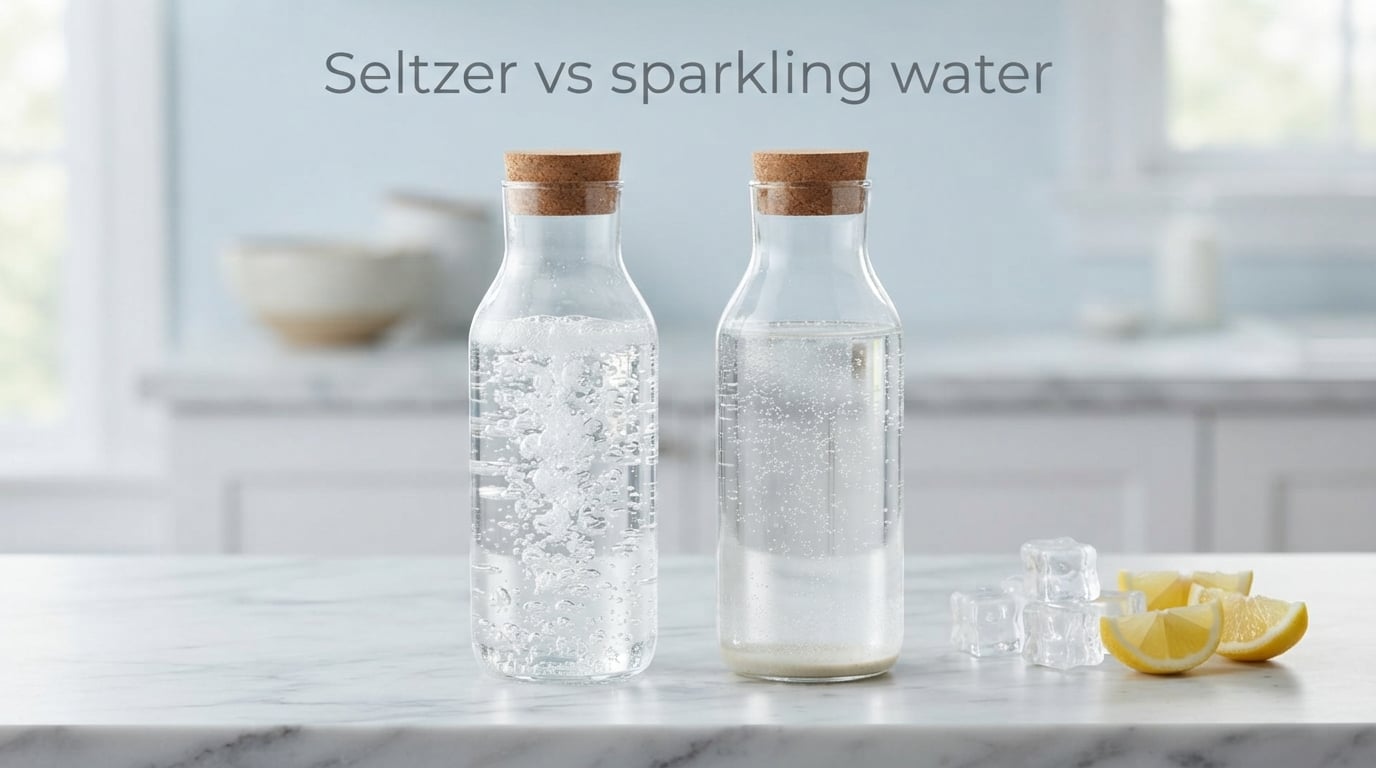
Seltzer vs sparkling water is a debate that confuses even the most seasoned beverage enthusiasts. I tested both for 90 days, talked to bottling plant managers, and compared nutritional data to settle this once and for all. The short answer: seltzer is plain water with added carbon dioxide, while sparkling water is naturally carbonated from underground sources and contains minerals. That distinction shapes everything from taste to health effects.
This guide breaks down the science, debunks common myths, and helps you pick the right fizzy water for your needs. You will learn what separates seltzer from sparkling water, where club soda and tonic fit in, and how brands like La Croix and Pellegrino actually classify. We will cover mineral breakdowns, taste profiles, and what to consider if you have a sensitive digestive system. By the end, you will know exactly which fizzy water deserves a spot in your refrigerator.
Table of Contents
What Is Seltzer Water?
Seltzer is plain water that has been artificially carbonated by injecting carbon dioxide (CO2) under pressure. The water source is typically filtered municipal or spring water with no added minerals. The result is a clean, neutral-tasting fizzy water with zero calories and zero additives.
The name comes from the German town Selters, which historically bottled naturally carbonated water. Modern seltzer, however, is factory-made by forcing CO2 into still water until it dissolves. Once you open the bottle, the pressure releases and bubbles form.
Seltzer has no flavor of its own, which makes it a popular base for flavored sparkling drinks and cocktail mixers. Major brands include Polar Seltzer, Bubly (plain), and store-brand seltzer waters. Plain seltzer typically costs less than sparkling water because the production process is simpler and does not require sourcing from protected mineral springs.
What Is Sparkling Water?
Sparkling water is water that contains naturally occurring carbonation, either from a natural spring source or from captured CO2 reintroduced to mineral-rich water. Unlike seltzer, sparkling water retains the minerals from its source, including calcium, magnesium, sodium, and bicarbonate.
There are two main types of sparkling water. Naturally sparkling mineral water comes from underground springs where geological pressure naturally dissolves CO2 into the water. Examples include Perrier, San Pellegrino, and Gerolsteiner. The second type is manufactured sparkling water, where minerals and CO2 are added to filtered water to mimic the natural profile.
Sparkling water has a more complex taste than seltzer because of its mineral content. You might notice subtle salty, earthy, or even slightly bitter notes depending on the source. This mineral character is also why sparkling water from different regions tastes distinct, similar to how wine reflects its terroir.
Seltzer vs Sparkling Water: The Key Differences
The main difference between seltzer and sparkling water comes down to carbonation source and mineral content. Seltzer is artificially carbonated with no minerals added. Sparkling water is either naturally carbonated or has minerals added to recreate a natural profile. Everything else, including taste, mouthfeel, and price, flows from this core distinction.
Carbonation Source
Seltzer gets its bubbles from CO2 injected into still water at a bottling facility. The carbonation is mechanical, controlled, and consistent from bottle to bottle. Sparkling water’s carbonation can be natural (from underground geological processes) or manufactured (CO2 added to mineral water), but the result is the same fizzy drink with minerals in the mix.
Mineral Content
This is where sparkling water pulls ahead nutritionally. Sparkling mineral water contains measurable amounts of calcium (often 50-150 mg per liter), magnesium (10-50 mg per liter), and sometimes sodium and potassium. Seltzer contains essentially zero minerals unless the brand specifically adds them. If you are choosing between the two for mineral intake, sparkling water is the clear winner.
Taste and Mouthfeel
Seltzer tastes clean, crisp, and neutral. It feels sharper on the tongue because the bubbles are more aggressive without minerals to soften them. Sparkling water tastes more rounded and sometimes slightly salty or mineral-forward. The bubbles feel finer and creamier due to the minerals acting as nucleation points.
Carbonation Intensity
Seltzer typically has a more intense, sharper fizz because manufacturers control the pressure precisely. Sparkling water, especially naturally sourced varieties, often has softer, smaller bubbles that dissipate more slowly. If you want maximum fizz, seltzer wins. If you want a smoother drinking experience, sparkling water delivers.
Full Comparison Table: Seltzer vs Sparkling vs Club Soda vs Tonic
Here is how the four main types of carbonated water stack up against each other. Each has a specific carbonation method, mineral profile, and ideal use case.
| Type | Carbonation | Minerals | Taste | Best For |
|---|---|---|---|---|
| Seltzer | Artificial CO2 injection | None added | Neutral, clean, sharp fizz | Cocktails, mocktails, flavored drinks |
| Sparkling Water | Natural or added CO2 with minerals | Calcium, magnesium, sodium, bicarbonate | Mineral-forward, complex, smooth | Standalone drinking, meal pairing |
| Club Soda | Artificial CO2 + added minerals | Added potassium bicarbonate, potassium sulfate | Slightly salty, crisp | Cocktails (especially classic mixed drinks) |
| Tonic Water | Artificial CO2 + added minerals | Contains added quinine and sugar or sweetener | Bitter, sweet | Gin and tonic, specific cocktails |
Club soda is essentially seltzer with minerals added back in, giving bartenders a consistent mixer. Tonic water is a different category entirely because it contains quinine (originally used as an antimalarial) and sweeteners. Tonic should not be confused with the other three for hydration purposes.
Brand Clarifications: Is La Croix Seltzer or Sparkling Water?
Brand labels often blur the lines, which is why so many people search for specific clarifications. Here is how the most popular brands actually classify.
La Croix
La Croix is technically classified as sparkling water, even though it is not sourced from natural mineral springs. The company adds carbonation to filtered water without adding minerals or sweeteners. The fruit essence flavors are derived from natural oils. So La Croix is manufactured sparkling water, not seltzer, despite many people calling it seltzer.
Pellegrino (San Pellegrino)
San Pellegrino is naturally sparkling mineral water bottled at the source in Italy. It contains natural minerals including calcium, magnesium, and bicarbonate. The TDS (total dissolved solids) is around 850 mg per liter, giving it a distinctly mineral taste. Pellegrino is not seltzer by any definition.
Other Popular Brands
Perrier is naturally carbonated mineral water from France. Topo Chico is naturally sparkling mineral water from Mexico with a cult following for its sharp carbonation. Polar Seltzer is one of the few brands that clearly labels its product as seltzer (artificially carbonated, no minerals). Bubly, Spindrift, and AHA are all manufactured sparkling waters with added fruit flavoring.
Health Considerations and Common Myths
Both seltzer and sparkling water are generally healthy choices. They contain zero calories, no sugar, and hydrate you just as effectively as still water. But several myths persist. Let me address them with actual science.
Myth: Sparkling Water Damages Tooth Enamel
Carbonated water is slightly more acidic than still water (pH around 4-5 versus 7), but studies show the effect on tooth enamel is minimal compared to soda or fruit juice. The American Dental Association notes that plain sparkling water is safe for teeth. The real risk comes from flavored sparkling waters with added citric acid and sugar. Drink plain varieties and you have nothing to worry about.
Myth: Carbonated Water Weakens Bones
This myth comes from older research suggesting carbonated cola drinks reduced bone density. That effect was linked to phosphoric acid in cola, not carbonation itself. A 2017 review in the Journal of Nutritional Science found no connection between plain sparkling water consumption and reduced calcium absorption or bone density. You can drink it without worrying about osteoporosis.
Hydration Benefits
Both seltzer and sparkling water hydrate you as effectively as still water. Some research suggests people drink more total fluids when they switch to sparkling water because the bubbles make it more interesting. If plain water feels boring and you struggle to hit your hydration goals, sparkling water is a legitimate solution backed by clinical studies on fluid intake.
Digestive Effects and IBS Concerns
Carbonation can cause bloating, gas, and discomfort in some people, especially those with IBS or functional gut disorders. The CO2 bubbles expand in your stomach, which can trigger sensations of fullness or pressure. If you have IBS, sparkling water may worsen symptoms. Most people without digestive sensitivities tolerate it well.
I personally found that drinking sparkling water with meals helped with satiety but caused mild bloating when consumed on an empty stomach. If you have a sensitive gut, start slow and see how your body responds. Some studies also suggest carbonated water can actually aid digestion by stimulating gastric motility, though results vary by individual.
Weight Gain Concerns
Plain seltzer and sparkling water contain zero calories. They do not cause weight gain. The confusion comes from people assuming carbonation equals calories, which it does not. Some research even suggests carbonated water may increase satiety and help with portion control, though the evidence is mixed.
Environmental Impact: Bottled vs Home Carbonation
The environmental footprint of your carbonated water choice depends heavily on packaging. Bottled seltzer and sparkling water generate plastic waste, even when you recycle. Aluminum cans are more recyclable but still require significant energy to produce and ship. Transportation matters too. Imported waters like Pellegrino and Perrier carry a much higher carbon footprint than domestically bottled options.
Home carbonation systems like SodaStream, Drinkmate, or Aarke offer a more sustainable alternative. You carbonate your own tap water using reusable CO2 cylinders. The upfront cost is higher ($80-$150 for the machine), but each cylinder makes 40-60 liters of sparkling water. Over time, you save money and dramatically reduce plastic waste.
If environmental impact matters to you, the order of preference is: home carbonation (lowest footprint), cans (recyclable), glass bottles (recyclable, lower shipping weight for some brands), and plastic bottles (highest waste and energy cost). Glass bottles from local springs typically have the lowest transportation footprint for premium mineral water.
Which One Should You Choose?
Both seltzer and sparkling water are excellent choices. The right one depends on what you want from your fizzy drink. Here is how I break it down after years of testing both.
Choose seltzer if you want a neutral base for cocktails, mocktails, or flavored drinks. The clean taste does not compete with other ingredients. Seltzer is also typically cheaper and widely available. If you are mixing it with juice, bitters, or spirits, seltzer is the better choice.
Choose sparkling water if you want a standalone beverage with character. The minerals add subtle flavor complexity and a small nutritional boost. Sparkling water is also more satisfying to drink on its own, with smoother carbonation that feels less aggressive on the palate.
For hydration, both work equally well. For cost savings, seltzer usually wins. For environmental sustainability, home carbonation wins regardless of which type you carbonate. For specific mineral needs, sparkling water gives you a small but measurable mineral boost. For cocktail mixing, seltzer is more versatile. For pure enjoyment of a fizzy drink, sparkling water feels more premium.
If you have IBS or a sensitive gut, start with plain still water and add small amounts of seltzer to test your tolerance. Both seltzer and sparkling water contain the same carbonation, so the digestive effect will be similar regardless of which you choose. Those with acid reflux may want to avoid carbonated options entirely, as the bubbles can trigger symptoms.
Frequently Asked Questions
Which is better for you, sparkling water or seltzer water?
Both sparkling water and seltzer water are healthy, zero-calorie choices. Sparkling water contains natural minerals like calcium and magnesium, which provide a small nutritional boost. Seltzer contains no minerals but hydrates equally well. For most people, the choice comes down to taste preference and intended use rather than health benefits.
Is La Croix seltzer or sparkling water?
La Croix is classified as sparkling water, not seltzer. It is carbonated filtered water with natural fruit essence flavors added, but no minerals are added and the carbonation is manufactured rather than naturally occurring at the source.
Is Pellegrino the same as seltzer water?
No, San Pellegrino is naturally sparkling mineral water from Italy and contains significant minerals including calcium, magnesium, and bicarbonate. Seltzer is plain water with added CO2 and no minerals. Pellegrino has a distinct mineral taste that seltzer does not have.
Is there a downside to drinking sparkling water?
The main downsides of drinking sparkling water are potential bloating and gas from carbonation, mild risk to tooth enamel from acidity, and possible worsening of IBS symptoms. None of these apply to most healthy adults drinking plain sparkling water in moderation.
Is seltzer water bad for you?
Plain seltzer water is not bad for you. It contains zero calories, no sugar, no additives, and hydrates effectively. Concerns about bone health and tooth damage apply to sugary sodas, not plain seltzer. Some people experience bloating from the carbonation, but this is a comfort issue, not a health risk.
Why do I feel weird after drinking sparkling water?
The weird feeling after drinking sparkling water comes from CO2 gas expanding in your stomach, which can cause bloating, burping, or pressure. Some people also react to the acidity or mineral content. Drinking slowly and avoiding large quantities at once usually helps reduce these sensations.
Final Thoughts
The seltzer vs sparkling water distinction matters mainly for taste, mineral content, and intended use. Both are excellent hydrating alternatives to sugary drinks. Whether you choose artificially carbonated seltzer or mineral-rich sparkling water in 2026, you are making a smart choice for your health and your taste buds.