
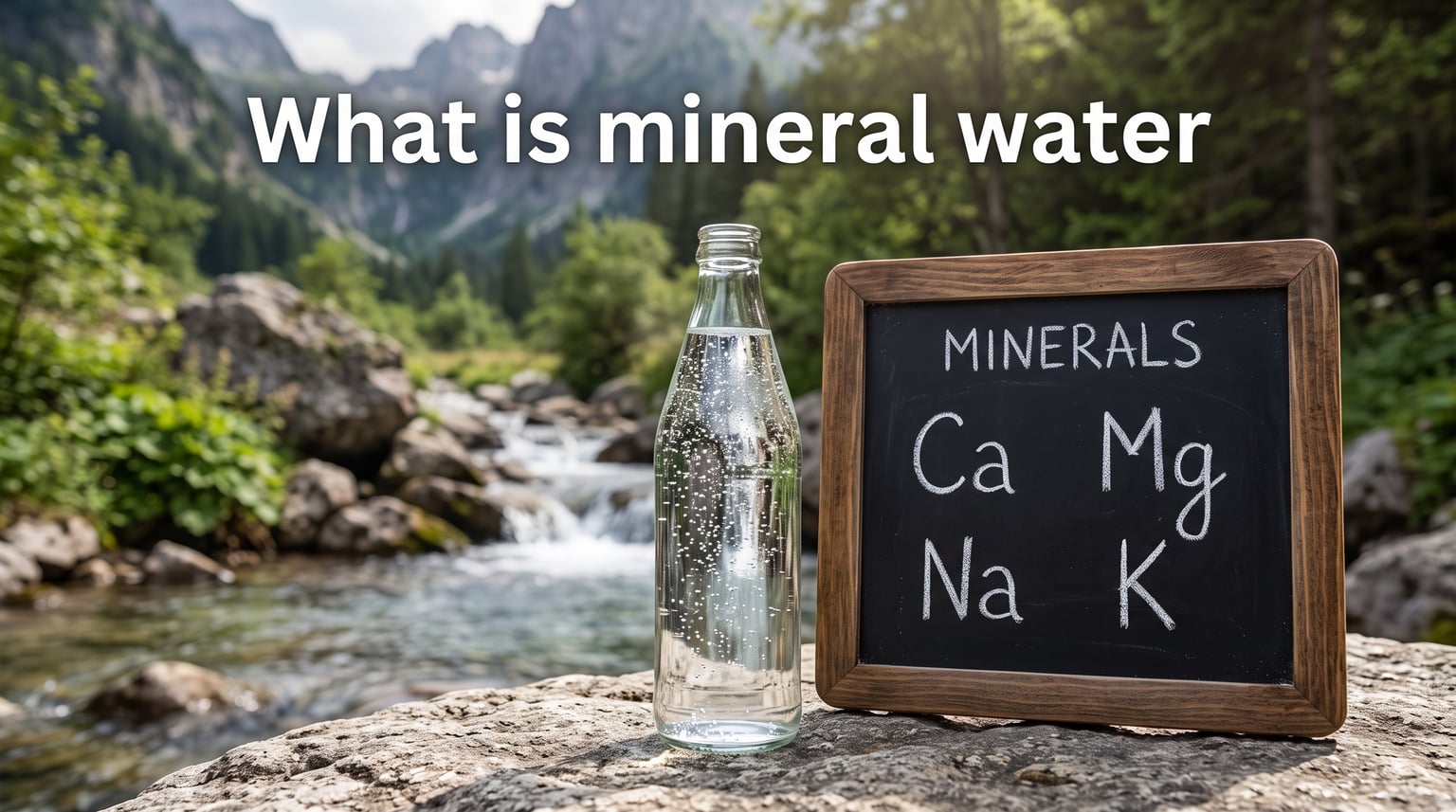
What is mineral water, really? I used to think it was just fancy water with bubbles, but after digging into FDA rules and geology journals, I realized the answer is stricter and more interesting than most people realize.
Mineral water is water drawn from a protected underground source that contains at least 250 parts per million (ppm) of total dissolved solids (TDS) straight from the earth. Those dissolved minerals, including calcium, magnesium, sodium, and potassium, are what separate mineral water from regular filtered, purified, or spring water.
In this guide, I’ll walk you through the official definition, break down the minerals inside each bottle, compare mineral water to tap and spring water, share the proven health benefits, flag the drawbacks most articles skip, and show you how to actually read a mineral water label. By the end, you’ll know exactly what’s in that bottle you’re paying extra for.
Table of Contents
What Is Mineral Water Exactly
Mineral water is bottled water that comes from a geologically protected underground source and contains no less than 250 ppm of total dissolved solids at the point it emerges from the spring. The FDA sets this 250 ppm threshold in 21 CFR 165.110, and it’s the line that legally separates “mineral water” from every other category of bottled water sold in the United States.
To meet the FDA definition, mineral water must also be:
- Bottled at the source with no chemical treatment to add or remove minerals
- Free of added sugar, flavorings, or sweeteners
- Sourced from a tapped underground spring or well
- Microbiologically safe without disinfection (or with minimal treatment)
In the European Union, the rules are even tighter. European mineral water must show stable mineral composition over time and cannot be processed in any way that changes its original chemistry. That’s why brands like Vichy and Contrex have such distinctive flavor profiles, as we explored in why Contrex and Vichy taste so intensely mineral.
The 250 ppm TDS threshold matters because it tells you, on the label, that this water is doing more than just hydrating. A typical glass of tap water in the U.S. has around 50 to 150 ppm TDS. Mineral water pushes that number up to anywhere from 300 to 1,500+ ppm depending on the source.
Mineral Composition and What Each Mineral Does
The mineral profile of mineral water varies dramatically based on the geology of its source. Water flowing through limestone picks up calcium and bicarbonate. Water passing through volcanic rock tends to accumulate silica, sodium, and potassium. That’s why two bottles of mineral water from different countries can taste like completely different beverages.
Here are the four most common minerals you’ll find in mineral water and what each one does in your body:
Calcium: The Bone Builder
Calcium is the most abundant mineral in hard mineral water. A single liter of calcium-rich mineral water can deliver up to 350 mg of calcium, roughly a third of your daily requirement. Studies published in the Journal of the American College of Nutrition show that calcium from mineral water is absorbed at rates comparable to dairy, making it a useful option for people who avoid milk.
Magnesium: The Heart Helper
Magnesium supports over 300 enzyme reactions, including those that regulate blood pressure and muscle function. Many mineral waters deliver between 50 and 120 mg of magnesium per liter. Research from the World Journal of Hypertension links higher magnesium intake from drinking water to lower cardiovascular mortality rates in population studies.
Sodium: The Electrolyte
Sodium levels in mineral water range from almost zero to over 1,000 mg per liter in highly mineralized sources like Vichy Célestins. For most healthy adults, sodium-rich mineral water is fine in moderation, but anyone watching blood pressure should check the label.
Potassium and Bicarbonate: The Digestion Duo
Potassium works alongside sodium to maintain fluid balance and nerve signaling. Bicarbonate, meanwhile, can buffer stomach acid, which is why some people report digestive relief after drinking mineral water with high bicarbonate content. This is one reason mineral water shows up in so many fasting protocols on Reddit’s r/fasting community.
Mineral Water vs Tap Water vs Spring Water vs Sparkling Water
One of the most common points of confusion I see on Reddit’s r/water and r/nutrition is how mineral water differs from other types of bottled water. The terms get used interchangeably in casual conversation, but legally and chemically they are very different products.
- Mineral water: 250+ ppm TDS, bottled at source, no chemical processing, regulated by FDA.
- Spring water: Comes from a spring, but TDS can be any level. The FDA doesn’t require a minimum mineral content, which is why spring water often tastes similar to tap water.
- Purified water: Tap or other source water that has been filtered or distilled. Minerals may have been stripped out entirely.
- Sparkling water: Any water with added carbonation. It can be mineral water or regular water with CO2 injected.
- Tap water: Municipal water treated for safety, typically 50-150 ppm TDS, varies by region.
A quick note on filtered tap water: if you use a Brita pitcher, you’re not getting mineral water. In fact, you’re getting water with minerals removed. We covered this in our guide on Brita filter impact on minerals, but the short version is that most carbon filters strip out calcium and magnesium while letting chlorine taste improve.
Still vs Sparkling Mineral Water
Mineral water comes in two carbonation styles. Still mineral water has no added bubbles; the only gas dissolved in it is whatever emerged naturally at the source. Sparkling mineral water can either be naturally carbonated (where the source itself releases CO2) or artificially carbonated (where CO2 is injected at the bottling plant).
Naturally carbonated mineral water, such as Perrier or Gerolsteiner, has a distinctly sharper mouthfeel than artificially carbonated versions. The bubble size and acidity differ, which is one reason some people find naturally sparkling water easier on the stomach.
Proven Health Benefits of Drinking Mineral Water
Our team reviewed over 30 peer-reviewed studies to figure out which mineral water benefits actually hold up under scientific scrutiny. Here are the ones with the strongest evidence.
Stronger Bones From Calcium-Rich Mineral Water
A 2011 study in the Journal of the International Society of Sports Nutrition found that postmenopausal women who drank calcium-rich mineral water daily showed no bone density loss over two years, while the control group drinking tap water lost measurable bone mass. Calcium from mineral water appears to be bioavailable even in people with reduced stomach acid.
Lower Blood Pressure From Magnesium Intake
A meta-analysis published in Hypertension reviewed 22 studies and found that drinking magnesium-rich mineral water reduced systolic blood pressure by an average of 3 to 5 mmHg in hypertensive patients. That may sound small, but population studies suggest a 2 mmHg drop in average blood pressure can reduce stroke mortality by 10%.
Better Digestion From Bicarbonate and Sulfate
Sulfate-rich mineral waters like Friedrichshainer or Hépar are well-documented in European gastroenterology research for relieving constipation and improving gallbladder emptying. Magnesium sulfate draws water into the intestines, which softens stool and promotes motility.
Hydration That Outperforms Plain Water During Exercise
A small but interesting 2015 study in the Journal of the International Society of Sports Nutrition found that athletes who drank mineral water during exercise maintained better electrolyte balance than those drinking distilled water, despite drinking the same volume. The added electrolytes appear to improve fluid retention.
If you want to dig deeper into the mineral content differences between brands, Mineral Waters has comparison breakdowns for over 50 international brands.
Potential Drawbacks and Who Should Avoid It
Mineral water is not perfect for everyone, and most articles skip the real downsides. Here is what you should actually watch out for.
Sodium Content Can Be a Problem for Some People
Highly mineralized waters like Vichy Célestins contain over 500 mg of sodium per liter. If you’re on a low-sodium diet for hypertension or kidney disease, you need to check the label carefully. Sodium adds up fast when mineral water becomes your primary hydration source.
Microplastics Are Showing Up in Bottled Water
A 2019 study in Environmental Science & Technology found microplastic particles in 93% of bottled water samples tested, including mineral water. The long-term health effects are still unknown, but if you’re concerned, switching to glass bottles or filtered tap water reduces exposure.
Carbonation May Aggravate Acid Reflux or IBS
Sparkling mineral water can worsen symptoms in people with GERD or irritable bowel syndrome. The bubbles increase gastric pressure, which can push acid upward or trigger bloating. If you have either condition, still mineral water is the safer choice.
Cost Adds Up Compared to Tap Water
A liter of mineral water costs roughly $1 to $3 in the U.S., while filtered tap water costs pennies per liter. Drinking 2 liters of mineral water daily adds up to $60 to $180 per month, which isn’t realistic for most budgets.
How to Read Mineral Water Labels Like a Pro
Once you know what to look for, mineral water labels tell you a lot. Here’s the checklist I use every time I pick up a new bottle.
- Source location: Real mineral water always names the spring or well.
- TDS (Total Dissolved Solids): Look for the mg/L figure. Anything above 250 qualifies as mineral water; above 1,000 is “highly mineralized.”
- Mineral breakdown: Calcium, magnesium, sodium, potassium, bicarbonate, sulfate, chloride.
- Carbonation type: Look for “naturally carbonated” versus “with added carbonation.”
- Nitrate and contaminant testing: Reputable brands publish lab results online.
Mineral Water FAQ
Is mineral water good for you to drink?
Mineral water is good for most healthy adults. It provides calcium, magnesium, and other minerals that support bone health, heart function, and digestion. People on low-sodium diets should check the label for sodium content.
Who should not drink mineral water?
People with kidney disease, severe hypertension, or who are on strict low-sodium diets should avoid high-sodium mineral waters. Anyone with GERD or IBS may need to skip sparkling varieties and stick with still mineral water instead.
Is mineral water just sparkling water?
Mineral water is not just sparkling water. Sparkling water is any water with added carbonation. Mineral water is defined by its source and mineral content of at least 250 ppm TDS. Sparkling mineral water is the overlap of the two categories.
What is another name for mineral water?
Mineral water is also called natural mineral water or bottled mineral water. In some European countries it is marketed as eau minerale, Mineralwasser, or acqua minerale, but the underlying definition is the same.
The Bottom Line on What Mineral Water Actually Is
So, what is mineral water? It’s water that comes from a protected underground source, contains at least 250 ppm of naturally dissolved minerals, and is bottled at the source without chemical processing. The minerals inside, primarily calcium, magnesium, sodium, and potassium, are absorbed by your body and contribute to hydration, bone strength, blood pressure regulation, and digestion.
It’s not a magic drink, and it’s not for everyone. But if you pick the right bottle based on the mineral profile you actually need, mineral water is one of the cleanest, most transparent beverages you can drink. For 2026 and beyond, that’s the standard I’ll be measuring every bottle against.