
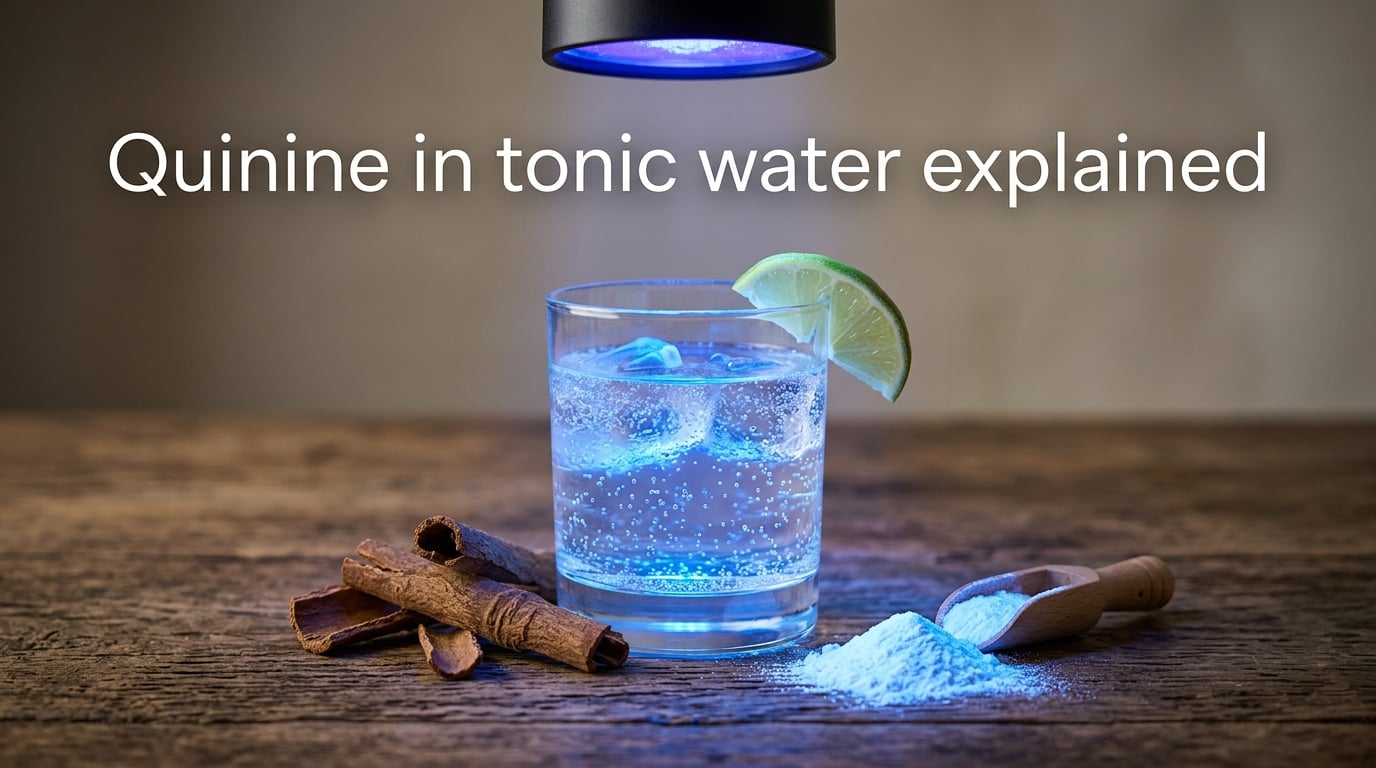
Quinine in tonic water is a bitter compound extracted from the bark of the cinchona tree, added to the carbonated drink in small, FDA-regulated amounts to deliver its distinctive sharp flavor. I have been digging into this topic for years, and the story behind that bitter sip is more interesting than most people expect.
It connects a South American tree bark, a colonial malaria crisis in India, the invention of the gin and tonic, and a curious blue glow you can see under a blacklight.
If you have ever wondered why tonic water tastes bitter, whether the quinine in your drink can help with leg cramps, or if it is safe to drink every day, this guide is for you. Our team put together everything we know about quinine in tonic water for 2026, including FDA limits, drug interactions, and the science behind its signature glow.
Table of Contents
Key Facts About Quinine in Tonic Water (2026)
- Source: Extracted from the bark of the cinchona tree, native to South America.
- Original use: Anti-malaria medicine, used since the 1600s.
- Modern purpose: Bitter flavoring in tonic water and other beverages.
- FDA limit in tonic water: 83 parts per million (ppm).
- Typical therapeutic dose: Far higher than what you get from drinking tonic.
- Unique property: Fluoresces blue-white under ultraviolet (UV) light.
The History of Quinine and Tonic Water
Quinine in tonic water has a backstory that begins high in the Andes mountains. Indigenous Quechua people in Peru and Bolivia chewed the bark of the cinchona tree to treat fevers long before Europeans arrived.
Spanish missionaries noticed the practice in the 1600s and brought cinchona bark back to Europe, where it became the first effective Western treatment for malaria.
By the 19th century, British colonials stationed in India faced a deadly malaria problem. Quinine tablets were prescribed, but the medicine tasted so bitter that officers mixed it with sugar, water, and gin to make it drinkable.
The “tonic” part was the medicated water with quinine, and gin was added to make the daily dose tolerable. That mix became the gin and tonic, still one of the world’s most popular cocktails.
When Indian tonic was exported, the recipe evolved. Modern tonic water contains far less quinine than the original medicinal version. Today, quinine in tonic water serves mostly as a flavoring agent rather than a medicine.
Cinchona trees were eventually cultivated beyond South America to break colonial monopolies. By the mid-1800s, British and Dutch plantations in India, Java, and Sri Lanka supplied much of the world’s quinine.
This shift made malaria treatment cheaper and saved millions of lives. It also disrupted South American economies that relied on wild cinchona harvests.
Sustainability remains a concern today. Wild cinchona trees are classified as threatened due to overharvesting and deforestation, while plantation-grown varieties supply most commercial quinine.
Choosing brands that source sustainably is one small way drinkers can support the long-term survival of the tree that gave us this remarkable compound.
Quinine Is a Bitter Compound Extracted from Cinchona Tree Bark
Quinine in tonic water is a plant-derived alkaloid added in trace amounts to give the drink its bitter taste. Quinine itself is a naturally occurring chemical compound found in the bark of several species of the cinchona tree.
The main commercial species are Cinchona officinalis, Cinchona ledgeriana, and Cinchona pubescens. The bark is harvested, dried, and processed to extract the white crystalline powder that eventually ends up in your glass.
In the United States, the FDA limits quinine in tonic water to 83 parts per million, a level set in the 1970s after safety concerns emerged. That cap keeps the quinine content low enough that a normal serving of tonic water contains only a tiny fraction of the dose once used to fight malaria.
By comparison, a single prescription quinine pill contains around 200 to 300 mg of the active ingredient, while a full liter of tonic water delivers roughly 83 mg.
Major brands like Schweppes, Fever-Tree, and Canada Dry all include quinine in their regular tonic water products. Diet and flavored tonic waters may also contain quinine.
Some specialty “botanical” tonics rely on other bittering agents like wormwood or cinchona bark extract without isolated quinine. Always check the label if quinine content matters to you.
Quinine Activates Bitter Taste Receptors and Affects Muscles
Quinine in tonic water works on your taste buds the moment it hits your tongue. The molecule binds to bitter taste receptors called TAS2R receptors, sending a sharp signal to your brain that you are tasting something bitter.
In medicinal doses, quinine does far more. It interferes with the malaria parasite’s ability to digest hemoglobin inside red blood cells, which kills the parasite and clears the infection.
Quinine also has mild muscle-relaxant properties, which is why some people with nighttime leg cramps or restless legs syndrome (RLS) report feeling better after drinking tonic water before bed. These are anecdotal reports, not proven medical effects.
Researchers believe quinine may reduce the excitability of muscle fibers, lowering the chance of involuntary cramps during sleep.
Once absorbed, quinine is processed by the liver and cleared through the kidneys. The half-life in healthy adults is around 9 to 14 hours, meaning a single dose stays in your system for most of a day.
This slow clearance is part of why daily tonic water consumption can build up measurable quinine levels in the bloodstream.
Quinine in Tonic Water Provides a Sharp Bitter Flavor
Quinine in tonic water is there to deliver a sharp, bitter taste that balances sweet mixers like gin. Without quinine, tonic water would just be sweetened carbonated water, similar to club soda with sugar.
The bitter note is what defines the drink and pairs so well with botanicals in gin, citrus in a lime wedge, and the smoky edge of a tequila tonic.
There is also a heritage reason. Even though modern tonic water contains far too little quinine to fight malaria, the bittering agent connects today’s cocktail to a centuries-old story of medicine, empire, and survival.
Drinking a gin and tonic is a small reminder of how colonial medicine shaped the world. Some tonic water brands lean into that history, branding themselves with vintage labels and Indian botanicals to highlight the legacy.
Quinine Tastes Bitter Because It Binds to TAS2R Receptors on the Tongue
Quinine tastes bitter because it binds directly to a family of taste receptor proteins on your tongue that evolved to detect plant toxins. Humans have about 25 different bitter taste receptor types, and quinine activates several of them at once.
These include TAS2R4, TAS2R7, and TAS2R10. This is why even a tiny amount of quinine produces such a strong, lingering bitter sensation.
From an evolutionary standpoint, bitterness was a warning signal. Many poisonous plants taste bitter, so our ancestors who reacted strongly to bitter flavors survived better than those who did not.
Quinine happens to be pharmacologically useful rather than toxic at low doses, but your taste buds cannot tell the difference. They treat quinine the same way they would treat any bitter plant compound and react accordingly.
That is also why quinine is so useful as a flavoring agent. You need only a tiny amount to transform a beverage’s profile.
It adds complexity, depth, and the slight astringency that makes tonic water a perfect counterpoint to sweet or strong spirits. Many cocktail bars use quinine-laden tonic water to balance sweet vermouths, herbal liqueurs, and citrus-heavy drinks.
Quinine Glows Blue Under UV Light Due to Fluorescence
Quinine in tonic water glows blue-white under ultraviolet (UV) light because the molecule absorbs invisible UV rays and re-emits them as visible light. This is called fluorescence, and quinine is one of the most famous natural examples.
If you have ever shone a blacklight on tonic water at a bar or science demonstration, you have seen the bright blue shimmer that appears.
The science is straightforward. UV photons carry more energy than visible light photons. When quinine molecules absorb UV photons, electrons jump to a higher energy state.
As they relax back to their normal state, they release the extra energy as lower-energy photons in the blue end of the visible spectrum. This is the same basic principle behind highlighter ink, certain minerals, and even some jellyfish proteins.
For tonic water lovers, the fluorescence is a fun party trick but also a real-world test for quinine content. Shining a UV flashlight on a glass of tonic water confirms the drink actually contains quinine.
Some specialty “tonic-style” mixers made without quinine will not glow at all under UV. That is a quick way to tell which drinks carry the real thing.
The FDA Caps Quinine in Tonic Water at 83 Parts Per Million
The FDA caps quinine in tonic water at 83 parts per million for one simple reason: at higher concentrations, quinine can cause serious side effects.
Quinine was once a popular prescription treatment for leg cramps, but the FDA ordered an end to that off-label use in 1994 after reports of bleeding disorders, heart rhythm problems, and severe skin reactions including Stevens-Johnson syndrome.
Even at prescription doses of 200 to 300 mg per day, quinine carries meaningful risks. The tonic water limit of 83 ppm means a one-liter bottle delivers roughly 83 mg of quinine at most.
That level is well below the medicinal threshold but still high enough to produce the bitter flavor. Drinking a few ounces of tonic water a day is generally safe for healthy adults.
Drinking liters of it daily is not, especially if you have underlying health conditions.
Bottled tonic water sold in the United States must comply with the FDA limit. In the European Union, the cap is similar at 100 mg per liter.
India and some African countries allow higher levels in products marketed as medicinal tonics, but these are not the same as cocktail mixers sold elsewhere. Always read labels if you are traveling abroad and unsure.
Pregnant Women, Heart Patients, and Others Should Avoid Quinine
Quinine in tonic water is unsafe for several groups, even at the small doses found in regular beverages. If you fall into any of the following categories, talk to your doctor before drinking tonic water regularly.
- Pregnant or breastfeeding women: Quinine crosses the placenta and can affect fetal development. It is also secreted in breast milk.
- People with heart rhythm disorders: Quinine can prolong the QT interval, increasing the risk of dangerous arrhythmias.
- People with G6PD deficiency: This genetic condition can cause hemolytic anemia when triggered by quinine.
- People with myasthenia gravis: Quinine worsens muscle weakness in this autoimmune condition.
- People with kidney or liver disease: Impaired organ function slows quinine clearance, raising toxicity risk.
- People taking interacting medications: Anticoagulants, antacids, statins, and some antidepressants can interact with quinine.
Reddit users in the r/NoStupidQuestions community frequently ask whether one or two gin and tonics a week are safe. For most healthy adults, occasional consumption is fine.
The risk profile rises sharply when tonic water becomes a daily habit, especially in larger volumes.
Quinine Interacts With Blood Thinners, Statins, and Heart Drugs
Quinine in tonic water interacts with several common medications, and this is the part most casual drinkers overlook. The biggest concerns include:
- Blood thinners like warfarin: Quinine can increase bleeding risk by affecting clotting factor metabolism.
- Statins (atorvastatin, simvastatin): Quinine can raise statin levels in the blood, increasing muscle damage risk.
- Antacids containing aluminum or magnesium: These can delay quinine absorption and change how it works.
- Certain antidepressants: Quinine may amplify the effects of some SSRIs and SNRIs.
- Antiarrhythmic drugs: Combining quinine with heart rhythm medications can trigger dangerous cardiac events.
Always disclose your tonic water habits to your pharmacist or doctor, especially if you are starting a new prescription. A small habit can matter more than people think.
Quinine in Tonic Water May Help Leg Cramps and RLS Symptoms
Quinine in tonic water offers a small set of real and anecdotal benefits, though none are strong enough to justify drinking large amounts. Here is what people use it for.
- Leg cramps and restless legs syndrome: The most common home use. Users on the bb.rls.org forum and Mayo Clinic Connect report fewer nighttime cramps after a small glass of tonic water before bed.
- Malaria prevention: Historical only. Modern tonic water contains far too little quinine to prevent or treat malaria. Travelers need real antimalarial drugs.
- Bitter flavor enhancement: The number one reason it is in tonic water. Mixologists prize the sharp bitterness for balancing cocktails.
- Culinary applications: Beyond gin and tonics, quinine-bearing tonic water is used in reductions, glazes, and bitters. Some chefs use it to deglaze pans or add depth to dessert sauces.
- Curiosity and atmosphere: The blue glow under UV light makes tonic water a popular choice for Halloween drinks and science-themed parties.
Quinine Can Cause Tinnitus, Headaches, and Nausea in Sensitive People
Even at tonic water doses, some people experience quinine side effects. The most commonly reported issues include:
- Tinnitus: A ringing or buzzing in the ears, especially after drinking several glasses in one sitting.
- Headaches: Mild to moderate, often paired with mild dizziness.
- Nausea: Especially when tonic water is consumed on an empty stomach.
- Flushed skin: Some people develop facial flushing or a slight rash.
- Vision changes: Blurred vision is rare but reported, particularly in heavy drinkers.
Anyone experiencing these symptoms after drinking tonic water should stop and consult a healthcare provider. For healthy adults, a few drinks per week generally produces no noticeable side effects.
Up to 8 Ounces of Tonic Water Per Day Is Safe for Most Adults
For most healthy adults, up to one small glass (about 6 to 8 ounces) of tonic water per day is generally safe. Drinking more than a liter per day for an extended period increases the risk of side effects.
Side effects most likely to show up are tinnitus and medication interactions. Pregnant women, people with heart conditions, and those on interacting medications should avoid regular consumption altogether.
Diet tonic waters often use artificial sweeteners like aspartame or sucralose instead of sugar. The quinine content is usually similar to regular versions, but the sugar profile is dramatically different.
If you are watching sugar intake, diet tonic is a reasonable choice. Some people prefer to limit artificial sweeteners as well, so it comes down to personal tolerance.
Homebrewers should also be careful. The r/Homebrewing community sometimes shares recipes for homemade tonic syrup, which can pack dangerously high quinine concentrations when reduced.
Stick to published recipes and respect the 83 ppm limit even when making concentrates that will later be diluted.
Frequently Asked Questions About Quinine in Tonic Water
Who should not drink quinine?
Pregnant or breastfeeding women, people with heart rhythm disorders, G6PD deficiency, myasthenia gravis, kidney or liver disease, and anyone taking interacting medications like warfarin, statins, or antiarrhythmics should avoid regular quinine consumption.
Does Schweppes tonic water still have quinine in it?
Yes. Schweppes tonic water in the United States contains quinine at the FDA-regulated maximum of 83 parts per million. Diet Schweppes also includes quinine, though it uses artificial sweeteners instead of sugar.
Is quinine hard on your kidneys?
Quinine is metabolized by the liver and excreted by the kidneys. People with existing kidney disease may have slower clearance, which can raise quinine levels in the blood and increase the risk of side effects like tinnitus and heart rhythm changes.
How much tonic water is safe to drink each day?
For most healthy adults, up to 6 to 8 ounces (about one small glass) per day is generally safe. Drinking more than a liter per day over time raises the risk of side effects and drug interactions.
Is it okay to drink tonic water with quinine every day?
Occasional daily consumption in small amounts is fine for most healthy adults. Daily heavy consumption (more than a liter) is not recommended, especially for people with medical conditions or those on prescription medications.
What not to mix with quinine?
Avoid combining quinine with blood thinners (warfarin), statins (atorvastatin, simvastatin), antacids containing aluminum or magnesium, certain antidepressants, and antiarrhythmic heart medications. Always consult a pharmacist about specific interactions.
What is quinine in tonic water good for?
Quinine in tonic water is primarily a flavoring agent that adds a sharp bitter taste. Historically it treated malaria, and today some people use small amounts to relieve nighttime leg cramps or restless legs syndrome, though this is not a medically approved use.
Quinine in Tonic Water Is a Historic Ingredient Worth Understanding
Quinine in tonic water is a small but important piece of food and medical history. What began as an indigenous remedy in the Andes became a colonial lifesaver in India, inspired the gin and tonic, and now lives on as the defining flavor of one of the world’s most recognizable mixers.
Understanding what quinine is, why it is in tonic water, and how it affects the body helps you make informed choices about how much to drink.
For most healthy adults, a few gin and tonics a week or a small daily glass of tonic water is perfectly safe. If you have heart, kidney, or liver concerns, take interacting medications, or are pregnant, avoid regular consumption and talk to your doctor.
The 83 ppm FDA limit keeps store-bought tonic water well within safe ranges, but individual sensitivity still varies. Enjoy the bitter bite, the historical story, and the blue UV glow, but know your limits.