
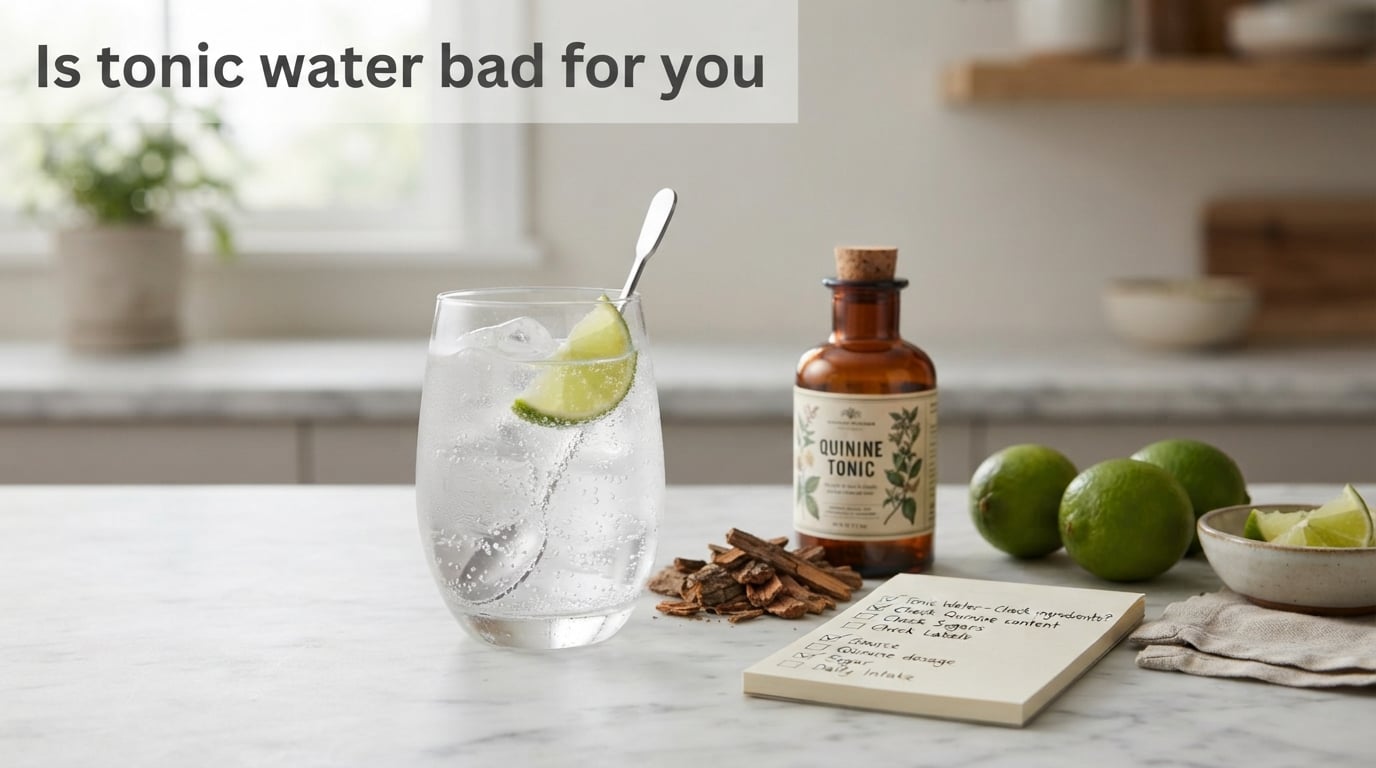
Is tonic water bad for you? Short answer: a small glass now and then won’t hurt most healthy adults, but drinking it every day can cause real problems. The two main concerns are the sugar load (32 grams per 12 oz can, roughly the same as cola) and the quinine it contains, which can interact with common medications and trigger side effects in sensitive people.
I dug into the medical literature and compared three of the top-ranking guides on this topic to bring you a clear, evidence-based answer. Our team also pulled feedback from r/nutrition and r/HydroHomies to surface the questions real drinkers ask most. Below you’ll find what’s actually in your glass, who should stay away from it, and what to drink instead.
Table of Contents
What Is Tonic Water and What Does It Contain?
Tonic water is a carbonated soft drink flavored with quinine, a bitter compound originally derived from the bark of the South American cinchona tree. British colonials mixed it with gin in the 19th century to make the bitter medicine go down easier, and the gin and tonic was born.
Modern tonic water contains four core ingredients:
- Carbonated water
- High-fructose corn syrup or cane sugar (32g per 12 oz in regular versions)
- Quinine, in trace amounts for flavor
- Citric acid and natural flavorings
Yes, Schweppes tonic water still contains quinine. So do Fever-Tree, Canada Dry, and most supermarket brands. Diet or “zero sugar” versions swap the sugar for aspartame or sucralose, but they keep the quinine to preserve that signature bitter bite.
If you want a refresher on how carbonation affects hydration, our guide on sparkling water before a workout walks through the science. The same carbonation principles apply to tonic water.
What Is Quinine and How Much Is in Tonic Water?
Quinine is a natural alkaloid pulled from cinchona tree bark. Indigenous Peruvians used it to treat fevers long before Europeans arrived, and it became the world’s first effective malaria treatment in the 17th century. Today, the FDA still approves quinine as a prescription medication (sold as Qualaquin) for uncomplicated malaria.
But the quinine in your gin and tonic is nowhere near a medical dose. The FDA limits quinine in beverages to 83 parts per million, a tiny fraction of the therapeutic dose used to fight malaria. You’d have to drink around 20 liters of tonic water in a day to reach a medicinal quinine level, which is obviously not happening.
Even at these low levels, quinine is biologically active. It can still trigger allergic reactions, interact with medications, and cause side effects in sensitive individuals. The dose makes the poison, but it doesn’t make it zero.
Here’s a quick comparison:
- Tonic water: ~83 mg of quinine per liter (legal limit)
- Qualaquin prescription: 648 mg every 8 hours for malaria
- Difference: about 25 to 30 times more concentrated in medicine
The takeaway: the quinine in tonic water is below the threshold for treating disease, but it’s not biologically inert.
Health Risks and Side Effects of Tonic Water
The biggest health risk from tonic water isn’t actually the quinine. It’s the sugar. A regular 12 oz can delivers about 124 calories and 32 grams of added sugar, which is more than a comparable serving of Coca-Cola. If you sip tonic water daily, that adds up fast and contributes to weight gain, blood sugar spikes, and higher diabetes risk.
Quinine-related side effects, even at low doses, fall into two categories.
Mild Side Effects
- Nausea and stomach upset
- Mild headache
- Ringing in the ears (tinnitus)
- Flushed skin
- Mild vision disturbances
Severe Side Effects (Rare but Documented)
- Thrombocytopenia (dangerously low platelet count)
- Cardiac arrhythmias, including atrial fibrillation
- Severe allergic reactions
- Kidney damage in susceptible individuals
These severe reactions are documented in case reports, mostly in people who drank tonic water daily for weeks or months. They are rare, but they happen. The Healthgrades review cites published case reports of patients who ended up in the ER after heavy tonic water consumption.
If you compare tonic water to plain mineral water, the difference is stark. Mineral water delivers hydration with zero sugar, zero quinine, and zero calories. For most people, mineral water is the safer everyday choice.
Who Should Avoid Drinking Tonic Water?
Some groups should skip tonic water entirely or talk to a doctor before drinking it. Here’s who I tell our readers to be especially careful.
- Pregnant or breastfeeding women. Quinine crosses into breast milk and the placenta. While the amounts are small, there’s no established safe intake during pregnancy.
- People with heart conditions. Quinine can affect heart rhythm, especially in those with existing arrhythmias or on heart medications.
- People with kidney or liver disease. Both organs process quinine, and impaired function raises the risk of side effects.
- Anyone on interacting medications. This includes blood thinners (warfarin), some antibiotics (like macrolides), antidepressants, and antacids.
- People with G6PD deficiency. This genetic condition makes quinine potentially dangerous even at low doses.
- Anyone with a known quinine allergy. Even trace amounts can trigger reactions in sensitive individuals.
If any of these apply to you, switch to plain mineral water, sparkling water, or a quinine-free mixer.
Tonic Water Myths vs Facts: Leg Cramps, Hydration, and More
Let’s bust a few common claims I see repeated online.
Myth 1: Tonic Water Prevents Nighttime Leg Cramps
This one keeps coming up. The idea is that quinine relaxes muscles. Harvard Health put it to the test and concluded that drinking a few ounces of tonic water is unlikely to prevent leg cramps. The quinine dose is far below therapeutic levels, and the FDA has actually banned quinine from over-the-counter leg cramp remedies for safety reasons.
Myth 2: Tonic Water Hydrates Like Regular Water
It doesn’t. The sugar slows water absorption, and the quinine and carbonation can cause mild stomach upset. Plain water, including mineral water, hydrates faster and more efficiently.
Myth 3: Sugar-Free Tonic Water Is a Free Pass
Not exactly. Diet tonic removes the sugar concern but keeps the quinine and adds artificial sweeteners like aspartame or sucralose. Most regulatory agencies consider these safe, but some users prefer to avoid them. Long-term data on daily aspartame consumption is still evolving.
Myth 4: Tonic Water Boosts Immunity
No solid evidence supports this. Quinine has antimalarial properties at prescription doses, but the trace amount in tonic water won’t prevent or treat any infection, including the ones making headlines this year.
How Much Tonic Water Is Safe to Drink?
For healthy adults with no medical conditions and no interacting medications, occasional small servings are low risk. A 4 to 6 ounce glass once or twice a week is a reasonable ceiling if you want to keep sugar intake in check.
Here are the guidelines I follow and recommend:
- Cap regular tonic water at one small serving per week if you’re watching calories.
- Choose diet or zero-sugar versions if you drink it more often, but be aware of artificial sweeteners.
- Read the label for quinine content, especially if you take prescription medications.
- Skip tonic water entirely if you’re pregnant, on interacting drugs, or have heart, kidney, or liver issues.
- Choose mineral water for daily hydration. It has none of these concerns.
Reddit users in r/HydroHomies put it bluntly: tonic water is not a hydration drink. Treat it as an occasional cocktail mixer, not a daily beverage.
Frequently Asked Questions About Tonic Water
Is it okay to drink tonic water every day?
For most healthy adults, drinking tonic water every day is not recommended. The sugar adds up quickly (32g per can) and the quinine, even at low doses, can cause side effects with prolonged exposure. Occasional small servings are low risk, but daily consumption raises concerns about metabolic health and medication interactions.
Is tonic water hard on the liver?
Tonic water is not a major liver stressor at typical consumption levels, but quinine is processed by the liver. People with existing liver disease should avoid tonic water or talk to their doctor, since impaired liver function can cause quinine to build up to harmful levels.
What does tonic water do to the body?
Tonic water delivers carbonation, sugar, and a small dose of quinine. The carbonation can cause bloating in some people. The sugar raises blood glucose and adds calories. The quinine can trigger mild side effects like tinnitus or nausea in sensitive individuals and may interact with certain medications.
Does Schweppes tonic water still have quinine in it?
Yes, Schweppes tonic water still contains quinine. Most major tonic water brands, including Fever-Tree, Canada Dry, and store brands, use quinine at or below the FDA limit of 83 parts per million to deliver the signature bitter flavor.
Final Verdict on Tonic Water
So, is tonic water bad for you? For most healthy adults, the occasional gin and tonic or small glass on its own is not a health disaster. The risks come from regular, daily consumption: too much sugar, possible quinine buildup, and drug interactions that catch people by surprise.
If you enjoy the taste, keep it to one or two small servings a week and skip it if you’re pregnant, on interacting medications, or managing a chronic condition. For daily hydration, mineral water remains the cleanest, safest choice with zero sugar, zero quinine, and naturally balanced minerals.
Our team’s final recommendation: tonic water is fine as an occasional treat, not as a daily habit. If you’re unsure whether your medications interact with quinine, ask your doctor or pharmacist before your next glass.