
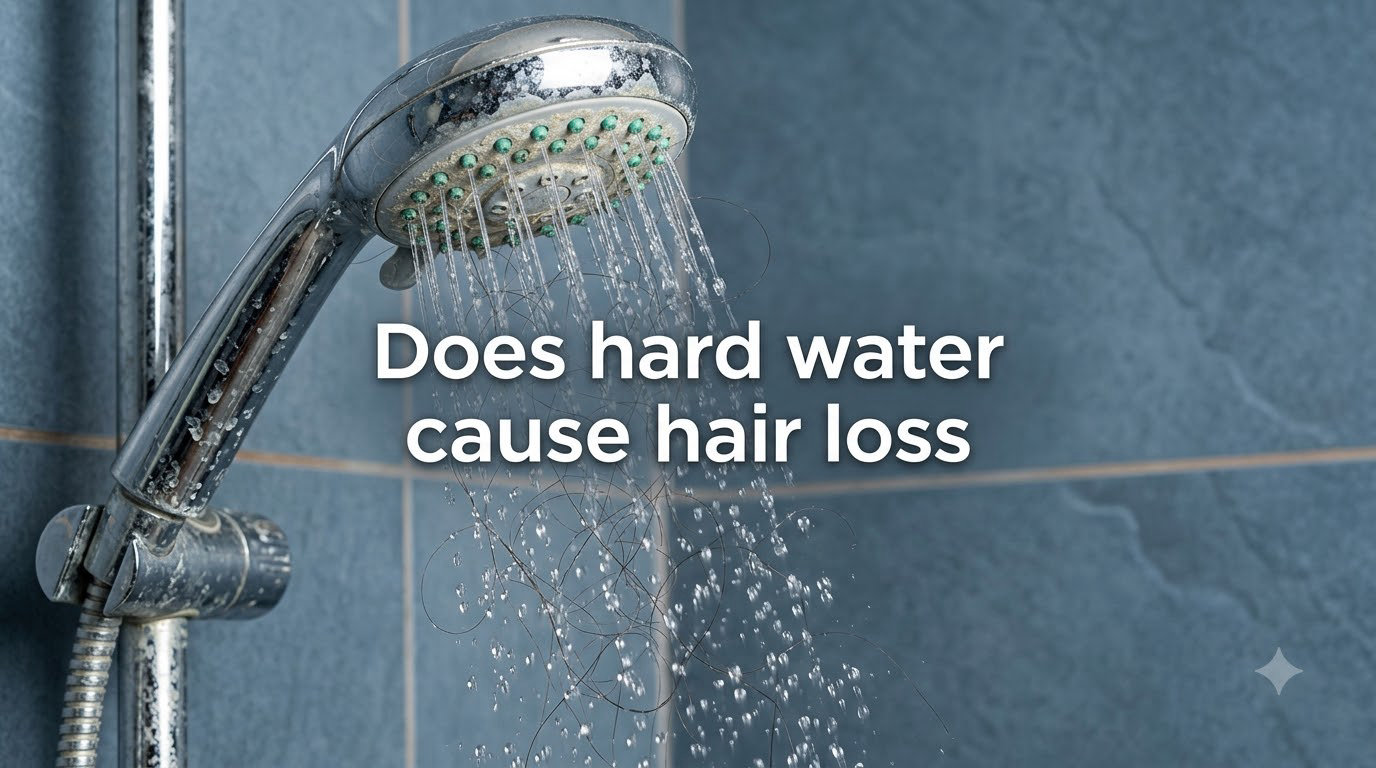
Hard water does not directly cause true hair loss, but it absolutely damages your hair in ways that look and feel like hair loss. The key distinction most people miss is this: hard water creates breakage, brittleness, and thinning at the ends, but it does not typically affect the follicle or trigger the hormonal shedding that causes pattern baldness.
I have spent weeks combing through dermatology research, NIH studies, and hundreds of forum threads to untangle what hard water actually does to your hair. In this guide, I will walk you through the science, show you how to tell if your shower is the culprit, and give you the exact steps to fix it.
Table of Contents
What Hard Water Actually Is
Hard water is water that contains high concentrations of dissolved minerals, primarily calcium and magnesium, picked up as water moves through limestone and chalk deposits underground. The U.S. Geological Survey measures water hardness in grains per gallon (gpg), and anything above 7 gpg is considered very hard.
About 85% of American homes have hard water, so if you live in the Midwest, Southwest, or parts of the South, your tap water likely carries a heavy mineral load. Cities like Phoenix, Las Vegas, Indianapolis, and Tampa routinely register above 180 mg/L of total hardness.
Key Minerals Involved: Calcium and Magnesium
Two minerals drive most of the trouble: calcium carbonate (the same compound that builds up in your kettle) and magnesium sulphate. These positively charged ions bond to the negatively charged surface of your hair and create a stubborn film that regular shampoo struggles to remove.
This is the same reason your showerhead gets clogged and your glass shower door looks cloudy after a few months. The minerals do not disappear; they accumulate. To understand how minerals in water interact with your body and hair, it helps to think of mineral content as something that adds up over time rather than washes away.
How Hard Water Affects Hair: The Science Behind the Damage
Hard water damages hair through three connected mechanisms: mineral buildup on the cuticle, blocked moisture absorption, and gradual structural weakening. None of these mechanisms attack the follicle itself, which is why hard water does not cause true alopecia.
Mineral Buildup on the Hair Cuticle
Your hair shaft is covered in tiny overlapping scales called the cuticle, which normally lie flat and reflect light for shine. Calcium and magnesium ions bind to the cuticle and force those scales to lift. Once lifted, the cuticle cannot close back down without an acidic rinse or chelating agent.
Each wash adds another microscopic layer of mineral coating. After months, your hair feels rough, looks dull, and refuses to absorb conditioner properly.
Why Moisture Cannot Penetrate
That mineral coating acts like waterproofing on a raincoat. Water-based conditioners, leave-in treatments, and oils cannot penetrate the barrier to reach the cortex inside the hair shaft. Your hair stays dry underneath the buildup even when you use rich products.
This dryness makes strands brittle. Brittle strands snap easily when brushed, tied up, or even towel-dried.
What the NIH Study Found
A peer-reviewed 2014 study published in the Journal of the Society of Cosmetic Scientists of Korea, indexed on PubMed Central (PMC3927171), tested hair samples washed in hard versus soft water using an INSTRON tensile strength tester. The researchers found that hard water increased hair fragility and made strands more prone to breakage during routine grooming.
The study also noted that hard water did not directly reduce tensile strength in single-strand tests, but real-world friction from combing produced measurable damage. In plain terms: your hair survives a single tug, but the cumulative effect of daily washing in mineral-heavy water breaks it down over time.
Hair Breakage vs True Hair Loss: The Critical Difference
Hair breakage and true hair loss look similar in the shower drain but come from completely different places. Understanding which one you have changes everything about your treatment plan.
What Hair Breakage Looks Like
Breakage produces short, irregular pieces with sharp or split ends. You will find them on your brush, in the shower, and stuck to your clothes. The strand never came out at the root; it snapped somewhere along the shaft, often at a weak point where the cuticle was already damaged.
Breakage concentrates at the mid-lengths and ends. It happens more often when hair is wet, which is its weakest state. People with bleached, color-treated, or chemically processed hair experience dramatically more breakage from hard water because their cuticle is already compromised.
What True Hair Loss Looks Like
True hair loss involves the follicle itself. A strand comes out with a tiny white bulb at the root, called a club hair, which is the natural end of a hair’s growth cycle. Losing 50 to 100 club hairs per day is normal shedding.
Pattern hair loss (androgenetic alopecia) shows up as gradual thinning at the crown, a receding hairline, or widening part. It is driven by genetics and hormones, specifically dihydrotestosterone (DHT), not water quality.
Why the Distinction Matters for Treatment
If your problem is breakage, you can reverse it. Install a shower filter, switch to chelating shampoo, and your hair will rebuild over the next 3 to 6 months. If your problem is true genetic hair loss, hard water is at most a minor aggravator and you need medical treatments like minoxidil or finasteride.
7 Signs Hard Water Is Damaging Your Hair
Run through this checklist if you suspect your water supply is the issue. The more boxes you tick, the more likely hard water is contributing to your hair problems.
- Hair feels coated or waxy even right after washing with your usual shampoo.
- Color fades fast or turns brassy, especially blonde or red tones that shift toward orange.
- Increased shedding and breakage in the shower and on your brush within weeks of moving to a new area.
- Limp, lifeless strands that refuse to hold a curl or style.
- Dry, itchy, or flaky scalp that does not respond to typical dandruff shampoo.
- White or yellowish residue on dark hair and on shower walls, faucets, and glass.
- Products stop working, meaning your expensive conditioner and masks feel like they sit on top of the hair instead of absorbing.
If you moved to a new city recently and noticed a sudden texture change, that timing alone is a strong clue. Many forum users on r/HaircareScience and r/longhair describe exactly this pattern after relocating.
How to Protect Your Hair from Hard Water
Protecting your hair from hard water does not require moving or ripping out your plumbing. These seven methods work whether you rent or own, and most cost less than a salon visit.
1. Install a Shower Filter or Water Softener
A shower filter is the fastest single change you can make. Filters using KDF-55 and calcium sulphite media reduce chlorine and some mineral content, but they do not remove all hardness. A true salt-based water softener exchanges calcium and magnesium ions for sodium, which solves the problem at the source but requires professional installation.
Renters can use showerhead-mounted filters that screw on in minutes and last about 6 months. If you want to learn more about how water filtration options compare, the technology matters because not every filter targets hardness.
2. Use a Chelating or Clarifying Shampoo Weekly
Regular shampoo cleans oil and dirt. Clarifying shampoo strips product buildup. Chelating shampoo goes further and binds to metal ions like calcium and magnesium, lifting them off the hair shaft. Brands like Malibu C, Ion, and Neutrogena make chelating formulas designed for exactly this purpose.
Use it once a week, not daily. Chelating agents are strong and can dry out hair if overused. Follow every chelating wash with a deep conditioner to restore moisture.
3. Try the Apple Cider Vinegar Rinse
Apple cider vinegar (ACV) is mildly acidic, with a pH around 2.9 to 3.1. That acidity helps close the cuticle and dissolve mineral buildup between chelating washes. Mix 2 tablespoons of ACV with 1 cup of cool water in a squeeze bottle.
After shampooing, pour the mixture over your hair, let it sit for 2 to 3 minutes, then rinse with cool water. Use it once or twice a week. Your hair will feel noticeably smoother after the first rinse.
4. Filter Your Final Rinse Water
If a full shower filter is not in your budget, a small filtered pitcher or bottle of distilled water for your final rinse still helps. The last rinse is what stays on your hair, so even a partial reduction in mineral content makes a difference.
5. Wash Hair Less Often
Every wash exposes your hair to a fresh layer of minerals. If you currently wash daily, try every other day. People with dry or curly hair often do well washing just 2 to 3 times a week.
6. Use a Leave-In Conditioner as a Barrier
Silicone-based or oil-based leave-in products create a thin protective layer between your hair and the water. This does not stop minerals from bonding entirely, but it reduces direct contact and makes subsequent washes easier.
7. Deep Condition Weekly
A weekly deep conditioning mask with ingredients like shea butter, coconut oil, or hydrolyzed protein helps rebuild the moisture and protein your hair loses to mineral exposure. Leave the mask on for 15 to 30 minutes under a shower cap for best results.
Treatment Solutions for Hair Already Damaged by Hard Water
If you have been washing in hard water for months or years, your hair needs active repair on top of prevention. These three steps form the recovery protocol our team recommends.
Step 1: Chelating Shampoo Protocol
Use a chelating shampoo twice a week for the first month, then drop to weekly maintenance. Massage into wet hair, leave on for 3 to 5 minutes, then rinse thoroughly. Most people see visible improvement after 2 to 3 washes.
Step 2: Apple Cider Vinegar Rinse Recipe
Mix 2 tablespoons of raw, unfiltered apple cider vinegar with 1 cup of filtered or distilled water. After your chelating shampoo, apply the mixture, wait 3 minutes, and rinse with cool water. This step lowers the hair’s pH back into the healthy 4.5 to 5.5 range and smooths the cuticle.
Step 3: Deep Conditioning Routine
After every chelating wash, apply a rich conditioner or hair mask. Look for products with proteins (keratin, silk amino acids) to rebuild structure and fatty alcohols or natural oils to restore moisture. Leave on for at least 10 minutes before rinsing.
For color-treated hair, layer in a bond-repair treatment like Olaplex or K18 once a week. Hard water strips color faster, and bond-repair treatments help rebuild the disulfide links broken by chemical processing.
Recovery Timeline: When Will You See Improvements?
Most people notice the first changes within 2 to 4 weeks of switching to soft water or starting chelating treatments. Hair feels cleaner after washing, gets less tangly, and holds style better.
Visible length recovery takes longer because hair only grows about half an inch per month. Expect 3 to 6 months before breakage noticeably slows and new, healthy growth becomes visible at the ends. Full recovery for severely damaged hair can take 6 to 12 months of consistent care.
The encouraging part is that any hair you still have is recoverable. Breakage from hard water is not permanent. Once you remove the mineral assault, your strands rebuild with the same growth cycle you always had.
Frequently Asked Questions
Will hair loss from hard water grow back?
Yes, in most cases. Hard water causes breakage and shedding rather than follicle damage, so once you remove the mineral exposure and start repairing the cuticle, new growth and healthier strands return within 3 to 6 months. Hair grows about half an inch per month, so full length recovery takes time.
How do I protect my hair from hard water?
Install a shower filter or whole-home water softener, use a chelating shampoo once a week, apply an apple cider vinegar rinse twice a week, condition deeply, and consider a leave-in product as a barrier. Reducing wash frequency also helps limit mineral buildup.
How do you know if hard water is causing hair loss?
Look for a waxy coated feeling after washing, color fading or turning brassy, increased shedding after moving to a new area, residue on shower walls and faucets, and products that stop absorbing. These signs together strongly suggest hard water is a factor.
Is hair loss from hard water permanent?
No. Hard water damage is not permanent because it affects the hair shaft, not the follicle. Once you switch to soft water or start chelating treatments, your hair begins rebuilding with your next growth cycle. True permanent loss comes from hormonal or genetic causes, not water quality.
How long does it take for hair to recover from hard water damage?
Texture and feel improve within 2 to 4 weeks of consistent treatment. Visible length recovery takes 3 to 6 months. Severely damaged hair may need 6 to 12 months of chelating, ACV rinses, and deep conditioning to fully restore.
The Bottom Line on Hard Water and Hair Loss
Does hard water cause hair loss? Not in the true medical sense. Hard water causes breakage, brittleness, and visible thinning that looks like hair loss, but the follicle itself stays intact. With a shower filter, chelating shampoo, and a consistent recovery routine, your hair rebuilds over the next 3 to 6 months. Start with one change this week and add the others as you go.