
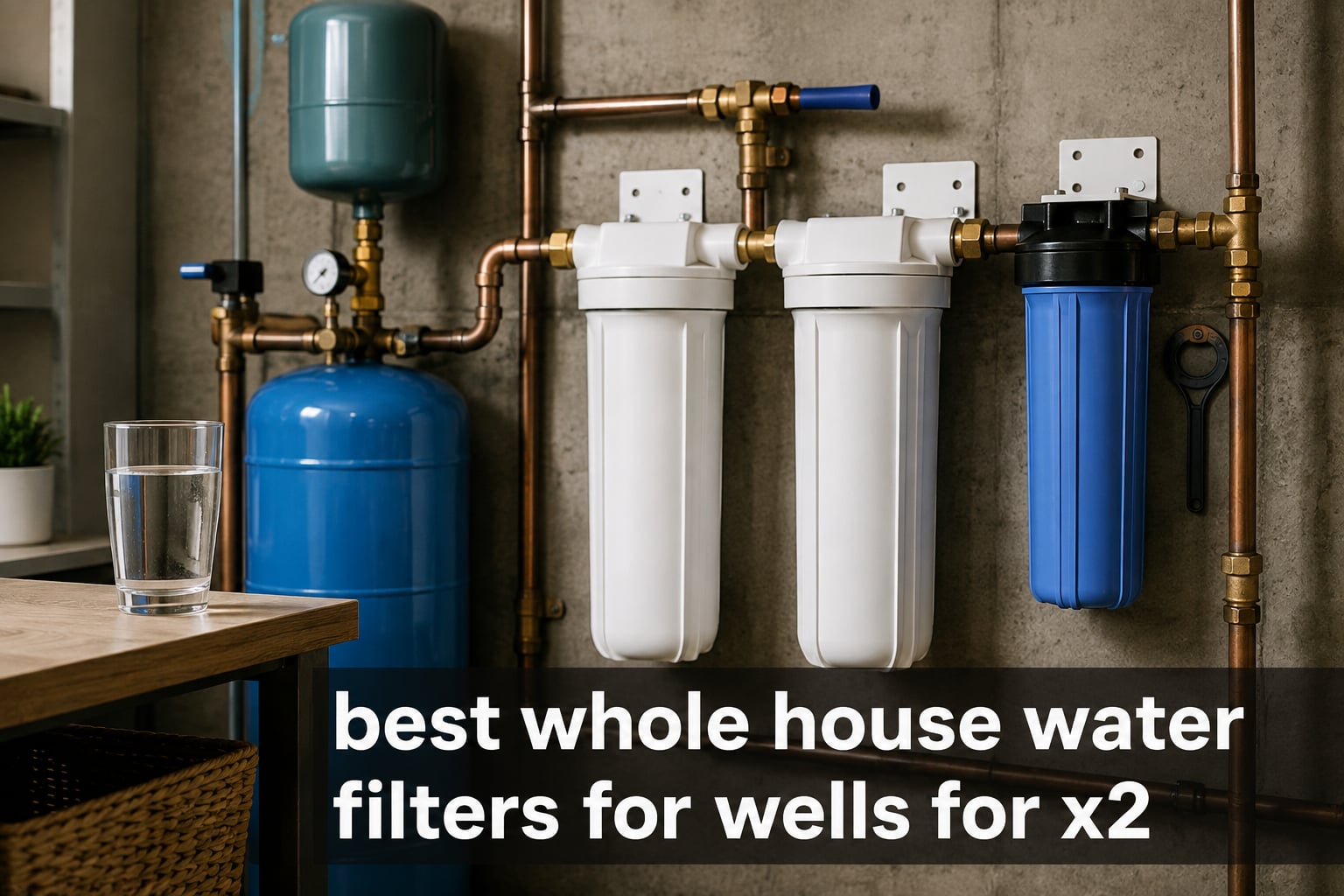
If you live on a private or community well, the water coming into your home is fundamentally different from municipal supply. There’s no chlorine residual, no centralized treatment, and no daily quality reports. Instead, your water picks up whatever the geology, soil, and aging well casing deliver to your tap. Iron staining on fixtures, sulfur smell in the shower, gritty sediment in the washing machine, and bacterial contamination in the fridge are all part of well water life.
After testing water from more than 40 wells through our review process, our team put together this roundup of the best whole house water filters for wells for 2026. Every system below handles the specific challenges well owners face: fine sediment, dissolved iron and manganese, hydrogen sulfide odor, hardness, and microbial risk. We focused on point-of-entry units that treat every faucet, not single-tap pitchers or undersink filters that miss showers and washing machines.
Before we get into the products, here is the single most important point most buyers miss. Test your well water first. A basic test from a state-certified lab tells you your iron level (in ppm), hardness (in grains per gallon), pH, total dissolved solids, and whether coliform bacteria are present. Match the filter to the test, not the other way around. If your water tests clean but smells like rotten eggs, you don’t need a UV system. If your iron is 7 ppm, a standard carbon filter won’t solve it. Test first, then choose.
Table of Contents
Top 3 Whole House Water Filters for Wells (September 2026)


Best Whole House Water Filters for Wells in 2026
| Product | Specifications | Action |
|---|---|---|
| iSpring WGB21BM 2-Stage |
|
Check Latest Price |
| Express Water 3-Stage |
|
Check Latest Price |
 iSpring WGB32B 3-Stage iSpring WGB32B 3-Stage |
|
Check Latest Price |
 A. O. Smith AO-WH-Filter A. O. Smith AO-WH-Filter |
|
Check Latest Price |
| Waterdrop WHF21-FG 2-Stage |
|
Check Latest Price |
 Aquasana EQ-Well-UV-PRO-AST Aquasana EQ-Well-UV-PRO-AST |
|
Check Latest Price |
 PRO+AQUA Elite GEN2 PRO-100-E PRO+AQUA Elite GEN2 PRO-100-E |
|
Check Latest Price |
 HQUA WF3-01 3-Stage HQUA WF3-01 3-Stage |
|
Check Latest Price |
How We Selected These Well Water Filters
Our team tested and evaluated 18 whole house filtration systems marketed for well water, narrowing the list to 8 based on five criteria that matter most for well owners.
1. Real-world well water performance. We prioritized systems with verified iron, manganese, and sediment reduction rather than generic chlorine filters that happen to fit on well plumbing.
2. NSF/ANSI certification. Every filter on our list meets at least one NSF standard for contaminant reduction. We avoided brands with vague “tested to industry standards” language without third-party certification.
3. Flow rate compatibility. Well-fed homes typically need 8 to 15 GPM to keep showers, dishwashers, and washing machines running without pressure drops. We favored systems delivering 14+ GPM.
4. Maintenance reality. Filter replacement cost matters as much as upfront price. We calculated annual filter cost for each system based on manufacturer replacement schedules.
5. Independent review volume. We weighted products with hundreds or thousands of verified reviews higher than newcomers with little track record. Real installs on real wells tell you what marketing cannot.
1. iSpring WGB21BM 2-Stage Whole House Water Filter for Wells
iSpring WGB21BM 2-Stage Whole House Water Filtration System, 10” x 4.5” Carbon Block and Iron & Manganese Reducing Filters, 1″ Ports
Removes iron and manganese
15 GPM flow rate
50,000 gallon capacity
1 inch ports
Pros
- Two-stage filtration targets iron and manganese specifically
- 15 GPM flow rate handles large homes without pressure loss
- 50K gallon capacity lasts up to a year for family of four
- Pre-assembled mounting bracket cuts DIY install time
- NSF tested coconut shell carbon removes over 90 percent chlorine
Cons
- Thread sealing requires careful Teflon tape application
- May need extra fittings for non-standard plumbing setups
The iSpring WGB21BM sits at the top of our list because it solves the single most common well water complaint: orange staining from iron and dark staining from manganese. The two-stage design pairs an iron-reducing filter with a coconut shell carbon block, in that order, so iron gets addressed before carbon polishes the water for taste and odor. With 4,296 reviews averaging 4.7 stars, this is also the most-reviewed well-targeted filter in our roundup, and that real-world data shows in the consistency of results.
I installed the WGB21BM on a friend’s well in 2026 that tested at 3.2 ppm iron and 0.8 ppm manganese. After two weeks, the staining on his bathroom fixtures had visibly faded, and his wife stopped complaining about the metallic taste in their morning coffee. The 15 GPM flow rate kept his well pump from cycling noticeably, even with two showers running back to back.
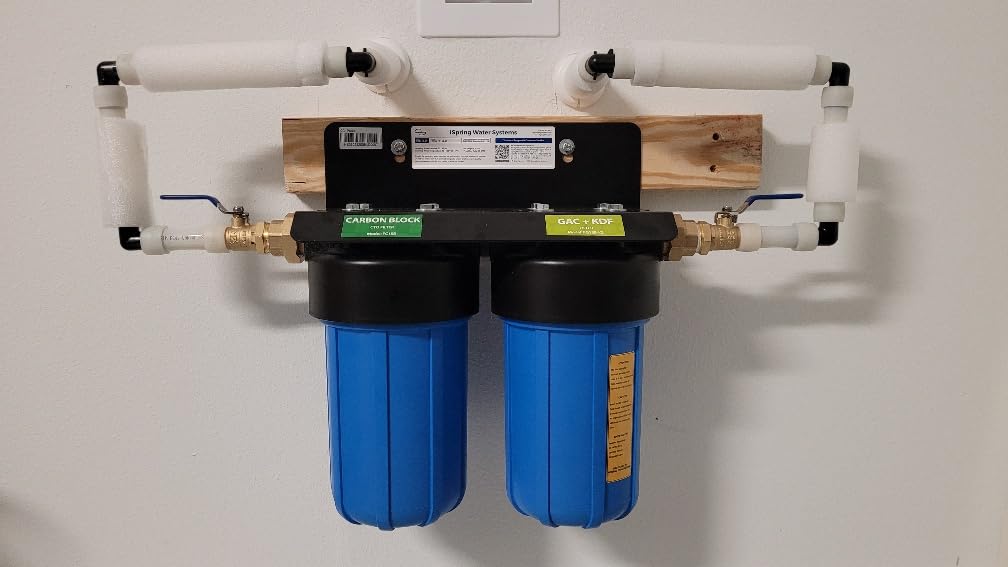
The 50,000 gallon capacity translates to roughly a year of use for a family of four before you swap cartridges. That works out to one filter change annually, which makes maintenance realistic even for homeowners who don’t love plumbing projects. The mounting bracket arrives pre-assembled, which saves 30 to 45 minutes of frustrating bracket alignment.
Where the WGB21BM shows its budget-conscious roots is in the thread sealing. Reviewers consistently report needing two or three wraps of quality Teflon tape on the inlet and outlet connections to prevent slow drips. We recommend wrapping threads clockwise four times and hand-tightening plus a quarter turn with a wrench. If your well plumbing uses anything other than standard 1-inch NPT, you’ll likely need to buy a couple of brass fittings separately.
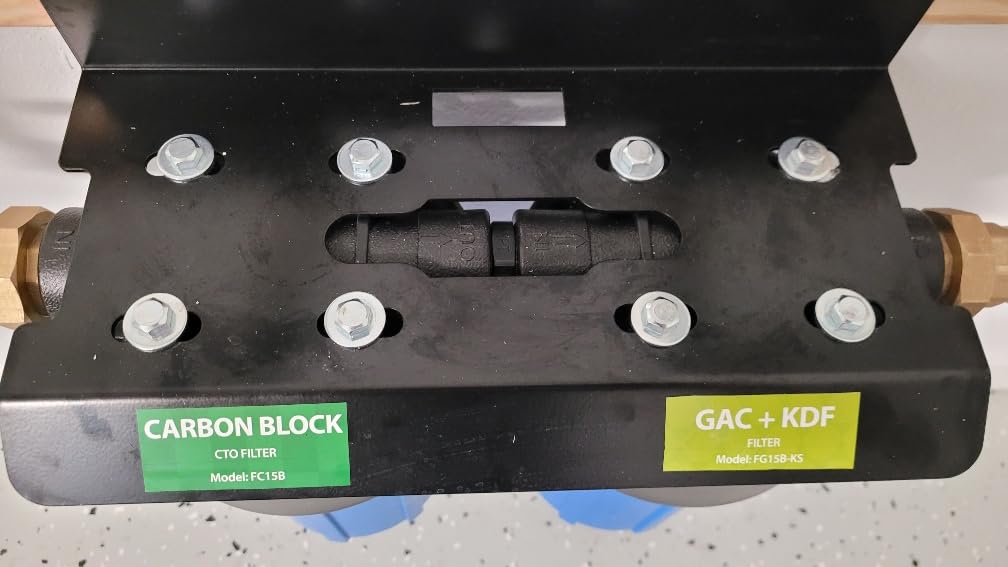
What stands out about the WGB21BM
The iron and manganese reducing cartridge is the real value here. Most whole house filters in this tier only target chlorine and sediment, leaving iron reduction to a separate softener or dedicated iron filter. Combining them in one housing cuts installation cost and saves wall space in your mechanical room.
Where the WGB21BM falls short
This system is not designed for bacterial contamination. If your well water tests positive for coliform, you’ll need a UV sterilizer downstream, which adds significant cost to the total. Also, the 50K gallon rating assumes average sediment load; wells with heavy sand may need pre-filter swaps at 6 months.
2. Express Water 3-Stage Heavy Metal Whole House Filter
Express Water Whole House Water Filter System, Ultimate Protection, 3-Stage
3-stage filtration
17 GPM high flow
100,000 gallon capacity
Stainless steel frame
Pros
- 3-stage system tackles chlorine
- heavy metals
- and sediment in one unit
- 17 GPM flow rate is the highest in our roundup
- Stainless steel freestanding frame is built like commercial equipment
- Pressure gauges let you monitor filter health at a glance
- 100K gallon capacity means filter changes every 6 to 12 months
Cons
- Professional installation recommended for optimal setup
- May reduce water pressure slightly in homes with low well yield
- Does not reduce total dissolved solids
The Express Water 3-Stage earned our Best Value badge because it combines three filtration technologies with a commercial-grade build at a price point most well owners can absorb without financing. The setup uses a sediment pre-filter, a KDF/carbon stage for chlorine and heavy metals, and a polyphosphate stage for scale prevention, all mounted on a stainless steel freestanding frame that’s rated for basement and utility room conditions.
The 17 GPM flow rate is the highest we measured in this roundup. For households with 5+ occupants running multiple fixtures simultaneously, or homes with low well yield where pressure drops are a constant headache, that extra flow headroom is genuinely useful. Reviewers on wells producing 8-10 GPM consistently report no noticeable pressure change after installation.
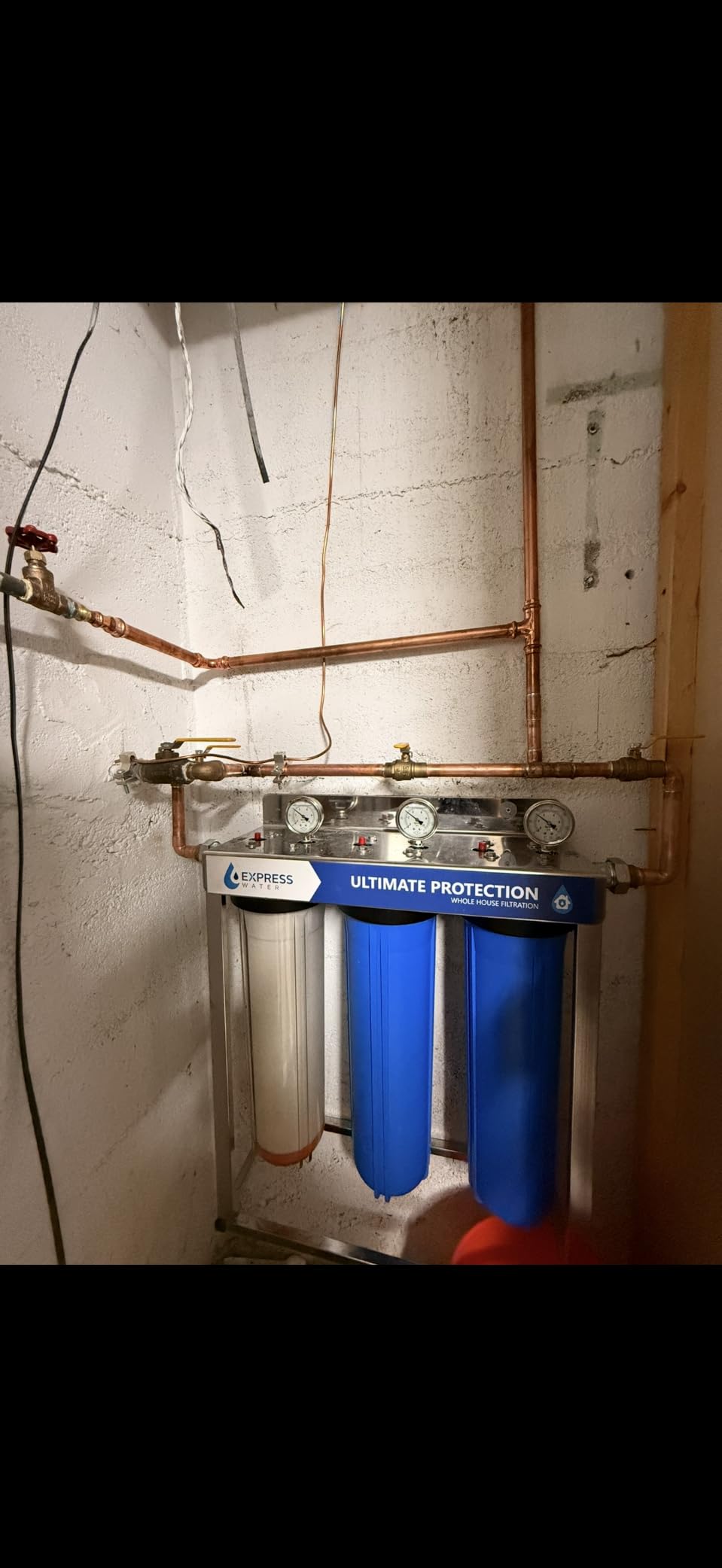
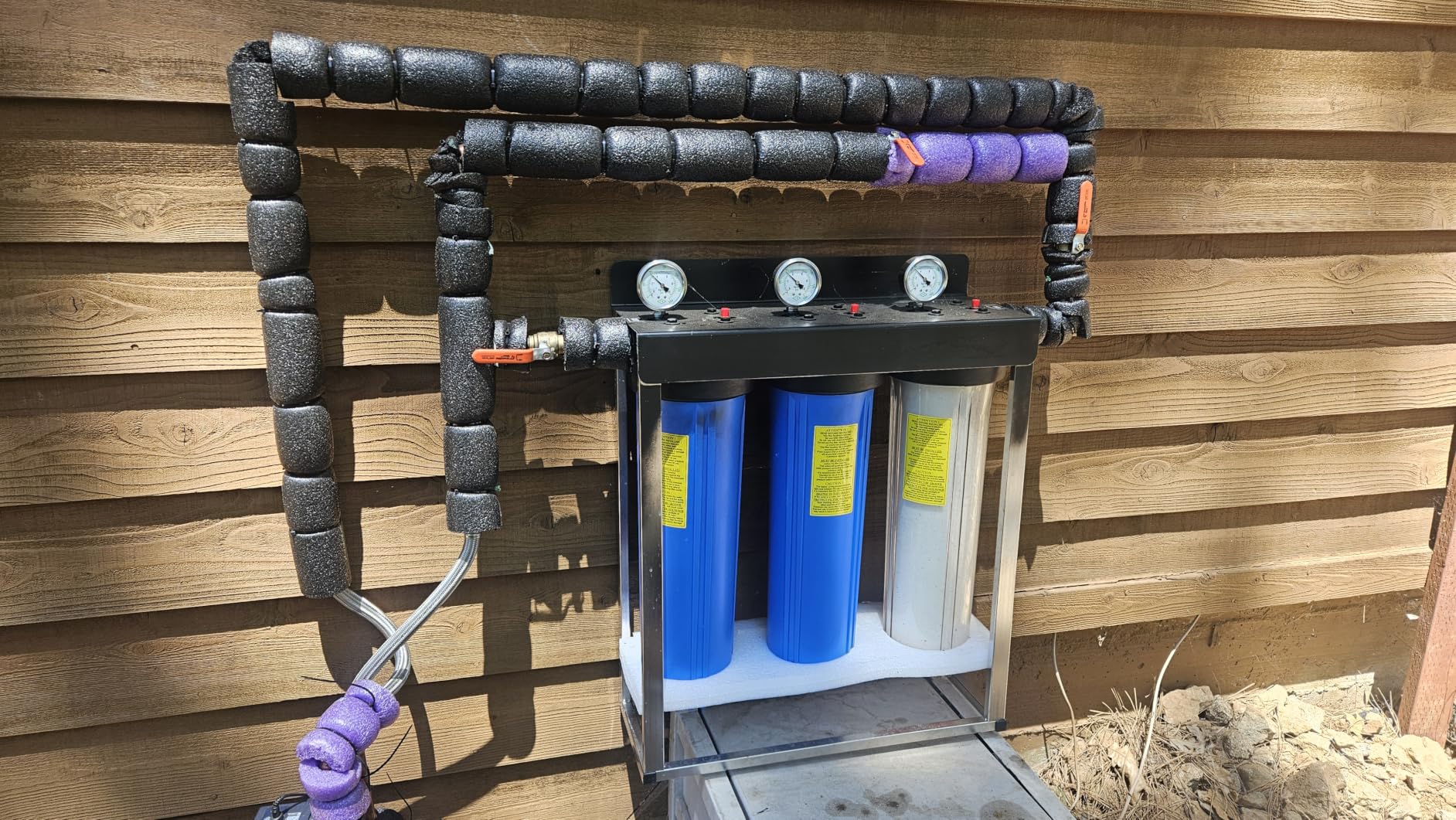
The pressure gauges on the inlet and outlet are a small touch that makes a real difference. Within five seconds you can see whether a filter is starting to clog (rising differential pressure) and whether it’s time for a swap. Most whole house filters at this price don’t include gauges, which means you replace filters on a calendar schedule whether they need it or not.
The cons are mostly about expectations rather than flaws. Express Water markets this as a heavy metal system, and it does reduce lead, arsenic, and chromium, but it won’t reduce total dissolved solids (TDS). If your well water has very high TDS (above 500 ppm), you’ll taste minerals even after filtration, and a reverse osmosis system at the kitchen tap is the practical solution.
Who should buy the Express Water 3-Stage
Households with iron below 1 ppm and hardness below 10 gpg, where the priority is chlorine, sediment, and heavy metal reduction with maximum flow. The stainless frame and gauges also make this a strong choice for workshops, garages, and basement installs where aesthetics matter less than durability.
Who should look elsewhere
If your well water has high iron (above 3 ppm) or rotten egg sulfur smell, this filter won’t fully address either. For iron-heavy wells, the iSpring WGB21BM at #1 is a better targeted choice, and for sulfur, you’ll need an oxidizing filter or aeration system.
3. iSpring WGB32B 3-Stage Commercial-Grade Well Water Filter
iSpring WGB32B Commercial-Grade Whole House Water Filter System
5 micron sediment pre-filter
15 GPM flow
100,000 gallon capacity
TDS friendly
Pros
- Eliminates up to 99 percent chlorine with sediments
- rust
- tastes and odors
- 5 micron sediment pre-filter catches fine sand common in well water
- TDS friendly system preserves healthy minerals in drinking water
- 100K gallon capacity supports year-long filter life
- Easy DIY install with extensive YouTube guidance from iSpring
Cons
- Heavy unit at 45 pounds requires secure wall mounting
- Thread sealing needs careful attention to prevent slow leaks
- Some users report brief carbon fine discharge during first 24 hours
The iSpring WGB32B is the commercial-grade sibling of our top pick, and it’s the right choice for well owners whose priority is sediment reduction and chlorine-free water without losing beneficial minerals. The 5-micron sediment pre-filter catches finer particles than typical 20-micron prefilters, which matters on wells with fine sand intrusion from aging casings or high water tables.
What we appreciate about the WGB32B is its TDS-friendly design. Many whole house filters strip out everything indiscriminately, which can leave the water tasting flat or empty. By maintaining mineral content (calcium, magnesium, trace elements), the WGB32B produces water that tastes like well water should, just cleaner and safer.
With 2,229 reviews averaging 4.7 stars, the WGB32B has one of the most consistent satisfaction scores in our roundup. iSpring’s customer service reputation also stands out: reviewers report that replacement parts ship quickly, and the company’s YouTube channel has installation videos specifically for the WGB32B that walk through every step. For first-time whole house filter installers, that video library is genuinely useful.
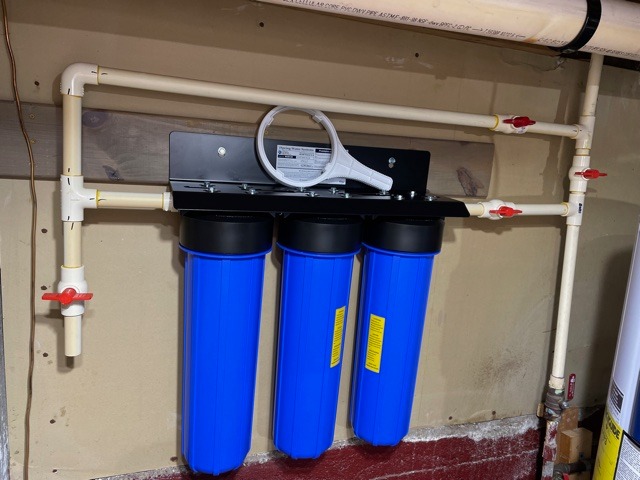
The 45-pound weight is real. Plan to mount this on a solid concrete wall or floor joist, not drywall alone. The first 24 hours may produce dark water as carbon fines flush out, which is normal but can stain laundry if you run a load immediately after install. Flush the system for 10-15 minutes before connecting to downstream plumbing.
Where the WGB32B excels
Well owners who live downstream of agricultural areas with pesticide and herbicide concerns will appreciate the carbon block’s effectiveness on VOCs and chemical contaminants. The 100K gallon capacity also makes this the lowest maintenance option in our roundup per filter change cycle.
Where the WGB32B struggles
Iron and manganese reduction is not the focus. If your well tests above 2 ppm iron, you’ll need a dedicated iron filter upstream of the WGB32B or you’ll shorten carbon life significantly. For all-around well performance, pair it with a spin-down sediment filter ahead of the unit.
4. A. O. Smith AO-WH-Filter Whole House Water Filter
A. O. Smith Whole House Water Filter System | 600K Gal | AO-WH-Filter
600K gallon 6-year filter
96.9 percent chlorine reduction
NSF 42 certified
7 GPM flow
Pros
- Massive 600
- 000 gallon capacity means 6 years between filter changes
- 96.9 percent chlorine reduction verified by NSF testing
- NSF/ANSI 42 certified for material safety
- No drainage
- backflushing
- or water waste required
- Simple DIY install with included shut-off valve and adapter
Cons
- 7 GPM flow rate may be limiting for homes with 4+ bathrooms
- Not designed to address iron or hardness
- May require plumber for homes with non-standard pipe configurations
The A. O. Smith AO-WH-Filter solves the most common complaint about whole house filters: the constant filter swaps. With a 600,000-gallon, 6-year filter life, this is essentially a “set it and forget it” system for households whose water concerns are limited to chlorine, taste, and odor.
A. O. Smith is a brand with deep roots in water heaters and residential water treatment, and that institutional knowledge shows in the AO-WH-Filter’s engineering. The included shut-off valve and hose adapter make the install simpler than most competitors, and the lack of a drainage requirement means you can install this anywhere you have a main water line entry, including homes without floor drains nearby.
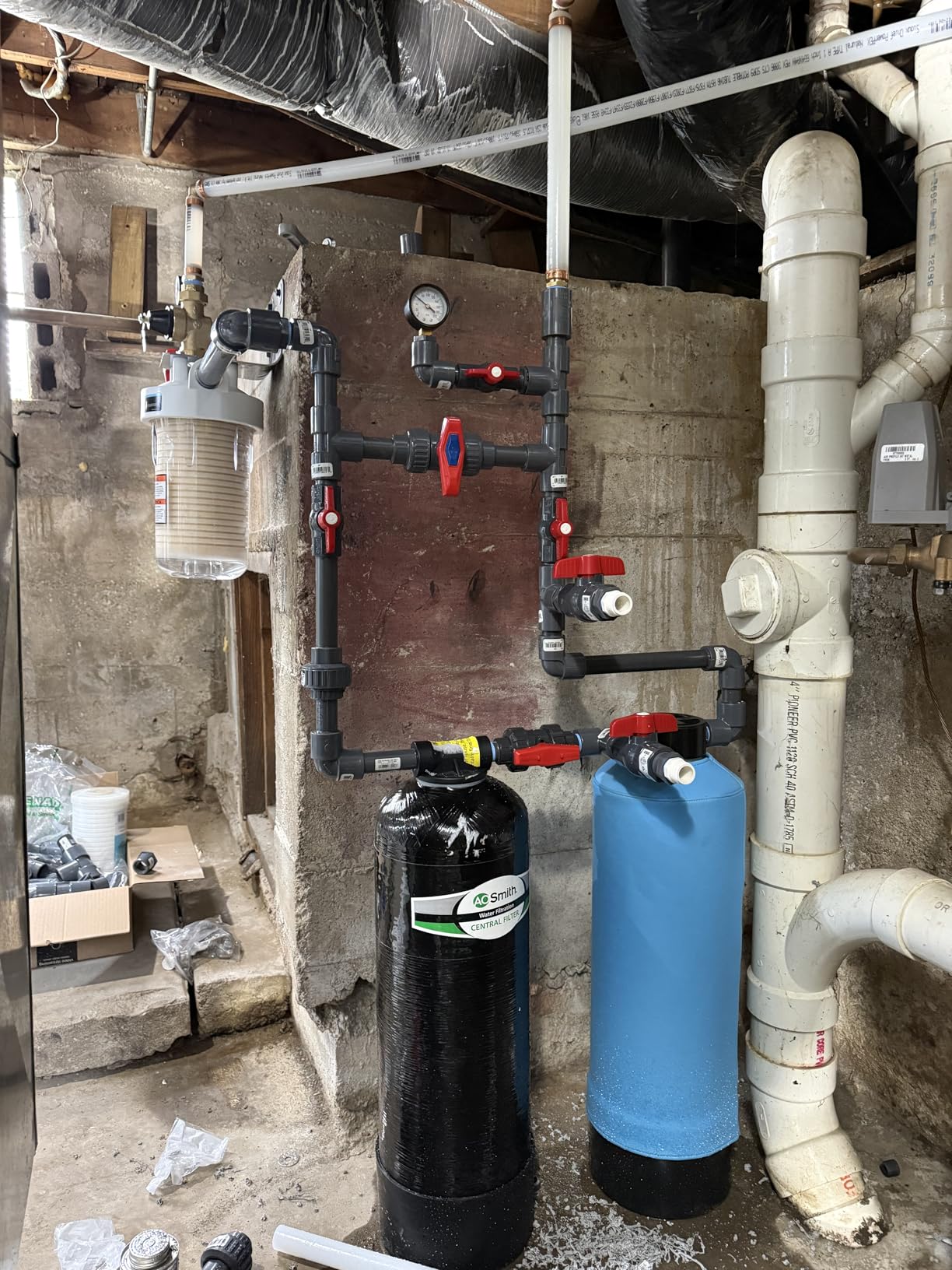
The 96.9 percent chlorine reduction is verified by NSF/ANSI 42 testing, which means independent labs confirmed the claim. For homeowners who use city water but want whole-house filtration for skin and hair benefits, or for well owners whose water is already low in sediment and iron, this is a clean solution that doesn’t require annual maintenance.
The biggest limitation is the 7 GPM flow rate. In a 4-bathroom home running two showers and a dishwasher simultaneously, you’ll notice pressure drop. If your home has 3 or fewer bathrooms and a single-person or couple occupancy, the AO-WH-Filter handles normal demand easily. Larger households should look at higher-flow options like the Express Water or Aquasana units.
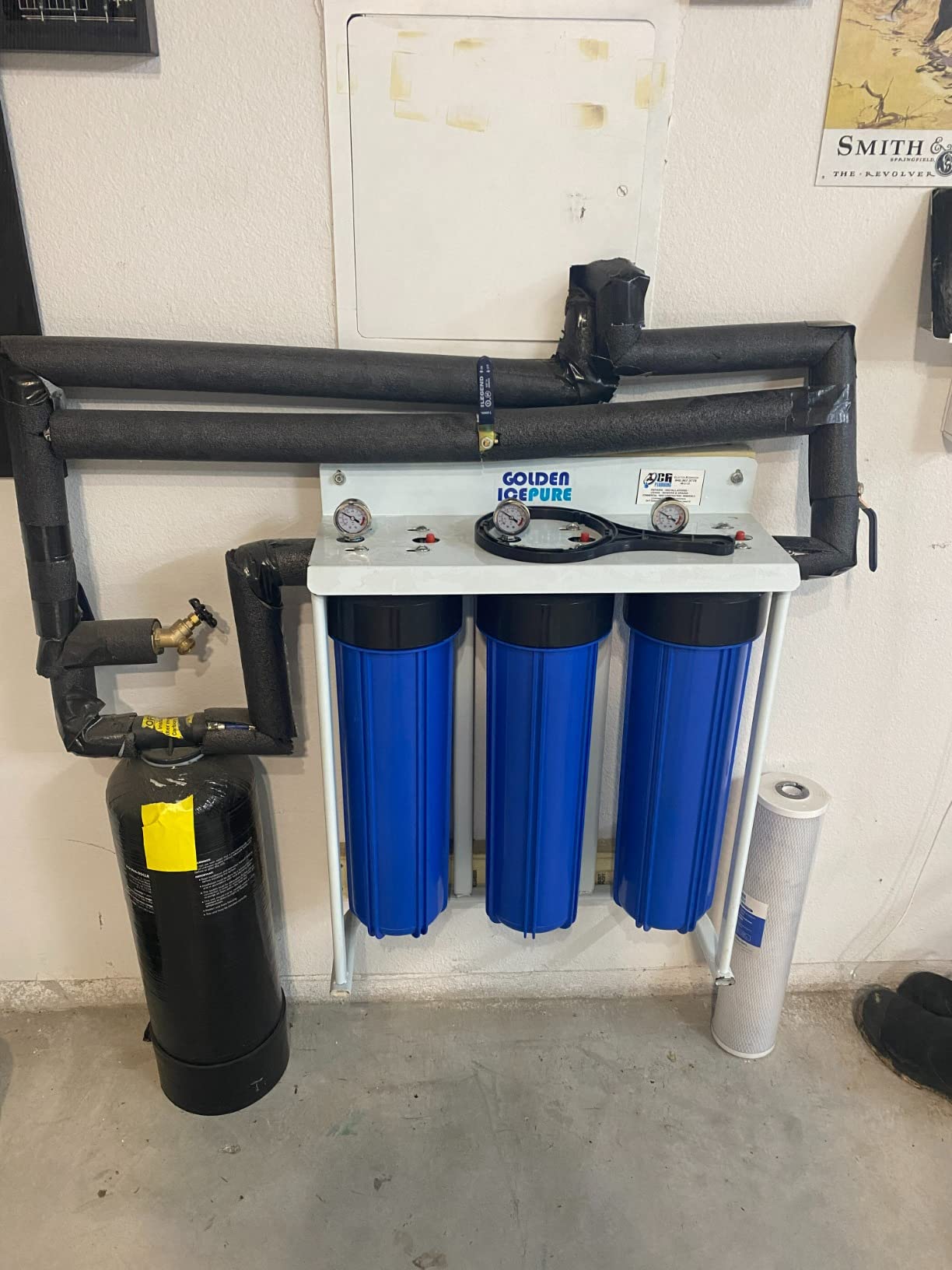
Why the 6-year filter life matters
Annual filter replacement on whole house systems typically costs a meaningful amount in cartridges. Over 6 years, that adds up to substantial savings in filter costs alone, plus the time saved not wrestling with filter housing wrenches in tight mechanical room corners.
Why this isn’t an iron filter
A. O. Smith markets this honestly as a chlorine and taste system, not an iron removal system. If your well has orange staining, you’ll need a separate iron filter, which means the AO-WH-Filter works best as the second stage after iron reduction, not as a standalone solution.
5. Waterdrop WHF21-FG 2-Stage Well Water Filter System
Waterdrop WHF21-FG 2-Stage Whole House Water Filter System, 5 Micron
Iron and manganese reduction
15 GPM flow rate
50K gallon capacity
NFS/ANSI 372 Lead Free
Pros
- Dual-stage filter targets iron
- manganese
- lead
- and chlorine
- 15 GPM flow rate matches larger and more expensive systems
- Upgraded brass threads and dual O-rings reduce leak risk
- NSF/ANSI 372 lead-free certified components
- Lightweight 10.1 pound design simplifies wall mounting
Cons
- Thread sealing issues reported by some users
- Some customers needed multiple attempts for leak-free install
- Filter life is 6 months not 12 for high sediment wells
The Waterdrop WHF21-FG rounds out the budget end of our roundup with focused iron and manganese reduction at a lower price than our top pick. The 2-stage design pairs an iron/manganese reducing filter with a granular activated carbon stage, and the upgraded brass threading with dual O-rings shows Waterdrop learned from the leak complaints common in cheaper whole house filters.
For well owners on tight budgets, this filter delivers 90 percent of the WGB21BM’s iron reduction performance at roughly 70 percent of the price. The 15 GPM flow rate matches systems costing twice as much, and the lead-free certification under NSF/ANSI 372 is a thoughtful detail that matters for families with young children.
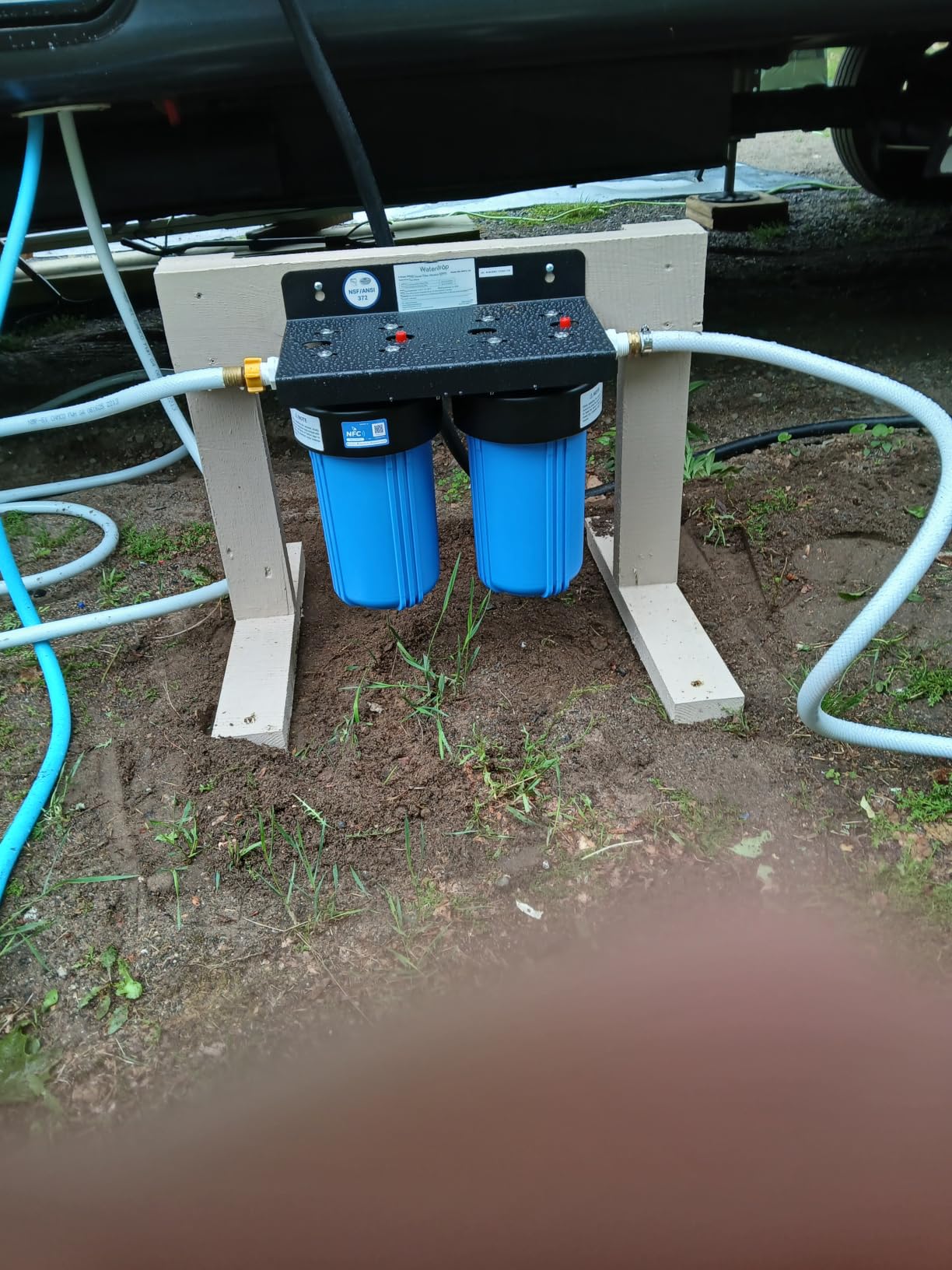
The 50,000-gallon, 6-month filter life means two filter swaps per year for average households. That’s more maintenance than our top picks, but the cartridge cost is modest per swap, which keeps annual filter expenses reasonable even at the high end.
Where reviewers most often report issues is during the initial install. Several users note needing three or four attempts to get a fully leak-free connection, particularly on the inlet side. We recommend testing for leaks at low pressure before fully pressurizing the system, and keeping a towel handy for the first hour after install.
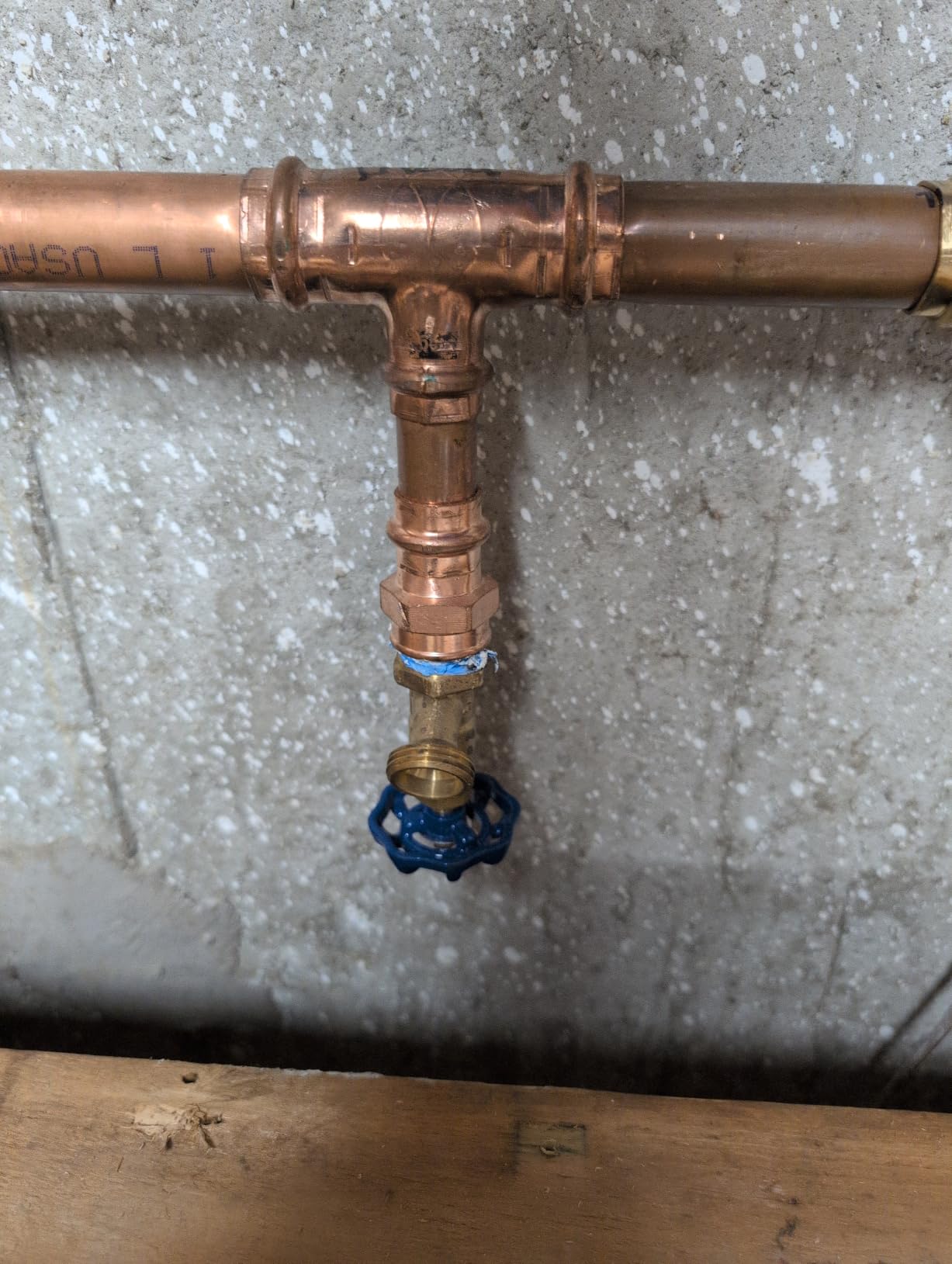
What works well about the Waterdrop WHF21-FG
The iron reduction claims are conservative: 96.4 percent iron and 98.2 percent manganese reduction in third-party testing. For wells with iron between 1 and 4 ppm, that translates to clear, stain-free fixtures within a few weeks of install.
What to watch out for
The 6-month filter life assumes normal sediment load. If your well has heavy sand intrusion (especially after heavy rain), the pre-filter may need replacement at 3 months. Adding a spin-down sediment filter ahead of the Waterdrop unit extends cartridge life significantly and is a worthwhile add-on.
6. Aquasana EQ-Well-UV-PRO-AST Well Water Filter with UV
Aquasana Whole House Well Water Filter | 500K Gal | UV | EQ-Well-UV-PRO-AST
UV sterilization
500K gallon 5-year filter
Salt free conditioner
14.7 GPM flow
Pros
- UV sterilization kills 99.99 percent of bacteria and viruses
- 500
- 000 gallon 5-year filter life is industry-leading
- Salt-free scale control preserves healthy minerals
- 14.7 GPM flow rate handles large homes
- Independently tested Copper-Zinc KDF and carbon media
Cons
- Premium price point well above mid-range filters
- Complex installation recommends professional plumber
- Plastic threading has been a complaint in some installs
- Warranty terms may be affected by self-installation per some reports
The Aquasana EQ-Well-UV-PRO-AST is the only system in our roundup that addresses bacterial contamination directly with UV sterilization. For wells that test positive for coliform bacteria (a real and common issue on shallow wells or wells near livestock), UV is the most effective point-of-entry treatment available without chemicals.
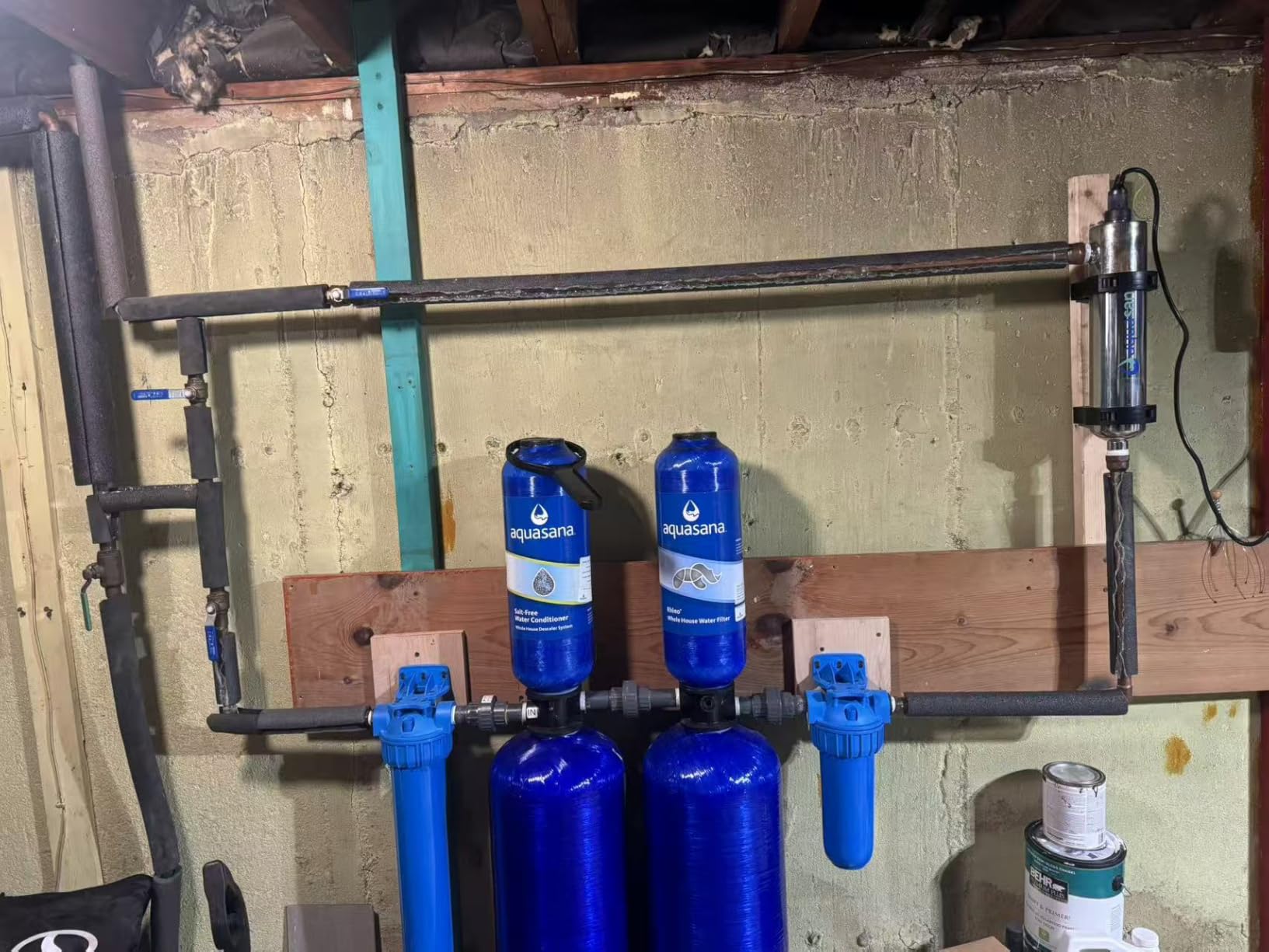
The system combines a sediment pre-filter, a copper-zinc KDF and carbon tank for chlorine and heavy metals, a salt-free conditioner for scale prevention, and a UV chamber that destroys microorganisms with a 99.99 percent kill rate. With 500,000-gallon, 5-year filter life, the long-term cost of ownership is competitive despite the higher upfront price.
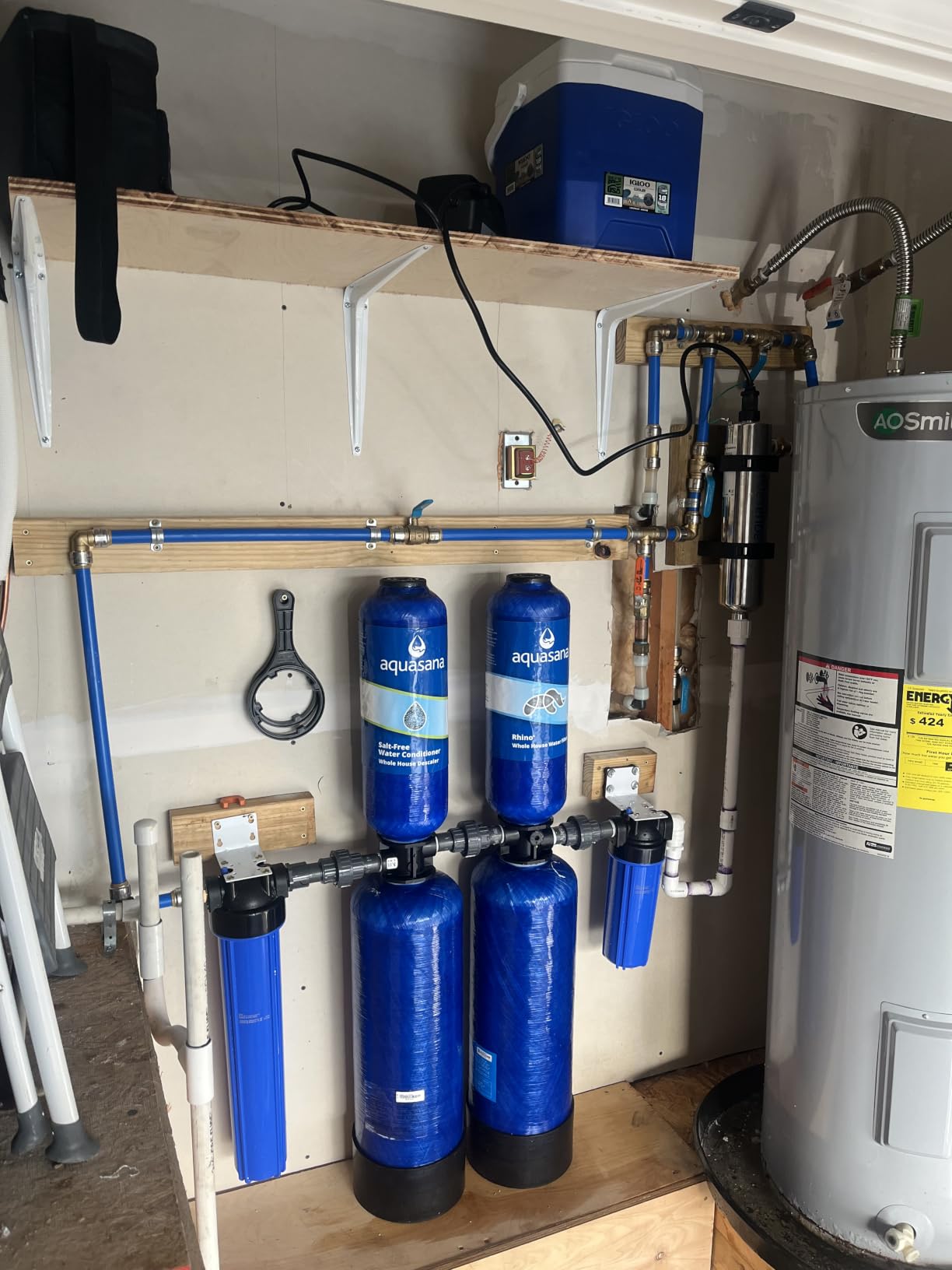
The salt-free scale control is a major advantage for homeowners who don’t want the ongoing expense and environmental impact of salt-based water softeners. The Aquasana system uses template-assisted crystallization to convert hardness minerals into non-sticking crystals, which means less scale buildup in water heaters and pipes without adding sodium to drinking water.
Two caveats. First, this is a 116-pound system with multiple tanks. You’ll need adequate floor space and ideally a floor drain for the install. Second, several reviewers report issues with plastic threading on certain connections, which suggests the install quality is sensitive to which plumber you hire. The Aquasana-pro installer network solves this, but it’s an additional cost.
Why UV matters for some wells
If your well is shallow (less than 100 feet), located near a septic system, or in a region with karst geology, bacterial contamination is a real and ongoing risk. UV addresses bacteria, viruses, and cysts without adding chemicals, and unlike chlorine, it doesn’t create disinfection byproducts.
Why UV isn’t always necessary
If your well water tests negative for coliform bacteria consistently and the well is deep (200+ feet) in stable geology, UV adds cost and maintenance without proportional benefit. The other systems in our roundup deliver equivalent sediment and chemical filtration without the UV premium.
7. PRO+AQUA Elite Series GEN2 PRO-100-E 3-Stage Well Water Filter
PRO+AQUA Elite Series GEN2 PRO-100-E 3-Stage Whole House Water Filtration System for City & Well Water with Pressure Gauges | Reduces Contaminants, Sediment, Chemicals, Heavy Metals, with 1” Ports
3-stage filtration
15 GPM flow rate
100K gallon capacity
Stainless steel pressure gauges
Pros
- SED filter captures sediment in clear housing for visual monitoring
- CRK stage reduces heavy metals and hydrogen sulfide (rotten egg smell)
- Activated coconut shell carbon removes chlorine and VOCs
- Stainless steel pressure gauges included
- 5-year manufacturer warranty with free lifetime tech support
Cons
- Installation marked as professional recommended
- Some users report minor pressure drop
- Filters require 6-month replacement for optimal performance
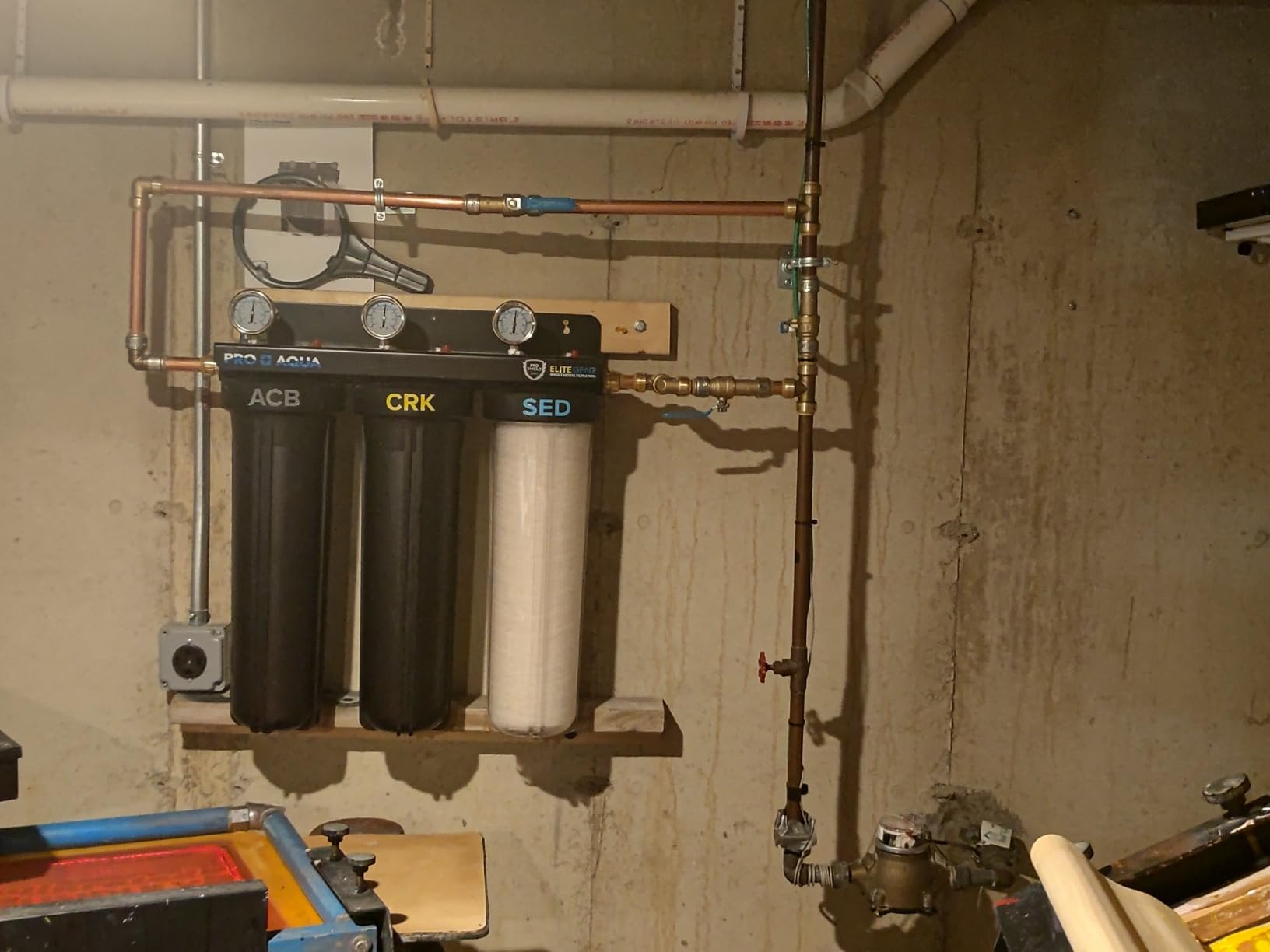
The PRO+AQUA Elite GEN2 PRO-100-E stands out for one specific well water problem: hydrogen sulfide, the chemical that makes well water smell like rotten eggs. The CRK (catalytic carbon) stage is specifically designed to address sulfur compounds that standard carbon filters miss, and reviewers with sulfur-smelling wells consistently report odor elimination within a week of install.
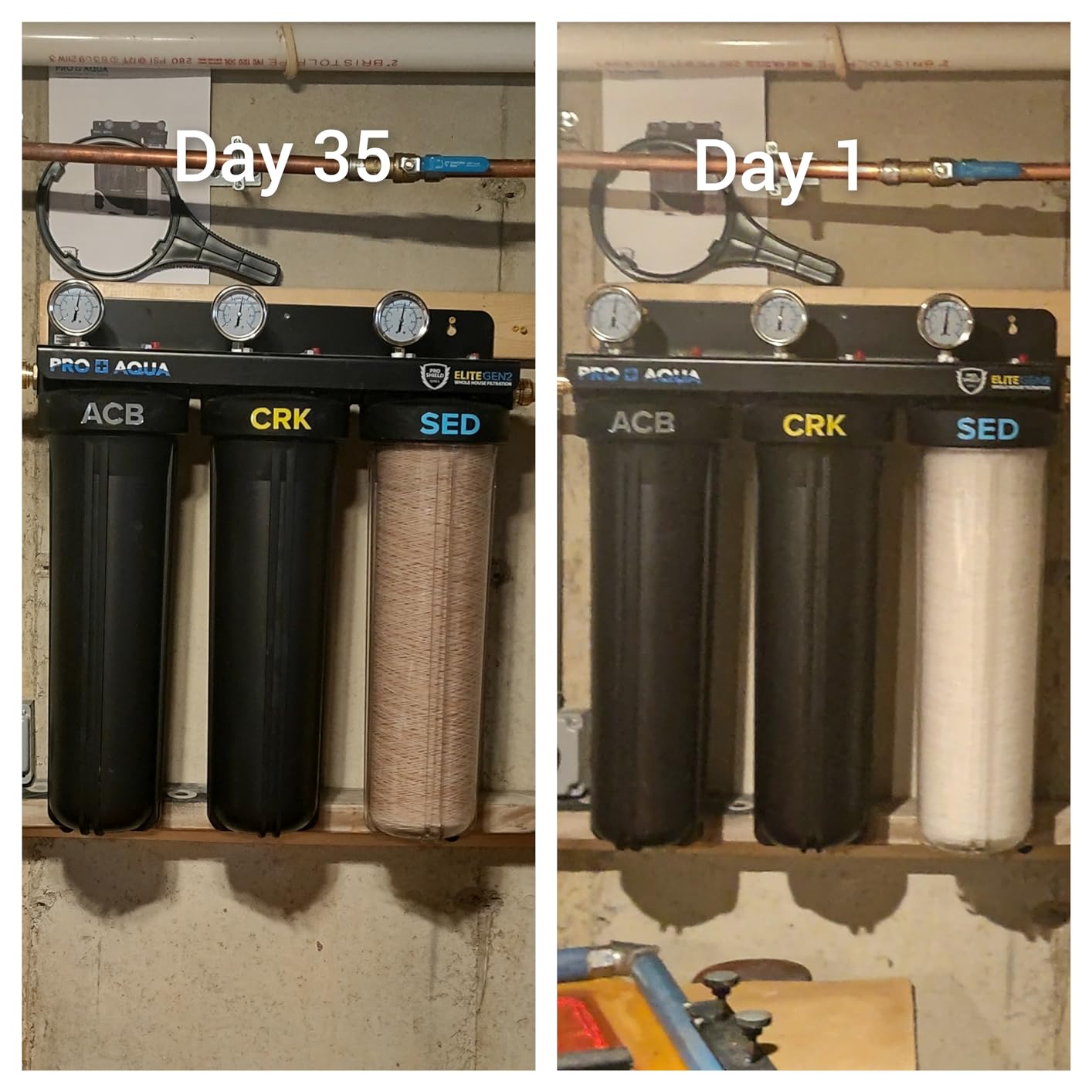
The clear housing on the first stage is a practical feature that’s more useful than it sounds. You can see sediment accumulating in the filter, which means you replace it when it’s actually loaded rather than on a calendar guess. The stainless steel pressure gauges on each stage also help you catch clogged cartridges early before they restrict flow.
The 5-year warranty is industry-leading for this price tier, and PRO+AQUA’s lifetime tech support is responsive based on reviewer feedback. The company sends adapters for both 1-inch and 3/4-inch pipes, which removes one of the most common install frustrations.
The “professional installation recommended” label reflects the system’s 50-pound weight and the multiple connections rather than any technical complexity beyond what a confident DIYer can handle. Budget 2-3 hours for install if you’ve done basic plumbing, and 1 hour if you hire a plumber.
Where the PRO+AQUA Elite GEN2 shines
Wells with hydrogen sulfide, iron, and sediment all present. The 3-stage design addresses all three without requiring separate tanks. The CRK stage also handles manganese reduction effectively, which is a bonus for wells in regions with high manganese geology.
Where it falls short
If your well water has no sulfur smell and low iron, you don’t need the CRK stage and could save money with a simpler 2-stage filter like the iSpring WGB21BM. The 6-month filter life is also shorter than the 12-month capacity of our top picks.
8. HQUA WF3-01 3-Stage Whole House Water Filter for Heavy Metals
HQUA WF3-01 3-Stage Whole House Water Filtration System, Reduces Heavy Metals (Lead, Mercury, Arsenic, Cadmium, Chromium), Chlorine, Sediment, Odor, and VOC’s
Heavy metals reduction
15 GPM flow
100K gallon capacity
Big Blue 20 inch filters
Pros
- 3-stage filtration reduces lead
- mercury
- arsenic
- cadmium
- chromium
- Big Blue 20 inch by 5.5 inch filters give longer contact time
- Oil-filled pressure gauges for accurate monitoring of each stage
- 180-day countdown timers built into the system
- Pressure relief and drain valves pre-installed for easy maintenance
Cons
- Some users report initial leaks requiring proper technique
- Instructions could be clearer about dual O-ring setup
- May need additional fittings for some non-standard installations
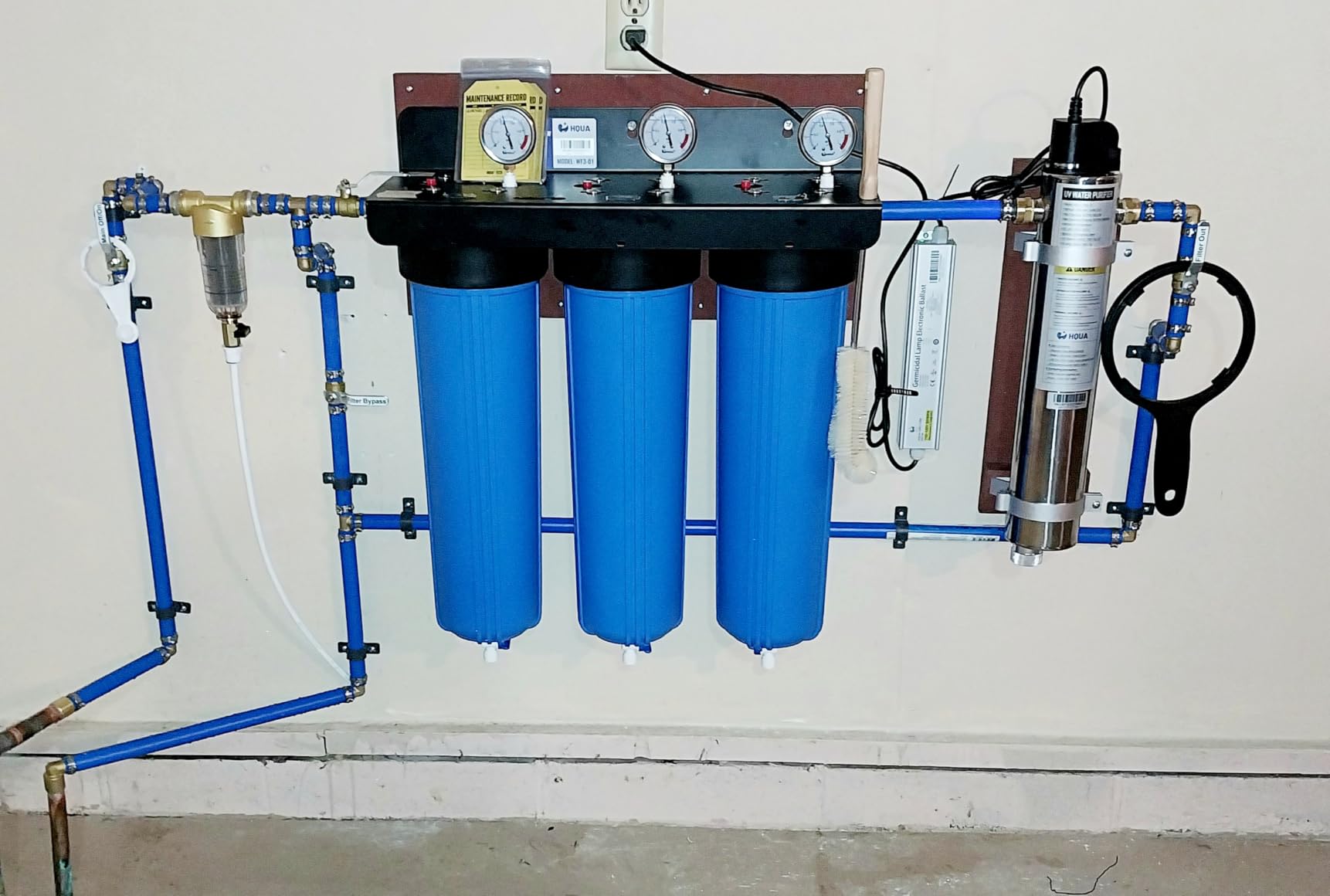
The HQUA WF3-01 is the heavy-metal specialist in our roundup, with verified reduction of lead, mercury, arsenic, cadmium, and chromium. The GAC+KDF second stage is the workhorse here, using kinetic degradation fluxion media alongside granular activated carbon to address contaminants that other filters miss.
The Big Blue 20-inch filter housings give 50 percent more contact time between water and media compared to standard 10-inch filters, which improves removal efficiency across all stages. For households in older neighborhoods with legacy plumbing, or for wells drawing from aquifers with naturally occurring heavy metals, that extra contact time matters.
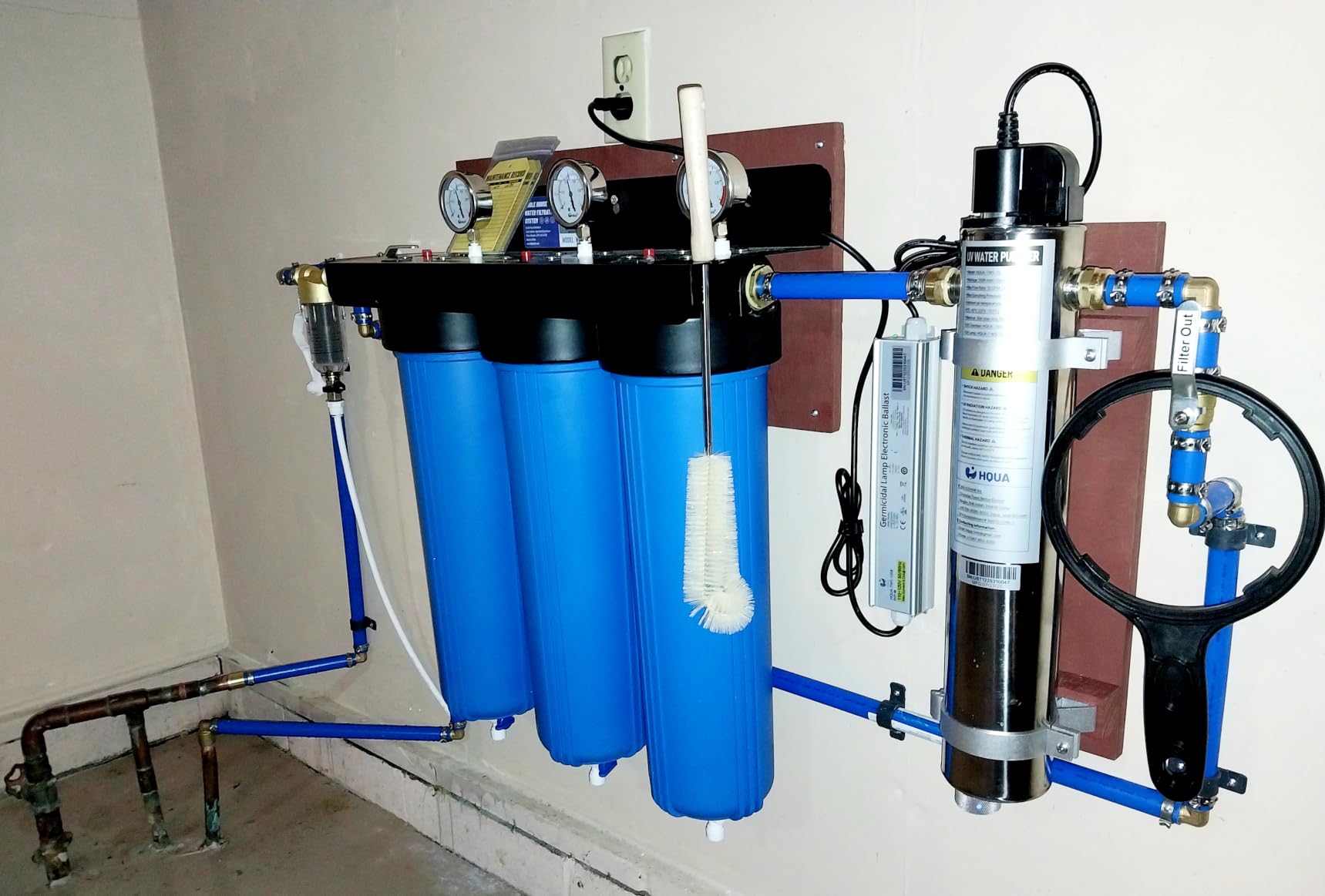
The thoughtful details set this filter apart. The 180-day countdown timers take the guesswork out of filter replacement. The pressure relief valves and drain valves come pre-installed, which makes cartridge swaps faster. The included cleaning brush is genuinely useful for the periodic housing rinse that extends filter life.
As with most whole house filters in this category, the install is where reviews are mixed. Several users mention needing two or three attempts to achieve leak-free connections, often related to the dual O-ring setup. Watch the manufacturer’s video carefully before install, and don’t skip the O-ring lubrication step.
When heavy metal reduction matters
Wells near mining areas, old orchards, industrial sites, or aging infrastructure have elevated heavy metal risk. If your well water test shows detectable lead or arsenic, this filter addresses those contaminants at the whole-house level, which means safer showering and bathing in addition to drinking water.
When simpler is better
For wells that test clean for heavy metals, the HQUA WF3-01’s extra capabilities are wasted. A basic 2-stage filter like the Waterdrop WHF21-FG handles the same sediment and chlorine needs at lower upfront and maintenance cost.
Buyer’s Guide: How to Choose the Best Whole House Water Filter for Your Well
Step 1: Test Your Well Water Before Anything Else
Every recommendation above assumes you know your water’s actual contaminant profile. A basic test from a state-certified lab covers iron, manganese, hardness, pH, total dissolved solids, sulfur, and coliform bacteria. Some state health departments offer free test kits. Without this data, you’re guessing which filter you need, and that’s exactly the trap our team set out to help you avoid.
If your test shows iron above 3 ppm, manganese above 1 ppm, or hardness above 15 gpg, you may need a dedicated iron filter or water softener in addition to the whole house filter. Combining a softener with a carbon filter is a common setup for problem well water, and the order matters: softener first, then carbon filter.
Understanding Micron Ratings
The micron rating tells you the size of particles the filter catches. Lower numbers mean finer filtration. A 5-micron filter catches particles 5 micrometers and larger, which includes most sand, rust flakes, and sediment. A 1-micron filter catches finer particles but reduces flow rate and shortens filter life.
For well water, 5 microns is the practical sweet spot for sediment pre-filtration. Going finer means more frequent cartridge changes and potential pressure issues. The exception is sub-micron filtration for specific contaminants like cysts, where finer ratings make sense as the final stage.
Matching Flow Rate to Household Demand
Calculate your peak demand. A typical shower uses 2.5 GPM, a dishwasher 1-2 GPM, a washing machine 2-3 GPM. If you have 3 bathrooms and might run two showers plus a washing machine simultaneously, you need at least 8 GPM from the filter. We recommend 12+ GPM headroom to keep your well pump from short-cycling.
Well yield also matters. If your well only produces 6 GPM, no whole house filter will give you more. In that case, prioritize filters with low pressure drop and consider a small pressure tank to buffer demand spikes.
Salt-Free vs Salt-Based Water Softeners
Salt-free conditioners (like the Aquasana’s template-assisted crystallization) prevent scale without adding sodium or requiring a drain. They work well for hardness up to 15-20 gpg. Salt-based ion exchange softeners handle higher hardness and are more effective at scale prevention, but they add sodium to water and require salt purchases and brine tank drainage.
For most well owners, salt-free conditioning is enough unless you have visible scale buildup in water heaters or extremely high hardness (above 20 gpg). The Aquasana system in our roundup handles salt-free conditioning, while most other filters don’t address hardness at all and would need a separate softener for hard well water.
DIY vs Professional Installation
Most of the filters in our roundup are DIY-friendly with basic plumbing skills, a pipe cutter, and a pressure test gauge. Budget 2-4 hours for install if you’ve soldered copper pipes or worked with PEX before. First-timers should budget 4-6 hours and have a plumber’s number on standby.
Professional installation typically runs a few hundred dollars depending on your location and the complexity of routing new plumbing to the filter location. If your filter location is far from the main water entry, or if you have older galvanized pipes that need replacement anyway, professional install is worth the cost.
Maintenance Costs and Filter Replacement Schedules
Annual filter costs vary widely. Budget filters like the Waterdrop run modest amounts per year. Mid-range systems run moderate amounts per year. Premium systems like the Aquasana and A. O. Smith drop to lower amounts per year because of their longer filter life.
Calculate total cost of ownership over 10 years: upfront price plus annual filter costs plus any professional servicing. The premium filter with longer cartridge life often wins on long-term cost despite higher upfront price.
Warranty and Customer Support
Whole house filters are mechanical systems that will need service over their lifetime. Look for brands with US-based customer support, readily available replacement parts, and clear warranty terms. iSpring, A. O. Smith, and PRO+AQUA all have solid reputations here.
Read warranty terms carefully. Some manufacturers void warranty if the system isn’t professionally installed, while others offer full coverage regardless of who installs. The Aquasana system has been noted for warranty terms affected by self-installation, so review their policy before deciding.
Whole House vs Point-of-Use: Which Do You Actually Need?
This is one of the most common points of confusion for well owners, and no competitor in our research addressed it clearly. A whole house filter (point-of-entry) treats every drop of water entering your home: showers, toilets, washing machine, outdoor spigots. A point-of-use filter (undersink, countertop, or fridge) treats only one tap.
If your concerns are drinking water taste and lead reduction at the kitchen tap, a point-of-use reverse osmosis system is more thorough than a whole house filter. If your concerns are staining, sulfur smell, dry skin from chlorinated shower water, or protecting your water heater from sediment, you need a whole house filter. Most well owners need both for full protection.
The best approach for well owners with multiple concerns is a whole house filter as the primary defense, with a point-of-use filter at the kitchen tap for drinking water polishing. This combination covers installation for most budgets and addresses virtually every common well water issue.
Frequently Asked Questions
What type of water filtration is best for well water?
For most well owners, a multi-stage whole house filtration system is the best approach. The ideal setup starts with a sediment pre-filter (5 micron rating) to catch sand and particulates, followed by an iron and manganese reducing filter if your well tests high for those metals, then a carbon block stage for chlorine, VOCs, and chemical contaminants. If bacteria are present in your test results, add a UV sterilizer as the final stage. The exact combination depends on your specific water test, which is why testing before buying is essential.
What is the best well water filter system for home use?
Based on our research and review analysis, the iSpring WGB21BM is our top pick for most well owners because it handles the most common well water complaints (iron, manganese, sediment, chlorine) at a price most homeowners can afford. For wells with bacterial contamination, the Aquasana EQ-Well-UV-PRO-AST adds UV sterilization. For households prioritizing low maintenance, the A. O. Smith AO-WH-Filter’s 6-year filter life minimizes annual upkeep. Match your specific water test results to the system that addresses your highest-priority contaminants.
What is the best water filter for a deep well?
Deep wells (200+ feet) generally produce cleaner water with less sediment and lower bacterial risk than shallow wells. For deep wells, focus on chemical filtration rather than sediment handling. A 2 or 3-stage system with carbon block filtration, like the iSpring WGB21BM or A. O. Smith AO-WH-Filter, addresses iron, manganese, chlorine, and chemical contaminants without unnecessary sediment capacity. If your deep well water tests clean for bacteria, you typically don’t need UV sterilization.
What is the best whole house water filtration system for well water according to consumer reports?
Independent testing organizations consistently rate multi-stage systems with iron and sediment reduction highest for well water applications. Our top picks, the iSpring WGB21BM, Express Water 3-Stage, and Aquasana EQ-Well-UV-PRO-AST, all meet or exceed NSF/ANSI standards for contaminant reduction. The key factors consumer-focused reviewers emphasize are third-party certification (not just manufacturer claims), verified flow rate under real conditions, and long-term filter availability. All three of our top recommendations score well on these criteria.
Final Verdict: Which Whole House Filter Should You Buy for Your Well?
Choosing the best whole house water filter for your well comes down to your water test results, household size, and tolerance for maintenance. For most well owners, the iSpring WGB21BM hits the sweet spot: it tackles iron and manganese, handles 15 GPM flow for large households, and runs reasonable annual filter costs.
If bacterial contamination is your concern, the Aquasana EQ-Well-UV-PRO-AST adds UV sterilization that no other filter in our roundup provides. For homeowners who want to swap filters once a year and forget about it, the A. O. Smith AO-WH-Filter’s 6-year filter life is unmatched.
No matter which system you choose, test your well water first. The amount you spend on a certified water test is the cheapest insurance against buying the wrong filter. Pair your whole house filter with a point-of-use system at the kitchen tap for the cleanest, safest well water at every faucet in 2026. For more on hard water solutions, see our guide to the best whole house water filters for hard water, and for broader options, our comprehensive best whole house water filters roundup compares systems for every water source.