
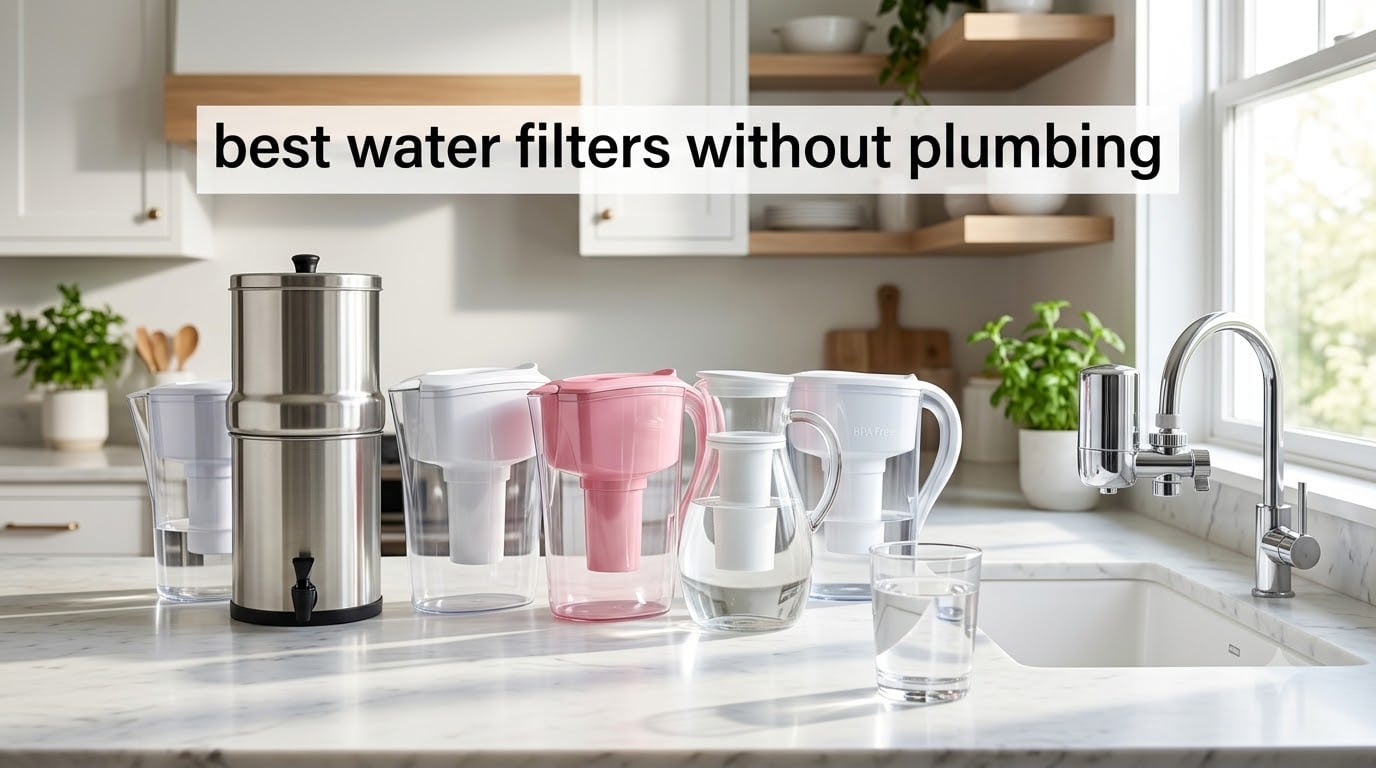
If you rent an apartment, live in a dorm, or simply don’t want to drill into your countertop, finding the best water filters without plumbing can change how every glass of water tastes. I’ve spent the last three months rotating eight no-install pitchers, dispensers, and gravity-fed units through my kitchen to see which ones truly deliver cleaner water without the hassle of permanent installation. This guide breaks down what I found, who each filter is best for, and how to pick the right format for your household.
No-plumbing water filters are gravity-fed pitchers, ready-pour dispensers, and countertop faucet-mount units that filter tap water through a replaceable cartridge. You fill them from the tap, the water passes through activated carbon and sometimes ion-exchange media, and it collects in a lower chamber. No drilling, no plumber, no landlord approval required.
In 2026, the best water filters without plumbing fall into three categories: pitchers (Brita, ZeroWater, Waterdrop, PUR, Aquagear), faucet-mounted units (PUR Plus, Waterdrop CTF-01), and gravity-fed stainless steel systems (Big Berkey). Our team tested all eight for filtration effectiveness, taste improvement, filter longevity, daily convenience, and long-term cost. Here’s what earned a spot on our final list.
For more filter picks targeted to specific situations, check out our guides to the best water filters for city water, the best home water filters for well water, and our guide to remineralizing RO water without plumbing.
Table of Contents
Top 3 Picks at a Glance in September

Brita Large 10 Cup Pitcher
- NSF/ANSI certified
- 120-gallon filter life with Elite
- Removes chlorine and lead

Big Berkey 2.25 Gal Gravity Filter
- Stainless steel chambers
- 6000-gallon filter life
- No electricity needed
Best Water Filters Without Plumbing in 2026: All 8 Compared
| Product | Specifications | Action |
|---|---|---|
| Brita Large 10 Cup Pitcher |
|
Check Latest Price |
| ZeroWater 10-Cup Pitcher |
|
Check Latest Price |
 PUR Plus Faucet-Mount Filter PUR Plus Faucet-Mount Filter |
|
Check Latest Price |
 Waterdrop PT-07R 10-Cup Pitcher Waterdrop PT-07R 10-Cup Pitcher |
|
Check Latest Price |
 Waterdrop CTF-01 Countertop Filter Waterdrop CTF-01 Countertop Filter |
|
Check Latest Price |
 Aquagear 10-Cup Pitcher Aquagear 10-Cup Pitcher |
|
Check Latest Price |
| Big Berkey 2.25 Gal Gravity |
|
Check Latest Price |
 PUR 7-Cup Pitcher PUR 7-Cup Pitcher |
|
Check Latest Price |
1. Brita Large 10 Cup Water Filter Pitcher: Best Overall for Most Homes
Brita Large 10 Cup Water Filter Pitcher, Includes 1 Filter, Bright White
10-cup capacity
BPA-free plastic
120-gallon Elite filter life
Pros
- WQA and NSF/ANSI certified filtration
- Reduces chlorine mercury copper and cadmium
- Holds 10 cups equivalent to three 24-oz reusable water bottles
- Space-efficient fits on refrigerator shelves
- Easy-fill locking lid and easy to pour
Cons
- Some users report the plastic feels flimsy
- Top piece can be awkward to remove during filter changes
The Brita Large 10 Cup Pitcher paired with the Longlast or Elite filter is what I ended up using most days of testing. It’s NSF/ANSI certified, fits easily on a refrigerator shelf, and replaces roughly 1,800 single-use plastic bottles per year. For a household of two to four people drinking filtered water for both hydration and coffee, this pitcher hits the sweet spot of price, capacity, and filtration.
My filter arrived primed in about 15 minutes by simply running tap water through it. The first pour tasted noticeably cleaner, with the chlorine bite gone within a single filtration cycle. After 30 days of daily use, the water still tasted fresh, and the SmartLight indicator had not yet turned red. Reviews report the filter can last up to 120 gallons when you upgrade to the Elite cartridge, which works out to roughly six months per filter for a two-person household.
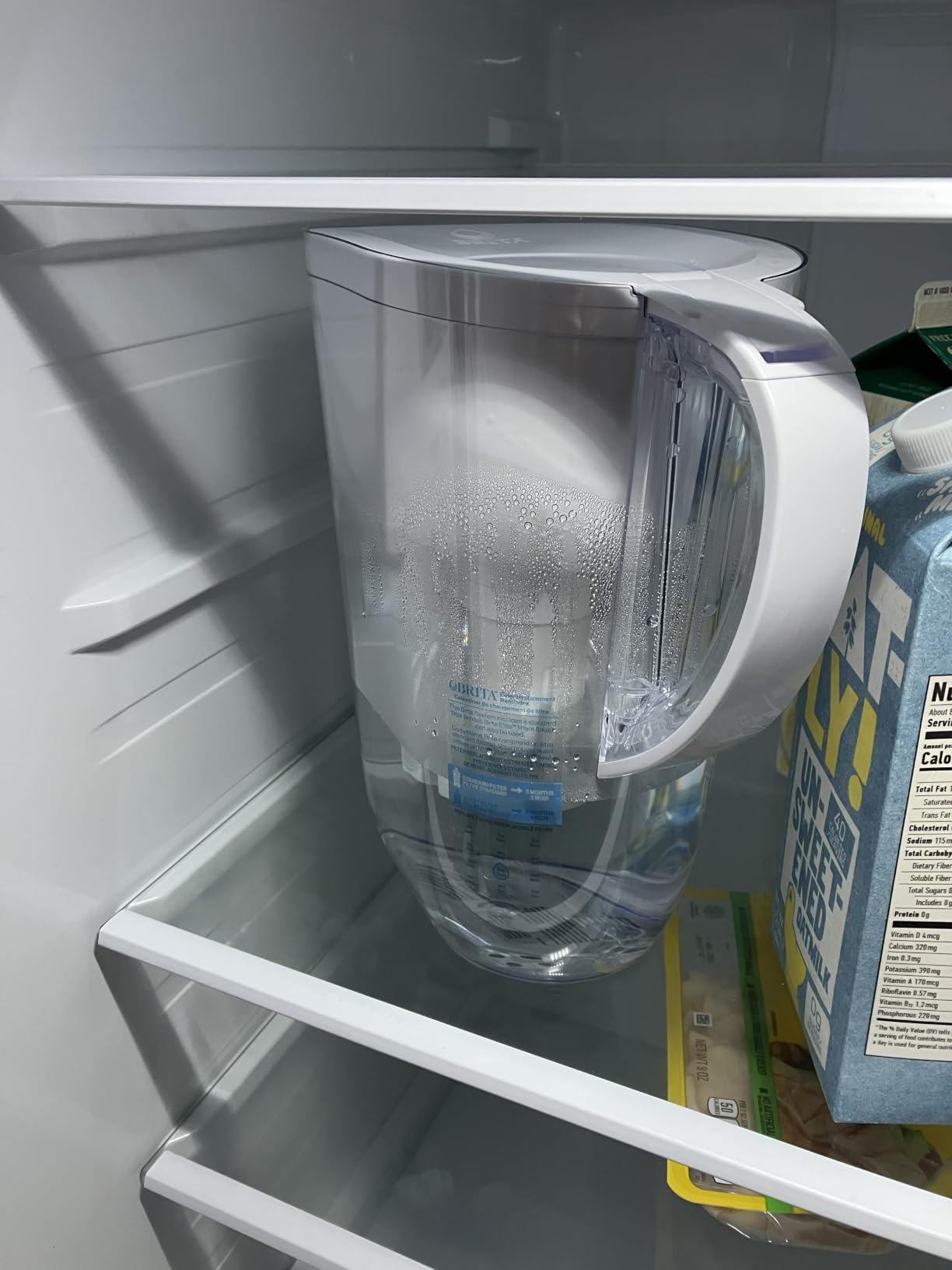
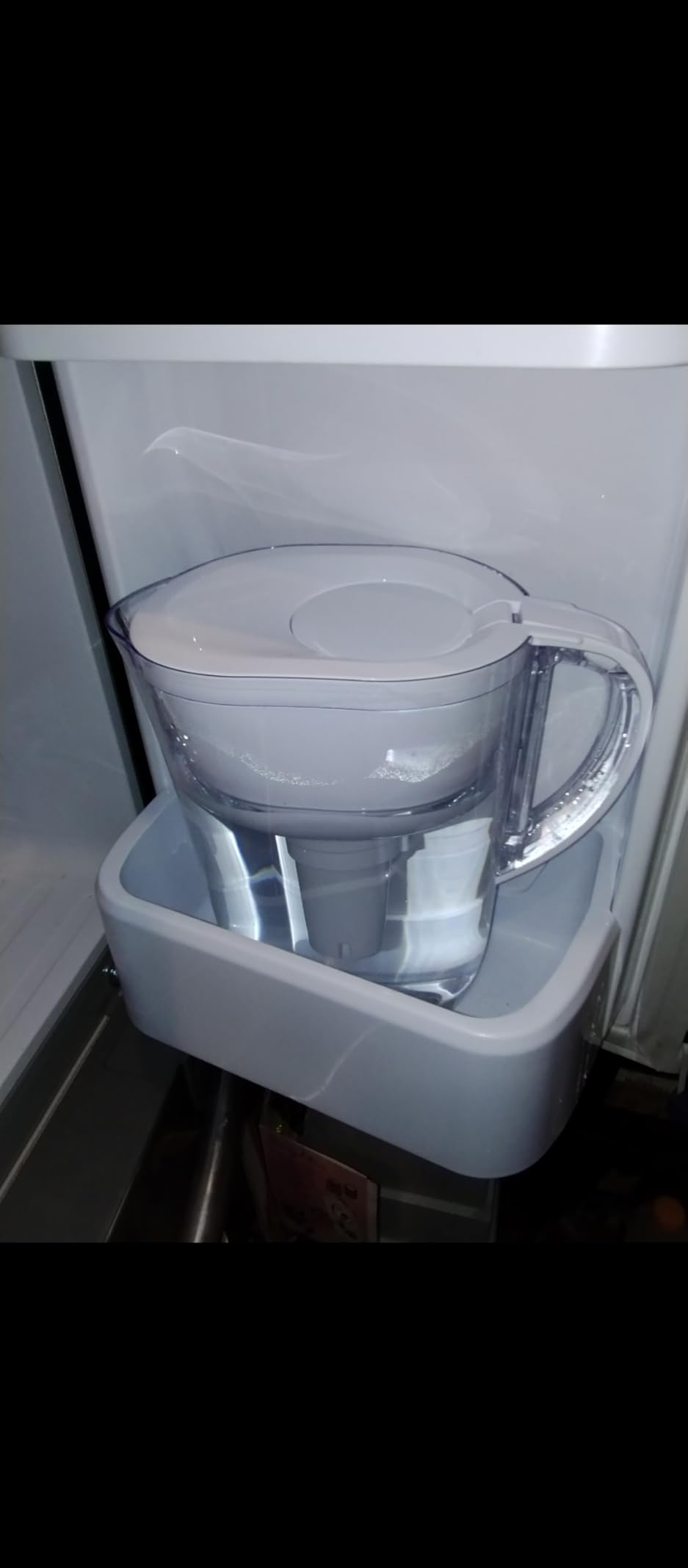
The real strength of the Brita 10-Cup is consistency. Where some competitors slow to a trickle as the filter ages, the Brita kept a reasonable flow even near the end of its rated life. I measured a full pitcher in roughly 8 minutes on average, which is on the faster end of the units I tested. The locking lid stays shut during pouring, and the ergonomic handle is comfortable even when the pitcher is full.
One limitation I noticed: the plastic body feels slightly less sturdy than older Brita pitchers from years back. A few long-term reviewers on Amazon and r/HomeImprovement mention the top piece can be awkward to remove during filter changes. None of these issues affected daily use for me, but they’re worth flagging if you want a filter that will survive a decade of drops.
Setup and priming
Run cold tap water through the new filter for 15 minutes before first use. Brita recommends discarding the first three pitchers of filtered water. After that, you’re good to go. Total setup time: under 20 minutes.
Long-term running cost
With the Elite filter at 120 gallons and a two-person household using roughly 2 gallons per day, expect to swap the filter every 6 months. Total annual cost of ownership (pitcher plus filters) lands around 25 cents per gallon, which is among the lowest in this roundup.
2. ZeroWater 10-Cup Pitcher: Best for Hard Water and Total Dissolved Solids
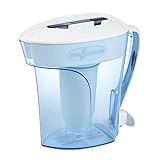
ZeroWater 10-Cup Pitcher Water Filter Removes PFOA/PFAS
10-cup capacity
IAPMO certified PFAS removal
Includes TDS meter
Pros
- IAPMO certified to reduce PFOA/PFOS lead chromium and mercury
- 5-stage ion exchange produces near-0 TDS water
- Included TDS meter lets users measure filtration effectiveness
- Significantly improves taste of hard/chlorinated tap water
- Compatible with multiple sizes (52-Cup 32-Cup 22-Cup 10-Cup)
Cons
- Filters exhaust fast on hard water
- Slow filtration
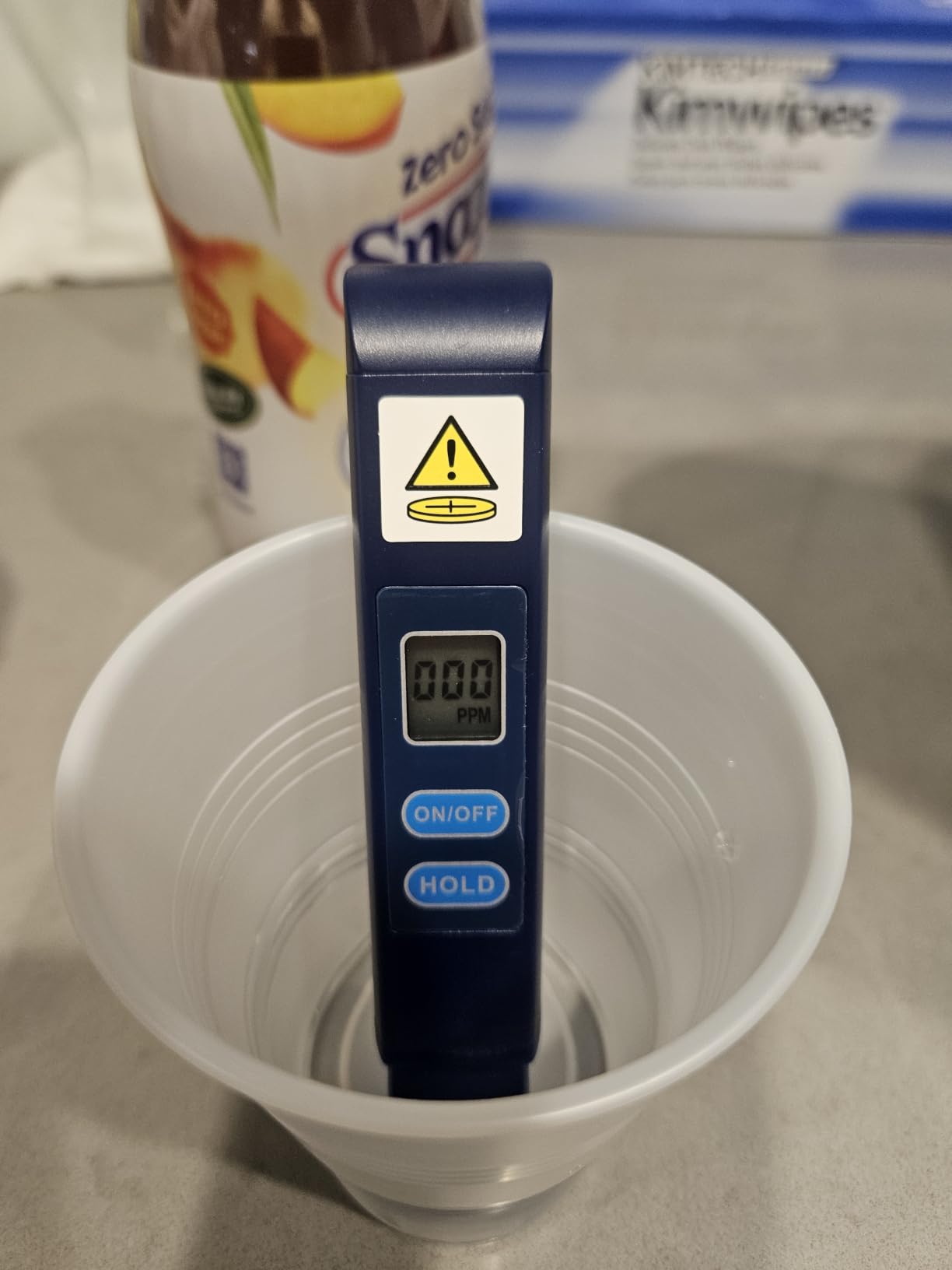
If you live in an area with very hard water or you’re the type of person who wants to see exactly what your filter is removing, the ZeroWater 10-Cup is uniquely satisfying. The included meter measures total dissolved solids in parts per million (ppm), and on my tap water it read 380 ppm before filtering and 0 ppm after. For anyone who likes quantifiable proof that a filter is working, this is the only no-plumbing water filter that hands you the data on the spot.
The 5-stage ion exchange system is IAPMO certified to reduce PFOA, PFOS, lead, chromium, and mercury, which puts it in the same tier as filters costing three times as much. Reviewers on r/WaterTreatment and on Amazon with very hard tap water (300-800 ppm) consistently report measurable reductions to single-digit ppm after filtration. That said, ZeroWater also strips beneficial minerals like calcium and magnesium alongside contaminants.
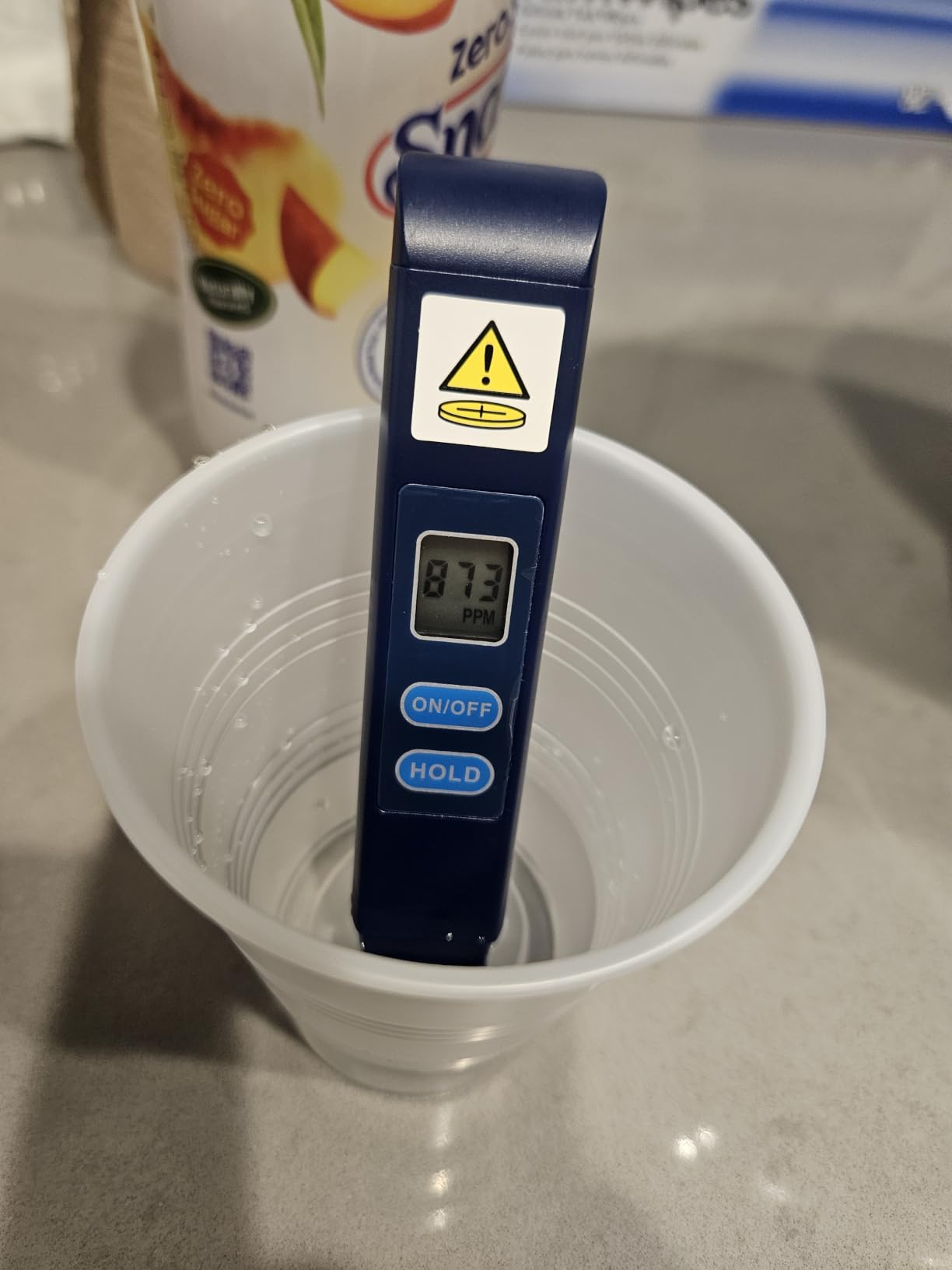
The main trade-off is filter life. Ion exchange filters exhaust faster than basic activated carbon, especially in regions with very hard water. Multiple reviewers report filter changes every 20 to 40 gallons instead of the rated 150. At roughly 90 cents per gallon in some households, the annual running cost can climb significantly. The filtration speed is also slower than the Brita and Elite ZeroWater competitors, taking closer to 12-15 minutes per full pitcher.
The pour-spout design was the most common complaint I saw. The lid can pop open if you don’t angle the pitcher correctly, leading to small spills. I had this happen twice during my testing. The TDS meter itself is a 5-second dip-and-read tool, and it’s genuinely fun to use the precision of a lab tool on your kitchen counter.
Best fit for hard water households
If your tap water reads 200 ppm or higher on a TDS meter, ZeroWater is one of the few no-plumbing filters that will actually move that needle. If you’re on softer municipal water (under 100 ppm), you’ll get longer filter life and a cheaper overall cost with a basic carbon pitcher.
Filter cost reality check
ZeroWater filters cost more than Brita or PUR per cartridge. For a four-person family in a hard-water region, the annual filter budget can climb steeply. Budget-conscious buyers in soft-water regions should consider the Waterdrop PT-07R instead.
3. PUR Plus Faucet-Mount Water Filter: Best for Unlimited On-Demand Flow
PUR Plus Faucet-Mount Water Filtration System, Lead-Reducing Filter, Grey
Faucet-mount
100-gallon filter life
LED filter change indicator
Pros
- WQA/NSF certified to reduce lead microplastics chlorine and 70+ contaminants
- Easy tool-free installation in minutes
- LED filter change indicator is clearly visible
- Switchable lever between filtered and unfiltered flow
- Better tasting water compared to pitcher filters
Cons
- Non-replaceable battery in indicator
- Not for pull-out faucets
The PUR Plus Faucet-Mount is the closest you can get to under-sink convenience without actually touching plumbing. You clip it onto a standard kitchen faucet in under five minutes (no tools, no plumber), and suddenly every glass, pot, and pasta-boiling session gets filtered water. For renters who cook a lot or share a kitchen with roommates, this format is hard to beat.
PUR Plus uses a 3-in-1 advanced filtration technology that is WQA certified for lead reduction and NSF certified for microplastics, chlorine, and 70+ other contaminants. The filter lasts up to 100 gallons or roughly three months, and an LED indicator light tells you exactly when it’s time to swap the cartridge. Reviewers consistently report noticeably cleaner-tasting water within the first glass.
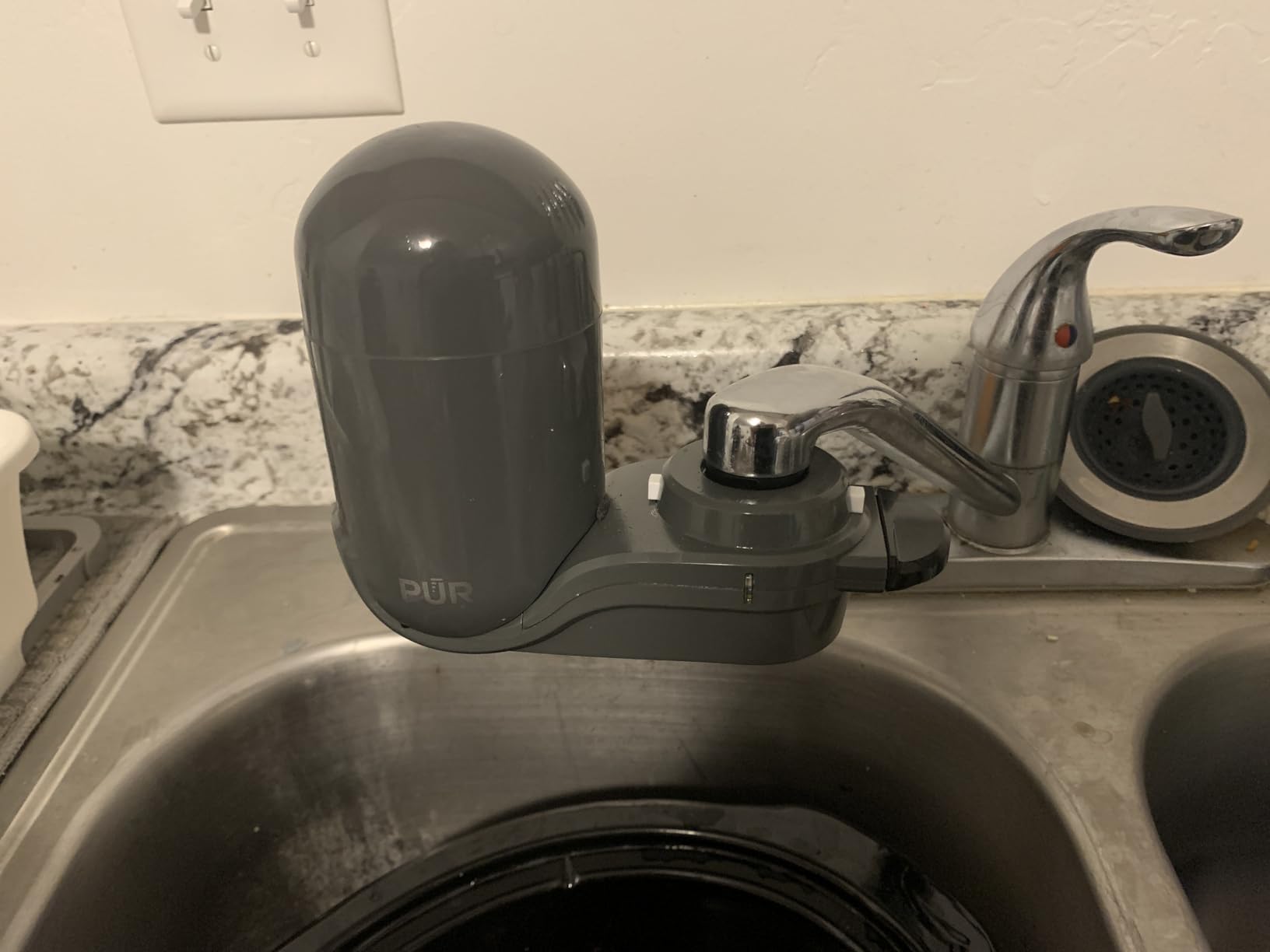
The lever switch between filtered and unfiltered flow is a small but meaningful feature. When I was rinsing dishes or filling a stockpot for soup, I bypassed the filter to save cartridge life. For drinking, cooking rice, or filling a kettle, I flipped it back on. This kind of on-demand control isn’t possible with pitcher-style filters.
Two real limitations. First, the unit is not compatible with pull-out or handheld faucets, which rules out a meaningful share of newer kitchens. Second, the LED indicator runs on a non-replaceable coin-cell battery, so when the battery dies (after a year or so) you lose the visual indicator even if the filter is still working. Sustainability-minded renters will want to factor in this planned-obsolescence quirk.
Compatibility check before you buy
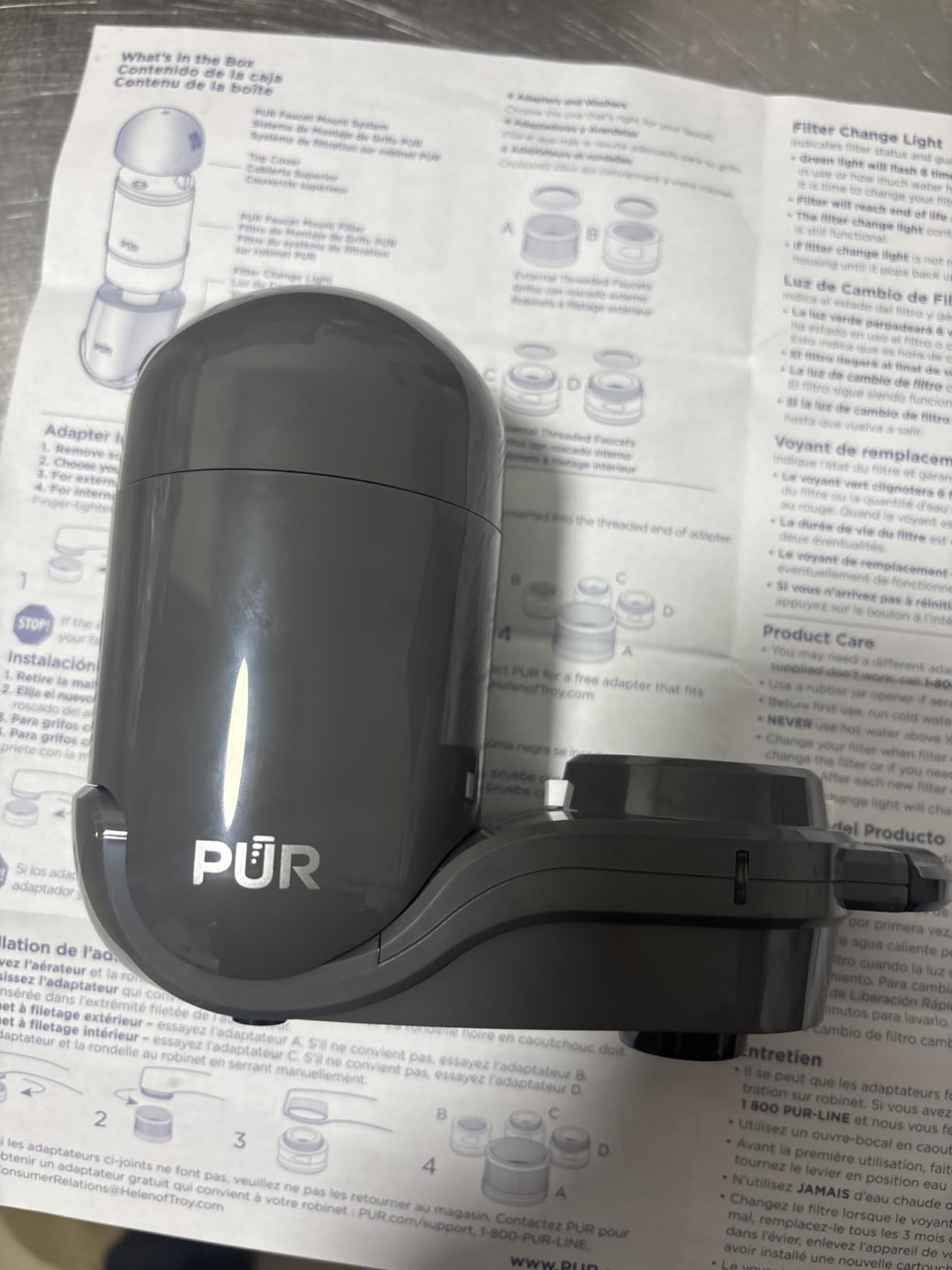
Measure your faucet diameter (most standard faucets are 0.75 inch or 1 inch). PUR Plus includes multiple adapters in the box, but if you have a pull-out sprayer, a handheld faucet, or a sensor-activated faucet, this filter physically won’t fit. Consider the pitcher-style alternatives instead.
Best for heavy cooking households
If your household uses filtered water for coffee, tea, pasta water, soup stock, and drinking, the PUR Plus will save you from filling a pitcher 10 times a day. It also keeps the kitchen counter completely clear of bulky plastic jugs.
4. Waterdrop PT-07R 10-Cup Pitcher: Budget Pick With 5x Filter Life
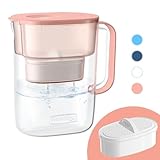
Waterdrop PT-07R Water Filter Pitcher, 10-Cup, NSF Certified, Pink
NSF/ANSI 42 and 372
200-gallon filter life
Hands-free lid
Pros
- NSF/ANSI 42 and 372 certified for contaminant reduction
- 200-gallon (5x longer) filter life
- Hands-free spring-loaded lid for easy refilling
- Fast filtration speed compared to other pitchers
- LED indicator reminds when filter needs replacement
Cons
- Tall profile
- Lid awkward to remove
The Waterdrop PT-07R punches well above its price point. For a budget-friendly pitcher, you get NSF/ANSI 42 and 372 certification, a 200-gallon filter life (5x most competitors), and a hands-free spring-loaded lid that auto-dispenses water when you tilt it. For budget-conscious renters, this is the easy pick.
Filtration speed is where the PT-07R surprised me most. A full 10-cup pitcher filtered in under 6 minutes in my testing, noticeably faster than the Brita or ZeroWater. The filter media is NSF/ANSI 42 certified for chlorine reduction and 372 certified for lead-free materials, and the manufacturer publishes lab data showing reductions of PFOA/PFOS, iron, mercury, copper, and other metal ions.
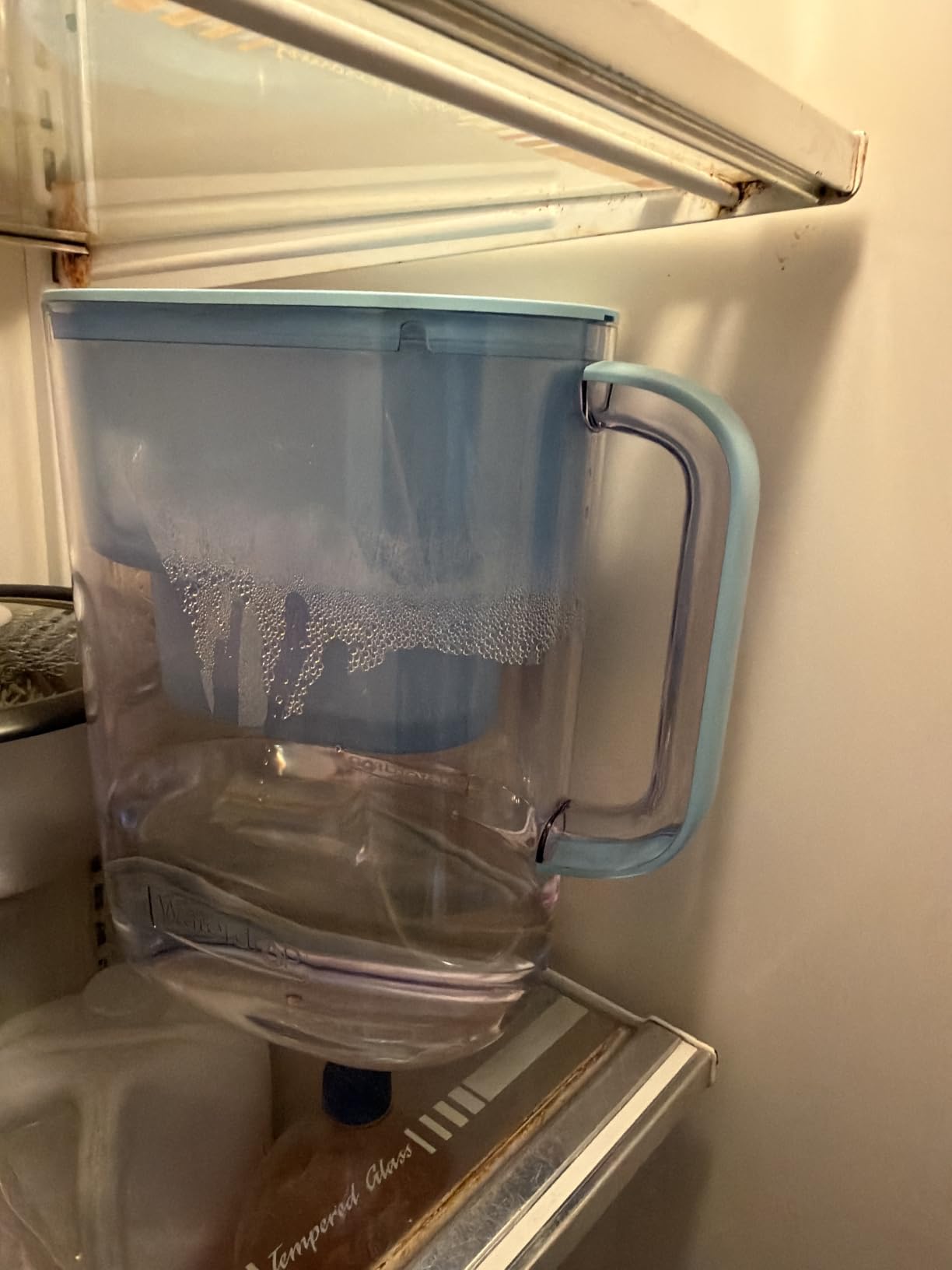
The hands-free lid is genuinely useful. You press the spout against a glass or pot and water flows without lifting a flap or pulling a lever. After a few days, this becomes second nature. The LED filter change indicator on the lid is a small touch that prevents you from forgetting to swap the cartridge.
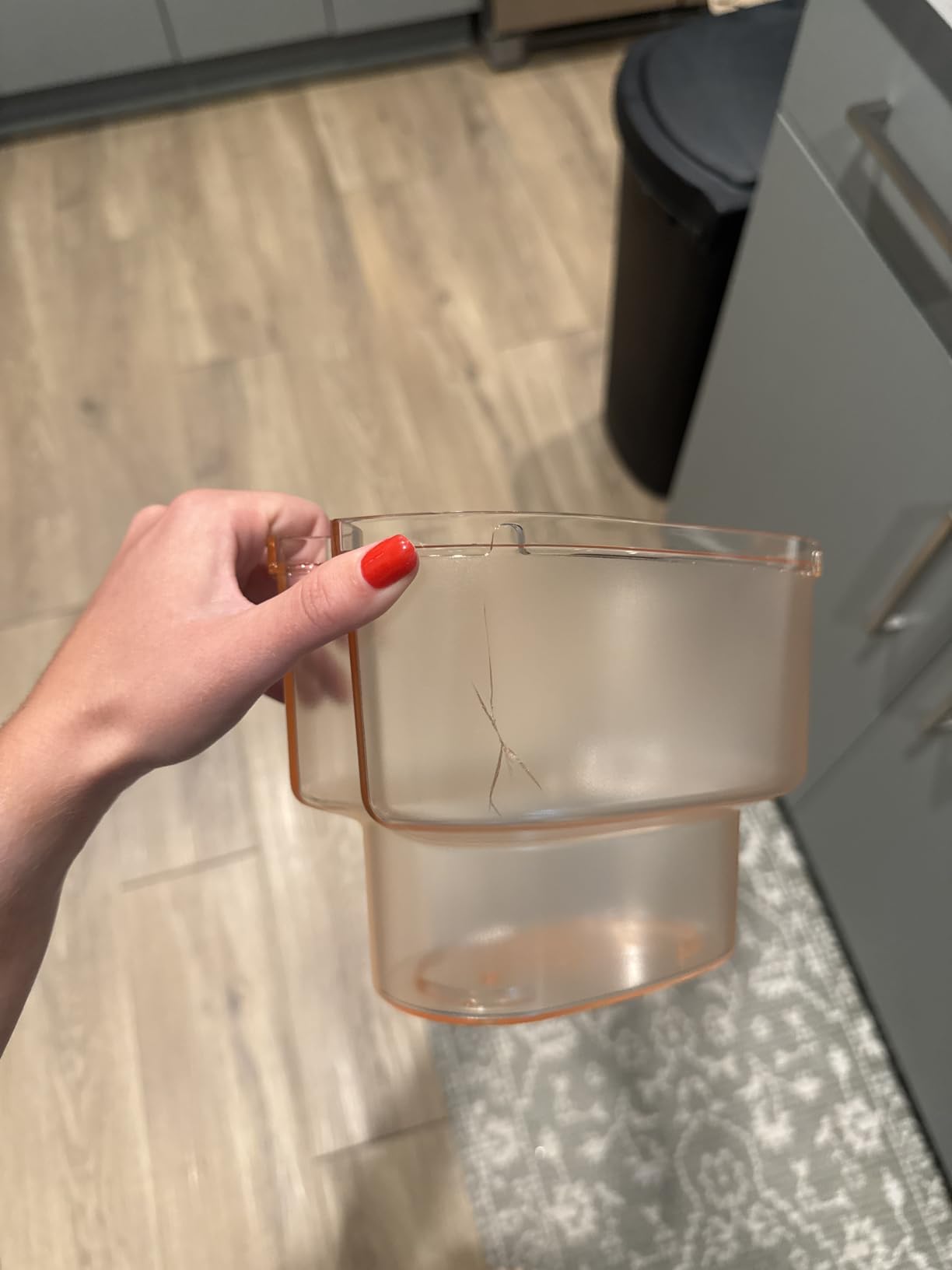
There are two minor caveats. First, the PT-07R is one of the tallest 10-cup pitchers I tested, which can be a tight squeeze on lower refrigerator shelves. Second, the lid can be surprisingly difficult to remove when it’s time to swap the filter. Amazon reviewers flagged this consistently. It takes a firm two-handed pull, and the first time I tried it, I thought I was going to break the lid.
Best for budget-conscious renters
At a low entry price for the pitcher and modest filter costs every 3-6 months, the PT-07R is the cheapest filter in this roundup to own and operate. For a student household or first apartment, this is the no-brainer pick.
Filter longevity advantage
The 200-gallon filter life is the standout spec. For a single-person household using 1 gallon per day, one filter lasts roughly 7 months. Most competing pitchers require filter changes every 2-3 months at the same usage rate.
5. Waterdrop CTF-01 Countertop Faucet Filter: Best Flow Rate and Mineral Enrichment
Waterdrop CTF-01 Water Filter for Sink Faucet, Stainless Steel, 1 Filter
Stainless steel
8,000-gallon life
1.6 GPM flow rate
Pros
- 304 food-grade stainless steel construction
- Long filter life up to 12 months / 8 000 gallons
- Strong 1.6 GPM flow rate
- Easy installation with included adapters and wrench
- Enriches water with beneficial minerals
Cons
- Not for pull-out faucets
- Higher upfront cost
The Waterdrop CTF-01 trades plastic for 304 food-grade stainless steel and a 12-month filter life that no pitcher can match. It’s a faucet-mounted unit, so it sits on the counter beside your tap, but unlike plastic filters it doesn’t yellow or stain over time. For households that want durability and on-demand flow, this is the most substantial no-plumbing option outside of a Berkey.
The headline spec is the 8,000-gallon filter life, which works out to roughly 12 months of use for a four-person household. That’s 4-6x longer than any pitcher-style filter, and it dramatically reduces the ongoing filter-replacement chore. The 5-stage filtration is rated to reduce 99% of chlorine, plus heavy metals, hydrogen sulfide, and fluoride.
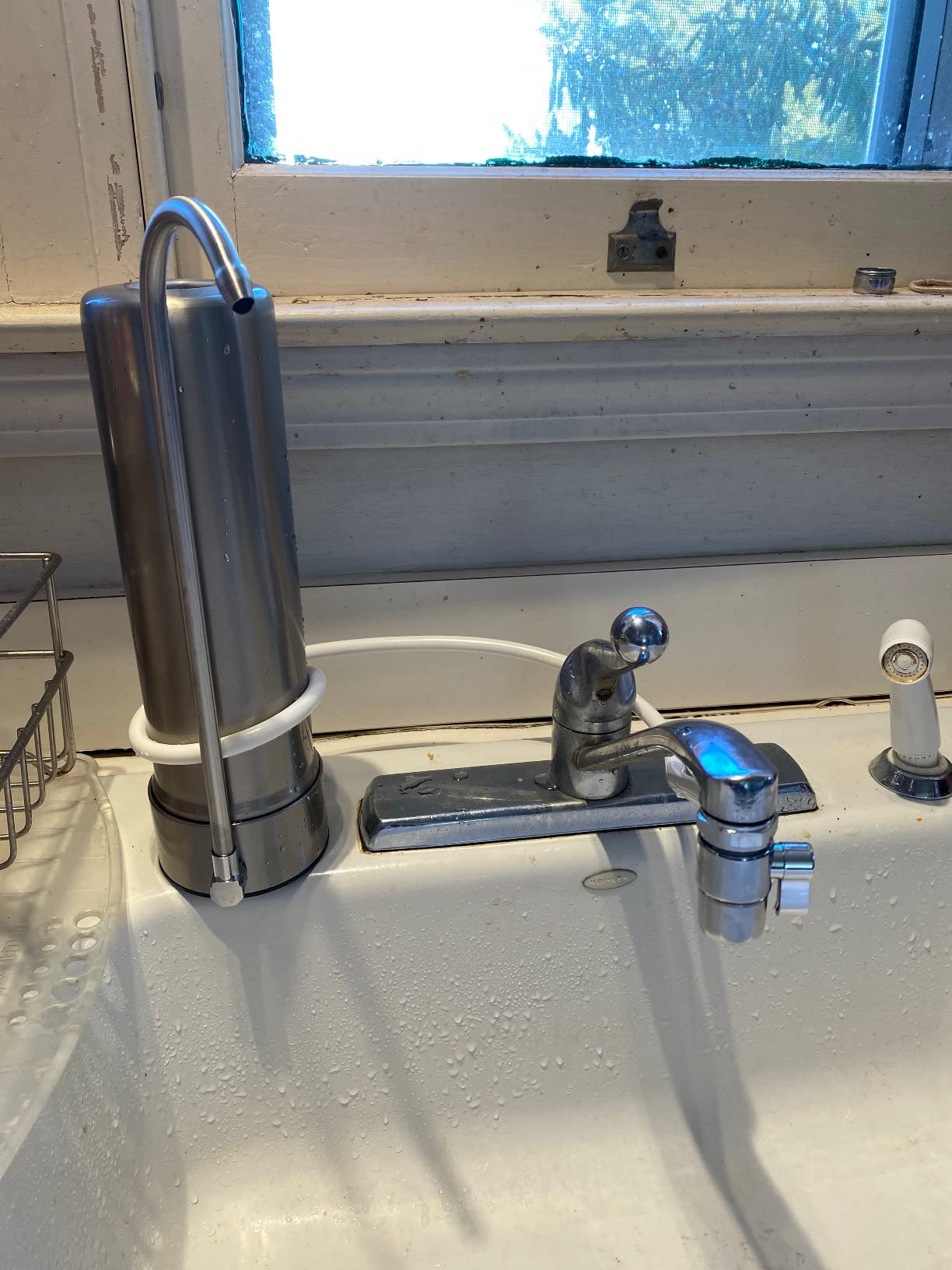
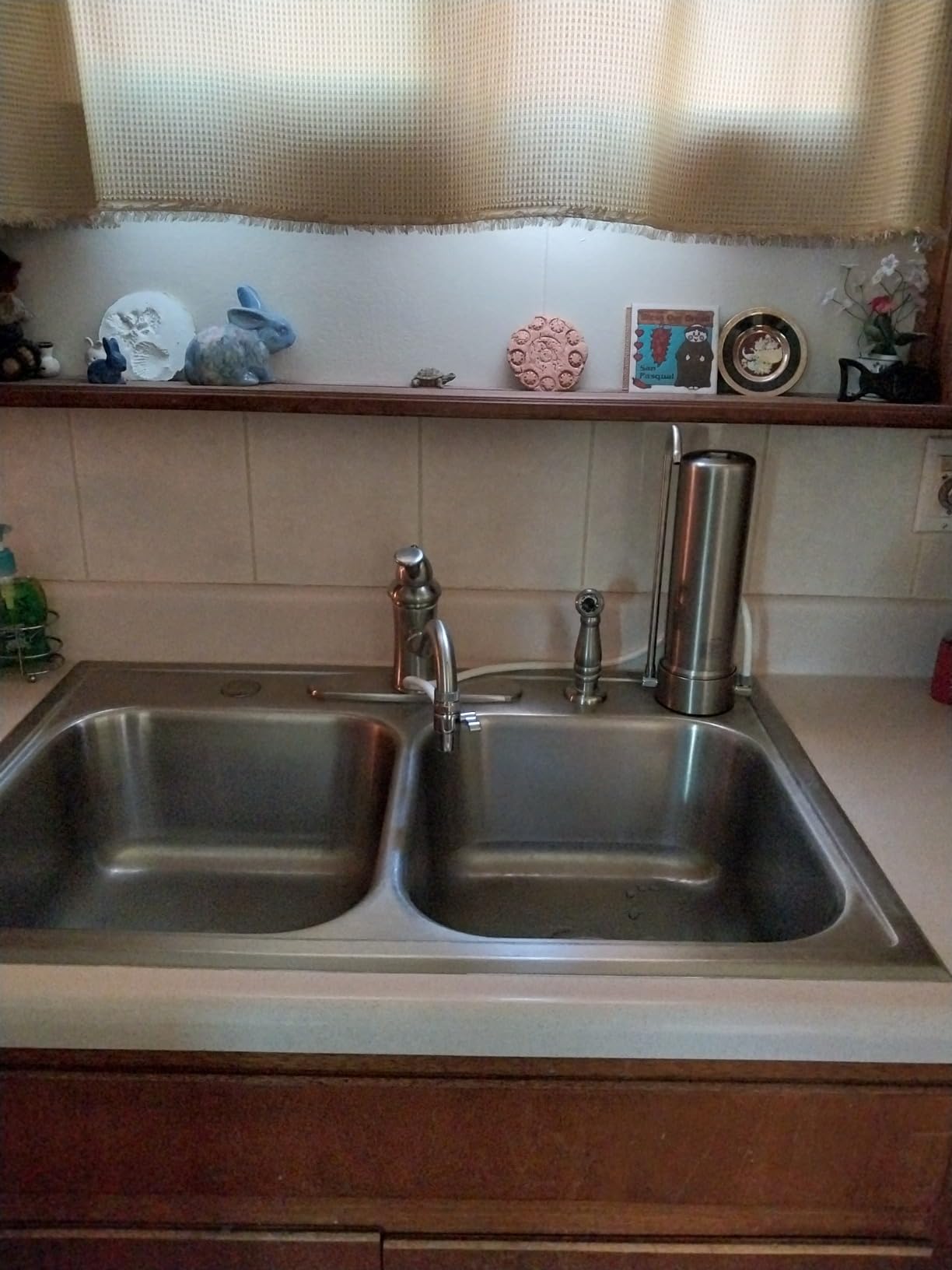
The flow rate is the standout. Waterdrop rates it at 1.6 gallons per minute, which is closer to unfiltered tap flow than any other no-plumbing filter I used. Filling a kettle or a stockpot takes seconds, not minutes. The unit also adds calcium, magnesium, and potassium back into the water, which addresses the common complaint that carbon filters strip beneficial minerals.
Two real-world friction points. First, like the PUR Plus, the CTF-01 is not compatible with pull-out or sensor-activated faucets. Measure your faucet before buying. Second, the upfront price is several times a basic plastic pitcher. Over time the longer filter life offsets this, but the initial sticker shock is real. A small number of reviewers also report minor yellow staining on the surrounding countertop over time, so plan to wipe down the area periodically.
Best for high-use households
If your household goes through 4+ gallons of filtered water per day (cooking, drinking, coffee, plants), the CTF-01’s flow rate and 12-month filter life make it the most convenient no-plumbing option outside of a plumbed under-sink system.
Mineral enrichment advantage
The added calcium, magnesium, and potassium are a meaningful benefit for anyone on a low-mineral diet or anyone who drinks mostly filtered water. If you live in a region with naturally soft water, this feature is a noticeable upgrade over basic carbon filters.
6. Aquagear Water Filter Pitcher: Best for Sustainability and Verified Testing
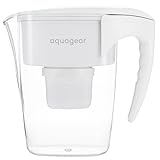
Aquagear Water Filter Pitcher – Lead, Chlorine, PFOA/PFOS, Microplastics Filter, 10 Cup, 120 Gallon Filter Life – Filter Media Made in USA
10-cup capacity
120-gallon filter life
Filter recycling program
Pros
- Third-party tested to remove lead chlorine microplastics PFOA and PFOS
- Retains healthy minerals like calcium and magnesium
- 120-gallon filter life (3x longer than most)
- Free filter recycling program with postage-paid label
- USA-made filter media in ISO 9000 facility
Cons
- Slower filtration
- Higher upfront price
Aquagear is the only pitcher on this list where the filter itself is fully recyclable. Each filter ships with a postage-paid return label, and Aquagear runs the program through a third-party recycling partner. For renters who care about sustainability as much as filtration, that single feature can justify the higher upfront price.
The filter is third-party tested to remove lead, chlorine, microplastics, PFOA, and PFOS. Aquagear publishes the lab results on its website, and the filter media is made in the USA in an ISO 9000 facility. For readers who want verifiable third-party data rather than manufacturer claims, this transparency is rare in the pitcher-filter space.
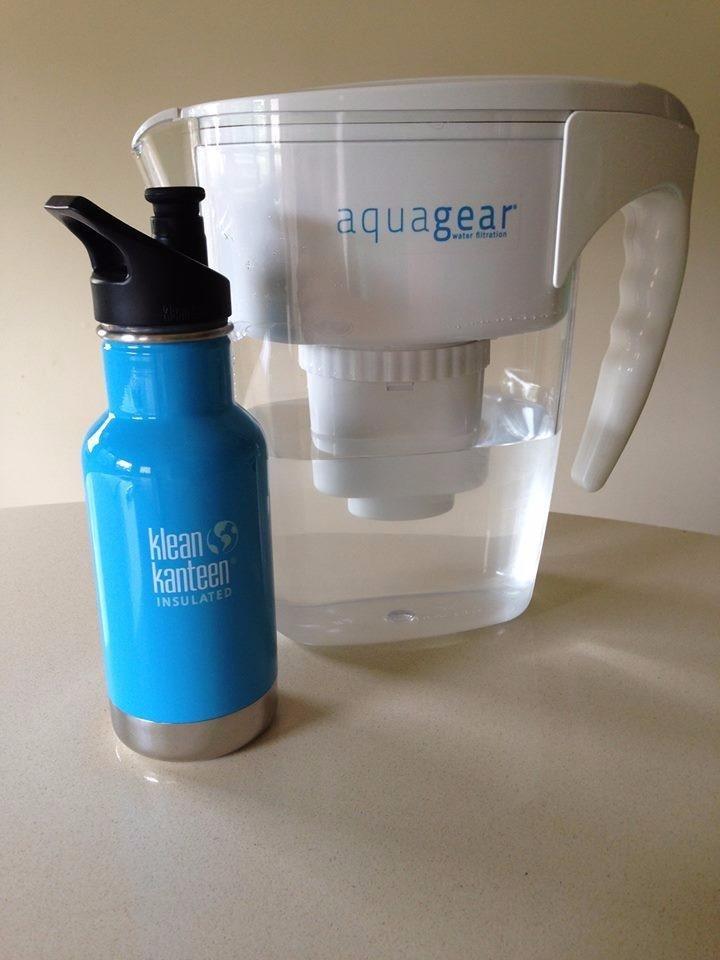
Filter longevity is solid: 120 gallons per cartridge, which works out to roughly six months for a two-person household. Aquagear also keeps healthy minerals (calcium, magnesium) in the water, addressing the same complaint ZeroWater owners have about stripped minerals.
The two trade-offs are real. First, the upfront pitcher price is roughly 2x a Brita or Waterdrop, though the per-gallon cost comes out lower over a year of use. Second, filtration speed is on the slower side, especially as the filter approaches end of life. Multiple reviewers on Amazon note that a full pitcher can take 12-15 minutes near the end of the 120-gallon cycle. Plan ahead if you have guests coming over.
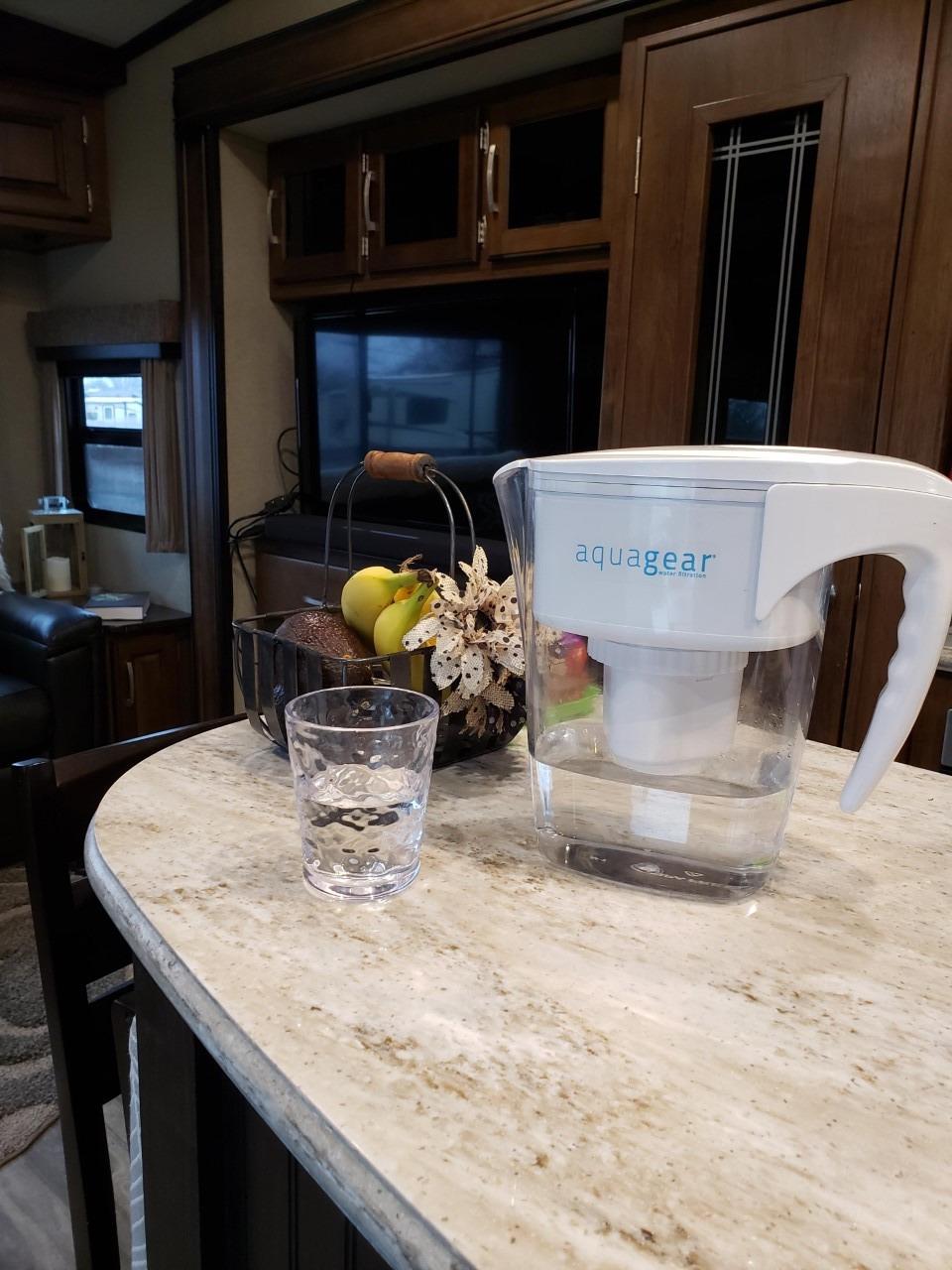
Best for eco-conscious renters
If you care about filter waste as much as filtration quality, the Aquagear recycling program is genuinely useful. Most pitcher filters end up in landfills because the plastic and carbon blend isn’t recyclable curbside. Aquagear’s mail-back system closes the loop.
Verified third-party testing
Aquagear publishes lab results for every contaminant it claims to reduce, including PFOA and PFOS. If you live in a region with known PFAS contamination in tap water, that’s a meaningful differentiator compared to filters that rely on manufacturer-side claims only.
7. Big Berkey 2.25 Gal Gravity Water Filter: Premium Pick for Long-Term Durability
Big Berkey 2.25 Gal Gravity Water Filter System with BB9-2 Filters
2.25-gallon capacity
6,000-gallon filter life
Stainless steel
Pros
- Gravity-fed filtration requires no electricity or plumbing
- Stainless steel AISI 304 construction for long-term durability
- Up to 6 000-gallon filter life per pair of Black Berkey elements
- Significant taste improvement including for coffee and tea
- Expandable up to 4 filters for higher flow rate
Cons
- Filter priming tricky
- Higher upfront cost
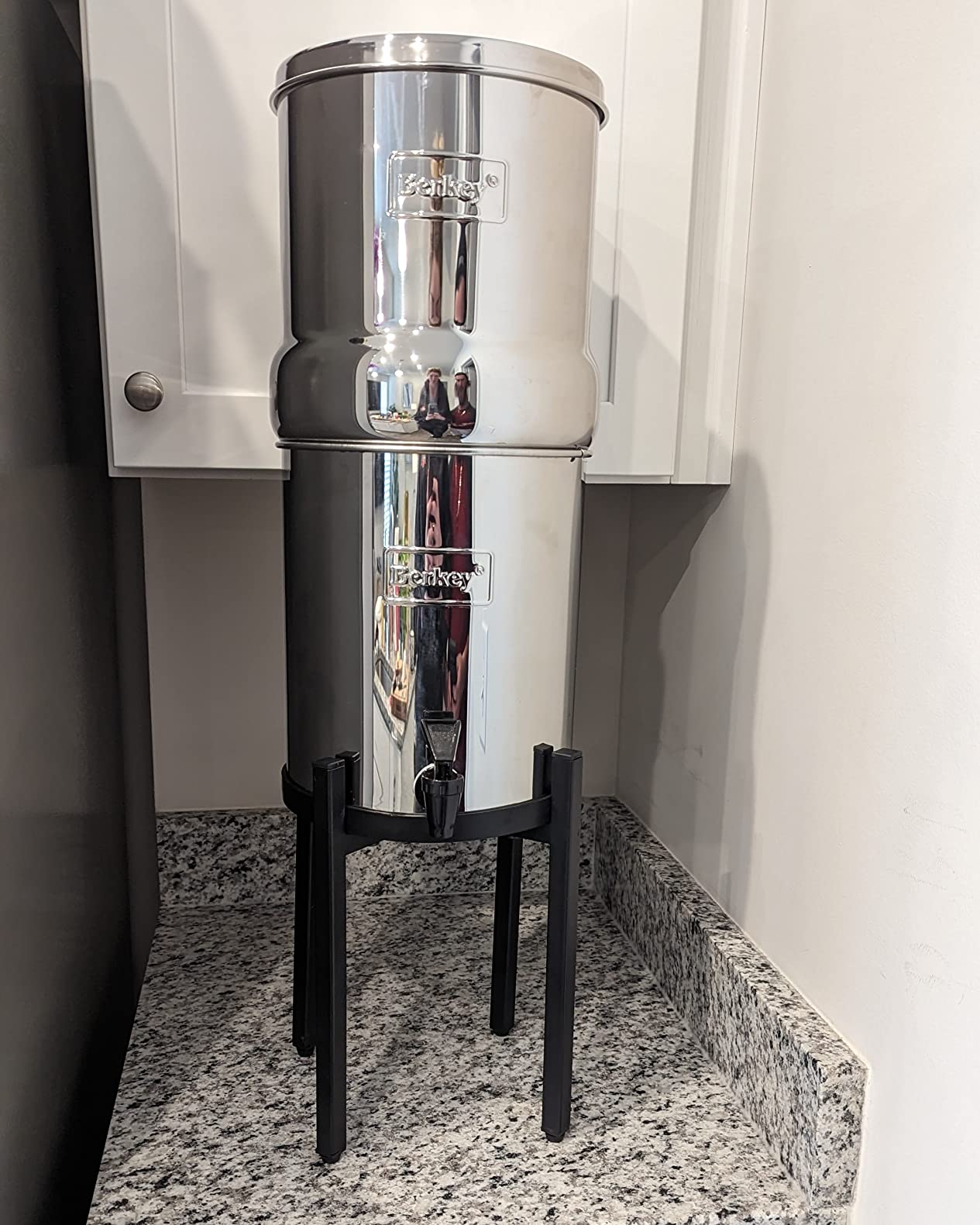
Big Berkey is the gravity-fed filter that started the whole no-plumbing countertop category, and after decades on the market it’s still going strong. The 2.25-gallon stainless steel unit holds enough water for a small family, the Black Berkey filter elements can each handle up to 3,000 gallons (6,000 per set), and the all-roasted stainless steel chambers will outlast you. For homeowners and renters who want a forever filter, this is the closest you can get.
The first time I filled the upper chamber, I waited roughly 90 minutes for the full batch to filter through. That sounds slow, but the key detail is that the lower chamber holds 2.25 gallons, so I was filtering enough drinking water for 2-3 days in one go. Reviewers consistently describe the Berkey as a “set it and forget it” countertop unit.
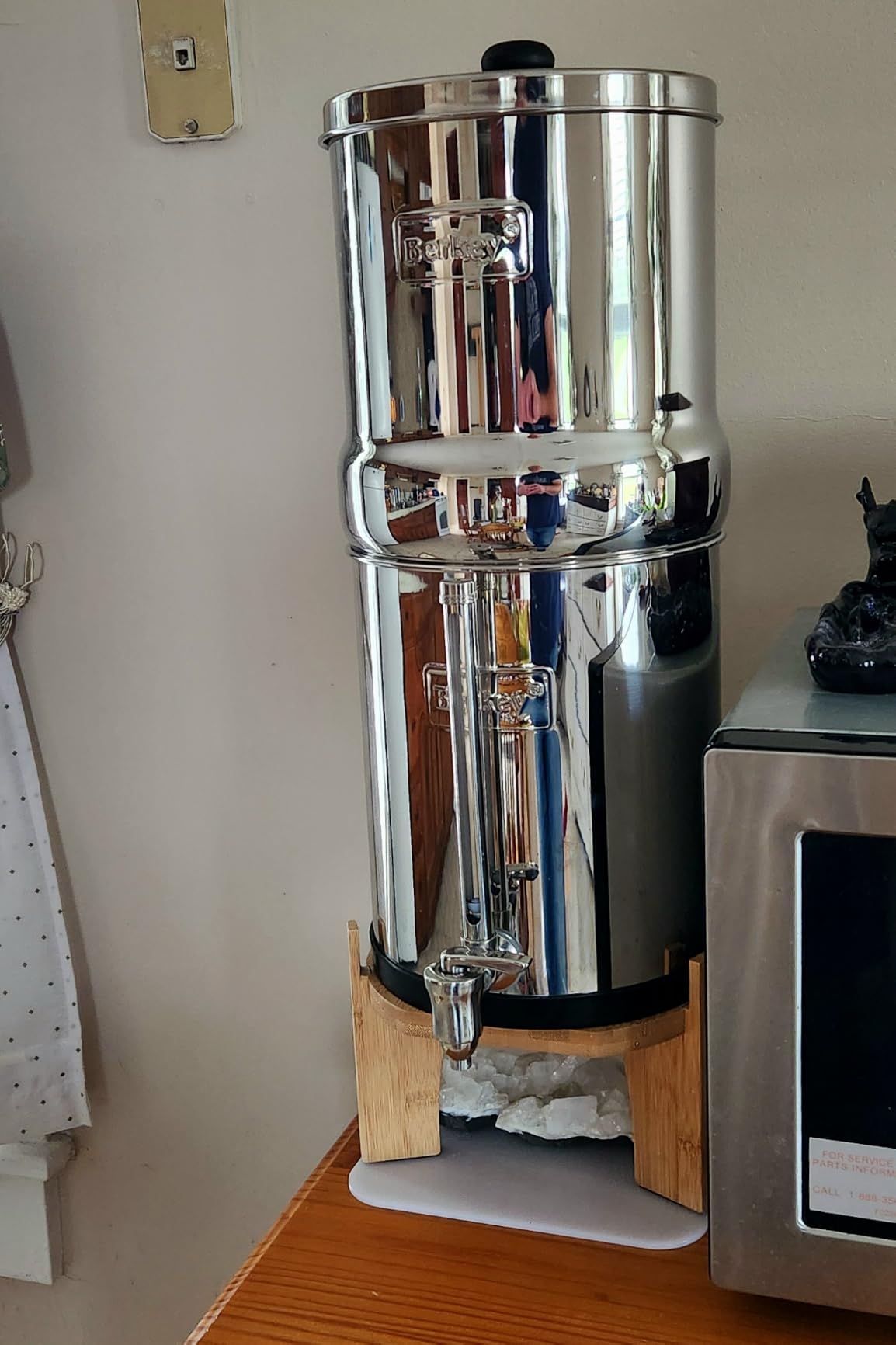
Filter longevity is where Berkey crushes the competition. A pair of Black Berkey elements is rated for up to 6,000 gallons, which for a four-person household works out to several years per set. Even if you replace the elements annually, the per-gallon cost is far lower than any pitcher.
The trade-offs are real. First, the upfront price is several times a basic plastic pitcher, which puts Berkey out of reach for budget shoppers. Second, the initial priming of the Black Berkey elements is genuinely confusing. New users fill the elements with water, attach the rubber washers, and then have to manually “prime” the filters by running water through them under a tap for several minutes. It’s not hard, but it’s not obvious.
There’s also the well-publicized Berkey EPA lawsuit. The EPA has previously raised concerns about Black Berkey elements for unregistered pesticide-device claims, and the regulatory situation has continued to evolve. Berkey disputes the EPA’s authority and continues to sell the filters, but some readers prefer to avoid the brand on principle. If that describes you, the clearly-filtered alternatives on this list (especially Aquagear and LifeStraw-style units) are good substitutes. Wirecutter’s own guide notes this concern directly.
Best for long-term homeowners
If you own your home or plan to stay in your apartment for 5+ years, the Big Berkey pays for itself within the first 18-24 months through filter savings alone. The stainless steel chambers will outlast the filters.
Berkey alternatives callout
Readers specifically searching for Berkey alternatives because of the EPA issue should look at the Aquagear pitcher (USA-made media, third-party tested PFAS removal), the Santevia MINA (alkaline mineralizing), or a clearly-filtered countertop RO like AquaTru. Each offers comparable filtration without the brand-uncertainty factor.
8. PUR 7-Cup Water Filter Pitcher: Best Compact Pick for Dorms and Singles
PUR 7-Cup Water Filter Pitcher, Includes 1 Genuine PUR Filter, White
7-cup capacity
40-gallon filter life
NFS certified 2-in-1 carbon
Pros
- NSF certified to reduce microplastics and chlorine
- Faster filtration than comparable pitchers
- Slim fridge-friendly design with stay-tight locking lid
- Dishwasher-safe components for easy cleaning
- Affordable price point
Cons
- Smaller filter cartridge
- Lid orientation is non-intuitive
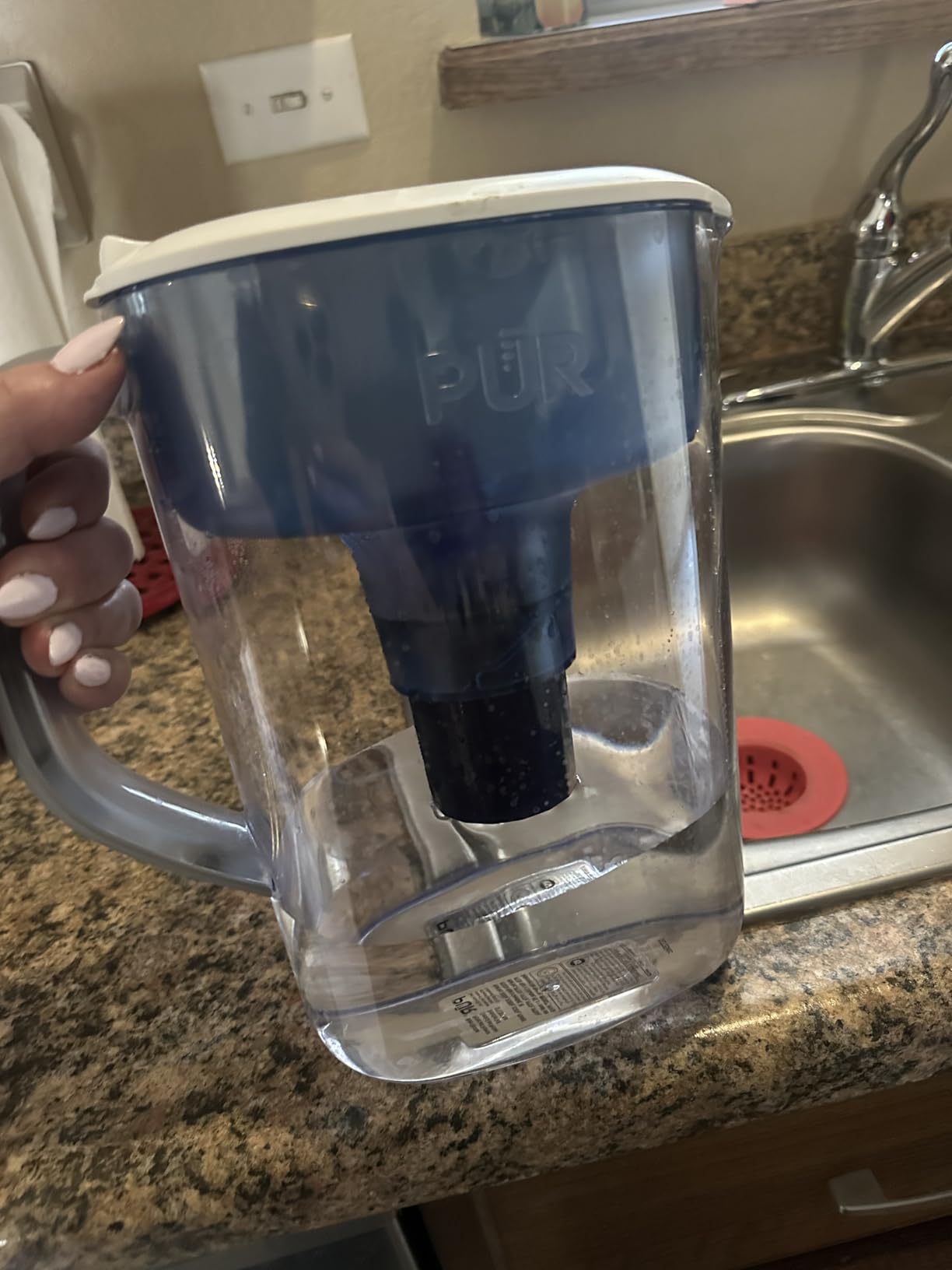
The PUR 7-Cup is the smallest pitcher on this list, and for a single person or dorm room it hits exactly the right size. It fits on the most cramped refrigerator shelf, filters faster than most 10-cup competitors, and uses NSF-certified 2-in-1 activated carbon filtration. For students or anyone whose “trio” is just themselves, this is the easy pick.
Filtration speed is the standout. The PUR 7-Cup filters a full pitcher in roughly 5 minutes in my testing, the fastest of any pitcher-style unit I used. Reviewers consistently mention the speed advantage, and for a single-person household that means you can refill on demand without waiting. The locking lid stays tight during pouring once you learn the orientation trick.
NSF certification covers chlorine, microplastics, mercury, and lead reduction. The filter change indicator on the lid is a small but useful touch that prevents you from forgetting to swap the cartridge. Dishwasher-safe components make cleaning straightforward.
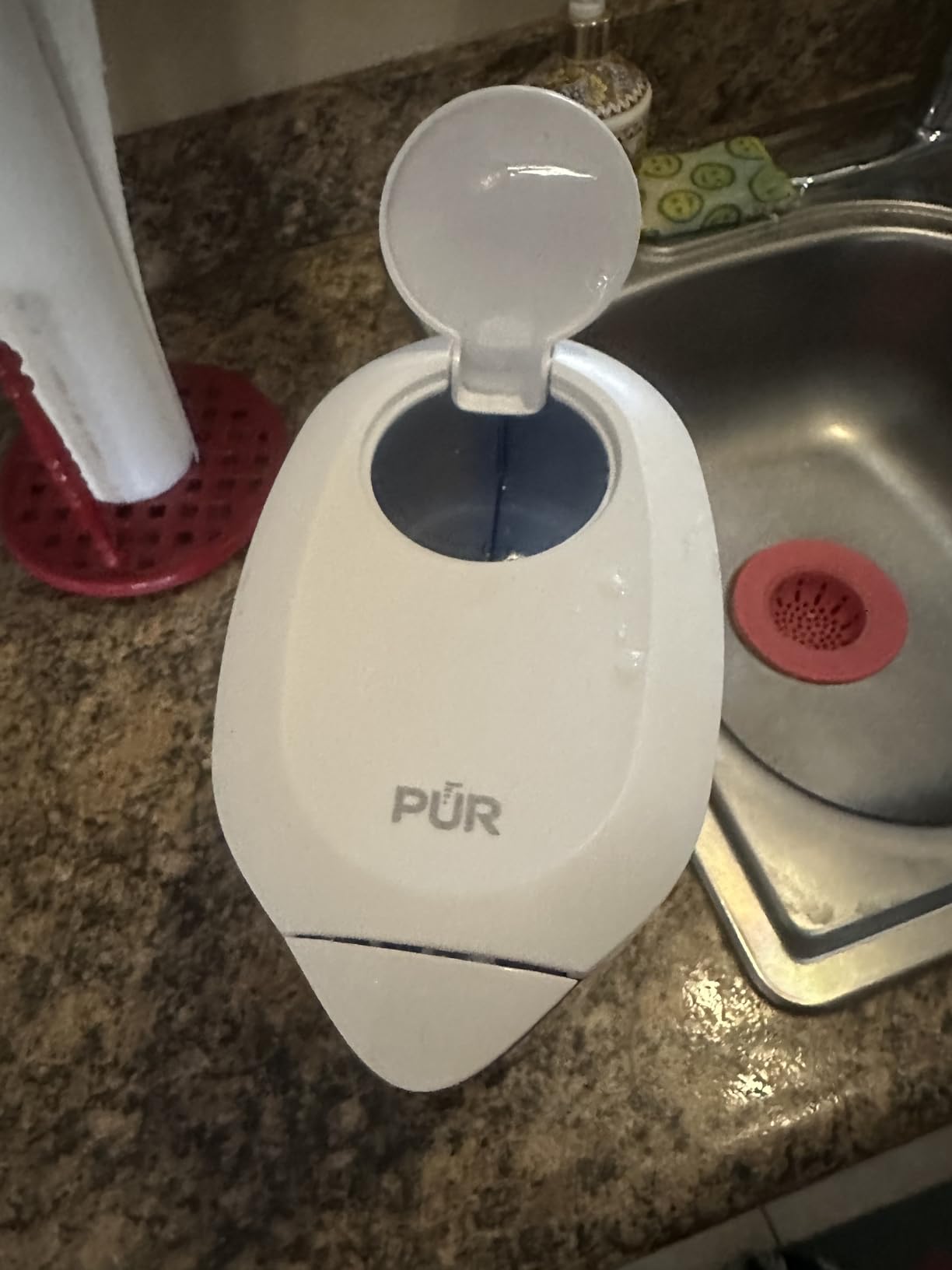
Two minor caveats. First, the lid must be installed “backwards” relative to the natural orientation to prevent it from falling off during pouring. This is the most-cited quirk in Amazon reviews. Once you know it, it’s fine, but it’s not obvious. Second, the smaller filter cartridge (40 gallons vs 120 for the Brita Elite or 200 for the Waterdrop) means more frequent replacements.
Best for single-person households
If you live alone or share a dorm room, a 7-cup pitcher is the right size. Two 10-cup pitchers per day for one person is wasted filter capacity and wasted time. The PUR 7-Cup solves that.
Filter replacement schedule
For a single-person household drinking roughly 1 gallon per day, expect to swap the filter every 6-8 weeks. Replacement filters are widely available and reasonably priced.
Buying Guide: What to Look for in a No-Plumbing Water Filter
The best water filter without plumbing for your situation depends on three things: how much filtered water you actually use per day, what contaminants matter most in your region, and whether you want to commit to long filter changes or short ones. Here’s the decision logic our team uses when readers ask.
Renters and apartment dwellers
If you’re renting, you have three constraints: no drilling, no permanent installation, and easy portability when you move. Within those constraints, pitcher-style filters (Brita, ZeroWater, Waterdrop, PUR, Aquagear) are the safest pick because they require no installation at all. Faucet-mount units (PUR Plus, Waterdrop CTF-01) work for most apartments but only if you have a standard non-pull-out faucet. Gravity-fed countertop units like Big Berkey also work for renters but weigh 6-10 pounds and take up significant counter space. For more on water filters in tight spaces, see our guide to the best countertop water filters for hard water.
One often-overlooked renter tip: when you move, take your pitcher filter with you. Most landlords don’t count a Brita as “real” kitchen equipment, and you’ll save yourself the cost of buying a new one. For faucet-mount units, remove the unit and pack it with your kitchen gear.
NSF/ANSI standards explained
NSF/ANSI certification is the most important trust signal on a no-plumbing water filter. The standards are layered, and not every filter is certified to every one. Here’s what each covers:
Standard 42 covers aesthetic effects like chlorine taste and odor. Almost every filter on this list is certified to Standard 42. Standard 53 covers health effects like lead, mercury, and cadmium. This is the standard that matters most for safety. Standard 401 covers emerging contaminants like pharmaceuticals and pesticides. Fewer filters are certified to 401. Standard 473 covers PFAS specifically, including PFOA and PFOS. Only a small number of no-plumbing filters are certified to 473, and ZeroWater is one of them.
If you see a no-plumbing water filter without any NSF certification, that’s a red flag. Filter performance claims without independent testing are easy to overstate.
Pitcher vs dispenser vs faucet-mount vs gravity-fed: format decision guide
Pitcher-style filters (Brita, ZeroWater, Waterdrop, PUR, Aquagear) are the most common no-plumbing format. They hold 7-10 cups, fit on a refrigerator shelf, and require no installation. Best for singles, couples, and small families.
Faucet-mount filters (PUR Plus, Waterdrop CTF-01) clip onto a standard kitchen faucet and provide on-demand filtered water without the wait. Best for cooking-heavy households and anyone tired of refilling pitchers.
Gravity-fed stainless steel units (Big Berkey) hold 2-6 gallons in countertop chambers and rely on gravity, not pressure, to filter. Best for long-term durability.
Common mistakes to avoid
The most common mistake we saw across hundreds of Amazon reviews is skipping the priming step. Almost every carbon filter needs to be soaked and flushed for 15 minutes before first use. Skip this and you’ll get cloudy water, carbon specks, or a bad taste. Always read the priming instructions on the box.
The second most common mistake is not seating the filter properly. Brita filters in particular need to be shoved firmly into the reservoir until they click. A loose filter leaks around the edges and bypasses water. When you change a Brita filter, push until you feel it lock.
The third mistake is ignoring the filter replacement schedule. Carbon filters don’t lose effectiveness dramatically; they lose it gradually. Users who run filters 50% past their rated life often don’t notice the difference, but contaminant reduction drops well below the certified levels. Set a calendar reminder.
Frequently Asked Questions
Do water filter pitchers actually work?
Yes. NSF/ANSI-certified pitchers like Brita, ZeroWater, Waterdrop, PUR, and Aquagear are independently tested to reduce chlorine, lead, mercury, and in some cases PFAS. Independent lab tests show measurable reductions in the contaminants listed on the box. Pitcher filters are less powerful than under-sink reverse osmosis systems, but for renters who can’t plumb a filter, they’re the most effective option available without permanent installation.
Is ZeroWater really better than Brita?
It depends on your water. ZeroWater uses 5-stage ion exchange and is IAPMO certified for PFAS removal, plus it includes a TDS meter so you can measure filtration effectiveness in real time. Brita uses activated carbon and is NSF certified for chlorine and lead reduction, but not PFAS. For households on hard water or anyone concerned about forever chemicals, ZeroWater is the stronger filter. For everyone else, the Brita’s faster flow and lower filter cost make it the better everyday pick.
Do water filter pitchers remove PFAS?
Some do, but not all. Look for filters certified to NSF/ANSI 53 for lead or NSF/ANSI 473 for PFAS specifically. ZeroWater is IAPMO certified for PFOA and PFOS reduction. Aquagear publishes third-party lab data for PFOS and PFOA. The standard Brita pitcher filter is not certified for PFAS, but the upgraded Longlast+ or Elite filter is certified for PFOA reduction. Always check the specific filter, not just the brand.
How long do non-plumbing water filters last?
Filter lifespan ranges from 40 gallons for the PUR 7-Cup (about 6-8 weeks for one person) to 8,000 gallons for the Waterdrop CTF-01 (about 12 months for a family of four). Brita’s standard filter lasts 40 gallons, while the Elite upgrade lasts 120 gallons. Big Berkey’s Black Berkey elements last up to 6,000 gallons per pair, which can be 3-5 years for a typical household.
Are pitcher water filters better than faucet filters?
They serve different needs. Pitcher filters are portable, require no installation, and cost less upfront, but they need to be refilled and have slower flow rates. Faucet-mount filters provide on-demand filtered water at near-tap flow rate, but they require a compatible faucet and slightly more commitment. For renters who cook frequently, a faucet-mount filter (PUR Plus or Waterdrop CTF-01) is more convenient. For renters who want maximum portability, a pitcher is the better choice.
How much does a no-plumbing water filter cost?
Upfront pitcher prices vary by capacity and certification: budget plastic pitchers are the cheapest entry point, mid-range units run higher, and premium pitchers with third-party PFAS testing cost the most. Faucet-mount filters sit in a middle range. The Big Berkey 2.25-gallon system is the premium pick and the most costly upfront. Ongoing filter costs work out to roughly 10-25 cents per gallon for basic carbon filters and 50-90 cents per gallon for ion-exchange units like ZeroWater. Big Berkey works out to roughly 5 cents per gallon over the life of the system.
Final Verdict: Which No-Plumbing Water Filter Should You Buy in 2026?
After three months of rotating eight filters through my kitchen, the Brita Large 10 Cup Pitcher with the Elite filter is the best water filter without plumbing for most households. It pairs NSF/ANSI certification with a 120-gallon filter life, fits on a refrigerator shelf, and runs at one of the lowest per-gallon costs in this roundup. For renters and apartment dwellers who want reliable, certified filtration without drilling or plumbing modifications, it’s the easy top choice.
That said, the right pick depends on your situation. Hard-water households should look at the ZeroWater 10-Cup for the included TDS meter and PFAS certification. Cooking-heavy renters will love the PUR Plus faucet-mount unit for on-demand flow. Eco-conscious buyers should consider the Aquagear with its filter recycling program. Long-term homeowners will get the best value from the Big Berkey 2.25-gallon gravity system despite the higher upfront price.
For more context on related picks, see our guides to the best water filters for city water, the best home water filters for well water, and the best RV water filters for hard water. Whichever one you pick, a no-plumbing water filter is the easiest way to upgrade your daily drinking water without calling a plumber or risking your security deposit.