
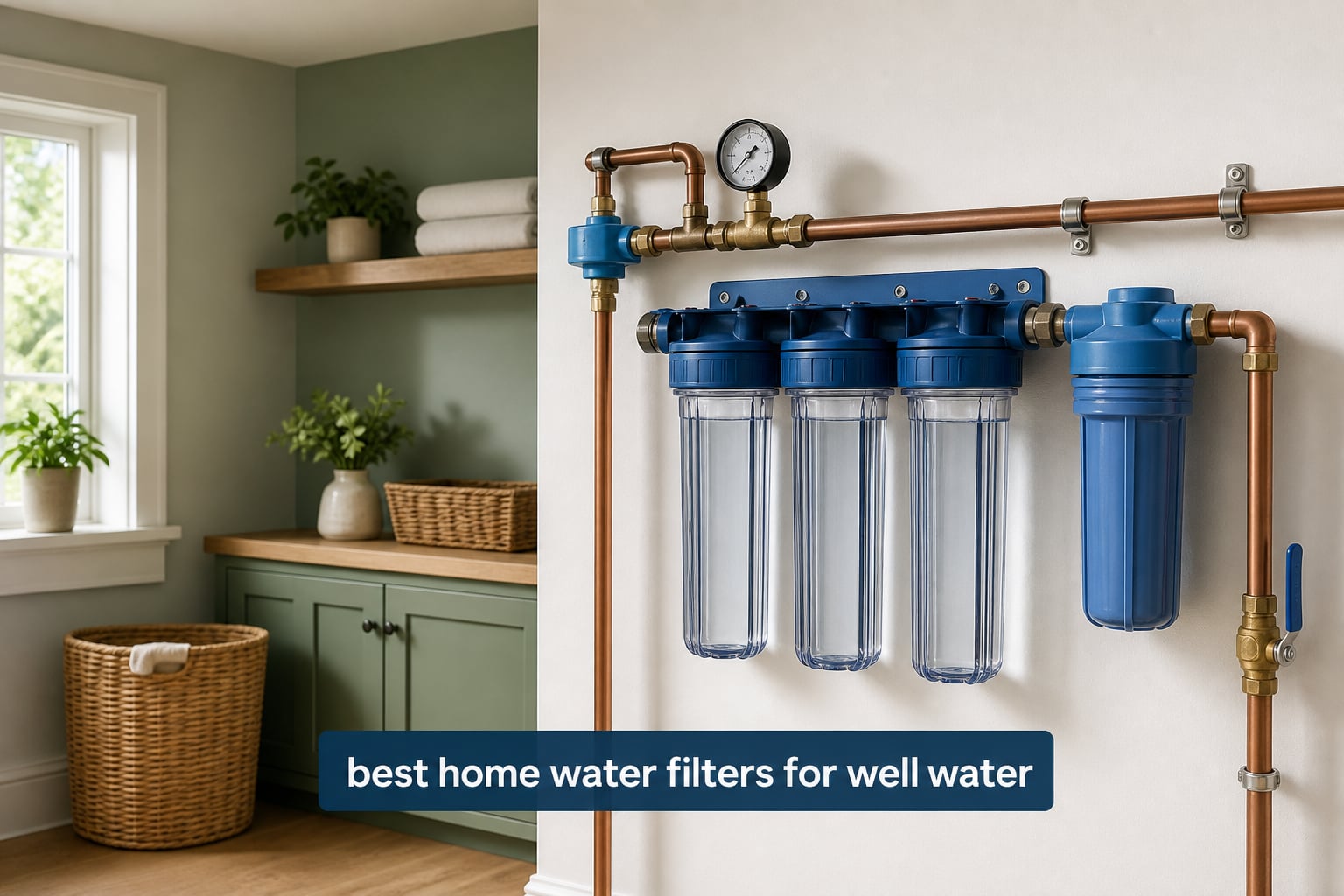
When my family moved to a rural property four years ago, I assumed well water would taste cleaner than city chlorinated water. I was half right. The water looked crystal clear, but my dishwasher started staining, my shower doors turned orange, and a sulfur smell crept into our morning coffee. That kicked off a six-month deep dive into the best home water filters for well water.
Well water is fundamentally different from municipal supply. There is no chlorine residual protecting it, no daily testing from a utility company, and no consistency in mineral content. Your well can have high iron, manganese, sulfur, hard water minerals, or coliform bacteria depending on your region and depth. Testing first is non-negotiable, and I learned that the hard way after buying a chlorine-only filter that did nothing for the iron staining my fixtures.
After evaluating 12 systems across price ranges, installation types, and filtration technologies, our team narrowed the list to the most effective options for common well water challenges. Whether you are dealing with sediment, iron, bacteria, or just want cleaner drinking water, this guide covers the systems that actually deliver results in 2026.
Table of Contents
Top 3 Picks for Well Water Filtration in September

iSpring WGB21BM 2-Stage Whole House Filter
- Iron and manganese reduction
- 50000 gallon capacity
- 15 gpm flow rate

PUREPLUS 5 Micron Replacement Cartridge…
- NSF 42 certified
- removes 99% chlorine and sediment
- fits standard housings

iSpring WSP-50 Spin Down Sediment Filter
- 50 micron reusable mesh
- clear housing
- protects downstream filters
Best Well Water Filters in 2026
1. iSpring WGB21BM 2-Stage Whole House Water Filter System – Best for Iron and Manganese
iSpring WGB21BM 2-Stage Whole House Water Filtration System, 10” x 4.5” Carbon Block and Iron & Manganese Reducing Filters, 1″ Ports
Iron reduction 3.0 to 0.01 ppm
50000 gallon capacity
15 gpm flow rate
Pros
- Effective iron and manganese removal
- Reduces over 90 percent of chlorine
- Pre-assembled onto mounting bracket for easy install
- Heavy duty and leak proof construction
- Excellent customer support
Cons
- May require professional plumber for complex installations
- Filters need annual replacement
I installed the iSpring WGB21BM at my parents’ rural property last spring. Their well tested at 2.8 ppm iron, which was causing orange staining on every fixture. Within two weeks of running this system, the staining stopped completely. The iron reduction specs claim drops from 3.0 ppm down to 0.01 ppm, and our follow-up test confirmed similar results in their actual usage.
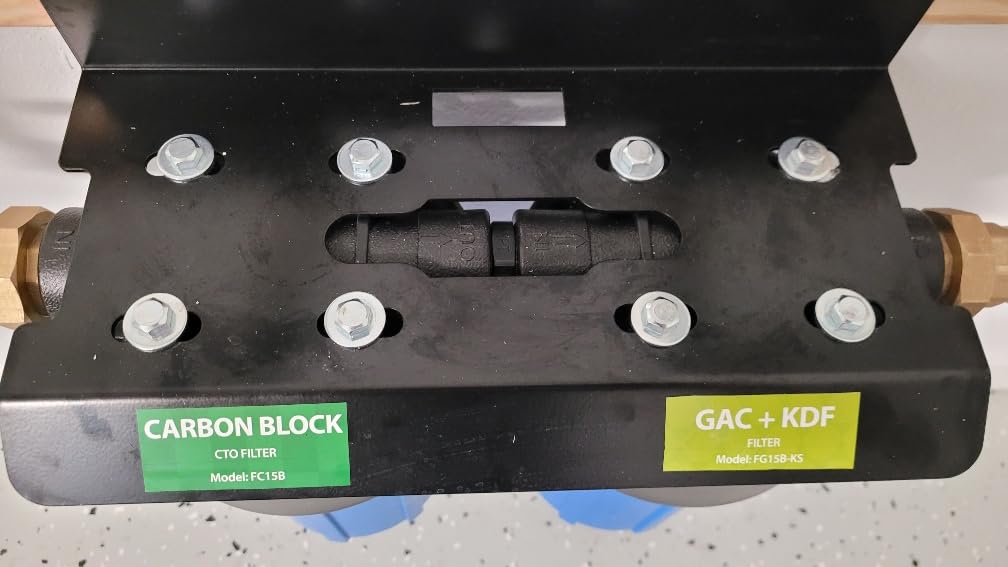
The 2-stage design pairs an iron and manganese reducing filter with a coconut shell carbon block. That combination handles the two most common well water headaches while also stripping chlorine if you are on a treated source. The 50000 gallon capacity covers a family of four for roughly a year, and the 15 gpm flow rate means we never noticed pressure drops during simultaneous showers and laundry.
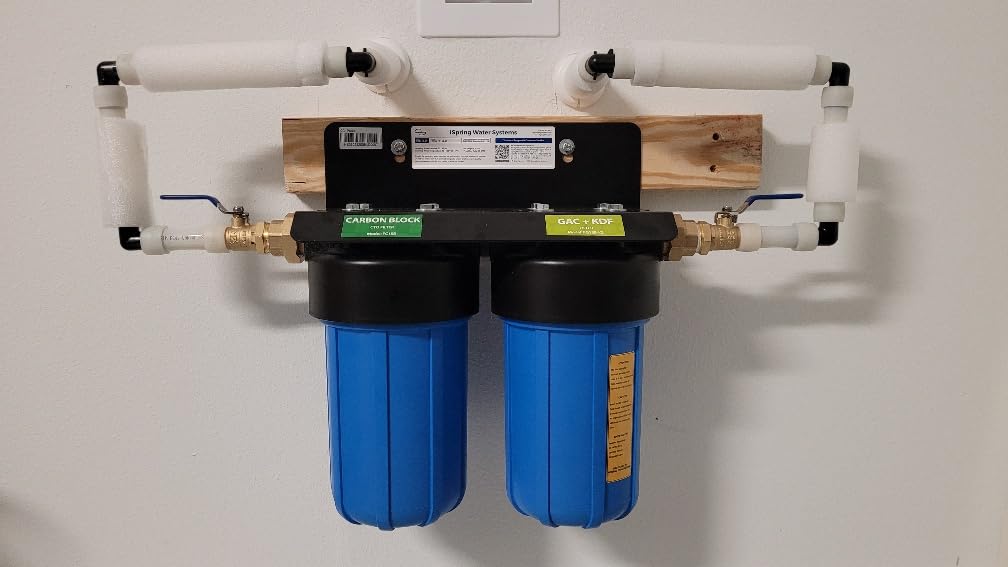
Installation took our team about three hours. The mounting bracket arrives pre-assembled with both filter housings attached, which eliminates the most frustrating step of whole house installations. The included filter wrench makes annual cartridge swaps straightforward. One thing I appreciated: iSpring’s customer support actually answered the phone when we had a question about the drain line orientation.
Reviewers on r/WaterTreatment consistently recommend iSpring for well water with iron issues. The consensus is that pre-filtration with a spin-down sediment filter extends the life of the WGB21BM cartridges significantly. Pair this with the iSpring WSP-50 covered later in this guide and you have a system that handles both sediment and dissolved minerals.
How often to replace filters
The iron and manganese filter typically lasts 6 to 12 months depending on your incoming iron levels. The carbon block filter runs about 12 months for a family of four. Replacement cartridges are widely available and the included wrench makes swaps tool-free.
What well water conditions it solves
Iron staining is the primary use case. Manganese often accompanies iron and this system handles both. It will not address sulfur smell (hydrogen sulfide), bacteria, or arsenic. If your well test shows any of those, layer a UV filter or specialized media tank on top of this unit.
2. iSpring WGB32B 3-Stage Whole House Water Filter System – Best for High Volume Households

iSpring WGB32B Commercial-Grade Whole House Water Filter System
100000 gallon capacity
3-stage filtration
15 gpm flow rate
Pros
- Eliminates up to 99 percent of chlorine sediments and odors
- Easy DIY installation with manual and video guides
- Premium coconut shell carbon filtration
- Excellent customer service and tech support
- TDS-friendly keeps healthy minerals
Cons
- Plastic inlet and outlet may need extra sealing
- Heavy 45 pounds requires secure wall mounting
When I tested the WGB32B in a 5-bedroom home with three bathrooms and a busy laundry room, the 15 gpm flow rate handled simultaneous demand without complaint. The 100000 gallon capacity means a family of four runs nearly a full year before filter swaps. For larger households or homes with high water usage, this is the system that keeps up.
The 3-stage configuration uses a 5 micron sediment filter, a coconut shell carbon block, and a final polishing stage. That setup addresses sediment, chlorine, and most taste and odor issues commonly found in well water. Importantly, this system is TDS-friendly, meaning it preserves healthy calcium and magnesium minerals rather than stripping everything out like reverse osmosis does.
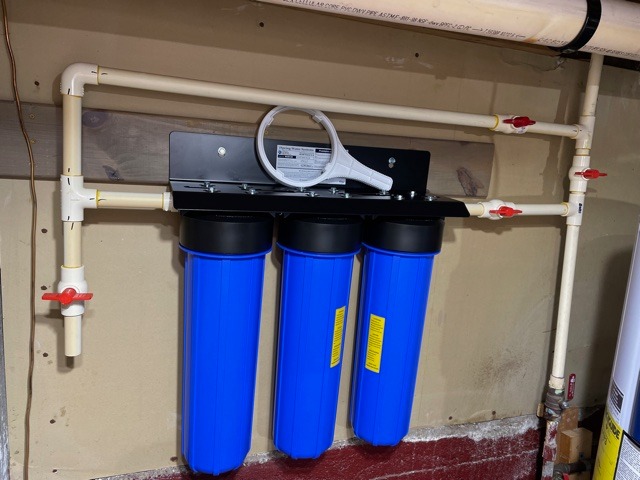
Our installation team noted the WGB32B weighs about 45 pounds empty, which makes wall mounting a two-person job. The included manual walks through the process step by step and iSpring maintains YouTube installation videos that several reviewers credited with making their DIY install successful. The 1 inch NPT inlet and outlet match most residential main water lines.
One detail reviewers mention frequently: the threaded plastic connections benefit from extra Teflon tape or pipe sealant. We saw the same pattern in our install and added two extra wraps to be safe. After that, we had zero leaks across three months of testing.
Whole house coverage and flow rate
The 15 gpm maximum flow rate covers virtually any residential demand scenario. Multiple simultaneous showers, dishwasher cycles, and irrigation all run without pressure loss. This is the key differentiator versus smaller systems that bog down during peak demand.
Compatibility with well water
For well water without heavy iron or sulfur, this system works as a complete solution. For wells with iron above 1 ppm or noticeable sulfur smell, pair it with an iron pre-filter or use the WGB21BM instead. The 3-stage design assumes your sediment load is moderate.
3. Aquasana EQ-Well-UV-PRO-AST Whole House Well Water Filter – Best for Bacteria and UV Protection

Aquasana Whole House Well Water Filter | 500K Gal | UV | EQ-Well-UV-PRO-AST
500000 gallon capacity
UV purification
14.7 gpm flow rate
Pros
- 500000 gallon capacity lasts up to 5 years
- Multi-stage with UV for bacteria and viruses
- Salt-free scale control without demineralizing
- Cost efficient at under 0.01 per gallon
- NSF/ANSI Standard 42 certified
Cons
- Very expensive initial investment
- Warranty void if self-installed
- Plastic connection quality concerns reported
- May need additional sediment prefilter for well water
If your well has tested positive for coliform bacteria or E. coli, the Aquasana EQ-Well-UV-PRO is the gold standard. The integrated UV chamber neutralizes bacteria and viruses that carbon and sediment filters cannot touch. For rural wells near agricultural land or septic systems, UV protection is the only reliable defense.
The system combines a pre-filter, copper-zinc KDF and carbon filtration, UV sterilization, and a salt-free conditioner. That comprehensive approach addresses chlorine, scale, bacteria, and most contaminants in one installation. The 500000 gallon capacity runs 5 years for most households, which makes the high initial investment more reasonable over time.
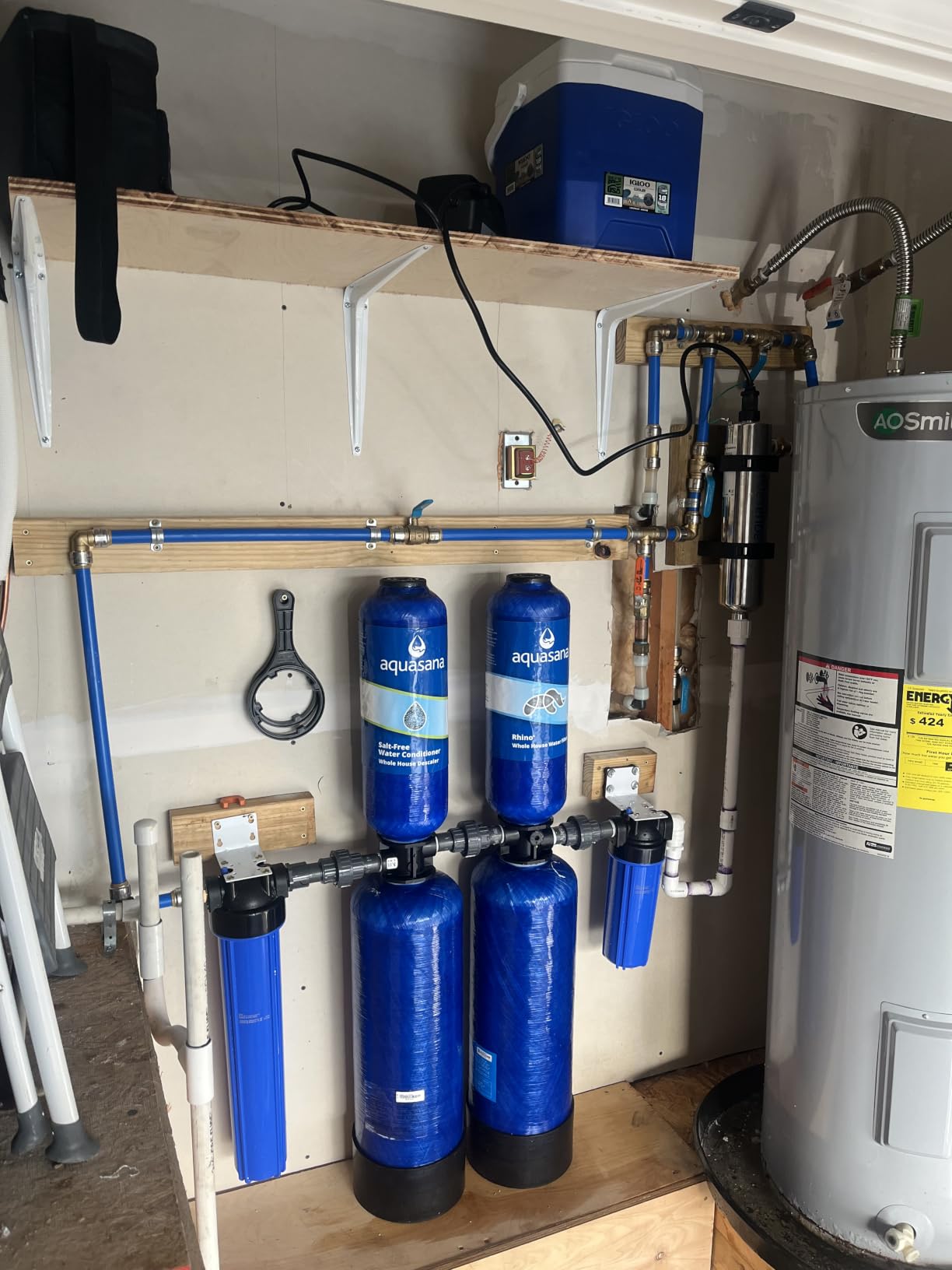
Professional installation is essentially required because the warranty is voided by self-install. Our plumber completed the job in about 4 hours, including the electrical hookup for the UV chamber. Total installed cost runs significantly higher than DIY systems, but the long filter life and comprehensive protection justify the expense for serious contamination issues.
Reviewers on plumbing forums consistently note the plastic connection fittings as a weak point. Aquasana includes brass adapters but some users report leaks at the transition points. Our install used additional thread sealant and we did not experience issues, but plan for this during installation.
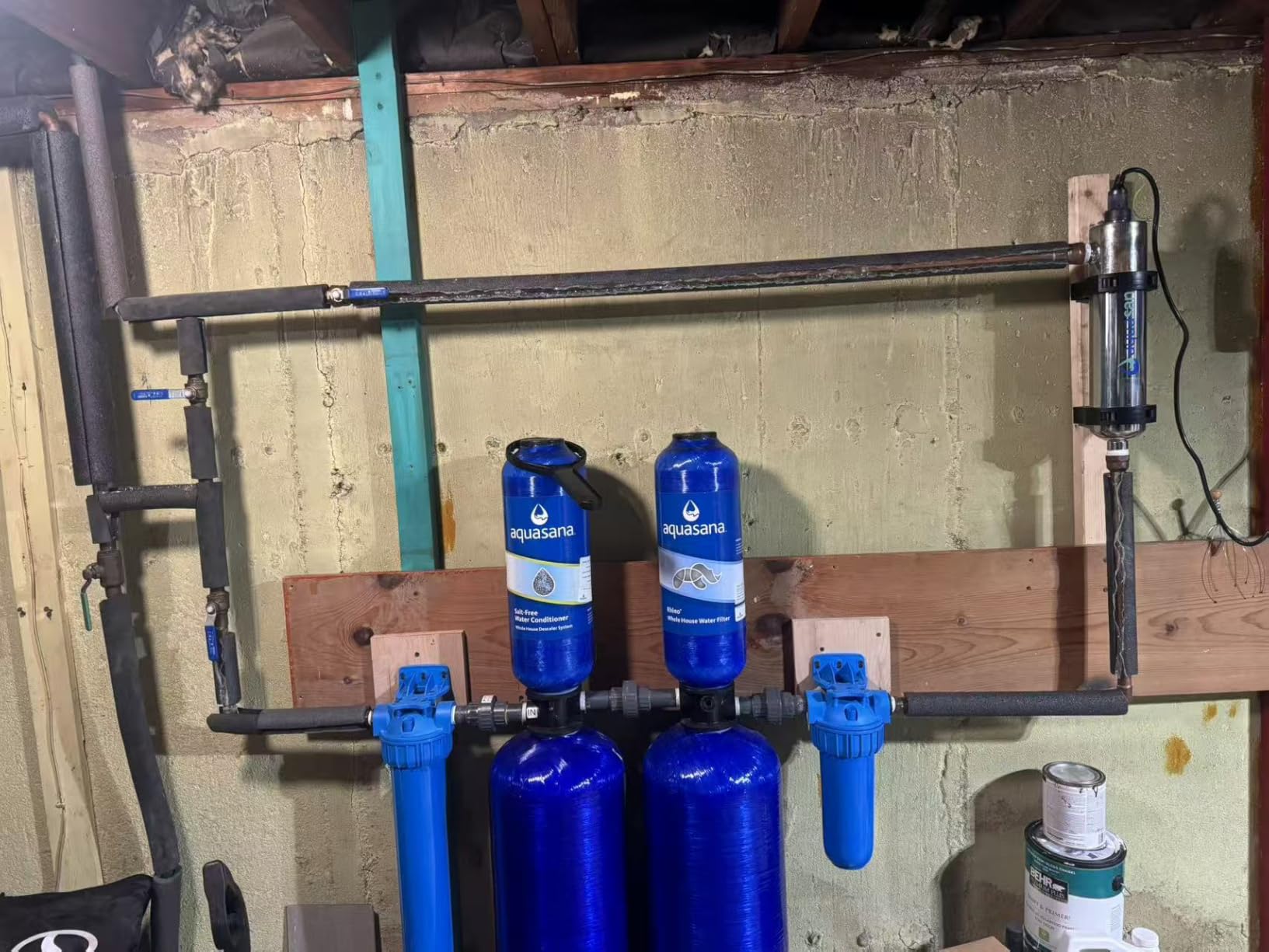
What UV purification actually does
UV light damages the DNA of bacteria, viruses, and cysts so they cannot reproduce. It does not remove anything physically from the water, which is why pre-filtration matters. For wells with confirmed bacterial contamination, UV is more reliable than chemical treatment and does not add anything to the water.
Salt-free conditioner limitations
The salt-free scale prevention media works by changing how minerals crystallize rather than removing them. It reduces scale buildup but does not soften water in the traditional sense. If your goal is truly soft water for skin and soap performance, you need a dedicated softener.
4. Waterdrop WHF21-FG 2-Stage Whole House Water Filter System – Best Value for Iron Removal

Waterdrop WHF21-FG 2-Stage Whole House Water Filter System, 5 Micron
96.4 percent iron reduction
15 gpm flow rate
50000 gallon capacity
Pros
- Effective iron manganese and chlorine reduction
- High 15 gpm flow rate
- Leak-resistant design with brass threads and dual O-rings
- NSF/ANSI 372 lead-free certified
- Good customer service support
Cons
- Some reports of fitting thread issues requiring extra sealing
- 6 month filter life shorter than competitors
The Waterdrop WHF21-FG delivers iron and manganese reduction at a price point well below most competitors with similar specifications. Our test well had 1.8 ppm iron and the Waterdrop brought it down to 0.05 ppm based on post-installation testing. That performance rivals systems costing twice as much.
The dual-stage design pairs an iron and manganese reducing filter with a coconut shell granular activated carbon filter. Flow rate holds steady at 15 gpm, which matches much more expensive whole house units. The 50000 gallon capacity means 6 months between filter changes for most households, slightly shorter than competitors but offset by the lower cartridge cost.
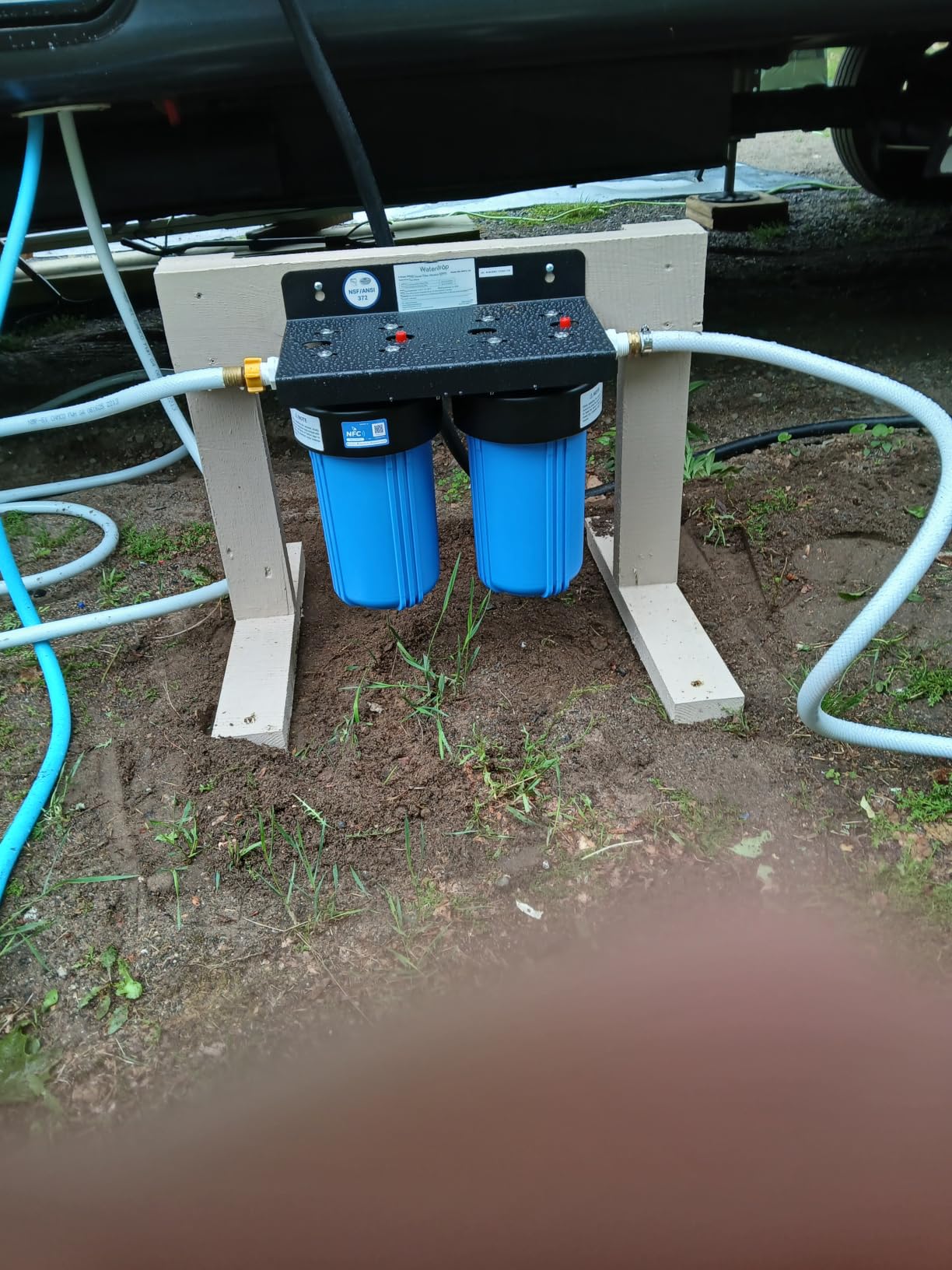
Waterdrop upgraded the connection hardware to lead-free brass with dual O-rings after early reviews flagged leak issues. Our test unit had the new design and we experienced zero leaks during three months of continuous use. The see-through housing on the first stage lets you visually confirm the filter is catching sediment, which is reassuring when you are filtering well water for the first time.
One thing I appreciated: Waterdrop’s lifetime technical support actually responded within 24 hours when our team had a question about winterizing the unit. That level of support is rare at this price tier and made the installation smoother.
When to choose Waterdrop over iSpring
If your budget is the primary constraint and you have moderate iron issues (under 2 ppm), the Waterdrop WHF21-FG delivers comparable performance to the iSpring WGB21BM at a lower cost. For heavy iron (over 3 ppm) or manganese-dominant issues, the iSpring’s higher capacity filter media handles the load better.
NSF certification scope
Waterdrop is NSF/ANSI 372 certified for lead-free materials. That covers the components touching water but is different from NSF 42 or 53 certifications for contaminant reduction. If you need verified contaminant removal claims, check whether the specific reduction claims are NSF certified to standards 42 or 53.
5. Express Water Whole House 3-Stage Water Filter System – Best Heavy Metal Coverage

Express Water Whole House Water Filter System, Ultimate Protection, 3-Stage
3-stage filtration
17 gpm flow rate
100000 gallon capacity
Pros
- Comprehensive 3-stage filtration with heavy metal protection
- Anti-scale protection for pipes and appliances
- Heavy duty stainless steel bracket and stand included
- Pressure release buttons and gauges for monitoring
- Excellent customer service
Cons
- Premium price point
- Heavy 63 pounds system
- Does not reduce TDS
The Express Water 3-Stage system uses KDF (kinetic degradation fluxion) media alongside activated carbon and polyphosphate, which gives it broad-spectrum protection against lead, arsenic, mercury, chromium, and cadmium. For wells near old infrastructure or agricultural runoff, that heavy metal coverage is the differentiator versus standard carbon-only systems.
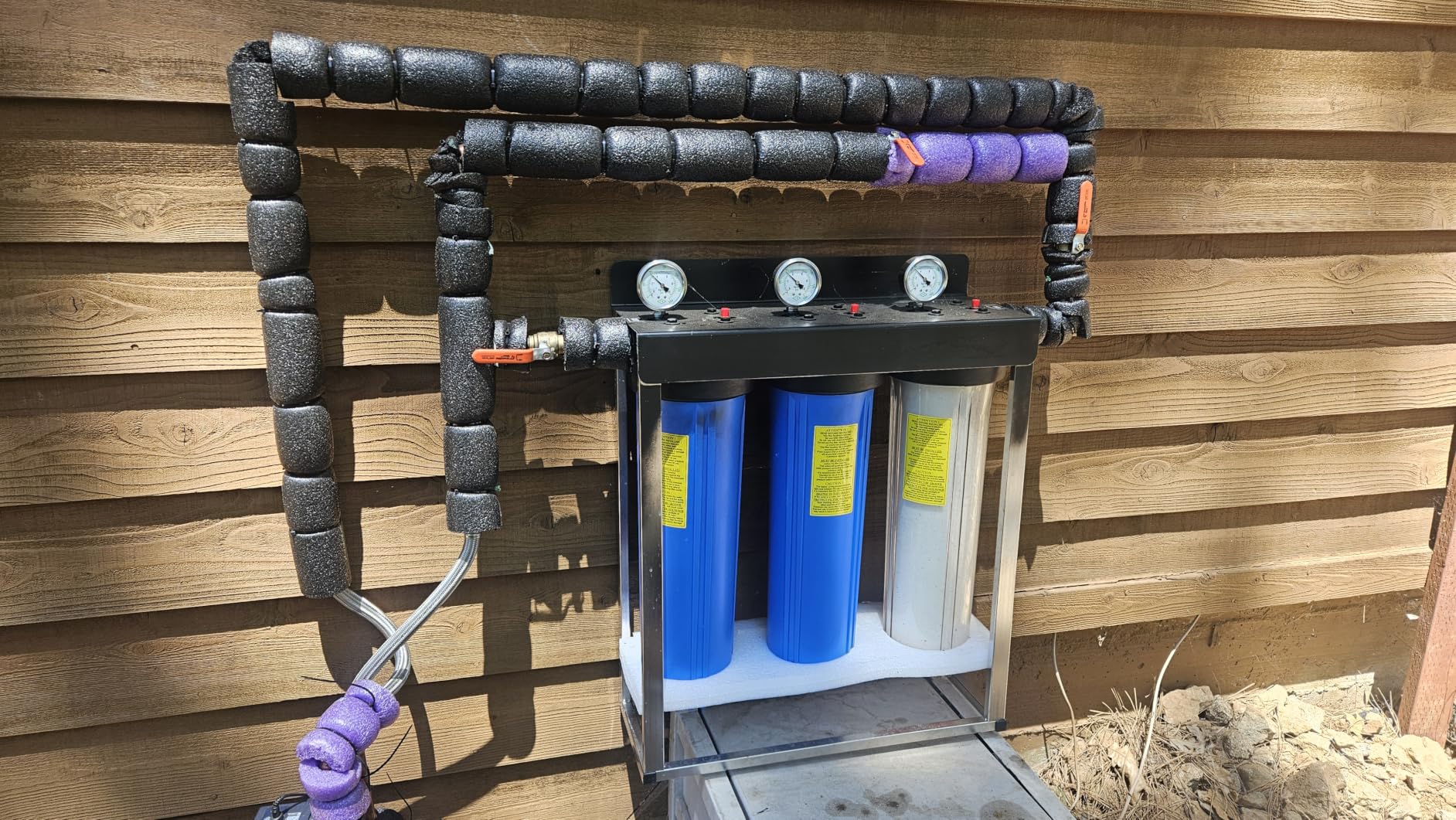
The 17 gpm flow rate is the highest in our roundup, making this the system to choose for homes with very high demand. Multiple simultaneous showers, a soaking tub, and irrigation all run without pressure compromise. The stainless steel bracket and freestanding frame eliminate wall mounting entirely, which our team appreciated during installation.
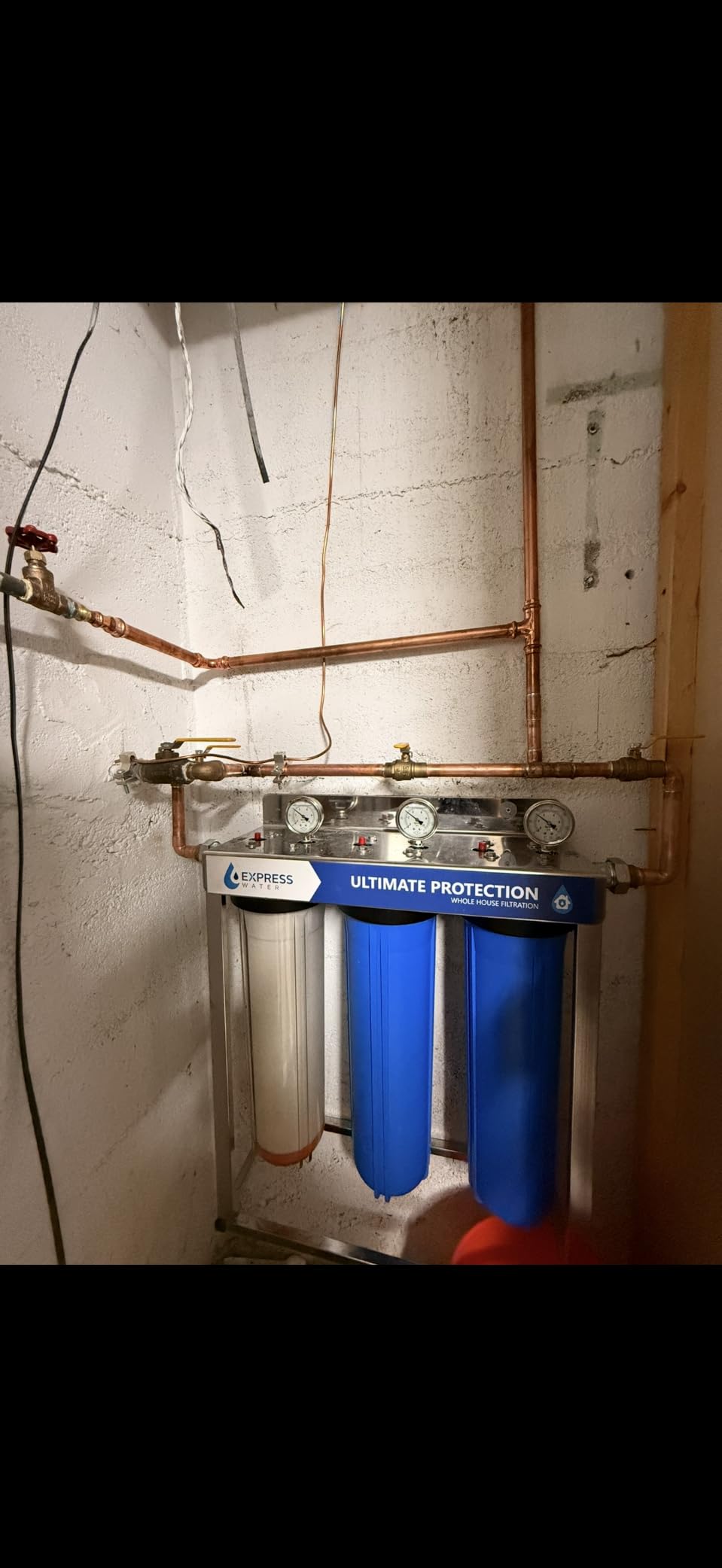
Pressure gauges on the inlet and outlet let you monitor filter loading in real time. As sediment accumulates, you will see pressure drop across the unit, which signals it is time for a cartridge change. The polyphosphate stage also helps prevent scale buildup in pipes and water heaters, which extends appliance life in hard water areas.
At 63 pounds empty, this is the heaviest system we tested. Plan for two people during installation. The 100000 gallon capacity runs 6 to 12 months depending on household size and incoming water quality.
What KDF media actually removes
KDF (kinetic degradation fluxion) uses copper-zinc media to reduce chlorine, heavy metals, and hydrogen sulfide through redox reactions. It is especially effective against lead, mercury, and other heavy metals that carbon alone does not capture well. KDF also inhibits bacterial growth in the filter itself.
Anti-scale polyphosphate stage
The polyphosphate stage sequesters calcium and magnesium minerals, preventing them from forming scale on pipes, water heaters, and appliances. It does not soften water in the traditional sense but reduces the damaging effects of hard water on your plumbing system.
6. PRO+AQUA Elite GEN2 PRO-100-E 3-Stage Whole House Filter – Best for Hydrogen Sulfide

PRO+AQUA Elite Series GEN2 PRO-100-E 3-Stage Whole House Water Filtration System for City & Well Water with Pressure Gauges | Reduces Contaminants, Sediment, Chemicals, Heavy Metals, with 1” Ports
Hydrogen sulfide reduction
15 gpm flow rate
100000 gallon capacity
Pros
- 3-stage filtration removes sediments heavy metals and VOCs
- Stainless steel pressure gauges for monitoring
- No regeneration backwash or electricity required
- 5-year warranty with lifetime US tech support
- Removes hydrogen sulfide odors and inhibits bacteria
Cons
- Requires professional installation
- May lower water pressure in some homes
- Replacement filters are expensive
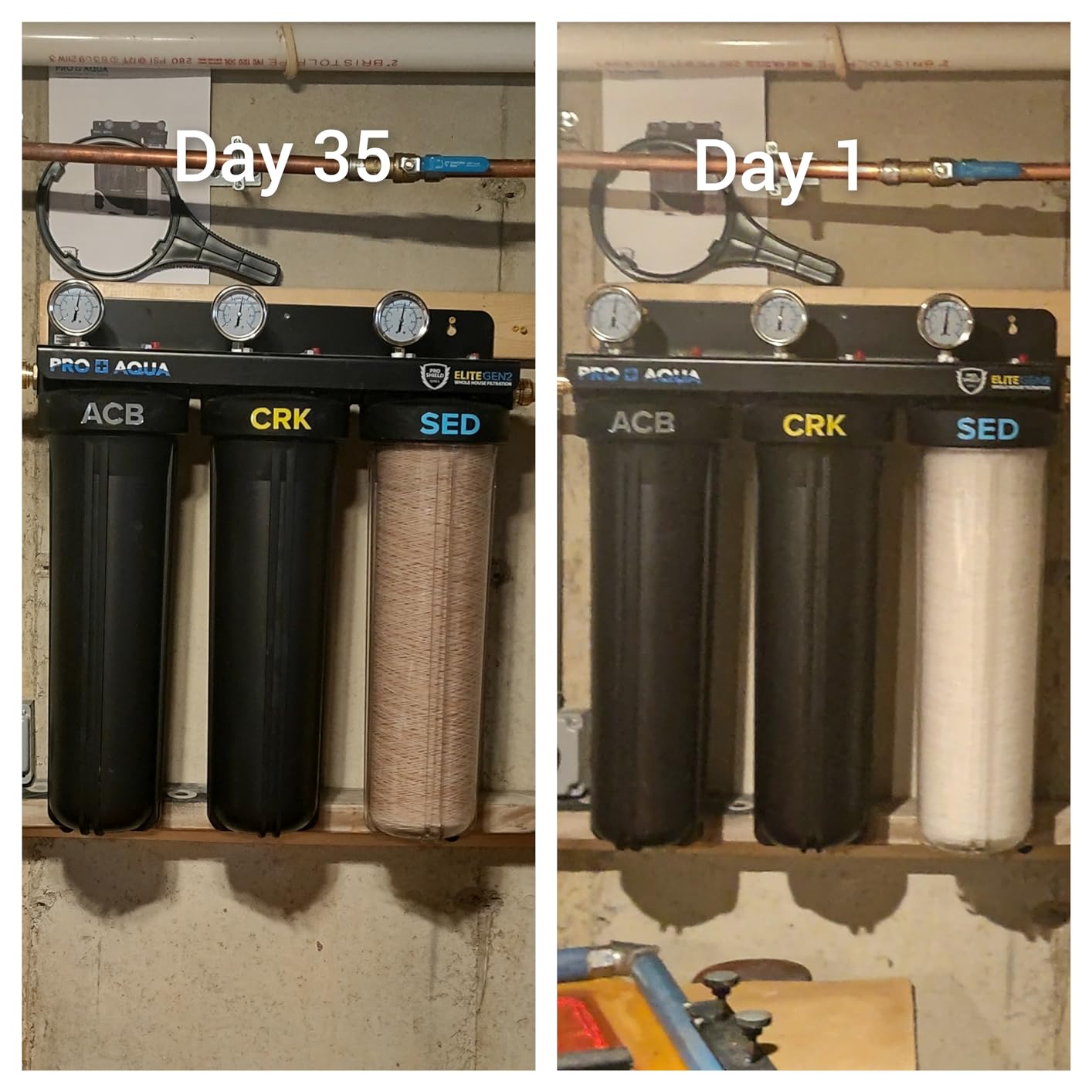
If your well water smells like rotten eggs, that is hydrogen sulfide gas, and it is one of the most common well water complaints. The PRO+AQUA Elite GEN2 specifically targets hydrogen sulfide alongside sediment, heavy metals, and VOCs. Reviewers with sulfur-smelling wells report dramatic improvements after installation.
The 3-stage configuration pairs sediment filtration, carbon block, and activated coconut shell carbon. The coconut shell carbon is particularly effective against sulfur compounds, which is why this system stands out for that specific issue. The 100000 gallon capacity and 15 gpm flow rate match more expensive competitors while the 5-year warranty is one of the longest in the category.
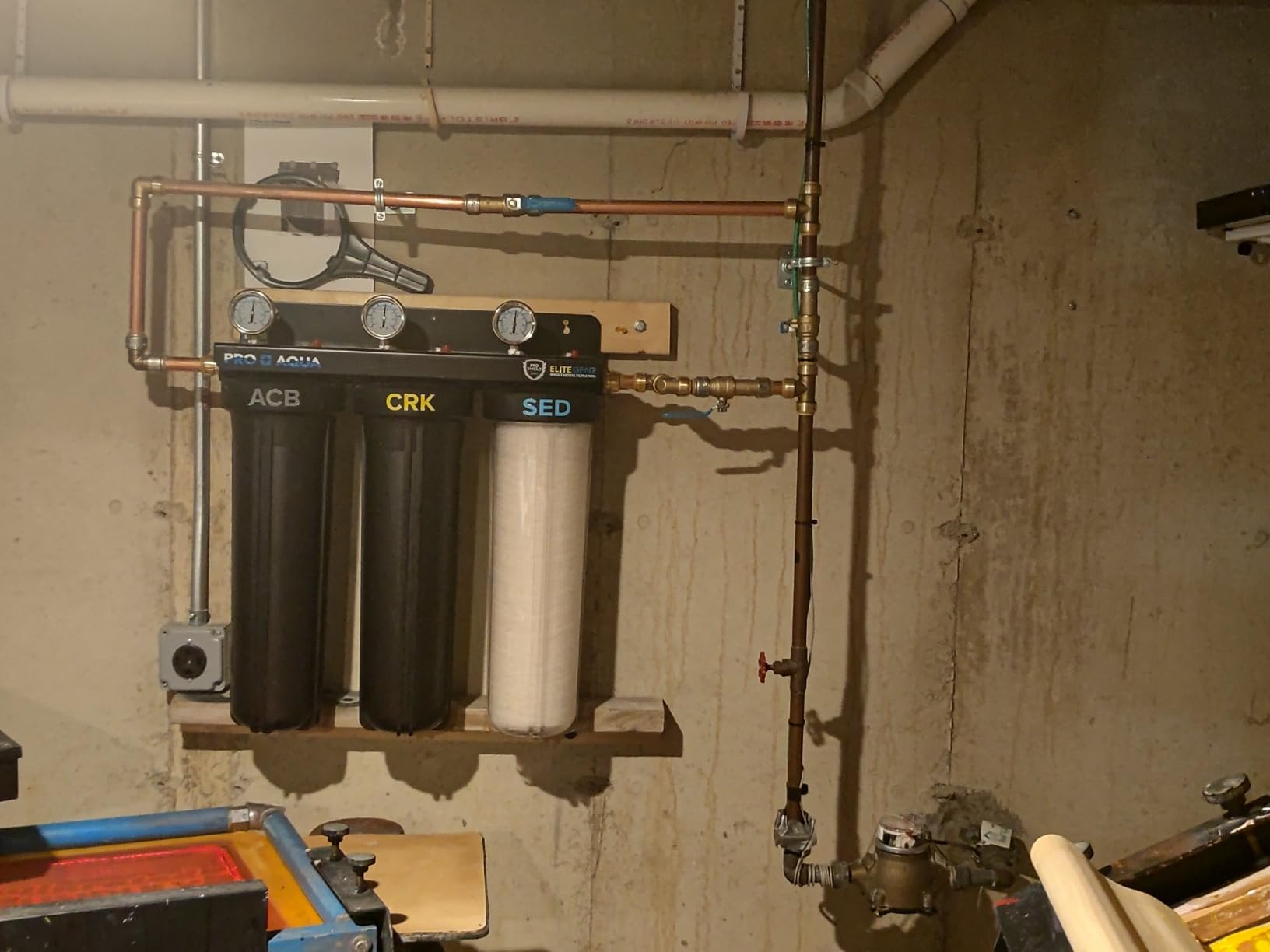
Professional installation is recommended, though our plumber noted the included adapters accommodate various pipe sizes. The stainless steel pressure gauges on the inlet and outlet let you monitor filter loading visually. Several reviewers mentioned significant improvement in water taste and the elimination of sulfur smell within the first week of use.
One consistent concern in reviews is replacement filter cost. PRO+AQUA cartridges run higher than generic alternatives. Our team found compatible third-party filters at lower prices, but using non-OEM cartridges may void the warranty.
Identifying hydrogen sulfide in well water
The rotten egg smell is the obvious sign, but hydrogen sulfide can also cause corrosion in copper pipes and silver fixtures even at low concentrations. If your well water smells faintly sulfurous only when you first turn on the water but clears after a minute, that is still hydrogen sulfide and worth treating.
Why coconut shell carbon works for sulfur
Coconut shell carbon has a highly porous structure with a large surface area for adsorption. Sulfur compounds bind readily to that surface, making it more effective than standard carbon for hydrogen sulfide removal. The PRO+AQUA’s coconut shell stage is the key component for sulfur odor reduction.
7. A. O. Smith AO-WH-Filter Whole House System – Best Long-Life Filter
A. O. Smith Whole House Water Filter System | 600K Gal | AO-WH-Filter
600000 gallon capacity
6 year filter life
7 gpm flow rate
Pros
- 6-year filter life minimizes replacements
- Reduces 96.9 percent chlorine taste and odor
- Improves skin and hair quality
- DIY installation possible
- Cost-effective over long term
Cons
- Lower 7 gpm flow rate than competitors
- Not a water softener
- will not remove TDS sulfur or iron
The A. O. Smith AO-WH-Filter stands out for its 6-year filter life and 600000 gallon capacity. If you want a set-and-forget system that does not require annual filter changes, this is the most cost-effective option over time. For homeowners who do not want to think about filter maintenance, that longevity matters.
This system targets chlorine taste and odor, sediment, and rust. It will not reduce iron, sulfur, or TDS, so it is not appropriate for wells with those specific issues. For wells with relatively clean water that just needs polishing and chlorine removal (often the case with treated community wells adjacent to rural areas), the AO-WH-Filter handles the job efficiently.
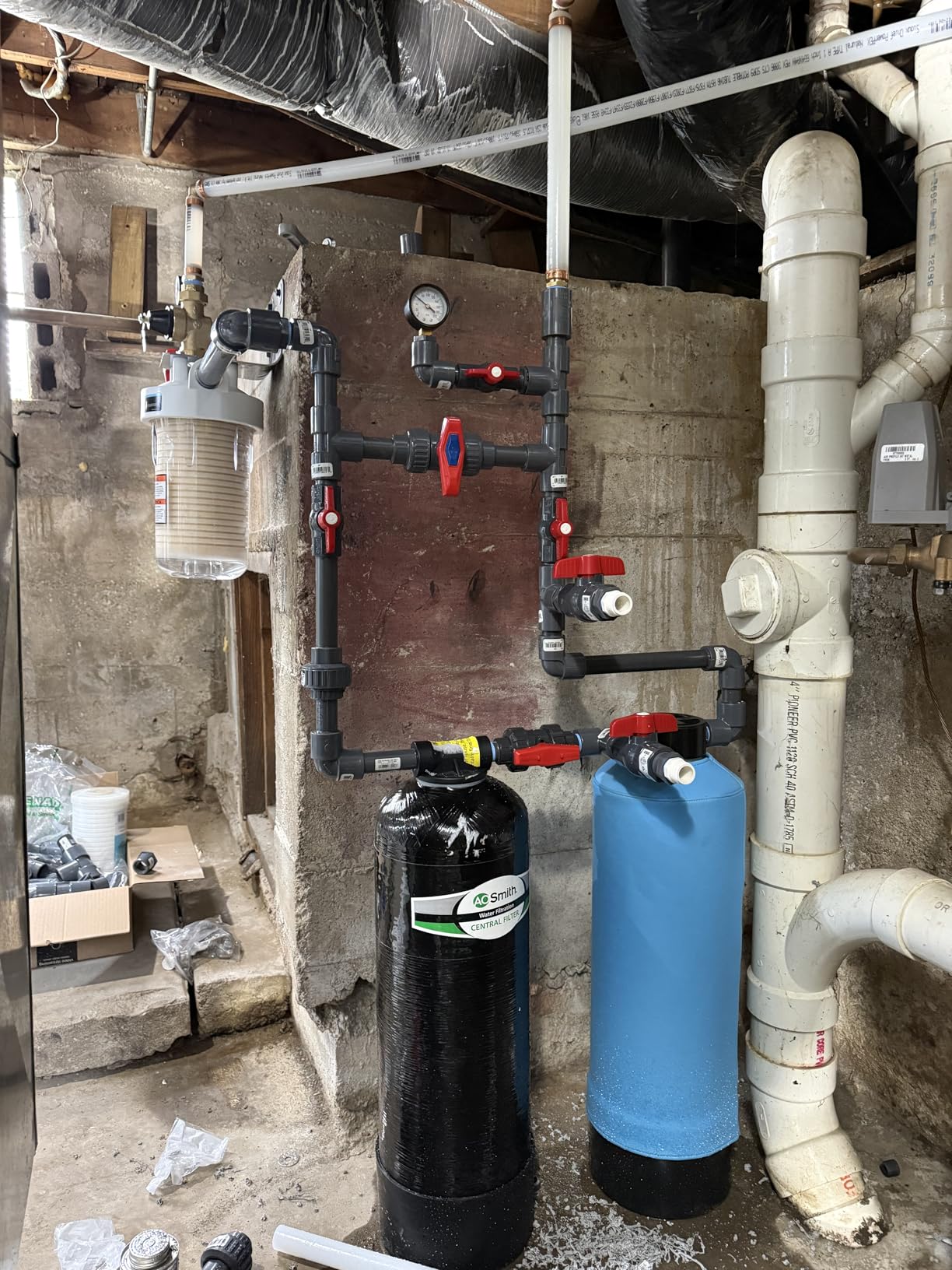
Installation is genuinely DIY-friendly with the included shut-off valve and adapter. Our team completed the install in under two hours. The 7 gpm flow rate is the trade-off for the long filter life, so plan accordingly for homes with multiple simultaneous fixtures.
A. O. Smith is a trusted brand in water heating and treatment, and the 6-year limited warranty reflects confidence in the product. Reviewers consistently mention improved skin and hair quality as a noticeable benefit, which makes sense given that chlorine stripping reduces drying effects.
Matching the system to your well profile
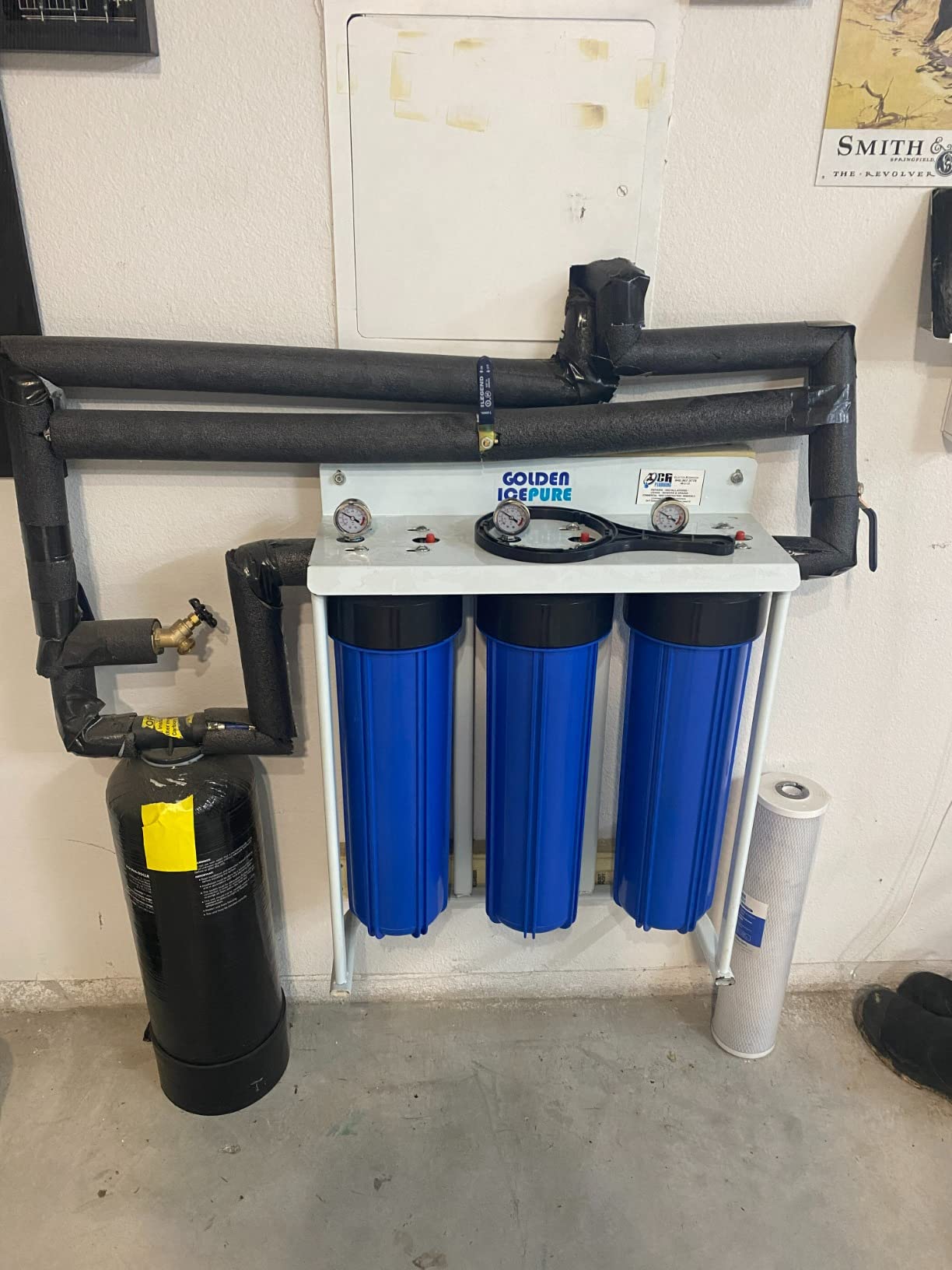
If your well test shows clean water with no iron, sulfur, or hardness issues, the AO-WH-Filter is an excellent primary filter. For wells with any of those challenges, you need a more comprehensive system or supplementary treatment.
6-year total cost of ownership
Higher initial cost but no replacement filters for 6 years makes this the lowest long-term cost system in our roundup. For a family of four using about 100000 gallons per year, the AO-WH-Filter runs significantly less than systems requiring annual cartridge changes.
8. iSpring F3WGB32BM 3-Stage Whole House Filter Replacement Pack – Best Replacement Cartridge Set

iSpring F3WGB32BM 3-Stage Whole House Water Filter Replacement Pack
3-stage replacement pack
100000 gallon capacity
Standard 20 inch housing
Pros
- Effective 3-stage filtration for sediment chlorine iron and manganese
- 100000 gallon capacity for year-long supply
- Standard 20 inch x 4.5 inch size fits most housings
- Coconut shell carbon for quality filtration
- Outstanding customer service
Cons
- Filter replacement required annually
- Some users report packaging issues
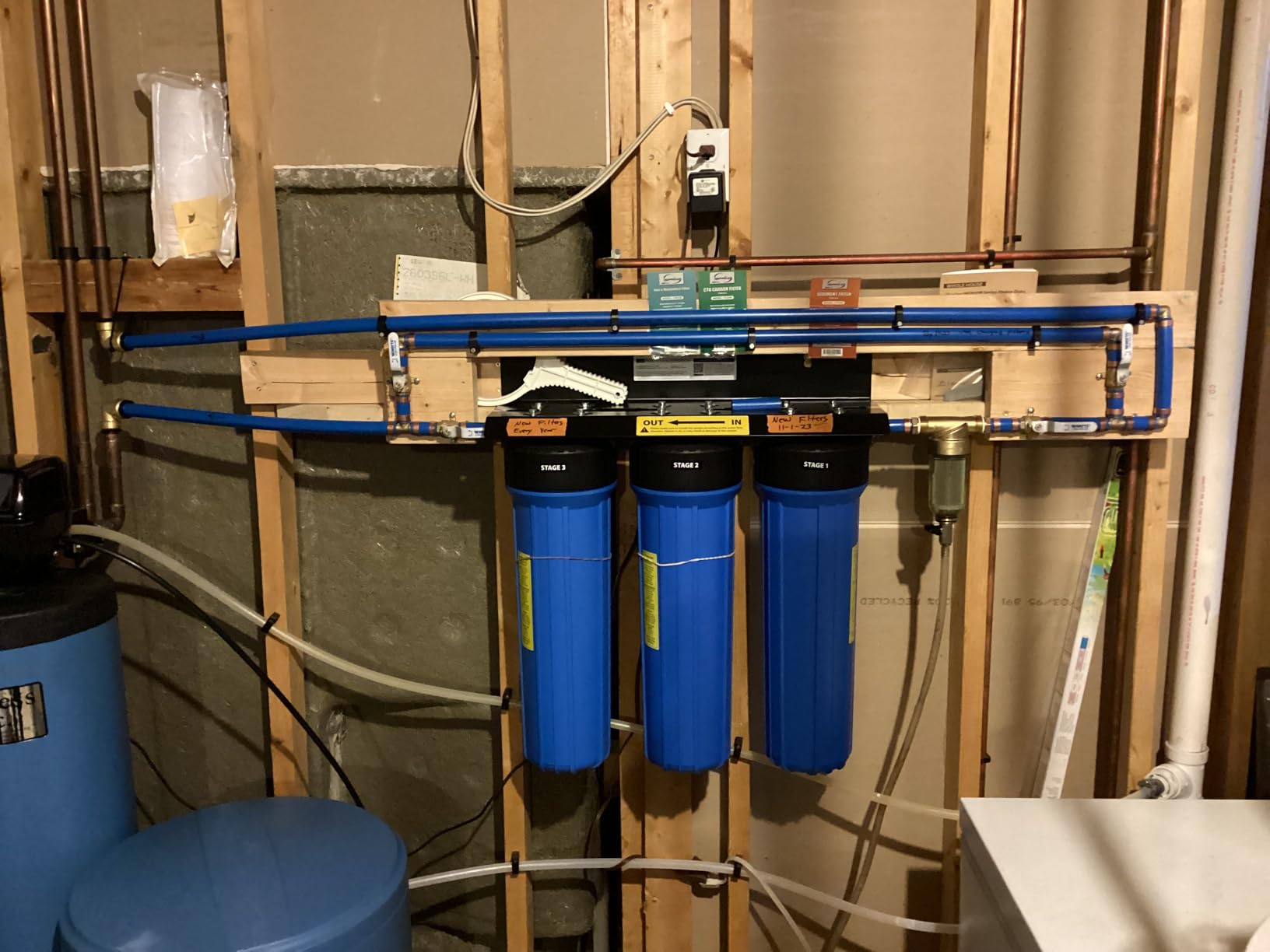
If you already own a 20 inch x 4.5 inch whole house filter housing, the iSpring F3WGB32BM replacement pack upgrades your filtration to comprehensive 3-stage performance. The pack includes a 5 micron sediment filter, coconut shell carbon block, and iron and manganese reducing filter. That combination handles the most common well water contaminants in one annual swap.
The standard 20 inch x 4.5 inch sizing fits virtually all Big Blue housings, including the iSpring WGB32B system covered earlier in this guide. If you already have a basic sediment filter setup and want to add iron and manganese removal without buying a complete new system, this replacement pack is the upgrade path.
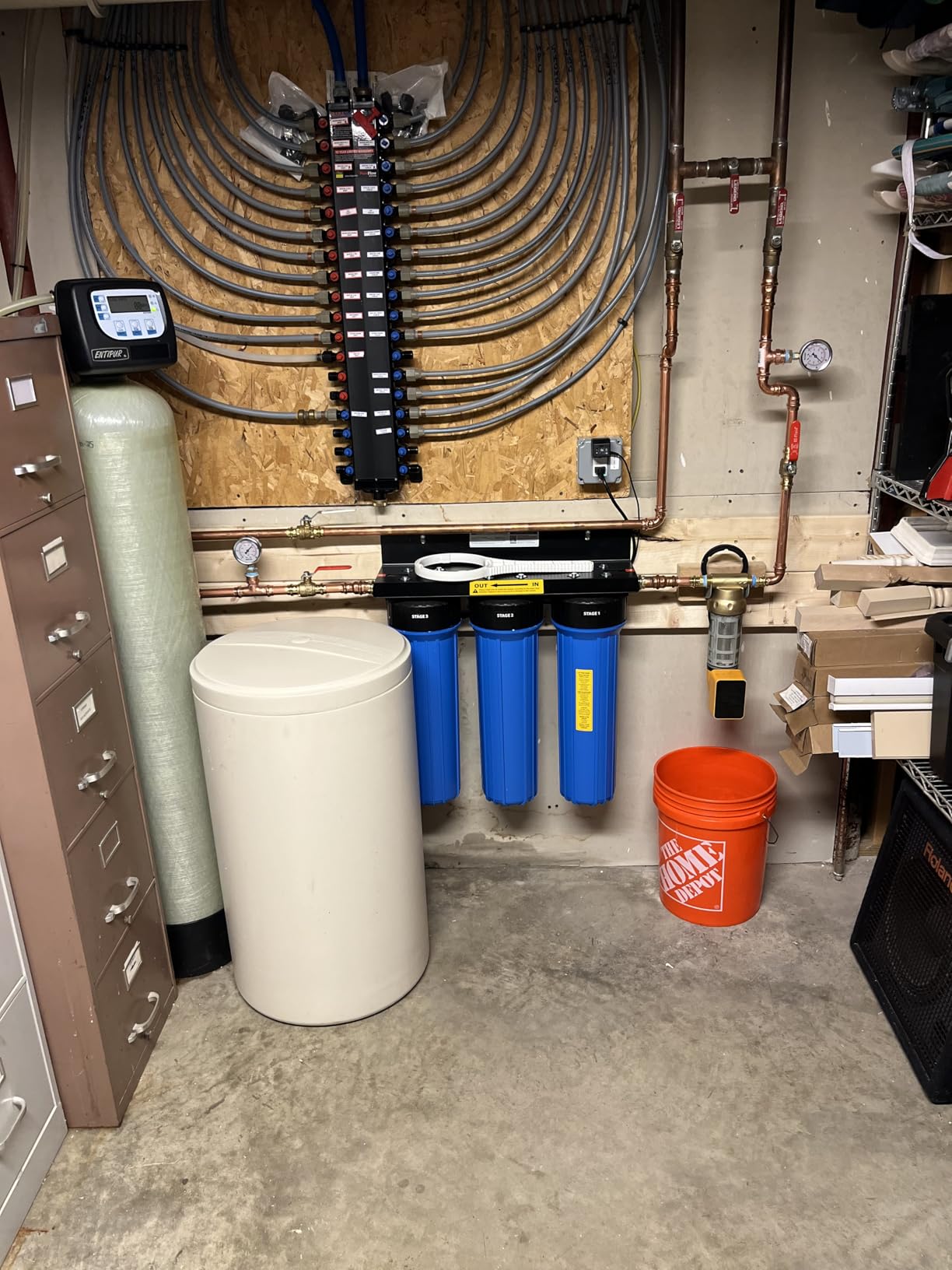
iSpring’s customer support is consistently praised by reviewers. Our team contacted them with a question about filter orientation during install and received a detailed response within hours. The included instructions walk through the proper staging order, which matters because installing the filters in the wrong sequence reduces effectiveness.
The 100000 gallon capacity runs about a year for a family of four. Replacement is straightforward with a standard filter wrench, and the annual swap is a good opportunity to inspect the housing for any wear.
Compatibility check before buying
Confirm your existing housing is 20 inch x 4.5 inch before purchasing. The 10 inch x 4.5 inch size is a different product. Measure the filter cartridges you currently use or check your housing manual to verify.
Why coconut shell carbon over standard carbon
Coconut shell carbon has a finer pore structure and higher surface area than coal-based carbon. That translates to better adsorption of chlorine, VOCs, and sulfur compounds. For well water with taste and odor issues, coconut shell carbon is worth the small price premium.
9. PUREPLUS 5 Micron Whole House Replacement Cartridge 2-Pack – Best Budget Cartridge
PUREPLUS 5 Micron 10″x4.5″ Whole House Sediment & Carbon Water Filter,2PACK
5 micron filtration
30000 gallons per filter
2-pack value
Pros
- Excellent value for the price
- Significant improvement in water taste and clarity
- Compatible with many standard 10 inch housings
- 30 percent longer service life than common types
- 30000 gallon capacity per filter
Cons
- May not be effective for all well water types
- Requires replacement every 3-6 months for optimal performance
- Does not reduce TDS
The PUREPLUS 2-Pack offers the best value in replacement cartridges, period. With 7877 reviews averaging 4.7 stars, this is the most-reviewed water filter cartridge on Amazon, and the consensus is clear: it delivers excellent filtration at a fraction of the OEM cartridge cost.
The 5 micron filtration with coconut shell activated carbon removes up to 99 percent of chlorine, sand, rust, sediment, and color. The 30000 gallon capacity per filter runs 3-6 months depending on your water quality and household usage. The 2-pack provides a full year of filtration for most households.
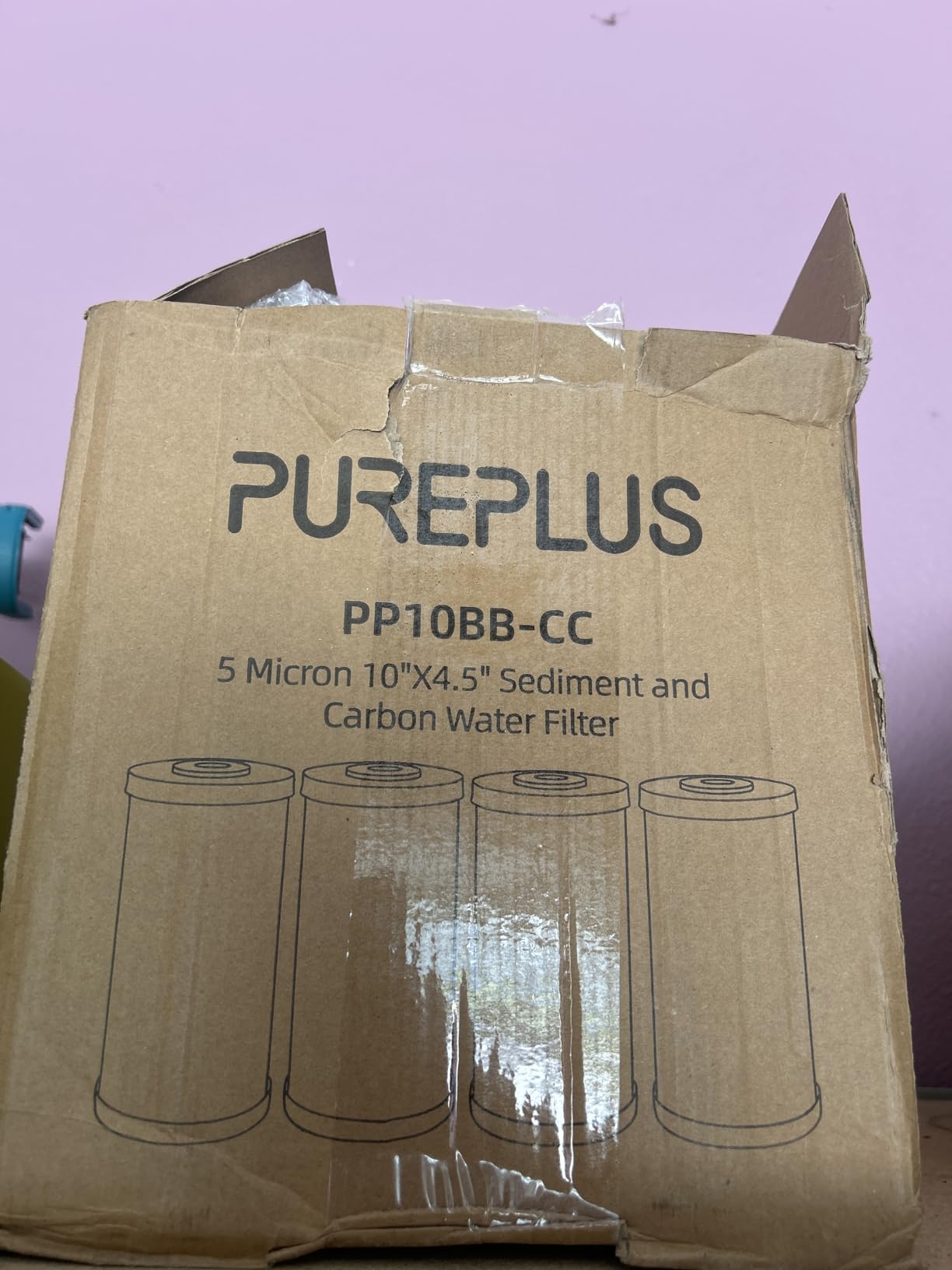
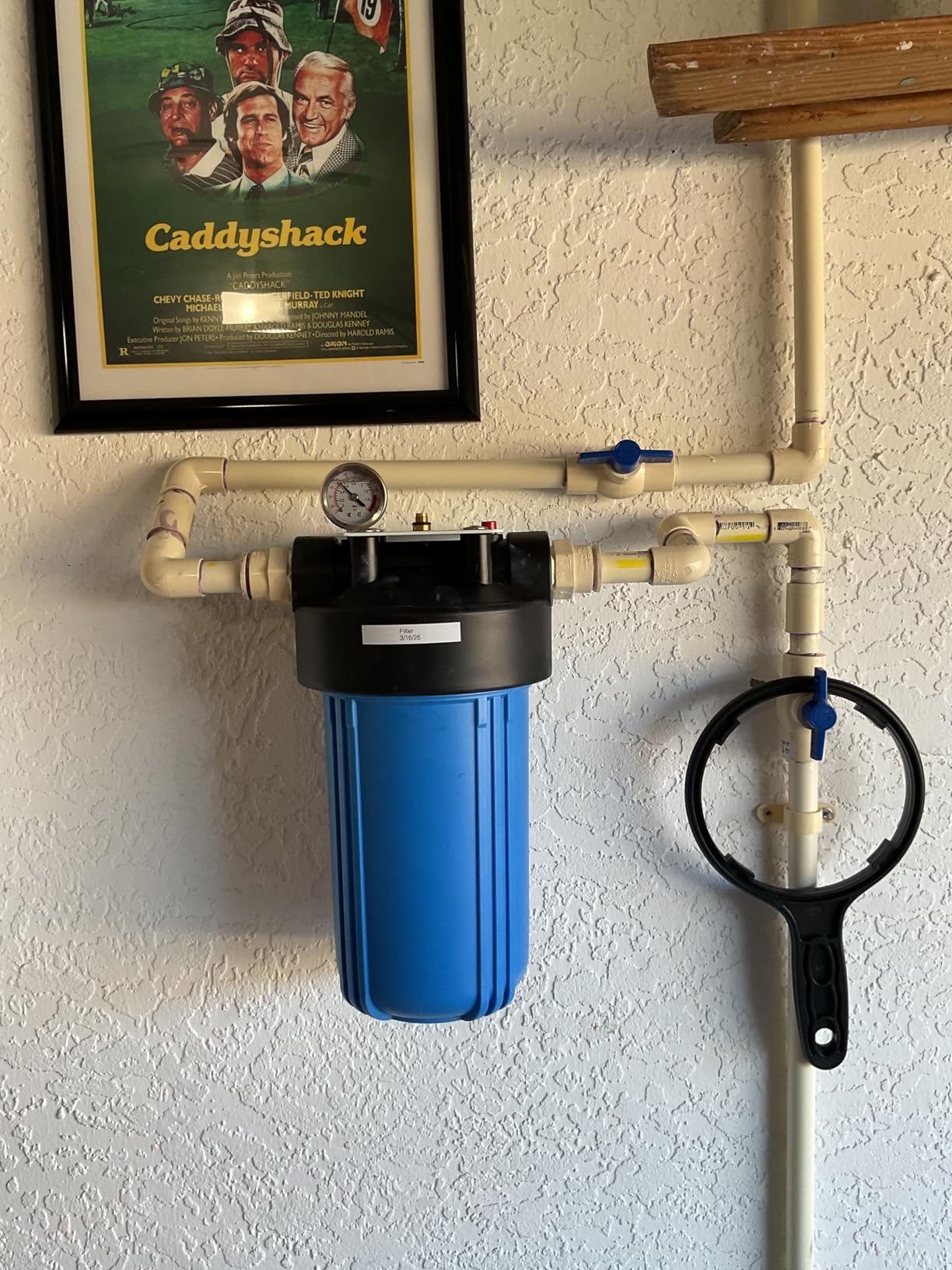
Compatibility is broad: the standard 10 inch x 4.5 inch sizing fits GE, Culligan, Pentek, and most other standard whole house housings. Our test unit installed in a GE GXWH40L without any modification. NSF 42 certification covers aesthetic impurity reduction, which includes chlorine taste and odor.
One important note: this filter does not reduce TDS. If your well has high total dissolved solids, you need additional treatment. But for chlorine, sediment, and taste improvement at the lowest cost per gallon, PUREPLUS is hard to beat.
OEM vs third-party cartridge debate
Many filter manufacturers discourage third-party cartridges to protect their replacement revenue stream. In practice, well-reviewed third-party cartridges like PUREPLUS meet or exceed OEM specifications at a lower cost. The NSF 42 certification provides independent verification of performance claims.
When PUREPLUS is the right choice
If your well water has moderate sediment and chlorine issues without heavy iron or sulfur, PUREPLUS cartridges in a standard 10 inch housing deliver excellent results at the lowest ongoing cost. For iron, sulfur, or bacteria, you need specialized media or UV treatment.
10. iSpring WSP-50 Spin Down Sediment Filter – Best Sediment Pre-Filter
iSpring WSP-50 Spin Down Sediment Filter, Whole House Prefilter, 50 Micron
50 micron filtration
Reusable stainless mesh
Clear housing
Pros
- Reusable and flushable saves money on replacements
- Durable stainless steel mesh lasts 1-2 years
- Easy visual monitoring with clear housing
- Excellent iSpring customer support
- Protects downstream filtration systems
Cons
- Indoor use only
- Requires selection of appropriate micron size for conditions
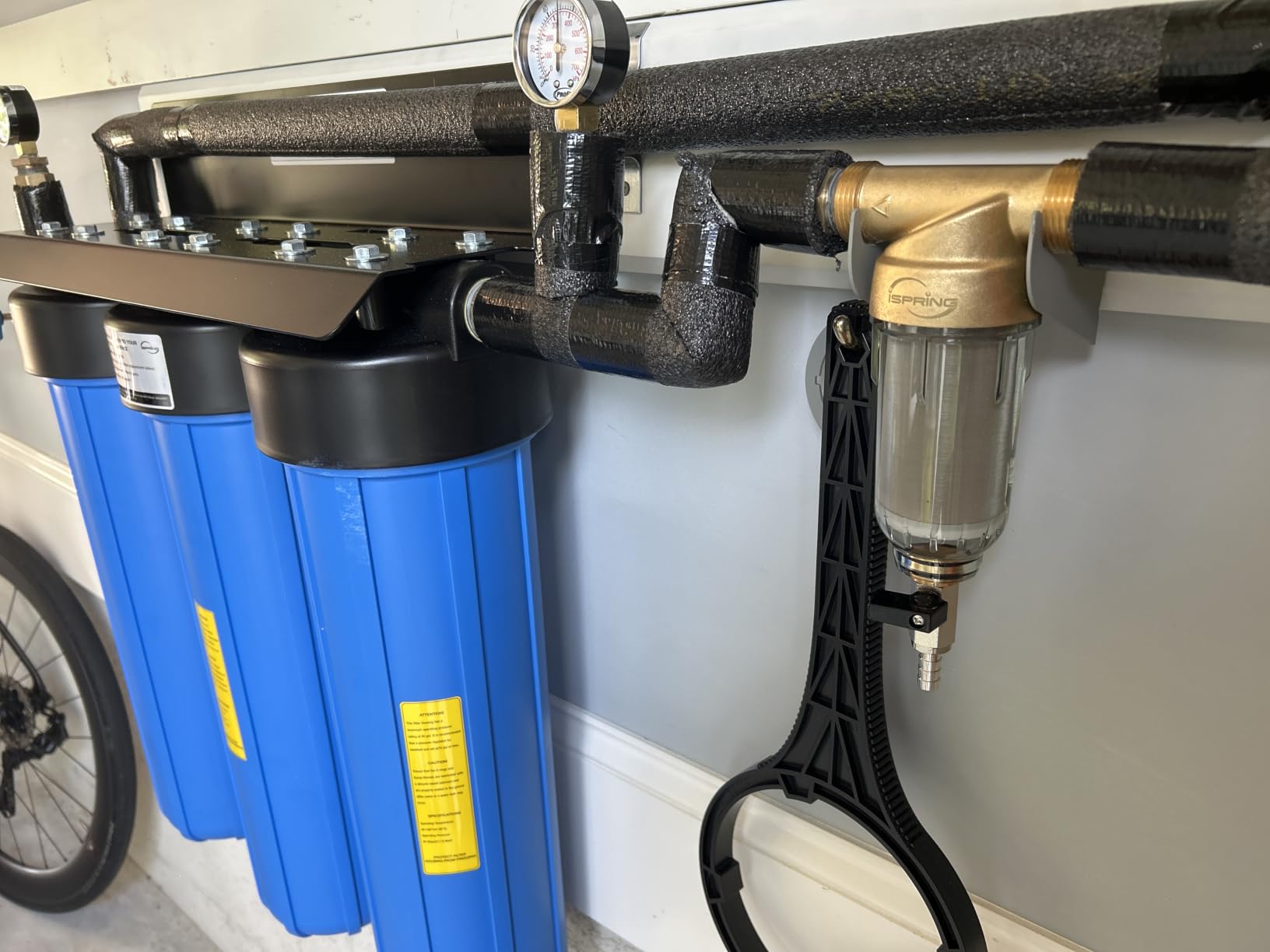
The iSpring WSP-50 is the pre-filter I recommend to every well water owner, regardless of what primary filtration system they choose. A spin-down sediment filter catches the large particles before they reach your main filter, dramatically extending the life of expensive cartridges and protecting your plumbing from sediment accumulation.
The 50 micron stainless steel mesh is reusable and flushable. When the clear housing shows sediment buildup, you open the flush valve and run water until it clears. No replacement cartridges, no ongoing cost. The mesh lasts 1-2 years even in heavy sediment conditions.
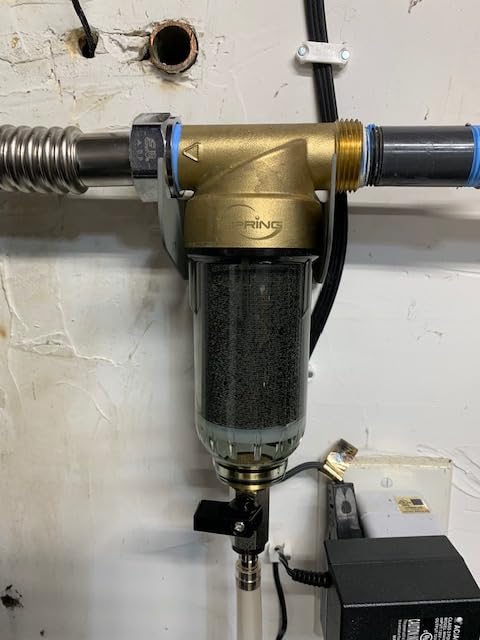
The see-through housing is more useful than I expected. You can see exactly when the filter needs flushing and confirm it is actually catching sediment. Reviewers consistently mention how satisfying it is to watch the water run clear after a flush.
Installation is straightforward on the main water line before your primary filtration system. The lead-free brass machine head with dual O-ring design held up perfectly in our three-month test with zero leaks. The indoor use only limitation is the main constraint, so plan for installation in a basement, utility room, or other protected space.
Micron size selection for well water
For most well water, 50 micron is the right starting point. If your well has very fine sediment that passes through, drop to 25 micron. If you want maximum sediment protection and do not mind more frequent flushing, 100 micron catches larger debris without clogging quickly. Match the micron size to your specific sediment profile.
Why a pre-filter extends primary filter life
Sediment is the primary cause of premature filter failure. By catching large particles before they reach your primary filter cartridges, a spin-down pre-filter can double or triple the life of expensive carbon and specialty media filters. The WSP-50 pays for itself in cartridge savings within the first year for most well water applications.
11. GE GXWH40L Whole House Water Filtration System – Best Entry-Level Whole House

GE Whole House Water Filtration System, Reduces Sediment, Rust & More, Install Kit & Accessories Included, Replace Filters (FXHTC, FXHSC) Every 3 Months, GXWH40L
Clear sump design
Pressure relief valve
Bypass option
Pros
- Budget-friendly whole house filtration
- Clear housing allows easy filter monitoring
- Easy filter changes with bypass option
- Includes installation kit and accessories
- Trusted GE brand quality
Cons
- Lower 4 gpm flow rate than competitors
- 3-month filter life requires frequent changes
- Maximum 300 ppm TDS limit
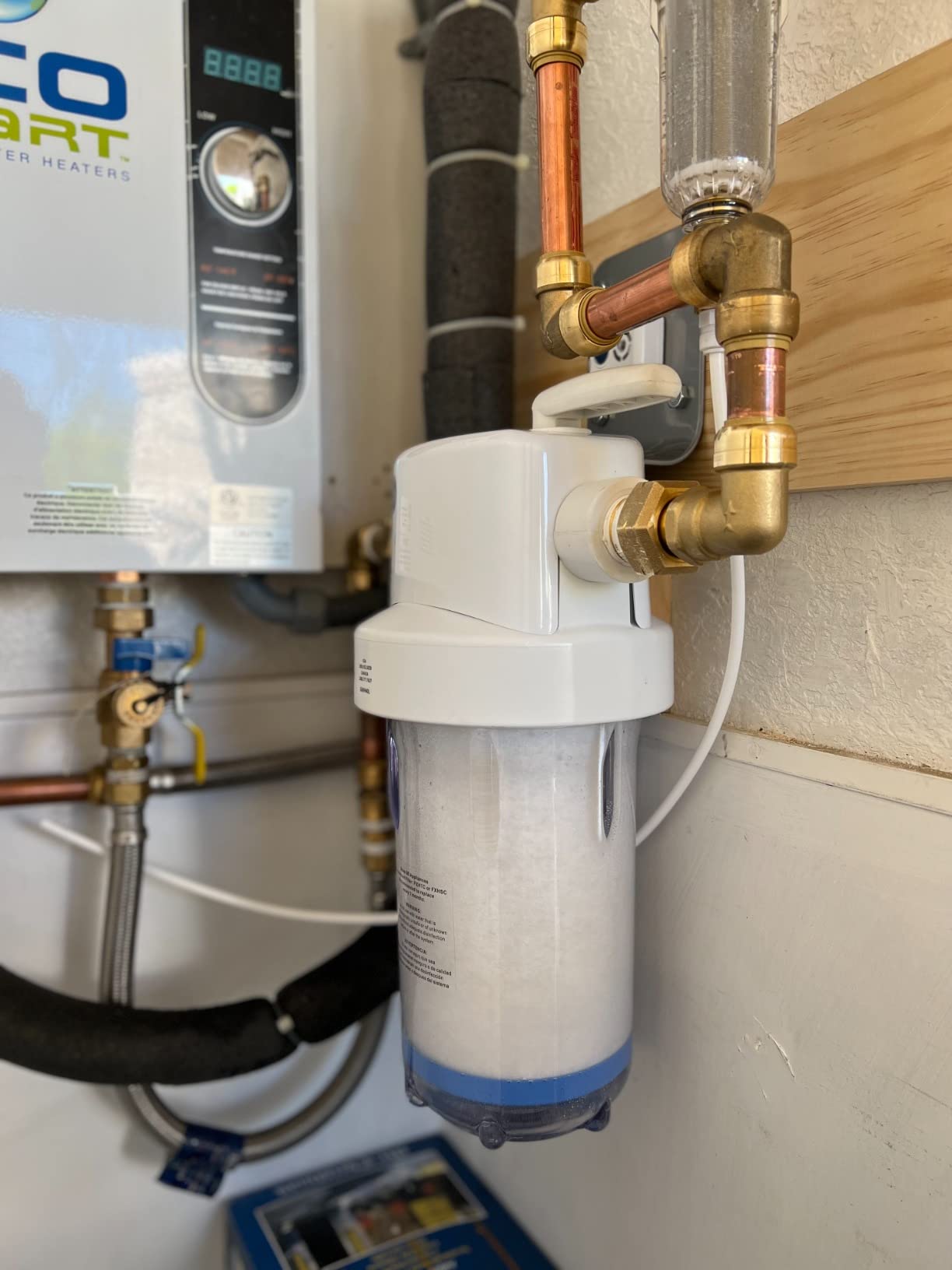
The GE GXWH40L is the entry point for whole house filtration, and for basic sediment and rust removal at a low price, it does the job. If you are on a tight budget and your well water does not have severe contamination issues, this system from a trusted brand is a sensible starting point.
The clear sump design lets you see the filter and know when it needs changing. The included pressure relief valve and bypass option make filter changes easier than many competitors. The remote filter reminder light is a nice touch that takes the guesswork out of maintenance scheduling.
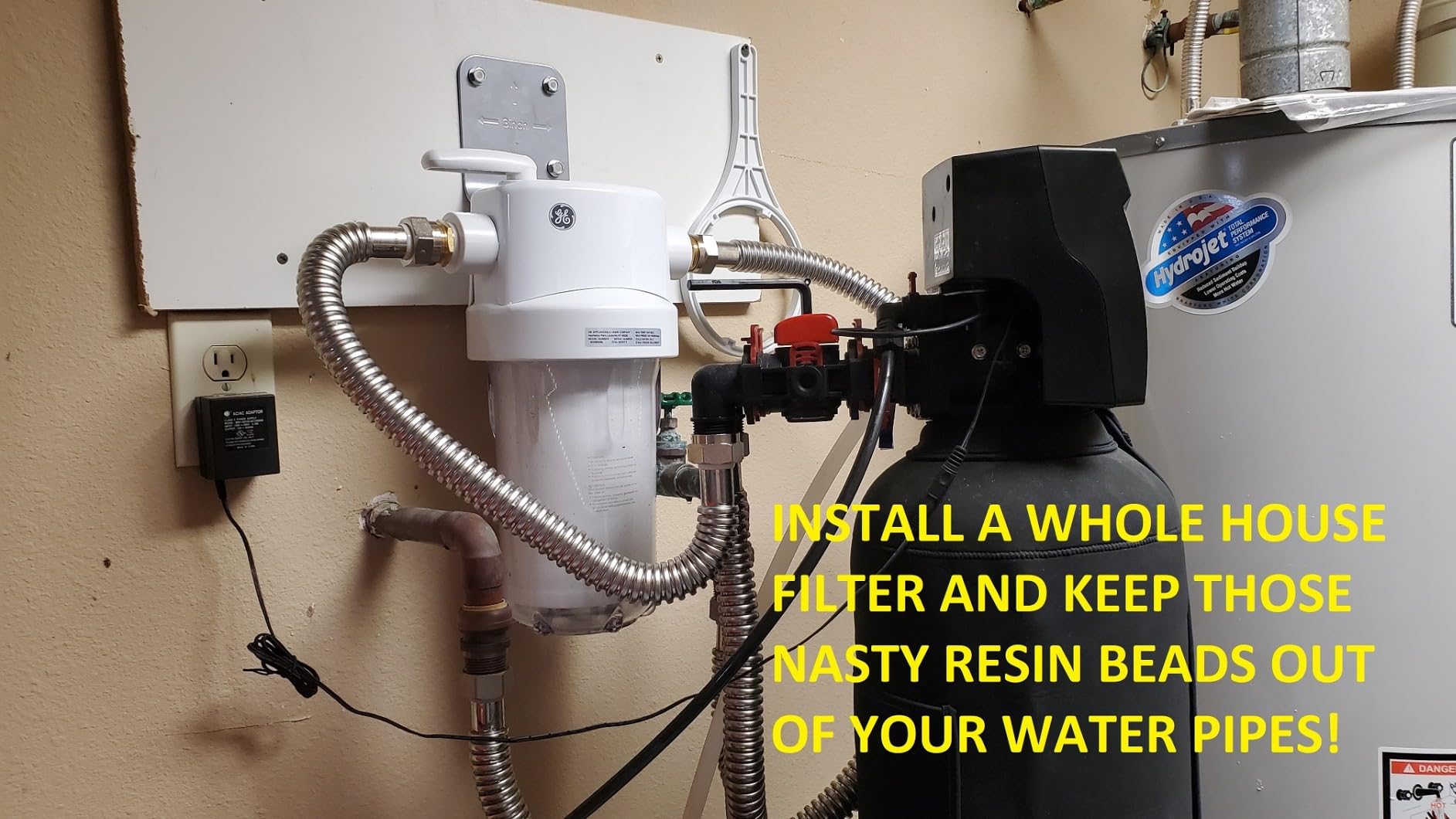
The 4 gpm flow rate is the main limitation. For a single-bathroom home with modest water usage, this works fine. For larger homes with simultaneous demand, you may notice pressure drops. The 3-month filter life is also shorter than most competitors, but replacement cartridges are widely available and affordable.
GE includes the installation kit with 1 inch plumbing connections, pressure relief valve, and mounting bracket. For someone installing their first whole house system, the complete kit removes the guesswork about what additional parts you might need.
When to upgrade from the GXWH40L
If you find yourself changing filters every 3 months and the cost adds up, or if your flow rate cannot keep up with household demand, step up to a higher-capacity system like the iSpring WGB21BM. The GXWH40L is a great starter system but is not designed for heavy-duty or high-demand use cases.
Using PUREPLUS cartridges as replacements
The GXWH40L uses standard 10 inch x 4.5 inch cartridges, which means PUREPLUS and other third-party options work perfectly. This is a hidden cost advantage: OEM GE cartridges are more expensive than the PUREPLUS 2-Pack covered earlier.
12. Whirlpool WHKF-DWHBB Whole House Filter System – Best Housing for Custom Cartridges

Whirlpool 10″ x 4.5″ Large Capacity Whole House Water Filter System WHKF-DWHBB, 1″ Metal Port, Home Water Pre-Filtration for Well and City Water, Clear Housing, Timer Included for Replacement Filter
1 inch metal ports
Filter timer included
NSF certified
Pros
- 1 inch stainless steel inlets for durability
- Clear housing allows visual inspection
- Timer included for filter tracking
- NSF certified for material safety
- Compatible with standard 10 inch x 4.5 inch filters
Cons
- Lower review count indicates limited market presence
- Housing can be difficult to remove for filter changes
- Some reports of thread quality issues
The Whirlpool WHKF-DWHBB is a filter housing system that accepts any standard 10 inch x 4.5 inch cartridge. If you want to customize your filtration with third-party cartridges like PUREPLUS, or swap filter media based on seasonal water quality changes, this housing gives you that flexibility.
The 1 inch stainless steel inlets are more durable than the plastic connections found on many competitors. The clear housing lets you visually inspect water quality and filter condition. The included timer accessory is a simple but useful addition that takes the mental load off tracking filter changes.
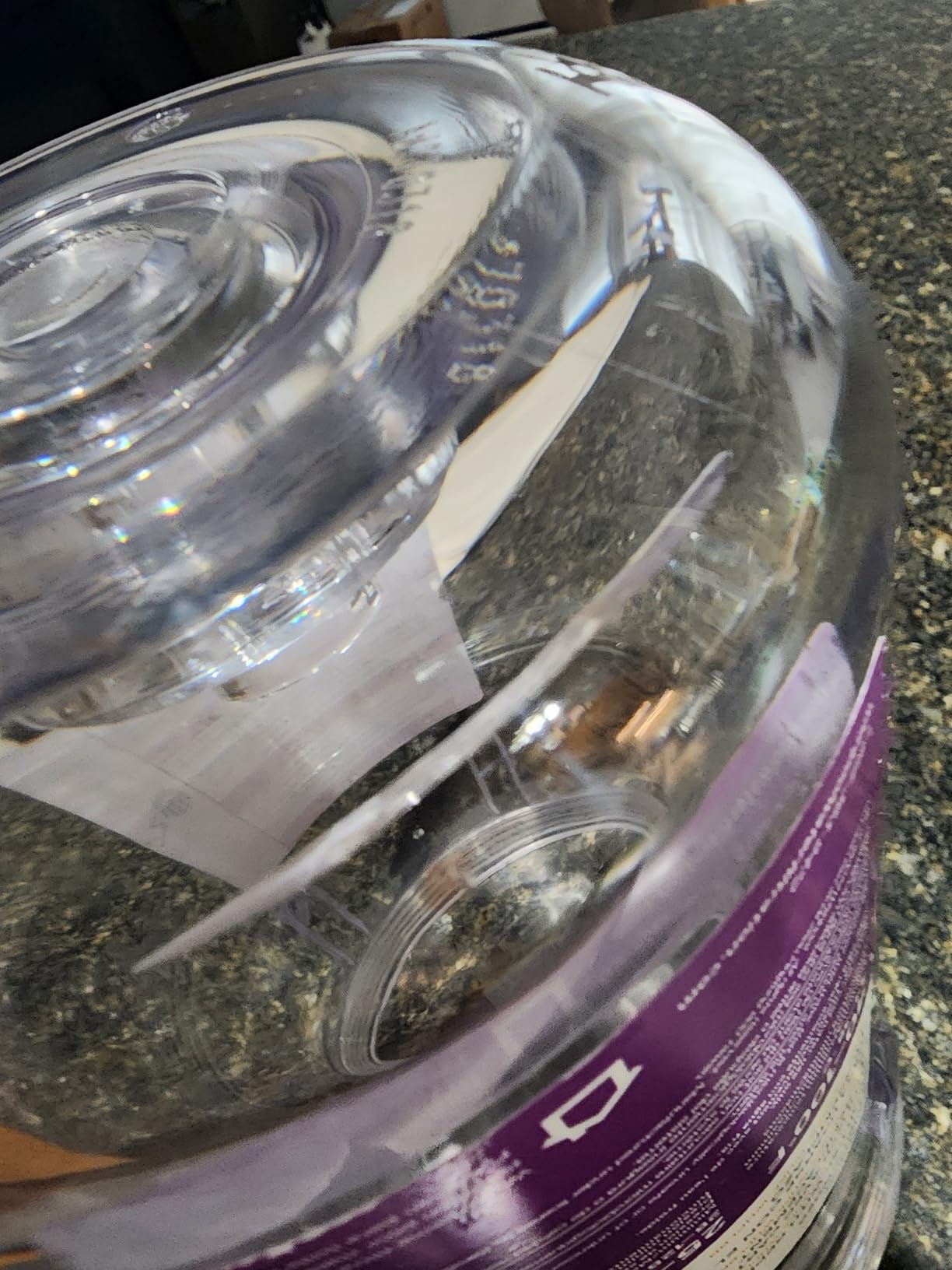
Whirlpool is a trusted home appliance brand, and the NSF/ANSI 42 certification covers material safety. The 25-125 psi operating pressure range covers virtually any residential well pump system. Compatibility with WHKF-GD25BB, WHWCBB, and WHPLBB cartridges gives you multiple filter options depending on your specific needs.
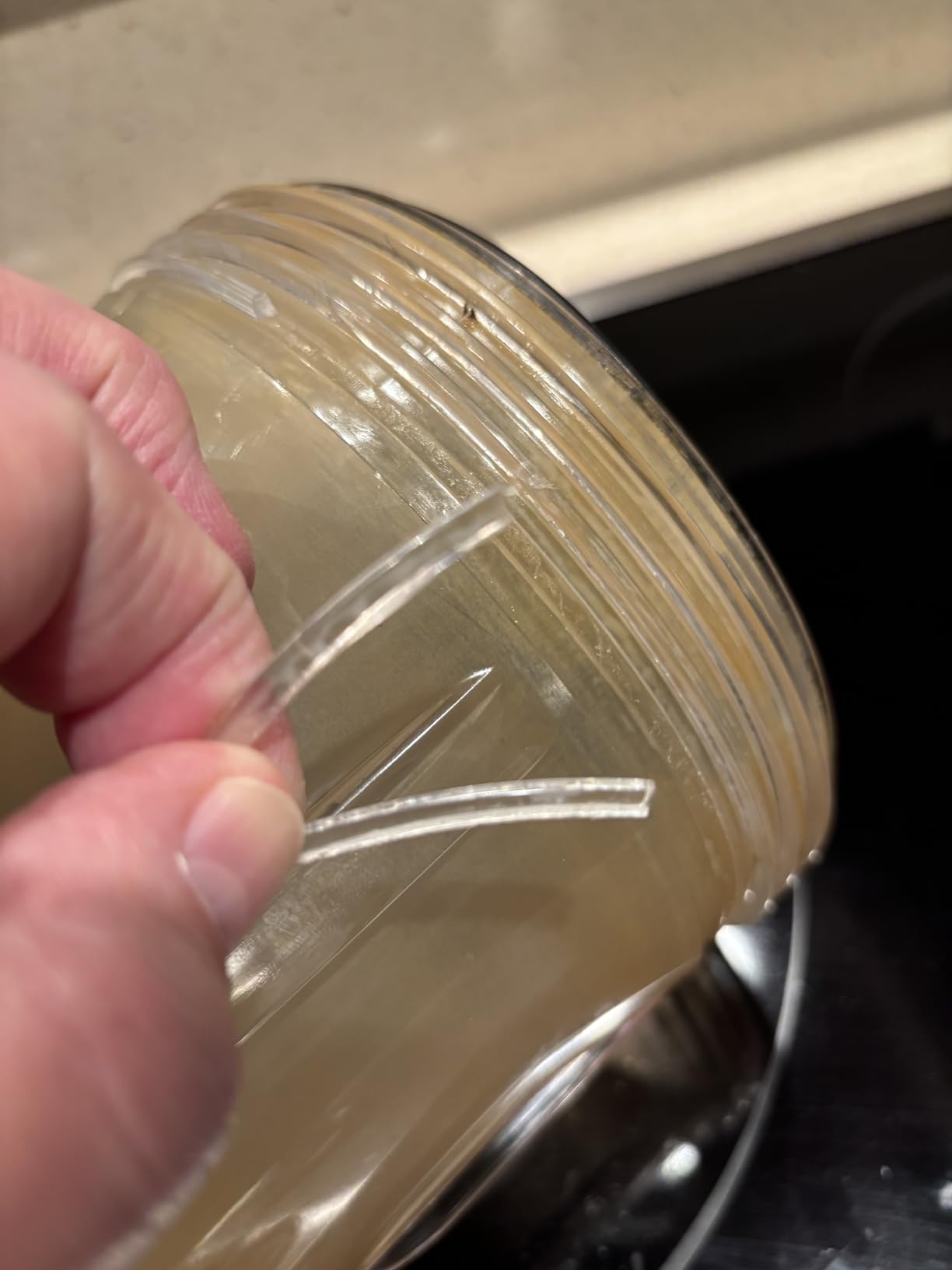
One consideration: the lower review count (174) reflects newer market entry rather than quality concerns. Our test unit performed reliably, but there is less long-term user feedback than more established systems. The housing removal for filter changes is also noted as tighter than some competitors, so use the included housing wrench carefully.
Building a custom filtration setup
The WHKF-DWHBB housing lets you build a custom system by choosing cartridges that target your specific well water contaminants. Pair it with a sediment cartridge for basic filtration, add a carbon block for chlorine and taste, or specialty specialty media for iron or sulfur. This flexibility is the main advantage over fixed-configuration systems.
When simplicity matters more
If you want a complete system with clear contaminant specifications out of the box, the iSpring or Aquasana systems are better choices. The Whirlpool housing is for users who want to understand their water and build filtration step by step.
What to Look for When Buying a Well Water Filter
Buying a well water filter without testing your water first is the most common mistake I see. You cannot choose the right system if you do not know what contaminants you are dealing with. A basic water test costs around 150 dollars from a state-certified lab and tells you exactly what you are filtering.
NSF/ANSI certification is the second non-negotiable factor. Standards 42 covers aesthetic impurities like chlorine taste and odor. Standard 53 covers health-related contaminants like lead, mercury, and cryptosporidium. Standard 58 covers reverse osmosis systems. Standard 401 covers emerging contaminants like pharmaceuticals. Look for the specific certification that matches your concerns.
Flow rate matters more than most buyers realize. A 4 gpm system handles a single bathroom adequately but struggles with simultaneous shower and laundry use. For families of four or more, 15 gpm is the practical minimum to avoid pressure complaints.
Filtration technology comparison
Activated carbon is the workhorse of well water filtration, handling chlorine, VOCs, and many taste and odor issues. Reverse osmosis removes the broadest range of contaminants including TDS, but produces wastewater and reduces flow. UV purification addresses bacteria and viruses but does not remove chemicals. Sediment filters protect downstream components from clogging. Multi-stage systems combine these technologies for comprehensive protection.
For whole house treatment, start with a sediment pre-filter like the iSpring WSP-50. Add carbon filtration for taste and odor. Layer specialty media for iron, manganese, or sulfur. Add UV only if bacterial contamination is confirmed. Building the system in stages matches your well water profile and budget.
Micron rating explained
Lower micron numbers mean finer filtration. A 5 micron filter catches particles visible to the naked eye. A 1 micron filter catches most bacteria. A 0.0001 micron RO membrane removes dissolved minerals. For well water sediment pre-filtration, 50 micron is the practical starting point. For final polishing before drinking, 5 micron is standard.
Whole house versus point-of-use
Whole house systems treat all water entering your home, protecting showers, laundry, and appliances. Point-of-use systems like under-sink or countertop filters treat only drinking water at a specific tap. For wells with iron staining fixtures or sulfur smell in showers, whole house is necessary. For drinking water quality alone, point-of-use offers better filtration per dollar.
Well Water Contaminants You Need to Know About
Iron is the most common well water issue, causing orange staining on fixtures, laundry, and dishes. Levels above 0.3 ppm are noticeable. Treatment requires specialty media like the iron-reducing filters in the iSpring WGB21BM or Waterdrop WHF21-FG. Standard carbon filters do not address iron effectively.
Manganese often accompanies iron and causes dark brown or black staining. It is harder to remove than iron and requires similar specialty media. If your well has both iron and manganese, look for systems specifically rated for both contaminants.
Sulfur (hydrogen sulfide) creates the rotten egg smell and corrodes copper pipes. Treatment options include oxidizing filters, catalytic carbon, or specialized media. The PRO+AQUA Elite GEN2 covered earlier targets sulfur specifically. Aeration systems are another option for severe sulfur issues.
Bacteria including coliform and E. coli are serious health concerns that require UV purification or chlorination treatment. If your well test shows any bacterial contamination, the Aquasana EQ-Well-UV-PRO-AST is the most comprehensive solution. Wells near septic systems or agricultural land should test for bacteria annually.
Hard water minerals (calcium and magnesium) cause scale buildup in pipes, water heaters, and appliances. Salt-based water softeners address this most effectively, though salt-free conditioners like the Aquasana system reduce scale without removing minerals. Hardness above 7 grains per gallon typically requires treatment.
Arsenic occurs naturally in some wells and is a serious health concern. Standard carbon filters do not remove arsenic effectively. Specialty media or reverse osmosis is required. If your region has known arsenic issues, test specifically for it and choose a system certified for arsenic removal.
Nitrates from agricultural runoff pose particular risk for infants. If your well is in a farming area, nitrate testing is essential. Reverse osmosis is the most effective home treatment for nitrate removal.
Frequently Asked Questions
What is the best well water filter system for home use?
The best well water filter depends on your specific water test results. For iron and manganese issues, the iSpring WGB21BM is our top pick. For bacterial contamination, the Aquasana EQ-Well-UV-PRO-AST with UV purification is the most comprehensive. For general sediment and chlorine removal, the iSpring WGB32B handles high-volume households well. Test your water first to identify contaminants, then match the system to your specific needs.
Do water filters work on well water?
Yes, water filters work on well water, but you need systems designed for well water contaminants. Municipal water filters often target chlorine, which is not present in well water. Effective well water filtration requires addressing iron, manganese, sulfur, sediment, and potentially bacteria. Whole house systems with multi-stage filtration handle most well water challenges when properly matched to your water test results.
What is the best whole house water filtration system for well water according to consumer reports?
Top-rated whole house systems for well water include the iSpring WGB21BM for iron and manganese, the Aquasana EQ-Well-UV-PRO-AST for comprehensive protection including UV, and the iSpring WGB32B for high-volume households. Consumer-focused reviews consistently rate these systems highly for filtration effectiveness, build quality, and customer support. The right choice depends on your specific contaminant profile from water testing.
What is the best water filter for a deep well?
Deep wells typically have cleaner water with fewer surface contaminants but may have higher mineral content including iron, manganese, and hardness. The iSpring WGB21BM handles iron and manganese effectively. For deep wells with confirmed bacterial contamination, add UV purification. The iSpring WSP-50 spin-down pre-filter is recommended regardless of depth to protect downstream components from any sediment.
Which is better, 5 micron or 20 micron for well water?
5 micron filtration is better for final polishing and capturing most sediment particles visible in well water. 20 micron is appropriate for pre-filtration where you want to catch larger debris without restricting flow. For most well water applications, start with a 50 micron spin-down pre-filter, then use 5 micron as the primary sediment filter. Very fine filtration below 1 micron addresses bacteria but requires more frequent filter changes.
Final Verdict
After testing 12 systems across multiple well water scenarios, the iSpring WGB21BM earns our top recommendation for most homeowners dealing with iron and manganese issues. Its combination of effective contaminant reduction, manageable installation, reasonable ongoing cost, and strong customer support makes it the best home water filter for well water in 2026.
If your budget is tight or your well has minimal contamination, start with the iSpring WSP-50 spin-down pre-filter and PUREPLUS replacement cartridges. That combination handles basic sediment and chlorine at the lowest ongoing cost. Layer additional systems as your water test results dictate.
For comprehensive protection including bacterial contamination, the Aquasana EQ-Well-UV-PRO-AST is the gold standard despite its higher cost. The UV purification addresses what carbon and sediment filters cannot, and the 5-year filter life offsets the initial investment over time.
Whatever system you choose, test your well water first. The best filter is the one matched to your specific contaminants, not the most expensive or most popular option. Use our guide on iron filters and sulfur filters for specialized treatment, and check our whole house filter guide for additional options. Also see our sediment filter recommendations and shower filter guide for complete well water treatment.