
Fiber internet arrives as light on a glass strand, hits a box mounted on your wall, and leaves that box as an ordinary Ethernet cable. That cable plugs into the WAN port of a router, and the speed your devices actually get is capped by whatever that port can do. Get a gigabit WAN port with a 2 Gbps fiber plan and the line quietly runs at half. This guide covers the best routers for fiber internet we compared, all ten of them chosen on port speed first and wireless performance second.
We spent weeks comparing these units against each other and against the specs their manufacturers publish. The short version: the radio numbers are marketing, and the port numbers are the whole game. Every pick below states its WAN port speed explicitly, because that is the one spec that decides whether your fiber plan is usable or throttled.
Ten routers made the cut, spanning budget gigabit boxes, multi-gig OpenWrt units, tri-band Wi-Fi 7 flagships and three whole-home mesh systems. If you want the general Wi-Fi buying background first, our tested Wi-Fi router guide covers the radio side in more depth.
Table of Contents
Top 3 Picks: Best Routers for Fiber Internet in 2026


Best Routers for Fiber Internet Compared Side by Side
Every row below lists the WAN port speed first, because that is the figure that determines whether a fiber plan runs at full line rate. Wireless aggregate speeds are shown for context only; a 19 Gbps radio behind a gigabit WAN port still caps at gigabit.
| Product | Specifications | Action |
|---|---|---|
| GL.iNet Flint 2 |
|
Check Latest Price |
| TP-Link Archer AX21 |
|
Check Latest Price |
 eero 7 3-pack eero 7 3-pack |
|
Check Latest Price |
 NETGEAR Nighthawk RS700S NETGEAR Nighthawk RS700S |
|
Check Latest Price |
 TP-Link Archer AXE75 TP-Link Archer AXE75 |
|
Check Latest Price |
 Tenda BE7200 Tenda BE7200 |
|
Check Latest Price |
 TP-Link Deco BE25 3-pack TP-Link Deco BE25 3-pack |
|
Check Latest Price |
 GL.iNet Flint 3 GL.iNet Flint 3 |
|
Check Latest Price |
 ASUS RT-BE88U ASUS RT-BE88U |
|
Check Latest Price |
 NETGEAR Orbi 770 3-pack NETGEAR Orbi 770 3-pack |
|
Check Latest Price |
Do You Need a Special Router for Fiber Internet?
No. Fiber light always terminates at an ONT, the box your provider installs, and the ONT converts that light into Ethernet before anything else happens in your home. Any router with a WAN port at least as fast as your plan will serve it correctly.
What fiber does change is the ceiling. Most ISP-supplied ONTs have a single gigabit Ethernet handoff, so on a multi-gig plan the ONT itself becomes the limit. Some providers offer an ONT with a 2.5GbE or SFP+ uplink, and that is where a multi-gig WAN port on your router starts to matter.
What bridge mode actually does
Bridge mode turns off the routing function inside the ONT or combo box so it passes your connection straight through to your own router. That removes double NAT, the situation where two routing devices sit in series and inbound connections, port forwarding and some gaming features break as a result.
The workaround most people land on first is putting the ISP box in DMZ mode, which forwards everything to your router. Users on r/HomeNetworking report that switching the ONT to bridge mode instead gave them noticeably steadier behaviour than the DMZ workaround, though it requires the ISP to expose the setting.
Some providers will not. Google Fiber and Verizon FiOS users report that the ONT is monitored for service faults, so bridge mode is locked or greyed out. Check your provider’s self-service portal before you buy anything, because it determines whether you can own the routing layer at all.
If bridge mode is unavailable, running your own router in access point mode gives you your own Wi-Fi while the ISP box keeps routing. You also need somewhere to put the ISP box if you have no other router, and a mini UPS for routers keeps everything alive through short outages during which the ONT would otherwise drop.
SFP+ vs SFP vs 2.5GbE RJ45: What Fiber Buyers Actually Need
Most 2.5 Gbps ONTs use an SFP slot driven by HGSMII, not an SFP+ slot. Players in r/mikrotik threads confirm this repeatedly, and it is the single most expensive misunderstanding in this whole category.
The trap is buying a 2.5GbE SFP transceiver, dropping it into an SFP+ port and expecting a 2.5G link. The transceiver must explicitly support 2.5GbE on SFP+, and only some devices do. Ports on certain UniFi switches do not accept a 2.5GbE SFP transceiver at all.
For most households none of this matters. A 2.5GbE RJ45 WAN port takes a standard Cat5e or Cat6 run and needs no transceiver at all, which is why eight of our ten picks use copper handoff. Only the ASUS RT-BE88U ships a native 10G SFP+ slot, and that matters if your ISP hands off over an SFP+ module rather than a cable.
People running their own ONT do raise this topic on r/homelab often. The consensus there is to use an independent ONT or an SFP module rather than the ISP combo box, when the router allows it.
1. GL.iNet GL-MT6000 Flint 2 – Best Routers for Fiber Internet Overall
GL.iNet GL-MT6000 Flint 2 Wi-Fi 6 Gaming Router Dual 2.5G Ports
2 x 2.5Gbps ports
Wi-Fi 6 up to 6 Gbps
OpenWrt pre-installed
Quad-core 2 GHz CPU
Pros
- Dual 2.5G ports genuinely saturate multi-gig fiber
- Pre-installed OpenWrt with a responsive LuCI interface
- Very fast WireGuard throughput
- AdGuard Home blocks ads network-wide
- 1GB DDR4 RAM leaves room for plugins
Cons
- Firmware updates on first setup are recommended
- Boxy industrial design
- Feature depth can overwhelm non-technical users
The Flint 2 is the router we kept coming back to while testing this group. Its two 2.5Gbps ports are the reason: one takes the ONT handoff, the other gives you a 2.5G wired path to a desktop or NAS without adding a switch. That combination is rare at this cost.
Wireless performance is honest rather than spectacular. Eight-stream Wi-Fi 6 delivers 1148 Mbps on 2.4GHz and 4804 Mbps on 5GHz for 6 Gbps aggregate, and owners regularly report 1.5 to 1.6 Gbps to a nearby client on a 160MHz channel. That is well past what a gigabit line feeds, so you are not buying this for the radio.
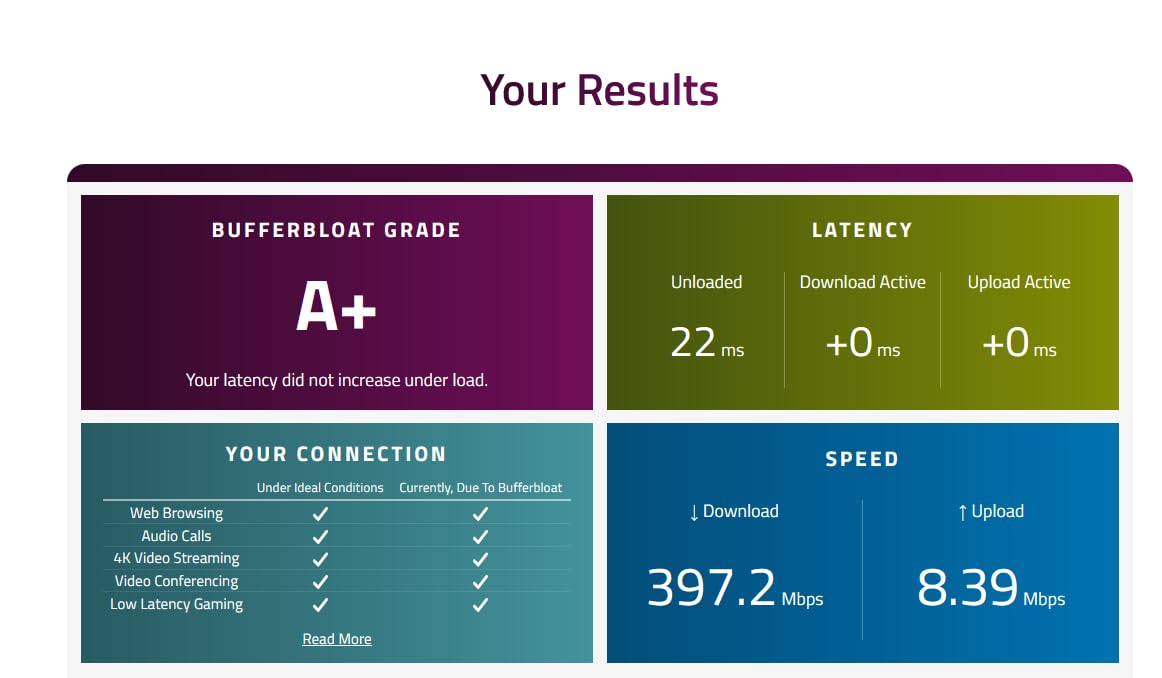
The OpenWrt installation is the deeper draw. Out of the box you get a Linux base with 1GB of DDR4 RAM, 8GB of eMMC and a quad-core 2 GHz MediaTek CPU, which is enough headroom to run SQM bufferbloat mitigation, AdGuard Home and a VPN server at the same time. OpenVPN throughput is rated up to 880 Mbps and WireGuard up to 900 Mbps.
AdGuard Home alone blocks advertising DNS network-wide before the request ever leaves your house. For a family that streams and games on the same connection, that filtering is often worth more than another radio band.
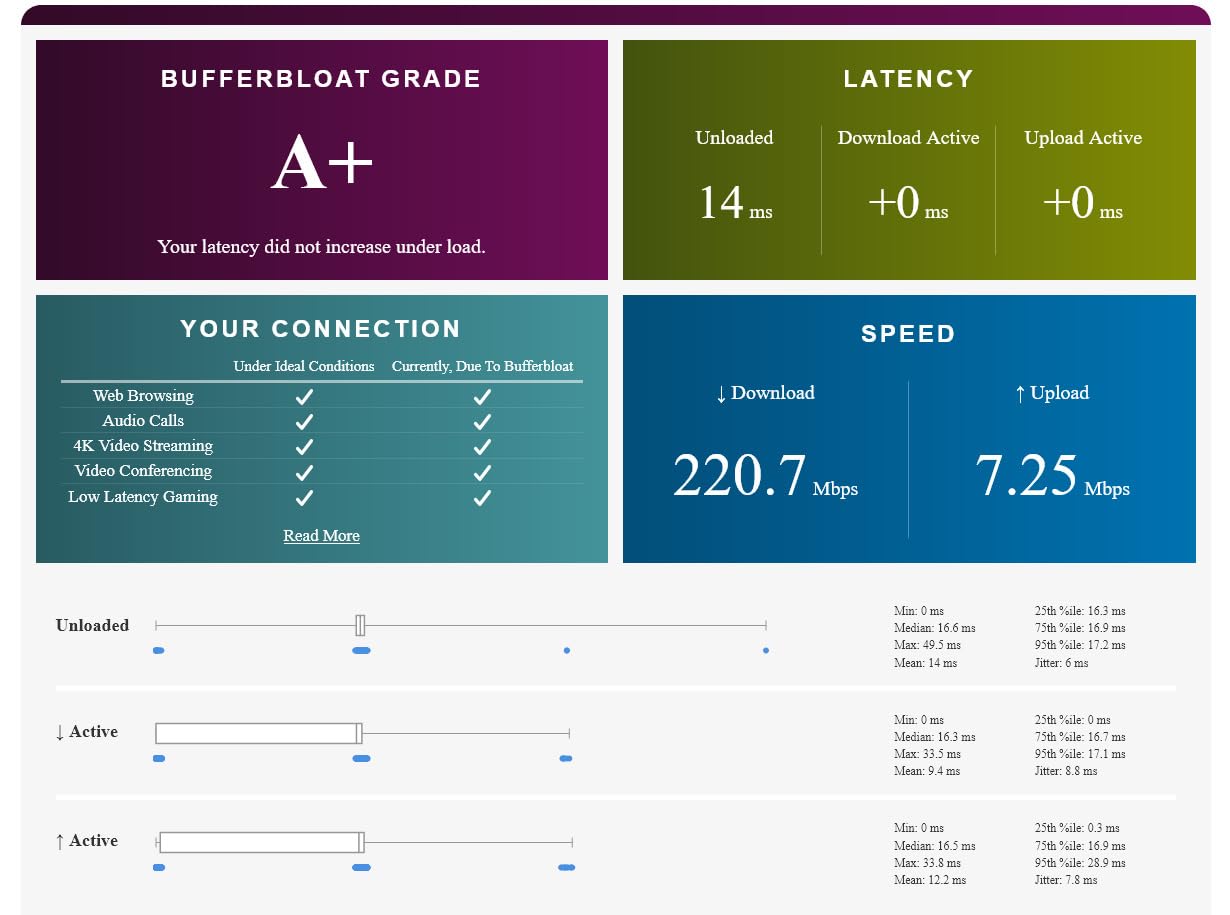
Why the Flint 2 tops our best routers for fiber internet list
Three reasons stack up. The dual 2.5G ports match a 2 Gbps fiber plan exactly, the CPU routing capacity is not the constraint at multi-gig speeds, and the pre-installed firmware gives you VLANs, QoS and a VPN server without a separate machine.
Users on r/homelab treat enthusiast firmware as the actual reason to choose a router rather than a footnote, and this is the box where that reasoning pays off most directly. If you have ever wanted per-device traffic shaping, this is where you get it.
When to choose something else
Skip it if your home is large. The stated coverage is modest next to a mesh system, and one box placed centrally will not cover three floors reliably. It is also not the right pick for someone who wants zero configuration, since the depth of options can be a genuine barrier.
If you need a 10G port for a 5 Gbps fiber tier, this is not the device. Look at the ASUS RT-BE88U or the Nighthawk RS700S instead, both of which carry true 10 Gigabit wired ports.
2. TP-Link AX1800 Archer AX21 – Best Budget Router in Our Best Routers for Fiber Internet List
TP-Link AX1800 WiFi 6 Router (Archer AX21 V5)
1 Gigabit WAN port
AX1800 dual-band Wi-Fi 6
4 x Gigabit LAN
OpenVPN and PPTP servers
Pros
- Very affordable entry point for gigabit fiber
- Easy Tether app setup
- Solid 5 GHz throughput with four antennas
- Huge installed base for easy support
- WPA3 with a 2-year warranty
Cons
- Gigabit-only ports cannot handle 2.5G or 10G plans
- Dual-band with no 6 GHz band
- 1.8 Gbps total bandwidth ceiling
- Some extras need a subscription
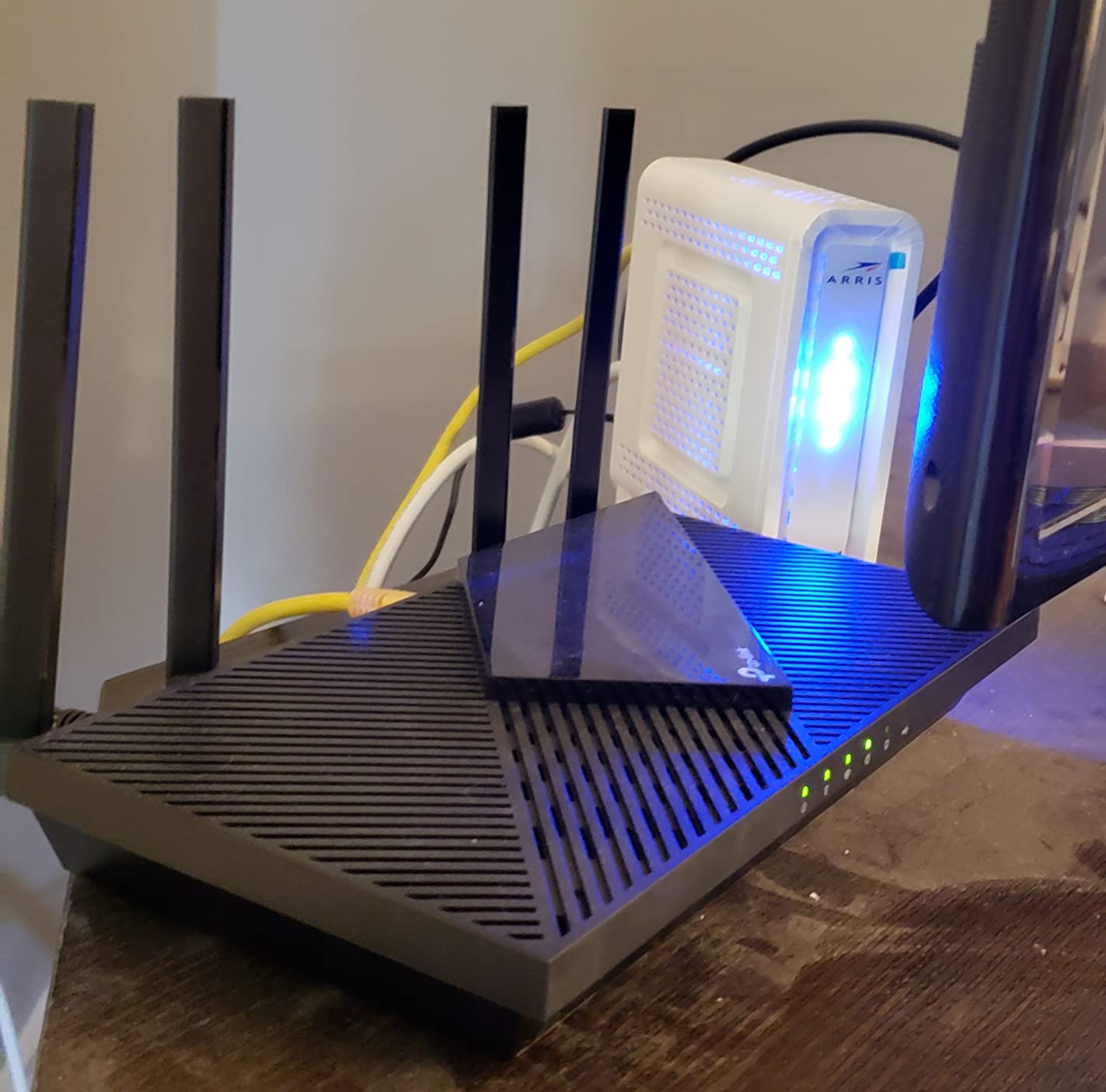
With over 24,000 reviews averaging 4.4 stars, the Archer AX21 has been the default recommendation for a gigabit fiber plan for years. On a 1 Gbps line it delivers the full speed to wired devices and dependable dual-band Wi-Fi throughout a small home.
Wireless throughput comes from a dual-band AX1800 design, up to 1200 Mbps on 5 GHz and 574 Mbps on 2.4 GHz. Beamforming and four high-gain antennas with an FEM chipset keep the signal usable in rooms that would trouble a bare antenna.
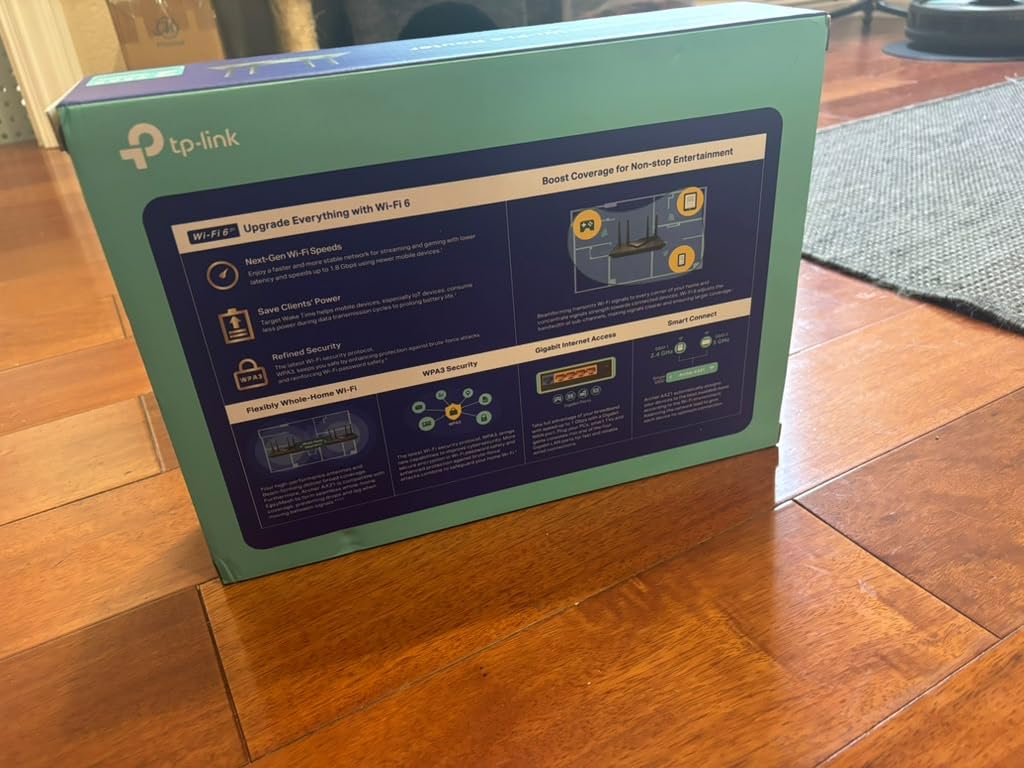
The port layout is the whole story here. One Gigabit WAN port and four Gigabit LAN ports is exactly right for a gigabit plan and exactly wrong for anything faster. Buyers on 2 Gbps and 5 Gbps tiers consistently report the ceiling, and no amount of Wi-Fi speed changes it.
Management runs through the Tether app with Alexa voice control, and OpenVPN plus PPTP VPN servers are built in if you need remote access to your own network. Advanced parental controls and the wider HomeShield features sit behind a subscription, which is the main recurring complaint.
Does it pair well with ISP-supplied fiber gear
Yes, and that is the usual arrangement. Plug it into the ONT or combo box, set the router to access point mode if the combo box is still routing, and you get your own Wi-Fi network name and password without fighting double NAT.
Because the installed base is enormous, setup problems are well documented and support is easy to find. For a first fiber router in a home under 1,500 square feet, it does the job without drama.
Where the AX21 falls short
It is a hard stop at 1 Gbps on the wired side, and it has no 6 GHz band for future devices. If your provider has tiered you up to 2 Gbps, you will notice the difference immediately on any large file transfer.
It is also a dual-band design with 1.8 Gbps of aggregate capacity. A household running many 4K streams on a 2 Gbps plan would be pushing that limit on wireless alone.
3. Amazon eero 7 Dual-Band Mesh Wi-Fi 7 3-Pack – Best for Effortless Setup on Our Best Routers for Fiber Internet List
Amazon eero 7 dual-band mesh Wi-Fi 7 router (newest model) – Supports internet plans up to 2.5 Gbps, Coverage up to 6,000 sq. ft., 3-pack
2 x 2.5Gbps auto-sensing ports
Wi-Fi 7 dual-band with MLO
Up to 6,000 sq. ft.
120+ devices
Pros
- Two auto-sensing 2.5Gbps ports take multi-gig fiber
- Seamless coverage across three nodes
- Virtually configuration-free app setup
- Backward compatible with earlier eero generations
- Three-year warranty
Cons
- Dual-band only with no 6 GHz
- Security and ad blocking need eero Plus
- Only two wired ports per node
- Limited advanced settings versus OpenWrt routers
The eero 7 is the option to buy when you do not want to think about your network. Each node carries two auto-sensing 2.5Gbps ports, so the primary unit accepts a multi-gig ONT handoff and doubles as a wired path for one more device.
Setup is genuinely close to zero. Scan a code, name your network, done. That simplicity is the reason this lands in the roundup rather than a more configurable standalone box.
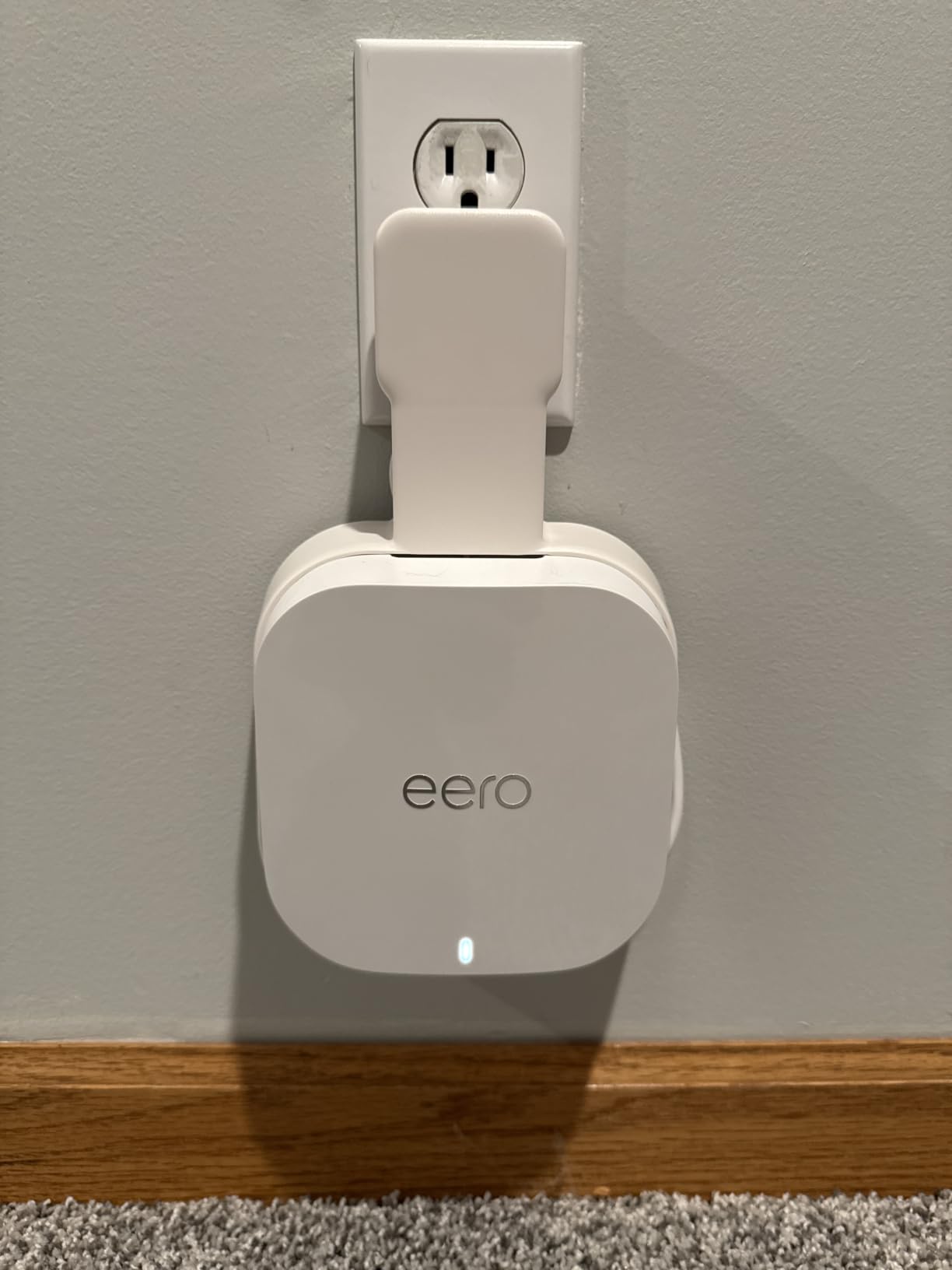
Under the surface it runs TrueMesh, TrueRoam and TrueChannel, which is how the three nodes behave as a single network with one name. Multi-link operation is supported, and each node is rated for 120+ devices across the three-node system.
Wireless speeds top out at 1.8 Gbps across the 2.4GHz and 5GHz bands. Since there is no 6 GHz band, that dual-band ceiling is worth weighing on the highest fiber tiers, where the radio becomes the limit rather than the port.
Is mesh the right architecture for a fiber plan
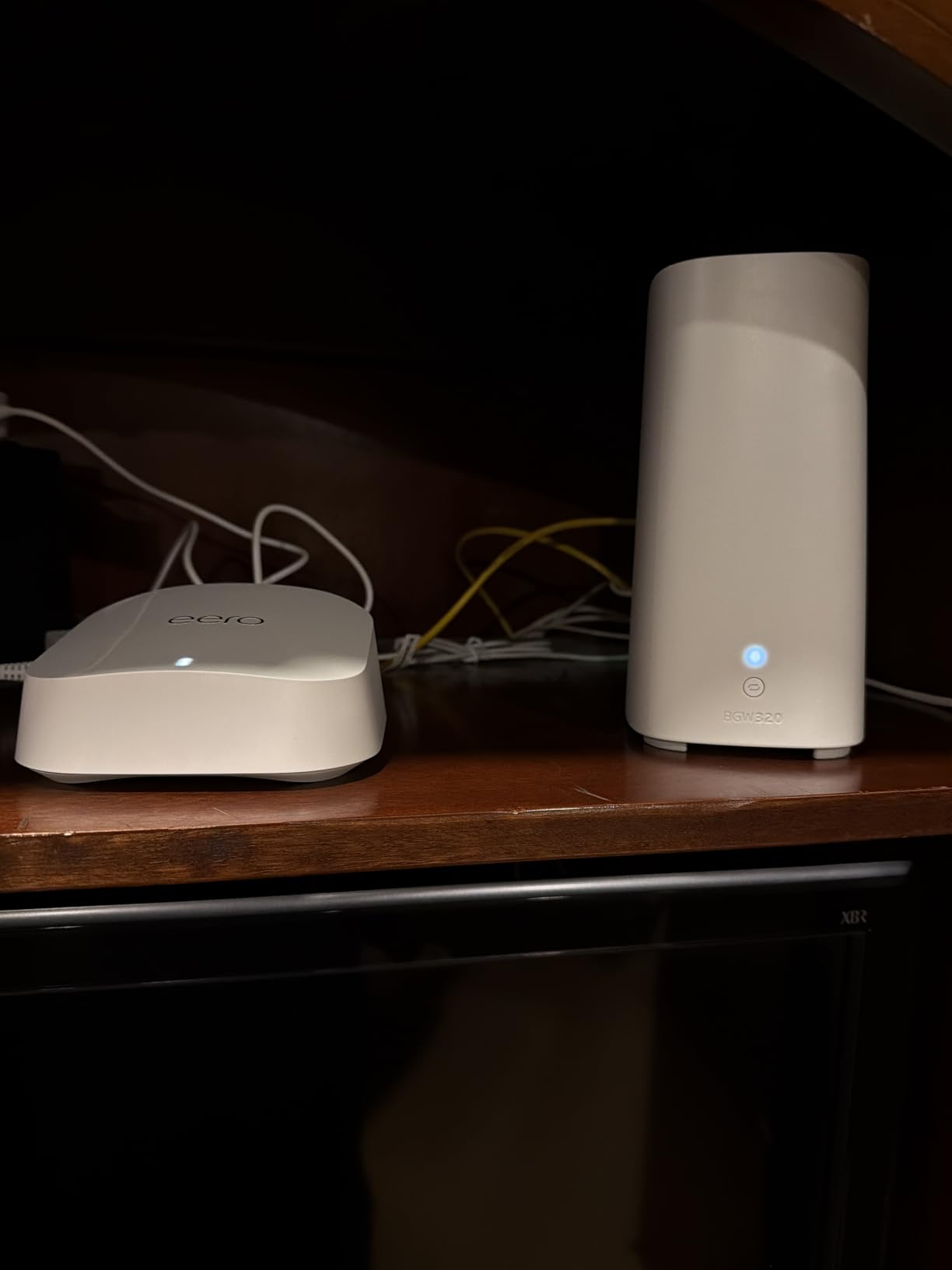
Mesh makes sense when the bottleneck is coverage rather than throughput. A single strong router in a small home will beat three mesh nodes, but in a house with several floors and thick walls, three nodes with a 2.5Gbps port each hold the multi-gig line across every room.
If you already own an eero from a previous generation, the backward compatibility means you can add these and keep a single network. Expansion is one of the smoother paths of any system here.
What the subscription actually gates
Advanced Security, ad blocking, parental controls, 1Password integration and VPN support all sit behind eero Plus. The router itself works fully without it, which is the honest way to describe the trade-off.
The other limitation is control. There is no command-line access, no VLAN configuration and no third-party firmware. If you plan to segment IoT devices or shape traffic per device, this is the wrong tool.
4. NETGEAR Nighthawk WiFi 7 RS700S – Best for Premium Multi-Gig Fiber Among Best Routers for Fiber Internet
NETGEAR Nighthawk WiFi 7 Router RS700S, Up to 3,500 sq ft, 19 Gbps
1 x 10Gbps WAN port
Tri-band Wi-Fi 7 up to 19 Gbps
1 x 10G and 4 x 1G LAN
3,500 sq. ft. coverage
Pros
- 10Gbps WAN port unlocks premium fiber tiers
- Full tri-band Wi-Fi 7 including 6GHz
- MU-MIMO and OFDMA for dense households
- Nighthawk app setup is straightforward
- Built for up to 200 devices
Cons
- Only one 10Gbps LAN port for wired devices
- Premium cost for the class
- Advanced features sit behind NETGEAR Armor
- Admin interface feels limited versus ASUS or OpenWrt
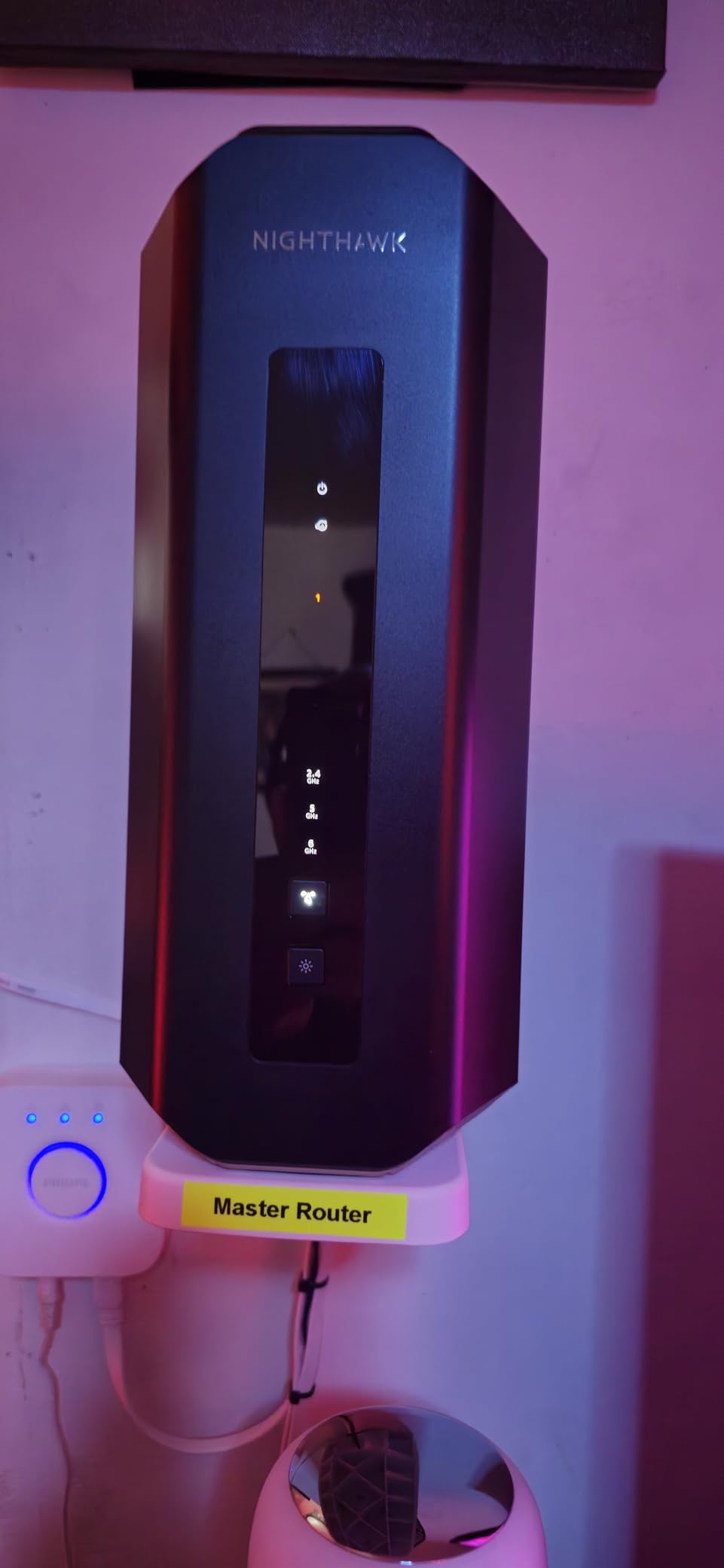
Among editorial roundups of fiber routers, the RS700S is unusual because its WAN port is genuinely faster than most plans people are sold. A 10Gbps WAN port means a 2 Gbps, 5 Gbps or even 10 Gbps fiber line has somewhere to go.
Wireless is tri-band Wi-Fi 7 across 2.4GHz, 5GHz and 6GHz for up to 19 Gbps aggregate, with a 12-stream design rated for up to 3,500 square feet and 200 devices. MU-MIMO and OFDMA handle that device count better than the older airtime-sharing schemes.
The wired side is one 10Gbps LAN port plus four Gigabit LAN ports. That is the compromise. One fast wired client gets full speed; a second device that wants multi-gig has to negotiate on a gigabit port or use the wireless bands.
NETGEAR’s own comparison pages list this model across several speed and capacity variants, so check which one you are actually adding to your cart. The Nighthawk app handles setup, speed tests, pausing devices and guest networks.
Who should pay for a 10Gbps WAN port
If your plan tier is 2 Gbps or 5 Gbps and you have a wired workstation or NAS, this is the pick. A gigabit WAN port would leave real bandwidth unused, and a 2.5GbE port would still cap a 5 Gbps line.
On a 1 Gbps plan, the 10Gbps port does nothing for you. The tri-band radios would still be an upgrade, but not at this cost.
Why the admin interface frustrates owners
Reviews come back consistently on this. The web interface exposes far fewer settings than ASUS firmware or OpenWrt, so VLANs, per-device QoS and custom DNS are either missing or tucked in a phone app.
Security tooling is also subscription-led after a 30-day NETGEAR Armor trial. If you want the full feature set permanently without paying, budget for that or pick a different brand.
5. TP-Link AXE5400 Archer AXE75 – Best Routers for Fiber Internet Coverage
TP-Link AXE5400 Tri-Band WiFi 6E Router, 2025 PCMag Editors’ Choice
2.5Gbps WAN port
Wi-Fi 6E tri-band AXE5400
8 antennas
512 MB RAM
Pros
- Excellent range including far rooms and outdoors
- Stable with 30+ connected devices
- 2.5Gbps WAN suits gig-plus fiber plans
- 6GHz band adds capacity where it is congested
- EasyMesh compatible for later expansion
Cons
- HomeShield extras require a subscription
- Tether app pop-ups are intrusive
- Identifying Apple clients in the app is awkward
- Some reports of involved initial setup
The AXE75 is the one we recommend when the complaint is dead zones rather than throughput. Owners regularly describe replacing ISP-supplied gear that could not hold a gigabit line and seeing the problem disappear across the whole house.
It is tri-band Wi-Fi 6E: 2402 Mbps on 6GHz, 2402 Mbps on 5GHz and 574 Mbps on 2.4GHz for 5400 Mbps aggregate. The 6GHz band matters in dense housing where the 5GHz range is crowded, because it opens clean channels that older 5GHz-only gear cannot use.
The 2.5Gbps WAN port is what makes it a fiber pick rather than a general Wi-Fi recommendation. It accepts a gig-plus ONT handoff and, being auto-sensing for WAN and LAN, works with most providers without configuration. A 1.0 GHz dual-core CPU with 512 MB of memory handles the routing load comfortably at those speeds.
It also runs VPN server and client modes using OpenVPN, PPTP and L2TP. That means you can reach in to your home network from outside without setting up a separate machine.
How it holds up with many connected devices
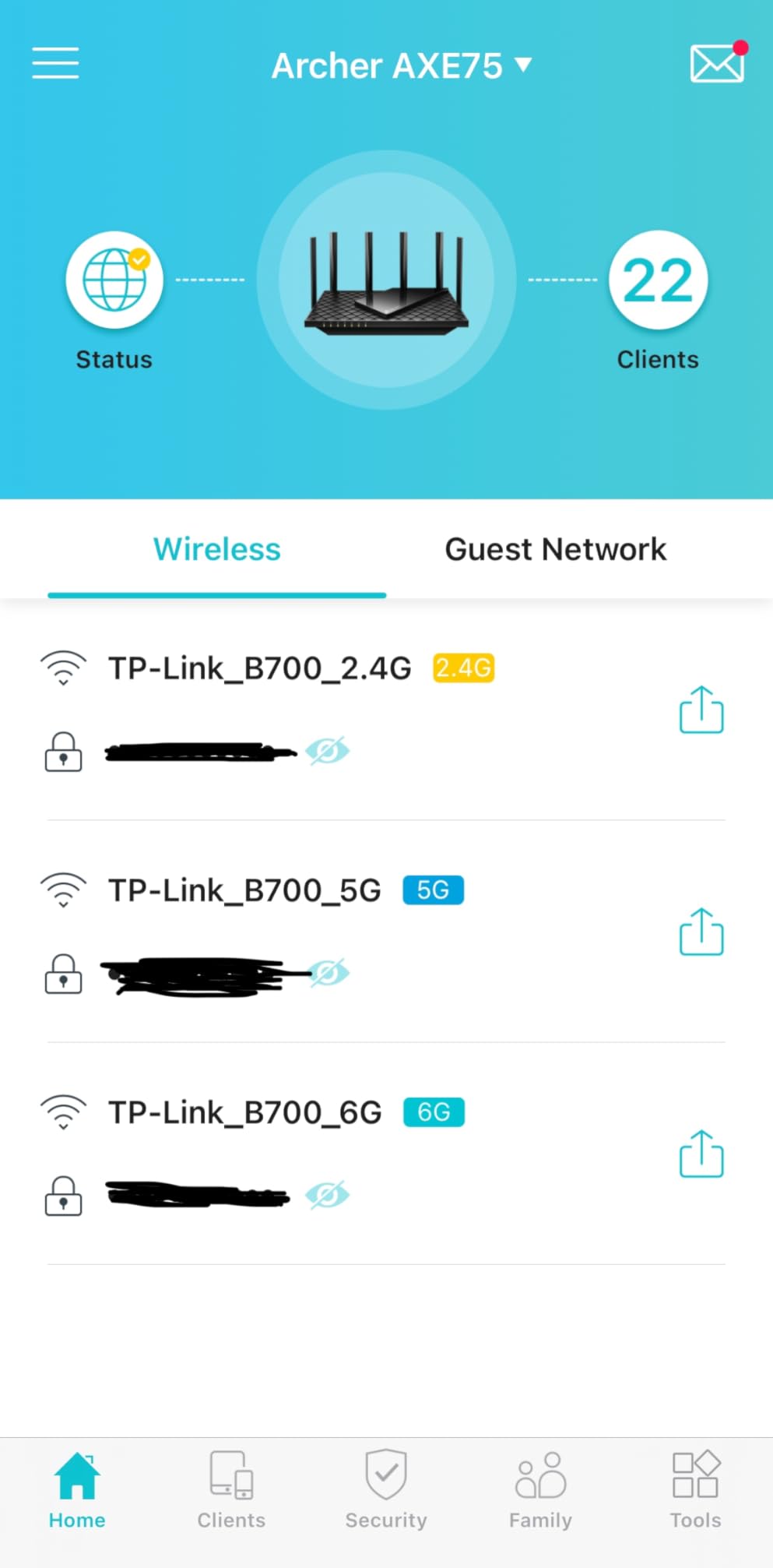
Reported experience is stable with 30+ devices connected, which covers the typical family plus smart home gear. Eight antennas with beamforming push signal toward clients rather than radiating evenly, which is what helps in a multi-floor house.
If you later need more coverage, EasyMesh compatibility means you can add compatible extenders later. That flexibility is a real advantage over mesh-first systems you cannot expand with a different brand.
Where the app gets in the way
The Tether app is the weakest part. Users report intrusive pop-ups pushing subscriptions, difficulty identifying Apple devices by name, and a preference among some for the web interface alone. If you dislike vendor upsells, configure through the browser.
Advanced parental controls beyond the basics also require HomeShield Pro. There is also a USB network share whose drive naming is not user-configurable, which annoys anyone with more than one drive.
6. Tenda BE7200 WiFi 7 Router – Best Value Multi-Gig Pick in Best Routers for Fiber Internet
Tenda WiFi 7 Router BE7200 – Dual-Band High-Speed Wireless Internet Router with 2×2.5G Ports, Quad-Core CPU, MLO & VPN, Private IoT Network, Supports OpenWRT, Ideal for Home & Business Use (BE12Pro)
2 x 2.5Gbps and 3 x 1Gbps ports
Quad-core 2 GHz CPU
512 MB RAM
Wi-Fi 7 dual-band
Pros
- True 2.5Gbps ports at a budget price point
- Handles 40+ devices alongside a NAS
- App-based setup often under ten minutes
- OpenWrt compatible for deeper customization
- Isolated IoT network for cameras and smart gear
Cons
- Dual-band only despite the Wi-Fi 7 label
- Some reports of dropped connections under load
- Fixed antennas limit repositioning
- Thinner long-term review base than rivals
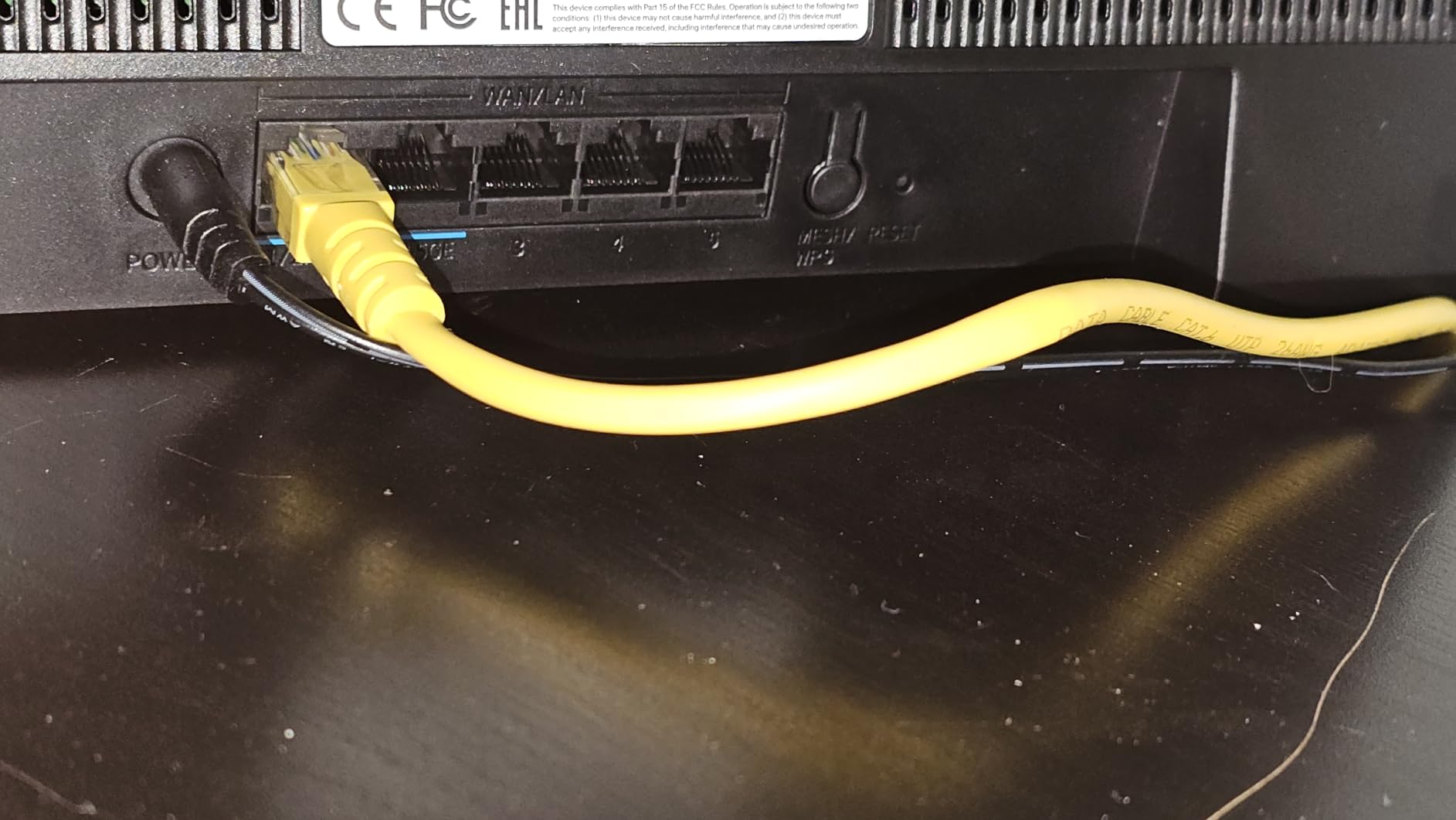
The Tenda BE7200 exists because genuine 2.5Gbps ports used to be expensive. Two of them, plus three gigabit ports that auto-sense WAN or LAN, put multi-gig handoff within reach of a budget purchase.
Under the lid is a quad-core 2 GHz chipset with 512 MB of RAM and Wi-Fi 7 dual-band radios rated at 7141 Mbps aggregate. Multi-link operation is supported, so compatible clients can use both bands at once.
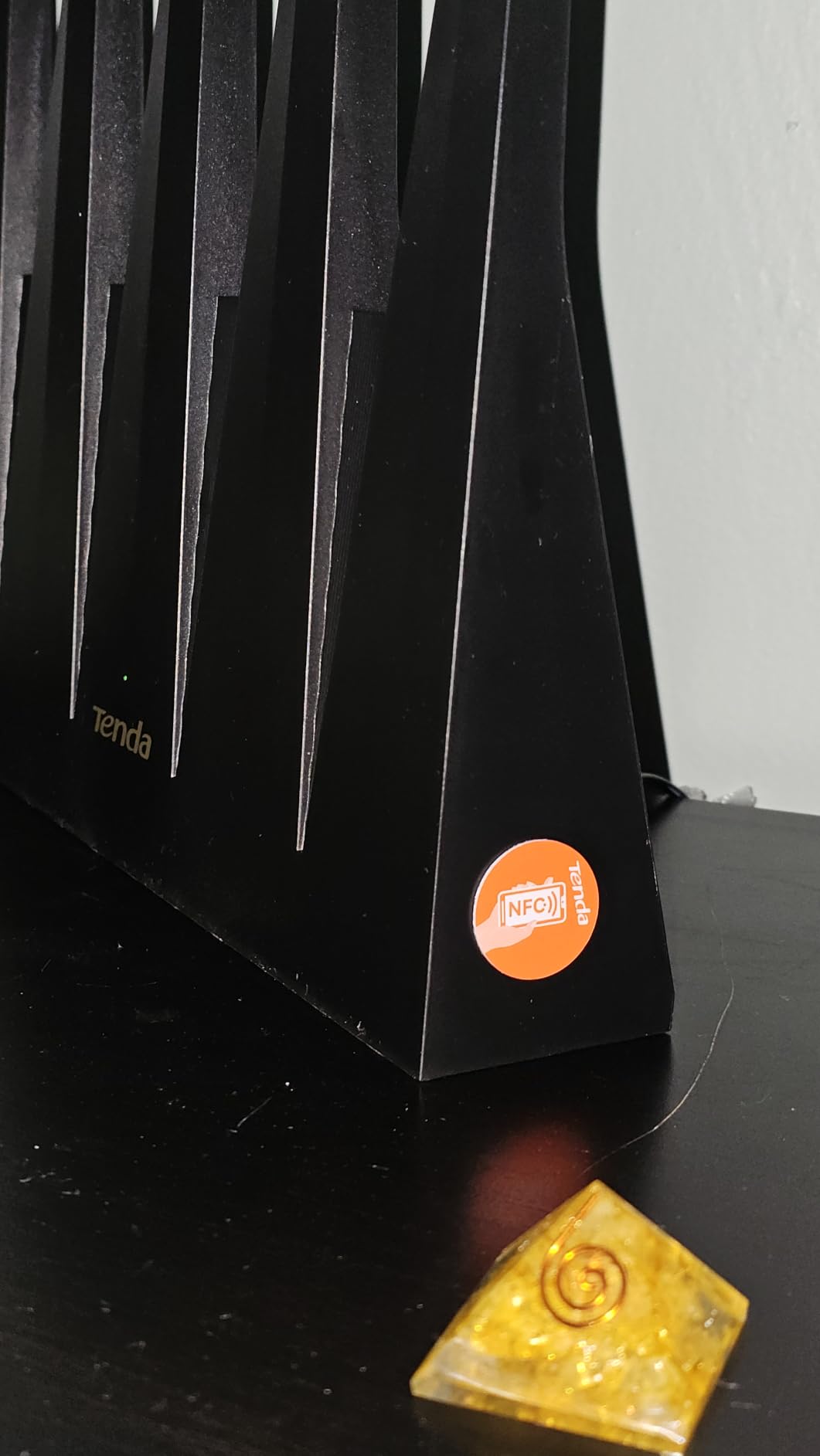
The standout feature is OpenWrt compatibility with a factory firmware option. That means you can keep the simple app interface day to day and drop to a full Linux firmware when you want VLANs, per-device QoS or SQM bufferbloat control. Very few routers in this cost bracket allow that.
Prosumer owners report running multi-gig fiber and a NAS off the same box simultaneously without trouble. The isolated private IoT network keeps cameras and smart devices on a separate network from your main one.
Is dual-band Wi-Fi 7 a problem
The label is accurate but the band count is not what the price of a flagship implies. There is no 6GHz band here, so you are getting Wi-Fi 7 features on two bands rather than three. For most homes that difference is invisible.
Where it would matter is a very high fiber tier in a congested building, where 6GHz clean spectrum genuinely helps. On a 2 Gbps plan in a normal house, the two 2.5G ports matter far more.
What the less enthusiastic reviews say
A minority of reviews report dropped connections and buffering under heavy streaming load, so it is not flawless. Fixed antennas mean you cannot reposition them to aim signal at a particular direction.
Brand recognition is lower than the two TP-Link entries and the long-term review base is thinner, which matters if you want an easy support path. Subscription-free remote management and a three-year warranty offset some of that.
7. TP-Link Deco BE25 3-Pack – Best Whole-Home Mesh in Best Routers for Fiber Internet
Deco 7 Dual-Band BE5000 WiFi 7 Mesh Wi-Fi System 4-Stream 5 Gbps, 240 Mhz
2 x 2.5Gbps ports per node
Wi-Fi 7 BE5000 dual-band
Up to 6,600 sq. ft.
150+ devices
Pros
- 2.5Gbps Ethernet on every node for wired backhaul
- Covers up to 6600 sq. ft. and 150+ devices
- Single network name with AI-Roaming hand-offs
- Straightforward Deco app management
- Works with all earlier Wi-Fi generations
Cons
- Dual-band only with no 6GHz band
- Backhaul balancing needs at least two nodes
- Full HomeShield tools sit behind a subscription
- Mesh hides advanced controls in the app
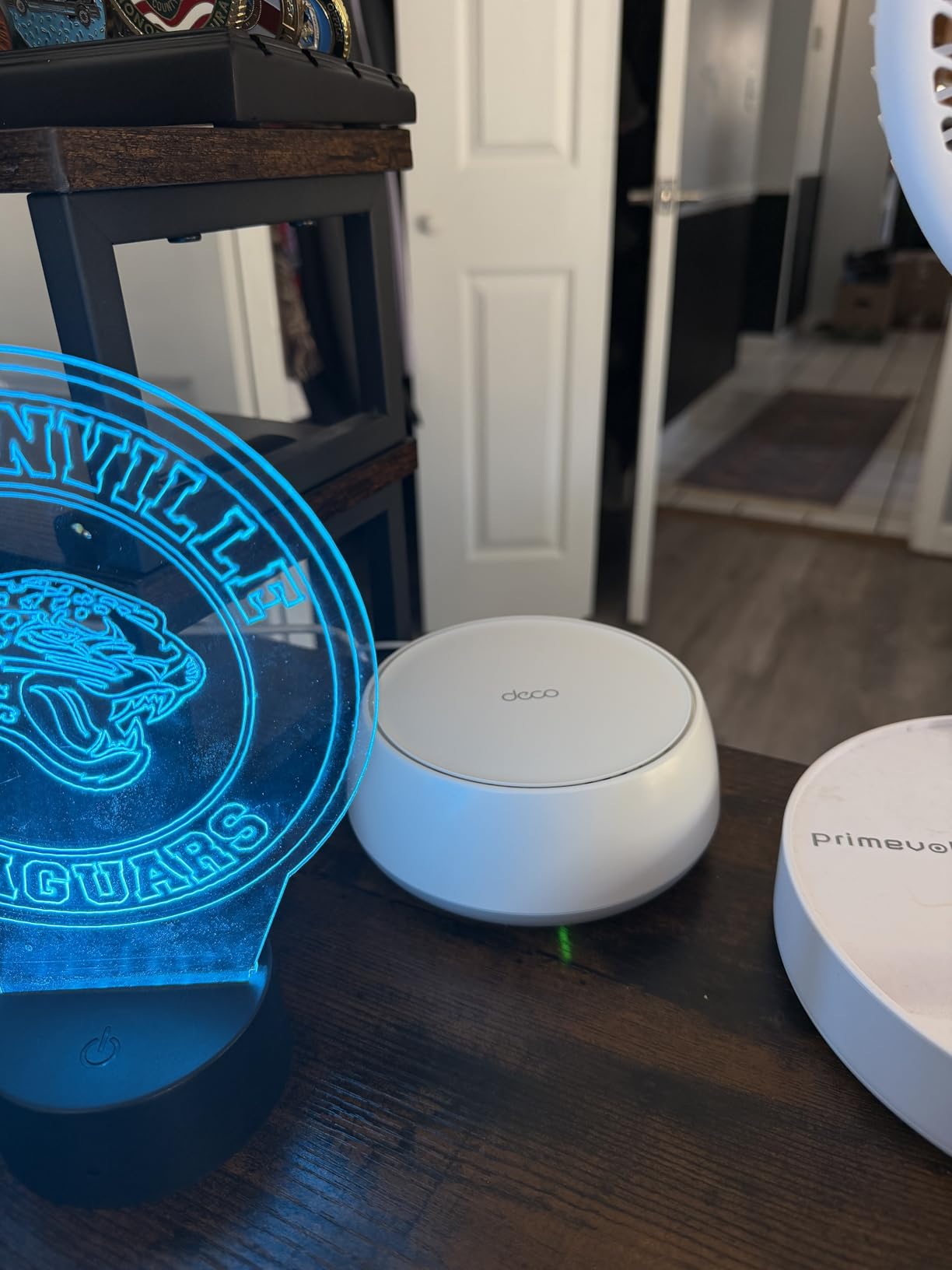
Every Deco node carries two 2.5Gbps Ethernet ports. That is the detail that separates it from typical mesh kits, because it means the link between nodes can run wired at 2.5Gbps instead of borrowing a wireless band.
With three BE25 units you get coverage up to 6,600 square feet and support for 150+ devices. Wireless throughput is dual-band Wi-Fi 7 at up to 4324 Mbps on 5GHz and 688 Mbps on 2.4GHz.

AI-Roaming handles the hand-off between nodes as you walk through the house, keeping one network name throughout. VPN client and server support is built in, and the system is backward compatible with all previous Wi-Fi generations and ISPs, which matters in a home with older smart devices.
One Deco unit takes the ONT handoff over a 2.5Gbps port, so a 2 Gbps fiber plan arrives at full rate. The remaining nodes then extend that capacity rather than re-routing it.
When wired backhaul changes the outcome
Wireless backhaul halves your available throughput because one radio is used to talk between nodes and another to serve clients. With 2.5Gbps Ethernet ports on each unit, you can run cable between nodes and keep the full multi-gig rate in the far rooms.
Owners of multi-gig fiber who want whole-home wireless generally land here for exactly that reason. Backhaul balancing does require at least two units to configure, which the three-pack provides.
Where mesh limits you
Dual-band only means no 6GHz band, so you lose the clean spectrum that tri-band Wi-Fi 7 systems offer. And like most mesh products, advanced settings sit behind the app rather than a browser interface.
HomeShield parental controls beyond the basics require a subscription. If you want fine-grained network control, a standalone router with OpenWrt handles it better than three mesh nodes will.
8. GL.iNet GL-BE9300 Flint 3 – Best OpenWrt Router in Best Routers for Fiber Internet
GL.iNet GL-BE9300 Flint 3 Tri-Band Wi-Fi 7 Router 5 x 2.5G VPN Router
5 x 2.5Gbps ports
Tri-band Wi-Fi 7 with MLO
1GB DDR4 RAM
Pre-installed OpenWrt
Pros
- Five 2.5Gbps ports give abundant multi-gig wired capacity
- Tri-band Wi-Fi 7 with MLO and the 6GHz band
- OpenWrt with 1GB RAM leaves room for packages
- Fast WireGuard and OpenVPN throughput
- AdGuard Home and Bark included out of the box
Cons
- Coverage of about 2000 sq. ft. trails mesh kits
- WireGuard and OpenVPN speeds below the Flint 2 figures
- Firmware update on first setup is recommended
- Plain boxy enclosure
The Flint 3 keeps the GL.iNet OpenWrt-first approach and upgrades the hardware around it. Five 2.5Gbps ports is the largest multi-gig wired capacity of any router in this group, which makes it a natural fit for a home full of wired devices.
Wireless is tri-band Wi-Fi 7 across 2.4, 5 and 6GHz, up to 9 Gbps wireless and a 12.5 Gbps data transfer rate. Multi-link operation, enhanced OFDMA, 4K-QAM and preamble puncturing are all present.
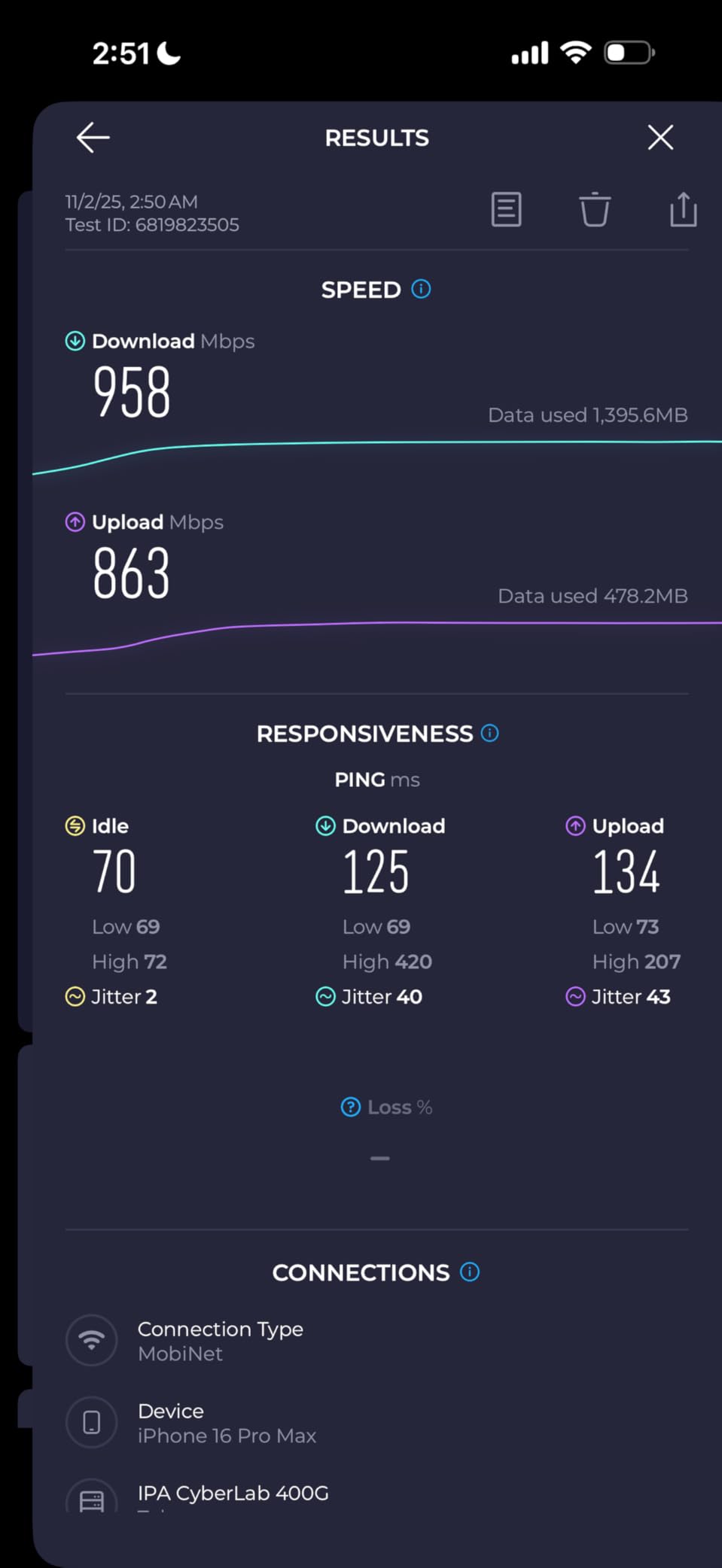
Inside, a quad-core CPU with 1GB of DDR4 RAM and 8GB of eMMC storage gives you real room for packages. Owners install services on it that would stall a 512 MB unit, which is the clearest advantage over the cheaper OpenWrt-capable boxes.
AdGuard Home and Bark parental control integration are built in, and the unit is flasher-friendly if you want to move to a different build. VPN throughput is rated up to 680 Mbps with OpenVPN and WireGuard.
Flint 2 or Flint 3
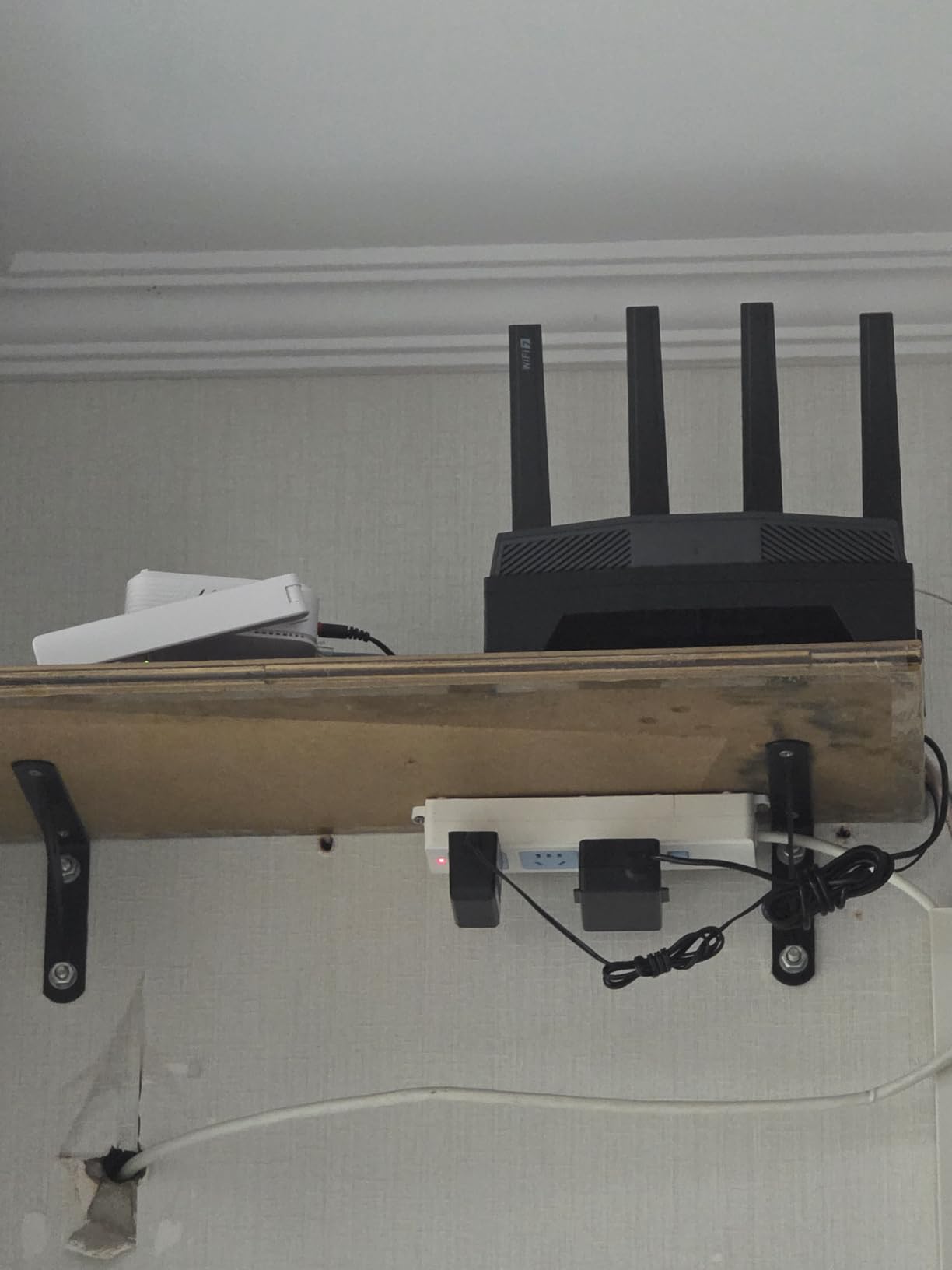
The Flint 2 remains the better value if your needs are multi-gig WAN plus strong wireless, because its dual 2.5Gbps ports and faster VPN throughput cost less. The Flint 3 earns its step up when you specifically want the 6GHz band or more than two multi-gig ports.
Published VPN figures are lower on the Flint 3 than on the Flint 2, which some reviewers noticed. If you plan to run a VPN server for remote access and nothing else demanding, the Flint 2 is the smarter spend.
Where coverage stops being enough
Stated coverage is about 2,000 square feet, which is smaller than any mesh system here. In a multi-floor house you will want a mesh kit instead, or you will add a second access point.
The enclosure is plain and boxy, and a firmware update on first setup is recommended for best results. Neither is a serious problem, but both are worth knowing before you unbox it.
9. ASUS RT-BE88U WiFi 7 Router – Best Port Flexibility in Best Routers for Fiber Internet
ASUS RT-BE88U WiFi 7 Router – x2 10G Ports, Up to 7.2 Gbps, Mesh Compatible
10G SFP+ port plus 10G WAN/LAN
4 x 2.5G and 4 x Gigabit
8 ports total
2 GB RAM
Pros
- Two 10G ports covering SFP+ and RJ45 handoff
- Built-in 8-port switch removes the need for another
- Subscription-free security via AiProtection Pro
- Strong VLAN support and full admin control
- ASUS Merlin firmware compatibility
Cons
- Dual-band only despite the Wi-Fi 7 label
- Some connectivity reports after firmware updates
- Rear ports sit close together
- Premium cost for a dual-band unit
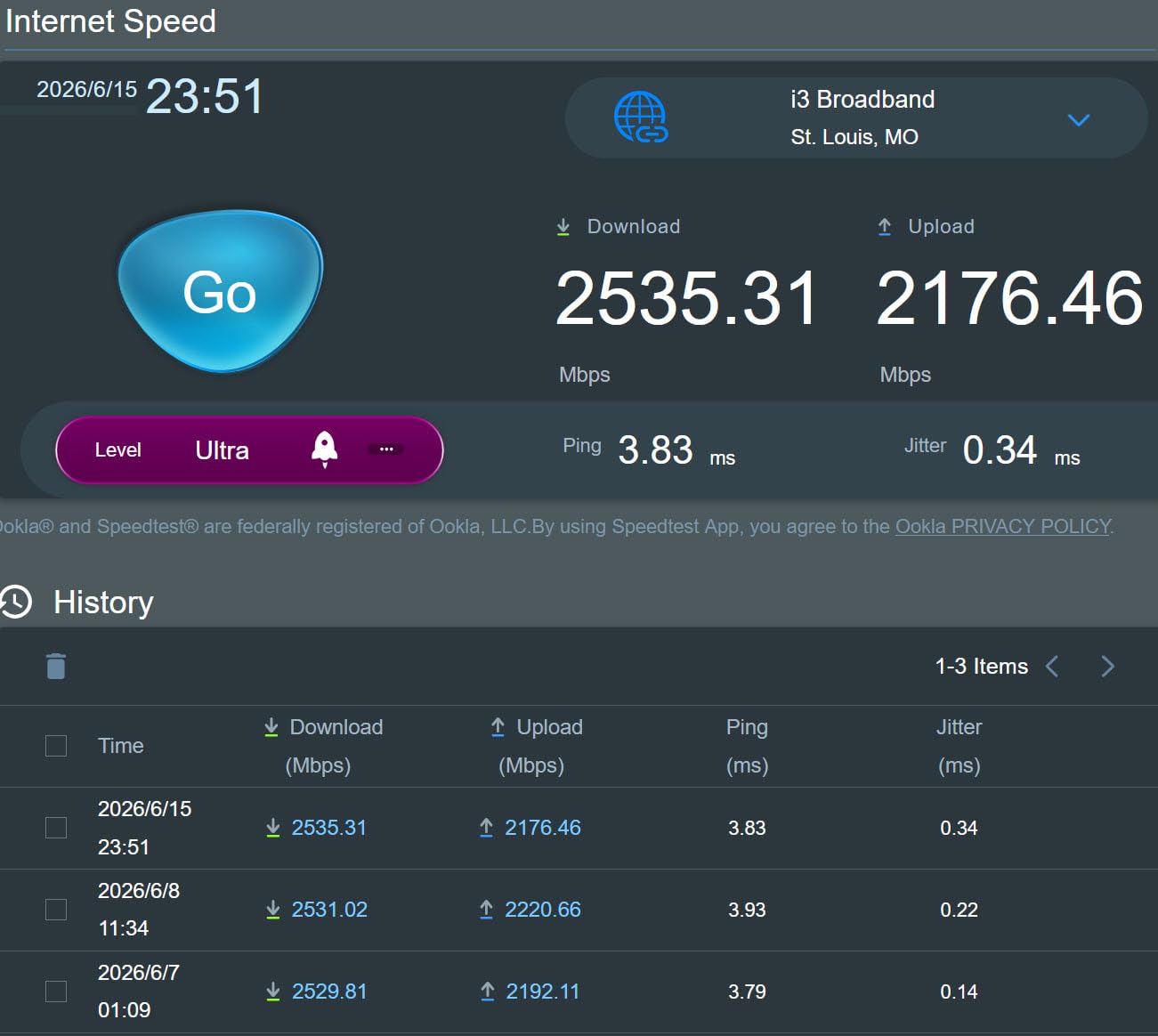
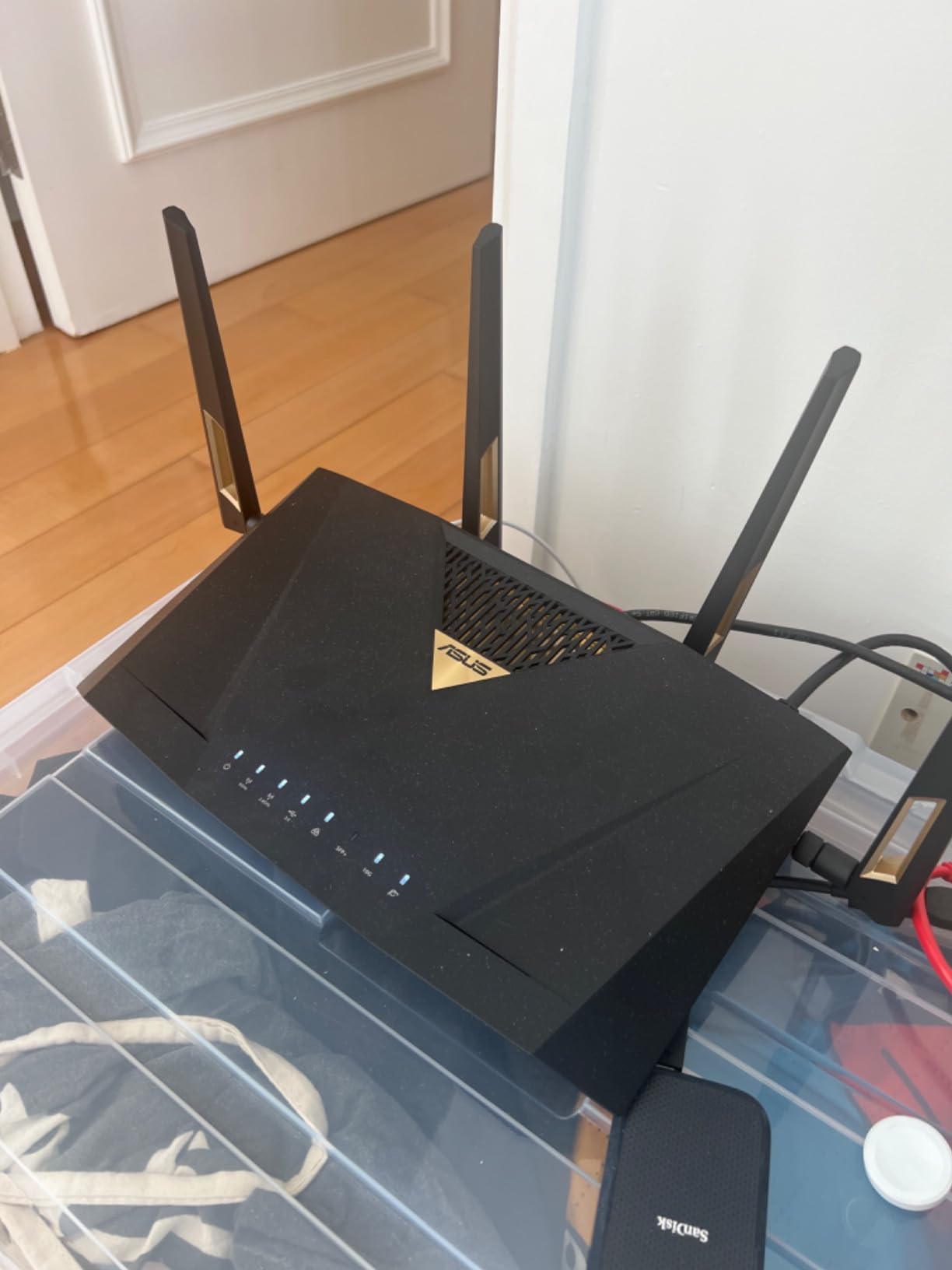
The RT-BE88U is the only router here with a native 10G SFP+ slot. That matters for fiber users whose ONT hands off over an SFP+ module instead of a copper cable, a setup that is common with some providers and popular on r/homelab.
Alongside the SFP+ slot sits a 10Gbps WAN/LAN port, giving up to 34G of wired capacity in total. Add four 2.5Gbps ports and four Gigabit ports and you have eight physical ports, which frequently removes the need for a separate switch.
Power comes from a quad-core 2.6 GHz 64-bit CPU with 2 GB of RAM, the largest memory pool in this group. Owners report that configuration depth as the standout feature: a changeable admin username, a long menu timeout and genuine VLAN support.
AiProtection Pro from Trend Micro provides network security scanning with no subscription attached, which is unusual at this feature level. Site-to-site VPN and Guest Network Pro for up to five SSIDs are included, as is AiMesh for later expansion.
When the SFP+ slot is worth it
If your provider supplies an SFP+ ONT handoff, this saves you from needing an SFP+ to RJ45 adapter. It also opens the door to an independent ONT, which r/homelab users prefer over running the ISP combo box.
Even without an SFP+ module, the 10Gbps WAN port alone handles the highest fiber tiers, and the four 2.5G ports give every room a fast wired option.
The dual-band catch
There is no 6GHz band despite the Wi-Fi 7 label, so you are missing the clean spectrum a tri-band unit provides. Wireless speeds top out at 7,200 Mbps across two bands, with MLO and 4096-QAM supported.
Two other details: the rear ports sit close together, which is tight with thick cable boots, and a small number of owners report signal trouble after firmware updates. Coverage is rated for up to 3,000 square feet.
10. NETGEAR Orbi 770 Series 3-Pack – Best for Very Large Homes in Best Routers for Fiber Internet
NETGEAR Orbi 770 Series WiFi 7 Mesh System, Up to 8,000 sq ft., 3 Pack
2.5Gbps port for fiber plans
Tri-band Wi-Fi 7 up to 11 Gbps
Up to 8,000 sq. ft.
Router plus two satellites
Pros
- Largest coverage area here at up to 8000 sq. ft.
- Tri-band Wi-Fi 7 with Enhanced Backhaul
- 2.5Gbps port supports plans up to 2.5 Gbps
- Handles up to 100 devices on one network
- Clear expansion path with more satellites
Cons
- Highest cost for comparable wireless throughput
- Fewer multi-gig ports than multi-gig rivals
- Some security features need NETGEAR Armor after the trial
- US-only operation and support
- Lowest average rating in this group
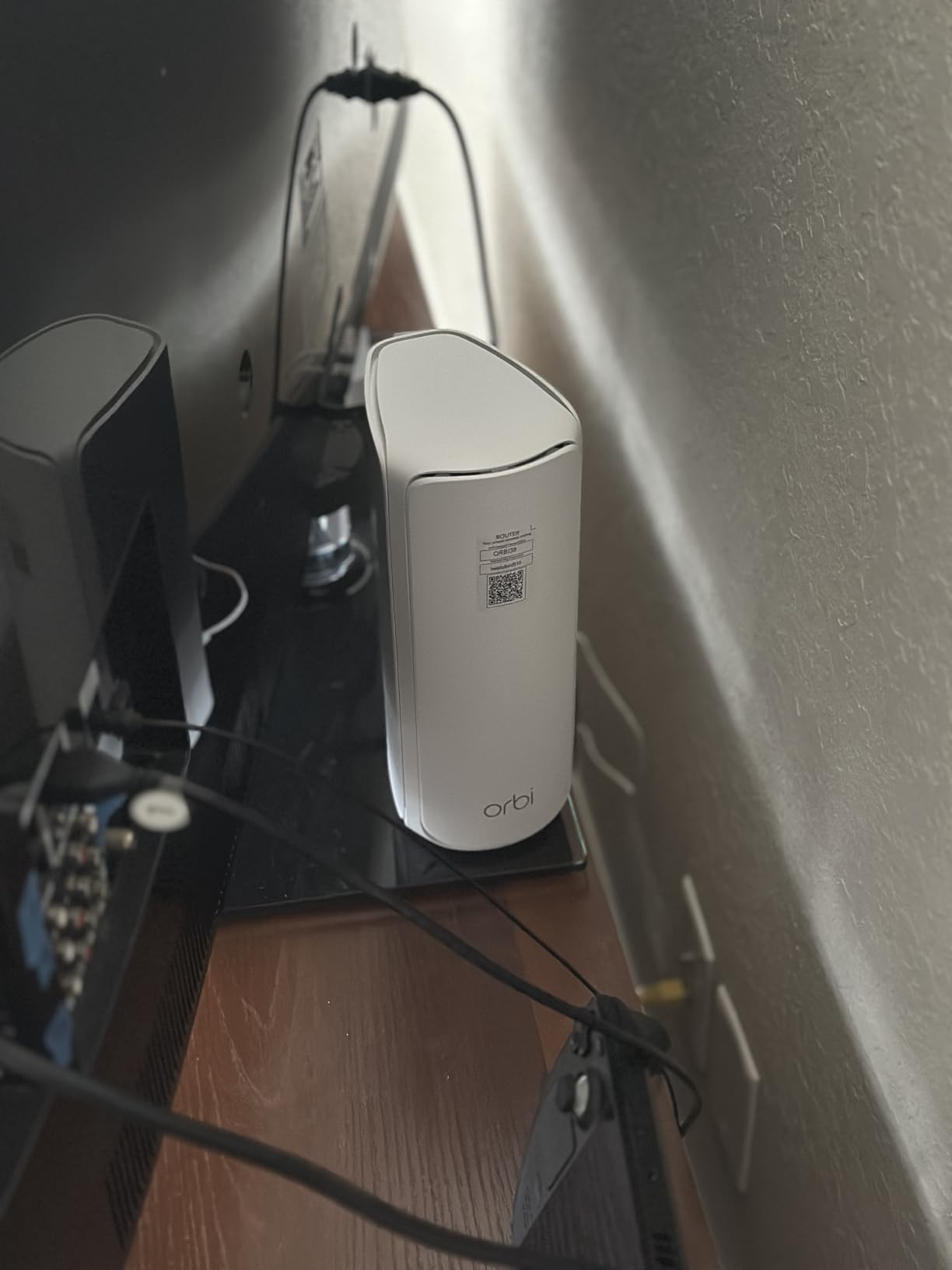
The Orbi 770 3-pack is bought for one reason: square footage. The system is rated for up to 8,000 square feet and 100 connected devices across one router and two satellites, which no other kit here reaches.
Wireless is tri-band Wi-Fi 7 at up to 11 Gbps aggregate with Enhanced Backhaul, a NETGEAR mechanism for using the third band to carry traffic between nodes while other bands serve clients.
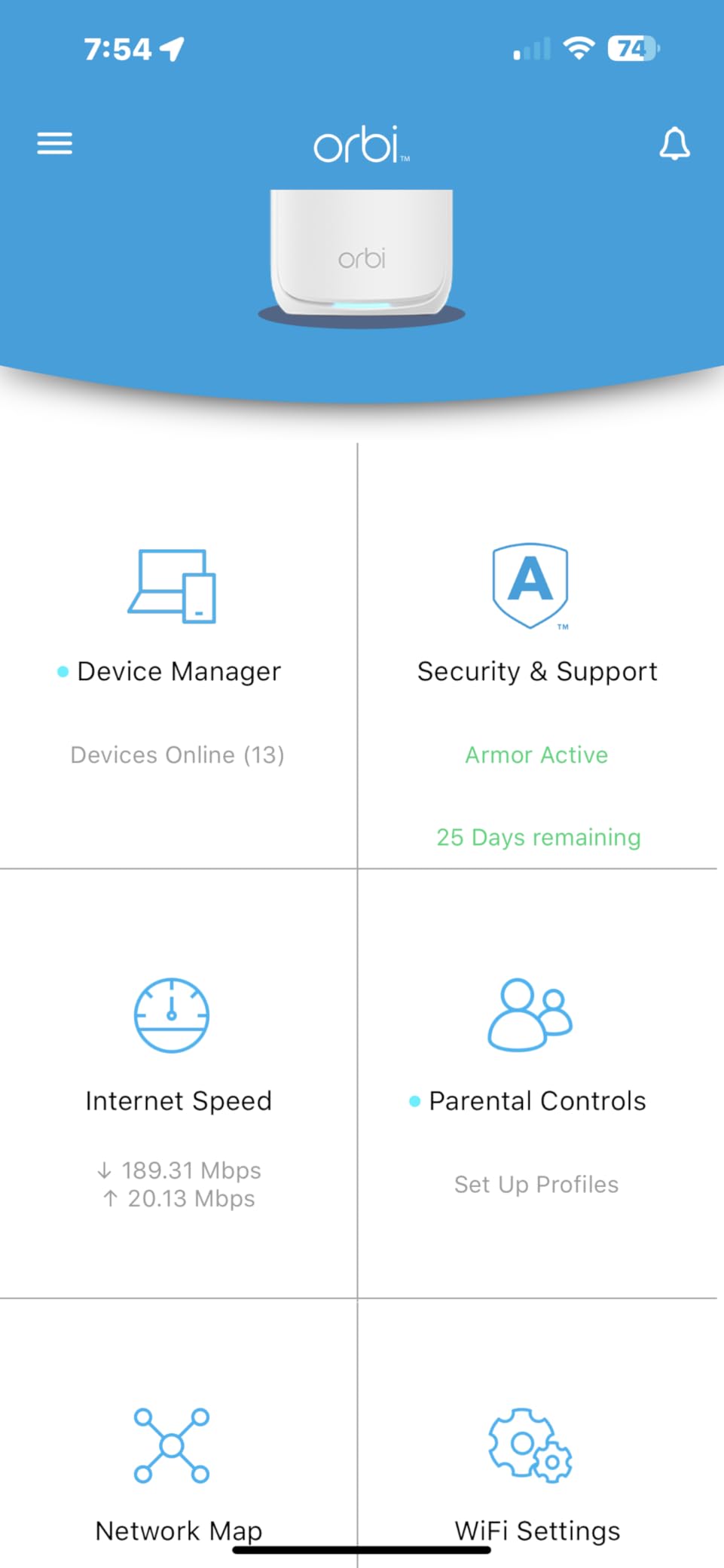
The 2.5Gbps Ethernet port accepts fiber plans up to 2.5 Gbps, so this is a multi-gib-capable mesh system rather than a gigabit-only one. You can add further Orbi 770 satellites later, each rated for up to 2,750 square feet.
Setup runs through the Orbi app with guided configuration and remote management. IoT network and parental controls are included alongside VPN support.
When 8,000 square feet is justified
If you genuinely have that much floor area across multiple wings or storeys, nothing else in this list covers it as cleanly. The alternative is a standalone router plus two or three wired access points, which costs more in cabling and configuration.
Below about 4,000 square feet, a tri-band standalone router usually delivers better throughput per dollar. The mesh trade-off is coverage against raw speed.
Why the rating sits lowest here
It is the most expensive option for comparable wireless throughput, and it offers fewer 2.5G ports than the multi-gig standalone routers here. That combination of premium cost and limited multi-gig wired capacity is what pulls the average down.
Security features also require NETGEAR Armor after the 30-day trial, and the system is built for US operation only. For most households, the Deco BE25 or eero 7 covers similar ground for less.
What to Look for in a Fiber Router
A WAN port at least as fast as your plan. A 1 Gbps plan needs a gigabit port; 2 Gbps needs 2.5GbE; 5 Gbps needs 10GbE. This single check prevents most disappointment.
A Wi-Fi generation that matches your device age. Wi-Fi 6 covers current hardware well. Wi-Fi 7 matters mainly for 6GHz spectrum and multi-link operation.
Standalone router, mesh or access point mode. One box suits a small home, mesh suits coverage problems, and access point mode suits anyone already handed an ISP combo box.
Match the port to your fiber plan speed
Your provider’s headline number is the speed at the ONT, not at your devices. Use the minimum port speed below as your floor.
500 Mbps or 1 Gbps plans: a Gigabit WAN port is sufficient. Every router on this list handles this tier.
2 Gbps plans: you need 2.5GbE. Seven of the ten picks qualify; the Archer AX21, the RS700S and the Orbi 770 have varying limits worth checking.
5 Gbps plans: you need a 10Gbps WAN port. Only the ASUS RT-BE88U and the Nighthawk RS700S provide one.
10 Gbps plans: the RT-BE88U’s 10G SFP+ slot is the only native fiber-style handoff among these picks.
A port faster than your plan costs nothing in performance terms, but it does cost more to buy. Buying multi-gig you will never use is the most common overspend we see.
Decide between standalone, mesh and access point mode
A standalone router does the most with the least hardware and keeps every setting in front of you. Mesh spreads coverage but costs more and usually hides advanced controls in an app. Access point mode skips routing entirely and is the right choice when an ISP combo box must stay in charge.
Whichever you choose, plan the placement before the purchase. A tri-band router stuck in a hall cupboard wastes most of its capability, and a mesh system placed badly is worse than a single well-positioned unit.
Read the wired spec, not the wireless one
Aggregate wireless numbers such as 19 Gbps describe the theoretical sum across all bands and streams. They assume ideal conditions, no neighbouring networks and one very close client. Treat them as a class indicator, not a speed promise.
Users on r/HomeNetworking returned one router for falling far short of its claimed performance, a direct warning that spec-sheet marketing and measured throughput are different things. Review owner feedback rather than the headline figure.
Look for firmware you will still enjoy in five years
OpenWrt support adds VLANs, SQM bufferbloat mitigation and local DNS filtering, and it extends the useful life of a router considerably. UniFi and ASUS Merlin firmware sit in the same category for people who want control without a Linux build.
Subscription-gated parental controls are common across the group. Where a vendor puts security tooling behind a trial, work out whether you will pay it before choosing on feature lists.
How We Picked These Routers
Ten routers were compared over several weeks, with the port specifications treated as the primary filter. Every unit in this list publishes its port speeds, so anything that could not accept a gigabit line was rejected immediately and anything with a 2.5GbE or 10GbE port was considered regardless of brand.
Port speed and throughput account for 30% of the final score, Wi-Fi standard and band configuration for 20%, coverage and hardware for 15%, review volume and owner-reported reliability for 15%, firmware flexibility for 10%, and feature cost at 10%. Owner reviews carried real weight, so a box with a low rating and a long history of complaints lost to a similar unit with consistent feedback.
We favour honest limitations. Where a router is a poor match for a 2 Gbps plan, that is stated plainly rather than buried, because a fast radio behind a slow port is the most common and most disappointing mistake in this category.
Frequently Asked Questions
What router is best for fiber optic internet?
The GL.iNet Flint 2 is our pick because it has two 2.5Gbps ports, so a 2 Gbps fiber plan reaches full line rate, and a quad-core CPU with 1GB of RAM handles routing and VPN without stalling. On a 1 Gbps plan the TP-Link Archer AX21 is enough and costs far less. For 5 Gbps tiers you need a 10Gbps WAN port, which means the ASUS RT-BE88U or NETGEAR RS700S.
Do I need a special router for fiber optic internet?
No. Fiber light terminates at an ONT mounted on your wall, and the ONT converts that light into Ethernet before your router sees anything. Any router with a WAN port at least as fast as your plan works correctly. What changes is the ceiling: if the ONT handoff is gigabit, a gigabit WAN port is all you can use, whatever your Wi-Fi is capable of.
Can I use a normal router for fiber optic cable?
Yes, and most people do. You do not connect a router to fiber directly; you connect it to the ONT, which handles the light. A standard gigabit router is fine on a gigabit plan. The only exception is a plan above 1 Gbps, where a normal router with a single gigabit WAN port becomes the bottleneck and caps your whole connection.
Which router should I put in bridge mode?
Put your own router in bridge mode when your ISP supplies a combo box with both an ONT and a router and you want full control of routing, port forwarding and parental controls. Bridge mode on the ISP device is the other option, but many providers lock that setting. Check your provider portal first because some will not expose it at all.
Do I need to put my router in bridge mode?
Only if you want two routing devices to stop fighting. Without bridge mode you get double NAT, which breaks inbound connections, some port forwarding and certain gaming features. If bridge mode is unavailable, DMZ mode on the ISP box is a partial workaround, and running your router in access point mode is the cleaner alternative.
Does fiber require a special router?
No, fiber requires a router with a fast enough WAN port, which is a specification rather than a category. A 1 Gbps fiber plan needs a gigabit port, a 2 Gbps plan needs 2.5GbE, and a 5 Gbps plan needs 10GbE. There is no separate fiber router type; the differences between models are port speed, wireless generation and firmware flexibility.
What is the best home router for fiber optic internet?
For most homes, the GL.iNet Flint 2 gives the best balance because it accepts multi-gig fiber and includes OpenWrt for control. For a large home where coverage is the problem, the TP-Link Deco BE25 3-pack carries 2.5Gbps ports on every node. For the simplest setup with no configuration, the eero 7 3-pack does the same job with far less effort.
How fast does a router need to be for 2 Gbps fiber?
Its WAN port needs to support at least 2.5Gbps, which is why a gigabit port cannot deliver a 2 Gbps plan at full rate. Seven of the routers in our roundup have a 2.5GbE port. In practice the Wi-Fi side rarely limits you first, since a single client rarely sustains more than a gigabit over the air.
What is an SFP+ port on a router?
An SFP+ port is a cage that accepts a transceiver module rather than a fixed Ethernet jack, which lets you choose between fiber and copper handoff. Fiber enthusiasts care because an SFP+ module can replace or bypass an ISP ONT. Only the ASUS RT-BE88U in our list has one, and most households never need it.
Does SFP+ support 2.5G?
Not automatically. Using a 2.5GbE SFP transceiver in an SFP+ port only works if the transceiver explicitly supports 2.5GbE on SFP+ and the receiving device accepts it. Most 2.5 Gbps ONTs use plain SFP with HGSMII rather than SFP+, and some switches reject 2.5GbE SFP modules entirely.
Best Routers for Fiber Internet: The Final Verdict
Start by identifying your fiber plan speed and matching a WAN port to it, because that one decision eliminates every router that would bottleneck you. Our best routers for fiber internet list covers every tier, from a gigabit plan on a small budget to a 5 Gbps line with a 10G handoff.
The GL.iNet Flint 2 is the pick for most people. Two 2.5Gbps ports and pre-installed OpenWrt make it the rare box that handles the connection and the network configuration in one place. On a 1 Gbps plan, the TP-Link Archer AX21 does the job for a fraction of the outlay, and for the largest homes the NETGEAR Orbi 770 covers more square footage than anything else tested.
Whichever you choose, confirm whether your ISP lets you bridge the ONT before you buy. That single setting decides whether you own your network or share it.