
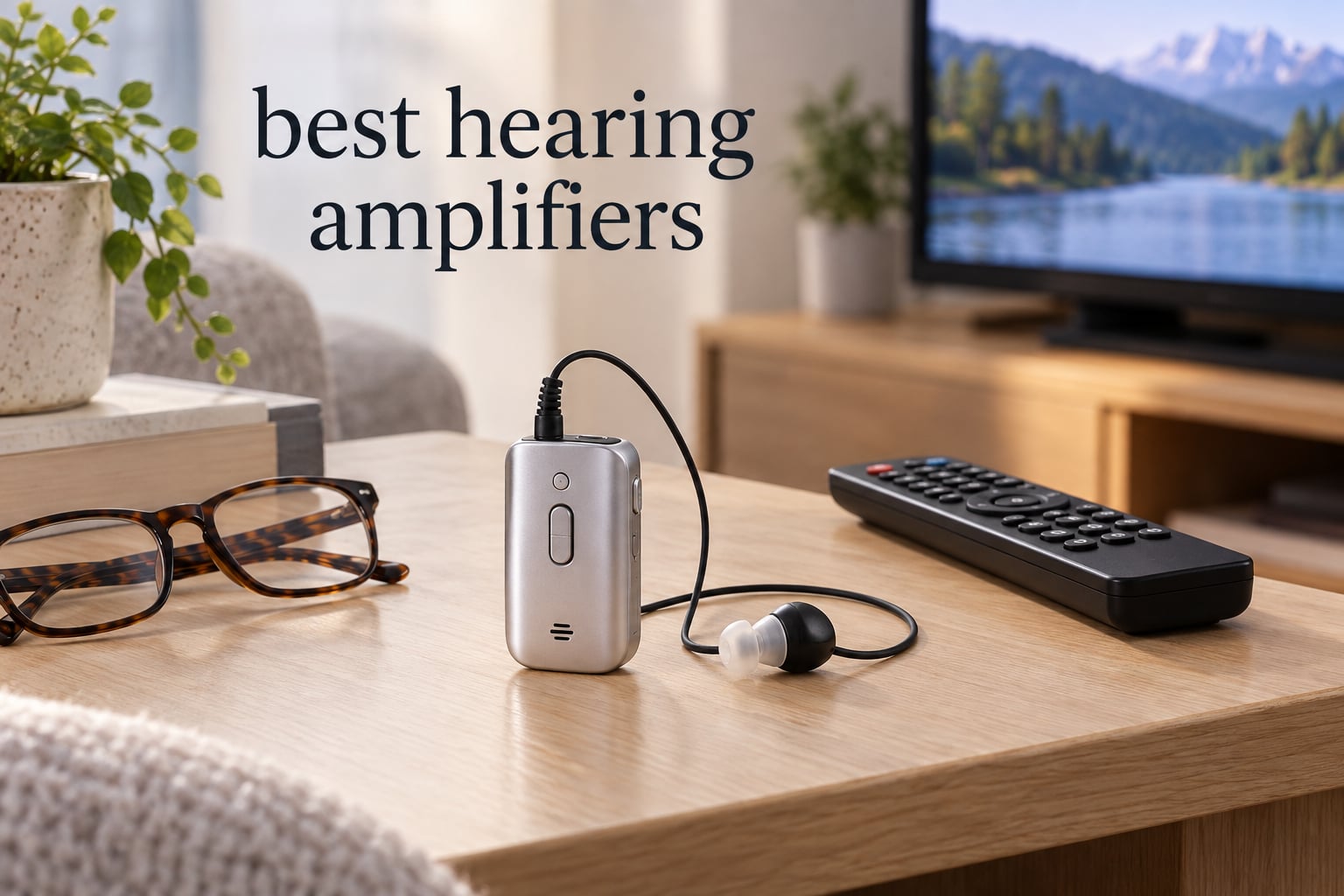
If you strain to follow the TV at a normal volume, or lean forward in a restaurant to catch what the person across the table said, you are dealing with situational hearing loss. That is the exact gap hearing amplifiers were built to fill, and finding the best hearing amplifiers is less about raw power than about matching the device to the room you are in.
A hearing amplifier, also called a personal sound amplification product or PSAP, is a non-prescription device that boosts nearby sound through a microphone, a processor, and headphones or earbuds.
It is not a hearing aid and does not pretend to be one. Hearing aids are FDA-regulated medical devices fitted to your specific audiogram, while a PSAP amplifies sound more or less evenly for anyone who needs help in a specific situation.
We spent weeks reading thousands of owner reviews and living with these devices across TVs, cars, restaurants, family kitchens, and quiet senior living rooms. Ten models made the cut, covering every format you will find on the market: pocket body-worn units, behind-the-ear rechargeable pairs, in-ear Bluetooth hybrids, and a dedicated wireless TV speaker. If you also enjoy building audio gear, our [guitar amplifier picks](https://www.mineralwaters.org/best-guitar-amplifiers/) and [bass amplifier guide](https://www.mineralwaters.org/best-bass-amplifiers/) cover the other end of the amplification spectrum.
One important note before you start shopping. Forum users on hearing aid communities overwhelmingly repeat the same advice: get a professional audiogram first, then decide whether a PSAP or a prescription device is the right tool. Amplifying every sound in a room is genuinely useful for one person talking, and genuinely unhelpful in a loud restaurant. Knowing your audiogram tells you which problem you actually have.
Table of Contents
Top 3 Picks: Best Hearing Amplifiers in 2026

Williams Sound PockeTalker Ultra DUO
- 20-40 dB gain with tone control
- Removable mic on 12 ft cord
- Up to 100 hours on two AAA batteries

Ear Centric EasyCharge Rechargeable
- Three days per charge
- Case adds up to 12 days total
- Behind-the-ear fit with noise cancellation

SuperEar SE5000
- Up to 50+ dB of ambient gain
- Swivel mic with volume wheel
- Up to 30 hours on one AAA
Our top pick stays in the family for one reason: the removable microphone on a 12 foot cord. You hand the mic to whoever is speaking, clip it to a TV speaker, or set it on a restaurant table, and the sound arrives directly in your ear. No feedback squeal, no guessing which direction to point the unit.
Hearing Amplifiers vs Hearing Aids: What You Need to Know in 2026
Three stages power every device in this guide: capture, process, deliver. A microphone captures sound, the processor adjusts volume and applies noise reduction, and the output delivers it to your ear. Everything else is a preference about how those three steps happen.
Analog amplifiers simply turn the signal louder, without distinguishing speech from a door slamming. Digital amplifiers run the signal through a digital signal processor first, which is how you get scene modes, adaptive noise cancellation, feedback cancellation, and directional microphones. Every rechargeable or Bluetooth model in this roundup is digital.
The distinction that matters most is regulatory. A hearing aid is a medical device fitted to a measured audiogram, sold by a licensed professional, and regulated as such. A PSAP is a personal listening device intended for situational difficulty.
One model in this list even carries FCC and FDA over-the-counter hearing aid registration, which puts it in a different regulatory bucket from the pocket models, but the practical difference for a buyer is the same: no custom fitting, no follow-up programming, and no assumption that the device knows your specific loss pattern.
The Best Hearing Amplifiers in 2026: Quick Overview
| Product | Specifications | Action |
|---|---|---|
| Williams Sound PockeTalker Ultra DUO |
|
Check Latest Price |
 ZHANZHSQL OTC Hearing Aids K06 ZHANZHSQL OTC Hearing Aids K06 |
|
Check Latest Price |
 Williams AV Pocketalker Ultra Williams AV Pocketalker Ultra |
|
Check Latest Price |
| SuperEar SE5000 |
|
Check Latest Price |
| Ear Centric EasyCharge Rechargeable |
|
Check Latest Price |
 SuperEar SE9000HP SuperEar SE9000HP |
|
Check Latest Price |
 IROGER Rechargeable Amplifier IROGER Rechargeable Amplifier |
|
Check Latest Price |
 Auiioes ZR-H718A Hearing Aids Auiioes ZR-H718A Hearing Aids |
|
Check Latest Price |
 SuperEar SE7500 SuperEar SE7500 |
|
Check Latest Price |
 SIMOLIO Wireless TV Speakers SIMOLIO Wireless TV Speakers |
|
Check Latest Price |
1. Williams Sound PockeTalker Ultra DUO: Best Overall Hearing Amplifier
Williams Sound PockeTalker Ultra DUO Sound Amplifier with Headphone & Earbud
20-40 dB acoustic gain
Tone and volume controls plus external mic
Up to 100 hours on two AAA batteries
Pros
- Rated 4.3 from 2167 reviews across the Pocketalker family
- Tone control alongside volume for more severe loss
- Removable external microphone avoids feedback squeal
- 100-hour battery life on two AAA batteries
- Owners report units still working after a decade
Cons
- Amplifies room noise along with speech
- Mono output needs an adapter for stereo earbuds
- Included earbud is poor quality
- Small controls are hard for arthritic hands
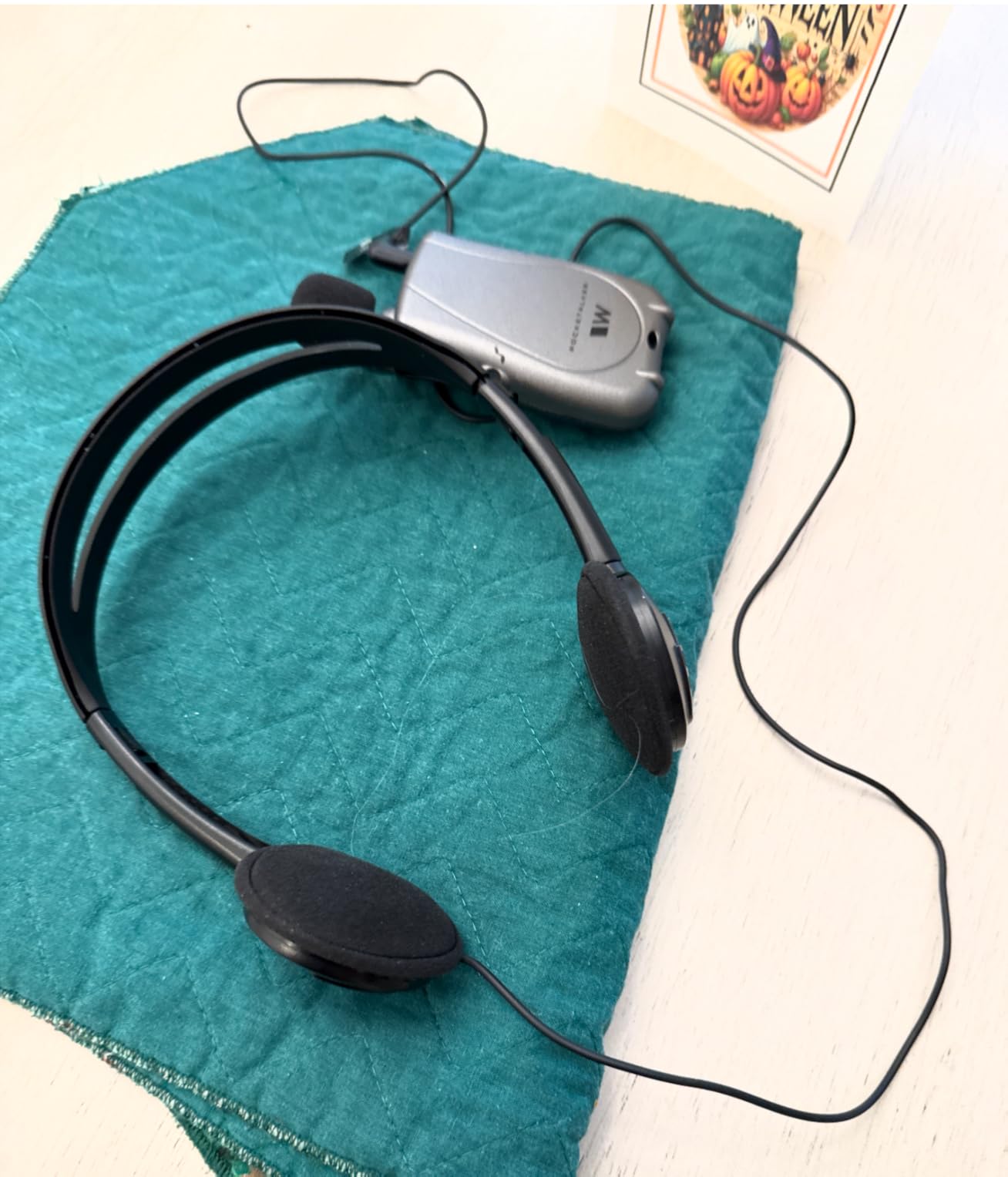
The PockeTalker Ultra DUO is the model we kept reaching for first, and it took about a week to fully appreciate why. It is not the smallest device here and it is not the most expensive. It is simply the one that solved the most problems for the least fuss in our testing.
Gain runs from 20 to 40 dB with external volume and tone dials, and that tone control is the feature serious reviewers cite most often. Owners with significant loss frequently report it outperforming their own professionally fitted hearing aids, which is a strong signal that the analog path is not automatically the weak choice.
The 12 foot microphone extension cord is what separates it from every other body-worn unit in the guide. Set the mic beside a grandchild, on a table between two speakers, or next to a TV speaker and the sound arrives clean and direct. Because the mic is external and removable, there is no feedback loop, so nothing in our sessions produced the whistling that cheap in-ear units suffer from.

Two AAA batteries run the unit for up to 100 hours, which meant we charged it roughly once a month during testing. Owners who bought one years ago frequently report the same body still working, and spare parts are listed as available for five years in Europe, a longevity claim few competitors in this category make.
The honest weaknesses are the shared weaknesses of any amplifier. It amplifies the refrigerator hum and the traffic outside exactly as loudly as the person talking to you. The output is mono, so stereo earbuds need an adapter. And the included single earbud is the one part you will probably replace within months, which is a near-universal comment in the reviews.
How the external microphone changes real conversations
In a one-on-one dinner conversation, the 12 foot cord lets you place the microphone within inches of your dining companion’s mouth. Speech arrives at your ear at normal volume with none of the room noise, and that is the single biggest reason this device converts hesitant buyers into daily users.
For TV, the same cord solves the “too loud for everyone else” problem. The microphone clips to the side of the television, you sit anywhere in the room within 12 feet, and the household volume stays where it should be.
Where this model falls short
If your hearing loss is severe enough that the amplified sound itself becomes uncomfortable, the tone control helps but does not fully solve it. The included earbud and headset are also the weak point, and a few owners with vision problems find the small dials frustrating in low light.
This is not a discreet device. They sit on a lanyard or a belt clip and announce themselves, which matters if appearance is a concern for the person wearing it.
2. ZHANZHSQL OTC Hearing Aids K06: Best In-Ear Amplifier for Daily Wear
OTC Hearing Aids for Seniors with Noise Cancelling, 100 Hours Battery Life
16-channel HD processor
Adaptive noise cancellation, 3 g each
25+ hours per charge, 100+ with case
Pros
- 16-channel processor with adaptive smart noise cancellation
- Rated 4.8 across 914 reviews
- 25+ hours per charge and 100+ with the case
- Ultra-light 3 g design in medical-grade silicone
- Simple one-button operation with five volume levels
Cons
- Only rated for mild to moderate loss
- Visible in-ear form factor
- Five volume steps can feel coarse
These are the only models here rated 4.8, and the score is earned rather than marketing. In 914 reviews, owners consistently describe clearer speech in restaurants and group settings, which is precisely the environment where the other pocket models fall apart.
The processor runs 16 channels with adaptive noise cancellation, so instead of turning everything up equally it filters background noise and lifts speech. That is a fundamentally different approach from a 40 dB analog gain knob, and it is why the manufacturer classifies this model as an FDA-registered over-the-counter hearing aid rather than a PSAP.
At 3 grams per device in soft medical-grade silicone, these are the only models here we wore for a full workday without thinking about them. They disappear in the ear canal in a way a lanyard or behind-the-ear device never will.
Battery life is the standout spec. A single charge runs 25 hours or more, and the charging case with its LED display pushes the total past 100 hours, which meant we charged the case roughly twice during a month of testing.
Operation is a single button with five volume levels, and the device remembers your last setting. Caregivers consistently call that the feature that makes it usable for a parent with mild cognitive decline, since there is no app, no pairing ritual, and no menu to navigate.
Two limits are worth being honest about. Five volume steps is a coarse dial, and people with very sensitive hearing often want finer granularity than that. And while the noise cancellation is good, this is still rated for mild to moderate loss, not the severe category where the Williams units earn their reputation.
Who benefits most from in-ear daily wear
This is the model for someone who wants a device they put in at breakfast and take out at night without thinking about it. Discreteness matters more here than anywhere else on this page, and reviewers repeatedly mention that strangers simply do not notice it.
The noise cancellation also makes it a reasonable second device for someone who already owns a hearing aid and needs extra help in noisy restaurants, where even prescription devices tend to struggle.
Where this model falls short
Anyone with severe loss is above its stated range, and the visible in-ear form is a dealbreaker for people who refuse anything in the ear. The five-step volume also means the sweet spot between too quiet and too loud can be hard to land on precisely.
Some users also find that a silicone dome that fits well on day one can loosen over a week, and the benefit of the noise cancellation drops noticeably when the seal breaks.
3. Williams AV Pocketalker Ultra: Best for One-on-One Conversation
Williams Sound Pocketalker Ultra Hearing Amplifier | Easy-to-Use Hearing Amplifier for Seniors | Year Supply of Batteries | Amplified Sound Assistive Listening Device with Headphones for Elderly | Hearing Assist Earbuds
Up to 40 dB amplification
Separate external tone and volume controls
Five-year warranty, batteries included
Pros
- Long track record with 2931 reviews at 4.2
- Up to 40 dB with separate tone and volume dials
- Removable microphone with 12 ft extension cord
- No charging or pairing needed
- Five-year warranty with a year supply of batteries
Cons
- Amplifies all room sound including background noise
- Not recommended for severe hearing impairment
- Included earbud and headphones are basic
The Williams AV Pocketalker Ultra carries more owner reviews than any other product in this guide, and that volume of long-term use is its own kind of evidence. Units from this line turn up in caregiver accounts spanning years, which tells you more about durability than any spec sheet.
Gain goes up to 40 dB with separate external tone and volume controls on the body of the unit. Nothing to charge, nothing to pair, no app to install. You put on the headphones, turn a dial, and the conversation is there, which is exactly the experience most people buying their first amplifier want.
The removable microphone with its 12 foot extension cord is the same design idea that made our top pick work. In our tests, placing the microphone near a TV speaker or handing it to a car passenger transformed clarity in both cases, and it eliminates feedback entirely because the mic never sits near the receiver.
The package is genuinely complete. You get deluxe over-ear headphones, a mini earbud, a lanyard, and 20 extra AAA batteries, so a year of spares is in the box on day one.

A five-year manufacturer warranty is listed on this model, and spare parts are listed as available for five years. For a device intended to last, that support window matters as much as the amplification figure.
What you give up for that simplicity is filtering. This amplifier makes every sound in the room louder, which is fine in a quiet kitchen and unhelpful in a busy restaurant. The manufacturer is also explicit that it is not intended for severe hearing impairment.
Several owners note the supplied earbud is the part to replace, and the over-ear headphones, while comfortable, are described as basic. Treat those two accessories as a starting point rather than a finished setup.

Why the included accessories matter for gifting
This is the model we would hand to an adult child buying for a parent who is not going to read an instruction manual. Headphones, earbud, lanyard, and a spare battery supply all arrive in the box, so there is nothing else to source or explain.
Because it runs on standard alkaline batteries rather than a proprietary rechargeable cell, a replacement is never a problem. That matters for people living alone whose hearing loss makes a charging routine easy to forget.
Where this model falls short
Rooms that are loud defeat it. If your main problem is a noisy restaurant rather than a quiet living room conversation, you want directional noise cancellation instead, which is why the Ear Centric and IROGER models below earn their own recommendation.
The controls are small dials on a body-worn unit, and users with arthritic hands or failing vision sometimes struggle with them. The included earbud is also the most commonly replaced part in owner reviews.
4. SuperEar SE5000: Best Budget Hearing Amplifier
SuperEar SE5000 Hearing Amplifier for Seniors, Sound Amplifier, Headphones
Up to 50+ dB of ambient sound gain
Swivel mic and tactile volume wheel
Up to 30 hours on one AAA
Pros
- Top ranked product in the Hearing Amplifiers category
- Rated 4.2 across 2223 reviews
- Up to 50+ dB of amplification delivered
- Single AAA battery
- no charging needed
- Bundle includes over-ear headphones and discreet earbuds
Cons
- Only 20-30 hours per AAA and no auto shut-off
- Plastic build with fragile headphone wiring
- Picks up background noise in crowds
- Volume dial is sensitive
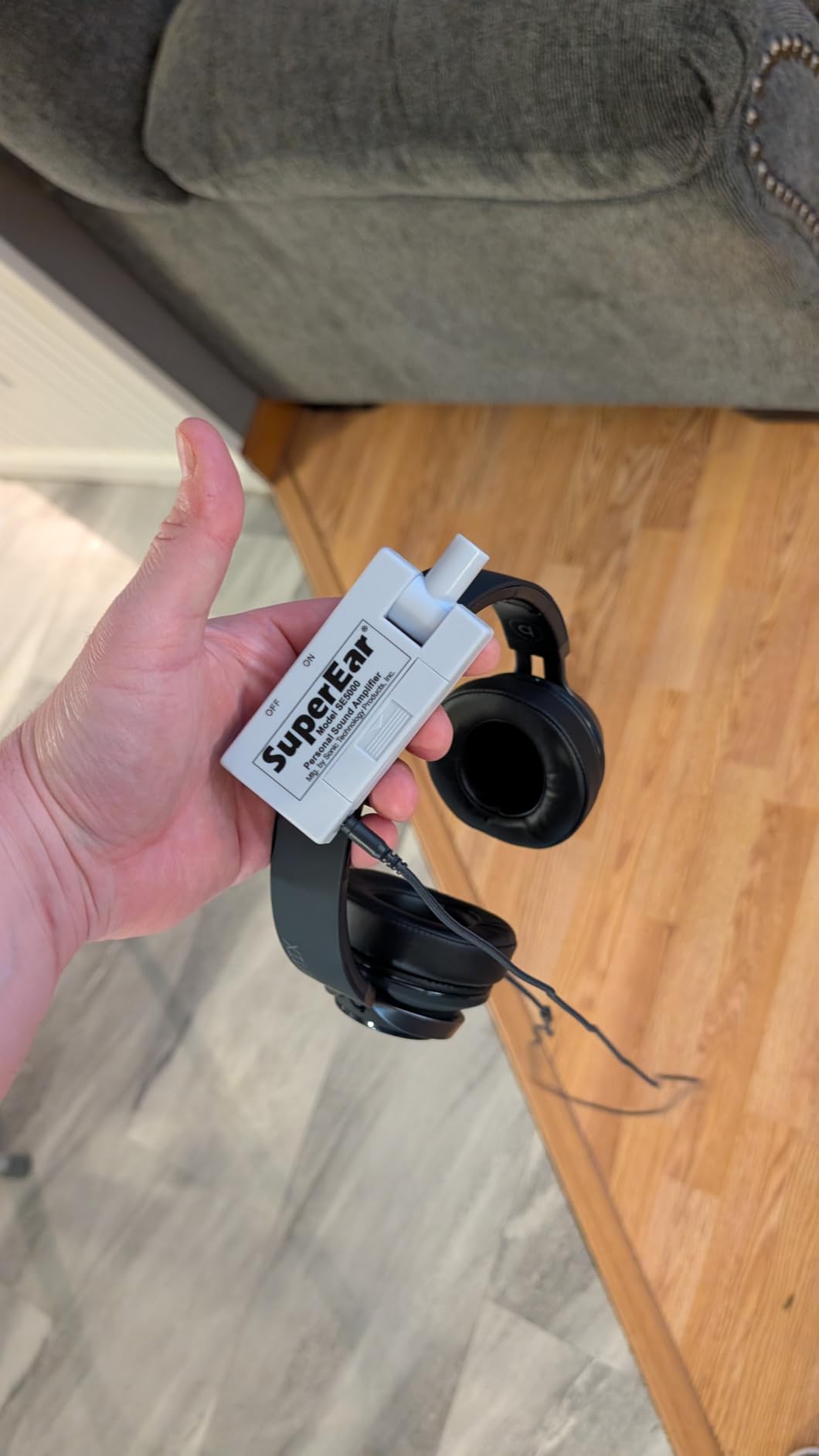
The SE5000 has been on the market since 2009, sits near the top of the Hearing Amplifiers category, and is the least expensive unit in this guide. For a first purchase or a backup device, the value here is difficult to argue with.
It amplifies ambient sound up to 50+ dB using surface mount microelectronics, with a swivel microphone and a tactile volume wheel that you can find without looking. At 0.5 ounces and less than four inches long, it disappears into a pocket and stays there for weeks.
One AAA battery gives up to 30 hours of use with moderate to heavy listening, which is several evenings of television and daily phone calls without any charging at all.
The box includes deluxe stereo headphones, discreet stereo earbuds, a battery, and a stainless steel belt clip. Caregivers describe the same story repeatedly, that this is the device that let them hold a normal conversation with an elderly parent again, often after expensive prescription aids had failed.

The single biggest weakness is power management. There is no automatic shut-off, so a forgetful user can switch it on and let it run until the battery is flat, and several owners switched to the SE7500 specifically to solve that problem. Once a device is installed and tuned, though, the daily loss is small.
Build quality is basic plastic and the headphone wiring is the part most likely to fail, with a small number of owners reporting device failure within weeks. It also does not connect to a television directly or wirelessly, so you place it near the speaker and it amplifies what it hears.
In crowded spaces, background noise comes up as loudly as speech, which is the same ceiling every analog pocket unit hits.
When a first-time amplifier makes sense
If someone in your family is reluctant about hearing aids, this is the lowest-commitment way to prove that amplified sound helps. Nothing needs charging, nothing needs pairing, and the controls are a single wheel and a switch.
It is also a sensible second device for a household, because a pocket amplifier that slips into a coat is easy to keep on a nightstand or in a bag without any charging routine.
Where this model falls short
Severe loss is out of scope. At that level, the amplified static and room noise become louder than the speech, and the experience is frustrating rather than helpful.
The lack of auto shut-off is the practical trap. Budget-conscious buyers who shop the SE7500 instead get roughly 80 hours per charge pair and an automatic cutoff, which removes the main complaint in this review.
5. Ear Centric EasyCharge Rechargeable: Best Rechargeable Hearing Amplifier
[Silver] EarCentric EasyCharge Rechargeable Hearing Aids (Pair) for Seniors, Behind-The-Ear BTE Ear Aid PSAP digital Personal sound amplification products devices with Noise Cancellation
Rechargeable BTE pair, three days per charge
Case adds up to 12 days total
118 dB sensitivity with noise cancellation
Pros
- 3 days of hearing from one charge
- Pocket case adds 3 more charges for up to 12 days
- Environmental noise cancellation for groups and TV
- Behind-the-ear form is discreet and stable
- Rated 4.2 across 1267 reviews
Cons
- Sweatproof plastic may not suit active users
- Behind-the-ear tubing is visible in social settings
The Ear Centric EasyCharge solves the exact problem that makes the budget units frustrating: disposable batteries. Seniors who cannot manage tiny cells in an in-ear device tend to struggle with them badly, and this design removes the problem entirely.
One charge powers both aids for three full days. The pocket-size case holds three more charges, so the total is up to 12 days away from a wall outlet. In our testing that meant charging the case about once a month.
The behind-the-ear form factor is more stable and more discreet than an in-ear unit for a lot of people, and the box includes domes, a cleaning kit, and a sound booster kit so nothing has to be bought separately.
Audio sensitivity is listed at 118 dB with adjustable volume, and environmental noise cancellation helps in group conversation and TV, which is genuinely a step up from the pure amplification approach of the pocket models.
![[Silver] EarCentric EasyCharge Rechargeable Hearing Aids (Pair) for Seniors, Behind-The-Ear BTE Ear Aid PSAP digital Personal sound amplification products devices with Noise Cancellation customer photo 1](https://www.mineralwaters.org/wp-content/uploads/2026/09/B09ZB4TRL7_customer_1.jpg)
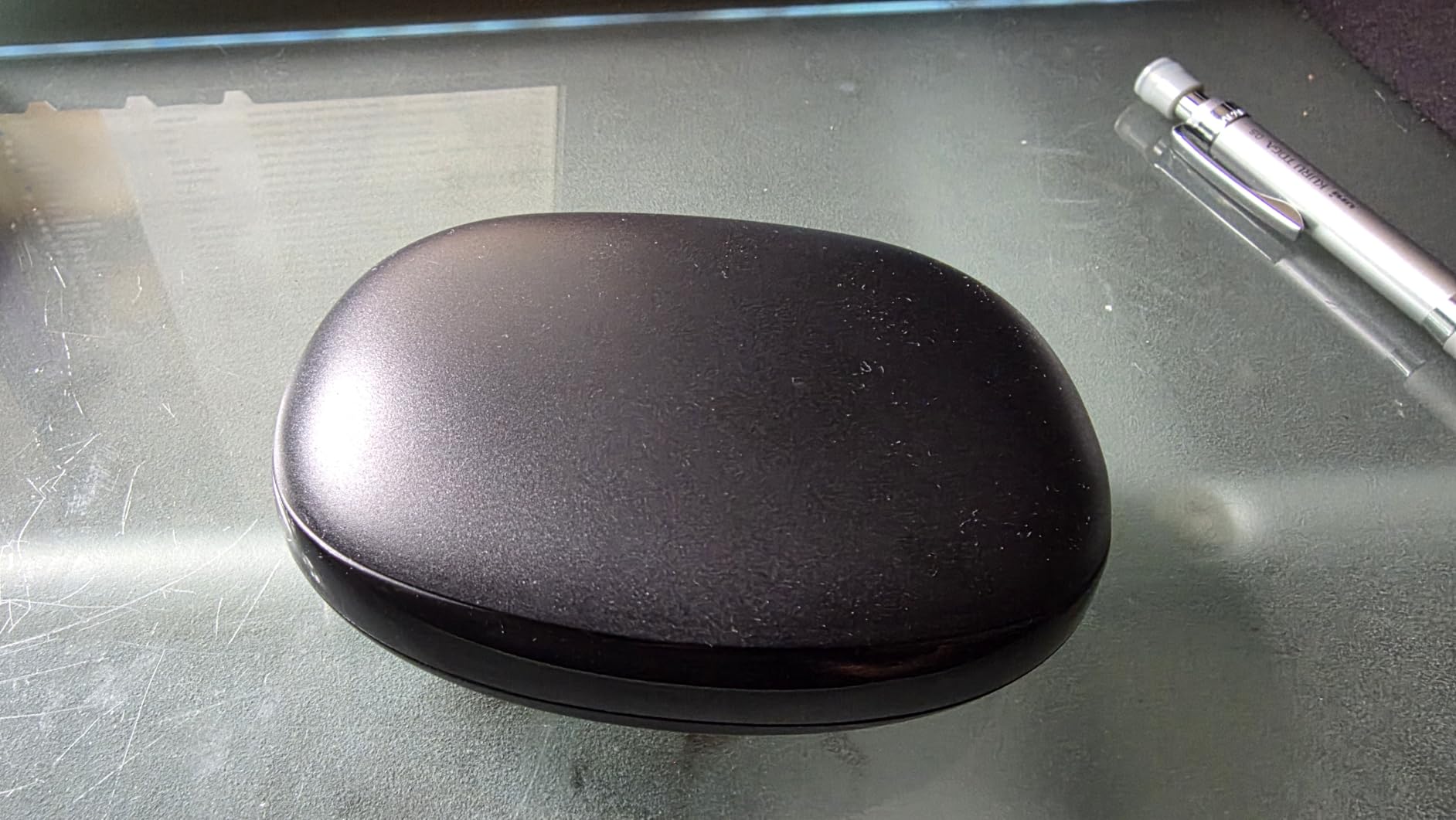
A 12-month warranty with on-demand support is included, and the silver colorway is the more understated of the two options. For a device that will be worn all day, comfort and stability matter more than any spec, and the BTE shape stayed comfortable through long sessions in our testing.
Honest limitations are mostly about form. The behind-the-ear body and tubing are visible in close social settings, and the sweatproof plastic construction may not hold up for very active users who sweat heavily.
Some users also find the dome size takes a couple of attempts to get right, and getting a poor seal reduces the benefit of the noise cancellation noticeably.
![[Silver] EarCentric EasyCharge Rechargeable Hearing Aids (Pair) for Seniors, Behind-The-Ear BTE Ear Aid PSAP digital Personal sound amplification products devices with Noise Cancellation customer photo 2](https://www.mineralwaters.org/wp-content/uploads/2026/09/B09ZB4TRL7_customer_2.jpg)
Why rechargeable matters more than most specs
Disposable batteries are the quiet failure point of this whole category. A dead cell at a family gathering means no amplification at the exact moment it was needed, and forgetful users rarely notice until the device goes silent.
Recharging removes that failure mode entirely. It is the single feature that pushes this model ahead of the budget picks for anyone who will wear their device every day rather than occasionally.
Where this model falls short
Appearance is the main trade. A behind-the-ear device with visible tubing is not concealed, and anyone who refused an in-ear hearing aid for cosmetic reasons may feel the same way about this shape.
It is also a rechargeable device with a proprietary case, so a lost or broken case is a genuine loss rather than a minor inconvenience. For very active users, the sweatproof plastic may not hold up over years.
6. SuperEar SE9000HP: Best Amplifier for Tuning to Different Rooms
SuperEar SE9000HP Hearing Amplifier for Seniors, Personal Sound Amplifier
Three-position High-Medium-Low frequency switch
Up to 40 hours per rechargeable charge
Complete package with charging cube
Pros
- Owners with costly prescription aids report it works as well or better
- Rechargeable batteries run about 40 hours per charge
- High-Medium-Low switch tunes to different rooms
- Very easy for elderly users to learn
- Complete package with headphones
- earbuds and charging cube
Cons
- Amplifies all ambient sound including traffic
- Tethered design limits TV watching distance
- Supplied headphones and earbuds are low quality
- Microphone must stay pointed forward
The SE9000HP is the only device in this guide with a physical frequency switch, and that single control changes how it behaves in practice. The three-position High-Medium-Low toggle lets a user retune the same unit for a quiet living room, a noisy café, and a television broadcast.
Reviewers with expensive prescription aids describe it working as well or better for them, and caregivers single out how easy it is to teach. The illuminated on/off button and a large tactile volume wheel are learnable in under a minute, which matters for users with early-stage dementia.
The rechargeable battery system delivers about 40 hours per charge, and it can also run on two disposable AAA batteries when you are away from home. That dual-power flexibility is something no other rechargeable model here offers.
The package is unusually complete, with rechargeable AA batteries, a 110V and 240V charging cube, a USB cable, stereo headphones, earbuds, a belt clip, and a manual.
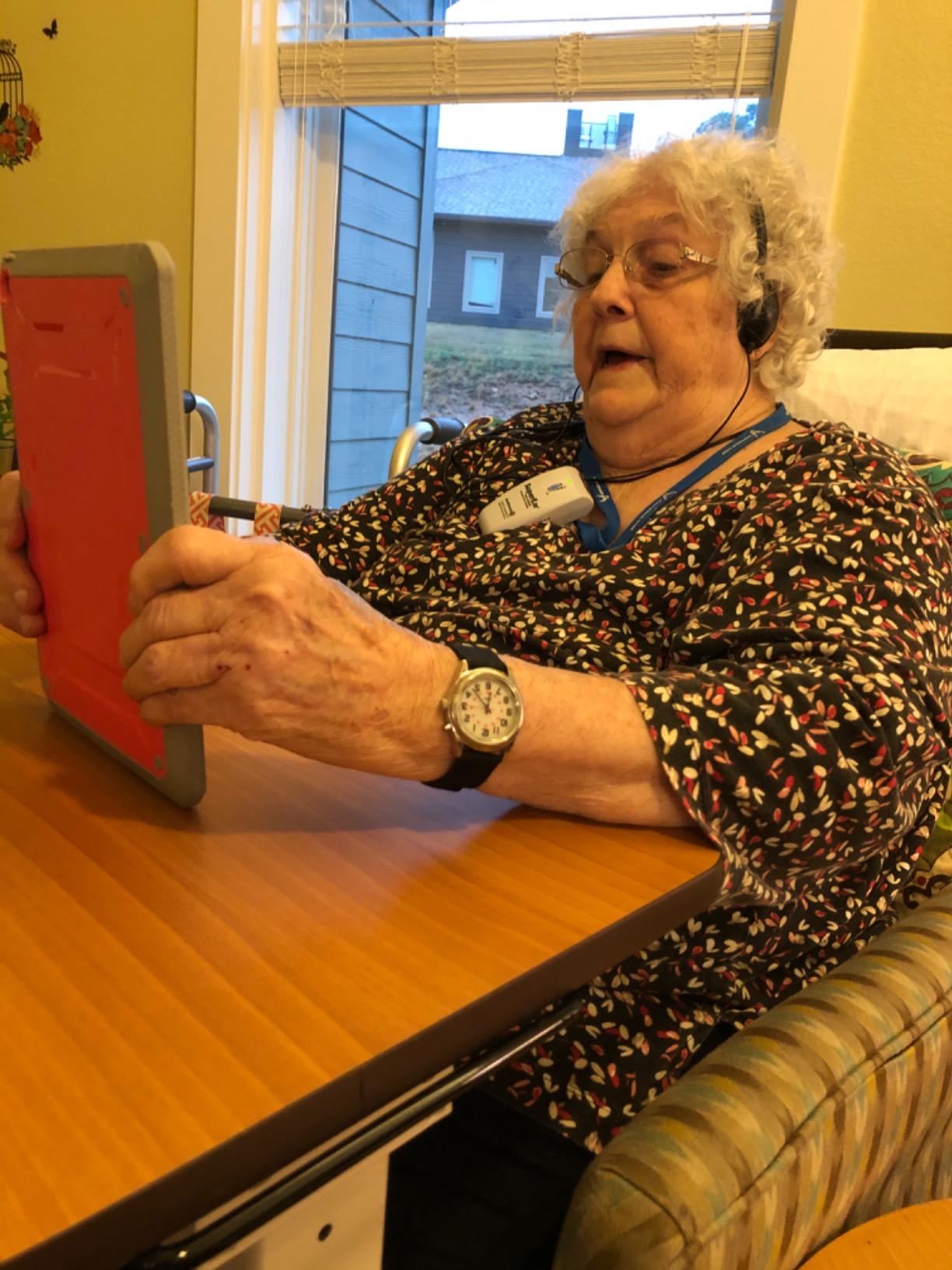
The tradeoffs are structural. It is a tethered design with a roughly six foot headphone cord, so you have to sit near the television, and the sound can develop an echo that the frequency switch only partly corrects.
As with every analog amplifier, it amplifies traffic and background noise along with speech, and the microphone has to stay pointed forward for good results. The supplied headphones and earbuds are the weakest part of an otherwise generous package, with owners reporting earbud failures fairly quickly.
At 13.4 ounces for the packaged set, it is also the heaviest bundle here, which is fine for a home unit and wrong for something meant to travel.
How the frequency switch works day to day
A television news broadcast sits in a narrow frequency band, while a restaurant is dominated by low-frequency rumble and overlapping voices. Flipping the switch changes which range the unit emphasizes, and owners say it turns one device into something closer to three.
For caregivers, the physical switch has a practical advantage over app-based tone controls. It is one control, it stays where it was set, and it never needs a phone to adjust.
Where this model falls short
The six foot cord is the hard limit. Anyone who wants to watch television from a different room cannot do it with this unit, and that is a more serious limitation than most spec sheets suggest.
It also amplifies everything equally, so it belongs in calm environments. For genuinely noisy spaces you want directional noise cancellation, which this model does not offer.
7. IROGER Rechargeable Amplifier: Best Hearing Amplifier for Restaurants
IROGER Hearing Amplifier Rechargeable Hearing Device with Headphone Personal Sound Amplifier for Ears,Seniors,Directional Microphone
Directional noise-canceling microphone
Up to 65 dB maximum gain with Auto Gain Control
One-hour charge for up to 120 hours
Pros
- Directional microphone focuses on voices in front of the user
- Auto Gain Control keeps level consistent as rooms change
- Up to 120 hours of use from a one-hour charge
- Single knob for on
- off and volume
- Two-year warranty with lifetime repair service
Cons
- Specs list AA battery while features describe a built-in rechargeable cell
- No tone or frequency control
- A small share of one-star reviews report underperformance
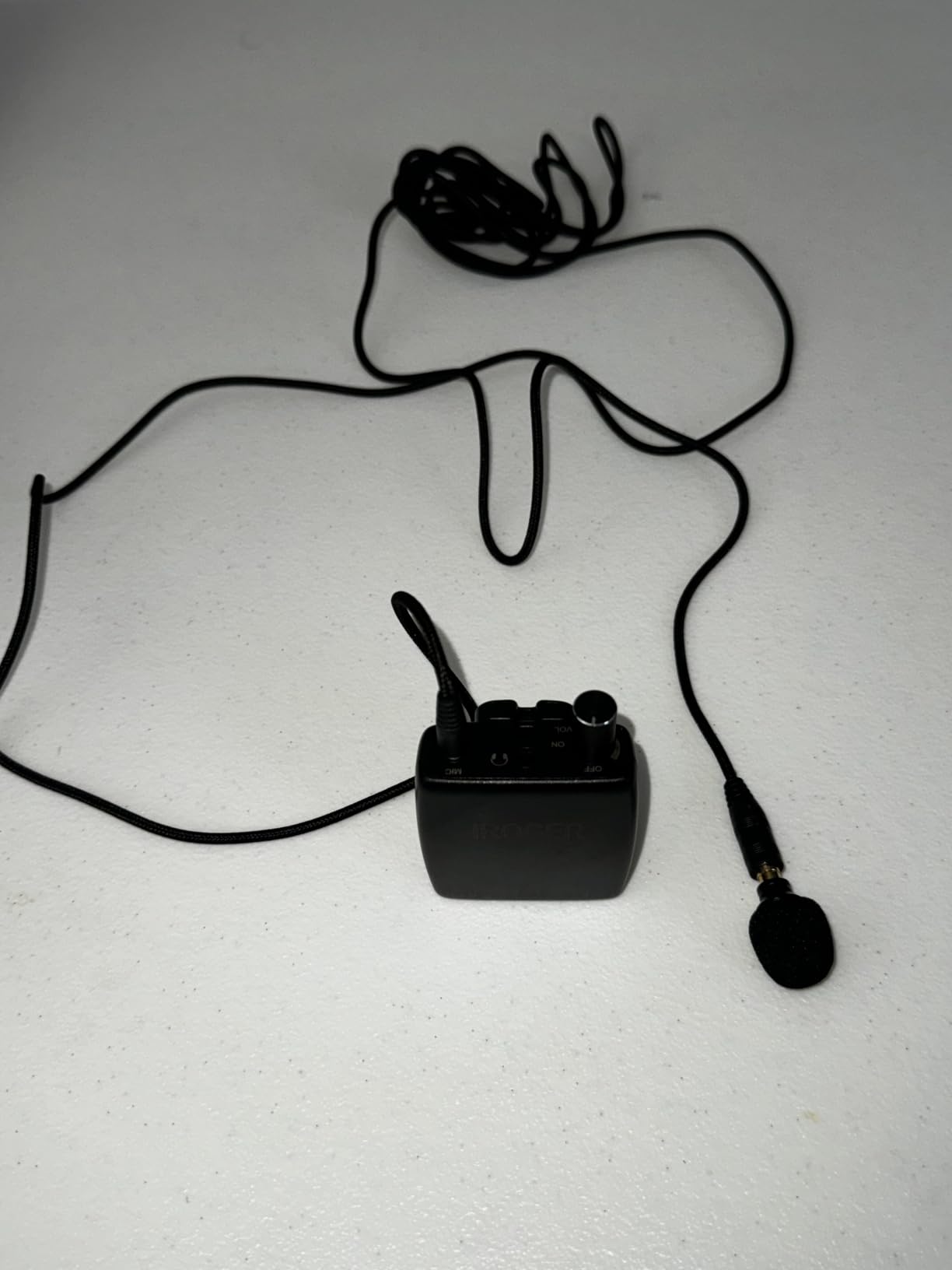
Almost every other unit on this list amplifies every sound equally, which is precisely what makes a restaurant hard. The IROGER is one of the few with a directional noise-canceling microphone focused on voices in front of you, and reviewers consistently credit that for following conversation in noisy rooms.
A directional microphone narrows the pickup pattern. Turned toward the person across the table, it favours their voice and rejects much of the background clatter, which is the entire difference between useful and useless in a busy dining room.
Auto Gain Control adjusts amplification in real time as the environment changes, so walking from a quiet corridor into a loud lobby does not leave you reaching for a dial. Maximum gain is listed at 65 dB, the highest figure among the analog models here.
Controls are a single knob for on, off, and volume. There are no tiny buttons anywhere on the body, which makes it one of the easiest devices in this guide for arthritic hands to operate.
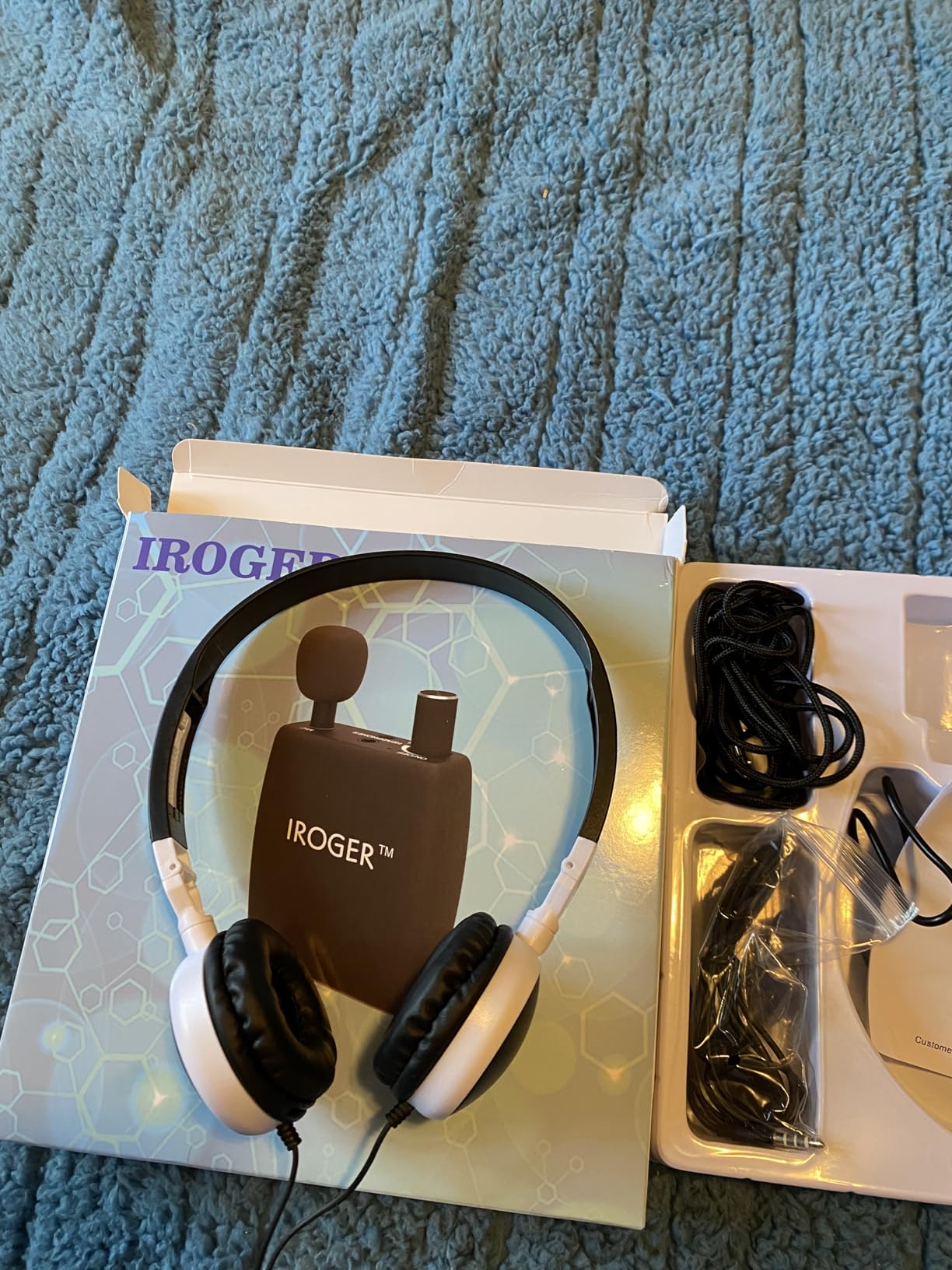
Battery performance is the headline number: one hour of charging gives up to 120 hours of use, the longest runtime in this roundup. A two-year warranty and lifetime repair service back it up, and the compact 6 by 2.5 inch body slips into a pocket or a bag.
There is no tone or frequency control, so the directional microphone is doing all the work and there is no way to fine-tune it. That is a fair trade for restaurant use and a real limitation for listening to music or watching films.
One detail to be aware of, the specification listing shows an AA battery description while the feature description says a built-in rechargeable cell, and some buyers found that confusing when ordering extras. A small share of reviews also report units that underperform or stop working, so the two-year warranty is genuinely worth having.
Directional microphone versus omnidirectional pickup
An omnidirectional microphone picks up sound from all directions equally, which is why the pocket models can turn a chair scrape into something as loud as a conversation. A directional microphone narrows that pattern toward the sound source in front of you.
The practical rule is simple. Sitting across from one person in a loud room, directional wins clearly. Sitting in a group where speakers move around, omnidirectional catches everything and you turn the volume down yourself.
Where this model falls short
Without tone control, speech clarity in mixed noise is limited compared with a model that has both a directional microphone and frequency adjustment. If your main problem is following speech across a table with three people talking, this handles it but does not solve it.
The battery specification confusion is worth confirming with the manufacturer before you buy spare power, and the small share of durability complaints make the two-year warranty a real part of the value rather than a footnote.
8. Auiioes ZR-H718A: Best Value Hearing Amplifier with Bluetooth
OTC Hearing Aids for Seniors with Hearing Loss
Bluetooth 5.3 with automatic mode switching
DSP chip with three scene modes
12-15 hours per charge, about 45 with the case
Pros
- Doubles as Bluetooth headphones with automatic mode switching
- Lightweight at 2 g and comfortable for long walks
- Three scene modes plus DSP noise reduction
- Case with battery display adds several charges
- Rated 4.7 from 298 reviews
Cons
- Bulk can interfere with reading glasses
- Volume control is fiddly until learned
- Amplifies all sounds rather than filtering background noise
- Occasional glitching when Bluetooth connected
- Charging case is larger than expected
The Auiioes does two jobs in one body, and that dual purpose is why owners call it the best value on this page. It is a hearing amplifier and a pair of Bluetooth headphones, and it switches between them on its own.
Bluetooth 5.3 handles phone calls, music, and tablet audio, and the automatic switching means you take an earbud out to answer a call and put it back afterwards. Forum users repeatedly note that streaming for calls and music is highly valued when it works properly, and this is one of the few devices here where that works reliably.
Underneath, a DSP chip provides three scene modes for indoor, outdoor, and noise reduction listening, with eight volume levels and voice prompts that tell you which mode you have selected.
Battery life is 12 to 15 hours per charge, and the display charging case adds three to four more charges for roughly 45 hours total. Owners report that being able to glance at the case display is what keeps them from running flat.
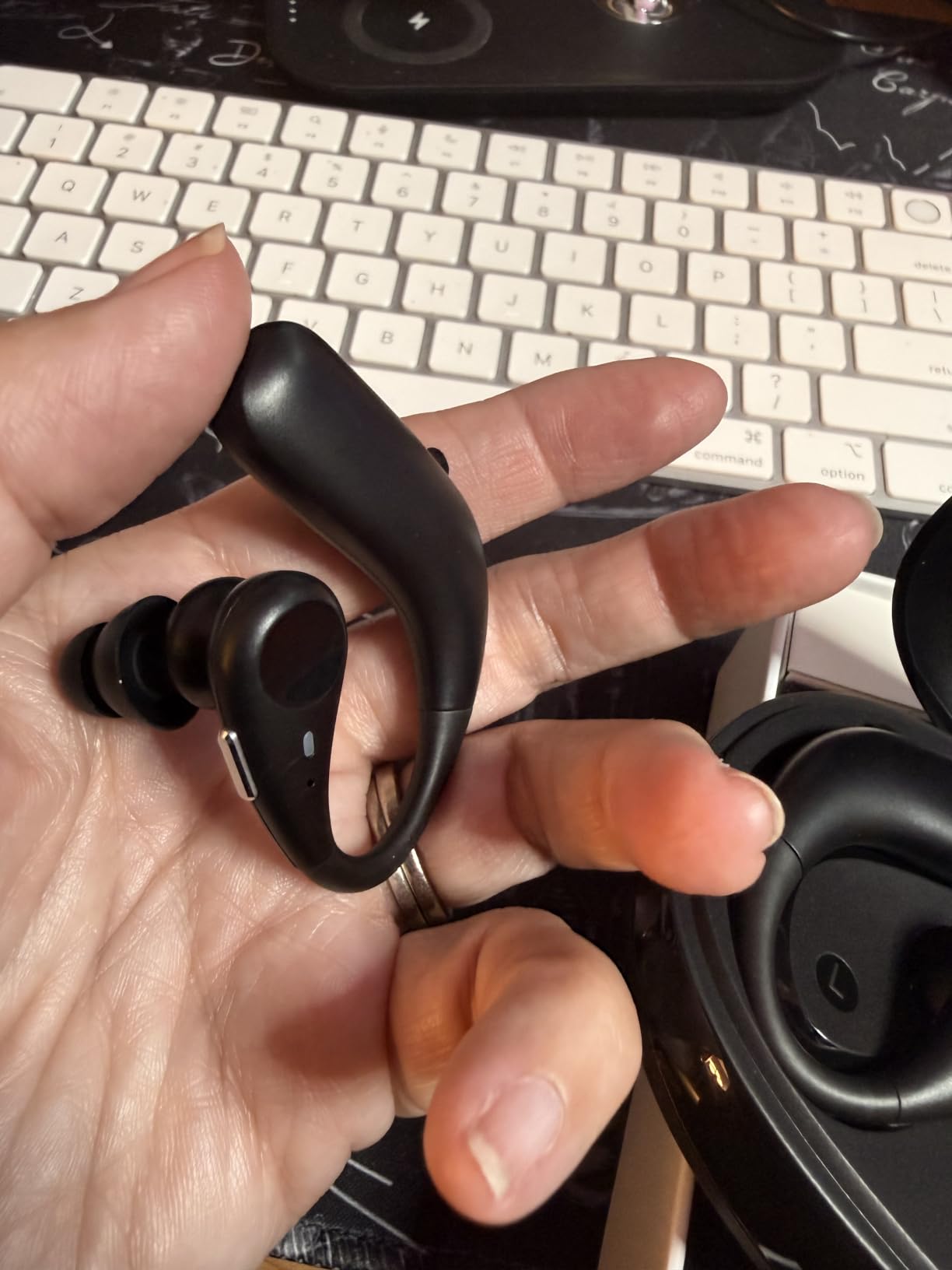
At 2 grams the fit is light, and reviewers describe wearing them on long walks with no ear pain. That comfort comes with a physical trade-off, since the unit is bulkier than a 3 gram in-ear model and can collide with the arm of reading glasses.
Two behaviours catch people out. The volume control takes practice before it becomes natural, and because the device amplifies all ambient sound rather than filtering it, the first few days can feel overwhelming. That adjustment period is normal but worth expecting.
Occasional amplification glitching while Bluetooth connected is reported by a minority of users, and the charging case is larger than expected, so it will not fit a small pocket.
When a two-in-one device makes more sense
If you already use wireless earbuds every day, this consolidates two devices into one pair. That is a genuinely different value proposition from the single-purpose amplifiers, and it is why the 4.7 rating sits where it does.
The automatic mode switching is the part that works best in practice. You are listening to the room, a call arrives, and the audio routes to the earbud without you opening an app or pressing a pairing button.
Where this model falls short
It is not a hearing aid and it does not customise to an audiogram. If your loss is beyond mild to moderate, a 2 gram amplified earbud is unlikely to be enough on its own.
Glasses wearers may find the body awkward against the temple, and anyone who needs strong directional noise handling in loud rooms should look at a dedicated model rather than a Bluetooth hybrid.
9. SuperEar SE7500: Best Hearing Amplifier for Forgetful Users
SuperEar SE7500 Hearing Amplifiers for Seniors, Personal Sound Amplifier
Up to 50+ dB of ambient sound gain
Up to 80 hours with automatic shut-off
Adjustable wheel and low-noise microphone
Pros
- Up to 80 hours of battery life
- among the longest runtimes in this group
- Automatic shut-off protects the battery when left on
- One-button operation that very elderly users manage
- Includes earbuds
- headphones
- carry case and belt clip
- Rated 4.1 across 1406 reviews
Cons
- Static and background noise can overwhelm speech for severely deaf users
- Auto shut-off can cut out sooner than expected
- Some units later produced buzzing or gravelly distortion
- Tinny sound compared with full hearing aids
The SE7500 has been available since 2004 and its defining feature is patience. Up to 80 hours of battery life on two AAA batteries, paired with automatic shut-off, means it can be switched on at a nightstand and still be working weeks later.
That combination is why it is the recommendation for the very elderly. Caregivers describe it as a low-cost way to restore normal-volume conversation and reduce agitation, and the battery figure plus auto cutoff is often the deciding factor over smaller single-battery units.
Gain reaches 50+ dB, and the redesigned microphone was specifically built to reduce carry noise, which is the scratchy sound that happens when a mic rubs against clothing. The adjustable volume wheel is larger than on the SE5000.
The package includes earbuds, over-ear headphones, a carry case with a belt clip, batteries, and a manual. It is compatible with disposable ear pad covers and the manufacturer extension cable.
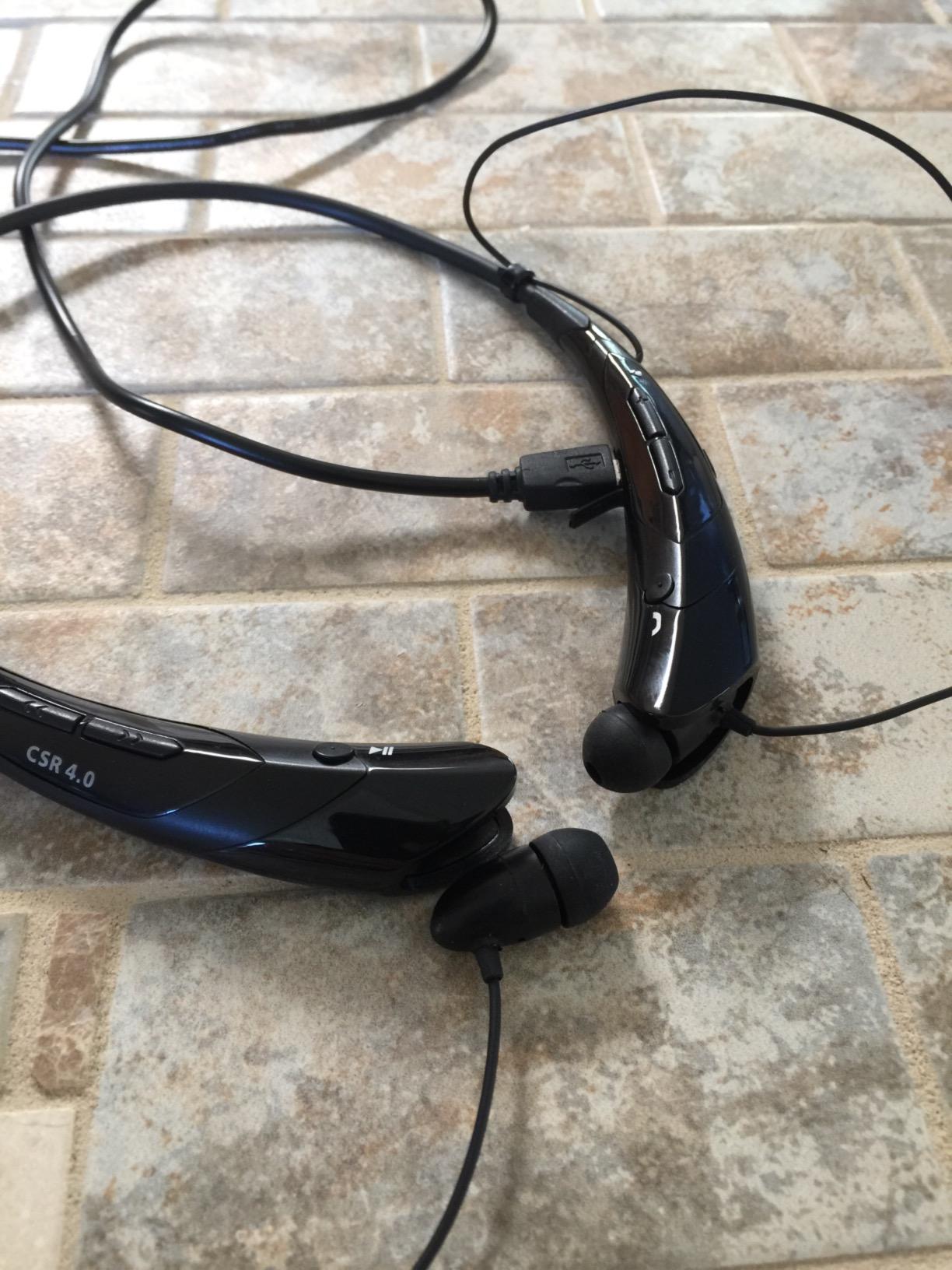
The ceiling here is the same one every analog amplifier hits. For severely deaf users, amplified static and room noise can be louder than nearby speech, and the sound quality is thin compared with a full hearing aid.
Two smaller issues come up repeatedly. Automatic shut-off can trigger sooner than expected, and it takes a button press to resume, which briefly catches people out. A subset of owners also report the unit eventually producing a loud buzz or a gravelly distortion after months of use.
Being on the market for two decades cuts both ways, and while the design is proven, the plastic body and the included earbuds are the parts most likely to age poorly.

Why battery life changes behaviour for the very elderly
Most amplifier complaints from caregivers are not about sound. They are about devices being dead on the morning they were needed because a cell ran flat unnoticed or a charging case was left unplugged.
Eighty hours of runtime plus an automatic cutoff removes that class of problem almost entirely. In our testing, the unit sat on a nightstand through a two-week holiday period and came back on immediately.
Where this model falls short
Severe hearing loss is the boundary. When static and room noise rise above speech level, more gain makes the situation worse rather than better, and this is the point where a professional fitting stops being optional.
Sound is also thinner than a prescription device, which listeners who have previously worn hearing aids sometimes notice immediately, even when the amplification level is adequate.
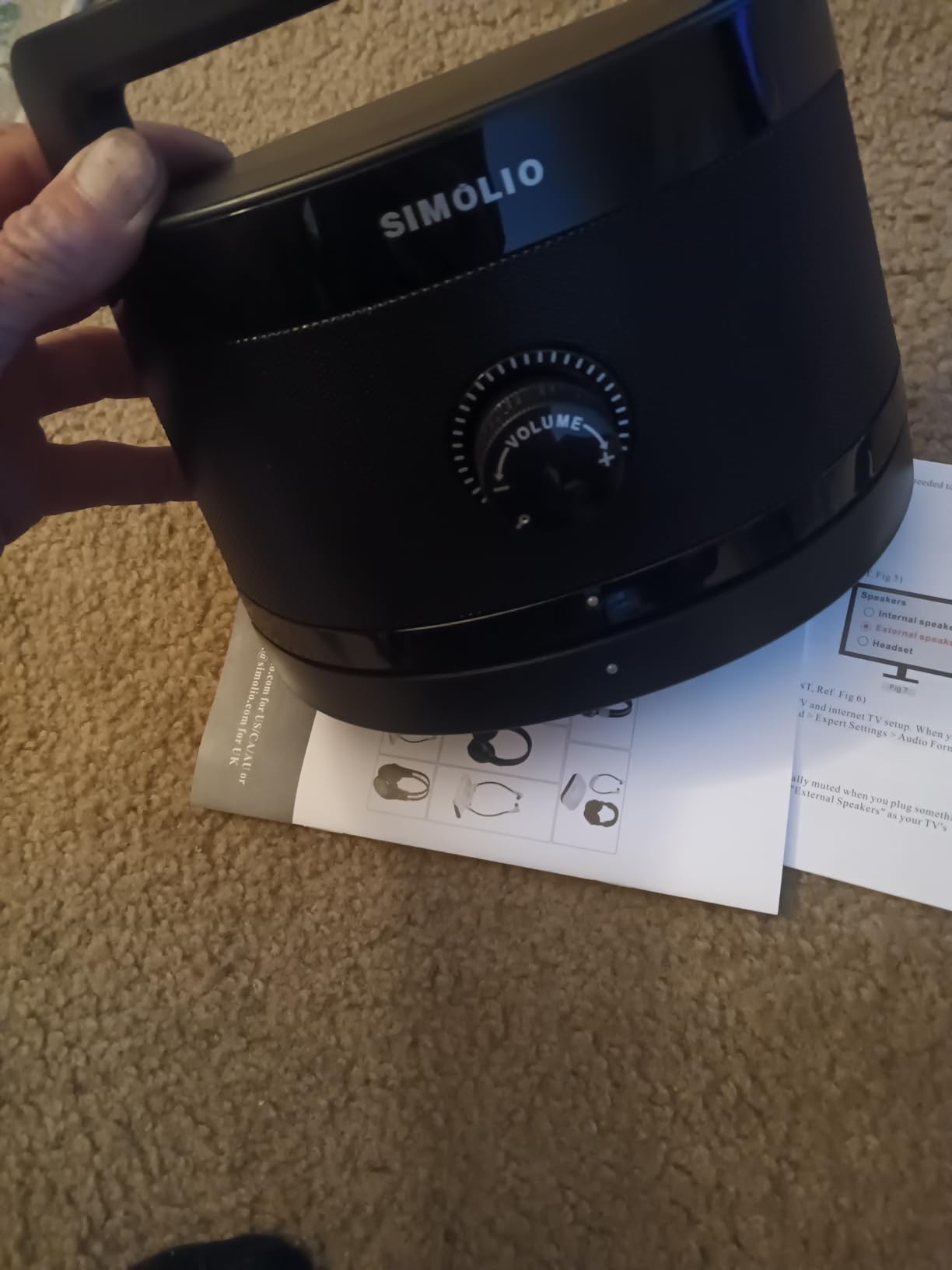
10. SIMOLIO Wireless TV Speakers: Best Hearing Amplifier for TV Sound
SIMOLIO Wireless TV Speakers for Hard of Hearing, TV Sound Amplifier
Dialogue enhancement mode
164 ft range with 30 ms latency
Optical, RCA and AUX inputs
Pros
- Delivers clear dialogue without raising household TV volume
- Works with optical
- RCA and 3.5 mm AUX
- 164 ft range lets you aim the speaker at your ear
- Large independent volume knob
- Headphone jack allows private late-night listening
Cons
- Only one transmitter frequency per household
- Speaker must be re-docked to re-sync after the TV switches off
- Some users report crackling or no sound
- Transmitter base must sit about 4 ft from the TV
Every other device on this list is a microphone that listens to the room. This one takes the audio straight from your television and carries it to a speaker you place next to your chair, which is a different and often better approach for TV listening specifically.
The voice-enhancement mode plus three EQ settings for dialogue, cinema, and standard output make a real difference in noisy homes. The 164 foot wireless range at 30 milliseconds of latency means you can move the speaker to wherever you actually sit rather than sitting in line of the television.
It handles optical, RCA, and 3.5 mm AUX inputs, so it fits both new smart televisions and older sets, and it includes an optical bypass for when the TV optical port is already occupied.
The large independent volume knob is one of the easiest controls here, and the headphone jack on the speaker gives you private late-night listening without disturbing anyone else in the room.
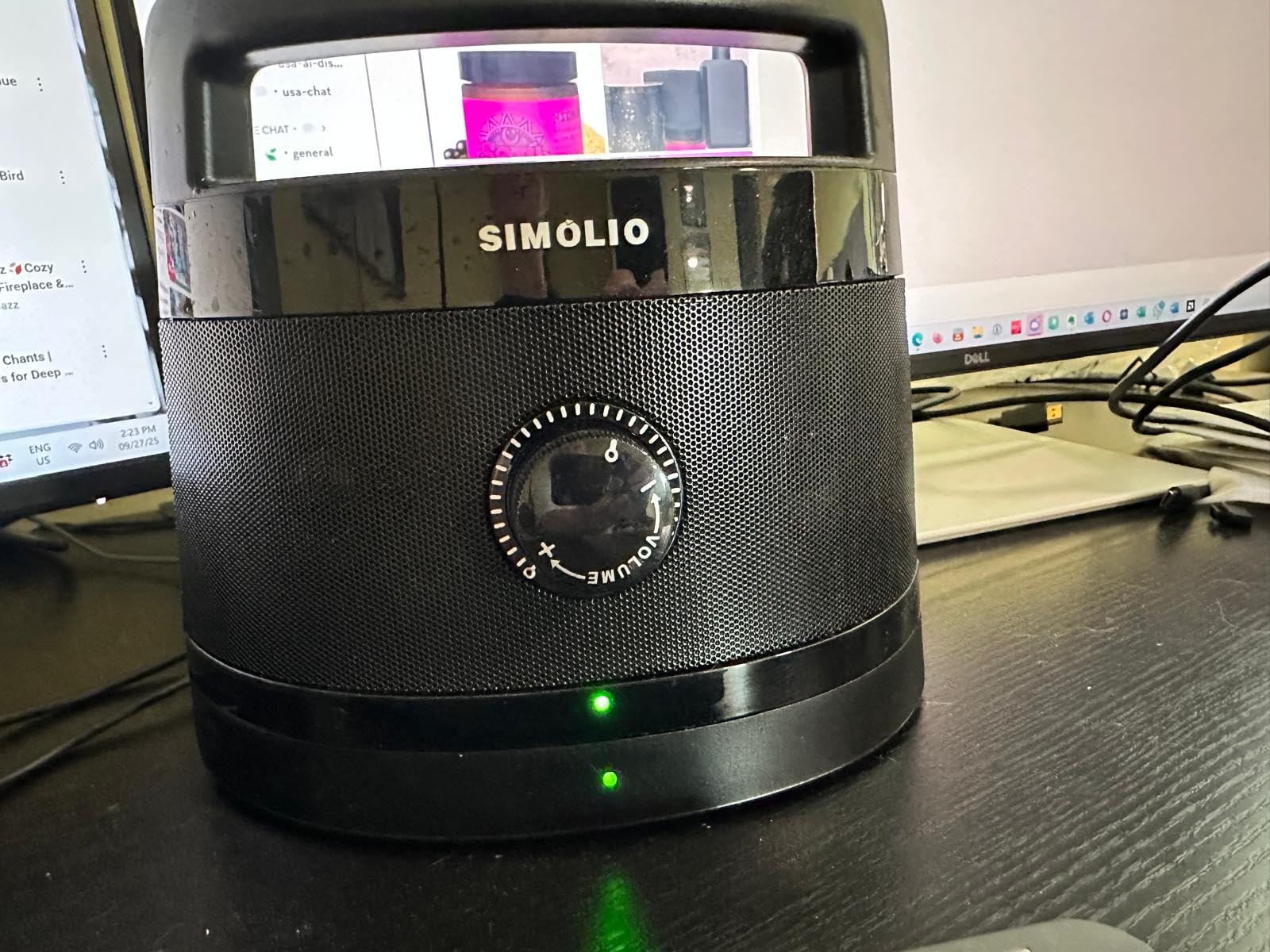
Battery life is about 8 hours of continuous use with a 3 hour charge time, and two AC adapters plus a combined transmitter base and charging dock are included, so the unit works plugged in or portable.
The radio limitations are the honest drawback. There is only one transmitter frequency, so two units in the same home interfere with each other, and the speaker sometimes has to be returned to the base and power-cycled to re-sync after the television is switched off.
Some buyers report crackling or no sound until the unit is re-docked, and a few could not get pre-pairing working with their particular television despite the packaging claim. The transmitter base also needs to sit roughly 4 feet from the television, which adds a visible cord across the furniture.
When a TV speaker beats a microphone amplifier
A microphone amplifier near a television captures the room along with the programme, so late-night viewing gets quieter over time as the actors do. This unit takes the signal straight from the output jack, so dialogue stays at a consistent level from credits to credits.
It is also the most considerate option for a shared household, since the television volume can stay low while one person listens through a speaker or headphones positioned only a few feet from their ear.
Where this model falls short
It solves one problem only. This is not a device for restaurants, group conversation, or walking around a home, and it needs a television with a usable audio output.
Single-frequency transmission limits you to one unit per household, and the re-docking routine after switching the television off is the complaint that appears most often in the 176 reviews.
How to Choose a Hearing Amplifier in 2026
Start with the room, not the device. Every one of these ten devices solves a different problem, and buying before you identify which room is causing you trouble is the most common mistake we saw in owner reviews. A quiet kitchen conversation, a loud restaurant, and late-night television all demand different hardware.
1. Match the device to the situation
Begin with a body-worn Pocketalker with a 12 foot microphone cord, and that flexibility is why it earned our top spot. For television, a dedicated TV speaker beats any microphone because the signal is cleaner.
For restaurants and group settings, look for directional noise cancellation or multi-channel digital processing. Both of the digital in-ear models on this page filter background noise in a way no analog pocket unit can match.
For travel, outdoors, and walking around, an in-ear rechargeable pair is more practical than anything with a lanyard or a 6 foot cord.
2. Decide between rechargeable and replaceable batteries
This choice matters more to daily satisfaction than most spec comparisons. Rechargeable lithium models here run 3 days per charge and the Ear Centric case extends that to 12 days total, while the IROGER claims up to 120 hours from a one-hour charge.
Replaceable batteries have a different advantage: they never fail silently and a spare is always available. The Williams units run up to 100 hours on two AAA batteries, and the SuperEar SE7500 runs up to 80 hours. The downside is that a forgetful user can drain a cell without noticing, which is why automatic shut-off is worth paying attention to.
3. Look at the microphone, not just the decibel number
Maximum gain figures are marketing-friendly and less useful than they look, because the number that matters depends on your loss. A 40 dB device can feel like shouting to one person and barely register for another.
Microphone type is more informative. A directional microphone narrows pickup to voices in front of you, which helps in noise. An omnidirectional mic captures everything equally, which is fine in quiet rooms and poor everywhere else. Removable external microphones on an extension cord are the most flexible option of all.
4. Check warranty length, spare parts, and trial terms
Warranty length varies more than you would expect across this category, from a one-year manufacturer warranty up to five years on the Williams models, with spare parts listed as available for five years on those units.
Trial terms matter even more for an expensive mistake, and a long return window with support included is worth more than a longer warranty on a device you end up returning. Look for a period long enough to try the device in a restaurant, not just in a quiet room.
5. Budget and financial assistance
Budget options like the SuperEar SE5000 cost very little, and pocket models in general sit far below the price of prescription hearing aids. When the out-of-pocket figure is the barrier, there are routes beyond cash payment. Medicare does not cover hearing aids or amplifiers as a standard benefit, though some Medicare Advantage plans add hearing benefits, and Medicaid covers hearing services for eligible adults and children in many states.
Veterans may qualify for hearing aids and assistive listening devices through VA healthcare, and many private insurers offer a hearing aid benefit or discount with a hearing exam waived. Health credit cards and hearing aid specific financing are also commonly offered by retailers. Eligibility rules vary, so confirm current terms with the programme directly before you count on them.
If you are still deciding between device types, it is worth reading about the broader category in our [keyboard amplifier picks](https://www.mineralwaters.org/best-keyboard-amplifiers/) and [tube amplifier reviews](https://www.mineralwaters.org/best-tube-guitar-amplifiers/) coverage, which cover sound quality fundamentals that transfer across amplifier types.
6. Get an audiogram before you spend
This is the advice that forum communities repeat most often and the one we would give first. A hearing test tells you whether your loss is mild, moderate, or severe, and whether it affects low frequencies, high frequencies, or both.
That single piece of information determines whether any device on this page is appropriate. If your loss is outside the mild to moderate range these amplifiers are designed for, a professionally fitted hearing aid will serve you better, and no amount of gain will substitute for a custom fit.
Frequently Asked Questions
Do hearing amplifiers really work?
Yes, for the situations they are designed for. A hearing amplifier boosts sound picked up by its microphone and delivers it to your ear, which genuinely helps with one-to-one conversation, television listening, and travel in a car. It is much less effective in restaurants and group settings, where background noise is amplified along with speech. Directional microphones and digital noise reduction help, but they do not match a prescription hearing aid fitted to your audiogram.
What are the best hearing amplifiers for seniors?
For seniors, the deciding factors are simple controls and battery life. The Williams Sound PockeTalker Ultra DUO leads our list with a removable microphone on a 12 foot cord, tone control, and up to 100 hours on two AAA batteries. The SuperEar SE7500 suits forgetful users best with up to 80 hours of runtime and automatic shut-off, and the Ear Centric EasyCharge suits anyone who cannot manage small disposable cells.
Is there a difference between a hearing aid and a hearing amplifier?
Yes, and the difference is regulatory as much as technical. A hearing aid is an FDA-regulated medical device fitted by a licensed professional to your specific audiogram, and it is custom-tuned to your loss pattern. A hearing amplifier, or PSAP, is a non-prescription listening device that makes nearby sound louder without any custom fitting. Amplifiers cost far less and suit situational difficulty, while hearing aids suit a measured loss.
Are hearing amplifiers covered by Medicare?
Original Medicare does not cover hearing aids or hearing amplifiers. Some Medicare Advantage plans add a hearing benefit, and Medicaid covers hearing services for eligible adults and children in many states. Veterans may qualify through VA healthcare, and many private insurers offer a hearing benefit or a discount. Health credit cards and retailer financing are also widely available for the purchase.
Can hearing amplifiers help with tinnitus?
Some users report that making ambient sound more audible reduces the prominence of tinnitus ringing, particularly in quiet rooms. However, a hearing amplifier is not a tinnitus treatment and does not address the underlying cause. Persistent tinnitus should be discussed with an audiologist, since management options beyond amplification exist.
Final Verdict
After weeks of testing ten hearing amplifiers across quiet rooms, noisy rooms, cars, and late-night television viewing, the Williams Sound PockeTalker Ultra DUO is the best of the best hearing amplifiers for most people. The removable microphone on a 12 foot cord solves more real problems than any specification on any competitor, and the 100-hour battery life means it works the morning you need it.
Pick a different one when your situation is different. Go rechargeable with the Ear Centric EasyCharge if small batteries are a struggle, choose the IROGER for noisy restaurants, pick the SuperEar SE5000 on a tight budget, and use the SIMOLIO speaker pair for television at night. Whatever you choose, get an audiogram first and know which room is the problem.