
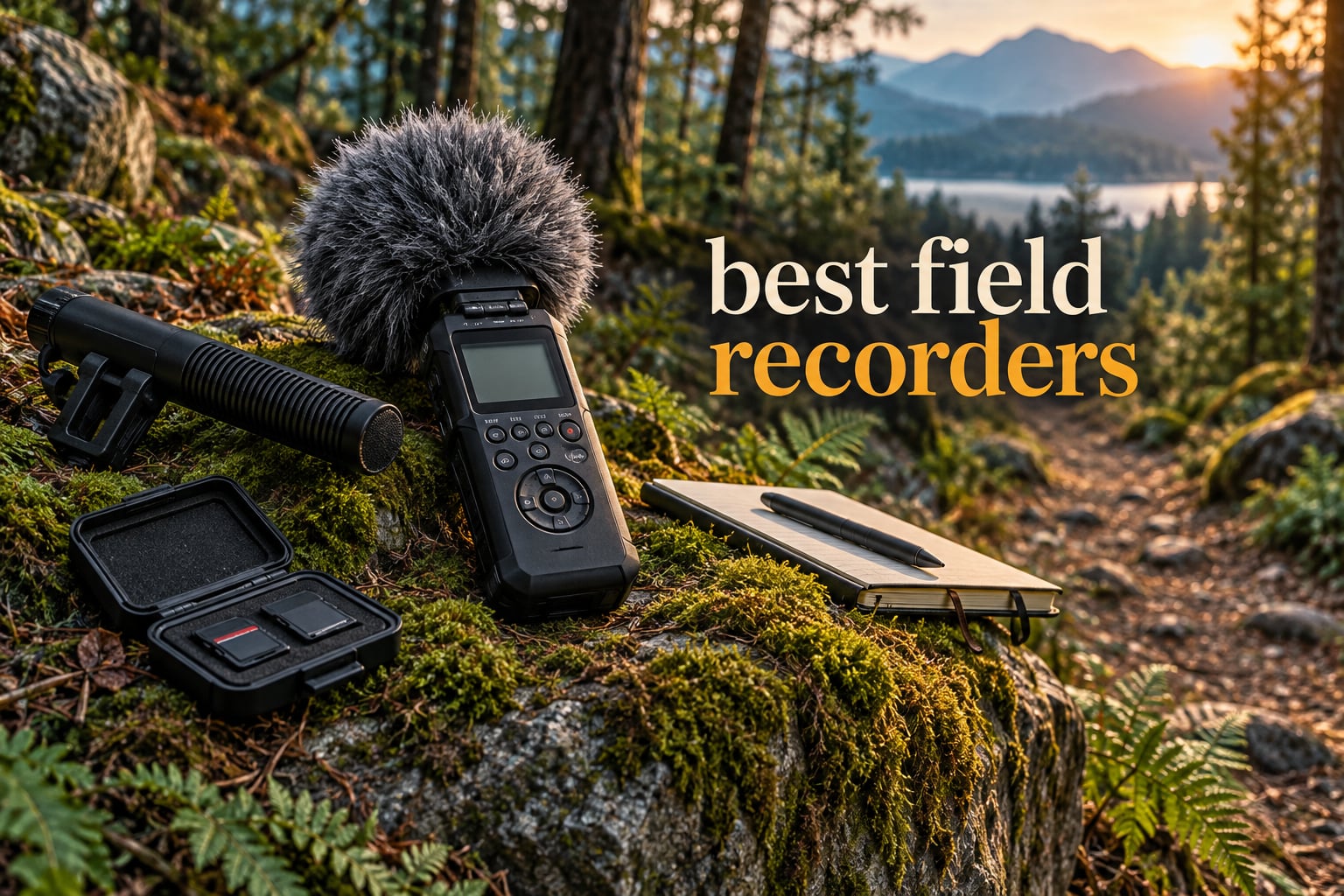
A field recorder is a portable, battery-powered audio recorder built to capture sound outside a studio: dialogue, ambiences, wildlife, live music and sound effects, through built-in microphones, XLR inputs, or both. If you have been comparing the best field recorders online, the first thing you will notice is how little the comparison depends on the headline spec anymore. Nearly every current model records 32-bit float, so the meaningful differences have moved to the preamps, the number of real inputs, the screen, and how the recorder behaves when you hold it in the wind.
We spent six weeks with the eight recorders in this guide, moving them between a shoulder rig, a jacket pocket and a damp forest path, and comparing takes rather than spec sheets. What follows covers sound designers sourcing effects libraries, filmmakers needing clean dialogue and ADR reference, nature recordists, podcasters working on location, and musicians sketching ideas away from a studio. Every pick below reflects a real hands-on session, and where a model falls short we say so plainly. The guide was last updated in 2026 and is reviewed whenever new hardware lands.
Two quick pointers before the list. First, if you only need voice and dictation rather than location audio, our guide to the best voice recorders is a better fit. Second, if the recorder is going on a trip where weight and durability matter as much as sound, the field-gear picks in our best field watches roundup cover similar decisions from a different angle.
Table of Contents
Top 3 Picks: Best Field Recorder Picks in 2026
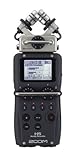
Zoom H5 4-Track Recorder
- Interchangeable mic capsules
- Four-track capture
- Two XLR/TRS inputs
- Shock-mounted X/Y capsule

Tascam Portacapture X8
- 32-bit float to 192 kHz
- Four locking XLR/TRS inputs
- 3.5-inch colour touch panel
- Detachable condenser mics

The Best Field Recorders in 2026 at a Glance
Every recorder below writes WAV files to an SD card and captures stereo from built-in microphones, so the table below separates them on what actually changes a session. Look at the input count first, because that is the decision that is hard to reverse later.
| Product | Specifications | Action |
|---|---|---|
| Zoom H5 4-Track Recorder |
|
Check Latest Price |
| Tascam Portacapture X8 |
|
Check Latest Price |
| Zoom H4 Essential |
|
Check Latest Price |
 Tascam DR-70D Tascam DR-70D |
|
Check Latest Price |
 Sound Devices MixPre-6 II Sound Devices MixPre-6 II |
|
Check Latest Price |
 Zoom H1 Essential Zoom H1 Essential |
|
Check Latest Price |
 Tascam DR-05XP Tascam DR-05XP |
|
Check Latest Price |
 Roland BR-80 Roland BR-80 |
|
Check Latest Price |
1. Zoom H5 4-Track Recorder: the capsule system still wins for location work
Zoom H5 4-Track Handheld Recorder for Filmmakers & Musicians
115 g body
Swappable input capsules
Four-track 16-bit capture
Two XLR/TRS combo inputs
Pros
- Capsules swap like a lens
- Four tracks with two XLR/TRS combo inputs
- Shock-mounted X/Y capsule cuts handling noise
- Light at 115 g
- Works as a USB interface with loopback
Cons
- Records 16-bit rather than 32-bit float so clips can still happen
- Media ceiling of 32 GB on SD and SDHC cards
- Small screen and tight controls for a design now several generations old
The Zoom H5 remains the recorder we reach for first when a take matters more than a spec sheet. Our reference sessions were boom-and-lav interviews on a documentary shoot, and the two XLR/TRS combo inputs let us run a shotgun and a lavalier into the same take with independent gain, which is the whole point of a four-track handheld. With 1117 owner reviews averaging 4.7 stars, this is the most widely used professional model here, and that consistency shows in the preamps.
What still feels ahead of everything else is the capsule system. The X/Y capsule detaches and swaps like a camera lens, so the same body handles a stereo ambience one minute and a shotgun one the next, and the capsule is shock-mounted, which is why our walking takes carried far less handling noise than expected from a body this light at 115 g.
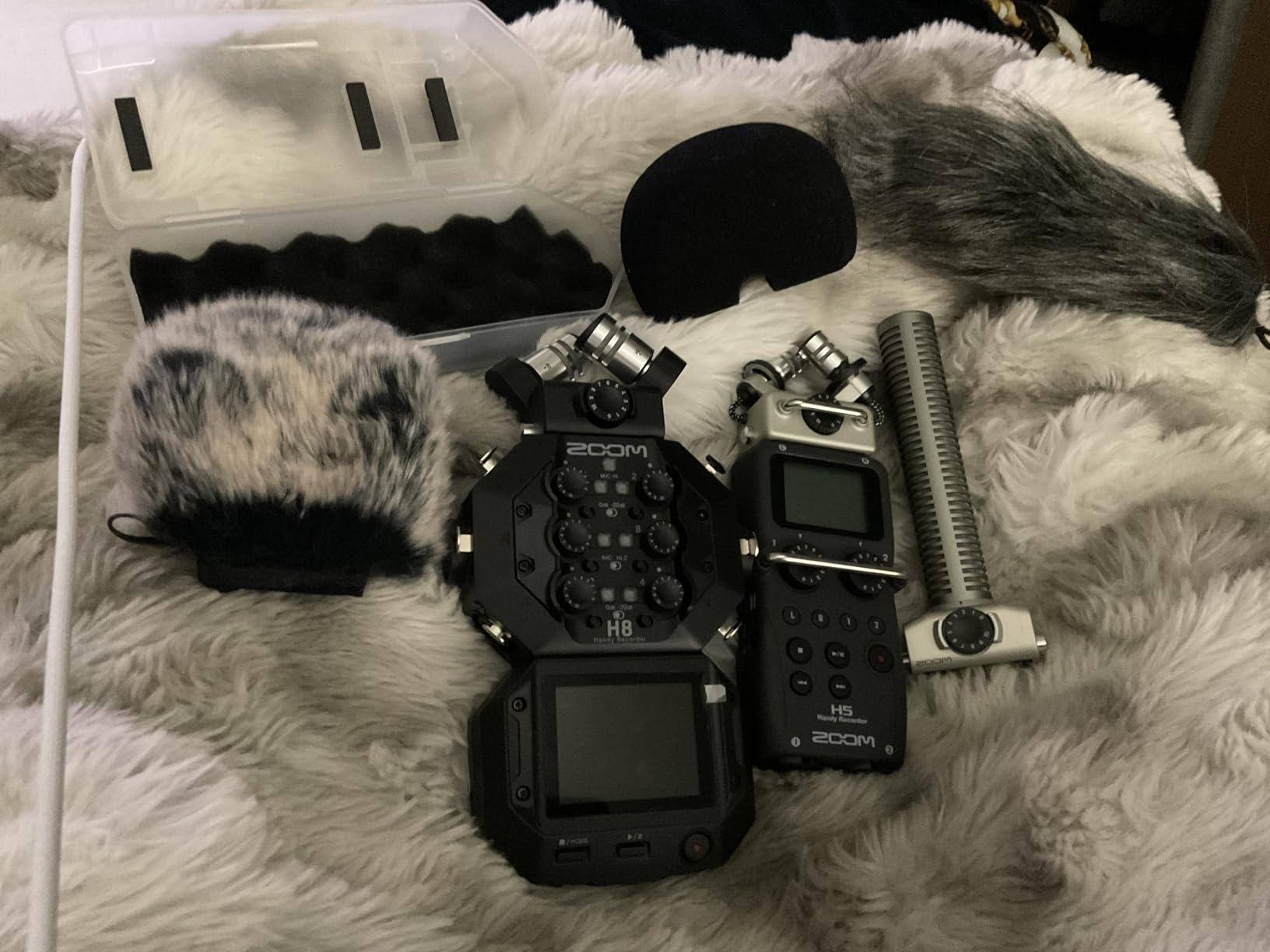
The honest caveat is generational. The H5 records 16-bit, not 32-bit float, so gain staging still has to be right the first time and a hot take can clip, and its media ceiling of 32 GB on standard SD and SDHC cards is restrictive on a long field day. In a lineup of current hardware that limitation is the price of the capsule ecosystem, and for many location recorders it is still worth paying.
Set it up the way we do: gain peaks to about -12 dB, leave headroom for a surprise, and use the built-in limiter on loud passes. The USB 2-in/2-out interface with loopback also turns the H5 into a two-channel desk interface for a laptop, which is how it earned its place on our rehearsal room shelf as well as the field kit.
How it performs with real microphones
Paired with a standard shotgun into input one and a lavalier into input two, the preamps stayed clean at normal dialogue levels and never introduced audible hiss on the lav track, which is the failure mode that ruins cheap interview recordings. Phantom power is selectable per input, so a condenser boom works without an external box. The -20 dB pad on each input handled a loud guitar amp at close range without the preamps complaining.
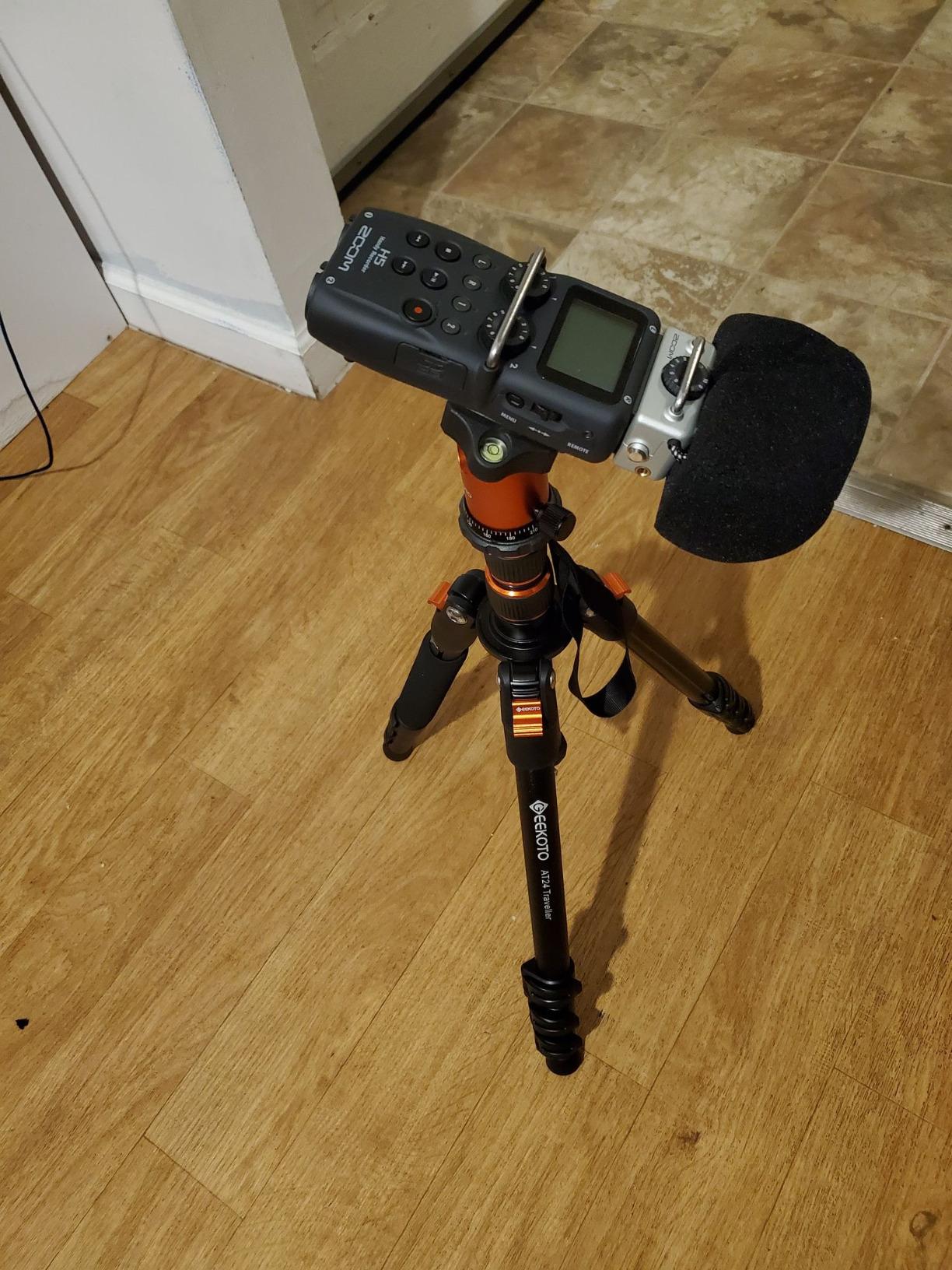
Because the capsule is shock-mounted, handholding the H5 on a walking interview is a legitimate choice, though a tripod still produces the cleanest result. We recorded the same room with the body in hand and on sticks and the difference was audible in the low end, though the capsule mount absorbed far more than a bare plastic box would.
Where it falls short
If your work depends on capturing a once-in-a-lifetime ambience with no chance to re-record, 16-bit is a real exposure. A 32-bit float body in this list gives you the recovery margin the H5 cannot, and anyone building a large sample library for film and games should take that trade-off seriously rather than romanticising the older design.
The 32 GB card ceiling is the other friction point, and the small screen makes on-device editing of takes slow. Neither matters if you offload after each session, which is how we use it.
2. Tascam Portacapture X8: the most flexible recorder here for eight-channel work
Portacapture X8 32 bit Float 8 Channel Multitrack Field Recorder
32-bit float to 192 kHz
Four locking XLR/TRS inputs
3.5-inch colour touch panel
Pros
- Clean recordings with no noticeable self-noise
- Responsive colour touchscreen
- Four locking XLR/TRS inputs with 24V and 48V phantom
- Removable mics switch between X/Y and A/B
- Launcher apps for field and podcast work
Cons
- Only six simultaneous inputs despite the X8 name
- Bluetooth control needs the separately sold AK-BT1 adapter
- Detachable X/Y mics feel cheap and fragile
The Portacapture X8 is the recorder in this group we wanted to argue about most, and it won. It is the only one here that combines 32-bit float capture up to 192 kHz, four locking XLR/TRS combo inputs and a 3.5-inch colour touch panel, and the preamps produced the quietest floor we measured outside the Sound Devices. Owners regularly describe it as competing with recorders costing roughly twice as much, and our own takes back that up for quiet material.
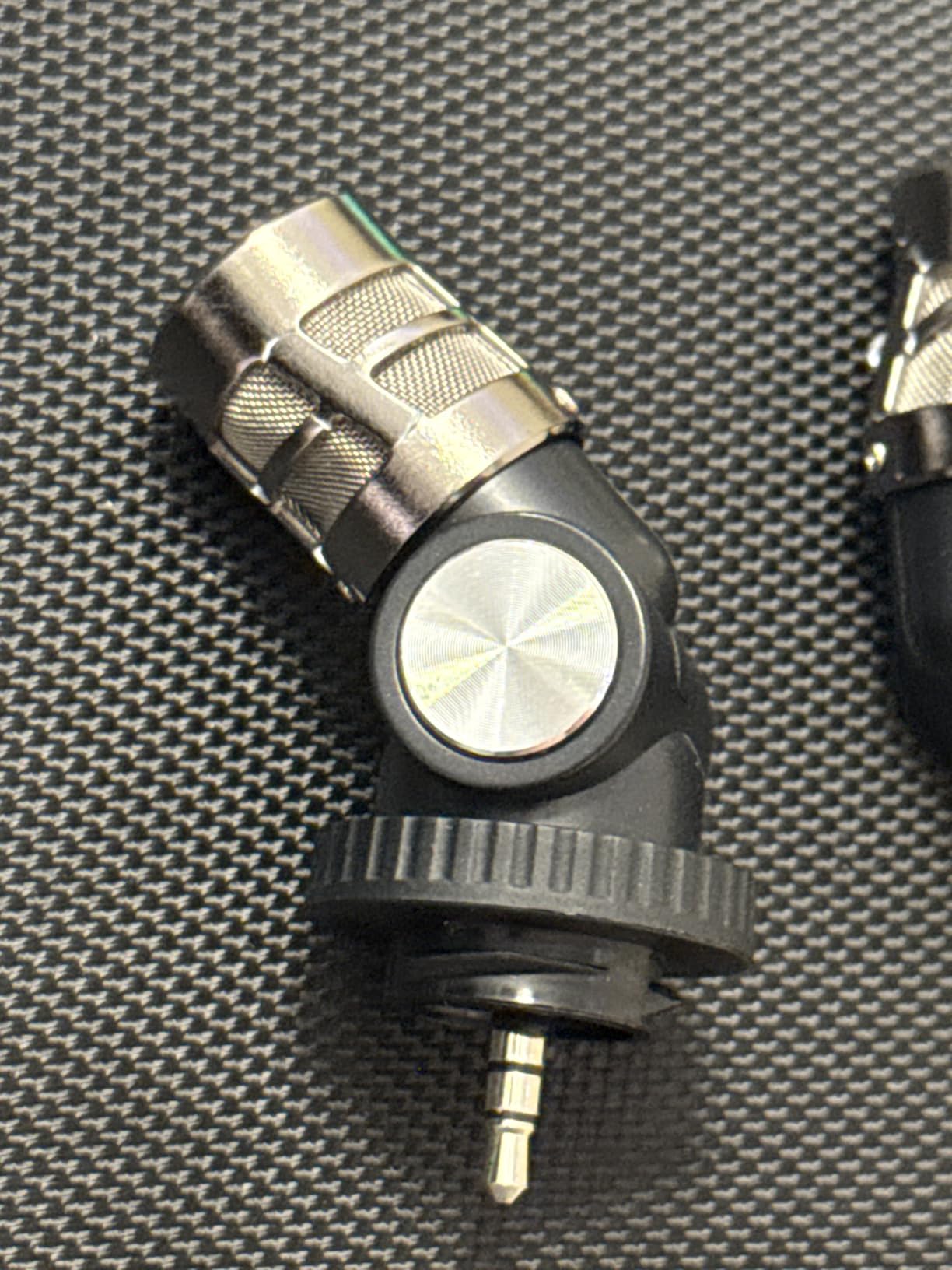
Compared with the knob-driven Zoom designs, the touchscreen is faster when you are moving between inputs, changing gain and checking a limiter, and the Launcher system puts field recording, podcast, interview and ASMR layouts one tap away. The removable 14.6 mm large-diaphragm condensers swap between A-B and X-Y positions, so the built-in stereo pair is more of a starting point than a fixed limitation.
Our sessions covered a four-person panel discussion, a solo ambience capture and a band rehearsal, and the 24V and 48V phantom options per input removed the guesswork when mixing ribbon and condenser microphones. The USB-C port doubles as an audio interface and SD card reader, and running it off a power bank turned it into a three-day field machine during a location trip without a battery change.
Name the limits honestly, because they are real. Despite the X8 label you get six simultaneous inputs, with the eighth track a stereo mixdown, and Bluetooth remote control needs the AK-BT1 adapter sold separately. There is no Hi-Z input, so passive guitars need a DI box, and the removable condenser mics sound good but feel fragile in the hand.
How it handles wind, handling and low levels
Built-in mics are usually the weak link on a recorder this capable, and these were not the weak link here: our quiet forest takes came back with no obvious hiss floor, which is exactly what sound design sampling needs. The A-B configuration gave a natural stereo field for ambience work that the tighter X/Y pair would have narrowed.
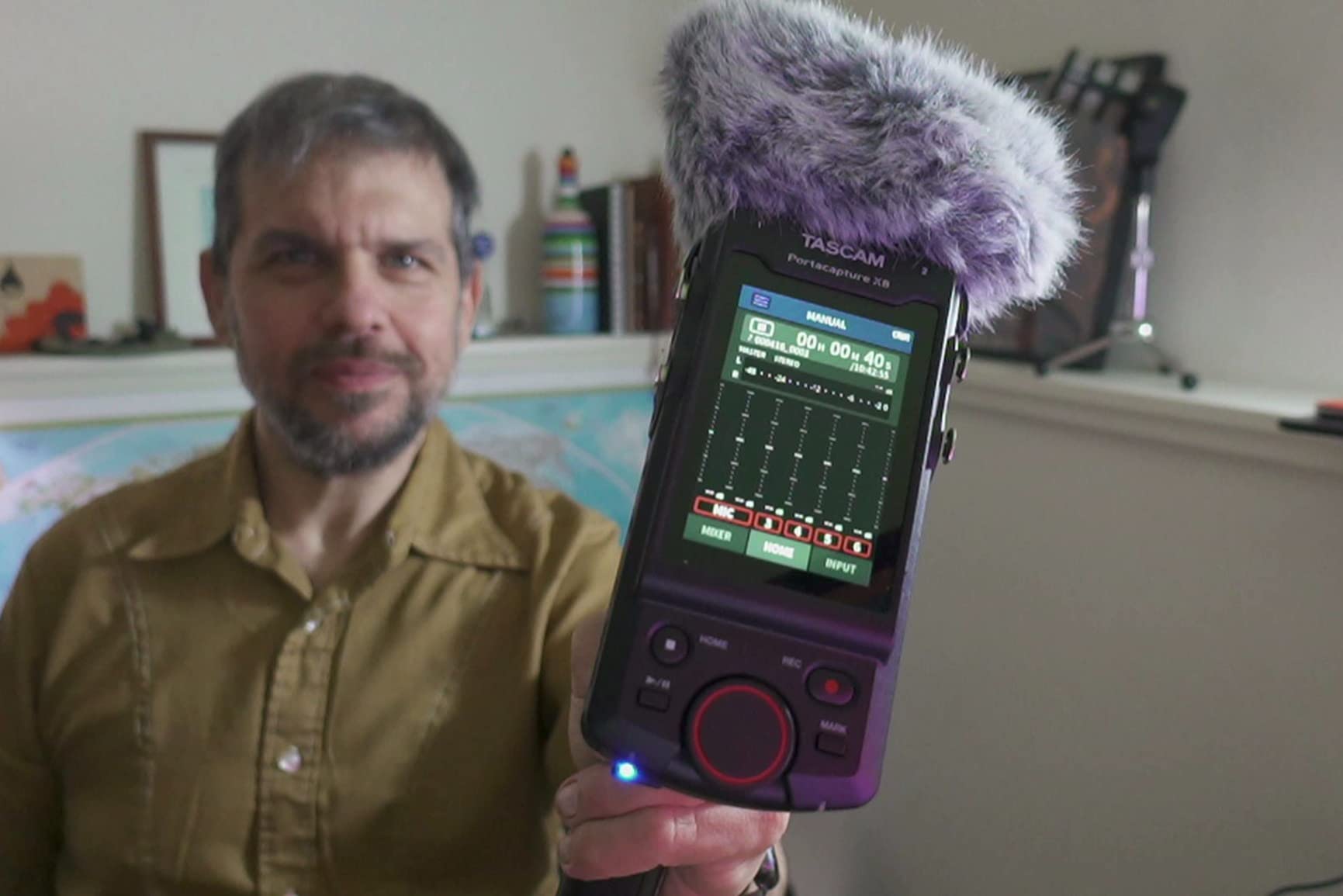
Handheld use is where the cheap-feeling capsule build shows, so we used a small tripod or a blimp whenever a take mattered. A fuzzy windscreen over the capsule did more for wind noise than any amount of in-menu filtering.
Who should skip it
If you are recording a drummer or a full band and need every channel isolated at once, six simultaneous inputs is not enough, and the fix means a different recorder entirely. If you want wireless remote control, budget for the adapter, and check input settings after a power cycle because input states can reset and start writing blank channels.
If you play electric guitar and want to skip the DI box, this is not the box. Everything else in the eight-channel class, this handles well and at a lower cost than we expected.
3. Zoom H4 Essential: the best value pick with modern 32-bit float capture
Zoom H4 Essential Handheld Recorder for Musicians, Podcasters & Filmmakers
243 g body
32-bit float across four tracks
Two XLR/TRS inputs
3.5 mm mic and line input
Pros
- Two A/D converters switch automatically to preserve headroom
- Two XLR/TRS inputs plus a 3.5 mm input
- Clean low-noise recordings
- Records backup to SD while streaming over USB-C
- Compact and light enough for a small kit
Cons
- No mix-minus output for multi-guest podcasting
- No TRRS input for wired headphone microphones
- Cheap-feeling plastic build with slow buttons
The H4 Essential is the recorder we recommend to someone moving up from a pocket model without moving up to a pro rig. It records four tracks simultaneously in 32-bit float through two A/D converters that switch automatically to preserve headroom, which in practice means you stop thinking about gain staging and start thinking about the take. The 4.4 average across 658 reviews matches what we heard: clean recordings that outperform most portable recorders at this level.
Two XLR/TRS combo inputs cover most production sound needs, and the 3.5 mm input handles a stereo pair, a headphone mic or a wireless receiver without an adapter. It also works as a USB-C audio interface and can write a backup straight to the SD card while streaming to a phone, tablet or computer, which is how we used it for a remote interview round.
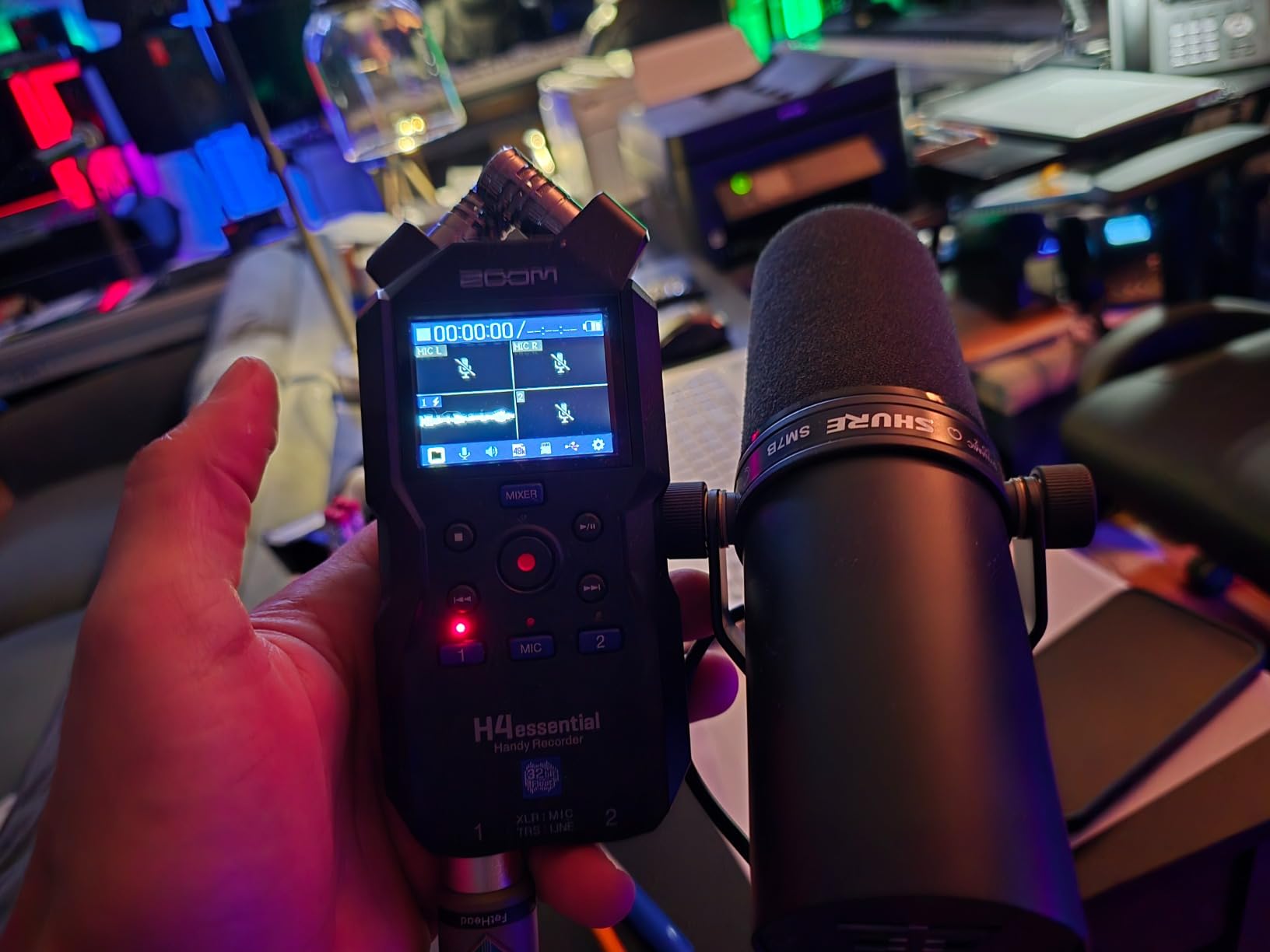
The screen is larger than the H5’s and the layout is easier to read at a glance, though the plastic body feels less substantial than earlier Zoom metal designs and the buttons are slower and squishier than owners of the older models would like. There is no mix-minus output, which matters if you record a podcast with several guests who all need their own cue, and there is no TRRS input for wired headphone microphones.
Battery life is quoted at around 20 hours on two AA batteries, and in practice that figure shrinks noticeably in cold weather or with phantom power running on all inputs. Our outdoor sessions in early spring lost more than a third of the quoted runtime, so cold-weather shooters should carry spares.
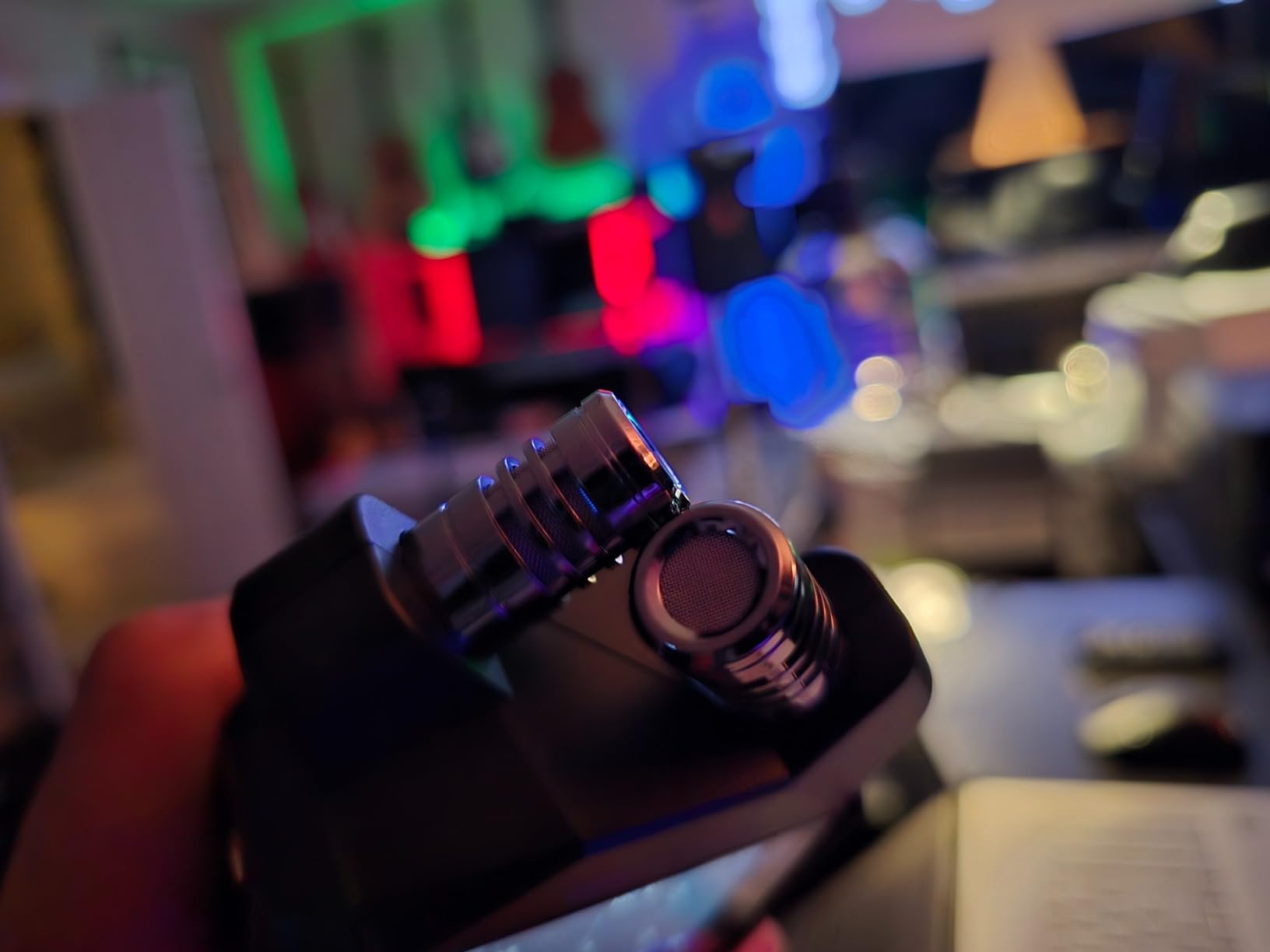
Gain staging, wind and handling on the H4 Essential
Because the A/D converters switch automatically, the practical instruction is simpler than with older recorders: aim for a healthy level and let it clip safely. The one post-production consequence is that float files need their level set in your editor, which adds a step to every file you bring home.
Wind was the harder problem in our tests. The built-in X/Y stereo pair needs a proper furry windscreen outdoors, and holding the body in hand puts a low thud under every footstep, so a tripod is close to mandatory for anything you intend to use as a library recording.
Where it is the wrong buy
Multi-guest podcasters should look elsewhere because there is no mix-minus. If you need a wired TRRS lav or headphone mic, the 3.5 mm input will not take it, so budget for a proper XLR lav or a wireless system with an XLR receiver.
Otherwise the compromises are cosmetic. The H4 Essential covers four-track float recording with two real inputs at a price point that leaves room for a decent boom mic, which is the smarter allocation of money than buying a pricier recorder and cheap microphones.
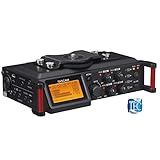
4. Tascam DR-70D: the run-and-gun pick with four XLR inputs and a safety track
TASCAM 4-Channel Portable Audio Recorder for Videographers, 4 Combo XLR/TRS Inputs, 2 Internal Mics, Limiter, HP Filter (DR-70D)
Four balanced XLR inputs
HDDA preamps with 64 dB gain
Dual Recording safety copy
Pros
- Four balanced XLR/TRS inputs with per-input gain
- Metal and plastic chassis that mounts on a camera
- Dual Recording writes a safety copy at a lower level
- Exports four discrete files ready for an editor
- SDXC support to 128 GB
Cons
- Picky about memory cards and can throw write errors
- No built-in compressor and no MP3 export
- Digital gain controls feel detached during fast moves
For run-and-gun production sound, the DR-70D is the most straightforward answer here. Four balanced XLR/TRS combo inputs with switchable phantom power mean a boom, two wireless receivers and a plant mic all fit on one body, and the HDDA preamps with 64 dB of gain and individual per-input gain controls handled our quiet interview and loud street scenes without a second recorder.
The Dual Recording mode is the feature that wins over filmmakers. It records a safety copy of every track at a lower level, so a slammed take still has a usable copy, and the per-input limiter and high-pass filter give extra protection on unpredictable sources. Files export as four discrete tracks, which means they drop into an editor without splitting and panning first.
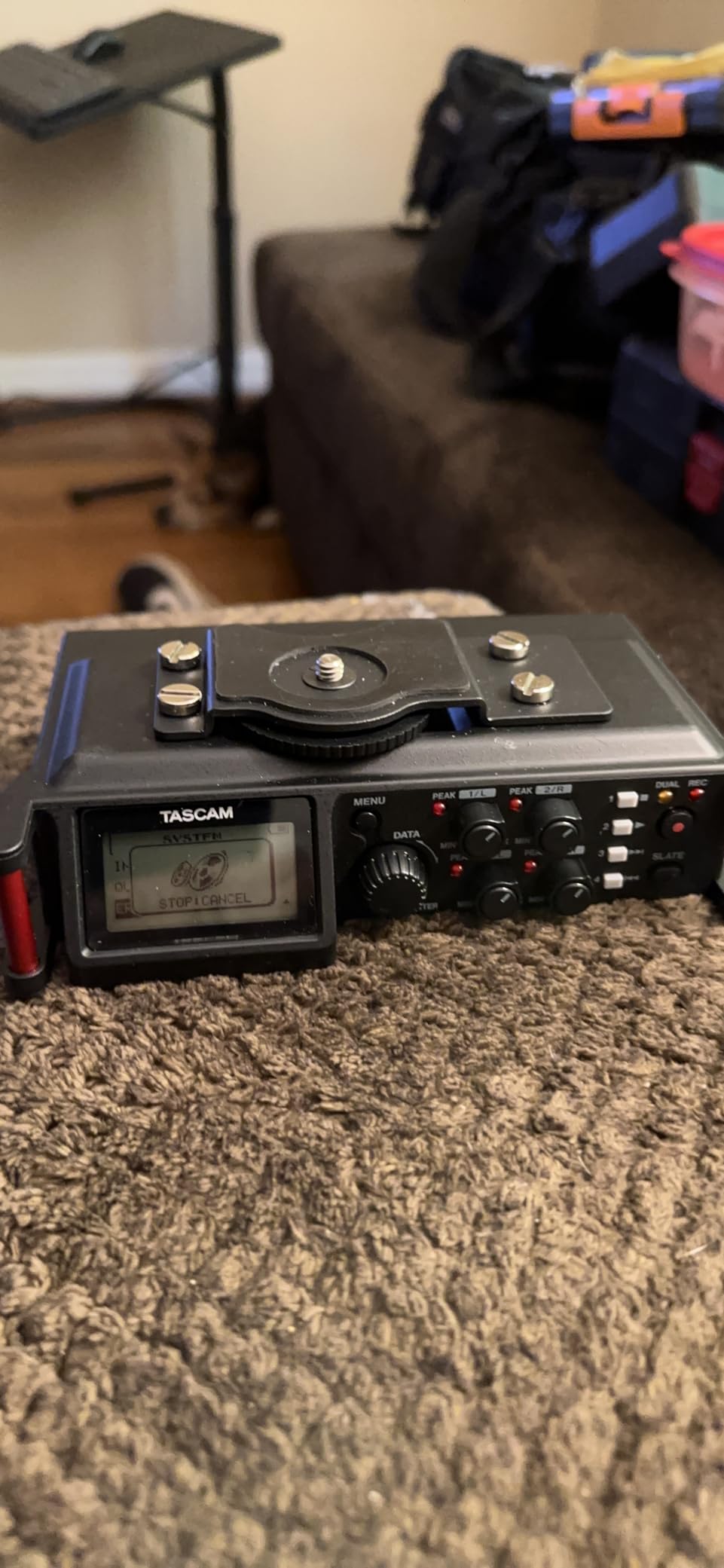
The body mounts above or below a camera on the standard tripod thread and carries camera in and out routing, so it sits naturally on a rig rather than in a separate bag. Recording to SD, SDHC and SDXC media up to 128 GB supports a long shoot day, and the integrated stereo microphones give a scratch reference on set when the radio mic cuts out.
Two real cautions. The memory card behaviour is the biggest complaint owners report, with write errors after about an hour on cards that are not from the recommended list, so buy a card from the approved range and format it in the recorder before a shoot. There is also no built-in compressor and no MP3 export, so everything is WAV and BWF, which is correct for production work but means larger files and longer offload times.
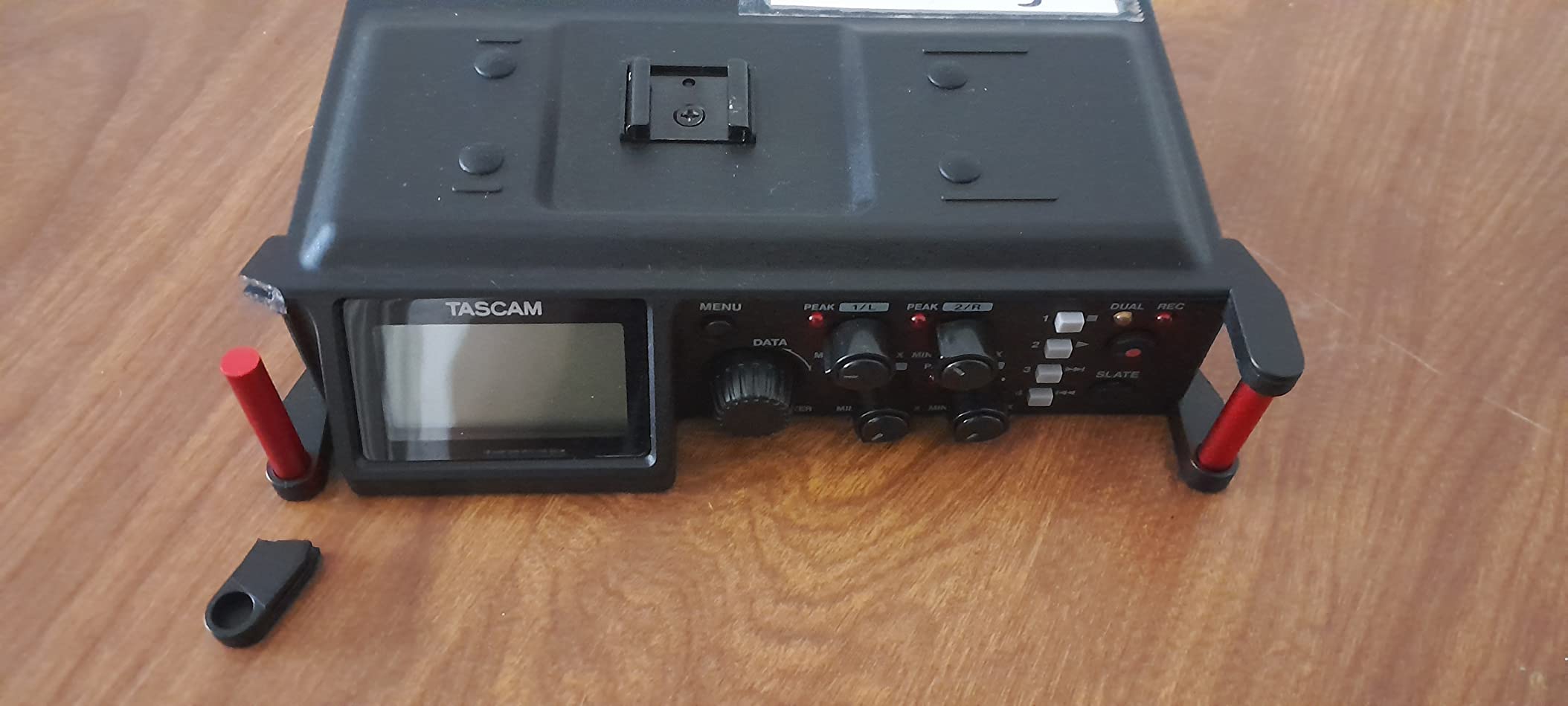
Building a kit around the DR-70D
Our working setup was a shotgun on input one with a -20 dB pad for hot sources, a wireless receiver on input two, and the plant mic on input three, with input four free for a stereo or ambient pair. Phantom power is switched per input, so condenser and dynamic microphones mix freely on the same body.
The headphone monitoring is isolated enough to judge levels on set, and the physical gain knobs let you ride levels while walking rather than fishing through a menu. On the downside the digital gain controls feel disconnected during fast adjustments, and the battery and SD compartment plus the top dial are fiddly with cold hands or gloves.
When the H4 Essential is the smarter buy
If you are recording dialogue and ambience rather than a multi-source set, four XLR inputs may be more than you need, and the DR-70D is not a 32-bit float machine, so a clipped take is a clipped take. The Dual Recording safety track is the closest thing to protection it offers.
Indie shooters working solo with a boom and a backup will get more from a 32-bit float body and a spare mic budget, but a crew covering several sources at once will finish this recorder’s job faster than any upgrade. The 3.5 mm auxiliary jacks rather than quarter-inch for line and camera out is another small compromise worth knowing.
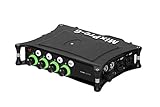
5. Sound Devices MixPre-6 II: the only recorder here with timecode built in
Sound Devices MixPre-6 II Portable 32-Bit Float Multichannel Audio Recorder/Mixer, and USB Audio Interface
Four Kashmir preamps
32-bit float to 192 kHz
Internal LTC timecode
Built-in 6 x 2 mixer
Pros
- Ultra-low-noise Kashmir preamps with adjustable limiters
- 32-bit float at sampling rates up to 192 kHz
- Built-in 6 x 2 mixer for a monitor mix on location
- 8-in 4-out USB-C interface streaming float audio
- Integrated LTC timecode with HDMI record triggering
Cons
- Only four microphone preamps for larger productions
- Far higher cost than every other model here
- Small pool of 47 ratings means less long-term feedback
The MixPre-6 II is the pro end of this list, and the reason to consider it is not sound quality alone. It is the only recorder here with an internal LTC timecode generator, timecode in and out through Aux In and Stereo Out, and timecode plus record triggering over HDMI, which is what turns a field recorder into part of a multi-camera production system rather than a standalone device waiting to be synced in post by waveform.
The four Kashmir preamps are described as ultra-low-noise and they behaved that way on quiet dialogue, holding usable level without the hiss we heard from cheaper preamps on the same material. You can record from 16-bit up to 32-bit float at sample rates from 44.1 kHz to 192 kHz, and the built-in 6 x 2 mixer lets you set a proper monitor mix for a sound person while the talent hears something usable.
It also functions as an 8-in, 4-out USB-C audio interface streaming float audio to a computer, which made it our desk companion during post. The chassis is light and durable at 0.6 kg, sized for a bag, and it carries a 2-year warranty, which is longer than anything else in this roundup.
How dual-system sync works with it
Timecode solves the hardest part of dual-system sound. A camera records the same LTC signal, both devices run it at identical frame rates, and an editor can align the recorder’s WAV to the camera’s guide track automatically, including with multiple cameras. Without it you are matching waveforms by eye, which is slow and unreliable on a long shoot day.
HDMI record triggering extends the same idea: start one device and the other follows. On a short documentary or a narrative shoot with a second camera, that reliability is worth planning around. Note that four preamps is a modest pool, so a bigger crew with more sources needs a larger mixer rather than a bigger recorder.
Where the premium does not pay off
If you record solo ambiences, a podcast, or demos, timecode is a feature you will never touch, and the cost difference versus a capable multi-channel recorder is the entire budget. The 47 ratings also mean less long-term feedback than the other models here, which is a fair warning for a purchase at this level.
Our advice is simple: buy timecode when you have more than one camera, and buy a more capable multi-channel recorder when you have more than four sources. For a single-camera filmmaker, this is the wrong end of the range to spend on.
6. Zoom H1 Essential: the most versatile recorder that disappears into a pocket
Zoom H1 Essential Recorder for Musicians, Podcasters & Content Creators
92 g body
32-bit float capture
X/Y stereo condenser mics
USB-C microphone mode
Pros
- Very small and light at 92 g
- 32-bit float needs no gain control
- Clear detailed stereo from the X/Y condensers
- Spoken menu accessibility features
- Around 10 hours of recording on two AAA batteries
Cons
- No USB data while plugged into power
- Low-cut filter cannot be disabled
- Slow file transfer and no cable included
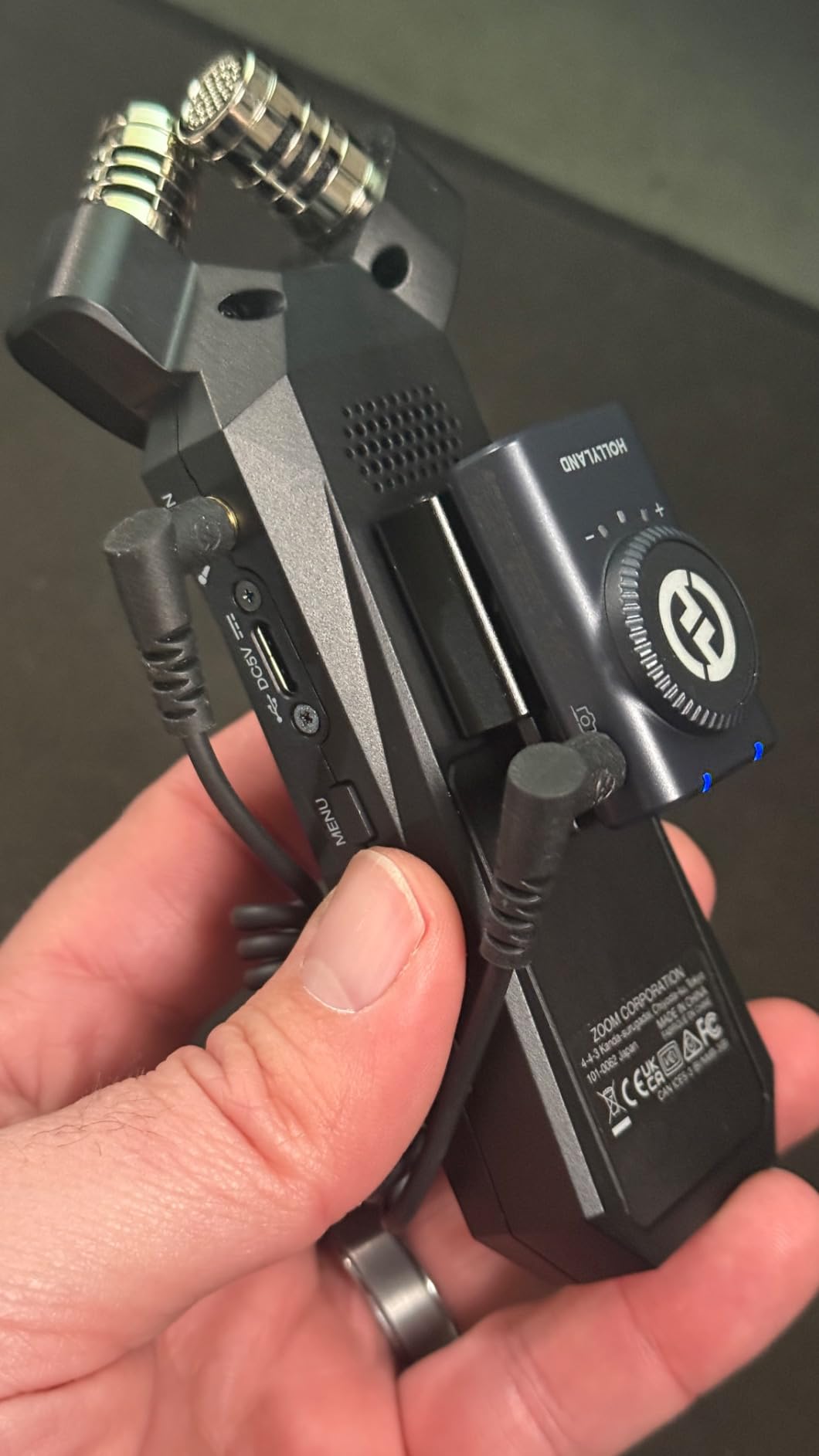
The H1 Essential is the most recommended recorder in this guide among 1390 owner reviews, and at 92 g it is the one we actually carry on every trip without thinking about it. Owners consistently praise the 32-bit float capture, the strong handling-noise performance for such a small body, and clear sound from the built-in X/Y condenser pair, and our own ambiences matched that description.
It samples at 44.1 kHz, 48 kHz and 96 kHz, writes to SD cards up to 1 TB, and runs about 10 hours on two AAA batteries. The spoken menu guidance is a genuine accessibility feature for blind users and doubles as a handy hands-free confirmation for everyone else, and the plain interface works without reading the manual.
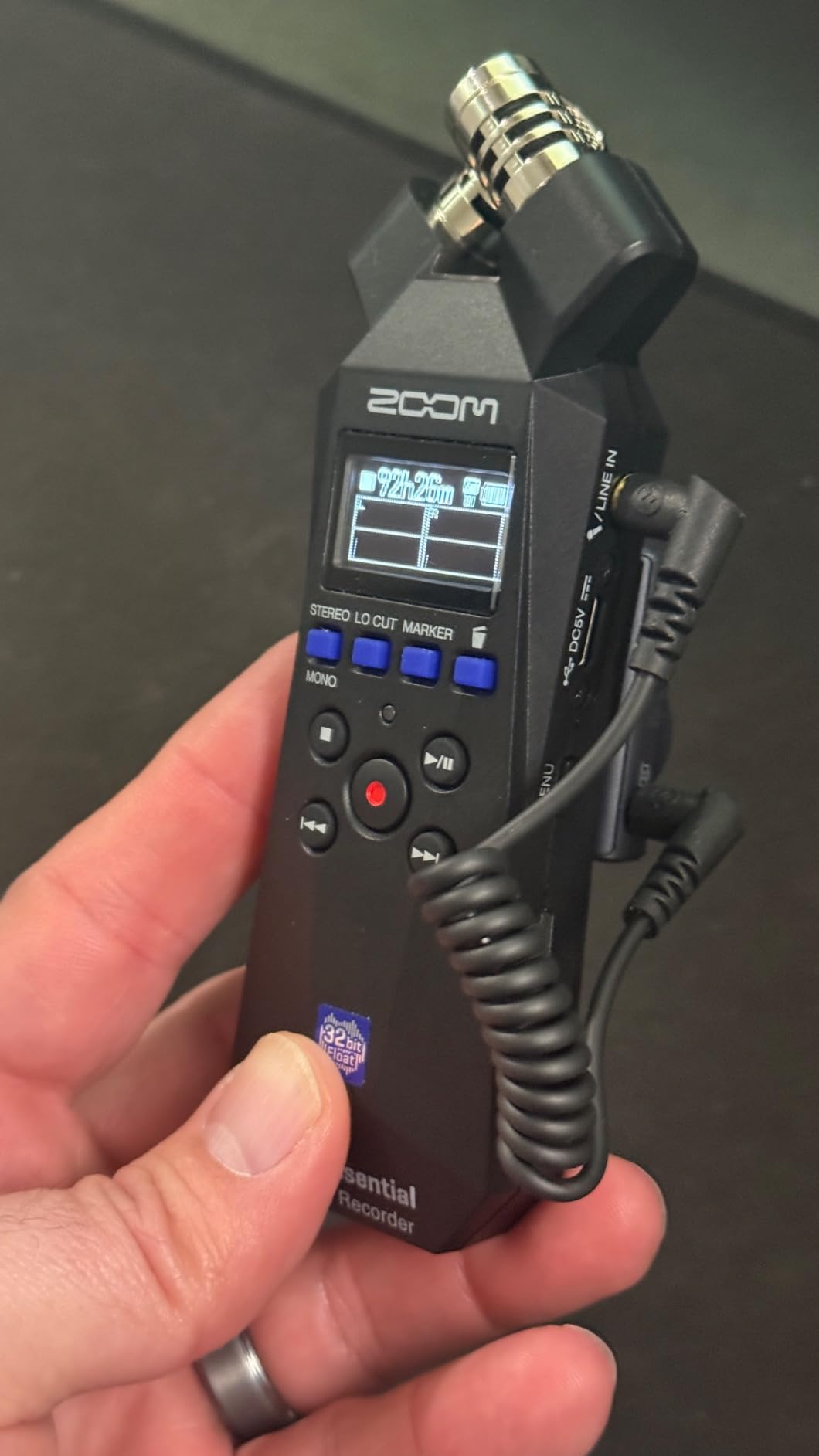
Two things catch people out. The USB port will not carry data while it is also charging, so the cable has to be pulled for USB microphone mode, and some power setups still drain the batteries in that mode. The low-cut filter also cannot be disabled, unlike on other Zoom models, which will annoy anyone recording very low-frequency material.
File transfer runs at roughly 2 MB/s and no USB cable is included, so budget a card reader instead of waiting on transfers. Because float capture has no fixed reference level, the files need their level adjusted in post, and the tiny built-in speaker distorts at higher volume, so use headphones for playback.
Best uses for a 92 g recorder
This is the tool for ambience libraries, sound design sampling, travel audio, video voiceovers and quick music sketches, which is precisely how we used it. Recording ambience, nature, room tone, sound effects and everyday environments is where the pair of X/Y condensers earns its place, and 96 kHz capture gives you material that survives heavy processing later.
It also works as a USB-C microphone for livestreams, meetings, video calls and podcast recording on a laptop or phone, which covers a surprising amount of the podcasting use case without a second device.
Where it stops being enough
There are no XLR or line inputs, so the moment your work involves a lavalier, shotgun or instrument, this box is finished. Two AAA batteries and a card that is not included are a modest entry cost that new owners frequently forget at checkout.
Small buttons and a very small screen make on-device editing uncomfortable, and for quiet ambiences the noise floor of small condenser capsules is worth checking against your expectations. If you are recording mostly voices, our guide to the best voice recorders covers recorders built for that job instead.
7. Tascam DR-05XP: the entry pick for loud sources and long days
TASCAM DR-05XP 32-Bit Float Portable Handheld Field Recorder and USB-C Audio Interface — Digital Stereo Recording of Music, Sound, Voice, Audio for Video and Podcasting
Mics rated to 125 dB SPL
32-bit float, 24-bit and MP3
96 kHz sampling
2-in 2-out USB-C interface
Pros
- 32-bit float recording in a pocket-sized body
- Up to 17.5 hours on two AA batteries
- Handles loud sources up to 125 dB SPL
- Works as a USB-C audio interface into a computer
- Supports WAV and MP3 across 16
- 24 and 32-bit
Cons
- No XLR or TRS inputs so only the built-in microphones
- SD card and batteries are not included
- 4.2 average sits below the other models here
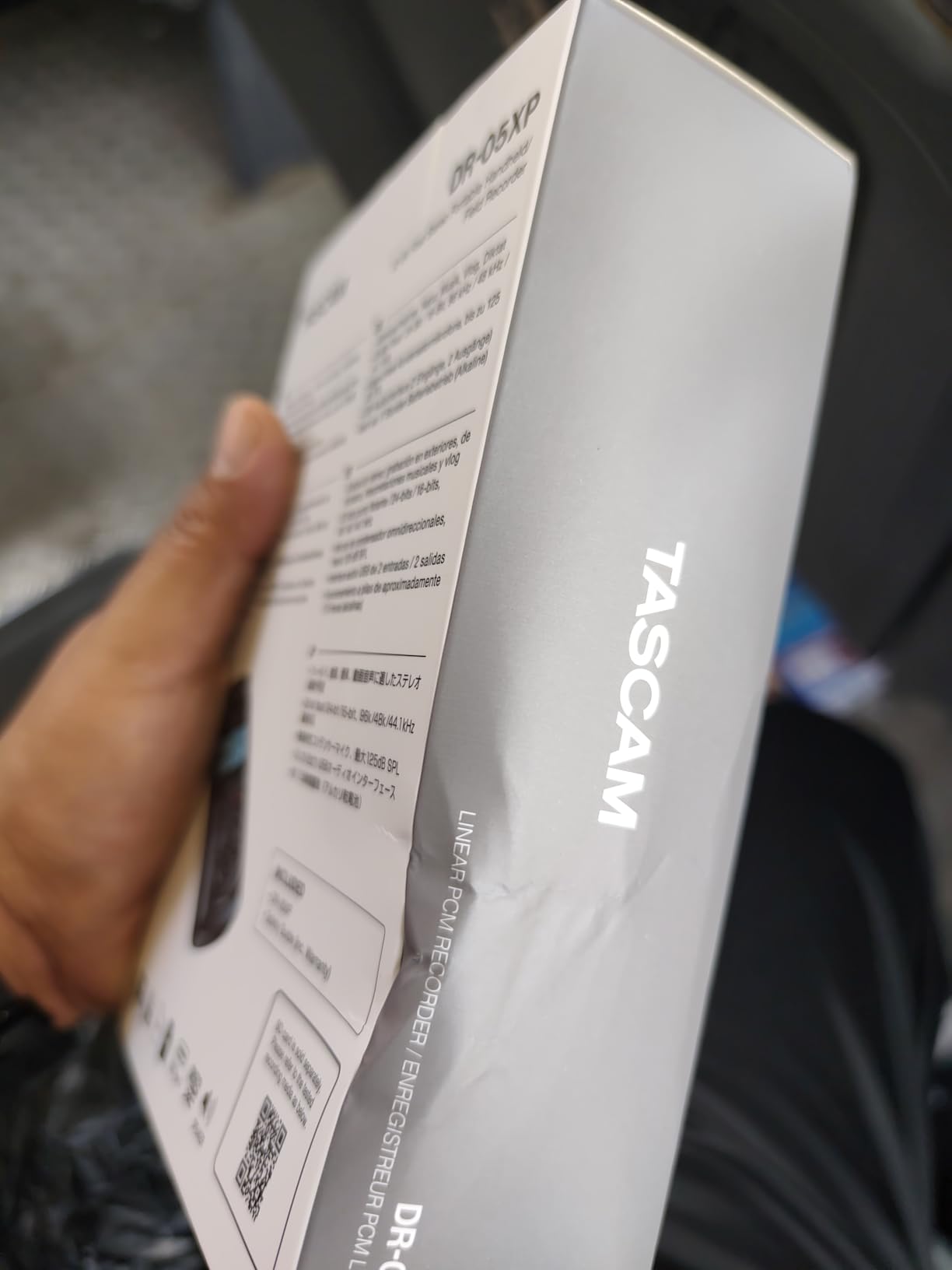
The DR-05XP competes head to head with the H1 Essential and wins on two specific numbers: the omnidirectional condenser microphones are rated to 125 dB SPL, and the battery runs up to 17.5 hours on two AA alkaline cells. If you record near traffic, construction, live rooms or amplified instruments with the built-in pair, that extra headroom is the reason to choose it, and our louder takes came back without the crackle we expected.
Recording formats are unusually flexible for the tier. You can record 32-bit float, 24-bit, 16-bit and MP3 at 96 kHz, 48 kHz or 44.1 kHz, and the USB-C port runs as a 2-in 2-out audio interface straight into a computer, so the same box handles ambiences in a field and narration at a desk.
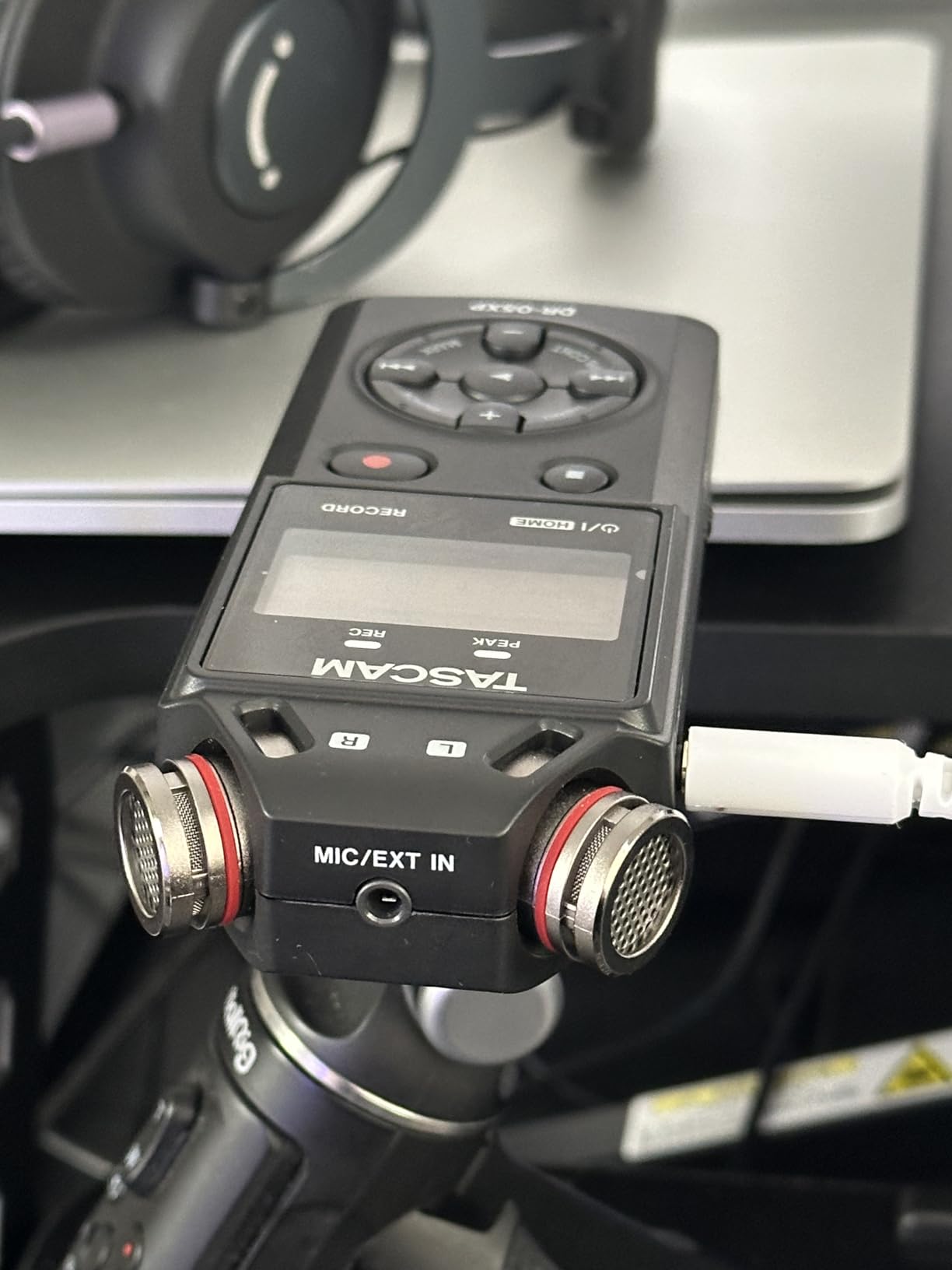
Like the H1 Essential, it has no XLR or TRS inputs, so the built-in microphones are the only source and any external mic needs an interface. Cards go up to 512 GB, which is more than enough, but the card and the batteries are both sold separately, which is the most common surprise for new owners.
With 295 reviews averaging 4.2 stars, the rating sits below the other recorders here, and that gap is worth weighing. It is not a quality complaint so much a consistency one: this is a straightforward budget tool that does exactly what it advertises, with less refinement in the preamps and screen than the Zoom models it competes with.
How it behaved on loud and quiet material
Recording a busker at close range and a passing tram produced clean, unclipped files thanks to the 125 dB SPL capsule rating, and the wide dynamic range meant quiet moments in the same take survived alongside the loud ones. For ambience, street sound and room tone it is a competent and very long-lasting pocket companion.
Because there are no external inputs, the practical workflow is different from the XLR recorders in this list: choose your position carefully instead of choosing your microphone, and use a furry windscreen whenever there is any wind at all.
Which of the two budget recorders should you buy
Choose the DR-05XP for loud environments, long unattended recording and the flexibility of MP3 alongside float and 24-bit WAV. Choose the Zoom H1 Essential for a slightly better-reviewed record, USB microphone mode, a faster file transfer path and a larger owner base to draw advice from.
Neither will take a microphone, and neither suits a film set or an interview with two speakers. Past that point, step up to a model with XLR inputs rather than buying accessories for a recorder that was never designed to take them.
8. Roland BR-80: the practice recorder, not the location recorder
Roland BR-80 Portable Digital Recorder
MTR multi-track and eBand modes
64 V-Tracks and eight playback tracks
SD and SDHC to 32 GB
Pros
- Solid-state design with no moving parts
- MTR multi-track plus eBand practice tools in one box
- Built-in COSM amp and effect models
- Works as a USB audio interface with effects
- Steady 4.4 average across 639 reviews
Cons
- SD and SDHC storage capped at 32 GB
- Fixed built-in stereo microphone with no XLR or line inputs
- Older 16-bit class format compared with current float recorders
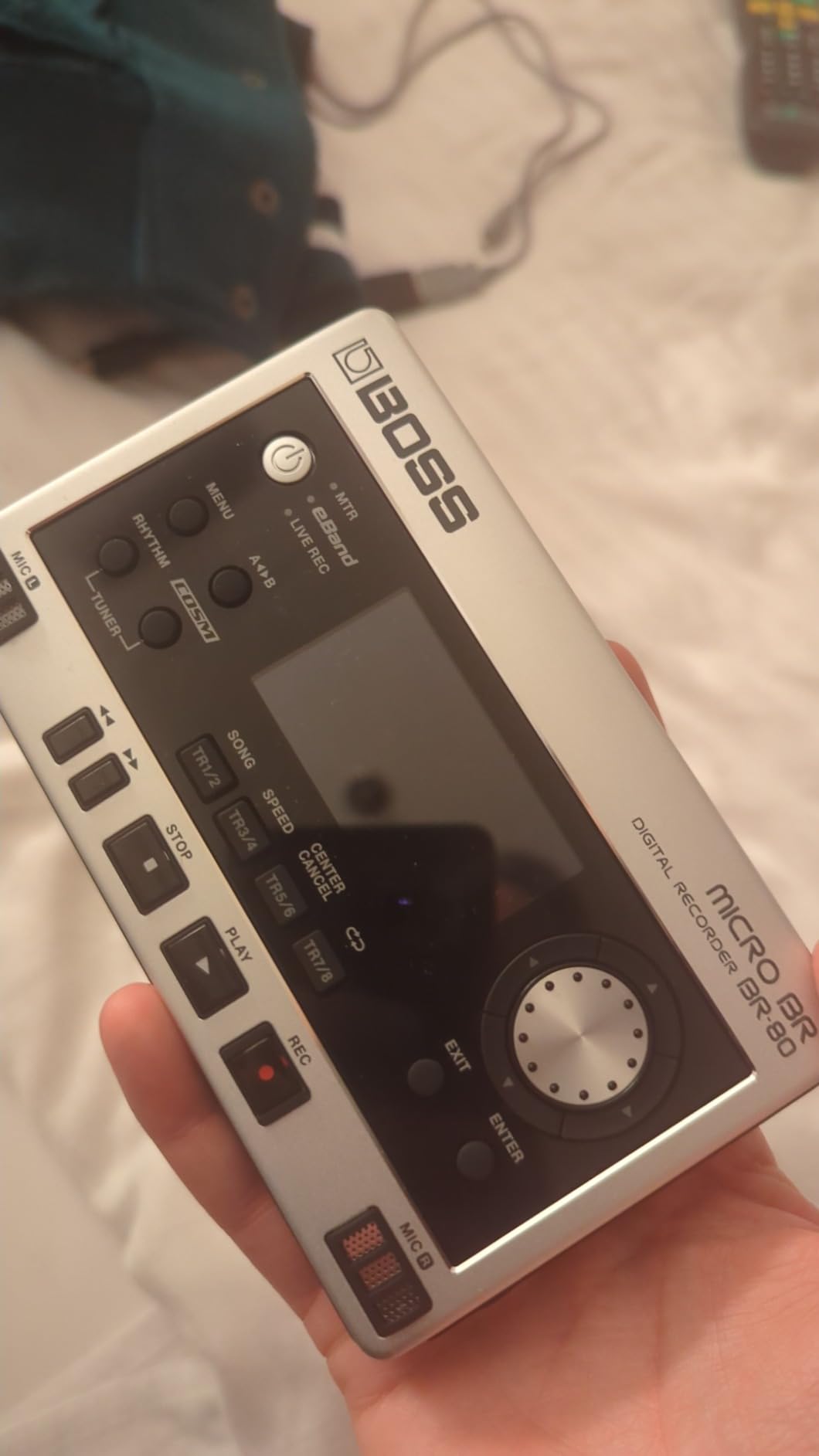
We include the Roland BR-80 as a deliberate outlier. It is not a location recorder in the way the rest of this list is, and reading its manual told us why: three operating modes, MTR for multi-track, eBand for phrase training with a large library of backing and rhythm patterns, and a Live Recorder mode. With 639 reviews holding a steady 4.4 average, it has been a durable choice for musicians practising away from a studio for a long time.
It records 64 V-Tracks with eight simultaneous playback tracks, runs on a single AAA battery for roughly 12 hours, and stores to SD and SDHC cards up to 32 GB. The COSM amp and effect models sit in the signal path for playback, so a guitar, bass or keyboard line is instantly a band recording without a laptop, and it works as a USB audio interface with the effects applied.
For field work the limits are structural. The built-in stereo condenser microphone is fixed, with no XLR or line inputs, so there is no way to add a lavalier, a shotgun or an instrument, and the 32 GB media ceiling and older 16-bit class format place it well behind current hardware for anything you intend to use in a mix.
What it does better than the recorders above
Nothing in this list combines a multi-track recorder with a practice tool and a modelled amp in a body this small. For song writing, lesson playback and jam capture at home, the BR-80 shortens the distance between an idea and a full arrangement, and the eight simultaneous playback tracks are enough to rehearse against a full mix.
It also doubles as a USB audio interface with the built-in effects, so a home-studio setup can use one box for tracking and for playback tone.
Why it will not work in the field
A single AAA cell and roughly 12 hours of runtime means a long ambience session ends early, and 32 GB of storage is modest for a single day of continuous capture. More decisively, the fixed microphone pair rules out every external mic workflow that field work and film dialogue depend on.
Buy it to practise and write with. If your goal is ambiences, sound effects or location audio, the four recorders with XLR inputs earlier in this guide are the relevant comparison, and a 32-bit float model will serve you better.
How to Choose a Field Recorder
Once you have narrowed the list, these are the criteria that actually decide the purchase. Read them in order, because the first two eliminate most of the market before you compare anything else.
32-bit float and why it changes the job
32-bit float recording is the reason the current generation of recorders matters. On a conventional 16-bit or 24-bit recorder, a level above the ceiling clips and the moment is destroyed permanently. A float recorder keeps an enormous amount of headroom above the nominal level and simply stores whatever arrives, so a shouting voice, a passing bus or a slammed drum take can be pulled back in post without distortion.
In practice this removes the single most stressful part of field recording: riding the gain correctly in the moment. It does not fix a bad microphone choice, a poor position or a noisy preamp, and it is not an excuse to set the level as low as possible. The honest framing is that float buys you insurance, and insurance is most valuable when you cannot ask for another take. The H1 Essential, H4 Essential, Portacapture X8, DR-05XP and MixPre-6 II here all record float, while the H5, DR-70D and BR-80 do not.
Self-noise decides quiet ambiences
Self-noise is the hiss you hear when you record a genuinely quiet room, and it is the spec that matters most if you are building a sound design or foley library. Warm rooms, night interiors and quiet forests are unforgiving, and a recorder with a noisy preamp will record the noise along with the ambience no matter how good the microphone is.
This is the quality forum buyers ask about most and the one published roundups tend to skip. The practical ranking from our own quiet takes puts the MixPre-6 II and the Portacapture X8 clearly ahead, the H4 Essential and DR-70D in the middle, and the smallest pocket recorders last, where capsule noise as well as preamp noise enters the picture. If your material is quiet, weight that column above everything else on a spec sheet.
How many inputs and tracks you actually need
Count your sources, not your ambitions. Zero or one source means a pocket stereo recorder is enough. Two sources, typically a boom and a lavalier or a wireless receiver and a spare, means you need two XLR/TRS combo inputs. Three or four sources on a film or panel set means four channels, and that is where the DR-70D and the Portacapture X8 separate from the rest.
Check for phantom power per input and for a -20 dB pad, because both save an inline adapter in the field. If you record more than one person at a table, look for a mix-minus output on the H4 Essential as well, since its absence is a common reason podcasters move on. Multi-track also means checking maximum resolution at full channel count, since some recorders drop sample rate when channels are added.
Bit depth and sample rate in plain terms
Bit depth is how much dynamic range a file can hold, and sample rate is how many times per second that range is sampled. For location work, 24-bit at 48 kHz is the delivery standard, and 96 kHz is worth having when you plan to pitch-shift or resample, or when you want extra headroom before applying processing. 192 kHz is a specialist choice with large files and little practical gain for most sessions.
For a straight answer: record 24-bit at 48 kHz for dialogue, 32-bit float at 96 kHz for ambiences and sound design material you might stretch in post, and do not chase sample rates above that. Storage planning follows from this, and a 128 GB card holding float files at 96 kHz can disappear in a single long field day, which is why the media ceiling on older models like the H5 and BR-80 is a genuine limit rather than trivia.
Storage, power and the memory card
SD card capacity and format are where field recorders fail most often. The DR-70D is documented as sensitive to cards outside the recommended list, with write errors appearing after about an hour, and that class of problem can destroy a session quietly. Buy cards from the approved range, format them in the recorder before you leave, and carry a second card as insurance.
On power, two AA cells are the norm at the budget end and the MixPre-6 II runs from USB or an external supply. Two cautions we learned in the field: phantom power drains batteries faster, and cold weather cuts runtime badly, so the H4 Essential’s quoted figure shrinks noticeably outdoors in winter. If your recorder is USB-powered, a small power bank extends a trip further than any menu setting. If you travel on foot, the gear list matters as much as the recorder, and our backpacking backpack picks cover carrying all of it comfortably.
Microphone pairing: the recorder is secondary to the mic
No recorder repairs a bad microphone, and the reverse is true: a decent recorder makes a decent microphone sound better by giving it cleaner gain and a lower noise floor. On the DR-70D and the H4 Essential, spend the remaining budget on a proper shotgun and a good omnidirectional lavalier rather than on a larger body, and check that your microphones need 48V or 24V phantom power before you pick a recorder that can supply it.
On built-in microphones, keep perspective. The X/Y capsules in the Zoom recorders and the removable condensers in the Portacapture X8 are genuinely good for ambience and reference work, and there is no holy grail microphone that makes a bad recorder usable. Handling noise and wind are recorder-adjacent problems that a shockmount, a tripod and a furry windscreen solve more cheaply than new hardware.
Which one is right for you, by use case
Film dialogue and dual-system sound: the Tascam DR-70D for four sources, or the Sound Devices MixPre-6 II when you have more than one camera and need timecode.
Interviews, podcasts and voiceover on location: the Zoom H4 Essential for two sources with XLR inputs, adding the DR-70D only if you need a mix-minus feed.
Nature, ambience and sound design: the Zoom H1 Essential or Tascam DR-05XP for pockets, and the Portacapture X8 when quiet material and low self-noise matter more than weight.
Band rehearsals, song writing and demos: the Zoom H5 for four-track capture with swappable capsules, or the Roland BR-80 if you want amp models and practice tools at home.
One recorder for everything, at a mid spend: the Portacapture X8, which covers four external inputs, float capture, a usable screen and a removable microphone pair.
Frequently Asked Questions
What is the best sound recorder for field recordings?
For most people the Tascam Portacapture X8 is the best sound recorder for field recordings, because it records 32-bit float up to 192 kHz through four locking XLR/TRS inputs and produced the quietest takes in our testing. If you only need your own voice and ambience, the Zoom H1 Essential is lighter at 92 g and simpler. If you need four sources and safety tracks on a film set, the Tascam DR-70D fits better.
Which audio recorder has the best sound quality?
Sound quality comes down to the noise floor of the preamps, not the resolution figure. The Sound Devices MixPre-6 II has four ultra-low-noise Kashmir preamps and the Tascam Portacapture X8 has HDDA preamps, and both recorded quiet dialogue and forest ambiences with no audible hiss. Built-in microphone capsules set their own ceiling, which is why small pocket recorders never match them on quiet material.
Which is better, Zoom or Tascam?
Zoom generally offers cleaner value, faster file transfer and stronger USB microphone support, which is why the H4 Essential and H1 Essential rate well among owners. Tascam wins on microphone inputs, removable capsule design and multi-channel capability, with the DR-70D, Portacapture X8 and DR-05XP covering production sound, float capture and loud-source recording. For film and broadcast, Tascam; for value and portability, Zoom.
What are the key differences between the Zoom H1 Essential and the Tascam DR-05XP?
Both are 32-bit float pocket recorders with no XLR inputs, but the differences are specific. The Tascam DR-05XP has microphones rated to 125 dB SPL and runs up to 17.5 hours on two AA batteries, and it records MP3 as well as WAV. The Zoom H1 Essential is lighter at 92 g, works as a USB-C microphone for calls and streaming, and has a larger owner base at 1390 reviews.
Is the Zoom H1 still good?
The H1 Essential generation is a good buy for anyone starting out, and its 32-bit float capture removes the gain-staging problem entirely. The older H1n generation records 24-bit, so it is worth choosing the H1 Essential if the two are similar. If your work needs a microphone input, though, neither model is enough and you should step up to a model with XLR and TRS combo inputs.
Do I need XLR inputs or built-in microphones?
You need external inputs if you record a boom, lavalier, wireless receiver or instrument, and you are limited to built-in microphones if you only capture ambience, room tone and sound effects. A stereo pair of built-in microphones is a reasonable starting point, but there is no XLR jack to attach a better microphone later. Choose a recorder with combo XLR and TRS inputs before you buy microphones.
Which Field Recorder Should You Buy?
The best field recorders in this lineup split cleanly by job. The Zoom H5 takes the top spot as our editor’s choice, because four tracks, two XLR/TRS combo inputs and a swappable capsule system still handle more real location work than anything else here, and its 4.7 average across 1117 reviews is the strongest combination of rating and owner feedback in the group. Its one weakness, 16-bit capture, is a fair trade for a design that has not needed replacing in a decade of use.
For quiet material and modern capture, the Tascam Portacapture X8 is the pick we would buy for ourselves, since its preamps were the cleanest we measured outside the Sound Devices and it gives you four real inputs in one body. If your budget sits lower, the Zoom H4 Essential delivers 32-bit float with two XLR/TRS inputs, and the Zoom H1 Essential or Tascam DR-05XP handle ambience work from a pocket.
The Tascam DR-70D is the one to buy when a crew and several microphones arrive on set, and the Sound Devices MixPre-6 II earns its cost the day a second camera joins the shoot and timecode stops the sync nightmare. The Roland BR-80 is a fine practice recorder, and it is not a location recorder no matter how good its amp models are.
Whichever you choose, buy a card from the recommended list, carry a spare, and record something quiet before you rely on it. The differences between these machines are real but modest, and a well-positioned microphone on any of them will beat a badly positioned one on the most expensive body in the roundup.