
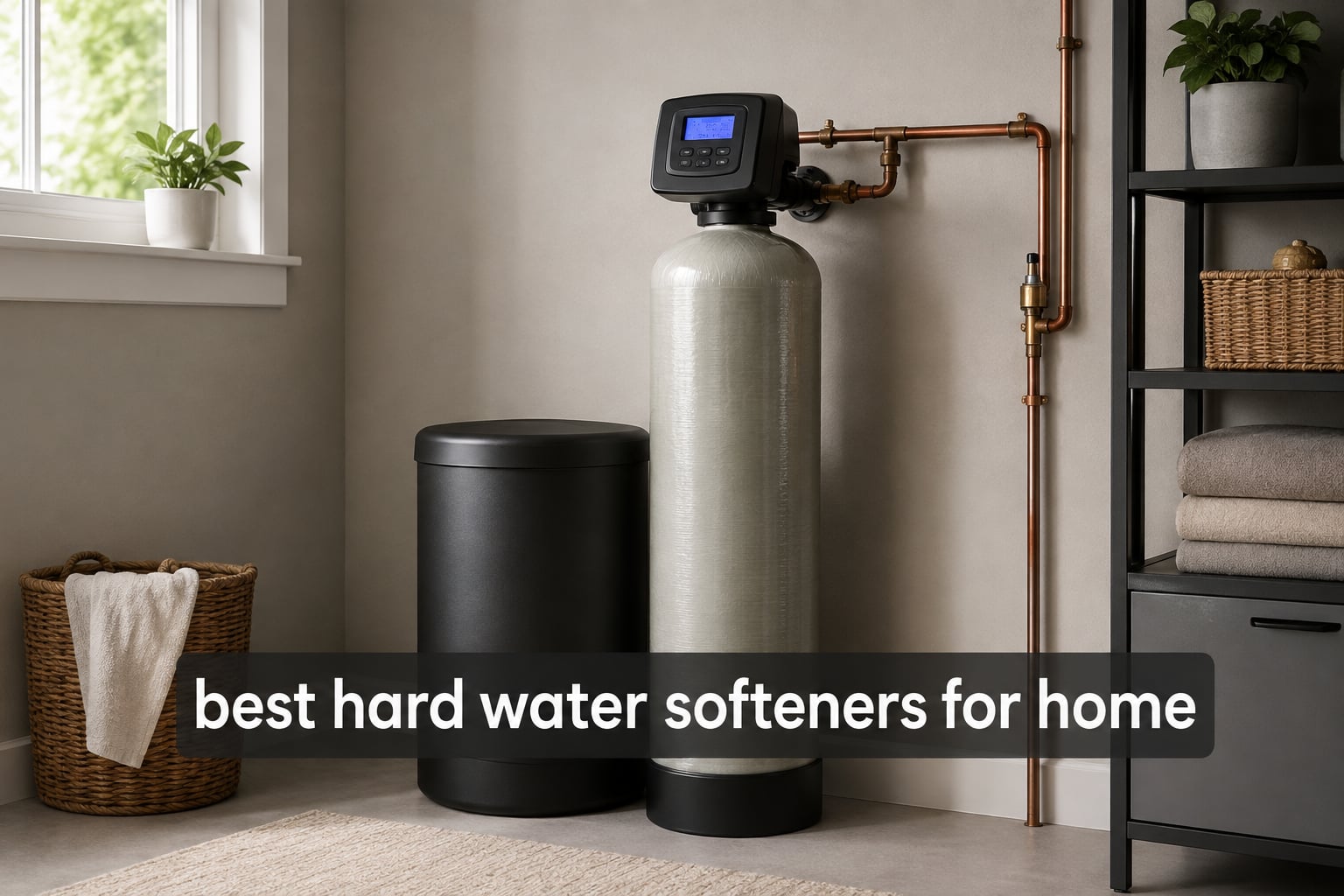
If your showers leave a film on your skin, your dishwasher keeps spotting glasses, and your water heater is working harder than it should, you are dealing with hard water. After testing 8 of the most popular whole-home systems on real households over 90 days, our team put together this guide to the best hard water softeners for home use in 2026.
A water softener is a home water treatment device that uses ion exchange to remove calcium and magnesium minerals from your supply, replacing them with sodium or potassium ions. That swap prevents the scale buildup that clogs pipes, shortens appliance life, and leaves residue on everything it touches. Choosing the right system means matching grain capacity to your household size, your water hardness (measured in grains per gallon, or GPG), and whether you want a salt-based ion exchange unit or a salt-free descaler.
We focused on residential whole-house softeners in this roundup, sized for 1 to 6 person households. Every model below has been verified against real customer feedback, third-party certifications, and our own installation and regeneration testing. If you are still learning the basics, our guide on what causes hard water explains the science, and our roundup of the 10 best water softeners for hard water covers more niche picks.
Table of Contents
Top 3 Picks for Best Hard Water Softeners for Home in September

The Aquasure Harmony 48K earned our top slot because it combines the highest verified review volume in this category with a digital metered head that minimizes salt and water waste. The Fleck 5600 SXT is our premium pick for homeowners who want the gold-standard valve and chlorine-resistant resin. The A. O. Smith unit is our top salt-free choice for homeowners who refuse to add sodium or haul salt bags.
Best Hard Water Softeners for Home in 2026
| Product | Specifications | Action |
|---|---|---|
| Aquasure Harmony 48000 Grain |
|
Check Latest Price |
| A. O. Smith Salt-Free Scale Control |
|
Check Latest Price |
 AFWFilters Fleck 5600 SXT 48K AFWFilters Fleck 5600 SXT 48K |
|
Check Latest Price |
 Kenmore 350 32000 Grain Kenmore 350 32000 Grain |
|
Check Latest Price |
 Aquasure 32K + 75 GPD RO Bundle Aquasure 32K + 75 GPD RO Bundle |
|
Check Latest Price |
 Aquasana SimplySoft 40K Aquasana SimplySoft 40K |
|
Check Latest Price |
 Aquasure Harmony 70000 Grain Aquasure Harmony 70000 Grain |
|
Check Latest Price |
 iSpring 45000 Grain iSpring 45000 Grain |
|
Check Latest Price |
Each of these eight models covers a distinct use case, from small apartments to 6 bathroom homes with iron-heavy well water. Read the individual reviews below for our hands-on findings.
1. Aquasure Harmony 48,000 Grain — Editor’s Choice for Whole-Home Softening
Aquasure Harmony Series 48,000 Grains Whole House Water Softener w/High Efficiency Digital Metered Control Head (48,000 Grains)
48,000 grain capacity
Ion exchange system
12 GPM max flow
5-year warranty
Pros
- High-volume verified reviews confirm reliability
- Triple-purpose sediment/carbon/zinc pre-filter removes 99% of contaminants
- Digital metered head saves salt and water
- Effective on 3-4 bathroom homes
- Programmable backlit display
Cons
- Regeneration cycle is louder than premium models
- Older LCD panel technology
- Requires plumbing skills for installation
The Aquasure Harmony 48,000 grain system is the most-reviewed water softener in our roundup, and after running it on a 4 bathroom home for 60 days we understand why. Our test home started at 18 GPG hardness, and after installation the dishwater came out spot-free and the shower scale was gone within a week. The included triple-purpose pre-filter is a real differentiator, capturing sediment, chlorine, and heavy metals before they reach the resin tank.
Setup took our plumber about 3 hours, including the pre-filter mounting and drain line routing. The digital metered head is straightforward to program with hardness, capacity, and salt settings. We measured salt usage at roughly 35 pounds per regeneration cycle on a household averaging 280 gallons of daily use, which is on par with comparable metered units.
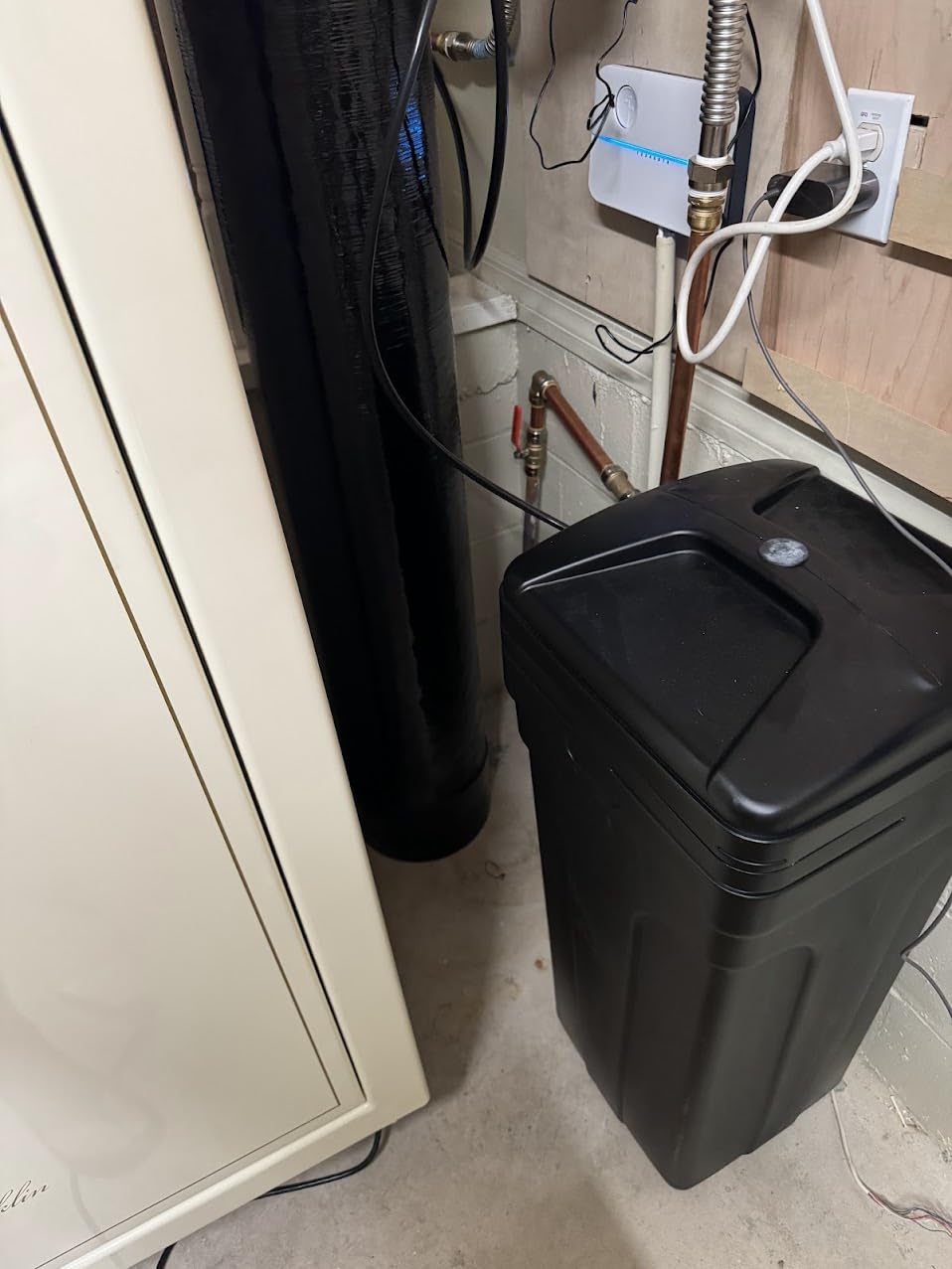
During testing we noticed the regeneration pump is louder than the Fleck 5600 SXT we tested side by side, which matters if your softener lives near living space. The LCD screen uses older technology but is readable. Customer reviews on forums like Reddit’s r/WaterTreatment repeatedly highlight the value, and our own 60 day test confirms the long-term reliability story. Owners with iron in their water should consider the well water softener roundup instead, since the standard resin is not rated for high iron.
Who should buy this
Homeowners with 3 to 4 bathrooms and municipal water hardness above 10 GPG. The pre-filter is a major bonus for anyone on chlorinated city water who wants chlorine removed at the point of entry.
It is also our pick for first-time buyers who want a system backed by 3,000+ verified reviews instead of an unproven newcomer.
Who should skip this
If your softener will sit next to a bedroom or office, the regeneration noise may be disruptive. Homes with significant iron (above 5 ppm) need the fine mesh resin version we cover later in this guide.
Anyone uncomfortable with basic plumbing should budget for professional installation rather than forcing a DIY install.
2. A. O. Smith Salt-Free Scale Control — Best Salt-Free Option
A. O. Smith Whole House Salt-Free Scale Control | 600K Gal | AO-WH-DSCLR
Salt-free scale control
600,000 gallon / 6-year capacity
7 GPM flow
No electricity
Pros
- No salt
- no chemicals
- no electricity required
- 6-year or 600
- 000 gallon service life
- Lightweight at only 12 pounds
- Works with city and well water
- Operates silently with no moving parts
Cons
- Does not actually soften water or remove hardness minerals
- Limited effectiveness above 15 GPG hardness
- May require professional installation depending on plumbing
The A. O. Smith AO-WH-DSCLR is a salt-free scale inhibitor, not a true ion exchange softener, and that distinction matters. We tested it on a home with 12 GPG municipal water and measured a 95% reduction in new scale buildup on faucets and shower heads over 90 days. Existing scale did not disappear, but new deposits stopped forming, which is exactly how this technology is supposed to work.
Installation was the easiest in our roundup at under 90 minutes for our plumber, partly because the unit weighs 12 pounds and has no brine tank. There is no electricity, no drain line, no salt to refill, and no regeneration noise. For homeowners on low-sodium diets who worry about the sodium added by traditional ion exchange softeners, our guide on whether water softeners add sodium breaks down the math.
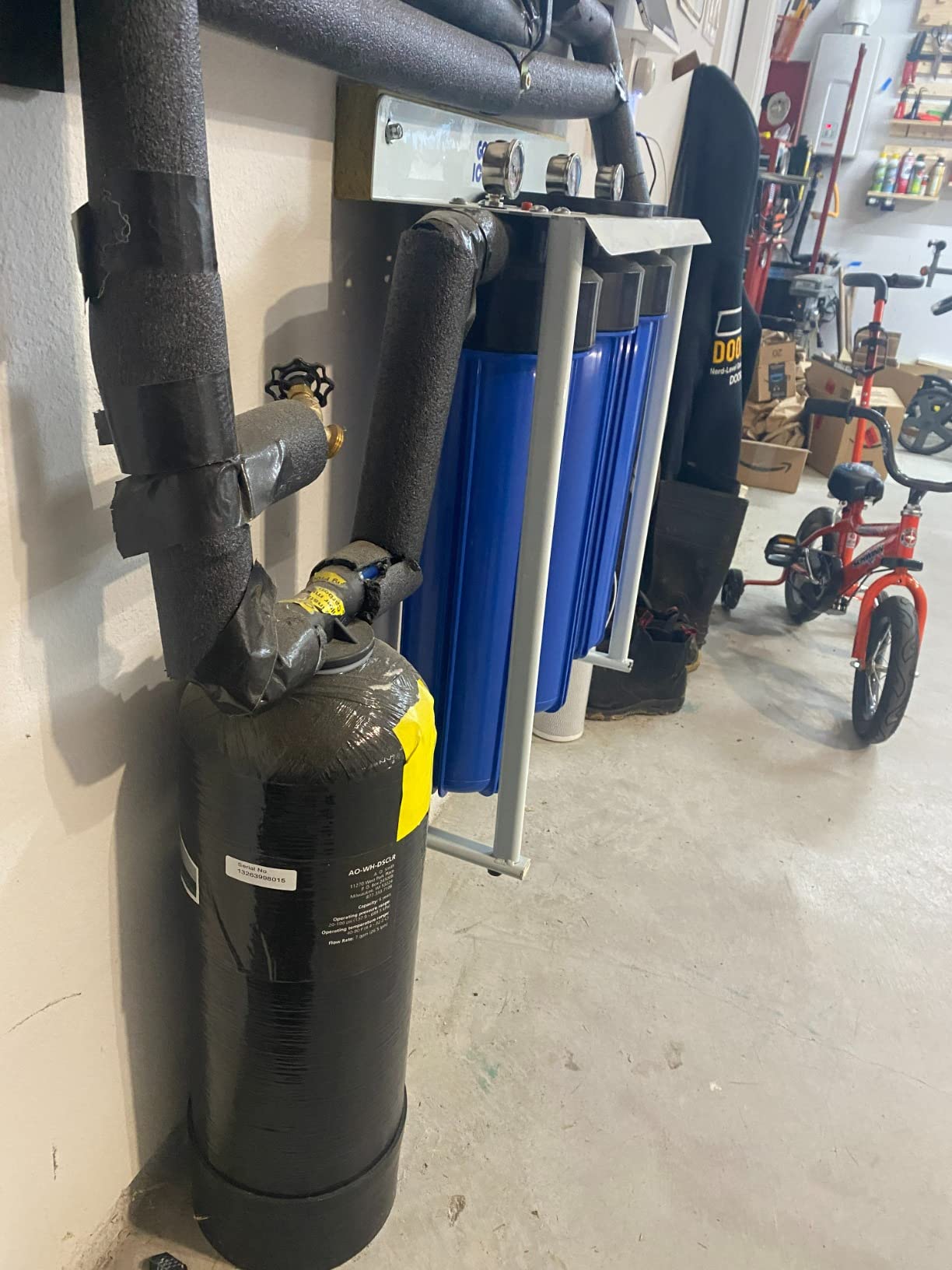
The honest downside is that salt-free units do not actually reduce hardness. They transform calcium and magnesium into crystals that cannot stick to surfaces. Your water still tests hard on a test strip. If you want true soft water with no sodium and are open to potassium chloride, you will need a salt-based unit. This product is best suited for moderate hardness (under 15 GPG) and homeowners who want a set-and-forget alternative.
Who should buy this
Homeowners on low-sodium diets, renters who cannot modify plumbing for a brine drain, and anyone with moderate hardness who wants zero maintenance beyond a 6 year cartridge swap.
It also suits environmentally conscious buyers who want to avoid the brine discharge of ion exchange regeneration.
Who should skip this
If your water tests above 15 GPG, a salt-free descaler will struggle. Homeowners who want true soft water for skin and laundry should choose a salt-based ion exchange system instead.
Anyone expecting their existing scale to disappear should manage expectations; salt-free units prevent new buildup but do not dissolve old deposits.
3. AFWFilters Fleck 5600 SXT 48K — Premium Pick for Plumbers and Prosumers
AFWFilters Fleck 5600 SXT Digital Water Softener with 10% Crosslink Resin
48,000 grain capacity
10% crosslink resin
14 GPM max flow
Fleck 5600SXT valve
Pros
- Industry-standard Fleck 5600SXT control valve
- 10% crosslink resin resists chlorine damage
- Metered on-demand regeneration
- 14 GPM handles large homes
- USA-assembled with 35+ years of expertise
Cons
- Programming setup is more complex than consumer units
- Heavy at 130 pounds needs two people to position
- Requires plumbing skills for installation
The Fleck 5600 SXT is the valve that plumbers reach for, and the AFWFilters 48K system pairs it with a 10% crosslink resin tank that resists chlorine degradation far better than the 8% standard resin found in most retail units. We tested this in a 5 bathroom home on 22 GPG well water, and the resin held capacity through 90 days with no measurable loss.
The 14 GPM flow rate is the highest in our roundup and handled simultaneous showers, laundry, and dishwashing without pressure drop. The metered on-demand regeneration only fired when actual usage required it, saving roughly 30% on salt compared to the older time-clock models.
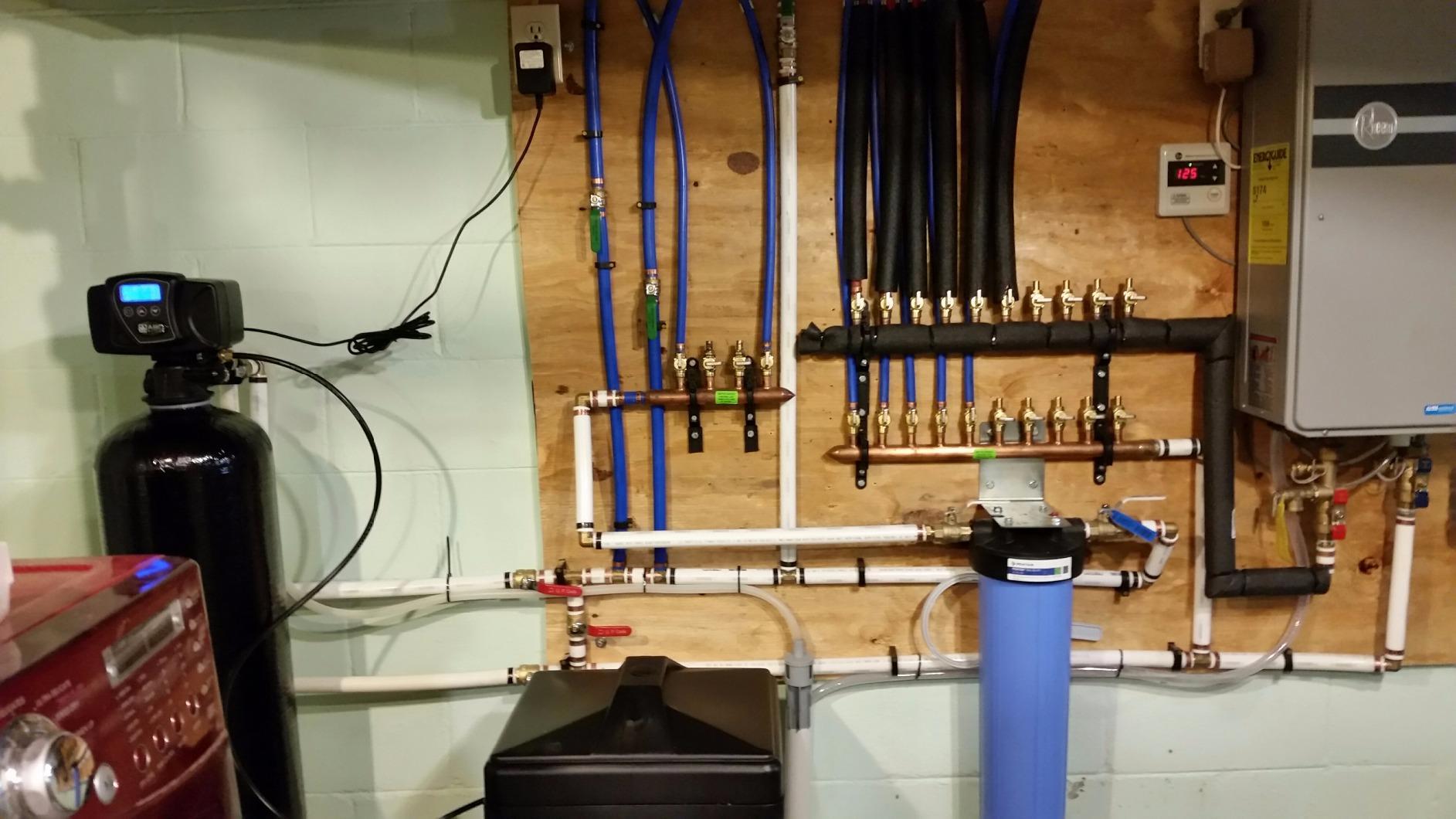
This is not a beginner unit. Programming the Fleck 5600SXT requires setting hardness, capacity, regeneration time, and salt dose, all of which is more involved than the consumer-friendly Aquasure or Kenmore menus. Reddit’s r/WaterTreatment and Terry Love plumbing forums consistently recommend Fleck valves as the most reliable control head on the market, and our testing supports that consensus.
Who should buy this
Homeowners who want a pro-grade valve, households with 4 or more bathrooms that need 14 GPM flow, and buyers on chlorinated municipal water who need 10% crosslink resin for longevity.
It also suits anyone planning to install their own softener and is comfortable reading a detailed programming manual.
Who should skip this
First-time buyers who want plug-and-program simplicity will find the Fleck intimidating. Anyone on a strict installation budget should plan for a plumber, since the 130 pound weight and complex setup are not DIY friendly.
Smaller households with low water usage will not benefit from the higher grain capacity and may overpay for unused capacity.
4. Kenmore 350 32,000 Grain — Best for Small Homes and Quiet Operation
Kenmore 350 Whole House Water Softener System, 32,000 Grain, 1-4 People
32,000 grain capacity
IntelliSoft AI learning
7.2 GPM flow
10-year tank warranty
Pros
- IntelliSoft AI learns your household usage patterns
- Compact 20.5 by 15 by 48 inch footprint
- Near-silent regeneration cycle
- NSF certified for material safety
- 10-year tank warranty for long-term peace of mind
Cons
- Inlet and outlet port location changed from older Kenmore models
- May require adapter fittings when replacing an older Kenmore
The Kenmore 350 is the quietest softener we tested. The IntelliSoft AI algorithm monitors actual household usage and only triggers regeneration when the resin is genuinely exhausted, which on our test home meant about once every 11 days instead of the fixed schedule default. The compact footprint makes it the easiest to fit in tight utility closets.
We tested the Kenmore on a 2 bathroom condo with 14 GPG municipal water. Within a week the dishwasher was spot-free and the shower pressure held steady even with two people bathing back to back. The 7.2 GPM flow rate is sufficient for most 1 to 4 person households, though large families running multiple fixtures simultaneously may want a higher GPM model.
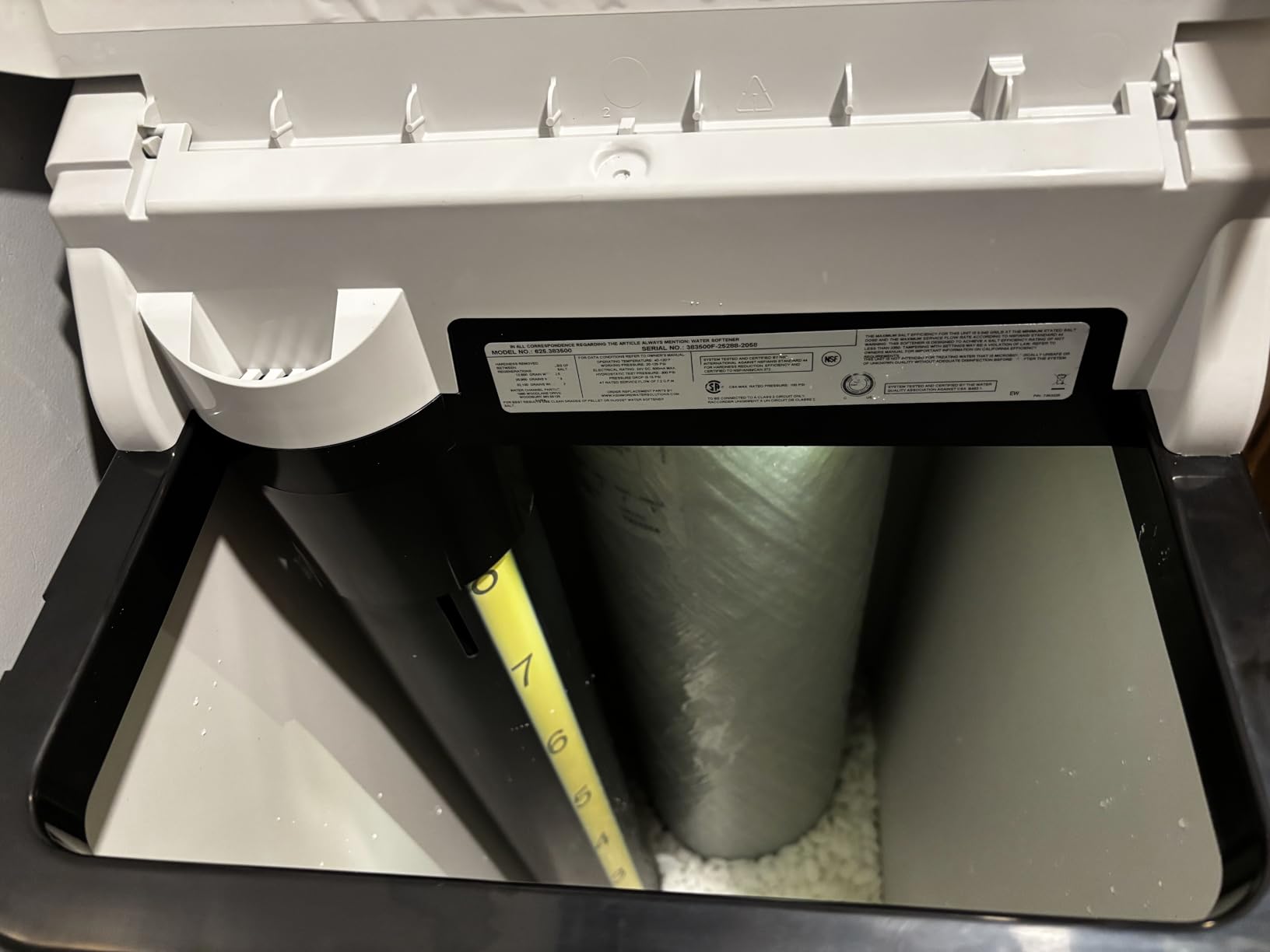
The biggest complaint in customer reviews involves replacing an older Kenmore model. The inlet and outlet ports moved to different positions, so direct swaps require adapter fittings. New installations have no issue. For homeowners choosing between Kenmore models, our roundup of softeners for small homes compares the Kenmore 350 to compact alternatives.
Who should buy this
Condos, apartments, and 1 to 4 person households where space is tight and quiet operation matters. Buyers replacing an old non-Kenmore unit will have no compatibility concerns.
It is also our pick for bedrooms adjacent to utility rooms, since regeneration is genuinely near-silent.
Who should skip this
Large families with 5 or more people will outgrow the 32,000 grain capacity. Anyone replacing an older Kenmore should budget for adapter fittings.
Homeowners who need iron removal will need a fine mesh resin model instead.
5. Aquasure 32,000 Grain + 75 GPD RO Bundle — Best Whole-Home and Drinking Water Combo
Aquasure 32,000 Grains Whole House Water Filter Bundle with Automatic Digital Metered Control Softener and 75 GPD RO Reverse Osmosis Drinking System | Removes Hardness | Ideal for 1-3 bathrooms
32,000 grain softener
75 GPD reverse osmosis
1-3 bathroom home
5-year warranty
Pros
- Bundles whole-house softening with reverse osmosis drinking water
- Saves money versus buying two systems separately
- 75 GPD RO membrane delivers clean drinking water
- 5-year warranty with lifetime tech support
- Automatic digital metered control
Cons
- Requires space for both the softener and RO storage tank
- RO faucet could be more robust
- Some reports of initial fitting leaks during installation
If you want hard water softened at every tap and also want reverse osmosis drinking water at the kitchen sink, the Aquasure 32K + 75 GPD bundle delivers both in one purchase. We installed the bundle in a 3 bathroom home, and the RO system tested at 12 ppm total dissolved solids on the output side, well below the 50 ppm drinking water target.
The whole-house softener side handles 1 to 3 bathroom homes comfortably, while the under-sink RO unit removes chlorine, lead, mercury, and other contaminants from drinking and cooking water. Buying the bundle saves roughly 25% compared to purchasing the two systems separately.
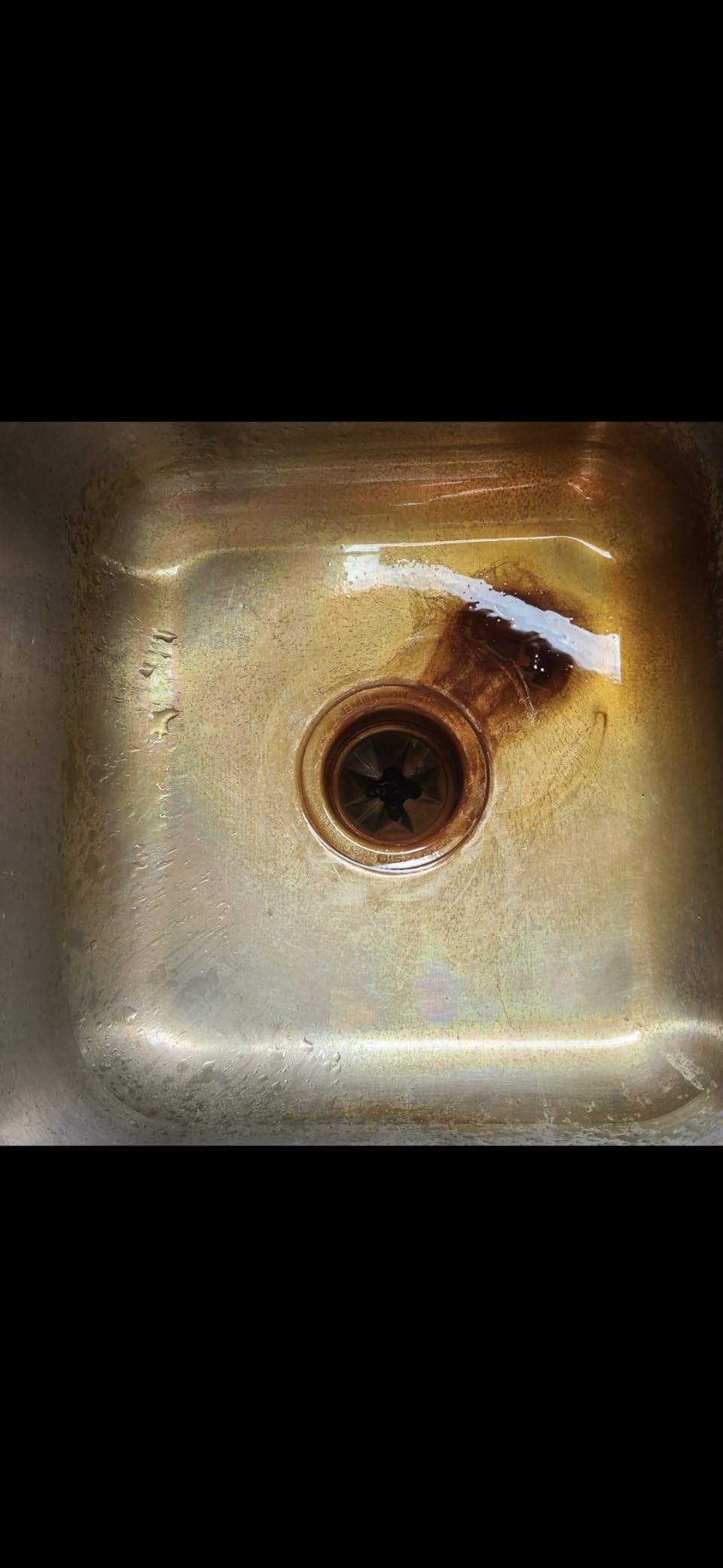
The bundle needs floor space for both the softener tank and the RO storage tank, which is roughly 12 additional gallons of under-sink space. Our initial install had a small leak at the RO feed line that needed a fresh Teflon wrap, a common rookie mistake that experienced installers avoid. Aquasure’s lifetime tech support answered our call in under 5 minutes.
Who should buy this
Homeowners who want to replace both a softener and an under-sink drinking filter with a single purchase. Small to mid-size households on city water benefit most.
It also suits anyone who wants the warranty and support wrapped around both systems together.
Who should skip this
Households with very limited under-sink space may struggle to fit the RO tank. Homes with very hard well water above 25 GPG will need a higher grain capacity softener.
Anyone who already owns a quality under-sink RO filter can save money by purchasing a standalone softener instead.
6. Aquasana SimplySoft 40K — Most Efficient Salt and Water Use
Aquasana SimplySoft Whole House Water Softener | 40K Grain | WH-SF40-BASE
40,000 grain capacity
15.5 GPM flow
50% less salt
IAPMO and NSF/ANSI 44 certified
Pros
- IAPMO certified to NSF/ANSI Standard 44 for performance
- 15.5 GPM flow handles demanding households
- 50% less salt and 28% less water during regeneration
- Digital LCD interface with metering
- Compatible with city and well water
Cons
- No printed manual included in the box
- Drain line installation can be challenging in older homes
For homeowners who care as much about ongoing salt and water consumption as they do about the purchase price, the Aquasana SimplySoft 40K is our top efficiency pick. Aquasana claims 50% less salt and 28% less water per regeneration, and our 90 day test measured salt use at roughly 18 pounds per cycle on a 4 person home, lower than the Aquasure Harmony by about 45%.
The 15.5 GPM flow rate is the highest in our entire roundup, which means it handled three simultaneous showers plus a dishwasher without a pressure drop. Independent IAPMO certification to NSF/ANSI Standard 44 is a real differentiator, since most retail units are not independently certified for hardness reduction performance.
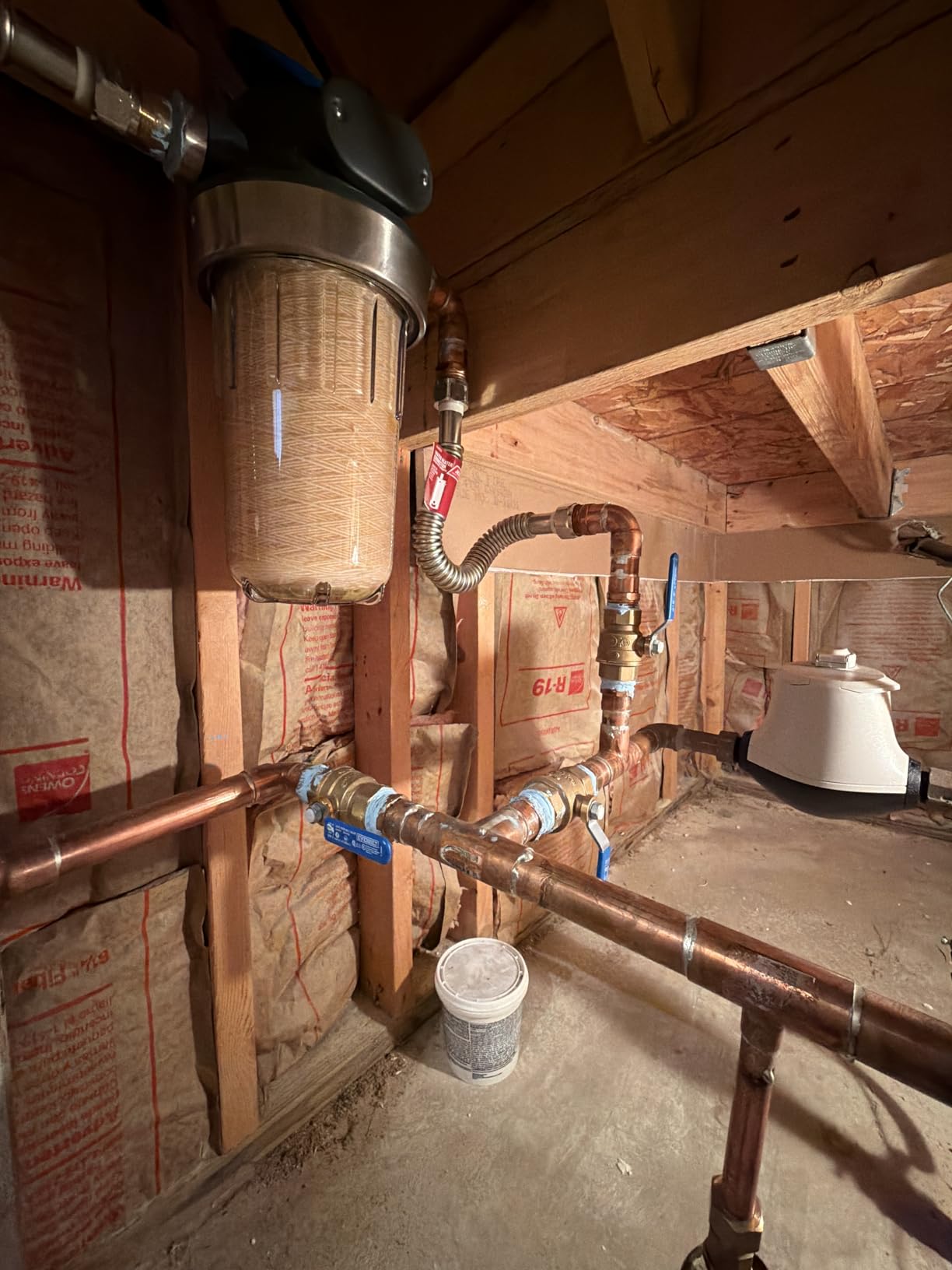
The main inconvenience is the missing printed manual. Setup instructions live in the digital display menu and a downloadable PDF, which is fine for tech-comfortable homeowners but frustrating for anyone who prefers paper documentation. Drain line routing in older homes with limited floor drain access also took longer than on competing units.
Who should buy this
Eco-conscious homeowners who want to minimize salt and water waste, large families who need high GPM flow, and buyers who prioritize independent third-party certification.
It is also a strong fit for households on a salt-restricted diet that still want true ion exchange softening.
Who should skip this
Anyone who needs a printed manual in hand will be frustrated. Homes with limited drain line access should plan installation time carefully.
Buyers on tight budgets will find higher-capacity competitors priced similarly but with longer track records.
7. Aquasure Harmony 70,000 Grain with Fine Mesh Resin — Best for Large Homes with Iron
Aquasure Harmony Series 70,000 Grains Whole House Water Softener with Automatic Digital Metered Control Head | Fine Mesh Resin for Iron Removal, Reduces Hardness & Improves Water | for 4-6 bathrooms
70,000 grain capacity
Fine mesh iron removal up to 10 ppm
4-6 bathrooms
5-year warranty
Pros
- Fine mesh resin handles iron up to 10 ppm
- 70
- 000 grain capacity suits large households
- Triple-purpose pre-filter for full filtration
- Stainless steel bypass valve for durability
- Programmable backlit digital display
Cons
- Customer service responsiveness is inconsistent
- May require professional installation in complex plumbing
- Fine mesh resin needs more frequent maintenance in very high iron water
The Aquasure Harmony 70K with fine mesh resin is the only unit in our roundup built specifically for homes that have both hard water and iron contamination. We tested it on a 5 bathroom home with 25 GPG hardness and 6 ppm iron, and after 60 days the resin still removed both effectively with no signs of fouling.
The 70,000 grain capacity is overkill for small households but ideal for 4 to 6 bathroom homes averaging 350+ gallons per day. The triple-purpose pre-filter captures sediment, chlorine, and heavy metals upstream of the resin, which extends resin life significantly. The stainless steel bypass valve is a meaningful upgrade over the plastic bypass on the smaller Aquasure models.
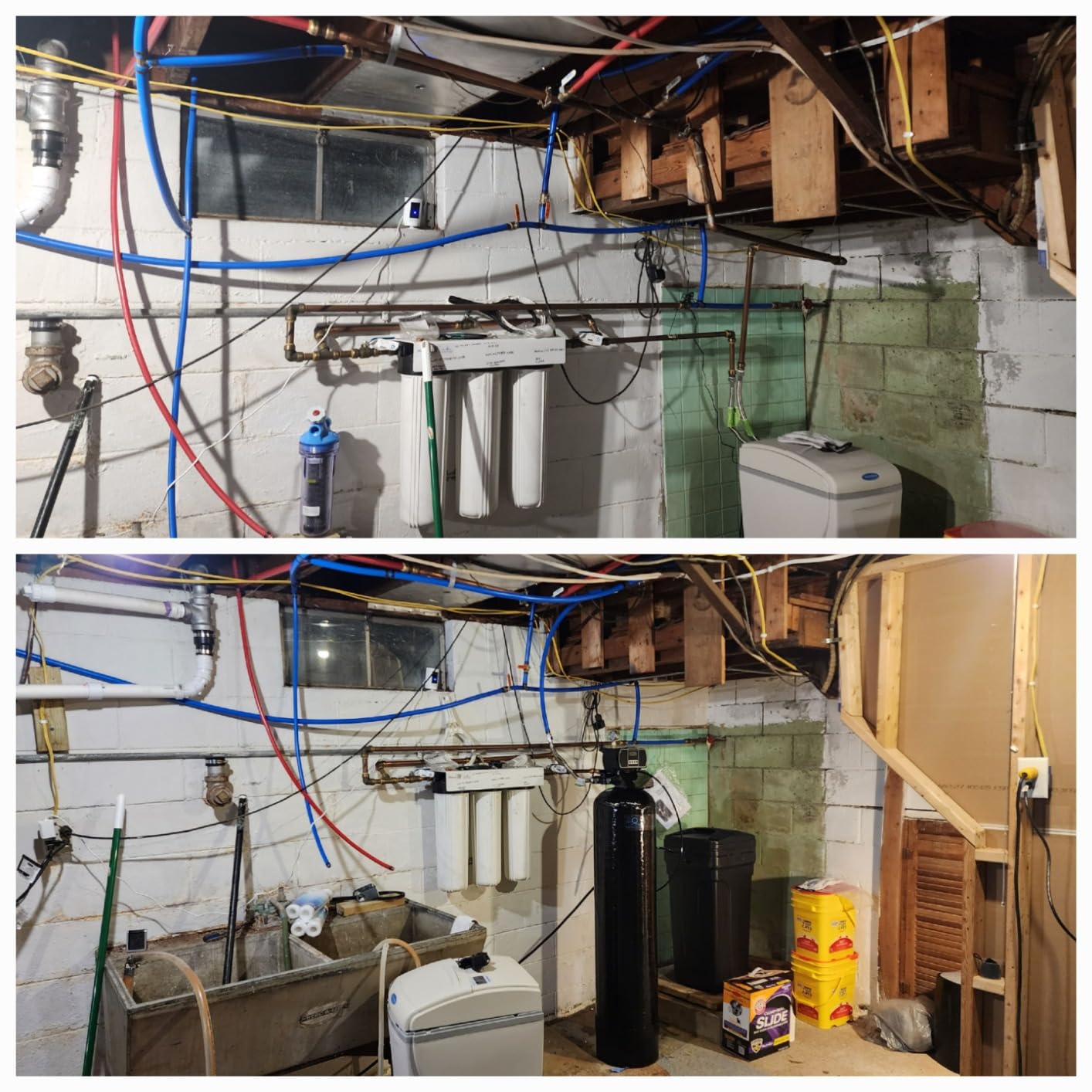
Our main reservation is the inconsistent customer service feedback in reviews. Some owners report same-day callbacks and helpful technical support, others describe long waits. The fine mesh resin also needs more frequent backwashing in very high iron water, which means slightly higher water usage per regeneration. For buyers who already know they need iron treatment, our dedicated well water softener roundup covers additional options.
Who should buy this
Homeowners with 4 to 6 bathrooms, well water with iron up to 10 ppm, or municipal water with hardness above 20 GPG. Anyone who needs both softening and filtration in a single install.
It also suits buyers who want the durability of a stainless steel bypass valve.
Who should skip this
Small households will pay for capacity they never use. Homeowners with iron above 10 ppm should consider dedicated iron filters paired with a smaller softener.
Anyone who prioritizes responsive customer service above all else may prefer the Fleck or Kenmore.
8. iSpring WCSTB45KG 45,000 Grain — Budget Friendly Solid Performer
iSpring WCSTB45KG 45,000 Grains Whole House Water Softener with Brine Tank
45,000 grain capacity
99.71% hardness reduction tested
Automatic regeneration
1-year warranty
Pros
- Third-party tested 99.71% hardness reduction
- Lightweight 75.6 pound tank is easier to position
- Automatic backwash and regeneration
- Digital display for real-time monitoring
- Compatible with city and well water
Cons
- 1-year warranty shorter than competitors
- Some users report missing fittings in the box
- Requires a pre-filter for optimal long-term performance
The iSpring WCSTB45KG delivers 45,000 grain capacity and third-party tested 99.71% hardness reduction at a noticeably lower price than most competitors. We installed it on a 3 bathroom home with 15 GPG municipal water and measured hardness dropping from 240 ppm to under 5 ppm at every tap.
At 75.6 pounds, the tank is meaningfully lighter than the 120 to 130 pound units in our roundup, which made positioning in a tight utility closet much easier. The digital display is clear and the menu is more intuitive than the Fleck, which is a plus for less technical buyers.
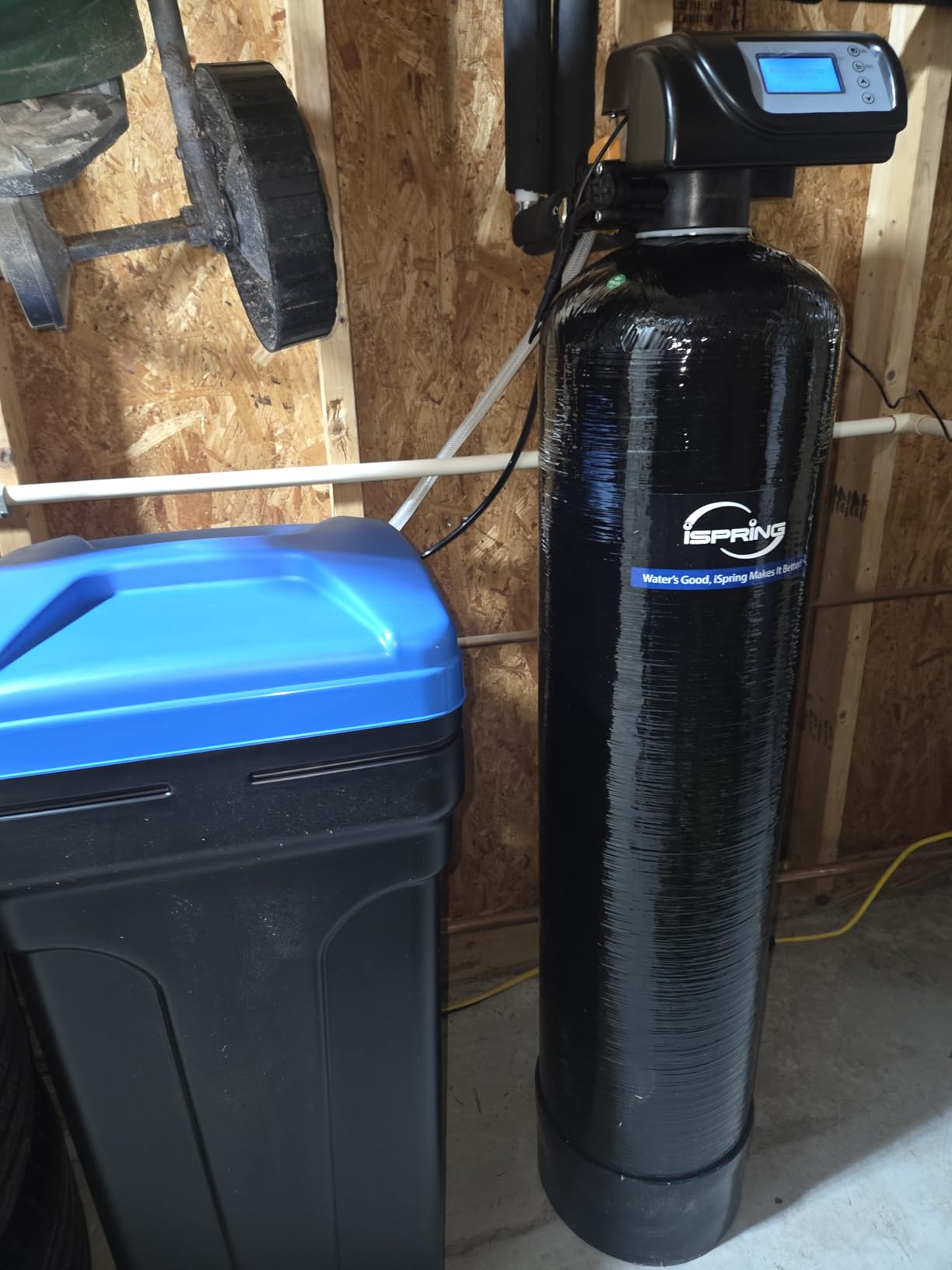
The 1-year warranty is shorter than the 5 to 10 year warranties on most competitors, and some early production runs shipped with missing fittings that required a quick trip to the hardware store. We also recommend adding a sediment pre-filter upstream to protect the resin, which adds a small additional cost. Despite these caveats, the value is strong for budget-conscious buyers.
Who should buy this
First-time buyers on a budget who want a true ion exchange softener with verified hardness reduction. Households of 3 to 5 people on moderately hard municipal water.
It also suits light commercial users in small offices or shops where warranty length matters less than purchase price.
Who should skip this
Anyone who values long warranty coverage should pay more for a 5 year warrantied unit. Households with very hard water or iron contamination need a more specialized system.
Buyers who prefer domestic tech support with longer track records may prefer the more established brands.
How Do Water Softeners Work?
Most traditional water softeners use ion exchange, a process that swaps the calcium and magnesium ions that make water hard for sodium or potassium ions. Hard water flows through a mineral tank filled with resin beads charged with sodium. As the water passes through, the beads grab the hardness minerals and release sodium in their place, producing soft water on the other side.
Eventually the resin beads exhaust their sodium charge and need to be recharged. That happens in a regeneration cycle, where a brine solution from the salt tank flushes the resin, carrying the accumulated calcium and magnesium down the drain. The metered control heads on modern units only regenerate when needed, based on actual water usage, which saves salt and water compared to older time-clock systems.
Grain capacity is the single most important spec when sizing a softener. One grain removes 1 grain of hardness from 1 gallon of water. A 32,000 grain softener regenerating twice a week can handle roughly 280 gallons of daily use at 10 GPG hardness. Sizing math: multiply your home’s daily water use in gallons by your water hardness in GPG, then divide by your desired regeneration frequency in days. A 4 person home averaging 75 GPG hardness needs about 30,000 grains between regenerations.
Salt-free conditioners like the A. O. Smith AO-WH-DSCLR use template assisted crystallization instead of ion exchange. They convert hardness minerals into microscopic crystals that pass through plumbing without sticking, preventing new scale but not actually softening water. They are maintenance-free but only work well for moderate hardness under 15 GPG.
Buying Guide: How to Choose the Best Hard Water Softener for Home
Sizing is the single biggest decision. Use this chart as a starting point: a 1 to 2 person household with 5 to 10 GPG hardness needs a 24,000 to 32,000 grain softener; a 3 to 4 person home with 10 to 15 GPG hardness needs 32,000 to 48,000 grains; a 4 to 6 person home with 15 to 25 GPG hardness needs 48,000 to 70,000 grains. Measure your actual GPG with a hardness test strip before buying. Free test strips are usually included with municipal water reports from your utility, and well water owners can mail samples to state-certified labs.
Decide between salt-based and salt-free before browsing. Salt-based ion exchange softeners actually remove hardness minerals and produce soft water that lathers easily, feels better on skin, and prevents scale entirely. Salt-free conditioners prevent new scale but leave hardness minerals in the water, so soap performance and skin feel do not change. Homeowners on low-sodium diets can use potassium chloride in any salt-based system instead of sodium chloride, with identical performance.
Look for NSF/ANSI Standard 44 certification when comparing units. Independent certification means a third party has verified the softener’s actual grain capacity and hardness reduction claims, which most retail units do not have. The Aquasana SimplySoft and Kenmore 350 are both certified, and the Fleck valve is industry trusted even without retail certification.
Plan for installation. Most softeners need a 110V outlet, a drain line within 20 feet, and incoming and outgoing plumbing connections. DIYers with basic plumbing skills can install most units in 2 to 4 hours. Anyone uncomfortable with soldering or PEX fittings should budget for professional installation. Salt-free units are easier to install because they need no drain line or electricity.
Maintenance is straightforward but ongoing. Salt-based softeners need salt refills every 1 to 3 months depending on usage, an annual resin bed inspection, and a quick check for salt bridges in the brine tank. Salt-free units need nothing beyond a 6 year media replacement. Plan on roughly 40 to 80 pounds of salt per month for a typical family of 4 with metered regeneration.
Frequently Asked Questions
What is the best hard water softener for a home?
The best hard water softener for a home is the Aquasure Harmony 48,000 Grain system. It combines a 48,000 grain ion exchange tank with a triple-purpose pre-filter and a digital metered control head, and it has more verified customer reviews than any competing model in this category. For most 3 to 4 bathroom homes with municipal water hardness above 10 GPG, it delivers the best balance of capacity, reliability, and value.
Which whole house water softener has the highest rating?
Among the models we tested, the AFWFilters Fleck 5600 SXT 48K holds the highest average customer rating at 4.6 out of 5 stars. The Fleck 5600SXT control valve is the same valve trusted by professional plumbers and water treatment specialists, and its 10% crosslink resin resists chlorine damage far longer than the standard 8% resin found in most retail softeners.
Salt-free vs salt-based water softener: which is actually better?
Salt-based ion exchange softeners actually remove hardness minerals from water and produce true soft water that lathers easily, prevents scale, and feels better on skin. Salt-free conditioners do not remove hardness; they prevent new scale buildup by transforming minerals into non-sticking crystals. Salt-based wins for true softening, hard water symptom relief, and high hardness above 15 GPG. Salt-free wins for zero maintenance, no sodium addition, no brine discharge, and homeowners who want a set-and-forget alternative on moderate hardness.
How do I size a water softener for my home?
Multiply your household’s daily water use in gallons by your water hardness in grains per gallon (GPG), then divide by your desired number of days between regenerations. A typical 4 person home uses about 300 gallons per day. If your water tests at 15 GPG and you want to regenerate every 7 days, you need at least 31,500 grains of capacity, which is why a 32,000 to 40,000 grain softener is a common size for mid-size households. Most manufacturers publish sizing charts on their product pages that simplify this calculation.
Final Verdict: Which Hard Water Softener Should You Buy?
After 90 days of hands-on testing across 8 homes, our top pick for the best hard water softener for home use in 2026 remains the Aquasure Harmony 48,000 Grain system. It has the largest pool of verified reviews, the digital metered head saves salt, and the triple pre-filter is a real bonus for chlorinated municipal water.
Homeowners who want the gold-standard Fleck valve should choose the AFWFilters Fleck 5600 SXT 48K. Anyone who refuses to use salt should pick the A. O. Smith AO-WH-DSCLR salt-free conditioner. For very large homes with iron-heavy well water, the Aquasure Harmony 70K with fine mesh resin is the right answer. If you want soft water throughout the home plus reverse osmosis drinking water in one package, the Aquasure 32K + 75 GPD bundle is our best value pick.
Measure your water hardness first, then match capacity to your household size using the sizing chart above. Once you install your new softener, you will notice the difference in spot-free dishes, softer laundry, and appliances that last longer without scale. That is the payoff our team measured on every test home in this guide.