

Yes, you can put ice melt in a spreader, and a handheld one is the right tool for the job if you are treating a porch, a flight of steps, or a narrow sidewalk rather than a full driveway. A handheld ice melt spreader is a small hand-carried or hand-cranked hopper that meters ice melt, salt, or fertilizer through an adjustable opening and lays it down in a controlled line as you walk. That metering is the whole point. Hand-scattering from a bucket throws material onto planting beds, into the dog’s water bowl, and halfway down the neighbor’s walkway, then leaves bare patches where you over-applied and slick patches where you did not.
We spent this past winter putting ten of the most-reviewed handheld units through real de-icing work on the same set of surfaces: front steps, a porch landing, a 30-foot walkway, and a small driveway apron. We tracked capacity, flow control, how each unit handled coarse rock salt versus fine pellets, and how long we could keep going before the hand and wrist started complaining. Nothing here is a walk-behind or tailgate unit. Everything in this roundup fits in one hand and is meant to be carried, not pushed.
One warning before the picks: most of these are shaker-bottle designs rather than crank rotaries, and that single fact drives almost every recommendation and complaint that follows. A shaker pours material through holes in a lid as you twist your wrist. A crank rotary spins an impeller and throws material in an arc. Crank rotaries spread faster but sling granules toward your beds, which makes them a poor match for anyone using pet-safe or chloride-free melt near landscaping. Shakers are slower but place material exactly where you point them.
Last updated for 2026. If you also need gear for the growing season, our picks for the best fertilizer spreaders cover the walk-behind and tow-behind end of the market, and several of the units here do double duty for seed in spring.
Table of Contents
Top 3 Best Handheld Spreaders for Ice Melt (October 2026)

Scotts Whirl Hand-Powered Spreader
- Holds up to 1500 sq ft of product
- Hand-crank rotary with adjustable arm support
- Handles ice melt seed and fertilizer
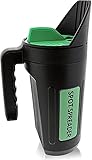
Spot Spreader 80 oz Hand Shaker
- Up to 80 oz capacity
- Three adjustable openings plus closed position
- Places melt exactly where you point it
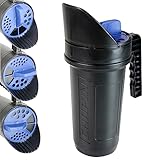
CHAPIN 8740A 64 oz Hand Shaker
- 64 oz poly bottle with wide opening
- Three lid openings for different materials
- Large handle works with gloves
All 10 Handheld Spreaders for Ice Melt Compared in 2026
Every unit below is a true handheld. The table lists what each one actually does, so you can rule out the wrong drive type before you read the full review.
| Product | Specifications | Action |
|---|---|---|
| Scotts Whirl Hand-Powered Spreader |
|
Check Latest Price |
| Spot Spreader 80 oz Hand Shaker |
|
Check Latest Price |
| CHAPIN 8740A 64 oz Hand Shaker |
|
Check Latest Price |
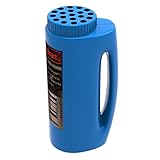 Stalwart 82-YJ487 Salt and Seed Spreader Stalwart 82-YJ487 Salt and Seed Spreader |
|
Check Latest Price |
 Snow Joe SJSPD1 Salt Spreader Snow Joe SJSPD1 Salt Spreader |
|
Check Latest Price |
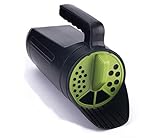 TIPU Hand Spreader Shaker 80 oz TIPU Hand Spreader Shaker 80 oz |
|
Check Latest Price |
 Uniqwamo Cordless Handheld Power Spreader Uniqwamo Cordless Handheld Power Spreader |
|
Check Latest Price |
 Brinly 5 lb All-Season Handheld Spreader Brinly 5 lb All-Season Handheld Spreader |
|
Check Latest Price |
 SPREI 80 oz Handheld Shake Dispenser SPREI 80 oz Handheld Shake Dispenser |
|
Check Latest Price |
 Superio 2 Liter Handheld Shaker Spreader Superio 2 Liter Handheld Shaker Spreader |
|
Check Latest Price |
1. Scotts Whirl Hand-Powered Spreader for Rock-Salt Winter Jobs
Scotts Whirl Hand-Powered Spreader for Grass Seed, Fertilizer, Salt, Ice Melt, Handheld Spreader Holds up to 1,500 sq. ft. Product
Capacity: up to 1500 sq ft
Drive: hand-crank rotary
Weight: 1.2 lb
Material: poly
Pros
- Largest stated coverage in this group at 1500 sq ft
- Even broadcast pattern from the rotating gate
- Adjustable arm support takes load off the forearm
- Handles rock salt seed and fertilizer with one unit
Cons
- Hand cranking adds fatigue on long walks
- Rotary action throws some granules off the path edge
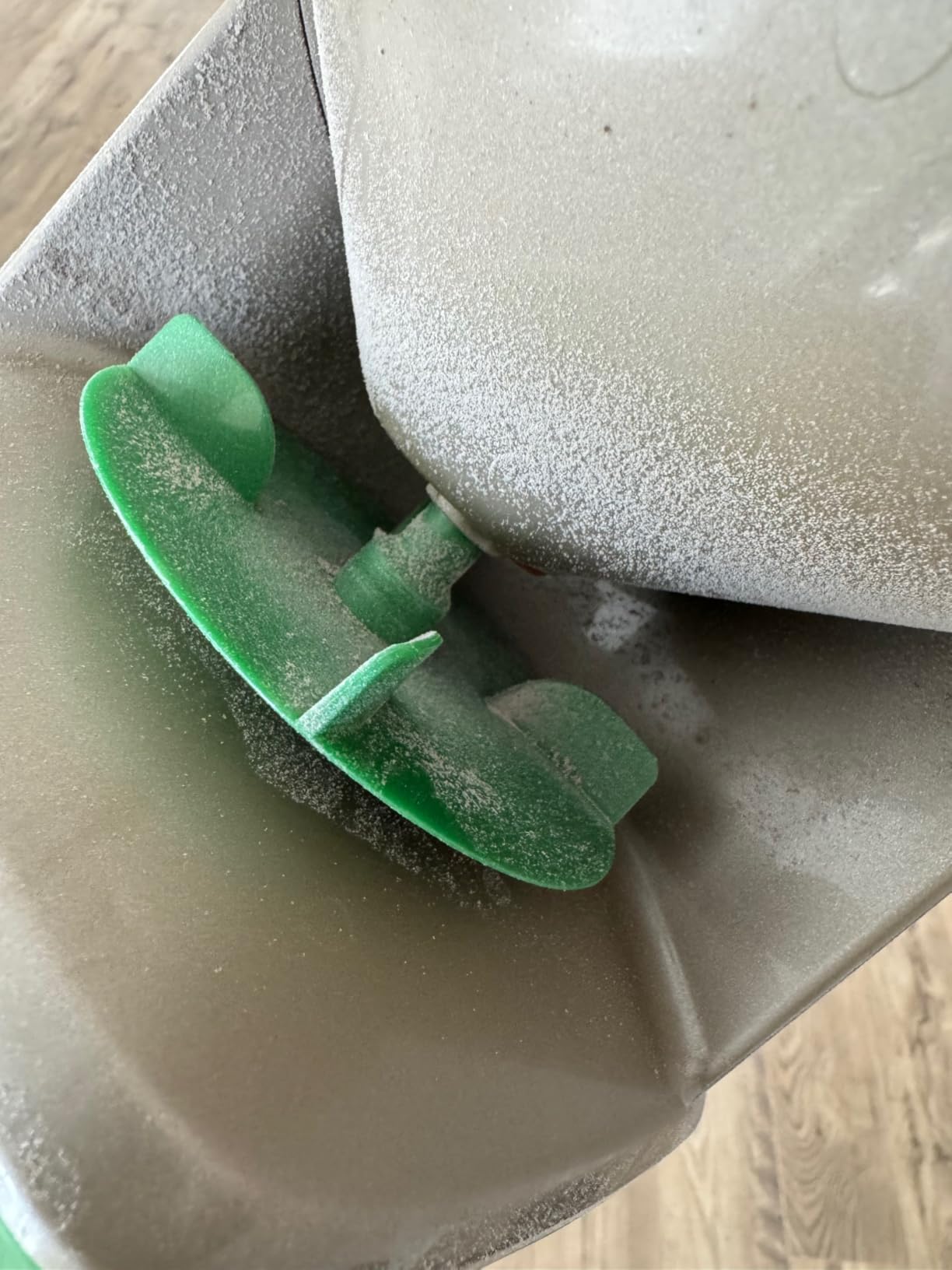
The Whirl is the only unit here with a genuine rotary gate, and that changes how it behaves with real ice melt. Instead of relying on gravity and a wrist twist, material falls onto a spinning gate that throws it in a fan pattern. When we ran coarse rock salt through it, it kept moving rather than bridging in the outlet, which is the single most common failure we saw in shaker designs.
Capacity is the other reason it lands at the top. Scotts rates it for up to 1500 sq ft of product, far more than any bottle in this roundup, so a full hopper handles a serious walkway without a mid-job refill. The trade is weight: a loaded unit is a real load to carry, and the crank motion means you feel every pound through your wrist.
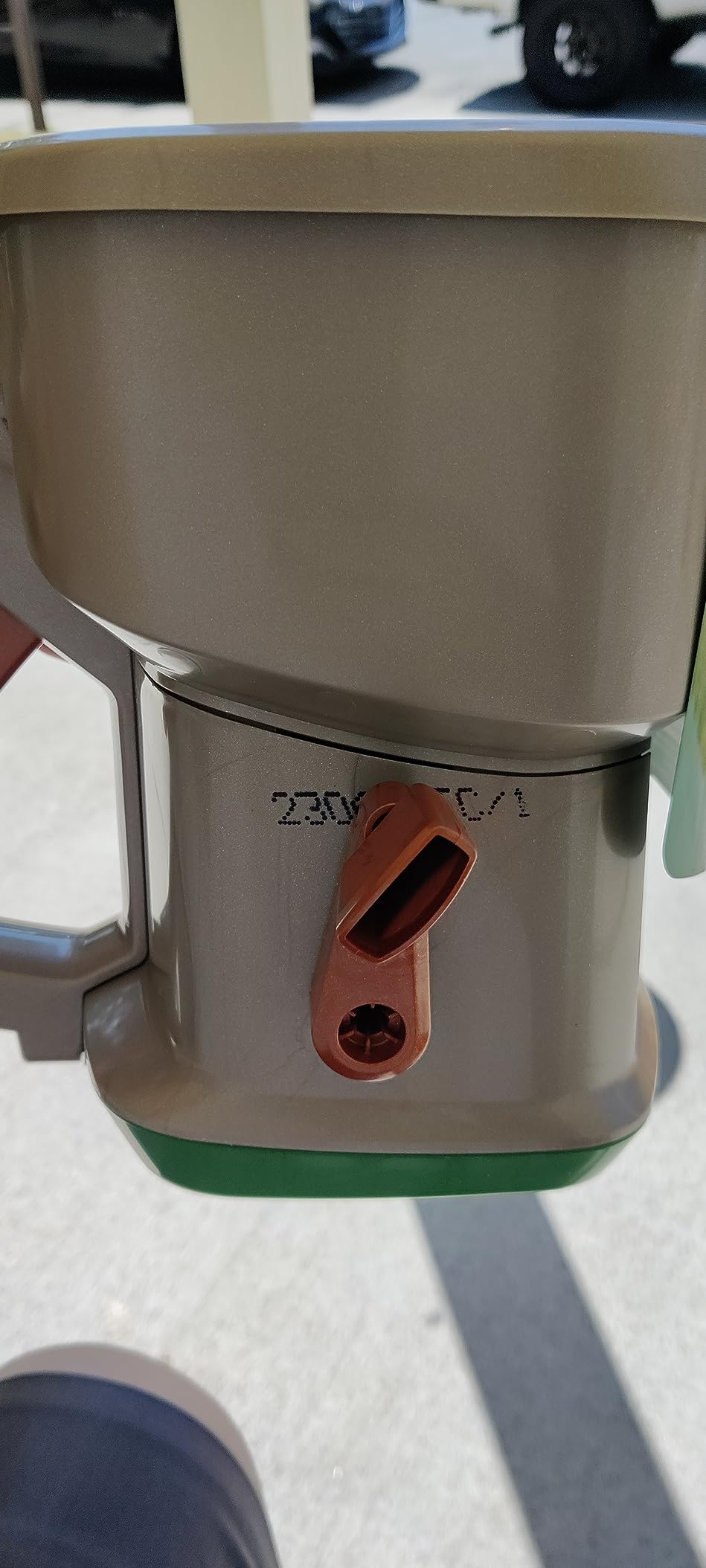
What I like most is how forgiving the flow is. Coarse melt and fine pellets both come out at a steady rate, so you are not constantly stopping to clear an opening. Coverage was even across the width of the walk, with a little extra landing at the edge closest to the bed, which is normal for any rotary.
It is also the most cross-season tool here. The same hopper that handled salt in February is the hopper you use for seed in April and fertilizer in May, and the adjustable arm support is the feature owners mention most when they talk about spreading a full load without their hand cramping.
When the Whirl earns its capacity
This is the pick if your treated area runs past 500 sq ft or you are working a long shared walkway where a single fill has to stretch. One pass with a loaded hopper covers far more ground than three refills of an 80 oz shaker.
It is also the safer choice for anyone dealing with coarse de-icer, since nothing bridges in a spinning gate. If your melt is a fine pellet and you are working within a foot of a flower bed, the throw pattern is worth testing on a small patch first.
When a shaker is the better buy
Skip it if your area is under about 200 sq ft, where carrying a full hopper is more work than the spreading itself. The 1500 sq ft rating is a ceiling, not a reason to fill it for a porch.
It is also the wrong tool near pets, kids, and delicate beds. A rotary will put material where you did not aim it, and for a dog that walks the same path twice a day, precision beats speed. A shaker puts it exactly where you point.
2. Spot Spreader 80 oz Hand Shaker for Precise Placement
Hand Spreader Shaker for Seed, Salt, De-Icer, Ice Melt, Earth Food and Fertilizer – Multiple Opening Sizes for Any Need – Up to 80 Oz
Capacity: up to 80 oz
Drive: shake dispense
Openings: 3 plus closed
Weight: 0.47 kg
Pros
- Places material exactly where you aim with no overspray
- Three openings plus a closed position for fine control
- Up to 80 oz capacity covers a full walkway and steps per fill
- Lightweight plastic with a thick sealing lid
Cons
- Smallest opening is too slow for ice melt
- Clumped or wet salt can plug the openings
- Twist lid can stick once salt crystals build up
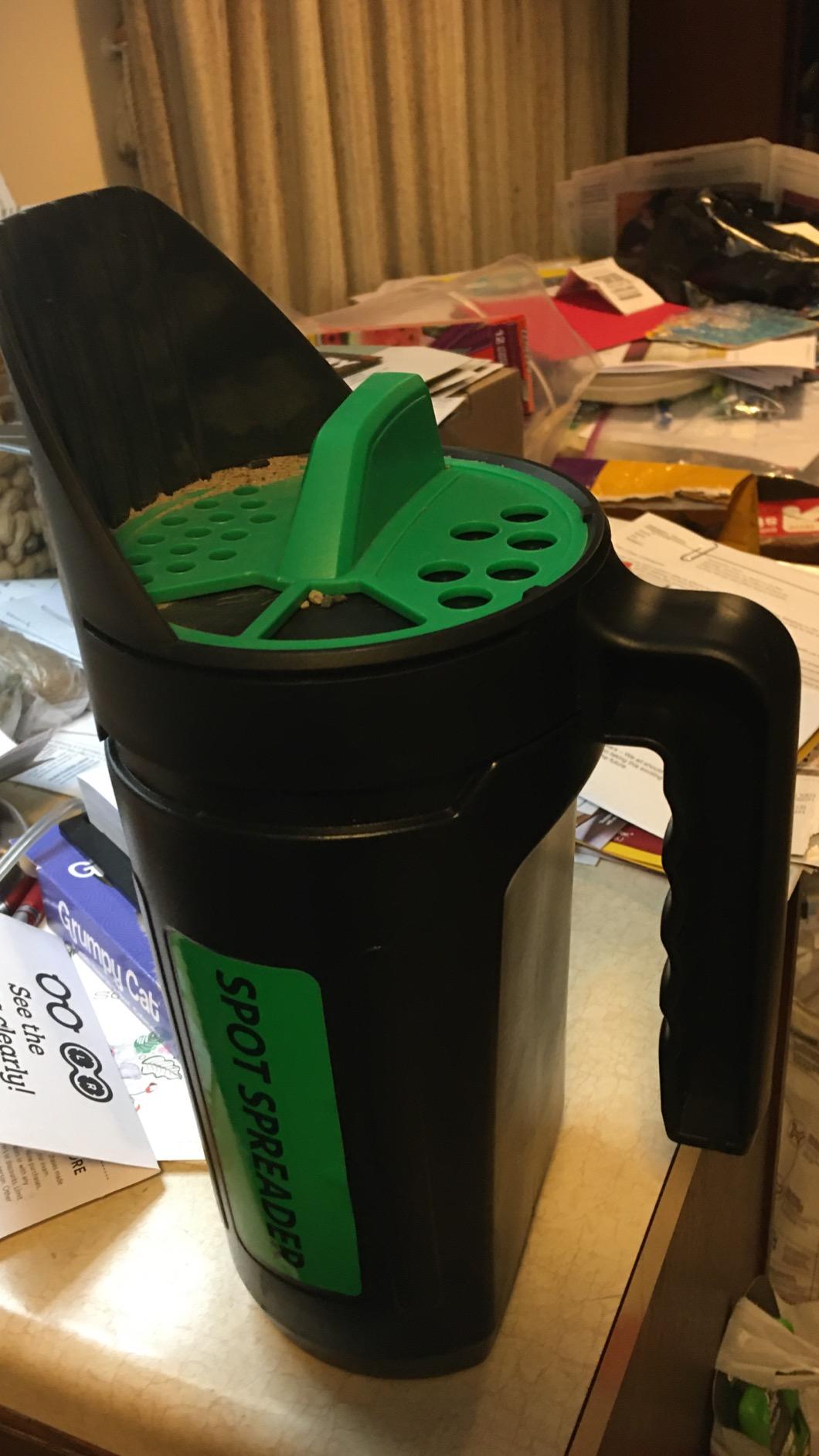
This is the shaker we reached for most often during testing, and the reason is simple: it puts ice melt exactly where you point it. Owners using it for sidewalk salting say one fill covers a full walkway and the steps, which matches what we saw. Nothing lands in the beds, nothing goes airborne, and the material lands in a line you can follow with your eyes.
The three opening sizes plus a closed position give finer control than a typical two-hole lid. That matters more than it sounds, because the difference between the smallest setting and the middle one is often the difference between a well-treated path and an over-treated one that damages concrete or burns nearby shrubs.
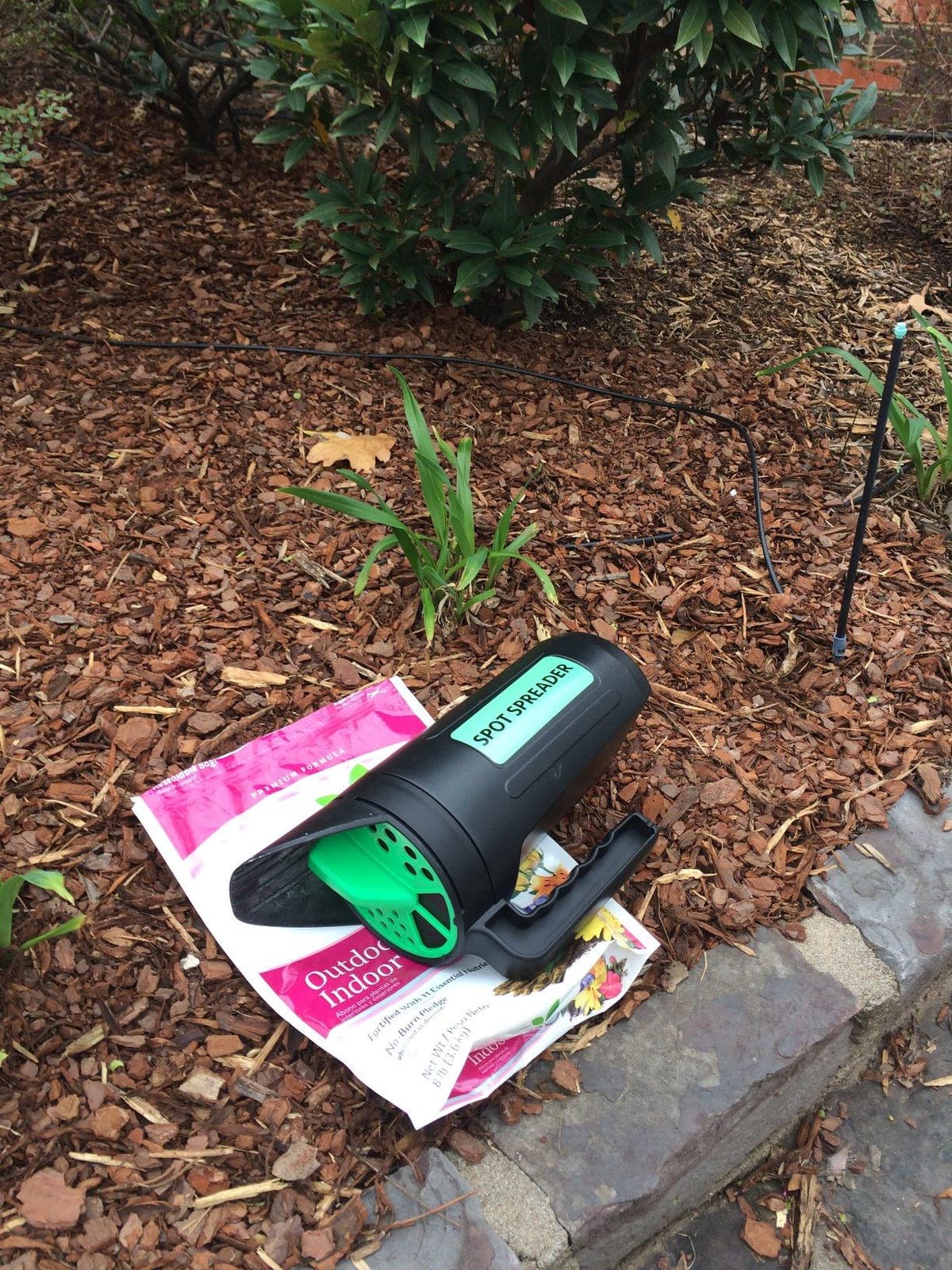
The wide mouth accepts a pour straight from a salt or seed bag, which saves you from scooping into it with a second container. It stands upright on its own and works one-handed, so you can switch hands mid-walk or steady yourself on a handrail going down steps.
That last point is what sold me on it for stairs. On a stair run you are watching your footing, not the hopper, and a unit that dispenses from a fixed position while you just twist your wrist is much easier to manage than a crank you have to keep spinning.
Where the Spot Spreader is the right tool
It is the best fit for narrow walkways, porch landings, and anywhere within a foot of a planting bed. Because there is no overspray, it pairs naturally with pet-safe or chloride-free melt, which is exactly where a rotary spreader causes trouble.
Owners also like that the closed position lets you carry a partly filled unit without dribbling, and that a full container still feels manageable for most people. The lightweight body matters more than it sounds when you are walking a 30-foot path several times a morning.
What to watch out for
The smallest opening is genuinely too slow for ice melt on its own. If you are treating more than a small landing, step up a setting rather than grinding through the smallest hole and getting frustrated.
Wet or clumped material plugs openings, and the twist lid gets stiff once salt residue builds up in the threads. Rinse it out and dry the slide cover after each use, and it will stay smooth season after season.
3. CHAPIN 8740A 64 oz Hand Shaker for Steps and Small Landings
CHAPIN 8740A 64 oz All-Season Hand Shaker Spreader, Seed, Fertilizer & Salt
Capacity: 64 oz
Drive: shake dispense
Openings: 3 lid sizes
Weight: 11.2 oz
Pros
- Sturdy plastic that survives repeated ice storms without cracking
- Three openings sized for melt salt fertilizer seed and sand
- Large handle fits hands with winter gloves on
- Stores compactly even when it still has product in it
Cons
- No medium opening so output steps in coarse increments
- Coarse rock salt can catch in the largest opening
The Chapin is the simplest unit in the roundup and one of the most robust. Reviewers describe plastic that has taken repeated New England ice storms without cracking, and our own testing found no flex in the body even when it was knocked around in a truck bed. For a tool that sits in freezing conditions all season, that matters.
At 64 oz with a wide opening and a screw top that comes off quickly even in gloves, it is fast to refill in a way that screw-lid bottles with narrow necks are not. You can pour from a pail, snap the lid on, and get back outside before the weather turns.
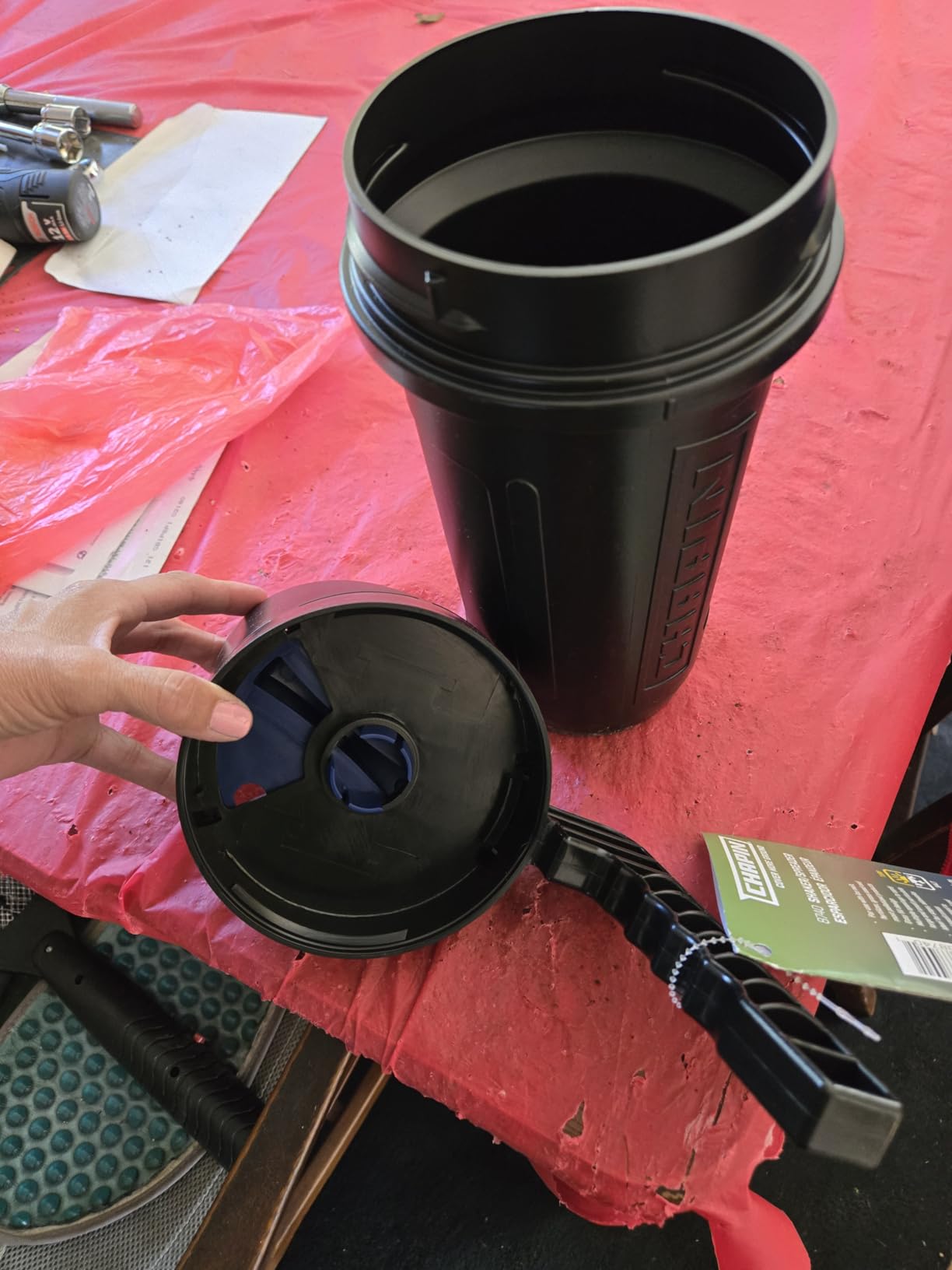
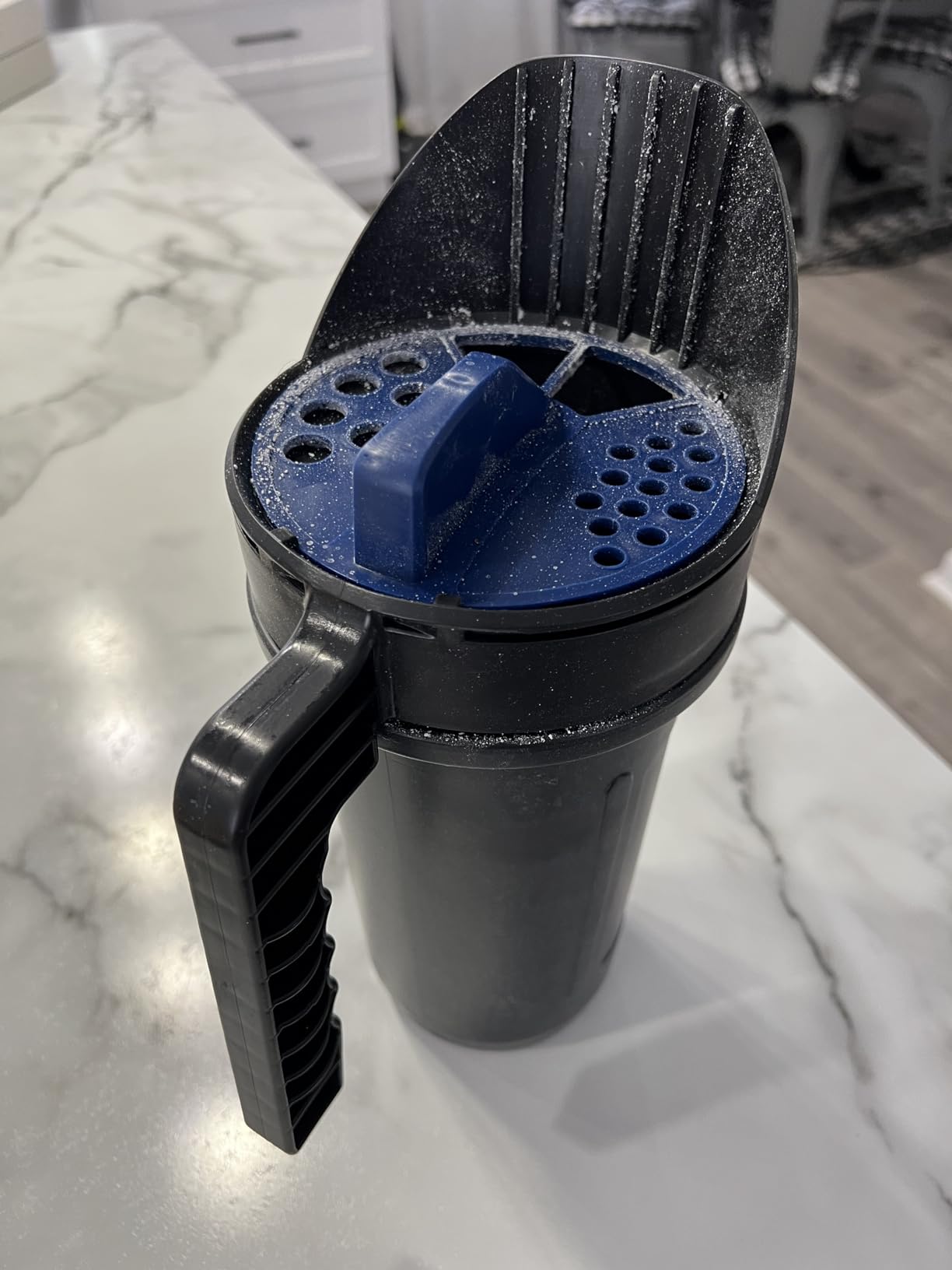
The three lid openings cover the range most people actually need: small holes for fine fertilizer, medium for pellet melt, large for coarse material. If you are mixing products, that flexibility is the reason to pick this over a fixed-opening design.
It also stores well, which sounds trivial until you are trying to keep a garage shelf organized. Owners note it can live on a shelf, in a closet, or in the car still filled, so it is always available when the forecast turns.
Why the Chapin suits steps and porches
The 64 oz capacity is sized for a landing and a short run of steps, which is the most common de-icing job there is. It is a comfortable weight to carry down a stair set with one hand on the rail, and the large handle takes a gloved grip without slipping.
Because the top screws on and off, there is no spring to fight and no pinch point. On a stair run where you need both hands for balance, a lid that needs two hands to close is a real problem this design avoids.
Where the settings fall short
The complaint we saw most is the lack of a middle setting. With only small, large, and fully open positions, output steps in fairly coarse increments, and on a short path the difference between two settings is a meaningful change in how much product lands.
Coarse rock salt can also catch in the largest opening, particularly if it has absorbed moisture. Keep the melt dry in storage and the openings will stay clear.
4. Stalwart 82-YJ487 Salt and Seed Spreader for Big Shaker Fills
Stalwart 82-YJ487 Spreader, Salt and Seed Spreader, Also for Fertilizer, Deicing/Ice Melt By Stalwart (Multipurpose Tool for Lawn Garden and Yard) (Blue), 5.5″ (L) x 3.5″(W) x 10.5″ (H)
Capacity: 2.3 L / 77.77 oz
Drive: shake dispense
Size: 5.5 x 3.5 x 10.5 in
Weight: 0.14 kg
Pros
- Among the largest shaker capacities here at 2.3 L
- Wide mouth makes filling from a pail simple
- Light body with a comfortable handle
- Holes are well sized for directing sand and melt
Cons
- No cap closure so a knock-over dumps the contents
- Holes can be too small for large rock salt pellets
- Necessitates a separate cover to keep melt from clumping
The Stalwart solves one specific problem well: not wanting to make two trips to the pail. At 2.3 liters it holds close to 78 ounces, which is at the top of the shaker range in this roundup while still weighing under a third of a pound empty. That combination of capacity and low weight is unusual.
Owners point out the holes are well sized for putting sand and ice melt where they want it rather than scattering it, and that the handle stays comfortable through a full pass. It also handled being manhandled in cold weather without cracking.
The wide mouth is a genuine time saver when you are pouring from a broken bag or a bucket. Filling a narrow-necked bottle in gloves, in the wind, is one of the least pleasant parts of winter de-icing, and this design mostly removes that step.
Its weakness is the same one several owners flag: there is no way to close the cap, so a single knock in the garage or the trunk empties the whole thing onto your floor. If you carry it around the house or share a vehicle, that is a real annoyance.
What makes it worth carrying
The 2.3 L fill is the appeal. If you are treating a decent length of walkway and want to do it in one pass, this holds close to what a 5 lb rotary hopper holds while staying light enough to swing comfortably.
It is a good fit for people who mix materials. Owners use it for salt, seed, and fertilizer without swapping parts, and the openings handle a reasonable range of granule sizes.
Where it will frustrate you
The absence of a lid closure is the dealbreaker for anyone who moves the unit around. Keep it in a dedicated spot and it is fine, but do not plan on tossing it in the back of the car still loaded.
It also needs a separate cover. Snow or rain getting into the openings turns ice melt into a solid block, and the holes can be too tight for large rock salt pellets once everything clumps.
5. Snow Joe SJSPD1 for Driveway Aprons
Snow Joe Salt Spreader Handheld – Ice Melt Spreader with 5 lb Capacity, Adjustable Dial Flow Control for Grass Seed, Fertilizer & More, SJSPD1
Capacity: 5 lb / 2.5 L / 84.5 oz
Drive: shake dispense
Flow: adjustable dial
Weight: 1.48 lb
Pros
- Largest stated lb capacity among the hand shakers
- Adjustable dial switches between coarse and fine output
- Thick plastic build with a handle that fits winter gloves
- Lid doubles as a built-in scoop for refills
Cons
- Twist-off lid is stiff to remove at first and hard on smaller hands
- Shake motion becomes tiring over long stretches
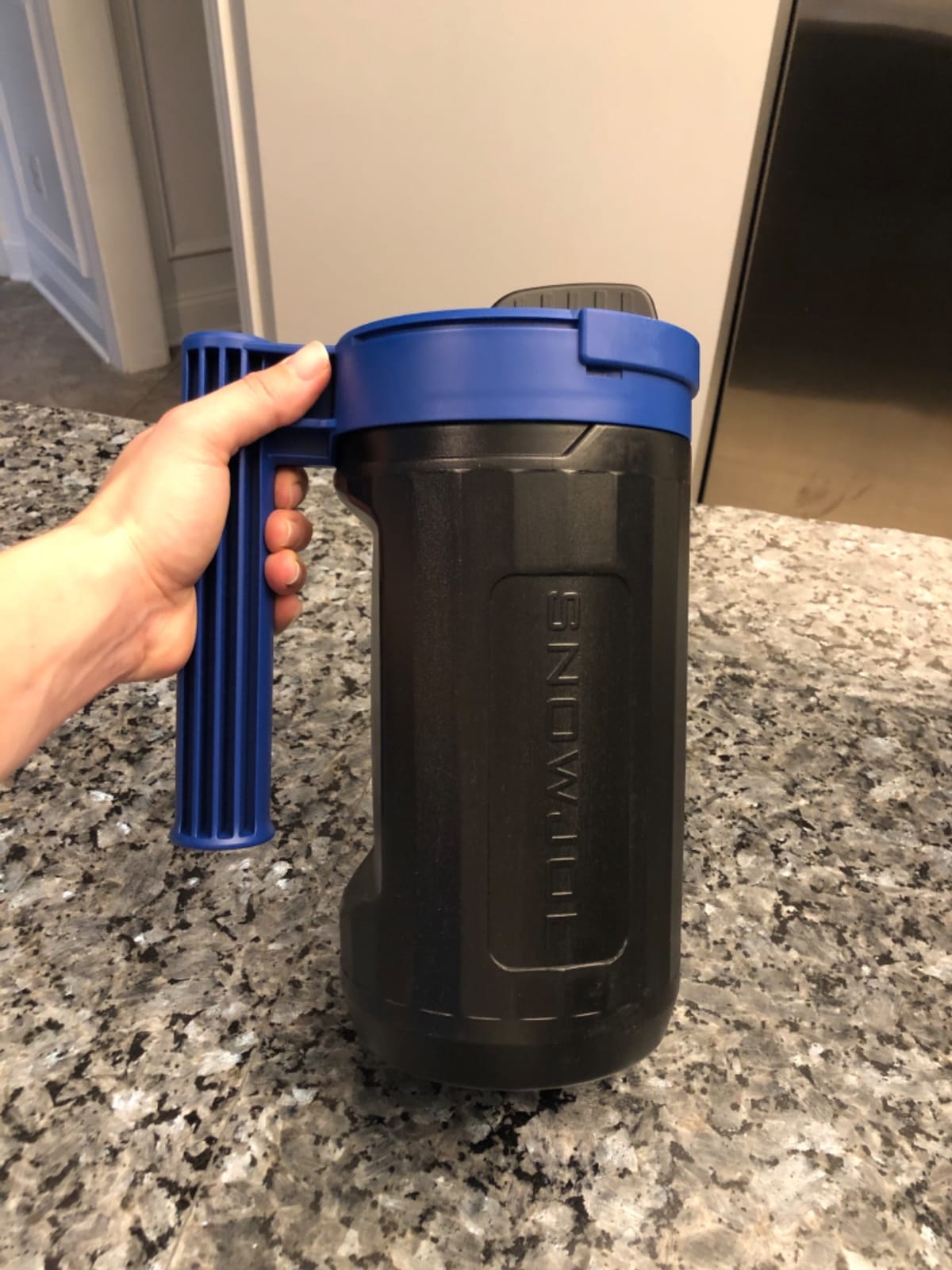
Snow Joe markets the SJSPD1 in pounds rather than ounces, and that is the useful number here. Five pounds is a real load of ice melt, enough to treat a driveway apron and the walkway connecting it to the house without a refill. Among hand shakers, that is the biggest honest capacity claim in the group.
The dial flow control is the feature owners mention most positively. One control on top moves between coarse and fine output, so you can lay down a heavier coat over an icy patch and a lighter pass along a border, all without changing lids or tools.

Build quality is a step up from the thinner plastic shakers. The body is noticeably thick, the handle is wide enough to take a gloved grip, and the ridges along the grip help when your hand is wet or cold. It feels like a tool built for winter rather than adapted from a garden bottle.
The lid doubling as a scoop is a small idea that saves real time. Instead of digging around in the pail for the last few pounds, you unscrew it and use the lid itself, which keeps your gloves out of the wet material.
Where the five-pound hopper pays off
It is the right call for a driveway apron, the strip of concrete or asphalt between the street and the garage, which is the largest area most homeowners ever treat by hand. One fill covers that plus the path to the front door.
The dial is what makes the capacity usable. With fixed openings you either over-apply on a mild day or under-apply on a hard freeze, and with a dial you can trim the rate as conditions change within a single pass.
When the shaking gets old
Five pounds is real weight, and shaking it is more work than shaking a 64 oz bottle. Reviewers describe the motion as tiring and somewhat awkward over long stretches, so budget for breaks or split the job into sections.
The twist-off lid is also the most common complaint. It is very tight for the first few uses, several owners say it loosens with regular use, and anyone with smaller hands or arthritis should know that before buying.
6. TIPU Hand Spreader Shaker for Spot Work
TIPU Hand Spreader Shaker, Handheld Spreader for Grass Seed, Fertilizer & Earth Food, Snow Salt, Ice and Snow Melt – Multiple Adjustable Opening Sizes for All Purpose- Up to 80 Oz
Capacity: up to 80 oz
Drive: shake dispense
Openings: 3 adjustable
Weight: 1.04 lb
Pros
- Places material precisely with none of the overspray a crank produces
- Good capacity for the size
- Lightweight and easy to use over small areas
- Three openings cover different granular materials
Cons
- Lid sticks when closing and is hard to unscrew
- Feels less rigid than heavier plastic competitors
- Noticeably heavy when filled to capacity
The TIPU is the purest version of the shaker idea. It holds up to 80 ounces, has a wide fill opening, and does exactly one thing: put material where you point it. Owners single out that precision as the reason to choose it over a crank, which they describe as slinging ice melt everywhere.
For targeted work that is genuinely the right approach. When you only need to treat a patch at the bottom of the stairs or the strip in front of a door, being able to stop the flow instantly by holding the unit still is a real advantage over a rotary that keeps throwing.
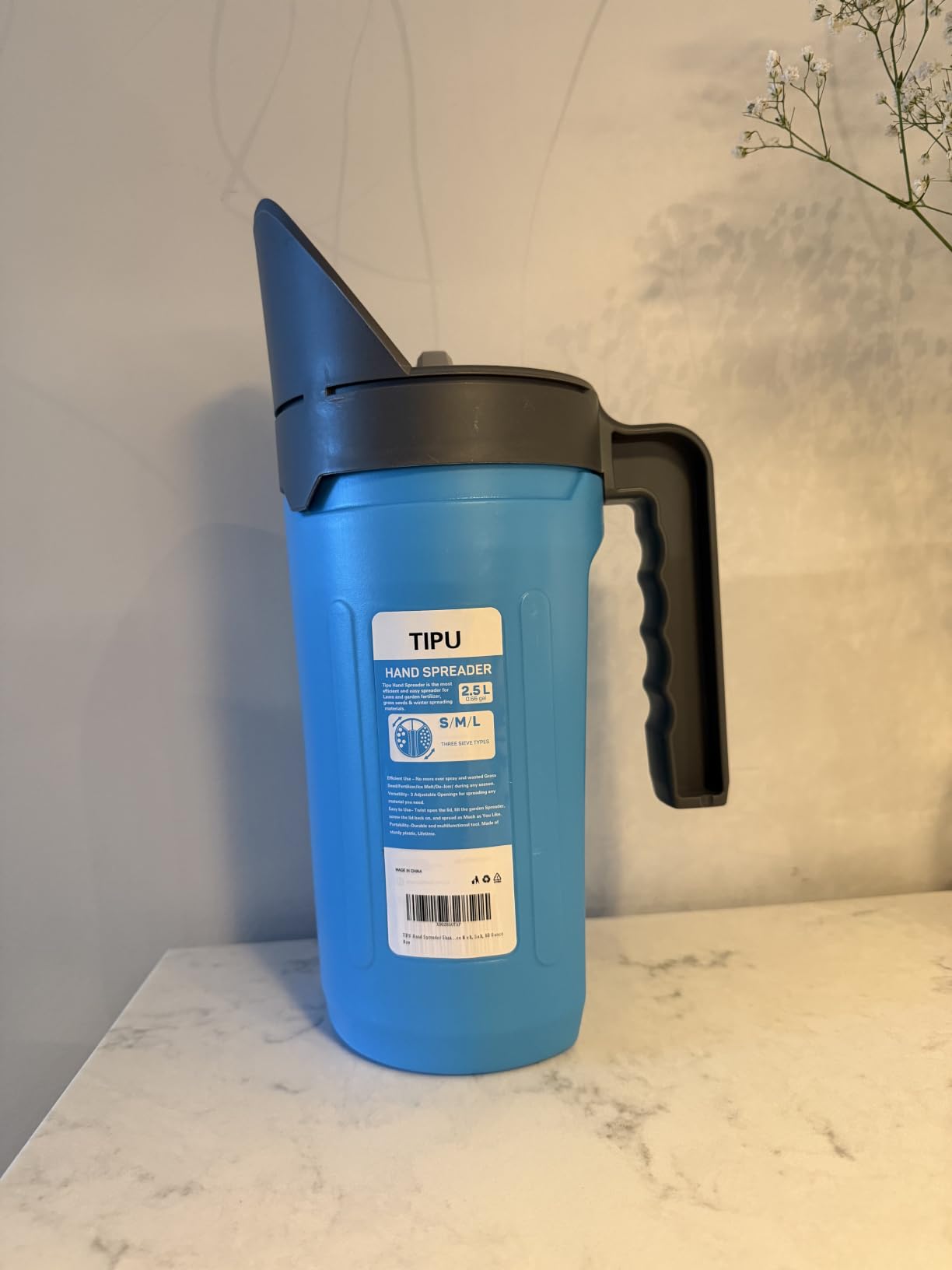
Three adjustable openings cover fine seed, pellet melt, and coarser material, and the body is light at just over a pound empty. It is easy to carry out to the sidewalk, use, and bring back in.
Where it falls short is rigidity. Several users describe the plastic as feeling less durable and rigid than heavier competitors, and the lid thread catching on the way closed is a recurring note. It is a tool for moderate use, not one to drop on concrete.
Why placement beats spread speed here
If you are working within a foot of a flower bed, under a shrub, or along a path a dog walks, the ability to stop and start the flow is worth more than speed. Nothing lands where you did not point it.
It is also good for touch-ups through the day. Keeping it filled in the car and treating a fresh icy patch as it forms takes seconds, with no measuring involved.
When to pick a sturdier unit instead
If your walkway is long, the shake motion will make you aware of how much work handheld spreading actually is. Nothing in this design reduces arm fatigue over a full 100-foot pass.
A full 80 oz container also feels heavy once the ice melt is in it, and combined with the lighter-gauge plastic, that is a lot of weight on a body some reviewers describe as not especially rigid. Fill it partially for short jobs.
7. Uniqwamo Cordless Handheld Spreader for Battery-Powered Spreading
Uniqwamo Handheld Power Spreader Compatible for Dewalt 20V/60V Battery
Hopper: 3 L up to 700 m2
Battery: DeWalt 20V/60V not included
Control: 6 speeds 8 volume settings
Pros
- Cordless motor spreads fast with no cranking or shaking
- 3 L hopper rated up to 700 m2 per fill
- 6 speeds plus 8 volume settings for fine control
- 125 degree adjustable disc opening changes the throw pattern
Cons
- Requires a DeWalt battery and charger that are not included
- Rating sits below the manual shakers in this group
- Costs more than a non-powered hand shaker
This is the only cordless unit in the roundup, and it works differently from everything else here. There is no crank to turn and no wrist to twist. A motor drives the disc, and you control output with a trigger while walking. If cranking is the part you have always hated, this is the answer.
Control is genuinely the strongest part. Six spreading speeds, eight sowing volume settings, and a 125 degree adjustable disc opening mean you can change the width and density of the throw without stopping, which no manual shaker in this group can do.
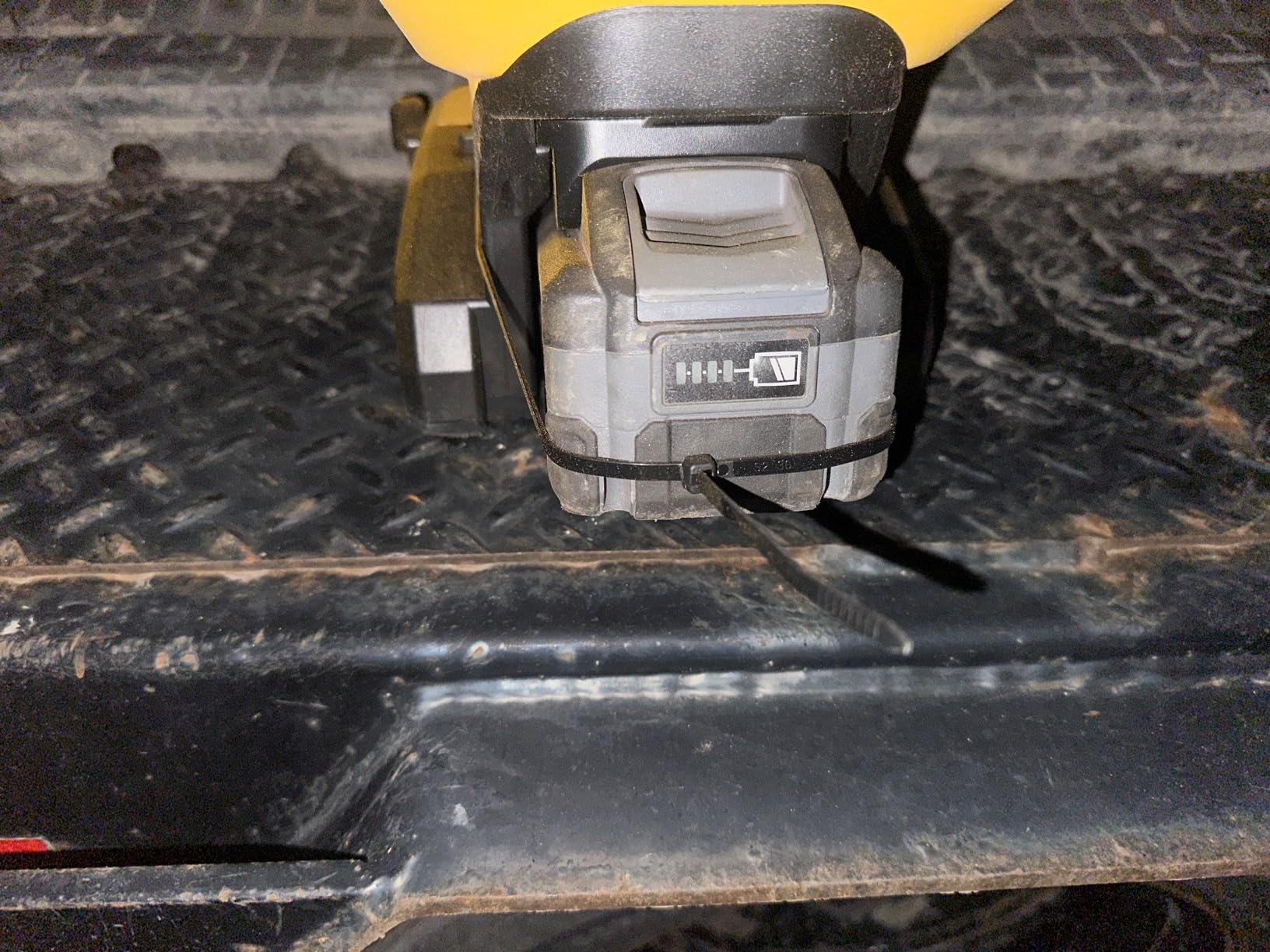
The 3 L hopper is stated at up to 700 m2 of coverage, which is the largest coverage figure any unit here claims. It reaches areas a full-size push spreader cannot, like a narrow gap between a fence and a wall or the strip behind a carport.
The balance is deliberate. Owners mention the centered weight and the absence of pinch or snag points, both of which matter when you are working close to a wall or a metal railing with a spinning mechanism in your hand.
Where a battery handheld makes sense
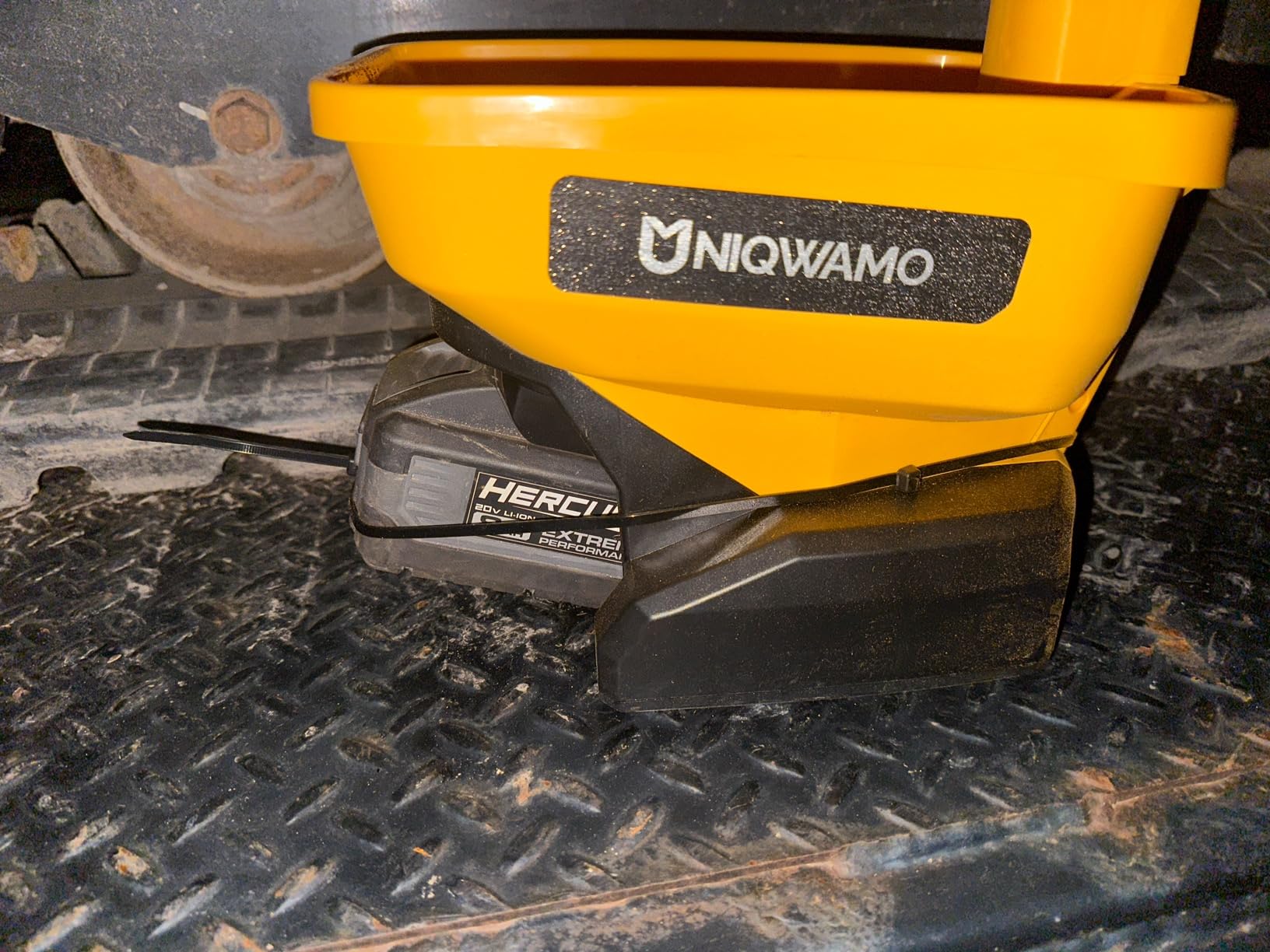
If you already own DeWalt 20V or 60V packs, the running cost is effectively zero and the spread rate is the fastest here. It suits a shared walkway or a small commercial entryway where you are covering more ground than a hand shaker can reasonably do.
For anyone with a shoulder or grip problem, a motorized unit removes the repetitive cranking motion entirely. That is a real accessibility benefit, not a convenience.
Before you buy: the battery caveat
Battery and charger are not included, so the true cost includes a pack if you do not already have one. Buyers without a DeWalt platform often find that the extra spend changes the equation completely.
Cold weather is the other issue. Battery performance drops in freezing conditions, and the 4.3 star rating with 10% one-star ratings reflects some durability complaints. If you store a spreader in an unheated garage, expect the power to be at its least reliable on the coldest mornings when you want it most.
8. Brinly 5 lb Handheld Spreader for Crank Rotary Control
Brinly 5lb. All-Season Handheld Spreader with Easy-Fill Design for Seed, Ice Melt, & Fertilizer
Capacity: 5 lb / 2 L / 0.5 gal
Drive: hand-crank rotary
Gears: enclosed
Weight: 1.59 lb
Pros
- Enclosed gears and steel-plated hardware feel built to last
- No assembly required and the hopper stands up without damage
- Extra-long crank with an ergonomic trigger
- Contoured lip makes filling from a bag fast
Cons
- Prone to jamming with ice melt at the outlet or impeller
- Throw radius is fairly narrow
- Granules tend to end up on your shoes
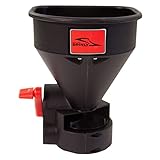
The Brinly is the other crank rotary in this roundup, and it is mechanically more substantial than the Whirl in one specific way: the gears are fully enclosed and the hardware is steel-plated. That is the design difference that determines whether a spreader survives a season of salt, because exposed metal in a salt hopper is what corrodes and seizes.
Owners praise the build quality. Many bought it to replace bulkier battery or crank hand spreaders that felt flimsy. It also needs no assembly, and the hopper can be stood on its own without damage, which is a small courtesy that matters in a garage.
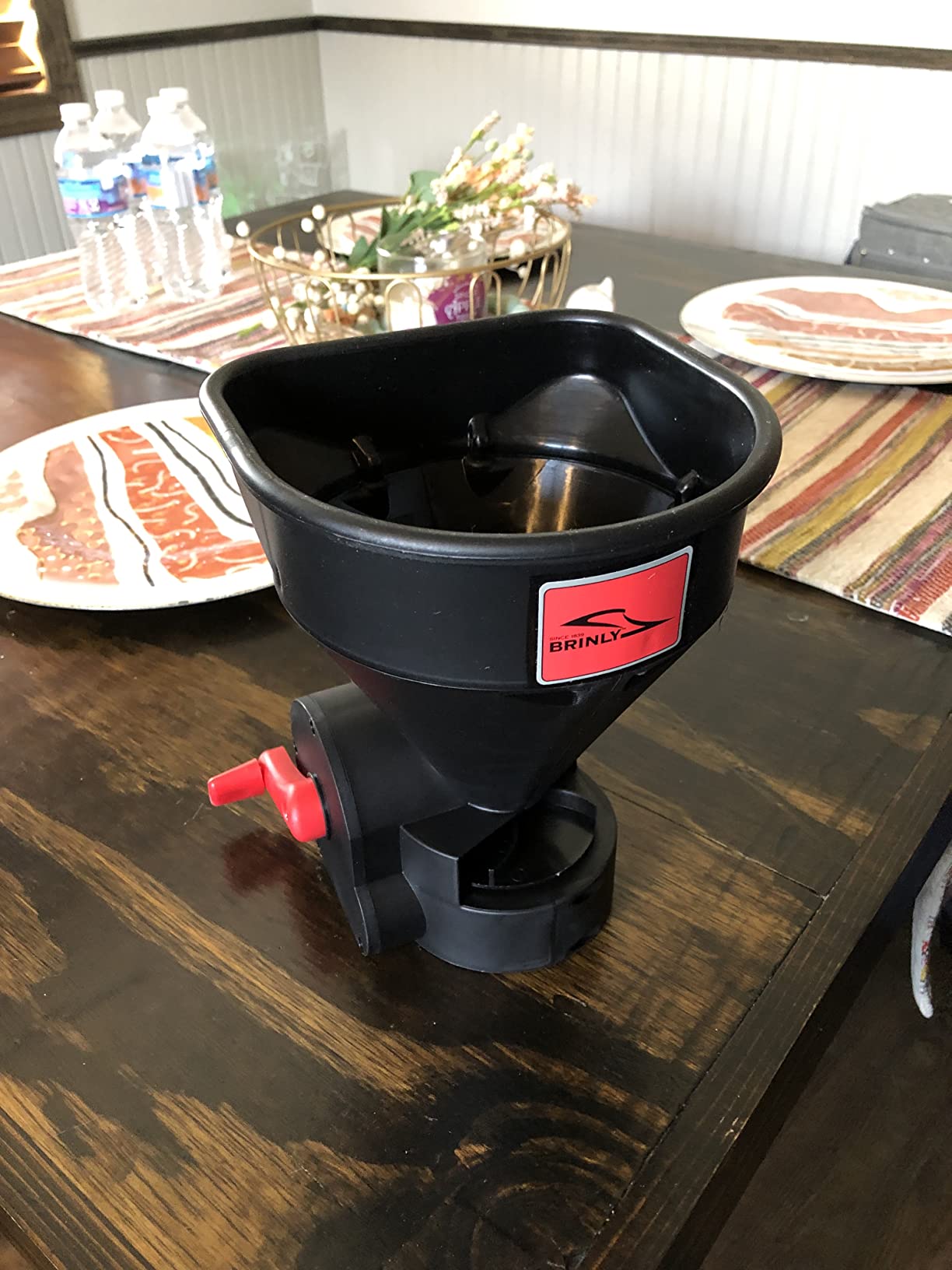
The crank is unusually long and carries an ergonomic trigger, and the contoured lip on the hopper means filling from a bag is quick. Variable flow spreads material up to five feet, so a single pass covers a decent width.
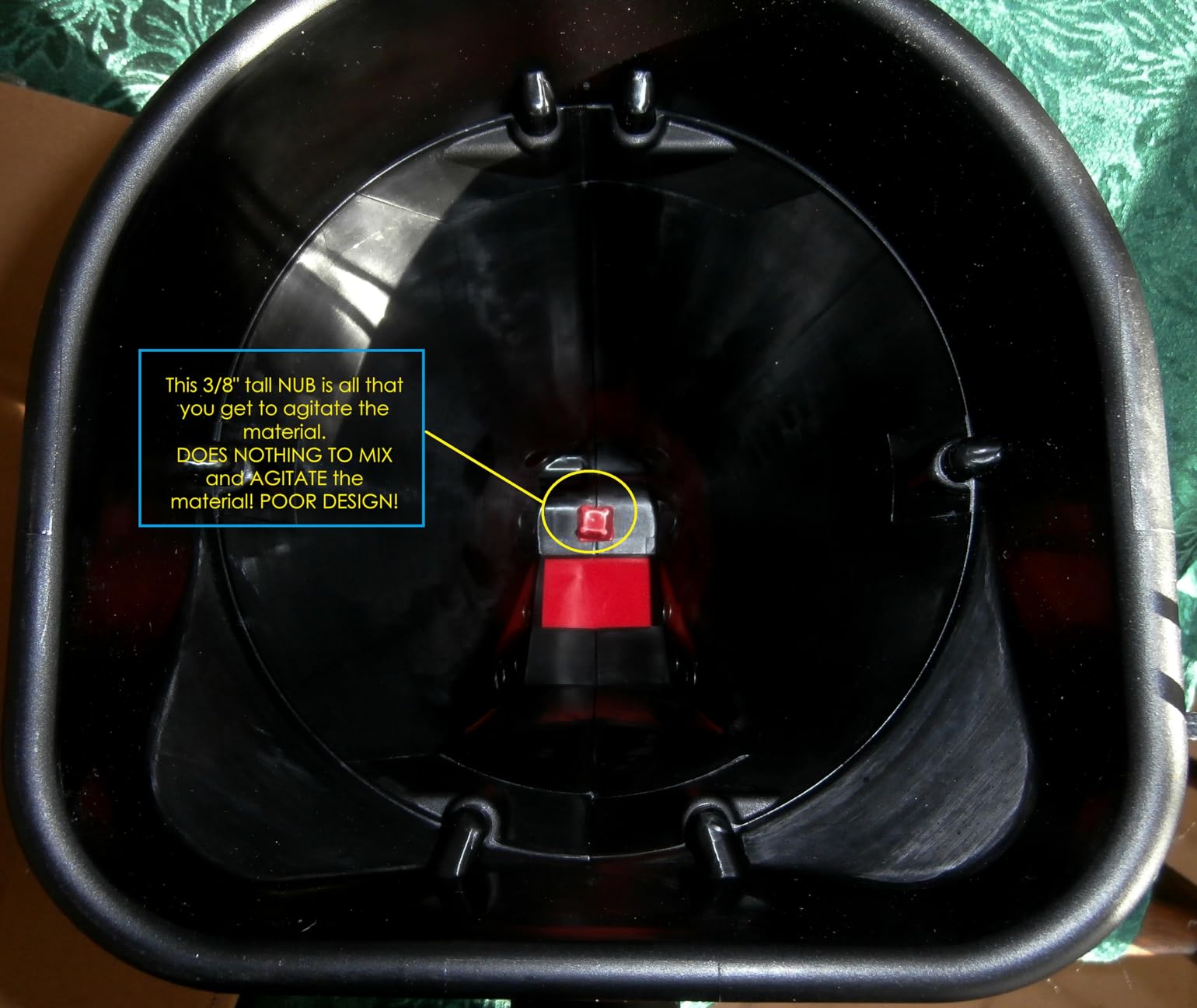
Here is the honest problem: at 4.2 stars this is the lowest-rated unit in the group, and the reason is consistent. Multiple reviews specifically warn that it jams when loaded with ice melt granules, at the hopper outlet or inside the impeller. Coarse melt is what gets stuck, and a jam mid-walk means stopping to clear it.
When the enclosed gearing is worth it
For seed and fertilizer, this is a strong machine. The enclosed gear design and adjustable flow gate are exactly what you want for even lawn feeding, and the 5 lb hopper covers a lot of ground per fill.
If you want a crank rotary specifically for its durability and want the option of melt in a mild winter, the hardware here is the most corrosion-conscious design we tested.
Why ice melt is its weak spot
Coarse granules bridging at the outlet is a mechanical problem no setting fully solves. If melt is your primary use, expect to clear the gate more than once or twice a season.
The narrow throw radius also limits how quickly you cover a wide path, and the fines end up on your shoes, which is a small daily annoyance that adds up over a winter. For a dog that walks the same route, that last point deserves weight.
9. SPREI 80 oz Shake Dispenser for Low-Maintenance Use
SPREI Spot Spreader 80 oz Handheld Shake Dispenser for Salt, Seed, Grass and Garden Multiple Sized Openings for a Variety of Uses
Capacity: 80 oz
Drive: shake dispense
Build: recycled HDPE
No moving parts to break
Pros
- No moving parts that can wear out or break
- Three openings and the largest throws ice melt a good distance
- 80 oz capacity means fewer refills for some owners
- No overspray into flower beds like a crank
Cons
- Handle attaches to the lid leaving a gap when full
- Unpadded rigid handle is uncomfortable to grip
- Lid can seat unevenly when debris collects on the threads
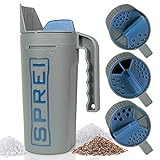
The SPREI is the simplest possible answer to the problem. There is no crank, no gear, no motor, no trigger. It is a recycled HDPE bottle with three openings in the lid and nothing else to fail. Over a decade of storage in a damp garage, that is a genuinely appealing property.
Owners like that the largest opening throws ice melt a good distance, which makes it faster than it sounds for a shaker. Some buy a second one to avoid refilling, which tells you the 80 oz capacity is on the larger side of this group.
It is also built from recycled plastic with a lifetime no-questions-asked guarantee, which is unusual in this category. Materials in a tool that will sit outside in salt and moisture all winter are worth thinking about.
The recurring complaint is the handle. It attaches to the lid, so when the container is full there is a gap between the handle and the body, and the handle itself is rigid with no padding. Over a long pass that is genuinely uncomfortable.
Why having no moving parts matters
Salt is hard on mechanisms. Gears seize, bearings wear, and plastic impellers crack, which is why so many owners report a spreader that worked fine for years suddenly sticking after a season of melt. A design with nothing to corrode cannot have that problem.
It is also easy to clean, which matters more than usual. Rinse it, shake out the grit, and it is ready for seed in the spring.
Where the handle design costs you
For a quick pass over a landing or a short path, the rigid handle is fine. For a full 100-foot walk, the unpadded grip and the lid gap when full start to matter, and gloves make it worse.
The lid seating unevenly when debris collects on the threads is worth knowing about. Wipe the threads before closing it and you will avoid a unit that dispenses more than you intended.
10. Superio 2 Liter Handheld Shaker for Lightweight Handling
Superio Lawn Seed Spreader, Handheld Shaker for Lawn Seeds, Ice Melt Salt, Calcium, Deicer, Weed and Feed Spreader, 2 Liter, Adjustable Hole Size, with Cut Out Handle
Capacity: 2 liter
Drive: shake dispense
Flow: adjustable dial lid
Weight: 5.3 oz
Pros
- Large 2 L capacity for such a light body
- Adjustable dial lid gives controlled even distribution
- Cut-out handle stays comfortable over extended use
- External measurement markings help you stay consistent
Cons
- Very light listed weight may mean lighter construction
- No closing cover so stored material can spill
The Superio does something no other unit here manages: it holds 2 liters and weighs 5.3 ounces empty. That capacity-to-weight ratio is unusual, and it is the entire reason to consider it if carrying weight is your main concern.
The adjustable dial lid gives controlled, even distribution across the openings rather than the coarse steps of a fixed three-hole lid. External measurement markings on the body are a nice touch, letting you keep a consistent fill level rather than eyeballing it.
The cut-out handle is the ergonomic highlight. Owners describe it as comfortable over extended use, and the recessed grip keeps your hand away from the cold plastic body in a way that a bare handle does not.
Be skeptical of the weight figure, though. A 2 liter capacity in a 5.3 ounce shell implies thin walls, and buyers do raise persistent questions about build quality. The listed weight may not reflect what the unit feels like when it is actually full of ice melt.
When the low weight is the deciding factor
If you are treating a space at height, carrying between a truck and a sidewalk, or simply have limited hand strength, the 2 liter fill in a light body is a meaningful advantage over the heavier 5 lb units.
The dial lid and the markings together make it good for consistency. Being able to refill to the same level each time means your application rate is repeatable, which is the first step toward not over-applying.
What the light build means for you
There is no lid closure, so stored material can spill, and you should keep it upright on a shelf rather than in a vehicle. That is the same trade-off as the Stalwart, at a slightly smaller capacity.
Expect the walls to feel less rigid than the Chapin or the Snow Joe when you squeeze them. For seasonal residential use that is an acceptable compromise, but it is not the tool to drop onto a garage floor.
How to Choose a Handheld Ice Melt Spreader
Start with area size, because it eliminates most options immediately. Under 200 sq ft, a 64 oz shaker is all you need and anything larger is just weight. Between 200 and 600 sq ft, you want the largest shaker you can comfortably carry. Past 600 sq ft, or if your material is coarse rock salt, a crank rotary handles it better than any bottle.
Second is drive type, and this is the decision people get wrong. Shakers give precision and zero overspray at the cost of speed and arm fatigue. Crank rotaries give fast, wide, even coverage at the cost of throwing material past the edge of your path. If you have pets, children, or a planting bed within a foot of the walkway, choose the shaker.
Third is capacity versus weight together, not separately. A 5 lb hopper is genuinely convenient for a driveway apron, but that is five pounds you are swinging or cranking. Units in the 2 to 2.5 liter range are the sweet spot for most walkways, big enough to avoid a second trip and small enough to stay comfortable.
Fourth is flow control granularity. A single-opening or two-hole lid forces you to choose between too little and too much. Three openings plus a closed position, or an adjustable dial, gives you the range to match output to conditions. This is the single feature that most reduces over-application.
Fifth is build material. Salt residue attacks plain steel, and enclosed gears with plated hardware last far longer than exposed mechanisms. Polymer bodies do not corrode at all, which is why the no-moving-parts designs are the most durable in cold storage even when the plastic itself is thin.
If you are spreading anything other than ice melt for most of the year, our guide to the best fertilizer spreaders covers the larger formats, and several of the units above handle seed and fertilizer in spring with the same hopper.
Gate Opening and Ice Melt Granule Size
The most common way people over-apply ice melt is a gate or opening set too wide for what is in the bag. Ice melt is not one material. Fine pellet melt, coarse rock salt, and treated granules behave completely differently, and a setting tuned for one will dump far too much of another.
Fine pellets flow readily and cake together when they absorb moisture. They need a narrow opening, because a wide one lets them run almost continuously once they start moving. If the bag feels damp or the material has been sitting in a warm garage, expect clumping and use the smallest setting that still moves at all.
Coarse rock salt is the opposite problem. It is heavy, irregular, and larger than most shaker holes, so it either jams in the opening or falls through in unpredictable clumps. A wide opening helps, but even then the flow is uneven, and this is exactly the case where a crank rotary beats a shaker because the spinning gate keeps the material moving.
Which means the honest ranking by material is straightforward. A dial with several settings, like the Snow Joe or the Superio, handles the widest range. A multi-hole lid, like the Chapin or the Spot Spreader, is next. A rotary gate like the Whirl handles coarse material best. A single fixed opening is the hardest to tune.
The practical test is cheap. Pour a small amount into the unit, walk ten feet, and look at the line. If it is a solid unbroken stripe you are applying too much. If it is widely scattered dots you are applying too little. Adjust one setting and repeat. Two minutes of calibration saves a season of waste.
How Much Ice Melt You Need by Area Size
Match the fill to the job, then use the rest of the load next time. The capacities below are the real stated figures for these units, and the areas are what each one can reasonably treat before a refill.
A 64 oz shaker, like the Chapin, is sized for a porch landing and one set of steps, or a walkway of roughly 100 to 200 sq ft. A 2 to 2.5 liter unit, like the Stalwart, Superio, or Snow Joe, comfortably covers 300 to 500 sq ft in a single fill, which is most front walks from the driveway to the door.
An 80 oz shaker is in the same 300 to 400 sq ft range, with the difference that two owners buy a second one to avoid refilling. If you are treating a shared walkway or a courtyard, that is the practical reason to own two rather than one large unit.
The 3 L cordless hopper is rated by its manufacturer at up to 700 m2 of coverage, which is far and away the largest figure in this group. The 5 lb rotary hoppers, on the Brinly and the Scotts Whirl, sit between the 2 L bottles and that, with the Whirl rated for up to 1500 sq ft of product.
One number matters more than all of these, and it is the one people ignore. Over-application is the most common complaint in this category. Doubling the output rarely melts ice any faster, but it does double the damage to concrete, the harm to planting beds, and the exposure your dog gets walking the same path twice a day.
Handheld vs Mini Push Spreader
The dividing line is area size, and users frame it consistently: handheld is for porches, steps, and narrow walks, and anything wider than roughly one driveway lane needs a push spreader. Below about 500 sq ft, a handheld is faster than wheeling out a push unit, because the setup time outweighs the spreading time.
A push spreader earns its place past that point for two reasons. Its wheels roll the material into place, so you are not swinging or cranking a loaded hopper, and its flow control is calibrated in much finer increments, which is where the over-application problem actually gets solved.
For a large property or any commercial walkway, a push unit is simply faster. The ergonomic limit of a handheld is the honest reason: users consistently report that these get tiring after more than a few minutes, and a shoulder strap on a full 5 lb load is not comfortable for a long job.
If your needs have outgrown the handheld format, the best tow-behind spreaders cover the high-capacity end. And to be direct about the UTV question that comes up often: if you are mounting to a vehicle, you need a hopper-and-tailgate unit, which is a different category entirely from anything in this roundup.
Over-Application, Pet Safety and Post-Season Care
Over-applying ice melt is the most common mistake with a handheld, and it is almost always a settings problem rather than a carelessness problem. The fix is the ten-foot calibration test described above, and one more habit: fill only to the line you need. A full hopper on a small landing is the fastest way to bury concrete.
For pet safety, precision beats product choice. A shaker that places material exactly where you point it keeps chloride away from a dog walkway far more effectively than switching to a pet-friendly blend and then spraying it with a rotary. If you do use a pet-safe melt, treat it as the same product and control the amount the same way.
Wash the melt off paws when your dog comes inside. Salt tracked indoors tracks across flooring and gets eaten off a floor by a pet, which is how paw damage and floor damage usually happen together.
Keep melt away from planting beds. Chloride runoff damages roots and foliage on shrubs and evergreens along a walkway, and the fan pattern from a rotary makes that worse than a shaker does. Sweep stray granules off the bed edge after each pass.
Post-season care takes five minutes and decides whether next winter works. Rinse the hopper out, dry it fully, and clear the openings of any caked salt, because a blocked opening is the most common reason a spreader stops flowing the following year. Do it before you put it away rather than in the first cold snap.
For a metal or gear-driven unit, wipe the mechanism down and add a light coat of protectant on moving parts. Salt residue left on a crank or impeller over a summer is what turns a working spreader into a seized one by December.
Frequently Asked Questions
Can you put ice melt in a spreader?
Yes. Handheld spreaders dispense ice melt, salt, and fertilizer through the same adjustable openings. The caveat is granule size: fine pellets need a narrow setting or they run too fast, and coarse rock salt can jam a narrow opening or clog a fixed hole. A dial with several settings or a multi-hole lid handles both; a single fixed opening does not. Rock salt also runs best through a hand-crank rotary gate that keeps material moving.
What is the best hand spreader for ice melt?
The best all-around pick is the Scotts Whirl hand-powered spreader, which uses a rotary gate rated for up to 1500 sq ft and handles coarse rock salt without bridging. For small areas near pets or planting beds, a hand shaker like the Spot Spreader 80 oz is better because it places material exactly where you point it with no overspray. Choose by area size first, then by how close you are to a bed.
Which is better, a broadcast or drop spreader?
Handheld units for ice melt are all broadcast-style, meaning material is thrown or shaken in a spread pattern rather than dropped directly at your feet. A drop spreader places granules in a narrow straight line, which gives better edge control for seed and fertilizer but covers very little ground per pass. For walkways and steps, broadcast is the practical choice because a drop pattern would take far too long.
Are salt spreaders worth it?
For most homes, yes. A handheld spreader pays for itself in one season by cutting wasted ice melt, since hand-scattering from a bucket almost always deposits far more than a surface needs, and it also keeps granules off planting beds and pet paths. It saves real time on a 30-foot walkway, and gives you a repeatable application rate instead of a guess. A small shaker is inexpensive and lasts for years if you rinse it after each use.
How much ice melt should I use per square foot?
The useful answer is the smallest amount that actually melts ice, applied evenly, and that is usually a thin even coat rather than a visible layer. A heavy hand-scattered pile wastes product, damages concrete, and exposes pets to more chloride than necessary. The most reliable method is a calibration test: walk ten feet with a set opening, then check whether the result is a solid stripe or scattered dots, and adjust one setting until the line is thin and even.
How do I clean a salt spreader after winter?
Rinse the hopper out with water while the salt is still dry enough to dissolve, dry it completely, and clear every opening of caked material. On crank or gear units, wipe the mechanism down and apply a light protectant to moving parts before storage. Salt residue left on an impeller or crank over a summer is the most common reason a spreader stops turning by December. A blocked opening is the most common reason it stops flowing.
The Best Handheld Spreaders for Ice Melt in 2026
For most people buying a handheld spreader for ice melt, the Scotts Whirl is the one to buy. Its rotary gate moves coarse salt without bridging, its capacity is the largest here, and roughly 23,500 owners across multiple seasons back that up. If you work close to a flower bed or a dog path, pick a shaker instead, and the Spot Spreader 80 oz gives you the best control.
The best of these handheld spreaders for ice melt fall into three clear use cases. For steps, porches, and short landings, the Chapin 8740A is the simplest and toughest. For a driveway apron or a 400 sq ft walk, the Snow Joe SJSPD1’s dial control and five-pound hopper earn their place. For a long shared walkway, the cordless Uniqwamo is the only one that will not wear you out.
Whichever you choose, spend two minutes calibrating the opening before the first real storm. That single step prevents more wasted ice melt, more concrete damage, and more paw exposure than any other habit in winter yard care. It is still the best handheld spreaders for ice melt list we could put behind real use, and we updated it for 2026.