
If you want one honest answer, start here: the Siglent SDS1202X-E is the best digital oscilloscope for most hobbyists in 2026, because it pairs 200 MHz of bandwidth with a 14 Mpts memory depth and standard serial decoding without asking you to unlock anything later. If you need four analog channels rather than two, the RIGOL DS1054Z is the value pick, and if you want the highest rating in this roundup, the Siglent SDS1104X-E earns it on a 4.8 average across hundreds of owners.
That is the short version. The rest of this guide is the long version, and it matters because “hobbyist oscilloscope” covers a lot of ground. A weekend Arduino debugger and someone trying to characterise the ripple on a switching converter have almost nothing in common, yet both search for the same thing. Choosing well comes down to four numbers: bandwidth, channel count, memory depth and whether the decoder is included.
Before the picks, one thing worth saying plainly. An oscilloscope does what a multimeter cannot: it shows voltage over time. A multimeter tells you a rail reads 5.1 V. A scope tells you that the rail rings to 7 V for 400 ns after every switching edge, which is usually your entire bug. That capability is why our other test-gear roundups, such as our digital thermometer picks, get framed around accuracy claims – a scope is the tool you reach for when a number alone stops being evidence.
We looked at ten benchtop and handheld scopes spanning 200 kHz to 200 MHz, from 2-channel pocket units to 4-channel bench instruments with 24 Mpts of memory. Each one below lists who it suits, where it stops being enough, and the spec that actually matters for that job. We also flag the recurring gripes owners report, because a scope is a tool you keep for years and the small annoyances are what you live with.
Table of Contents
Top 3 Picks for the Best Digital Oscilloscopes for Hobbyists (October 2026)
Siglent SDS1202X-E
- 200 MHz bandwidth
- 1 GSa/s sampling
- 14 Mpts memory
- Serial decode IIC SPI UART CAN LIN

Siglent SDS1104X-E
- 4 channels at 100 MHz
- Dual ADC architecture
- Standard serial decode
- Ethernet web server
Rigol DS1054Z
- 50 MHz 4 channels
- 1 GSa/s and 24 Mpts
- 30000 wfms/s capture
- I2C SPI UART decode
Those three cover the widest range of real use in this list. The SDS1202X-E wins on headroom per channel. The SDS1104X-E wins on rating and on four simultaneous analog channels. The DS1054Z wins on how much measurement depth you get for the money, with 24 Mpts of memory and a 30,000 wfms/s capture rate that neither Siglent advertises at this tier.
Quick Overview: Every Scope We Compared
| Product | Specifications | Action |
|---|---|---|
| Siglent SDS1202X-E |
|
Check Latest Price |
| Siglent SDS1104X-E |
|
Check Latest Price |
 IMARS HO-3S 3-in-1 Handheld IMARS HO-3S 3-in-1 Handheld |
|
Check Latest Price |
| Rigol DS1054Z |
|
Check Latest Price |
 HANMATEK HO52 Handheld HANMATEK HO52 Handheld |
|
Check Latest Price |
 Rigol DS1202Z-E Rigol DS1202Z-E |
|
Check Latest Price |
 FNIRSI DSO152 FNIRSI DSO152 |
|
Check Latest Price |
 FNIRSI 2C53T 3-in-1 FNIRSI 2C53T 3-in-1 |
|
Check Latest Price |
 HANMATEK DOS1102 HANMATEK DOS1102 |
|
Check Latest Price |
 FNIRSI DSO-510 FNIRSI DSO-510 |
|
Check Latest Price |
Everything in the table falls into one of three groups. The 200 kHz to 50 MHz handhelds are grab-and-go tools for low-frequency work like audio, ignition circuits and slow sensor signals. The 50 MHz to 200 MHz two-channel bench scopes are the hobbyist sweet spot. The four-channel units exist for when you need to watch a clock, a data line, a reset and a power rail at the same instant.
1. Siglent SDS1202X-E – Best Overall for Hobbyists
Siglent Technologies SDS1202X-E 200 mhz Digital Oscilloscope 2 Channels, Grey
200 MHz bandwidth
1 GSa/s real-time sampling
14 Mpts record length
2 analog channels
Pros
- 200 MHz bandwidth gives real headroom for fast edges
- 14 Mpts catches long bursts
- Serial decode for IIC SPI UART RS232 CAN LIN included
- Compact 5.5 lb body
Cons
- Only 2 analog channels
- Limited decode depth for advanced serial protocols
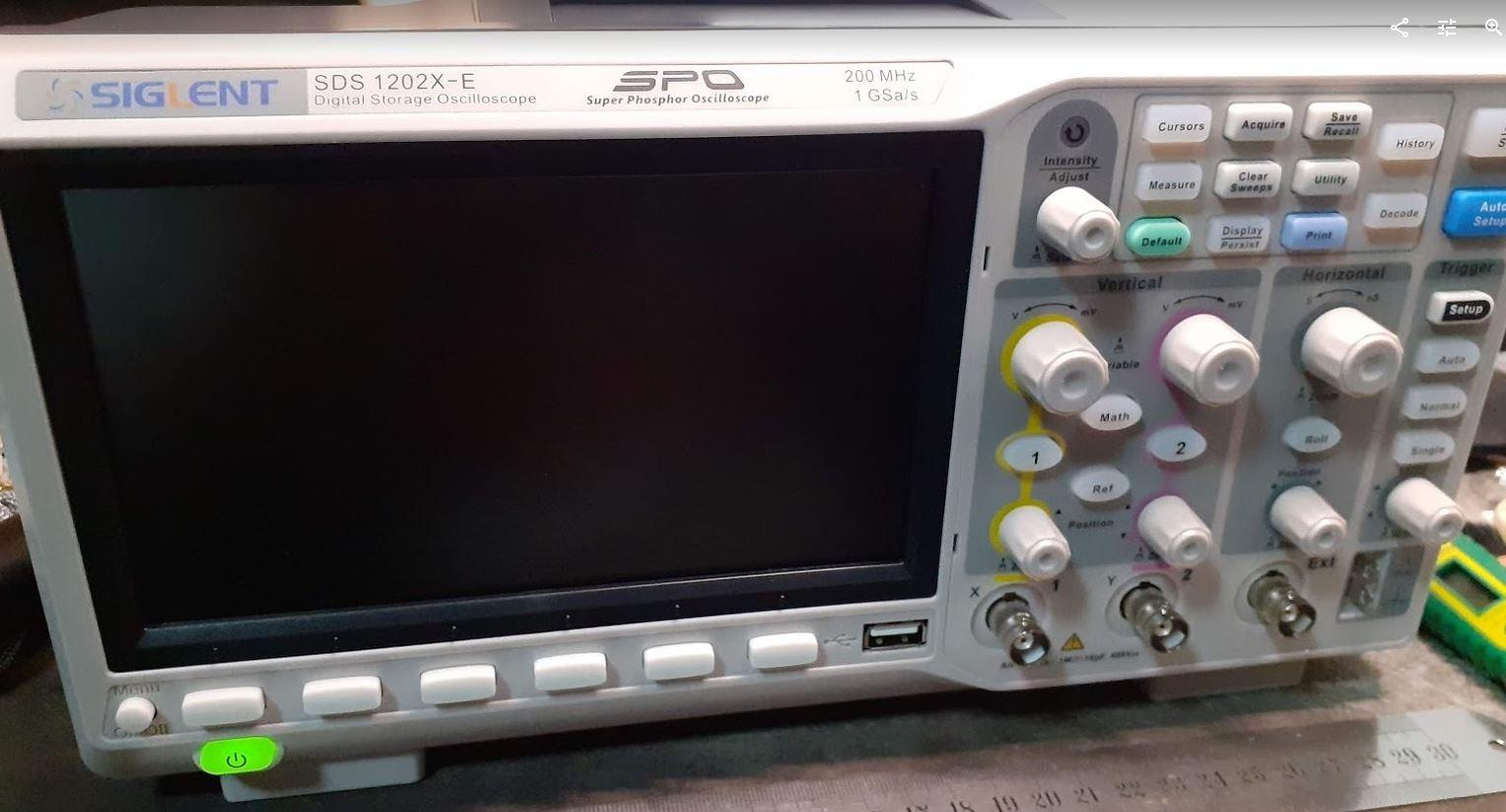
The SDS1202X-E is the pick we recommend to someone whose projects will grow. It samples at 1 GSa/s in real time and holds 14 Mpts of record, which is a lot of window on a burst. The 200 MHz front end is the part that pays off later: when you move from a 5 V Arduino pin to a 3.3 V SPI line with 6 ns rise times, the scope still has bandwidth left to show you the overshoot and ringing on the edge.
Serial decoding is the quiet hero. IIC, SPI, UART, RS232, CAN and LIN are all in the box at no extra cost, and the same decoders do double duty as trigger sources. Owners with the most reviews in this roundup (1455 of them, averaging 4.7) consistently describe it as a capable step up from a basic entry meter, which is exactly the jump most hobbyists need after a year of breadboarding.
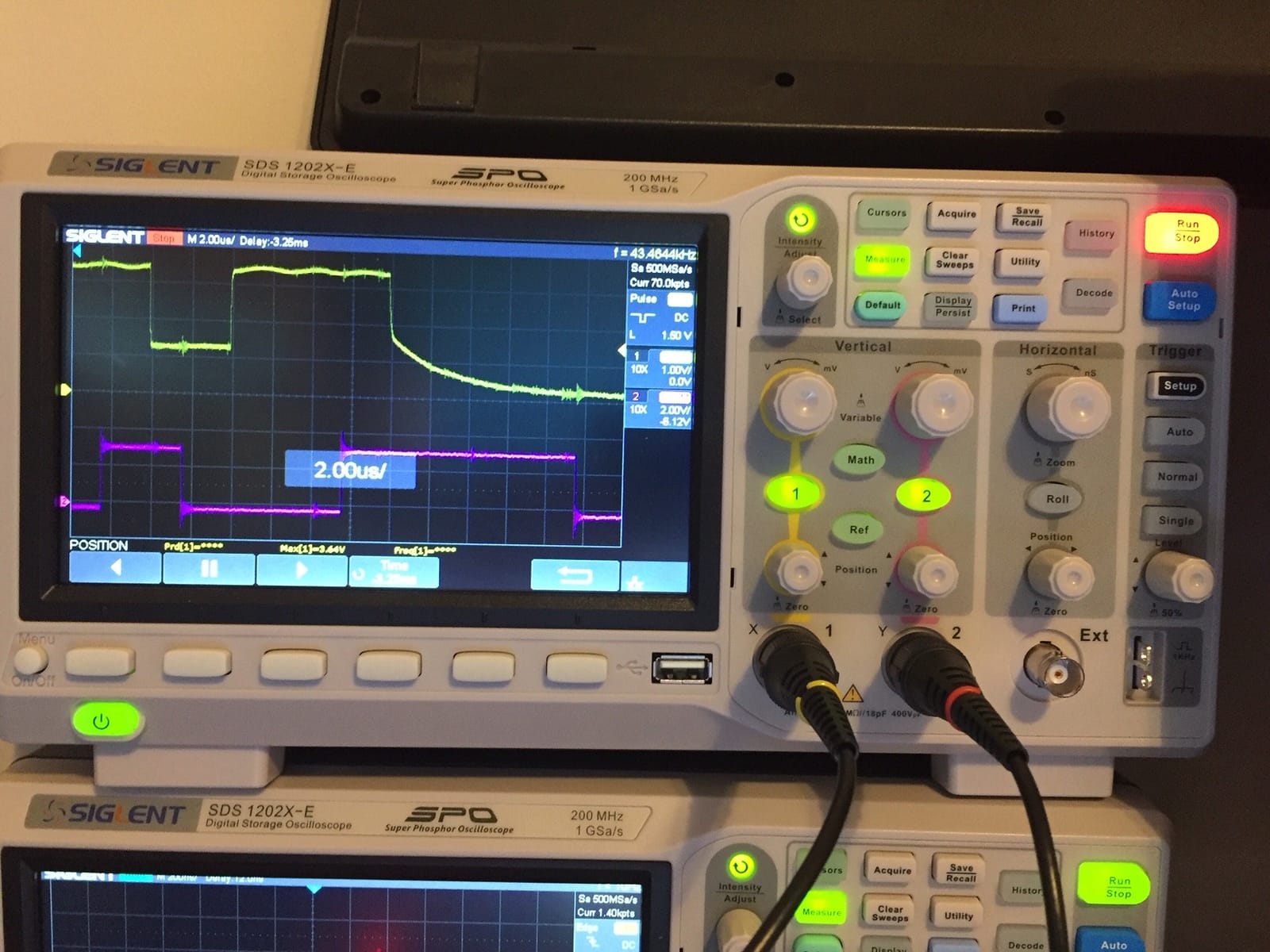
Triggering is standard edge plus the serial bus modes, and with 14 Mpts of memory you can zoom into a single transaction without the display going blank the way it does on shallow-memory scopes. The 5.5 lb body and 10 x 15 x 17 inch footprint are small enough for a desk that is already crowded with a soldering iron and a multimeter.
What 200 MHz bandwidth actually buys you
Bandwidth is the number that decides whether a scope keeps up with your projects. The working rule is simple: buy at least two to three times the highest frequency component you need to see accurately. At 200 MHz you can characterise signals up to roughly 50 MHz with usable rise-time fidelity, which covers microcontrollers, most switching regulators, sensor interfaces and hobby-level radio work.
The practical limit is rarely the 200 MHz figure. It is the two analog channels. Once you need to compare input and output of a filter, time a clock against data, and watch enable, you will miss the third. That is the argument for moving to a four-channel unit rather than a faster two-channel one.
Where this scope falls short
Two channels is the binding constraint. For a three-phase-ish job, a two-channel scope makes you move probes and lose the reference, which defeats the purpose of having a scope at all. Reviewers also note that decode depth on advanced serial protocols is limited, so if your hobby has become deep protocol analysis rather than first-look debugging, a four-channel unit with more decode options is the better purchase.
It is also a two-channel device with no digital logic channels at this configuration. Basic protocol work is covered by the decoders, but grabbing a bus with a cheap logic analyzer alongside it is a common and sensible pairing.
2. Siglent SDS1104X-E – Top Rated 4-Channel Scope
Siglent Technologies SDS1104X-E 100Mhz Digital Oscilloscope 4 Channels Standard Decoder, Grey
100 MHz across 4 channels
Dual ADC architecture
Standard IIC SPI UART CAN LIN decode
Ethernet web server
Pros
- Dual ADC keeps 1 GSa/s on two channels
- All decoders unlocked in the box
- Bright display with adjustable brightness
- Four colour-ringed probes included
Cons
- Optional MSO and AWG modules cost a lot
- Sample rate halves to 500 MSa/s with all four channels on
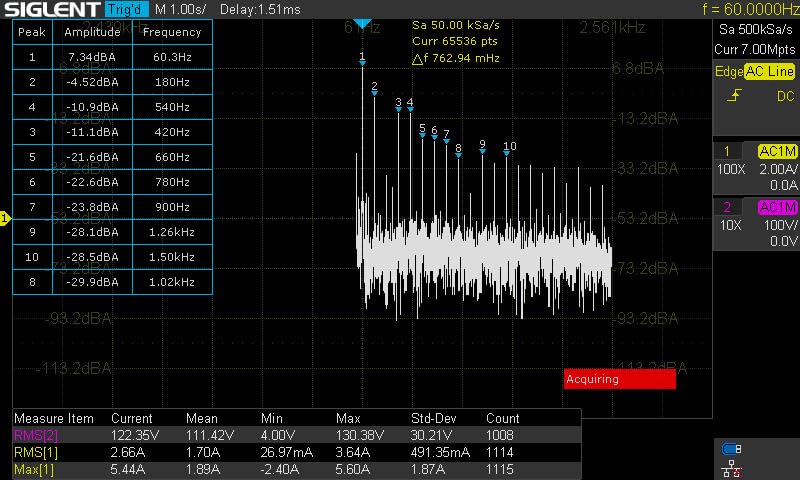
This is the highest-rated scope in the roundup at 4.8 across 966 reviews, and the rating is understandable. The dual ADC design is the headline: it maintains 1 GSa/s on two channels simultaneously, where a lot of four-channel scopes in this class drop to 250 MSa/s as soon as you light up more than one. That matters for anyone comparing two fast signals.
Four channels at 100 MHz covers the jobs two channels cannot. Bring-up on a microcontroller board means watching a clock, a chip select, a data line and a reset at once, and having all four visible at once is the difference between guessing and knowing. Owners describe it as professional-grade feel at a hobbyist price, and the responsive interface with a 14-division grid supports that read.
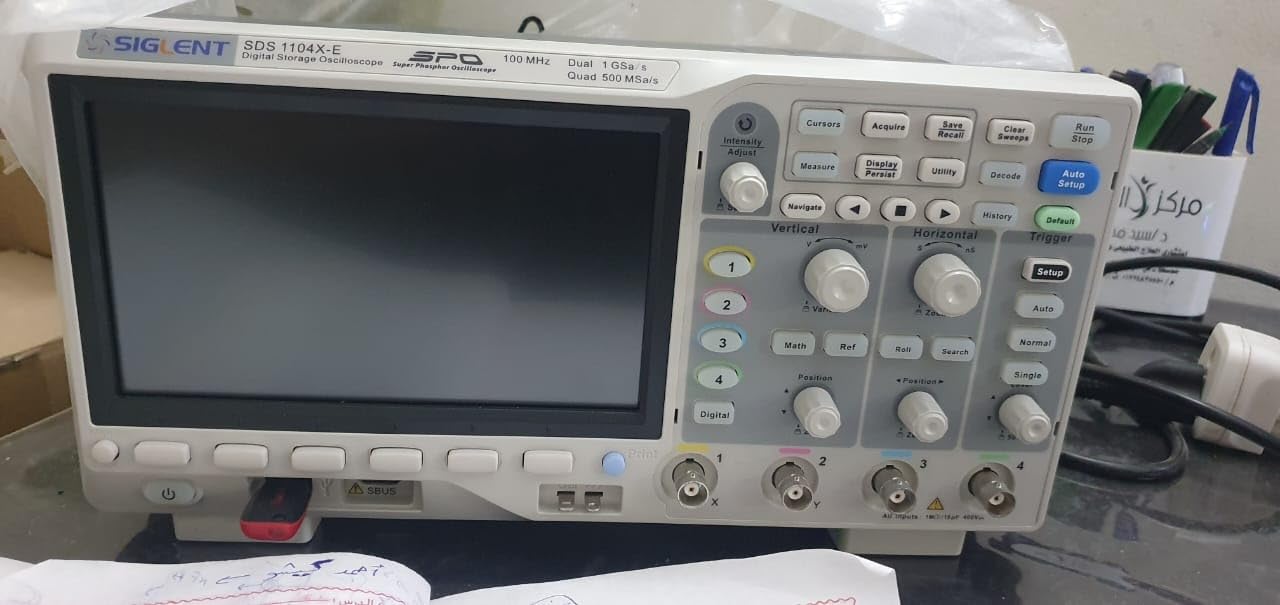
Two underused features deserve attention. The built-in Ethernet web server lets you view the screen and control the scope from a browser on your network, which is genuinely helpful for sharing a capture with someone or for a bench you cannot sit in front of. The included 100 MHz probes come with colour rings already fitted, so channel identification is immediate rather than a guessing game with tape.
When four channels changes the way you work
The rule most experienced hobbyists give is that two analog channels plus decoded logic covers most microcontroller debugging. That is true, and it is why the DS1054Z below is such a strong value. Four analog channels pay off when the signals you care about are analog and simultaneous: two rails, a switch node and a feedback line, or input and output of a converter alongside a load-step transient.
With all four channels active, sample rate falls to 500 MSa/s. At 100 MHz bandwidth that still leaves a healthy margin, but it is worth knowing before you commit to a fast-edge measurement across four lines.
What you give up versus a two-channel scope
The optional MSO and AWG expansion modules are the weak point: the 16 digital channels and the USB AWG are sold as add-ons, and reviewers repeatedly note that the module prices come close to buying a separate instrument. You get excellent analog performance and then hit a wall when you want mixed-signal work.
Minor physical gripes also recur: the push-to-select rotary knob can overshoot menu items, and firmware updates split between an app and an OS download, which can reset saved setups. Neither is serious, both are annoying if they happen on a busy evening.
3. IMARS HO-3S – Best Handheld 3-in-1 for Field Work
Dual Channel 3-in-1 Handheld Oscilloscope Multimeter, 70MHz Signal Generato
70 MHz dual channel at 200 MS/s
20000-count True RMS meter
Built-in signal generator
CAT II 1000 V
Pros
- Scope meter and generator in one body
- Accuracy compares well against a Fluke in owner tests
- Color screen readable indoors
- Weighs 7.8 oz
Cons
- Auto-ranging can show misleading overload readings
- Supplied leads are meter probes not scope probes
The HO-3S is the handheld that behaves like a real bench instrument on a trip. It delivers 70 MHz on two analog channels at 200 MS/s, which is a serious front end for something that fits in a pocket and runs off an 18650 cell for about four hours. For field debugging – a car, a boat, a site with no mains – that combination is rare.
It is a 3-in-1 tool: scope, 20000-count True RMS multimeter and a signal generator with sine, triangle and square output. The generator is more useful than it sounds, because driving a known input into a suspect amplifier is often the fastest way to find where a circuit stops behaving.
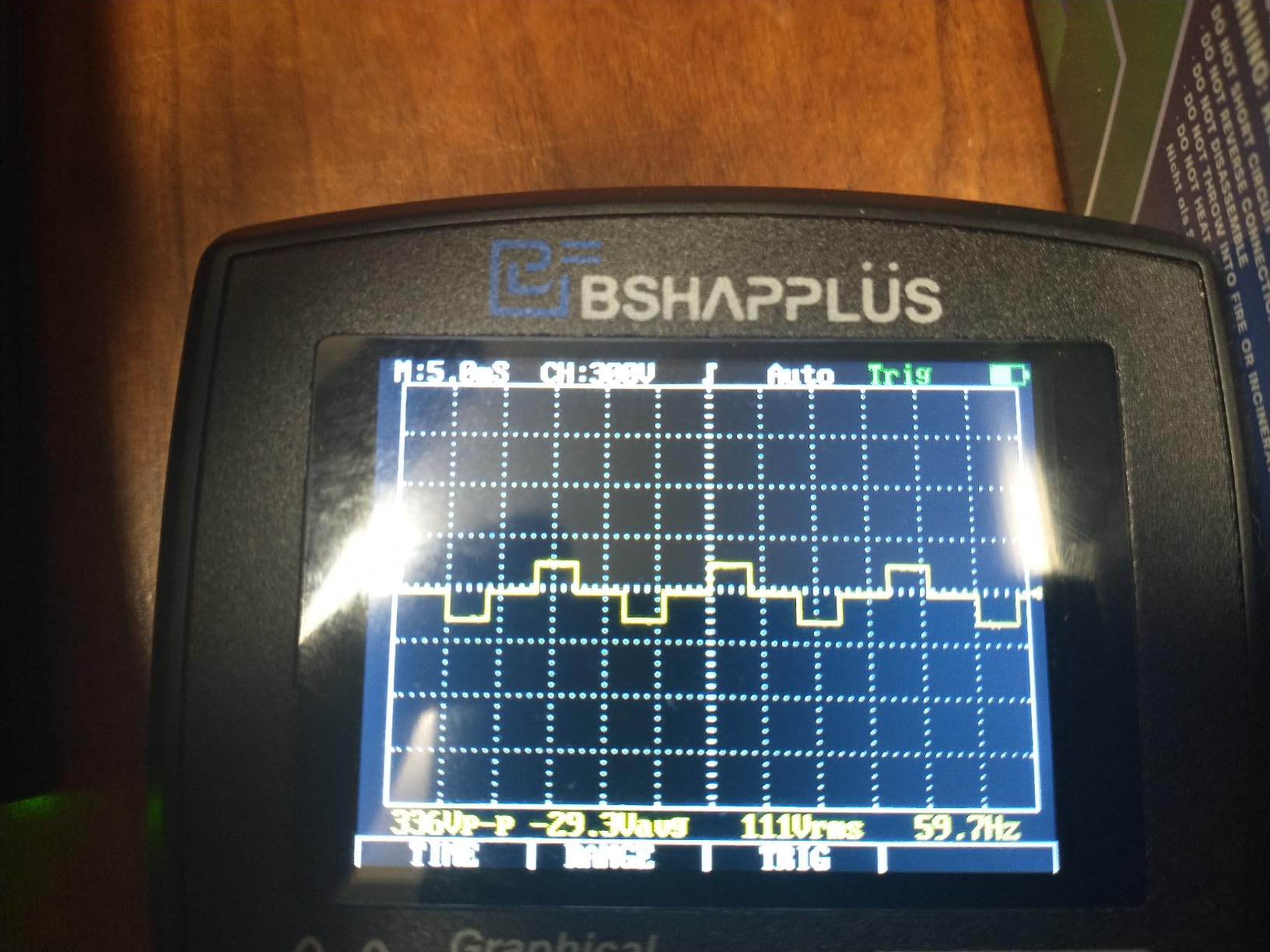
Storage matters more than people expect on a handheld. It keeps 1000 measurement sets and 200 waveform records, so you can capture a fault now and compare it to a known-good reading tomorrow. The 2.4-inch color TFT has eight backlight levels plus a flashlight, and one-key AUTO capture does the timebase and volts-per-division for you when you are working one-handed.
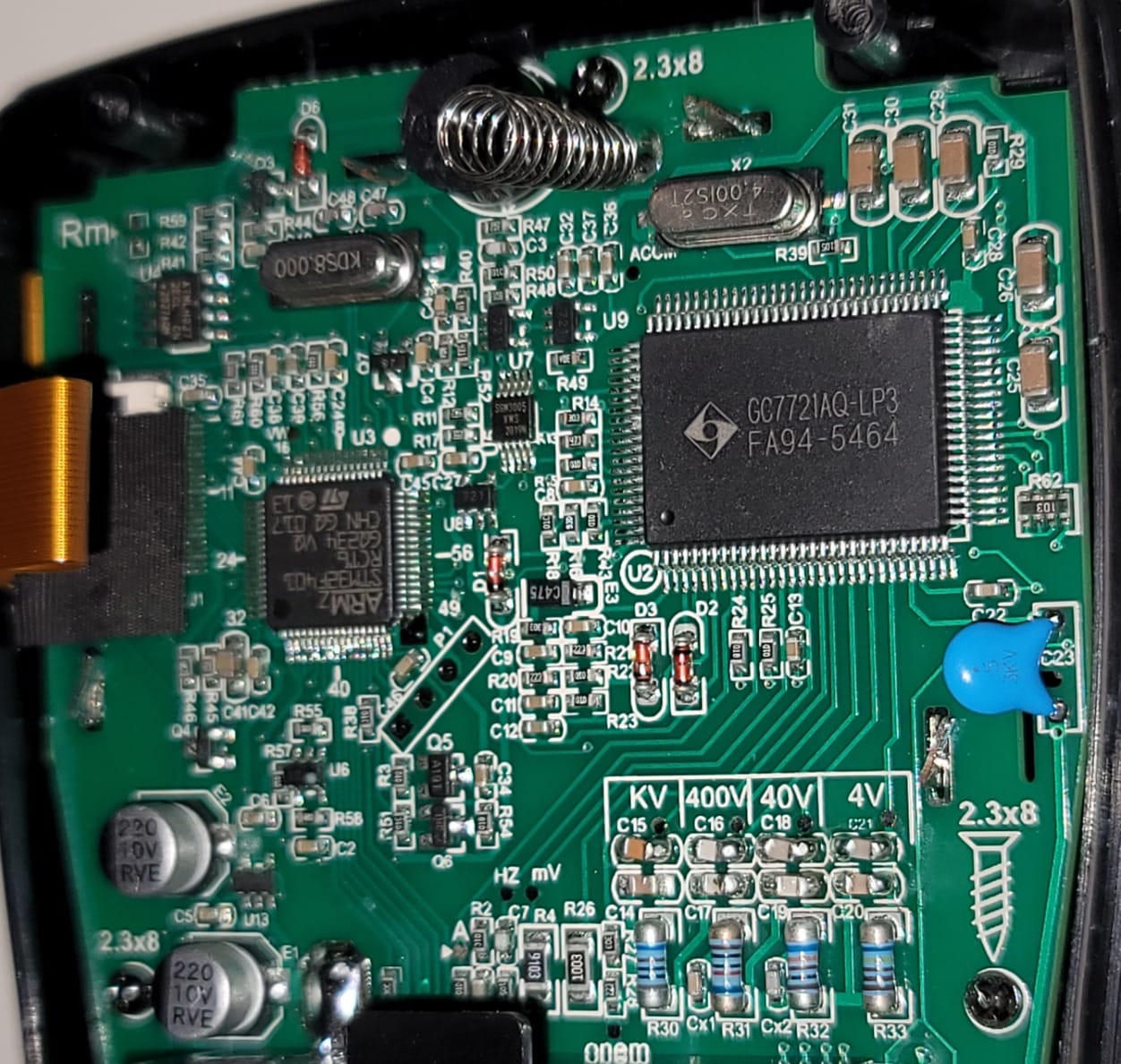
Why a multimeter and generator in the same box matters
Most intermittent faults only show up when you can measure and stimulate at the same place. The integrated True RMS meter handles the readings, and the internal generator lets you inject a clean signal into a circuit under test without dragging out a second box. Owners report accuracy that compares well against a Fluke DMM in their own checks, which is the relevant comparison for this class.
The IEC 1010-1 compliance and CAT II 1000 V rating with dual fuse protection are the specs that matter if you are near mains-derived or automotive circuits. They describe the meter’s input protection, not the scope channel, and the distinction is worth holding on to.
Limits worth knowing before you buy
Auto-ranging occasionally shows misleading overload readings, which is a real trap if you trust a number at face value. Check any reading that looks implausible against a second method before acting on it. The color screen is also hard to read in direct sunlight, which is exactly the condition where a field tool gets used.
Finally, the supplied leads are standard multimeter probes rather than proper scope probes. That is fine for low-voltage meter work; it is not the right connection for a signal you are trying to read shape on. Budget for proper 10x scope probes if waveform fidelity matters to you.
4. Rigol DS1054Z – Best Value 4-Channel Bench Scope
Rigol DS1054Z Digital Oscilloscope, 50MHz, 4 Channel, 1GSa/s, Best Value
50 MHz across 4 analog channels
1 GSa/s and 24 Mpts memory
30000 wfms/s capture
USB Host LAN LXI
Pros
- 24 Mpts memory depth is exceptional at this level
- 30000 wfms/s catches rare glitches
- Bright colour-coded display with persistence
- Trigger and decode for UART I2C SPI
Cons
- Supplied probes are mediocre and hard to tune
- Noisy cooling fan
- Select knob overshoots menu items
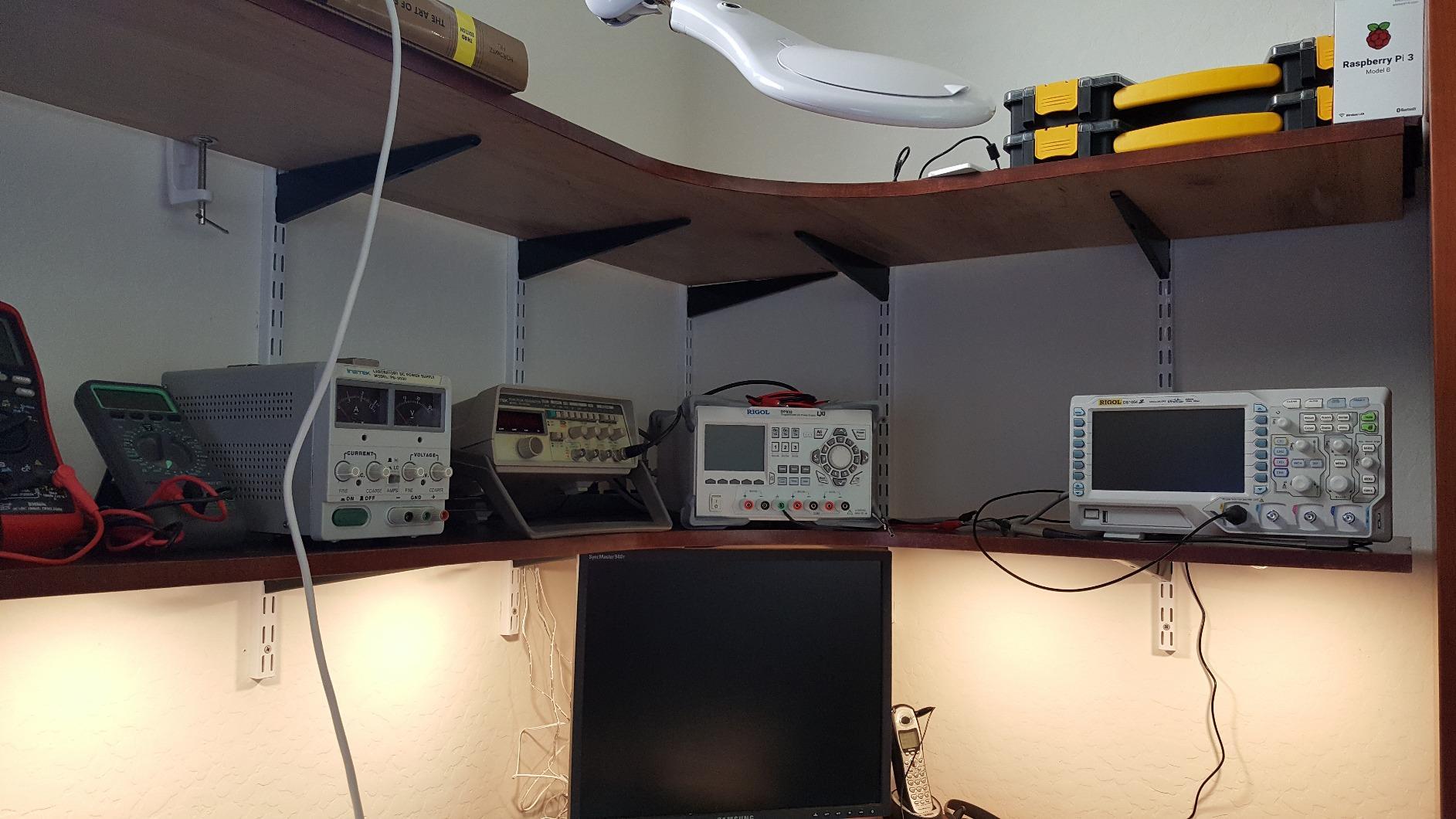
The DS1054Z has been the hobbyist default for years for a reason: it puts measurement depth ahead of headline specs. 24 Mpts of memory means a long capture at full sample rate, and a 30,000 wfms/s waveform capture rate with intensity graded display is the number that actually matters when you are hunting an intermittent spike. You can see rare events because the scope rebuilds the display tens of thousands of times a second.
Four analog channels at 50 MHz is enough bandwidth for almost everything a hobbyist builds: Arduino and ESP32 GPIO and PWM work, sensor and robotics signals, audio, and power rail bring-up. RS232/UART, I2C and SPI trigger and decode are included, along with FFT, and the port selection – USB Host, USB Device, LAN (LXI) and AUX output – is the most complete on any scope in this list.
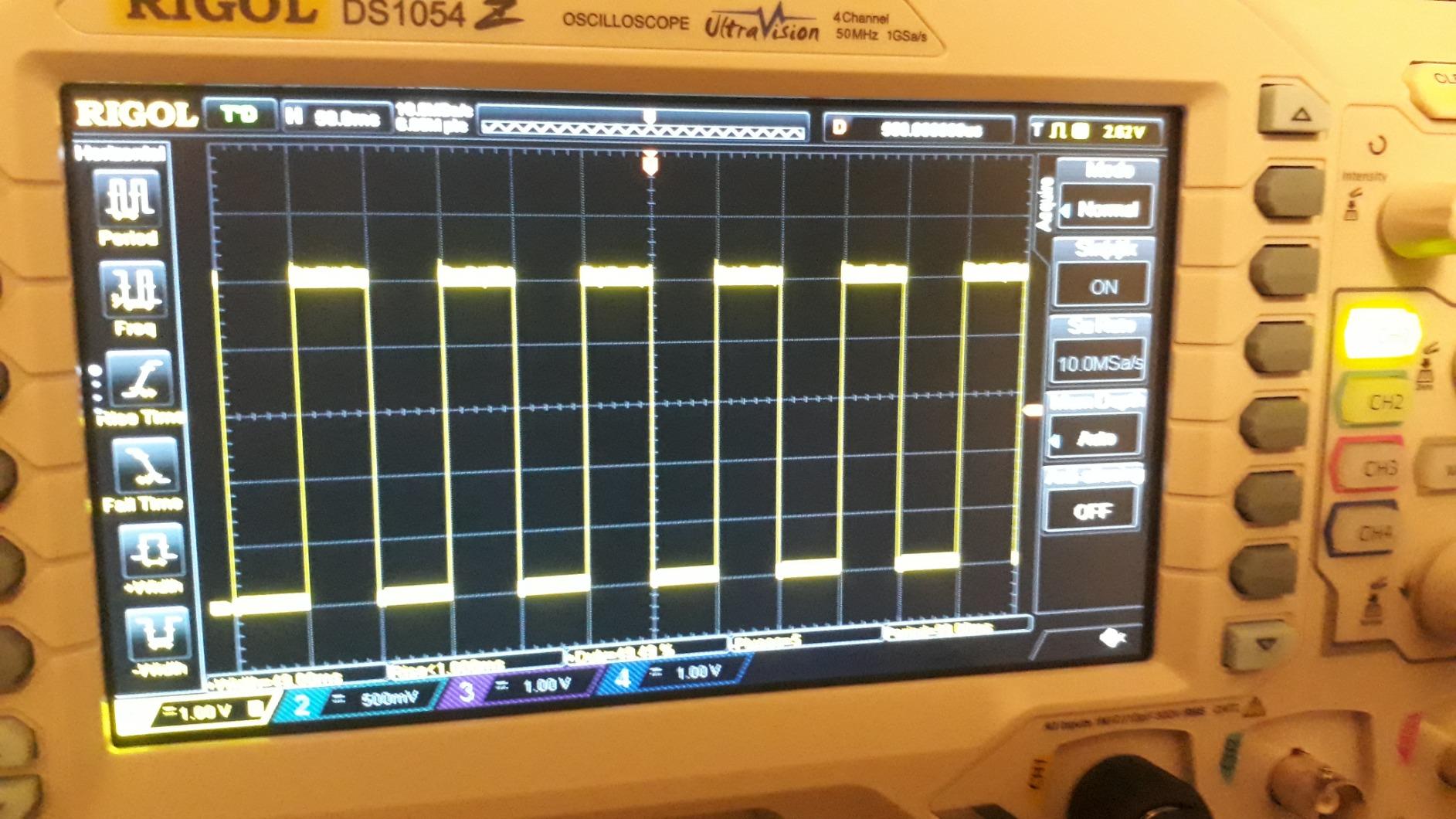
Owners with decades of bench experience describe it as the best value they have used, and the built-in help function makes it a genuinely good first scope. A new user can look up what a measurement means on the instrument itself instead of alt-tabbing to a manual, which matters more than it sounds when you are learning.
Why memory depth beats sample rate for hobby work
Sample rate tells you how finely a single instant is sampled. Memory depth tells you how much of the past you keep. For hobby debugging, memory depth is usually the more valuable number, because the events you are hunting – a glitch during a specific state, a one-off spike, a slow droop during a load change – are long relative to their detail.
With 24 Mpts you can hold a millisecond of data at full rate and still zoom in afterwards. That is why this scope catches things that 2 Mpts instruments walk straight past. The intensity graded display reinforces it: events that repeat often appear bright, one-offs appear faint but visible, and you get that information from a single capture.
What to expect from a scope at this level
Three gripes repeat, and all three are fair. The cooling fan is audible in a quiet room. The push-to-select intensity knob often jumps to the next menu item, which will annoy you in the first week. And the supplied probes are mediocre and hard to tune, so most owners end up buying better probes – plan for that in your budget rather than being surprised later.
Also note that channel 2 and 4 trace colours are hard to distinguish on the display. Colour-coded probe rings solve this in a second and cost almost nothing. Some optional features on this model have historically shipped time-limited and needed an unlock step, so check what is active out of the box before you rely on a specific function.
5. HANMATEK HO52 – Best for Travel and Classroom Use
HANMATEK Handheld Digital Oscilloscope 50Mhz Bandwidth with 2 Channels HO52 3.5″ TFT Mini Oscilloscope, 2 in 1 Oscilloscope and Multimeter, Backlit Screen, Auto-Calibration Function, Memory Function
50 MHz on 2 channels at 250 MSa/s
True RMS meter to 1000 V DC
8k dot record length
2.6 lb portable body
Pros
- Pocketable scope and True RMS meter in one
- 50 MHz and 250 MSa/s are strong for the size
- Reference waveform overlay aids comparison
Cons
- Small screen limits detailed inspection
- 8k point record length only
- Some functions are menu-heavy
The HO52 is the most useful shape of handheld instrument for teaching and for taking a bench apart. At 2.6 lb with a 3.5-inch TFT, it is a 50 MHz two-channel scope at 250 MSa/s with an 8k dot record, plus a 4 1/2 digit True RMS meter reaching 750 V AC and 1000 V DC on independent inputs.
The independent scope and meter inputs matter more than they sound. Many two-in-one handhelds share a single input jack, so switching between voltage measurement and waveform work means unplugging. Having both live at once lets you watch a rail on the scope while confirming a reading on the meter, which is a normal way to work.
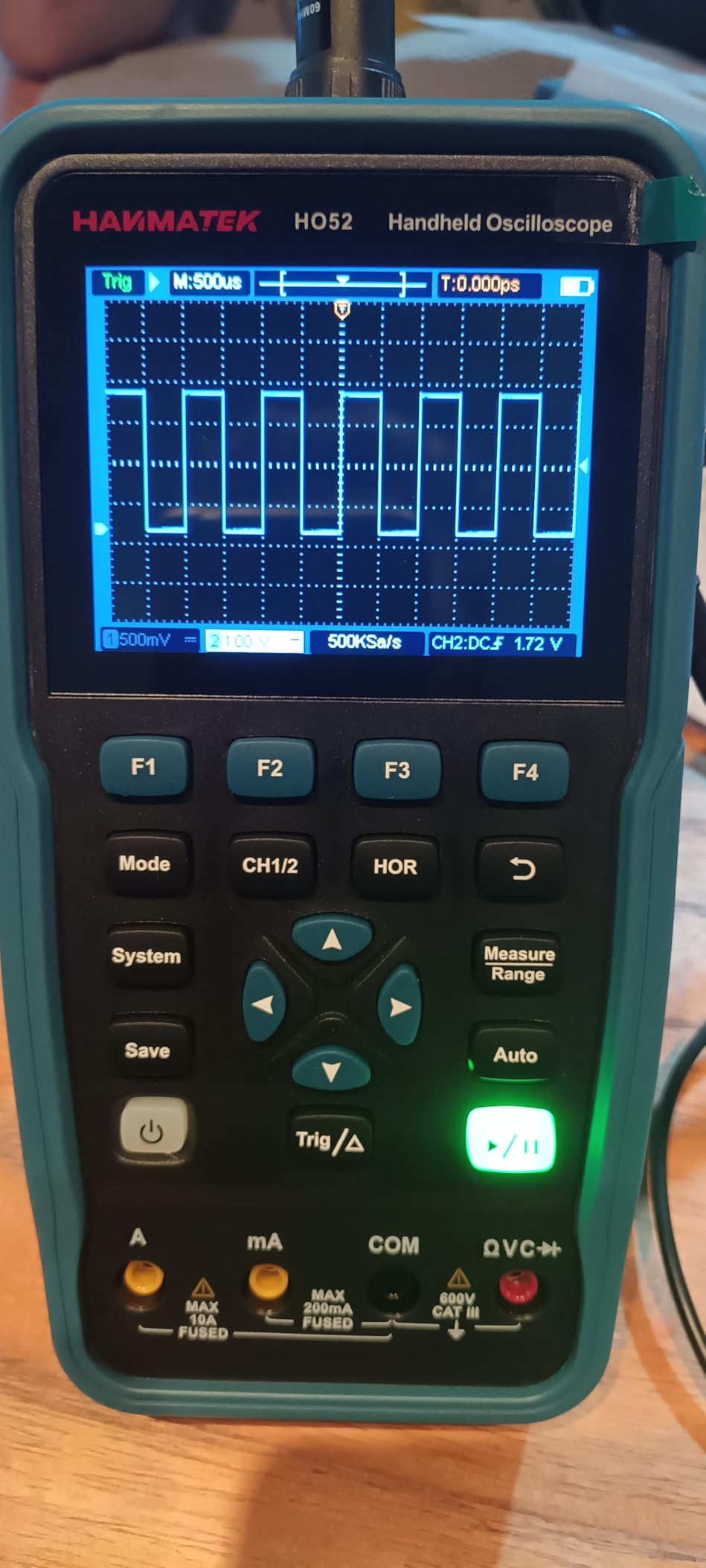
The reference waveform overlay is the feature owners mention most. Save a known-good trace, overlay it on a suspect one, and the difference is immediately visible rather than something you have to hold in your head. There is also one-key AUTO capture and a self-calibration routine, both of which cut the time to a first capture on unfamiliar hardware.
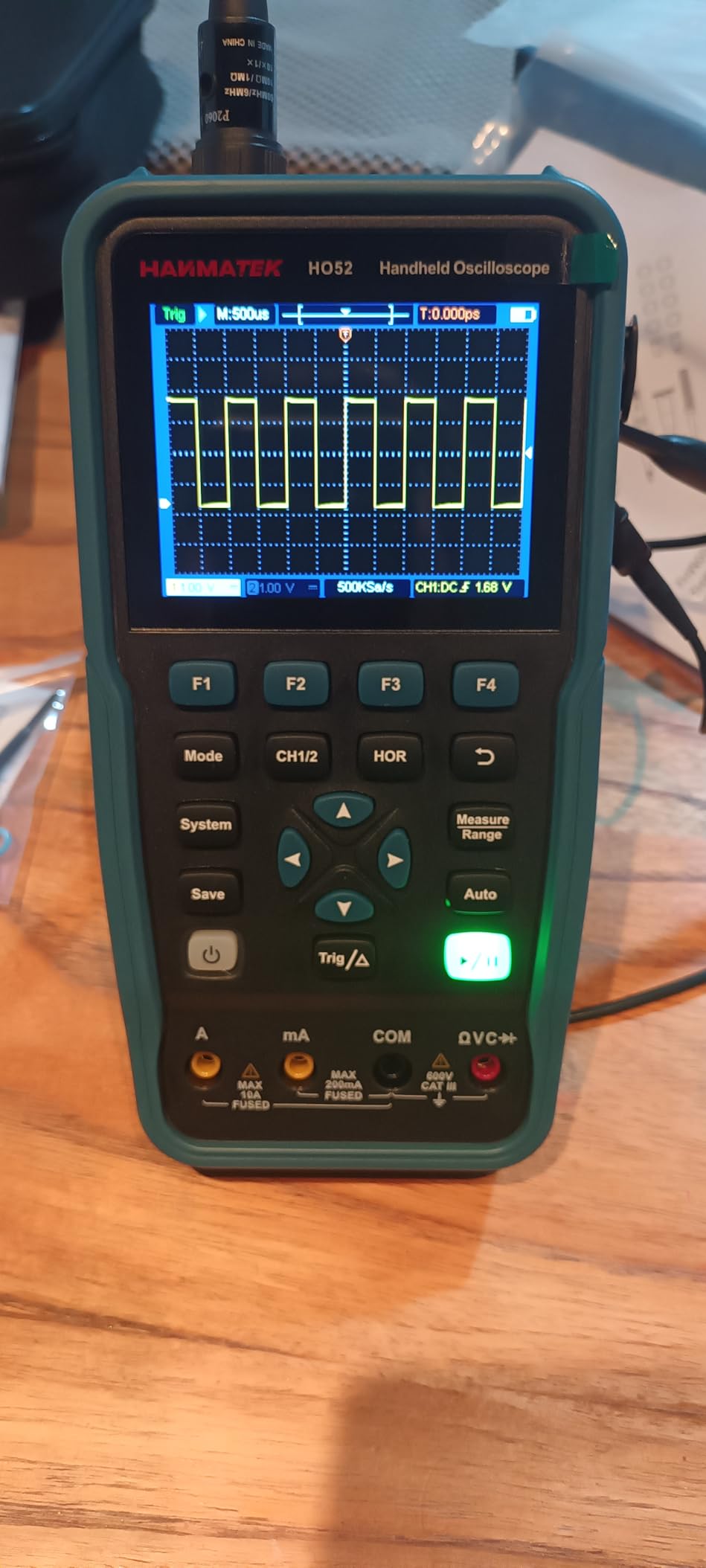
What a handheld scope is genuinely good for
Handhelds with a meter built in are for confirmation work: checking that a signal exists, that its frequency is about right, that an amplifier is not clipping. The HO52 does that well for 50 MHz signals, and the True RMS accuracy on AC readings means you can trust it on switched-mode and dimmable LED supplies where a non-True-RMS meter misreads badly.
USB Type-C handles power bank supply, charging and PC connection, and you can export CSV waveforms and screenshots to a computer. For a classroom where a dozen students share limited bench hours, portable instruments that charge from a laptop are genuinely easier to deploy than fixed scopes.
Where the 8k record length stops you
8k dot record length is the hard limit. It is fine for a stable periodic waveform, and useless for a burst, a glitch or a slow transient, because the record simply does not hold enough samples to show it. The same applies to any zoom work: you run out of samples long before you run out of screen.
The 3.5-inch screen compounds this for detailed inspection, and deeper functions are menu-heavy. If your work involves hunting rare events, buy a bench scope with deep memory and keep the handheld as a portable companion rather than a replacement.
6. Rigol DS1202Z-E – Best for 200 MHz Work With Deep Memory
RIGOL DS1202Z-E Digital Oscilloscope, 200MHz, 2 Channel, 1GSa/s Sampling
200 MHz with 2 channels
1 GSa/s and 24 Mpts memory
60000 frame record and replay
3-year main unit warranty
Pros
- 200 MHz at a hobbyist price point
- Bright 7-inch 800x480 display
- RS232 UART decode replaces a logic analyzer for many jobs
- Decent probes with shrouded BNCs
Cons
- Multifunction knob overshoots menu items
- USB 2 port makes memory export very slow
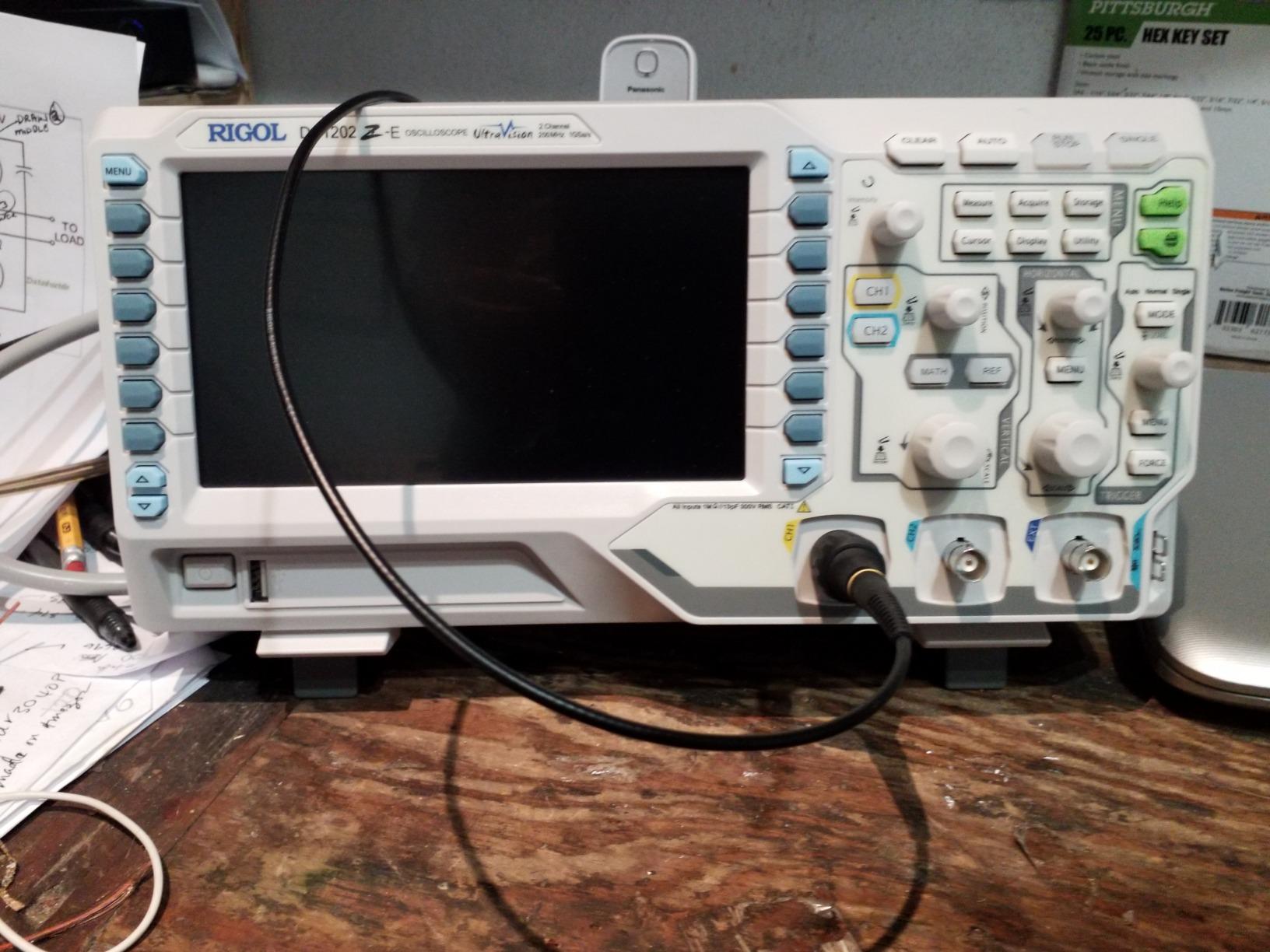
The DS1202Z-E is the other route to 200 MHz, and it makes a different trade than the SDS1202X-E: same headline bandwidth and sample rate, but 24 Mpts of memory instead of 14 Mpts, and 60,000 frame record and playback on top. If you are analysing a converter or chasing a rare transient rather than simply viewing a fast signal, the extra depth is worth more than the Siglent’s channel flexibility.
Its capture rate of 30,000 wfms/s with intensity graded display on a 7-inch 800×480 WVGA TFT gives a clear picture of events that recur versus events that happened once. Reviewers replacing older analog and Tektronix gear describe it as astonishing value, and the on-screen Vpp, RMS and frequency readouts are readable from across a bench.
Decoding RS232/UART, I2C and SPI replaces a dedicated logic analyzer for many jobs, which removes an accessory from the shopping list. The included probes have shrouded BNC connectors, a small quality detail that matters when leads are in motion. A 3-year warranty on the main unit is the longest stated in this roundup.
When 24 Mpts beats 14 Mpts in practice
Memory depth decides what you can look at after the fact. At 24 Mpts you can hold a long window at full sample rate and then zoom into a section of it. That is how you inspect the settling behaviour of a switching regulator, count the overshoot cycles, or look at the full sequence in a UART burst without the display thinning out.
Record and playback of up to 60,000 frames adds a genuinely different capability. You can capture a run of events, then step through them one at a time to find the frame where something went wrong, which is close to impossible on an instrument that only shows the last trigger.
The two real downsides
The multifunction knob overshoots menu selections, the same complaint that appears on several models in this price class. It is a front-panel issue you work around in an afternoon, not a dealbreaker.
The USB 2 port is more annoying in practice. Exporting a full 24 Mpoint memory is very slow, and it caps the size of flash drive you can use for storage. If you plan to move large captures to a computer regularly, budget time for it or work on-screen instead. Some owners also report a small fan noise and an audible rub at startup.
7. FNIRSI DSO152 – Best Budget Pick for First-Time Buyers
FNIRSI DSO152 Handheld Oscilloscope 200kHz Bandwidth, 2.5MS/s Sampling Rate
200 kHz bandwidth at 2.5 MS/s
10x probe rated to 800 Vpp
2.8-inch 320x240 LCD
About 4 hours of battery
Pros
- Lowest-cost true entry point in the roundup
- Factory assembled and calibrated
- 10x probe reaches 800 Vpp
- Compact and light
Cons
- 200 kHz bandwidth limits it to low-frequency signals
- Small 320x240 screen
- Accuracy and finish are modest
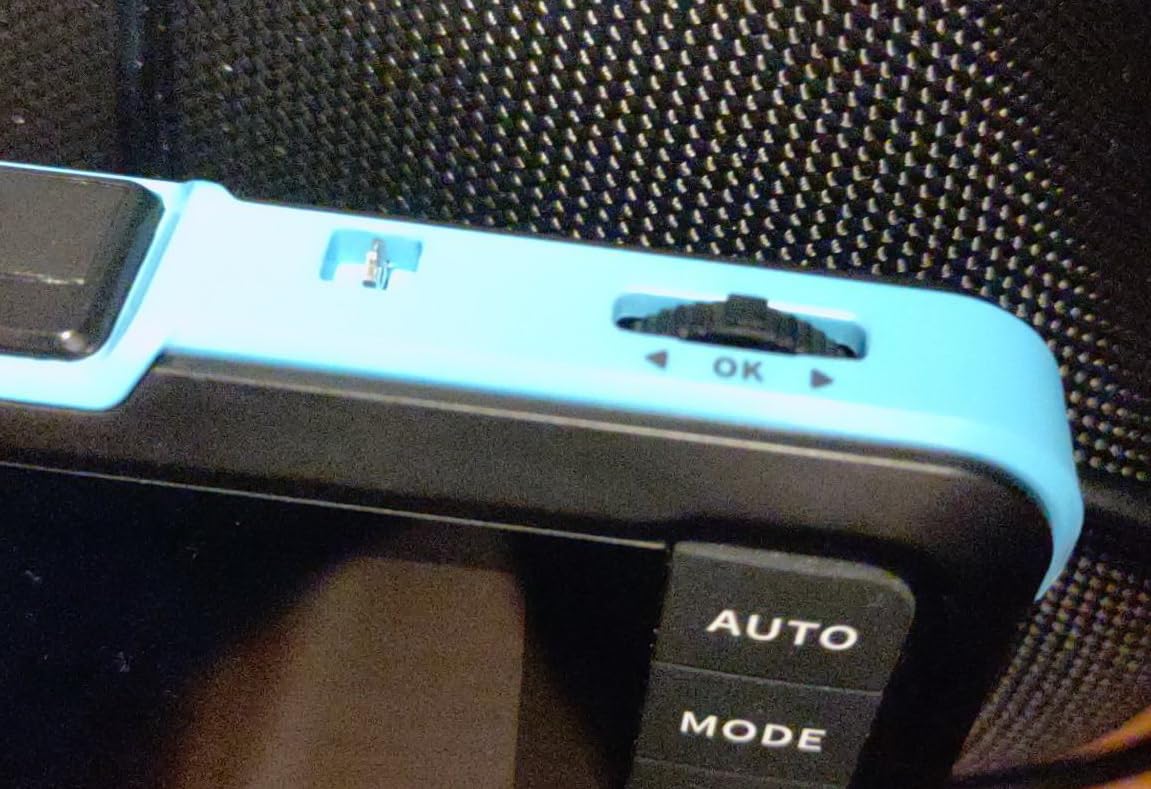
The DSO152 is the cheapest real instrument in this roundup, and the honest way to describe it is a scope for signals under 200 kHz. It samples at 2.5 MS/s, ships with a 10x probe rated to 800 Vpp, and comes factory assembled and calibrated – no soldering, no setup, no driver. It is a 10.2 oz unit you can hold in one hand.
That makes it a good first scope and a good dedicated low-frequency tool. Slow sensor signals, battery and charging circuits, mains-adjacent checks within the probe rating, audio, and automotive work all sit inside what 200 kHz can resolve. Auto, Normal and Single trigger modes are all present, so aperiodic events are catchable rather than only steady signals.
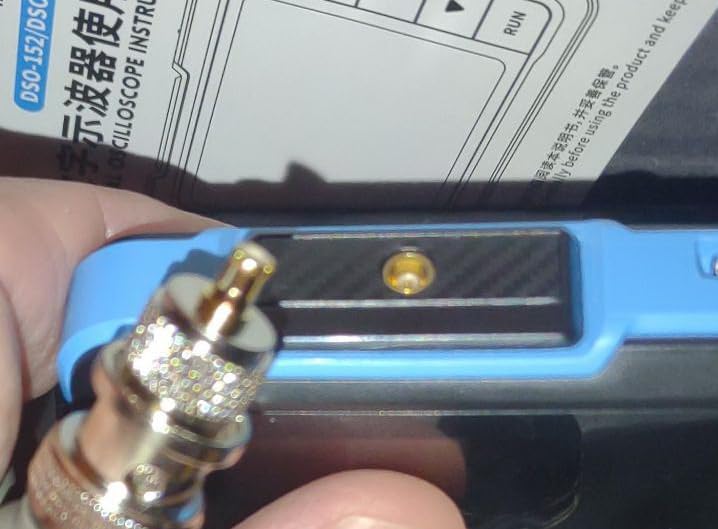
Owners treat it as a first scope or a dedicated automotive and low-frequency tool, and the practical appeal is that it works immediately. The 1000 mAh battery gives about four hours of use with Type-C charging and data transfer, so it also works as a PC-connected viewer for stored waveforms.
What a 200 kHz scope can and cannot do
Being clear about this prevents the most common disappointment with a cheap handheld. 200 kHz will show you a 60 Hz mains waveform, a rectified ripple, an audio-band signal and a slow sensor output. It will not show you the shape of a microcontroller clock, an I2C line, a PWM edge, a switching regulator node or anything with fast rise times. Those signals appear as fuzzy blobs or as nothing at all.
The 10x probe rated to 800 Vpp gives useful range on mains-frequency signals, but understand that the probe rating describes input tolerance, not measurement accuracy or isolation. It is not a safety device and does not make working near mains safer.
Who should buy it, and who should not
Buy it if you are learning to use a scope at all, if your current work is low-frequency, or if you want a cheap second instrument for the car or the bench without touching your main one. It is a legitimate way to find out whether you enjoy this kind of work.
Skip it if your interest is microcontroller debugging or power electronics, because you will outgrow it quickly and the frustration of not being able to see an edge is a bad first experience. The 2.8-inch 320×240 screen is also small, and the rating reflects modest accuracy and finishing at this level – fine for confirmation, not for calibration work.
8. FNIRSI 2C53T – Best for Car Electronics Repair
FNIRSI 2C53T 3-in-1 50MHz 2CH Oscilloscope Multimeter DDS Signal Generator
50 MHz on 2 channels at 250 MSa/s
19999-count multimeter
DDS generator to 50 kHz
3000 mAh battery
Pros
- Scope meter and DDS generator in one box
- 250 MSa/s on a 50 MHz front end is unusually quick
- Storage case and multiple probe types included
- Reference waveform comparison
Cons
- 1 Kpts record depth is very shallow
- Small 2.8-inch display
- Accuracy feedback is mixed
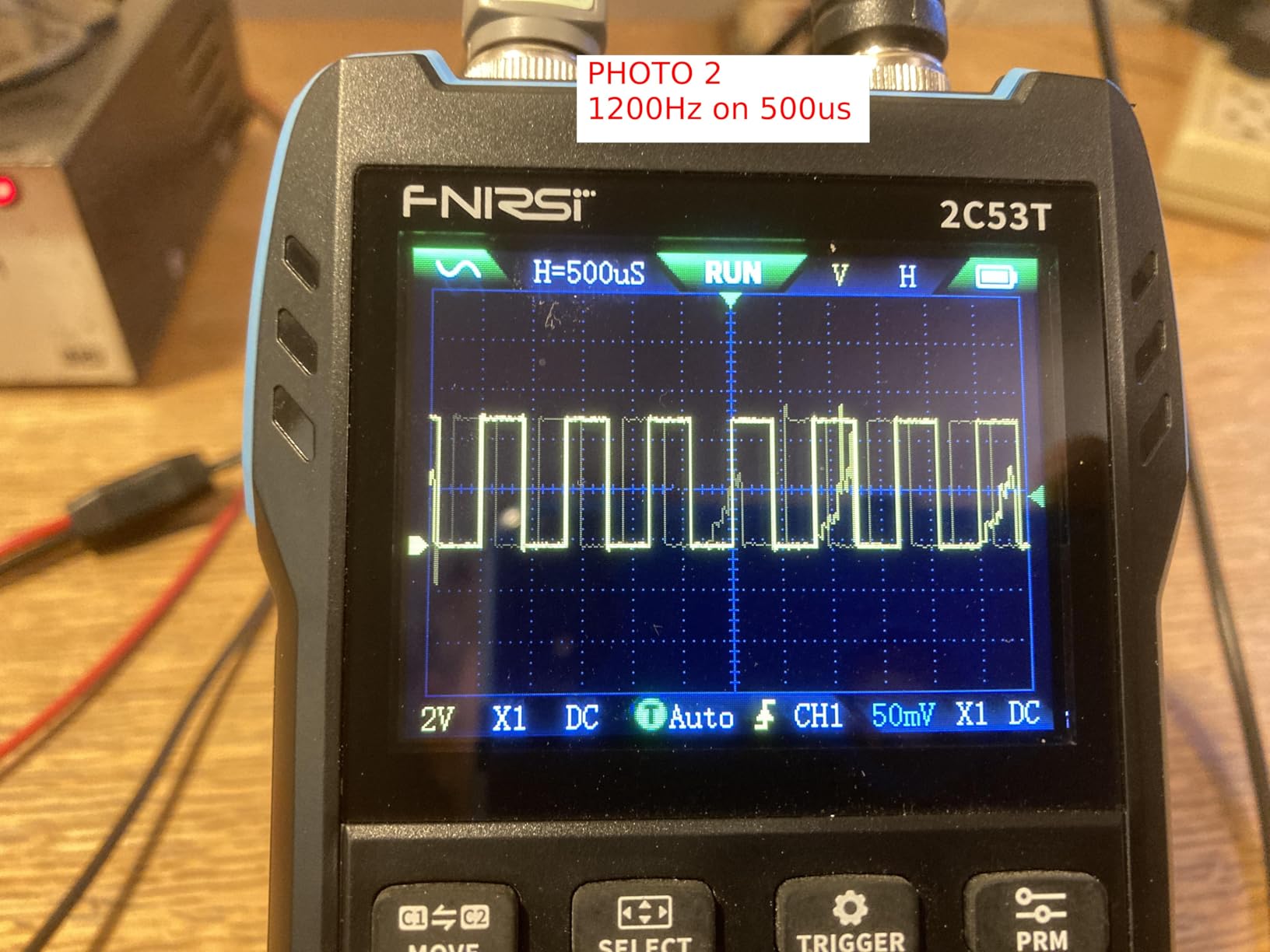
The 2C53T is popular for automotive electronics repair on a budget, and the appeal is that it is a complete box: a 50 MHz two-channel scope at 250 MSa/s, a 4.5-digit 19999-count multimeter covering AC to 750 V and DC to 999.9 V, and a DDS signal generator to 50 kHz with 13 waveforms. Sampling at 250 MSa/s on a 50 MHz front end is unusually quick at this end of the market.
Automotive work is where three-in-one units earn their place. You are often working away from mains power, on intermittent faults, with a limited parts budget. Battery power, a 3000 mAh cell giving up to six hours standby, a storage case and three probe types in the box mean fewer things to forget and nothing to buy before you start.
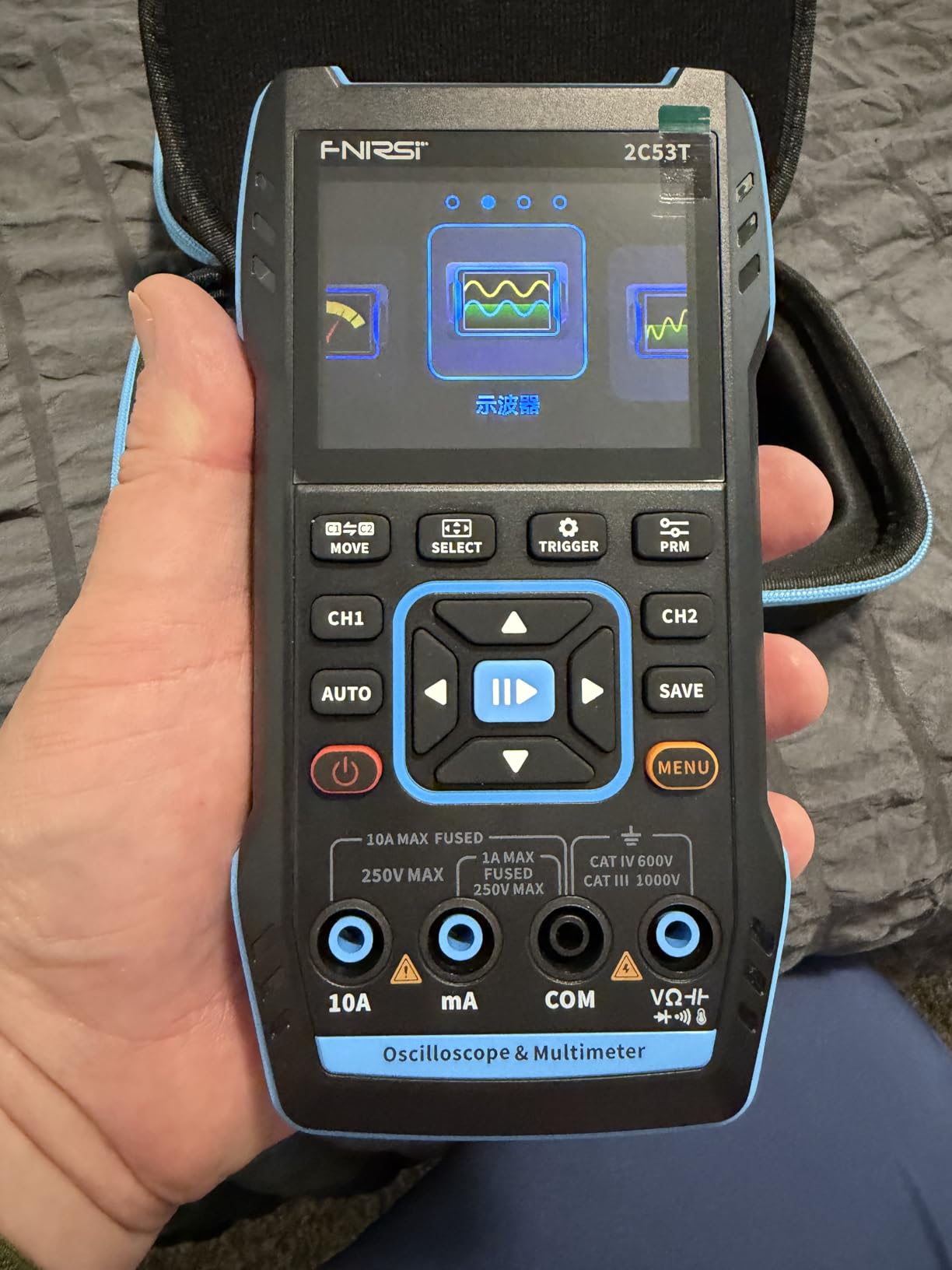
It is also an upgraded take on the earlier 2C23T, adding math operations, cursor measurement, persistence and XY modes. Reference waveform comparison lets you overlay a captured trace on a new one, and one-click save plus screen capture and Type-C PC upload make it easy to document a fault before you pull the part.
Why three functions in one box beats three boxes
On a repair job, tool count drives time. A scope tells you the signal is wrong, the meter confirms the supply, and the generator injects a known input to find the stage that fails. Carrying one body that does all three removes the setup friction and the chance of leaving a probe behind. That is the same logic behind our approach to portable test gear in other roundups, such as our digital piano picks, where doing the job in one pass matters as much as the headline spec.
The DDS generator in 1 Hz steps to 50 kHz with 13 waveforms is more than adequate for driving audio stages, sensor circuits and logic inputs. FPGA, MCU and ADC architecture with a built-in high-voltage protection module is the sensible construction for the environment it is aimed at.
What the shallow record depth costs you
1 Kpts of record depth is the real limitation, and it is severe. A thousand samples is enough for a steady waveform and not enough for a burst, a transient or any zoomed inspection. If your fault is intermittent, this instrument will show you that something is happening but not much about it.
The 2.8-inch LCD compounds the problem for detailed reading, and the 4.3 average rating – the lowest cluster alongside the other FNIRSI handheld – reflects mixed feedback on accuracy and finishing consistency. Popularity is high (883 reviews) but consensus is that it is a capable confirmation tool, not a measurement instrument you would trust a design decision on.
9. HANMATEK DOS1102 – Best Big-Screen Portable
HANMATEK 110mhz Bandwidth DOS1102 Digital Oscilloscope with 2 Channels and Screen 7 inch / 18 cm, TFT-LCD Display, Portable Professional Oscilloscope Kit with 500 MS/s *2 Sampling Rate
110 MHz on 2 channels at 500 MS/s x2
7-inch 800x480 TFT LCD
2 ns/div to 1000 s/div
SCPI and LabVIEW support
Pros
- 7-inch display is unusually large for a portable unit
- 110 MHz with 500 MS/s x2 sampling
- Time base spans 2 ns/div to 1000 s/div
- SCPI and LabVIEW support for PC control
Cons
- Record depth of 10K points is shallow
- Noisy cooling fan
- Only 2 channels
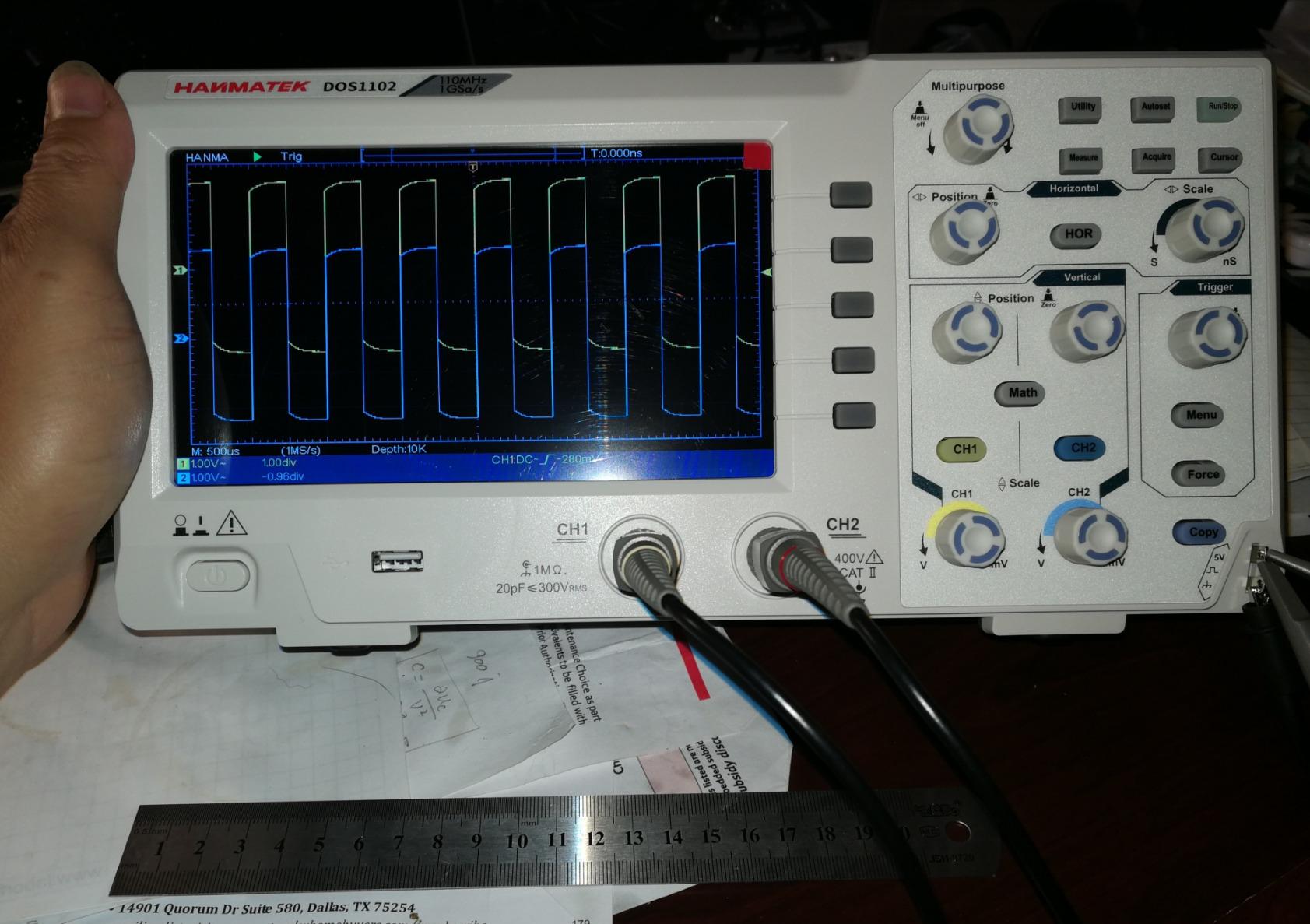
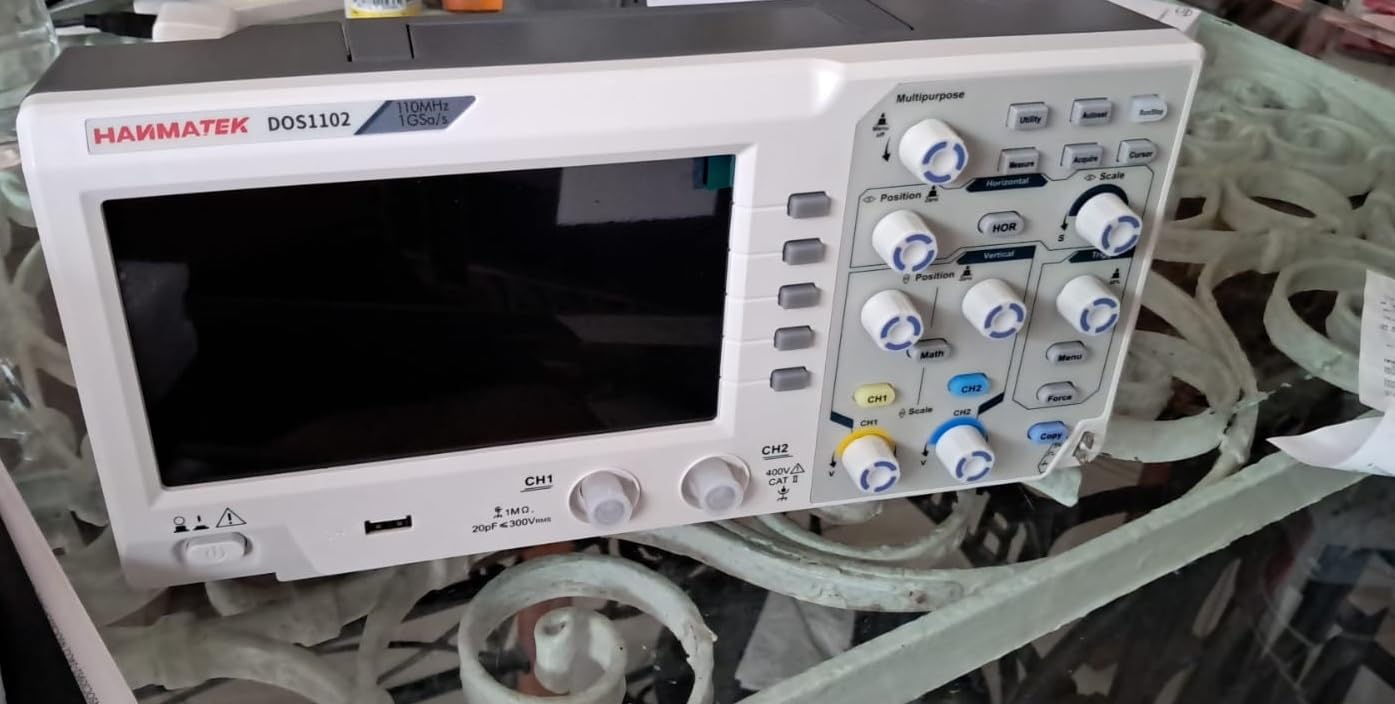
The DOS1102 solves the complaint every handheld has: screen size. A 7-inch 800×480 true-colour TFT with 65535 colours, at 2.4 lb, is a display you can read from a normal working distance. Owners bought it for exactly that, and combined with a 2 ns/div to 1000 s/div time base it covers everything from nanosecond edges to slow charging curves.
Bandwidth is 110 MHz on two channels with 500 MS/s x2 real-time sampling, and vertical sensitivity runs from 20 mV/div to 5 V/div with 1x, 10x, 100x and 1000x probe attenuation selectable. A built-in 6-digit hardware frequency counter covering 2 Hz to 20 MHz and 30 automatic measurement functions make it a fast hands-on instrument rather than a signal viewer.
For anyone moving into scripting or automated measurement, SCPI compliance with LabVIEW communication and secondary development support is a genuine differentiator. You can drive this scope from a PC, capture results programmatically, and include it in a measurement loop – something no other unit in this roundup offers at this level.
When a large display beats deep memory
A big screen changes what you can do by eye. Reading a duty cycle off a waveform, spotting asymmetry in a rectified supply, checking connector pinout continuity visually, or teaching someone else what a scope is doing – all of these depend on being able to see detail, not on storing more samples.
That is why this model is a good teaching and general-purpose portable even with modest memory. If you are looking at a stable, repeating signal, 10K points displayed on a 7-inch screen beats 2 Mpoints crammed onto a 3.5-inch one.
Limits to plan around
The 10K+ point record length is shallow by modern standards and it caps how much you can zoom. A noisy cooling fan is reported by owners in a quiet room, which is a surprise from a portable unit. Firmware and menu polish trail the big-name brands, so expect more time reading manuals. And this variant is 2 channels only – the 110 MHz bandwidth does not compensate for that when you need a third line.
Also worth noting: at 18 W power draw it wants mains, so treat it as a semi-portable rather than a field instrument. The 2.4 lb body and 11.85 inch width are portable in the sense that you can move it to another room, not that it belongs in a toolbox.
10. FNIRSI DSO-510 – Best Budget Pick for Car Audio Tuning
FNIRSI DSO-510 2-in-1 10MHz Handheld Oscilloscope DDS Signal Generator
10 MHz at 48 MS/s
13 waveforms to 50 kHz
Infinite afterglow
Measures up to 400 V
Pros
- Pocketable 2 x 2 inch form factor
- Infinite afterglow reveals clipping and transients
- Signal generator adds bench capability
- Quick to set gains on car audio
Cons
- Not accurate enough for high-stakes troubleshooting
- Generator frequency and amplitude drift at higher setpoints
The DSO-510 is the smallest instrument here at roughly 2 x 2 inches, and it is built for one job: car audio. Setting amplifier gains properly means finding where the signal clips. A calculated target voltage tells you what the number should be; a scope tells you where the distortion actually starts, and on a car system that is the only number that matters.
It samples at 48 MS/s on a 10 MHz front end, which is plenty for audio-band signals, and the level display with infinite afterglow is the feature that makes it work. A clipped waveform leaves a persistent flat-topped trace instead of scrolling past too fast to see, so you can dial gain in and watch the shape change.
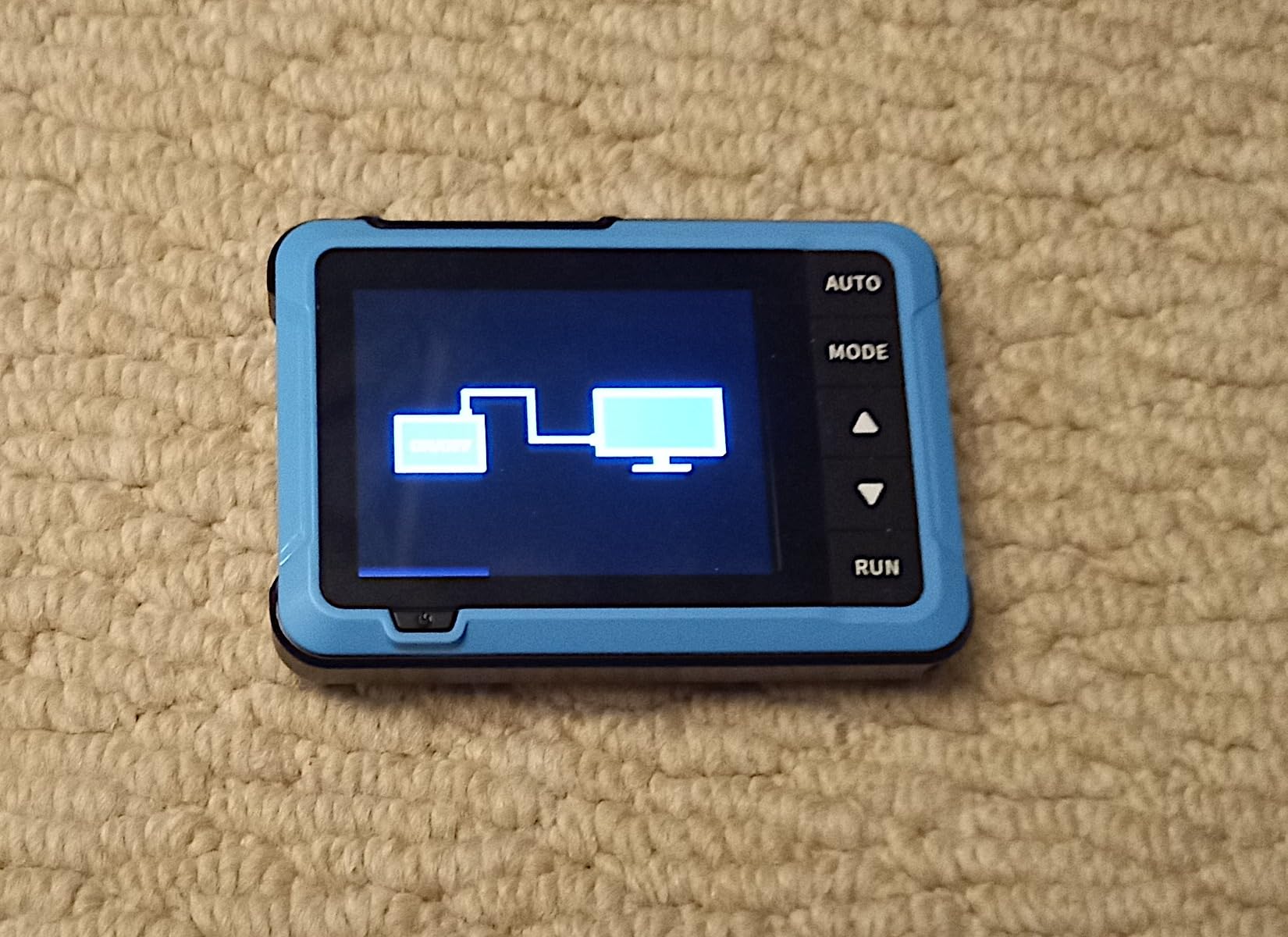
There is also a DDS signal generator with 13 waveform types up to 50 kHz, which gives it bench capability far beyond its size, and a 50 ns to 20 s time base with measurement up to 400 V. The 2.8-inch 320×240 LCD with one-key AUTO parameter optimisation gets you to a reading quickly when you are working in a car at night.
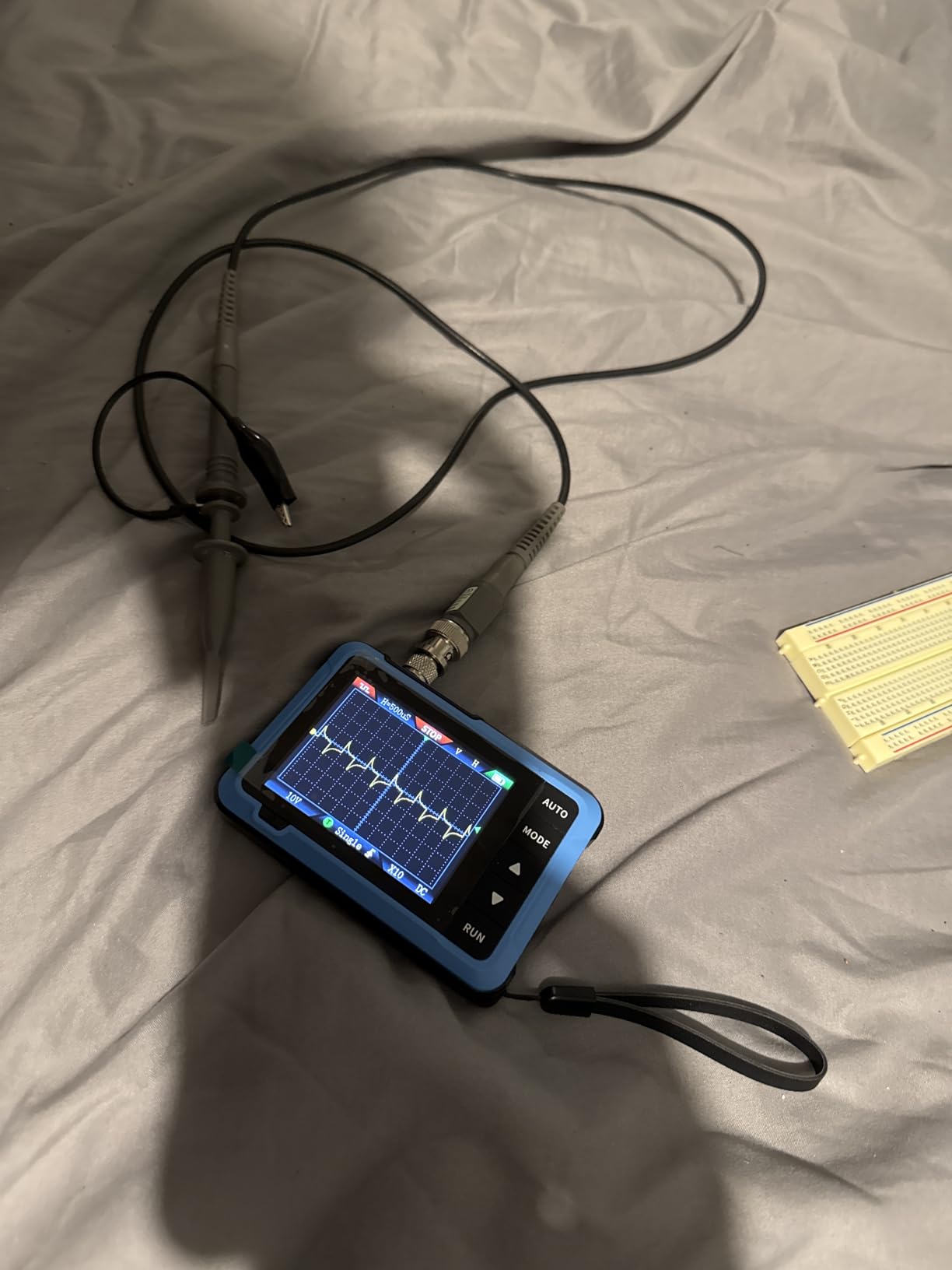
What afterglow and level display actually show you
Afterglow is persistence display: every captured waveform stays on screen at decreasing brightness, so events that occur repeatedly build up a bright picture while single events remain faint. On a clipping problem that means the flat top of a clipped signal becomes unmistakable rather than a detail you might miss at speed.
The level display shows measured values numerically alongside the trace, so you get a number and a shape at the same time. Combined with one-key AUTO, that turns a tool with a 10 MHz bandwidth into something that answers the question you actually have in about ten seconds.
Where it should not be trusted
Owners are explicit that it is not accurate enough for high-stakes troubleshooting. That is a fair reading of a 10 MHz handheld: it will show you that a signal is clipped or distorted, not give you a value you would design against.
The signal generator has documented errors: output frequency and amplitude are off at higher setpoints and can revert when you switch back to scope mode. Trigger and function generator controls take practice, and only one probe is supported with no custom attenuation factor. Some owners also received a non-working probe or a loose ground lead, so check the accessories on arrival.
If car audio is your hobby, buy this. If electronics is your hobby, buy something with more bandwidth and put the money toward proper probes.
How to Choose an Oscilloscope: 8 Steps
Bandwidth is the number vendors lead with and buyers over-focus on. The rule that actually works: buy at least two to three times the highest frequency component you need to see accurately. For 8-bit and 12-bit microcontroller work, 50 MHz of scope bandwidth on a 20 MHz signal is comfortable. For radio-frequency or fast edge work, you need 200 MHz. Paying for 500 MHz you will never use buys you nothing except a larger invoice.
Channel count is the second decision, and the honest answer for most hobbyists is two. Most microcontroller debugging is one signal of interest plus a reference – a clock, a trigger, a supply rail. Four analog channels pay off when you need to watch several analog things at once, like both rails plus a switch node plus feedback, or when a three-wire bus plus enable has to be correlated against a fourth point in time.
Memory depth is the specification experienced users argue about, and it is more important than sample rate for almost all hobby work. Sample rate tells you the resolution of a single instant. Memory depth tells you how much history you keep at full resolution. Scopes with 24 Mpts let you capture a millisecond and zoom into any part of it afterwards, which is how you find a one-off glitch. Scopes with 1 Kpts to 8 Kpts show you a stable repeating waveform and nothing else.
Sample rate deserves a clarification, because it is the most misleading number on a spec sheet. A 1 GSa/s figure only helps if the scope keeps that rate while displaying, and on scopes with a single ADC, enabling more channels drops the rate for all of them. The DS1054Z holds 1 GSa/s on one channel only; the SDS1104X-E uses a dual ADC to keep 1 GSa/s on two channels. Equivalent-time sampling can report very high effective rates for repetitive signals, but that describes a signal that repeats exactly, not a one-off event.
Vertical resolution separates the generations. An 8-bit ADC divides the vertical range into 256 steps; a 12-bit ADC divides it into 4096. That is 16 times the detail, and it shows up as noise on a small signal sitting on top of a large DC offset, and in how cleanly you can see a ripple riding on a rail. If you work on switching converters, precision sensor signals or anything where a 20 mV ripple sits on a 12 V rail, 12-bit is a real upgrade rather than a spec-sheet nicety.
Decoding and triggering decide how useful the scope is for embedded work. I2C, SPI, UART and CAN decode turns a wall of bits into readable lines, which is often the difference between finding a bus problem in minutes and not finding it at all. Make sure the decoders you need are included, not sold as an optional key, and that trigger modes go beyond basic edge – pulse width, timeout and sequence triggers catch a surprising number of faults. FFT is useful for audio and switching noise. A built-in arbitrary waveform generator saves buying a second box, provided you check its output level and whether it is included or optional.
Probes and accessories are where first-time buyers lose money. A scope measures what the probe delivers, and mediocre supplied probes cap performance no matter how good the instrument is. Budget for a set of proper 10x probes, a ground lead, and BNC adapters or T-connectors. Add a differential probe or a properly rated isolation method before you work on anything connected to mains. If you also need to capture what is being said while you work, our digital voice recorder picks cover that side of a hobby bench.
One safety point deserves its own emphasis, and no competitor roundup we found states it clearly. A bench scope has its ground clip connected to mains earth. Connecting that ground clip to a live circuit or to a point at a different potential can create a short, damage the instrument, or injure you. Mains-referenced circuits should only be measured with a properly rated differential probe, an isolated or battery-powered instrument, or a current clamp. None of the ten scopes in this roundup is an isolation transformer, and a probe rating printed on the body describes voltage tolerance, not safety.
Finally, a note on what to avoid. Skip white-label brands with wide quality variance and no clear support path. Be cautious with any instrument whose software is Windows-only, a top complaint in owner communities. Be wary of marketing that leads with GSa/s and says nothing about memory depth or resolution. And if a model has options that ship time-limited behind an unlock key, confirm what is active out of the box before you rely on it.
Frequently Asked Questions
What is a good oscilloscope for a hobbyist?
A good hobbyist oscilloscope needs 50 to 200 MHz of bandwidth, 2 analog channels, at least 10 Mpts of memory depth, and serial decoding for I2C, SPI and UART included rather than sold separately. The Siglent SDS1202X-E and the RIGOL DS1054Z both meet that bar. Most hobby projects – Arduino and ESP32 GPIO, PWM, sensor signals, power rails and audio – fall well inside 50 MHz, so you do not need more bandwidth than that unless you are working on fast edges or radio-frequency signals.
What is the best digital oscilloscope?
The Siglent SDS1202X-E is the best digital oscilloscope for most hobbyists because it combines 200 MHz bandwidth, 1 GSa/s real-time sampling, 14 Mpts of record length and standard serial decoding for IIC, SPI, UART, RS232, CAN and LIN. If you need four analog channels, the RIGOL DS1054Z gives you 24 Mpts of memory and a 30,000 wfms/s capture rate, which is harder to live without than extra bandwidth once you start hunting intermittent faults.
What is a good cheap oscilloscope for hobbyists?
The FNIRSI DSO152 is the cheapest genuine entry point, and it is a reasonable first scope if your work is low-frequency – audio, sensors, battery circuits, automotive signals. Its 200 kHz bandwidth and 2.5 MS/s sampling mean it cannot show you a microcontroller clock, a PWM edge or a switching regulator node, so it is a poor choice for embedded debugging. Many owners recommend starting higher, at a 100 to 200 MHz four-channel bench scope, to avoid outgrowing a cheap unit within a year.
Do I need a 2 or 4 channel oscilloscope?
For most microcontroller debugging, two analog channels plus protocol decoding covers the work, because you typically watch one signal of interest against a clock, trigger or reference. Four analog channels earn their place when you need simultaneous analog views – supply rails, a switch node and feedback, or a bus alongside enable and reset. If you are still unsure, buy two channels now and add a cheap logic analyzer for digital buses rather than paying more for analog channels you will not use.
How much bandwidth do I need?
Buy at least two to three times the highest frequency component you want to measure accurately. That means 50 MHz of scope bandwidth for signals up to about 20 MHz, which covers most 8-bit and 12-bit microcontroller work, sensors, audio and low-power switching. Go to 100 to 200 MHz for fast edges, SPI buses at higher clocks, power converter analysis or any radio-frequency work. Paying for several hundred MHz of bandwidth you never use adds cost and nothing else.
Can you measure mains voltage with a cheap oscilloscope safely?
Not directly, on a standard earth-grounded bench scope. Its ground clip is bonded to mains earth, so clipping it to a live or floating conductor can short the circuit, destroy the instrument and injure you. Measure mains-referenced circuits only with a properly rated differential probe, an isolated or battery-powered instrument, or a current clamp. A 10x probe rated to 800 Vpp on a handheld describes voltage tolerance, not isolation, and does not make the measurement safe.
Do people still use oscilloscopes?
Yes, and the reason has not changed. A multimeter gives you one number at one instant; an oscilloscope shows voltage over time, which is the only way to see timing errors, ringing, noise, distortion, bad duty cycle or a ripple spike. Anyone working on circuits beyond a breadboard LED – microcontroller debugging, power supply analysis, audio, radio, electronics repair – uses one regularly. A separate logic analyzer complements it for digital buses, but it does not replace it.
The Bottom Line for Hobbyists in 2026
If you buy one scope and nothing else, the Siglent SDS1202X-E is the safest choice: 200 MHz of bandwidth, 14 Mpts of memory, decoders included and a 4.7 average across more owner reviews than any other instrument in this roundup. It will not run out of relevance while your projects grow from blinking an LED to measuring a switching regulator.
If you want four analog channels and deep memory instead, the RIGOL DS1054Z is the better buy for the money, and the Siglent SDS1104X-E is the highest-rated option if you want the cleanest interface and an Ethernet web server. For anything that has to leave the bench – a car, a boat, a site with no power – the IMARS HO-3S or a HANMATEK handheld covers more ground than a pocket model at a fraction of a bench scope’s capability. Whatever you choose, spend some of the budget on proper 10x probes and never clip a ground lead to a mains-referenced circuit.