
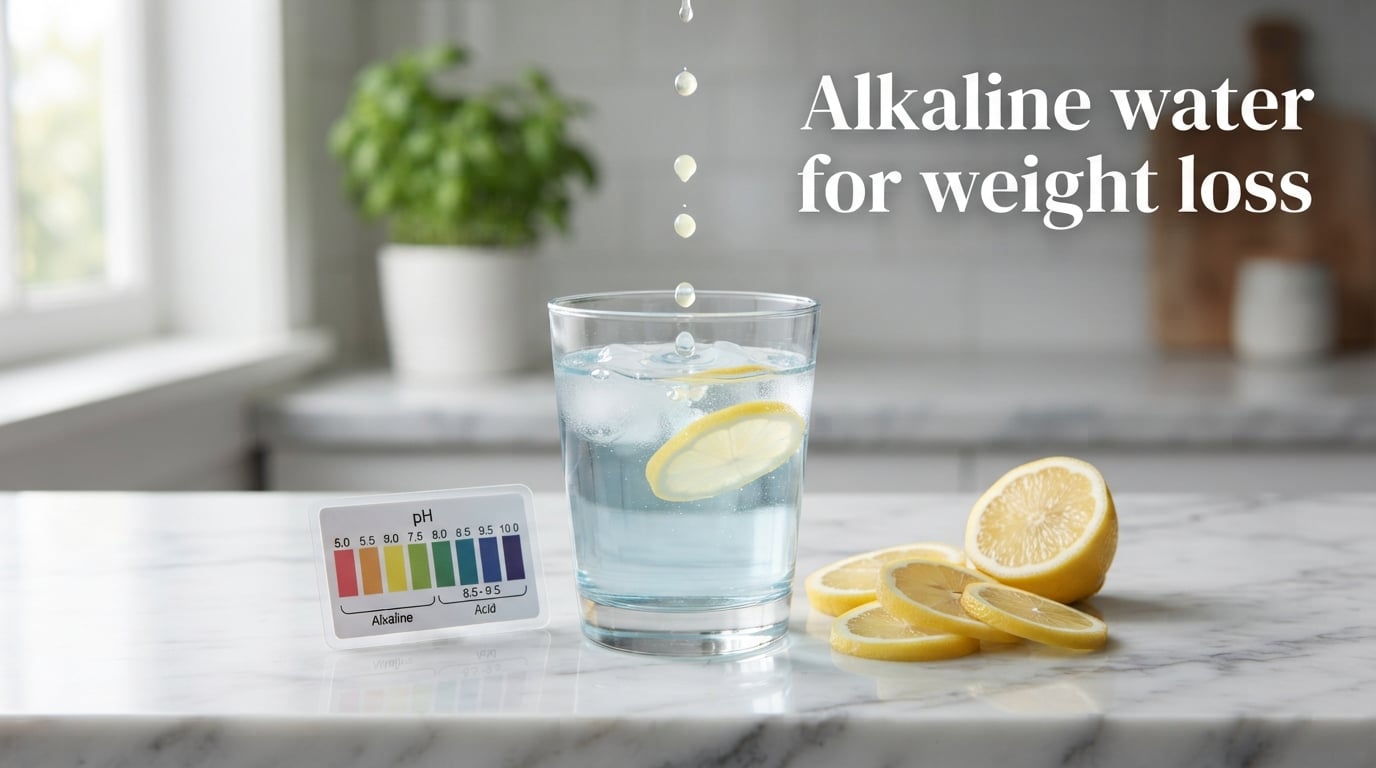
If you have scrolled through wellness TikTok or browsed the beverage aisle lately, you have probably heard the claim: alkaline water helps you lose weight. Some brands market it as a metabolism booster, while others frame it as a detox shortcut. In 2026, the global alkaline water market is worth over a billion dollars, and millions of people drink it daily hoping to drop pounds.
But does alkaline water actually help with weight loss? I have spent the past month researching peer-reviewed studies, reading forum threads on r/loseit and r/fasting, and reviewing guidance from dietitians. Our team at Mineral Waters put together this guide to give you a clear, evidence-based picture.
You will learn what alkaline water really is, how it might connect to weight management, and what the science says about its real effects.
Table of Contents
What Is Alkaline Water and How Does It Differ From Regular Water?
Alkaline water is drinking water with a higher pH level than plain tap water. Regular drinking water sits at a neutral pH of 7. Alkaline water typically ranges from pH 8 to pH 9, which is mildly alkaline rather than strongly basic.
The higher pH comes from dissolved alkaline minerals, mainly calcium, potassium, magnesium, and bicarbonate.
The pH scale runs from 0 to 14. Anything below 7 is acidic. Anything above 7 is alkaline. Your blood is tightly regulated at about 7.4, so drinking slightly alkaline water does not meaningfully change your body’s overall pH.
Natural vs Ionized Alkaline Water
There are two main types of alkaline water. Natural alkaline water comes from springs and wells where water has flowed through mineral-rich rocks for years. Some bottled mineral waters, including high-bicarbonate mineral waters like Contrex, sit around pH 7.4 with bicarbonate levels above 400 mg/L.
Ionized alkaline water is made at home or in stores using a machine called an ionizer that runs tap water through electrolysis to separate acidic and alkaline streams.
Natural versions contain minerals the earth already provides. Ionized versions may have similar mineral content but are produced on demand and often cost more. Both end up at a similar pH, but critics note that ionized water may gradually lose its alkaline properties within a few hours of being exposed to air.
How Alkaline Water Is Alleged to Help With Weight Loss
Proponents claim alkaline water helps weight loss through three main mechanisms. None of these are strong claims by themselves, but combined they could explain a small indirect benefit.
Mechanism 1: Replacing Sugary Drinks
This is the strongest and most overlooked benefit. Alkaline water has 0 calories and 0 carbohydrates. If you swap a daily soda, juice, or sweetened iced coffee for alkaline water, you can cut 150 to 300 calories per day without effort.
Over a month, that adds up to a real, measurable deficit.
Mechanism 2: Better Hydration and Appetite Control
Some small studies suggest alkaline water may hydrate cells slightly better than plain water, possibly because of its mineral content. When people are properly hydrated, they often confuse thirst for hunger.
Drinking water before meals can reduce calorie intake. Alkaline water could fill the same role as regular water in this habit, though there is no proof it does so better than plain water.
Mechanism 3: A Possible Metabolism Boost
This is the most debated claim. A 2013 study on mice published in PubMed found that alkaline reduced water led to lower body weight gain and less fat accumulation in high-fat-fed mice. The proposed mechanism involved altered fat metabolism and antioxidant effects.
The catch is that the study was done on mice, not humans, and mouse metabolism does not always translate to people.
The bottom line on the weight loss connection is this. Alkaline water is not a fat-burning miracle, and any direct fat loss effect is unproven in humans. The real weight loss value, if any, comes from replacing higher-calorie beverages and supporting hydration habits.
What Does the Science Actually Say About Alkaline Water?
Let me break down the actual research so you can make an informed call. The evidence is mixed, and I think you deserve to see both sides.
The Mouse Study Everyone Cites
The most-cited study is the 2013 PubMed paper on alkaline reduced water and high-fat-fed mice. Researchers found that mice drinking alkaline water gained less weight, had lower epididymal fat, and showed signs of improved liver health compared to mice drinking regular water.
The study suggested alkaline water may influence how the body processes fat.
There are important limitations. It was a mouse study with a small sample, and no human trial has replicated these findings. So while the study is interesting, it cannot be used as proof that alkaline water causes weight loss in people.
Human Studies and Hydration Research
A few small human studies have looked at hydration markers after drinking alkaline water. Some found slightly better fluid retention in blood markers, but the sample sizes were tiny and the differences were modest. None of these studies measured long-term weight change.
Reviewers on Healthline have noted that the hydration claims are often overstated in marketing materials.
What Doctors and Dietitians Say
The medical community’s stance is cautious but not dismissive. Most registered dietitians treat alkaline water as a safe alternative to plain water that may help some people drink more fluids overall.
Doctors point out that our kidneys and lungs regulate blood pH very tightly, so drinking alkaline water does not meaningfully change body chemistry. The American Council on Science and Health has noted that most claims about alkaline water go beyond the evidence.
Forum users on r/loseit echo this. Some report that alkaline water helped them quit sugary drinks and lose a few pounds indirectly. Others say they noticed no difference at all and felt scammed by the price.
Both experiences are valid, and both point to the same conclusion: alkaline water is a tool, not a solution.
How to Make Alkaline Water at Home for Weight Loss
If you want to try alkaline water without spending a fortune, here are practical methods you can use today. Each one costs less than buying bottled alkaline water long term.
Method 1: Add Baking Soda
Add 1/8 teaspoon of baking soda to 8 ounces of water. Stir well. This raises the pH to about 8 quickly, making it the cheapest method.
The downside is the slight salty taste, and people on sodium-restricted diets should avoid this approach.
Method 2: Add Lemon
Counterintuitively, lemon juice is acidic but has an alkalizing effect once metabolized. Slice half a lemon and add it to a liter of water. Let it sit for a few minutes.
The pH of the water stays slightly acidic, but the mineral content and metabolic effect are alkalizing. Many people prefer this method because of the taste.
Method 3: Buy an Ionizer Machine
Countertop ionizers cost anywhere from a few hundred to over a thousand dollars. They run tap water through electrolysis to produce alkaline water on demand. Some users swear by them, while others say the cost is not worth the marginal difference from regular filtered water.
Method 4: Use a pH-Adjusting Pitcher
Alkaline water pitchers use mineral cartridges to raise pH as water filters through. They are cheaper than ionizers and produce consistent results. Replacement cartridges typically run on a regular schedule depending on usage.
When to Drink It for Best Results
Drink a glass of alkaline water 30 minutes before each meal. This can help with portion control and hydration.
Some people also drink a glass first thing in the morning. Avoid drinking large amounts during meals, as it may dilute stomach acid needed for digestion.
Side Effects and Who Should Avoid Alkaline Water
Alkaline water is generally safe for most healthy adults. But it is not right for everyone, and there are real disadvantages worth knowing before you start drinking it daily.
Common Disadvantages
The biggest drawback is cost. Bottled alkaline water can cost several times the price of tap water, and ionizers require an upfront investment. For most people, the health benefits do not justify that cost over plain filtered water.
Taste is another issue. Some people find alkaline water flat or chalky because of the mineral content. If you do not enjoy the taste, you will not stick with it, and consistency matters more than the pH level.
There is also the risk of overdoing it. Drinking water with pH above 9 daily may reduce stomach acidity over time, which could impair digestion and nutrient absorption.
Who Should Avoid Alkaline Water
People with kidney disease should not drink alkaline water without medical supervision. Healthy kidneys regulate pH well, but impaired kidneys may struggle to handle the extra minerals.
The National Kidney Foundation has noted that patients with chronic kidney disease should be cautious about any water with added minerals.
People taking certain medications, including some heart and diabetes drugs, should also check with their doctor. Alkaline water can affect how some medications are absorbed.
Anyone with a history of hyperkalemia, or high potassium levels, should avoid ionized alkaline water because some machines add potassium during the ionization process.
Frequently Asked Questions About Alkaline Water for Weight Loss
Can alkaline water reduce belly fat?
Alkaline water has not been proven to directly reduce belly fat in humans. Any belly fat loss is more likely an indirect result of drinking water instead of sugary drinks, staying better hydrated, and maintaining a calorie deficit. No clinical trial has shown targeted belly fat loss from alkaline water alone.
What is the disadvantage of drinking alkaline water?
The main disadvantages are cost, taste, and possible digestive effects at high pH levels above 9. Bottled alkaline water costs several times more than tap water. Ionized versions may contain added potassium, which can be risky for people with kidney problems. Drinking highly alkaline water daily may also reduce stomach acidity and impair digestion over time.
How do you make alkaline water for weight loss?
Add 1/8 teaspoon of baking soda to 8 ounces of water for a quick alkaline boost. You can also add lemon slices to a liter of water for a more palatable option, or use a pH-adjusting pitcher with mineral cartridges. For best results, drink a glass 30 minutes before meals to support portion control and hydration.
What happens if you drink alkaline water every day?
Drinking alkaline water daily is generally safe for healthy adults and may slightly improve hydration markers. However, daily consumption of water with pH above 9 may lower stomach acidity and affect digestion. People with kidney disease, hyperkalemia, or those on certain medications should consult a doctor before drinking alkaline water daily.
The Bottom Line on Alkaline Water for Weight Loss
Alkaline water is not a magic weight loss drink. The direct fat-burning claims lack strong human evidence.
The strongest benefits are indirect: replacing sugary drinks, supporting hydration, and helping you build a calorie deficit. If alkaline water helps you drink more water and cut back on sweetened beverages, it can fit into a weight loss plan.
For most people, plain filtered water is fine. Focus on the basics first: whole foods, consistent movement, and enough sleep. The water you drink is just one small piece of a much bigger weight loss picture.