
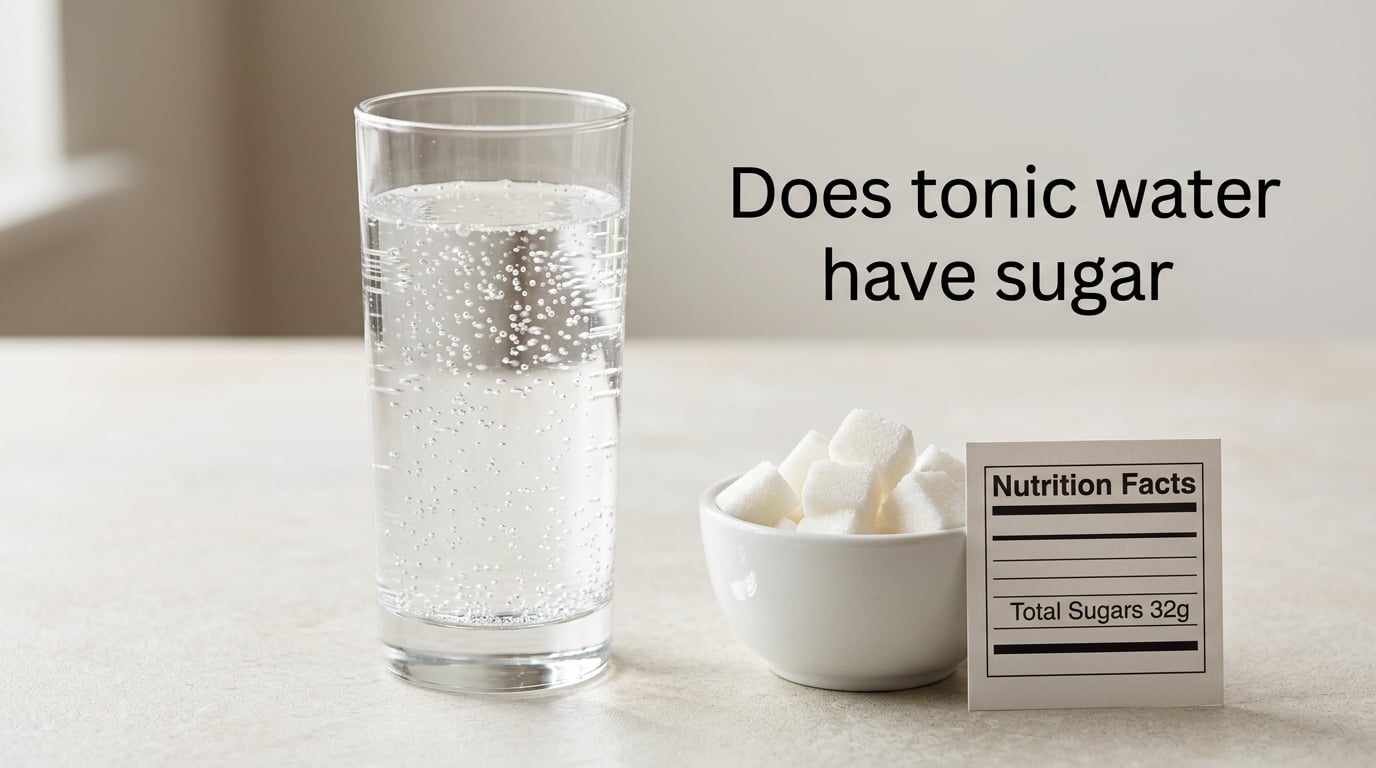
Yes, tonic water contains sugar. A regular 12oz serving of tonic water has between 20 and 32 grams of sugar, which puts it in the same range as many sodas. I checked nutrition labels from Schweppes, Canada Dry, and Fever-Tree, and the numbers were eye-opening.
If you’re watching your sugar intake, managing diabetes, or following a low-carb diet, this matters. In this guide, I’ll break down exactly how much sugar sits in your favorite mixer, why manufacturers add it in the first place, and which diet and light versions let you skip the sweetness without giving up your gin and tonic.
Table of Contents
How Much Sugar Is in Tonic Water?
Regular tonic water contains roughly 7 to 9 grams of sugar per 100ml. That translates to 20 to 32 grams in a standard 12oz (355ml) can or bottle. For comparison, a can of Coca-Cola has about 39 grams of sugar, so tonic water isn’t quite as sweet as cola, but it’s closer than most people expect.
Here’s how popular brands stack up based on their published nutrition data:
- Schweppes Tonic Water (12oz): around 32g sugar, 120 calories
- Canada Dry Tonic Water (12oz): around 32g sugar, 120 calories
- Fever-Tree Premium Tonic (6.7oz bottle): around 19g sugar, 70 calories
- Q Mixers Premium Tonic (6.7oz bottle): around 14g sugar, 50 calories
- Diet Schweppes Tonic (12oz): 0g sugar, 0 calories
- Fever-Tree Light Tonic (6.7oz): around 4g sugar, 15 calories
- Q Mixers Light Tonic (6.7oz): 0g sugar, 0 calories
Premium brands like Fever-Tree and Q Mixers tend to use less sugar because they also use less quinine, so the balance shifts. Budget brands lean on high-fructose corn syrup to mask a more bitter profile.
Why Does Tonic Water Contain Sugar?
Sugar isn’t in tonic water by accident. It’s there to do a specific job: balance quinine.
Quinine is the bitter compound extracted from cinchona tree bark that defines tonic water. In the United States, the FDA limits quinine content to 83 parts per million. At that level, the bitterness is sharp and medicinal on its own. Without sugar, most people find straight quinine water unpleasant.
Manufacturers add sugar (or high-fructose corn syrup in mass-market brands) for three reasons. First, sugar softens the bitter bite. Second, it adds body and mouthfeel that makes the drink feel substantial. Third, the sweetness interacts with botanicals and citrus notes to round out the flavor.
Take the sugar away and you end up with something closer to a bitter herbal remedy than a refreshing mixer. That’s the trade-off the original tonic makers figured out in the 1800s, and it’s still the formula today.
Tonic Water vs. Club Soda vs. Seltzer
This is where tonic water stands apart from other bubbly drinks. Club soda, seltzer, and plain sparkling mineral water all contain zero sugar. Tonic is the outlier.
Here’s a quick comparison:
- Tonic water: carbonated water, quinine, sugar, often citric acid. Around 20-32g sugar per 12oz.
- Club soda: carbonated water with added minerals (sodium bicarbonate, potassium sulfate). Zero sugar, zero calories.
- Seltzer: plain carbonated water. Zero sugar, zero calories, no added minerals.
- Sparkling mineral water: naturally carbonated water from a mineral source. Zero sugar, varies in mineral content.
If you’re choosing between these for a cocktail mixer and sugar is a concern, club soda or seltzer can sub in for tonic in most drinks. The flavor will be different, sharper and more neutral, but you’ll skip the 30 grams of sugar. For a classic gin and tonic, though, nothing else quite replicates the bittersweet character.
Diet and Sugar-Free Tonic Alternatives
You don’t have to give up tonic entirely if you want to avoid sugar. Several options deliver the bitter quinine bite without the sweetness.
Diet tonic water uses artificial sweeteners like aspartame or sucralose to replace sugar. Diet Schweppes, Diet Canada Dry, and most store-brand “diet tonic” options fall into this group. They taste noticeably different from regular versions, often with a sharper, slightly chemical edge, but they have zero sugar and zero calories.
Light tonic water is the newer middle ground. Brands like Fever-Tree Light and Q Mixers Light use a small amount of sugar plus stevia or other natural sweeteners to keep the flavor profile closer to traditional tonic while slashing the sugar content. Q Mixers Light has zero grams of sugar in some versions, while Fever-Tree Light keeps around 4 grams per bottle.
For keto and low-carb drinkers, look for tonics sweetened only with stevia, monk fruit, or erythritol. These won’t spike blood sugar. Always double-check the label, because some “light” tonics still contain cane sugar as the primary sweetener.
Health Considerations: Blood Sugar and Quinine
For people with diabetes or insulin resistance, regular tonic water can cause a meaningful blood sugar spike. The glycemic load of 32 grams of sugar hits quickly, especially on an empty stomach. If you enjoy gin and tonics regularly, switching to a diet or light version is one of the easiest ways to keep your mixer from undoing your efforts.
Quinine also has a few health considerations worth knowing. In large doses, quinine can cause side effects like tinnitus (ringing in the ears), headaches, and nausea. Tonic water only contains trace amounts, well below therapeutic levels, but people taking certain medications should be cautious. Quinine interacts with blood thinners like warfarin, some heart medications, and antibiotics. If you’re on prescription meds, check with your doctor before drinking tonic regularly.
Pregnant women and people with glucose-6-phosphate dehydrogenase (G6PD) deficiency should also limit tonic intake due to the quinine content.
FAQ
Is tonic water high in sugar?
Yes. A regular 12oz serving of tonic water has 20-32 grams of sugar, which is similar to many sodas and higher than most people expect from a clear mixer.
Which is healthier, tonic water or club soda?
Club soda is the healthier choice if you’re watching sugar. Club soda contains zero sugar and zero calories, while regular tonic has 20-32g of sugar per 12oz serving.
Does Schweppes tonic water have sugar?
Yes. Regular Schweppes Tonic Water has about 32 grams of sugar per 12oz can. Diet Schweppes Tonic Water has zero sugar.
What tonic water has no sugar?
Diet Schweppes, Diet Canada Dry, Q Mixers Light, and most versions of Fever-Tree Light contain zero or near-zero sugar. Check labels because some light tonics still use cane sugar.
Does tonic water spike your blood sugar?
Regular tonic water can spike blood sugar because of its high sugar content (20-32g per 12oz). People with diabetes should choose diet or zero-sugar tonic versions to avoid glucose spikes.
Bottom Line
Tonic water sugar content is higher than most people realize, sitting at 20-32 grams per 12oz in regular versions. If that fits your diet, enjoy it. If not, diet and light tonics give you the same bitter citrus character with zero or near-zero sugar.