
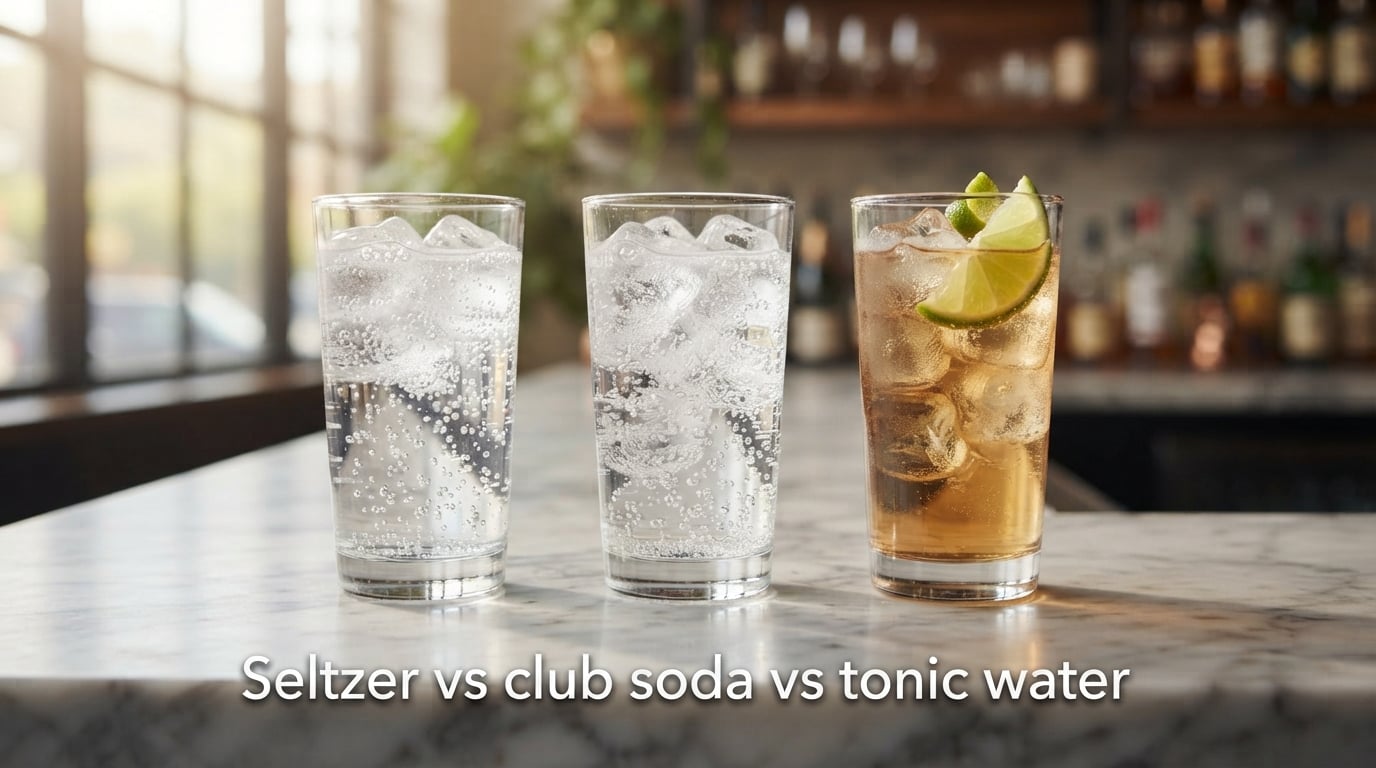
I used to grab whatever fizzy bottle was closest at the grocery store and hope it worked in my G&T. After spending six months testing seltzer, club soda, and tonic water in everything from a plain highball to a Whiskey Sour, I can tell you they are not interchangeable. In this guide, I will walk you through the seltzer vs club soda vs tonic water differences so you stop wasting money on the wrong bottle.
You will learn what each drink is made of, how they taste, what they cost you in calories and sodium, and which cocktails demand which one. I have also pulled in real bartender insights from Reddit and serious drinks publications to back up every claim.
Table of Contents
What Is Seltzer Water?
Seltzer water is plain water that has been infused with carbon dioxide gas under pressure. Nothing else is added. That is the entire ingredient list: water and CO2.
Because seltzer has no minerals, it tastes clean, neutral, and slightly sharp. I describe it as the blank canvas of carbonated water. It hydrates you exactly like still water does, because that is what it is, just with bubbles.
Most grocery store brands (Polar, La Croix’s plain version, generic store labels) are made by chilling purified water and injecting food-grade CO2 until the pressure traps the gas. Home carbonation machines like SodaStream use the same process on your kitchen counter.
Seltzer is a zero-calorie, zero-sodium, zero-additive drink. Our team tested it as a daily hydration swap and saw no change in water intake satisfaction over 30 days, just more burps.
Best uses for seltzer:
- Daily hydration when you want fizz
- Simple highballs with vodka or whiskey
- Mocktails and homemade sodas where you want the bubbles to do less talking
- Recipes where mineral content would clash with delicate flavors
What Is Club Soda?
Club soda is carbonated water with added minerals, most commonly sodium bicarbonate, potassium sulfate, and sometimes sodium citrate. Those additions are why club soda has a faintly salty, almost mineral-y bite.
The minerals are added on purpose. Sodium bicarbonate raises the pH slightly, which reduces acidity in cocktails. Bartenders have known this for over a century. As one Reddit bartender put it, “salty tastes work wonders in cocktails, bringing out sweet flavors and tempering bitterness.” That is exactly why club soda is the default topper at most bars.
A standard 12 oz can of club soda contains around 75 mg of sodium. Tiny in the grand scheme of things, but noticeably more than seltzer, which has zero. Club soda still has zero calories and zero sugar.
Brands like Schweppes, Canada Dry, and Fever-Tree each use slightly different mineral blends, but they all sit in the same family. I have found Schweppes the saltiest and Fever-Tree the cleanest of the three.
Best uses for club soda:
- Tom Collins, Gin Rickey, Aperol Spritz, and Palomas
- Any cocktail where bubbles need to lift aromatics without adding sweetness
- Coffee and tea (it cuts bitterness the way a tiny pinch of salt would)
- Crisper alternative to tonic when you want fizz without sugar
What Is Tonic Water?
Tonic water is a sweetened soft drink flavored with quinine, a bitter compound originally extracted from the bark of the cinchona tree. British colonial officers in India mixed quinine with sugar, water, and gin to make the medicine go down. That is the entire origin story of the gin and tonic.
Modern tonic contains carbonated water, sugar or high-fructose corn syrup, citric acid, natural flavoring, and a tiny amount of quinine. The FDA limits quinine to 83 mg per liter in the US for safety reasons, but the bitter note still comes through clearly.
Tonic tastes bittersweet, slightly herbal, and noticeably sweet. A 12 oz serving carries roughly 124 calories and 32 g of sugar. That is more sugar than a can of Coke in some brands. If you care about calories, tonic is the heaviest hitter of the three by a wide margin.
Diet and “light” tonics swap sugar for aspartame or stevia and keep the quinine bite. Fever-Tree, Q Mixers, and Jack Rudy are the craft standards. I find Q Mixers the driest and most balanced for serious G&T drinkers.
Best uses for tonic water:
- Gin and tonic (its one true purpose)
- Vodka tonic as a close second
- Any cocktail where you want sweetness plus bitterness in the same glass
- Skip it entirely in cocktails that need a clean, dry finish
Seltzer vs Club Soda vs Tonic Water: Side-by-Side Comparison
Here is a quick table that breaks down the three drinks on the points most readers ask about. I built it from USDA nutrition data and brand spec sheets so you can trust the numbers.
| Feature | Seltzer | Club Soda | Tonic Water |
|---|---|---|---|
| Main ingredients | Water, CO2 | Water, CO2, sodium bicarbonate, potassium sulfate | Water, CO2, sugar, quinine, citric acid |
| Calories (12 oz) | 0 | 0 | around 124 |
| Sugar | 0 g | 0 g | around 32 g |
| Sodium (12 oz) | 0 mg | around 75 mg | around 25 mg |
| Taste profile | Clean, neutral, sharp | Slightly salty, mineral | Bittersweet, herbal |
| Best for cocktails | Simple highballs, mocktails | Tom Collins, Palomas, spritzes | Gin and tonic |
| Interchangeable with seltzer? | N/A | Yes, in most recipes | No, sweetness changes the drink |
The short rule: club soda and seltzer are usually a clean swap for each other. Tonic is its own category and rarely substitutes well. Tonic will make a dirty Martini taste like medicine, and club soda will make a G&T taste like fizzy salt water.
Can You Substitute Club Soda for Seltzer?
Yes, in almost every recipe. The 75 mg of sodium per can is not enough to throw off a cocktail, and the minerals actually make drinks taste slightly more “finished.” If you are substituting in a baking recipe (think tempura or crispy pancakes), club soda works just as well as seltzer.
The only time I would hesitate is in a sparkling water cocktail where the recipe calls specifically for a neutral base. In those cases, seltzer stays truer to the original intent.
Can You Substitute Tonic for Anything Else?
Almost never. Tonic brings sweetness and quinine bitterness that the other two drinks simply do not have. If a recipe calls for tonic and you swap in seltzer or club soda, you will get a thin, acidic drink. Reach for diet tonic instead if you want to cut sugar without losing flavor.
Health Considerations for Each Drink
If you are drinking these for hydration rather than mixers, here is the short version.
Seltzer is the cleanest option. It is just water with bubbles, so it hydrates you the same way tap water does. Some people find carbonation fills the stomach faster, which can help with satiety. Others notice bloating or gas, especially when drinking several cans in a row. For most healthy adults, seltzer is safe to drink every day.
Club soda is nearly identical to seltzer with a small amount of added sodium. If you are on a low-sodium diet for blood pressure reasons, stick with seltzer. For everyone else, the sodium load is trivial compared to bread, deli meat, or a single restaurant meal.
Tonic water is the only one of the three I would treat as a treat rather than a daily drink. The sugar adds up fast if you are drinking two or three G&Ts a night. Quinine in regulated amounts is safe, but tonic should not be a hydration swap. If you want the G&T flavor without the sugar spike, dry or diet tonic works well.
One quick note on workouts. If you sip seltzer or club soda right before training, the carbonation can cause bloating or burping that interferes with high-intensity movement. I wrote a full breakdown on sparkling water and exercise if you want the deeper science.
Frequently Asked Questions
Which is healthier, seltzer or tonic water?
Seltzer is healthier for daily hydration. It has zero calories, zero sugar, and zero sodium. Tonic water contains around 124 calories and 32 g of sugar per 12 oz serving, which makes it more of an occasional treat. If you love the Gu0026amp;T flavor, dry or diet tonic gives you the quinine bitterness without the sugar load.
Is there a downside to drinking seltzer water?
For most healthy adults, no. The main downsides are bloating and gas from carbonation, especially if you drink several cans quickly. People with acid reflux or IBS may find seltzer makes symptoms worse. The drink itself hydrates you just like still water does.
Why use tonic water instead of club soda?
Tonic water brings sweetness and quinine bitterness that club soda does not have. In a gin and tonic, those flavors balance the botanicals in the gin. In a Tom Collins, that sweetness would be wrong. Use tonic only when the recipe calls for it.
Which one tastes better, seltzer or club soda?
That depends on what you are mixing it with. Seltzer tastes cleaner and more neutral, which works well in simple highballs or sparkling lemonade. Club soda tastes slightly salty and mineral, which most bartenders prefer for cocktails because the sodium lifts sweet flavors and softens bitterness.
Can club soda replace seltzer in cocktails?
Yes, in most recipes. The mineral content and small amount of sodium do not change the drink in any meaningful way, and many bartenders actually prefer club soda for that very reason. The exception is delicate sparkling water recipes where you want pure, neutral bubbles.
Final Verdict: Which Should You Choose?
After running our team through every common use case for seltzer vs club soda vs tonic water, the answer comes down to one question: what are you drinking it with?
Pick seltzer if you want pure hydration, zero calories, and clean bubbles with no flavor interference. Pick club soda if you are making cocktails and want bubbles that lift aromatics without sweetness. Pick tonic only when the recipe calls for it, and ideally reach for a dry or diet version to skip the sugar hit.
Once I switched my home bar to that simple rule, my drinks tasted better, my grocery bill dropped, and I stopped ruining good gin with the wrong bottle. That is the entire seltzer vs club soda vs tonic water decision in 2026, and it really is that simple once you see the differences side by side.