
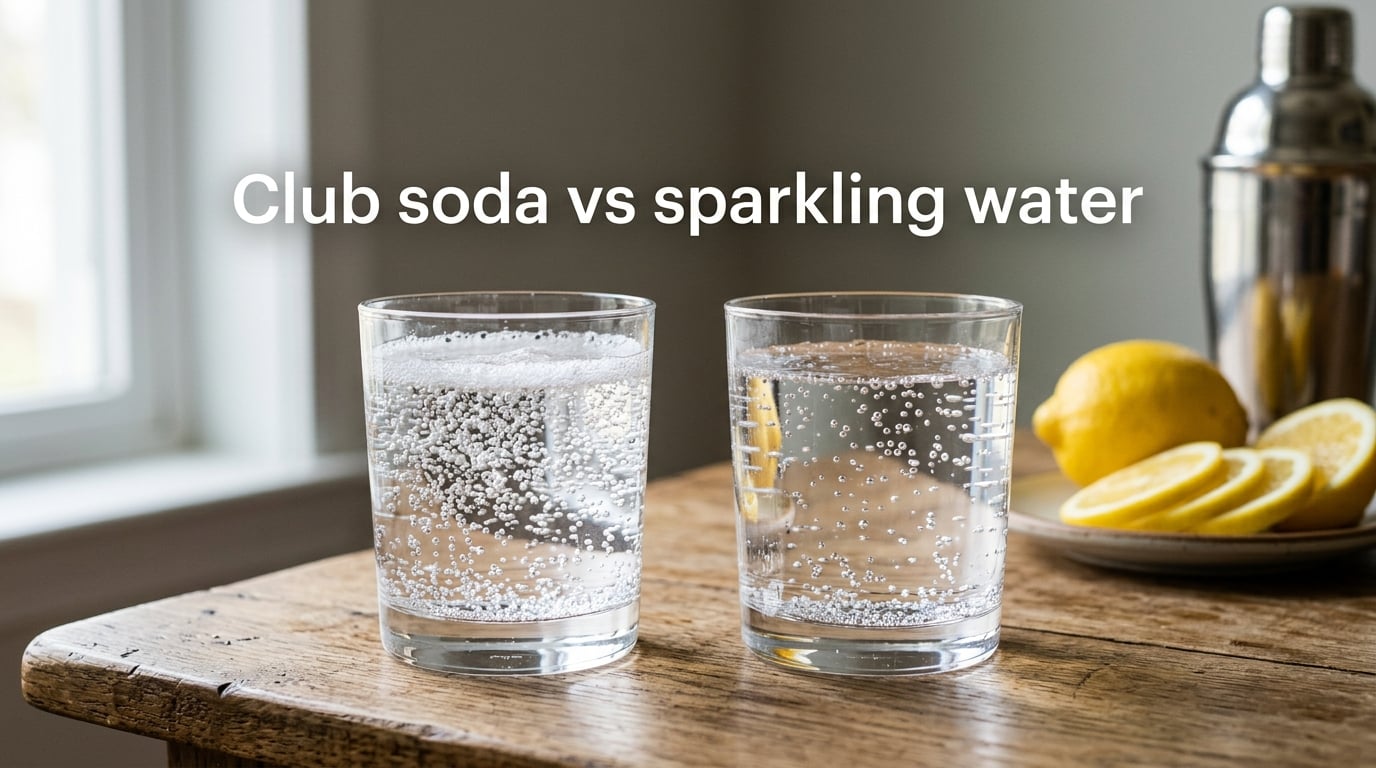
When I first started paying attention to what was actually in my glass, I realized I’d been using “club soda” and “sparkling water” as synonyms for years. They’re not. The core difference is simple: club soda is plain tap or filtered water that’s been artificially carbonated and pumped with added mineral salts (mainly sodium bicarbonate and potassium sulfate), while sparkling water gets its fizz from a natural underground spring or well, where the carbonation occurs as the water passes through volcanic rock and picks up minerals along the way.
This single distinction ripples through everything from taste to sodium content to how each one behaves in a cocktail. Once you understand the basics, choosing between the two becomes second nature. You’ll know exactly why a bartender reaches for club soda in a Tom Collins and why your friend orders sparkling mineral water to sip alongside dinner.
In this guide to club soda vs sparkling water, I’ll walk you through exactly how the two differ, what each tastes like, which one bartenders actually prefer, and how to pick the right option for your kitchen in 2026. Whether you’re stocking a home bar, watching your sodium intake, or just curious about what’s in that bottle, you’ll have a clear answer by the end.
Table of Contents
What Is Club Soda?
Club soda is water that has been filtered, then infused with pressurized carbon dioxide to create bubbles, and finally fortified with mineral salts to enhance the flavor. The added minerals are not optional. They are the whole reason club soda tastes distinct from plain seltzer and is the feature that defines the category.
Most brands add a blend of sodium bicarbonate (baking soda), potassium sulfate, and sometimes sodium chloride (table salt). A standard 12-ounce can of club soda contains roughly 75 to 100 milligrams of sodium, depending on the brand. That number sounds small, but it’s about five to ten times the sodium content of plain sparkling water.
The “club” in club soda dates back to the late 1800s, when bottlers sold carbonated water to social clubs and soda fountains as a refreshing, mild alternative to alcoholic drinks. The name stuck, and today club soda is sold as a standalone mixer and as a shelf-stable ingredient for home bartenders. The flavor is crisp, slightly salty, and finishes clean with a sharper bubble than most naturally carbonated waters.
What’s actually added to club soda
Manufacturers typically add three mineral compounds to club soda: sodium bicarbonate for a clean alkaline bite, potassium sulfate for a slightly bitter mineral note, and sometimes a small amount of disodium phosphate or sodium citrate to keep the flavor balanced. These additions are listed on every nutrition label and are why club soda has a noticeably different taste from filtered seltzer or naturally sourced sparkling water.
The exact mineral blend varies by brand, which is why Schweppes club soda tastes slightly different from Canada Dry or store-brand equivalents. Some premium brands lean heavier on the sodium for a sharper finish, while others aim for a softer, more neutral profile. If you’re sensitive to the saltiness, comparing a few labels is worth the effort.
What Is Sparkling Water?
Sparkling water is water that contains dissolved carbon dioxide gas, which produces bubbles. There are two main categories: naturally carbonated sparkling water, which comes from underground springs or wells where the fizz occurs naturally from geological pressure, and artificially carbonated sparkling water, which is plain water infused with CO2 at a bottling plant.
True naturally sparkling water (sometimes called sparkling mineral water) is sourced from specific springs where groundwater has absorbed carbon dioxide from volcanic rock. Famous examples include San Pellegrino from Italy, Perrier from France, and Topo Chico from Mexico. The mineral content in these waters comes entirely from the rock formations the water passes through, so each source has its own unique taste fingerprint.
Because there are no added mineral salts, sparkling water has a more neutral, often described as “cleaner,” flavor than club soda. Sodium content is typically very low, often under 10 milligrams per 12 ounces. The carbonation pressure also tends to vary by source: mineral waters generally have a softer, longer-lasting fizz than artificially carbonated options because the gas is dissolved at a slower, natural rate.
Sparkling water vs seltzer vs mineral water
You’ll often see these three terms used interchangeably, but they are technically different. Seltzer is plain filtered water with no added minerals, just CO2. Mineral water contains dissolved minerals from its source but may or may not be carbonated. Sparkling water is the umbrella term for any water with carbonation, including both natural sources and added CO2. Club soda sits in its own category because of the intentional mineral additions.
If you’ve ever grabbed a can of LaCroix and a bottle of Perrier and wondered why one is called sparkling water and the other sparkling mineral water, this is why. LaCroix is seltzer with flavoring, while Perrier is naturally carbonated mineral water drawn from a specific spring in southern France.
Key Differences Between Club Soda and Sparkling Water
The differences between club soda and sparkling water come down to four things: how the bubbles get into the water, what minerals are in it, how much sodium it contains, and how it tastes. Let me lay them out side by side so you can see the full picture at a glance.
| Feature | Club Soda | Sparkling Water |
|---|---|---|
| Carbonation source | Artificially injected CO2 | Natural spring or added CO2 |
| Minerals added | Yes (sodium bicarbonate, potassium sulfate) | No (only naturally occurring) |
| Sodium content (12 oz) | 75 to 100 mg | 0 to 10 mg |
| Taste profile | Slightly salty, sharp bubbles | Clean, mineral-forward, lighter fizz |
| Best for | Cocktails, mocktails, mixing | Drinking plain, pairing with meals |
| Price (average) | Budget friendly | Varies (mineral waters cost more) |
Carbonation method
Club soda is made by forcing CO2 into filtered water under high pressure inside a sealed tank. The carbonation is uniform and aggressive, which is why you get tight, sharp bubbles that pop quickly on your tongue. Sparkling water from a natural source has carbonation that developed over years as the water moved through limestone or volcanic rock, so the bubbles tend to be smaller and longer lasting.
This difference in how the carbonation is delivered is one of the most overlooked factors. It explains why club soda goes flat faster once you open the bottle, while a bottle of San Pellegrino can hold its fizz for hours in the fridge. The naturally dissolved CO2 is more stable, while the injected CO2 in club soda escapes more readily once the pressure seal breaks.
Mineral content
This is where the two drinks really diverge. Club soda has measurable added sodium, potassium, and sometimes other salts. Sparkling mineral water has whatever minerals it picked up naturally from its source, which might include calcium, magnesium, and trace sulfates, but no added sodium. If you check the nutrition label on a bottle of San Pellegrino, you’ll see calcium and magnesium listed but no added sodium.
The Reddit community in r/cocktails has pointed out repeatedly that the sodium content is the single biggest practical differentiator for everyday drinkers. It’s also why someone with hypertension might be told to avoid daily club soda consumption even though both beverages look identical in a glass.
How Do Club Soda and Sparkling Water Taste Different?
Taste is where most people notice the difference first. Club soda has a faint saltiness that comes from the sodium bicarbonate, and the bubbles feel more aggressive because they’re injected at high pressure. Sparkling water tastes cleaner, with the mineral character coming from whatever natural source it came from. Italian sparkling waters tend to have a slightly mineral, almost slate-like flavor. French mineral waters often taste softer and more neutral.
When I line up two glasses side by side, the club soda always hits the front of my tongue first with a sharp bite, then settles. The sparkling water feels lighter, with the bubbles rising more gently and the finish feeling drier. Reddit users in the r/sparklingwater community describe club soda as “tasting like seltzer with a pinch of salt,” which I think captures it perfectly.
Carbonation pressure and mouthfeel
The pressure at which CO2 is dissolved affects how the bubbles feel. Club soda is typically carbonated at around 3.5 volumes of CO2, which creates a prickly, effervescent sensation. Many sparkling mineral waters sit closer to 2.5 to 3 volumes, which gives a smoother, creamier fizz. This is one of the reasons bartenders often prefer club soda for cocktails: the aggressive bubbles hold up better against strong flavors and ice dilution.
The lower carbonation of many sparkling mineral waters also means they go better with food. A glass of sparkling water alongside a meal doesn’t overpower subtle flavors the way a sharp, salty club soda might. Sommeliers sometimes recommend specific sparkling waters to pair with certain dishes for this reason, while club soda is almost never recommended as a dinner table beverage.
Health and Hydration Considerations
Both club soda and sparkling water hydrate you just as effectively as still water for most people. The carbon dioxide doesn’t change how your body absorbs the liquid. The main health consideration is sodium content, and this is where club soda loses some ground for anyone watching their salt intake.
If you’re on a low-sodium diet, have high blood pressure, or need to limit salt for medical reasons, sparkling water is the safer everyday choice. A can of club soda a day adds roughly 200 to 300 mg of sodium to your intake, which adds up over a week. Sparkling water typically contributes close to zero sodium.
Both options are calorie-free, sugar-free, and much better for your teeth than soda or sweetened seltzers. There’s also growing research suggesting carbonated water can help with digestion and feelings of fullness, though the evidence is still early. We cover one related question in detail in our guide on sparkling water and exercise hydration, which is worth a read if you exercise regularly.
Who should pick which
For athletes, pregnant women, and anyone with kidney concerns, the cleaner sodium profile of sparkling water is generally the safer call. For healthy adults with no sodium restrictions, club soda is perfectly fine in moderation. The carbonation itself has no meaningful downside for hydration, and both options beat sugary sodas or fruit juices by a wide margin.
Best Uses in Cocktails and Cooking
This is where the rubber meets the road. In professional bartending, club soda is the default mixer for highballs, spritzes, and any drink where you want the bubbles to last through ice dilution. The added minerals give the drink structure and prevent it from tasting flat. Think of a Tom Collins, a Mojito, or an Americano: these drinks were built around club soda’s flavor profile.
Sparkling water works just fine in cocktails when you want a lighter, cleaner profile. A mimosa, a spritz with prosecco, or any wine-forward drink often tastes better with sparkling water because the added minerals in club soda can clash with delicate wine flavors. Several bartenders I’ve spoken with noted that club soda can make some wines taste “sweeter and less acidic,” which is not always what you want in a wine cocktail.
In cooking, club soda is sometimes used in batters to create a lighter, crispier texture (think tempura or pancakes), where the sodium and minerals help the batter hold together. Sparkling water can substitute, but the result will be slightly less flavorful. For most savory applications, though, both work interchangeably and the difference is negligible.
Quick substitution guide
Use this rule of thumb: swap club soda for sparkling water when you want a lighter cocktail, when you’re mixing with wine or delicate spirits, or when you’re watching sodium. Stick with club soda when you need aggressive bubbles, are making classic cocktails, or want a sharper flavor profile. For cooking and baking, either works, but club soda gives a slightly better structure in batters.
Mocktails and zero-proof drinks
If you’re building alcohol-free cocktails, the choice matters more than you’d expect. Club soda’s saltiness can balance sweet ingredients like fruit syrups and citrus, while sparkling water keeps the drink tasting pure and clean. For a Shirley Temple or a virgin mojito, club soda tends to give a more complex, layered flavor. For a simple sparkling fruit mocktail, sparkling water lets the fruit shine.
Frequently Asked Questions
What is healthier, sparkling water or club soda?
For most healthy people, both are equally good choices since they are calorie-free and hydrating. Sparkling water is slightly healthier for anyone watching sodium intake, because it contains little to no added sodium, while club soda typically has 75 to 100 mg of sodium per 12-ounce serving from added mineral salts.
Why do people order club soda at bars?
People order club soda at bars because it is a non-alcoholic, zero-calorie mixer that pairs well with almost any spirit. Bartenders prefer it for classic cocktails like Tom Collins and Mojitos because the added minerals and aggressive carbonation hold up better against ice and strong flavors than plain sparkling water.
Does club soda still hydrate you?
Yes, club soda hydrates you just as effectively as still water for most people. The carbonation does not change how your body absorbs the fluid. The only caveat is that the added sodium makes it slightly less ideal for anyone on a strict low-sodium diet or before intense exercise.
Can you substitute sparkling water for club soda in cocktails?
You can substitute sparkling water for club soda in most cocktails, though the result will be slightly less sharp and slightly less structured. Sparkling water works especially well in wine-based drinks like mimosas or spritzes. For classics like a Tom Collins or highball with strong spirits, club soda gives a more authentic taste and longer-lasting fizz.
Final Verdict
So, club soda vs sparkling water: which should you pick? If you’re mixing a classic cocktail or want a sharper, more structured fizz, reach for club soda. If you’re drinking it straight, want a cleaner mineral taste, or need to limit sodium, sparkling water is the better everyday choice.
The two are not interchangeable in every situation, but they’re closer than most people think. Once you understand the mineral difference and the carbonation difference, the choice becomes obvious based on what’s in front of you. Both belong in a well-stocked kitchen in 2026, and now you know exactly when to use each one.