
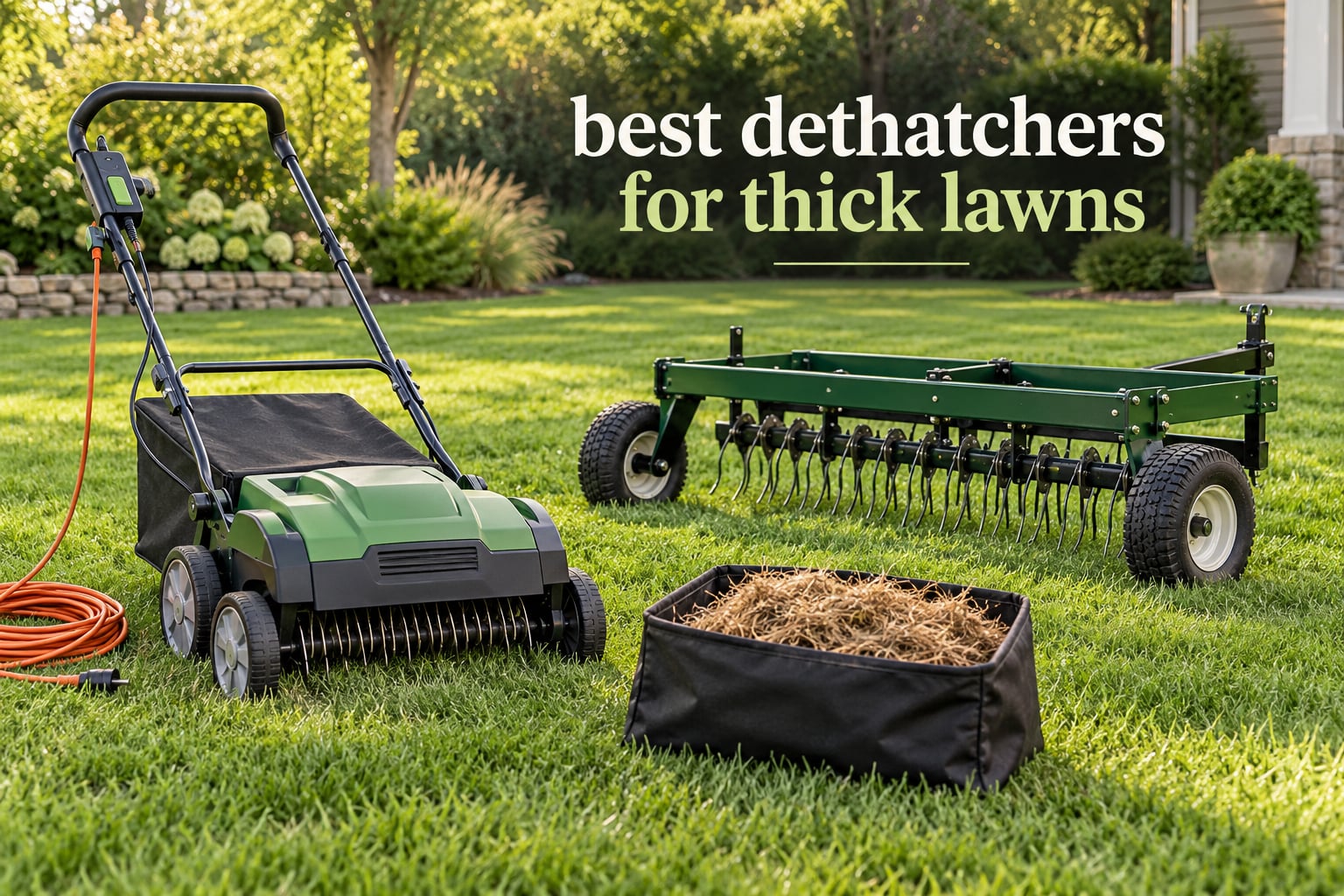
A dethatcher is the tool that answers the question most thick-lawn owners ask in late spring: why is my grass spongy, thin and dying no matter what I do to it? A dethatcher pulls the layer of dead grass, roots and organic debris — thatch — out from between the soil surface and the green blades above it, so water, air and nutrients can reach the root zone again. If you are searching for the best dethatchers for thick lawns, the deciding factor is not raw motor power. It is tine depth adjustment, working width and the tine material itself.
Before any of that matters, you need a number. Measure your thatch layer by cutting a small plug with a sharp spade and holding it up to the light. Under half an inch (1.3 cm) of thatch is healthy and actually helps your lawn. Between half an inch and three-quarters of an inch (1.3 to 1.9 cm) means dethatch. Past an inch (2.5 cm), a light consumer machine will not keep up and you need an aggressive power rake or a rented machine. The consensus advice in r/lawncare matches this: dethatch once the layer exceeds roughly one inch, and rely on overseeding alone below that.
Below one inch, most people are buying the wrong class of tool, then blaming the machine. We compared 12 dethatchers across the corded and tow-behind classes, weighed the specs against owner reports, and sorted them by the thatch depth and lawn size each one actually handles. If you want a broader look at the category first, our general lawn dethatcher roundup covers the entry-level options in more detail.
Table of Contents
The 3 Best Dethatchers for Thick Lawns (October 2026)
The three machines below cover the widest range of real lawn conditions: a proven all-rounder, the most aggressive corded option, and the lightest machine to push on a large property. Ratings and review counts are the published Amazon figures, not estimates.

Sun Joe AJ808E Corded Dethatcher
- 15-amp corded motor
- 2-in-1 dethatcher and scarifier heads
- 13.2-gallon collection bag
- adjustable depth

WEN DT1516 16-Inch 2-in-1
- 16-inch clearing path
- 24 steel tines plus 20-blade scarifier
- 5-position depth adjustment
- 3300 RPM 15-amp motor
Greenworks DHA103 14-Inch
- 13-amp motor at 3200 RPM
- 14-inch working width
- 3-position depth adjustment
- quick-release head swap
All 12 Dethatchers Compared Side by Side in 2026
Every machine in this guide, with its headline specifications. The Key Features column is the short version of what each tool is built to do.
| Product | Specifications | Action |
|---|---|---|
| Sun Joe AJ808E Corded Dethatcher and Scarifier |
|
Check Latest Price |
| WEN DT1516 16-Inch 2-in-1 Dethatcher |
|
Check Latest Price |
| Greenworks DHA103 14-Inch Corded |
|
Check Latest Price |
 Agri-Fab 48-Inch Tow-Behind Dethatcher Agri-Fab 48-Inch Tow-Behind Dethatcher |
|
Check Latest Price |
 TIECTOWN 16-Inch 15.5A Electric TIECTOWN 16-Inch 15.5A Electric |
|
Check Latest Price |
 Suchtale 48-Inch Tow-Behind Dethatcher Suchtale 48-Inch Tow-Behind Dethatcher |
|
Check Latest Price |
 WEN DT1315 15-Inch 2-in-1 Dethatcher WEN DT1315 15-Inch 2-in-1 Dethatcher |
|
Check Latest Price |
 MZK 15-Inch Electric Dethatcher MZK 15-Inch Electric Dethatcher |
|
Check Latest Price |
 BILT HARD 16-Inch Dethatcher Scarifier BILT HARD 16-Inch Dethatcher Scarifier |
|
Check Latest Price |
 SENIX 15-Inch 2-in-1 Dethatcher SENIX 15-Inch 2-in-1 Dethatcher |
|
Check Latest Price |
 BlumeTrec 48-Inch Tow-Behind Dethatcher BlumeTrec 48-Inch Tow-Behind Dethatcher |
|
Check Latest Price |
 Westinghouse 16-Inch 2-in-1 Dethatcher Westinghouse 16-Inch 2-in-1 Dethatcher |
|
Check Latest Price |
Measure Your Thatch Depth Before You Buy Anything
This is the step that decides everything else, and it takes five minutes. Push a sharp spade straight down into the lawn, cut a plug about four inches deep, and lift it out. Lay the plug on a flat surface and pull the sod layer apart slowly with your fingers. The brown, matted, sponge-like layer between the green top and the dark soil is your thatch, and you are measuring that layer alone, not the whole plug.
Here is how the numbers translate. Under half an inch (1.3 cm) is a healthy layer that insulates the crown through winter, so leave it alone. Half an inch to three-quarters of an inch (1.3 to 1.9 cm) is the action zone, where a walk-behind dethatcher with adjustable spring tines does the job in a single pass. Three-quarters of an inch to an inch (1.9 to 2.5 cm) needs a scarifier head or a heavier machine with more tine count. Past an inch (2.5 cm) and you are looking at power-rake territory, and a rental is usually the smarter move.
Measure in two or three spots, not one. Lawns are rarely uniform, and a low spot under a tree can hide twice the thatch of an open sunny area. If your readings disagree sharply, plan on working the deep areas with a machine and finishing the shallow areas with a thatching rake.
On the rent-or-buy question, the arguments in r/lawncare come down to how often you will realistically use the machine. A tow-behind or walk-behind dethatcher earns its place quickly if you are on a fall renovation schedule every year or overseeding annually. If this is a one-time rescue of a neglected lawn, renting a power rake by the day costs less than owning a machine you will store for eleven months.
One professional counterpoint is worth knowing before you buy the biggest trailer you can find. A lawn care company chief executive quoted on national television said tow-behind dethatchers pulled by lawn tractors do not do a good job compared with power dethatchers. Owners of front-mount commercial tine machines on Lawnsite make a related complaint, reporting their machine fluffs the lawn well but the tines are about half as thick as they should be. The honest read: tow-behind units are a coverage tool, not a penetration tool, unless you ballast them.
1. Sun Joe AJ808E Corded Dethatcher and Scarifier
Sun Joe Corded Dethatcher & Scarifier with 13.2-Gal Bag, AJ808E
15-amp corded motor
2-in-1 dethatcher and scarifier heads
13.2-gallon bag
32.4 pounds
Pros
- Largest owner review base in this group at over 19k reviews
- Removes heavy thatch in a single pass on neglected lawns
- Switches between dethatcher and scarifier rollers without tools
- Folds for storage and needs only a Phillips screwdriver to assemble
Cons
- Collection bag fills within seconds and spills; most owners dethatch bagless and collect with a mower
- Corded design means dragging an extension cord across the lawn
- Bag attachment frame is awkward to fit and remove
The Sun Joe AJ808E is the machine most thick-lawn owners end up on, and the reason is the review volume. At more than 19,000 reviews it carries by far the largest proven track record here, and the owner reports cluster around one theme: more debris comes up in one pass than anyone expected from a machine this size. The 15-amp motor and the switchable dethatcher and scarifier rollers give you a light pass for spring cleanup and a deeper pass for a mat that has been building for years.
One r/lawncare owner reported pulling roughly 18 bags of 30 gallons each from a single pass on a Zone 7b lawn with this class of machine. That is the volume figure most people need to hear before they buy, because debris planning is the step that gets skipped and then regretted.
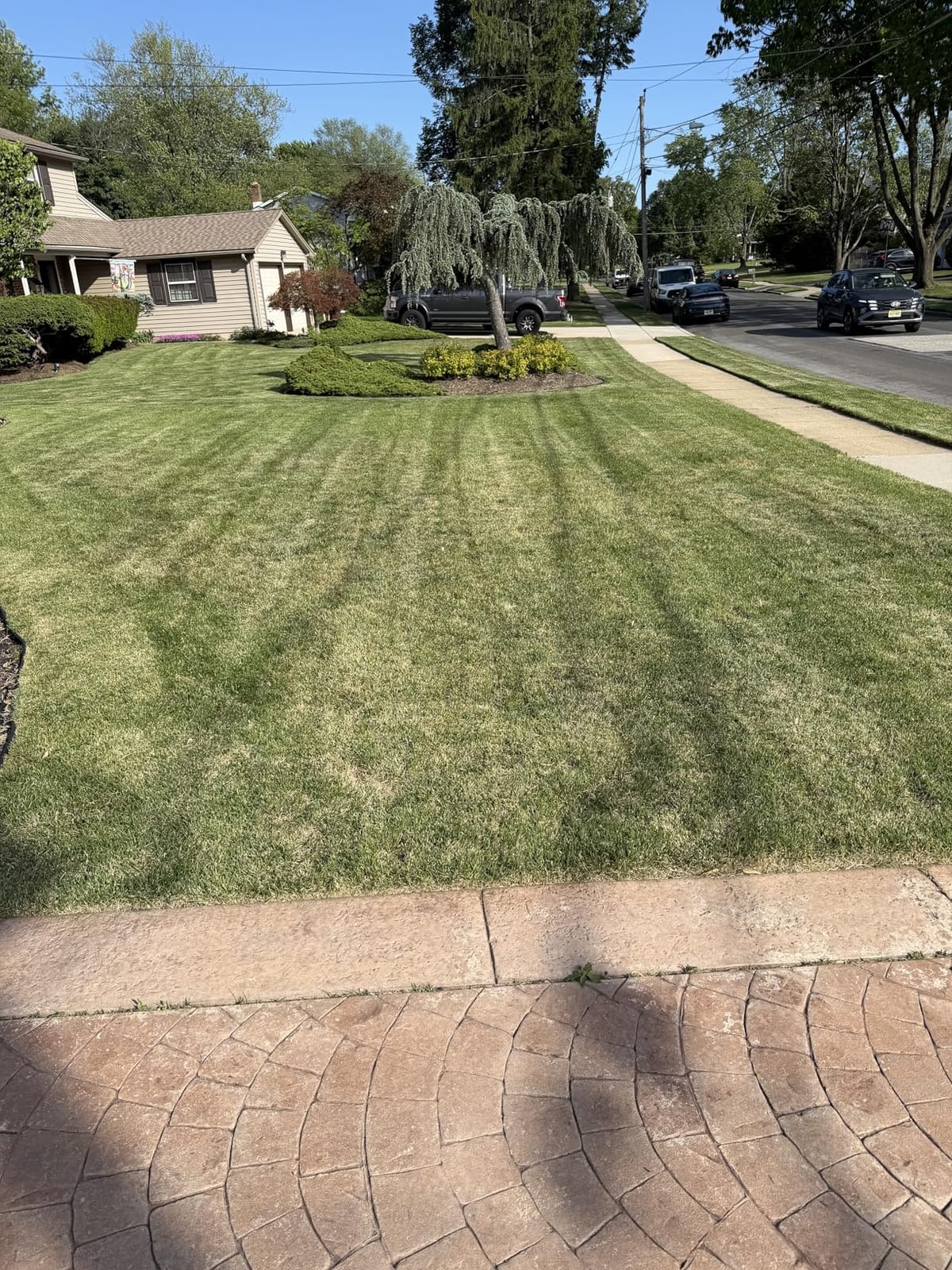
Depth control is the part that matters for thick lawns, and it is simple to set on this model. Owners also report that the roller swap between dethatching and scarifying takes seconds with no tools required. Assembly is genuinely quick, and the foldable handle means it fits in a garage corner rather than taking up a bay.
The weak point is the collection bag. It is reported to fill almost immediately and to spill its contents, and the frame that holds it is awkward to install and remove. The workaround most owners land on is to dethatch bagless and pick up the debris with a mower on a second pass, which works well but means the machine is really only doing half the job on its own.
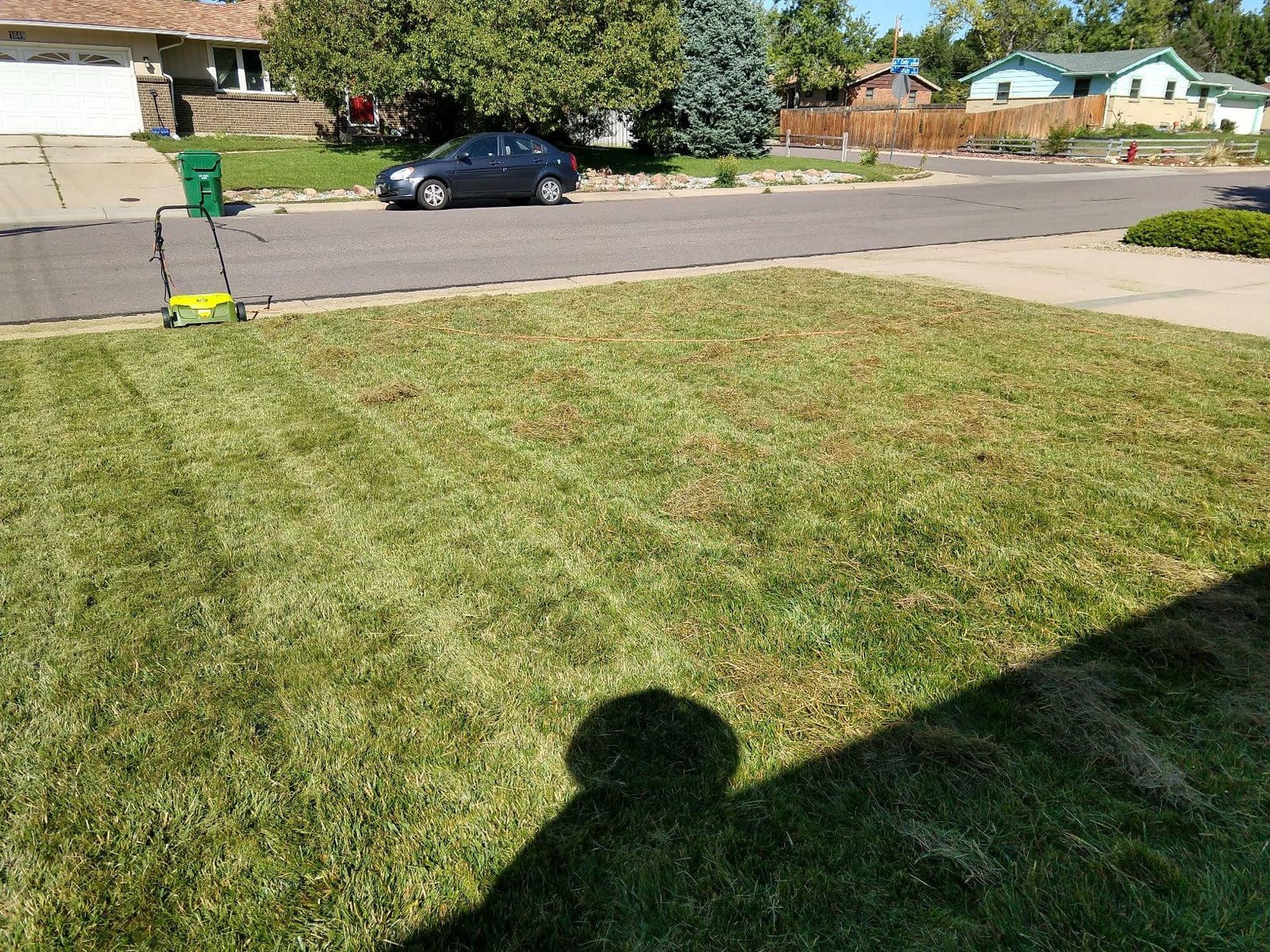
What you need to know before you buy it
It is corded, so cord gauge matters. On a lawn where you are away from the outlet for long stretches, an undersized extension cord causes the motor to bog down and the automatic behaviour to feel weak even when it is not. The machine also weighs 32.4 pounds, which is manageable but not light over uneven ground.
Owners do report that the handle and some of the plastic construction feel flimsy in the hand. That is a fair criticism of the whole consumer class, not this model specifically, and it does not show up in long-term use as breakage for most people.
Who it suits and who should skip it
Pick it if you have a quarter acre or more of neglected cool-season turf and you want the most proven corded option available. It handles the three-quarter inch range of thatch without drama, and the huge review pool means the failure modes are already known and manageable.
Skip it if you are on a very large property with no outlet access, or if you are on Bermuda or another warm-season grass and you are worried about damage. Flexible spring-tine machines are repeatedly reported in r/lawncare to cause short-term and long-term injury on warm-season lawns, and no machine erases that grass-type risk.
2. WEN DT1516 16-Inch 2-in-1 Electric Dethatcher
WEN DT1516 16-Inch 15-Amp 2-in-1 Electric Dethatcher and Scarifier with Collection Bag, Black
15-amp motor at 3300 RPM
16-inch clearing path
24 steel tines plus 20-blade head
Five-position depth lever
Pros
- Widest walk-behind path in this group at 16 inches
- Pulls very heavy thatch; owners fill multiple 96-gallon containers in one session
- 24 steel tines plus a 20-blade scarifier head as standard
- Automatic overload shutdown protects the motor
Cons
- Collection bag fills almost immediately on real thatch
- Scarifier head ships installed and is aggressive even on low settings
- Assembly instructions and part graphics are confusing
If you want maximum cutting width in a walk-behind machine, the WEN DT1516 is hard to beat. The 16-inch path is the widest in this group, and combined with a 15-amp motor running up to 3300 RPM it moves through heavy thatch faster than anything else you can push. Owners working neglected lawns report filling multiple 96-gallon containers in a single session.
The specification that earns it a place on any thick-thatch list is the 24 steel tine dethatching head paired with a 20-blade scarifying head. Steel tines hold their shape and bite deeper into a matted layer than the lighter flexible tines used by entry-level machines, which is exactly what you need when the mat is close to an inch thick.
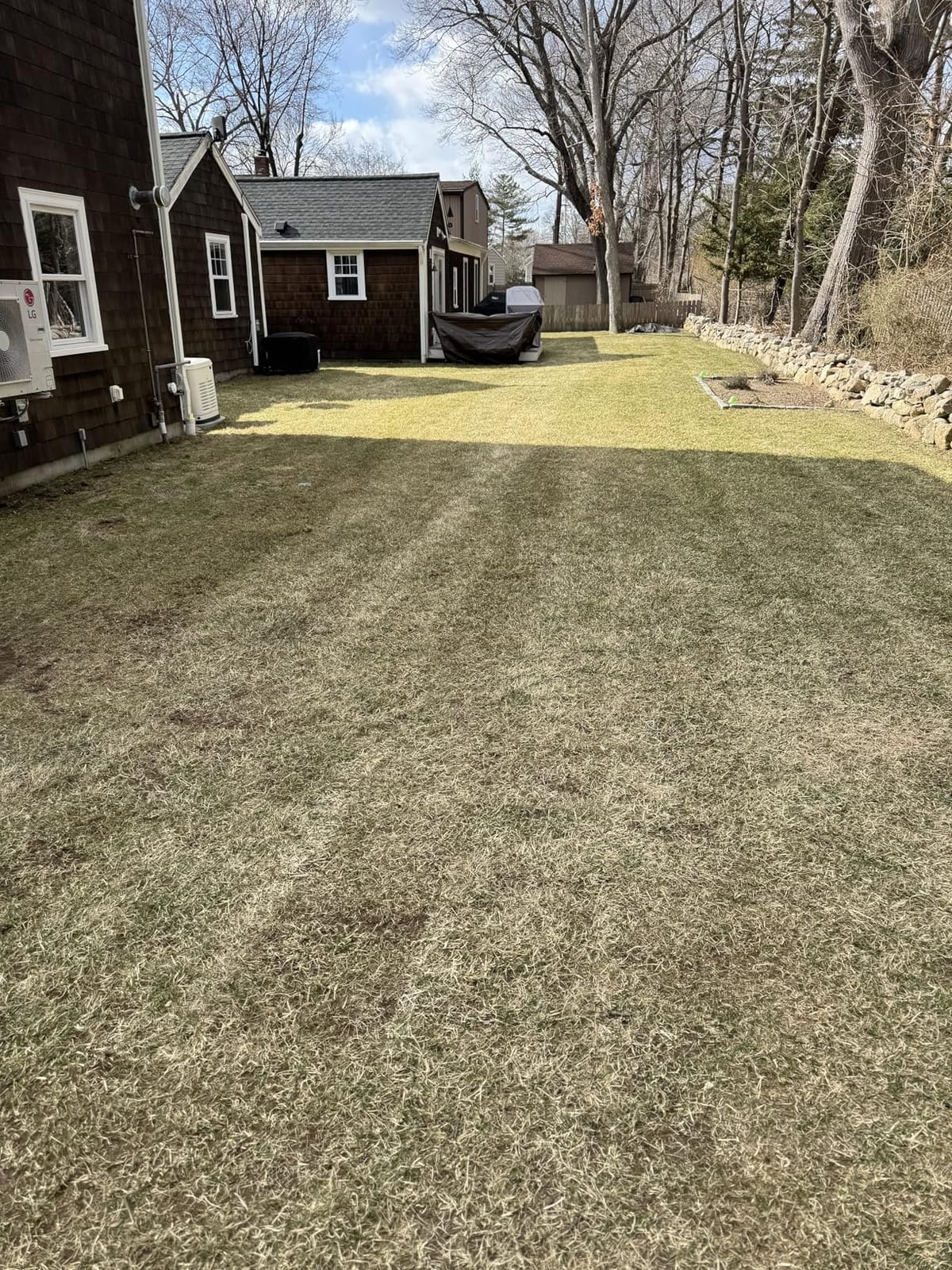
Depth adjustment runs across five positions from plus one-quarter inch to minus one-half inch of raking depth, and the adjustable handle fits different user heights. Automatic overload shutdown is a small detail that matters more than it sounds: it protects the motor when you hit a compacted patch or a buried root rather than letting it burn out.
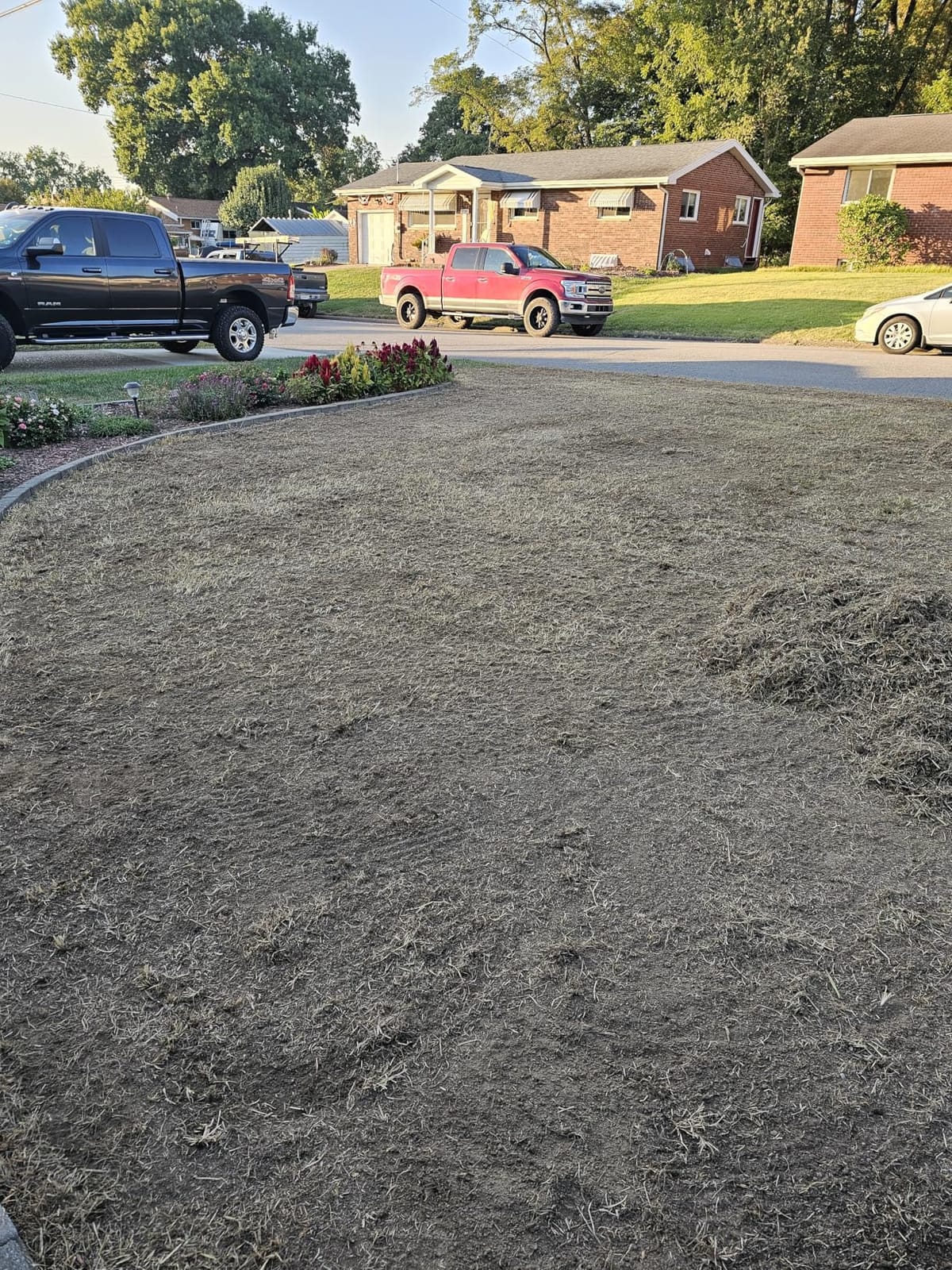
The catch is the default configuration. The scarifier head ships installed, and owners report it is very aggressive even on the lowest settings, cutting grooves and scalping the lawn if you do not swap to the tine head first. Check which roller is mounted before you start.
What you need to know before you buy it
At 33.7 pounds it is one of the heavier walk-behinds here, and the small rear wheels make it awkward to roll over a step or a curb. The detachable collection bag is detachable in the sense that you can remove it and dethatch bagless, which is the approach most owners take once they see how fast the bag fills.
Assembly instructions and the part graphics are confusing, and the two-year warranty is solid but shorter than the three years offered by a couple of competitors here.
Who it suits and who should skip it
Choose it for a large front or back lawn with a real thatch problem and an outlet within reach. The combination of width, steel tines and five depth positions covers everything from half an inch up to just over an inch in a single machine.
Pass on it if your lawn is under about 3000 square feet, where a 16-inch path is wasted, or if you want a tool that is safe on the first pass without thinking about roller selection. New operators should start on the lowest setting with the tine head installed.
3. Greenworks DHA103 14-Inch Corded Dethatcher and Scarifier
Greenworks 13 Amp 14-Inch Corded Dethatcher / Scarifier, 2-in-1 Electric Lawn Rake with 3-Position Depth Adjustment & Push-Button Start, Lawn Care Tool for Healthy Yard Maintenance
13-amp corded motor
14-inch working width
3-position depth adjustment
Push-button start
Pros
- Lightest corded option in this group at 28.7 pounds
- Push-button start with no pull cord
- Quick-release swap between dethatcher and scarifier attachments
- Three depth positions are enough for removing matted layers
Cons
- Narrower 14-inch path means more passes on large lawns
- Only three depth positions versus five on most rivals
- No overload protection listed in the specifications
The Greenworks DHA103 is the machine you pick when the dethatching job is real but you are not excited about spending an afternoon pushing 30 pounds around a rough yard. At 28.7 pounds it is among the lightest powered options here, and the push-button start removes the one thing that most annoys people about small gas or corded equipment: the pull cord.
The 13-amp motor runs at 3200 RPM no-load speed and drives a 14-inch working width. That is narrower than the WEN and the other 16-inch machines here, and on an acre or more it translates into noticeably more passes. On a quarter-acre yard the difference is negligible.
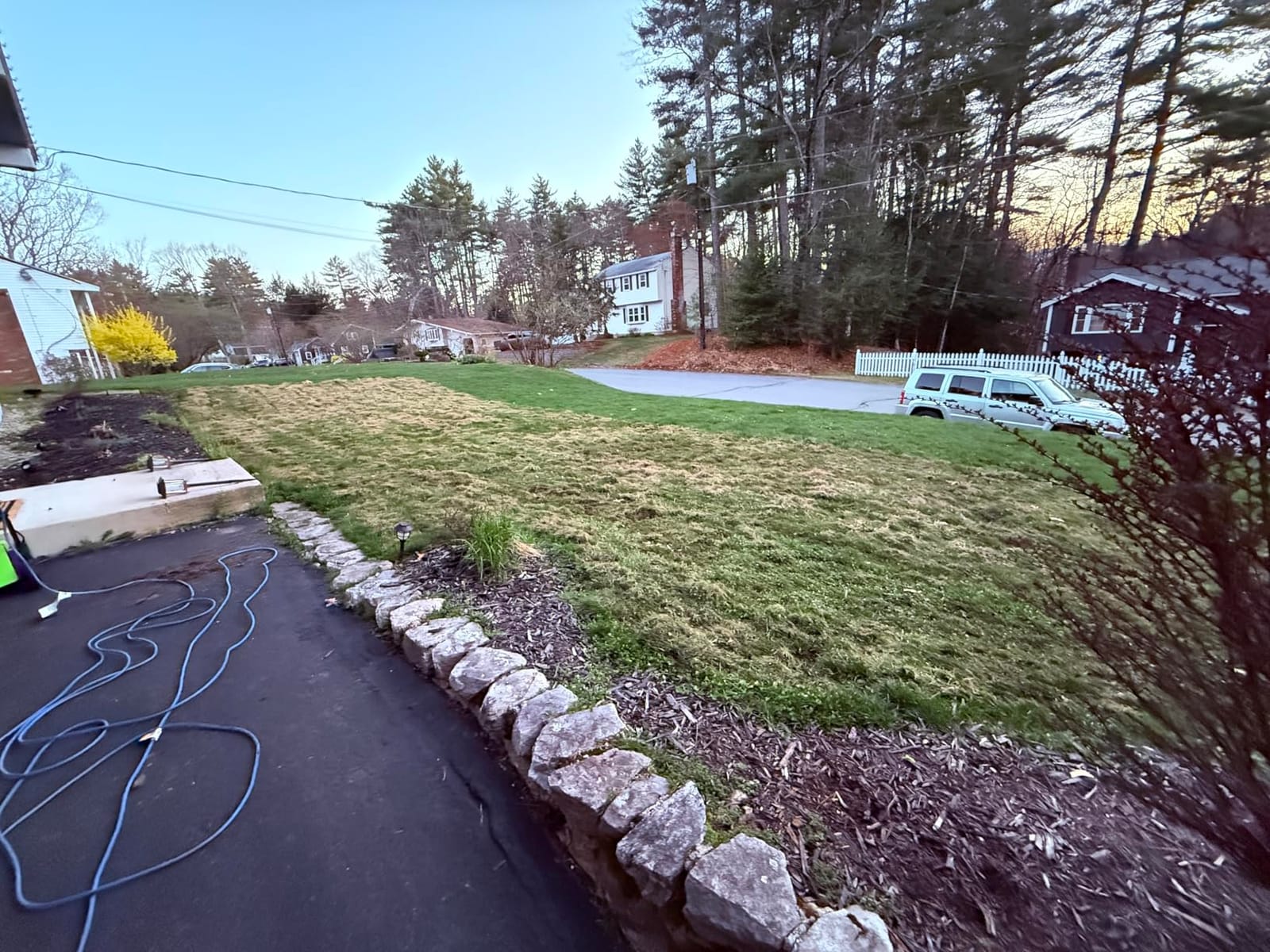
Three-position tine depth adjustment is the honest limitation. It handles matted layers, but it gives you far less fine control than the five-position levers on the WEN, TIECTOWN, BILT HARD and Westinghouse machines, and no way to back off gradually when you are working near the three-quarter inch threshold.
What it does offer is a quick-release attachment change between the dethatcher and scarifier heads without tools, and a full set of dimensions — 40.5 by 42.9 by 23.2 inches — that suggests it folds down for storage rather than needing to be wheeled into a corner.
What you need to know before you buy it
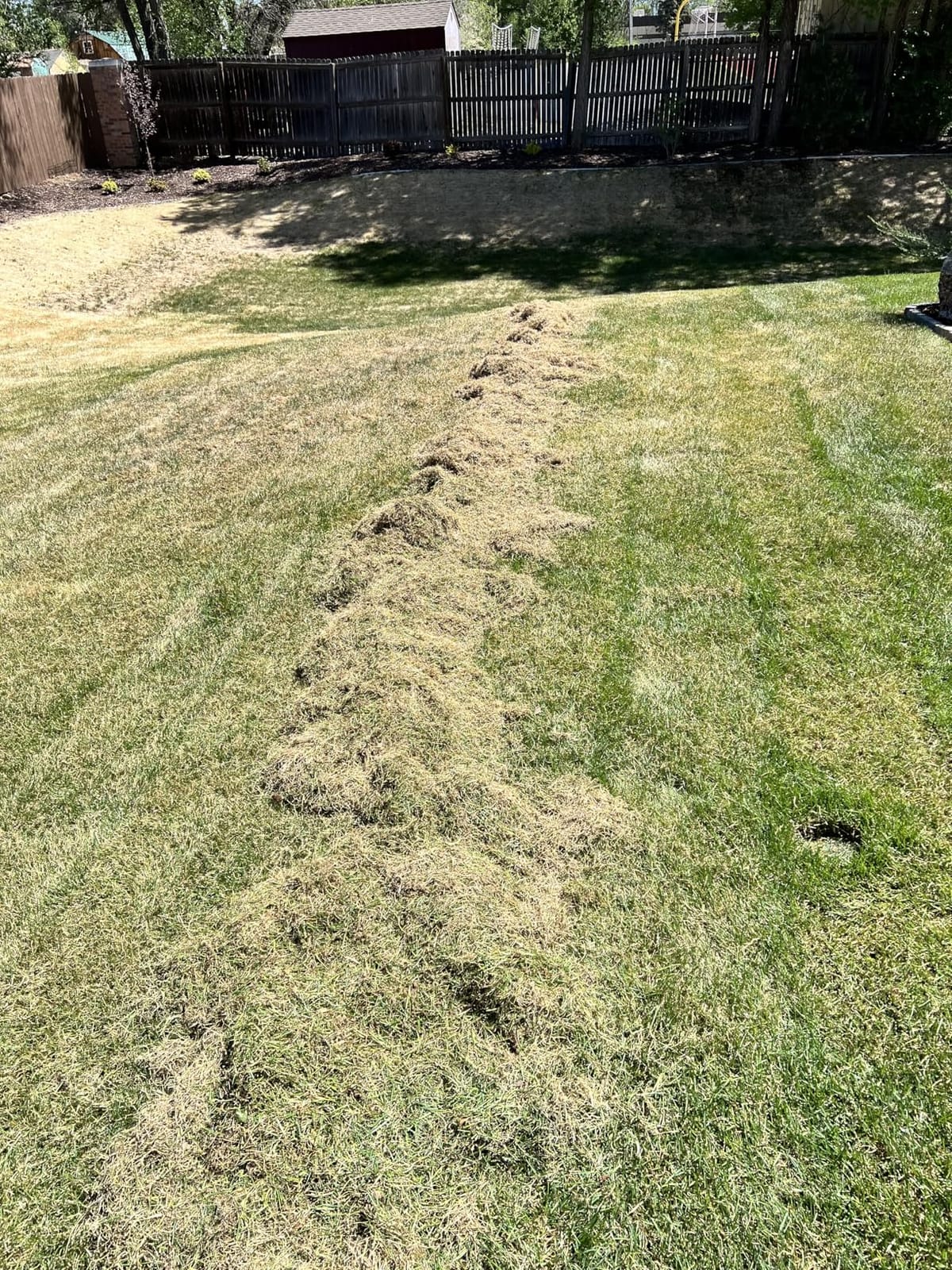
Check your cord. A 13-amp motor at the far end of a 100-foot 12-gauge run is not comfortable, and this model does not list an automatic overload shutdown the way the WEN machines do. Stay closer to the outlet or use a heavier gauge than you think you need.
The three-position adjustment is workable but coarse. On a lawn with a thin mat, the first pass is usually enough. On a thick mat, you will want the five-position machines instead.
Who it suits and who should skip it
It fits owners with a small-to-medium yard who are dealing with moderate buildup and who value being able to lift the machine with one arm and put it away. It also suits anyone who already owns a Greenworks tool and wants one control style across the range.
Skip it for a half acre or larger with a genuine thatch mat, where the 14-inch path becomes a lot of walking, or for anyone who wants a wide, fine-grained depth range in one lever.
4. Agri-Fab 48-Inch Tow-Behind Lawn Dethatcher
Agri-Fab 48 In Tow Behind Lawn Dethatcher with 24 Durable Spring Steel Tines and Universal Hitch
48-inch working width
24 heat-treated spring tines
70 lb weight tray
Universal hitch
Pros
- 48-inch width covers acreage far faster than any walk-behind
- Cantilever transport handle raises and lowers tines easily
- Universal hitch fits most lawn and garden tractors
- Replaceable rust-proof heat-treated tines
Cons
- Assembly takes 30 minutes to several hours with confusing instructions
- Thin metal on the engagement lever bends easily
- Bounces and rocks over uneven ground
- Owners report missing hitch arms
- bolts and tines
The Agri-Fab 48-inch is built for one job: covering acreage quickly behind a riding mower or tractor. At 48 inches wide it is three times the path of a 16-inch walk-behind, which is the difference between a weekend project and a day-long grind on a property of two acres or more.
The tine spec is the honest part of the story: 24 rust-proof, replaceable, heat-treated spring tines on a 70 lb weight tray. Owners with acreage report that once you load the tray with pavers or blocks, it pulls up substantial thatch, moss and debris. Empty, it is noticeably less committed on a matted lawn.
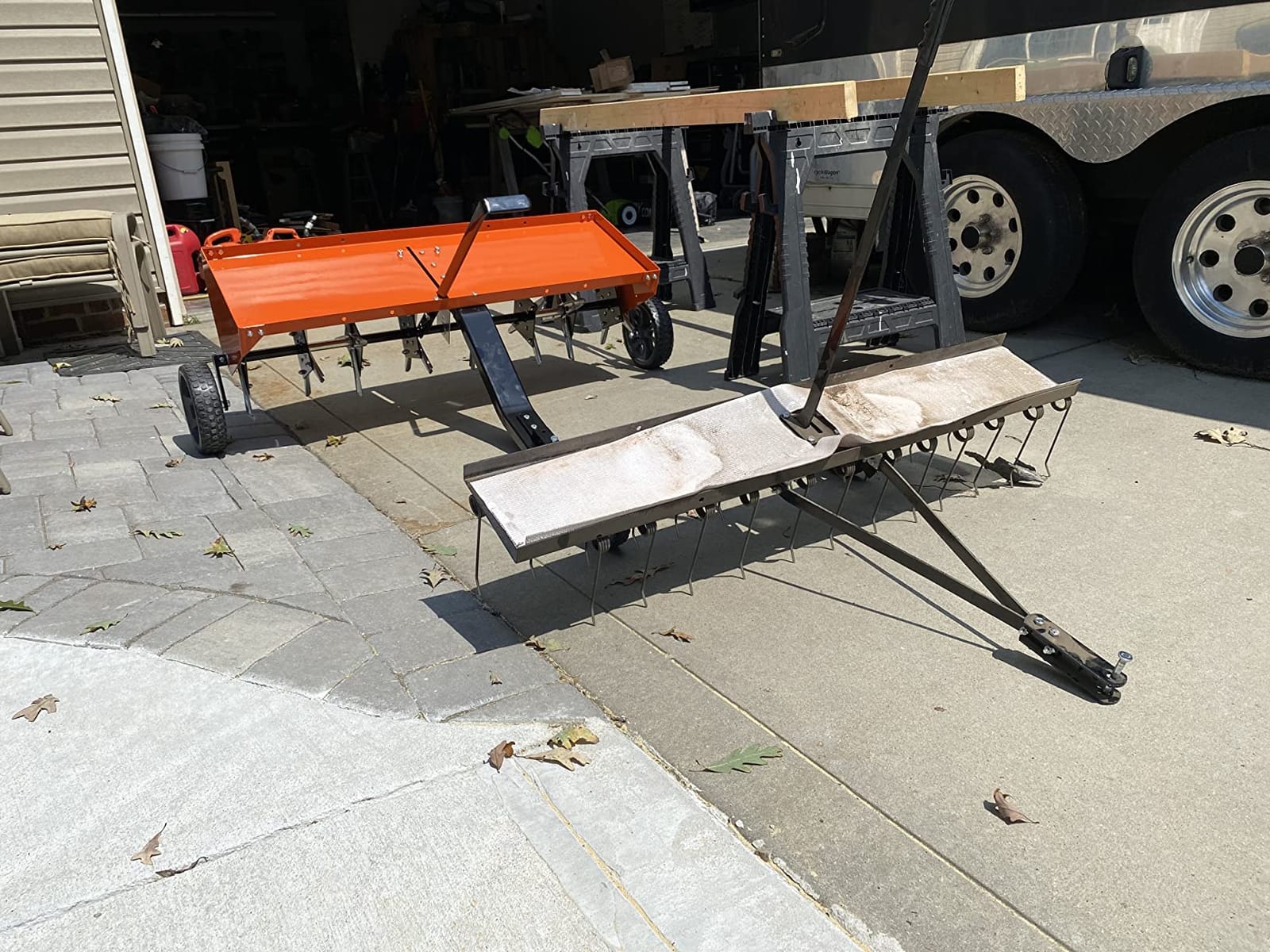
Transport is handled by a cantilever handle that raises and lowers the tines, and the 7-inch flat-free wheels mean you are not replacing tires every season. The universal hitch fits most lawn and garden tractors, and the whole thing drops most tines into the slot for storage with the rear caster wheels removed.
Ride quality is where it struggles. Owners report that it bounces and rocks over uneven ground, and that pavers or blocks slide off the tray because the platform has no retaining lips. Bring ratchet straps if you plan to ballast it.
What you need to know before you buy it
Assembly is the big warning. Owners report anywhere from 30 minutes to several hours, with instructions that are confusing about tray orientation, and some received shipments with missing hitch arms, bolts or tines. Budget an hour and check the parts list before you start.
The engagement lever is thin metal that bends and deforms, so treat it as a handle rather than a foot pedal. A 3-year limited warranty is a plus in this category.
Who it suits and who should skip it
It is the right pick if you have a riding mower, a tractor or an ATV, more than an acre, and a thatch problem that a walk-behind would take a full weekend to address. It also suits owners who are willing to ballast the tray.
Skip it if you only own a walk-behind mower, if you will not ballast it, or if your ground is very uneven. It is also not the tool for a mat past an inch, where a professional power rake or a rented machine will outperform it.
5. TIECTOWN LM01 16-Inch 15.5A Electric Dethatcher and Scarifier
TIECTOWN 2026 Upgrade 16-Inch 15.5A Electric Dethatcher & Scarifier, Green
15-amp motor peaking at 15.5A
16-inch rake path
5-position depth lever
14.5-gallon bag
Pros
- 16-inch path with a 3600 RPM motor handles thick thatch well
- Five depth positions give fine control from light raking to deep scarifying
- Tool-free quick-release swap between blades
- 14.5-gallon bag is among the largest in this group
Cons
- Newer brand with a smaller proven track record than established names
- Not among the lightest machines at 30 pounds
- Corded design with the same extension cord limitation as every other electric model
The TIECTOWN LM01 is the specification-led value pick in this group. It combines a 16-inch rake path, a motor peaking at 15.5 amps running at 3600 RPM, five depth positions and a 14.5-gallon bag, which is a rare combination at this tier of the category.
The depth lever is the feature that separates it from the field. Its five positions run from minus 0.47 inch to plus 0.24 inch in scarifying mode and minus 0.32 inch to plus 0.39 inch in dethatching mode, which is a genuinely useful range for walking a thick mat back gradually rather than removing it all at once.
Blade changes are tool-free through a quick-release design, and a 3-position adjustable handle rod fits different user heights. At 30 pounds with a foldable handle, it is one of the easier 16-inch machines to move between the garage and the yard.
TIECTOWN publishes a specific cord recommendation, which is refreshing: 14 AWG up to 50 feet, or 12 AWG up to 100 feet. That single line tells you more about how the machine behaves under load than most marketing copy does. It also ships with a waterproof plug, a cord clip and a cord holder.
What you need to know before you buy it
The honest drawback is brand maturity. With more than 1,200 reviews it is well tested, but it is a newer name than the brands most people already own batteries, parts and cords for, and replacement tines may take longer to source.
It is corded, so the extension cord guidance above applies. Use a heavy-duty outdoor cord and keep the run within the stated gauge limits.
Who it suits and who should skip it
It suits owners of a medium-to-large yard who want fine depth control and a large bag, and who would rather have a five-position lever than a two-position one. It is also a good match for cool-season lawns being prepared for fall overseeding.
Skip it if you want a machine with a decade of parts availability behind it, or if you have a small urban yard where the 16-inch path and the bag capacity are more than you need.
6. Suchtale 48-Inch Tow-Behind Dethatcher
Suchtale 48 Inch Tow Behind Lawn Dethatcher with 24 Spring Tines
48-inch working width
24 heat-treated spring tines
Full steel frame
70 lb ballast platform
Pros
- Bolted-in tines and powder-coated finish outlast comparable box-store models
- Dethatches without damaging healthy grass the way some electric models do
- Full steel frame with bearing-supported wheels
- Packaging includes wrenches and gloves
Cons
- Transport wheel lever is poorly designed and some owners modify it with a welder
- Assembly takes an hour or more and needs a socket set
- Instructions leave wheel installation and hitch bracket ambiguous
- Bearing-equipped wheels can rust or break at the spring
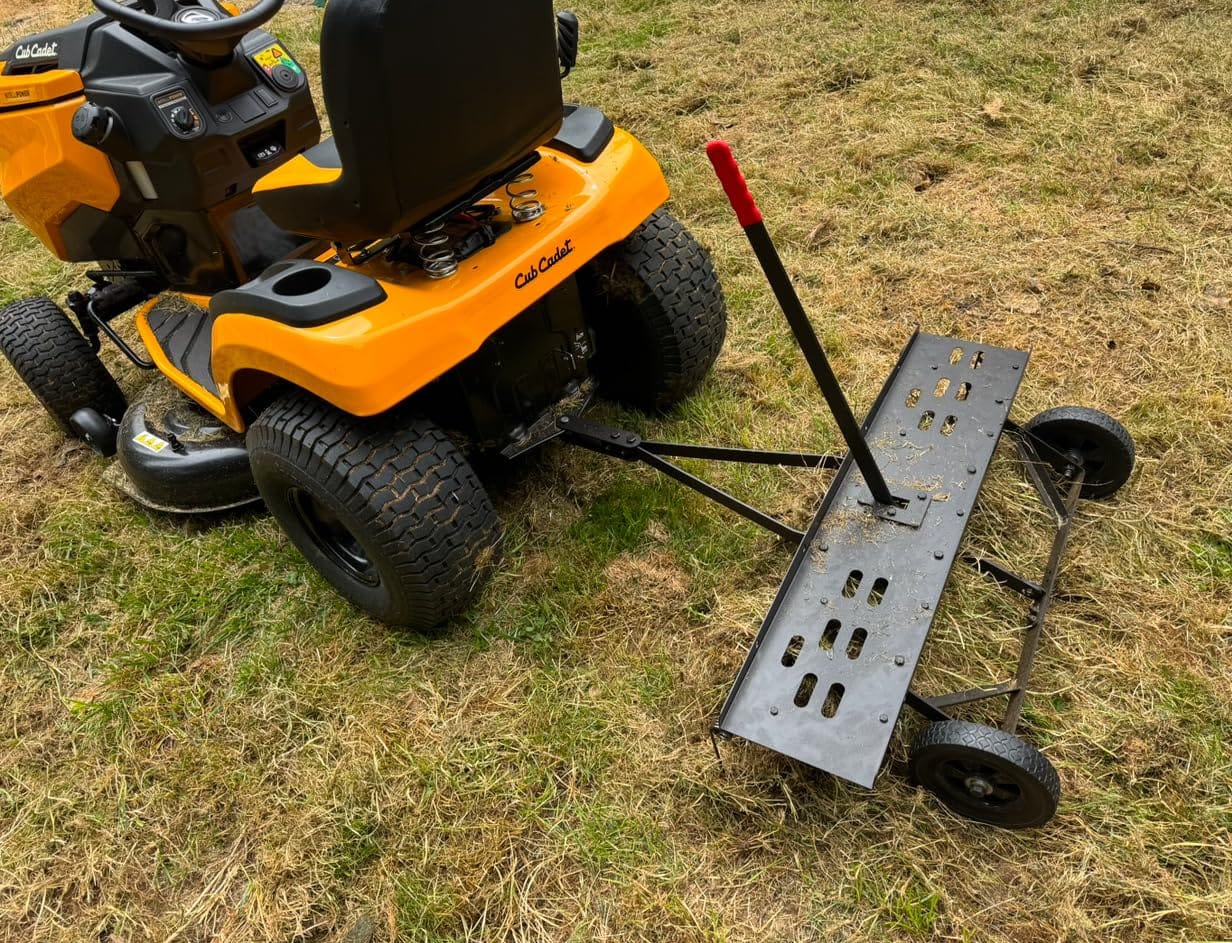
The Suchtale 48-inch is the tow-behind that owners defend on build quality. Instead of a folded plate frame, it uses a full steel frame with bearing-supported wheels and 24 heat-treated, rust-resistant, replaceable spring steel tines bolted in rather than pressed into a carrier. Owners consistently report that it outlasts comparable big-box models.
What earns it a spot on a thick-lawn list is a specific owner report: it dethatches effectively without damaging healthy grass the way some electric units do. On Bermuda and other warm-season lawns, where flexible-tine machines are repeatedly criticised for damage, a machine that is gentler on the crown while still pulling mat is worth a look.
There is a 70 lb ballast platform for adding weight when the thatch is stubborn, and a pin-style hitch that connects to compatible riding mowers and ATVs. A 40-inch variant exists if 48 inches is more width than your tractor handles well on tight turns.
The persistent complaint is the transport handle. Owners describe it as poorly designed to the point where some have modified it with a welder, and the bearing-equipped wheels can rust or break at the spring over time.
What you need to know before you buy it
Assembly takes an hour or more and you will need a socket set rather than the wrenches included in the box. The instructions leave the wheel installation and the hitch bracket ambiguous, so read them fully before starting.
It weighs 35.6 pounds, which is fine for a trailer implement but not something you want to be carrying across a garage floor repeatedly.
Who it suits and who should skip it
It fits owners with a riding mower or ATV, a lawn large enough to benefit from 48 inches of width, and a preference for a machine that will still be running in several years. Warm-season grass owners worried about crown damage will appreciate the gentler action.
Skip it if you want a tool that assembles in under an hour with the supplied tools, or if you do not own a tractor or mower capable of pulling it.
7. WEN DT1315 15-Inch 2-in-1 Electric Dethatcher
WEN 15-Inch 13-Amp 2-in-1 Electric Dethatcher and Scarifier with 12-Gallon Collection Bag (DT1315)
13-amp motor at 3300 RPM
15-inch clearing path
24 steel tines plus 16-blade head
12-gallon bag
Pros
- Shares the 24-tine head and 3300 RPM output of the larger 16-inch WEN
- 12-gallon bag is among the larger capacities at this width
- Five depth positions plus automatic overload protection
- Light enough to maneuver and folds for storage
Cons
- 15-inch path is narrower than the 16-inch DT1516
- Lower 13-amp output may need more passes on the heaviest thatch
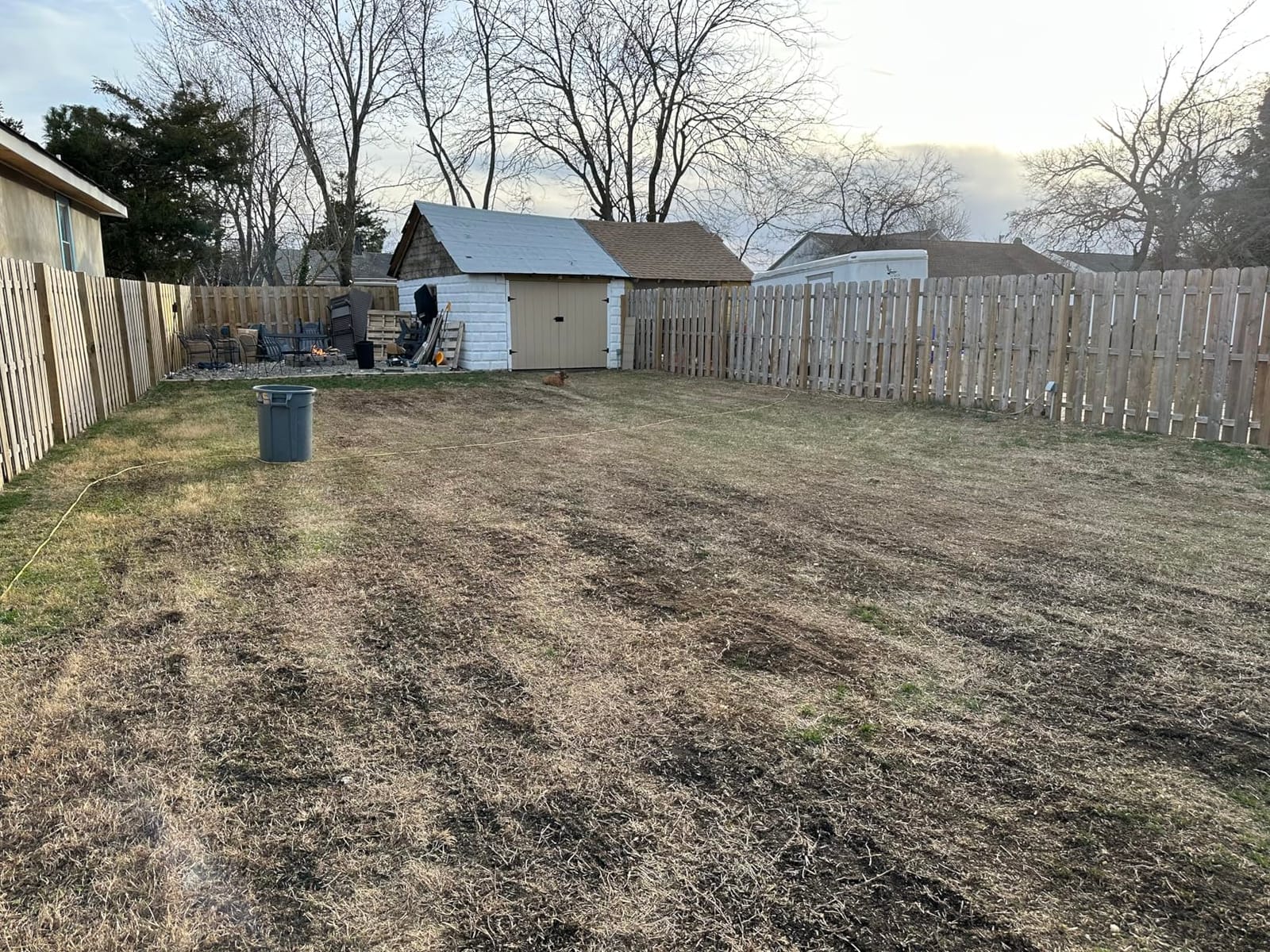
The WEN DT1315 is the same platform as the DT1516 in a slightly smaller wrapper, and for a yard under about half an acre that is usually the sensible version to buy. It keeps the 24 steel tine dethatching head and the 3300 RPM motor speed, which means the tine quality does not drop with the width.
Its depth adjustment runs across five positions from plus one-quarter inch to minus one-half inch, matching the larger model, and it includes the same automatic overload shutdown to protect the motor when you hit compacted ground.
The 12-gallon collection bag is genuinely on the larger side for a 15-inch machine, and the listed weight in the specifications is given as 16 ounces, which is clearly a listing error rather than the real shipping weight. Treat the 13-amp rating and the 15-inch path as the reliable numbers here.
The scarifying head on this model has 16 blades rather than the 20 on the DT1516, which makes it slightly less aggressive and a reasonable first outing on a lawn you care about.
What you need to know before you buy it
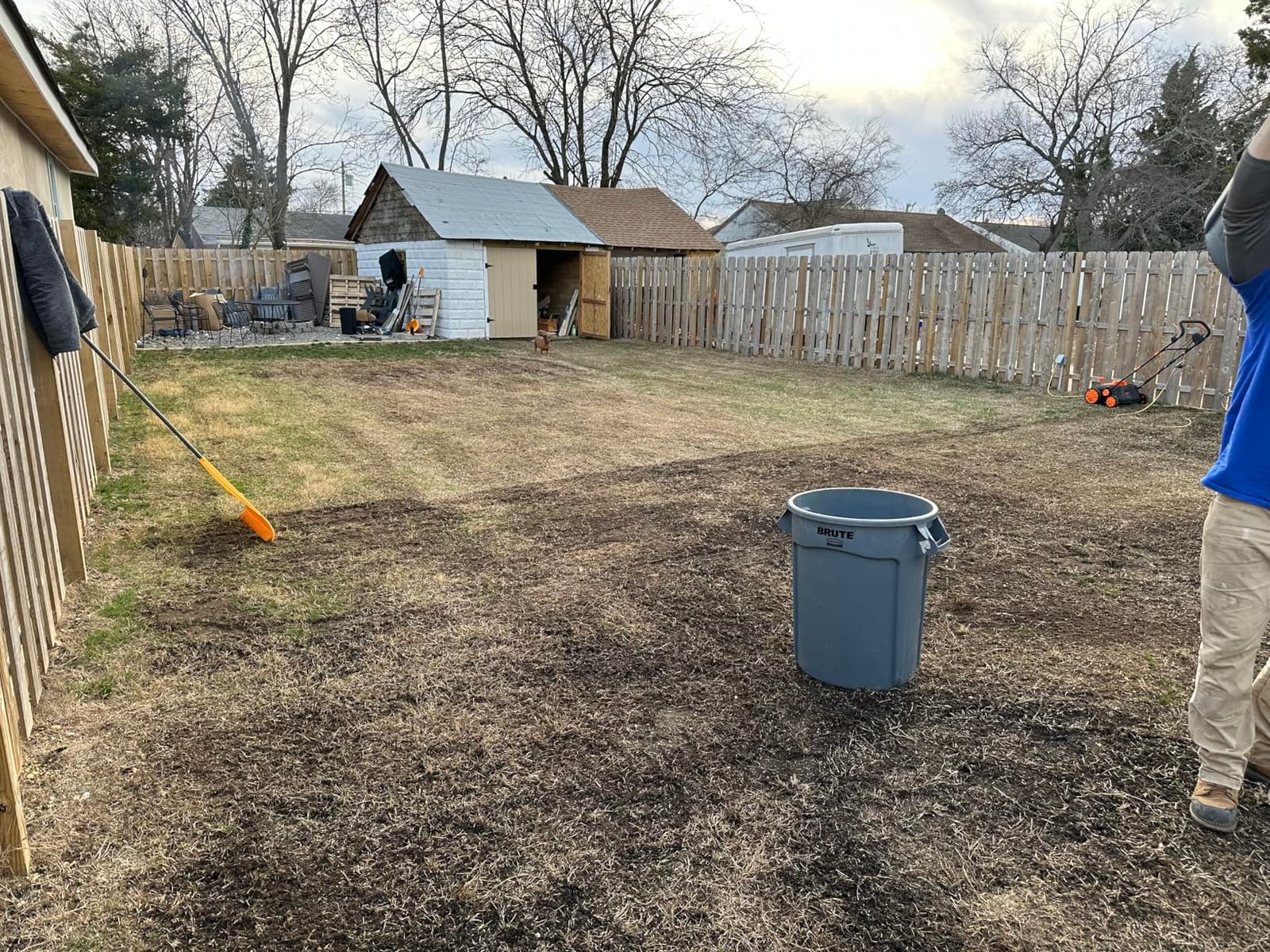
You are trading two things for a lighter, cheaper footprint: two inches less width and two fewer amps. On moderate buildup neither matters. On a genuinely matted lawn past three-quarters of an inch, expect to need a second pass.
A two-year warranty is included, and spare parts for the range are listed with a two-year availability window, which is worth knowing for tine replacement.
Who it suits and who should skip it
It fits owners of a small or medium urban or suburban yard who want the tine quality of a bigger machine without the extra passes, and who have an outlet within about 50 feet.
Skip it if you have a half acre or more, where the width difference compounds, or if the thatch mat is close to an inch and you would rather have the 15-amp motor of the DT1516.
8. MZK 15-Inch Electric Dethatcher and Scarifier
MZK Lawn Dethatcher Electric Scarifier with Bag,15In(RED)
13-amp copper motor at 3700 RPM
15-inch rake path
Depth from -0.47 to 0.24 inch
45-liter bag
Pros
- Motor has ample power to pull up heavy thatch on the first pass
- Highest motor speed in this group at 3700 RPM
- Large 45-liter collection bag with dual safety switches
- Light at 27.5 pounds with a foldable handle
Cons
- Deep scarifier tines can tear up the lawn more aggressively than expected
- Motor may stall briefly if pushed too hard into very thick thatch
- Bag still fills quickly despite the larger capacity
The MZK G-AC2401 has the highest average rating in this group at 4.9, and that figure comes with an important caveat: the review pool is 50 reviews, an order of magnitude smaller than the leaders. High ratings on a small pool tell you owners are happy, not that the machine has a long failure history behind it.
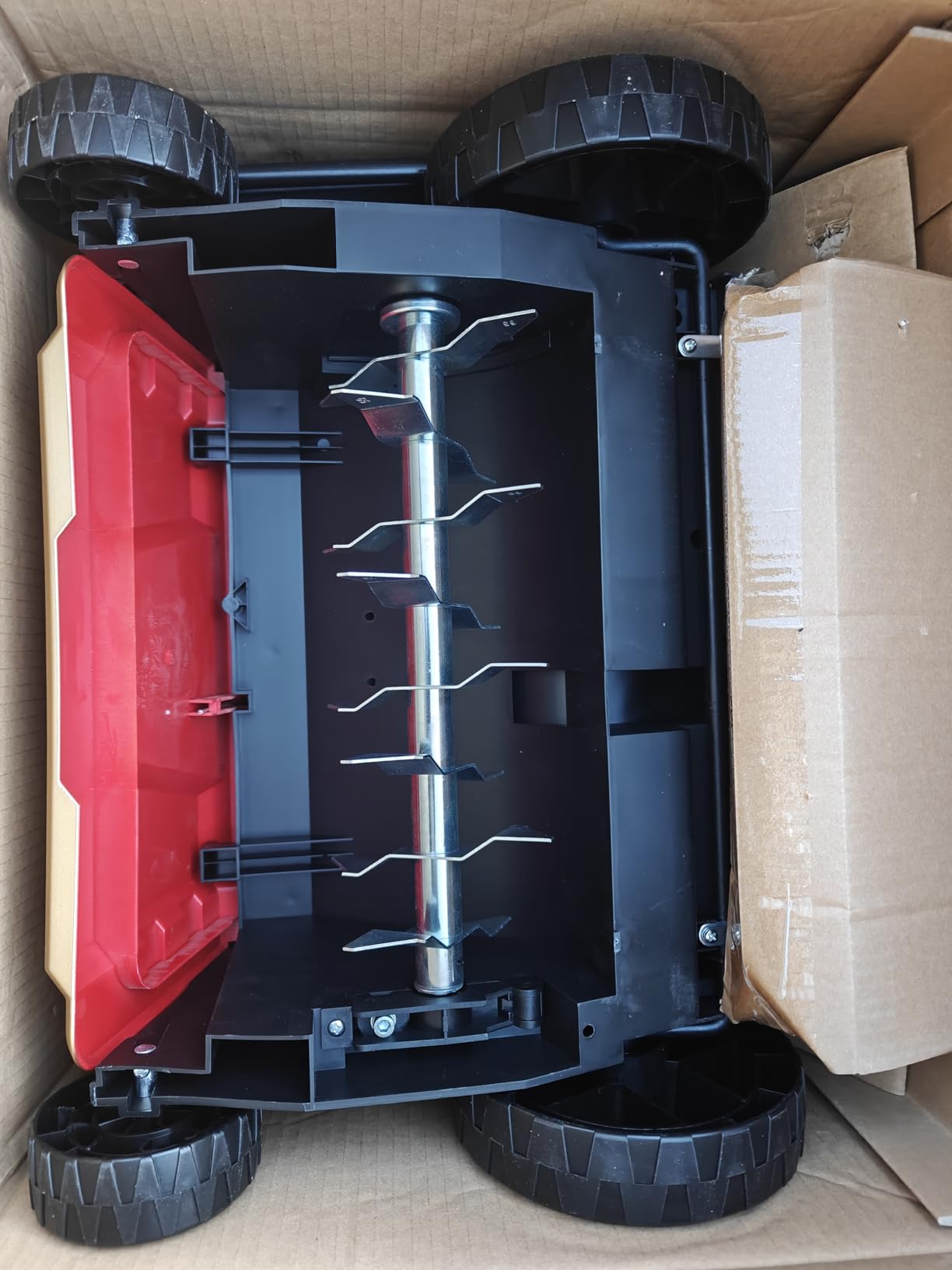
What is genuinely notable is the motor. A 13-amp copper motor running at 3700 RPM is the highest no-load speed in this group, and owners report it has ample power to pull up heavy thatch on the first pass. On a 15-inch path, that combination of speed and throat is unusually strong for a walk-behind.
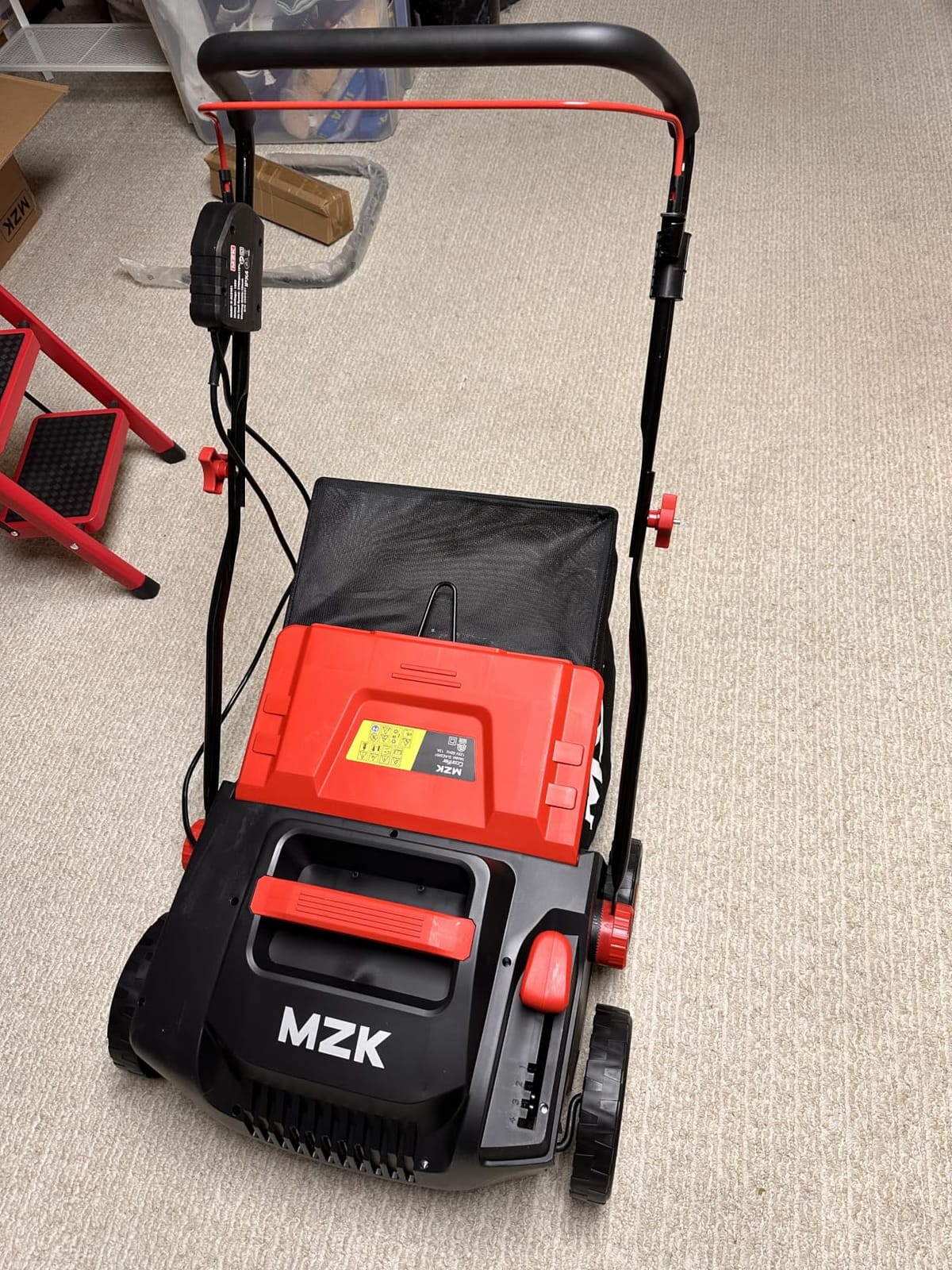
Depth adjustment runs from minus 0.47 inch to plus 0.24 inch, and blades switch quickly between dethatching and scarifying functions. The 45-liter collection bag is about 12 gallons, and there are dual safety switches plus a foldable handle. The machine weighs 27.5 pounds.
Owners do report that the deep scarifier tines can tear up the lawn more aggressively than expected, and that the motor can stall briefly if you push hard into very thick thatch. That stall is a stall, not a failure, but on a heavy mat you should slow down.
What you need to know before you buy it
Start on a shallow depth setting. The aggressive scarifying blade at full depth is closer to a verticutter pass than a dethatching pass, and that is how lawns get scalped. Work down one position per session rather than setting the deepest notch and going.
With 50 reviews, long-term durability is unproven. The dual safety switches are a good sign for build quality control, but treat this as a machine to re-check after the first season.
Who it suits and who should skip it
It suits owners with a medium lawn and heavy thatch who want maximum power-to-weight in a walk-behind and who are comfortable adjusting technique as they go. The 3700 RPM motor makes it one of the better choices for a mat approaching an inch.
Skip it if you want a long-proven track record before committing, if you are nervous about aggressive blades, or if you want a large collection bag, since the 45-liter volume still fills quickly on real thatch.
9. BILT HARD 16-Inch Electric Dethatcher and Scarifier
BILT HARD 16 Inch Dethatcher Scarifier Electric Powered, 15 Amp Copper Motor, 5-Position Depth Adjustment, 14.5 gal Thatch Bag, 2 in 1 Walk Behind Thatch Removing Machine for Lawn
15-amp copper motor at 3300 RPM
16-inch raking path
20 spring steel tines plus 16-blade roller
14.5-gallon bag
Pros
- One owner collected 45 bags of debris from 7200 sq ft of St. Augustine grass
- 20 spring steel tines and a 16-inch path handle thick thatch
- Tool-free quick-lock swap between the two rollers
- Lock-off switch and overload protection
- 7-inch front and 6-inch rear flat-free wheels
Cons
- Tines can wrap around long grass rhizomes and clog on bermuda lawns
- Heaviest machine here at 57.3 pounds which makes it hard to maneuver
- Bag fills every 20 feet or so
- Mostly plastic construction
The BILT HARD TIA-1002 has the most striking volume report in this group: one owner collected 45 bags of debris from 7,200 square feet of St. Augustine grass. St. Augustine is a dense, thick-bladed warm-season turf that mats aggressively, so a 45-bag result is a meaningful data point rather than a rounding error.
The drivetrain is a 15-amp copper motor producing up to 3300 RPM across a 16-inch raking path, with a 20 spring steel tine dethatching roller and a 16-blade scarifying roller. The five-position depth lever runs from minus 0.47 inch to plus 0.24 inch, and the quick-lock knob swaps rollers without tools.
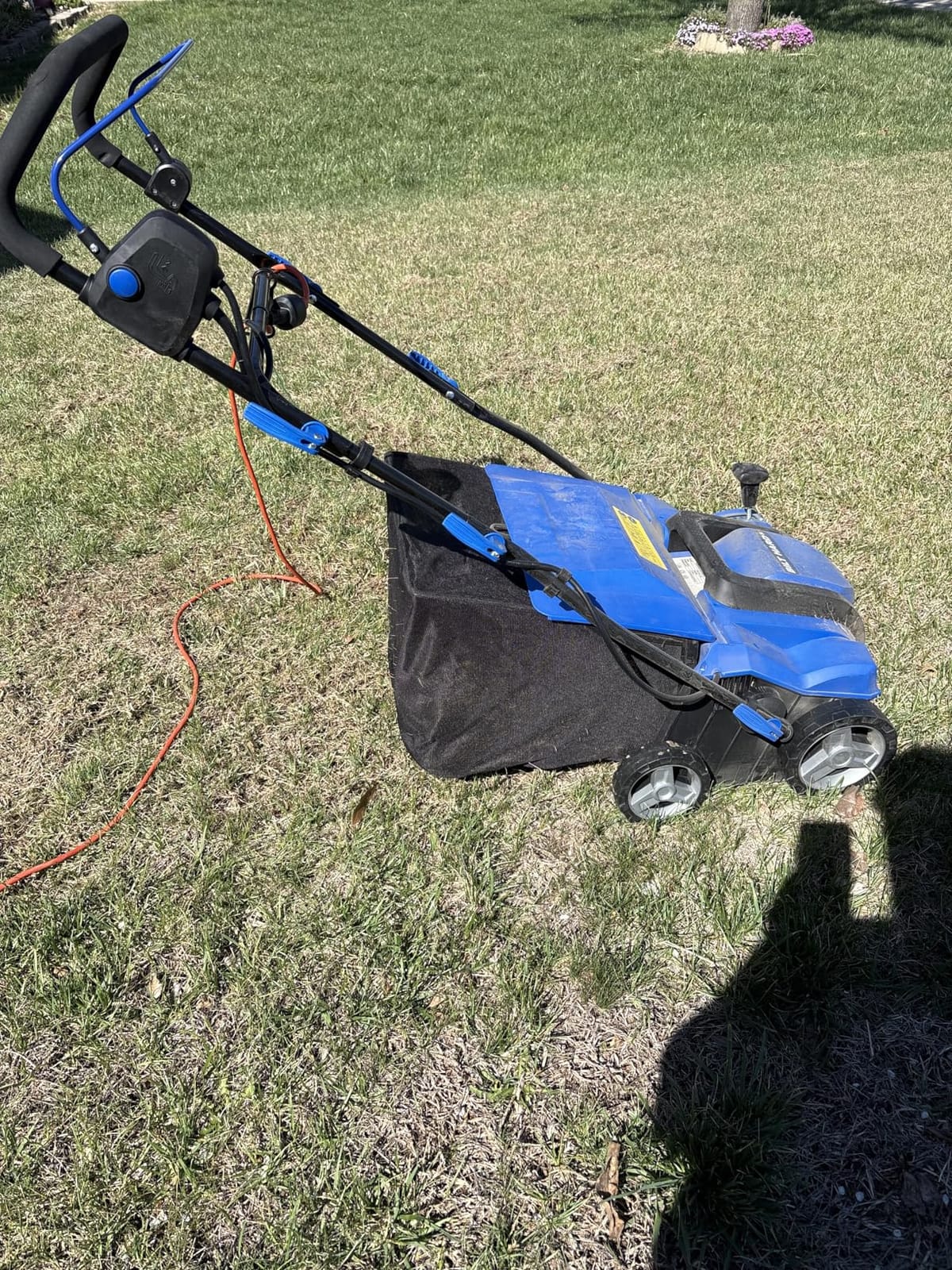
Around the drum you get 7-inch front and 6-inch rear flat-free wheels, a foldable handle rod, a lock-off switch and overload protection, and a 14.5-gallon removable bag. Owners report that a follow-up mower pass cleans up the loose debris efficiently, which is the standard two-stage workflow for electric dethatchers with undersized bags.
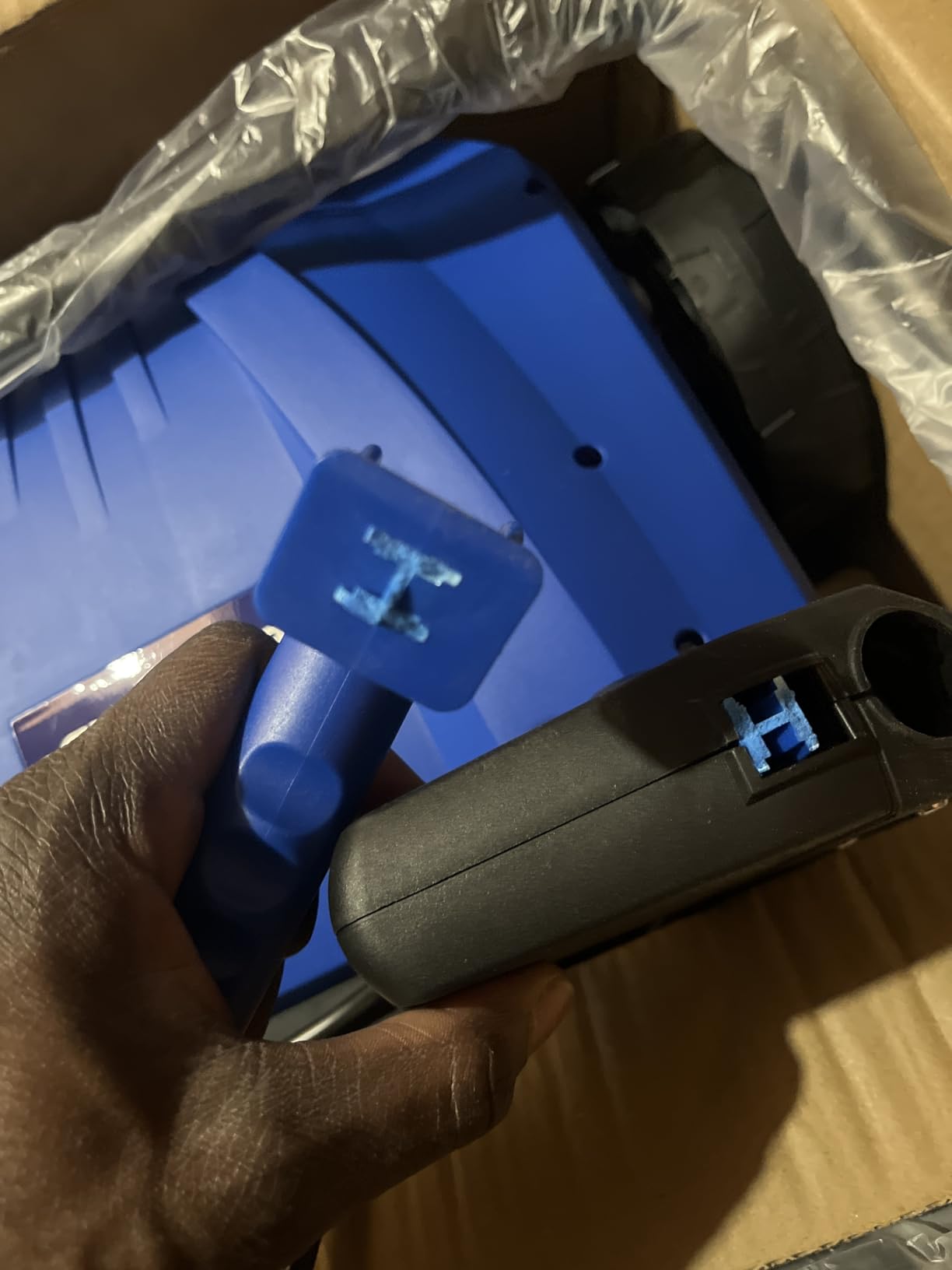
At 57.3 pounds this is by a wide margin the heaviest walk-behind here, roughly double several competitors, and that weight shows up as reduced maneuverability. Owners also report that the tines can wrap around long grass rhizomes and clog on bermuda lawns, so stop and clear the drum rather than forcing it.
What you need to know before you buy it
Plan your path around the weight. On a flat open yard it is manageable; on slopes, edges and beds it is tiring, and turning at the end of each row takes real effort. If your lawn is anything other than flat, weigh the lighter 30-pound machines against this one.
The bag fills every 20 feet or so, and owners are candid that a larger bag would not change that on thick thatch. The construction is mostly plastic, so treat the tine roller and the frame as the parts that matter long-term.
Who it suits and who should skip it
It fits owners of dense warm-season turf — St. Augustine especially — with a large flat lawn and enough thatch that debris volume is the main worry. The 20 spring steel tines and the 16-inch path make it one of the stronger picks for a mat past three-quarters of an inch.
Skip it if your lawn has bermuda rhizomes, where tine wrapping is a recurring complaint, or if you have a small or heavily planted yard where a 57-pound machine will be more of a struggle than a help.
10. SENIX 15-Inch 2-in-1 Electric Dethatcher
SENIX 13 Amp 15-Inch 2-in-1 Electric Dethatcher and Scarifier with 13.2-Gal Collection Bag,4-Position Depth Adjustment,Walk Behind for Lawn Garden Care Removing Thatch,Quick-Fold(SCE13-M)
13-amp motor
15-inch working width
24 spring steel tines
26-blade scarifying cylinder
Pros
- Effective on St. Augustine and heavily matted lawns
- Lightest powered option here at 24.8 pounds and easy to turn
- Folds down for storage
- Three-year limited warranty and SGS certification
Cons
- Bag is essentially useless because it fills every few feet
- Scarifier cylinder can wrap around long roots and break its mount
- Assembly needs improvisation with the mounting bracket
- Dethatch depth is effectively fixed rather than finely adjustable
The SENIX SCE13-M is the entry-level option here, and the reason to consider it is simple: at 24.8 pounds it is the lightest powered machine in the group, and it is effective on matted lawns where the thatch genuinely needs pulling. Owners report two laps of a yard producing enough dead grass to fill a 30-gallon bin.
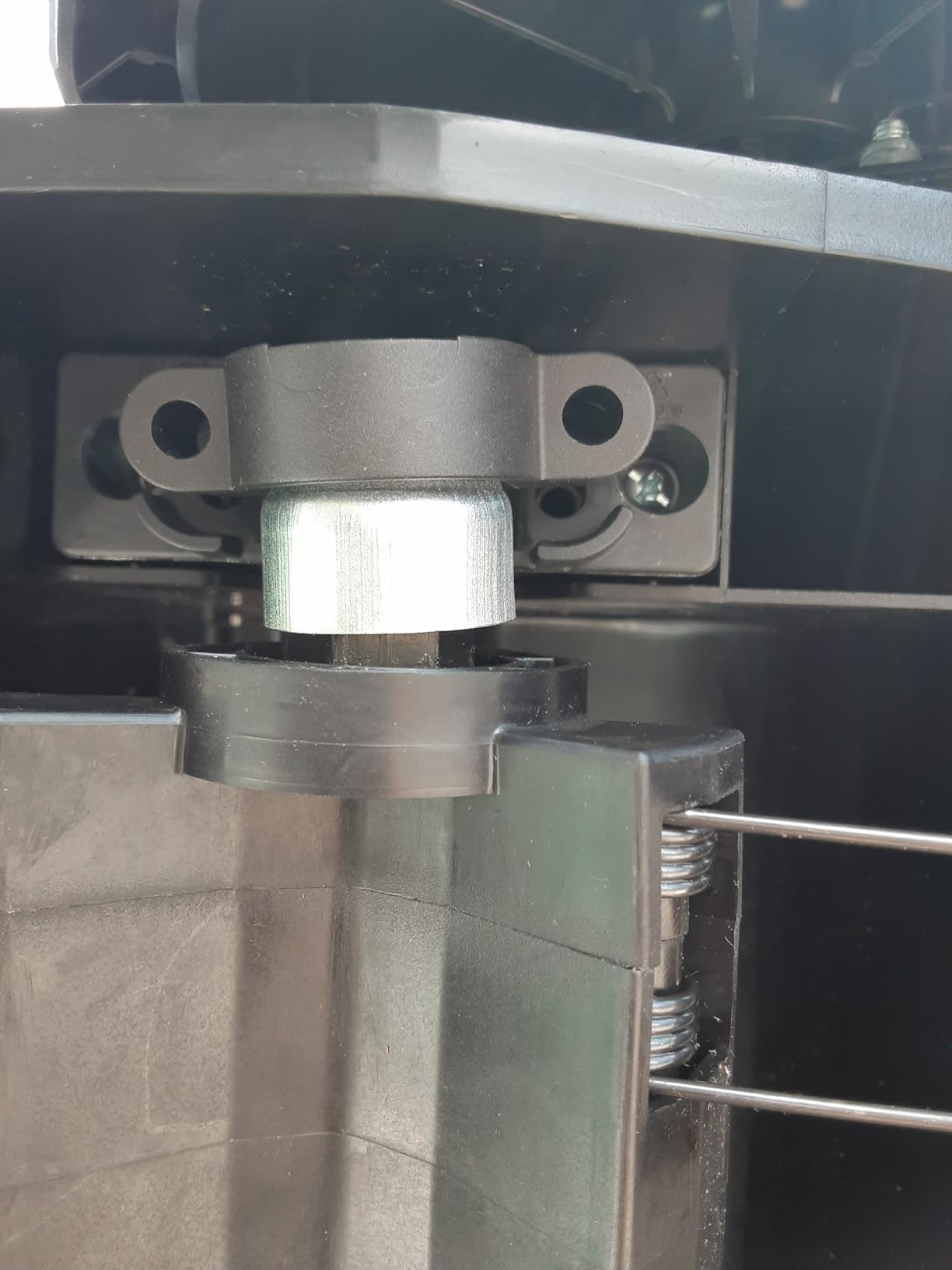
The motor is a 13-amp unit driving a 15-inch working width with 24 durable 1.5 mm spring steel tines. The scarifying cylinder is a serious piece of hardware for the tier, carrying 26 sharp blades that slice the soil surface at a 0.4 inch depth.
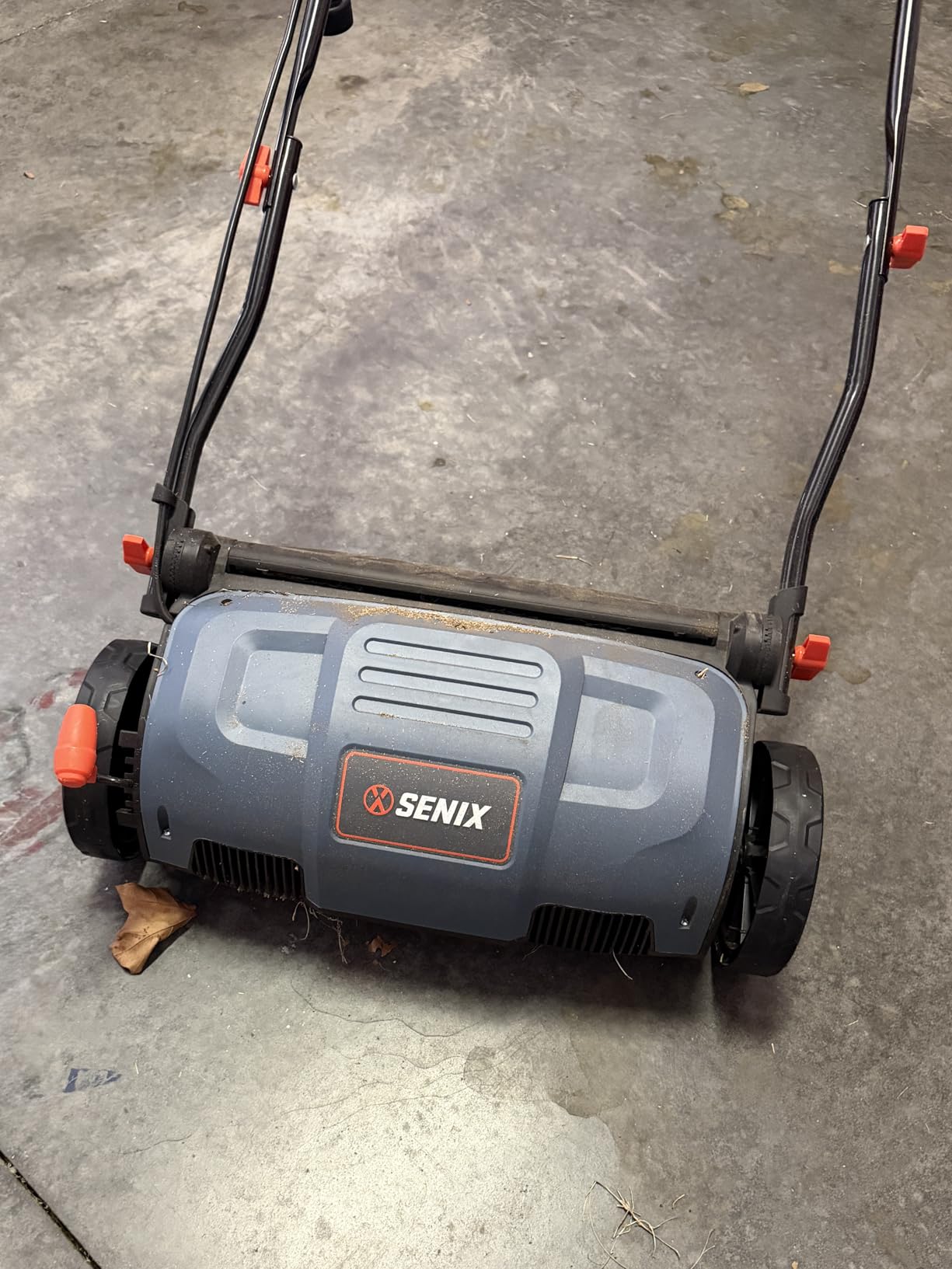
It also carries a 3-year limited warranty and SGS certification, which is unusual in the entry level, and it folds down for storage. On an St. Augustine or heavily matted lawn, the dethatching function does the job you bought it for.
The depth situation is where the money is saved. The tines run at a fixed 0.4 inch height, so the four-position adjustment applies mainly to the scarifying cylinder. You get less than you can with a five-position lever, and no way to back off gradually.
What you need to know before you buy it
The collection bag fills every few feet and is effectively useless on a thatch job, so plan on dethatching bagless and collecting with a raking mower pass. The scarifier cylinder can wrap around long roots and has been reported to break its mount on the 15-inch version, so clear the drum often on lawns with big roots.
Assembly needs some improvisation with the mounting bracket and handle bolts, and brand support response is inconsistent. The 4.1 average rating is the lowest here, which tracks with the bag and the fixed tine height.
Who it suits and who should skip it
It suits a small urban or suburban yard with moderate thatch, an owner who wants the lightest powered option available, and a tight storage situation where the fold-down design matters.
Skip it if you have a mat past three-quarters of an inch and need incremental depth control, if your lawn has long roots that will wrap the scarifier cylinder, or if you want a bag that does something useful on a heavy job.
11. BlumeTrec 48-Inch Tow-Behind Dethatcher
BlumeTrec Tow Behind Dethatcher, Pull Behind Lawn Dethatcher with Spring Steel Tines, Grass Dethatcher, Removes Thatch, Riding Lawn Tractor for Large Lawns, Yard and Garden Care, 48 Inch
48-inch working width
Two rows of 24 flexing spring tines
100 lb ballast tray
Carbon steel frame
Pros
- Two rows of independently flexing tines spread across a 48-inch width
- Heavy-duty carbon steel frame with heat-treated replaceable tines
- 100 lb ballast tray allows deeper tine penetration on heavy thatch
- Bearing-supported wheels raise load-bearing capacity
Cons
- Wheel and tine assembly is awkward to build and the tray label is on the rear
- Tine engagement requires holding the handle position on bumpy ground
- Newer name with a smaller review base
The BlumeTrec 48-inch is the tow-behind to look at when your thatch is heavy and you want to force the issue. Its 100 lb ballast tray is the largest in this group, and that capacity is the difference between a dethatcher that skips across the surface and one that pushes tines down into a matted layer.
The tine design is worth noting: 24 heat-treated, rust-proof, replaceable spring tines arranged in two independently flexing rows across the 48-inch width. Two rows means the tines can ride over uneven spots without the whole drum lifting, and the independent flex lets the machine follow contours that a single rigid row would skip over.
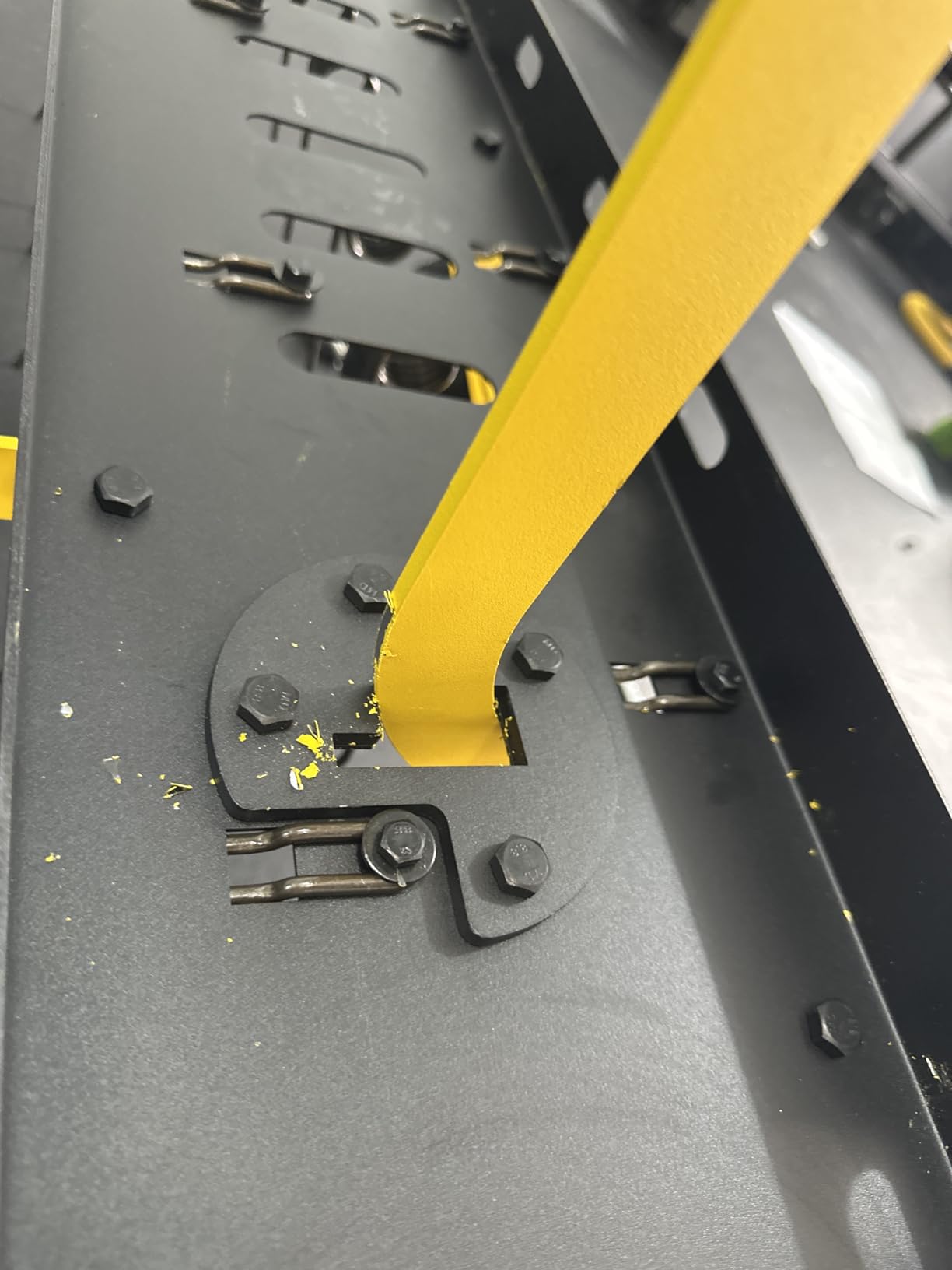
Construction is a heavy-duty carbon steel frame with bearing-supported wheels and a universal pin-style hitch that works with tractors, riding mowers, ATVs and UTVs. A 40-inch variant exists if 48 inches is awkward on your property. The adjustable height handle raises the tines for transport and lowers them for work.
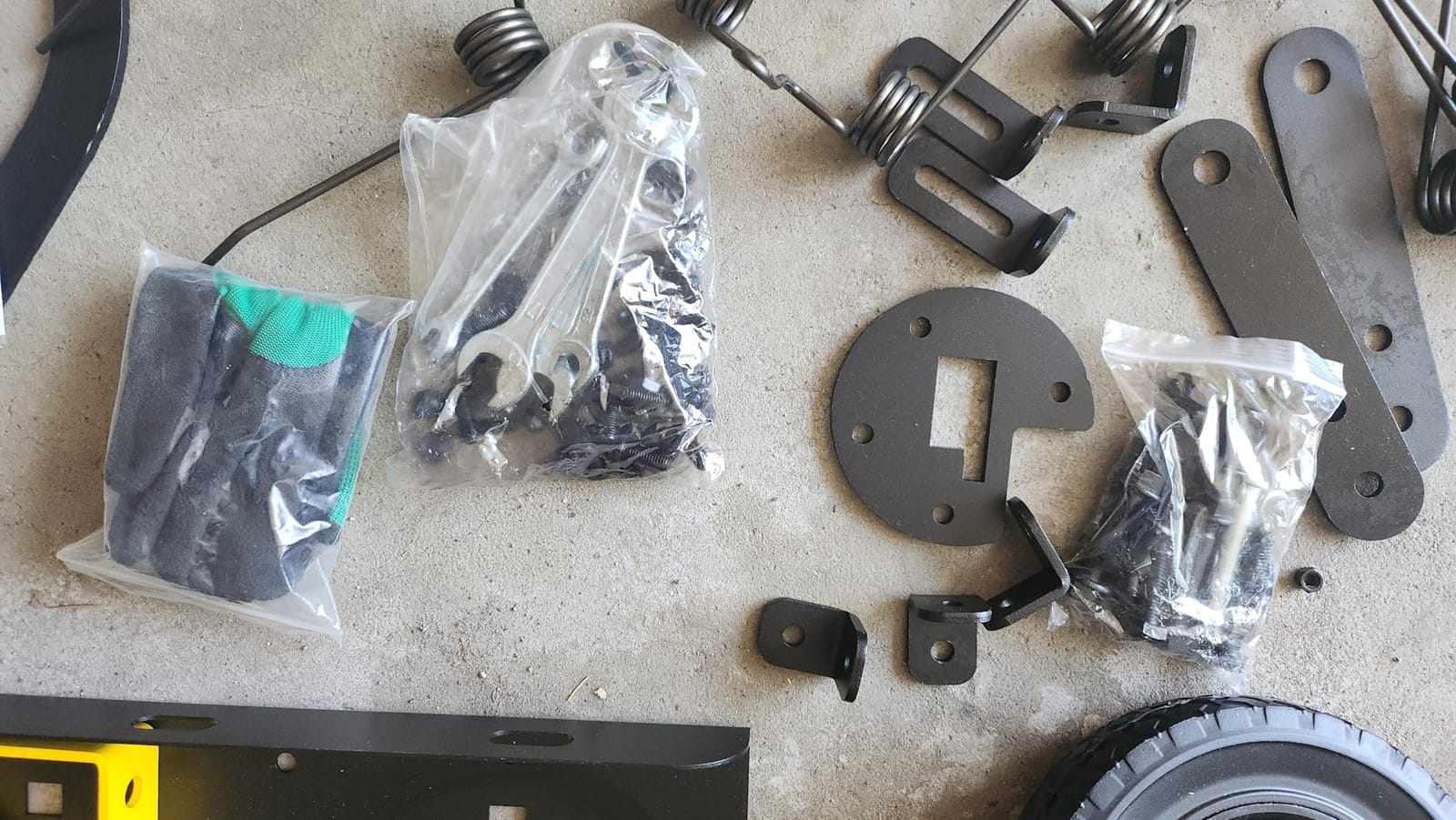
Assembly is the friction point, and specifically the orientation of the wheel and tine assembly, since the manufacturer label on the tray is on the rear. Owners also report that keeping the tines engaged on bumpy ground means holding the handle position continuously, which is tiring over a large lawn.
What you need to know before you buy it
Ballast is not optional on this machine. Owners highlight the 100 lb tray as the feature that lets the tines penetrate heavy thatch, and an empty tray on a matted lawn will underperform. Secure your ballast with straps, since a sliding load shifts the balance.
Avoid reversing while operating, as the manufacturer guidance notes, and check that your hitch pin matches. The review base is smaller than the Agri-Fab and Suchtale units, so replacement parts may take longer.
Who it suits and who should skip it
It fits owners with an acre or more, a tractor or ATV, and a thatch layer in the upper end of what a tow-behind can handle. The two-row tine layout and the large tray make it the most aggressive tow-behind in this guide.
Skip it if your ground is very uneven, since tine engagement becomes a constant fight, or if you have under an acre where a walk-behind with fine depth control is the better tool.
12. Westinghouse 16-Inch 2-in-1 Electric Dethatcher
Westinghouse 16″ 15-Amp 2-in-1 Electric Dethatcher and Scarifier with Collection Bag
15-amp motor up to 3500 RPM
16-inch working width
5 depth settings plus 3 handle heights
14.5-gallon bag
Pros
- Dethatcher head performs well on established lawns
- Scarifier head loosens soil well before overseeding or pasture conversion
- Only 29.5 pounds so it is easy to lift and fold for storage
- Assembles in minutes
- Holds power on a 75-foot 12/3 cord with a 20A outlet
Cons
- Collection bag fills quickly on larger areas and is of limited use
- Aerator and scarifier function is weaker than the dethatching function
- Unclear whether individual tines can be replaced when worn
- Smallest review pool among the 16-inch corded models here
The Westinghouse W16ADAC is the one to pick if your dethatching job is step one of a larger renovation. Its 15-amp motor runs up to 3500 RPM across a 16-inch working width, and the 20-blade scarifier head slices narrow channels into compacted soil, which is exactly what you want before overseeding or before converting part of a lawn to pasture.
Depth control is the best of the 16-inch corded group in one respect: five settings from minus 0.5 inch to plus 0.25 inch, plus three handle height positions. The handle folds down and there is a centre carry handle, and at 29.5 pounds the machine is light enough to lift into a car for a different property.
Owners report it holds power on a 75-foot 12/3 cord with a 20A outlet, which is a useful real-world ceiling. The head uses 24 spring tines for dethatching, and a quick-change knob handles the swap. A 2-year limited warranty and lifetime technical support are included, along with a 13-inch variant if your yard is smaller.
The bag is the recurring complaint, filling quickly on larger areas and of limited use in practice. It is also unclear whether individual tines can be replaced when they wear, so treat the roller as a consumable and check it each season.
What you need to know before you buy it
The scarifier function is weaker than the dethatching function, and owners say so directly. If you are buying it purely for dethatching, that is fine. If you want a serious verticutter-style slice, look at a scarifier-dedicated machine or a rental.
The 153-review pool is the smallest among the 16-inch corded models here, so you are buying on a thinner record of long-term ownership than the WEN or the Sun Joe.
Who it suits and who should skip it
It suits owners planning a fall renovation — dethatch, aerate, overseed — who want two functions in one machine and value a light, fast-folding frame for storage. It is also a good fit for parts of a property that need overseeding rather than full renovation.
Skip it if your priority is maximum thatch volume and you will not be bagging, since the bag is of limited use, or if you need a 20-blade-plus scarifying head working at full aggression.
Dethatcher vs Scarifier vs Power Rake vs Thatching Rake
These four tools get used interchangeably in retail listings, and that is the source of most disappointment in this category. A dethatcher uses flexible spring tines that lift thatch to the surface without cutting deeply into the soil. A scarifier uses rigid steel blades that slice into the turf, opening channels for air, water and seed while removing thatch. A power rake is the most aggressive of the three, closer to a verticutter, cutting into the root zone. A thatching rake is the manual version — a rake with heavy teeth used for spot work and small areas.
The practical rule is to match the tool to the depth you measured. Half an inch to three-quarters of an inch calls for a dethatcher. Three-quarters of an inch to an inch calls for a scarifier head or a 2-in-1 machine set to scarifying depth. Past an inch, you want a power rake, and renting one is usually more sensible than buying a machine for a job you will do once.
One caution on scarifying. Owners report that several 2-in-1 machines ship with the scarifier head installed, and that these blades cut grooves and can scalp a lawn even on low settings. Check which roller is mounted, and start a notch shallower than you think you need.
When to Dethatch and When to Leave Your Lawn Alone
For cool-season lawns — Kentucky bluegrass, tall fescue, perennial ryegrass — the windows are early spring once the grass has started to grow, and early fall. Fall is the better of the two because there is enough growing season left for the turf to recover and take new seed before winter. For warm-season lawns — Bermuda, zoysia, St. Augustine, centipede — the window is later spring through early summer, after the second mowing, once the grass is actively growing.
Grass type changes the tolerance as well as the timing. Thatch-prone species such as Bermuda, zoysia, Kentucky bluegrass and creeping bentgrass build mats fastest, partly because they spread by stolons and rhizomes. Clump-formers like tall fescue and perennial ryegrass are more forgiving, and tall fescue in particular rarely needs aggressive scarifying.
The second timing trap is moisture. Owners repeatedly advise dethatching when the grass is dry, because wet thatch gums up the tines and clogs the drum, and because a wet lawn is more easily damaged. A dry, slightly brown lawn is the right condition.
And there is a hard deadline. If you dethatch a cool-season lawn in late summer, you open bare soil to weed germination in exactly the window where crabgrass and other summer weeds thrive, and you may not have time for the turf to recover before dormancy. That combination is the most common self-inflicted lawn damage in this category.
How to Dethatch Without Damaging Your Lawn
First, mow short. Cut the lawn to around 1.5 to 2 inches a few days before, so the machine can reach the thatch layer without the blades disappearing into grass. Leaving long grass in place is the most common reason people think a dethatcher did not work.
Second, set the depth shallow on the first pass. On a five-position machine, start at the second notch rather than the fifth. You can always go deeper on a second pass; you cannot undo a scalped lawn in one weekend.
Third, dethatch in one direction first, at a slow steady pace. Then cross-hatch at right angles for a second pass. The cross-hatch matters because it catches mat that the first pass pushed sideways instead of lifting, and owners doing a single pass routinely leave streaks of untouched thatch behind.
Fourth, remove the debris. Empty the bag whenever it reaches the halfway point rather than waiting for it to overflow, and do a second pass with a raking mower or a leaf vacuum to collect what the dethatcher lifted. Owners report that the follow-up mower pass is what makes the result look finished.
Fifth, watch for signs you are going too deep. If you see bare soil, visible crown damage or grass pulling up in strips, stop and raise the setting immediately. Scalping is the failure mode that does not recover on its own within one season.
Sixth, clear obstructions as you go. On bermuda and other rhizome lawns, tines wrap around the runners and clog the drum. Stop every few passes, cut the wrapped material free with pruning shears, and keep moving. This is a maintenance habit, not a defect, but ignoring it stalls the motor.
What to Do in the Two Weeks After Dethatching
Water consistently. The root zone has just been opened to air, which is the point, but the exposed soil also dries out faster. Light, frequent watering keeps the crown alive and the soil soft enough for seed to contact.
Aerate next if the soil is compacted, which is the usual reason the thatch built up in the first place. Then overseed, then fertilize. Owners on r/lawncare describe fall dethatching and overseeding as a single project, which is the right way to think about it — one window, one pass with the aerator, one pass with the spreader.
Hold off on heavy fertilizer until the new grass is up. Feeding a dethatched lawn too early pushes nutrients into bare soil where weeds can use them more easily than thin turf can.
Buying Guide: What Matters Most for Thick Thatch
Depth adjustment beats raw power. For a thick mat, the ability to set tine depth in fine increments is what separates a satisfying pass from a frustrating one. Five positions is a good standard; three positions and fixed tine height are entry-level compromises. Amps and RPM matter, but they matter less than being able to walk the depth back gradually.
Working width decides your time budget. A 13 to 15 inch path suits a quarter acre. A 16 inch path covers half an acre comfortably. Above an acre, a 48-inch tow-behind is the only sensible option, and past two acres you should be weighing rental against ownership seriously.
Tine material tells you how a machine handles a real mat. Steel tines and heat-treated spring tines hold their shape and bite. The thinnest flexible tines are designed for spring cleanup of light buildup and will skip across a dense mat. The number of tines matters too, and 20 or more steel tines is a stronger setup than 20 light-gauge ones.
Bag capacity is a trap. Nearly every owner report in this group mentions the bag filling almost immediately, and the honest answer is that bags on these machines are for transport between zones, not for a full lawn. Plan a follow-up collection pass or dethatch bagless, and if you have a real volume job, look at a machine that handles debris differently.
Cord gauge is the detail that decides whether a corded machine feels powerful. A 13-amp motor at the end of a long thin extension cord will bog down, and it will feel weak. Stay within 50 feet on 14 AWG, or use 12 AWG for a run up to 100 feet. Several manufacturers publish this guidance and several do not.
On cordless platforms, be realistic. None of the cordless ecosystems we looked at — Ryobi ONE+ HP, EGO POWER+, Craftsman V20 — currently field a dedicated dethatcher in this roundup, so the practical argument for a corded machine here is that you may already own the extension cord and outlet access that it needs. The counterargument is that battery runtime is the limiting factor for acreage, not motor output, which is why tow-behinds and rentals dominate large-lawn dethatching.
Weight matters more than spec sheets admit. The spread here runs from 24.8 pounds to 57.3 pounds, and a heavy machine on a sloped or heavily planted yard is a real problem. Look for a foldable handle and flat-free wheels, and plan your passes to minimise lifting.
For more detail on the entry-level end of the category, our tested lawn dethatcher guide breaks down the smaller machines separately.
Frequently Asked Questions
How to dethatch a very large lawn?
For a lawn over an acre, use a 48-inch tow-behind dethatcher pulled by a riding mower or tractor, or rent a power rake by the day. Ballast the tray so the tines penetrate the mat instead of skipping. Mow short first, dethatch in one direction, then cross-hatch at right angles, and plan a follow-up mower pass to collect debris. Cordless runtime and cord reach both limit walk-behinds on acreage, which is why tow-behinds dominate large-lawn dethatching.
What is the best month to dethatch your lawn?
For cool-season grasses such as Kentucky bluegrass and tall fescue, early spring once growth starts or early fall, with fall preferred so the lawn can recover and take new seed before winter. For warm-season grasses such as Bermuda and zoysia, wait until late spring through early summer, after the second mowing, when the grass is actively growing. Dethatch dry grass, never wet, and avoid late summer on cool-season lawns.
Is it better to scarify or dethatch?
Dethatch when thatch is the problem: spring tines lift the layer to the surface without cutting deep into the soil. Scarify when the problem is compaction or you are overseeding: rigid steel blades slice channels into the turf so air, water and seed reach the soil. Most 2-in-1 machines do both, so the mode switch matters more than the choice of machine. Below three-quarters of an inch of thatch, dethatching is usually enough.
Can you dethatch a lawn too much?
Yes, and it is the most common self-inflicted damage. Setting tines too deep scalps the lawn, cutting grass crowns and roots, and bare areas that open up after dethatching are prime targets for weed germination. Start on a shallow setting, work down one notch per session, and stop the moment you see bare soil or turf pulling up in strips. Dethatching a lawn that does not need it damages it without solving anything.
How late is too late to dethatch?
Too late is any point where the turf will not recover before dormancy. On cool-season lawns, dethatching in late summer leaves bare soil exposed during the window when crabgrass and other summer weeds germinate, and the lawn may not thicken up before winter. Aim for early fall, roughly six to eight weeks before your first frost, so overseeded grass has time to establish. On warm-season lawns, stop well before the grass slows for summer stress.
Should I dethatch my lawn before or after fertilizing?
Dethatch first, then fertilize. Dethatching opens the soil surface, and applying fertilizer before that work means you waste product on debris and on bare soil where weeds can use it more easily than thin turf can. The working order is dethatch, remove debris, aerate if the soil is compacted, overseed, then fertilize once new grass is up. Water lightly and often through the first two weeks.
Should I thatch or dethatch my lawn?
You want dethatching. Thatch is the name of the layer itself, a mat of dead grass, roots and organic debris between the soil and the green blades. Thatching is not a separate task, though a manual thatching rake is sometimes called a dethatching rake and is useful for spot work in beds and corners. Measure your thatch depth first: under half an inch needs no work at all.
Does fescue grass need to be dethatched?
Less often than most grass. Tall fescue is a clump-former rather than a spreader, so it builds thatch more slowly than Bermuda, zoysia or Kentucky bluegrass. When buildup does occur, dethatch in early spring or early fall and expect a lighter job than on a spreading warm-season lawn. Be gentler with fescue than with bermuda, since aggressive scarifying on a fine-bladed cool-season turf invites scalping and thin patches that take a full season to close.
Final Verdict on the Best Dethatchers for Thick Lawns in 2026
Measure your thatch before you spend anything. Half an inch needs no work, three-quarters of an inch is where a walk-behind dethatcher earns its keep, and an inch or more is a rental or a professional job. Our pick for most thick-lawn owners is the Sun Joe AJ808E, because its 15-amp corded motor, switchable dethatcher and scarifier rollers and enormous review base make it the most proven machine in the group. The WEN DT1516 is the value alternative, with the widest 16-inch path, 24 steel tines and five depth positions. Above an acre, the Agri-Fab 48-inch and the BlumeTrec 48-inch cover ground that a walk-behind simply cannot.
Whichever one you choose, dethatch dry grass, start shallow, cross-hatch your passes, and follow with aeration and overseeding. That last step is what turns a rough-looking lawn into a thicker one.