
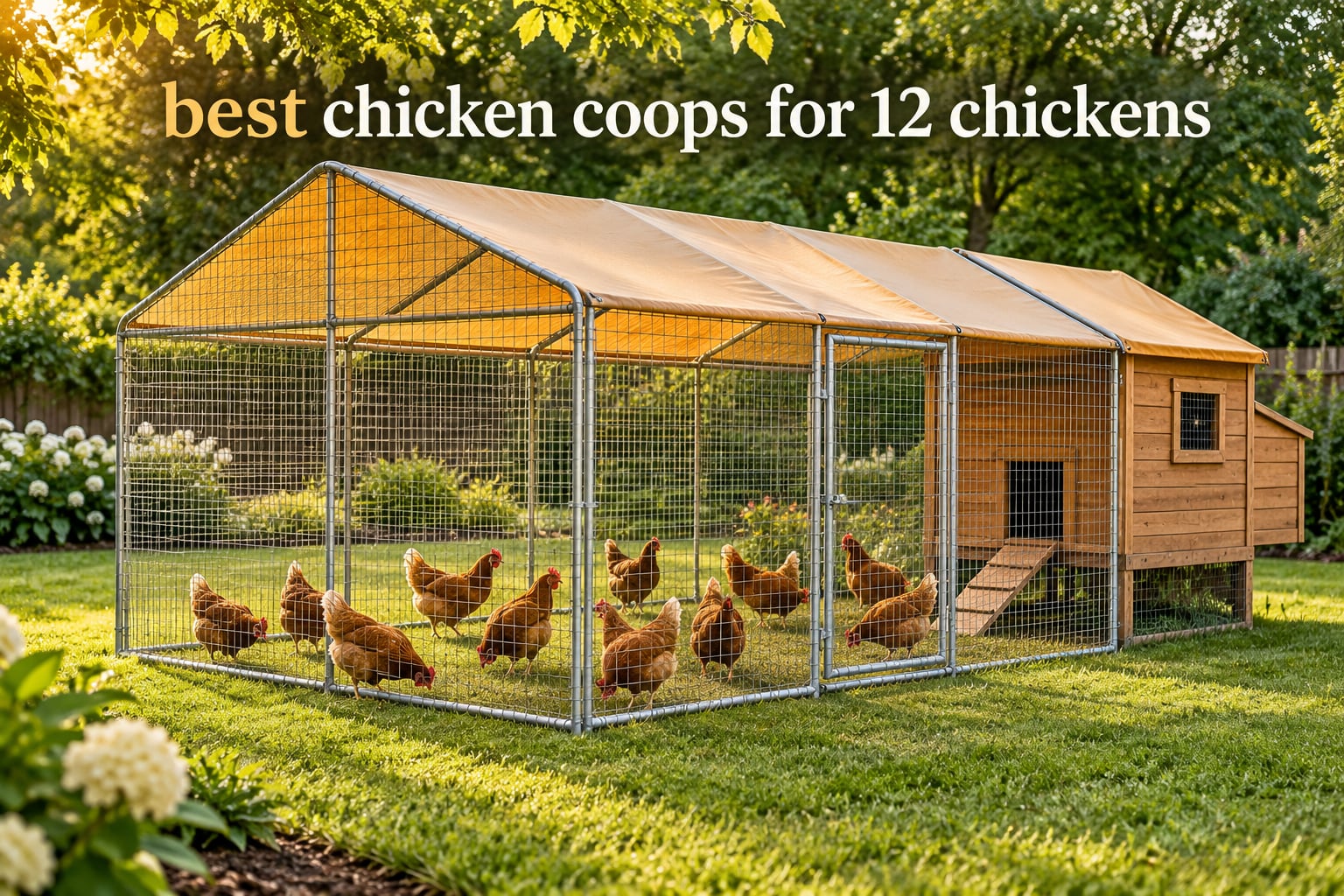
A dozen hens is the point where chicken keeping stops being casual. Below six birds, almost any shelter works and the flock sorts itself out. At twelve, every square foot, every nesting box and every inch of mesh gets tested by birds that are competing for the same roost bar every night.
So how do you find the best chicken coops for 12 chickens? The honest answer starts with a number most shoppers skip: 12 standard-size hens need roughly 48 square feet of enclosed indoor floor space and 96 to 120 square feet of run. Brands label their coops for 12 birds by counting the birds they want to sell, not the birds the structure comfortably holds.
We compared the 12 coops in this roundup against that math, and one finding came up again and again. Almost everything available in this category is an outdoor run or pen, not an enclosed overnight hen house. You will still need a roofed, ventilated structure with a pop door to house 12 birds overnight safely. Several of the runs below are designed to be bolted alongside a wooden coop, and we flag that clearly for each one.
What we did find is a wide range of run sizes and mesh quality at very different price points, from a small 9.8-foot metal unit to a 33-foot walk-in pen. The differences that matter for a 12-bird flock are run footprint, whether the mesh is hardware cloth or hexagonal wire, whether the base is dig-proof, and whether the frame is heavy enough to survive a winter. Our best chicken coops guide covers the smaller flocks, and the walk-in coop roundup goes deeper on human access for bigger housing.
Table of Contents
Top 3 Picks for Best Chicken Coops for 12 Chickens (October 2026)

CHIKENCOOP 9.8 x 6.5 ft Metal Run
- Walk-in 9.8 x 6.5 x 6.5 ft space
- Reinforced galvanized frame
- 47 x 40 in eucalyptus perch
- UV-resistant peaked cover
VEVOR 13.1 x 9.8 ft Metal Coop
- 13.1 x 9.8 x 6.6 ft enclosed area
- 1 inch galvanized steel frame
- Hexagonal mesh on all sides
- Dome roof PE tarp

NUGRIART Walk-In Metal Coop
- 1 inch galvanized steel tubing
- PVC-coated hexagonal mesh
- Spire roof frame
- Lockable metal latch
Quick Overview: 12 Chicken Coops Compared in 2026
Every run below lists its published footprint and the mesh type that decides how much predator work you still have to do. We have sorted them by how well the size fits a flock of twelve.
| Product | Specifications | Action |
|---|---|---|
| CHIKENCOOP 9.8 x 6.5 ft Metal Run |
|
Check Latest Price |
| VEVOR 13.1 x 9.8 ft Metal Coop |
|
Check Latest Price |
| NUGRIART Walk-In Metal Coop |
|
Check Latest Price |
 Belinova Metal Coop with Hardware Cloth Belinova Metal Coop with Hardware Cloth |
|
Check Latest Price |
 Quictent Run for 30+ Poultry Quictent Run for 30+ Poultry |
|
Check Latest Price |
 PawHut 33 ft Poultry Run PawHut 33 ft Poultry Run |
|
Check Latest Price |
 Quictent 12×9 ft Ladder Edition Quictent 12×9 ft Ladder Edition |
|
Check Latest Price |
 CAMMOO 13.1 x 9.8 ft Walk-In Coop CAMMOO 13.1 x 9.8 ft Walk-In Coop |
|
Check Latest Price |
 Outvita 13 x 10 ft Chicken House Outvita 13 x 10 ft Chicken House |
|
Check Latest Price |
 Ketive Cedar Coop with Wheels Ketive Cedar Coop with Wheels |
|
Check Latest Price |
 Aoxun 10 x 20 ft Metal Coop Aoxun 10 x 20 ft Metal Coop |
|
Check Latest Price |
 Quictent Essential 12×9 ft Run Quictent Essential 12×9 ft Run |
|
Check Latest Price |
1. CHIKENCOOP 9.8 x 6.5 ft Metal Chicken Coop – Best Overall Run
CHIKENCOOP 9.8 x 6.5 x 6.5 ft Metal Chicken Coop, Chicken Run with Cover
9.8 x 6.5 x 6.5 ft walk-in run
Reinforced galvanized metal frame
47 x 40 in wood perch
59 pounds
Pros
- Roomy walk-in footprint with 6.5 ft head height
- Reinforced frame with corner braces cuts wobble
- Real wood roosting perch included
- Labeled parts and about 2 hours to assemble
Cons
- Cover and frame need extra anchoring in wind
- Tarp cover is the part owners replace first
This is the run we kept coming back to, and the reason is the review volume. At 1622 reviews with a 4.2 average, it has more owner history than anything else in this roundup by a wide margin, and that history is unusually consistent. Buyers describe a roomy walk-in space that is comfortable to work inside, which matters more than raw square footage once you are crouching in there with a rake.
The frame is the part that impressed us most. It uses bottom corner braces plus an extra rear support pole, and those reinforcements are exactly what cheap metal runs are missing. Unreinforced tube frames flex sideways when a hen leans on the mesh, and flexing is what eventually pops a joint loose in wind.
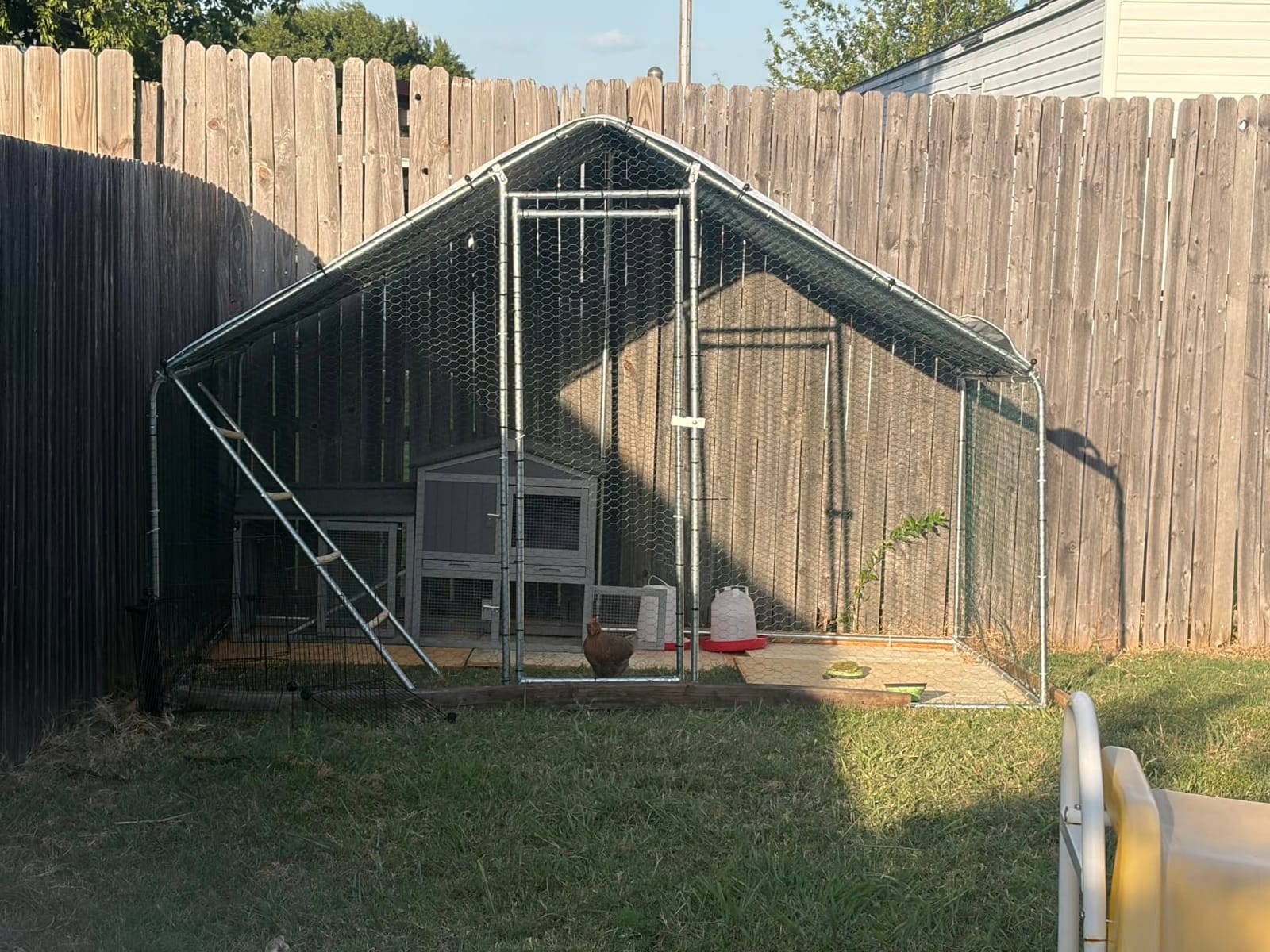
The included 47 x 40 inch natural eucalyptus roosting perch is a genuine bonus. Most metal runs ship with nothing to perch on, which means birds roost on the frame itself or you are bolting in your own roost bar anyway. This one gives them a proper flat surface at no extra cost.
The waterproof, UV-resistant peaked cover detaches for cleaning and sheds both rain and snow, and the peaked shape is better than a flat roof for runoff. The whole unit weighs 59 pounds, which is light enough to reposition alone once it is up.
What to check before you buy
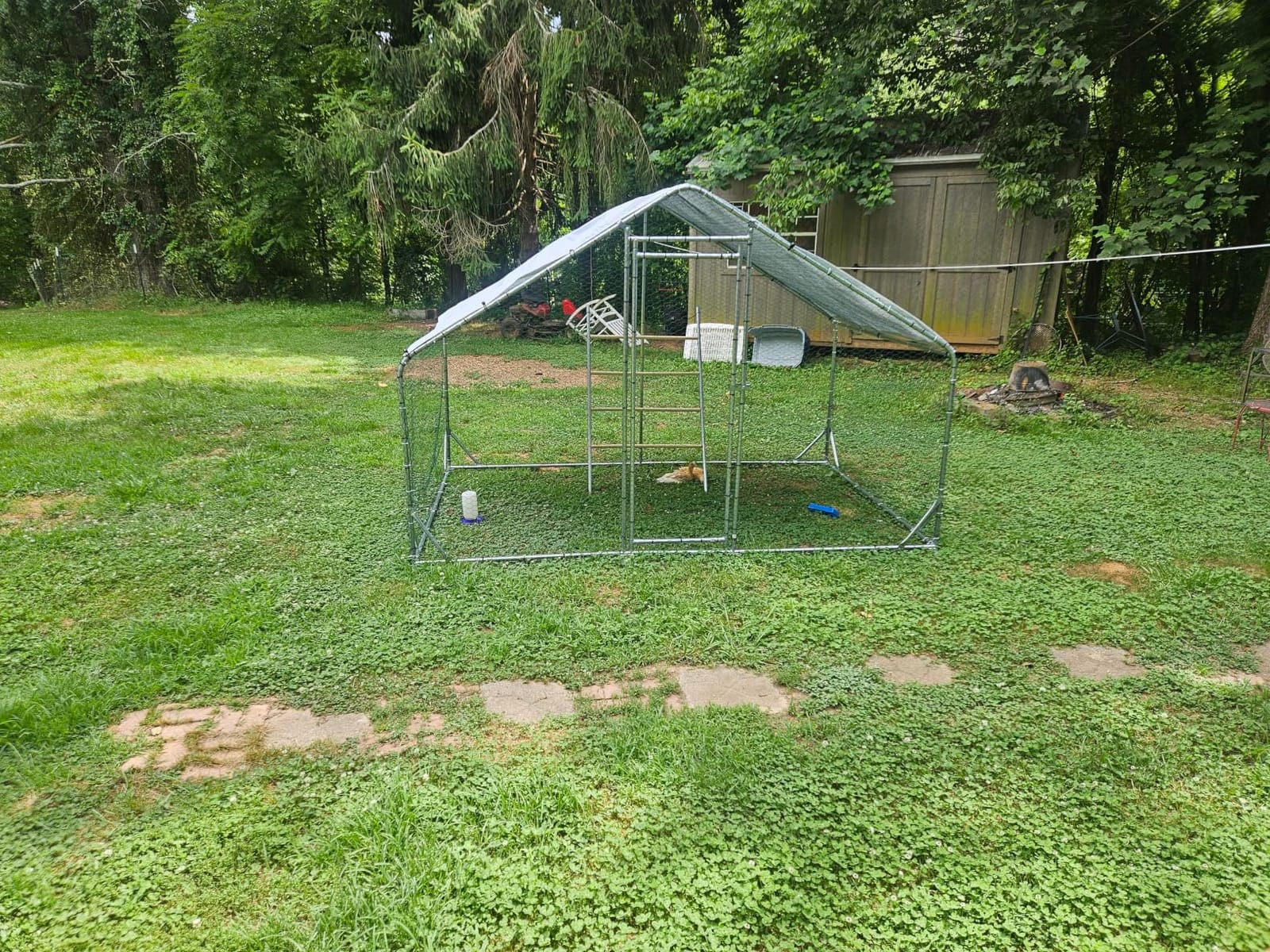
At 9.8 by 6.5 feet, this is on the smaller side for a 12-bird flock. It is rated as a run, not a whole-flock housing solution, so plan on pairing it with a separate enclosed hen house. The 6.5 ft peak height is genuinely useful because you can stand and rake bedding without crouching.
Owners report that the tarp cover and the frame both want extra anchoring in windy conditions. Budget time to stake it properly rather than setting it on level ground and hoping.
Who this suits and who it does not
This suits a keeper who free-ranges during the day and wants a cleanable, walk-in daytime pen attached to a smaller night coop. It also suits anyone who values a light unit they can move occasionally without needing a second pair of hands.
It does not suit a flock that stays inside overnight, or a buyer who wants a drop-in solution for twelve birds with no additional structure required. Check our automatic chicken coop door roundup if you are planning a night house and want the birds let out on their own.
2. VEVOR 13.1 x 9.8 ft Large Metal Chicken Coop – Best Value for Floor Area
VEVOR Large Metal Chicken Coop with Run, 13.1 x 9.8 x 6.5 ft Walkin Chicken Coop for Yard with Waterproof Cover, Dome Roof Large Poultry Cage for Hen House, Duck Coop and Rabbit Run
13.1 x 9.8 x 6.6 ft enclosed area
1 inch galvanized steel pipe
73.6 pounds
Two-person assembly
Pros
- Enormous enclosed floor area for the build
- Solid 1 inch galvanized steel pipe frame
- Hexagonal mesh on all four sides
- Dome roof tarp sheds water and light snow
Cons
- Open base is not predator-proof as shipped
- Assembly needs two people
Measured purely by enclosed floor area for the build, it is hard to argue with. The 13.1 by 9.8 foot footprint with four-sided ventilation sits in the upper half of this roundup for size, and it does it without the hardware-cloth upgrade the top picks carry.
The frame uses 1 inch thick galvanized steel pipe with precise welding, which is the right gauge for a structure this wide. Owners repeatedly call the frame sturdy, and the hexagonal wire mesh on all sides holds its shape rather than sagging away from the frame.
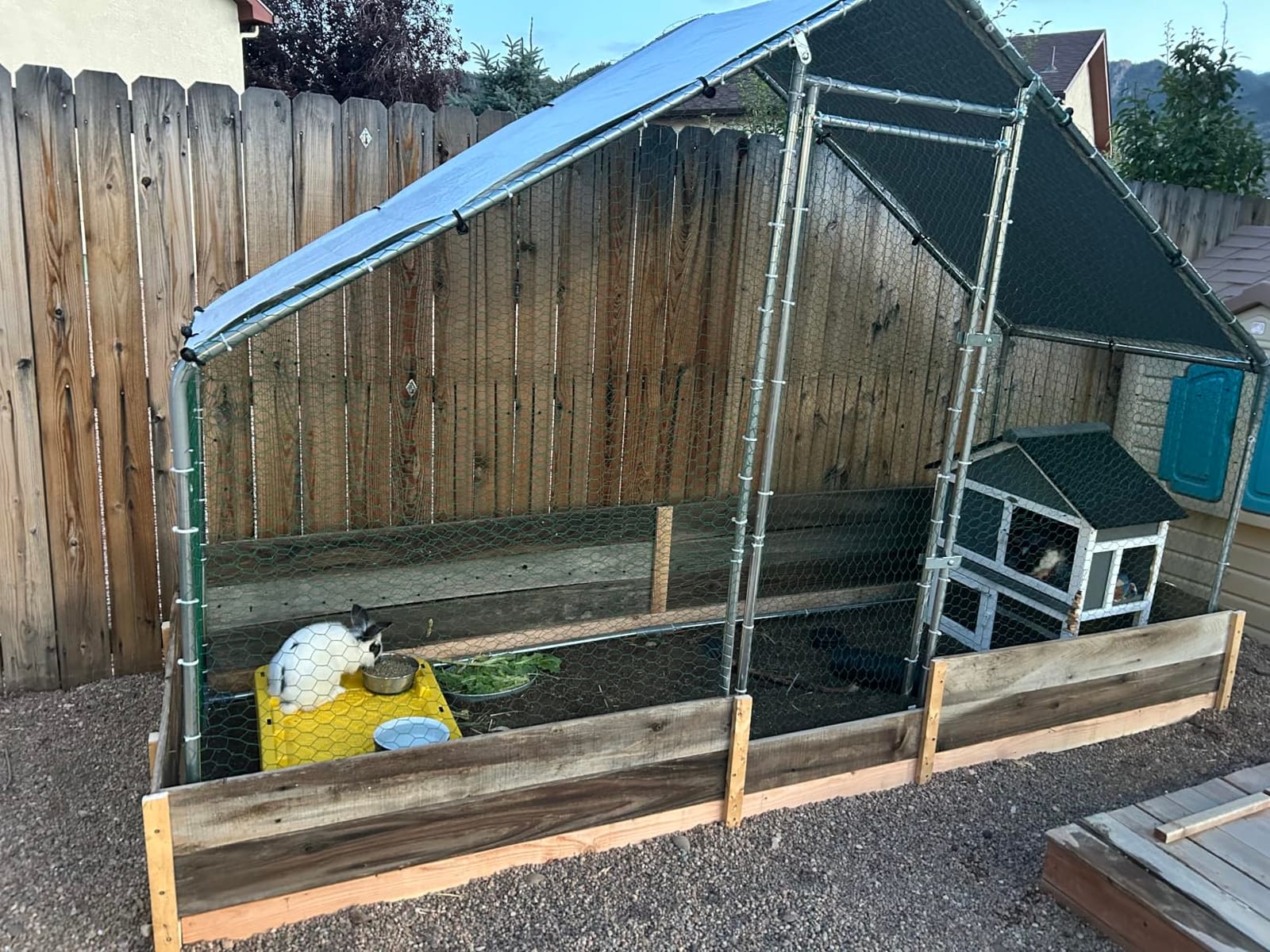
The PE-coated waterproof tarp sits under a dome roof, and the dome shape is why it sheds water, debris and light snow better than a flat tarp stretched over a rectangle. Four-sided ventilation also means real airflow through the structure, which keeps humidity down in summer.
It is also genuinely multipurpose. Buyers use it for ducks, rabbits, quail and other small animals, and the tall 6.6 ft walls mean an adult can walk in rather than crouch. At 73.6 pounds it is manageable but not a one-person lift in wind.
The base is the thing to fix
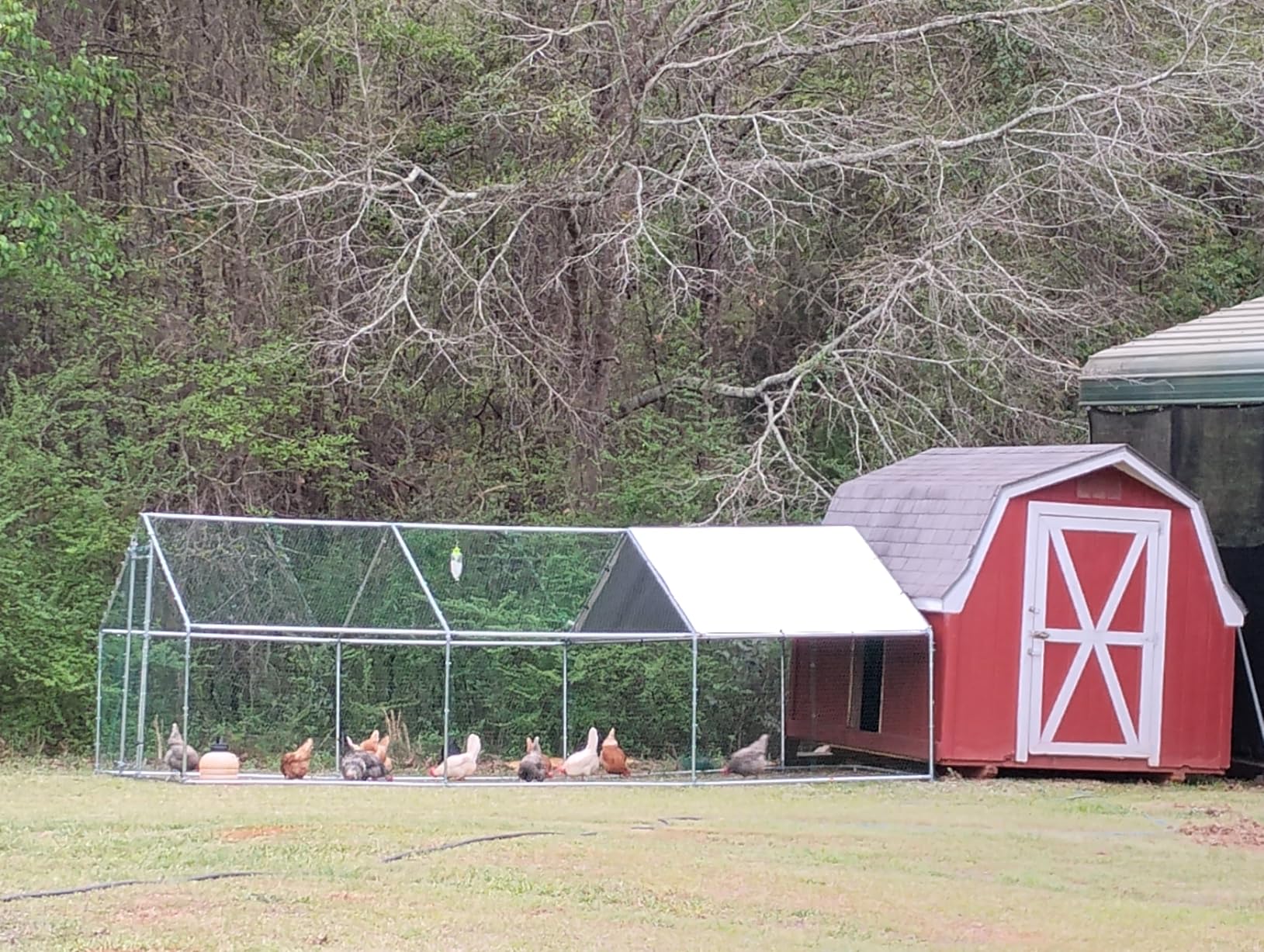
The manufacturer’s own guidance is to add wire, wood or stones at the base for predator protection, and that is not optional advice. An open bottom on a structure this size is a front door for digging predators and for rats moving in under the run.
Plan on laying half-inch hardware cloth across the base and burying a 12 to 18 inch apron down the sides. It adds an afternoon of work and it is the difference between a secure run and a run that loses birds.
Who this suits
This suits a keeper who wants maximum run area and has a helper available for assembly. It is a strong match for a 12-bird flock on a budget, particularly if you already have a hen house and just need daylight space.
It does not suit anyone who wants zero assembly or anyone planning to leave it up without modifying the base. Two people are recommended for the build.
3. NUGRIART Large Walk-In Metal Coop – Best for a Heavy-Gauge Frame
NUGRIART Large Metal Chicken Coop Walk-in Poultry Cage Hen Duck Run House with Waterproof & Anti-UV Cover Galvanized Rabbits Habitat Spire Shaped Cage for Outdoor Yard Farm Use
1 inch galvanized steel tubing
PVC-coated hexagonal mesh
Spire-shaped roof frame
Lockable latch
Pros
- Thick 1 inch galvanized steel resists rust and wind
- PVC-coated mesh is tight against many predators
- Lockable metal latch on the access door
- Spire roof drains rain and debris well
Cons
- Connection points are the hardest part of assembly
- Smaller than most units in this roundup
The 4.3 rating here is the second highest in the roundup, and it comes from a specific strength rather than from a feature checklist. The frame is 1 inch diameter galvanized steel with reinforced connections, described as thicker than most of what is on the market, and owners confirm it holds up in wind and heavy rain.
The PVC-coated hexagonal mesh is a step above plain galvanized wire. The coating resists corrosion and the weave is tight enough that many predators lose interest, which matters if you are dealing with anything smaller than a raccoon.
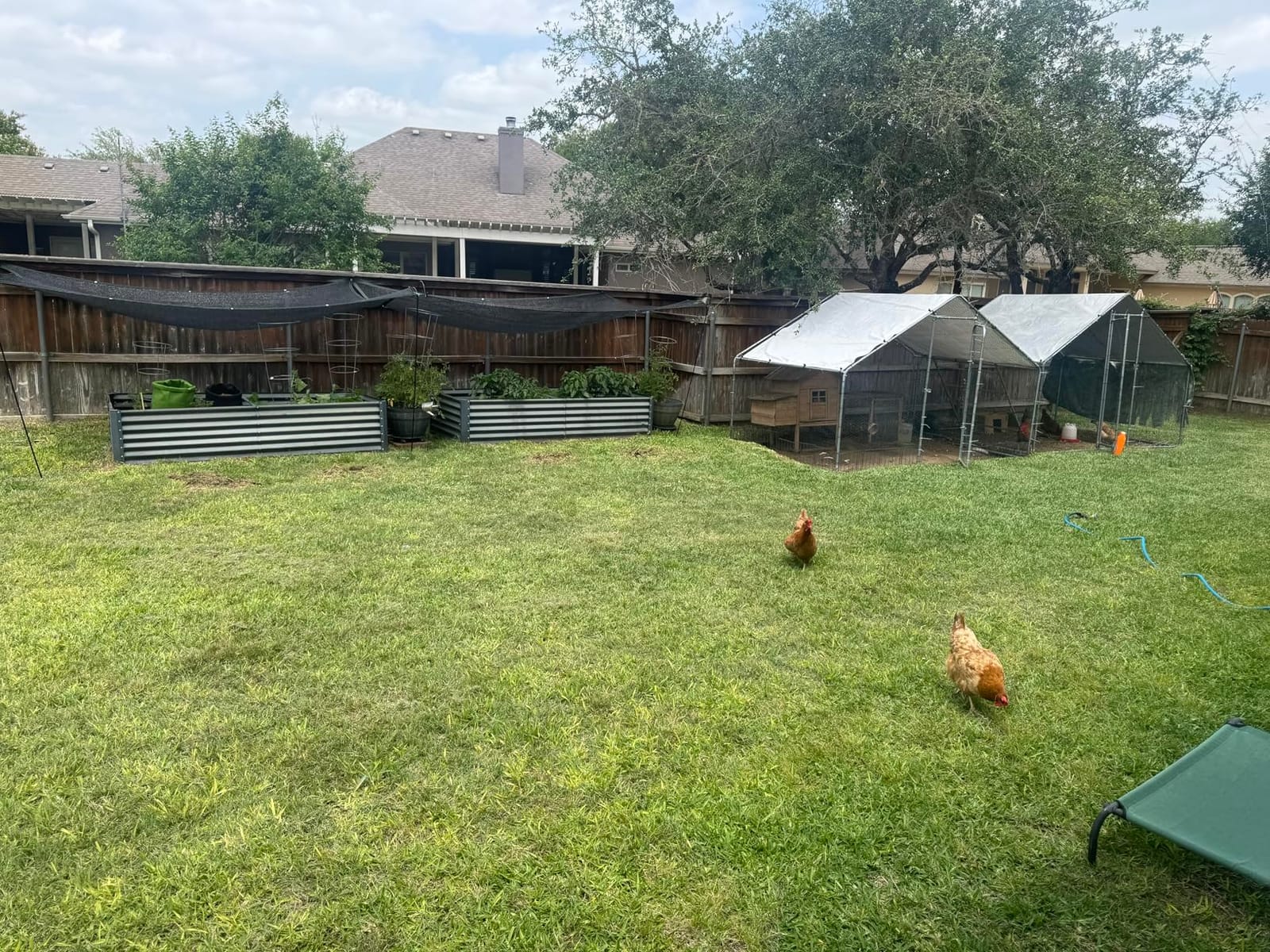
The spire-shaped roof frame is worth noting for a 12-bird flock specifically. A pointed roof sheds rain, snow and debris into a narrow line rather than a wide sheet, and debris that sits on a run roof is debris that rots into it.
A metal latch on the access door does two jobs. It keeps birds contained during cleaning and feeding, and it stops a determined raccoon from lifting the door the way it can with a simple gravity latch.
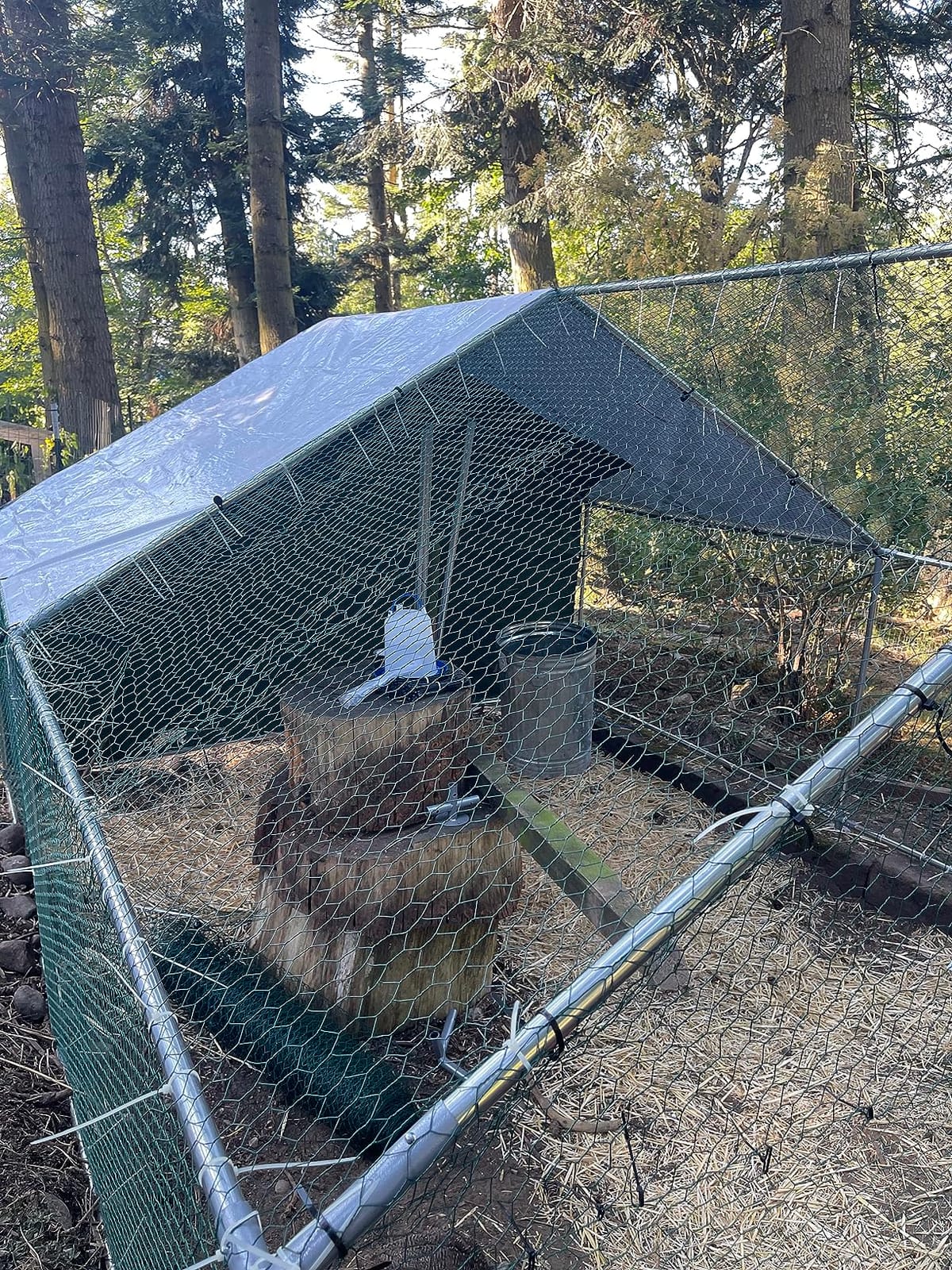
Assembly is the honest weakness
The connector-heavy frame is the most cited friction point in reviews, and the manufacturer advises wearing gloves for installation. Two things help: laying out and sorting every connector before you start, and setting the frame on flat ground where you can reach all four sides.
The spire frame also means the footprint is smaller than the dimensions suggest, so check the 118 by 79 by 79 inch frame against your 12-bird run math before committing.
Who this suits
This suits a buyer who wants a frame that will survive several seasons of wind and rain without rusting, and who is comfortable spending an hour on assembly. It is a solid daytime run for a flock of about a dozen birds.
It does not suit a first-time keeper who wants a fully finished hen house, or anyone who needs a structure that holds a much larger flock later.
4. Belinova Metal Coop with Hardware Cloth – Best for Solar Lighting
Metal Chicken Coop with Hardware Cloth, Walk-in Poultry Cage for Hen Duck
Hardware cloth mesh instead of wire
Interior rated for 15-20 birds
Built-in solar LED light
62.3 pounds
Pros
- Hardware cloth resists predator biting and scratching
- Galvanized frame and taut PE cover resist rust and sag
- Interior rated for 15-20 birds
- Solar LED light needs no wiring or batteries
Cons
- Sits above the basic metal runs in this group
- Needs flat level ground to anchor
This is the first unit in our order that ships with hardware cloth rather than hexagonal wire, and that single change is the whole argument. Hardware cloth is welded and holds a fixed aperture, so a weasel or a mink cannot work at it the way they can with twisted wire. For a flock of twelve, that difference matters more than the extra few feet of run space.
Owners specifically call out the mesh as tougher than typical hexagonal wire and resistant to biting and scratching. The galvanized frame and UV-resistant PE cover with elastic ball straps are praised for staying taut season after season rather than bagging out.
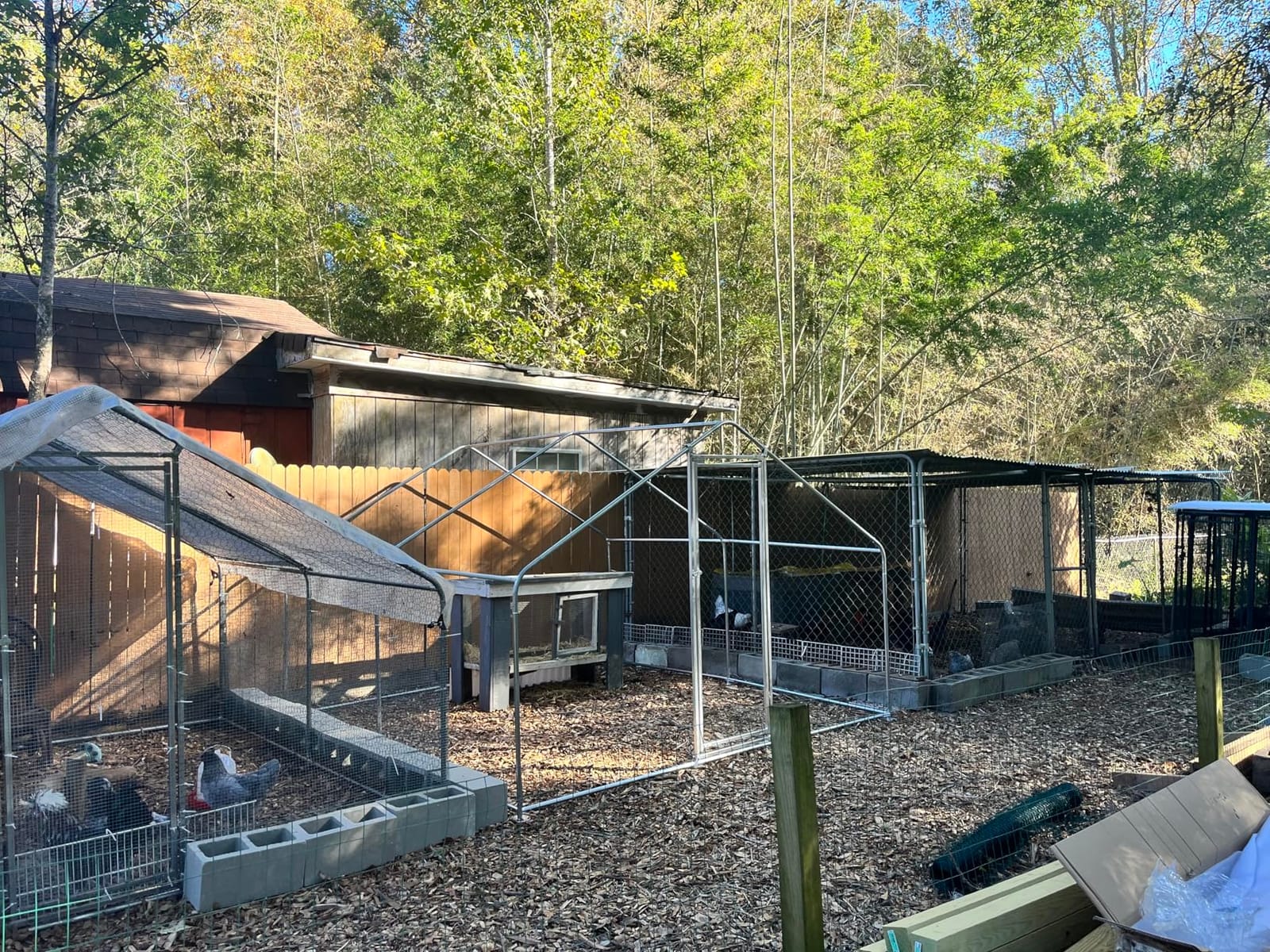
The built-in solar panel with automatic LED lighting at dusk is the feature owners mention most often in positive terms. For a coop set up away from an outlet, that removes the single most common electrical upgrade, and it needs no wiring and no batteries.
The interior is rated roomy enough for 15 to 20 birds at full walk-in height, which means a flock of twelve has genuine headroom here. Open mesh airflow also keeps it workable on hot days, and that matters in the South and the Southwest.
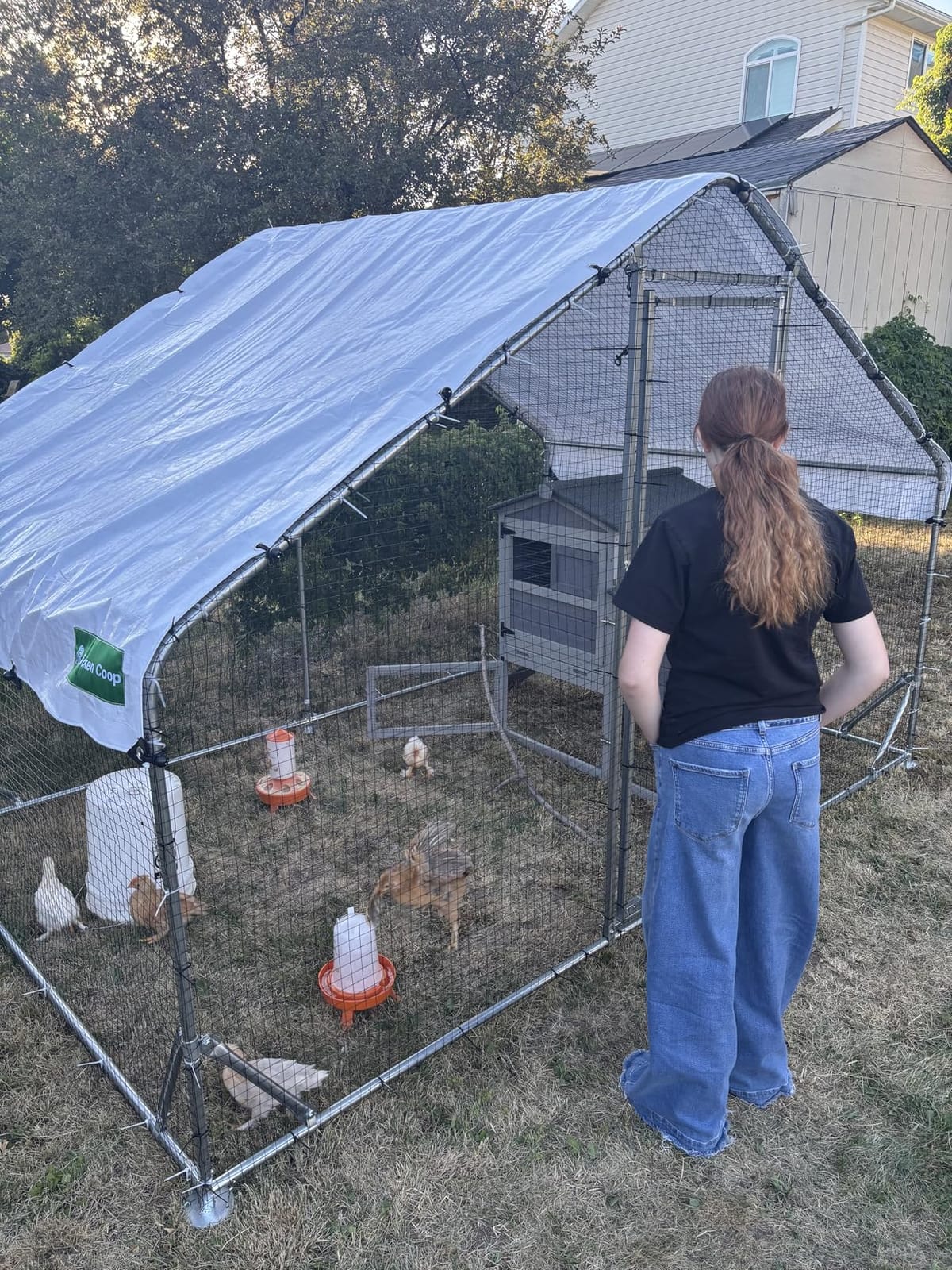
What to check before you buy
Two things. It sits above the basic metal runs in this roundup, so compare it against the cost of buying a cheaper run and adding hardware cloth yourself. The lockable sliding door has a padlock tab and ground stakes are included, which handles wind anchoring better than most of this category.
It also needs flat, level ground for proper anchoring. On a slope you will be fighting the frame rather than using it.
Who this suits
This suits a keeper who is losing sleep over weasels, or who has lost hens to smaller predators before. It also suits anyone whose run is not near a power outlet and who wants dusk-to-dawn visibility without running a cable.
It does not suit a strict budget buyer, since hardware cloth on its own is a meaningful upgrade over the mesh on the cheapest units.
5. Quictent Run for 30+ Poultry – Best if the Flock Will Grow
Quictent Large Metal Chicken Coop Run for 30+ Poultry w/Side Hardware Cloth
214.5 x 107.3 x 78 inch run
1 x 1 inch welded hardware cloth
Extended ground skirt
112.2 pounds
Pros
- Sized for 30+ poultry with room to spare
- Welded hardware cloth resists digging and chewing
- Extended ground skirt and dual-latch door
- 750 cable ties included so no extra shopping
Cons
- Over 110 pounds so assembly needs help
- Side and back covers are not included
This is the one to buy if chicken math is going to happen to you. The 214.5 by 107.3 inch footprint is rated for 30-plus poultry, so a flock of twelve today leaves room for a second flock, a batch of brooder-raised pullets, or ducks and rabbits sharing the space.
Unlike most of the roundup, the side walls use 1 x 1 inch 20 gauge welded hardware cloth with a thickened PVC coating. Welded mesh does not stretch or unravel when something pushes on it, and the extended mesh ground skirt is built to stop burrowing predators rather than being an add-on you buy later.
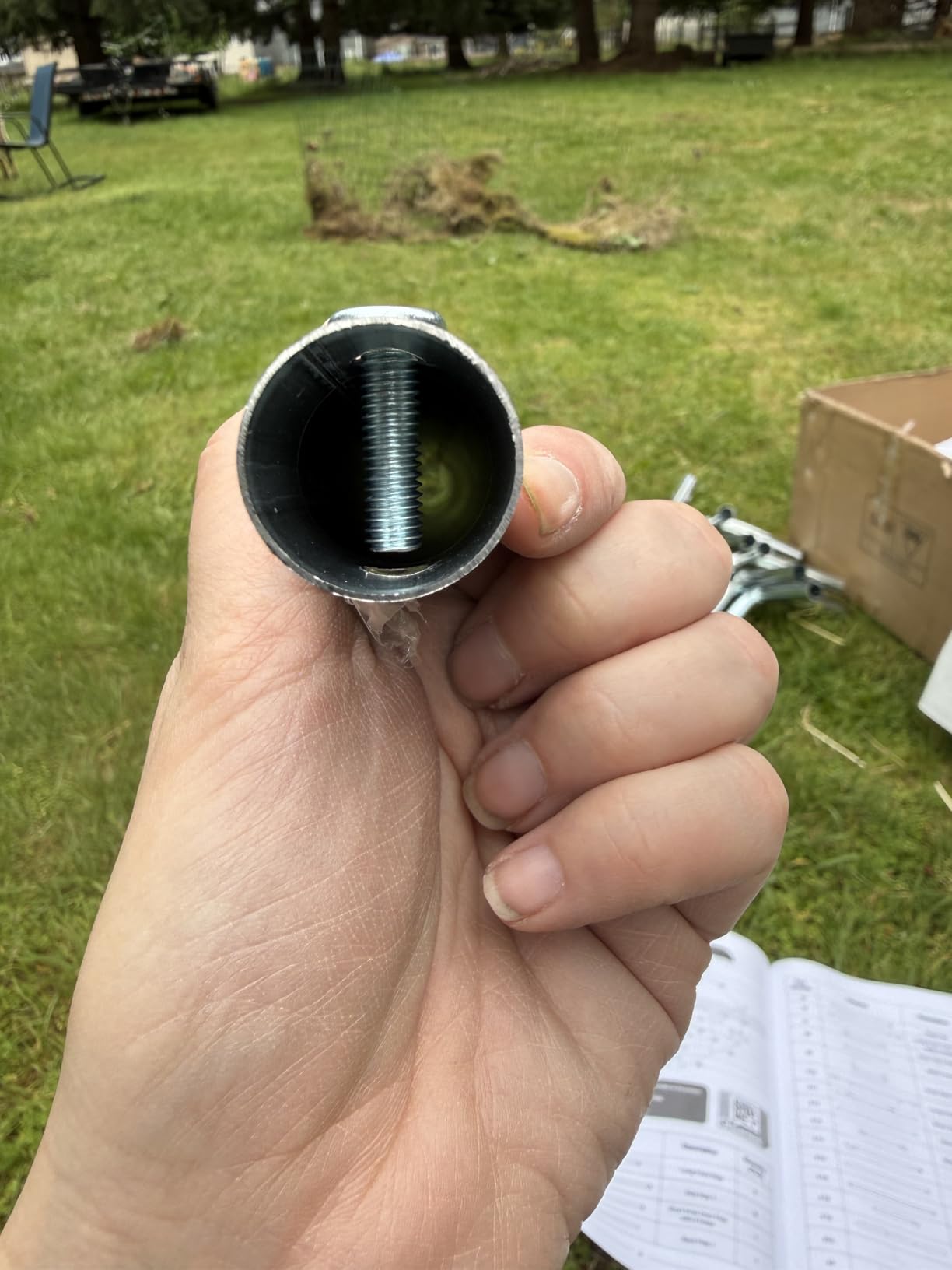
Structure is 1 inch diameter rust-free poles with 8 support bars and triangular corner poles, which is why it holds shape across a span this long. The dual-latch door is a real improvement over a single gravity latch, and 1 inch poles resist flex when birds lean on the wall.
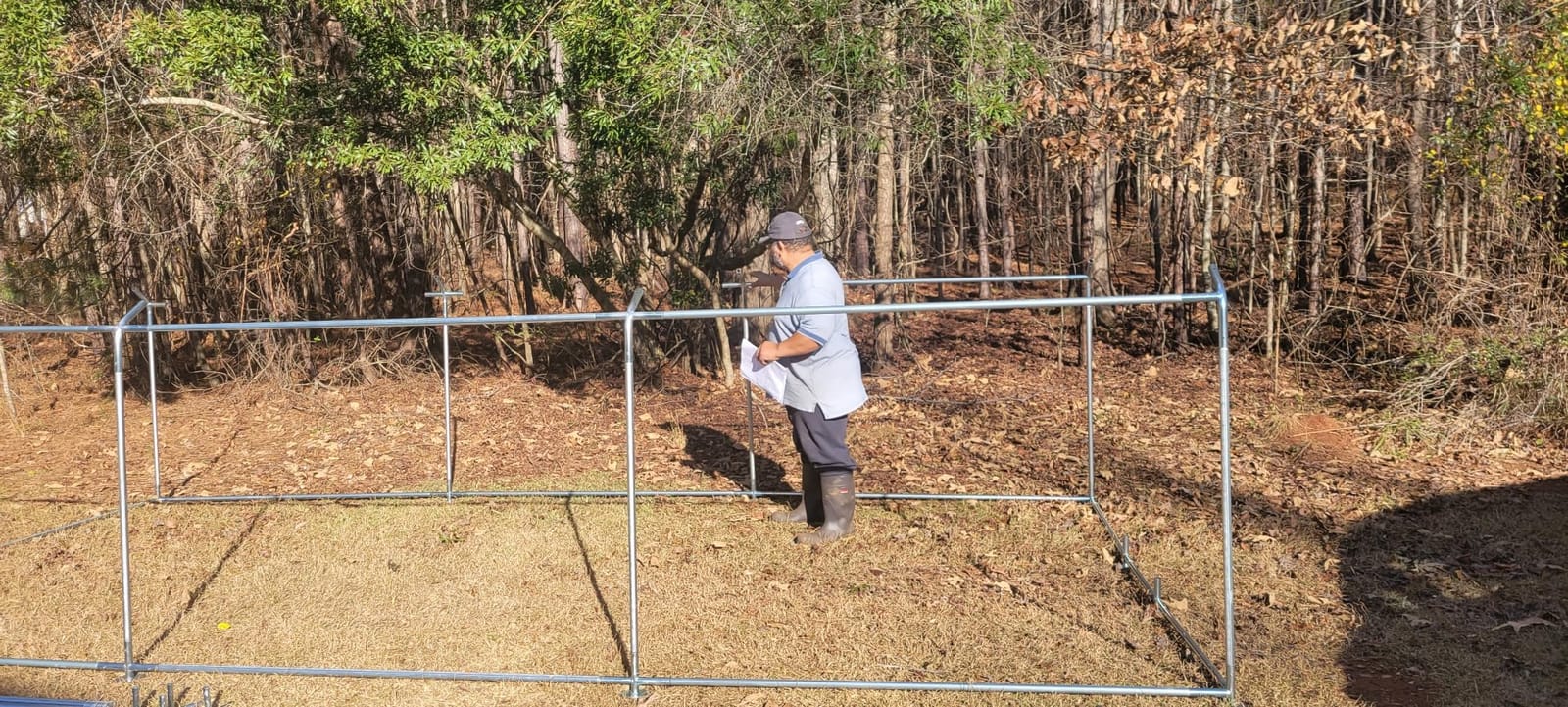
The parts bundle is unusually complete. 750 heavy-duty 0.2 inch cable ties come in the box, so you are not making a hardware store run before you can even start, and the push-button frame makes assembly quick.
The trade-offs you should know about
At 112.2 pounds this is one of the heaviest units we compared, and the frame is bulk. Plan on two people for the build, and pick your final position before you start, because moving a structure this size assembled is a genuine chore.
Optional side and back covers are not included. The waterproof UV-resistant PE roof cover and hexagonal roof wire keep birds dry and shaded from above, but a long low run in a windy climate will still need side protection added. The manufacturer also backs frame parts for 365 days and cover and hardware cloth parts for 180 days.
Who this suits
This suits a small homestead that expects to add birds, or a buyer who wants to build the run once and not revisit it. It also suits anyone in a high-predator area who wants a buried skirt rather than a loose edge.
It does not suit a first-time keeper with one flock of twelve, no helper and no patience for a heavy build. A 12×9 run covers the same birds at a fraction of the effort.
6. PawHut 33 ft Poultry Run – Best for Maximum Run Length
PawHut Large Chicken Coop w/Waterproof Anti-UV Cover 33′ x 10′ x 6.4′
32.8 L x 9.8 W x 6.4 H run
1 inch galvanized steel frame
144.4 pounds
Attach to a wooden coop
Pros
- Longest run area in the roundup at 32.8 ft
- Galvanized frame with dipped wire lowers injury risk
- Lockable door and UV-resistant Oxford roof
- Designed to attach to a wooden coop
Cons
- Largest and heaviest item in this roundup
- Run mesh is not dig-proof without reinforcement
At 32.8 feet long, this run hands a 12-bird flock more daylight space than any other unit we looked at, roughly three times what a standard 8×12 run gives you. For a flock that spends most of the day outside, that is a real quality-of-life difference in summer.
The construction is a 1 inch diameter galvanized steel frame with dipped steel wire, and dipped wire is worth a note. Smooth wire is less likely to abrade feathers and skin when birds press against it, which reduces the kind of small cuts that become bigger problems.
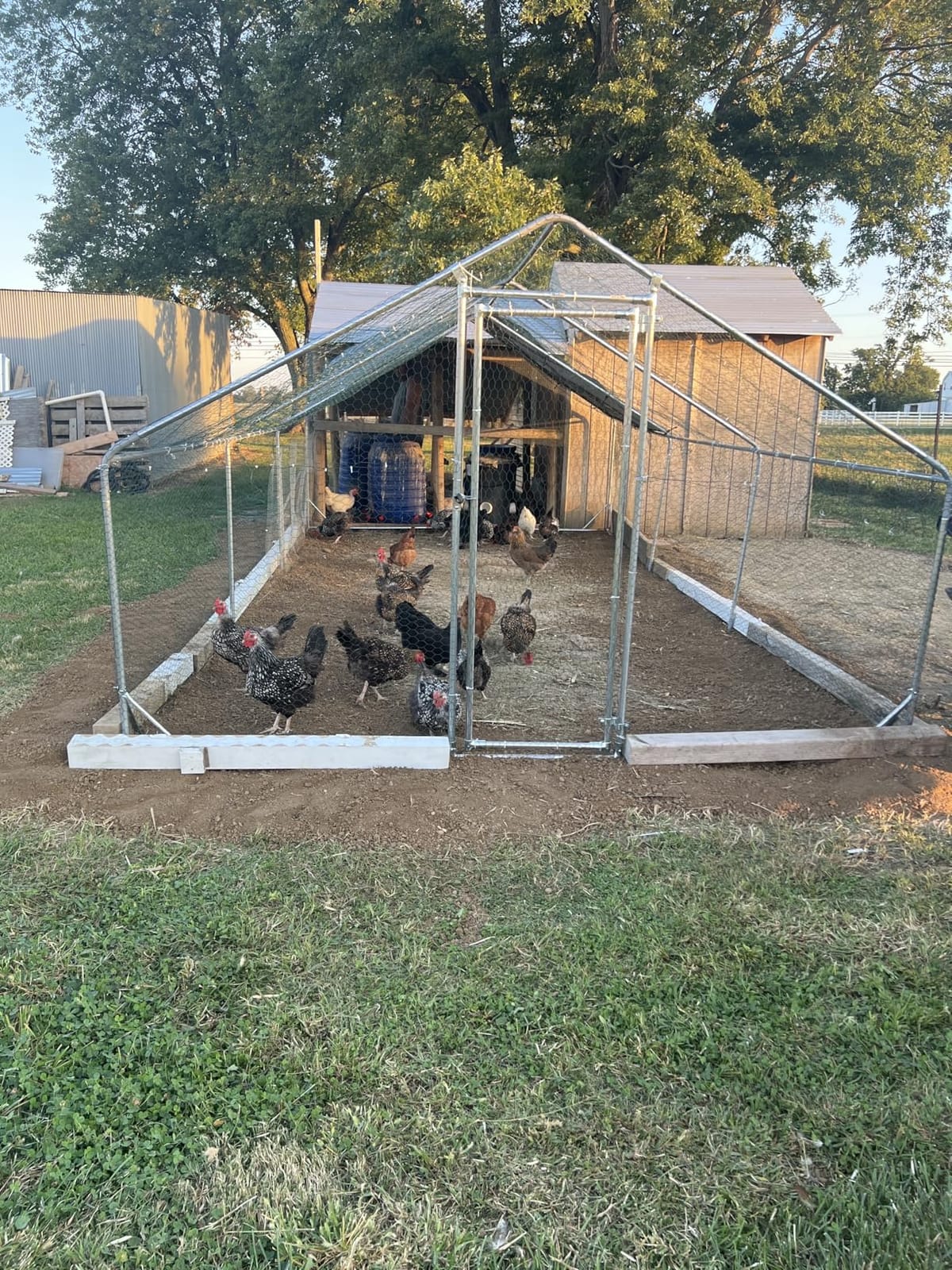
The roof is water and UV-resistant Oxford cloth secured with spring button clips. Spring clips hold tension better than simple ties over a long span, and an Oxford roof in a hot climate is meaningfully better shade than a thin PE tarp.
It is built to be attached to a wooden coop, which solves the common problem of buying a run first and figuring out the night house later. Walk-in height means an adult can enter rather than crouch, and the door locks.
Size brings two real costs
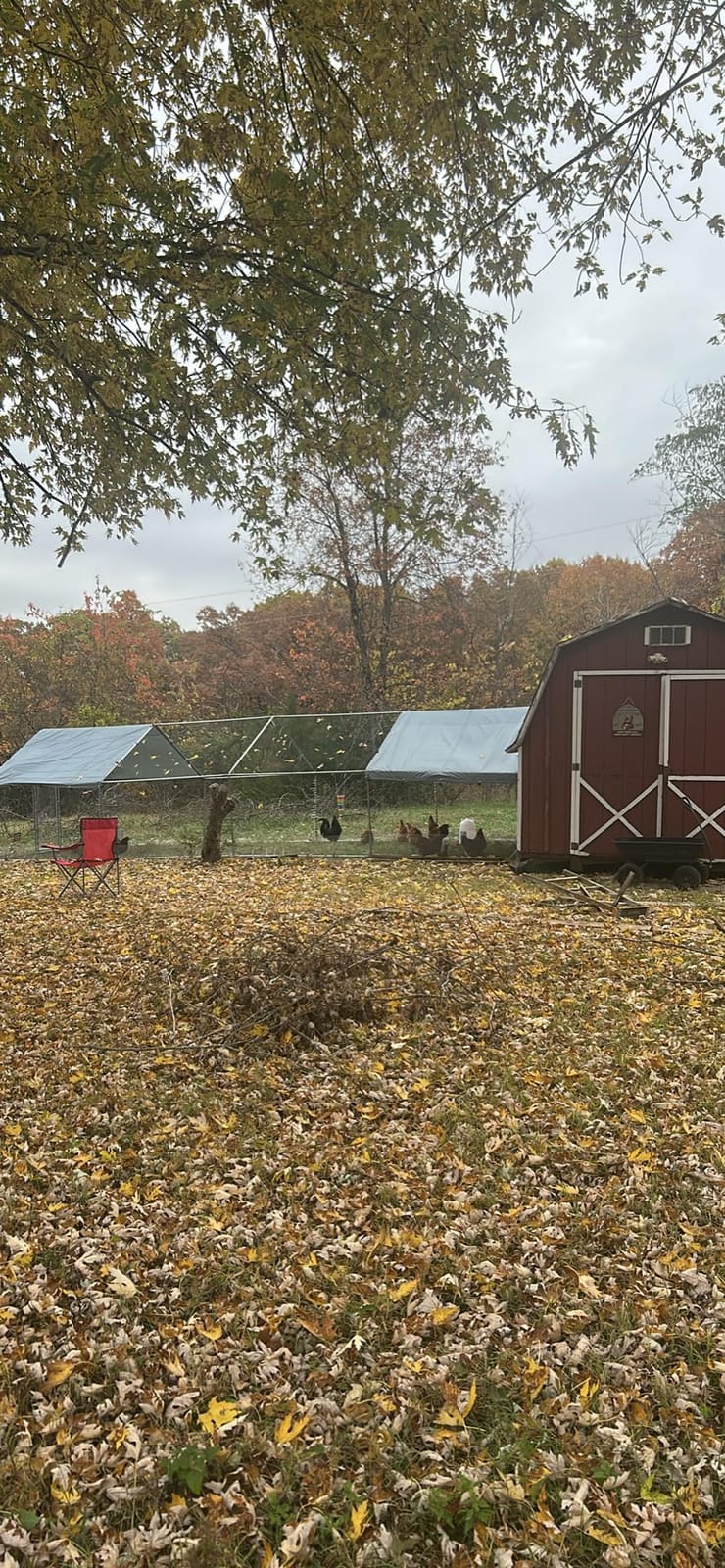
At 144.4 pounds this is the heaviest unit in the roundup, and it is also the largest item on the list. Both are reasonable for what you are buying, but neither is a casual purchase. Plan the footprint before ordering, because a 33 ft run needs straight sight lines.
More important, the run mesh is not dig-proof. Reviews flag that rabbits or determined predators will need reinforcement. Half-inch hardware cloth across the base with a buried apron is not optional on a run this size.
Who this suits
This suits a keeper with a wide yard who wants a large daytime run attached to a separate wooden hen house, particularly in a hot climate where shade and total run area both matter.
It does not suit a small suburban lot, anyone working to a tight budget, or a buyer who needs an enclosed overnight structure rather than a run.
7. Quictent 12×9 ft Ladder Edition Run – Best Built-In Perch
Quictent 12x9x6.6ft Large Metal Chicken Coop Run with Perch & Swing
12 x 9 ft walk-in run
Integrated ladder with wood crossbars
PVC-coated hardware cloth
91.5 pounds
Pros
- Ladder with wooden crossbars gives a non-slip roosting surface
- Hardware cloth and ground skirt deter predators and digging
- 6.6 ft peak height makes cleaning comfortable
- Rated for 12-20 poultry
- Tool-free push-button assembly
Cons
- Frame is heavy so assembly needs two people
This is the closest size match to a 12-bird flock in the entire roundup. The 12 by 9 foot footprint with a 6.6 ft peak height is rated for 12 to 20 poultry, and at 108 square feet of run space it lands near the 8 to 10 square feet per bird target without wasting half your yard.
The integrated climbing ladder with natural wooden crossbars is the reason we picked this one. Crossbars give birds a flat, grippy surface to perch and climb, and birds that can get up off the ground are birds that are not standing in wet bedding. It also gives the run a vertical dimension most metal runs lack.
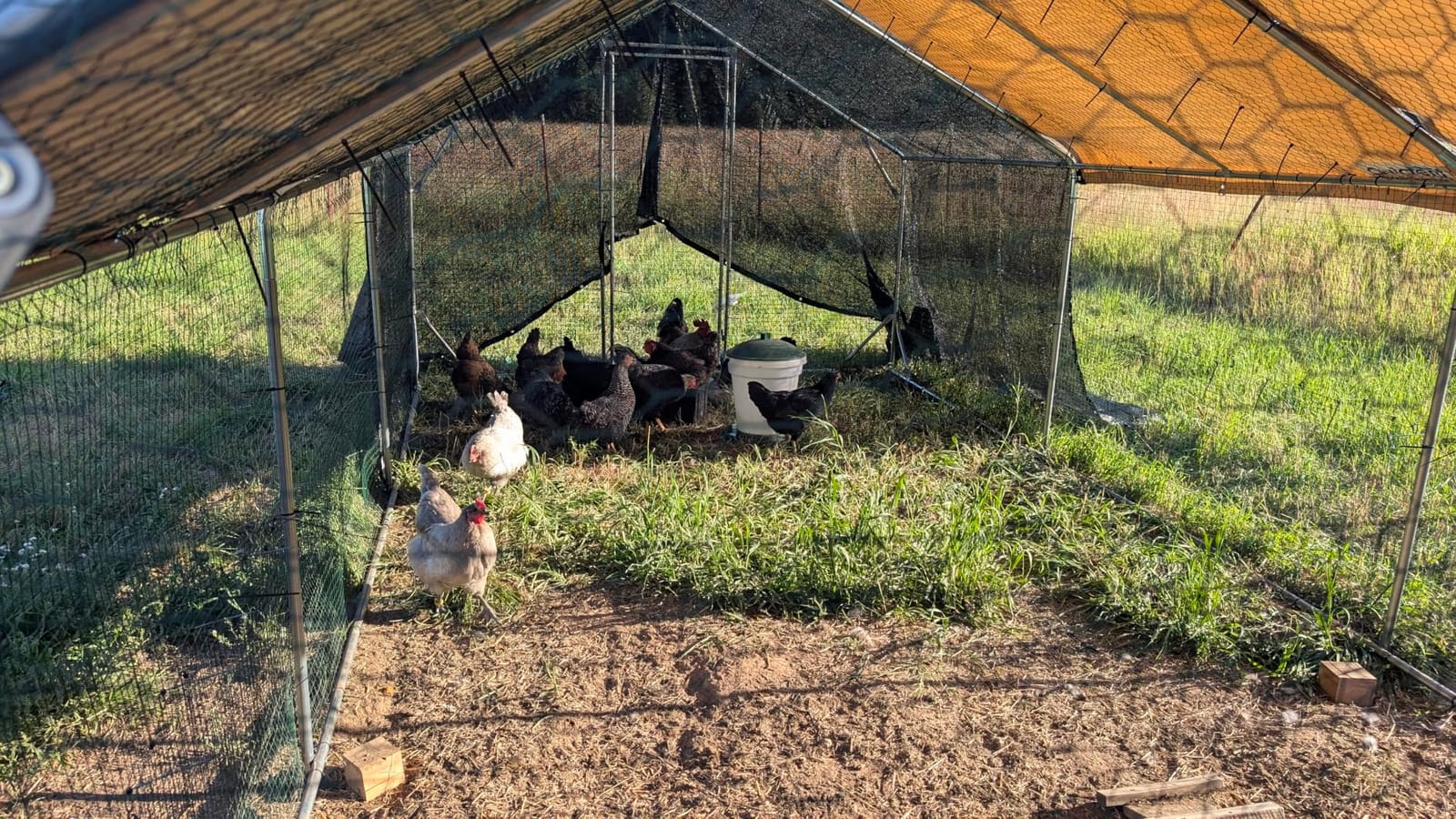
Security is better than the basic runs. PVC-coated hardware cloth on the side walls, an extended mesh ground skirt and a dual-latch door together cover the three most common ways a run fails, which is digging under, chewing through, and lifting the door.
Weather protection is 160 g/sqm waterproof UV-resistant PE covers held with elastic ball straps, and the push-button frame assembles without tools. Quictent backs frame parts for 365 days and cover and hardware cloth parts for 180 days.
How it fits your flock
At 12 to 20 birds rated capacity, this is the only unit here where the manufacturer number and the sizing math roughly agree for a flock of twelve. If you buy one run in this roundup and nothing else, this is the one that does not need a second structure immediately.
It is still a run rather than a sealed hen house, so you need a roofed, ventilated overnight structure with a pop door and proper roosting bars inside it. Think of this as the daytime half of the setup.
Who this suits
This suits a first-time keeper with exactly twelve birds who wants a right-sized run without oversizing or undersizing. It also suits anyone who wants birds off the ground without building their own ladder.
It does not suit a solo builder. At 91.5 pounds the frame needs help, and a two-person build is the realistic assumption.
8. CAMMOO 13.1 x 9.8 ft Walk-In Coop – Best for Extreme Temperatures
CAMMOO Walk in Chicken Coop, 13.1×9.8×6.6ft Chicken Run for Yard with Cover
13.1 x 9.8 x 6.6 ft run
Fits 10-20 chickens
Mesh rated -4F to 176F
66 pounds
Pros
- Highest average rating in the roundup at 4.5
- Plastic mesh survives 1000+ bends from -4F to 176F
- Mesh flexes instead of shattering which reduces injury
- Includes pliers wrenches and two pairs of gloves
Cons
- Mesh needs hardware cloth at the base for predators
- Mesh arrives as a roll that must be cut to size
The 4.5 rating is the highest in this roundup, and the reason is an unusual material choice. The mesh is flexible plastic rated to survive 1000 or more bends between -4F and 176F, which is a genuinely different design decision from the metal mesh used everywhere else here.
Flexible mesh matters for two reasons in a cold climate. It does not become brittle and crack in deep cold, and when a startled bird slams into it, it bends instead of shattering. Reviewers specifically call out the reduced injury risk, and that is a real consideration with a flock of twelve that includes smaller birds.
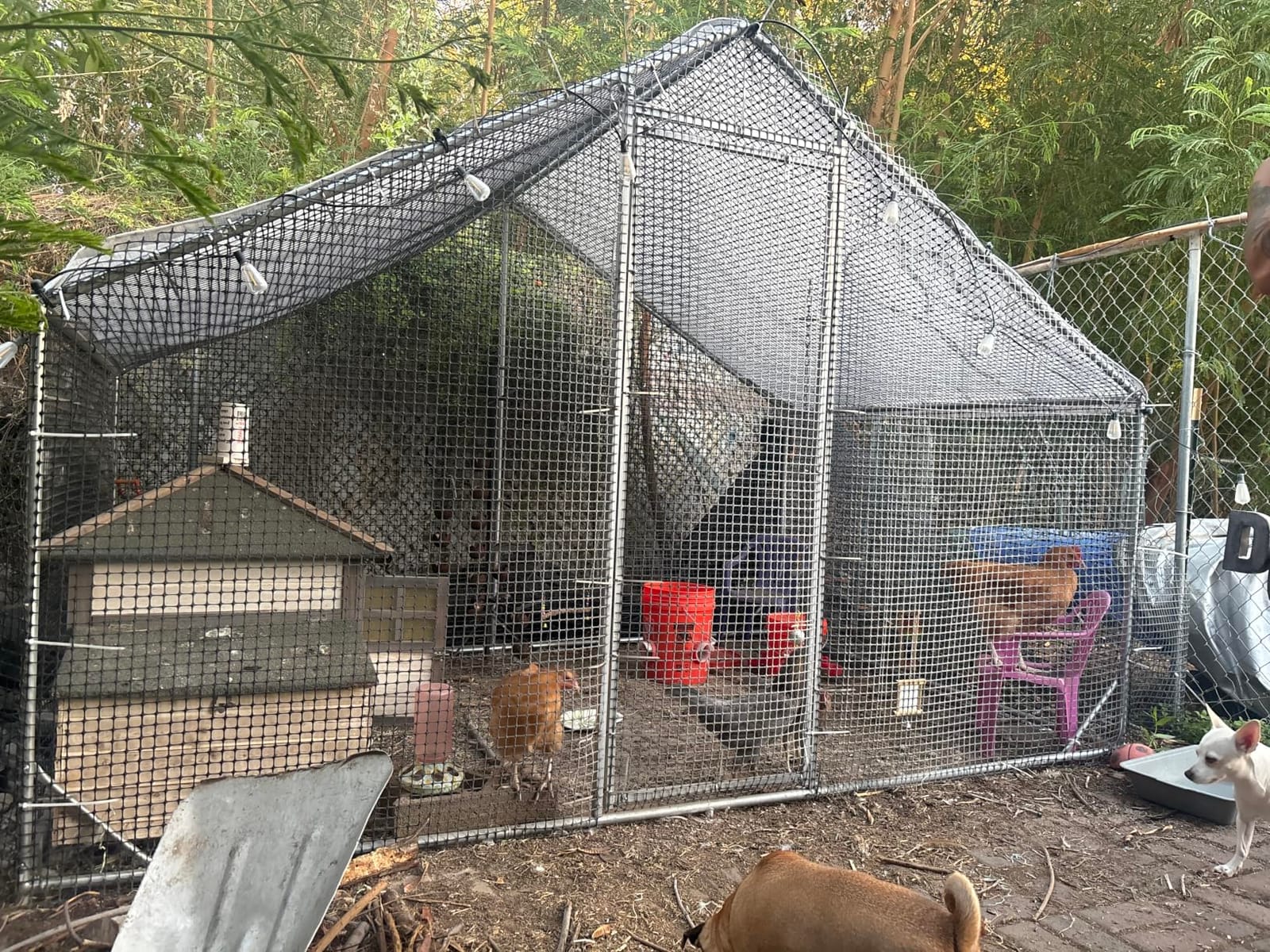
The frame uses 0.8 mm tubes with extra reinforcement at the stress points, and the connection scheme is sensible: stainless steel ties on the frame, plastic ties on the front door, and a double-lock door design. The 5.4 by 2.0 ft door is large enough to walk through bent over comfortably.
Rated for 10 to 20 chickens at 13.1 by 9.8 by 6.6 feet, this is one of the few units where the 4 square feet per bird math and the manufacturer rating land in the same place. The tool kit is a nice touch, with pliers, 2 wrenches and 2 pairs of gloves in the box.
What the rating does not cover
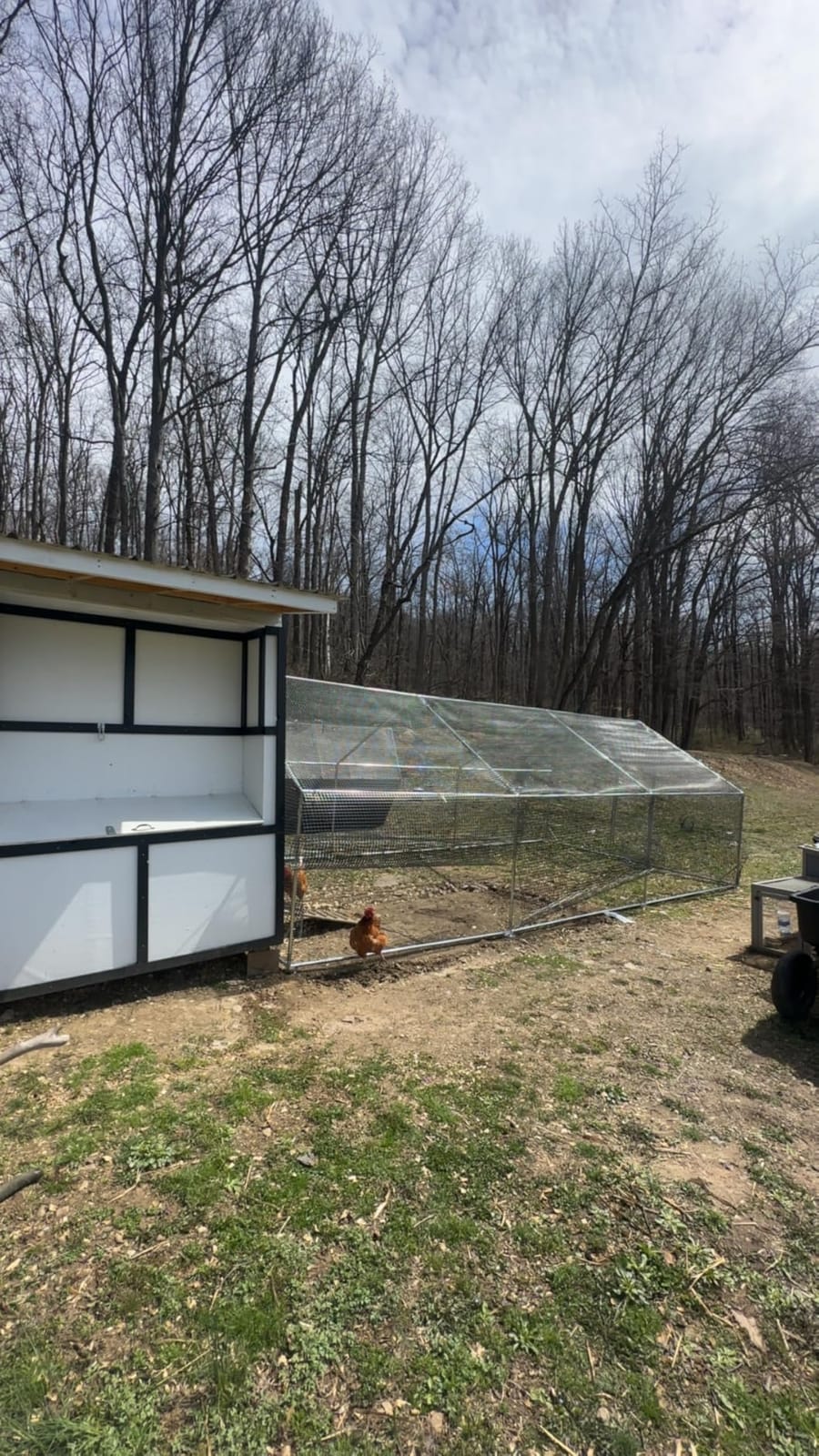
Two cautions. The mesh is not fully predator-proof, so the base should be reinforced with planks, stones or hardware cloth, and some buyers reported a door latch chain breaking along with lighter-duty zip ties. Check both before you trust the run overnight.
The mesh also arrives as a roll that has to be cut to size during assembly, so budget extra time and bring a cutting tool that can handle the material. The waterproof sun-protective PE tarp roof keeps the interior dry and shaded.
Who this suits
This suits a northern keeper dealing with genuinely cold winters, where brittle metal mesh and a flock that panics in a dark coop are genuine problems. It also suits anyone who has had a bird injured by a panicked collision with wire mesh.
It does not suit a buyer who wants predator-proofing included. Budget for hardware cloth at the base as a separate step.
9. Outvita 13 x 10 ft Metal Chicken House – Best for a Wide Access Door
Outvita Chicken Coop, 13×10 FT Large Metal Chicken House, Poultry Habitat Cage with Waterproof Cover, Walk-in Chicken Run Pen for Small Animals, Yard, Farm, Patio
13 x 10 x 6.6 ft overall
24.8 inch wide access door
1 inch galvanized frame
85.8 pounds
Pros
- Roomy 13 x 10 ft footprint with a wide access door
- Galvanized 1 inch frame with full-coverage coated mesh
- 180g PE waterproof cover on a sloped roof
- Spring-bolt quick-connect frame speeds assembly
Cons
- Base needs anchoring or ballast against digging
The 24.8 inch wide access door is the practical headline here. At 13 by 10 feet overall, a narrow door would make this run annoying to work in, and the wide opening also gives you a place to fit a bucket or a small removable roost when you are reconfiguring the space for a larger flock.
The frame is 1 inch diameter galvanized heavy-duty steel with full-coverage PVC-coated hexagonal steel wire mesh. Full coverage matters because panels with gaps are where you find a hen escaping at dusk, and the coating slows corrosion in damp ground conditions.
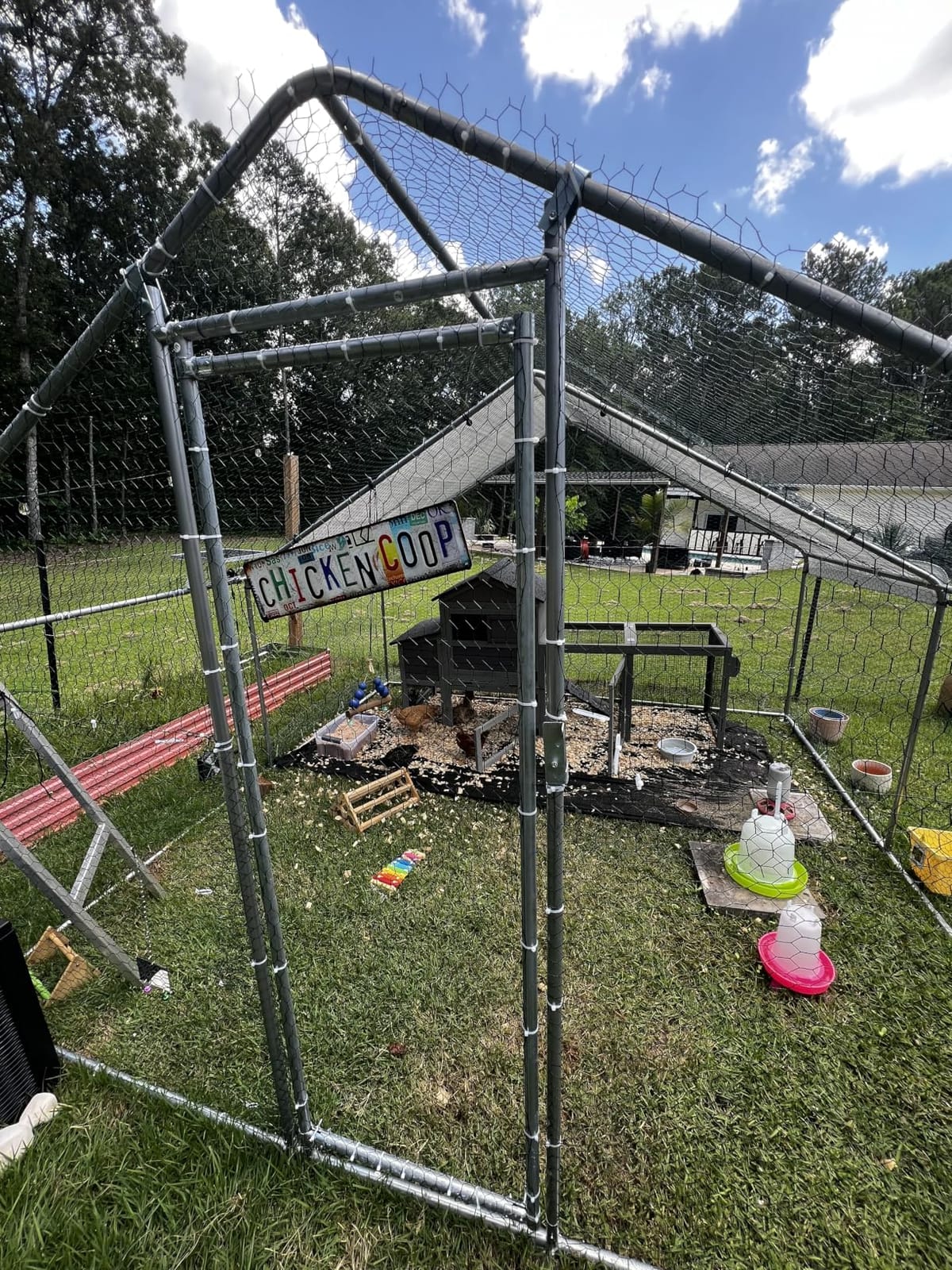
The 180g PE waterproof cover sits on a sloped roof, and the slope is the right choice for snow as well as rain. Water runs off rather than pooling, which is what keeps the fabric from tearing when a cold snap freezes a puddle in place.
Assembly uses a spring-bolt quick-connect frame, and the metal feet are fixable rather than welded, so a bent leg can be replaced instead of ending the run’s life. It works for chickens, turkeys, ducks and geese, which makes it a flexible choice if your flock is not only hens.
Base reinforcement is the one job
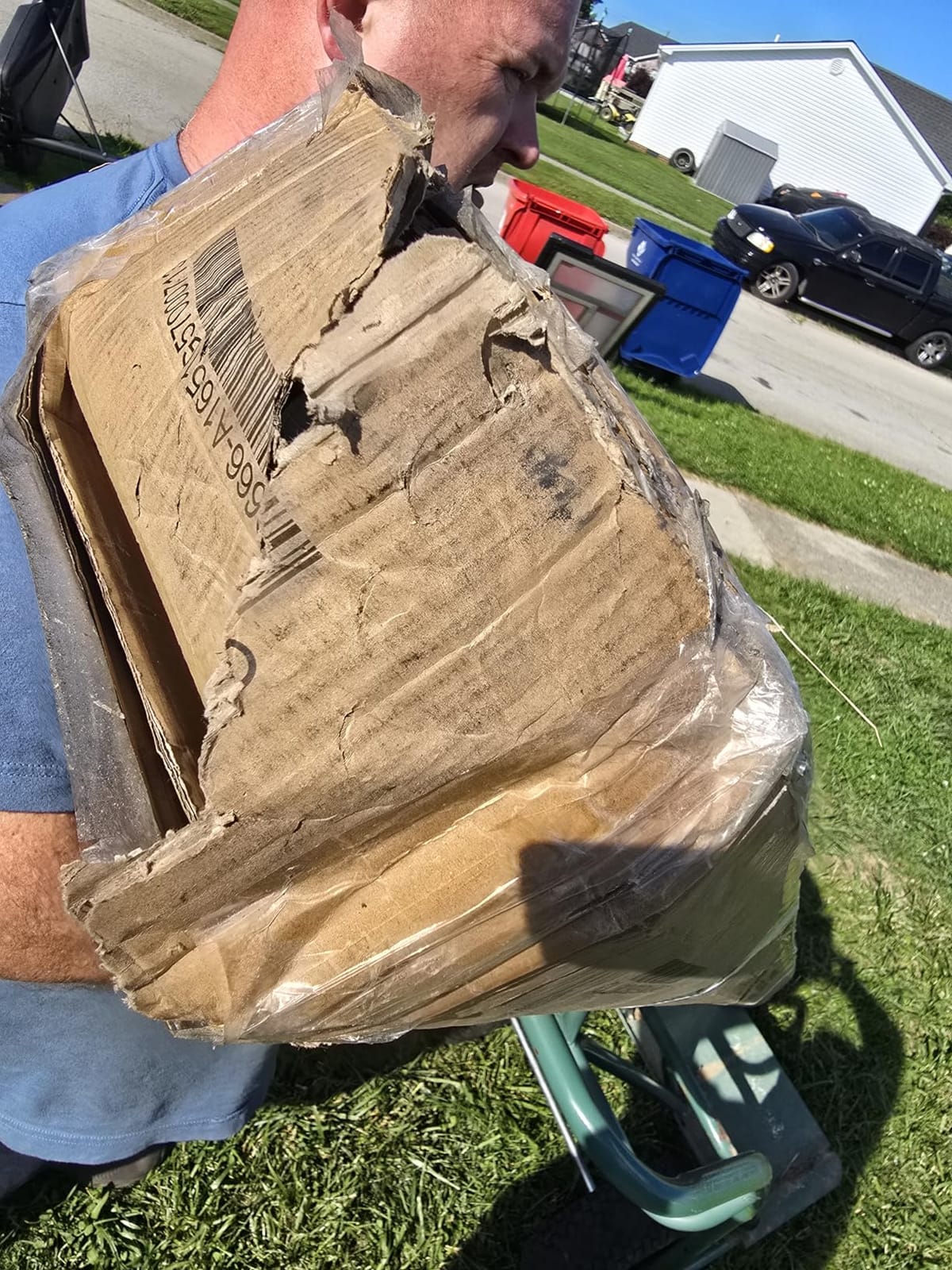
Owners give this run a 4.2 and the recurring advice is the same: anchor the base and reinforce it, because the run alone is not fully predator-proof. At 13 by 10 feet, a flat piece of half-inch hardware cloth under the whole footprint plus a buried apron is the standard fix.
At 85.8 pounds it sits in the middle of the weight range here. Expect to need a second person and a clear, level pad.
Who this suits
This suits a keeper with a mixed flock, or anyone who wants easy access to the run interior for cleaning and reconfiguring. It is a comfortable daytime space for a flock of twelve.
It does not suit a buyer who wants dig-proofing included, or anyone assembling alone. The sloped roof and coated mesh also make it a better fit for wet-snow climates than for exposed high-wind sites.
10. Ketive Cedar Coop with Wheels – Best Wooden Build, Small Flocks Only
Ketive Large Wooden Chicken Coop with Run and Wheels, Grey
Cedar construction with outdoor coating
13.54 sq ft usable space
Integrated nesting box and waste tray
Wheels for mobility
Pros
- Only fully wooden and mobile unit in the roundup
- Solid cedar with pitched asphalt shingle roof
- Integrated nesting box and removable waste tray
- Pre-drilled parts assemble in about 45 minutes
Cons
- Usable space suits only 1-4 chickens
- Far too small for a 12-bird flock
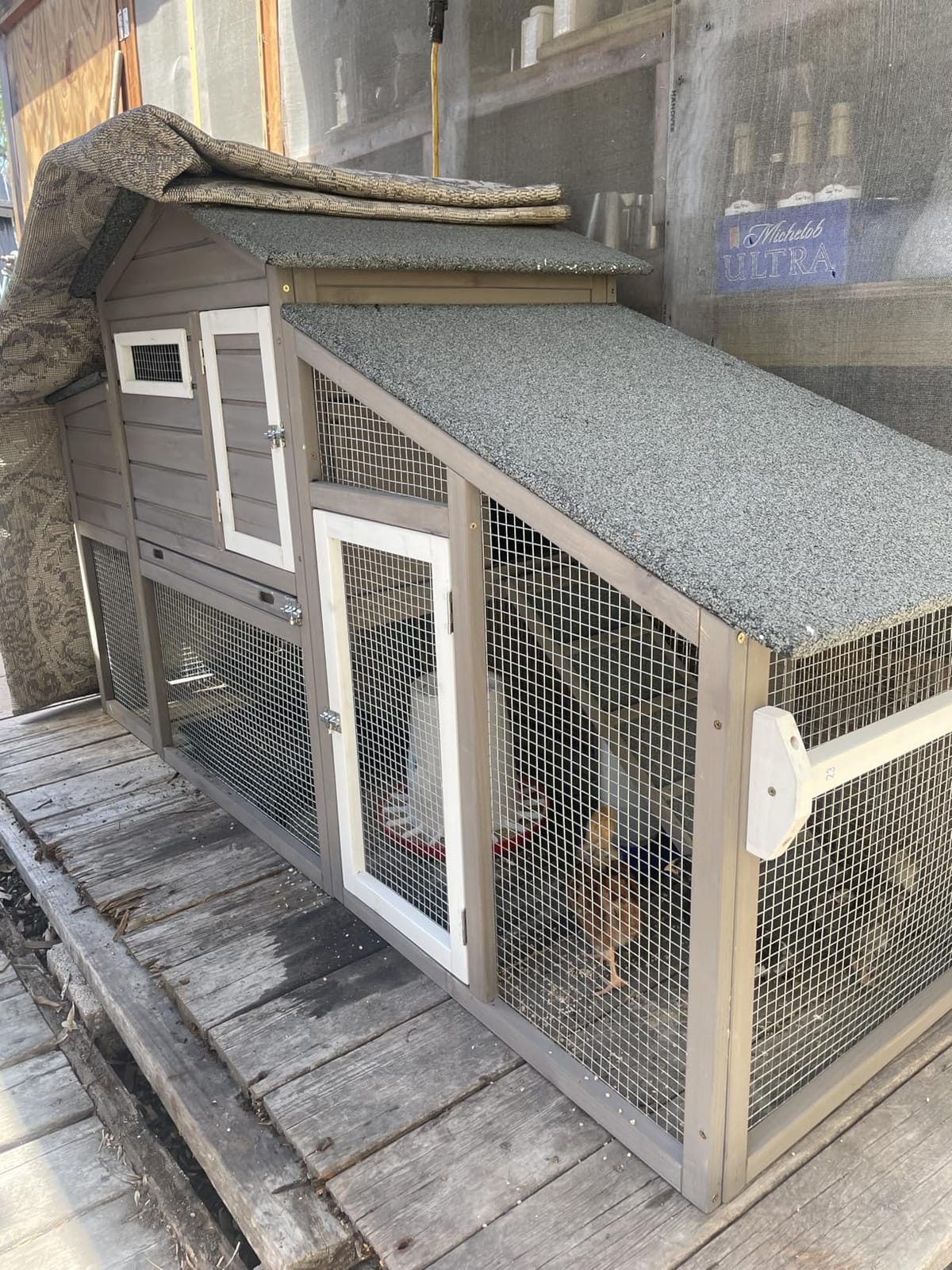
We are including this one with a clear warning. It is the only wooden, wheeled coop in the roundup, and it is genuinely well made, but the manufacturer rates it for 1 to 4 chickens and it simply will not hold twelve.
What it does well is worth knowing. The cedar construction carries an outdoor coating and a pitched asphalt shingle roof, which is a proper roof rather than a tarp, and the raised house with an anti-slip ramp gives birds a dry elevated spot inside the run.
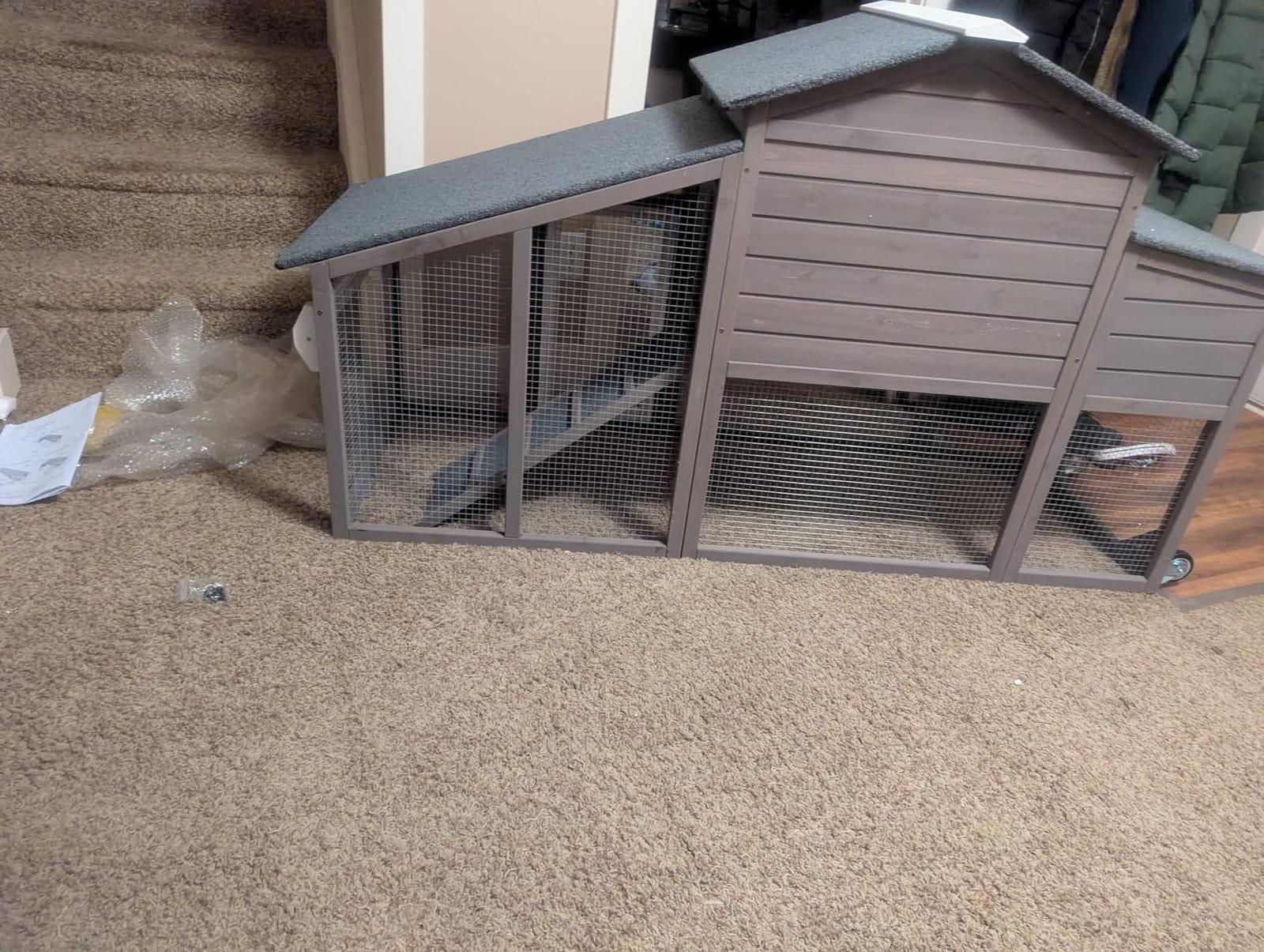
The integrated nesting box and removable sliding waste tray are the features other coops in this roundup lack entirely. A pull-out tray changes mucking out from a twenty-minute wrestling match into a two-minute job, and at 12 birds that difference is worth a lot even if this coop is not.
Wheels make the whole unit mobile, which suits a rotational or pastured setup. Galvanized wire mesh panels provide ventilation, and all parts arrive pre-drilled for a roughly 45 minute build with two adults.
Why it does not fit 12 hens
The usable enclosed area is about 13.54 square feet total, split between a lower run and an elevated resting area. Twelve birds in 13.54 square feet is a little over one square foot each, less than a quarter of what the sizing math calls for, and the crowding consequences show up as feather damage, ammonia build-up and pecking.
It is also not the setup most beginners assume. With no walk-in access and a small footprint, a 12-bird flock would be in there constantly, which is the worst possible use of this design.
Who this suits
This suits someone with two to four hens, a small urban yard, and a preference for wood over wire. If you are certain your flock stays small, it is a lovely piece of furniture as well as a coop.
It does not suit a 12-bird flock under any configuration, and it is not a stepping stone to one. For that, use one of the 12×9 or 13×10 metal runs above and add your own nesting boxes, which we cover in the feeder and equipment roundup.
11. Aoxun 10 x 20 ft Metal Chicken Coop – Best Long Run with an Oxford Cover
Aoxun Large Metal Chicken Coop, Outdoor Chicken Runs for Yard with Cover, Spire Roof Hen House Enclosure with Security Lock, Walk-in Cage Peak Hen House for Yard Farm (10x20x6.4 FT)
10 x 20 x 6.4 ft run
1 inch hot-dip galvanized tubing
420D Oxford cover
Lockable door
Pros
- Long 20 ft run on a heavy-gauge galvanized frame
- 420D Oxford cover outperforms a typical PE tarp
- Lockable door and tight PVC-coated mesh
- Tool-free push-button setup in under an hour
Cons
- Lowest average rating in the roundup at 3.9
- Base is not fully dig-proof
The 3.9 rating is the lowest here, so read this section with that in mind. What the run has going for it is materials: 1 inch heavy-gauge hot-dip galvanized tubes, which is a heavier and more durable coating process than standard galvanizing, and a 420D Oxford fabric cover that outperforms the thin PE tarp used on most of this roundup.
At 20 feet, this is the second-longest run in the lineup and it gives a 12-bird flock a proper rotation area. The reinforced triangular supports and peak spire roof are engineered for that span, and the spire sheds rain and snow into a narrow line.
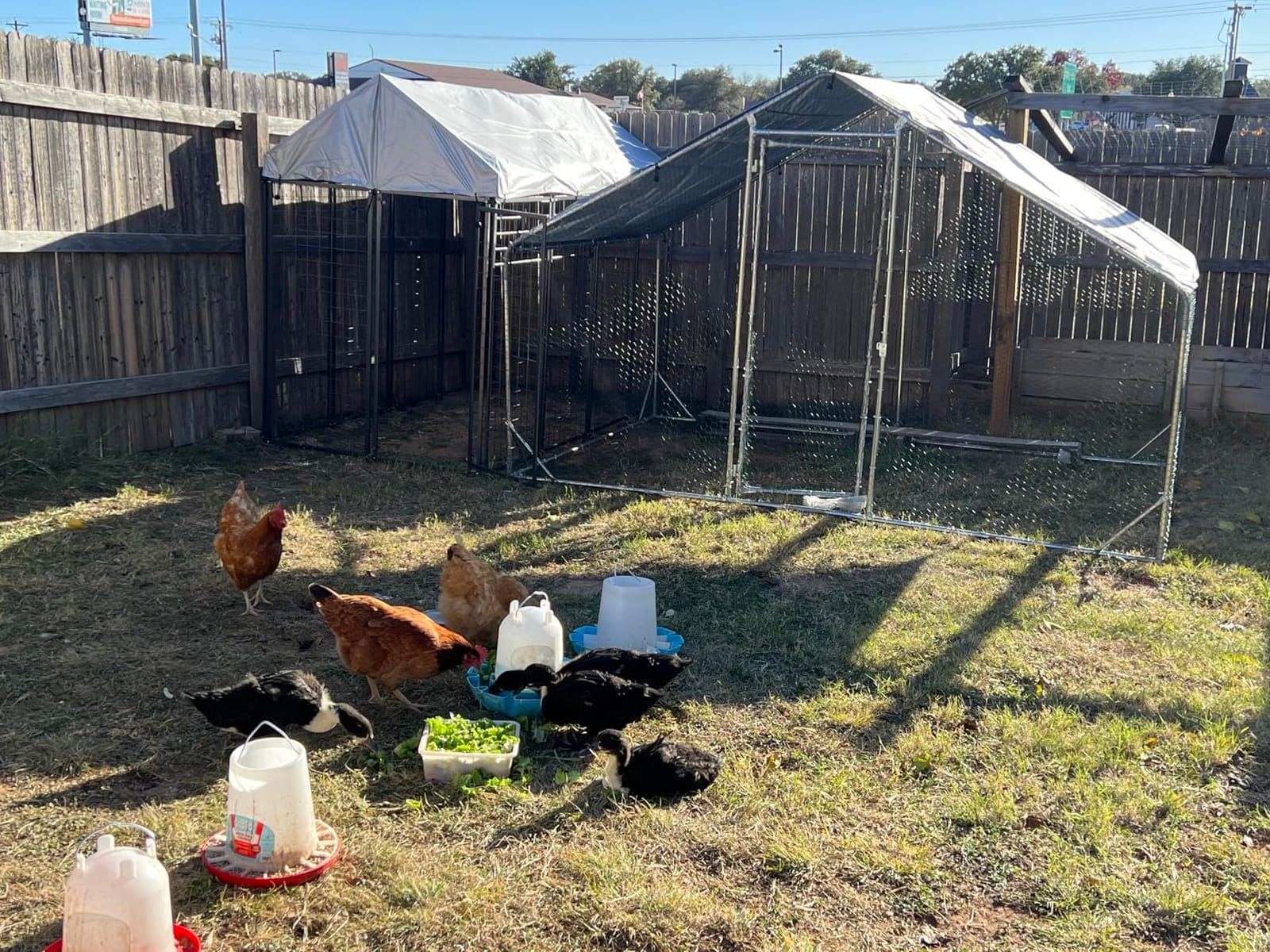
The industrial-grade PVC-coated hexagonal mesh has small apertures, which owners credit with deterring raccoons and hawks. A lockable door adds real security, and the walk-in height means you can work inside rather than reaching in through an opening.
Assembly is a genuine strength. The push-button tool-free connector system gets two people to a finished run in under an hour, and at 60 pounds it is one of the lighter large units here, which makes repositioning it as a chicken tractor realistic.
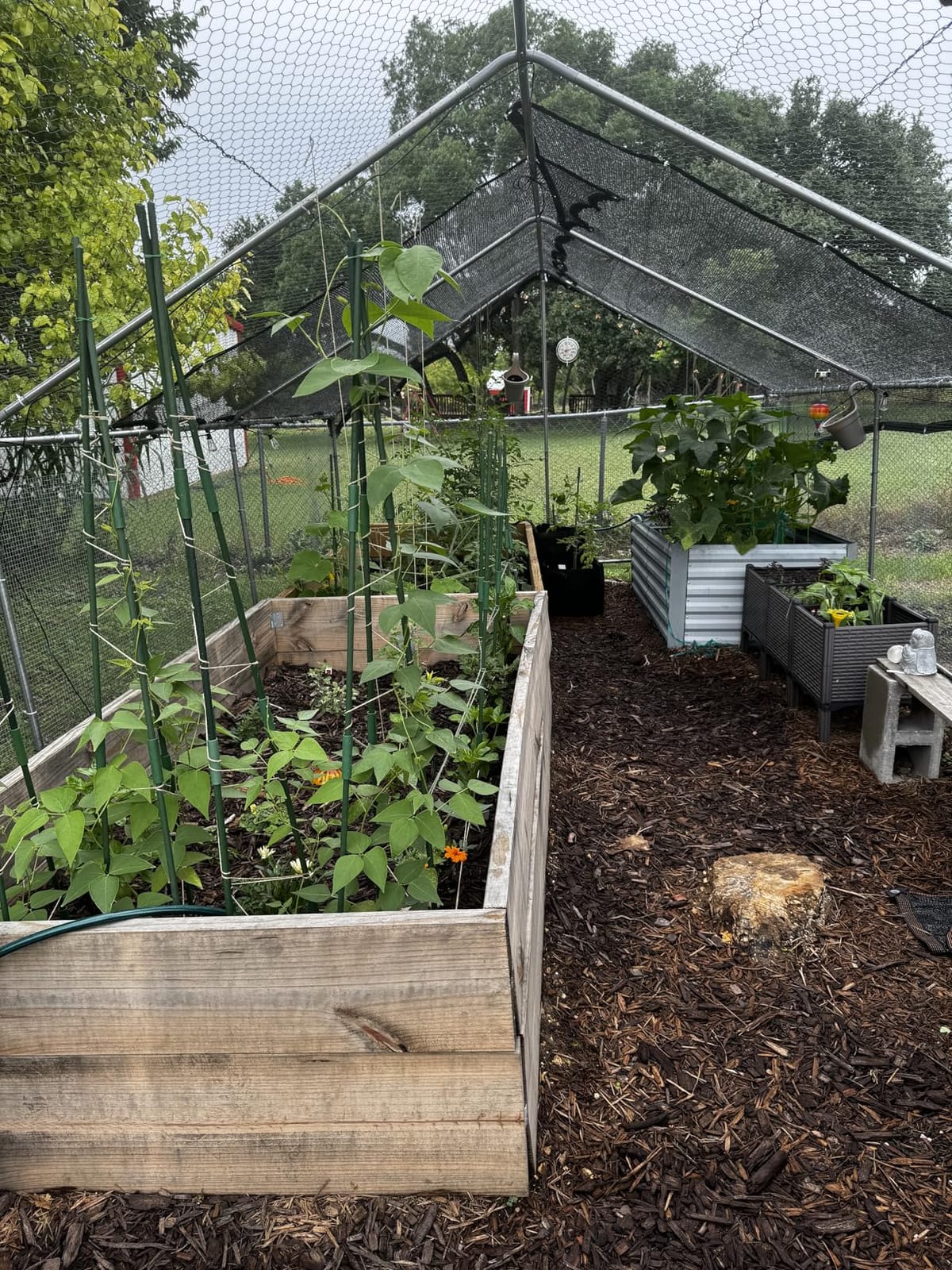
Why the rating is lower
At 3.9 with 143 reviews, satisfaction is mixed, and the recurring complaint is the base. The run is not fully dig-proof, so hardware cloth reinforcement at the bottom is recommended, and a long low structure is exactly the shape that a determined animal works at.
The 420D Oxford cover with an extended edge is the differentiator worth having if you are in a wet or snowy climate, because it is the part of a run that actually fails first on cheaper models.
Who this suits
This suits a keeper who wants to rotate the flock across a long run, particularly in a wet climate where a heavier cover fabric earns its place. It also suits a buyer who wants a light enough frame to move alone.
It does not suit a first-time keeper who wants the most consistent experience, since the mixed reviews point at the base rather than anything you can tune later.
12. Quictent Essential Series 12×9 ft Run – Budget Ladder Run
Quictent Essential Series 12x9ft Metal Chicken Coop Run w/Climbing Ladder
12 x 9 ft walk-in run
8 reinforced support bars
Climbing ladder with wood crossbars
84 pounds
Pros
- Climbing ladder with wooden crossbars protects feet and encourages roosting
- Eight reinforced support bars add real frame stability
- 12 x 9 ft footprint matches a 12-bird flock closely
- Push-button tool-free frame assembly
Cons
- Essential Series bundles fewer accessories than the Advanced line
- About 84 pounds means two people for assembly
This is the value entry in the Quictent range and it does the one thing that matters most for your flock: the footprint is right. A 12 by 9 foot run with walk-in height matches a flock of twelve far better than the 9.8 by 6.5 foot units at the budget end.
Eight reinforced support bars is a heavier frame than budget runs usually carry, and owners point to it as the reason the structure resists flexing during daily use. Flexing is what warps mesh out of shape over a season.
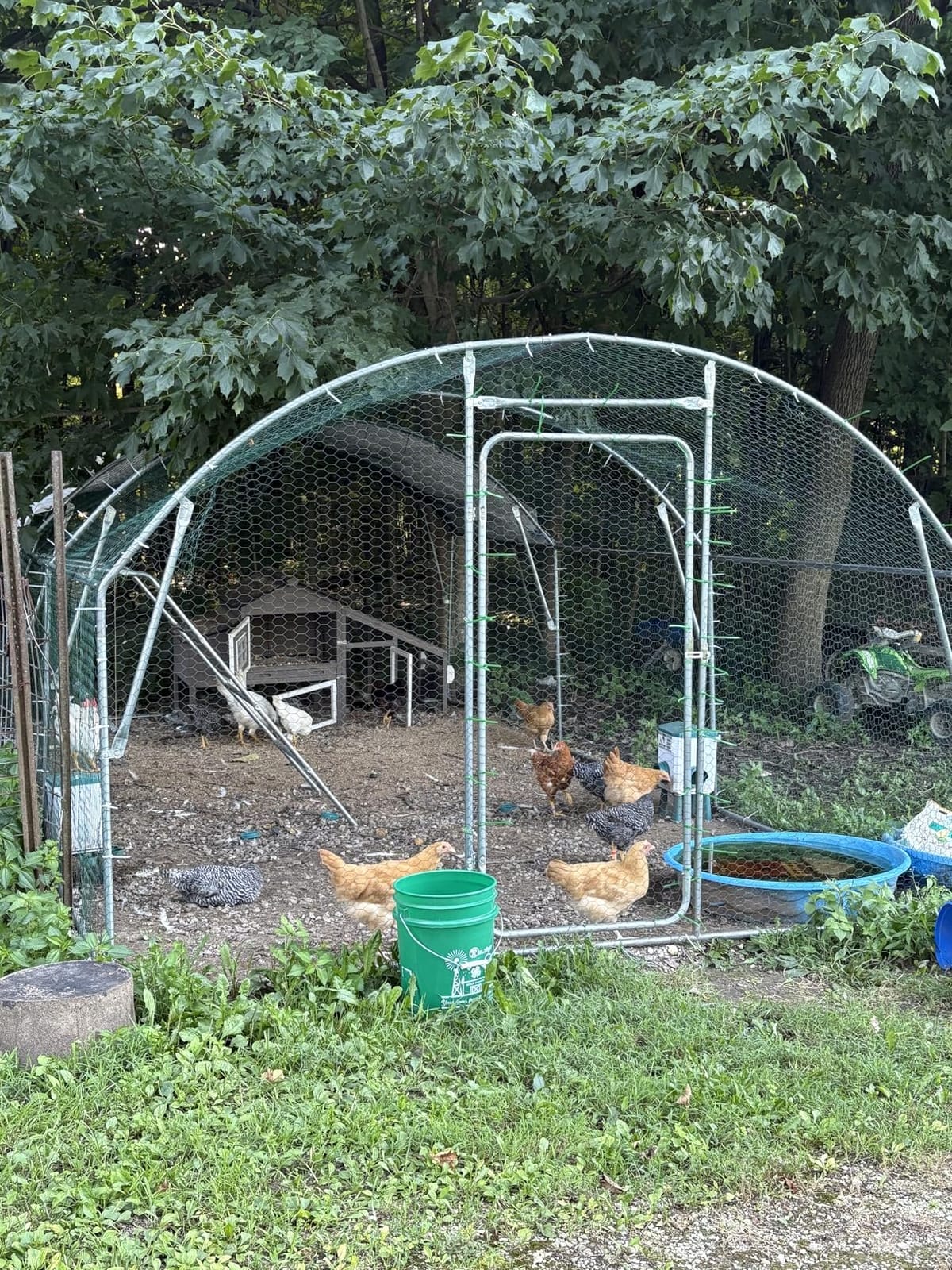
The multi-level climbing ladder with natural wooden crossbars is the same design as the Advanced version, and it protects feet while giving birds somewhere to get up off the ground. Birds that can perch are birds that are not standing in wet bedding, which is one of the quieter welfare wins in this whole roundup.
The galvanized steel frame uses coated mesh and hardware cloth, and the push-button frame assembles without tools. Reviewers rate it as good value against other ladder-equipped runs.
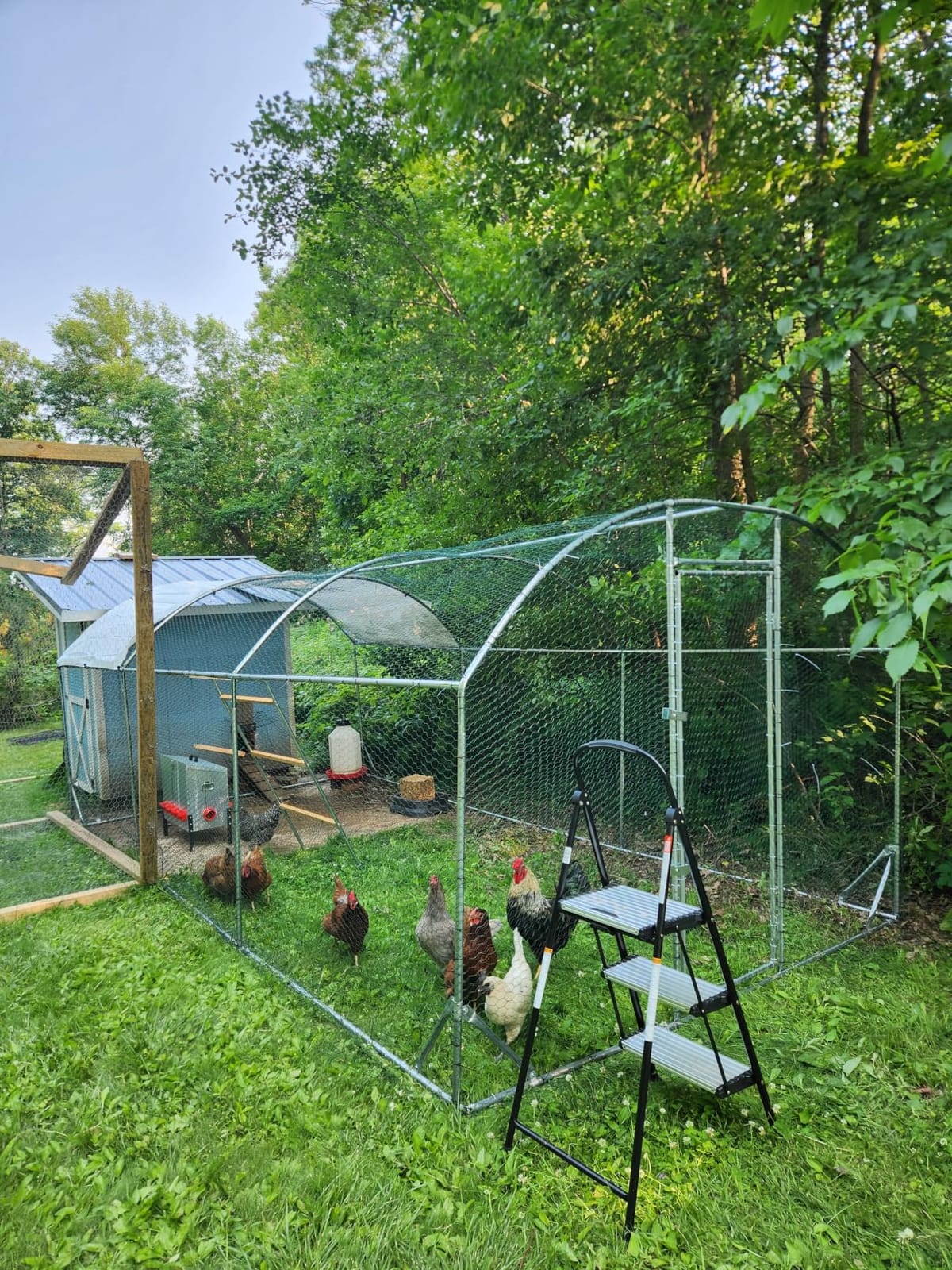
What the Essential name costs you
Essential is a step down from the Advanced line and the difference shows in what is bundled. The Advanced models add the extended ground skirt, 160 g/sqm PE covers with elastic ball straps and the parts coverage; the Essential frame and mesh are here, the accessories are not.
So you should plan on buying a base skirt and a run cover separately. At 84 pounds the frame also needs two people for assembly, which is the same constraint as the heavier units.
Who this suits
This suits a budget buyer who wants correct sizing and a built-in perch without paying for the accessories bundle. If you are comfortable adding hardware cloth and a cover yourself, it is a sensible starting point.
It does not suit a buyer in a high-predator area, where a missing ground skirt is a real gap rather than a minor one. The Advanced ladder version above is the safer pick at a similar footprint.
How Big Should a Chicken Coop Be for 12 Chickens?
A flock of 12 standard-size hens needs about 48 square feet of enclosed indoor floor space, which is 4 square feet per bird, plus 96 to 120 square feet of outdoor run at 8 to 10 square feet per bird. In practice that means a 6×8 or 8×8 foot hen house attached to a 6×12 or 8×12 foot covered run. Large breeds such as Orpingtons need roughly 25 percent more space than that.
The 4 square feet per bird figure is the number that shows up again and again on r/BackYardChickens and backyardchickens.com, and it is the right one. One long-running thread had a keeper working out that 4 square feet per bird means 48 square feet of interior once the birds are grown, and recommending a straightforward 6×8. Another thread on an 8×8 said the same footprint gives minimal room for 16 birds, so 12 would be comfortable.
A real owner running 11 free-range birds in a 6×8 unit put the benchmark at 4.3 to 4.4 square feet per bird, which is a useful number because it tells you that slightly under 4 square feet can still work when the flock is out during the day. That is a day-range arrangement, not a setup where birds are inside full time.
What about a 10×10 coop?
A 10×10 gives you about 100 square feet, which sounds generous until you count usable floor space. At the 4 square feet per bird standard, 100 square feet comfortably holds 6 to 10 standard hens, and 12 birds is the absolute ceiling with no headroom for a flock that grows.
This is why experienced keepers almost universally tell you to buy one size larger than you think you need. Co-op manufacturers underestimate how much room birds actually use once they are fully feathered and competing for roost position.
Run space is where most people come up short
Indoor square feet get all the attention, but run space is where most flocks are under-housed. 8 to 10 square feet per bird is the working target, which for twelve hens is an 8×12 run at the low end and a 10×12 run if you want more shade and a dust bath area that does not turn to mud.
A covered run roof matters more than most buyers expect. Shade in a 90F summer is the difference between normal laying and heat stress, and a dry run surface keeps the bedding you are about to add to the coop from staying damp.
What to Check Before You Order a Coop for 12 Hens
Size is the first filter and it is not negotiable. Twelve standard hens need 48 square feet of indoor space and 96 to 120 square feet of run. Large breeds such as Orpingtons and Australorps need about 25 percent more, so an Orpington flock of twelve should be sized like a flock of fifteen.
Nesting boxes: three or four, never fewer
Plan on three to four nesting boxes for 12 hens, which is one box per three or four birds. Hens that are forced to share a box fight, fighting leads to feather damage and pulled toes, and cannibalism risk climbs as flock size grows. Four boxes for twelve is the comfortable number and costs very little more than three.
Nesting boxes should sit above the roosting bars, not beside them, so that roosting birds are not stepping in and out of occupied boxes every night. Our walk-in coop guide covers the housing side in more detail.
Roosting bars: parallel, 8 inches apart, 4-inch side up
This is the specification most prefab coops get wrong, so it is worth knowing before you look at any brand. Bars should run parallel to each other, spaced about 8 inches apart, with the 4 inch side of a 2×4 facing up so birds have a flat foot to grip. Manufacturers routinely ship bars staggered or with the 2 inch side up, and both cause roosting aggression.
Ventilation above chicken height, not at it
Vents belong high, near the roof peak, so air moves over the birds rather than through them. Vents placed at chicken level create drafts that lead to frostbite on combs in cold weather. Check that any wall vents have rain and snow hoods, because a vent without a hood is a water feature in a storm.
Balance that with insulation. Hot climates need shade, airflow and enough height that heat rises out of the birds’ space. Cold climates need an insulated ceiling and a solid shell, with ventilation above the roost line. See our climate section below for how to match a run to your region.
Predator-proofing: five things to verify before delivery
First, mesh type. Half-inch hardware cloth is the only mesh we would trust overnight. Hexagonal chicken wire stretches and a determined raccoon will work it open, which is why most of the units above need reinforcement. Second, the base. Half-inch hardware cloth laid across the entire footprint with a 12 to 18 inch apron buried down the sides stops digging predators. Third, latches. External nesting boxes and run doors need a carabiner or padlock, not a gravity latch.
Fourth, the pop hole door height. It should sit 8 to 12 inches above the bedding line, or deep litter gets dragged out and small hens struggle to exit. Fifth, a walk-in door or a removable roof. At 12 birds you will clean out bedding weekly, and a coop you cannot get into turns into a coop you do not clean.
Automatic doors and the run itself
An automatic door is the single highest-value upgrade for a 12-bird flock, because it lets the flock use the run unsupervised from dawn to dusk and closes them in before dark. Match the door width to your pop hole and confirm it works on a timer or a light sensor.
Then pick your run type. A covered run roof gives shade in summer and keeps birds dry in rain, which keeps bedding dry in the coop. An uncovered run is fine in a mild climate but turns to mud in a wet one, and mud tracked into the coop is the fastest route to a damp litter problem.
The costs nobody mentions at checkout
Budget beyond the run itself. You will need half-inch hardware cloth and a buried apron, bedding, feeders and waterers, and possibly a supplemental light for winter laying. Add a second small unit for a brooder if you plan to raise replacements, and factor in your time. A 12-bird flock is a weekly commitment that lasts a hen lifespan.
Rats, Rodents and Other Pests Around a 12-Bird Coop
Yes, you will get rats if you keep chickens, and the reason is not the birds. Spilled feed and accumulated droppings attract rodents, and a coop with 12 birds produces both faster than a flock of four does. A single weasel can end a small flock in a night, so this belongs in the buying decision rather than after it.
Four steps handle it. First, cut off the food supply. Move all feed into sealed metal containers with tight lids, sweep up spilled grain every evening, and never store feed in a plastic bin a rat can chew through. Second, deny the route. Lay half-inch hardware cloth across the entire underside of the coop and run, then run it 12 to 18 inches down the outside as a buried apron.
Third, trap rather than poison. If a rat eats poison and then a hawk or owl eats that rat, the predator is poisoned, and secondary poisoning kills far more wildlife than the rats ever would. Fourth, inspect the perimeter regularly, especially at dusk, and look for new tunnels under the apron or gaps where the frame meets the ground.
Rats under a coop are usually a symptom of an unsecured feed store, not a predator problem. Fix the food and the digging route, and most of it resolves without a single trap.
Matching a Coop to Your Climate
For cold northern states, frame weight and cover material matter most. Heavier-gauge galvanized frames resist buckling in wind, Oxford or heavier PE covers hold up under wet snow, and vent placement near the roof peak keeps cold air moving without hitting the birds. If you can add wall insulation to whatever night house you build, that is worth more than any feature on the run.
For hot and humid climates, shade and airflow beat almost everything else. Look for a covered run roof, open mesh for cross-ventilation, and enough height that heat rises out of the birds’ space. Coated mesh resists corrosion in damp air, and a wide access door lets you hose the run down without dismantling anything.
For mild climates, run size is the best thing to spend on. A longer run means more usable daylight hours, more foraging behaviour and less crowding stress, and in a mild climate you can get away with lighter covers that a snowy region would find inadequate.
Wherever you are, one rule holds: buy one size larger than the math says you need. Experienced keepers say it constantly, and manufacturers consistently underestimate the space fully grown birds actually use.
Frequently Asked Questions
How many nesting boxes are needed for 12 chickens?
Plan on three to four nesting boxes for 12 hens, which works out to one box per three or four birds. Hens forced to share a box fight, fighting leads to feather damage and pulled toes, and cannibalism risk rises with flock size. Four boxes for twelve birds is the comfortable choice and costs very little more than three.
What size chicken coop do I need for 12 chickens?
A 12-hen flock needs roughly 48 square feet of interior space at 4 square feet per standard-size bird, plus 96 to 120 square feet of run at 8 to 10 square feet per bird. A 6×8 or 8×8 hen house attached to a 6×12 or 8×12 covered run is the practical sweet spot. Large breeds like Orpingtons need about 25 percent more.
How many chickens can be in a 10×10 coop?
Only usable floor space counts. At the 4 square feet per bird standard, a 10×10 coop with about 100 square feet comfortably holds 6 to 10 standard hens. Twelve is the absolute ceiling with no headroom for a flock that grows, so most experienced keepers recommend sizing up.
Will I get rats if I keep chickens?
Yes, rats are common around chicken coops because spilled feed and droppings attract them. Prevent them by storing all feed in sealed metal containers, laying half-inch hardware cloth across the entire coop floor, and burying a 12 to 18 inch hardware cloth apron down the sides. Avoid rat poison near birds, because poisoned rats can poison the owls and hawks that eat them.
How do I get rid of rats underneath my chicken coop?
Use four steps. Move feed into sealed metal bins and sweep up spilled grain to cut off the food supply. Lay half-inch hardware cloth across the entire underside of the coop and 12 to 18 inches down the sides as an apron. Trap rather than poison to avoid secondary poisoning of owls, foxes and hawks. Then inspect the perimeter regularly for new tunnels and ground gaps.
The Bottom Line on Chicken Coops for 12 Chickens
The CHIKENCOOP 9.8 x 6.5 ft metal run is our top pick in 2026 for the combination of owner history, reinforced frame and a walk-in interior that is genuinely comfortable to work in. For raw run area, the VEVOR 13.1 x 9.8 ft unit gives you more enclosed floor space than anything else we compared at a similar build level. If weasels are your problem, the Belinova with hardware cloth is the one to buy.
The honest caveat is that all of these are runs, not sealed hen houses. Pair your pick with a 48 square foot indoor space that has three to four nesting boxes, parallel roosting bars and a pop door 8 to 12 inches above the bedding. Get that second piece right and a dozen hens will be comfortable year round.