

Most apartments have no exterior wall you can legally cut into, no laundry closet with a duct chase, and no interest from a landlord in a dryer hose through the bedroom wall. That is the entire reason the best ventless dryers for apartments exist as a category, and it is why this roundup is built around apartment constraints rather than raw drying power.
We spent weeks reading specification sheets, warranty terms, buyer reviews and forum threads about ventless drying, then sorted nine units that a renter could realistically get through a standard door and plug into an ordinary outlet. Two of them need no plumbing at all. One needs a 240V circuit that most apartments do not have, and we tell you which one. The rest sit somewhere in between.
A note before we start: ventless does not mean moisture-free. Every machine in this list pulls water out of the air and puts it somewhere, and the difference between a good install and a bad one is airflow, clearance and a maintenance habit. We explain that in detail further down, because the mold horror stories you will read online are almost always about clearance and never about the machine itself.
If your building already has a shared laundry room, read our guide to dryer types and fuel options first, since a shared room may solve the problem without an appliance. And if humidity is already an issue in your unit, the airflow lessons in our humid-climate guide translate directly to closet ventilation.
Table of Contents
Top 3 Best Ventless Dryers for Apartments Right Now In 2026
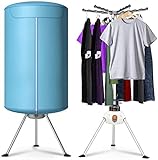
COSTWAY Portable Ventless Dryer
- No duct or installation
- Adjustable 30-180 min timer
- Hangers and cover bag included


Kenmore 4.0 cu. ft. Ventless Dryer
- 4.0 cu.ft. condensing system
- Express Dry 3 shirts in 12 min
- ENERGY STAR certified
All 9 Ventless Dryers at a Glance (October 2026)
| Product | Specifications | Action |
|---|---|---|
| COSTWAY Portable Ventless Dryer |
|
Check Latest Price |
| fbootfike 750W Hanging Dryer |
|
Check Latest Price |
 Equator All-in-One Washer Dryer Equator All-in-One Washer Dryer |
|
Check Latest Price |
 Magic Chef 2.7 cu. ft. Combo Magic Chef 2.7 cu. ft. Combo |
|
Check Latest Price |
 Midea 4.4 cu. ft. Heat Pump Dryer Midea 4.4 cu. ft. Heat Pump Dryer |
|
Check Latest Price |
| Kenmore 4.0 cu. ft. Ventless Dryer |
|
Check Latest Price |
 Contoure 2.7 cu. ft. Steam Combo Contoure 2.7 cu. ft. Steam Combo |
|
Check Latest Price |
 LG DLHC1455W 24 in. Heat Pump Dryer LG DLHC1455W 24 in. Heat Pump Dryer |
|
Check Latest Price |
 Morus C2 Compact Dryer Morus C2 Compact Dryer |
|
Check Latest Price |
1. COSTWAY Portable Ventless Dryer – Best Overall for Apartment Living
COSTWAY Portable Clothes Dryer, Ventless Laundry Dryer, Hot Drying Machine with Heater for Home & Dorms
27.5 inch D x 27.5 inch W x 56 inch H
Foldable cabinet with cover bag
30-180 minute timer, flame-free heat
Pros
- No duct
- drain or installation of any kind
- Works for dorm rooms
- studios and hockey gear
- Cover bag doubles as a garment wardrobe
- Hangers and bracket included
Cons
- Frame legs are flimsy under an unbalanced load
- Timer can behave like a simple on/off switch
- Over two hours for towels and heavy items
We kept coming back to this one because it asks the least of an apartment. No duct, no drain, no landlord conversation, no wall cutting. It is a fabric-sided cabinet on a folding frame with a warm-air motor inside, and you hang wet clothes on a rail inside it, zip the cover, and set the dial.
The warm-air motor reaches up to 60 C internally, which is a genuine drying heat rather than a warm breeze. Reviewers report finishing a full rack in roughly an hour on mixed cottons, which matches what the unit is designed for. For sports equipment or a change of clothes after the gym, it is fast in a way that matters more than cycle capacity.
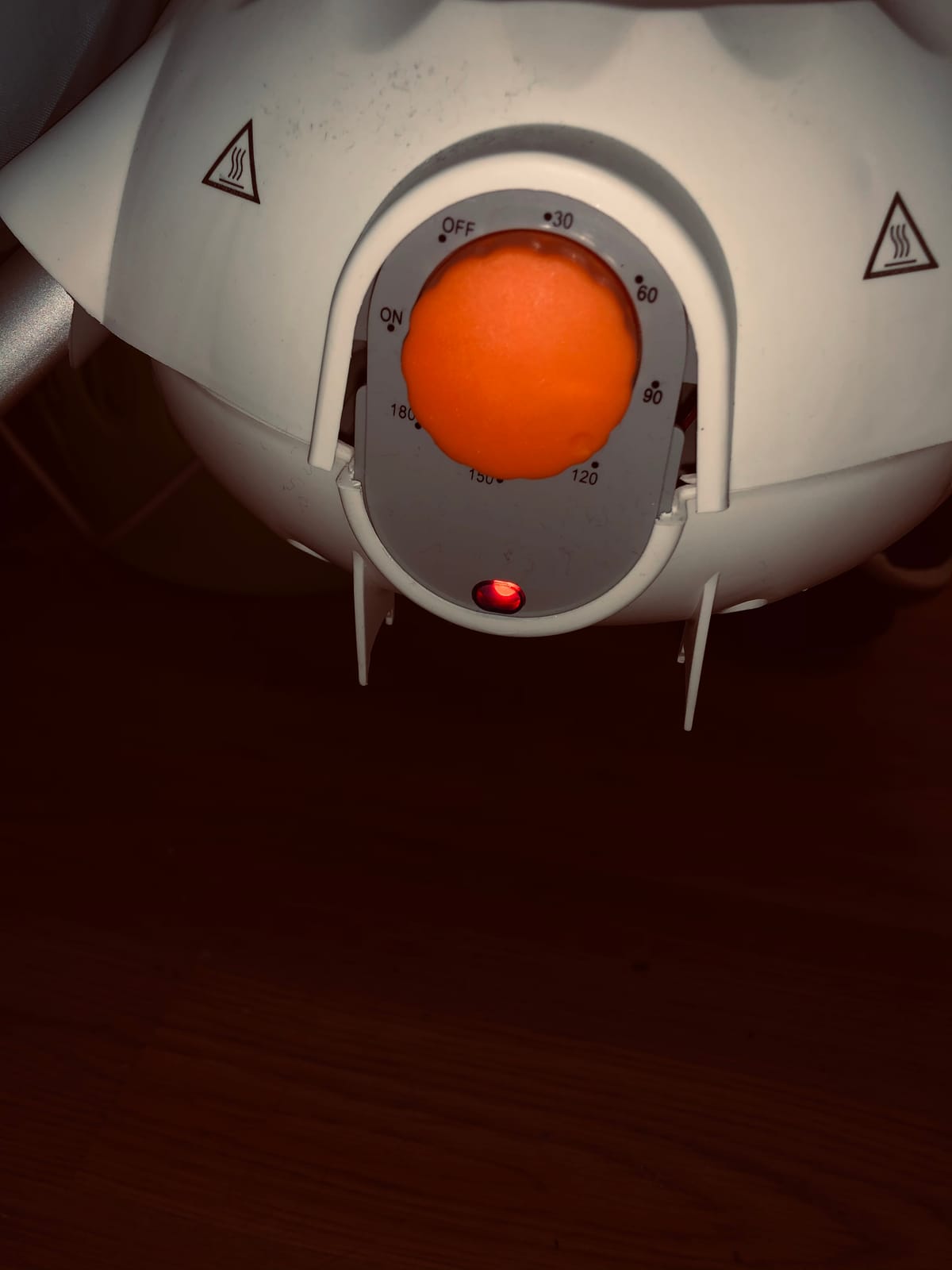
Where it struggles is structural. The frame legs are the weak point, and reviewers describe the unit tipping when the load sits unevenly, which happens more than you would expect with a load of jeans and towels. Load it evenly and it is stable; load it badly and it walks. The timer is the other recurring complaint, since on some units it stops behaving like a countdown and acts more like a simple on switch.
The 22-pound capacity figure is about weight tolerance for a hang-dry rack, not a drum volume, so do not read it as a washing-equivalent load. At 27.5 inches square and 56 inches tall, it needs a closet corner or a bedroom corner, not a countertop. Buyers also warn that moisture trapped inside the cover can leave clothes stiff, so leave the flap cracked open for the last few minutes of a cycle.
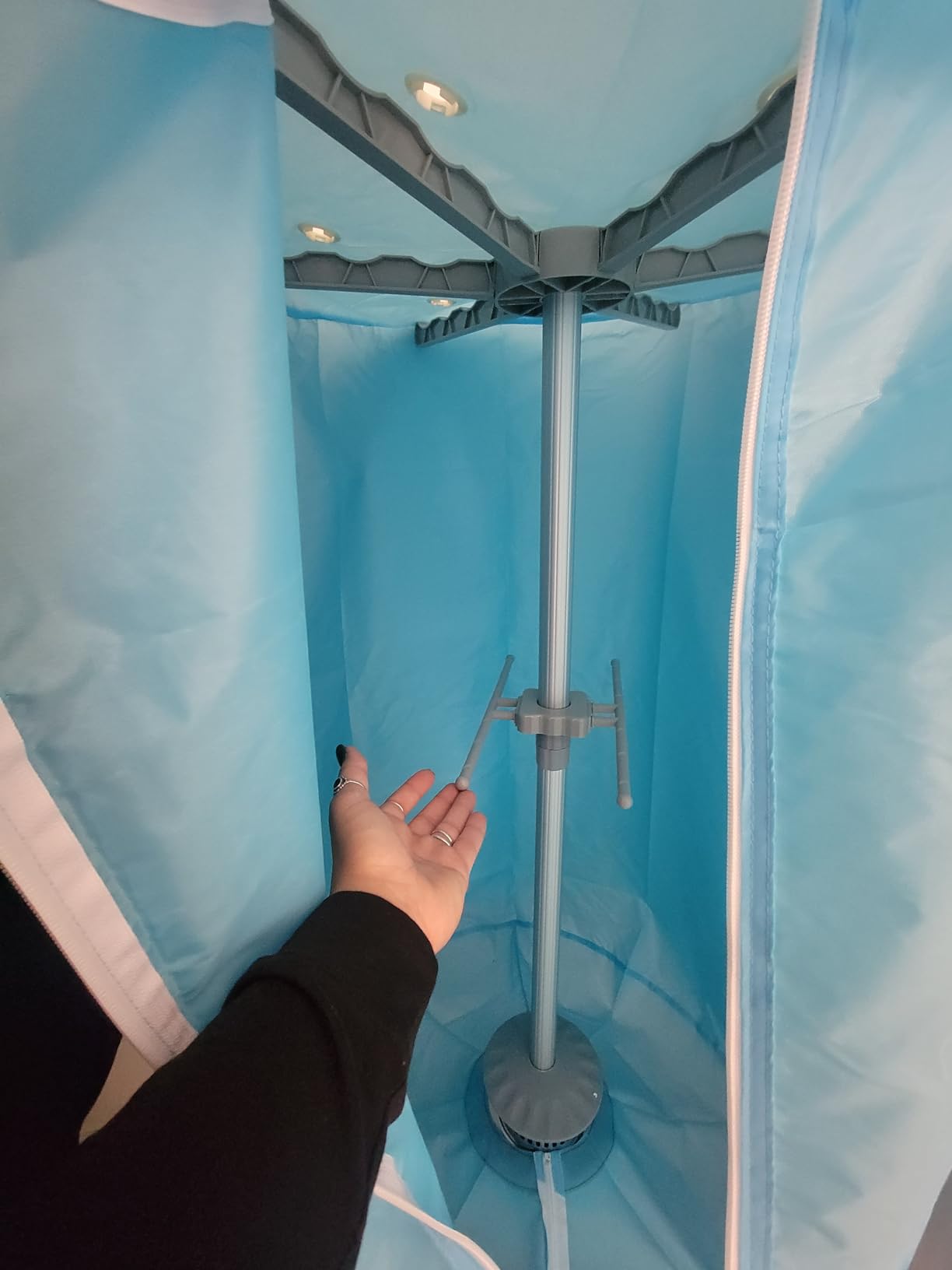
How It Handles a Small Apartment Load
This is the machine for the two-person household that dries clothes in batches rather than all at once. Shirts, underwear, socks and a set of workout gear go in and come out in about an hour. It never competes with a 4.0 cu. ft. front loader on volume, and it was never meant to.
Because it folds flat when empty, you can store it behind a door between uses, which matters in a studio where floor space is the scarcest resource. The cover bag doing double duty as a wardrobe is a genuinely useful touch for anyone whose closet is shared with hanging clothes.
Where It Falls Short
Towels and thick bedding are the honest limit. Multiple owners report cycles past two hours, and moisture that has nowhere to go ends up in the fabric shell. If your laundry is mostly towels, this is the wrong tool and you should look at a full-size condenser instead.
The 3.7 average across 210 reviews sits in the middle of the pack, with a 14 percent one-star share driven mostly by durability complaints about warped bases and broken parts on arrival. That is a budget-unit pattern, not a design flaw, so check the frame for wobble as soon as you open the box.
2. fbootfike 750W Hanging Dryer – Best No-Drill Portable Dryer
fbootfike Portable Clothes Dryers for Apartments, High Power Dual Motors, No-Installation Fast Small Mini Clothes Dryer, Compact Electric Dryer for RV, Home Use, Travel Clothes Dryer
3.1 lb, 7.34 inch D x 3.54 inch W x 7.17 inch H
750W dual motor
Nine garments per cycle
Pros
- Fast for its size thanks to the 750W motor
- Tool-free wall mount or hanging setup
- Quiet enough for a bedroom or RV
- Stows in a cabinet when not in use
Cons
- Nine-piece capacity means many cycles
- Plastic build feels inexpensive
- Lightweight garments only
- not towels
This is the smallest and lightest thing on the list, and it holds a 4.2 average across 67 reviews. It weighs 3.1 pounds, runs on a 750W dual motor, and installs two ways without tools: hooked onto a wall bracket or hung in place with the supplied suspension.
That no-drill install matters more than it sounds. In an apartment, holes in the wall are a lease problem and often a deposit problem. Hang this from a shower curtain rod, a closet rail or the included hook and you have a working dryer in about a minute, with nothing to patch afterwards.
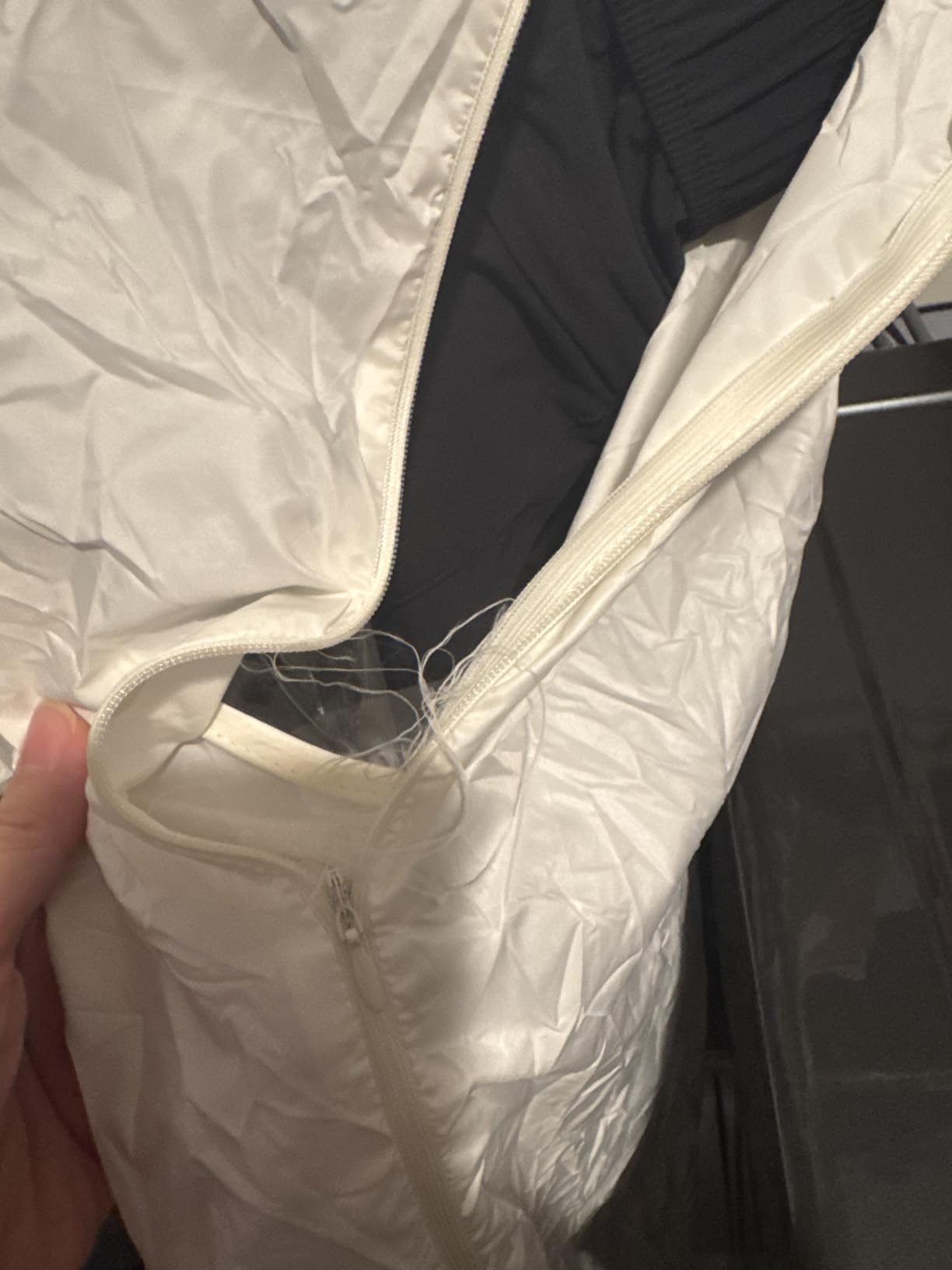
Reviewers consistently call it faster than comparable compact dryers for damp clothing, which tracks with the wattage. The fan structure is quiet, and it ranks in the top tier of the portable dryer category on Amazon, which tells you something about how many people are buying into this no-hookup format right now.
Capacity is the limit and there is no way around it. Nine garments per cycle is a single outfit plus a change of clothes. It switches between low and high heat automatically to protect delicate fabrics, and it has a built-in fragrance function that is more useful than it sounds after a trip or a season in a storage bin.
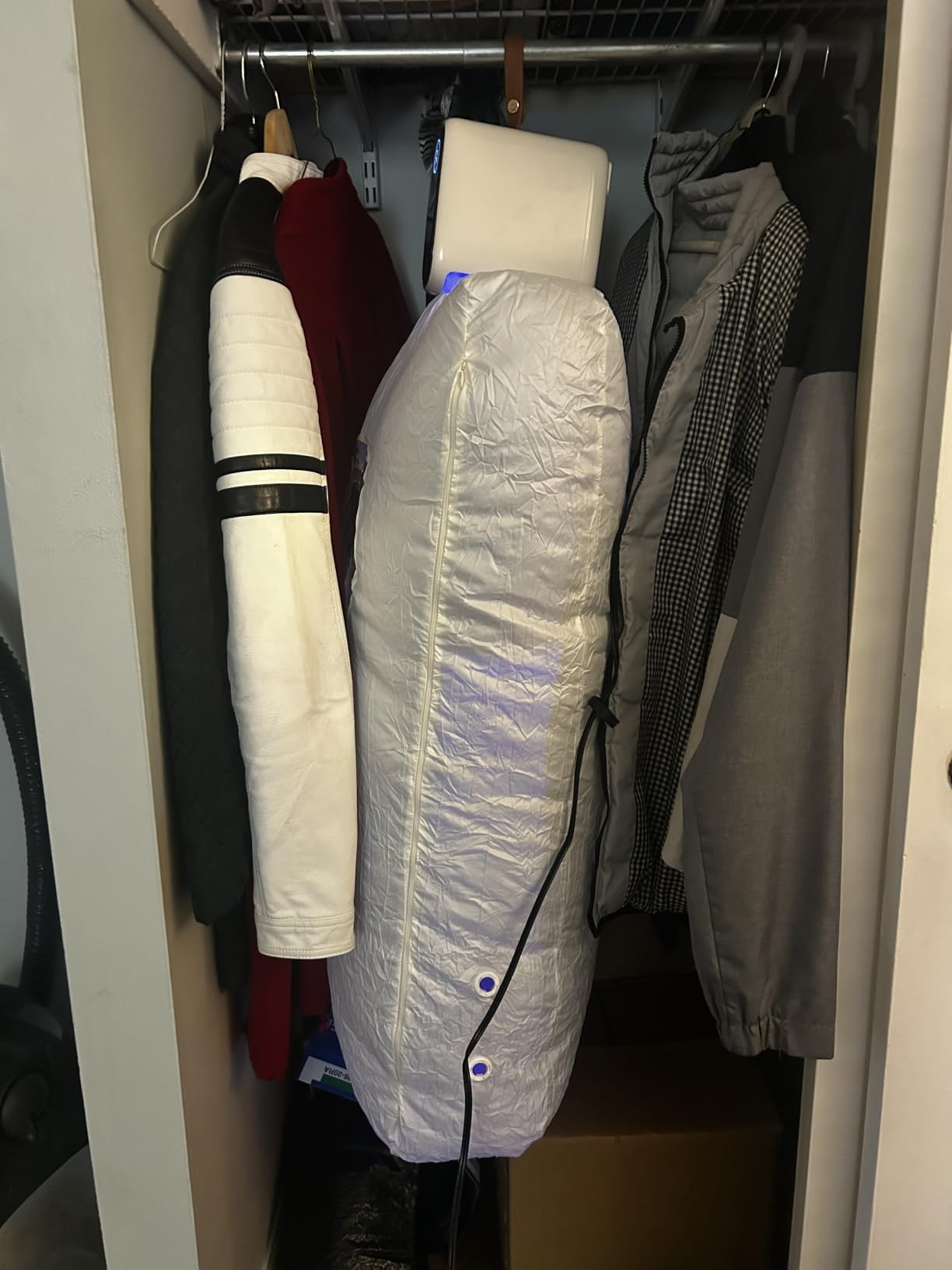
When This One Earns Its Place
Tiny apartments, dorm rooms, RVs and boats. At 3.1 pounds it is the only machine here you can carry up a stairwell with one hand, which matters if there is no in-unit laundry and the machine has to live somewhere else.
It is also the best overnight option. Pair it with the Night mode-style low heat and run a cycle while you sleep, because the fan noise sits well below a conversation. For one person or a couple who travels light, it covers the majority of what a dryer is actually asked to do.
Where It Falls Short
Do not buy it for towels, jeans or bedding. The plastic housing and the nine-garment drum make clear this is a garment dryer, not a laundry dryer. Reviewers flag the build quality as inexpensive, and that is fair for the category.
It is rated for US standard outlets and needs nothing else, which is its entire appeal. If you need more than a few garments at a time, step up to the Morus C2 further down or to a full-size condenser unit.
3. Equator 24-Inch All-In-One Washer Dryer – Best for Pet Owners
Equator All-in-One Washer Dryer VENTLESS/VENTED PET cycle 1.62cf/15lbs 110V in Silver
1.62 cu.ft. / 15 lb combo
21.8 inch D x 23.6 inch W x 33.5 inch H
Convertible ventless or vented on 110V
Pros
- Works ventless or vented so you are not locked in
- True 24-inch footprint for tight closets
- Dedicated PET cycle for hair and odor
- 5-year limited warranty
- 1400 rpm spin shortens dry time
Cons
- 1.62 cu.ft. holds roughly 15 lbs of laundry
- Condensing cycles run long
- 24 percent one-star share signals reliability complaints
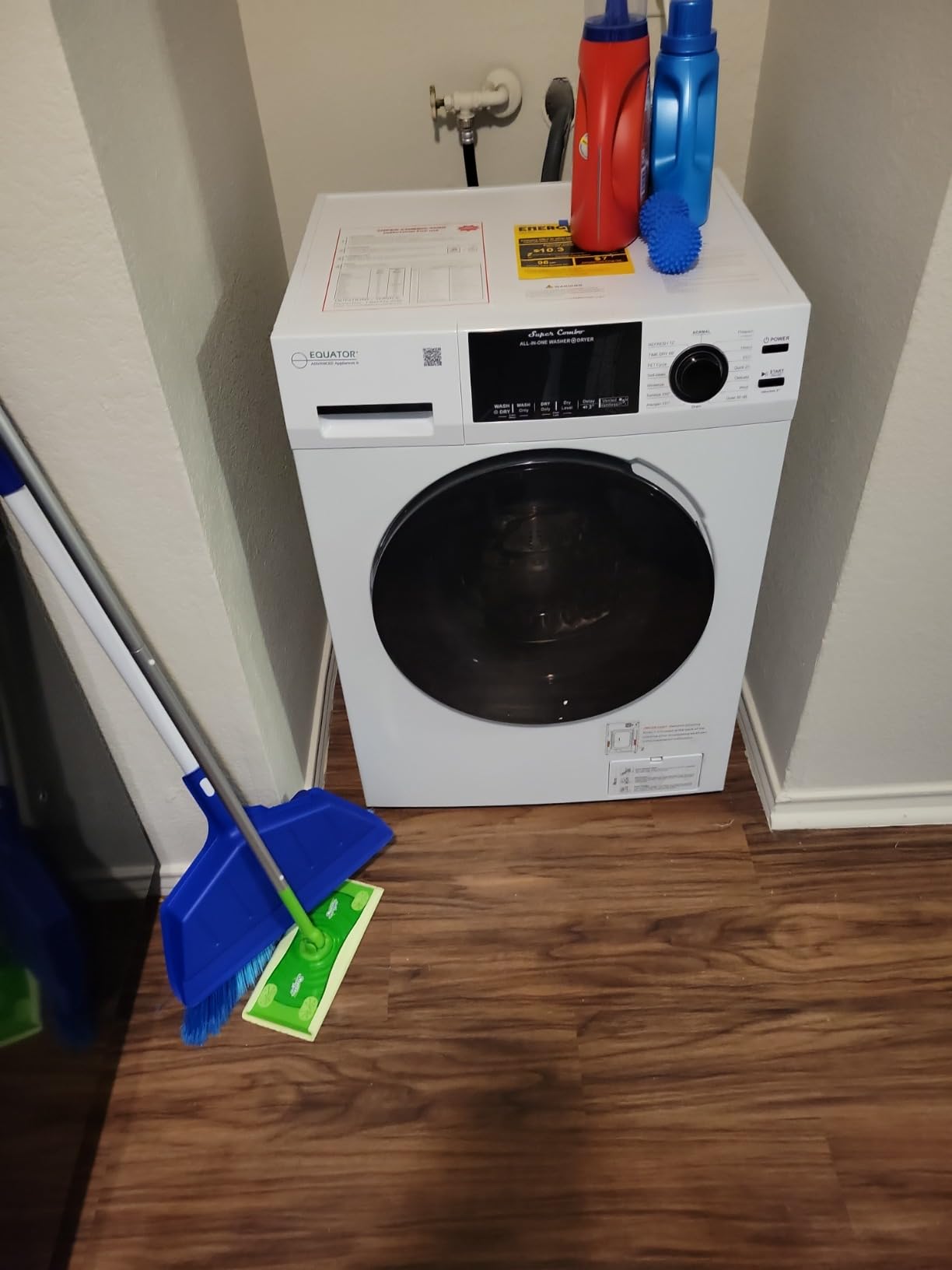
The Equator is the only washer dryer combo in this roundup that lets you choose. It runs as a 110V unit in both venting and condensing modes, so you can move it between an apartment without a vent hookup and a house that has one. That flexibility is worth a lot when you are renting and cannot predict where you will be in two years.
At 21.8 inches deep and 23.6 inches wide, it is a true 24-inch class appliance with 8 wash cycles, 8 drying cycles and a dedicated PET cycle. Apartment residents with a shedding dog or a cat that owns the couch should look at that PET cycle before anything else on the spec sheet.
The 1400 rpm maximum spin is the quiet hero here. Every minute of wetness you remove on the wash side is a minute you do not pay for on the ventless dry side, and at 1400 rpm this extracts more water than the other combos we looked at. Combined with the convertible design, it makes the most of a very small drum.
It also carries the longest warranty in this group at 5 years limited, and the build details are serious: stainless steel drum, adjustable leveling legs for uneven floors, child lock, delay start, oversuds control, add-a-sock and a coin trap. It is ADA specification met, which matters in accessible units.
Why the PET Cycle Is the Reason to Buy
Pet hair does not come out of fabric in a normal cycle. It needs heat, time and agitation in the right order, which is exactly what a dedicated cycle provides. Owners with shedding pets rate this feature as the standout, and it also handles the sweat and odor smells that build up in apartment air faster than they do in a house.
The stainless drum matters more here than it would in a house, because a ventless machine has no duct carrying moisture out of the building. In a small space every interior surface has to be wipeable, and a stainless drum is the surface that survives.
Where It Falls Short
The 1.62 cu. ft. drum is genuinely small. It is rated for about 15 lbs of laundry, which is one full load for one person or two people doing two loads. A household of four will notice. Buyers also report that condensing drying runs long next to a vented run, which is the normal penalty of this technology.
The 3.3 average is the lowest in the roundup, with a 24 percent one-star share pointing at reliability and service rather than at features. The control panel also mixes a knob with touch controls, which several reviewers found unintuitive to learn.
4. Magic Chef 2.7 cu. ft. Combo – Best Value All-In-One
23.4 in. 2.7 cu. ft. White All in One Ventless and Washer Dryer Combo
2.7 cu.ft. front-load combo
23.4 inch D x 23.4 inch W x 33.5 inch H
120V, 1320W, 90 kWh per year
Pros
- Condensing ventless dry in a 23.4 inch square footprint
- Stainless steel drum
- 1300 rpm spin reduces dry time
- Five wash and rinse temperatures
- Tub Clean and De-Wrinkle cycles
Cons
- Only two dedicated drying cycles
- 22 percent one-star share on durability
- Condensing dry runs long
The Magic Chef solves a specific apartment problem: you want a real washer and a real dryer, the closet has room for exactly one box, and the building has no vent. A 2.7 cu. ft. front-load washer with a condensing ventless dryer in a 23.4-inch square footprint does that, and it runs on 120V.
Two numbers make it interesting. The 1300 rpm spin pulls more water out of the wash than most machines in this size class, which shortens the ventless dry. The 90 kWh annual energy consumption figure is the only published annual number among the combos here, and the 1320W draw is well below what a 240V appliance circuit pulls.
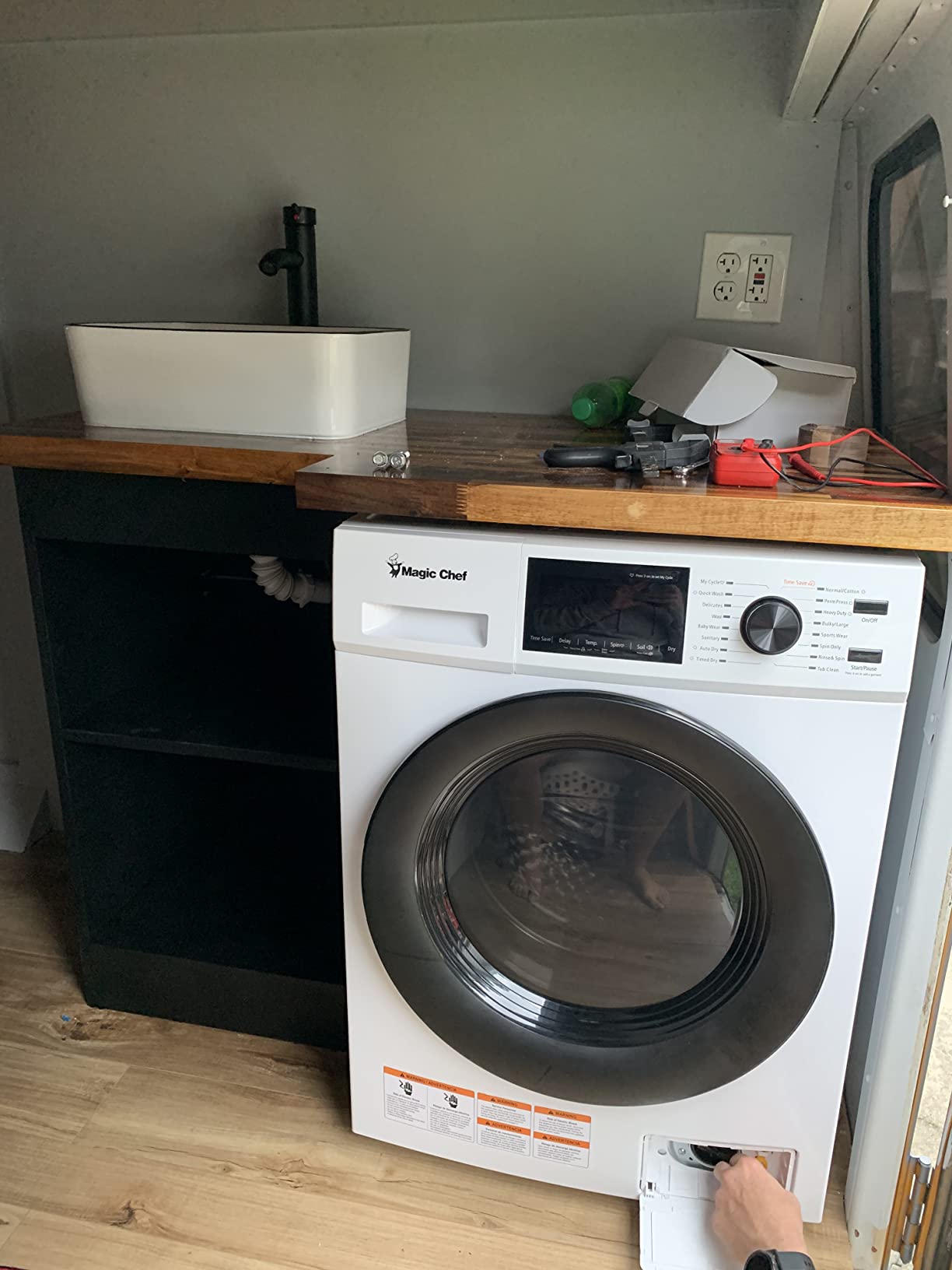
Programmability is better than the rest of the category at this size. There are 16 programs with five wash and rinse temperatures, three soil level settings, a delay start from 1 to 24 hours, and a Tub Clean cycle that keeps the drum from smelling like a wet closet, which is a real concern in a ventless appliance.
The stainless steel drum is another apartment-specific win. Condensing dryers are humid machines by design, and a stainless interior with a wipeable gasket is easier to keep sanitary than painted steel.
Where the Wash Side Shines
Sixteen programs is unusual at this size, and buyers reviewing the machine repeatedly mention washing performance and fit as the strongest part of the package. If you are replacing a much older top-loader in a small closet, the difference in wash quality is immediate.
Delay start is the sleeper feature for apartments. Set it before work and the whole wash and dry is finished before you get home, which also means the machine runs when the building is quiet and the humidity has somewhere to go.
Where It Falls Short
The dryer is the compromise. Only two dedicated drying cycles means limited control over how heat and time are combined, and with 16 wash programs for 2 dry options the design clearly prioritizes washing. Owners report the condensing dry takes substantially longer than a vented machine, which is expected but real.
Reliability is the other question. A 3.4 average with a 22 percent one-star share on durability and service is a thin data set of 25 reviews. Also note the listed item weight of 23.4 lbs is clearly inconsistent with a full-size combo, so confirm delivery and moving logistics before you commit.
5. Midea 4.4 cu. ft. Heat Pump Dryer – Best Low-Temperature Drying
Midea Heat Pump Ventless Front Load Dryer Stackable 4.4 Cu.ft White
4.4 cu.ft. heat pump, 22.5 inch D x 23.5 inch W x 33.5 inch H
240V circuit required
ENERGY STAR qualified
Pros
- Heat pump runs at low temperatures
- gentler on fabrics
- At least 28 percent less energy than a standard dryer
- Stackable 24-inch body fits beside a washer
- Dry Smart humidity sensor stops the cycle automatically
Cons
- Requires a 240V circuit many apartments lack
- Power cord sold separately
- 34 percent one-star share on install and reliability
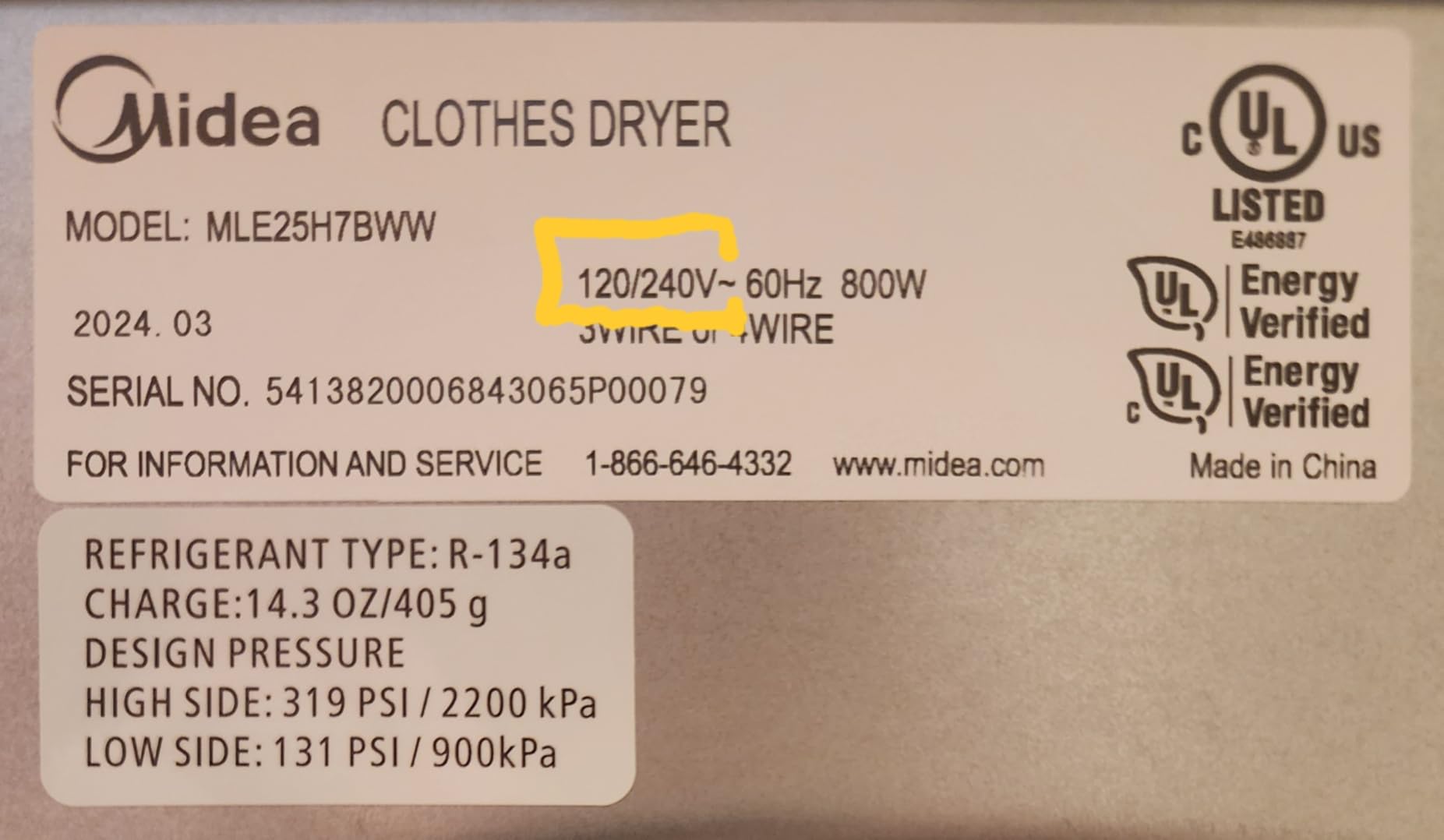
This is the only standalone heat pump dryer in the roundup, and the only machine here whose specification states a 240V requirement. Both facts matter.
The heat pump itself is the right technology for a small space. Midea claims at least 28 percent less energy than a standard dryer, it is ENERGY STAR qualified, and low-temperature drying is kinder to cotton, synthetics and anything with elastic than a hot condenser tumble.
At 4.4 cu. ft. it is also the largest drum in the roundup, and the 23.5-inch width means it stacks with a matching Midea washer in a standard closet. For a couple or a small family that wants a dedicated dryer rather than a combo, the physics are on its side.
The feature set is well chosen for the format. Dry Smart is a humidity sensor that adjusts drying time automatically, so it stops when clothes reach the target dryness instead of running a fixed cycle. Wrinkle Care adds about 90 minutes of unheated intermittent tumbling after the cycle, which is genuinely useful in an apartment where you might not get to the drying rack immediately.
A back-up drain hose is included, which gives you a path away from the condensate tank if your closet has a laundry sink or a standpipe. That is one of the more thoughtful inclusions in this whole roundup.
Read This Before You Buy: The 240V Problem
Check your closet outlet first. If it is a standard 120V receptacle, this machine is not for you unless you are willing to have an electrician run a circuit, and that requires a landlord conversation most renters will lose. This is the single most common reason buyers of this dryer end up unhappy, and it shows up clearly in the reviews.
The power cord is also sold separately, which surprises people at the point of installation. Budget for it and confirm your dryer outlet is a dedicated 30A circuit rather than a general-purpose receptacle. A back-up drain hose is in the box; the cord is not.
Where It Falls Short
Condensing and heat pump models dry slower than vented machines on large or heavy loads. You can partly offset that with a high-speed spin and smaller loads, which is standard advice for the technology rather than a workaround specific to this model.
The 3.4 average rests on only 17 reviews, and 34 percent of them are one-star, the most polarized spread in the group. The recurring theme is installation friction around the 240V requirement and the missing cord rather than the drying itself, and confirming your electrical setup before ordering removes most of that risk.
6. Kenmore 4.0 cu. ft. Ventless Dryer – Best Full-Size Standalone Dryer
Kenmore 4.0 cu. ft. Ventless Condensing Electric Dryer – White
4.0 cu.ft. ventless condensing
24 inch D x 23.5 inch W x 33.2 inch H
46 lb, ENERGY STAR certified
Pros
- Express Dry gets 3 shirts in about 12 minutes
- Moisture sensors prevent over-drying
- Wrinkle Guard tumbles after the cycle
- 15 cycles and 3 temperature options
- ENERGY STAR certified
- Reversible door
Cons
- Condensing dry is long on large or heavy loads
- Only 17 reviews so durability is unproven
- 25 percent one-star share on installation
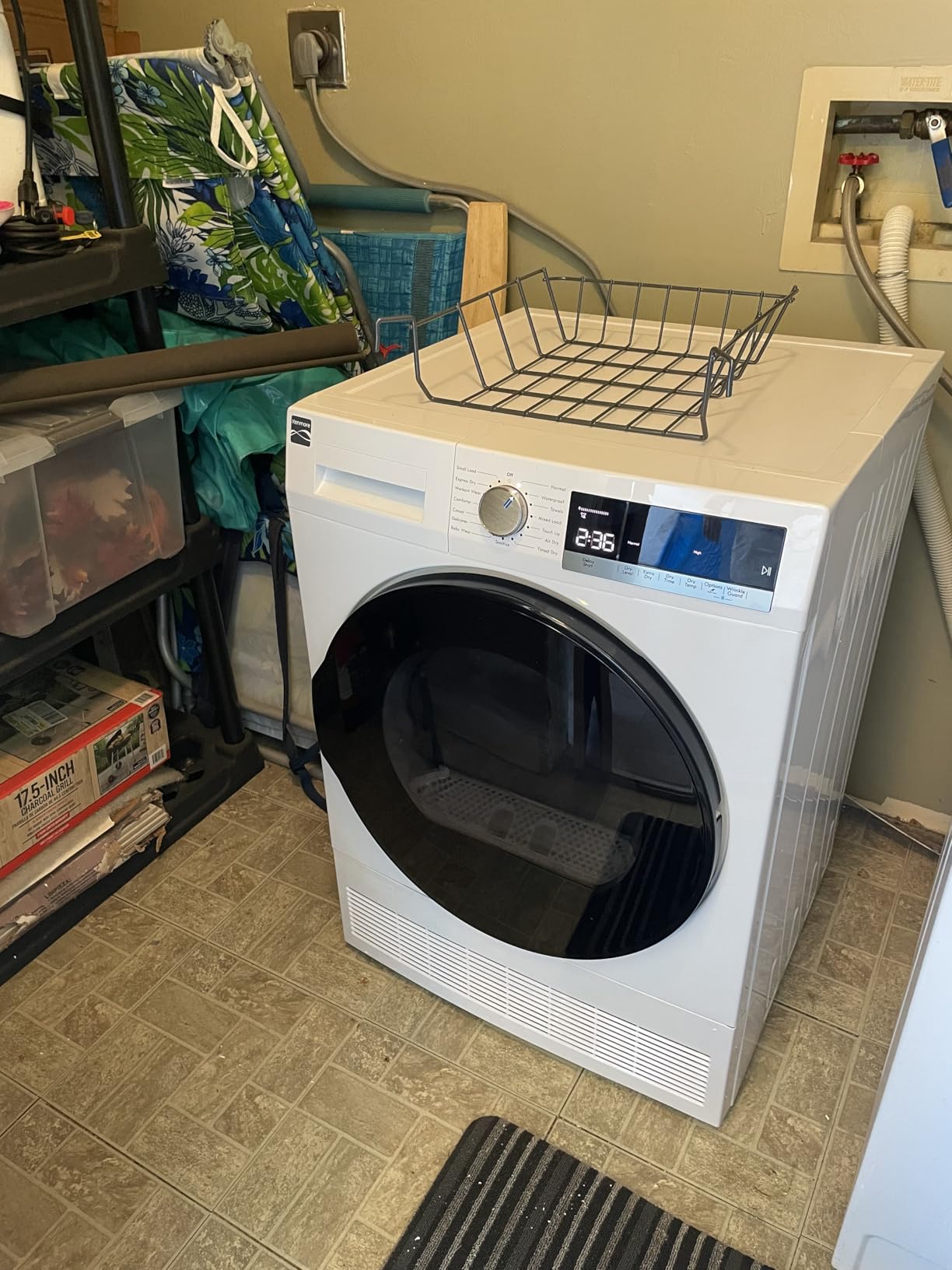
If you want a genuine appliance dryer rather than a portable unit or a washer dryer combo, this is the most conventional choice in the roundup. A 4.0 cu. ft. ventless condensing front loader at 46 pounds, 23.5 inches wide, with a reversible door and side-by-side or stacked placement.
The spec sheet is aimed squarely at apartment life. The manufacturer names studio apartments, basements, condos and vacation homes as target rooms, which tells you the design assumptions match the question. It is ENERGY STAR certified, and 15 drying cycles with 3 temperature options cover everyday fabrics plus non-washable items like pillows and sleeping bags.
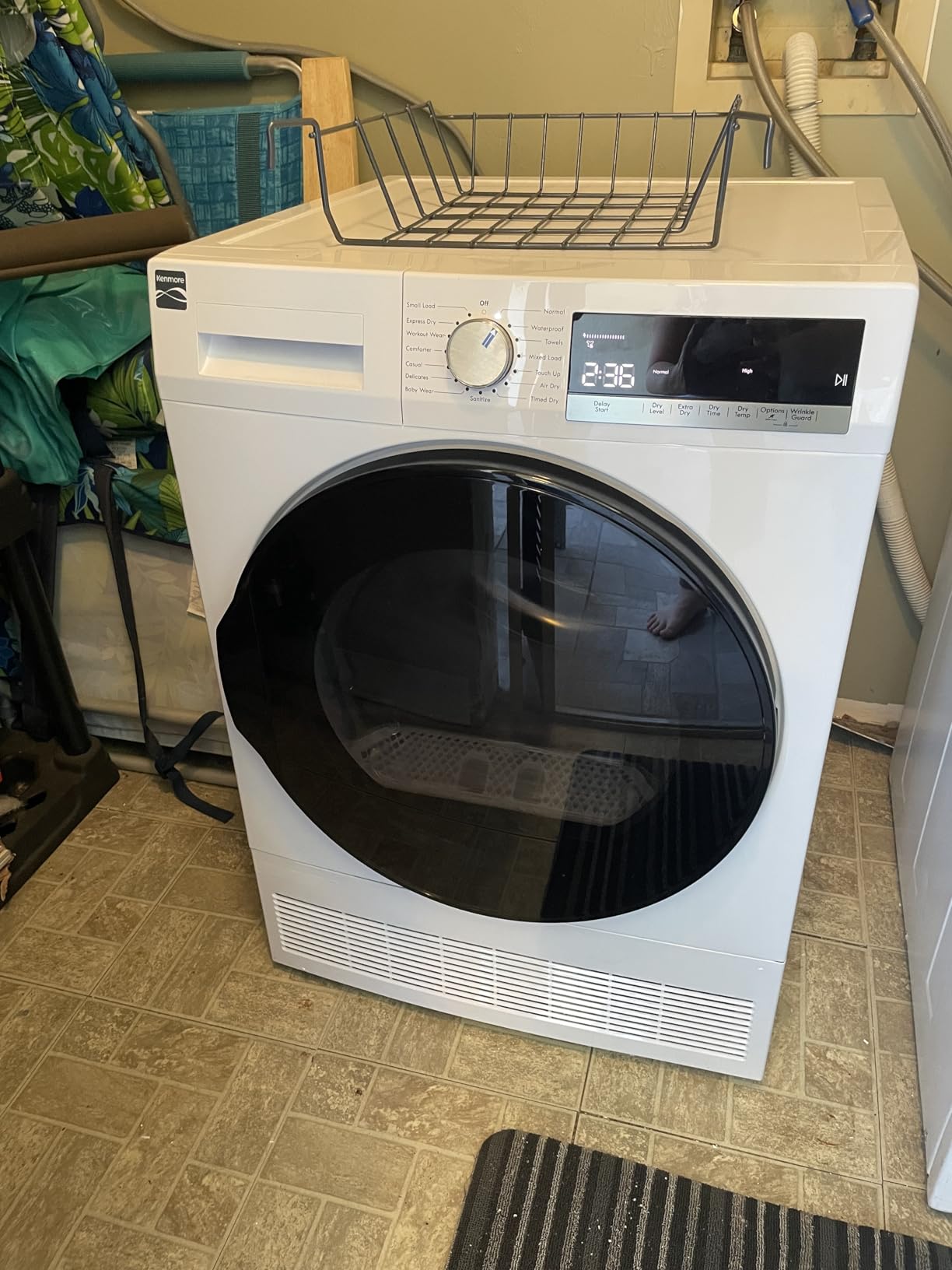
Express Dry is the feature apartment residents mention most. It gets up to 3 shirts dry in about 12 minutes, which turns the dryer into a same-evening problem solver rather than an overnight commitment. For someone who washes a load in the morning and wants it wearable that evening, that single cycle changes the appliance’s role.
Moisture sensors stop the cycle before over-drying, which saves energy and protects fabric, and Wrinkle Guard tumbles clothes intermittently after the cycle ends so you can pull slightly damp-but-flat clothes out instead of wrinkled ones. LED light-touch controls show cycle status and time remaining, which matters more than it sounds in a closet you have to crouch to reach.
Why This Beats a Combo for a Two-Person Household
A dedicated dryer does one thing, and it does it with a full-size drum. The 4.0 cu. ft. basket holds a genuine load of towels and jeans, which no combo in this roundup manages without a second run. If your apartment has space for a separate washer and a stacked dryer, that separation is worth more than any feature list.
The reversible door is a small thing that pays off in tight floor plans. Swinging it open toward a wall versus toward the room is the difference between 24 inches of usable depth and 42 inches. Check your clearance with the door on the side you actually have.
Where It Falls Short
The conditioning applies to every condenser design here: a full load of heavy items takes longer than a vented machine would. Reviewers note this directly, and it is the trade for not cutting a hole in a wall.
At 3.7 with 61 percent five-star ratings, this is the strongest full-size showing in the group. But 17 reviews is not a reliability record, and 25 percent of them are one-star reports clustered around installation and early failure. Confirm the condensate route, leave several inches of clearance on every side, and give it a fair trial period.
7. Contoure 2.7 cu. ft. Steam Combo – Best for RV and Boat Hookups
Contoure 2.7 Cu Ft Ventless Washer Dryer Combo with Steam, 120V, Titanium
2.7 cu.ft. 120V all-in-one
29 inch W x 27 inch H, 166 lb
Steam function, inverter motor
Pros
- Runs on standard 120V so no electrician is needed
- Steam function reduces wrinkles and refreshes garments
- Compact enough for RV and boat laundry closets
- Stainless drum with inverter motor
- Programs for cotton
- delicates and synthetics
Cons
- 166 lb unit needs two people to move
- 2.7 cu.ft. is small for family laundry
- Drying in a combo is limited
- Only 13 reviews so quality signals are thin
This one exists for a specific building: an RV, a boat, or an apartment with a genuinely hostile power supply. It runs entirely on 120V, needs no external venting, and washes and dries in one 2.7 cu. ft. drum with a stainless steel interior and an inverter motor.
The steam function is the feature that differentiates it from the other combos. Owners highlight it for wrinkle reduction and as a substitute for a separate ironing step, which in a small space where an ironing board does not exist is a genuine saving. Program coverage runs across cotton, delicates and synthetic blends.
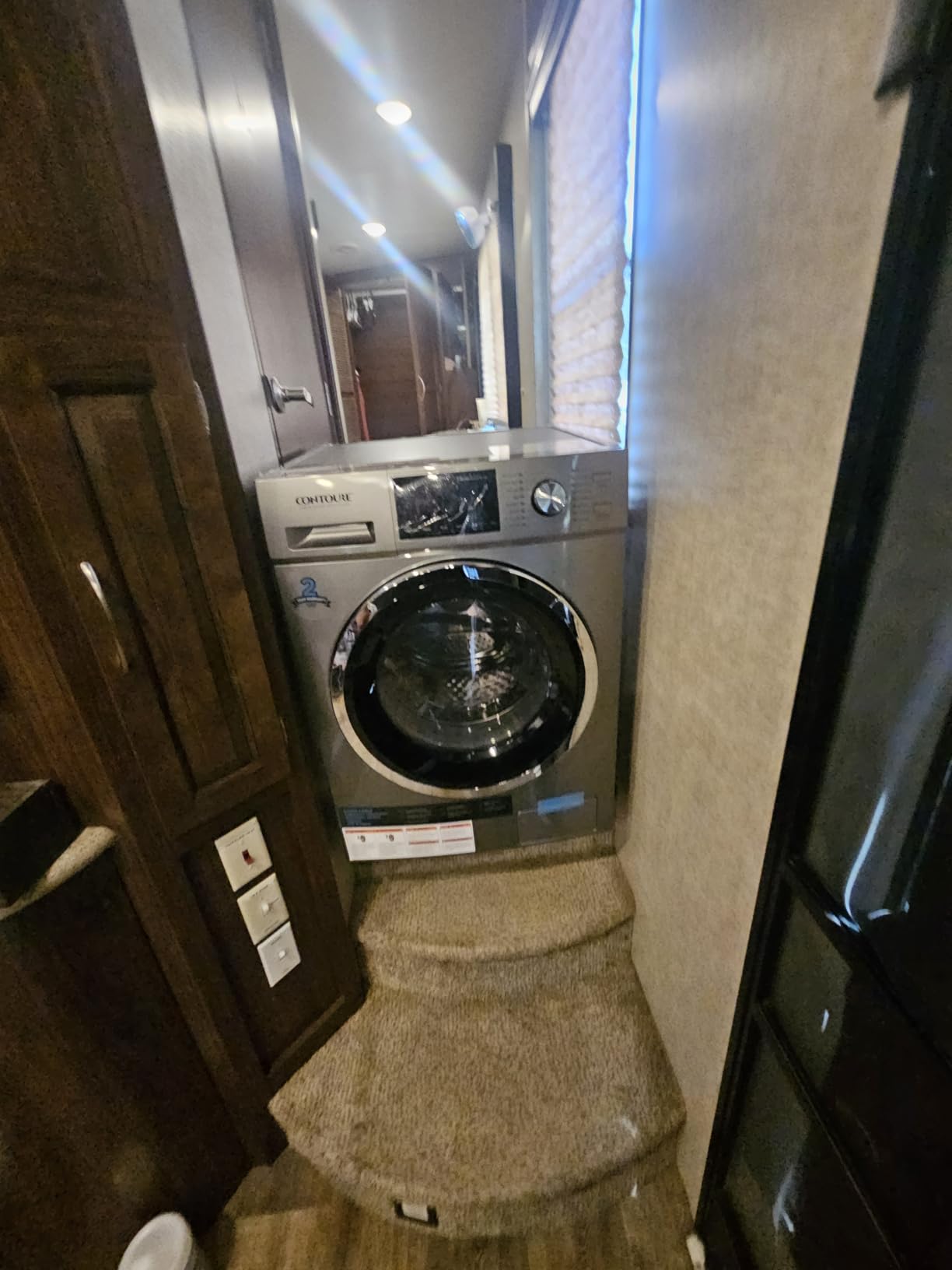
It sells well in the combination washers and dryers category, which reflects how many buyers in this niche have found it. The titanium finish and push-button controls read as more premium than the rest of the combo category, and the 120V requirement removes the single biggest installation obstacle for apartment residents.
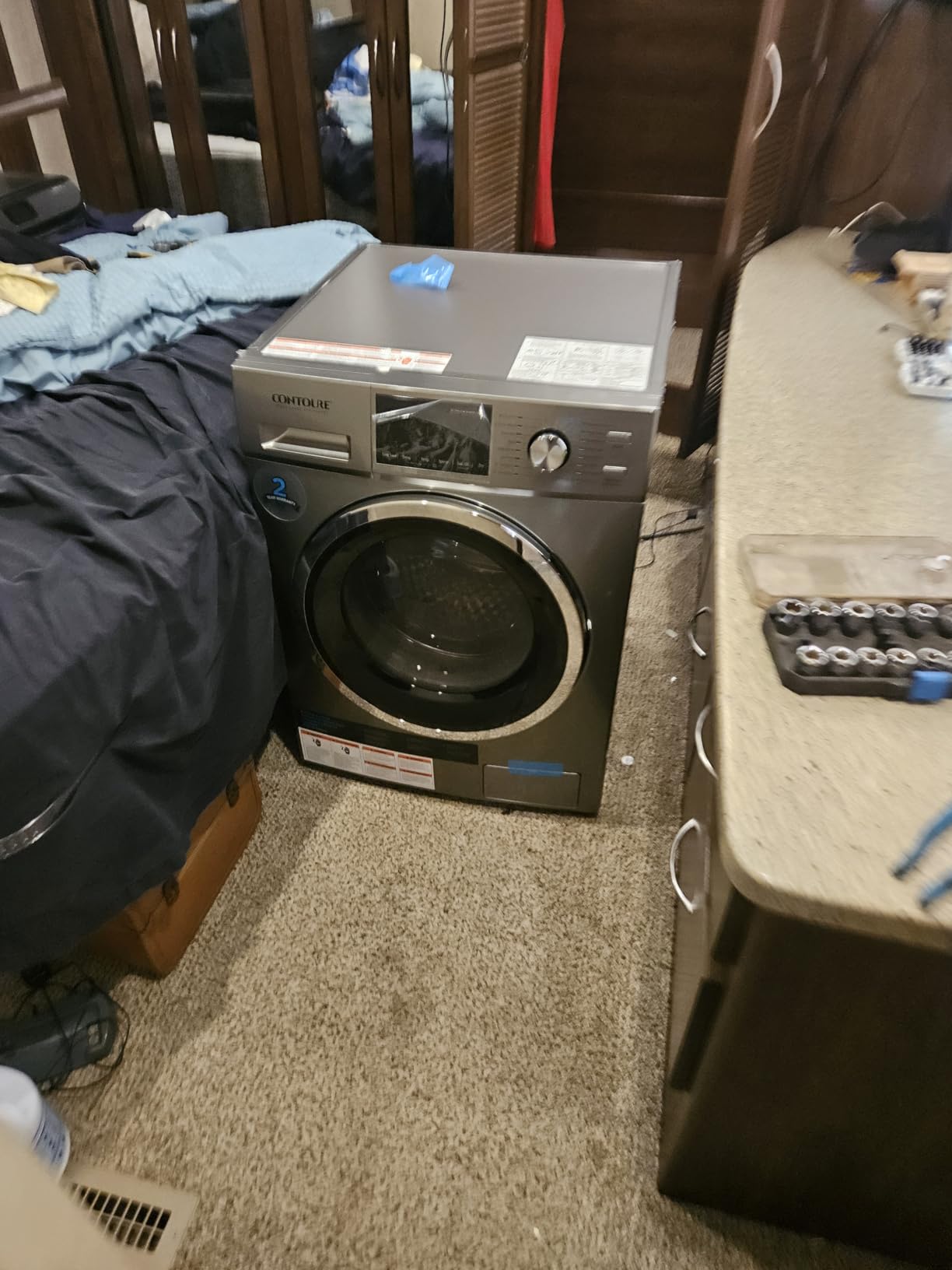
Size is the trade. At 29 inches wide and 27 inches tall with 42.5 inches of depth when the door is open, and 166 pounds to lift, it needs a real utility space rather than a slim closet. Reviewers report it fits RV laundry closets and small utility rooms without trouble.
Who This Serves Best
RVs, boats, tiny homes and apartments where every appliance runs on 120V and space is measured in inches. If your building has a laundry area but no dryer outlet, the steam function makes this the most complete single-machine answer.
Travel and secondary-unit owners also get value here. One commenter in an Appliances thread described buying a ventless dryer only as a secondary unit, because the primary problem was that a ventless machine is fine for two people and wrong for a family of six. That framing fits a compact combo perfectly.
Where It Falls Short
Drying performance in any combo is limited next to a dedicated dryer, and reviewers know it. A 2.7 cu. ft. drum holding family laundry means two runs, and two runs in a ventless machine means two long cycles.
Only 13 reviews back the 3.4 average, and 24 percent are one-star with durability and support complaints. With a sample that small, the rating is not a reliable guide either way. Read the reviews for the failure modes, not the average.
8. LG DLHC1455W 24 in. Heat Pump Dryer – Best Smart Features
LG DLHC1455W 24 in. W 4.2 Cu. Ft. Ventless Stackable Compact Smart Electric Dryer in White with Dual Inverter HeatPump Technology
4.2 cu.ft. heat pump, 27.25 inch D x 24 inch W x 33.5 inch H
127.9 lb, reversible door
Wi-Fi Smart Control via ThinQ
Pros
- Dual Inverter HeatPump dries efficiently at low heat
- 24-inch width fits closets and small laundry areas
- 14 dryer programs
- Sensor Dry adjusts cycle length automatically
- ThinQ app allows remote start and alerts
Cons
- Two of six reviews are one-star on failure and support
- One owner reports garment shrinkage
- One owner reports a drum crack within two years
- Very small review base of 6
Its feature set is the most capable here and also the one with the least evidence behind it. Dual Inverter HeatPump technology, 4.2 cu. ft. of capacity in a 24-inch compact frame, 14 dryer programs, Sensor Dry and full Wi-Fi control through the ThinQ app with remote start and cycle alerts.
For an apartment, the app is not a gimmick. You start a cycle from your phone, get an alert when it finishes, and never have to stand in a closet waiting for it. Sensor Dry adjusts cycle length by moisture level, so a light load does not get the treatment of a heavy one.
The reversible door and 24-inch width make it a natural stack partner in a closet. At 127.9 pounds it is a serious piece of equipment rather than a portable unit, so measure the doorway and the closet floor before ordering.
The Smart Features Are Real, and Rare Here
Nothing else in this roundup has app control. ThinQ handles remote start, monitoring and alerts, and with 14 programs there is enough granularity to set a permanent cycle for synthetics, towels or bedding. For someone who travels or works long shifts, starting a dry from the sofa is a real convenience.
The heat pump itself is the quieter story. Low-temperature heat pump drying is gentler on fabric than a hot condenser tumble, and 4.2 cu. ft. is enough for a genuine load of mixed laundry rather than a single outfit.
Where It Falls Short
Six reviews is not a reliability record, and two of them are one-star with serious complaints: one owner reports the dryer shrank clothing noticeably, and another reports a crack developing inside the drum within two years, with customer service unwilling to repair or replace under warranty. The 3.9 average looks excellent and is statistically meaningless at that sample size.
The 1-year manufacturer warranty is the shortest here, against Equator’s 5 years. If you buy it, buy it for the feature set and accept the service risk. Check your outlet type before ordering.
9. Morus C2 Compact Dryer – Best for 10-Minute Quick Dries
Morus Portable Dryer for Clothes with 8 Modes, 1200W Mini Dryer with Stainless Steel Drum, No Installation Required, Wrinkle and Pet Hair Remover, Luxury Towel Warmer, for Apartments, Dorm, RV
3.5 cu.ft. stainless drum
20.8 inch D x 16.3 inch W x 19.25 inch H
1200W, ETL and UL certified
Pros
- Plug and play with no installation or exhaust hose
- 1200W with a 10-minute fast dry mode
- Dual-direction rotation prevents tangling
- 86 km/h airflow with lint and pet hair filter box
- Humidity sensors stop the cycle when dry
Cons
- Two reviews only
- so durability is untested
- 3.5 cu.ft. suits small loads
- 48 inch depth with the door open
- Dedicated rack design
- not a washer
The Morus C2 is the most thoughtfully specified portable dryer we reviewed, and it arrives with almost no track record. A 3.5 cu. ft. stainless steel drum, 1200W of power, plug-and-play operation with no installation or exhaust hose, and ETL and UL certification with 7 years of EU spare part availability.
The 10-minute fast dry mode handles underwear, small items and last-minute outfits, which is the gap a full-size condenser leaves. Set a timer running while you get dressed, and the problem is solved before you leave. A Night mode and a Warm mode round out eight drying modes including Silk, Deep Clean and Refresh.
Dual-direction alternating rotation is the detail that matters for garment care. Clothes tumble from both directions, so they do not tangle into a wet ball that needs half an hour of ironing afterwards. A post-drying auto-tumble function keeps them smooth.
What the Feature Set Actually Does
The 86 km/h airflow works through a dedicated lint and pet hair filter box, which is a real advantage in an apartment where clothes sit in one small room. The humidity sensors stop the cycle automatically when clothes are dry, so you are not paying to tumble already-dry fabric for another 20 minutes.
The Refresh and Deep Clean modes remove musty storage and sweat odors without a rewash. In a studio where the same basket of laundry sits near your bed, that is a feature you will use more often than any heavy-duty program.
Where It Falls Short
Two reviews. That is the entire evidence base for a 4.5 average, and we are not going to pretend otherwise. Early listings like this one often look excellent on paper and tell you nothing about how the compressor holds up in year three. Treat the rating as unproven rather than earned.
At 3.5 cu. ft. it suits small loads, not a family wash, and the 48-inch depth with the door open needs clearance in a tight space. The stainless drum, the anti-tangle rotation and the ETL and UL certifications justify a higher outlay than a basic hanging dryer; they do not justify one if you only need somewhere to dry a few shirts.
What Is a Ventless Dryer?
A ventless dryer is an electric dryer that dries clothes without an exhaust duct to the outside. It recirculates heated air through the drum, cools that humid air against room air across a heat exchanger so moisture condenses into water, then reheats and reuses the air until the load is dry.
That water goes one of two ways. A condenser dryer collects it in a removable tank or tray that you empty by hand. A heat pump dryer does the same job with a compressor and a second heat exchanger that recovers and reuses heat, so it runs cooler and uses less electricity per cycle.
The important nuance for apartment dwellers: ventless means no duct, not no moisture. A well-vented closet with several inches of clearance on all sides keeps that moisture moving instead of letting it sit on a wall.
Condenser vs. Heat Pump: the Mechanical Difference
A condenser dryer cools moist drum air below its dew point so water drops out of it. The cold, dry air then reheats over a heating element and returns to the drum. It is simple, proven and cheaper, but it runs hotter, so a condenser dry takes longer on a full load.
A heat pump dryer moves moisture the way a dehumidifier does. A compressor circulates refrigerant through an evaporator coil that pulls water out of the drum air, then a condenser coil reheats that air. Because the heat is recycled rather than generated, temperatures stay low, fabrics take less heat damage, and energy use drops. The trade-off is cost and cycle length on very thick loads.
Community consensus leans hard toward heat pumps. One commenter in an r/Appliances thread on ventless all-in-one units put it simply: it drains after washing, but not much water volume, and if it is not a heat pump, avoid. That is sound engineering advice rather than brand loyalty.
Where the Lint and Moisture Actually Go
Lint goes into a filter, just like a vented machine, and in these units it is usually a screen or a filter box at the back of the drum opening. It needs cleaning far more often than on a vented dryer because the same air recirculates instead of leaving. A clogged filter slows the drum, raises heat and is the single most common cause of the musty smells people blame on the appliance.
Moisture goes into the condensate tank, the drain hose, or into the room air as heat. Whichever route you use, the routine is the same: empty the tank after every load, wipe the gasket, and keep the intake clear.
Do You Actually Need a Ventless Dryer in an Apartment?
You probably do not need one if your building has a working shared laundry room and the per-load cost does not bother you. Buyers weighing this decision keep doing the same arithmetic: a r/Frugal user compared a portable dryer purchase against paying per load in a building laundry room and stopped there. That math is personal, but the thread is worth reading before you spend anything.
You very likely do need one if there is no exterior wall behind the laundry closet, if your lease forbids cutting into walls, if your only outlet is a standard 120V receptacle, or if you have sports gear and bedding that will not fit in a car. Renters on r/PassiveHouse and r/AskNYC threads describe the same constraint in different cities: the machine has to fit through the door, down the hall and into a closet that already has a washer in it.
Check four things before you shop. One, electrical supply. Heat pump dryers and most full-size condensers need 240V, and a typical older apartment closet does not have it. Two, floor space. Compact 24-inch bodies are about 33 inches tall and 22 to 24 inches deep, plus door clearance that can add another 18 inches. Three, drain routing, if the unit is not tank-based. Four, permission. Your lease and any building rules come before any product decision.
How to Choose a Ventless Dryer for an Apartment
Start with power, because it eliminates more options than any other variable. Standard 120V covers the portable units, the Equator combo, the Magic Chef combo and the Contoure combo. A 240V dedicated circuit is required for the Midea heat pump and most full-size condensers like the Kenmore and the LG. If your closet has a 15A receptacle and nothing else, your shortlist is short and your buying decision is made.
Next decide between a condensate tank and a drain hose. A tank-based unit needs no plumbing, which is the renter’s best case, but it stops when it fills and you empty it after every load. A drain hose routes water to a standpipe or sink and runs unattended, which is more convenient but requires a drain you are allowed to use. Never route a condensate hose into a floor drain without confirming it, and never drill an exterior wall without permission.
Then size the drum honestly. Capacity in cubic feet is the number that matters for a real load. Four cubic feet handles a genuine mixed load for two people. Two to three cubic feet in a combo means one or two smaller runs. Anything under one cubic foot is a garment dryer, not a laundry dryer, and should be bought for that purpose rather than to replace an appliance.
Finally, decide how much noise you can live with. There are no published decibel figures in this category, so use the design as a proxy: a fan-and-hanging-garment unit like the fbootfike runs far quieter than a compressor-driven heat pump machine, because a heat pump has a compressor and a refrigerant circuit running. If you share walls, a compressor-based unit in a closet is the one to think twice about.
Clearance and Airflow: the Mold Question Answered
Ventless dryers do not automatically create mold in small rooms. What creates mold is moisture sitting on a surface with no airflow. A WoodNet forum user reported finding mold on the wall around a dryer that had been squeezed in with only 1 inch of clearance, and that is the whole story: crowding the machine traps the moisture it produces.
Leave several inches on every side and keep the rear intake clear. Open the door and wipe the gasket and the door glass after a load, empty the tank, and let the closet air out. In a studio or an RV where the drum is closed up, run a fan nearby during the cycle. An iRV2 owner reported their ventless unit disperses no perceptible moisture into the coach, and the difference between that experience and a mold report is almost always airflow and spacing.
If humidity is a recurring problem in your unit rather than a one-off, our humid-climate airflow guide covers the same clearance principles for a different kind of appliance.
Brands and Budget Tiers to Treat Carefully
Ask what dryer brand to avoid and the honest answer is about a category, not a name. Unbranded marketplace ventless units frequently land between 2.2 and 3.4 stars, and the complaints cluster on the same points: warped plastic bases, unreliable timers, missing certifications and no support when something fails. None of the nine machines here matches that pattern exactly, but two of the lowest-rated units are also the ones with the thinnest review bases, and that is the combination to be careful with.
Established brands fail differently and more expensively, but they publish warranty terms. Equator carries a 5-year limited warranty. Midea, Kenmore, LG, Contoure and Morus each carry 1-year manufacturer coverage. A one-year warranty is normal for the category, but check who handles service in your region before you buy, because a year is not long enough to discover a bad heat exchanger.
Maintenance: Five Minutes After Every Load
Clean the lint filter or filter box after each cycle. It is the cheapest task in this list and it prevents the recirculated-air problems that produce odor and overheating. Empty the condensate tank and wipe it down, if the unit uses one.
Wash the lint filter housing and the door gasket with warm soapy water monthly. Wipe the exterior air intake grille and keep a few inches clear of dust and cardboard. Run the manufacturer tub-clean or air-clean cycle monthly if the unit has one.
Lower the spin speed when the machine sits in a closet and the noise carries through the wall. Cycle length rises, but so does your neighbours’ tolerance, and a heat pump dryer already runs longer cycles than a condenser, so the penalty is smaller here.
Frequently Asked Questions
Are ventless dryers better?
They are better for a specific set of situations, not universally. A ventless dryer is the better choice when you have no exterior wall, no legal permission to cut one, a 120V outlet only, or a closet with no room for a duct run. It is the worse choice when drying speed matters most, because both condenser and heat pump models run longer than a vented machine on a full heavy load. The honest framing from appliance guides and apartment forums alike is conditional: better fit, worse throughput.
Are ventless dryers good for apartments?
Yes, for most apartment situations. They need no exhaust duct, and most models run on standard 120V power, which is why they are the default recommendation for units without an exterior wall. The two conditions to manage are clearance, since several inches on every side are needed for airflow, and maintenance, since a condensate tank or filter must be cleaned regularly. In a shared laundry room comparison, weigh the per-load cost before buying anything.
What is the downside of a ventless dryer?
Longer drying times on heavy loads, a smaller drum than a full-size vented dryer, and more maintenance because air recirculates. You also have added heat and some moisture in the room during a cycle, and condensate handling is a recurring task if the machine uses a tank rather than a drain. Upfront cost runs higher than a basic vented dryer. None of these are deal breakers, but they should shape your expectation before you buy.
Why are vented dryers being phased out?
Two reasons. Building and energy codes increasingly favour heat pump and condensing systems, which recover heat instead of exhausting it, and manufacturers have concentrated new development on those platforms. Practically, new construction and renovation increasingly omit the laundry vent and the exterior wall penetration, so a vented dryer is harder to install in a new space even where one would technically be allowed.
What is a good portable washer and dryer combo for an apartment?
For a no-plumbing apartment, the best options here are the Equator 24-inch all-in-one, which runs 110V in either venting or condensing mode and has a 5-year warranty, and the Contoure 2.7 cu. ft. combo, which runs on 120V and adds a steam wrinkle function. Both fit a standard closet footprint. If you only need to dry garments rather than wash them, the Morus C2 and the fbootfike hanging dryer cover that need with no plumbing at all.
Do ventless dryers need a drain?
Not always. Most ventless dryers collect condensed water in a removable tank or tray that you empty manually after loads, which means no plumbing hookup at all. Many also ship with or offer a drain hose so you can route condensate to a standpipe or sink for unattended operation. Before choosing a drain-hose install in an apartment, confirm you are allowed to use that drain and that the hose will not create a trip hazard.
Our Verdict
The COSTWAY portable ventless dryer takes our Editors’ Choice because it asks the least of an apartment. No duct, no drain, no permission conversation, and a real warm-air motor rather than a token fan. At 210 reviews it also has the widest evidence base in the roundup, which matters when you are committing to an appliance in a small space.
Buy the fbootfike hanging dryer if you need something that weighs 3.1 pounds, drills nothing and stows in a cabinet. Buy the Kenmore if you have a 240V circuit and want a true 4.0 cu. ft. appliance dryer with a 12-minute express cycle. Buy the Equator if you have pets, want one box instead of two, and appreciate a 5-year warranty. Check your outlet voltage before anything else, because that single fact eliminates most full-size machines in an older building.
Apartment prices and configurations change often, so treat this roundup as current as of 2026 and verify the electrical and installation details against your unit before ordering. If a shared laundry room already costs you less than you would rather not spend, the honest answer is that no appliance beats it.