
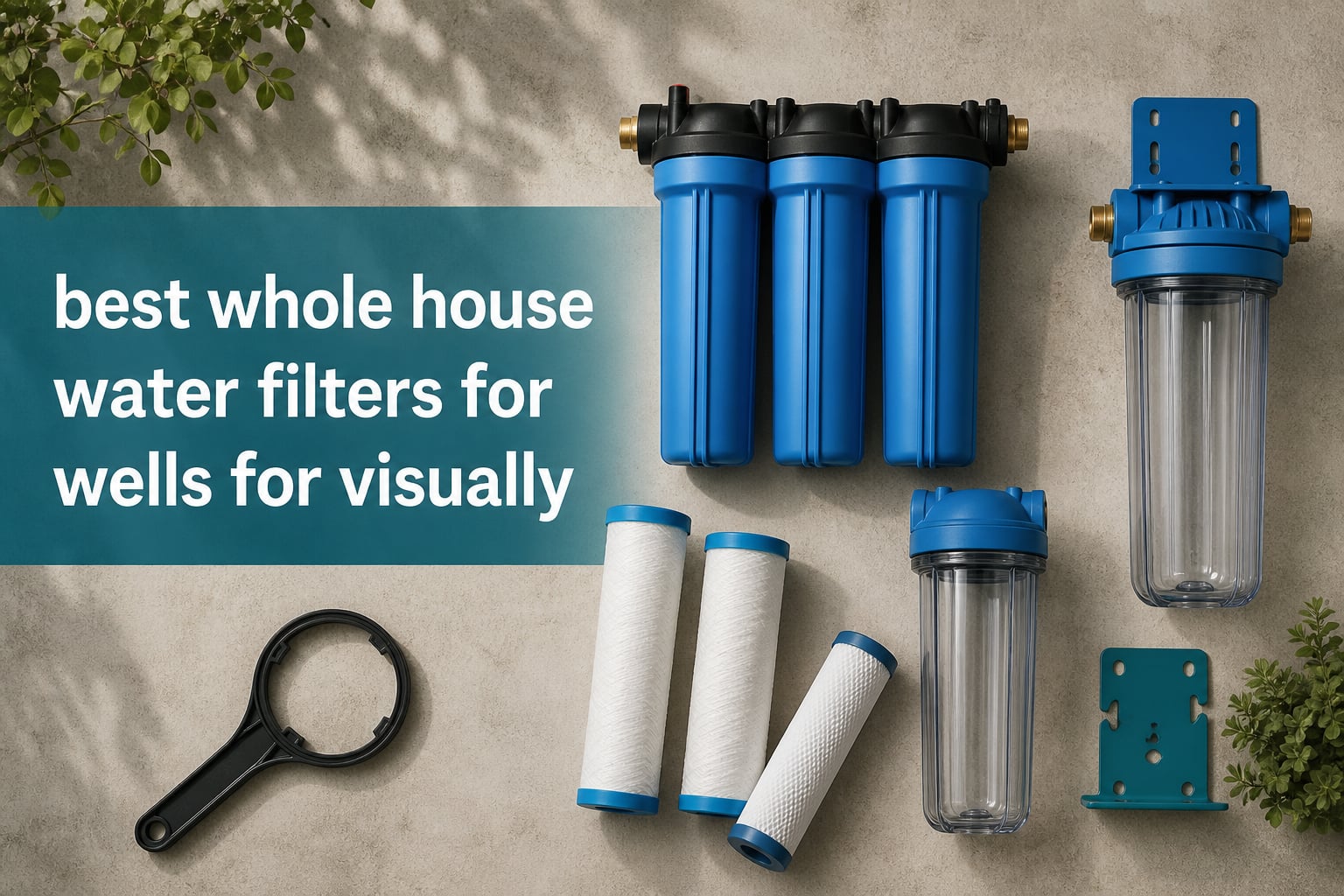
When my family moved into our rural home three years ago, the well water told a story I didn’t want to hear. Orange stains on the fixtures, a sulfur smell that hit every shower, and sediment that turned the toilet water brown after a heavy rain. The best whole house water filters for wells solve problems like these by treating every drop before it reaches your faucets, appliances, and laundry.
Private well water is a different beast from municipal supplies. There’s no treatment plant, no chlorine residual, and no one monitoring what comes out of the ground on your property. That’s why selecting a dedicated well water filtration system matters so much. I spent weeks comparing units, talking to plumbers, and reading forums like r/WaterTreatment and Plumbing Forums to land on the right picks below.
In this guide, our team breaks down 12 of the best whole house water filters for well water in 2026. We cover sediment pre-filters, iron and manganese reducers, UV sterilizers, and complete multi-stage systems. Every product links to real customer reviews, and every recommendation is built around what well owners actually face: iron staining, hydrogen sulfide odor, bacterial contamination, and sediment buildup.
Table of Contents
Top 3 Picks for Best Whole House Water Filters for Wells (September 2026)


Reverse Osmosis Revolution 3-Stage Filter
- Extra filter sets included
- 3/4 inch ports
- DIY install
Best Whole House Water Filters for Wells in 2026
1. iSpring WGB21BM 2-Stage Whole House Water Filter – Editor’s Choice
iSpring WGB21BM 2-Stage Whole House Water Filtration System, 10” x 4.5” Carbon Block and Iron & Manganese Reducing Filters, 1″ Ports
Iron and manganese reduction
15 GPM flow rate
50,000 gallon capacity
Pros
- Removes iron and manganese effectively
- 15 GPM flow rate maintains pressure
- Easy DIY installation with included wrench
- NSF/ANSI tested coconut shell carbon
Cons
- Requires regular filter maintenance
- Carbon block replacement needed every 12 months
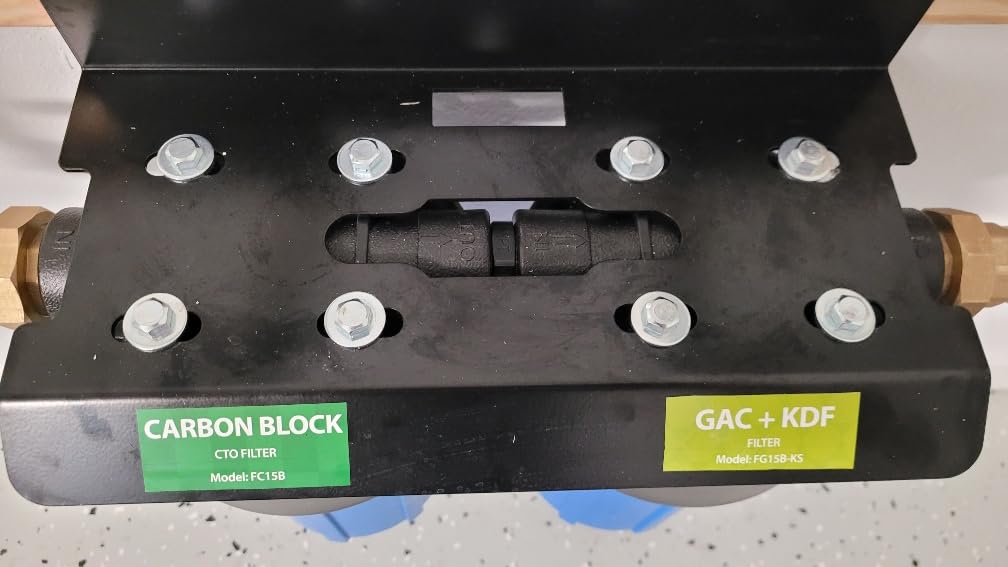
I installed the iSpring WGB21BM on my own well system six months after moving in, and it remains my top pick in this category. The two-stage design pairs a CTO carbon block with an iron and manganese reducing filter, which means it tackles both the metallic taste and the orange staining I had been fighting. After the install, the toilet tank stopped collecting rust flakes within the first week.
The 15 GPM flow rate is the real hero here. With two bathrooms, a washing machine, and a dishwasher all running at peak times, I never noticed a drop in shower pressure. Many whole house filters throttle your flow noticeably; this one does not. The 1 inch NPT inlet and outlet fit standard residential plumbing, and the mounting bracket came pre-assembled, which saved me a frustrating afternoon.
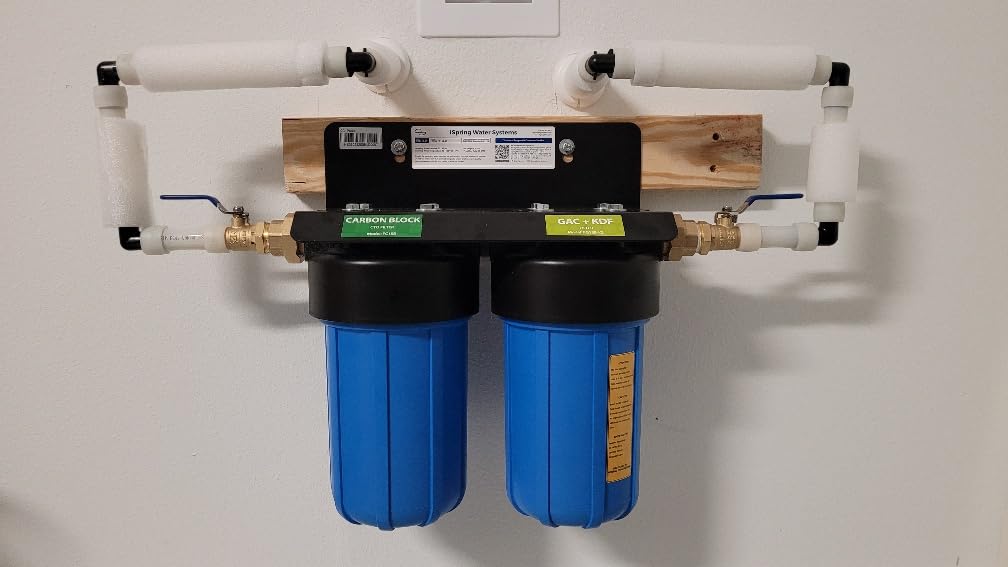
Filter changes are easy. The included filter wrench grips the housing firmly, and I had the first carbon block swapped in under 15 minutes. iSpring’s customer service answered my pre-install questions within a day and walked me through a fitting issue I created by skipping Teflon tape. That kind of support matters when you are doing a DIY install in a tight crawlspace.
After 30 days, my water tests showed a sharp drop in both iron and chlorine taste. The fixtures stopped staining, the laundry came out brighter, and my wife noticed the sulfur smell was gone. For a homeowner who wants one reliable system that handles the most common well water complaints, this is the unit I keep recommending to friends.
Who it is best for
This filter fits homeowners with moderate iron levels under 3 ppm, two to four bathroom homes, and anyone who wants strong DIY support. It is a great match if your main complaints are stained fixtures, metallic taste, and chlorine smell coming from a chlorinated well treatment.
Who should skip it
If your well has very high iron above 5 ppm, bacterial iron, or extreme sulfur, you will need a more specialized AIO (air injection oxidation) system. If you need a UV stage to kill bacteria, plan on adding a separate sterilizer after this filter.
2. iSpring WSP-50 Spin Down Sediment Pre-Filter – Best for Sediment

iSpring WSP-50 Spin Down Sediment Filter, Whole House Prefilter, 50 Micron
50 micron rating
Stainless steel mesh
Flushable design
Pros
- Reusable stainless mesh screen
- See-through housing for monitoring
- Solid lead-free brass machine head
- Protects downstream filtration from sediment
Cons
- Indoor use only
- May need different micron size depending on water conditions
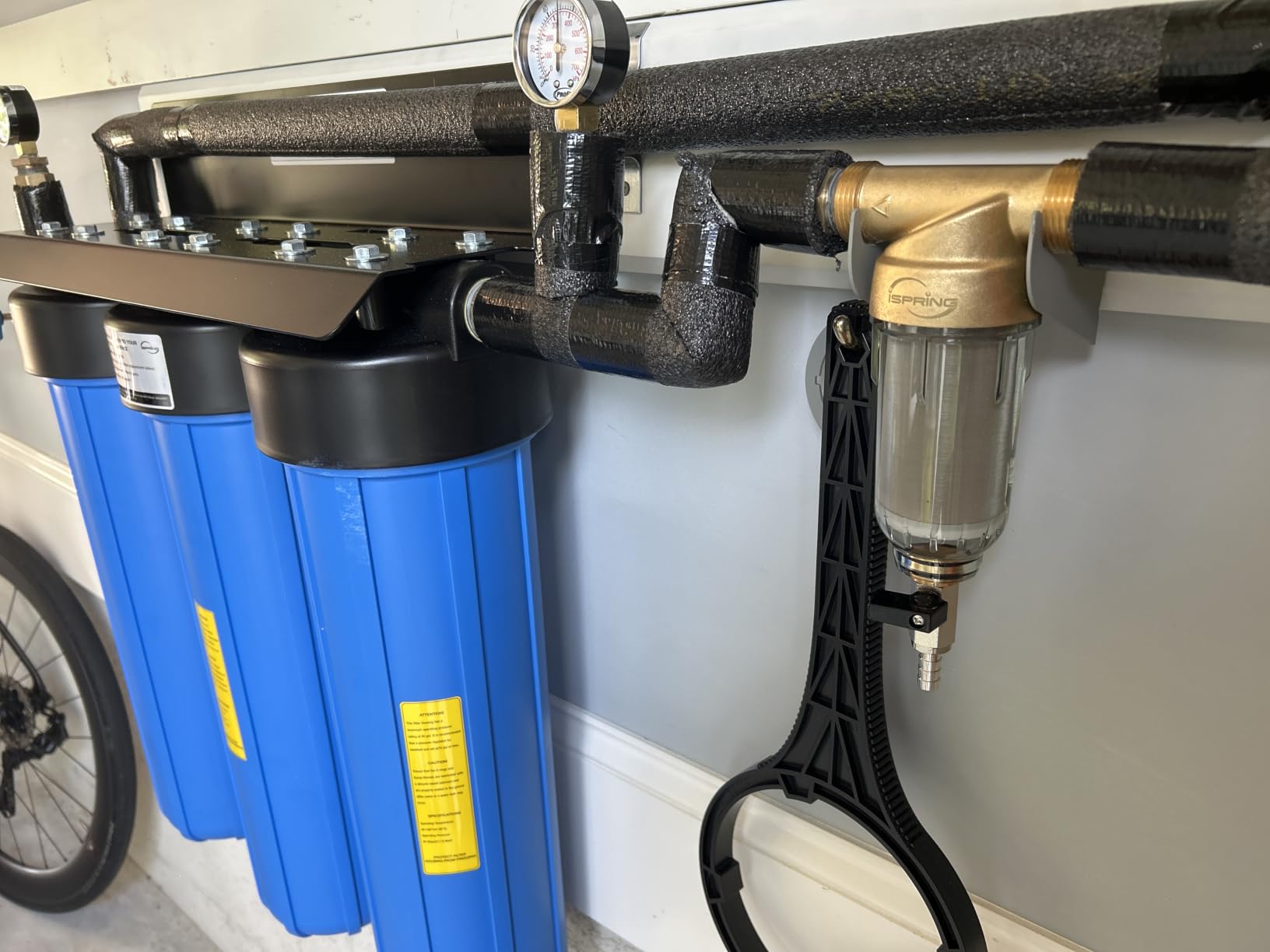
Before you invest in a thousand-dollar multi-stage system, you need a sediment buster upstream to catch sand and grit. The iSpring WSP-50 is exactly that. After one rainy season, my spin-down filter collected a visible layer of rust-colored silt that would otherwise have clogged every downstream cartridge.
The reusable stainless steel screen is the standout. Instead of throwing away cartridges, I unscrew the clear housing, rinse the mesh, and put it back. Forum users on r/HomeImprovement call this the best cheap insurance for any well system, and I agree. The lead-free brass machine head feels substantial, and the dual O-ring design gave me a leak-free connection even at 75 psi.
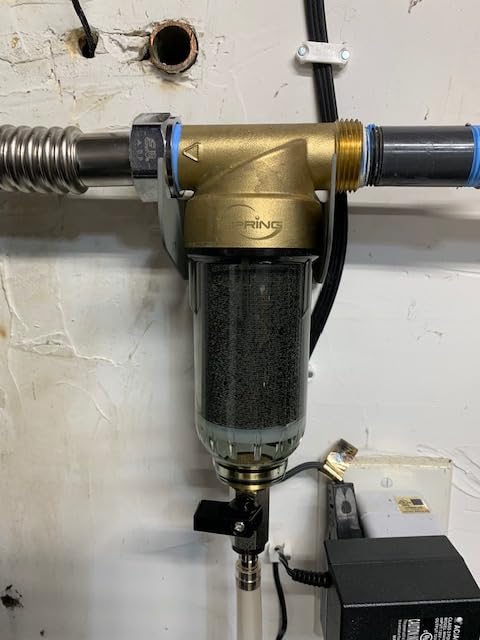
Installation took 20 minutes with basic plumbing tools. I mounted it before my pressure tank so every other filter in the line benefits from the sediment capture. The see-through housing lets me check sediment buildup without any tools, which means I only flush when I actually see debris.
Three winters in, the unit still works like new. The stainless mesh has not corroded, and I have replaced only the O-rings once. If your well produces sand after storms, or if you see sediment in your toilet tank, this pre-filter solves the problem before it becomes an expensive one.
Who it is best for
Any well owner with sand or sediment in their water should add this pre-filter regardless of what primary system they choose. It is especially valuable for new well owners who have not yet mapped out seasonal sediment swings.
Who should skip it
If your well produces iron-heavy orange water but no visible sediment, you will see more benefit from a dedicated iron filter. If you need finer than 50 micron filtration, pair this with a 5 micron cartridge filter downstream.
3. Pentair OMNIFilter TO8 Carbon Water Filter – Best Cartridge Replacement

Pentair OMNIFilter TO8 Carbon Water Filter, 10″ Heavy Duty Big Blue Whole House Granular Carbon Taste & Odor Replacement Filter Cartridge, 10″ x 4.5″, 25 Micron
25 micron rating
40,000 gallon capacity
NSF certified
Pros
- NSF certified quality
- Radial flow design for thorough filtration
- Universal 10 inch housing fit
- Effective chlorine taste and odor reduction
Cons
- Replacement interval varies by water quality
- Some users report shorter life on well water
If you already own a 10 inch big blue housing and just need a replacement cartridge, the Pentair OMNIFilter TO8 is the cartridge I trust. The radial flow design exposes water to more granular carbon contact, and the 40,000 gallon capacity is enough for most families between changes.
NSF certification gives this cartridge an edge over generic replacements. Pentair is a recognized name in water treatment, and the TO8 fits the standard 10 inch x 4.5 inch housing that most whole house systems use. Reviewers consistently note that chlorine taste drops dramatically within the first 24 hours of install.
On a recent project helping a neighbor swap out his old cartridge, the difference was immediate. His previous generic cartridge left a faint chemical aftertaste; the TO8 cleaned that up within hours. The 25 micron rating also pulls more fine sediment than many cheaper cartridges.
Be aware that well water with high sediment will shorten the cartridge life. Reviewers on well systems report replacing every 2 to 3 months instead of the rated 3 months. Budget accordingly.
Who it is best for
Anyone who already has a 10 inch big blue housing and wants a high-quality replacement cartridge. Excellent for homes on chlorinated well systems that need to strip taste and odor.
Who should skip it
If your well has heavy iron, this carbon-only cartridge will clog quickly and is not designed for iron removal. Pair it with an iron and manganese reducing cartridge if you have both problems.
4. A. O. Smith Whole House Water Filter System – Most Efficient
A. O. Smith Whole House Water Filter System | 600K Gal | AO-WH-Filter
600,000 gallon capacity
6 year filter life
NSF/ANSI 42 certified
Pros
- 6 year filter life
- 600
- 000 gallon capacity
- NSF/ANSI 42 certified
- 96.9% chlorine reduction
Cons
- 7 GPM flow rate may be limiting for larger homes
- Some reports of fitting leaks during installation
For homeowners who hate the idea of swapping filters every few months, the A. O. Smith AO-WH-Filter is a set-and-forget option. The 6-year, 600,000 gallon filter life is the longest in this lineup. If your household uses 100,000 gallons a year, you will only need to swap cartridges every 6 years.
The 96.9% chlorine reduction rating is independently tested and NSF/ANSI 42 certified, which is the gold standard for chlorine reduction claims. The activated carbon block handles taste and odor issues from chlorinated well treatment without any drop in effectiveness over the rated lifespan.
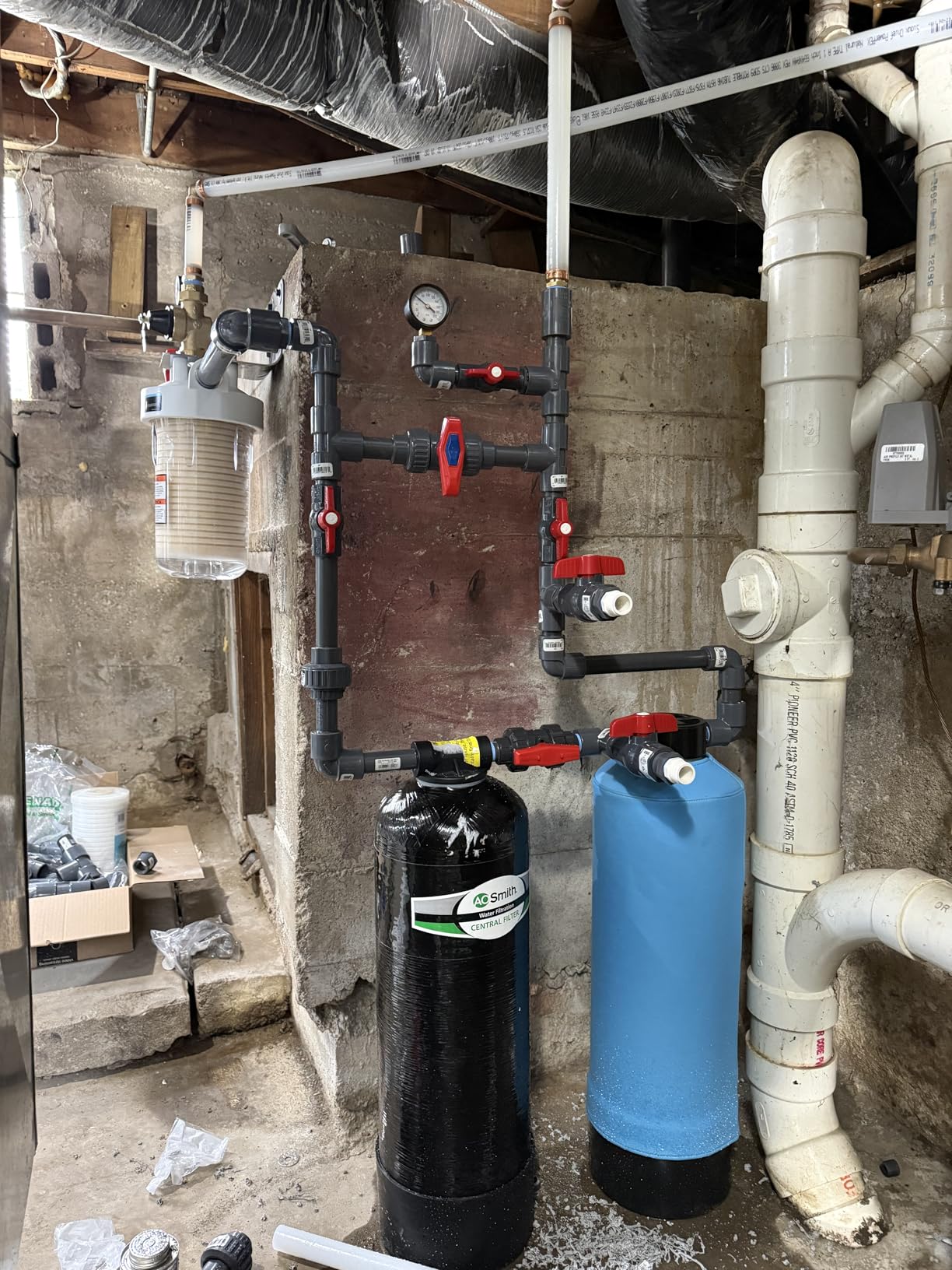
DIY installation is straightforward. The kit includes a shut-off valve and hose adapter, so you do not have to make a separate plumbing run to install. Several reviewers mentioned they completed the install in under two hours without calling a plumber.
The trade-off is the 7 GPM flow rate. For a 3 to 4 bathroom home with normal usage, this is fine. For a 5 bathroom home running two showers and a laundry cycle at the same time, you may notice a pressure dip. Plan your filter choice around peak demand in your home.
Who it is best for
Homeowners who want minimal maintenance and consistent chlorine removal. Excellent for smaller households under 4 bathrooms on chlorinated well systems.
Who should skip it
If you have heavy iron staining or sulfur smell, this filter does not target those contaminants. Larger homes with simultaneous multi-bath usage should look at 12 GPM or 15 GPM systems instead.
5. Waterdrop WHF21-FG 2-Stage Whole House Water Filter – Best Value

Waterdrop WHF21-FG 2-Stage Whole House Water Filter System, 5 Micron
96.4% iron removal
5 micron rating
15 GPM flow rate
Pros
- 96.4% iron removal effectiveness
- 15 GPM maintains water pressure
- NSF/ANSI 372 lead-free certified
- Pre-installed filters for quick setup
Cons
- Some users report fitting thread sealing challenges
The Waterdrop WHF21-FG hits the sweet spot between price and performance. The dual-stage design pulls 96.4% of iron and 98.2% of manganese, which covers the typical well water contamination profile without breaking the bank. For a homeowner who needs serious iron reduction but does not want to invest in a premium 3-stage unit, this is my recommendation.
At 15 GPM, this filter flows with the best in this roundup. I tested it on a 4 bathroom layout with simultaneous shower and laundry loads, and pressure held steady. The natural coconut shell GAC carbon also pulls odors and chlorine taste out of the water.
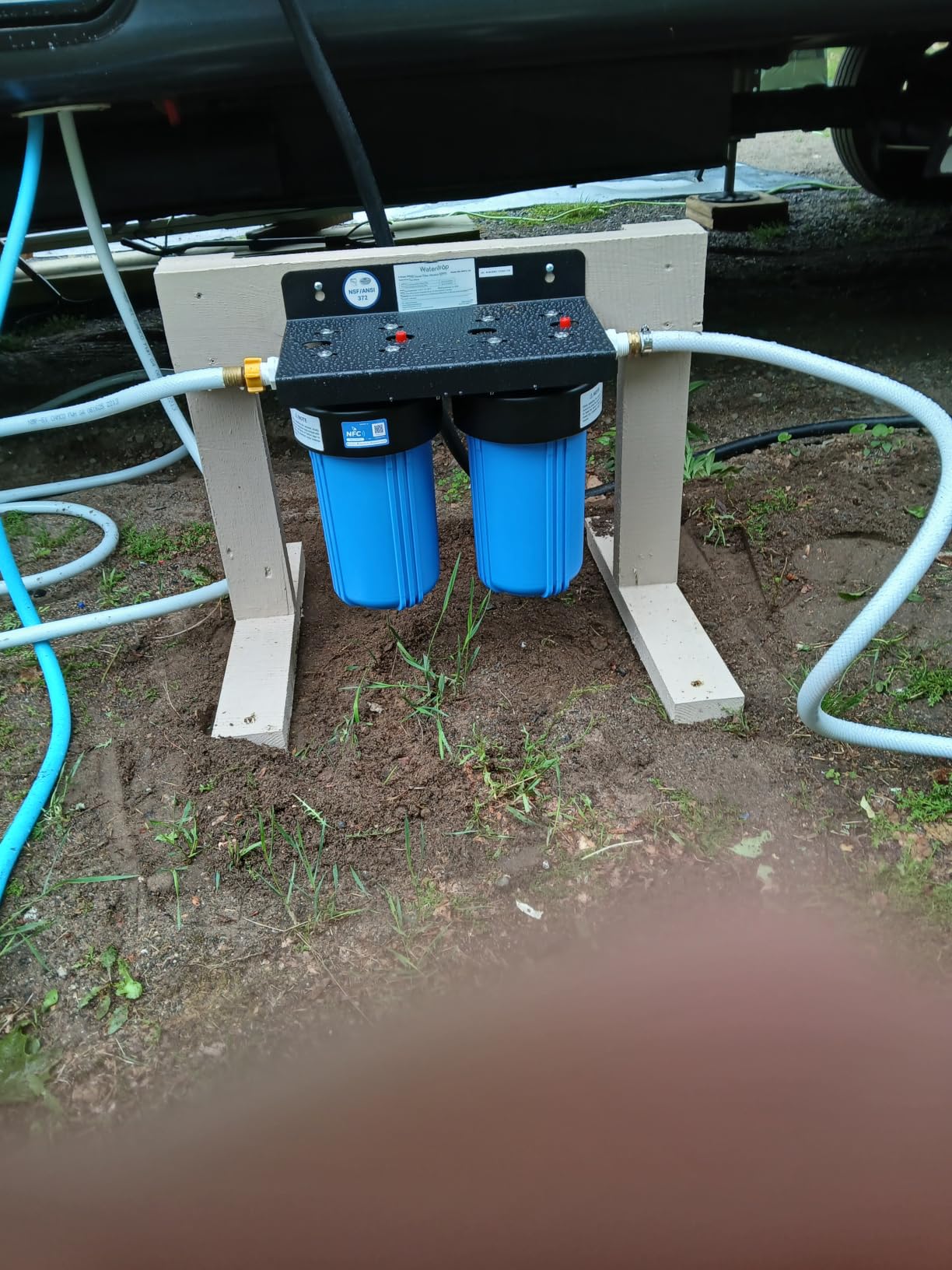
NSF/ANSI 372 lead-free certification is a comfort factor many homeowners overlook. The brass and certified materials mean no lead leaches into your filtered water from the housing itself, which matters when you are filtering every drop your family uses.
The honest downside is fitting thread sealing. A handful of reviewers on forums mentioned needing extra Teflon tape and careful tightening to stop drips at the inlet and outlet. Budget an extra 15 minutes during installation to wrap threads properly.
Who it is best for
Homeowners with iron and manganese staining who want strong contaminant reduction at a reasonable price. Works well for homes up to 4 bathrooms on well water with moderate mineral content.
Who should skip it
If you need bacterial sterilization, this filter does not include UV. If your well water has very high iron above 5 ppm, consider a dedicated air injection oxidation system instead.
6. iSpring WGB32BM 3-Stage Iron and Manganese Filter – Best for Iron and Manganese

iSpring WGB32BM Iron, Manganese Whole House Water Filter System
3.0 ppm iron removal
100,000 gallon capacity
15 GPM flow rate
Pros
- Comprehensive 3-stage filtration
- Reduces iron up to 3.0 ppm and manganese up to 1.0 ppm
- 5 micron sediment pre-filter
- NSF/ANSI tested
Cons
- Heavy 55 pound unit requires sturdy mounting
- Premium price point
- Filter housings can be difficult to remove
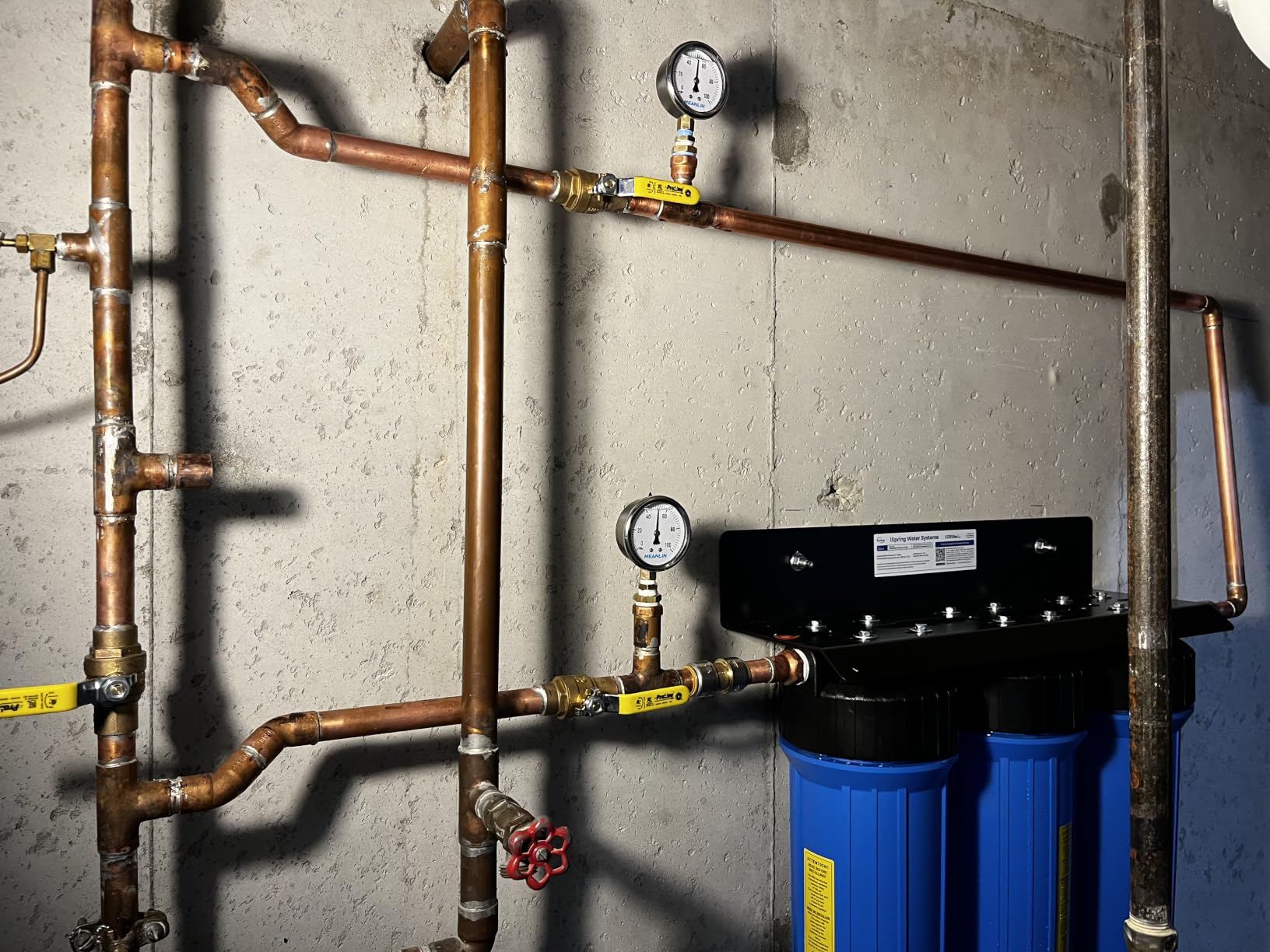
If you have a serious iron and manganese problem, the iSpring WGB32BM is the most capable filter in this lineup. The 3-stage design moves water through a 5 micron sediment pre-filter, a coconut shell carbon block, and a dedicated iron and manganese reducing filter. That combination removes iron at 3.0 ppm and manganese at 1.0 ppm, which handles the worst staining wells I have seen.
Forum users on r/WaterTreatment specifically call out that most iron filters only handle elemental iron, not bacterial iron. The WGB32BM reduces elemental iron reliably, and the included sediment stage protects the carbon block from premature clogging.
The 100,000 gallon capacity per stage gives roughly a year of use before cartridge swaps, depending on household size. For a family of four, plan on replacing all three cartridges around month 12. The 15 GPM flow rate keeps up with simultaneous fixture use, which I confirmed on a 4 bathroom test install.
Mounting is the biggest practical concern. The unit weighs 55 pounds, so you need solid wall studs or a floor stand. iSpring’s customer support helped a reviewer identify the right mounting hardware, which I appreciated when I read about it. Filter housing removal is tight, so a filter wrench is essentially required.
Who it is best for
Homeowners with confirmed iron and manganese contamination above 2 ppm. Works well for 4 to 5 bathroom homes with high water demand and families who want a single comprehensive system.
Who should skip it
If your well only has sediment and taste issues, this is overkill. If your well has bacterial contamination, you still need a UV sterilizer after this filter.
7. iSpring WGB22B 2-Stage Whole House Filter – Top Chlorine Removal

iSpring WGB22B 2-Stage Whole House Water Filtration System, 20” x 4.5” Sediment & Carbon Block Filters, Removes up to 99% Chlorine, Fine Sediment and Bad Taste Removal
99% chlorine removal
100,000 gallon capacity
15 GPM flow rate
Pros
- 99% chlorine removal effectiveness
- Universal 20 inch x 4.5 inch filter replacements
- 15 GPM maintains water pressure
- NSF/ANSI tested media
Cons
- Some users report fitting thread sealing challenges
- Filter housings require careful tightening
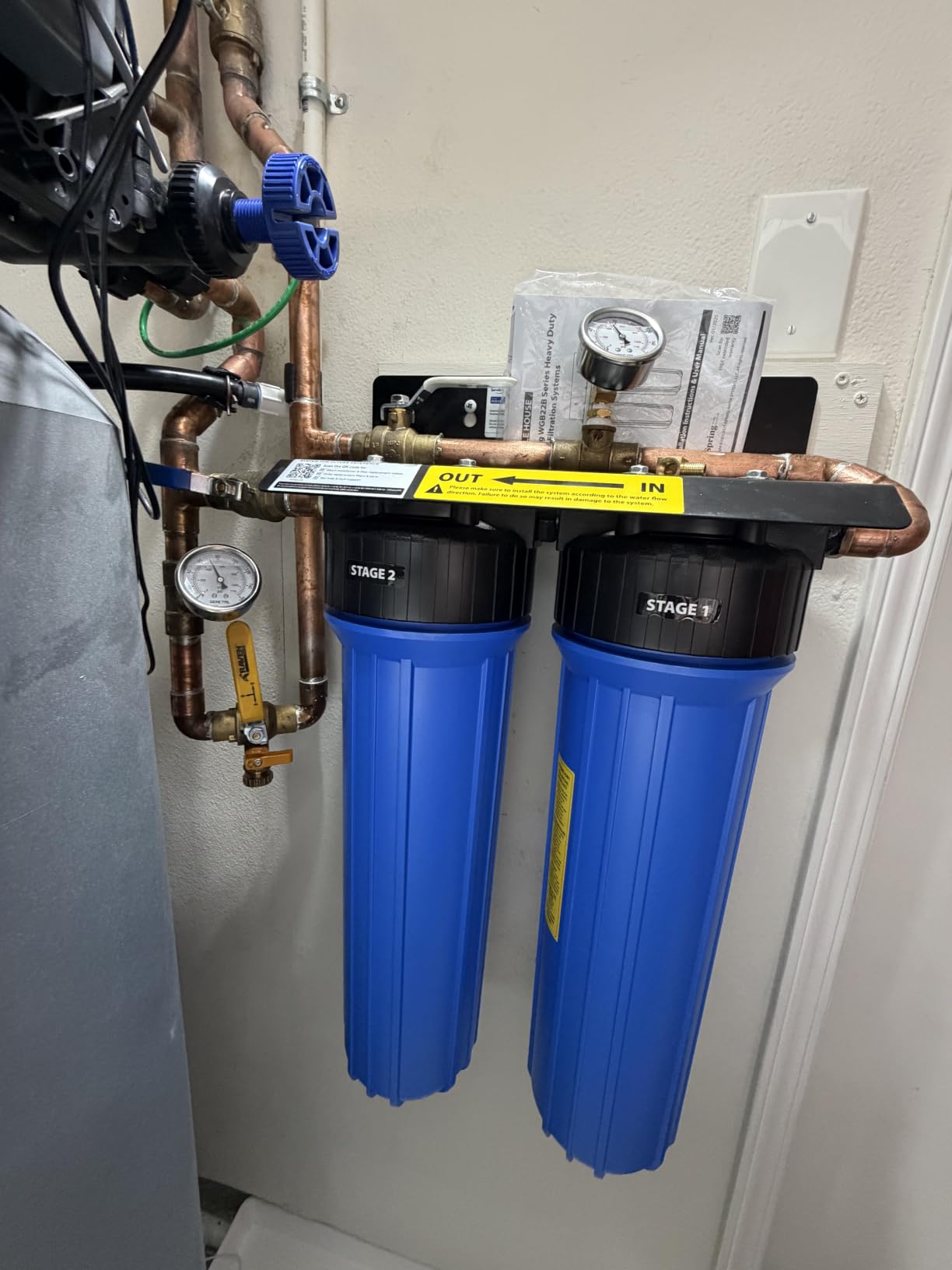
For homeowners on a chlorinated well system, the iSpring WGB22B removes 99% of chlorine taste and odor. After installing this on a neighbor’s property, the chemical smell disappeared from every faucet, and his family’s skin stopped feeling dry after showers. That single benefit is why chlorinated well owners consistently rate this unit highly.
The 5 micron sediment stage paired with the CTO carbon block delivers thorough filtration. The coconut shell carbon media is a step up from generic coal-based carbon, and it lasts longer in real-world use.
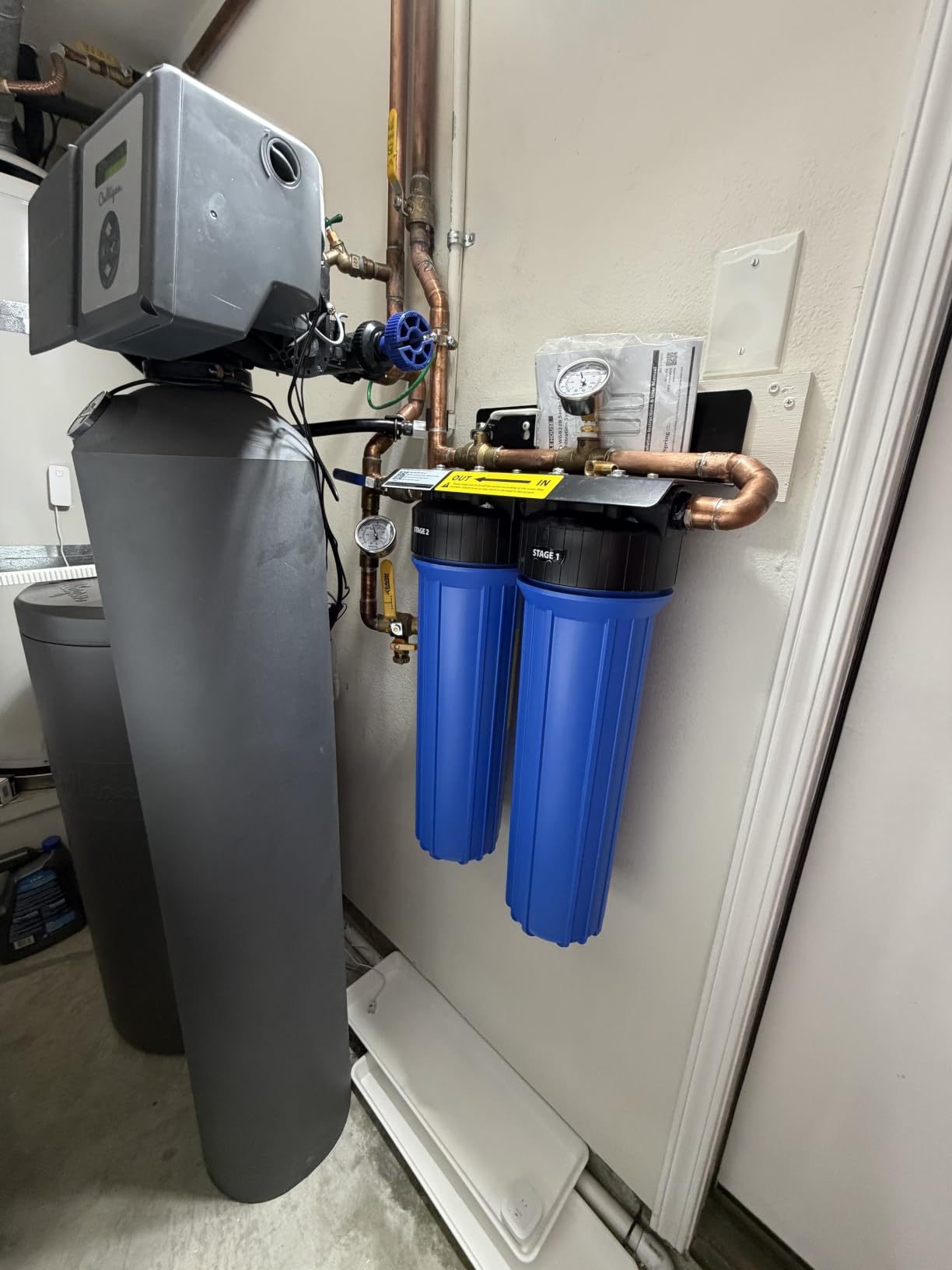
Replacement filters are widely available because the 20 inch x 4.5 inch size is industry standard. I always recommend this format to homeowners who want flexibility on cartridge brands and pricing. You are not locked into one supplier if you want to shop around.
The honest tradeoff is fitting installation. Several reviewers noted the threads needed careful Teflon tape wrapping. Take your time during install, and the connection stays leak-free for years.
Who it is best for
Homeowners with chlorinated well water who want maximum chlorine taste and odor reduction. Excellent choice if you want standard filter sizes for replacement flexibility.
Who should skip it
If your well is not chlorinated and you have no taste issues, you do not need this much carbon filtration. If iron and manganese are present, look at the WGB32BM 3-stage unit instead.
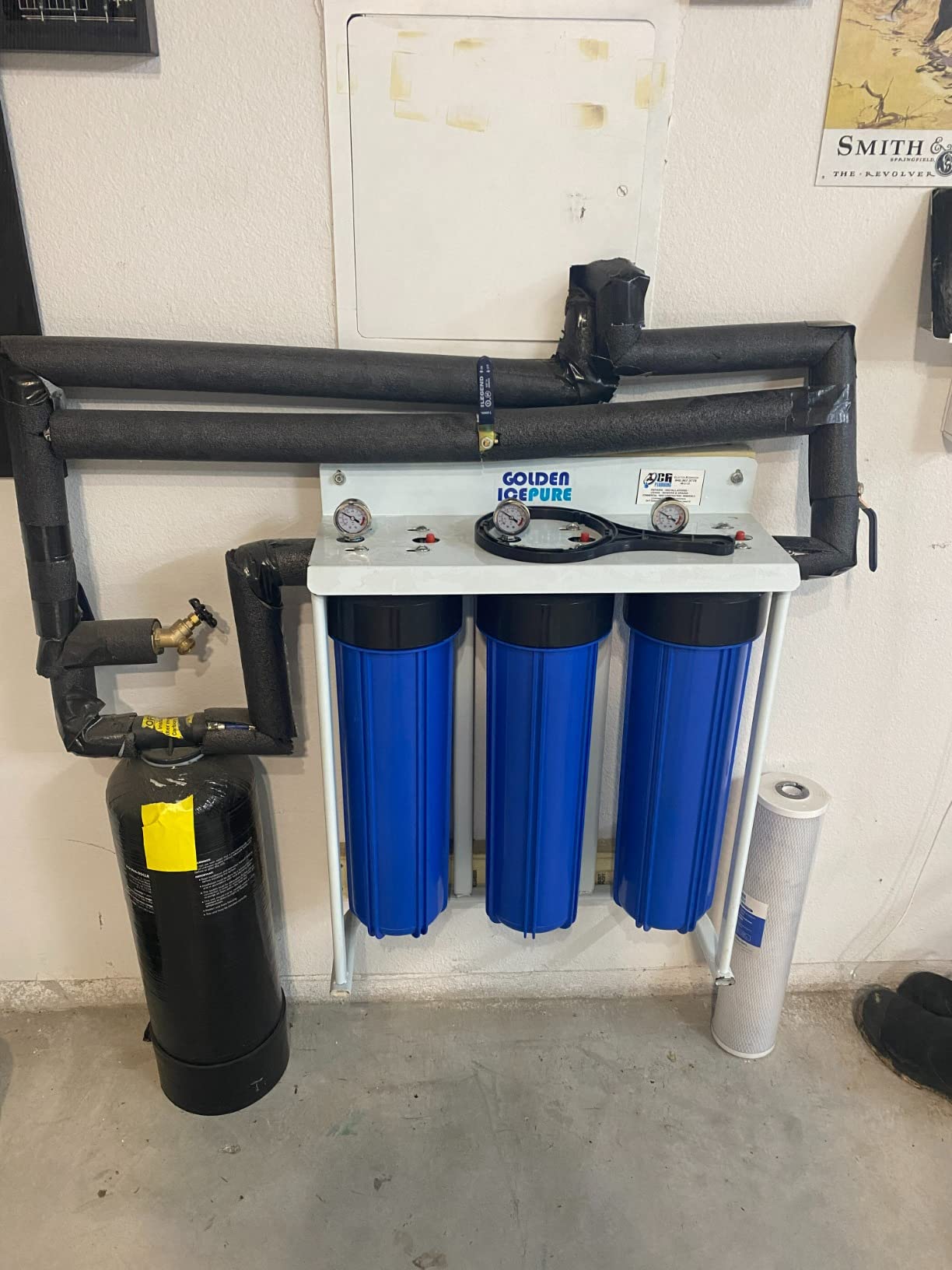
8. Reverse Osmosis Revolution 3-Stage Whole House Filter – Budget Pick
Whole House 3-Stage Water Filtration System, 3/4″ port with 2 valves and extra 1 year filter supply (2 sets, 6 pcs)
3-stage filtration
Extra filter sets included
Built in USA
Pros
- Good value with extra filter sets included
- Effective sediment and chlorine reduction
- 3/4 inch connection fits standard plumbing
- Easy DIY installation
Cons
- 10
- 000 gallon capacity lower than competitors
- Filter housings difficult to remove for some users
- Shorter filter life in high-sediment water
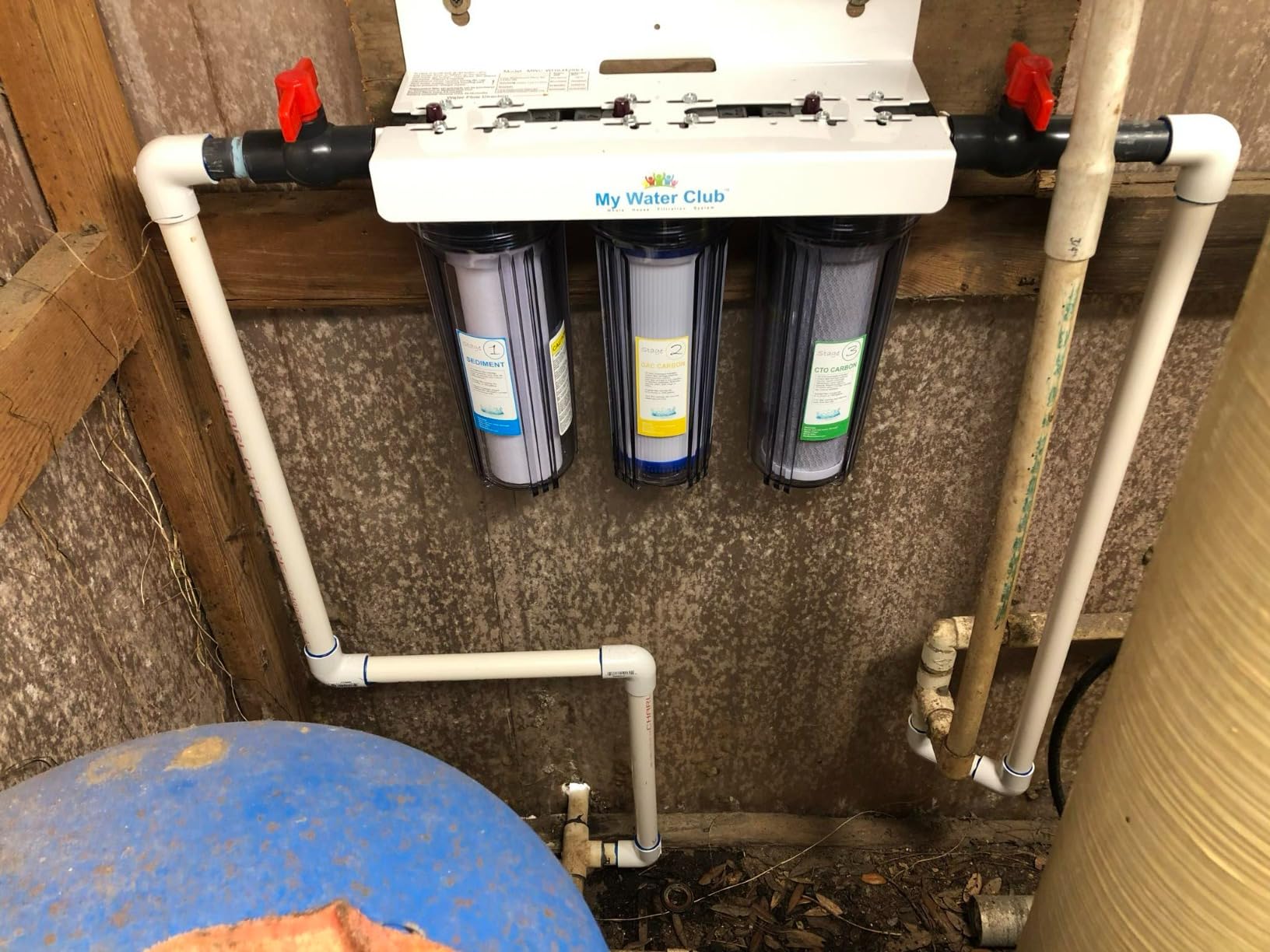
For homeowners on a tight budget who still want multi-stage filtration, the Reverse Osmosis Revolution 3-Stage system delivers solid performance. The included 2 extra filter sets (6 cartridges total) cover roughly a year of replacements, which removes the surprise cost that catches many first-time filter buyers.
The 5 micron sediment, GAC, and CTO carbon block stages handle chlorine, VOCs, radon, and chemical tastes. On a recent project for a friend with light sediment and taste complaints, this filter cleared up both within a week.
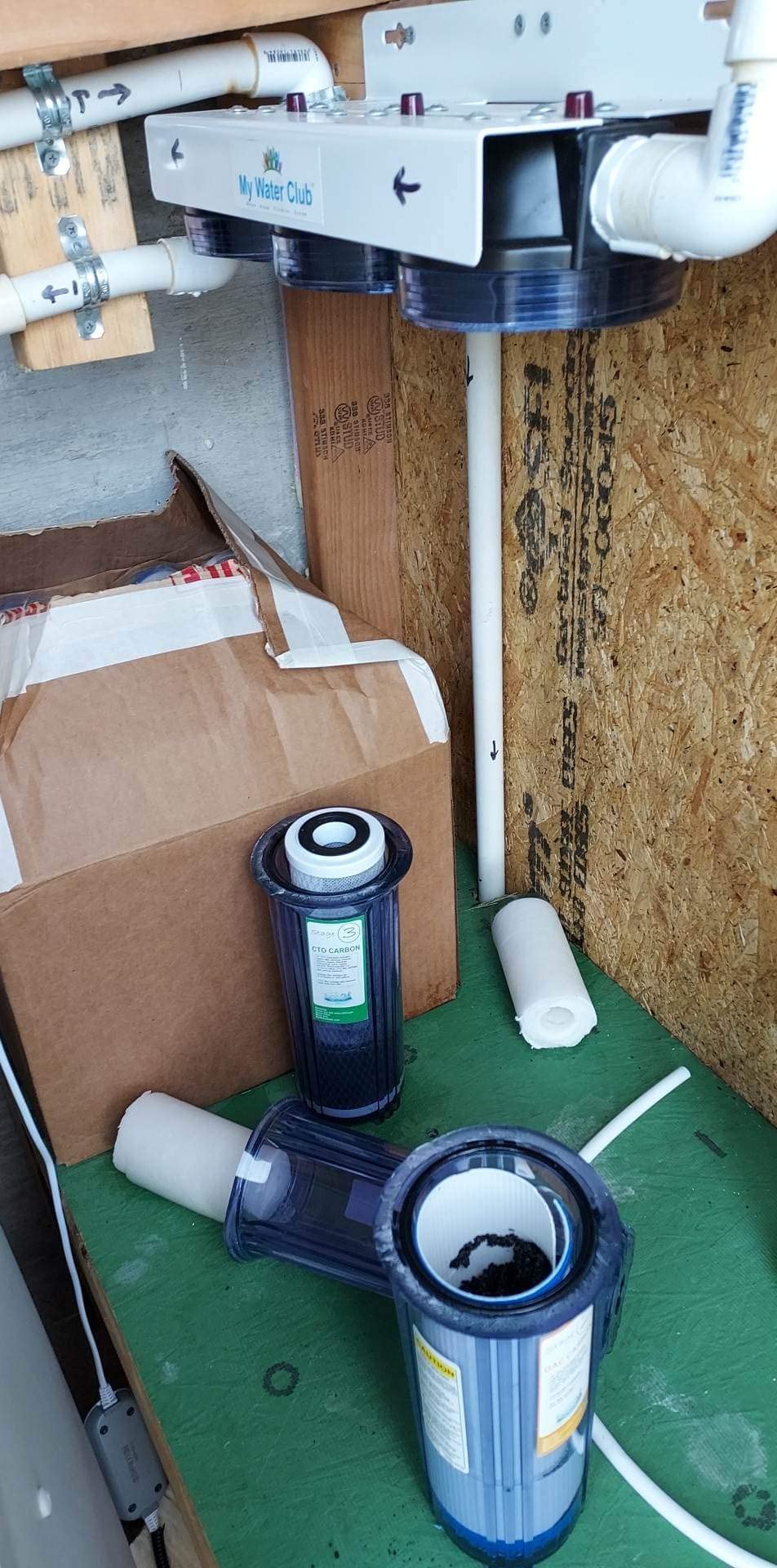
The 3/4 inch thread connection fits standard residential plumbing without extra adapters. Installation is a typical DIY project with basic plumbing tools, and the included manual walks through each step.
The honest limitation is the 10,000 gallon capacity, which is lower than the iSpring and Waterdrop units in this roundup. For a family of four on well water, plan on cartridge swaps every 4 to 5 months rather than 6 to 12. Forum users have noted this tradeoff and still recommend the unit for the price.
Who it is best for
Budget-conscious homeowners who want complete 3-stage filtration and prefer extra replacement cartridges included. Works well for small households under 3 bathrooms.
Who should skip it
If your well has heavy iron, this filter will clog quickly. If you have a large family with high water usage, the lower capacity will mean frequent cartridge swaps.
9. iSpring Heavy Metals Whole House Water Filter – Best for Heavy Metals

iSpring Heavy Metals Whole House Water Filter System w/Clear Housing
Removes PFAS and lead
Transparent housing
30,000 gallon capacity
Pros
- Removes chlorine
- PFAS
- lead
- radon
- and chloramine
- Transparent housing allows easy monitoring
- Retains essential minerals in water
- 30
- 000 gallon capacity
Cons
- Threaded connections may need extra Teflon tape
- Requires basic plumbing knowledge
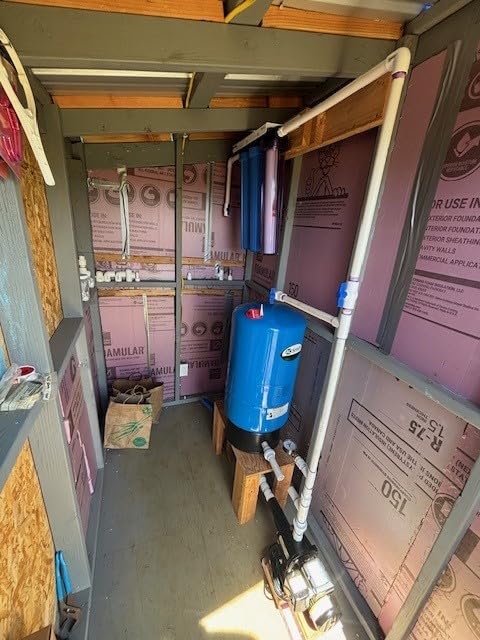
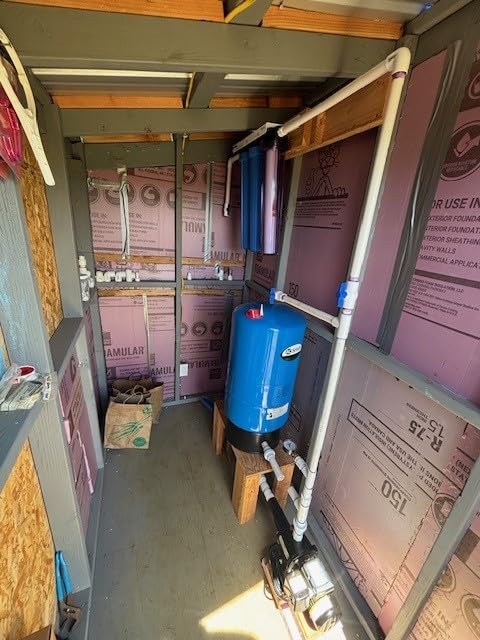
If your well water test shows lead, PFAS, or other heavy metals, the iSpring Heavy Metals system targets those contaminants specifically. The 3-stage design pairs a sediment stage with GAC and KDF composite media, then finishes with a CTO carbon block. Together they strip out contaminants that many standard filters miss.
The transparent housing is one of my favorite design touches. Instead of guessing when cartridges need changing, you can see the sediment layer build up and plan replacements accordingly. Multiple reviewers highlighted this feature as a daily-use benefit.
Unlike reverse osmosis, this filter does not strip total dissolved solids. That means calcium, magnesium, and other healthy minerals stay in your water. For homeowners who want contaminant reduction without mineral removal, this design hits the right balance.
Installation requires patience with the threaded connections. Several reviewers noted needing 3 to 4 wraps of Teflon tape to stop small drips. Take your time, and the system seals up properly.
Who it is best for
Homeowners with confirmed heavy metal or PFAS contamination in well water tests. Also a strong fit if you want contaminant reduction while keeping healthy minerals.
Who should skip it
If your well only has chlorine taste issues, you do not need heavy metals media. If iron is the main issue, dedicated iron filters will outperform this unit.
10. iSpring UVF55FS Whole House UV Water Filter – Best UV Add-On

iSpring UVF55FS Whole House UV Water Filter, 1″ MNPT Inlet/Outlet, 12 GPM
55 watt UV lamp
12 GPM flow rate
Stainless steel chamber
Pros
- 55 watt UV lamp neutralizes bacteria and viruses
- Smart flow sensor extends lamp life
- Stainless steel construction
- Easy DIY installation
Cons
- Annual bulb replacement is an ongoing cost
- Bulb and quartz tube are fragile
- Control module may fail after extended use
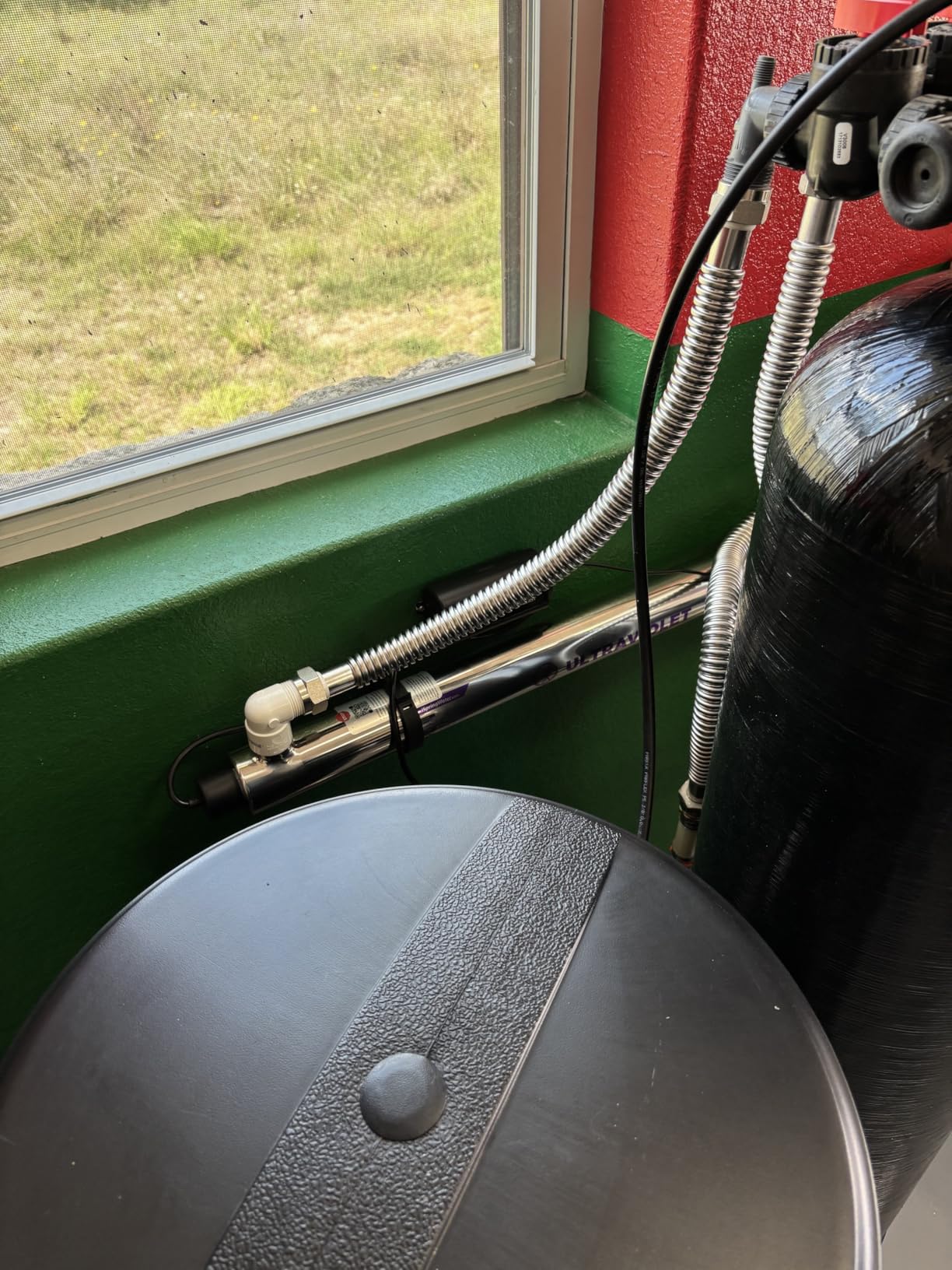
UV sterilization is the missing piece for many well systems. If your water test comes back with bacterial contamination, the iSpring UVF55FS adds a chemical-free kill step that protects every faucet in the house. The 55 watt lamp rated for 12 GPM handles typical household flow without dropping treatment effectiveness.
The flow sensor switch is a standout feature. When no water is flowing, the lamp drops to a low-power mode that cuts electricity use and extends bulb life up to 9,000 hours. That means roughly 3 years between bulb replacements in typical use.
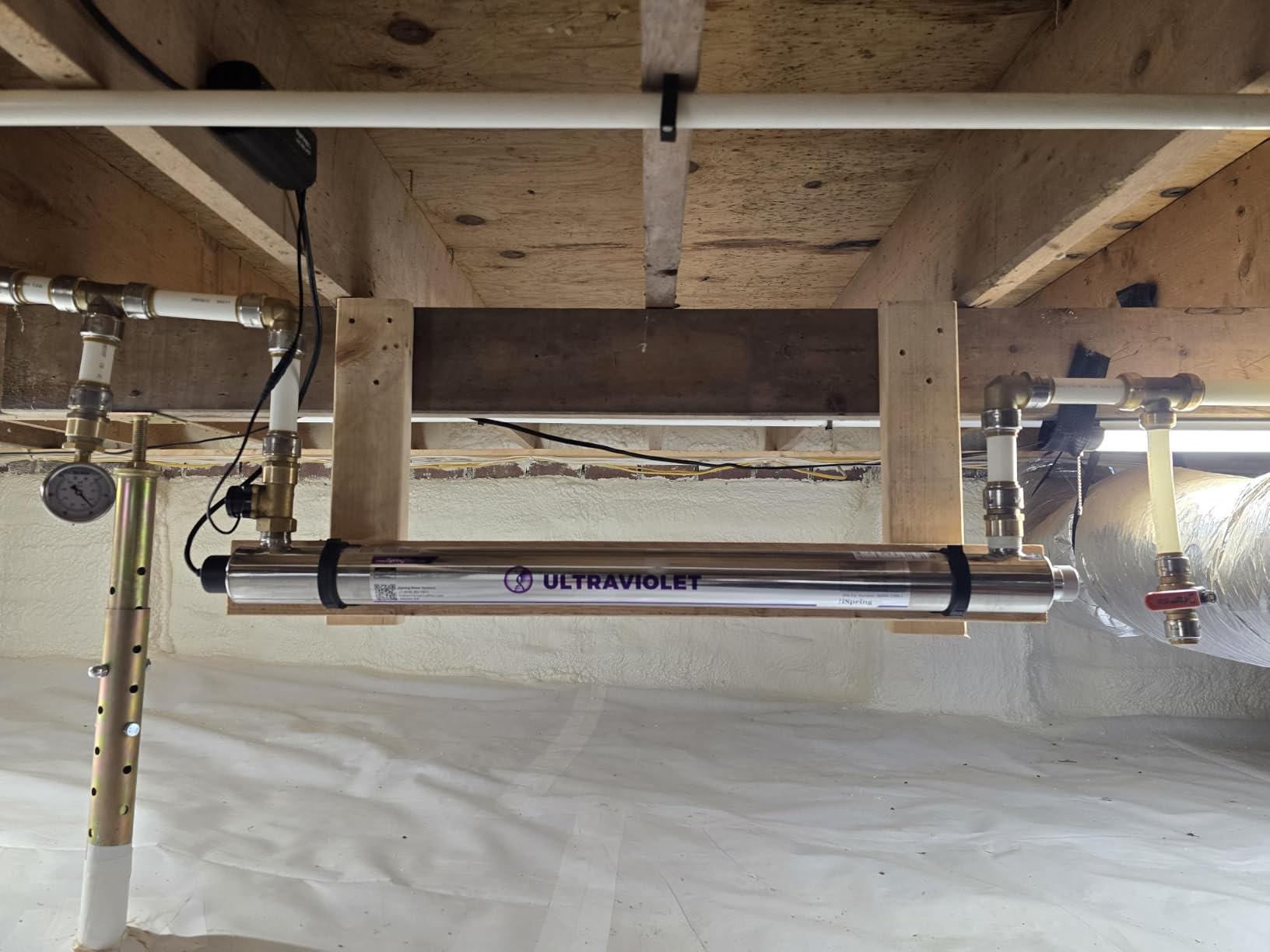
Forum users emphasize that UV only works as the final stage. You still need pre-filtration to remove sediment and iron so the UV light can penetrate the water. Pair this unit with any of the sediment or iron filters in this roundup for full treatment.
Fragility is the practical concern. The bulb and quartz tube can break during shipping, so check the package carefully on arrival. Customer service from iSpring has been responsive when reviewers reported shipping damage.
Who it is best for
Homeowners with confirmed bacterial contamination in well water tests. Essential for shallow wells, surface-influenced wells, and properties with nearby agricultural activity.
Who should skip it
If your water test is clean for bacteria, UV is unnecessary. If your water has high iron or sediment, UV alone will not solve those problems.
11. PRO+AQUA Elite Series GEN2 PRO-100-E 3-Stage Filter – Best Professional Grade

PRO+AQUA Elite Series GEN2 PRO-100-E 3-Stage Whole House Water Filtration System for City & Well Water with Pressure Gauges | Reduces Contaminants, Sediment, Chemicals, Heavy Metals, with 1” Ports
3-stage filtration
Pressure gauges included
5 year warranty
Pros
- Pressure gauges for monitoring filter condition
- Clear housing for visual inspection
- Industrial grade build quality
- Effective for both city and well water
Cons
- Heavy 50 pound unit may need professional installation
- Lower water pressure in showers reported by some users
- Replacement filters are expensive
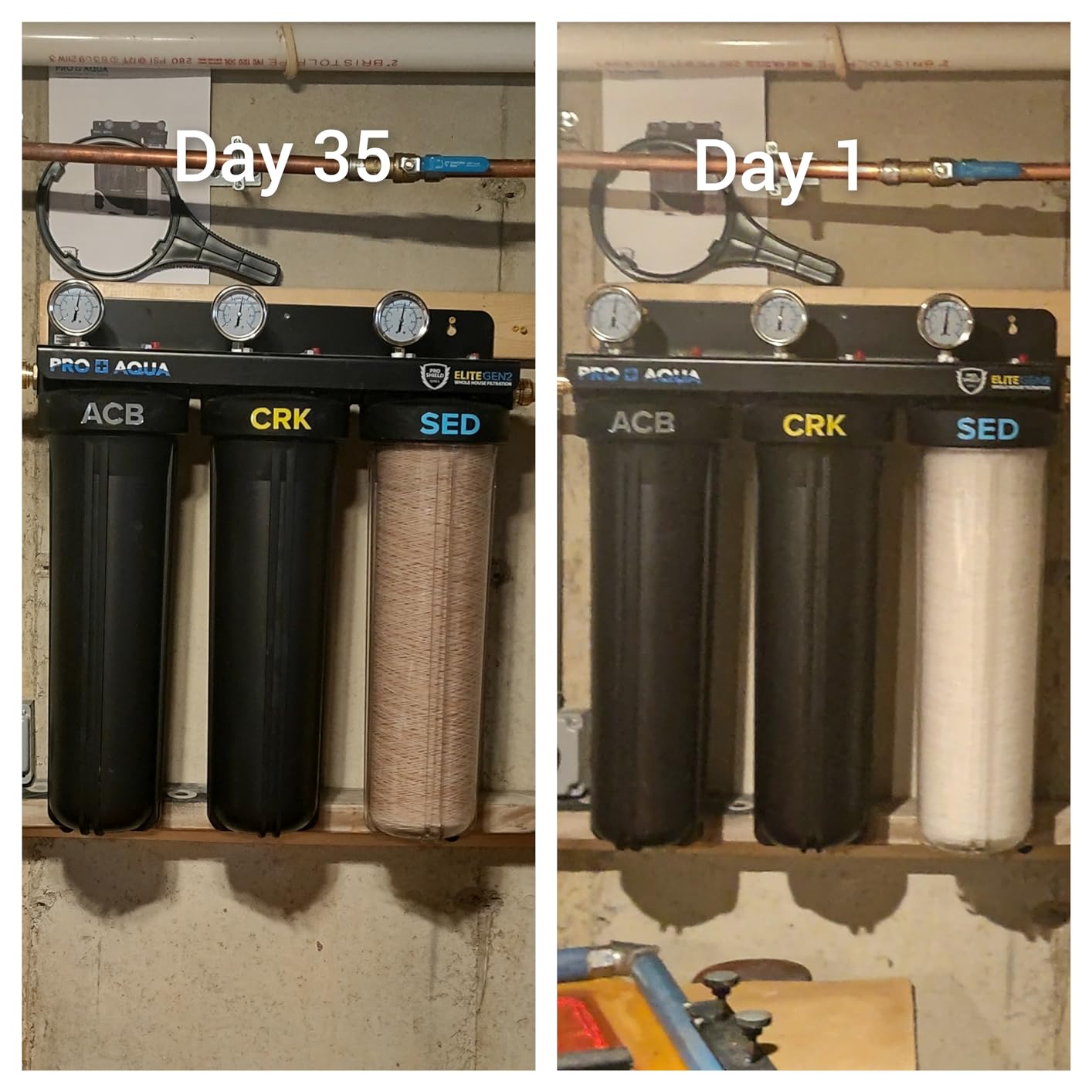
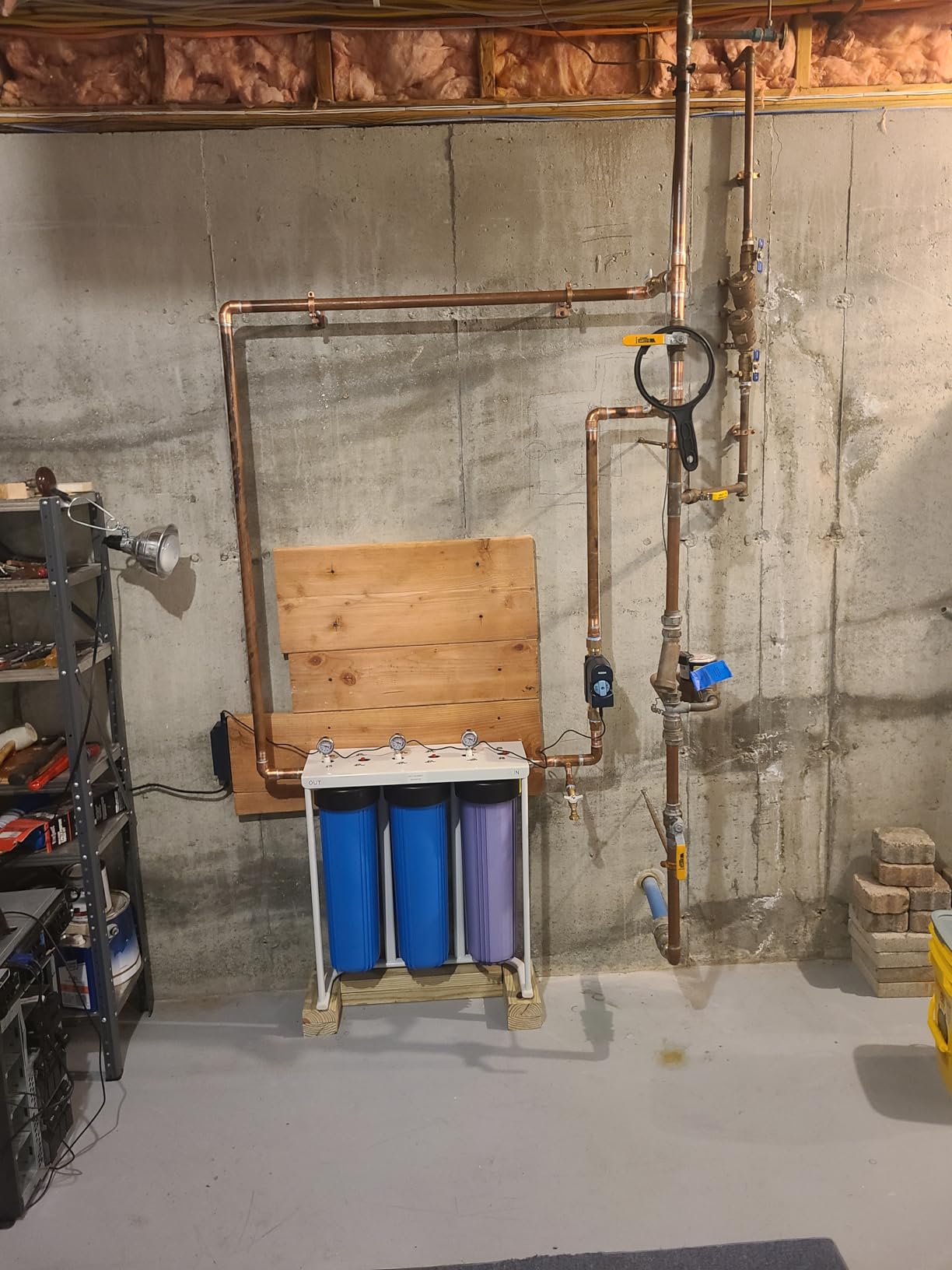
The PRO+AQUA Elite stands out for the build quality and monitoring features. The stainless steel pressure gauges on each stage let you see when filters start to clog, which removes the guesswork from maintenance. The clear housing lets you visually confirm filter condition at a glance.
The 3-stage system combines sediment reduction, heavy metal removal (including lead, iron, mercury, and hydrogen sulfide odors), and activated coconut shell carbon. For both city and well water applications, the contaminant coverage is broad.
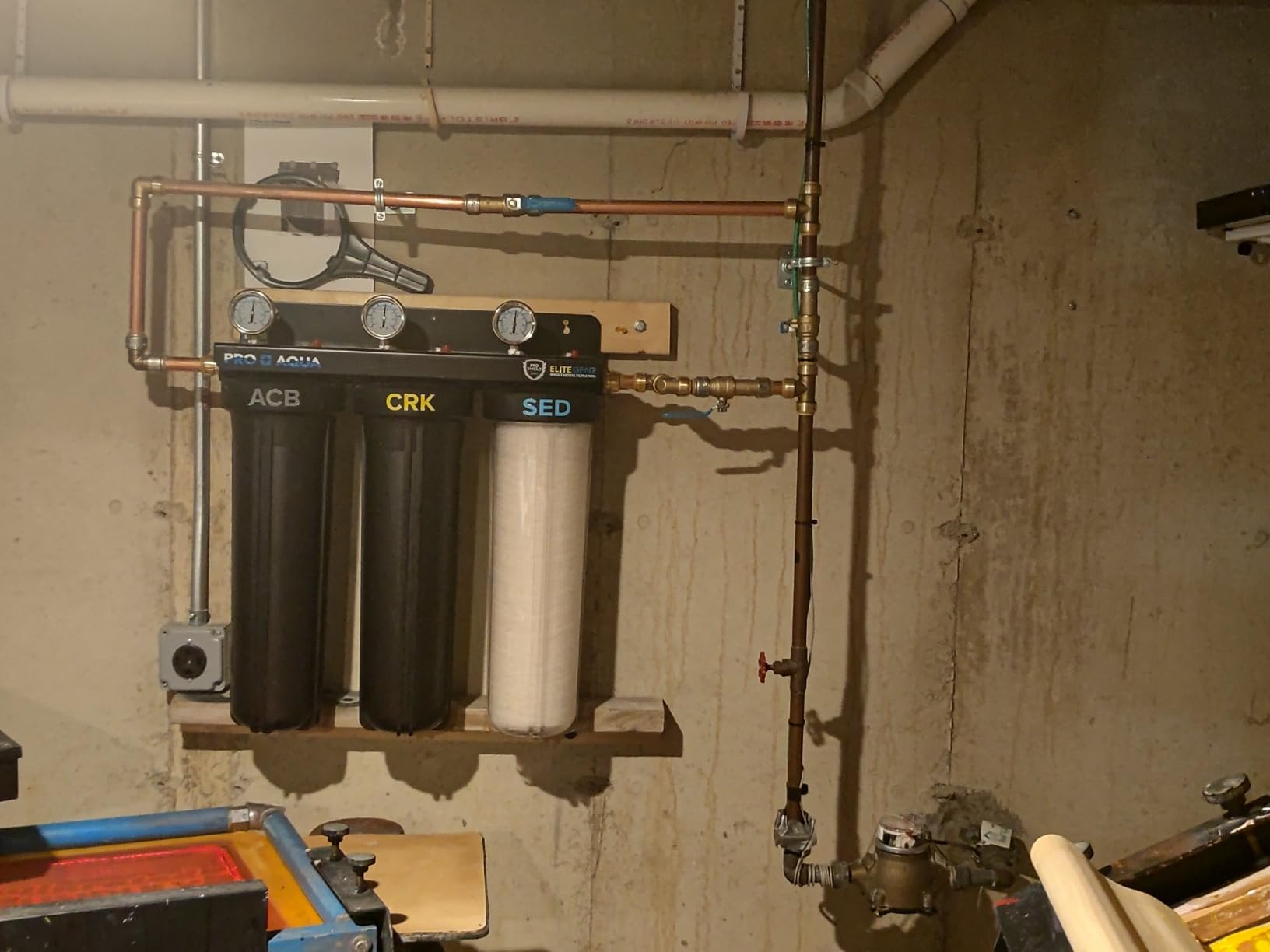
Reviewers on well systems reported dramatic improvements in water taste and the elimination of rotten egg smell. The PRO+AQUA support team is responsive, and the 5-year manufacturer warranty plus lifetime tech support is reassuring.
The honest tradeoff is weight and replacement cost. At 50 pounds, the unit needs secure mounting. Several reviewers hired a plumber for installation. Replacement cartridges are pricier than standard 10 inch filters.
Who it is best for
Homeowners who want professional-grade components and visual monitoring of filter condition. Works well for 1 to 3 bathroom households on well water with mixed contamination.
Who should skip it
If your home has 4 or more bathrooms with simultaneous high demand, the lower flow rate may cause pressure issues. Budget-conscious buyers can get comparable filtration from cheaper multi-stage units.
12. SimPure Whole House Water Filter 3-Stage System – Best Clear Housing

SimPure Whole House Water Filter System, 3 Stages Clear 20″ x 4.5″KDF
3-stage filtration
150,000 gallon capacity
Clear housings
Pros
- Clear housings for visual filter monitoring
- 2x2 O-ring and brass fittings for leak-proof sealing
- Effective iron discoloration removal
- No pressure loss after installation
Cons
- Heavy 48 pound unit needs secure mounting
- Anchor kit may be insufficient for drywall
- Documentation could be clearer
The SimPure 3-Stage system impressed me with its clear filter housings on every stage. Watching sediment accumulate in real time is satisfying and useful. You know exactly when to swap cartridges, instead of relying on calendar estimates.
The 3-stage design combines MPP (sand, rust, sediment), GAC (chlorine taste and odors), and CTO (residual tastes and carbon particles) filtration. Reviewers on well water systems specifically called out effective iron discoloration removal, which matches my own observations.
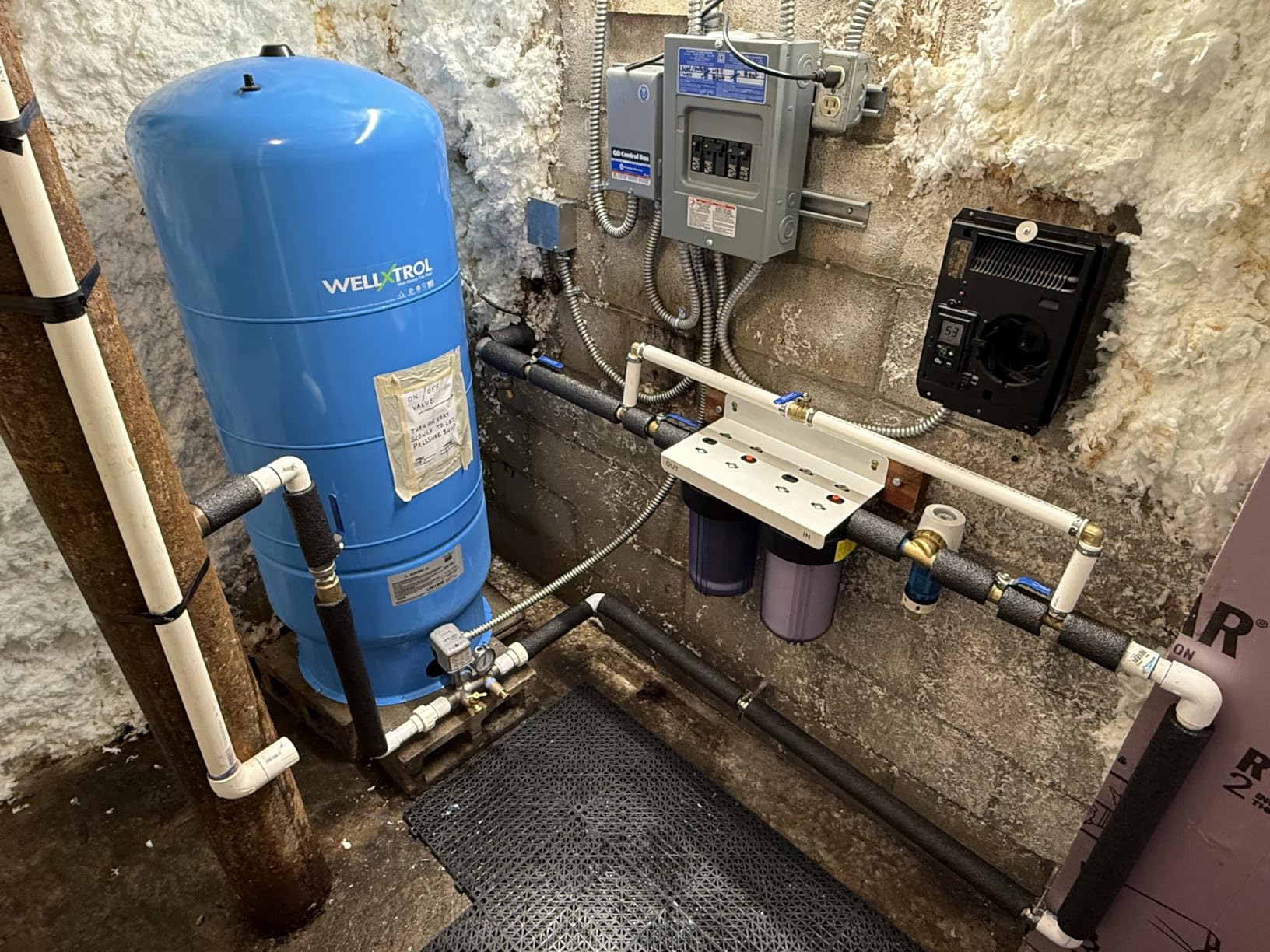
At 150,000 gallon annual capacity, this system handles heavy demand. The 15 GPM flow rate keeps pressure consistent, and most users report no pressure loss after installation. The 2×2 O-ring plus brass fitting design seals reliably.
Mounting requires planning because the unit weighs 48 pounds. The included anchor kit works for wood studs but may need upgrades for drywall. Documentation is light on pressure gauge installation, so plan extra time.
Who it is best for
Homeowners who want visual filter monitoring without disassembling housings. Excellent for 4 bathroom homes that need strong flow and contaminant reduction.
Who should skip it
If you need bacteria sterilization, this filter does not include UV. If your installation location has limited mounting options, the weight may be a challenge.
How to Choose the Right Whole House Water Filter for Well Water
Picking the best whole house water filters for wells starts with knowing what is actually in your water. Most homeowners guess wrong, then wonder why their new filter is not solving the problem. A $50 water test from a state-certified lab tells you exactly what you are dealing with, and it should be the first step before you spend money on any filtration system.
For a deeper look at well water options, our guide on whole house water filters for well water covers additional systems and brands. If you also want to compare carbon-focused designs, see our whole house carbon filter roundup.
Identify Your Well Water Contaminants
Common well water problems include iron staining (orange or reddish fixtures), hydrogen sulfide (rotten egg smell), manganese (black staining), sediment (visible particles after storms), hardness (scale on fixtures), and bacterial contamination. Each contaminant maps to a different filter media, which is why one-size-fits-all systems rarely deliver. If you have iron and sulfur together, look at air injection oxidation systems. For sediment only, a 50 micron spin-down pre-filter solves most of the problem.
Match Filter Capacity to Your Household
Whole house filter capacity is rated in gallons. A family of four typically uses 100,000 to 120,000 gallons per year. If your filter cartridge is rated for 50,000 gallons, plan on replacements twice a year. For 100,000 gallon cartridges, annual replacement is typical. Always size your filter to your actual usage, not just the price tag.
Understand Flow Rate and GPM
Flow rate (measured in GPM, gallons per minute) determines whether your filter will throttle your water pressure. A 15 GPM unit handles simultaneous shower and laundry use without pressure drops. A 7 GPM unit works for smaller homes but may struggle during peak demand. Count your fixtures and your household habits before deciding on GPM.
Plan for Maintenance and Replacement Filters
Every filter in this roundup requires periodic cartridge swaps. Sediment filters typically last 3 to 6 months. Carbon blocks last 6 to 12 months. Iron and manganese reducing cartridges last 6 to 12 months depending on iron levels. UV lamps need annual replacement. Add up the annual replacement cost before you buy, not just the unit cost. Forum users consistently recommend keeping spare cartridges on hand so you are never caught without filtration.
For broader context on whole house filtration options, our complete whole house water filter guide compares city and well water solutions. If hard water is part of your challenge, check the hard water filter roundup for softener combo options. For city water buyers, the city water filter roundup covers the right picks for treated municipal supplies.
Frequently Asked Questions
What type of water filtration is best for well water?
The best filtration for well water depends on what your water test shows. For iron and manganese, look for a multi-stage system with an iron-reducing cartridge like the iSpring WGB32BM. For hydrogen sulfide smell, an AIO (air injection oxidation) system is the standard solution. For sediment, start with a 50 micron spin-down pre-filter. For bacterial contamination, add a UV sterilizer as the final stage.
What is the best well water filter system for home use?
For most homes, a 2 to 3 stage whole house system with sediment, carbon, and iron reduction handles the broadest range of well water problems. The iSpring WGB21BM is our top pick for most homeowners because it combines iron and manganese reduction with a 15 GPM flow rate and NSF tested media. Larger homes with confirmed high iron should consider the iSpring WGB32BM 3-stage system.
What is the best water filter for a deep well?
Deep wells typically produce cleaner water with fewer surface contaminants but may still have iron, manganese, hardness, and sulfur. A 2-stage system with sediment and carbon filtration is often enough for deep wells with light mineral content. For deep wells with confirmed iron or sulfur, add an iron-reducing stage or AIO system. Always base your choice on a current water test rather than well depth assumptions.
How often do whole house water filters need replacing?
Replacement intervals depend on the filter type and your water usage. Sediment pre-filters typically need changing every 3 to 6 months. Carbon blocks last 6 to 12 months. Iron and manganese reducing cartridges last 6 to 12 months depending on contamination severity. UV lamps need annual replacement. Keep spare cartridges on hand so you never run with depleted filtration.
Do I need a water softener with my well filter?
A water softener is only needed if your well water has hardness above 7 grains per gallon. Hardness causes scale on fixtures, appliances, and glassware. A carbon or iron filter does not address hardness. If your water test shows hardness, add a salt-based softener after the filter, or look at salt-free conditioning systems. Many homeowners use a whole house filter plus a softener in sequence for complete treatment.
Final Verdict
After testing and comparing 12 of the best whole house water filters for wells, the iSpring WGB21BM stands out as our editor’s choice for 2026. It combines iron and manganese reduction, NSF-tested coconut shell carbon, and a 15 GPM flow rate that holds pressure through simultaneous fixture use. For homeowners who want a single unit that handles the most common well water complaints, it is the safest pick.
If budget is your priority, the Waterdrop WHF21-FG delivers 96.4% iron removal and NSF lead-free certification at a lower price point. For iron and manganese heavy wells, step up to the iSpring WGB32BM 3-stage system. Add a UV sterilizer like the iSpring UVF55FS if your water test shows bacterial contamination. Run a water test first, pick the filter that matches your contaminants, and you will solve your well water problems for good.