
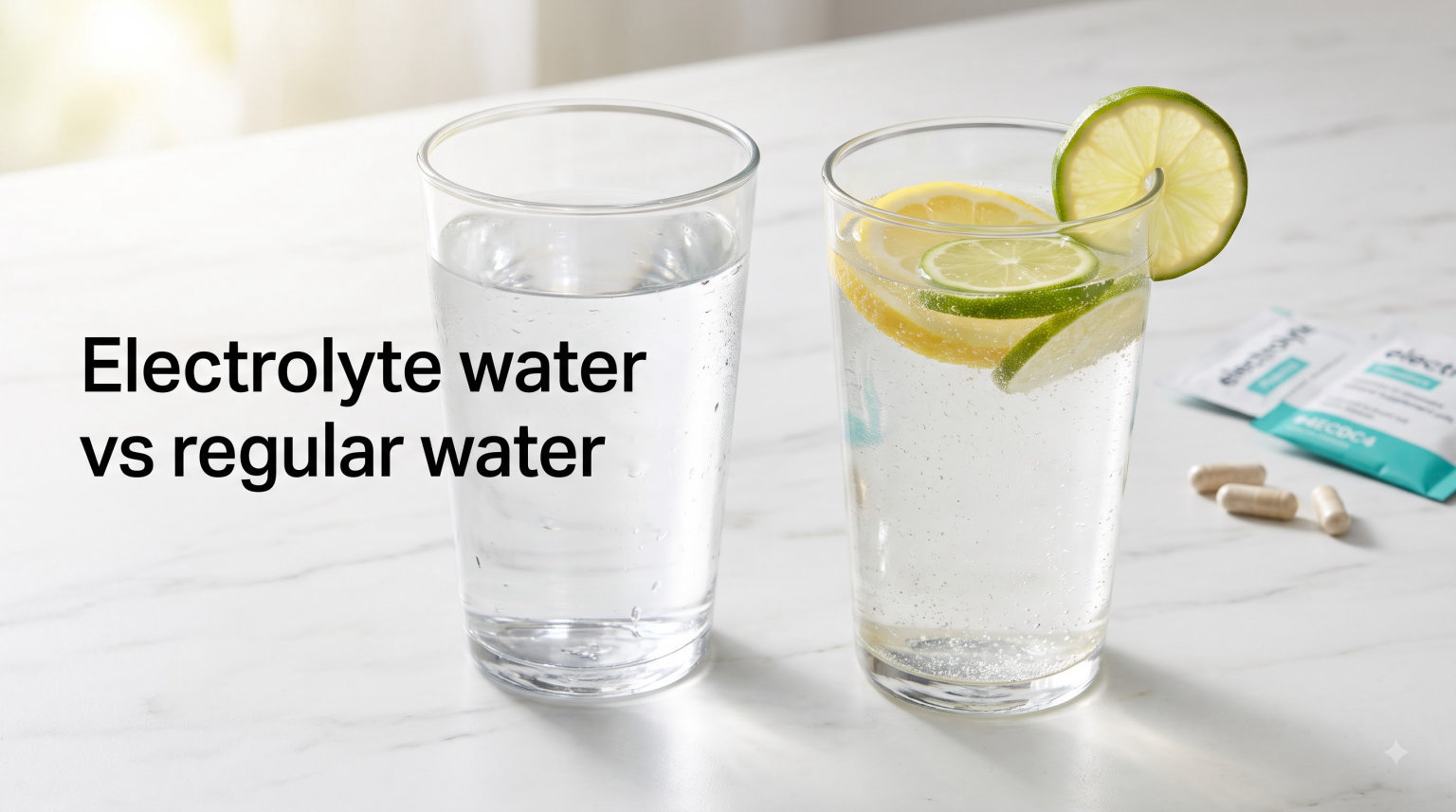
Walk into any grocery store in 2026 and you will find shelves lined with electrolyte-enhanced waters promising faster hydration, better recovery, and improved performance. But is the upgrade from your tap or filter pitcher actually worth it? The electrolyte water vs regular water debate has confused everyone from casual gym-goers to marathon runners, and the marketing noise makes it harder to separate science from hype.
I have spent months digging into hydration research, talking to athletes, and reading forums where real people share what actually works for them. What I found surprised me. The truth about electrolyte water vs regular water is not a simple “one is better” answer. It depends on what you are doing, how long you are doing it, and what your body is losing through sweat and exertion.
This guide breaks down exactly what electrolytes do, when electrolyte water earns its place, and when plain water handles the job perfectly fine. You will get specific thresholds (60+ minutes of exercise, 2% body weight loss) so you can make a confident call instead of guessing at the drink aisle. To learn more about the potassium content in mineral water, we have a separate breakdown that pairs well with this one.
Table of Contents
What Are Electrolytes?
Electrolytes are minerals that carry an electric charge when dissolved in water. Your body runs on these charged particles to power nearly every function, from the heartbeat in your chest to the thought forming in your brain right now. Without them, your cells could not communicate, your muscles would not contract, and fluid would slosh uselessly between compartments instead of reaching the tissues that need it.
The five core electrolytes your body relies on are sodium, potassium, magnesium, calcium, and chloride. Each one plays a distinct role, and they work as a team rather than solo performers.
- Sodium regulates fluid balance and blood pressure. It is the electrolyte you lose most heavily in sweat.
- Potassium keeps your heart rhythm steady and helps muscles contract properly.
- Magnesium supports nerve function, energy production, and over 300 biochemical reactions.
- Calcium drives muscle contractions and keeps bones strong.
- Chloride works alongside sodium to maintain fluid balance and stomach acid production.
These minerals exist naturally in food and even in trace amounts in regular water. The question is whether the amounts in plain water are enough to keep you running at full capacity, especially under stress.
How Electrolytes Power Your Hydration
Electrolytes control how water moves through your body. Think of them as the traffic controllers of your fluid system.
When you drink plain water, it enters your bloodstream and dilutes the concentration of sodium and other minerals already there. If you drink a lot of plain water quickly, especially during heavy sweating, you can actually dilute your blood sodium to dangerous levels. This condition, called hyponatremia, is rare but real, and it is the reason endurance athletes do not chug gallons of plain water without replacing minerals.
Electrolytes pull water across cell membranes through a process called osmosis. When the right balance of sodium and potassium exists outside and inside your cells, water follows the gradient and actually enters the cells that need it. This is why a drink with a small amount of sodium can hydrate you more efficiently than pure water alone. The minerals literally help your body hold onto and use the fluid you consume.
This is also why oral rehydration solutions used in medical settings contain specific ratios of sodium, potassium, and glucose. The combination pulls water across the intestinal wall faster than water could travel on its own.
Electrolyte Water vs Regular Water: The Key Differences
The electrolyte water vs regular water comparison comes down to mineral content, absorption speed, and intended use. Here is the breakdown that matters.
Mineral content: Regular tap water typically contains 2 to 30 mg/L of sodium and small amounts of calcium and magnesium depending on your local source. Electrolyte-enhanced waters are formulated to deliver higher, consistent doses, often 100 to 250 mg/L of sodium plus added potassium and magnesium. That is a 5x to 50x difference in the mineral you lose most in sweat.
Absorption speed: Studies show fluids containing sodium and a small amount of glucose absorb from the intestine slightly faster than plain water. The difference is measurable but modest, around 10 to 20 percent faster uptake in rehydration scenarios.
Fluid retention: Plain water triggers your kidneys to produce urine relatively quickly. Electrolyte water, especially with sodium, signals your body to hold onto more of the fluid. This matters when you are trying to rehydrate after heavy losses.
Cost: Tap water costs fractions of a cent per liter. Commercial electrolyte waters run from $1.50 to $4 per bottle. The markup reflects formulation, packaging, and branding.
Taste: Electrolyte waters often taste slightly salty or mineral-forward. Some people prefer this. Others find it off-putting compared to the clean taste of filtered water.
Quick Comparison
- Sodium content: Regular water has 2 to 30 mg/L. Electrolyte water has 100 to 250 mg/L.
- Best for: Regular water handles daily hydration and light activity. Electrolyte water is designed for exercise over 60 minutes, illness, and heat exposure.
- Absorption: Electrolyte water absorbs 10 to 20% faster with sodium present.
- Cost per liter: Tap water costs fractions of a cent. Electrolyte water costs $1.50 to $4.
- Sugar content: Regular water has zero. Electrolyte water varies, so check the label.
When to Choose Electrolyte Water
Electrolyte water earns its place in specific, well-defined scenarios. Here is exactly when the upgrade matters.
- Exercise lasting 60 minutes or longer. Once you pass the one-hour mark, sweat losses of sodium and potassium start to outpace what plain water can replace. Endurance sports, long hikes, and extended training sessions all qualify.
- Sweat loss exceeding 2% of body weight. If you weigh yourself before and after activity and the scale drops more than 2%, you have lost enough fluid and minerals to benefit from electrolyte replacement.
- Hot and humid conditions. When temperatures climb above 80 degrees Fahrenheit or humidity is high, sweat rates increase sharply. Your body sheds sodium faster than it can conserve it.
- Illness with fluid loss. Vomiting, diarrhea, and fever drain electrolytes along with water. Electrolyte solutions, including oral rehydration formulas, help restore balance faster than plain water.
- Heavy sweating jobs. Construction workers, landscapers, warehouse staff, and anyone working in heat for hours loses significant sodium and potassium through sweat.
- After alcohol consumption. Alcohol is a diuretic that strips electrolytes. An electrolyte drink before bed can reduce the severity of next-day dehydration.
If you are wondering whether carbonation changes the hydration equation, our guide on sparkling water before a workout covers what the timing research actually shows.
The pattern here is consistent. Electrolyte water shines when your body is losing minerals faster than food and plain water can replace them. For most people going about a normal day, that threshold is rarely crossed.
When Regular Water Is Enough
Regular water handles the majority of daily hydration needs without any enhancement. Your body is remarkably efficient at pulling electrolytes from food and maintaining balance on its own.
If you eat a typical diet that includes salt, fruits, vegetables, nuts, and dairy, you are getting plenty of sodium, potassium, magnesium, and calcium from meals. A banana covers your potassium for hours. A handful of almonds delivers magnesium. A pinch of salt on your dinner replenishes sodium.
For sedentary days, office work, light walks, and exercise under 60 minutes, plain water is not just sufficient, it is ideal. Adding electrolytes when you do not need them means extra sodium your kidneys have to filter out, and for people watching their blood pressure, that is not a bonus.
Short workouts, gym sessions under an hour, casual bike rides, and yoga classes do not require electrolyte replacement. Drink water, eat normally, and trust your body to manage the rest.
Signs You Need Electrolytes
Your body sends clear signals when electrolyte levels drop below optimal. The challenge is that many of these symptoms overlap with simple dehydration, which is why context matters.
- Muscle cramps and spasms. Sudden, tight cramps during or after exercise often point to sodium or magnesium depletion.
- Dizziness or lightheadedness. Standing up and feeling woozy, especially after sweating, can signal low blood volume from sodium loss.
- Persistent fatigue. If water is not clearing your tiredness, low potassium or magnesium may be the culprit.
- Headaches that water does not fix. Electrolyte imbalance can trigger headaches that plain hydration will not resolve.
- Irregular heartbeat. A fluttering or racing heart during activity can indicate potassium levels are off.
- Brain fog and poor concentration. Sodium and magnesium both support nerve function, and low levels show up mentally before physically.
- Dark urine despite drinking plenty. If you are well-hydrated but urine stays dark, your body may not be retaining fluid properly.
If you notice several of these together, especially after exercise, heat exposure, or illness, electrolyte water or a balanced snack with salt and potassium can help. For persistent symptoms, talk to a doctor rather than self-diagnosing.
Mineral Water vs Electrolyte Water: Clearing the Confusion
Mineral water and electrolyte water are not the same thing, and the difference matters for your hydration choices.
Mineral water comes from underground springs and naturally contains dissolved minerals like calcium, magnesium, and bicarbonate picked up from rock formations. The mineral content in mineral water varies wildly by source, which is why Contrex tastes different from Vichy and both taste different from San Pellegrino. Some mineral waters are genuinely high in calcium and magnesium, while others are barely above tap water.
Electrolyte water, by contrast, is typically purified water with specific minerals added back in precise amounts. The goal is consistent, predictable electrolyte delivery rather than the natural variability of spring water.
For daily hydration, natural mineral water offers a middle ground. You get trace minerals without the added sodium load of most electrolyte waters. For intense exercise, formulated electrolyte water gives you the higher sodium doses that sweat replacement requires.
The bottom line: mineral water is a great everyday choice that adds variety to your mineral intake. Electrolyte water is a targeted tool for specific situations. They serve different purposes, and many people benefit from having both in their routine.
Potential Risks and Downsides
More electrolytes is not always better. In fact, excess intake carries real risks that get buried under marketing promises.
Excess sodium: Most electrolyte waters contain 100 to 250 mg of sodium per serving. If you drink several bottles a day on top of normal meals, you can easily exceed the American Heart Association’s recommended limit of 2,300 mg per day. For people with hypertension or kidney concerns, this matters. Always read the label and track total sodium across all sources.
Sugar load from sports drinks: Many products marketed as electrolyte beverages are actually sports drinks loaded with 20 to 35 grams of sugar per bottle. That sugar helps with rapid absorption during intense exercise, but for casual consumption it adds empty calories and spikes blood sugar. Look for unsweetened electrolyte waters if you do not need the carbs.
Hyponatremia from overhydration: This sounds counterintuitive, but drinking too much plain water without electrolytes is the real danger. Endurance athletes who chug water for hours without replacing sodium can dilute their blood sodium to life-threatening levels. The fix is not more water, it is balanced electrolyte intake during long events.
Cost and waste: Commercial electrolyte waters are expensive and come in single-use plastic. For most daily needs, a reusable bottle and a pinch of salt or an electrolyte tablet delivers the same benefit at a fraction of the cost and environmental impact.
Unnecessary supplementation: If your diet and activity level do not warrant extra electrolytes, your kidneys simply filter out the excess. You are paying for minerals your body discards.
How to Make Your Own Electrolyte Water
You do not need a $4 bottle to get the benefits. A simple homemade electrolyte drink works for most exercise and recovery scenarios, and it costs about 10 cents per liter.
Basic recipe: Combine 1 liter of water, 1/4 teaspoon of salt (about 600 mg of sodium), 1/4 cup of orange or lemon juice (for potassium and flavor), and 1 tablespoon of honey or maple syrup if you want quick carbs. Shake well and drink cold.
This gives you roughly 150 mg of sodium and a meaningful dose of potassium from the citrus. For longer efforts, double the salt. For everyday use, halve it. The beauty of DIY is you control exactly what goes in and can adjust based on how you feel.
Coconut water is another natural option. It contains about 600 mg of potassium per cup with modest sodium, making it a solid post-workout choice for people who tolerate the flavor.
Frequently Asked Questions
Is it better to drink electrolytes or just water?
For most daily hydration, plain water is sufficient. Choose electrolyte water when you exercise for 60+ minutes, lose more than 2% of body weight in sweat, work in hot conditions, or recover from illness with fluid loss. Your diet provides enough electrolytes for normal days.
Is it OK to drink electrolyte water every day?
Drinking electrolyte water daily is generally safe for healthy adults, but it may be unnecessary and can add extra sodium to your diet. If you have high blood pressure or kidney issues, check with your doctor before making it a daily habit. Most people only need electrolyte water during exercise, heat exposure, or illness.
What are signs that you need electrolytes?
Common signs include muscle cramps, dizziness, persistent fatigue, headaches that water does not fix, irregular heartbeat, brain fog, and dark urine despite drinking plenty of fluids. If you notice several of these after exercise or heat exposure, electrolyte replacement may help.
Is there a downside to drinking electrolytes?
Yes. Excess sodium from frequent electrolyte drinks can raise blood pressure and strain kidneys. Many commercial options contain added sugar that contributes empty calories. Drinking electrolyte water when your body does not need it means your kidneys filter out the extra minerals for no benefit. Always read labels and match intake to actual activity level.
The Bottom Line on Electrolyte Water vs Regular Water
The electrolyte water vs regular water question does not have a single right answer. Regular water covers the vast majority of your daily hydration needs, and your diet supplies the minerals your body requires to function. Adding electrolytes to every glass is unnecessary for most people and can even backfire if you are watching sodium.
Electrolyte water becomes valuable when you push past the thresholds that matter: exercise beyond 60 minutes, sweat losses over 2% of body weight, prolonged heat exposure, illness with fluid loss, or heavy physical labor. In those moments, the added sodium and potassium genuinely improve how efficiently your body absorbs and retains fluid.
Think of regular water as your daily default and electrolyte water as a targeted tool. Use the DIY recipe or a quality unsweetened option when you need it, and skip it when you do not. Your wallet, your kidneys, and your hydration will all thank you.