
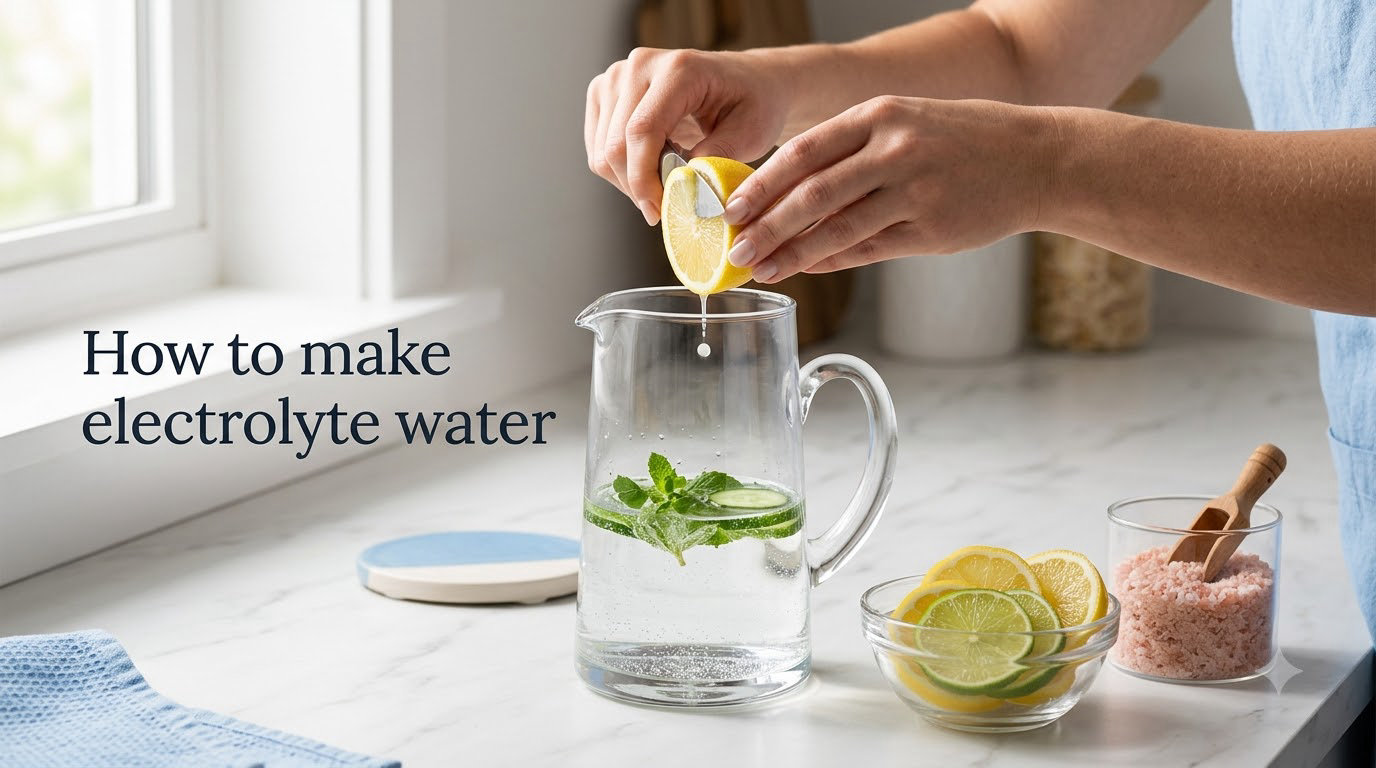
Learning how to make electrolyte water at home is one of the simplest skills you can pick up for better hydration. You probably already have the ingredients sitting in your kitchen right now. A pinch of salt, a squeeze of citrus, and a glass of water are all it takes to create a drink that rivals anything you will find on a store shelf.
I started making my own electrolyte water a few years ago after getting tired of paying premium prices for commercial sports drinks loaded with sugar and artificial colors. The difference in how I felt during and after workouts was noticeable within the first week. My energy stayed steadier, my muscle cramps disappeared, and I stopped buying plastic bottles by the dozen.
In this guide, I will walk you through exactly how to make electrolyte water using ingredients you already have. You will learn the basic recipe, several variations for different needs, and when drinking electrolyte water makes the most sense for your body.
Table of Contents
What Are Electrolytes and Why Your Body Needs Them
Electrolytes are minerals that carry an electrical charge when dissolved in water. Your body relies on them to power nearly every function, from muscle contractions to nerve signals to keeping your hydration levels balanced. The main electrolytes your body uses are sodium, potassium, magnesium, calcium, chloride, and phosphate.
Every time you sweat, breathe heavily, or use the bathroom, you lose small amounts of these minerals. Under normal conditions, a balanced diet replaces what you lose. But when you exercise hard, spend time in hot weather, or recover from illness, your electrolyte levels can drop faster than food alone can restore them.
That is where electrolyte water comes in. By adding mineral-rich ingredients to your water, you help your body absorb fluid more effectively and replace what it has lost. This is why athletes, hikers, and anyone dealing with dehydration benefits from drinking it.
Here is a quick breakdown of what each key electrolyte does:
Sodium – Regulates fluid balance and helps your body retain water. It is the most important electrolyte for rehydration.
Potassium – Works alongside sodium to maintain proper fluid levels inside your cells. It also supports heart rhythm and muscle function.
Magnesium – Involved in over 300 biochemical reactions, including muscle relaxation and energy production.
Calcium – Essential for muscle contractions, nerve signaling, and bone strength.
Chloride – Helps maintain proper blood volume and pressure while balancing other electrolytes.
When you make electrolyte water at home, you are targeting these specific minerals. Salt provides sodium and chloride. Citrus juice adds potassium. Honey or fruit contributes trace minerals. Together, these simple ingredients create a functional rehydration drink.
Core Ingredients for Homemade Electrolyte Water
The beauty of homemade electrolyte water is that the ingredient list is short, affordable, and flexible. You do not need specialty powders or expensive supplements. Here is what each ingredient brings to the mix and why it matters.
Water (Filtered or Spring)
Your base liquid should be clean, filtered water or natural spring water. The quality of your water matters because it is the delivery system for every mineral you add. If your tap water tastes heavily chlorinated or has a strong mineral taste, filtered water will give you a cleaner result.
Some people prefer using natural mineral water as their base because it already contains trace amounts of calcium, magnesium, and other electrolytes. If you are curious about potassium in mineral water for hydration, it can contribute to your daily intake, though you will still want to add more through other ingredients for a true electrolyte boost.
Sea Salt or Himalayan Pink Salt
Salt is the backbone of any electrolyte water recipe. It provides sodium and chloride, the two electrolytes your body loses most heavily through sweat. I recommend using sea salt or Himalayan pink salt rather than standard table salt because they contain additional trace minerals and lack the anti-caking agents found in refined salt.
For a single glass of electrolyte water, you only need about 1/4 teaspoon of salt. This provides roughly 500 to 600 milligrams of sodium, which is comparable to what you would find in a commercial sports drink. If you have ever wondered why mineral water tastes the way it does, it is that same dissolved mineral content at work, just in different proportions.
Citrus Juice (Lemon or Lime)
Fresh lemon or lime juice serves two purposes in electrolyte water. First, it adds a small but meaningful amount of potassium, which works with sodium to regulate fluid balance in your cells. Second, it makes the drink actually taste good, which means you will drink more of it and stay better hydrated.
One tablespoon of fresh lemon juice contains about 10 to 15 milligrams of potassium along with a dose of vitamin C. While this is not a massive amount, it contributes to the overall mineral profile of your drink. Use fresh-squeezed juice whenever possible because bottled versions often contain preservatives that can alter the taste.
Optional Sweetener (Honey, Maple Syrup, or Sugar)
A small amount of sweetener helps your body absorb electrolytes more efficiently. Glucose actually aids sodium transport across your intestinal wall, which means a little sugar helps you rehydrate faster. This is why commercial sports drinks contain carbohydrates alongside electrolytes.
I prefer raw honey because it adds natural sweetness along with trace enzymes and minerals. Maple syrup works well too. If you want to avoid sugar entirely, you can skip this ingredient or use a sugar-free alternative like stevia, though you will lose some of the absorption benefits.
A typical recipe calls for 1 to 2 teaspoons of honey or sugar per glass. This is far less than the 30 to 40 grams of sugar found in many commercial sports drinks, which is one of the biggest advantages of making your own.
How to Make Electrolyte Water: Basic Recipe
Here is the recipe I use most often. It takes less than two minutes to prepare and provides a balanced mix of sodium, potassium, and carbohydrates for effective rehydration.
Basic Homemade Electrolyte Water
Ingredients:
2 cups (16 oz) filtered or spring water
1/4 teaspoon sea salt or Himalayan pink salt
1 tablespoon fresh lemon or lime juice
1 to 2 teaspoons raw honey, maple syrup, or sugar (optional)
Instructions:
Step 1: Pour 2 cups of filtered water into a glass or water bottle. Room temperature or slightly cool water dissolves the salt more easily than ice-cold water.
Step 2: Add 1/4 teaspoon of sea salt and stir until completely dissolved. If the salt is not dissolving well, let the water sit for a minute and stir again.
Step 3: Squeeze in 1 tablespoon of fresh lemon or lime juice. Fresh juice gives you the best flavor and the most potassium compared to bottled alternatives.
Step 4: Add 1 to 2 teaspoons of honey, maple syrup, or sugar if using. Stir until fully dissolved.
Step 5: Taste and adjust. If the drink is too salty, add a splash more water. If you want more flavor, add a little more citrus juice. You can also add ice cubes if you prefer your electrolyte water cold.
Step 6: Drink immediately or store in the refrigerator for up to 24 hours.
This basic recipe makes one serving. If you want to make a larger batch, simply multiply the ingredients proportionally. For a quart-sized batch, use 4 cups of water, 1/2 teaspoon of salt, 2 tablespoons of citrus juice, and 2 to 4 teaspoons of sweetener.
One thing I have learned from testing many ratios is that less salt is often better than more. You can always add another pinch, but an overly salty drink is hard to fix and unpleasant to drink.
Electrolyte Water Recipe Variations
The basic recipe is a great starting point, but part of the fun of making your own electrolyte water is customizing it. Here are several variations I have tested and use regularly for different situations.
Sugar-Free Electrolyte Water
If you are watching your sugar intake or following a low-carb diet, you can skip the sweetener entirely. Use 2 cups of water, 1/4 teaspoon of sea salt, 1 tablespoon of lemon juice, and a few drops of liquid stevia if you want sweetness without calories. The absorption benefit of glucose is reduced, but the sodium and potassium still help with hydration.
Coconut Water Electrolyte Blend
Coconut water is naturally rich in potassium, containing about 600 milligrams per cup. Replace half your water with coconut water for a drink that delivers a significant mineral boost. Mix 1 cup of water with 1 cup of coconut water, add a pinch of salt, and squeeze in some lime juice. This is one of the best natural electrolyte drinks you can make.
Magnesium-Rich Electrolyte Water
Many homemade recipes overlook magnesium, but it is essential for muscle recovery and preventing cramps. You can add a pinch of cream of tartar (which is potassium bitartrate) to your basic recipe for an extra potassium and magnesium boost. Alternatively, a very small amount of magnesium citrate powder dissolved in your water provides bioavailable magnesium.
Fruit-Infused Electrolyte Water
For a refreshing summer drink, add slices of strawberry, cucumber, or orange to your basic recipe. Let it steep in the refrigerator for 2 to 4 hours. The fruit adds natural flavor and small amounts of additional vitamins and minerals. This version is great for everyday sipping rather than intense rehydration.
Berry and Salt Post-Workout Drink
Blend 1 cup of water with 1/2 cup of mixed berries, a pinch of salt, and 1 teaspoon of honey. Strain if you prefer a smooth drink. Berries add antioxidants along with natural sugars that help with post-exercise recovery. This makes a thicker, more filling electrolyte option for after long training sessions.
When to Drink Electrolyte Water
Electrolyte water is not something you need to drink all day every day. For most people, plain water handles daily hydration just fine. But there are specific situations where electrolyte water makes a real difference in how you feel and perform.
During and After Exercise
Any workout lasting longer than 60 minutes, especially in warm conditions, depletes your electrolyte stores through sweat. Drinking electrolyte water during and after exercise helps prevent cramps, fatigue, and the sluggish feeling that comes from mineral depletion. If you are doing endurance activities like long runs or cycling, electrolyte water becomes essential rather than optional.
If you are curious about sparkling water before workouts, the carbonation question comes up often. Still or sparkling, what matters most for exercise hydration is the electrolyte content.
In Hot Weather
Hot days increase your sweat rate even when you are not exercising. If you are spending time outdoors in high temperatures, electrolyte water helps replace what you lose through constant sweating. This is especially important for children, older adults, and anyone working outside.
During Illness
When you are sick with a fever, stomach bug, or anything that causes vomiting or diarrhea, your body loses fluids and electrolytes rapidly. Electrolyte water helps prevent dehydration during illness. A simple salt, sugar, and water mixture is essentially a homemade version of oral rehydration solution, which the World Health Organization recommends for treating dehydration.
After Alcohol Consumption
Alcohol is a diuretic, meaning it increases fluid loss and depletes electrolytes. Drinking a glass of electrolyte water before bed or first thing in the morning can help reduce hangover symptoms by restoring the minerals and fluids your body lost.
For General Daily Hydration
Even on normal days, a glass of electrolyte water in the morning can help jumpstart your hydration after a long night of sleep. Some people, particularly those with conditions like POTS (postural orthostatic tachycardia syndrome), benefit from regular electrolyte intake throughout the day to manage blood pressure and circulation.
Homemade vs Store-Bought Electrolyte Drinks
One of the biggest reasons people switch to homemade electrolyte water is control over what goes into their body. Commercial sports drinks and electrolyte powders are convenient, but they often come with trade-offs.
A typical 20-ounce bottle of a leading sports drink contains around 34 grams of sugar, artificial food dyes, and a relatively modest amount of electrolytes. Many popular electrolyte powder sticks cost several dollars per serving. When you make your own, you decide exactly how much salt, sugar, and flavor goes into every glass.
The main advantage of commercial products is convenience and precise formulation. Some are designed with specific sodium-to-potassium ratios backed by sports science research. But for everyday hydration and most recreational exercise, a homemade version works just as well at a fraction of the cost.
I have found that keeping a jar of pre-mixed dry ingredients (salt and a powdered sweetener) in my gym bag lets me turn any water bottle into electrolyte water in seconds. It is the best of both worlds: convenience without the markup.
Storage and Shelf Life Tips
Homemade electrolyte water is best consumed fresh, but you can make it ahead when needed. Here is what I have learned about storing it safely.
If your recipe includes fresh citrus juice, store the drink in the refrigerator and consume it within 24 hours. The vitamin C in citrus juice degrades over time, and fresh juice can start to ferment after a day or two.
For make-ahead batches without citrus, the salt and water mixture will keep for 3 to 4 days in the refrigerator. Add the citrus juice just before drinking for the best flavor and nutritional value.
If you want to prepare a dry electrolyte mix to keep on hand, combine sea salt, powdered vitamin C, and a dry sweetener like powdered sugar or stevia in a small container. Measure out about 1/2 teaspoon per 16 ounces of water when you are ready to mix. This dry mix lasts for months and is perfect for travel, hiking, or keeping at your desk.
Always use a clean container and avoid drinking directly from a stored batch to prevent bacteria growth. Pour what you need into a glass and refrigerate the rest.
Frequently Asked Questions
How to make an electrolyte water at home?
Combine 2 cups of filtered water, 1/4 teaspoon of sea salt, 1 tablespoon of fresh lemon or lime juice, and 1 to 2 teaspoons of honey or sugar. Stir until the salt dissolves completely. Drink immediately or refrigerate for up to 24 hours.
Can I just add salt to water for electrolytes?
Yes, adding salt to water gives you sodium and chloride, which are the two most important electrolytes for rehydration. For a more complete electrolyte profile, also add a source of potassium like lemon or lime juice. A pinch of salt in water alone is effective for basic hydration needs.
How can I make my water have electrolytes?
You can add electrolytes to water using sea salt for sodium, citrus juice for potassium, coconut water for a broad mineral boost, or a small amount of cream of tartar for extra potassium and magnesium. You can also use a pre-mixed dry powder of salt and sweetener to add to any water bottle on the go.
What is the best natural electrolyte drink?
A blend of half water and half coconut water with a pinch of sea salt and a squeeze of lime juice is one of the best natural electrolyte drinks. Coconut water is naturally rich in potassium, and adding salt provides the sodium your body needs for fluid balance.
How do I make electrolyte water without sugar?
Skip the honey or sweetener and use 2 cups of water, 1/4 teaspoon of sea salt, and 1 tablespoon of lemon juice. The sodium and potassium still support hydration without any added sugar. You can add a few drops of stevia for sweetness if desired.
Is homemade electrolyte water as effective as commercial sports drinks?
For everyday hydration and recreational exercise, homemade electrolyte water is just as effective as commercial sports drinks. It provides comparable amounts of sodium and potassium with far less sugar and no artificial ingredients. For extreme endurance events, commercial products may offer more precise electrolyte ratios.
Conclusion
Making electrolyte water at home is quick, affordable, and gives you complete control over what goes into your body. With just water, salt, citrus juice, and an optional sweetener, you can create a rehydration drink that rivals commercial options at a fraction of the cost.
Start with the basic recipe and experiment with variations as you find what works best for your body and your routine. Whether you are recovering from a tough workout, spending a day in the heat, or just trying to stay properly hydrated, knowing how to make electrolyte water is a skill worth having.
Keep a jar of dry ingredients in your gym bag or desk drawer so you are always prepared. Your body and your wallet will thank you.