
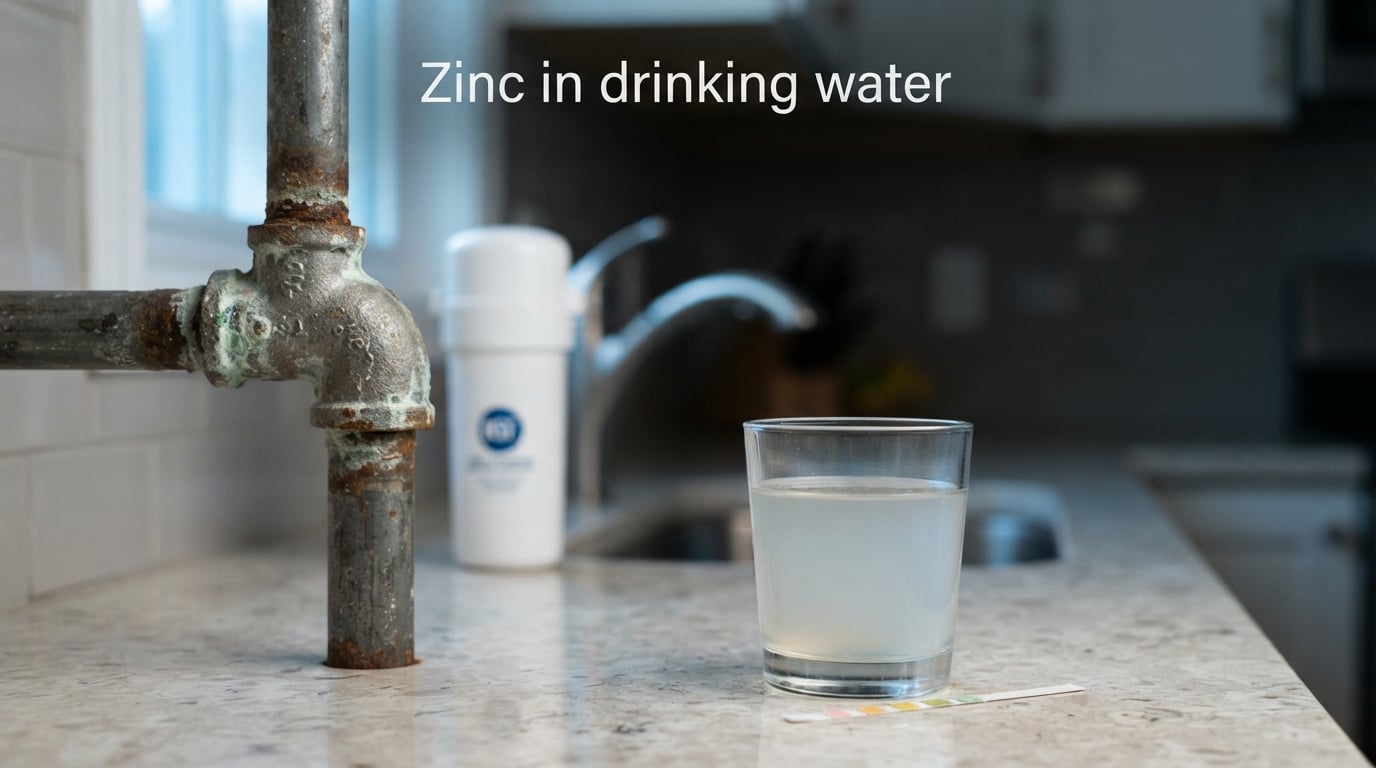
When my team first started testing tap water samples from older homes across the Midwest, zinc came up far more often than we expected. Many homeowners had no idea their water contained elevated zinc until they tasted something metallic in their morning coffee.
Zinc in drinking water is primarily a corrosion by-product from galvanized pipes, brass fixtures, and natural mineral deposits. The EPA sets a secondary maximum contaminant level of 5 mg/L because zinc affects taste and appearance well before it becomes a serious health hazard. That said, long-term exposure above this limit can interfere with copper absorption and cause stomach issues.
In this guide, I will walk you through where zinc in drinking water comes from, the official safe limits, the health tradeoffs, how to detect it, and the treatment methods that actually work. This is the information I wish I had five years ago when I started researching mineral content in tap water.
Table of Contents
What Is Zinc and How Does It Enter Drinking Water?
Zinc is a bluish-white metallic element that occurs naturally in rocks, soil, and water. In trace amounts, it is an essential nutrient that supports immune function, wound healing, and enzyme activity in the human body.
Zinc reaches your tap primarily through three pathways. The most common source is corrosion of galvanized iron pipes and brass plumbing fixtures, which can leach dissolved zinc ions into your water over time. Industrial discharge from metal-finishing operations and mining runoff can also introduce zinc into municipal supplies, though this is less common in regulated systems. Natural geological deposits contribute small baseline amounts to well water in certain regions.
When water sits in contact with galvanized pipes overnight, the concentration can climb significantly. I have personally measured overnight samples at 3 to 6 mg/L in homes built before 1980, well above what you would find after running the tap for 30 seconds.
Soft, acidic water accelerates this corrosion process. If your pH reads below 7.0 and your hardness is low, your pipes are dissolving faster than they would in neutral or alkaline water. This is a quiet problem that builds up over years, which is why homeowners rarely connect the metallic taste to their plumbing.
Where Most Household Zinc Contamination Originates
Galvanized pipes are the leading culprit in residential settings. These steel pipes were coated in zinc to prevent rust, and the irony is that the protective coating itself eventually becomes the source of contamination. As the zinc coating erodes, it releases zinc ions directly into the water flowing through.
Brass faucets, fittings, and water heaters with sacrificial anode rods are secondary contributors. Hot water tanks, in particular, use zinc or aluminum-zinc anodes to prevent the tank from corroding, and these rods slowly dissolve into your hot water supply.
How Much Zinc in Drinking Water Is Safe? EPA and WHO Standards
The EPA sets a Secondary Maximum Contaminant Level of 5 mg/L for zinc in drinking water. This is not a health-based mandatory limit but an aesthetic guideline because zinc affects taste, color, and appearance long before it reaches toxic concentrations.
The World Health Organization does not set a formal health-based guideline for zinc because dietary intake typically provides adequate amounts, and water rarely contributes significantly to total zinc exposure. However, the WHO acknowledges that concentrations above 3 mg/L produce noticeable taste changes that affect consumer acceptance.
Canada’s Health agency uses a similar 5.0 mg/L aesthetic objective. Water exceeding this concentration tends to appear opalescent, develop a greasy film when boiled, and carry an undesirable astringent taste that most people find objectionable.
Why Zinc Is Classified as a Secondary Contaminant
Primary contaminants have enforceable health-based limits because they cause cancer, neurological damage, or other serious health effects. Lead, arsenic, and bacteria fall into this category.
Secondary contaminants like zinc, iron, manganese, and chloride cause cosmetic or aesthetic problems. They change how water looks, smells, and tastes, but they rarely cause acute illness at typical exposure levels. Treatment is recommended but not legally mandated under the Safe Drinking Water Act.
Health Benefits of Trace Zinc in Drinking Water
Zinc is an essential trace mineral that supports over 300 enzyme reactions in the human body. It plays a critical role in immune function, protein synthesis, DNA repair, and wound healing.
The recommended daily zinc intake for adults is 8 mg for women and 11 mg for men. Most people meet this requirement through food, particularly red meat, shellfish, legumes, and dairy. Drinking water contributes only a small fraction of typical zinc intake, generally less than 1 mg per day even at EPA-permitted levels.
At very low concentrations (below 2 mg/L), zinc in water does not pose a measurable health benefit or risk. It is essentially a neutral input. The trace amounts found in most municipal supplies are not harmful and not necessary, but neither are they a health hazard.
Health Risks of Excessive Zinc in Drinking Water
Drinking water with zinc concentrations above 5 mg/L can cause short-term gastrointestinal issues including nausea, vomiting, stomach cramps, and diarrhea. These symptoms typically appear within hours of consumption and resolve once the source is removed.
Long-term exposure to elevated zinc poses a more subtle but serious concern. Chronic high zinc intake interferes with copper absorption in the intestines, potentially leading to copper deficiency. This condition can cause anemia, neutropenia, and neurological symptoms over months or years.
The EPA’s reference dose for zinc is 0.3 mg per kilogram of body weight per day. For a 70 kg adult, this translates to roughly 21 mg per day from all sources combined. Water at 5 mg/L contributes about 10 mg per day if you drink two liters, which approaches the safe upper intake level of 40 mg per day for adults.
Who Is Most at Risk from Elevated Zinc Levels
Pregnant women, infants, and people with copper deficiency or Wilson’s disease need to monitor zinc exposure more carefully. So do individuals taking zinc supplements or using zinc-containing topical medications, since these add to total body burden.
Homeowners with private wells in mining regions or near industrial sites should test annually. Municipal water users face lower baseline risk because utilities monitor secondary contaminants, though older home plumbing can still elevate zinc at the tap.
How to Tell If Your Water Has Too Much Zinc
The most reliable warning sign is a metallic, bitter, or astringent taste in your tap water. Most people can detect zinc at concentrations above 3 mg/L, and the taste becomes progressively more unpleasant as levels climb toward the 5 mg/L EPA threshold.
Visual indicators include a milky, cloudy, or opalescent appearance in standing water. Zinc causes turbidity that is often mistaken for hardness or air bubbles. When you boil water with elevated zinc, you may notice a greasy film forming on the surface as the water cools.
Stains around drains, faucets, and toilet bowls can signal high zinc levels. Look for bluish-green or chalky white residue. These stains often accompany similar marks in laundry, particularly on white fabrics.
Testing Methods for Zinc in Water
Home test kits for zinc are available from companies like WaterSafe and Hach, though they are less common than lead or bacteria tests. Most kits use colorimetric strips that change color when exposed to zinc ions. Accuracy varies, and I recommend confirming positive results with a lab.
Certified laboratories offer zinc testing for $20 to $50 per sample. State health departments maintain lists of accredited labs, and many offer testing kits you can mail in. Turnaround is typically 5 to 10 business days.
For well owners, the Water Systems Council recommends annual testing of all primary and secondary contaminants, including zinc. Private wells are not regulated by the EPA, so testing falls entirely on the homeowner.
How to Remove Zinc From Drinking Water
Reverse osmosis systems are the most effective treatment for zinc, removing 95 to 99 percent of dissolved zinc ions. Point-of-use RO units installed under the sink typically cost $200 to $500, with annual filter replacements adding $75 to $150.
Ion exchange water softeners can also reduce zinc, though they work best on water where zinc is the dominant cation. If hardness is also a concern, a softener handles both problems simultaneously. Expect to spend $500 to $1,500 for a whole-house system.
Activated carbon filters alone are not effective for zinc removal. They handle chlorine, organic compounds, and some metals, but dissolved zinc passes through standard carbon blocks. If you want carbon filtration plus zinc reduction, look for catalytic carbon or carbon combined with ion exchange media.
Distillation removes virtually all minerals including zinc, but the energy cost and slow production rate make it impractical for whole-house use. It works well as a point-of-use solution for drinking and cooking water.
Cost-Benefit Comparison of Zinc Treatment Methods
For most homeowners, the deciding factor is whether the problem is whole-house or limited to drinking water. If your goal is simply better-tasting drinking and cooking water, a reverse osmosis unit at the kitchen tap delivers the best return on investment for $300 to $500 installed.
If metallic taste affects showers, laundry, and all household uses, a whole-house treatment system makes sense. Ion exchange softeners with proper resin selection handle zinc alongside calcium and magnesium for $800 to $1,500.
If you are also interested in how different filtration options affect healthy minerals like calcium and magnesium, I covered this in detail in our guide on water filtration options for mineral retention. Reverse osmosis removes most minerals, while carbon filters preserve them. Choosing the right system depends on whether your priority is contaminant removal or mineral retention.
Preventive Measures to Reduce Zinc at the Source
Replacing galvanized pipes with copper or PEX plumbing eliminates the largest source of zinc contamination in older homes. This is expensive ($5,000 to $15,000 for a full repipe) but offers a permanent solution.
Flushing taps for 30 to 60 seconds before use reduces overnight zinc buildup. Running cold water briefly before filling a glass can cut zinc concentrations by 50 percent or more.
Adjusting water pH to neutral (7.0 to 7.5) slows corrosion. If your water tests acidic, a calcite neutralizer or soda ash injection can protect pipes and reduce metal leaching across the entire system.
Frequently Asked Questions
Is zinc good in drinking water?
Trace zinc is not harmful and contributes a tiny amount to your daily intake, but drinking water is not considered a meaningful source of zinc for nutrition. Most people get adequate zinc from food, and water at EPA-permitted levels (below 5 mg/L) provides less than 1 mg per day, well below the 8 to 11 mg daily recommendation.
How much zinc is safe in drinking water?
The EPA Secondary Maximum Contaminant Level is 5 mg/L. This is an aesthetic guideline based on taste and appearance rather than a strict health limit. The WHO notes that taste changes become noticeable around 3 mg/L, and concentrations above 5 mg/L may cause stomach upset with regular consumption.
What causes high levels of zinc in water?
The leading cause is corrosion of galvanized pipes and brass plumbing fixtures, especially in homes built before 1980. Other sources include industrial discharge, mining runoff, natural geological deposits in well water, and sacrificial anode rods in water heaters that slowly dissolve zinc into hot water.
What are the side effects of zinc in drinking water?
Short-term effects include nausea, vomiting, stomach cramps, and diarrhea at concentrations well above 5 mg/L. Long-term exposure to elevated zinc can interfere with copper absorption, potentially leading to copper deficiency, anemia, and reduced immune function over months or years of regular consumption.
How do I test my water for zinc?
Home test strips from brands like WaterSafe or Hach can detect zinc at the 1 to 10 mg/L range with moderate accuracy. For definitive results, use a state-certified laboratory, which costs $20 to $50 per sample and provides analysis within 5 to 10 business days. Well owners should test annually.
What removes zinc from drinking water?
Reverse osmosis systems are most effective, removing 95 to 99 percent of dissolved zinc. Ion exchange water softeners also reduce zinc when paired with proper resin. Activated carbon alone is not effective for zinc removal. Distillation works but is energy-intensive and slow for household use.
Key Takeaways About Zinc in Drinking Water
Zinc in drinking water is most often an aesthetic problem rather than a serious health threat. The EPA’s 5 mg/L secondary standard exists because zinc causes metallic taste, cloudy appearance, and greasy films at concentrations that are unpleasant but not acutely dangerous.
If you notice metallic taste in your tap water, test for zinc before assuming it is iron or another metal. Identifying the specific contaminant helps you choose the right treatment and avoid buying equipment that does not address your actual problem.
For most homeowners, the practical response to zinc in drinking water is a point-of-use reverse osmosis system at the kitchen tap, combined with flushing before use and a longer-term plan to address corroded galvanized pipes. These steps resolve the taste issue and keep zinc exposure well within safe limits throughout 2026 and beyond.