
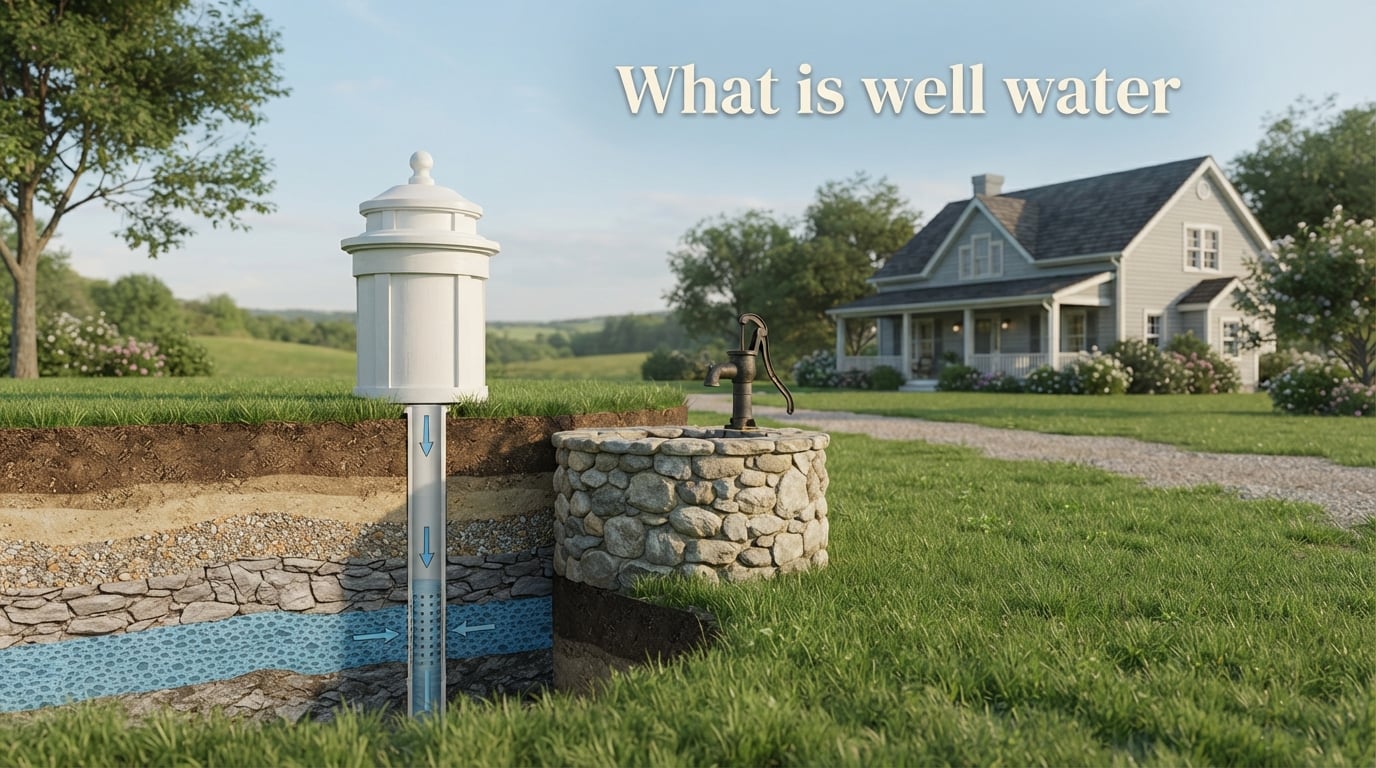
Well water is untreated groundwater that is pumped from an underground aquifer through a privately-owned well on your property. About 13 million U.S. households rely on private wells for drinking, cooking, and bathing, and each of those families is also responsible for testing, treating, and maintaining that supply themselves.
I grew up on well water, and the thing that surprises most city friends is how different the responsibility feels. There is no monthly bill from a utility, but there is also no one quietly testing the water at a treatment plant on your behalf. This guide walks through what well water actually is, where it comes from, and what every homeowner should know.
Table of Contents
What Is Well Water and Where Does It Come From?
Well water is the term used for groundwater that has been extracted through a drilled or dug well on private property. The water itself originates as rain and snow that seep through layers of soil, sand, and rock over many years, eventually collecting in natural underground reservoirs called aquifers.
An aquifer is simply a layer of water-bearing rock or sediment that holds usable amounts of water. When you turn on a faucet in a well-equipped home, you are pulling water from that aquifer, not from a distant reservoir or river. The deeper the well, the older the water often is, because it has had more time to filter through the earth.
Because well water travels through rock and soil, it picks up trace minerals in water along the way. Calcium, magnesium, iron, and sometimes even potassium show up in test results, which is one reason well water often tastes different from city tap water.
How Does Well Water Work? A Step-by-Step Process
Getting well water from an aquifer to your kitchen sink is a simple three-step process once you understand the parts. Here is how the system works:
- Origin: Precipitation falls on the ground and slowly filters down through soil and rock layers until it reaches the water table inside an aquifer.
- Extraction: An electric pump, usually located inside the well or in a nearby pump house, pulls water up through a pipe called the casing.
- Delivery: Water flows into a pressure tank, which pushes it through your home’s plumbing whenever you open a tap, run the washing machine, or take a shower.
The key physical components are the well cap (which keeps debris and insects out), the casing (a sealed pipe lining the drilled hole), the screen (which filters out sediment), the pump, and the pressure tank. If any of those parts fail, you have no water, which is one of the downsides of well water compared to a municipal supply.
Well Water vs Groundwater: What’s the Difference?
Groundwater is the water itself, stored in aquifers beneath the earth’s surface, and well water is that same groundwater once it has been pulled up through a well. Every well produces groundwater, but not every drop of groundwater is accessed through a well, since springs and seeps can also release it.
The terms get used interchangeably in casual conversation, but the technical distinction matters when you read water reports or well permits. Those documents almost always say “groundwater” because they are describing the resource, while “well water” describes the delivery method.
Well Water vs City Water: Key Differences
The biggest difference between well water and city water is who is responsible for quality. City water comes from a municipal treatment plant that disinfects, filters, and tests your water before it reaches your home, and that plant must meet strict EPA standards. Private well water is not regulated the same way; the EPA publishes guidance for well owners, but there is no government agency checking your water for you.
Other practical differences matter too. Well water usually contains no chlorine or fluoride, since those are added during municipal treatment. It often has higher mineral content, which can be a plus for taste but may cause hard water spots and scale buildup in pipes and appliances. On the cost side, well owners avoid monthly water bills but pay for electricity to run the pump, plus periodic testing and maintenance.
If you are buying a home, this is the single biggest adjustment to plan for. There is no water department to call if pressure drops. You become the water department.
Pros and Cons of Well Water
Here is a quick look at what well water owners tend to like, and what gives them headaches:
Pros:
- No monthly water bill from a utility
- Natural mineral content and a fresh taste many people prefer
- No chlorine or fluoride added at a treatment plant
- Independence from municipal supply disruptions
- Free irrigation water for gardens and landscaping
Cons:
- No water when the power goes out, since pumps need electricity
- Homeowner is fully responsible for testing and treatment
- Risk of contamination from nearby farms, septic systems, or runoff
- Some well water is acidic and slowly corrodes copper pipes
- Initial drilling or repair costs can run into the thousands
Most long-time well owners I have talked to say the trade-off is fair, but they all keep bottled water on hand as a backup, especially during storm season.
Is Well Water Safe to Drink?
Well water can be perfectly safe to drink when it is regularly tested and treated as needed. The CDC and EPA both recommend that private well owners test their water at least once a year for coliform bacteria, nitrates, and any contaminants common in their region, such as arsenic in parts of the Southwest or radon in granite-heavy areas.
Risks usually come from surface activity near the well. A septic system too close to the wellhead, livestock waste from a neighboring farm, or industrial chemicals can all work their way down into groundwater over time. That is why the EPA recommends keeping potential contamination sources at least 50 to 100 feet away from a private well.
Many well owners install whole-home water filtration systems to handle sediment, hardness, or specific contaminants a test reveals. A basic pitcher filter is not enough for most wells; the right system depends entirely on what your test report shows.
Homeowner Responsibilities for Well Water
If you are moving into a home with well water, here is the practical first-week checklist I wish someone had handed me years ago:
- Get a full water test from a state-certified lab covering bacteria, nitrates, pH, hardness, iron, and any regional contaminants.
- Locate the well head and make sure the cap is intact, sealed, and at least one foot above ground.
- Find the pressure tank and pump, learn how to reset the breaker, and note the age of the pump.
- Keep a 3-day supply of bottled drinking water in case of power outages or pump failure.
- Schedule an annual retest, and retest immediately after any flooding, well work, or change in water taste or color.
None of this is hard, but skipping it is how families end up drinking water they should not be drinking. Treat your well like the private water utility it effectively is, and you will avoid most of the problems people associate with rural water supplies.
Frequently Asked Questions
Is it safe to drink well water?
Yes, well water is generally safe to drink if it is tested regularly and treated when needed. The EPA and CDC recommend annual testing for coliform bacteria, nitrates, and any contaminants common in your area. Without testing, contamination from septic systems, agricultural runoff, or aging pipes can go unnoticed.
What is the downside of having well water?
The main downsides are full homeowner responsibility for testing and treatment, dependence on electricity to run the pump, and the risk of contamination from nearby land use. Well owners also face occasional repair costs for pumps, casings, and pressure tanks that a city utility would normally cover.
What’s the difference between well water and regular water?
Well water is untreated groundwater pumped from a private aquifer on your property, while regular city water is sourced from surface reservoirs or large municipal wells, treated at a plant, and delivered through a public system. City water is regulated by the EPA; private well water is the homeowner’s responsibility.
What does it mean when a house has well water?
When a house has well water, it means the home does not get water from a municipal supply and instead draws all of its water from a private well drilled into an underground aquifer on the property. The homeowner is responsible for the well, the pump, and all water quality testing and treatment.
How often should well water be tested?
The EPA recommends testing private well water at least once a year for bacteria and nitrates, and every few years for pH, hardness, and mineral content. You should also retest after any flooding, well repair, or noticeable change in water taste, color, or odor.
Final Thoughts on Well Water
Well water is simply untreated groundwater pulled from a private aquifer on your property, filtered naturally through rock and soil over many years. For the 13 million U.S. households that rely on it, it means no monthly water bills, no added chlorine, and a mineral profile that bottled water companies often try to imitate.
The trade-off is responsibility. Once you understand how well water works and what to test for, owning a private well is a manageable, even rewarding, way to keep your household supplied. Start with a certified water test, learn where your well head is, and keep an emergency supply of drinking water on hand, and you will get the benefits of well water without the surprises.