
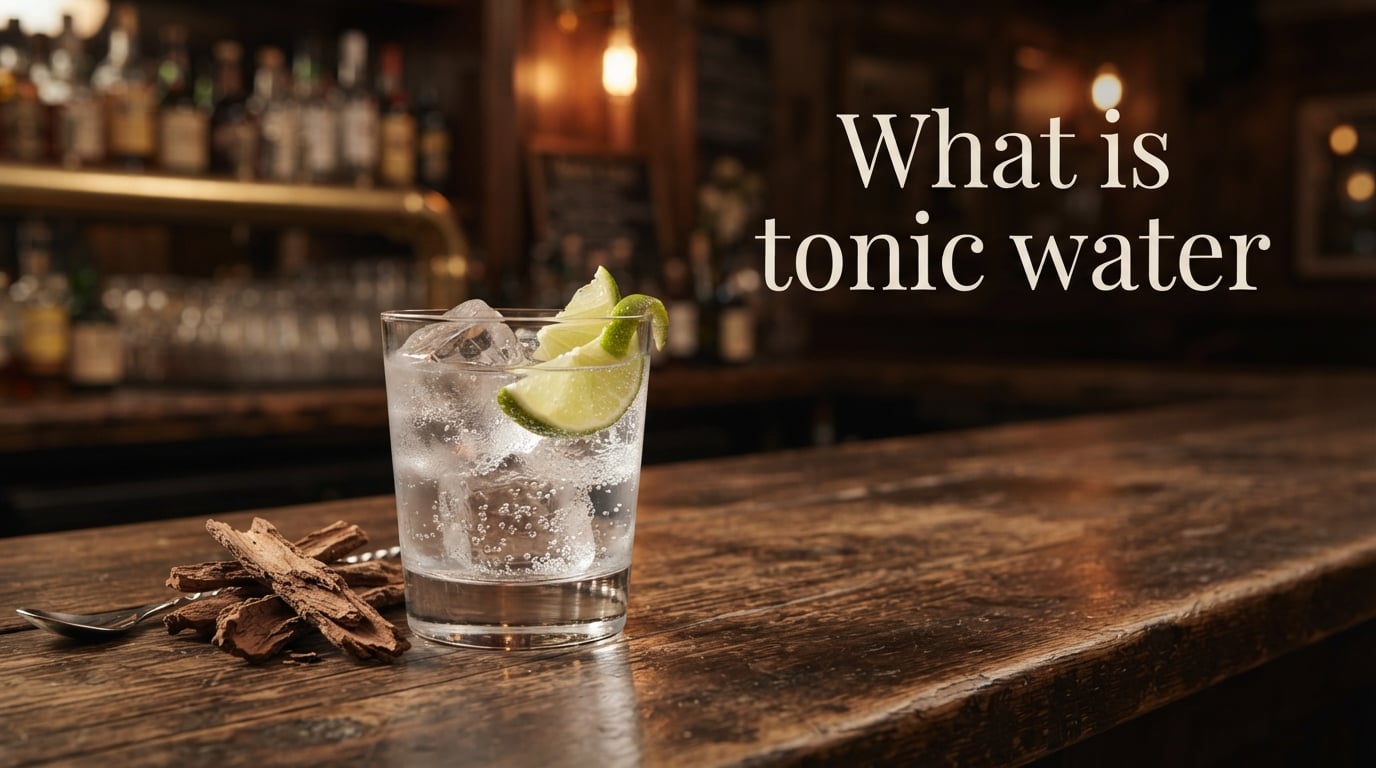
Tonic water is a carbonated soft drink flavored with quinine, a bitter compound that gives the beverage its signature taste. Most people first encounter it mixed with gin in a classic cocktail, yet few know the story behind that distinctive bitterness.
I spent a weekend reading through medical journals, FDA documents, and bartender forums to put together this complete guide. By the end, you’ll understand what tonic water actually is, where quinine comes from, and why this once-medicinal drink became a cocktail bar staple.
Table of Contents
What Is Tonic Water, Exactly?
Tonic water is a carbonated soft drink in which quinine is dissolved, and that single ingredient sets it apart from every other fizzy beverage on the shelf. The quinine delivers a bitter, slightly medicinal flavor that defines the drink’s character. Sugar, high-fructose corn syrup, or other sweeteners are added to balance that bitterness, and most recipes include citric acid and natural flavors for brightness.
Modern commercial tonic water contains only a tiny amount of quinine, well below therapeutic levels. The FDA limits quinine in tonic water to 83 parts per million, just enough to give the drink its distinctive taste without turning it into medicine. A typical 12 ounce bottle delivers around 32 to 33 grams of sugar, comparable to many mainstream sodas.
The drink typically comes in two main styles: regular and diet. Regular tonic water uses cane sugar or high-fructose corn syrup for sweetness. Diet versions swap in artificial sweeteners like aspartame or sucralose to slash the calorie count, though some drinkers notice a sharper quinine bite without sugar masking the bitterness.
The Role of Quinine in Tonic Water
Quinine is the heart of tonic water, and understanding it unlocks everything else about the drink. Quinine is a natural alkaloid extracted from the bark of the cinchona tree, an evergreen native to the Andes mountains of South America. Indigenous Quechua peoples first used cinchona bark to treat fevers, and Spanish colonizers brought the remedy back to Europe in the 17th century.
By the 1800s, quinine had become the standard treatment for malaria, a mosquito-borne disease that devastated tropical regions. British officials stationed in India needed an easier way to get their daily quinine dose, so they mixed the bitter powder with sugar, water, and gin. The result was far more palatable than straight quinine, and the gin and tonic was born.
Quinine has a fascinating scientific quirk: it fluoresces under ultraviolet light. Place a gin and tonic under a blacklight and you’ll notice an eerie blue glow, a little-known fact that sets it apart from other clear beverages. This fluorescence comes from quinine’s unique molecular structure and remains one of the most surprising facts about the drink.
The compound tastes intensely bitter, registering at around 1 to 2 on the bitter scale compared to caffeine’s 15. Our taste buds have specific bitter receptors that detect quinine, which is why some people are highly sensitive to its flavor. That sensitivity explains why some folks describe tonic water as “extremely bitter” while barely noticing it.
Where Tonic Water Came From: A Brief History
The history of tonic water reads like a medical thriller turned cocktail classic. British soldiers in 19th-century India had to take daily quinine doses to prevent malaria, and the medicine was famously unpleasant. Legend says they mixed it with sugar, lime, and gin to make it tolerable.
By 1858, Erasmus Bond patented a tonic water recipe in London. Schweppes began mass-producing it in the 1870s, and Indian tonic water became synonymous with the gin and tonic. The drink spread across the British Empire, reaching every corner where malaria and British troops intersected.
The original Indian tonic water was much more bitter than what we drink today, because quinine doses were higher. As modern antimalarial drugs replaced quinine prophylaxis, the quinine content in commercial tonic water dropped dramatically. Today’s versions carry just enough quinine for flavor, not therapy.
Around 50 years ago, premium tonic brands like Fever-Tree emerged, and bartenders began taking the mixer seriously. The craft cocktail movement helped revive interest in quality tonic water, and brands such as 1642 Tonics et Mixeurs now compete alongside classics like Schweppes and Canada Dry.
Tonic Water vs. Soda Water vs. Club Soda vs. Seltzer
Tonic water often gets lumped in with other carbonated waters, but the differences matter. The key distinction is quinine: tonic water contains it, while soda water, club soda, and seltzer do not.
Soda water is plain carbonated water with no added minerals or flavorings. Club soda is similar but typically has added minerals like potassium sulfate and sodium bicarbonate for a slightly saltier taste. Seltzer water is just water infused with carbon dioxide under pressure, nothing else added.
Tonic water, by contrast, carries quinine, sweetener, and often added flavors like lemon, lime, or botanicals. Those additions mean tonic water has significantly more calories and sugar than its plain-water siblings. If you’re counting calories or watching sugar intake, choosing soda water or seltzer over tonic makes a measurable difference.
| Drink | Quinine? | Added Sweetener? | Approx. Calories (12 oz) | Best For |
|---|---|---|---|---|
| Tonic Water | Yes | Yes (sugar or substitute) | 120 to 140 | Gin and tonic, vodka tonic |
| Soda Water | No | No | 0 | Mixed drinks, plain hydration |
| Club Soda | No | No | 0 | Mixed drinks, fizz without flavor |
| Seltzer Water | No | No | 0 | Hydration, mocktails |
If you’re exploring sparkling water options for workouts or daily hydration, seltzer and club soda deliver fizz without the sugar load of tonic water.
What Is Tonic Water Used For?
Tonic water is used primarily as a cocktail mixer, and the gin and tonic remains its most famous pairing. The drink works because gin’s botanical flavors, especially juniper, complement quinine’s bitterness. A classic gin and tonic uses about 1 part gin to 3 parts tonic, served over ice with a lime wedge.
Vodka tonic is the second most common cocktail, offering a cleaner, less botanical profile. Tequila and tonic has gained traction in recent years, and bartenders experiment with rum, mezcal, and even non-alcoholic spirits paired with premium tonic.
Espresso and tonic is a newer combination that sounds strange but works thanks to quinine’s bitterness balancing coffee’s roasted notes. Bartenders pour chilled espresso over tonic water with ice to create a foamy, layered drink that’s become a café menu staple.
Beyond cocktails, tonic water shows up in a few culinary applications. Chefs use it to add a bitter note to glazes and sauces, and some cooks poach fruit in tonic to bring a sweet-bitter edge to desserts. Batters made with tonic water create airy tempura-style fried foods because the carbonation adds lift.
Premium tonic brands like Fever-Tree, Q Mixers, and 1642 use higher quinine concentrations and natural sweeteners instead of high-fructose corn syrup. Bartenders on forums like Reddit consistently recommend upgrading to a premium brand. As one enthusiast put it, “Fever-Tree doesn’t ram quinine all in your face, has lemon thyme.”
Is Tonic Water Safe? Health Considerations
Tonic water is generally safe to drink in moderation, but a few health considerations deserve attention. First, the sugar content in regular tonic water can add up fast. A single 12 ounce bottle packs roughly 33 grams of sugar, more than a typical cola. Diet versions solve the calorie problem but trade sweeteners for quinine’s sharper bite.
Second, quinine interacts with several medications and medical conditions. People with myasthenia gravis should avoid tonic water entirely, as quinine can worsen muscle weakness. Patients on blood thinners or heart rhythm medications should consult their doctors, as quinine can affect heart rhythm in sensitive individuals.
Third, drinking tonic water will not prevent or treat malaria. The amount of quinine in commercial tonic is far too low to have any antimalarial effect. Modern antimalarial drugs are dramatically more effective, and relying on tonic water for malaria prevention is dangerous misinformation.
Some people drink tonic water for leg cramps, hoping quinine will help, but medical authorities no longer recommend it. The FDA banned prescription quinine for leg cramps in 1994 due to safety concerns, and the small amount in tonic doesn’t reach therapeutic levels anyway.
For most healthy adults, enjoying tonic water a few times a week poses no real risk. If you have specific health conditions, take medications, or notice unusual symptoms after drinking it, talk to your doctor.
Frequently Asked Questions
What does drinking tonic water do?
Tonic water hydrates and delivers a small amount of quinine, which gives the drink its bitter taste. Most people drink it as a cocktail mixer, especially with gin. Regular tonic also adds a meaningful amount of sugar to your diet, while diet versions avoid the calorie load.
Is club soda and tonic water the same thing?
No, club soda and tonic water are not the same. Club soda is plain carbonated water with added minerals and no flavor. Tonic water contains quinine, sweetener, and often botanical flavors. Tonic has around 120 calories per 12 ounce serving while club soda has zero.
Can you drink tonic water by itself?
Yes, you can drink tonic water by itself, and many people enjoy it over ice with a lime wedge. The bitter quinine flavor is more noticeable without alcohol to balance it, so some prefer diet tonic for a sharper taste or regular tonic for a sweeter profile.
Is it safe to drink tonic water daily?
For most healthy adults, drinking tonic water daily in normal amounts is generally safe. Watch your sugar intake if you choose regular tonic, and consult your doctor if you take heart medications or have conditions like myasthenia gravis that quinine can affect.
The Bottom Line
What is tonic water? It’s a carbonated soft drink built around quinine, the bitter alkaloid extracted from cinchona tree bark. The drink started as a malaria prophylactic in colonial India and evolved into one of the world’s most popular cocktail mixers.
Next time you pour a gin and tonic, you’ll know the quinine story behind that bitter bite. Try a premium brand like Fever-Tree, experiment with a vodka tonic, and notice the fluorescence trick under a blacklight. Tonic water is far more interesting than its reputation as “just a mixer” suggests.