
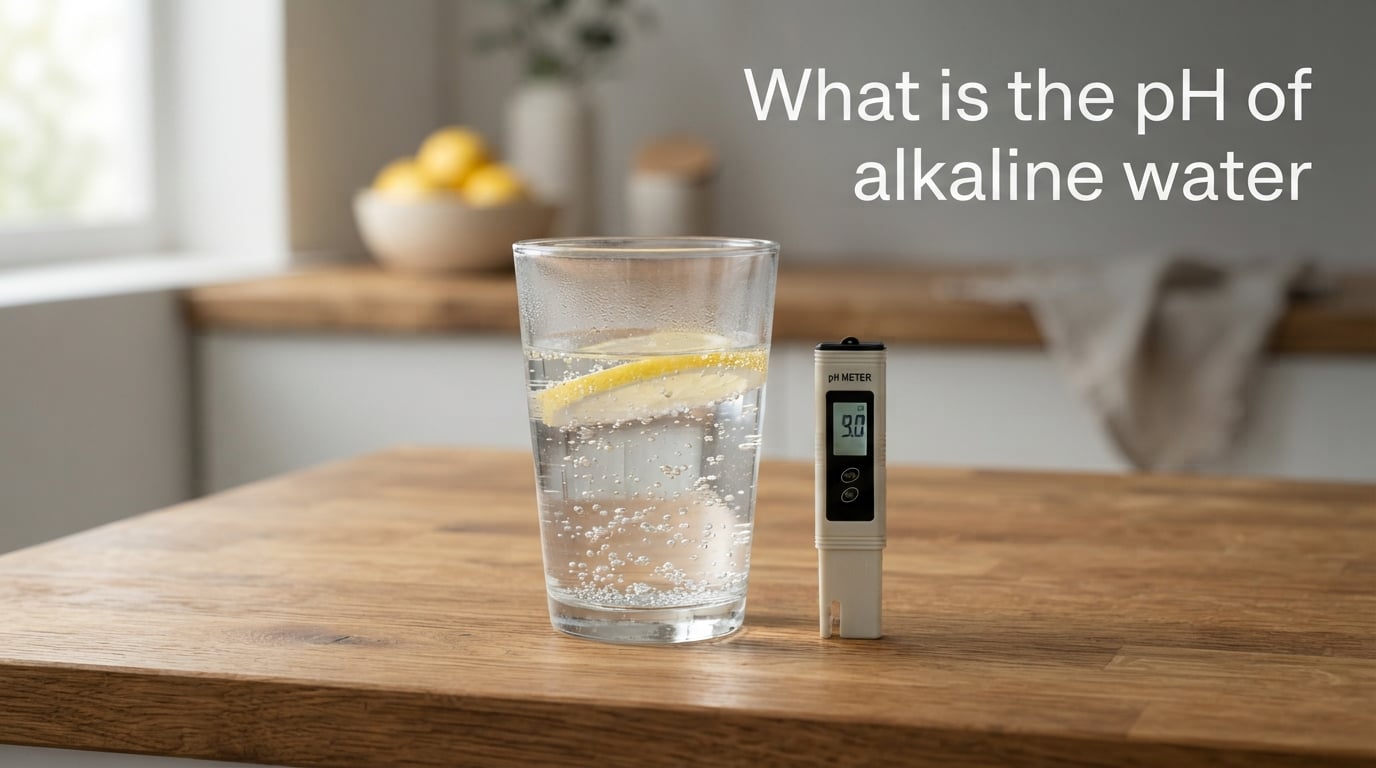
Alkaline water has a pH between 8.0 and 9.5, which sits higher than regular drinking water at a neutral pH of 7. If you’ve ever wondered what those numbers actually mean and whether alkaline water deserves the buzz, this guide walks you through the science, the claims, and the safety considerations. I’ve spent years reviewing mineral water data, and the pH question comes up more than any other.
Here’s what you’ll learn: how the pH scale works, what makes water “alkaline,” how it differs from tap water, what health claims hold up, and when to be cautious. Let’s get into it.
Table of Contents
What Is the pH of Alkaline Water?
Alkaline water is water that measures above 7 on the pH scale. Most products sold as alkaline water fall in the range of 8.0 to 9.5 pH, with 9.5 being the upper limit many commercial brands advertise. Some natural spring sources reach even higher, but bottled alkaline waters cluster tightly in that 8 to 9.5 window.
The Mayo Clinic defines alkaline water as water with a higher pH than plain tap water. The U.S. Environmental Protection Agency classifies drinking water as slightly alkaline when it falls in the 6.5 to 8.5 range. Anything above 8.5 sits firmly in the alkaline zone.
Common pH values you’ll see on bottles:
pH 8.0 – Lightly alkaline, the mildest level sold commercially
pH 8.5 – A popular middle-ground used by brands like Essentia
pH 9.0 – Standard for many ionizer machines at home
pH 9.5 – The highest level most brands market
Water pH above 10 is rare in consumer products because it starts to taste noticeably bitter and can irritate tissue.
How the pH Scale Works in Plain Language
The pH scale runs from 0 to 14 and measures how acidic or alkaline a solution is. A pH of 7 is neutral, anything below 7 is acidic, and anything above 7 is alkaline. The scale is logarithmic, which means each whole number jump represents a 10x change in concentration.
Here’s a quick way to picture it:
pH 0 – Battery acid
pH 2 – Lemon juice, stomach acid
pH 4 – Tomato juice, coffee
pH 7 – Pure water (neutral)
pH 8 – Seawater, baking soda solution
pH 10 – Milk of magnesia
pH 12 – Household ammonia
This logarithmic step matters. Alkaline water at pH 9.5 isn’t just slightly more alkaline than regular water at pH 7. It contains roughly 316 times fewer hydrogen ions.
How Alkaline Water Gets Its Higher pH
Alkaline water gets its elevated pH from alkaline minerals dissolved in it. The three minerals that do most of the work are calcium, magnesium, and potassium. These minerals release alkaline compounds that raise the water’s pH.
There are two main ways water becomes alkaline:
Natural Alkaline Water
Some spring water picks up minerals as it flows through rock formations like limestone, dolomite, and volcanic basalt. This is how brands like Fiji and some European mineral waters reach a naturally high pH. The minerals leach into the water over time, raising pH without any human intervention.
Artificially Alkalineized Water
Most bottled alkaline water gets its pH adjusted commercially. Manufacturers use one of two methods:
Electrolytic ionization – An electric current splits water into alkaline and acidic streams. The alkaline stream collects at the negative electrode.
Mineral additives – Calcium or magnesium compounds are added to filtered water to raise pH.
A home water ionizer works the same way as commercial machines. Distilled or filtered water passes over electrically charged plates that separate it into alkaline and acidic streams.
Alkaline Water vs Regular Tap Water
Regular tap water typically measures between 6.5 and 8.5 pH, depending on your region’s water source. Most U.S. municipal water sits between 7.0 and 8.0. The difference between alkaline water and tap water is the mineral profile more than the pH number itself.
Key differences:
Mineral content – Alkaline water contains more calcium and magnesium than most tap water
Taste – Higher pH water often tastes smoother or slightly sweeter
pH stability – Buffered alkaline water resists pH change better than plain water
Cost – Bottled alkaline water costs 3-10x more than tap water
From a chemistry standpoint, the difference in mineral content likely matters more than the pH number alone. As Healthline notes, “pH alone isn’t enough to impart substantial alkalinity to water” – buffering capacity and mineral content both play a role.
Health Claims and What the Evidence Says
Proponents claim alkaline water helps with acid reflux, hydration, bone density, and even slows aging. The scientific evidence is mixed, and I want to break it down honestly.
Where the evidence is strongest:
Acid reflux – A small 2012 study found alkaline water with pH 8.8 deactivated pepsin, the enzyme that triggers reflux symptoms
Hydration after exercise – Some research suggests alkaline water may rehydrate better than standard water in athletes
Bone health markers – Limited studies show reduced calcium loss markers in women who drank alkaline water
Where the evidence is thin or absent:
Detoxification – Your kidneys and liver handle toxins; alkaline water doesn’t speed this up
Anti-aging – Mouse studies show promise but human data doesn’t exist yet
Cancer prevention – Alkaline diets and water haven’t been shown to prevent or treat cancer
Harvard Health and Mayo Clinic both point out that your body tightly regulates blood pH between 7.35 and 7.45. Drinking alkaline water won’t shift this number in healthy people. The benefits most likely come from the added minerals, not the pH itself.
Safety, Side Effects, and Who Should Avoid It
For most healthy adults, drinking alkaline water occasionally is safe. But there are legitimate concerns to know about.
Common side effects:
Reduced stomach acid – If you drink a large amount right before meals, your stomach’s natural acidity drops, which can interfere with digestion
Mineral imbalance – Long-term overuse may cause too much calcium or magnesium
Taste aversion – Higher pH water can taste flat or bitter to some people
Who should be cautious:
Kidney disease patients – Impaired kidneys can’t filter excess minerals efficiently. Mayo Clinic specifically warns about hyperkalemia risk for people with kidney problems
People on acid-reducing medications – Stomach acid already reduced by drugs like omeprazole creates extra concerns
Anyone with alkalosis history – Rare, but high alkaline intake can raise blood pH too much
If you feel nauseated, queasy, or have stomach cramps after drinking alkaline water, you may have overwhelmed your stomach acid. Try drinking it between meals or switching to plain water.
Testing the pH of Your Water at Home
Want to know where your water actually falls on the pH scale? You have three reliable options for home testing.
Litmus paper strips – Cheap and quick. Dip a strip into a water sample, wait a few seconds, and match the color to a chart. Accuracy is roughly within 0.5 pH units.
Digital pH meters – More precise (within 0.1 pH), but cost more and need occasional calibration with buffer solution. A good home meter runs around $20 to $40.
Liquid test kits – Add drops to a sample and watch for color change. They’re more accurate than strips but slower.
For testing tap water, collect a sample and test within 30 minutes – pH can shift once water leaves the pipes. For alkaline water purchased from a store, the listed pH should hold for the bottle’s shelf life.
Frequently Asked Questions
Is 9.5 pH water alkaline?
Yes. Water with a pH of 9.5 is alkaline because anything above 7 on the pH scale qualifies as alkaline. The 9.5 level represents the upper end of most commercial alkaline water products and is well above neutral tap water at pH 7.
What is the disadvantage of drinking alkaline water?
The main disadvantages include reduced stomach acid if you drink large amounts right before meals, potential mineral imbalances from long-term overuse, and specific risks for people with kidney disease. For most healthy people, moderate alkaline water consumption is safe, but regular overuse may cause digestive issues or mineral buildup over time.
Why do I feel weird after drinking alkaline water?
Feeling nauseated, queasy, or experiencing stomach cramps after alkaline water usually means your stomach acid has been temporarily overwhelmed. This happens most often when people drink large amounts on an empty stomach. Try drinking alkaline water between meals instead of right before eating, or cut back on the amount you drink.
Why do Japanese drink alkaline water?
The Japanese have long consumed alkaline water through natural mineral springs, with the practice dating back centuries. In the 1960s, researchers began studying electrolyzed alkaline water in Japan, leading to the development of home ionizers. Japanese culture links hydration with both health and longevity, which makes alkaline water an attractive option there.
The Bottom Line on Alkaline Water pH
Alkaline water measures between 8.0 and 9.5 on the pH scale, well above the neutral 7.0 of regular drinking water. The higher pH comes from dissolved minerals, most often calcium, magnesium, and potassium, whether picked up naturally from rock or added through ionization or mineral treatment.
For most healthy people, drinking alkaline water in moderation is safe. The strongest evidence supports mild benefits for acid reflux and post-exercise hydration. If you have kidney disease or take acid-reducing medications, talk to your doctor first. Otherwise, what really matters more than the pH number is the mineral content and your own hydration habits. Whether you choose tap, spring, or alkaline water, drinking enough fluids every day is what actually keeps your body running well.