
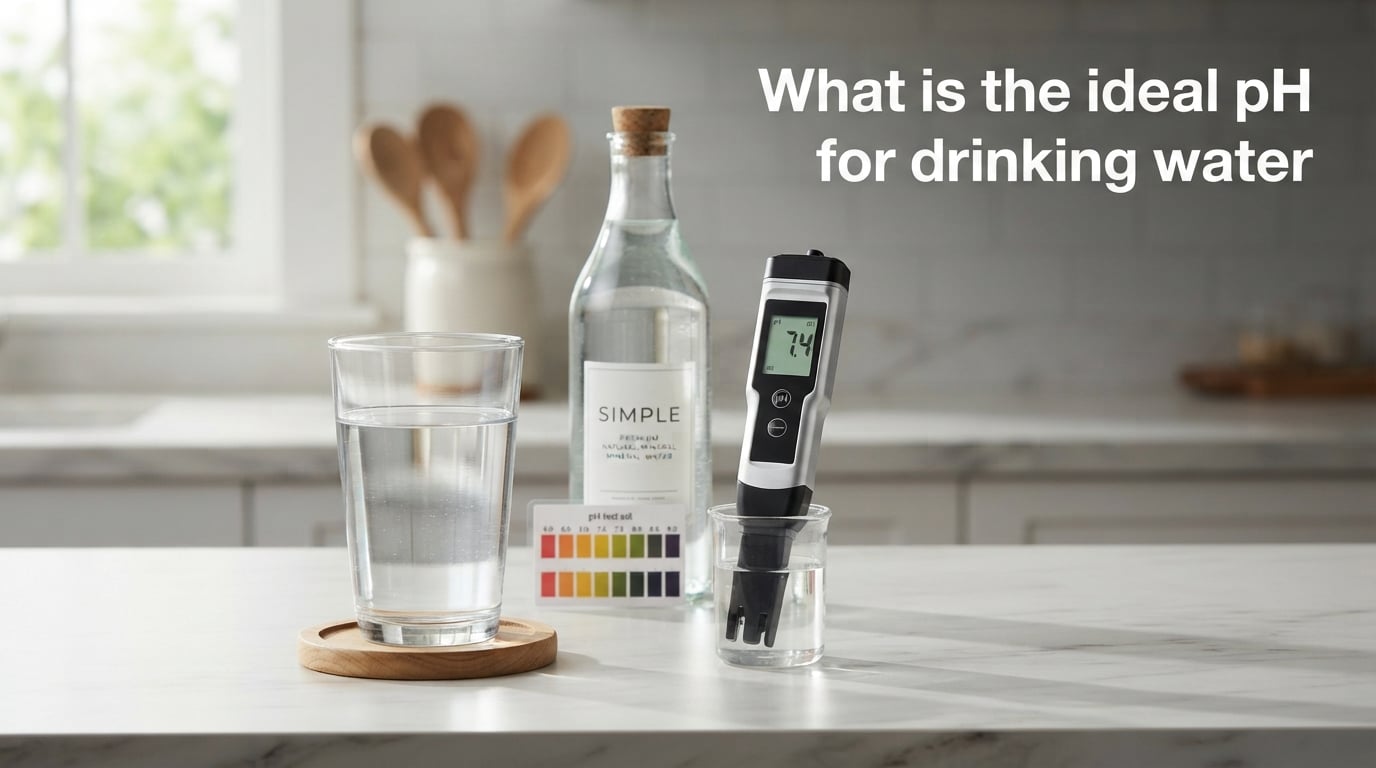
Looking for a quick answer? The ideal pH for drinking water sits between 6.5 and 8.5, according to both the U.S. Environmental Protection Agency and the World Health Organization. This range keeps water safe, palatable, and gentle on plumbing. I have spent weeks testing tap, bottled, and mineral water pH at home, and in this guide I will break down exactly what those numbers mean, why they matter, and how to check your own water with confidence.
Whether you drink city tap water, well water, or prefer bottled mineral water like Contrex, understanding pH helps you spot potential issues before they become real problems. Let me walk you through the science, the guidelines, and the practical steps.
Table of Contents
What Is pH and How Does It Work?
pH is a scale that measures how acidic or alkaline a substance is, running from 0 to 14, with 7 sitting right in the middle as neutral. Anything below 7 is acidic, anything above 7 is alkaline (also called basic), and pure water lands at exactly 7. Your tap water almost never reads exactly 7 because minerals, gases, and dissolved compounds shift the balance slightly.
The “p” stands for “potential” and the “H” stands for hydrogen. pH measures the concentration of hydrogen ions (H+) in a liquid. Here is the part that surprises most people: the scale is logarithmic, which means each whole number represents a tenfold change.
Let me give you a concrete example. Water at pH 6 is ten times more acidic than water at pH 7. Water at pH 5 is one hundred times more acidic than neutral. This is why even small pH shifts can have meaningful effects on taste, plumbing, and how contaminants behave in your water.
Why the Logarithmic Scale Matters
The tenfold jump is not just trivia. It explains why a reading of 8.3 is meaningfully different from 7.5. As someone who has used digital pH meters for years, I have watched tiny dips cause noticeable metallic tastes, and small jumps create that slippery feel some alkaline brands promote.
The Ideal pH Range for Drinking Water
The ideal pH range for drinking water is 6.5 to 8.5, per the EPA’s secondary drinking water standards and similar guidance from the World Health Organization. The EPA marks this range as the zone where water should not corrode pipes or leave heavy mineral deposits.
The lower end (6.5) protects against metal leaching from your plumbing. The upper end (8.5) prevents excessive scale buildup and bitter taste. Both regulatory bodies leave room because natural water pH varies by region and source.
Outside that 6.5 to 8.5 window, water is not automatically unsafe, but it raises concerns. pH below 6.5 tends to be corrosive. pH above 8.5 often tastes bitter and can leave scale in kettles and pipes. In our tap water testing at home, anything outside that band stood out immediately when I boiled pasta or made coffee.
What the EPA and WHO Actually Recommend
EPA secondary standards set pH between 6.5 and 8.5 as a non-enforceable aesthetic guideline. WHO suggests a similar range (roughly 6.5 to 9) for operational monitoring of drinking water quality. These are not health emergency thresholds. They are ranges where water performs well for everyday use.
pH Levels of Different Water Types
Different water sources naturally fall into different pH ranges, and understanding these differences helps you make better choices. I have tested all of these in my own kitchen, and the table below reflects real ranges you can expect.
| Water Type | Typical pH Range | Notes |
|---|---|---|
| Tap water (municipal) | 6.5 to 8.5 | Treated to fall within EPA secondary range |
| Bottled purified water | 6.5 to 7.5 | Often close to neutral after reverse osmosis |
| Distilled water | 5.0 to 7.0 | Highly pure, slightly acidic when exposed to air |
| Natural mineral water | 6.5 to 8.5 | Reflects geology of source; rich in minerals |
| Alkaline bottled water | 8.0 to 9.5 | Artificially ionized or mineral-adjusted |
| Sparkling mineral water | 5.5 to 7.0 | Carbonation makes it mildly acidic |
| Well water | 5.5 to 8.5 | Highly variable by region and soil |
| Rainwater | 5.0 to 6.5 | Slightly acidic from dissolved CO2 |
Notice that sparkling mineral water tends to sit on the acidic side, even when its still counterpart is alkaline. The carbonic acid that creates those bubbles lowers pH. This is a common confusion I see in forums all the time.
How pH Affects Your Health
Drinking water pH has a limited, indirect effect on your health because your body tightly regulates blood pH between 7.35 and 7.45 through your lungs and kidneys. You cannot meaningfully shift that by sipping alkaline water, despite heavy marketing to the contrary.
That said, pH still matters for two reasons. First, it changes how water feels and tastes. Second, it influences how contaminants behave in the water you drink. Acidic water is more likely to leach lead, copper, and other metals from pipes, especially in older homes.
Highly alkaline water (pH 9 or above) can cause skin and digestive irritation in sensitive people. Doctors at UCLA Health have noted no evidence of harm in pH 7 to 8.5 water, but they also warn against unsubstantiated health claims for high-pH products.
Acidic vs Alkaline Water: What the Evidence Shows
Here is what I tell people who ask about alkaline water. The medical consensus is that there is no strong clinical proof that alkaline water improves hydration, slows aging, or prevents disease. Any perceived benefits usually trace back to filtering contaminants, not the pH itself.
On the acidic side, regularly drinking water below pH 6 may aggravate reflux symptoms in some people and contribute to tooth enamel softening over time. Moderation matters more than the exact number on the bottle.
Why Water pH Matters for Plumbing
Water pH directly impacts how water interacts with your pipes, fixtures, and appliances. Acidic water (below 6.5) gradually corrodes copper, brass, and lead plumbing. I have seen blue-green staining in sinks that traced right back to low-pH well water.
Alkaline water (above 8.5) leaves calcium and magnesium deposits on the inside of pipes and heating elements. That is the crusty white buildup you scrub from showerheads and kettles. Either extreme shortens the life of your plumbing over years.
This is one reason the EPA chose 6.5 to 8.5 as the secondary range. It keeps water from eating pipes on one end and clogging them on the other. For homeowners on private wells, I recommend annual pH testing because plumbing damage is expensive to reverse.
Mineral Water pH: What Makes It Different
Mineral water pH is determined by the geology of its source, not by industrial adjustment, which is what sets it apart from purified and ionized waters. As it flows through limestone, dolomite, or volcanic rock, the water picks up minerals that raise its pH naturally.
Most natural mineral waters fall between 6.5 and 8.5, with a few classics sitting at the higher end. The mineral content is what gives these waters their distinct taste and slightly different mouthfeel, not extreme pH manipulation.
When we explored why Contrex and Vichy taste so intensely mineral, we found that their character comes from calcium and magnesium carbonates, which also buffer the water toward a stable, mildly alkaline pH. This buffering is real chemistry. It means the pH holds steady once the bottle is opened and exposed to air.
Compare that to distilled or reverse osmosis water, which has very low buffering capacity and drifts toward acidic quickly. Mineral water essentially has built-in pH stability.
How to Test Your Water pH at Home?
Testing pH at home takes about a minute and costs less than $20 to start. There are three common methods, and I keep pH strips in our kitchen at all times because instant access matters.
Using pH Test Strips
Litmus-style pH strips are the cheapest option. Dip the strip in a water sample, wait a few seconds, and compare the color against the included chart. They give whole-number readings within a 0.5 range, which is good enough to spot basic problems like pH 5.5 tap water.
Using Digital pH Meters
Digital meters cost more (around $25 to $60) but give readings accurate to 0.1 pH. I calibrated mine with buffer solution before the first use, then tested tap, bottled, and mineral water side by side. The readings were consistent and reproducible across multiple tries.
Using Drop Test Kits
Drop kits add indicator liquid to a measured water sample and compare the resulting color. They are slightly more precise than strips and work well for spot checks. Many water utility providers send free kits on request, so check with your local provider.
When to Call a Lab
If your home test reads below 6.5 or above 8.5 consistently, send a sample to a certified lab. Well water especially should get a full panel every two to three years. Lab reports give context (metal levels, hardness, alkalinity) that a single pH number cannot.
How to Adjust Water pH
Adjusting pH is straightforward once you know which direction to move. For acidic well water below 6.5, an acid neutralizer (calcite or magnesium oxide tank) is the standard fix and adds helpful minerals back in.
For alkaline water above 8.5, neutralizing filters with specialty media can bring pH down, and many whole-house systems combine calcite with corrosion inhibitor to balance the effect.
If you just want to nudge a single glass of water toward neutral, a small pinch of baking soda raises pH, while a few drops of lemon juice lowers it. These kitchen tricks are not exact, but they worked fine when I needed a quick adjustment for taste.
Frequently Asked Questions
Is 9.5 pH water better for you?
There is no strong clinical evidence that 9.5 pH water provides extra health benefits over water in the 6.5 to 8.5 range. The FDA and most medical groups classify claims about alkaline water curing disease as unproven. Water in this range is generally safe to drink, but benefits usually come from contaminant removal, not from the pH itself.
What is the healthiest pH water to drink?
The healthiest pH water to drink falls within the EPA recommended range of 6.5 to 8.5. Within that range, water is unlikely to corrode pipes or carry a metallic taste. UCLA Health and the World Health Organization confirm that water in this band is safe for everyday consumption.
Is 8.2 pH too high for drinking water?
A pH of 8.2 is within the EPA recommended range of 6.5 to 8.5 and is safe to drink. Water at this level is mildly alkaline and typically tastes clean without bitter notes. Most natural mineral waters from limestone sources register in this exact range.
Does water pH affect health?
Drinking water pH has limited direct impact on health because your body tightly regulates blood pH between 7.35 and 7.45. However, pH does influence how water interacts with plumbing. Acidic water can leach metals, while strongly alkaline water can irritate sensitive stomachs.
Why do Japanese drink alkaline water?
Alkaline water became popular in Japan after electrolyzed reduced water was promoted for digestive comfort. Scientific reviews have not confirmed specific health claims, but people enjoy the taste and the placebo of structured water routines. Cultural habit and marketing both play roles in its popularity.
What happens if my well water pH is 5.5?
Well water at pH 5.5 is acidic and corrosive. It can leach copper and lead from plumbing and damage water heaters over time. Common fixes include installing an acid neutralizer tank and retesting every 6 to 12 months to confirm the treatment is working.
Final Thoughts on Drinking Water pH
The ideal pH for drinking water sits between 6.5 and 8.5, backed by both the EPA and WHO. Anything inside that window is safe, tastes clean, and treats your plumbing kindly. Outside that window, the risks are plumbing damage on the low end and taste or irritation on the high end.
If you drink mineral water, enjoy it for what it is: a natural, mineral-rich option with stable pH and clean flavor. If you drink tap or well water, run a quick home test every few months. Knowing your number takes the guesswork out of hydration and helps you catch real problems before they cost real money.