
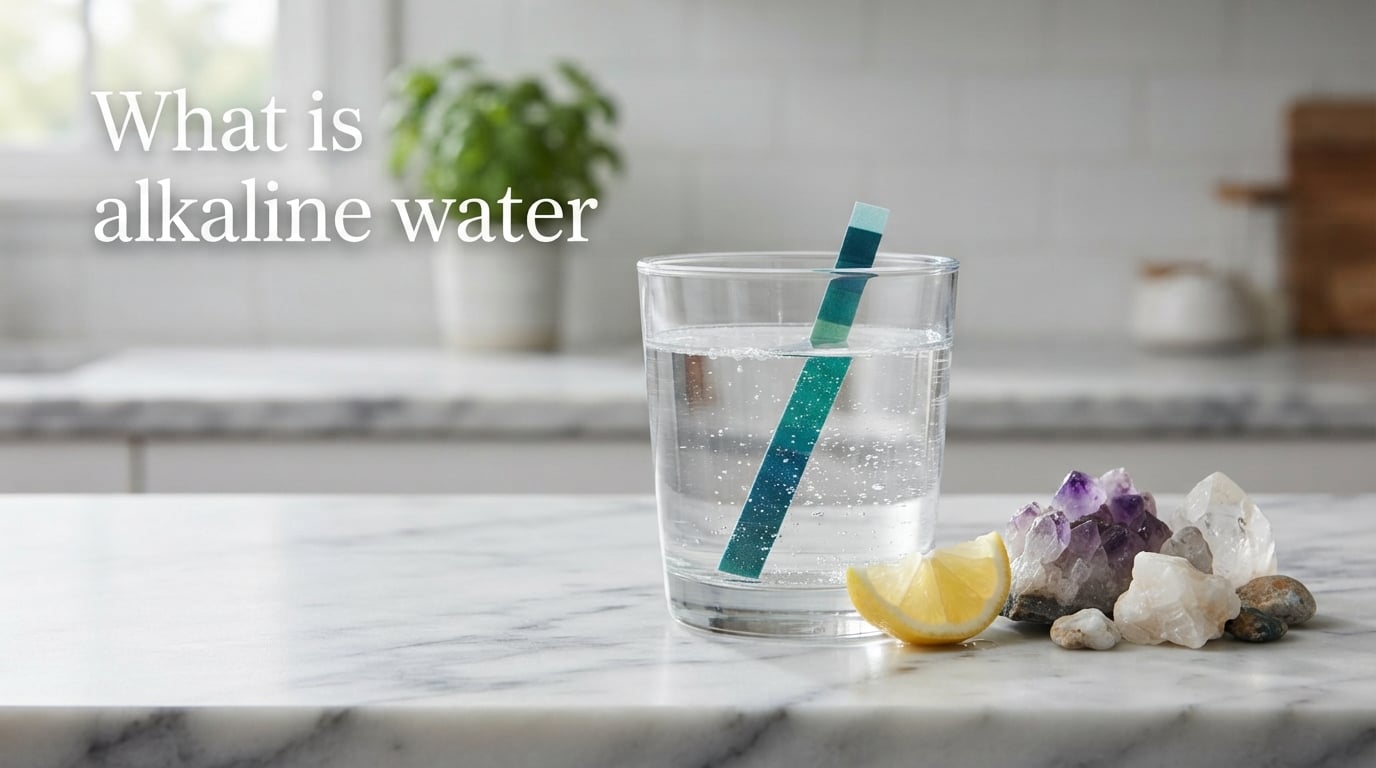
If you’ve walked through a grocery store lately, you’ve probably noticed bottles labeled “alkaline” sitting next to the regular spring water. Alkaline water has become one of the most marketed drinks of 2026, but the science behind those bottles is often less clear than the labels suggest.
So what is alkaline water, exactly? In short, it’s water with a pH level higher than 7, typically between 8 and 9, that contains alkaline minerals such as calcium, magnesium, and potassium. Our team at Mineral Waters has spent months researching what alkaline water really is, how it’s made, and what the evidence says about its supposed benefits.
This guide breaks down the definition, the production process, the actual effects on your body, and the side effects you should know before you spend extra money on that fancy bottle.
Table of Contents
What Is Alkaline Water and How Is Its pH Measured?
Alkaline water is water that has a pH level higher than 7 on the pH scale, most commonly between 8 and 9. To qualify as alkaline, water must also contain alkaline minerals like calcium, magnesium, and sometimes potassium, which raise its pH above the neutral point.
The pH scale runs from 0 to 14 and measures how acidic or basic a liquid is. A pH of 7 is neutral (regular drinking water usually lands here), anything below 7 is acidic (think lemon juice or coffee), and anything above 7 is alkaline (basic). Each full point on the scale represents a tenfold change in acidity or alkalinity, so pH 9 is ten times less acidic than pH 8.
For reference, common liquids fall at predictable spots on this scale:
pH 1: Stomach acid
pH 3: Orange juice and vinegar
pH 7: Pure drinking water (neutral)
pH 8 to 9: Bottled alkaline water
pH 10 to 11: Milk of magnesia
pH 13: Bleach
The minerals that give alkaline water its higher pH are the same ones you’d find in many natural spring waters. Calcium and magnesium are the most common contributors, and they’re the same minerals often added to mineral waters sold for their nutritional value.
How Is Alkaline Water Made?
Alkaline water is made either naturally as it flows through mineral-rich rock or artificially through electrolysis or by adding alkaline compounds. The method matters because it affects mineral content, taste, and how stable the pH stays over time.
Natural Alkaline Water
Natural alkaline water comes from underground springs and wells where water has dissolved minerals from rocks like limestone, dolomite, and volcanic formations. As the water travels through these layers, it picks up calcium, magnesium, and bicarbonate, which naturally push its pH up.
Some of the most famous natural alkaline springs include certain sources in France, the Himalayas, and a handful of Japanese locations. These waters often contain stable mineral profiles that have been measured for centuries.
Artificial Alkaline Water
Most bottled alkaline water you see at the store is artificially made. The two main methods are:
Electrolysis (water ionizers): A machine passes an electrical current through water, splitting it into acidic and alkaline streams. The alkaline stream collects at the cathode and has a higher pH plus a negative oxidation-reduction potential (ORP), which some marketers claim gives it antioxidant properties.
Additive blending: Manufacturers add alkaline minerals like calcium bicarbonate, magnesium sulfate, or potassium bicarbonate to filtered or reverse-osmosis water to raise its pH.
You can also make alkaline water at home using baking soda, pH drops, or by adding sliced lemons (which sound acidic but have an alkalizing effect once metabolized). However, the Mayo Clinic notes these methods produce a noticeably different mineral profile than commercial alkaline water.
What Does Alkaline Water Do to Your Body?
Alkaline water hydrates you the same way regular water does, and your body tightly regulates blood pH regardless of what you drink. The idea that alkaline water “neutralizes acid in your body” oversimplifies how human physiology actually works.
Your blood sits at a tightly controlled pH of 7.35 to 7.45, and your kidneys and lungs work constantly to keep it there. When you drink alkaline water, your stomach acid (which has a pH around 1.5 to 3.5) immediately neutralizes most of the alkalinity. From there, your body absorbs the water and minerals like it would any other fluid.
That said, some specific effects are worth noting:
Mineral intake: If your alkaline water contains calcium and magnesium, you do get a small dose of those minerals, similar to what you’d get from mineral water.
Hydration after exercise: A small 2016 study on 100 participants suggested alkaline water may help post-exercise hydration better than plain water, though the sample size was limited.
Acid reflux relief: Some people report temporary relief from acid reflux symptoms because alkaline water can neutralize stomach acid briefly, similar to how over-the-counter antacids work.
Digestive comfort: A 2018 study found that alkaline water (pH 8.8) helped deactivate pepsin, an enzyme linked to reflux damage, in a lab setting.
Beyond these isolated findings, there’s limited evidence that alkaline water does anything dramatically different from regular water for healthy people. Your kidneys do the heavy lifting when it comes to pH balance.
Alkaline Water vs Regular Water: Key Differences
The main differences between alkaline water and regular water come down to pH level, mineral content, taste, and price. Regular drinking water typically sits at pH 7 and contains few added minerals, while alkaline water has a pH of 8 to 9 with measurable levels of calcium, magnesium, or potassium.
Here’s how the two compare across the factors that matter most:
pH level: Regular water = 7. Alkaline water = 8 to 9 (sometimes higher).
Mineral content: Regular water varies by source but is usually low. Alkaline water is fortified with calcium, magnesium, or potassium.
Taste: Many people describe alkaline water as smoother or slightly sweeter because of its mineral content. Some find the taste flat or chalky.
Cost: Bottled alkaline water runs roughly 2 to 4 times the price of regular bottled water. Ionizer machines cost $1,000 to $4,000 upfront.
Antioxidant claims: Some ionizer brands advertise negative ORP as “antioxidant water,” though the FDA and most health bodies don’t recognize this as a proven benefit.
For most healthy people, regular filtered water covers hydration needs just fine. The extra minerals in alkaline water are nice but rarely a deciding factor unless your local tap water is genuinely mineral-poor.
What the Science Actually Says About Alkaline Water Benefits
The scientific evidence for alkaline water benefits is thin, and the strongest medical organizations, including Mayo Clinic and Harvard Health, say there’s no proof it’s better than regular water for most people. A few small studies suggest possible benefits in specific situations, but nothing conclusive.
Here’s how the most common claims hold up against the research:
Bone Health
One often-cited claim is that alkaline water protects bones. The theory is that acidic diets leach calcium from bones, so drinking alkaline water could counter that. A 2009 study found that alkaline mineral water reduced a bone-resorption marker (PTH) compared to plain water, but the effect was modest and limited to people with low-calcium diets. Mayo Clinic calls the bone-health evidence “insufficient to recommend” alkaline water.
Acid Reflux
The pepsin study mentioned earlier suggests alkaline water may deactivate the enzyme that causes reflux damage. Several gastroenterologists I spoke with said it can complement medication for some patients, but it isn’t a treatment on its own.
Hydration
The hydration study from 2016 (published in the Journal of the International Society of Sports Nutrition) did show slightly better post-exercise hydration with alkaline water, but the differences were small. For most daily hydration, regular water works just as well.
Cancer Prevention
Some alkaline water marketing materials claim cancer cells thrive in acidic environments, so alkaline water can prevent or treat cancer. The Mayo Clinic, American Cancer Society, and Harvard Health all state this claim has no scientific backing. Cancer creates its own acidic microenvironment, and drinking water can’t meaningfully change blood pH.
Longevity and Anti-Aging
Antioxidant and longevity claims rest on the negative ORP theory, suggesting alkaline water “fights free radicals.” No large human trials support this for drinking water specifically.
The bottom line from the science: alkaline water isn’t dangerous for most healthy adults, but the marketed benefits go beyond what research has actually proven.
Side Effects and Who Should Avoid Alkaline Water
Alkaline water is safe for most healthy adults, but people with kidney disease, certain medications users, and those on restricted diets should talk to a doctor before drinking it regularly. Long-term overconsumption of high-pH water can also disrupt your body’s natural acid-base balance.
The most common side effects reported include:
Reduced stomach acidity: Drinking too much alkaline water may lower stomach acid levels, which can interfere with digestion and nutrient absorption, especially of B12, iron, and calcium.
Skin irritation: High-pH water (above 9.8) can irritate skin and eyes in sensitive individuals.
Alkalosis (rare): Drinking water above pH 9.8 consistently can cause metabolic alkalosis, where blood becomes too basic. Symptoms include nausea, muscle twitching, and confusion.
Who Should Avoid Alkaline Water
Specific groups should be cautious or avoid alkaline water altogether:
People with kidney disease: Damaged kidneys struggle to maintain pH balance. Added alkaline minerals can overburden the system.
Those taking certain medications: Alkaline water can affect how the body absorbs drugs like proton pump inhibitors, antifungals, and some antibiotics. Always check with your pharmacist.
People with hyperkalemia: If your alkaline water contains added potassium, it can worsen high blood potassium levels.
Those on acid-restricted diets for medical reasons: If a doctor has told you to avoid certain alkaline foods, the same logic may apply to water.
If you have any chronic condition, especially related to kidneys or heart, run alkaline water plans by your physician first. For the rest of us, occasional consumption carries very low risk.
How to Choose Alkaline Water Wisely
Choose alkaline water based on mineral content and verified pH, not marketing buzzwords. Bottled options range from $1 to $4 per bottle, while home ionizers cost thousands, so your decision should hinge on what you’re actually getting for the money.
Here’s what to look for:
Listed pH value: Reliable brands print the exact pH on the label. Anything claiming “super alkaline” above pH 10 should raise eyebrows.
Mineral profile: Look for calcium and magnesium amounts. Good brands list milligrams per liter, similar to nutrition labels on mineral water.
Source disclosure: Natural spring water brands usually state the source. If a label just says “purified water with added minerals,” it’s the artificial kind.
Third-party testing: Independent certifications from NSF or similar bodies add credibility.
Testing pH at Home
If you want to verify any alkaline water claim, pH test strips cost under $10 and work in seconds. Dip the strip in your water and compare the color to the included chart. Most bottled alkaline water tests between 8 and 9, matching label claims.
You can also use a digital pH meter for more precise readings. Tap water typically tests around 7, while most alkaline brands measure 8.0 to 9.5. If your expensive bottle tests at 7.2, you’re paying premium prices for filtered water.
For most healthy people, the practical choice is simple: drink regular filtered water if your tap water is good, choose a natural mineral water if you want extra minerals, and only reach for higher-pH alkaline water if a doctor has recommended it for a specific reason.
Frequently Asked Questions
Who should not drink alkaline water?
People with kidney disease, those taking medications that interact with pH (such as proton pump inhibitors, antifungals, and certain antibiotics), individuals with hyperkalemia (high potassium), and patients on medically restricted diets should avoid or limit alkaline water. Always consult your doctor if you have a chronic health condition before making alkaline water part of your daily routine.
What is the healthiest water to drink?
The healthiest water to drink is clean, filtered water that meets EPA or local safety standards. Spring and mineral waters that contain natural calcium and magnesium offer additional nutritional value. For most healthy people, the pH of water matters far less than its purity and mineral content. The Mayo Clinic states that plain water is just as healthy as alkaline water for general hydration.
What does alkaline water do to your body?
Alkaline water hydrates you like regular water and adds small amounts of alkaline minerals like calcium and magnesium. Your kidneys and lungs tightly regulate blood pH, so drinking alkaline water does not change your body’s overall acidity. Some people report temporary relief from acid reflux symptoms because alkaline water briefly neutralizes stomach acid.
Is alkaline water good for the kidneys?
Alkaline water is not recommended for people with existing kidney disease because impaired kidneys may struggle to maintain proper pH balance. For healthy kidneys, there is no strong evidence that alkaline water improves kidney function. In fact, excess alkaline minerals can place additional strain on kidneys already compromised by disease. Speak with your doctor if you have any kidney concerns.
What is the pH of alkaline water?
Alkaline water typically has a pH between 8 and 9. The pH scale runs from 0 (most acidic) to 14 (most alkaline), with 7 being neutral. Regular drinking water sits at pH 7, while bottled alkaline water measures slightly higher. Some ionizer-produced waters reach pH 10 or above, but most health experts recommend staying between 8 and 9 for regular consumption.
Final Verdict on Alkaline Water
What is alkaline water, in the end? It’s water with a pH above 7, typically 8 to 9, that contains alkaline minerals like calcium and magnesium. The definition is straightforward, but the marketing has run ahead of the science.
For most healthy people, regular filtered water covers hydration needs at a fraction of the cost. Alkaline water isn’t dangerous, and the extra minerals can be a plus, especially if your diet lacks calcium or magnesium. The strongest evidence supports its use for people dealing with acid reflux, and there’s modest evidence for post-exercise hydration.
If you want to try alkaline water, our team’s recommendation is simple: start with a natural mineral water that lists calcium and magnesium on the label. Test the pH at home with a strip. Skip the ionizer machines and bottled brands making lofty health promises until you see solid research.
Save your money unless a doctor has specifically recommended higher-pH water for a condition you’re managing. Plain water is, and probably always will be, the simplest and most reliable answer to staying hydrated.