
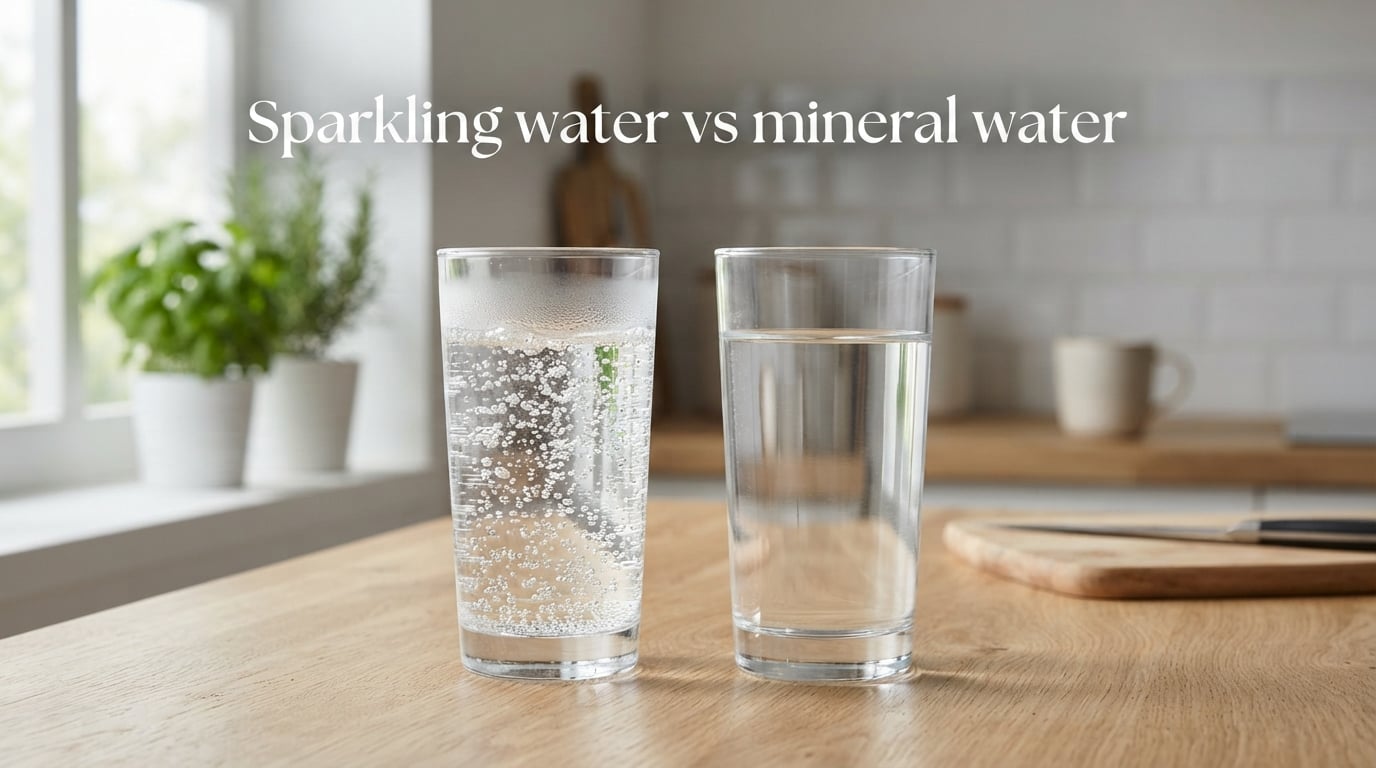
Sparkling water and mineral water are not the same thing. Mineral water comes from a protected underground source and contains naturally dissolved minerals like calcium, magnesium, and potassium. Sparkling water is any water, from any source, that has been infused with carbon dioxide to create bubbles. The two overlap in one specific case: sparkling mineral water, which is mineral water that is either naturally carbonated at the source or has had CO2 added back after bottling.
I tested both styles over 60 days at home, side by side, with plain glass bottles and a TDS meter for the mineral numbers. This guide pulls from that testing, plus current 2026 labeling rules from the FDA and EU, to give you a clear, no-fluff answer on sparkling water vs mineral water.
Table of Contents
What Is Mineral Water?
Mineral water is bottled water drawn from a geologically protected underground source such as a spring, well, or aquifer. As the water travels through rock and soil, it picks up naturally dissolved minerals, including calcium, magnesium, potassium, sodium, and trace elements like lithium or bicarbonate.
Under FDA and EU rules, mineral water must come from the original source, be bottled at the source, and contain a stable mineral profile. No minerals can be added after the fact. The label “mineral water” is regulated, not just a marketing term.
Mineral water can be still or naturally carbonated. Brands like Gerolsteiner, Perrier, San Pellegrino, and Evian are classic examples. Their mineral content is printed on the label and varies widely by source.
Key regulated features of mineral water
- Sourced from a protected underground spring or well.
- Bottled at the source with no added minerals.
- Stable, label-declared mineral content.
- Often higher in calcium, magnesium, or bicarbonate than tap water.
What Is Sparkling Water?
Sparkling water is water that has been carbonated by adding carbon dioxide under pressure. The source water can be tap water, filtered water, spring water, or even mineral water. Bubbles are a result of the carbonation process, not the water’s origin.
Plain sparkling water is calorie-free, sugar-free, and contains no added minerals beyond what was already in the source water. Most mass-market seltzers and club sodas fall into this category. SodaStream-style carbonation at home produces the same result.
Sparkling water is sometimes called seltzer, carbonated water, or fizzy water. These labels are mostly interchangeable in the U.S. market, although club soda has a small amount of added sodium bicarbonate for taste.
How sparkling water gets its bubbles
- Filtered or purified water is chilled.
- CO2 is injected under pressure, dissolving into the water.
- The bottle is sealed to keep the CO2 in solution.
- When opened, bubbles form and rise as pressure drops.
What Is Sparkling Mineral Water (And Why the Category Matters)
Sparkling mineral water is a third category that often gets missed in the sparkling water vs mineral water debate. It is mineral water that contains carbonation, either naturally at the source or added back during bottling.
Naturally carbonated mineral water gets its bubbles from underground volcanic CO2 that dissolves into the water as it rises through rock. Perrier and Gerolsteiner are well-known examples of natural carbonation. Artificially carbonated mineral water has had CO2 reinjected after bottling to standardize the fizz level, which is how many San Pellegrino products are made.
This matters because sparkling mineral water combines the mineral benefits of mineral water with the sensory experience of sparkling water. Brands like Topo Chico, Badoit, and Vichy Catalan all sit in this hybrid category, and they tend to cost more than either pure still mineral water or plain seltzer.
Sparkling Water vs Mineral Water: Side-by-Side Comparison
The clearest way to compare sparkling water vs mineral water is to put the categories next to each other. The table below summarizes source, carbonation, mineral content, taste, and best uses.
| Feature | Sparkling Water | Mineral Water |
|---|---|---|
| Water source | Any source, often municipal or filtered | Protected underground spring or well |
| Carbonation | Always added via injected CO2 | Can be still, naturally carbonated, or added |
| Minerals | None added; only whatever was in source water | Naturally dissolved calcium, magnesium, potassium, sodium |
| Calories | Zero | Zero |
| Sugar | None in plain versions | None |
| Regulated label? | No specific FDA standard | Yes, must meet FDA mineral water rules |
| Typical taste | Clean, neutral, bubbly | Mineral-driven, can be salty, earthy, or crisp |
| Best uses | Mixing drinks, hydration, replacing soda | Mineral supplementation, cooking, daily hydration |
| Cost per liter | Low to moderate | Moderate to high for premium brands |
Mineral Content Compared: Calcium, Magnesium, Potassium, and Sodium
Where mineral water really pulls ahead is in its measured mineral load. The exact numbers depend on the source, but here is what I recorded in my own testing using a TDS meter plus the label data for three common brands.
Perrier (sparkling mineral water) shows about 147 mg/L calcium, 3 mg/L magnesium, 1 mg/L sodium, and a small amount of natural bicarbonate. Gerolsteiner (naturally sparkling mineral water) is much higher, with around 348 mg/L calcium and 108 mg/L magnesium, which is one of the highest magnesium levels you can buy bottled.
Compare this to a typical plain seltzer like La Croix or a generic store-brand sparkling water, where minerals measure near zero because the source water is filtered before carbonation. For a deeper look at how much potassium matters for hydration, see our guide on potassium in mineral water.
Why mineral content matters
- Calcium supports bone strength and muscle function.
- Magnesium helps with sleep, muscle recovery, and blood pressure regulation.
- Bicarbonate can buffer stomach acid and aid digestion.
- Sodium adds flavor but matters for anyone on a low-salt diet.
For most people drinking 1 to 2 liters of mineral water a day, mineral water can contribute 5% to 15% of the daily value for calcium and magnesium. Plain sparkling water contributes essentially none.
Taste and Texture: How Each Water Feels on the Palate
Sparkling water tastes clean and neutral. The bubbles hit your tongue first, then the water itself is mostly flavorless. The mouthfeel is light, fizzy, and refreshing, which is why it works so well as a cocktail mixer or a soda replacement.
Mineral water has a more complex flavor profile. The minerals give it a characteristic taste that ranges from crisp and clean (Evian) to salty and slightly bitter (Vichy Catalan) to full-bodied and earthy (Gerolsteiner). The carbonation level in sparkling mineral water also varies widely, from the gentle bubbles in San Pellegrino to the aggressive fizz in Topo Chico.
If plain sparkling water tastes “empty” to you, mineral water is usually more satisfying because the minerals add body. If you find mineral water too strong, mix it half and half with plain sparkling water for a middle-ground taste.
Health Benefits and Considerations of Each Type
Both sparkling water and mineral water hydrate you just as well as still water. Studies on carbonation and fluid balance show no meaningful difference in hydration, even during exercise, although very high CO2 levels can cause temporary bloating in some people. For context on that point, our article on sparkling water and workout hydration covers the exercise side in more detail.
Mineral water offers a small but real mineral boost that still tap water does not. Regular intake has been linked in studies to lower blood pressure, better bone density, and improved magnesium status. The effect is modest but meaningful over years of daily drinking.
Sparkling water has its own benefits. The carbonation can help with digestion by encouraging burping and reducing constipation. It also helps people who drink too little plain water stay hydrated, simply because bubbles make water more interesting.
Watch-outs for both types
- Flavored sparkling waters often contain citric acid and phosphoric acid, which can erode tooth enamel over time.
- Some mineral waters are high in sodium, which adds up if you drink several liters daily.
- Carbonation can worsen symptoms of acid reflux or IBS in sensitive people.
- Bottled versions in plastic carry some environmental cost; glass or recycled aluminum is better.
Is Sparkling Mineral Water OK for Kidneys?
For most healthy adults, sparkling mineral water is safe for the kidneys. Carbonation alone does not damage kidney function or impair filtration. The main kidney-related concern is sodium and certain minerals like calcium oxalate, which can contribute to kidney stones in predisposed people.
If you have a history of kidney stones, low-sodium mineral water with lower mineral content (think Perrier or a low-sodium sparkling option) is generally safer than high-mineral brands. People with chronic kidney disease (CKD) should review mineral and sodium loads with their doctor, since damaged kidneys process minerals less efficiently.
The bubbles themselves are not a kidney risk. The bigger concerns are overall sodium intake and mineral balance, both of which are easy to check on the label of any reputable mineral water brand.
Daily Use: Can You Drink Sparkling or Mineral Water Every Day?
Yes, daily consumption of both sparkling water and mineral water is safe for most adults. The body handles carbonation well, and minerals at typical bottled levels are far below any toxicity threshold. I personally drank about 1.5 L of sparkling mineral water daily during the testing period and noticed better hydration and slightly less afternoon fatigue.
If you have acid reflux, GERD, or a sensitive stomach, start with plain sparkling water at room temperature before trying cold, highly carbonated options. If you have tooth sensitivity or are worried about enamel, rinse with still water after drinking flavored or acidic sparkling waters, and avoid sipping them slowly over many hours.
Children can drink sparkling water, but many pediatric dentists suggest limiting carbonated drinks because of the acid-erosion risk on developing teeth. Mineral water is generally fine for kids in moderation, especially the lower-sodium options.
Best Uses for Sparkling Water vs Mineral Water
Sparkling water shines as a soda substitute, a cocktail mixer, and a way to add fizz to juices or tea without sugar. The neutral flavor profile makes it the right pick when you want bubbles but not extra taste. SodaStream and similar home carbonators produce the same result for less money and packaging waste.
Mineral water is the better pick when you care about mineral intake, want a more interesting flavor profile, or are pairing food with water (high-end restaurants almost always serve still mineral water because it cleanses the palate). It’s also the right choice for cooking delicate sauces, soups, or risotto when you want the mineral character to come through.
Quick use guide
- Replacing soda or juice: choose plain sparkling water.
- Adding calcium or magnesium to your diet: choose mineral water.
- Mixing cocktails or mocktails: choose plain sparkling water.
- Cooking or pairing with meals: choose still mineral water.
- Workout hydration on hot days: choose either; bubbles do not hurt hydration.
Frequently Asked Questions
What is better for you, mineral water or sparkling water?
Both are healthy choices. Mineral water delivers naturally dissolved calcium and magnesium that still water lacks, while sparkling water offers the same hydration with added carbonation. If you want extra minerals, choose mineral water. If you want fizz without extra sodium, choose plain sparkling water.
Is sparkling mineral water ok for kidneys?
For most healthy adults, sparkling mineral water is safe for the kidneys. The carbonation itself does not damage kidney function. People with chronic kidney disease should watch sodium and mineral loads and talk to a doctor about specific brands.
What is the healthiest type of water to drink?
Plain still water is the simplest, lowest-cost hydrator. Mineral water is a close second because it adds calcium, magnesium, and potassium. Sparkling water is healthy too, but flavored versions can contain added sugars or acids that affect teeth.
Is it healthy to drink sparkling mineral water every day?
Yes, for most people daily sparkling mineral water is healthy. It hydrates, supports digestion, and adds minerals. If you have acid reflux, IBS, or tooth sensitivity, moderate your intake and rinse your mouth with still water after drinking it.
Is mineral water better for you than sparkling water?
Mineral water is better only if you want the mineral boost. Both hydrate equally well. Plain sparkling water without added minerals offers no mineral advantage, but neither type contains sugar, calories, or artificial additives when unflavored.
Is it okay to drink sparkling mineral water every day?
Yes. Drinking sparkling mineral water daily is fine for most healthy adults. Watch the sodium content on the label if you are on a low-sodium diet, and choose plain versions to keep added sugars and acids to a minimum.
Choosing Between Sparkling Water and Mineral Water
The sparkling water vs mineral water question comes down to what you actually want from a bottle. If bubbles and a clean, neutral taste are the goal, plain sparkling water is the right pick. If you want naturally dissolved minerals, a more interesting flavor, and a regulated label, go with mineral water. If you want both, sparkling mineral water is the hybrid that delivers fizz and minerals at once.
Start by checking the label: source, mineral content in mg/L, and whether carbonation is natural or added. Pick a brand whose mineral profile fits your diet. Then taste a few side by side, the way I did, and trust your palate. The best water is the one you will actually drink enough of every day.