
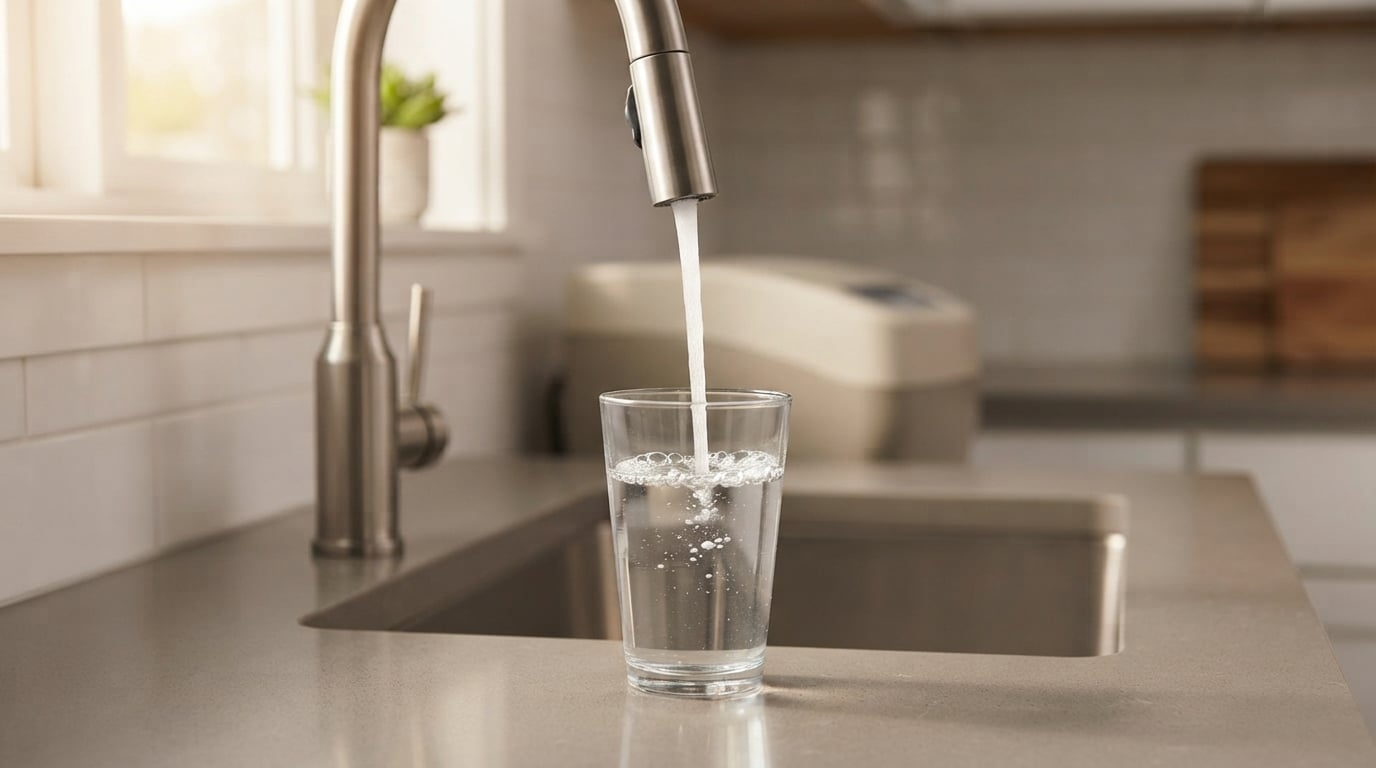
Most people can drink soft water every day without any problems, and the side effects people worry about are smaller than the internet makes them sound. The two real concerns are added sodium from the ion exchange process and slightly higher salt intake for people on strict low-sodium diets. In our full guide below, I break down what the research actually says about soft water side effects, who should be cautious, and how to get the best of both worlds at home.
I’ve spent the last several months comparing water quality data from the EPA, Mayo Clinic, the Minnesota Department of Health, and Healthline. What follows is a clear, evidence-based look at the topic, with specific numbers so you can decide for yourself whether softened water fits your household.
Table of Contents
What Is Soft Water and How Does It Get That Way?
Soft water is water that has had its calcium and magnesium minerals removed. Those two minerals are what make water “hard” in the first place, and they’re the same ones that leave white spots on your shower door and scale inside your water heater.
Most home water softeners work through a process called ion exchange. Inside the tank, there’s a bed of small resin beads covered in sodium ions. As hard water flows through, the calcium and magnesium swap places with the sodium and stick to the beads. The water that comes out the other side has fewer hardness minerals and slightly more sodium.
How much sodium gets added depends on how hard your water was to start with. A typical ion exchange softener adds about 8 mg of sodium per quart for every grain per gallon (gpg) of hardness. If your water tests at 10 gpg hardness, that means roughly 80 mg of sodium per quart, or about 320 mg per gallon. For context, a slice of white bread has around 170 mg of sodium, so a full gallon of softened water is roughly the salt equivalent of two slices of bread.
Some people compare soft water to alkaline water side effects because both involve changing the water’s chemistry, but the mechanisms and outcomes are quite different.
The Main Health Concerns Linked to Soft Water
The honest answer is that for most healthy adults, soft water is perfectly safe to drink. Healthline’s medical review team and the Mayo Clinic both state that drinking softened water does not pose a health risk for the general population. That said, there are three real concerns worth understanding.
Sodium Content and Heart Health
This is the side effect most people ask about, and it’s the one with the most data behind it. A standard ion exchange softener adds sodium, and the harder your source water, the more sodium ends up in every glass you pour.
For most adults, the amount is small. The American Heart Association recommends keeping daily sodium under 2,300 mg, ideally under 1,500 mg for people with high blood pressure. If you drink eight glasses of soft water a day from 10 gpg source water, you’re looking at roughly 160 mg of added sodium. That fits comfortably within either target, and it’s far less than the sodium in most processed foods.
For comparison, a single can of chicken noodle soup often contains more than 800 mg of sodium. Soft water alone is rarely the reason anyone’s sodium intake spikes.
Loss of Calcium and Magnesium in Drinking Water
Some researchers have raised concerns that universal softening removes beneficial minerals from drinking water. A 2016 review published in the Journal of Water and Health noted that populations relying on hard tap water for mineral intake may lose a small dietary source of calcium and magnesium after installing softeners.
The practical impact is modest. Whole foods like dairy, leafy greens, nuts, and whole grains contribute far more calcium and magnesium than tap water ever did. But if your diet is already low in these minerals, this is something to keep in mind. Similar considerations come up when comparing sparkling water side effects to still water, since carbonation also changes mineral availability.
The “Slimy” Feeling and Skin Reactions
A common question on Reddit and home improvement forums is why soft water feels slippery or slimy in the shower. The answer is chemistry, not contamination. Hard water reacts with soap to form a curd-like residue that rinses off your skin. Soft water doesn’t create that residue, so your skin feels “squeaky clean” and almost slippery because the soap is still on you.
For some people with eczema or very dry skin, this actually feels better. For others, the lack of mineral residue can feel strange for the first week or two. According to the National Eczema Association, hard water can aggravate eczema symptoms in some people, so switching to soft water may help if that’s been an issue.
Who Should Avoid or Limit Drinking Softened Water
While the average person is fine, certain groups should pay closer attention to the side effects of soft water and may want to take precautions.
People on strict low-sodium diets. If your doctor has told you to keep sodium under 1,000 mg per day, every source matters. Talk with your physician about whether to install a bypass valve that draws drinking water from the unsoftened line.
People with high blood pressure or heart conditions. The added sodium is small, but if you’re tracking every milligram, the answer is to either switch to potassium chloride softening salt or use a reverse osmosis filter on your kitchen tap.
Infants and young children using formula. This is one area I want to highlight because most competitor articles only mention it briefly. The Minnesota Department of Health and several pediatric sources recommend against using softened water to mix infant formula. The added sodium can stress infant kidneys, which are still developing and cannot excrete excess sodium as efficiently as adult kidneys. Use unsoftened tap water, bottled water labeled “low sodium,” or distilled water for formula instead.
People living in homes with lead service lines or pre-1986 copper plumbing. Soft water is more aggressive than hard water and can leach small amounts of metals from older pipes. If your home was built before 1986, consider getting your water tested for lead and copper before relying on a softener for drinking water.
Why Soft Water Still Has Real Benefits
It’s easy to focus only on the downsides, but soft water has well-documented advantages that are worth weighing against the small risks.
Scale prevention in pipes and appliances. Hard water builds up calcium deposits inside water heaters, dishwashers, and showerheads. The U.S. Department of Energy estimates that scale buildup can reduce water heater efficiency by up to 25%. Soft water prevents this entirely, extending the life of expensive appliances.
Better soap performance and cleaner laundry. Soft water lets detergent lather properly, which means you can use less soap and still get cleaner dishes, clothes, and skin. Many households save enough on detergent and cleaning products to offset the cost of salt for the softener within the first year. If you’re curious about what other treatments do to water chemistry, our sulfate water side effects guide covers another common water quality topic.
Improved skin and hair for many people. If you’ve been struggling with dry, itchy skin or hair that feels like straw, switching to soft water often makes a noticeable difference within a few weeks. This is the same effect people sometimes associate with bottled mineral water side effects improvements, but the mechanism is different.
Cleaner fixtures and surfaces. No more scrubbing white scale off faucets and shower doors every weekend.
Environmental and Plumbing Side Effects to Watch For
Two side effects of soft water that don’t get enough attention are the environmental impact and the plumbing impact.
Chloride discharge into wastewater. When ion exchange softeners regenerate, they flush a brine solution containing chloride into the drain. In areas with septic systems or small municipal treatment plants, this chloride can build up in soil and surface water. The Minnesota Department of Health flags this as the single largest environmental downside of home water softening.
Pipe corrosion and metal leaching. Soft water is slightly more corrosive than hard water. In homes with older copper or lead plumbing, this can increase the amount of metal that leaches into drinking water over time. The fix is straightforward: test your water annually and replace any lead service lines if you’re in an older home.
Septic system considerations. High salt levels in softener discharge can harm the beneficial bacteria in a septic tank. If you have a septic system, look for a high-efficiency softener that uses less salt per regeneration cycle, or install a separate drain field for the brine.
Practical Tips for Using Soft Water Safely
If you already have a softener or are planning to install one, here are the steps our team recommends based on the research.
Install a bypass valve for drinking water. Most modern softeners include a bypass that sends unsoftened water to one tap. Use that tap for drinking and cooking water if you’re on a low-sodium diet.
Switch to potassium chloride pellets. Potassium chloride works the same way as sodium chloride in the ion exchange process, but it adds potassium instead of sodium. This is the single best workaround for anyone watching sodium intake.
Test your water annually. A basic water test costs $20 to $50 and checks hardness, sodium, chloride, and pH. The EPA and most state health departments maintain lists of certified labs.
Maintain your softener properly. Check salt levels monthly, clean the brine tank every six months, and replace the resin bed every 10 to 15 years. A poorly maintained softener can let hardness leak through or even add extra sodium to the water.
Consider a reverse osmosis filter for the kitchen tap. If you want both soft water throughout the house and pure drinking water at the kitchen sink, a small under-sink RO unit is the simplest path. It removes the added sodium and any other contaminants.
These are the same general guidelines used when reviewing the distilled water side effects in our coverage, where we looked at how treatment methods change both safety and mineral content.
Frequently Asked Questions
What are the downsides of drinking soft water?
The main downsides of drinking soft water are slightly higher sodium content, loss of beneficial calcium and magnesium, and a small risk of metal leaching from older copper or lead pipes. For most healthy adults, the added sodium is too small to matter.
Is it okay to drink soft water every day?
Yes, for most people drinking soft water every day is safe. The added sodium from a standard ion exchange softener is small, typically under 200 mg per day for an average diet. People on strict low-sodium diets should talk to their doctor first.
What are the long-term side effects of using a water softener?
Long-term side effects include slightly higher sodium intake, potential leaching of lead or copper from old plumbing, and chloride discharge into the wastewater stream. Most of these can be managed with a bypass valve, potassium chloride salt, and annual water testing.
Is it healthier to drink hard or soft water?
Both are healthy for most people. Hard water contains more calcium and magnesium, while soft water contains less of those minerals but more sodium. If you have high blood pressure or follow a low-sodium diet, hard water is generally the better drinking choice.
Can babies drink softened water?
Most pediatric health authorities recommend against using softened water for infant formula. Infant kidneys cannot process excess sodium as efficiently as adult kidneys. Use unsoftened tap water, distilled water, or bottled water labeled sodium-free instead.
The Bottom Line on Soft Water Side Effects
For most households, the soft water side effects are minor and easily managed. The bigger picture is that the trade-off usually favors soft water, because scale damage, soap waste, and skin irritation cost more in the long run than the small amount of added sodium ever will.
If you’re on a low-sodium diet, have a heart condition, or care for an infant, take a few simple steps: install a bypass valve, switch to potassium chloride, or add a reverse osmosis filter for drinking water. Run a water test once a year, and you’ll be ahead of most homeowners. With those basics in place, you get all the appliance and cleaning benefits of soft water without giving up the small mineral and sodium benefits that harder water provides.