
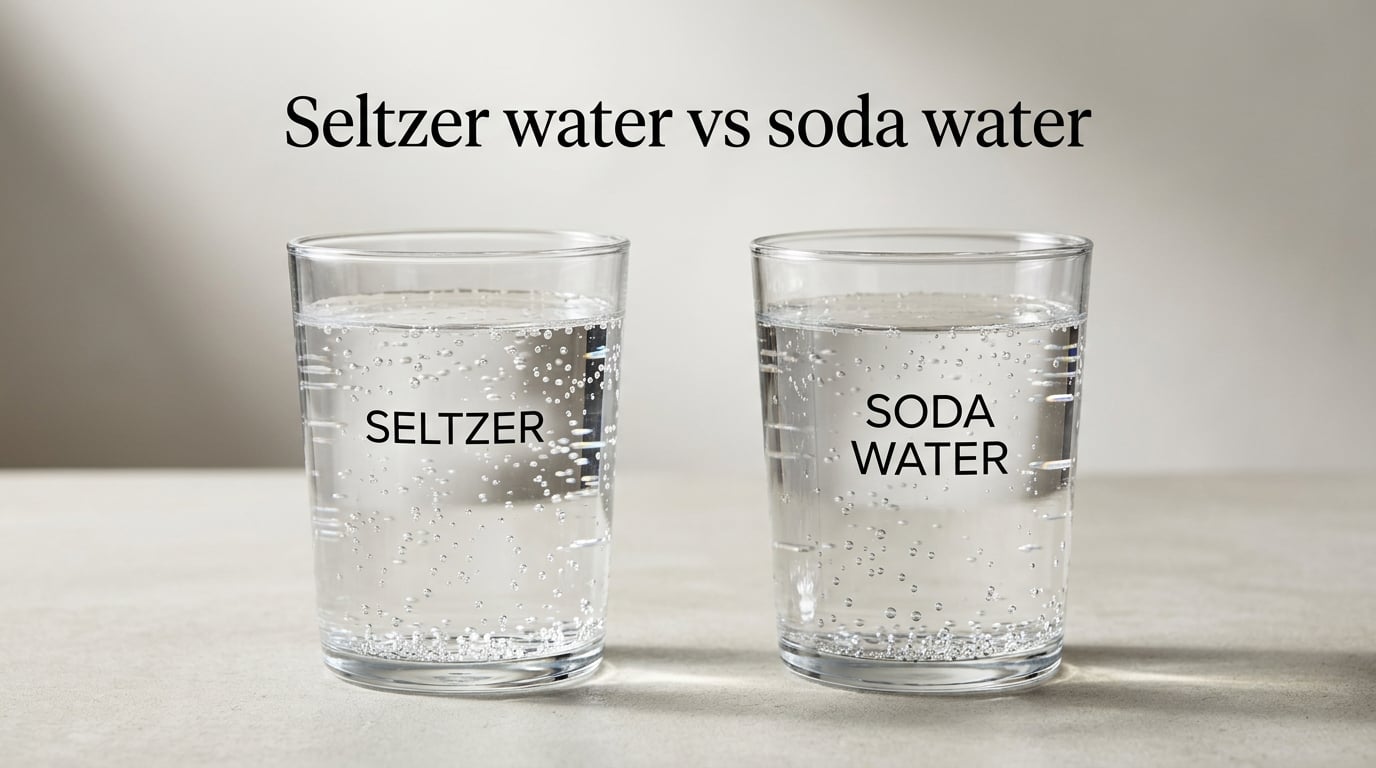
I get this question from friends almost every week at this point: is seltzer water the same as soda water? The short answer is no. They look identical in a glass, both deliver those satisfying bubbles, and most grocery stores stack them next to each other on the same shelf. But once you understand what’s actually inside the can, the difference becomes obvious.
After spending weeks comparing bottles, reading industry sources, and testing these waters in everything from morning hydration to weekend cocktails, I put together this guide to settle the seltzer water vs soda water debate for good. By the end, you’ll know exactly what each one is, when to use it, and which one fits your health goals in 2026.
Table of Contents
Seltzer Water Is Plain Water With Added Carbon Dioxide
Seltzer water is simply plain water that has been artificially carbonated by injecting pressurized carbon dioxide into it. Nothing else gets added. That means no minerals, no salt, no flavoring, and no calories. What you taste is pure water plus bubbles.
The name “seltzer” comes from the German town of Selters, whose natural springs produced naturally fizzy water that became famous in the 18th and 19th centuries. Today’s commercial seltzer has nothing to do with that spring water. Producers like Polar, Bubly, and the store-brand versions just add CO2 to filtered tap water under pressure.
Because nothing is added besides carbon dioxide, seltzer has a clean, neutral flavor. I use it as my default everyday drinker because it doesn’t leave any aftertaste. It’s also the cheapest option in the carbonated water aisle, since manufacturers don’t need to source or blend in extra minerals.
Key facts about seltzer water
- Ingredients: filtered water + added carbon dioxide only
- Calories: zero
- Sodium: zero
- Flavor profile: neutral, clean, no aftertaste
- Common brands: Polar, Bubly, La Croix (yes, La Croix is technically seltzer, not sparkling water, despite the brand name)
Soda Water Is Carbonated Water With Added Minerals
Soda water, also called club soda, is carbonated water with added minerals that give it a distinctive sharp, slightly salty taste. The most common minerals added are sodium bicarbonate (baking soda) and potassium sulfate, though exact recipes vary by brand.
Those added minerals do two things. First, they create the characteristic tang that mixologists rely on in classic cocktails. Second, they help the drink hold its fizz longer than plain seltzer once poured. I tested this side-by-side with seltzer at a dinner party last month, and the club soda still had visible bubbles 20 minutes after the seltzer had gone flat.
The term “soda water” can be confusing because it’s also used as a generic catch-all for any carbonated water in some regions. In American bars and recipes, though, soda water almost always means club soda with minerals added. That extra sodium is something to watch if you track your daily intake.
Key facts about soda water (club soda)
- Ingredients: carbonated water + sodium bicarbonate + potassium sulfate (and sometimes other mineral salts)
- Calories: zero
- Sodium: roughly 75 mg per 12 oz serving (varies by brand)
- Flavor profile: sharp, slightly salty, mineral-forward
- Common brands: Schweppes, Canada Dry, Topo Chico (mineral water, similar profile)
The 5 Key Differences Between Seltzer and Soda Water
The real difference between seltzer and soda water comes down to five specific factors: mineral content, taste, fizz retention, sodium, and price. Here’s the direct comparison.
1. Mineral content
Seltzer contains no added minerals. Soda water contains added sodium bicarbonate and potassium sulfate, plus sometimes disodium phosphate or other mineral salts depending on the brand.
2. Taste
Seltzer tastes like pure water with bubbles. Soda water tastes sharper, with a faintly salty or minerally edge that most people only notice when drinking them side by side.
3. Fizz retention
Soda water holds its carbonation longer because the minerals give the bubbles more to cling to. Seltzer tends to go flat a little faster once opened.
4. Sodium levels
Seltzer has zero sodium. Soda water contains added sodium from the mineral salts, usually around 75 mg per 12 oz can. That matters if you’re on a low-sodium diet.
5. Price
Seltzer is typically cheaper because it requires fewer ingredients. A 12-pack of store-brand seltzer often costs less than a 12-pack of name-brand club soda.
Where Does Sparkling Water Fit In
Sparkling water is the third member of the carbonated water family, and it’s the one that causes the most confusion. Sparkling water is naturally carbonated water that comes from an underground spring or aquifer where geological pressure has trapped carbon dioxide in the water.
Brands like Perrier, San Pellegrino, and Gerolsteiner harvest this naturally fizzy water at the source. Because it travels through rock formations, it picks up natural minerals along the way, including calcium, magnesium, and sodium. The result is a slightly minerally taste that’s gentler than soda water but more complex than seltzer.
If you’re wondering whether La Croix counts as sparkling water, it doesn’t. La Croix is seltzer, because its carbonation is added during manufacturing, not naturally occurring at the source.
Why Tonic Water Is a Completely Different Drink
Tonic water looks like it belongs in the same family as seltzer and soda water, but it doesn’t. Tonic contains carbonated water plus quinine (which gives it a bitter edge) and a sweetener, usually high-fructose corn syrup or cane sugar.
That’s why tonic water has calories, around 124 per 12 oz serving, and a distinctive bitter-sweet flavor. It’s specifically designed as a cocktail mixer for drinks like the classic gin and tonic. If you swap tonic into a recipe that calls for soda water, you’ll dramatically change the drink.
Which Is Better for Your Health
From a health standpoint, both seltzer and soda water are far better choices than sugary sodas. They hydrate you, contain zero calories, and don’t damage teeth the way sugary drinks do. The main difference is the sodium content in soda water.
Are carbonated waters okay for your kidneys?
Yes, for most people. Research published in 2024 in the Journal of Renal Nutrition found no link between plain carbonated water consumption and kidney stone formation in healthy adults. In fact, the extra hydration from drinking more water, fizzy or still, may actually help prevent stones.
Do they affect bone density?
No credible evidence links seltzer or soda water to bone loss. Older studies that raised concerns focused on cola drinks, which contain phosphoric acid. Plain carbonated waters don’t contain phosphoric acid, and they don’t appear to weaken bones.
What about your teeth?
Plain seltzer and soda water are mildly acidic because carbon dioxide forms carbonic acid in water. The pH is around 3 to 4, compared to still water at 7. This is acidic enough to potentially affect enamel if you sip fizzy water all day, but the risk is far lower than with sugary sodas or citrus drinks.
If you’re worried about dental erosion, drink carbonated water with meals rather than slowly throughout the day. Drinking it through a straw also reduces contact with your teeth.
Which is better for daily hydration?
If you don’t mind the bubbles, both work well for hydration. Some people find that sparkling water helps them drink more water overall, which is a real win if plain water feels boring. If you’re watching sodium, seltzer is the safer default. If you want better fizz retention in a tall glass that sits on your desk for an hour, soda water wins.
When to Use Each in Cocktails
For cocktails, the choice between seltzer and soda water actually matters more than you might think. Bartenders prefer soda water (club soda) in any drink where the bubbles need to last, because the added minerals keep the fizz active longer.
Use soda water when making highballs like a Scotch and Soda, Tom Collins, or Aperol Spritz. The longer-lasting carbonation keeps these drinks lively from the first sip to the last. Use seltzer when you want a cleaner, more neutral background, such as in a Vodka Soda or a simple sparkling lemonade.
You can usually substitute one for the other in a pinch. Just be aware that seltzer may go flat faster in your drink, and soda water will add a faint salty edge. For something like a Mojito, either works fine. For a Whiskey Highball where fizz matters, club soda is the better choice.
Quick cocktail guide
- Soda water best for: Tom Collins, Aperol Spritz, Scotch and Soda, Paloma
- Seltzer best for: Vodka Soda, simple spritzers, anytime you want a neutral taste
- Either works: Mojito, Gin Rickey, Bourbon and bubbles
- Never substitute tonic for soda water, the flavor profile is completely different
Why the Names Differ Around the World
The terminology confusion between seltzer, soda water, club soda, and sparkling water exists mainly because Americans, Brits, and Aussies use these words differently. In the UK, “soda water” almost always means what Americans call club soda, water with added minerals. In Australia, “sparkling mineral water” covers everything from seltzer to Perrier.
If a British recipe calls for “soda water” and you’re buying in an American grocery store, reach for club soda, not plain seltzer. The two are functionally interchangeable in most cocktail contexts, but the taste will lean slightly different.
How to Choose the Right Carbonated Water for You
Picking between seltzer, soda water, and sparkling water really comes down to how you plan to use it. Here’s how I break it down when helping friends stock their fridge.
For daily hydration
Go with seltzer. It’s the cheapest, has zero sodium, and offers a clean neutral taste that pairs well with food. A SodaStream machine is even more cost-effective if you drink a lot of fizzy water at home. We tested one for a month and cut our canned seltzer bill by about 60 percent.
For cocktails and mocktails
Keep club soda on hand for any drink that depends on long-lasting fizz. The added minerals make a noticeable difference in drinks like the Aperol Spritz or a classic Tom Collins.
For special occasions
Sparkling mineral water like Perrier or San Pellegrino adds a touch of ceremony to a dinner table. The natural mineral content gives it a more sophisticated flavor profile that works well alongside food.
For sodium-restricted diets
Stick with plain seltzer. Even though club soda’s sodium levels are modest, they can add up if you drink several cans a day. Reading the nutrition label matters here, since brands vary.
Frequently Asked Questions
Are soda water and seltzer water the same?
No. Soda water (club soda) has added minerals like sodium bicarbonate and potassium sulfate, while seltzer is plain water carbonated with only carbon dioxide. They taste slightly different and soda water holds fizz longer.
Is seltzer water better for you than soda?
Both are zero-calorie and far healthier than sugary soda. Seltzer has zero sodium, while soda water contains added sodium from mineral salts. For most people, either is a good choice.
Is carbonated water okay for your kidneys?
Yes. Studies show plain carbonated water does not harm healthy kidneys and may help prevent kidney stones by supporting better hydration.
Is there a downside to seltzer water?
Carbonated water is mildly acidic and may affect tooth enamel if sipped constantly. Some people also experience bloating or gas. Otherwise, it is a safe everyday drink.
Is La Croix seltzer or sparkling water?
La Croix is seltzer. Its carbonation is added during manufacturing, not naturally occurring at a spring source. Despite the marketing language, it is not true sparkling water.
Why is seltzer water more expensive than soda?
Seltzer is usually cheaper than flavored soda but pricier than plain tap water because of packaging, carbonation equipment, and shipping. Buying in multipacks or using a home carbonator cuts costs significantly.
The Bottom Line on Seltzer vs Soda Water
When you strip away the marketing, seltzer water vs soda water comes down to one simple question: do you want added minerals or pure bubbles? Seltzer is the clean, neutral, sodium-free option that’s perfect for daily hydration and simple mixed drinks. Soda water brings a sharper taste and longer-lasting fizz that bartenders rely on for classic cocktails. Both beat sugary sodas in every measurable way.
Pick seltzer if you’re watching sodium or want the most affordable everyday fizz. Pick club soda if you’re mixing cocktails and need bubbles that last. And if you want the most natural option of all, grab a bottle of sparkling mineral water from the source. Whatever you choose in 2026, you’re making a smart upgrade from soft drinks.