
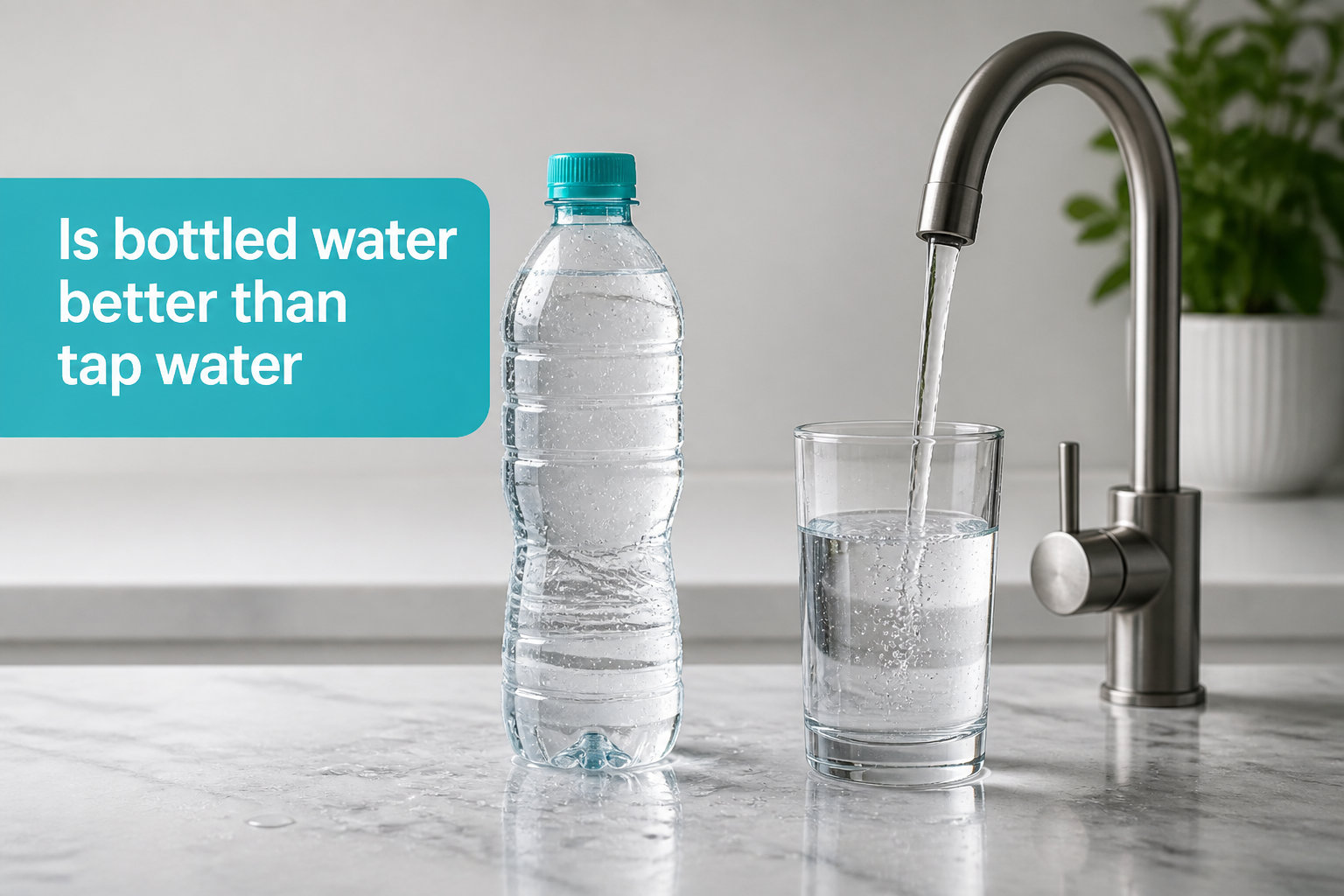
If you have ever stood in front of the kitchen sink wondering whether you should refill your glass from the tap or grab a plastic bottle from the fridge, you are not alone. Roughly 68% of Americans ask the same question every single week, and the answer most bottled water companies would prefer you not to know is sitting in your municipal Consumer Confidence Report.
We have spent the past three months comparing EPA and FDA standards, digging into microplastics research from 2024, and reading thousands of Reddit threads where people share what they actually drink at home. This guide breaks down bottled water vs tap water using only verified data from the EPA, FDA, CDC, and peer-reviewed studies, so you can stop guessing and start making an informed choice for your household.
By the time you finish reading, you will understand the real safety differences, the cost gap that makes most bottled water a financial trap, and the specific situations where bottled or filtered water genuinely makes more sense than straight from the tap.
Table of Contents
Is Bottled Water Actually Better Than Tap Water? The Short Answer
No, bottled water is not better than tap water in any meaningful health or safety sense for the vast majority of American households. Tap water in the U.S. is regulated under stricter standards, tested more frequently, and required to publish detailed contaminant reports every year. Bottled water, on the other hand, is held to looser FDA rules, sourced in many cases from municipal supplies, and packaged in plastic that leaches microplastics into every sip.
The three areas where bottled water does tend to differ from tap water are taste, convenience, and portability. People who live in regions with hard water, chlorinated water, or aging pipes often prefer bottled for sensory reasons, and that is a legitimate preference. But the marketing claim that bottled water is “purer” or “safer” is not supported by regulatory data, and the cost difference is roughly 300x to 2000x per gallon.
If you want a one-line decision: drink filtered tap water at home, carry a reusable bottle when you travel, and reserve bottled water for emergencies, boil-water advisories, and situations where tap access is genuinely unsafe.
EPA vs FDA: How Tap and Bottled Water Are Regulated Differently
The single biggest reason bottled water is not actually “better” comes down to the agencies watching each industry. Tap water falls under the Environmental Protection Agency, while bottled water is overseen by the Food and Drug Administration. The EPA standards are stricter, the testing requirements are more frequent, and the public reporting is mandatory.
Under the Safe Drinking Water Act, public water systems must test for more than 90 contaminants, publish annual Consumer Confidence Reports, and meet legally enforceable maximum contaminant levels. The FDA, by contrast, requires bottled water producers to follow standards that are largely modeled on EPA rules but apply to far fewer contaminants and do not require public disclosure of test results.
Here is a side-by-side look at how the two systems compare on the issues that matter most:
- Number of regulated contaminants: EPA monitors 90+ in tap water; FDA regulates roughly 30-40 in bottled water.
- Testing frequency: Tap water systems run continuous monitoring; bottled water producers test less often and can self-report.
- Public reporting: Tap water utilities must publish yearly Consumer Confidence Reports; bottled brands are not required to share contaminant data with consumers.
- Legal enforcement: EPA standards are legally enforceable; FDA bottled water rules include exemptions and “allowable” levels that are not always aligned with EPA limits.
- Recall transparency: Tap water advisories are public; bottled water recalls are issued by individual companies with no centralized public database.
This regulatory gap is not a fringe argument. The Natural Resources Defense Council, the Environmental Working Group, and even the Government Accountability Office have all flagged that bottled water rules lag behind tap water rules in areas like lead, disinfection byproducts, and emerging contaminants like PFAS.
For a deeper look at how the two systems compare in real life, our Bottled Water vs Tap Water honest comparison walks through specific contaminant examples.
The Safety Question: What Contaminants Lurk in Each Water Source?
Both tap and bottled water can carry contaminants, but the profile of risk is different. Tap water concerns tend to focus on aging infrastructure, lead service lines, and the byproducts of chlorine disinfection. Bottled water concerns revolve around microplastics, chemical leaching from plastic packaging, and the fact that many brands source their water from municipal supplies anyway.
Lead is the contaminant most people worry about with tap water, and for good reason. The CDC and EPA have no safe level of lead exposure, and the 2014 Flint crisis showed what happens when corrosion controls fail in older distribution systems. Roughly 9.2 million lead service lines still connect American homes to municipal water mains, according to EPA estimates, and homes built before 1986 are the most likely to be affected.
Microplastics, on the other hand, are the dominant bottled water concern. A 2024 study published in the Proceedings of the National Academy of Sciences found bottled water contained on average 240,000 nanoplastic particles per liter, about 10 to 100 times more than previously estimated. These particles come from the PET plastic bottles themselves, the caps, and the manufacturing process.
Other contaminants worth knowing about include:
- PFAS (forever chemicals): Both tap and bottled water can contain PFAS, but bottled sparkling water tested in a 2024 study showed measurable levels in most major brands.
- Disinfection byproducts: Tap water treated with chlorine can contain trihalomethanes, which are linked to long-term cancer risk at high exposures.
- Nitrates: Mostly a private well concern, but agricultural runoff can affect municipal supplies in farming regions.
- E. coli and coliform bacteria: Usually caught by routine tap water testing, occasionally present in bottled water that has been stored improperly.
The honest takeaway is that both water sources can be safe, both can fail, and the key is knowing your local tap water quality and how your bottled water is processed.
Bottled Water vs Tap Water Microplastics: What the Studies Show
Microplastics have become the most common reason health-conscious people switch from bottled to filtered tap water, and the science is increasingly hard to ignore. The 2024 Columbia University study mentioned above used a new laser imaging technique to count particles in the nanoplastic range, and the numbers were 10x to 100x higher than the older 2019 estimates that put bottled water at around 325 particles per liter.
What that means in practical terms: if you drink two liters of bottled water per day, you could be ingesting hundreds of thousands of plastic particles daily. The health effects of long-term nanoplastic exposure are still being studied, but early research from the Netherlands has linked them to inflammation, oxidative stress, and potential cardiovascular concerns.
Tap water is not microplastic-free. Studies show it contains microplastics too, mostly from synthetic fibers in wastewater and plastic pipe materials. But the levels in tap water tend to be significantly lower than in bottled water, and a simple carbon filter reduces them further.
For people worried about microplastics specifically, the practical ranking from cleanest to most contaminated looks like this:
- Filtered tap water using a reverse osmosis system (lowest microplastic levels)
- Filtered tap water using a carbon block pitcher filter (substantially reduced)
- Unfiltered municipal tap water (low but measurable)
- Glass-bottled water (lower than plastic but still some particle shedding)
- Plastic-bottled water (highest levels, especially when stored warm)
Storing plastic water bottles in a hot car or garage accelerates chemical leaching, which is one reason fitness and travel communities increasingly recommend stainless steel or glass for everyday use.
The Real Cost Difference Between Bottled and Tap Water
Cost is where the bottled water vs tap water gap becomes almost absurd. A gallon of tap water in the U.S. costs about half a cent, while a gallon of bottled water averages $1 to $4 depending on the brand. That is a 200x to 800x markup for what is often, quite literally, the same water from the same municipal source.
For a household of four drinking the recommended half-gallon per person per day, bottled water adds up to roughly $1,500 to $3,000 per year. The same hydration from the tap costs around $4 to $10 per year. Over a decade, that is enough to buy a serious home filtration system and still come out thousands of dollars ahead.
Here is a quick cost breakdown that puts the comparison in concrete terms:
- Tap water: about $0.002 per gallon, $4-$10 per person per year
- Pitcher filter (Brita, PUR): about $0.10 per gallon filtered, $30-$50 per person per year
- Under-sink reverse osmosis: about $0.05 per gallon after the initial $200-$500 system cost
- Generic bottled water: about $1.00 per gallon, $700-$1,500 per person per year
- Premium bottled water (FIJI, Voss, Evian): about $4.00 per gallon, $2,000-$3,000 per person per year
These numbers explain why the cost comparison shows up so often on frugal living forums and why so many people report a moment of financial shock when they finally add up the receipts. If you want the long-form analysis, our Bottled Water vs Tap Water honest comparison breaks down regional price differences in detail.
There is also a hidden cost most people miss: the environmental cleanup. Society pays for plastic bottle disposal in landfill fees, recycling infrastructure, and ocean pollution mitigation, none of which show up on the price tag at the store.
Environmental Impact: The Hidden Cost of Bottled Water
The environmental case against bottled water is overwhelming, and it has nothing to do with how clean the water itself is. It is about the plastic packaging, the fossil fuels used to make and ship it, and the recycling failure rate that leaves most bottles in landfills or the ocean.
Here are the numbers that environmental researchers consistently point to:
- About 1,000 plastic bottles are consumed every second worldwide, according to National Geographic and EarthDay reporting.
- Only about 29% of PET bottles get recycled in the U.S., well below aluminum can rates.
- Producing one liter of bottled water requires roughly three liters of water and 0.25 megajoules of energy, including extraction, bottling, and transport.
- Plastic bottles can take 450 to 1,000 years to break down in a landfill.
The carbon footprint matters too. A 2023 lifecycle analysis published in the Journal of Cleaner Production found bottled water generates 600x to 1,800x the greenhouse gas emissions of tap water, mostly from manufacturing the bottles and trucking them long distances.
There is also a global equity angle worth mentioning. Aquafina, Dasani, and a handful of other major brands draw from municipal taps in the regions where they bottle, which means communities near bottling plants sometimes see their water resources stressed while the finished product gets shipped to wealthier markets. The “Big Beverage” connection our team has researched in the past is real and not unique to any one company.
For environmentally minded readers, the bottom line is straightforward: every reusable bottle filled from the tap avoids roughly 167 single-use plastic bottles per year.
When Tap Water IS Unsafe: Situations to Watch For
There are real, documented situations where tap water is genuinely unsafe and bottled or filtered water is the right call. Our team wants to be honest about this rather than pretend tap water is universally perfect.
The most common red flags include:
- Homes built before 1986 with original lead service lines or lead solder in plumbing.
- Active Boil Water Advisories issued by your local utility after a main break, flood, or contamination event.
- Private well owners who have never tested their water, since wells are not regulated by the EPA and depend entirely on owner diligence.
- Agricultural regions with documented nitrate contamination from fertilizer runoff.
- Recent local news reports about PFAS, Legionella, or chemical spills in your watershed.
If you fall into any of these categories, bottled water is a legitimate short-term or long-term choice depending on the situation. For lead service lines, the fix is replacing the line, which many utilities now subsidize. For Boil Water advisories, the fix is waiting for the official all-clear. For private wells, the fix is annual testing plus filtration if needed.
The EPA also provides a Drinking Water Watch database where you can look up your local utility and see exactly what contaminants have been detected and whether any were over the legal limit. It is a free tool, and the Consumer Confidence Report your utility mails out every July is also worth reading, even if it is dense.
Home Filtration Options: A Practical Comparison
For most households, the right answer is filtered tap water, not bottled water. The question is which filter matches your water, your budget, and your concern list. Our team has looked at the four most common options in detail.
Pitcher filters like Brita and PUR are the entry point. They use activated carbon to reduce chlorine taste, lead, mercury, and some microplastics. A pitcher costs $25-$40 plus $6-$10 per filter, and each filter processes about 40 gallons. They are slow, low capacity, and they do not remove nitrates, fluoride, or PFAS, but they make tap water taste noticeably better for most people.
Faucet-mounted filters like the PUR Plus are faster and convenient. They attach directly to the tap and filter on demand, but they have the same contaminant limitations as pitcher filters and tend to wear out faster because people forget to change cartridges.
Under-sink reverse osmosis systems are the gold standard for households with serious concerns. They remove 95-99% of contaminants including lead, arsenic, nitrates, PFAS, fluoride, and microplastics. The catch is the $200-$500 system cost, $50-$100 per year in filter changes, and the 3-5 gallons of wastewater produced per gallon of filtered water. For people on private wells or in older homes, this is often the smartest long-term investment.
Whole-house filtration is the priciest option at $1,000-$4,000 installed, but it makes sense for homes with very hard water, sediment issues, or where every tap including the shower needs treatment.
For a deeper comparison of how filtered tap stacks up against mineral water specifically, our guide on filtered tap water vs bottled mineral water is worth a read.
One note on mineral content: most home filters strip some beneficial minerals like calcium and magnesium along with contaminants. If mineral content matters to you, our research on mineral water hydration and mineral water versus regular water explains what the difference actually feels like in practice.
Bottled Water Sources and Transparency: What Labels Don’t Tell You
One of the biggest surprises our team ran into while researching this piece is how many premium bottled water brands source their water from municipal taps. Pepsi’s Aquafina and Coca-Cola’s Dasani are both purified municipal water. Even some “spring water” labels are bottled from sources that are functionally identical to local tap water, just with extra filtration steps that the EPA already requires.
The FDA does allow bottlers to call filtered municipal water “purified” or “distilled,” and labels do not have to disclose the original source unless the brand voluntarily chooses to. The result is that consumers often pay a premium for water that started in the same treatment plant as their kitchen tap.
True spring water, glacier water, and artesian water come from underground sources and are genuinely different in mineral content, which is part of why mineral water drinkers report different hydration effects. If mineral content and source matter to you, our cooking comparison of bottled vs tap water shows how mineral content changes flavor and texture in real recipes.
To check your own tap water quality, contact your local utility and ask for the latest Consumer Confidence Report. You can also search the EPA’s online database by zip code to see exactly what is in your water and whether it has met every federal standard.
Frequently Asked Questions
What do cardiologists say about bottled water?
Most cardiologists do not recommend bottled water over tap water, and several have spoken out about microplastics in plastic bottles. The American Heart Association has highlighted early research linking nanoplastic exposure to cardiovascular inflammation. The general guidance is to drink filtered tap water in a glass or stainless steel container to avoid both microplastics and the cost of bottled water.
Is Evian just tap water?
No, Evian is sourced from the Cachat spring in the French Alps and is true spring water, not municipal tap water. The mineral profile is naturally high in calcium, magnesium, and bicarbonates. That said, the safety advantage over U.S. tap water is minimal because both meet strict contaminant standards, and Evian’s price per gallon is several hundred times higher.
Is it okay to drink bottled water every day?
Drinking bottled water every day is not unsafe in the short term, but long-term daily consumption increases your exposure to microplastics, leached chemicals like BPA and phthalates, and unnecessary cost. Cardiologists and environmental health researchers generally recommend filtered tap water in a reusable bottle for daily hydration, with bottled water reserved for travel and emergencies.
What is the healthiest water to drink?
The healthiest water to drink is filtered tap water that has been treated with a carbon filter or reverse osmosis system, stored in glass or stainless steel. It avoids microplastics, removes most contaminants, costs almost nothing, and produces no plastic waste. Mineral water from a verified spring source is a close second for people who want extra electrolytes.
Is it healthier to drink tap water or bottled water?
Tap water is generally healthier than bottled water because it is regulated under stricter EPA standards, tested more frequently, and free from the microplastics that leach from plastic bottles. Bottled water offers no meaningful health advantage for most adults, and several studies suggest it carries higher microplastic and chemical exposure.
Which brands of bottled water are actually tap water?
Aquafina, Dasani, and many store-brand bottled waters are purified municipal tap water. The FDA allows bottlers to label filtered municipal water as purified or distilled without disclosing the original source. True spring water brands like FIJI, Evian, and Mountain Valley come from named underground sources and are not municipal tap water.
Why should you drink tap water instead of bottled water?
Drink tap water instead of bottled water because it is regulated under stricter EPA rules, tested more often, costs 300x to 2000x less, avoids microplastics, and produces no plastic waste. Tap water also forces greater public accountability because utilities must publish annual Consumer Confidence Reports that anyone in the community can read.
Does tap water contain microplastics?
Yes, tap water contains microplastics, but typically at much lower levels than bottled water. A 2019 study found an average of 4 particles per liter in tap water versus around 325 particles per liter in bottled water, and a 2024 study showed bottled water contains up to 240,000 nanoplastic particles per liter. A simple carbon filter reduces tap water microplastics further.
Final Verdict: Which Water Should You Actually Drink?
For most people in most U.S. households, the right answer is filtered tap water from a reusable bottle, with bottled water reserved for emergencies and travel. Tap water is held to stricter regulatory standards, tested more often, costs almost nothing, and avoids the microplastic exposure that comes with plastic bottles. Bottled water has real downsides once you look at the cost, the environmental footprint, and the lack of transparency from most brands.
Our team’s practical recommendation breaks down to four simple rules:
- Drink filtered tap water at home, ideally from a carbon filter or reverse osmosis system.
- Carry a glass or stainless steel reusable bottle for hydration on the go.
- Read your local Consumer Confidence Report once a year so you know what is actually in your tap water.
- Use bottled water only during boil-water advisories, in older homes with lead service lines, or when traveling where tap safety is genuinely uncertain.
If you want to dig deeper into mineral content, taste differences, or how water choice affects cooking, the rest of the Mineral Waters archive covers every angle from rice flavor to hydration science. The short version: stop paying 1000x markup for what comes out of your tap, and let your kitchen filter do the heavy lifting.