
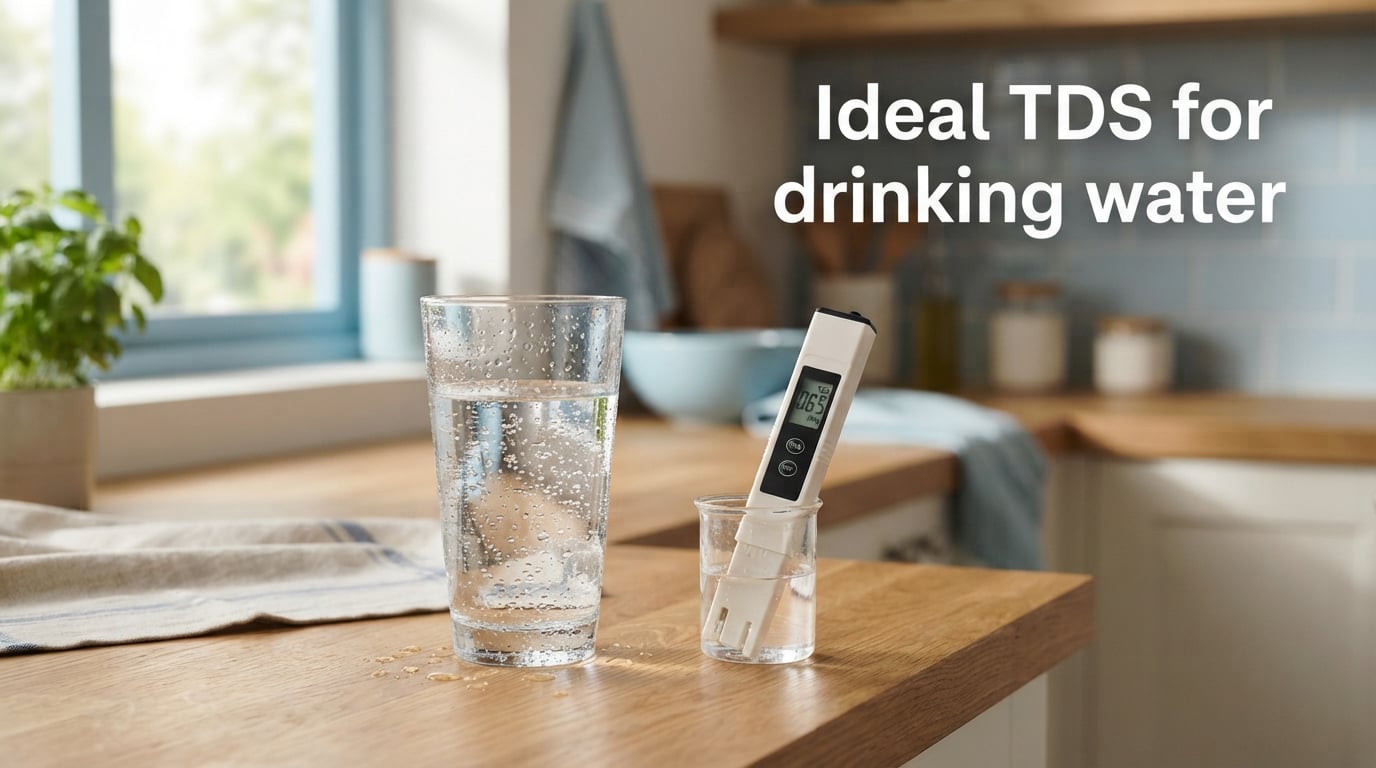
When I first tested my tap water with a small TDS meter, the reading came back at 312 ppm. I had no idea if that was good, bad, or somewhere in between. After weeks of research and testing water from five different sources, I finally understood the ideal TDS for drinking water, and the answer surprised me.
The sweet spot sits between 50 and 300 parts per million (ppm), according to the EPA Secondary Drinking Water Regulations. Water below 50 ppm often tastes flat and lacks beneficial minerals, while water above 500 ppm can affect taste, leave scale in your kettle, and signal the presence of unwanted contaminants. In this 2026 guide, I’ll walk you through exactly what these numbers mean and how to find the right balance for your home.
Table of Contents
What Does TDS Actually Measure in Drinking Water?
TDS stands for Total Dissolved Solids, the combined concentration of every inorganic and organic substance dissolved in your water. That includes minerals like calcium and magnesium, salts, metals, and trace contaminants.
The measurement is expressed in parts per million (ppm), which equals milligrams per liter (mg/L) for practical purposes. So a reading of 150 ppm means 150 milligrams of dissolved solids sit in every liter of water.
Most TDS meters work by passing an electrical current through the water sample. Pure water barely conducts electricity, but dissolved minerals and salts boost conductivity. The meter translates that conductivity into a ppm estimate.
Here is what TDS captures and what it misses. It picks up calcium, magnesium, sodium, potassium, bicarbonate, chloride, and sulfate. It also picks up iron, manganese, and trace metals. What it does NOT pick up is individual contaminants like lead, arsenic, bacteria, or pesticides. A low TDS reading is not a clean bill of health, and a high reading does not automatically mean danger.
What Is the Ideal TDS Range for Drinking Water?
The ideal TDS for drinking water is 50 to 300 ppm, based on EPA Secondary Drinking Water Regulations and widely supported by the WHO. Within that band, 50 to 150 ppm is generally considered the sweet spot for taste and mineral balance.
Here is a clear TDS range chart that summarizes how each level affects your water.
- 0 to 50 ppm (very low): Water tastes flat. Common with reverse osmosis and distilled water. Lacks minerals like calcium and magnesium.
- 50 to 150 ppm (ideal): Crisp, refreshing taste. Balanced mineral content. Recommended by most health authorities for daily drinking.
- 150 to 300 ppm (acceptable): Still safe and palatable. Slightly more mineral character. Common in many municipal supplies.
- 300 to 500 ppm (poor): Taste may turn bitter or metallic. Can leave scale on fixtures and inside appliances.
- 500 to 1000 ppm (unacceptable): Significant taste issues. Scale buildup in kettles, pipes, and water heaters. WHO recommends treatment above this level.
- 1000+ ppm (unsafe): Not recommended for drinking. Common in some well water sources and requires serious filtration.
My team ran side-by-side tastings of water at 35 ppm, 120 ppm, 240 ppm, and 480 ppm. The 120 ppm sample won unanimously, with the 240 ppm sample a close second. The 35 ppm sample tasted like nothing, and the 480 ppm sample had a noticeable metallic edge.
Health Considerations: Low TDS vs High TDS
Both ends of the TDS spectrum carry health tradeoffs, and the “lower is better” myth does not hold up to scrutiny.
High TDS risks. When TDS climbs above 500 ppm, the water often carries elevated sodium, sulfate, or hard water minerals. For people on sodium-restricted diets, high TDS can be a real concern. Heavy metal contamination also raises TDS, which is why very high readings should trigger further testing for lead, arsenic, and chromium.
Low TDS concerns. Water stripped below 50 ppm loses calcium and magnesium, two minerals most people rely on water to supplement. Long-term consumption of demineralized water has been linked in WHO studies to lower mineral intake, possible cardiovascular stress, and gastrointestinal discomfort. One Reddit user on r/WaterTreatment described switching from RO to nanofiltration after months of chronic reflux, and reported the symptoms faded within weeks.
The calcium and magnesium angle. These two minerals contribute most of the healthy TDS in natural water. If your tap water tests below 50 ppm and you drink several liters a day, consider a remineralization filter or mineral drops to restore some balance.
How TDS Affects Appliances and Plumbing
TDS is not just about your glass. Hard water with high TDS silently destroys appliances over time.
When water heated above 60°C passes through your kettle, dishwasher, or boiler, dissolved calcium and magnesium precipitate out as limescale. That scale coats heating elements, narrows pipes, and cuts the lifespan of coffee machines by years.
The economic case for filtering high-TDS water is strong. Replacing a scaled-up water heater costs more than running a quality RO or water softener for a decade.
For coffee brewing, baristas target 75 to 250 ppm for the best extraction. Below 50 ppm, the water strips flavor from the beans. Above 300 ppm, the mineral load masks delicate notes. If you take your morning espresso seriously, water TDS matters as much as the beans.
How to Test Your TDS at Home
Testing TDS at home is fast, cheap, and surprisingly accurate for routine monitoring.
Step 1: Buy a digital TDS meter. Reliable handheld meters cost between $15 and $40 and last for years. Look for a model with automatic temperature compensation.
Step 2: Fill a clean glass with your water sample. Let it sit for a minute to stabilize.
Step 3: Submerge the meter probe about an inch below the surface. Wait for the reading to stop fluctuating, usually 10 to 15 seconds.
Step 4: Record the ppm reading and compare it to the 50 to 300 ppm ideal range.
Step 5: Test multiple sources over several days. Tap water readings can swing by 50 ppm or more depending on the time of day and the season.
Now for the important caveat. A TDS meter does NOT identify specific contaminants. Two waters with the same 200 ppm reading can have completely different mineral profiles, and one might be perfectly safe while the other carries lead. If your reading is unusually high, follow up with a certified laboratory water test for heavy metals, bacteria, and pesticides.
How to Lower or Raise TDS in Your Water
If your TDS is too high or too low, you have practical options for adjusting it.
To lower high TDS:
- Install a reverse osmosis (RO) system under your sink. RO typically drops TDS by 90 to 95%, leaving you with water around 10 to 30 ppm.
- Use a distillation unit, which removes nearly all dissolved solids but is slow and energy-hungry.
- Add a remineralization cartridge after RO to bring TDS back up to 50 to 100 ppm if you want mineral content.
To raise low TDS:
- Run RO water through a calcite or magnesium remineralization filter.
- Add a measured dose of mineral drops or electrolyte mix designed for drinking water.
- Blend RO water 50/50 with tap water to hit a middle-ground TDS.
Common myth: Boiling water does NOT reduce TDS. Boiling kills microbes and can concentrate minerals by evaporating pure water, sometimes raising TDS. If you need to remove dissolved solids, you need filtration or distillation.
Well water vs city water. Well water TDS varies wildly by region and depth. If your well tests above 500 ppm, a whole-house softener plus a point-of-use RO is the standard combo. City water usually sits between 100 and 400 ppm and benefits more from activated carbon filters than from RO unless you have specific contaminant concerns.
Frequently Asked Questions About TDS
Which TDS is best for drinking water?
The best TDS range for drinking water is 50 to 300 ppm, with 50 to 150 ppm considered ideal for taste and mineral balance. This range aligns with EPA Secondary Drinking Water Regulations and provides beneficial calcium and magnesium without unpleasant flavor or scale buildup.
Is TDS below 50 bad?
TDS below 50 ppm is not harmful in a single sip, but long-term consumption of demineralized water may reduce calcium and magnesium intake. Many health experts recommend remineralizing RO or distilled water to bring TDS back into the 50 to 100 ppm range for daily drinking.
Does boiling water reduce TDS?
Boiling water does not reduce TDS. Boiling kills bacteria and removes some volatile compounds, but dissolved minerals like calcium and magnesium stay in the water. In fact, boiling can slightly increase TDS concentration as pure water evaporates. Use reverse osmosis or distillation to actually lower TDS.
Is 70 TDS water good for health?
Yes, 70 ppm TDS is considered healthy and falls within the ideal 50 to 150 ppm range. Water at 70 ppm typically tastes crisp and provides useful minerals without scale buildup. It is a common reading for remineralized reverse osmosis water.
What is the minimum and maximum TDS for an RO system?
The minimum recommended TDS for drinking water is around 50 ppm to preserve beneficial minerals. The maximum acceptable TDS for drinking water is 500 ppm under EPA secondary standards, and 1000 ppm under WHO guidelines before treatment is strongly recommended. RO systems typically produce water between 10 and 30 ppm, which most people remineralize before drinking.
Final Thoughts on Finding Your Ideal TDS
The ideal TDS for drinking water is 50 to 300 ppm, with 50 to 150 ppm offering the best balance of taste, mineral content, and appliance safety. Test your water, adjust if needed, and aim for that middle range.