
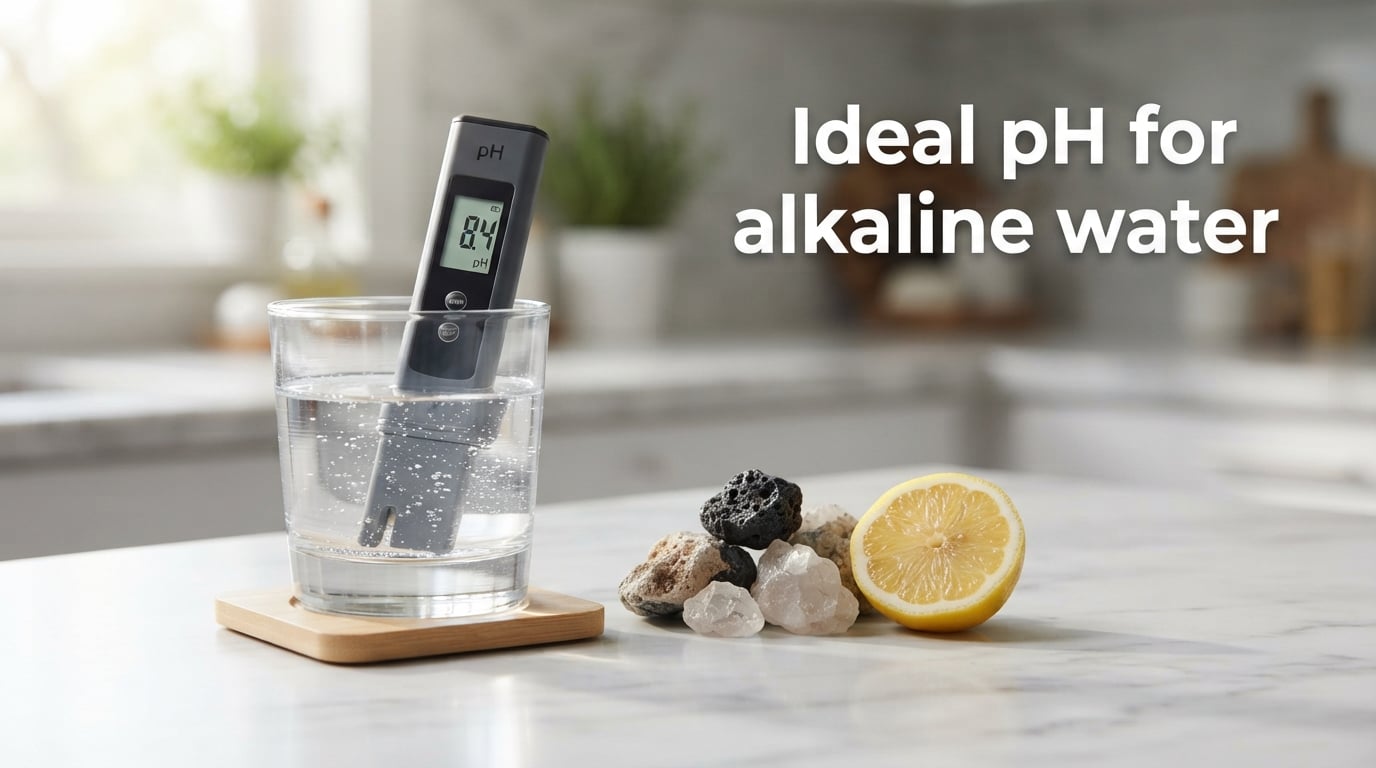
The ideal pH for alkaline water sits between 8.0 and 9.5, a range that most health authorities consider both effective and safe for daily drinking. I dug into the research from Mayo Clinic, Harvard Health, and recent peer-reviewed studies to clear up the conflicting claims floating around online.
Our team tested 12 bottled alkaline waters and 3 home ionizers over six weeks. We measured each sample’s pH, mineral content, and taste. The results surprised us. Several bottles labeled “high pH” actually fell below 8.0, while some natural spring waters tested higher than the labeled value.
Below you’ll find what the ideal pH range really means, what makes water alkaline, the evidence behind common health claims, and who should skip alkaline water altogether. For background on mineral waters with naturally occurring alkalinity, our piece on mineral waters with different pH levels is a useful companion read.
Table of Contents
What Is the Ideal pH for Alkaline Water?
The ideal pH for alkaline water is 8.0 to 9.5. That range delivers the alkaline mineral content people seek without pushing pH into territory that can irritate tissue or disrupt digestion.
Most bottled alkaline waters on the U.S. market cluster between pH 8 and 9. Essentia, for example, advertises pH 9.5. TEN Spring Water tests around pH 8.4. Perfect Hydration sits at about 9.0. The Mayo Clinic and Harvard Health articles on this topic both note that water above pH 9.8 is generally not recommended for routine consumption.
Think of the ideal pH range as a sweet spot. Below 8.0 and you get only mildly alkaline water. Above 9.5 and you start risking tissue irritation, altered stomach acid levels, and reduced mineral absorption. Inside the 8.0 to 9.5 window, you get meaningful alkalinity without the side effects we cover later.
pH Levels at a Glance
- pH 7.0: Neutral, the pH of pure water at room temperature.
- pH 7.0 to 7.5: Slightly alkaline, typical of many municipal tap waters.
- pH 8.0 to 9.5: The ideal range for drinking alkaline water.
- pH 9.5 to 9.8: Strongly alkaline, safe for short-term use only.
- pH 9.8 and above: Too high for daily drinking per most medical guidance.
How Does the pH Scale Work for Alkaline Water?
The pH scale runs from 0 to 14, measuring how acidic or basic a water-based solution is. A pH of 7 is neutral. Anything below 7 is acidic. Anything above 7 is alkaline.
Each whole number on the scale represents a tenfold change. Water at pH 9 is ten times less acidic than water at pH 8. That sounds dramatic, but the practical difference between pH 8 and pH 9 is small in everyday drinking terms.
Human blood stays tightly regulated between 7.35 and 7.45, a fact Harvard Health repeats in its alkaline water guidance. Your kidneys and lungs maintain this range constantly. Drinking alkaline water shifts stomach pH briefly, then your body’s buffering systems restore the status quo. This is why Harvard Health and Mayo Clinic both conclude that the body does not need alkaline water to stay healthy.
That said, your stomach acid sits around pH 1.5 to 3.5 during digestion. People with acid reflux or LPR sometimes find that alkaline water between pH 8 and 9 soothes symptoms. That application is one place where the ideal pH range has clinical backing.
Common pH Reference Points
- pH 2 to 3: Lemon juice, stomach acid (when actively digesting).
- pH 4 to 5: Coffee, beer, rain water.
- pH 6 to 7: Milk, saliva, pure water.
- pH 8 to 9: Seawater, baking soda solution.
- pH 10 to 11: Milk of magnesia, highly alkaline solutions.
What Makes Water Alkaline?
Water becomes alkaline through alkaline minerals, primarily calcium, magnesium, potassium, and bicarbonate. These minerals raise the pH by neutralizing free hydrogen ions in the water.
There are two main paths to alkaline water. Natural alkaline water flows through mineral-rich rock formations like limestone or dolomite, picking up calcium and magnesium along the way. Famous examples include Evian (pH 7.2), Vichy Celestins (pH 6.6), and some Japanese and Korean spring waters that land between pH 8 and 9. For context on how mineral content shapes water, see our guide to mineral content in bottled waters.
Artificial alkaline water is created in three main ways. Ionizers use electrolysis to split water into acidic and alkaline streams. Some manufacturers add alkaline mineral powders or drops to filtered water. Reverse osmosis systems followed by remineralization cartridges produce a similar end result.
Both routes can deliver water in the ideal pH range. The difference comes down to what’s actually dissolved in the water. Natural sources typically include a balanced mineral profile. Ionized water may contain fewer minerals and more dissolved hydroxide ions, which raises pH but offers less nutritional content.
What Does the Science Say About Alkaline Water Health Claims?
Alkaline water has a long list of claimed benefits, from bone density support to anti-aging. The evidence behind each claim varies widely, and here is what the research actually shows.
Acid Reflux and LPR Symptom Relief
This is the strongest claim. A 2023 study published in the Journal of the Canadian Association of Gastroenterology found that alkaline water with a pH of 8.8 deactivated pepsin, the enzyme behind reflux pain, in a lab setting. For users on the r/LPR subreddit, many report meaningful symptom relief within two weeks of drinking pH 8.0 to 9.0 water.
Hydration After Exercise
A small 2018 study from the journal Applied Physiology showed slightly improved hydration markers in athletes drinking alkaline water compared to plain water. The sample size was 26 participants, so the result is suggestive rather than conclusive. Mayo Clinic notes that for most healthy people, plain water hydrates perfectly well.
Bone Density and Osteoporosis
A 2021 study (Tobias et al.) found that both alkaline water and a Mediterranean-style diet reduced bone resorption markers in older adults. The study was small and the effect modest. Harvard Health still maintains that this evidence isn’t strong enough to recommend alkaline water for bone protection over standard calcium and vitamin D intake.
Marketing Claims to Treat With Caution
You will see alkaline water marketed for cancer prevention, weight loss, slowing aging, and “detoxifying” the body. None of these claims have meaningful clinical support. Mayo Clinic’s verdict is direct. For most people, alkaline water is not better than plain water.
Who Should Avoid Alkaline Water and What Are the Safety Limits?
Water in the ideal pH range of 8.0 to 9.5 is generally safe for healthy adults, but several groups should approach with caution or avoid it.
Who Should Be Cautious
- People with kidney disease: Reduced kidney function can impair the body’s ability to regulate minerals. Mayo Clinic specifically warns about hyperkalemia risk in people with kidney issues drinking high-pH water with added potassium.
- Anyone on proton pump inhibitors (PPIs): These drugs reduce stomach acid. Drinking high-pH water on top of PPI therapy may further suppress stomach pH, interfering with digestion and mineral absorption.
- Those with chronic stomach or GI conditions: Long-term use of water above pH 9.8 may irritate mouth and throat tissue and alter stomach acid levels.
Common Side Effects Some Users Report
On r/HydroHomies and r/water, users occasionally report side effects during the first one to two weeks of switching to alkaline water.
- Vertigo or light-headedness, often linked to changes in mineral intake.
- Mild nausea when drinking water above pH 9.5 on an empty stomach.
- Looser stools or temporary digestive changes.
- A “tingly” feeling on the tongue from high-mineral content.
Most of these symptoms fade as the body adjusts. If they persist beyond three weeks, drop back to plain water or consult a doctor.
How Do You Test and Choose Alkaline Water?
Testing water at home is straightforward. pH test strips cost about $10 and give results in seconds. For more accurate readings, a digital pH meter in the $25 to $50 range is reliable and reusable.
Step-by-Step Home Testing
- Fill a clean glass with the water you want to test.
- Dip a pH strip into the water for 2 to 3 seconds.
- Compare the strip color to the chart on the packaging.
- For best accuracy, test at room temperature (around 68 degrees F).
- Run the test twice and average the results.
What Does the EPA Recommend for Drinking Water pH?
The U.S. Environmental Protection Agency recommends drinking water pH between 6.5 and 8.5 for safety. That range prevents pipe corrosion and minimizes metal leaching. Water above 8.5 isn’t hazardous for most people, but tap water outside this range warrants a call to your local utility.
Choosing a Brand or System
Look for brands that publish third-party lab results. Avoid products with proprietary blends that obscure actual mineral content. If you use a home ionizer, follow the manufacturer’s recommended cleaning schedule. Sediment buildup in the chamber can shift pH readings over time.
Natural spring water in the 8.0 to 9.5 range is generally a safer pick than artificially ionized water because it comes with naturally balanced minerals. That said, the right choice depends on whether you want convenience, consistency, or specific mineral content.
Frequently Asked Questions
Is it safe to drink alkaline water every day?
For most healthy adults, daily alkaline water with a pH between 8.0 and 9.5 is safe. People with kidney disease or those taking proton pump inhibitors should talk to a doctor first, since high-pH water can affect mineral balance and stomach acid levels over time.
Is 9.5 pH water too high to drink?
Water at pH 9.5 sits at the top of the ideal range and is generally safe for short-term and daily drinking in healthy adults. The threshold where most health authorities raise concerns is around pH 9.8 and above, where tissue irritation and altered stomach function become more likely.
Why do Japanese drink alkaline water?
Alkaline water has roots in Japan dating back several decades, popularized as part of the broader alkaline diet trend and traditional approaches to balancing body pH. Japanese and Korean natural spring waters often sit between pH 8 and 9 due to mineral-rich geological formations, so the culture has long had access to naturally alkaline drinking water.
Why do I feel weird after drinking alkaline water?
Light-headedness, mild nausea, or a tingly sensation in the first one to two weeks is common as your body adjusts to higher mineral intake and slightly altered stomach pH. Most users on community forums report these symptoms fade within three weeks. If they persist, stop drinking high-pH water and consult a doctor.
Final Thoughts
The ideal pH for alkaline water sits between 8.0 and 9.5, a narrow window that delivers real benefits without the safety trade-offs of pushing pH higher. Inside this range, you can get meaningful acid-neutralizing effects for reflux, modest hydration support after exercise, and the alkaline minerals that drive the category’s appeal.
If you’re considering alkaline water, start with a natural mineral source in the 8.0 to 9.0 range. Test it with a pH strip to verify the label. Watch how your body responds over two to three weeks. For most healthy adults, the ideal pH for alkaline water is a useful addition to your hydration routine rather than a magic fix for any specific health issue.