
Mineral water is water from a protected underground source that contains naturally dissolved minerals like calcium, magnesium, and sodium sulfate, typically bottled directly at the spring. If you have ever wondered how mineral water is made, the answer lies in a remarkable geological process that can take decades or even centuries to complete.
Unlike tap water, which is heavily treated and disinfected before reaching your glass, natural mineral water is shaped entirely by the earth. It absorbs its mineral signature from the rocks it passes through, giving each source a unique chemical profile and taste. This is why a bottle from the French Alps tastes noticeably different from one sourced in the Italian Alps.
In this guide, our team breaks down the full journey from raindrop to bottle. You will learn how aquifers filter water naturally, which minerals end up in your drink, and what regulations keep the label “natural mineral water” honest. If you want to go deeper on specific mineral water taste characteristics, we have a separate resource on that too.
Table of Contents
How Mineral Water Is Made: The Geological Journey
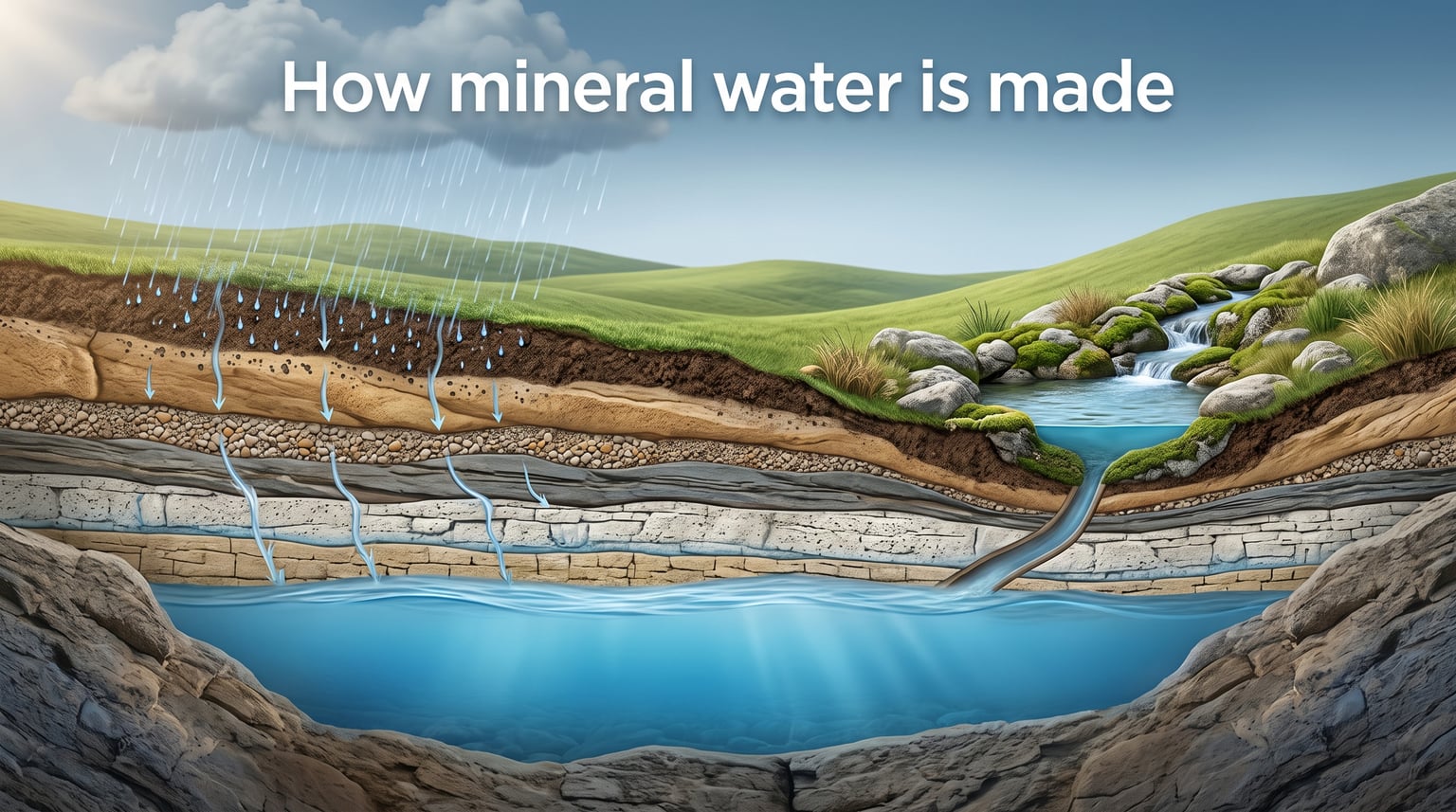
The process of making natural mineral water begins long before any bottling plant is involved. It starts with rainfall seeping into the ground and ends with water emerging from a spring, enriched by the geology it traveled through. Here is how mineral water is made, step by step.
Step 1: Rainfall Enters the Ground
Rain falls on the surface and slowly percolates through soil and porous rock. This surface layer filters out large particles and organic matter, starting a natural purification process that artificial treatment plants try to replicate.
Not all rain becomes mineral water. Only water that reaches deep enough into the earth to dissolve significant minerals from geological formations qualifies.
Step 2: Water Travels Through Porous Rock and the Aquifer
Once past the surface, water descends through layers of porous rock such as limestone, chalk, sandstone, or volcanic formations. These layers act as a giant natural filter, removing impurities while allowing the water to absorb trace elements from the stone.
The water eventually collects in an aquifer, which is an underground reservoir sitting atop an impermeable layer of rock like clay or granite. This impermeable layer prevents the water from sinking deeper and protects it from surface contamination. The aquifer is what makes the source geologically protected, a term you will see on quality mineral water labels.
Step 3: Dissolution of Minerals Over Decades
As water sits in or moves through the aquifer, it dissolves minerals from the surrounding rock. The type of rock determines which minerals end up in the water. Limestone and chalk contribute calcium and bicarbonate. Magnesium-rich rock adds magnesium. Volcanic formations can contribute silica and trace elements.
This process is not instant. Depending on the depth and geology, water can spend anywhere from a few years to several centuries underground. The longer the contact time and the higher the pressure, the more minerals dissolve into the water.
Step 4: Emergence at the Spring
Eventually, pressure, gravity, or geological faulting pushes the mineralized water back to the surface through a natural spring or an artesian well. At this point, the water has a stable and consistent mineral composition that reflects its unique underground journey.
Producers capture this water at the source and bottle it directly, which is why the phrase “bottled at source” appears on natural mineral water labels. This practice preserves the water’s original mineral balance and prevents contamination during transport.
The Mineral Composition of Natural Mineral Water
What separates mineral water from ordinary groundwater is its mineral content, measured as total dissolved solids or TDS. TDS quantifies the combined concentration of all dissolved substances in the water, expressed in milligrams per liter. Natural mineral water must have a consistent TDS level that reflects its geological origin.
The specific minerals in your bottle depend entirely on the rocks the water traveled through. Here are the key minerals and what they contribute.
Calcium
Calcium is the most abundant mineral in many mineral waters, especially those sourced from limestone or chalk regions. A single liter can contain anywhere from 30 to over 500 milligrams of calcium. This mineral is essential for bone density, dental health, and normal nerve function. Some mineral waters provide a meaningful portion of your daily calcium requirement in a single bottle.
Magnesium
Magnesium supports muscle function, energy production, and nervous system health. Waters flowing through magnesium-rich rock formations can deliver significant amounts of this mineral. People who notice a slightly bitter or minerally taste in certain brands are often tasting higher magnesium content. For more detail on how mineral concentration affects taste, our breakdown of mineral water taste characteristics explores why some brands taste intensely mineral.
Sodium and Potassium
Sodium and potassium are electrolytes that help regulate fluid balance in the body. Sodium levels in mineral water vary widely, from near zero in low-sodium brands to over 1,000 mg per liter in some highly mineralized European waters. People monitoring sodium intake should check the label, as levels differ dramatically between sources.
Bicarbonate
Bicarbonate acts as a natural buffer that helps neutralize acid in the body and aids digestion. Many mineral waters sourced from limestone regions are naturally high in bicarbonate, which gives them a slightly smooth or velvety mouthfeel.
Silica and Trace Elements
Some mineral waters contain silica, which comes from volcanic or sandstone geology. Silica is associated with connective tissue health and may support skin, hair, and nail condition. Other trace elements like iron, manganese, and zinc appear in smaller quantities. If you want to understand whether trace minerals matter, our guide to silica in mineral water covers this in depth.
Types of Mineral Water: Still, Sparkling, and Naturally Carbonated
One of the most common sources of confusion is the difference between still, sparkling, and naturally carbonated mineral water. They all come from the same geological process, but carbonation sets them apart.
Still Mineral Water
Still mineral water has no carbonation and emerges flat from the source. After bottling, it retains its natural mineral content without any added gas. Still mineral water is the closest experience to drinking water straight from the spring. It tends to have a cleaner, more subtle taste that lets the underlying mineral profile come through gently.
Sparkling Mineral Water
Sparkling mineral water has carbon dioxide added during bottling to create bubbles. The mineral content remains the same as the still version from the same source, but the added carbonation changes the texture and mouthfeel. Sparkling water often tastes sharper and more refreshing. For those concerned about timing consumption around exercise, our article on sparkling mineral water and hydration offers practical guidance.
Naturally Carbonated Mineral Water
Naturally carbonated mineral water is the rarest type. In these sources, the water absorbs carbon dioxide from underground volcanic or geothermal activity during its journey through the rock. The bubbles are present at the source, not added later. Only a handful of springs worldwide produce naturally carbonated water, making it a distinct category from artificially carbonated sparkling water. The label must clearly state “naturally carbonated” to qualify.
How Filtration Affects Mineral Content
It is worth noting that home filtration can alter the mineral content of any water. Standard filters like Brita primarily target chlorine and improve taste, but understanding mineral content in drinking water after filtration helps you know what you are actually consuming.
Health Benefits of Drinking Mineral Water
People often ask whether mineral water is actually healthy or just cleverly marketed. The answer depends on the mineral content and your individual dietary needs. For most people, mineral water provides genuine nutritional benefits beyond simple hydration.
Bone Health and Calcium
Calcium-rich mineral water can contribute meaningfully to your daily calcium intake. Studies suggest that calcium from mineral water is absorbed by the body at rates comparable to calcium from dairy or supplements. For people who are lactose intolerant or avoid dairy, high-calcium mineral water offers an alternative source of this essential mineral. A liter of water with 300 mg of calcium provides roughly 30 percent of the recommended daily intake.
Muscle Function and Magnesium
Magnesium plays a role in over 300 enzymatic reactions in the body, including muscle contraction and relaxation. Mineral waters with elevated magnesium levels can help supplement dietary intake, particularly for people who exercise regularly or experience muscle cramps. The bioavailability of magnesium from water is considered good, meaning your body can absorb and use it effectively.
Hydration and Electrolyte Balance
All water hydrates, but mineral water does double duty by replenishing electrolytes lost through sweat and normal metabolic processes. The dissolved sodium, potassium, and bicarbonate in mineral water help maintain fluid balance, which is especially relevant after exercise or during hot weather.
What About Potential Concerns?
Mineral water is generally safe for daily consumption, but a few caveats apply. People on sodium-restricted diets should choose low-sodium varieties. Highly mineralized waters are not necessarily better for you than moderately mineralized ones. The key is matching the mineral profile to your nutritional needs rather than assuming more minerals always equals healthier.
Regulations and Standards: FDA and EU Requirements
The label “natural mineral water” is not a marketing term. It is a legally protected classification with strict requirements in both the United States and the European Union.
FDA Standards in the United States
The Food and Drug Administration regulates bottled mineral water under the federal bottled water regulations. To qualify as mineral water, the product must contain at least 250 parts per million of total dissolved solids, drawn from a protected underground source. The FDA requires that no minerals be added artificially and that the water be bottled at the source or through a transport system that maintains its integrity.
The FDA also requires regular testing for contaminants and mandates that mineral water labels accurately reflect the mineral content. Any treatment must preserve the water’s essential mineral characteristics.
EU Standards and Recognition
The European Union has even stricter regulations governing natural mineral water. Under EU law, natural mineral water must originate from a specific underground source, be naturally free from contamination, and have a stable mineral composition verified through extensive testing over time.
Before a water can be sold as natural mineral water in the EU, it must receive official recognition from the relevant national authority. This recognition process requires years of hydrogeological analysis, microbiological testing, and chemical profiling to prove the source is stable and protected. The EU also prohibits any disinfection treatment such as chlorination for natural mineral water, distinguishing it from treated bottled waters.
What These Regulations Mean for Consumers
When you buy water labeled natural mineral water, you are getting a product that has met defined geological and chemical standards. The mineral content listed on the label reflects what is actually in the bottle, and the source has been verified as protected from surface contamination. This regulatory framework is what separates genuine mineral water from regular bottled water or filtered tap water.
Environmental Considerations and Sustainability
The environmental impact of mineral water is a legitimate concern that deserves honest discussion. Bottled water of any kind requires packaging, transportation, and energy, all of which carry environmental costs.
Packaging and Recyclability
Most mineral water producers have shifted toward recyclable PET plastic or glass bottles. Glass is infinitely recyclable and does not leach chemicals, but it is heavier and requires more energy to transport. PET is lighter and widely recyclable, but recycling rates vary by region. Some premium brands now use bottles made from recycled PET to reduce virgin plastic demand.
Source Protection
Responsible mineral water producers actively protect their aquifer recharge zones to prevent contamination and over-extraction. Because natural mineral water depends on a stable, geologically protected source, sustainable harvesting means never drawing more water than the aquifer naturally replenishes. This self-interest aligns environmental stewardship with business longevity.
Reducing Your Footprint
If environmental impact is a priority, consider buying locally sourced mineral water to reduce transportation emissions, choosing larger bottle formats to reduce packaging per liter, and recycling every bottle. You can also alternate between mineral water for its mineral benefits and filtered tap water for everyday hydration.
Frequently asked questions
Is mineral water actually healthy?
Yes, mineral water provides genuine health benefits beyond basic hydration. It contains naturally dissolved calcium for bone health, magnesium for muscle function, and electrolytes like sodium and potassium that support fluid balance. The mineral content varies by source, so check the label to match a water’s profile to your dietary needs. High-calcium mineral waters can supply a significant portion of your daily recommended intake.
How is natural mineral water made?
Natural mineral water is made through a geological process. Rainwater seeps through soil and porous rock like limestone, chalk, or volcanic formations, eventually collecting in a protected underground aquifer. Over years or decades, the water dissolves minerals from the surrounding rock. It then emerges at a spring, where producers bottle it directly at the source to preserve its natural mineral composition. No minerals are added artificially.
What is the difference between sparkling and still mineral water?
Still mineral water has no carbonation and is flat, while sparkling mineral water has carbon dioxide gas added during bottling to create bubbles. Both come from the same type of underground source with the same mineral content. A third category, naturally carbonated mineral water, contains bubbles that originate from volcanic activity underground rather than being added at the bottling plant.
Where does natural mineral water come from?
Natural mineral water comes from a protected underground source, typically a spring or artesian well drawing from a deep aquifer. The water spends years filtering through layers of rock that give it a unique mineral signature. Because the source is geologically protected by an impermeable rock layer above it, the water remains free from surface contamination throughout its underground journey.
Conclusion
Understanding how mineral water is made reveals a process that no factory can replicate. Rainwater enters the ground, filters through porous rock over decades, dissolves a unique blend of calcium, magnesium, and other minerals, and emerges at a protected spring ready for bottling. The geology determines the taste, the mineral content, and ultimately the character of every bottle.
Whether you prefer still or sparkling, high-calcium or low-sodium, the mineral profile on the label tells the story of the rocks your water traveled through. Knowing the difference between naturally carbonated and artificially carbonated, the regulations that protect the term natural mineral water, and the environmental trade-offs involved helps you make informed choices about what you drink.
If this guide helped you appreciate the science behind your water, explore more of our mineral water resources to deepen your understanding of sources, mineral profiles, and what makes each bottle unique.