
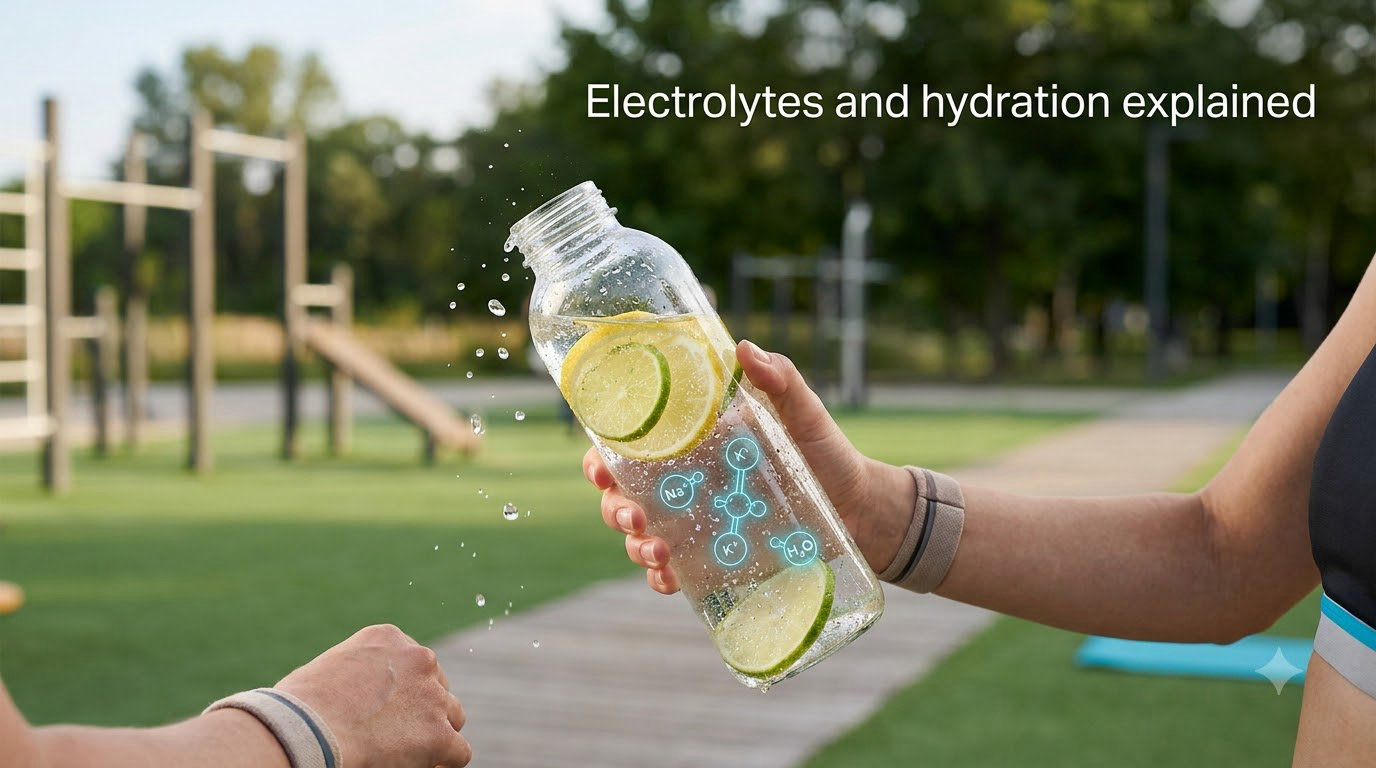
I used to think water alone solved every hydration problem. Then I spent a summer coaching youth soccer in 95-degree heat, and I watched my players cramp up despite drinking plenty of water. The fix turned out to be simple: they needed electrolytes, not just fluids. That experience made me realize how little most of us understand about how electrolytes and hydration actually work together.
Electrolytes are minerals that carry an electrical charge when dissolved in body fluids. They are the reason your cells can absorb water, your nerves can send signals, and your muscles can contract on command. Without the right balance of these charged minerals, drinking more water can sometimes make things worse instead of better.
In this guide, I will walk you through what electrolytes are, the key ones your body depends on, how they support hydration, the signs you might be low, and the best natural sources. By the end, you will have a clear picture of how to keep your electrolyte levels balanced every day in 2026 and beyond.
Table of Contents
What Are Electrolytes?
Electrolytes are minerals that carry a positive or negative electrical charge when they dissolve in water. Once inside your body, these charged minerals float in your blood, urine, and other fluids, ready to conduct electricity wherever your cells need it. The main ones include sodium, potassium, calcium, magnesium, chloride, phosphate, and bicarbonate.
The word “electrolyte” comes from the same root as “electricity.” That is not a coincidence. Your body is essentially a low-voltage electrical system, and these charged minerals are the wires that keep the current flowing. Every heartbeat, every muscle twitch, and every nerve signal depends on them moving in and out of cells at the right moments.
Most people first hear about electrolytes in the context of sports drinks. Marketers position them as performance boosters, but they are actually far more basic than that. They are essential nutrients your body cannot make on its own. You have to consume them through food, drinks, or supplements, and your kidneys work constantly to keep their levels in a narrow range.
When that balance tips too far in either direction, you feel it. Low sodium causes headaches and fatigue. Low potassium causes muscle cramps. Low calcium causes tingling and weak bones. Low magnesium causes poor sleep and anxiety. Understanding what each electrolyte does helps you respond when something feels off.
The Key Electrolytes Your Body Needs
Your body relies on five main electrolytes for daily function. Each one plays a different role, and most of them work in pairs. Sodium and potassium balance each other. Calcium and magnesium balance each other. Chloride usually rides alongside sodium. Below is what each one does and where to find it.
Sodium: The Hydration Traffic Director
Sodium is the most abundant electrolyte outside your cells and the one most people lose when they sweat. Its primary job is to hold water in your bloodstream and pull water into the cells that need it. Without enough sodium, plain water passes through your body without being fully absorbed, which is why endurance athletes often struggle with cramping even when they drink constantly.
Most people get plenty of sodium from processed food, but heavy sweaters, people on low-carb diets, and those who exercise intensely may need more. Good natural sources include broth, pickles, olives, and salted nuts. The recommended daily intake for most adults is around 1,500 to 2,300 mg, though athletes in hot conditions often need more.
Potassium: The Inside Cell Partner
Potassium is sodium’s inside-cell counterpart. While sodium lives mostly outside your cells, potassium lives mostly inside them. The constant exchange between sodium and potassium is what allows your cells to fire electrical signals and absorb water. This balance is also what powers every nerve impulse and muscle contraction you make.
Low potassium is one of the most common electrolyte deficiencies, especially among people who sweat heavily. Symptoms include muscle cramps, fatigue, and irregular heartbeat. Bananas get the spotlight, but potatoes, avocados, beans, spinach, and coconut water are actually denser sources. Most adults need about 2,600 to 3,400 mg of potassium per day.
Calcium: More Than Just Bone Health
Calcium is best known for building strong bones, but it also acts as an electrolyte. Calcium ions flow into and out of cells to trigger muscle contractions, release neurotransmitters, and keep your heart beating on a steady rhythm. Your body stores most of its calcium in your bones, with just a small percentage working in your blood and cells.
When blood calcium drops, your body pulls it from your bones, which is why long-term deficiencies affect bone density. For hydration purposes, calcium helps your muscles contract and relax properly. Dairy products, leafy greens, sardines, and fortified plant milks are the most reliable sources. Adults generally need 1,000 to 1,200 mg daily.
Magnesium: The Overlooked Relaxation Mineral
Magnesium is involved in over 300 enzyme reactions in your body, more than any other electrolyte. It helps muscles relax, supports steady sleep, calms the nervous system, and keeps your heart rhythm stable. Many people do not get enough magnesium because modern soil has become depleted, and processed foods contain very little of it.
Low magnesium often shows up as trouble sleeping, tight muscles, anxiety, or frequent headaches. It is especially common among people who sweat heavily or drink alcohol often. Pumpkin seeds, dark chocolate, almonds, spinach, and black beans are excellent food sources. Most adults need 310 to 420 mg per day, depending on age and sex.
Chloride: Sodium’s Quiet Partner
Chloride usually gets overlooked because it travels with sodium almost everywhere. It is the main negatively charged ion (anion) in your body and helps maintain fluid balance, stomach acid production, and the electrical neutrality of your cells. Without chloride, your digestive system would struggle to break down food properly.
Most people get plenty of chloride from table salt, which is sodium chloride. Sea salt, celery, tomatoes, and olives also provide it. As long as you are eating a balanced diet and not severely limiting salt, chloride deficiency is rare. The same dosing range as sodium usually applies.
How Electrolytes Work for Hydration
Electrolytes help hydration by controlling where water goes in your body. Plain water moves through your digestive system and into your bloodstream, but without enough electrolytes, much of it just passes through without reaching the cells that need it. Sodium, in particular, acts as a carrier that pulls water across cell membranes and keeps it there long enough to do its job.
Think of your cells as tiny water balloons floating in a saltwater sea. The salt concentration inside and outside each cell determines how much water moves in or out. When sodium and potassium are balanced, water flows exactly where it needs to go. When they are out of balance, water either gets stuck outside cells or floods into them, causing swelling, cramping, or brain fog.
Your kidneys are the control center for this whole system. They filter your blood constantly, deciding which electrolytes to keep and which to flush out. When you drink too much water without replacing electrolytes, your kidneys work hard to hold on to sodium. If they cannot keep up, your blood sodium drops too low, a condition called hyponatremia. This is why athletes who gulp water during long events can end up worse than when they started.
For most people during normal daily life, the balance happens automatically. Your body stores electrolytes, your kidneys adjust, and steady meals keep your levels topped up. The system only struggles when you sweat heavily, get sick, or drink excessive amounts of plain water without food. That is when electrolyte drinks, mineral water, or electrolyte-rich foods become genuinely useful.
Signs You May Need More Electrolytes
Your body gives clear signals when your electrolyte levels are off. I have learned to recognize most of these the hard way, both from coaching and from long trail runs. Here are the most common warning signs that you may need more electrolytes, not just more water.
- Persistent muscle cramps: Sudden cramping in your calves, feet, or hands during or after exercise usually points to low sodium or low potassium.
- Headaches and brain fog: A dull headache paired with poor concentration often shows up alongside mild dehydration, especially from sodium loss.
- Fatigue that does not improve with water: If you drink plenty of water and still feel flat, your cells may not be absorbing it well because electrolyte levels are too low.
- Dizziness when standing up: This can signal low blood volume from inadequate sodium, which is something I cover in more depth over at sparkling water and hydration for workouts.
- Irregular heartbeat or palpitations: Both low potassium and low magnesium can throw off your heart rhythm, especially during stress or exercise.
- Nausea or loss of appetite: Mild electrolyte imbalance often dulls your appetite, especially during hot weather or illness.
- Trouble sleeping or muscle twitching at night: These are classic signs of low magnesium, which is one of the most common deficiencies I see.
People who benefit from extra electrolytes include endurance athletes, outdoor workers in hot climates, anyone with a stomach flu, people on very low-carb diets, and people with conditions like POTS that affect fluid regulation. If you do not fall into one of these groups, you probably do not need electrolyte drinks every day, and water plus balanced meals will cover you.
Natural Food and Drink Sources of Electrolytes
The simplest way to get electrolytes is through food. A balanced diet full of fruits, vegetables, nuts, and unprocessed foods usually provides everything your body needs. Below are the most reliable natural sources, broken down by electrolyte.
Sodium: Bone broth, pickles, olives, miso, and salted nuts. Most people get plenty through normal food, but athletes often benefit from adding broth around workouts.
Potassium: Potatoes, sweet potatoes, avocados, bananas, white beans, spinach, and coconut water. A medium potato with skin has more potassium than a banana.
Calcium: Yogurt, milk, sardines, kale, bok choy, and fortified plant milks. Leafy greens are a great option if you avoid dairy.
Magnesium: Pumpkin seeds, dark chocolate, almonds, cashews, black beans, and spinach. Soaking nuts and seeds overnight helps your body absorb more of these minerals.
Chloride: Sea salt, celery, tomatoes, and olives. As long as your diet includes some salt, chloride usually takes care of itself.
Mineral Water as a Natural Electrolyte Source
Mineral water is one of the most overlooked sources of electrolytes. Unlike distilled or purified water, mineral water naturally contains calcium, magnesium, sodium, and potassium that have been absorbed from rock and soil as the water moves through underground aquifers. The exact mineral profile varies by source, but a good mineral water can deliver a meaningful amount of your daily electrolyte needs in every liter.
For people who want to avoid the sugars, artificial sweeteners, and flavorings found in most commercial electrolyte drinks, mineral water is a clean alternative. Many people on forums I follow have made the switch specifically because they were tired of the aftertaste and packaging of powdered mixes. If you want to explore more about how water quality affects hydration, the Mineral Waters homepage has detailed breakdowns of different mineral profiles.
Simple Homemade Electrolyte Drink
If you want a homemade electrolyte drink without artificial ingredients, here is a recipe I have used during long coaching sessions. It works well for replacing what you lose through sweat without the sugar load of commercial sports drinks.
- 1 cup water or coconut water
- 1/4 cup fresh orange juice (for potassium and flavor)
- 1/8 teaspoon sea salt (for sodium)
- 1 tablespoon lemon juice (for taste and a small potassium boost)
- 1 teaspoon raw honey or maple syrup (optional, for energy during long workouts)
Mix everything in a glass or shaker bottle and drink it within 24 hours. This blend delivers roughly 200 mg of sodium, 250 mg of potassium, and a small amount of magnesium per serving, which is enough for most non-athletes. Endurance athletes training in heat will want to scale up the salt to a quarter teaspoon.
Frequently Asked Questions
Why shouldn’t you drink electrolytes every day?
Most people do not need electrolyte drinks every day. A balanced diet and plain water will cover your needs during normal activity. Drinking electrolyte drinks daily exposes you to extra sodium and sugar, which can raise blood pressure or add unwanted calories. Save electrolyte drinks for heavy sweating, illness, intense exercise, or hot weather.
Do electrolytes actually hydrate you better than water?
Electrolytes help your body absorb and retain water more effectively. When you sweat heavily, plain water alone can dilute your blood sodium, which slows absorption. Sodium and other electrolytes pull water into your cells and bloodstream. For everyday hydration, water is enough. For long workouts or hot conditions, water with electrolytes works better.
What are the big 3 electrolytes?
The three most important electrolytes for hydration are sodium, potassium, and magnesium. Sodium pulls water into your cells, potassium balances it inside them, and magnesium supports muscle relaxation and nerve function. Calcium and chloride also matter, but sodium and potassium are the pair that most directly controls hydration.
What are signs that you need electrolytes?
Common signs include muscle cramps, headaches, persistent fatigue, dizziness when standing, irregular heartbeat, and trouble sleeping. These symptoms usually show up after heavy sweating, illness, or long exercise. Drinking water does not always fix them because your cells need minerals to absorb that water. Extra electrolytes, either from food or a drink, usually help within an hour or two.
Final Thoughts on Electrolytes and Hydration
Electrolytes and hydration work together as a system. Water carries them, they direct water where it needs to go, and your kidneys keep the balance steady. Eat real food, drink water consistently, and reach for extra electrolytes only when sweat, illness, or intense training depletes them. That simple approach will keep you balanced in 2026 and every year after.